Response of Soybean (Glycine max (L.) Merr.) to Vermicompost Fertilization and Foliar Application of Methylobacterium symbioticum


Abstract
1. Introduction
2. Materials and Methods
2.1. Assumptions of the Pot Experiment
2.2. Chemical Composition of Vermicomposts
2.3. Pot Experiment Conditions
2.4. Statistical Analyses
3. Results and Discussion
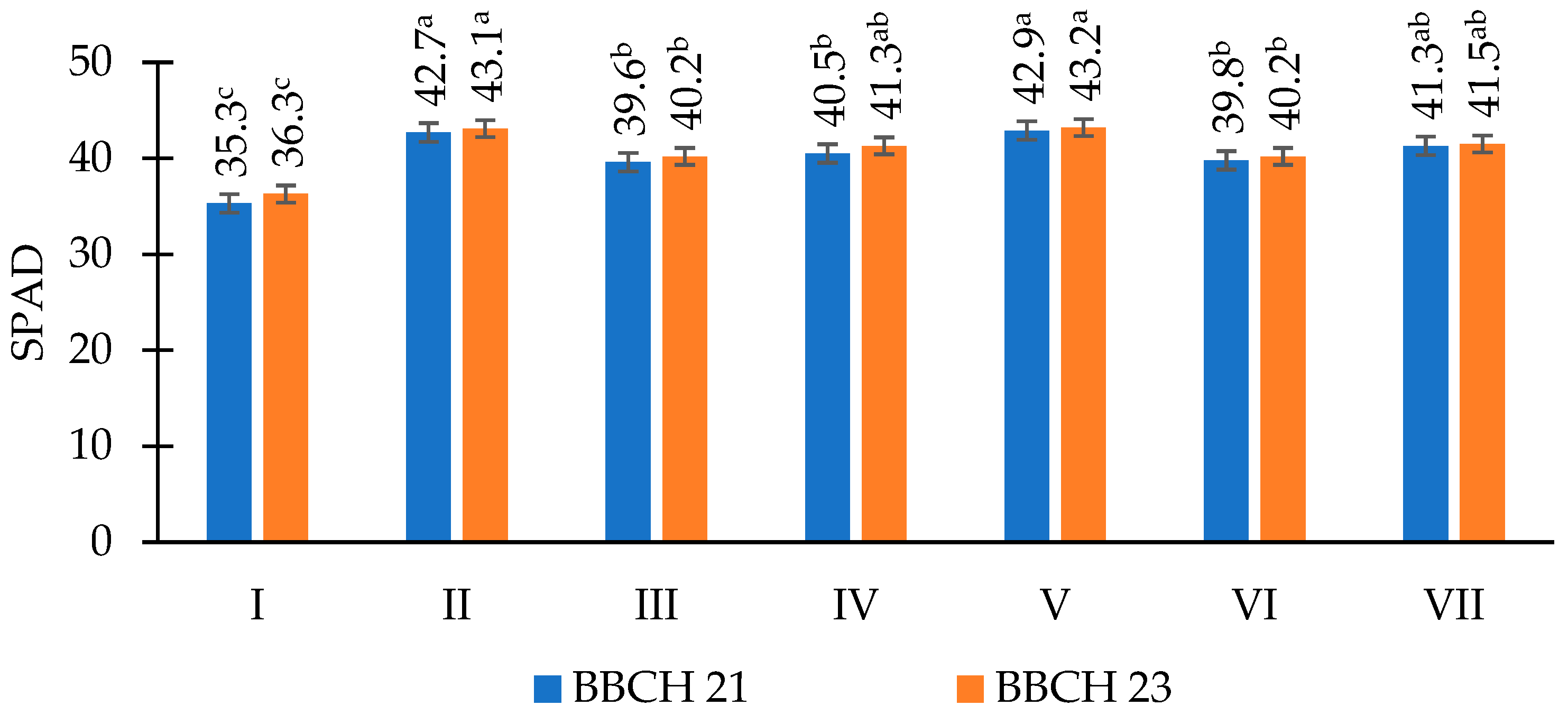
3.1. Physiological Measurements of Plants
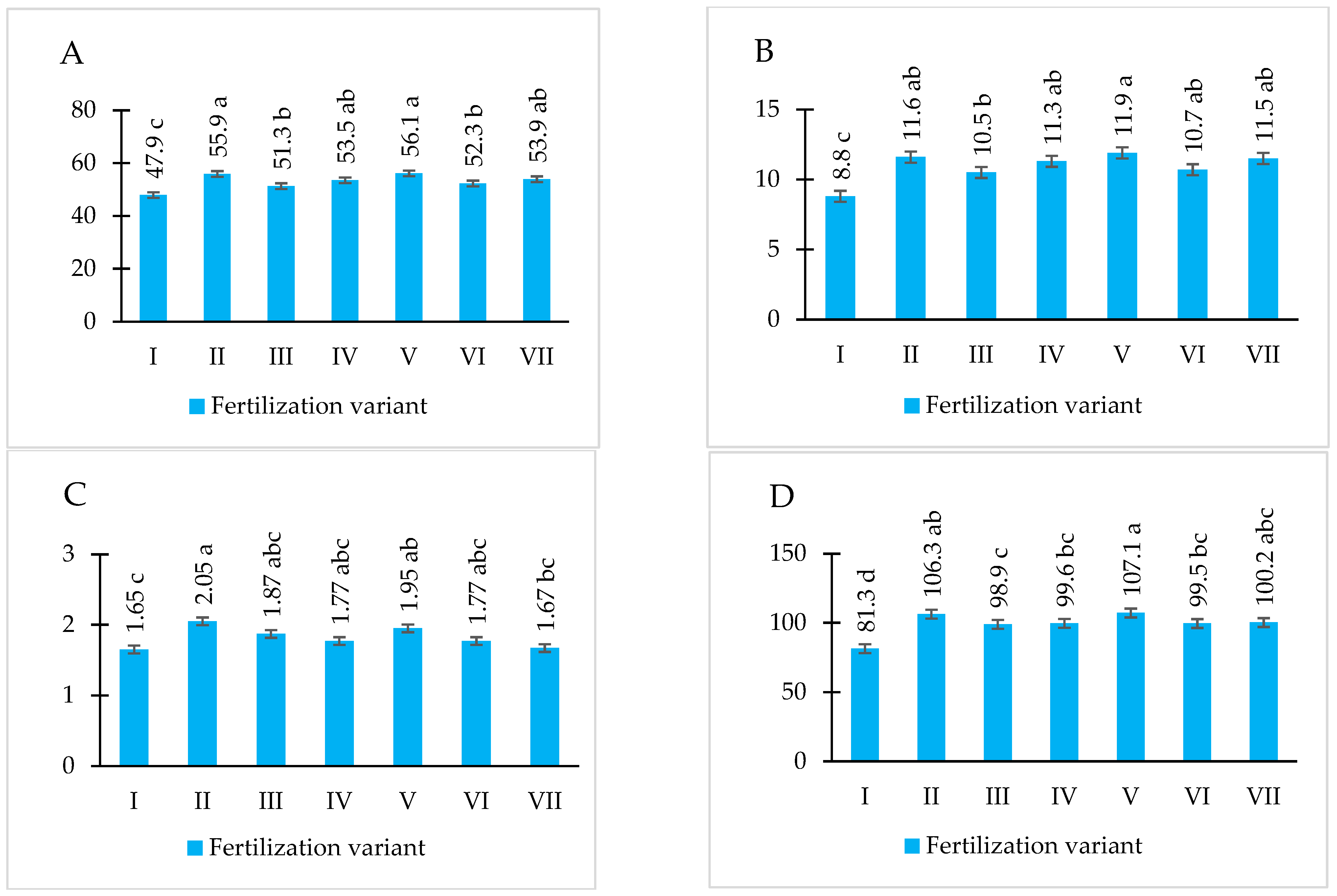
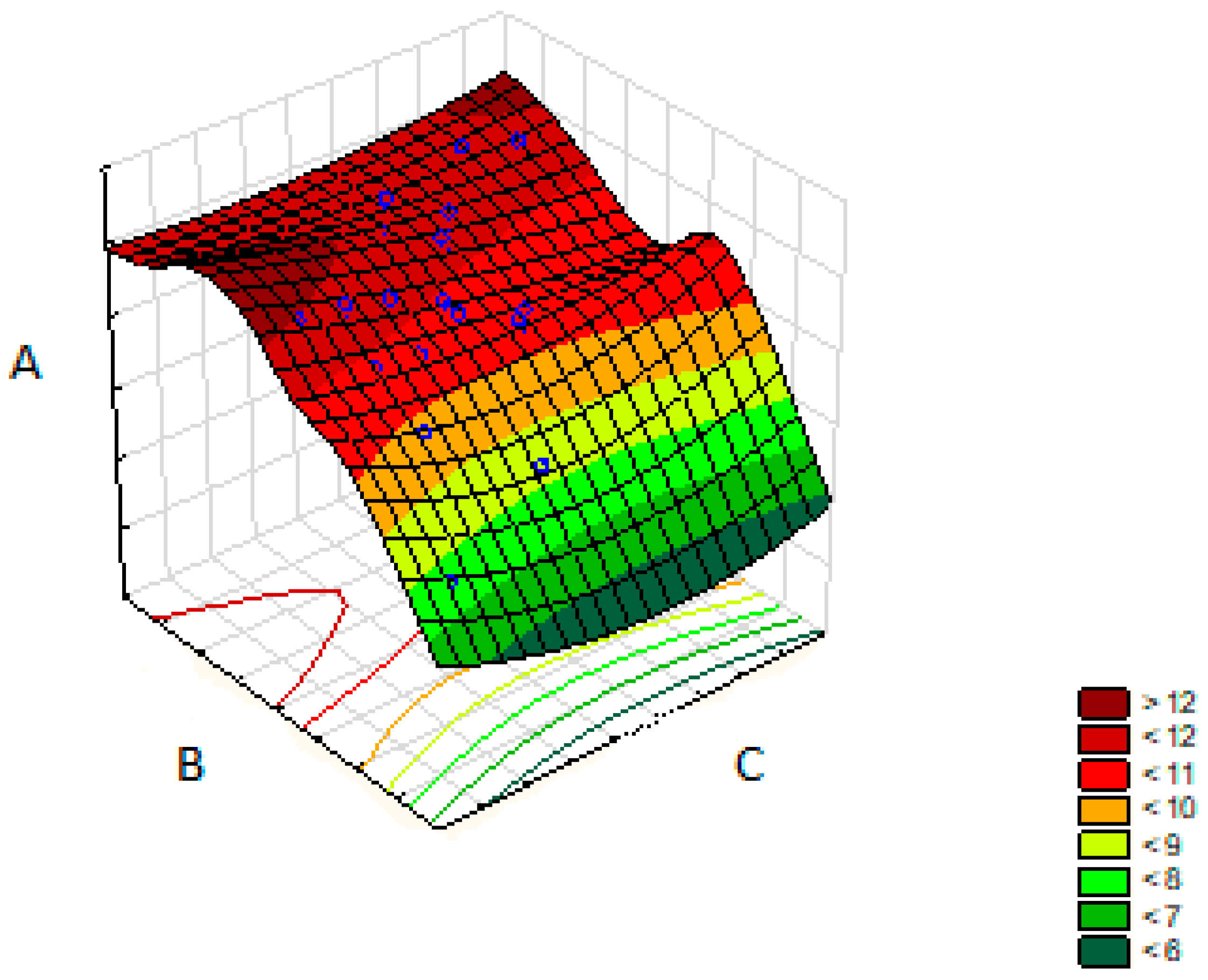
3.2. Biometric Measurements of Plants and Yield Components
3.3. Nodulation, Seed Mass and Quality
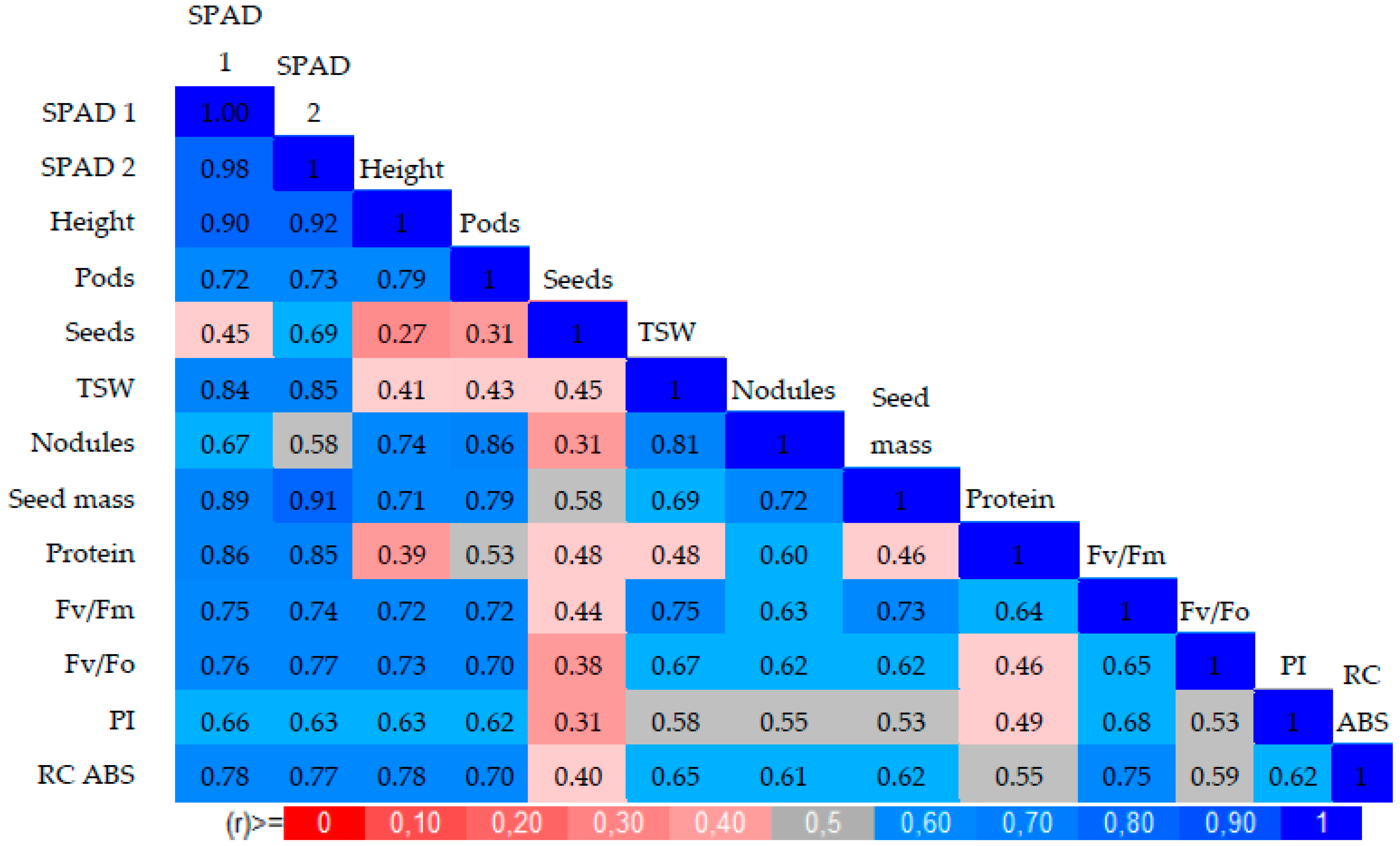
3.4. Correlation Between the Tested Parameters
4. Conclusions
Funding
Data Availability Statement
Conflicts of Interest
Abbreviations
| SPAD | Soil Plant Analysis Development |
| Fv/Fm | Maximal Photochemical Efficiency of PSII |
| Fv/F0 | Maximum Quantum Yield of Primary Photochemistry |
| PI | Performance Index |
| RC/ABS | Total Number of Active Reaction Center for Absorption |
| TSW | 1000-seed weight |
References
- Mohammadalizade, F.; Kachoie, M.A.; Jazi, M.H.J. Effects of vermicompost and chemical fertilizers on phonological and phytochemical traits of soybean (Glycine max L.). Res. Crop Ecophy. 2017, 12, 53–62. [Google Scholar]
- Moghadam, M.K.; Darvishi, H.H.; Javaheri, M. Effect of bacteria and vermicompost on phenology and growth of soybean (Glycine max L.) in sustainable agricultural systems. Int. J. Adv. Biol. Biom. Res. 2014, 2, 2540–2544. [Google Scholar]
- Mohammed, I.Q.; Alkobaisy, J.S. Effect of bio, vermicompost and mineral fertilizers on some soil properties and soybean (Glycine max L.) growth and productivity. AIP Conf. Proc. 2024, 3079, 020003. [Google Scholar] [CrossRef]
- Behera, U.K.; Sharma, A.R.; Pandey, H.N. Sustaining productivity of wheat–soybean cropping system through integrated nutrient management practices on the Vertisols of central India. Plant Soil 2007, 297, 185–199. [Google Scholar] [CrossRef]
- Raghuwanshi, O.P.S.; Raghuwanshi, M.S.; Raghuwanshi, S.R.S.; Ahirwar, R.F. Effect of organic sources in combination with fertilizers on nodulation, growth and yield of soybean (Glycine max) in soybean-wheat cropping system in Vidisha District of Madhya Pradesh. Soybean Res. 2017, 15, 9–14. [Google Scholar]
- Wang, Y.; Zhu, Y.; Zhang, S.; Wang, Y. What could promote farmers to replace chemical fertilizers with organic fertilizers? J. Clean. Prod. 2018, 199, 882–890. [Google Scholar] [CrossRef]
- Chew, K.W.; Chia, S.R.; Yen, H.W.; Nomanbhay, S.; Ho, Y.C.; Show, P.L. Transformation of biomass waste into sustainable organic fertilizers. Sustainability 2019, 11, 2266. [Google Scholar] [CrossRef]
- Njunge, L.W.; Wachira, P.; Okoth, S. Enhancement of colonisation of soybean roots by arbuscular mycorrhizal fungi using vermicompost and biochar. Agric. For. Fish. 2016, 5, 71–78. [Google Scholar] [CrossRef][Green Version]
- Adhikary, S. Vermicompost, the story of organic gold: A review. Agric. Sci. 2012, 3, 905–917. [Google Scholar] [CrossRef]
- Pattnaik, S.; Reddy, M.V. Nutrient status of vermicompost of urban green waste processed by three earthworm species-Eisenia fetida, Eudrilus eugeniae, and Perionyx excavatus. Appl. Environ. Soil Sci. 2010, 2010, 967526. [Google Scholar] [CrossRef]
- Kifle, D.; Shumi, G.; Degefa, A. Characterization of vermicompost for major plant nutrient contents and manuring value. J. Sci. Sustain. Dev. 2017, 5, 97–108. [Google Scholar] [CrossRef]
- Khare, N.; Kumar, D.; Rout, S. Effect of organic manures on growth and yield attributes of Soybean (Glycine max L.) under Subabul (Leucaenaleucocephala) based Agroforestry system. J. Appl. Nat. Sci. 2016, 8, 2219–2223. [Google Scholar]
- Joshi, R.; Singh, J.; Vig, A.P. Vermicompost as an effective organic fertilizer and biocontrol agent: Effect on growth, yield and quality of plants. Rev. Environ. Sci. Biotechnol. 2015, 14, 137–159. [Google Scholar] [CrossRef]
- Bajracharya, S.K.; Shercahn, D.P.; Bhattarai, S. Effect of vermicompost in combination with bacterial and mineral fertilizers on the yield of vegetable soybean. Korean J. Crop Sci. 2007, 52, 100–103. [Google Scholar]
- Chowdiiury, S.; Islam, N.; Mandal, R. Effects of integrated use of fertilizers vermicompost on quality of soybean seeds. J. Phytol. Res. 2009, 22, 219–222. [Google Scholar]
- Meenatchi, R.; Giraddi, R.S.; Biradar, D.P.; Vastrad, A.S. Studies on effect of vermitechnologies on insect-pest activity and yield of soybean. Karnataka J. Agric. Sci. 2010, 23, 249–252. [Google Scholar]
- Devi, K.N.; Singh, T.B.; Athokpam, H.S.; Singh, N.B.; Shamurailatpam, D. Influence of inorganic, biological and organic manures on nodulation and yield of soybean (Glycine max Merril’L.) and soil properties. Aust. J. Crop Sci. 2013, 7, 1407–1415. [Google Scholar]
- Arifin, M.; Sukaryorini, P.; Mujoko, T. Efficiency of using NPK fertilizer with vermicompost addition to growth and results of soybean plants. International Seminar of Research Month Science and Technology for People Empowerment. Nusant. Sci. Technol. Proc. 2019, 2018, 1–10. [Google Scholar] [CrossRef]
- Alkobaisy, J.S.; Lafi, A.S.A.; Ghani, E.T.A. Influence of using Mycorrhizae (MH) with vermicompost (VRF) on soil properties, soybean (Glycine max L.) growth and yield. Sys. Rev. Pharm. 2020, 11, 347–351. [Google Scholar] [CrossRef]
- Debela, C.; Tana, T.; Wogi, L. Effect of rhizobium inoculation, NPS fertilizer and vermicompost on nodulation and yield of soybean (Glycine max (L). Merrill) at Bako, Western Ethiopia. J. Chem. Environ. Biol. Eng. 2021, 5, 49–61. [Google Scholar] [CrossRef]
- Klein, H.S.; Luna, F.V. The growth of the soybean frontier in South America: The case of Brazil and Argentina. Rev. Hist. Econ.-J. Iber. Lat. Am. Econ. Hist. 2021, 39, 427–468. [Google Scholar] [CrossRef]
- Gai, Y.; Liu, S.; Zhang, Z.; Wei, J.; Wang, H.; Liu, L.; Bai, Q.; Qin, Q.; Zhao, C.; Zhang, S.; et al. Integrative approaches to soybean resilience, productivity, and utility: A review of genomics, computational modeling, and economic viability. Plants 2025, 14, 671. [Google Scholar] [CrossRef]
- Jarecki, W.; Borza, I.M.; Rosan, C.A.; Vicas, S.I.; Domut, C.G. Soybean response to seed inoculation with Bradyrhizobium japonicum and/or nitrogen fertilization. Agriculture 2024, 14, 1025. [Google Scholar] [CrossRef]
- Ordoñez-Juárez, M.; Pérez-González, D.A.; Borgi, M.A.; Bouhrim, M.; Ulibarri, G.; Sánchez-Yáñez, J.M. Seed inoculation with Methylobacterium symbioticum enhances growth of Phaseolus vulgaris under reduced NH4NO3 fertilization. Horticult. Int. J. 2025, 9, 75–80. [Google Scholar] [CrossRef]
- Jarecki, W.; Lachowski, T.; Migut, D. The influence of applying foliar micronutrients at nodulation and the physiological properties of common soybean plants. Agriculture 2024, 14, 154. [Google Scholar] [CrossRef]
- Lim, P.N.; Wu, T.Y.; Shyang Sim, E.Y.; Lim, S.L. The potential reuse of soybean husk as feedstock of Eudrilus eugeniae in vermicomposting. J. Sci. Food Agric. 2011, 91, 2637–2642. [Google Scholar] [CrossRef]
- Ravindran, B.; Wong, J.W.C.; Selvam, A.; Sekaran, G. Influence of microbial diversity and plant growth hormones in compost and vermicompost from fermented tannery waste. Bioresour. Technol. 2016, 217, 200–204. [Google Scholar] [CrossRef]
- Cai, L.; Gong, X.; Ding, H.; Li, S.; Hao, D.; Yu, K.; Ma, Q.; Sun, X.; Muneer, M.A. Vermicomposting with food processing waste mixtures of soybean meal and sugarcane bagasse. Environ. Technol. Innov. 2022, 28, 102699. [Google Scholar] [CrossRef]
- Coulibaly, S.S.; Touré, M.; Kouamé, A.E.; Kambou, I.C.; Soro, S.Y.; Yéo, K.I.; Koné, S.; Zoro, B.I.A. Vermicompost as an alternative to inorganic fertilizer to improve okra productivity in Cote d’Ivoire. Open J. Soil Sci. 2021, 11, 1–12. [Google Scholar] [CrossRef]
- Şahin, S.; Ceritoğlu, M.; Kartal, H. The effects of vermicompost and phosphorus on the development of soybean plant. Asian J. Adv. Agric. Res. 2019, 11, 1–5. [Google Scholar] [CrossRef]
- Pathma, J.; Sakthivel, N. Microbial diversity of vermicompost bacteria that exhibit useful agricultural traits and waste management potential. SpringerPlus 2012, 1, 26. [Google Scholar] [CrossRef]
- Nonthapa, A.; Iwai, C.B.; Chankaew, S.; Falab, S. Dual-purpose vermicompost for the growth promotion and suppression of damping-off disease on potted vegetable soybean. Plants 2024, 13, 1607. [Google Scholar] [CrossRef]
- Yadav, M.K.; Purohit, H.S.; Sharma, S.K.; Jat, G.; Yadav, S.K.; Meena, S.C.; Meena, R.H.; Jain, H.K. Soil biological properties as influenced by organic nutrient management in soybean (Glycine max). Indian J. Agric. Sci. 2021, 91, 1670–1674. [Google Scholar] [CrossRef]
- Lim, S.L.; Wu, T.Y.; Lim, P.N.; Shak, K.P.Y. The use of vermicompost in organic farming: Overview, effects on soil and economics. J. Sci. Food Agric. 2015, 95, 1143–1156. [Google Scholar] [CrossRef] [PubMed]
- Ciuła, J.; Wiewiórska, I.; Potok, H.; Babiarz, A. Recycling of sewage sludge in Poland–Environmental aspects and risks related to its management in a circular economy. Ann. Set Environ. Prot. 2025, 27, 320–340. [Google Scholar] [CrossRef]
- Khutate, N.G.; Mendhe, S.N.; Dongarkar, K.P.; Gudadhe, N.N.; Gavande, V.H. Effect of nutrient management treatments on growth and yield of soybean. J. Soils Crops 2005, 15, 411–414. Available online: https://www.cabidigitallibrary.org/doi/full/10.5555/20063016711 (accessed on 19 November 2025).
- Paliwal, D.K.; Kushawaha, H.S.; Thakur, H.S.; Tailor, R.S.; Deshwal, A.K. Effect of vermicompost in combination with fertilizers on nodulation, growth and yield of soybean (Glycine max) in soybean-wheat cropping system. Soybean Res. 2011, 9, 95–102. [Google Scholar]
- Azarpour, E.; Moradi, M.; Bozorgi, H.R. Effects of vermicompost application and seed inoculation with biological nitrogen fertilizer under different plant densities in soybean [Glycine max (L.) cultivar, Williams]. Afr. J. Agric. Res. 2012, 7, 1534–1541. [Google Scholar] [CrossRef]
- Rana, K.; Singh, J.; Shilpa, S. Productivity, profitability and quality of soybean (Glycine max) as influenced by tillage, organic manures and fertilizer doses. Indian J. Agric. Sci. 2020, 90, 376–380. [Google Scholar] [CrossRef]
- Patel, S.; Bafna, A.; Maheshwari, R.S.; Rangwala, T. Comparative study of impact of rhizobium, phosphate solubilizing bacteria, vermicompost and urea fertilizer on growth parameters, chlorophyll and protein content of soybean (Glycine max). Int. J. Res. Biosci. 2016, 5, 43–54. [Google Scholar]
- Jirakkakul, J.; Khoiri, A.N.; Duangfoo, T.; Dulsawat, S.; Sutheeworapong, S.; Petsong, K.; Wattanachaisaereekul, S.; Paenkaew, P.; Tachaleat, A.; Cheevadhanarak, S.; et al. Insights into the genome of Methylobacterium sp. NMS14P, a novel bacterium for growth promotion of maize, chili, and sugarcane. PLoS ONE 2023, 18, e0281505. [Google Scholar] [CrossRef]
- Rodrigues, M.Â.; Lopes, J.I.; Martins, S.; Brito, C.; Correia, C.M.; Arrobas, M. A Spray Foliar Containing Methylobacterium symbioticum Did Not Increase Nitrogen Concentration in Leaves or Olive Yield Across Three Rainfed Olive Orchards. Horticulturae 2025, 11, 80. [Google Scholar] [CrossRef]
- Serafin-Andrzejewska, M.; Falkiewicz, A.; Wojciechowski, W.; Kozak, M. Yield and Seed Quality of Faba Bean (Vicia faba L. var. minor) as a Result of Symbiosis with Nitrogen-Fixing Bacteria. Agriculture 2025, 15, 960. [Google Scholar] [CrossRef]
- Giller, K.E.; James, E.K.; Ardley, J.; Unkovich, M.J. Science losing its way: Examples from the realm of microbial N2-fixation in cereals and other non-legumes. Plant Soil 2024, 10, 1–24. [Google Scholar] [CrossRef]
- Leducq, J.B.; Sneddon, D.; Santos, M.; Condrain-Morel, D.; Bourret, G.; Martinez-Gomez, N.C.; Lee, J.A.; Foster, J.A.; Stolyar, S.; Shapiro, B.J.; et al. Comprehensive phylogenomics of Methylobacterium reveals four evolutionary distinct groups and underappreciated phyllosphere diversity. Genome Biol. Evol. 2022, 14, evac123. [Google Scholar] [CrossRef]
- Torres Vera, R.; Bernabé García, A.J.; Carmona Álvarez, F.J.; Martínez Ruiz, J.; Fernández Martín, F. Application and Effectiveness of Methylobacterium symbioticum as a Biological Inoculant in Maize and Strawberry Crops. Folia Microbiol. 2024, 69, 121–131. [Google Scholar] [CrossRef]
- Cardone, L.; Polito, F.; Denora, M.; Casiello, D.; Castronuovo, D.; Cicco, N.; Perniola, M.; De Feo, V.; Candido, V. Effects of Biostimulant Foliar Applications on Morphological Traits, Yield, Antioxidant Capacity, and Essential Oil Composition of Thymus vulgaris L. Under Field Conditions. Agronomy 2025, 15, 442. [Google Scholar] [CrossRef]
- Arrobas, M.; Roque, J.; Martins, S.; Brito, C.; Correia, C.M.; Rodrigues, M.Â. Effect of Foliar Application of Nitrogen-Fixing Microorganisms and Algae Extracts on Nutritional Status and Yield of Hazelnut and Walnut Trees. Nitrogen 2025, 6, 2. [Google Scholar] [CrossRef]
- Rodrigues, M.Â.; Raimundo, S.; Correia, C.M.; Arrobas, M. Nitrogen Fixation and Growth of Potted Olive Plants through Foliar Application of a Nitrogen-Fixing Microorganism. Horticulturae 2024, 10, 604. [Google Scholar] [CrossRef]
- Rodrigues, M.Â.; Correia, C.M.; Arrobas, M. The Application of a Foliar Spray Containing Methylobacterium symbioticum Had a Limited Effect on Crop Yield and Nitrogen Recovery in Field and Pot-Grown Maize. Plants 2024, 13, 2909. [Google Scholar] [CrossRef]
- Nysanth, N.S.; Anu Rajan, S.; Sivapriya, S.L.; Anith, K.N. Pink Pigmented Facultative Methylotrophs (PPFMs): Potential Bioinoculants for Sustainable Crop Production. J. Pure Appl. Microbiol. 2023, 17, 660–681. [Google Scholar] [CrossRef]
- Arrobas, M.; Correia, C.M.; Rodrigues, M.Â. Methylobacterium symbioticum applied as a foliar inoculant was little effective in enhancing nitrogen fixation and lettuce dry matter yield. Sustainability 2024, 16, 4512. [Google Scholar] [CrossRef]
- Azot z Powietrza—Niebieska Rewolucja (Nitrogen from the Air—The Blue Revolution) in Polish. Available online: https://www.corteva.pl/produkty/biologiczne/blue-n.html (accessed on 13 November 2025).
- Keyser, H.H.; Li, F. Potential for increasing biological nitrogen fixation in soybean. Plant Soil 1992, 141, 119–135. [Google Scholar] [CrossRef]
- Rozporządzenie Ministra Środowiska z dnia 6 Lutego 2015 r. w Sprawie Stosowania Komunalnych Osadów Ściekowych. Dz.U. 2015 poz. 257 (In Polish). Regulation of the Minister of Environment of 6 February 2015 on the Use of Municipal Sewage Sludge. Journal of Laws 2015, Item 257. Ministerstwo Środowiska. 2015. Available online: https://isap.sejm.gov.pl/isap.nsf/DocDetails.xsp?id=wdu20150000257 (accessed on 19 February 2025).
- Meier, U. Growth Stages of Mono- and Dicotyledonous Plants. In BBCH Monograph; Federal Biological Research Centre for Agriculture and Forestry: Berlin/Braunschweig, Germany, 2018; p. 158. Available online: https://www.julius-kuehn.de/media/Veroeffentlichungen/bbch%20epaper%20en/page.pdf (accessed on 20 March 2025).
- IUSS Working Group WRB. World Reference Base for Soil Resources. In International Soil Classification System for Naming Soils and Creating Legends for Soil Maps, 4th ed.; International Union of Soil Sciences (IUSS): Vienna, Austria, 2022. [Google Scholar]
- Meena, N.; Sharma, M.K.; Meena, D.S.; Choudhary, S.; Bhil, K.; Danga, N. Effect of organic and inorganic sources of nutrients on growth, yield attributes and nutrient uptake of soybean in Vertisols of Rajasthan. Legume Res. 2023, 46, 1020–1026. [Google Scholar] [CrossRef]
- Biswas, S.; Nwe, L.L.; Das, R.; Mahato, M.; Dutta, D. Productivity of soybean (Glycine max) varieties under different levels of integrated nutrient management. Indian J. Agril. Sci. 2024, 94, 713–718. [Google Scholar] [CrossRef]
- Sobiech, Ł.; Grzanka, M.; Idziak, R.; Blecharczyk, A. The Effect of Post-Emergence Application of Biostimulants and Soil Amendments in Maize Cultivation on the Growth and Yield of Plants. Plants 2025, 14, 1274. [Google Scholar] [CrossRef]
- Tsoumanis, D.; Katsenios, N.; Monokrousos, N. Enhancing Peach Tree Fertilization: Investigating Methylobacterium symbioticum SB23 as Game-Changing Agent. Agronomy 2025, 15, 521. [Google Scholar] [CrossRef]
- Valente, F.; Panozzo, A.; Bozzolin, F.; Barion, G.; Bolla, P.K.; Bertin, V.; Potestio, S.; Visioli, G.; Wang, Y.; Vamerali, T. Growth, Photosynthesis and Yield Responses of Common Wheat to Foliar Application of Methylobacterium symbioticum Under Decreasing Chemical Nitrogen Fertilization. Agriculture 2024, 14, 1670. [Google Scholar] [CrossRef]
- Jahangiri Nia, E.; Syyadat, S.A.; Koochakzadeh, A.; Sayyahfar, M.; Moradi Telavat, M.R. The effect of vermicompost and mycorrhizal inoculation on grain yield and some physiological characteristics of soybean (Glycine max L.) under water stress condition. J. Agroecol. 2016, 8, 583–597. [Google Scholar] [CrossRef]
- Aritonang, S.P.; Sidauruk, L. The effect of vermicompost on the growth of soybean (Glycine max L.). Int. J. Ecophysiol. 2020, 2, 18–23. [Google Scholar] [CrossRef]
- Arslanoğlu, Ş.F. The effects on the root and plant development of soybean of organic fertilizer applications. Biosci. J. 2022, 38, e38036. [Google Scholar] [CrossRef]
- Shahrosvand, S.; Eisvand, H.R.; Nazarian, F.F.; Feizian, M. Effect of sulphur and vermicompost application on agronomic traits of hubbit cultivar of soybean (Glycine max L.). J. Crop Ecophys. 2019, 13, 447–460. [Google Scholar] [CrossRef]
- Purna, T.T.; Ali, A.H.M.Z.; Rahman, M.K. Effects of zinc and vermicompost on the growth of soybean (Glycine max L.). Dhaka Univ. J. Biol. Sci. 2020, 29, 201–208. [Google Scholar] [CrossRef]
- Mamia, A.; Amin, A.; Roy, T.; Faruk, G. Influence of inorganic and organic fertilizers on growth and yield of soybean. Bangladesh Agron. J. 2018, 21, 77–81. [Google Scholar] [CrossRef]
- Martolia, S.S.; Khan, M.F.A.; Kukreti, N.; Khan, A.; Amir, M. Influence of different organic manure and cultivar on growth and yield attributes of soybean (Glycine max L.). Ecol. Environ. Conserv. 2025, 31, 13–18. [Google Scholar] [CrossRef]
- Mathenge, C.; Thuita, M.; Masso, C.; Gweyi-Onyango, J.; Vanlauwe, B. Variability of soybean response to rhizobia inoculant, vermicompost, and a legume-specific fertilizer blend in siaya county of Kenya. Soil Tillage Res. 2019, 194, 104290. [Google Scholar] [CrossRef]
- Latifnia, E.; Eisvand, H.R. Soybean physiological properties and grain quality responses to nutrients, and predicting nutrient defciency using chlorophyll fluorescence. J. Soil Sci. Plant Nutr. 2022, 22, 1942–1954. [Google Scholar] [CrossRef]



| Weekly Measurement | Temperature (°C) | Moisture (%) | ||||
|---|---|---|---|---|---|---|
| II | III | IV | II | III | IV | |
| 1 | 16.6 | 19.3 | 18.4 | 62.3 | 58.3 | 60.3 |
| 2 | 18.2 | 19.9 | 18.8 | 61.3 | 56.3 | 58.3 |
| 3 | 17.6 | 18.9 | 18.2 | 58.3 | 55.3 | 56.7 |
| 4 | 17.3 | 18.5 | 17.9 | 66.4 | 61.1 | 63.8 |
| 5 | 19.6 | 20.5 | 20.1 | 65.2 | 60.1 | 62.7 |
| 6 | 19.2 | 20.1 | 19.5 | 63.4 | 59.3 | 61.6 |
| 7 | 18.9 | 19.6 | 19.3 | 60.6 | 57.3 | 58.4 |
| 8 | 18.6 | 19.2 | 18.9 | 67.9 | 62.3 | 65.9 |
| 9 | 19.4 | 19.9 | 19.6 | 65.2 | 60.1 | 62.8 |
| 10 | 19.0 | 19.5 | 19.3 | 65.0 | 59.4 | 63.4 |
| 11 | 18.8 | 19.1 | 18.9 | 63.8 | 56.8 | 60.1 |
| 12 | 19.2 | 19.5 | 19.4 | 69.2 | 62.5 | 65.9 |
| 13 | 17.8 | 17.9 | 17.8 | 62.3 | 60.8 | 61.4 |
| 14 | 18.3 | 18.9 | 18.4 | 60.2 | 58.3 | 59.8 |
| 15 | 17.6 | 18.3 | 17.9 | 58.3 | 56.3 | 57.4 |
| 16 | 16.3 | 16.6 | 16.5 | 57.4 | 55.9 | 56.8 |
| Parameter | Unit | II | III | IV |
|---|---|---|---|---|
| pH in 1 mol/L KCl | - | 5.7 | 7.9 | 6.7 |
| Dry matter | % | 27.2 | 44.8 | 35.2 |
| N | % | 2.5 | 1.4 | 1.9 |
| C:N | % | 27.8 | 31.5 | 29.3 |
| P2O5 | g·kg−1 d.m. | 9.3 | 3.5 | 6.3 |
| K2O | 5.7 | 7.2 | 6.4 | |
| Ca | 2.1 | 2.3 | 2.2 | |
| Mg | 0.3 | 0.5 | 0.4 | |
| Fe | mg·kg−1 d.m. | 4634.1 | 2481.3 | 3551.2 |
| Zn | 324.4 | 85.7 | 203.1 | |
| Mn | 391.9 | 85.1 | 236.7 | |
| Cu | 72.2 | 46.7 | 58.3 | |
| Cd | 0.48 | 0.38 | 0.42 |
| Parameter | Unit | Before the Experiment | After the Experiment—Variants | |||
|---|---|---|---|---|---|---|
| I | II | III | IV | |||
| pH in 1 mol/L KCl | - | 5.9 ab | 5.7 b | 5.8 ab | 6.1 a | 5.9 ab |
| Humus | % | 1.6 b | 1.5 b | 1.7 ab | 1.9 a | 1.8 ab |
| Nmin | kg∙ha−1 | 52.8 a | 45.5 b | 53.6 a | 48.3 ab | 50.8 ab |
| P2O5 | mg·100 g−1 soil | 18.8 a | 15.5 b | 19.2 a | 18.3 a | 18.6 a |
| K2O | 21.6 a | 17.3 b | 20.3 a | 21.8 a | 21.1 a | |
| Mg | 8.7 a | 7.2 b | 8.5 a | 8.8 a | 8.6 a | |
| Fe | mg·kg−1 soil | 2439.3 a | 2422.9 a | 2541.9 a | 2431.1 a | 2486.5 a |
| Zn | 17.8 a | 17.6 a | 17.9 a | 17.6 a | 17.8 a | |
| Mn | 376.4 a | 375.2 a | 377.2 a | 375.2 a | 376.1 a | |
| Cu | 5.4 a | 5.3 a | 5.5 a | 5.3 a | 5.4 a | |
| B | 1.8 a | 1.5 a | 1.7 a | 1.6 a | 1.6 a | |
| Fertilization Variant | Maximal Photochemical Efficiency of PSII (Fv/Fm) | Maximum Quantum Yield of Primary Photochemistry (Fv/F0) | Performance Index (PI) | Total Number of Active Reaction Center for Absorption (RC/ABS) |
|---|---|---|---|---|
| I | 0.77 ± 0.01 c | 4.03 ± 0.06 b | 8.51 ± 0.08 c | 1.98 ± 0.06 b |
| II | 0.85 ± 0.01 ab | 4.56 ± 0.12 a | 11.3 ± 1.69 ab | 2.32 ± 0.06 ab |
| III | 0.81 ± 0.02 b | 4.44 ± 0.09 a | 10.2 ± 0.83 b | 2.15± 0.05 ab |
| IV | 0.83 ± 0.02 b | 4.51 ± 0.21 a | 10.8 ± 1.61 b | 2.27 ± 0.07 ab |
| V | 0.88 ± 0.01 a | 4.62 ± 0.14 a | 12.6 ± 0.83 a | 2.38 ± 0.06 a |
| VI | 0.83 ± 0.03 b | 4.49 ± 0.17 a | 11.8± 1.09 ab | 2.19 ± 0.11 ab |
| VII | 0.85 ± 0.03 ab | 4.53 ± 0.09 a | 12.1 ± 0.56 a | 2.34 ± 0.07 a |
| Fertilization Variant | Number of Nodules on the Root (pcs.) | Seed Weight Per Plant (g) | Protein Content in Seeds (% d.m.) |
|---|---|---|---|
| I | 16.8 ± 0.53 a | 1.17 ± 0.13 c | 33.6 ± 1.17 c |
| II | 14.9 ± 0.84 a | 2.53 ± 0.18 a | 37.4 ± 1.02 ab |
| III | 16.2 ± 0.83 a | 1.93 ± 0.13 b | 34.8 ± 1.17 c |
| IV | 15.9 ± 1.31 a | 1.99 ± 0.11 b | 35.3 ± 0.79 bc |
| V | 14.4 ± 0.80 a | 2.48 ± 0.15 a | 37.8 ± 0.65 a |
| VI | 15.6 ± 0.45 a | 1.88 ± 0.14 b | 35.2 ± 1.43 bc |
| VII | 14.8 ± 1.12 a | 1.92 ± 0.11 b | 35.7 ± 0.71 abc |
Disclaimer/Publisher’s Note: The statements, opinions and data contained in all publications are solely those of the individual author(s) and contributor(s) and not of MDPI and/or the editor(s). MDPI and/or the editor(s) disclaim responsibility for any injury to people or property resulting from any ideas, methods, instructions or products referred to in the content. |
© 2025 by the author. Licensee MDPI, Basel, Switzerland. This article is an open access article distributed under the terms and conditions of the Creative Commons Attribution (CC BY) license (https://creativecommons.org/licenses/by/4.0/).
Share and Cite
Jarecki, W. Response of Soybean (Glycine max (L.) Merr.) to Vermicompost Fertilization and Foliar Application of Methylobacterium symbioticum. Agronomy 2025, 15, 2681. https://doi.org/10.3390/agronomy15122681
Jarecki W. Response of Soybean (Glycine max (L.) Merr.) to Vermicompost Fertilization and Foliar Application of Methylobacterium symbioticum. Agronomy. 2025; 15(12):2681. https://doi.org/10.3390/agronomy15122681
Chicago/Turabian StyleJarecki, Wacław. 2025. "Response of Soybean (Glycine max (L.) Merr.) to Vermicompost Fertilization and Foliar Application of Methylobacterium symbioticum" Agronomy 15, no. 12: 2681. https://doi.org/10.3390/agronomy15122681
APA StyleJarecki, W. (2025). Response of Soybean (Glycine max (L.) Merr.) to Vermicompost Fertilization and Foliar Application of Methylobacterium symbioticum. Agronomy, 15(12), 2681. https://doi.org/10.3390/agronomy15122681