Article

Tools to Produce Hemp (Cannabis sativa L.) for Sowing Seed: Optical Differentiation of Seed Ripening Stages Through a Portable Spectrometer

by
Enrico Santangelo
*,
Lavinia Moscovini
,
Simona Violino
and
Alberto Assirelli
CREA, Council for Agricultural Research and Economics, Research Centre for Engineering and Agro-Food Processing, Via della Pascolare, 16, 00015 Monterotondo, Italy
*
Author to whom correspondence should be addressed.
Agronomy 2025, 15(12), 2680; https://doi.org/10.3390/agronomy15122680
Submission received: 15 October 2025 / Revised: 10 November 2025 / Accepted: 18 November 2025 / Published: 21 November 2025
(This article belongs to the Special Issue Industrial Crops Production in Mediterranean Climate)

Abstract

Obtaining high-quality seeds is important for two reasons: from a nutritional point of view, for species in which the seed is the edible part; and for producing quality seeds for reproduction, which is fundamental for successful cultivation. Producing seed for reproduction in hemp (Cannabis sativa L.), presents many challenges and requires specific precautions. The present study analyzed the ripeness of hemp fruits using a portable and low-cost VIS/NIR spectrometer that covered a spectral range of 740–1070 nm. This study proposed the first attempt to apply optical systems to the hemp seed sowing production chain. The aim is to facilitate the handling of seeds at harvest and the complex post-harvest seed management. Seeds from two monoecious European industrial hemp genotypes, Carmaleonte and Codimono, were collected at the three growth stages of fruit ripening according to the BBCH scale from 50% of ripe fruits (BBCH 85 stage) to fully ripe fruits (BBCH 89 stage). The reflectance spectra showed a decreasing order BBCH 89-87 > 85 with the most obvious difference between the curves observed at a wavelength of 955 nm. At this wavelength, the reflectance at the BBCH 85 stage was clearly lower than at the BBCH 87 and 89 stages. In terms of germination rate the seeds collected at BBCH-85 had a higher percentage respect the other growing stages. These results demonstrate that a simple, portable spectrophotometer can discriminate the different ripening stages of the hemp seeds, thus confirming the effectiveness of optical systems in improving the production of certified seeds.

1. Introduction

Seed quality is crucial for sustainable production and increased yields: strong vigor and full, ready germination promote rapid soil coverage by reducing competition from weeds and contribute to final crop production [1,2]. This is why professional requirements and working standards are higher in the sowing seed production sector [3].
Hemp (Cannabis sativa L.) is an annual crop grown in temperate and Mediterranean regions. Mainly cultivated for fiber production, almost all parts of the plant can be used, from biomass to the inflorescence [4,5]. The key elements of hemp cultivation are the timing and mechanization of harvesting. The plant’s structure (tall, elastic and fibrous stems) increases the risk of intertwining and clogging, reducing the efficiency of combine [6]. Recently, the practice of topping plants has been proposed as a way of limiting their height, improving the light interception, and leveling the canopy, thus facilitating the use of conventional harvesters [7,8]. Other issues concern the timing of harvesting and the scalarity of ripening. The uneven seed maturation results in the presence of plants with mature and immature seeds in different proportions, making it difficult to choose the most suitable time for harvesting. Moreover, at the optimal stage of seed maturity the vegetative part is at the maximum level of lignification [6]. Last but not least, the lipid content, the temperature within the harvested biomass, and the presence of impurities make the hemp seed particularly susceptible to a rapid deterioration over a short period of time. Therefore, seed quality is also influenced by the conditioning and storage condition in post-harvest [9].
Optical analysis techniques are increasingly being used in agriculture, particularly in the production and processing of food industry products [10]. Optical selection systems have been studied and applied to fruits with different degrees of ripeness and quality [11,12] or for quality evaluation and variety identification of seeds [1,13,14]. However, determining the right stage of seed maturation has been understudied. Knowing the most suitable harvest time can help to develop forecasting models and enable combine harvesters to be sized and managed more efficiently [15]. Optical systems can be used for quality control and grain variety classification in staple food such as corn, rice, barley, and wheat [16], and could be useful in harvesting and sorting systems. Ooms and Destain [17] explored the potential of chlorophyll fluorescence to identify the viable seeds during the maturation. The assumption that the amount of chlorophyll diminishes during the maturation of the seeds was confirmed by their observations, as well as the lower values compared to the fluorescence of pappus. The observation was confirmed in other species such as tomato, carrot [18], and cabbage [19]. The practical outcome of these observations is the application of fluorescence techniques by seed companies to species containing chlorophyll in the seed in order to improve commercial seed lots [20].
In addition to chlorophyll fluorescence, other advanced optical analyses have been developed and studied. Among these, hyperspectral technology appears to have a great potential for determining seed viability and vigor, as well as for detecting defects, diseases, cleanliness, and seed composition [21], all of which affect the quality of seed [1]. Seed cleanliness plays an important role in species such as hemp where the storage is a challenging stage. Different works have shown spectral difference between the impurities and the seeds. Wallays et al. [22] demonstrated the possibility of analyzing the spectral differences between seeds and chaff or straw applying a hyperspectral imaging system on wheat. The development of a machine vision method has allowed the identification of the ripeness degree of olive lots [23]. Using simple RGB images associated with clustering algorithms, ref. [23] obtained an accuracy of 60% in estimating the ripeness of olives. Importantly, such types of studies can help improve current evaluation methods based on visual inspection and be scaled up to develop a mobile app.
Optical analysis could also have a promising application during the harvest phase to enable more accurate separation of seeds from impurities and the early selection of high-quality seeds [24]. Working on corn seeds for sowing, ref. [3] has studied a commercial optical sorter highly specialized in separating grain seeds according to their size, shape, color, and other physical attributes. As it is a commercial system, the technology behind the optical sorting system was not specified. The optical system detected the components of the seed mass that differed from the “reference image”, and a stream of compressed air changed their dropping trajectory.
The present work evaluates the maturity of hemp seeds using a portable and low-cost VIS/NIR spectrometer SCIOTM (Consumer Physics, Tel Aviv, Israel) with a spectral range between 740 and 1070 nm. The starting hypothesis of the present study was that hemp seeds at different phenological stages have different optical properties and can therefore be differentiated. The short-term objective of the present study was to verify whether a simple and easy-to-use portable spectrometer could reveal such differences. The long-term goal was to apply optical systems to optimize the timing of harvesting and to improve seed quality.

2. Materials and Methods

2.1. Growth Conditions

The hemp cultivation was established at the experimental field of the CREA Research Centre for Engineering and Agro-Food Processing, Monterotondo, Italy (42°05′56.86″ N, 12°37′26.23″ E). A 4.0 ha experimental field crop was sown with two monoecious European industrial hemp genotypes, Carmaleonte and Codimono, belonging to chemotype III [25]. Carmaleonte is one of those varieties called ‘yellow stem’. Sowing was carried out at the beginning of April 2024 with a precision pneumatic seed drill. The seeding rate was 40 kg ha−1, the distance between the rows was 26 cm, and the sowing depth was 5 cm. The preceding crop was alfalfa. Before the establishment, the area was fertilized with Urea (N 46%) at a rate of 150 kg ha−1. Seed germination was promoted by two irrigations (20 mm ha−1 each) soon after the sowing.
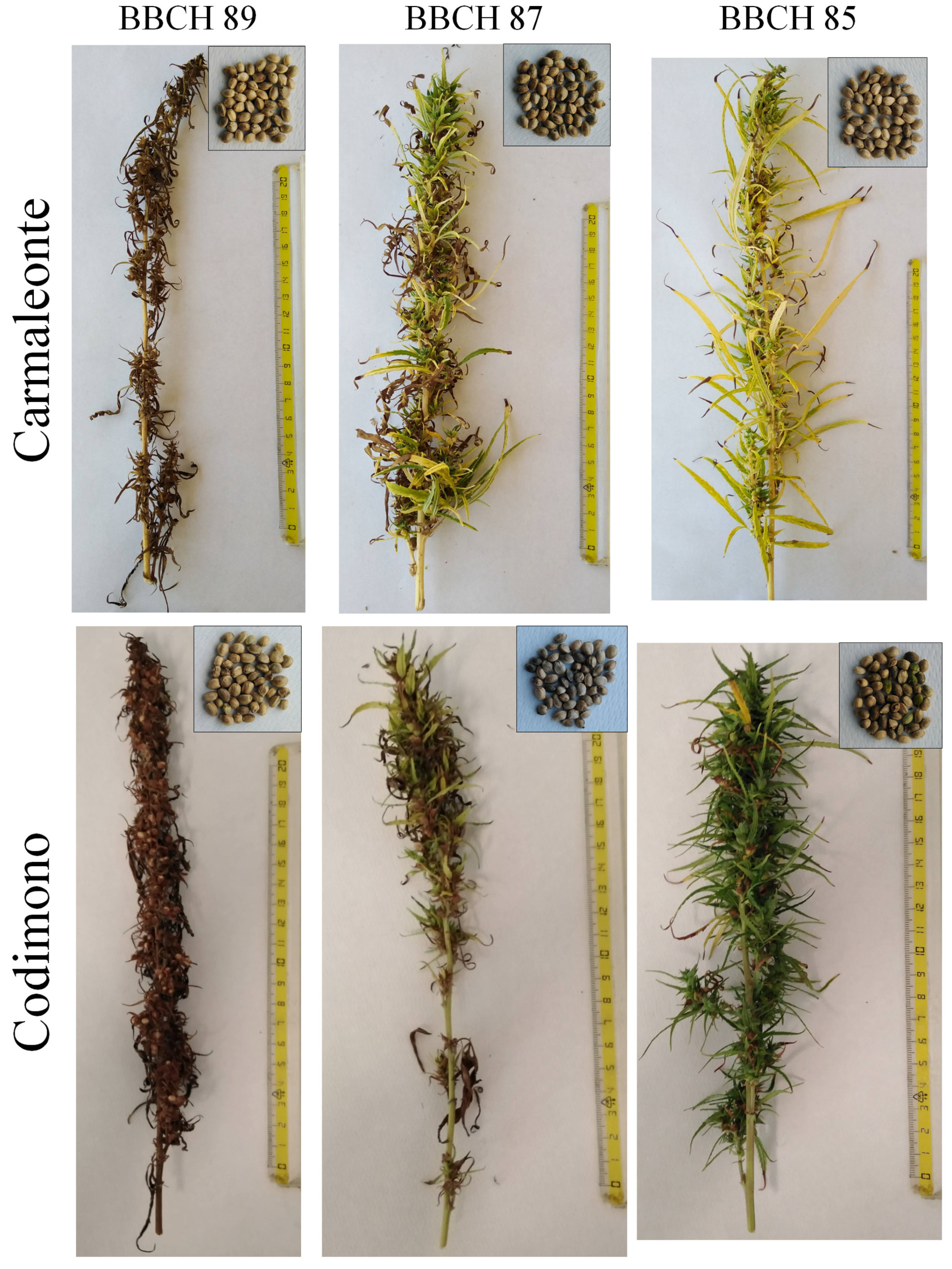
The visible organs on the reproductive part are the hemp fruits, commonly referred to as seeds. Each fruit contains a single seed, which is botanically termed achene [4,26]. Following the BBCH scale [27], we monitored the variation in visible fruits once they had reached the principal growth stage 8. Seeds of the varieties Carmaleonte and Codimono were collected at three growth stages of fruit ripening (Figure 1) according to [27]: BBCH 85 (50% of ripe fruits), 87 (75% of ripe fruits), and 89 (fully ripe fruits, beginning of fruit abscission). For each stage, 5–6 panicles were collected at random within the field, and the seeds were manually shelled.
Immediately after the separation, the seeds of each variety and ripening stage were analyzed using a VIS–NIR spectrometer by measuring and acquiring spectral transmittance aimed at searching for and evaluating differences among the ripening stages. To achieve this, we used the SCIO™ spectrometer (Consumer Physics, Tel Aviv, Israel), a low-cost, off-the-shelf pocket-sized sensor that uses a short wavelength NIR range. The obtained reflectance signal covers a range of 740–1070 nm. The spectrometer’s optical head is a few millimeters in size, and thanks to this, it enables sensitive and accurate readings. The device uses Bluetooth wireless technology to communicate with a smartphone on which the “SCIO Lab” app manages the spectral data in a cloud. Five replicates were made, including three scans for each (Table S1). To identify the wavelengths at which distance was the greatest, we calculated the difference between adjacent wavelengths approximating derivatives (differentials of spectra).
At the end, the weight of 1000 seeds was determined by weighing 30 seeds in five replications. Thirty seeds from each stage of both varieties (per five replicates) were then weighed and left to dry at room temperature until they reached a constant weight. The moisture content of each stage was calculated using the formula
M C   ( % ) = S W i S W d   S W i × 100
where
MC = moisture content (wet basis);
SWi = initial seed weight (wet weight);
SWd = dry seed weight.

2.2. Germination Test

Germination was performed following the procedure described in [28] with some modifications. Sixty seeds per each stage of Carmaleonte and Codimono variety were soaked in a 10 mL 1% hydrogen peroxide solution (Milton, ON, Canada). Three Falcon tubes with twenty seeds, each considered as a replicate, were used for each treatment (variety × stage). The tubes were kept in the dark at room temperature for 24 h. The next day, the germination solution was replaced with a fresh solution containing the same amount and concentration of hydrogen peroxide. The seeds were then kept in the dark at room temperature for another three days. Finally, the seeds from each replicate were left to dry on Whatman filter paper, and then the seedlings that emerged from their seed coats were counted. The seed germination rate (SGR) was calculated by dividing the number of germinated seeds by the total number of seeds and was expressed as a percentage. The complete test was replicated twice.

2.3. Artificial Neural Networks (ANNs)

Reflectance values collected by the SCIO™ spectrometer, representing wavelengths from 740 to 1070 nm, were used as the input for an artificial neural network (ANN) to perform a classification of the seeds, based on the degree of ripeness (BBCH 89, BBCH 87, and BBCH 85) for both individual genotypes (Carmaleone and Codimono) and all the samples. The structure of the artificial intelligence model adopted was a Shallow Neural Network (SNN), characterized by a single hidden layer with 200 nodes, which uses a Rectified Linear Unit (ReLU) as activation function, and a single output layer with three neurons (one for each class), using a softmax (normalized exponential function) activation function to normalize the output. The optimal number of the hidden layer neurons was chosen by minimizing the loss function (sparse categorical cross entropy) and maximizing the accuracy, used as performance function, which measures the correct predicted classes on the total observations. The above-described model was developed in Python v3.9.18, taking advantage of Keras API [29] for Tensorflow [30] library and scikit-learn [31] metrics to assess the performance. The dataset was partitioned into 80% for training and 20% for testing.

2.4. Statistical Analysis

We used version 3.22 (2018) of PAST software [32] (Oyvind Hammer, University of Oslo, Oslo, Norway, https://www.nhm.uio.no/english/research/resources/past/, accessed on 9 November 2025). The data were checked for normality using the Shapiro–Wilk test and homoscedasticity using the Levene’s test and were then subjected to analysis of variance (two-ways Anova). Two factors were analyzed: variety (Codimono and Carmaleonte) and stage (BBCH 85, 87, and 89). Before the analysis, the percentage data (moisture content and germination) were transformed to the square root of the arcsine. Significantly different means were separated via Tukey’s HSD test at p < 0.05 or p < 0.01 where necessary. Principal component analysis (PCA) was performed using the same software for visualizing the different behaviors of the varieties and the growth stages. The PCA was based on the values corresponding to the wavelengths (740–1040 nm) managed and collected by the spectrometer.

3. Results

3.1. Seed Ripening

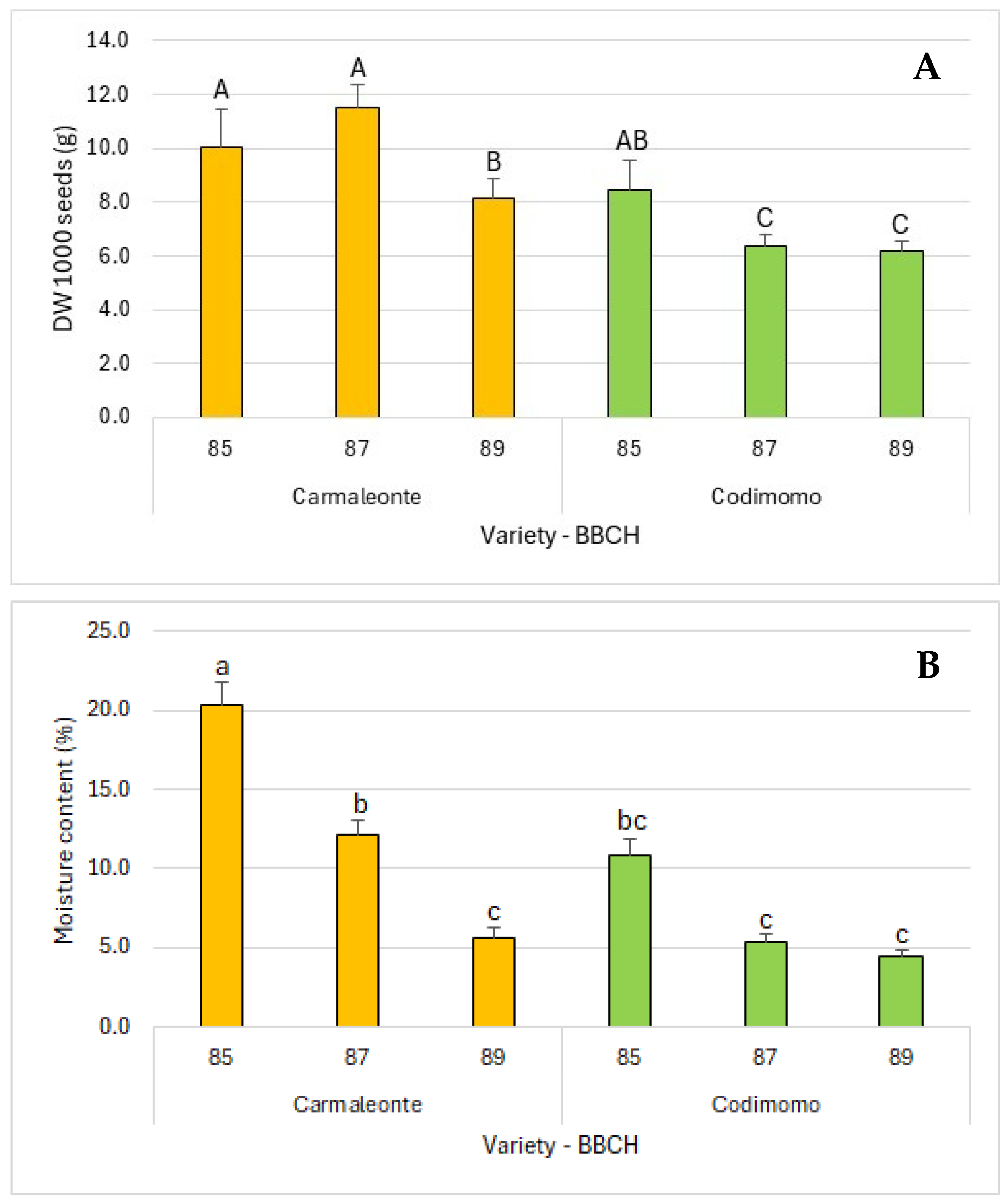
The seeds of the two varieties differed significantly (Table 1). The average weight of Carmaleonte seeds (9.89 g 1000 seeds−1) was higher compared to Codimono (7.05 g 1000 seeds−1), a difference that was highly significant (p < 0.0001). At BBCH 85 (and BBCH 87 for Carmaleonte) the seed weight was statistically higher than in the later stages (Figure 2A). The weight difference reflected the moisture content to some extent (Figure 2B). Anyway, the differences among stages within the variety were clearer, particularly for Carmaleonte, where the moisture content decreased progressively from 20.3% at BBCH 85 to 12.1% at BBCH 87, and finally to 5.6% at BBCH 89. This value was statistically comparable with that of Codimono at the same stage (4.4% moisture content).
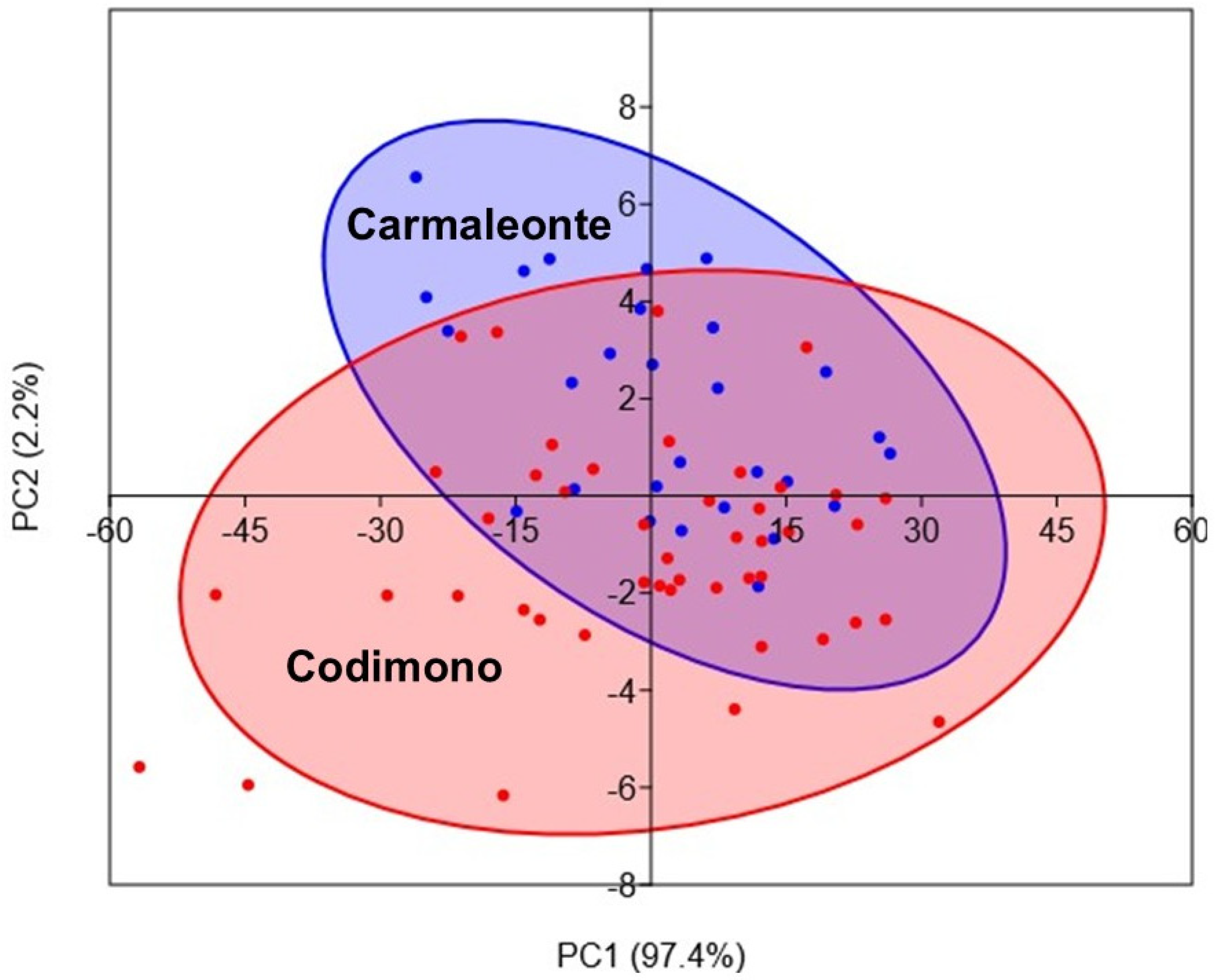
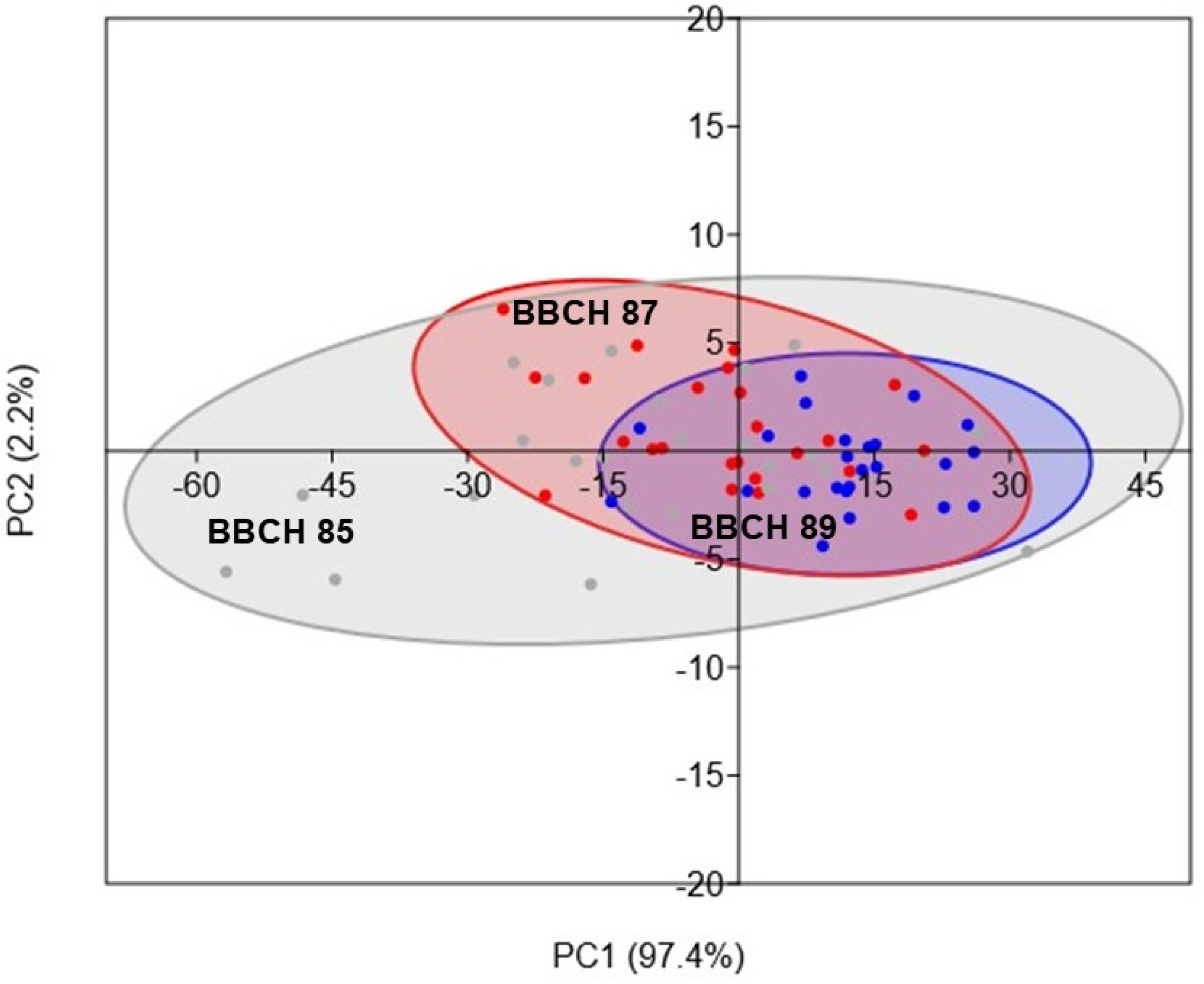
The first two components of principal component analysis (PCA) explained almost all the observed variability (99.6%), with the first component accounting for a higher percentage (97.4%) (Figure 3). Using the reflectance values registered for Carmaleonte and Codimono by the portable spectrometer, it was found that the optical behavior of the varieties partially overlapped, but that certain wavelengths evidenced a separation between the varieties (Figure 3). Both genotypes are monoecious and were selected at CREA from different ancestors. As mentioned in Section 2, Carmaleonte belongs to the “yellow stem” varieties due to its tendency to undergo a yellowing of the stem and leaves as the plant grows. Whether this trait affects the optical properties of the seeds and hence accounts for the partial separation from Codimono requires further investigation.
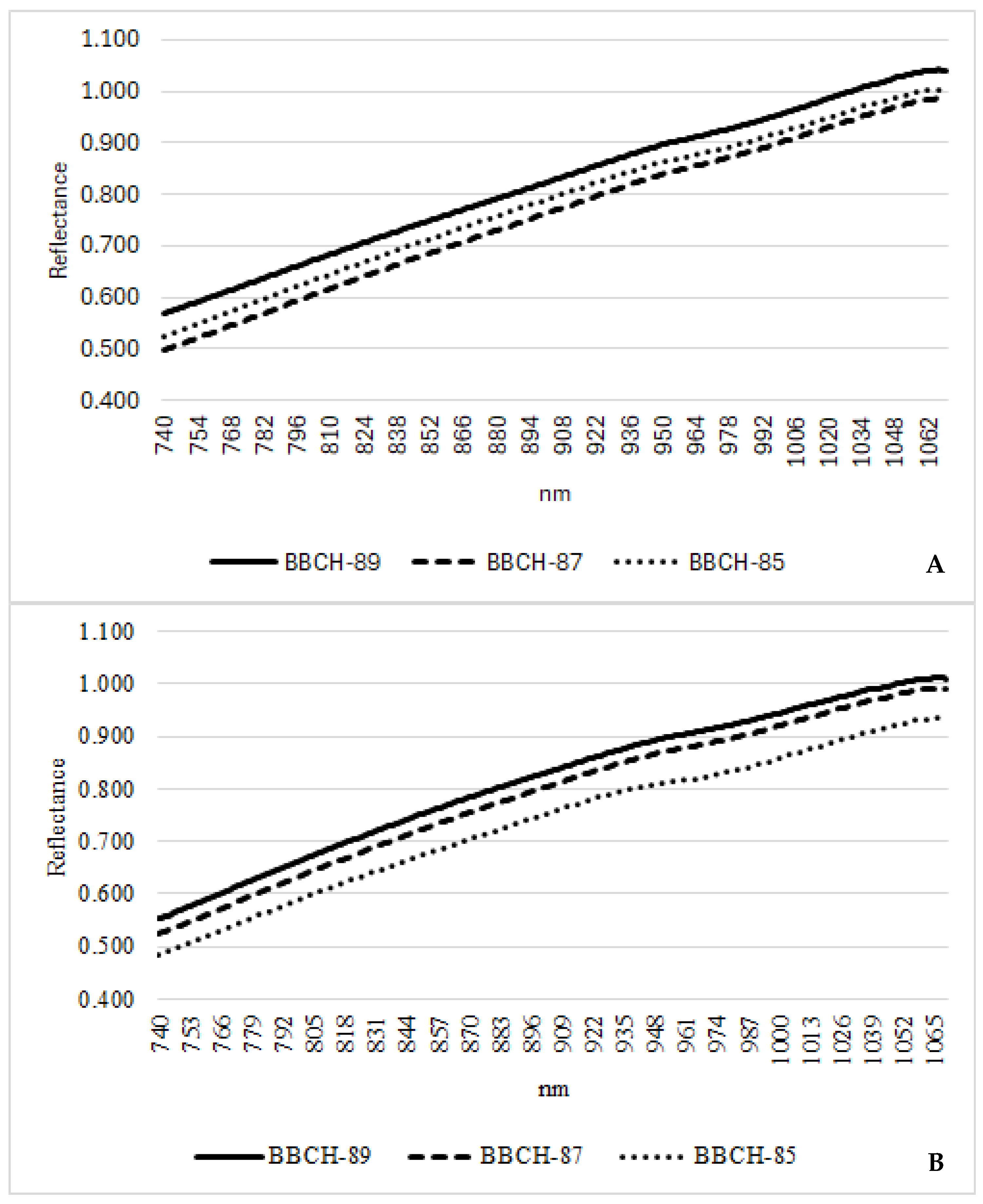
The average reflectance curves increased progressively from 740 to 1070 nm (Figure 4). However, the order of the curves was slightly different: in Carmaleonte (Figure 4A) the reflectance was higher at the BBCH 85 stage than at the BBCH 87 stage. In contrast, in Codimono the order was reversed, with progressively higher reflectance values at later maturity stages (Figure 4B). In both cases, however, the seeds at the most advanced stage of maturity (BBCH 89) had the highest reflectance values.
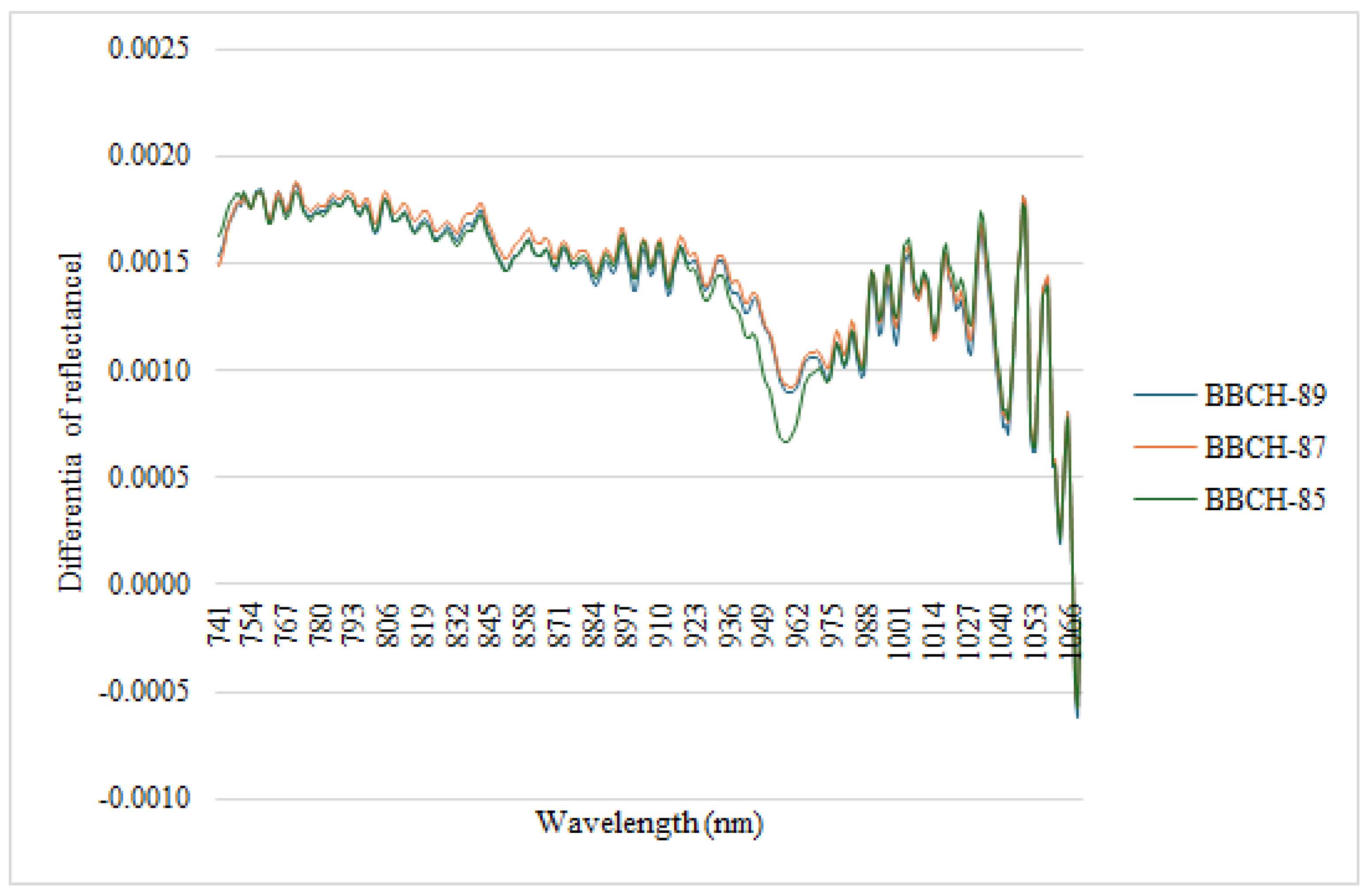
Considering the processed differential spectra based on data from both varieties (Figure 5), the order of the curves was BBCH 89–87 > 85. This indicates that the earliest stage can be identified spectrophotometrically compared to more advanced stages. Specifically, the most obvious difference between the curves was observed at the wavelengths of 955 nm, where the BBCH 85 stage was clearly lower compared to BBCH 87 and 89 stages.
The discrepancy between stages BBCH 85 and 87 in the varieties is likely to have at least two causes. Although the selection of inflorescences is defined by descriptors, there may be an element of subjectivity. Being the ripening scalar, the inflorescences at stage BBCH 85 may contain seeds that are shifting towards the next stage. Therefore, in studies such as this, where the choice of infructescence is made visually, it is possible to collect inflorescences that are not perfectly centered on stage 85. Secondly, while fruits at stages 87 and 89, which are ending their cycle, contain more uniform seeds, stage 85 presents a wide variability, encompassing and containing fruits (and seeds) at various stages of maturity. The PCA previously performed on the varieties was then applied on the phenological stages confounding the varieties (Figure 6). Since the initial database remained the same, the explained variability and the proportions of the first and second components were consistent with previous findings. However, the added value of this alternative perspective was significant. The arrangement of the groups confirmed the previous observation. Stage BBCH 85 included subsequent stages 87 and 89, while stage BBCH 87 only partially included stage BBCH 89, which had the smallest surface area. Cases belonging only to BBCH 85 corresponded to those that differentiated the Codimono variety in the previous PCA, while some of the cases common to BBCH 85 and 87 corresponded to those that differentiated the Carmaleonte variety.
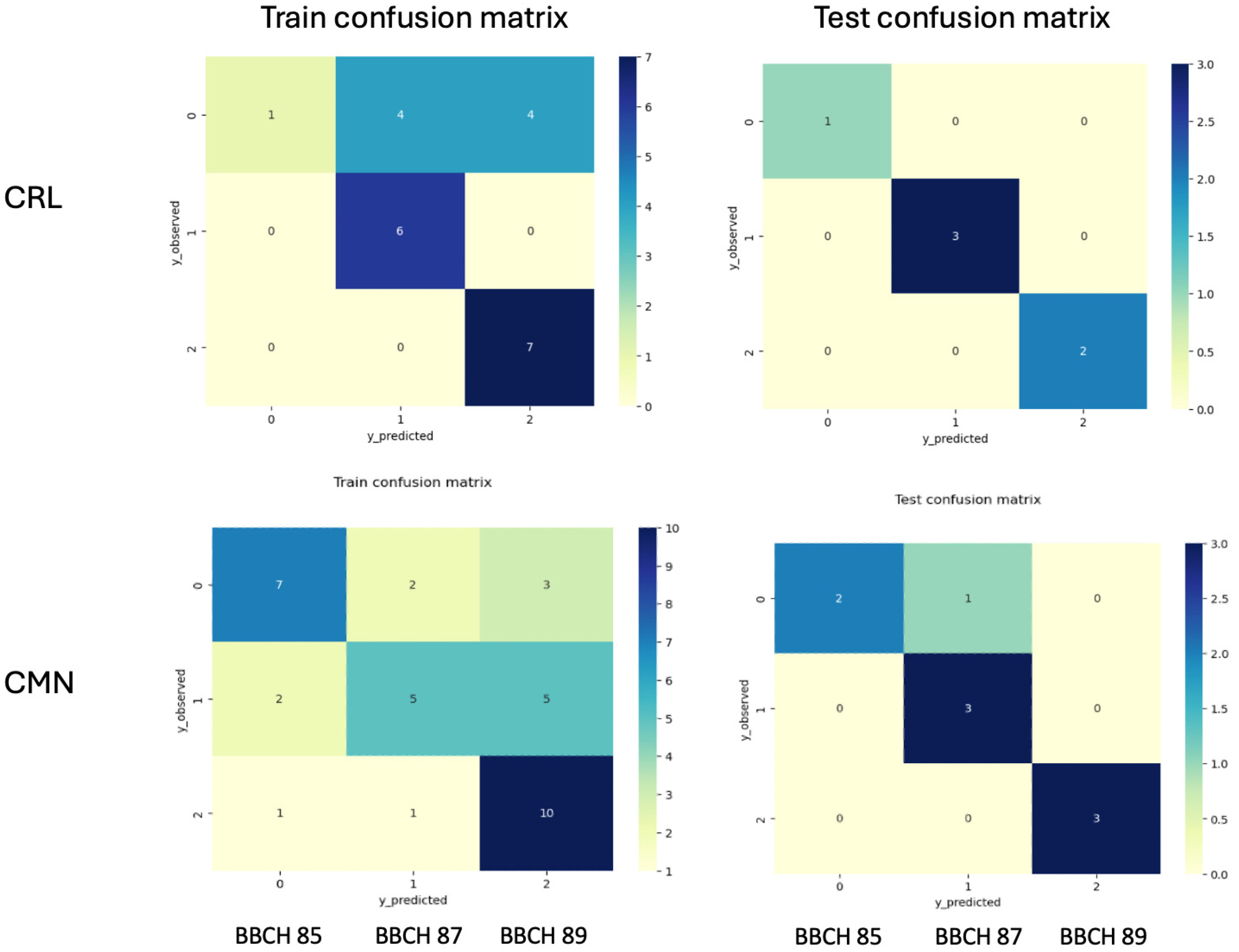
The results of the analysis of the ANNs (Table 2 and Table 3) provided new insights into the previous indications. The overall accuracy was 69% for the training set and 53% for the test set. The total observations were correctly classified for Carmaleonte, and with a good accuracy for Codimono (0.89). However, test performance worsened when both genotypes were considered together, regardless of genotype.
Further analysis is therefore shown in Table 3 to delve deeper into the weight of the individual classes on the overall accuracy values. The f1-score is the harmonic mean of precision and recall, which indicate, respectively, how often positive predictions are right and whether the model correctly identifies positive instances. The f1-score values support the accuracy results and emphasize the greater difficulty in classifying the BBCH 85 and BBCH 87 stages. For both genotypes, the values for these stages were lower than those for the latest stage (BBCH 89).
Although for Carmaleonte the reflectance curve of BBCH 85 preceded that of BBCH 87, the ripening stages were clearly differentiated, and this was confirmed by the corresponding test confusion matrix (Figure 7). On the other hand, stages 85 and 87 were to some extent undifferentiated for Codimono. Overall, the ripening stage BBCH 89 was unambiguously distinct from the others, which confirms the difficulty of discriminating between the previous ripening stages (Figure 7).
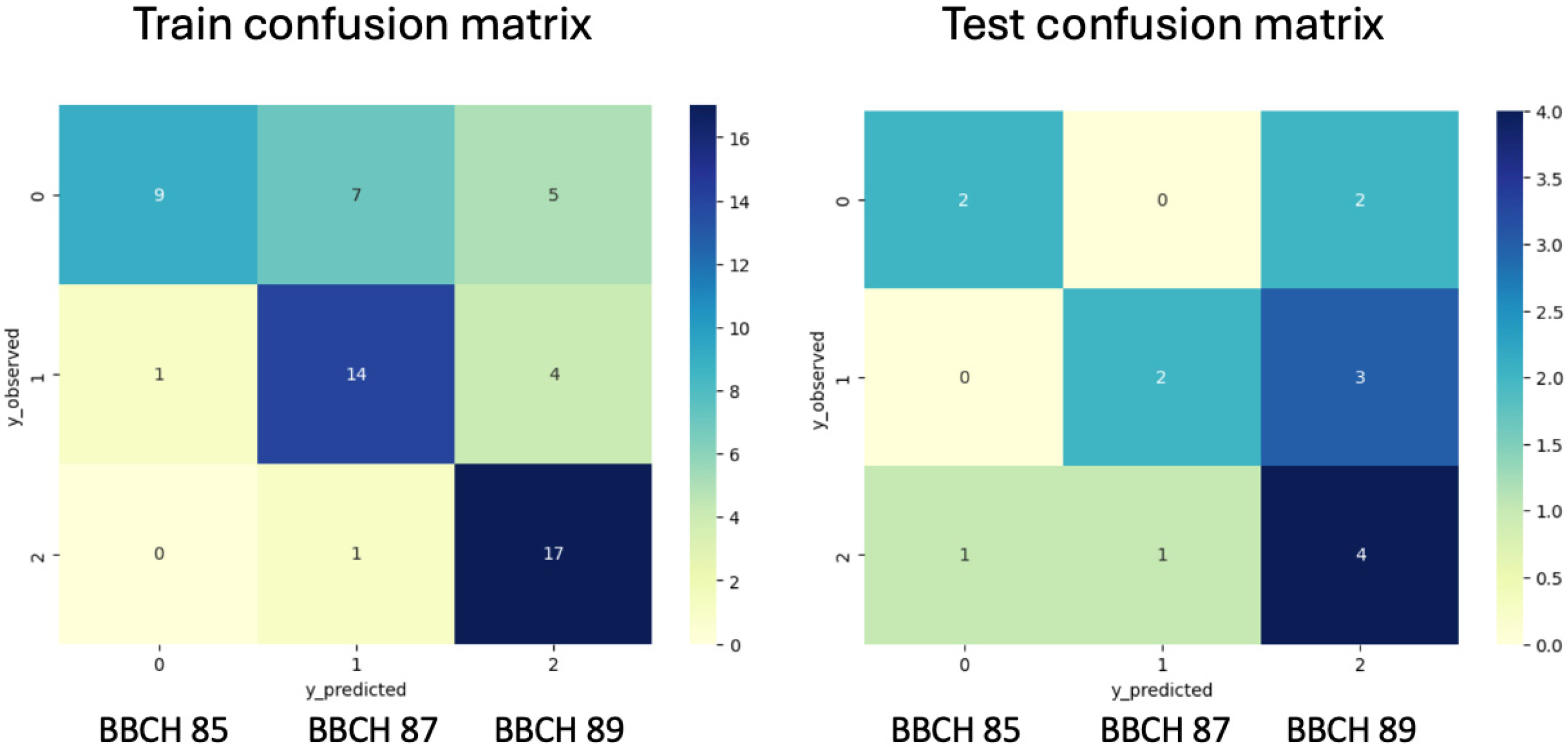
The difficulty in distinguishing between the first two stages of ripeness, coupled with the high accuracy with which the BBCH 89 stage was classified, is consistent with the ANN results on the dataset where the data of the two genotypes were analyzed together (Figure 8).

3.2. Germination Test

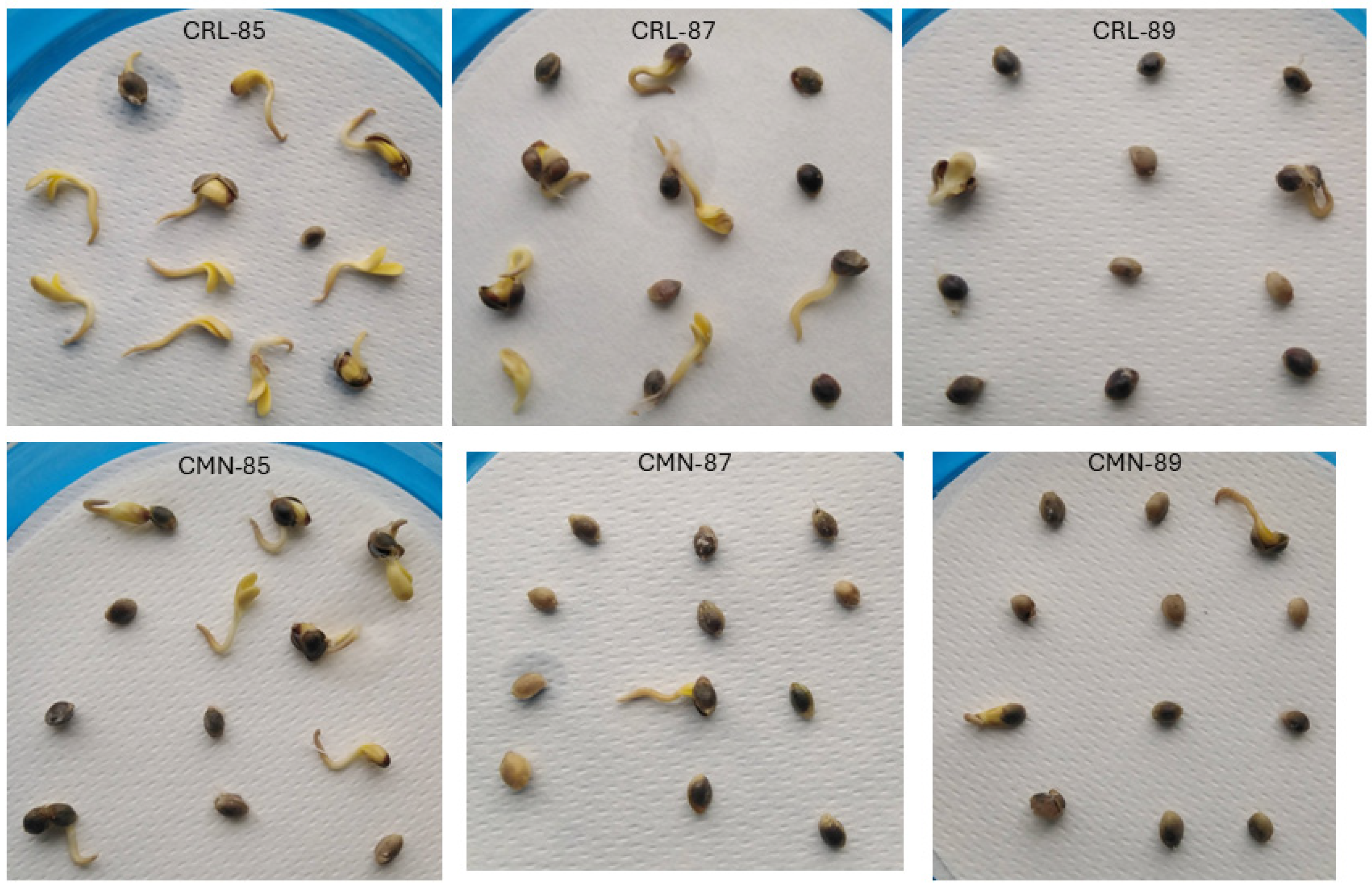
Hemp seeds showed a reduced percentage of germination (Figure 9). One of the main problems was the occurrence of different types of contamination, which greatly reduced the likelihood of a full germination. The protocol adopted in the present study, modified from [28], allowed the germination until leaflet emergence.
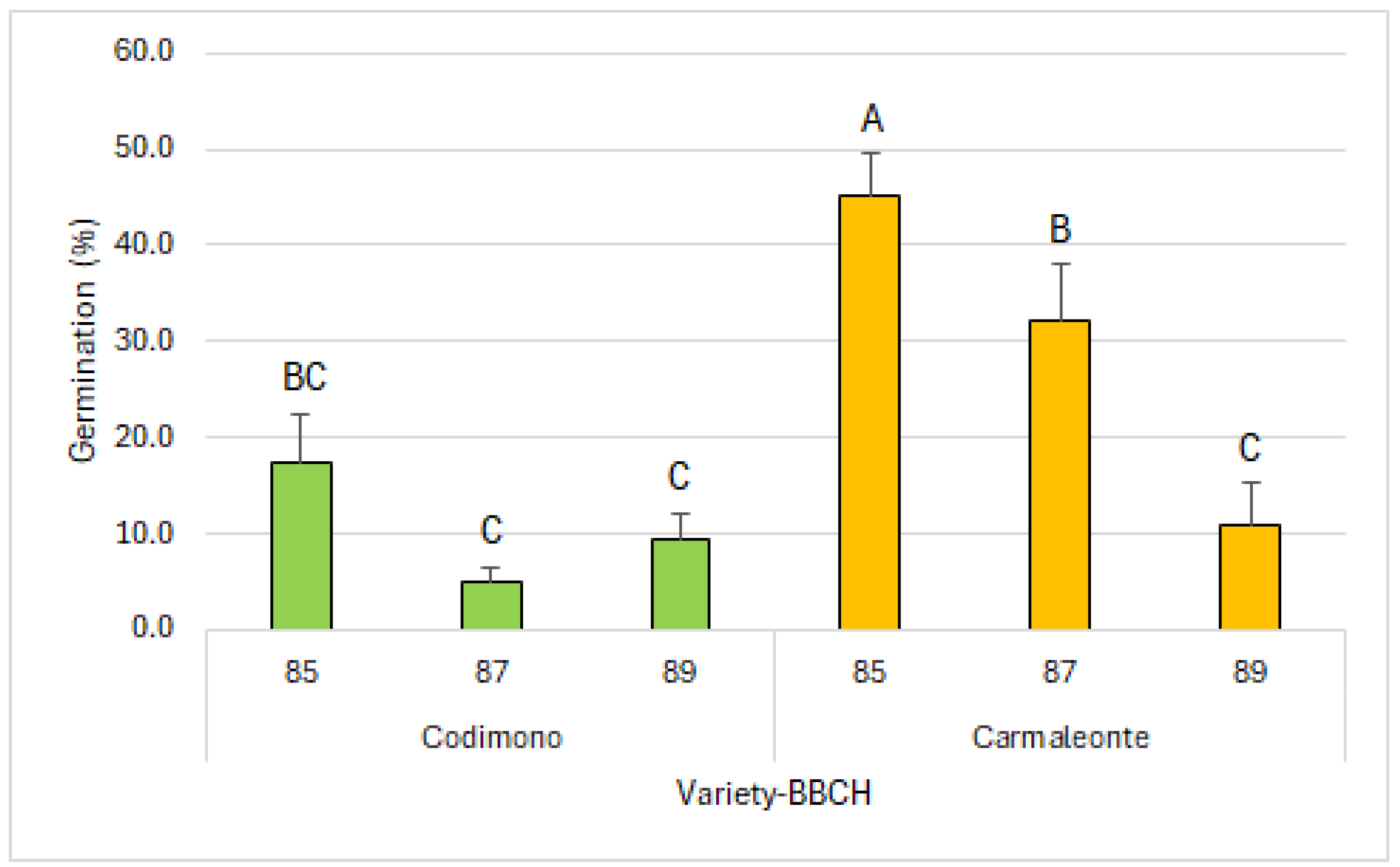
Codimono had a lower germination rate (10.7%) than Carmaleonte (29.4%), a difference which was statistically significant (Table 4). A consistent finding was that the germination rate of seeds collected at BBCH-85 was higher than at other growth stages (Figure 10). On average, the percentage of germination was statistically higher at BBCH-85 (31.2%) decreasing to 18.6% and 10.2% at BBCH-87 and BBCH-89, respectively. Carmaleonte exhibited this behavior more clearly than Codimono.

4. Discussion

The study described the application of spectrometry to distinguish different maturity stages of hemp seeds for future applications in harvesting and post-harvesting. As a first step, an easy-to-use and relatively inexpensive portable spectrometer was used to analyze several standard phenological stages.
The physiological development of hemp determines the presence of fruits/seeds at various stages of maturity at harvesting. The results of the study showed that optical methods can be used to monitor hemp seed maturity and distinguish between stages of maturity in order to determine the optimal harvest time. The observed spectra showed an order of decreasing intensity—BBCH 89–87 > 85—with a sensitive point at and around 955 nm. Huang et al. [33] used hyperspectral imaging for the identification of maize seed varieties and selected eleven optimal wavelengths for classifying maize seeds. These wavelengths were located within the 500–750 nm region and mainly reflected the absorption of starch and oil. In a similar work on rice seeds, ref. [34] reported that the wavelengths associated with color variations were 450–480 and 680–720 nm. The results of this study contribute to the field of seed recognition by identifying a wavelength that fell outside the region previously identified as a possible area of differentiation.
To support the statistical finding, two ANN models were tested for ripening-stage classification. The ANN-based method confirmed the results obtained from the PCA, highlighting the potential for automatic identification of the different ripening stages. The performance of ANNs should be considered a preliminary verification of statistical data, since they are based on smaller datasets than are generally required for approaches based on artificial intelligence. Acquiring more data to develop a larger dataset would enable better performance and a more precise description of the statistical results.
The chosen device was selected because of its portability and robustness, which enables the acquisition of spectra in uncontrolled environments. Its narrow spectral range (740–1070 nm) and integrated internal calibration optical system make it less sensitive to moderate variations in external lighting or sample surface temperature. In this study, measurements were taken directly on freshly harvested seeds under standard ambient light to simulate realistic operating conditions. The consistent results obtained suggest good repeatability and indicate that the technology can be used for rapid, real-time monitoring during harvesting or post-harvest selection. An important future development will be to assess the system’s resistance to different environmental conditions, such as humidity, temperature, and lighting.
At harvesting, seeds with different moisture levels are harvested with impurities such as dust and threshing residues. In addition to the combine’s efficient settings (threshing system, fan regulation, upper and lower sieves cleaning system), further cleaning and stabilization are required to dry the seeds and prevent deterioration [9]. This process involves the employment of a workforce in case of natural ventilation or the use of drying systems. For large quantities, the energy required can be relatively high. Assirelli et al. [9] reported that to clean and to avoid any compaction and damage to the biomass, hemp seeds of variety Futura 75 variety were subjected to high-pressure dehumidified air for 13 h at a temperature of 35 °C in an industrial plant of a sowing seed company soon after harvesting. Pre-processing using optical systems for separating the number of foreign bodies or for separating fully ripened seeds (BBCH 89) with a moisture content below 10% from seeds to be dehumidified could help to reduce energy cost. However, their application must be carefully studied because, as outlined by [3], the seed separation from impurities can be challenging to some extent. A commercial optical sorter used for maize seed sowing failed at removing impurities without removing good grains as well. However, the sorting index used by the optical sorter was not specified.
One of the key points observed in the study is the decrease in germination percentage as the seeds mature. As previously mentioned, laboratory trials have shown that the use of unclean seeds can promote the growth of pathogens and hinder germination. Various protocols, mainly related to in vitro culture, report the use of hydrogen peroxide in the first step of the process to soften the seed coat and allow better germination [28,35,36]. Unlike in vitro culture protocols, which include passages with sodium hypochlorite and ethanol, complete sterilization was avoided in the present study. This was performed to remain as close as possible to standard germination protocols. However, considering the results indicating a decrease in germination percentage from BBCH 85 to BBCH 89, it seems that the applied protocol did not influence the results.
This contradicts recent findings by [37,38], who reported that the highest values were obtained from mature seeds. The seed classes considered by [37] were identified as immature, semi-mature, or mature, and were selected based on seed coat color, moisture content, and the thousand-seed weight. Seed color was also the selection criterion used by [38]. The seeds studied in this work refer to the principal growth stage 8 ‘Ripening of fruit’ as defined in [27]. As shown in Figure 1, varying percentages of seeds at different stages of ripeness may be present within individual infructescence, with no clear color differences observed. Thus, beyond the differences among the varieties and the growth conditions in different experiments, the physiological differences between the seeds studied in the cited papers could be greater, meaning the studies would not entirely overlap.
In this respect, Groot’s considerations regarding physiological and harvest maturity [20] are very interesting and relevant when discussing the concept of “mature” seeds. In his work, Groot cited two studies on wheat and physic nut (Jatropha curcas L.) seeds, mentioning that the maximum germination quality was acquired at physiological maturity. Physiological (or mass) maturity indicates the point at which a seed has acquired its maximum dry weight (end of the seed-filling phase), and therefore its maximum agronomic yield. However, harvesting can be carried out at a later stage (harvest maturity, the end of maturation drying), thus allowing important maturation events to be completed. This includes the decline in seed moisture levels to values that allow for better storage and handling [39]. Under natural conditions, for many crops this late ripening stage can coincide with seed shattering. In the case of hemp, a compromise must be found that considers factors such as reducing yield loss, achieving the highest proportion of seeds at the optimal stage of maturity, the necessity of conditioning, and the environmental conditions. The choice between harvesting at mass or at harvest maturity is a matter of debate [40]. As previously mentioned, hemp exhibits progressive seed maturation, and during harvesting, some seeds will inevitably be overripe, some ripe, and some unripe. As indicated in [40], for indeterminate flowering species, harvesting should take place when most of the seed-bearing structures are mature or close to maturity, and flowering has ceased in the inflorescence. Based on this statement and the results obtained in this study, it would be useful to analyze whether the optimal time for harvesting is between BBCH stages 85 and 87. In later stages, although there is a reduction in moisture content, there may be a decline in seed quality in terms of germination percentage.
The data of the present work agrees with the observations of [18] on tomato and carrot seeds. As observed for the hemp at the BBCH 89 stage, lower-quality seed lots exhibited the most pronounced spectral footprint. In the case of the carrot, the poorest-performing seed lot exhibited the highest reflectance at wavelengths between 800 and 1000 nm. Another finding of our work was the relationship between seed weight and germination capacity. The importance of seed size was also highlighted in [37,41] which stated that small-sized hemp seeds were unsuitable for germination. A decline in the weight of thousand seeds from BBCH 85 to BBCH 89 was found to lead to a reduction in the germination percentage. Overall, the findings suggest that the relationship between germination in relation and phenological stages requires further investigation.

5. Conclusions

The use of optical systems can help to differentiate between seeds at different stages of maturity. This can be challenging for seed quality in post-harvest management, especially for sowing seed production in hemp. A simple device as the portable spectrophotometer used in the present study was able to discriminate between the different ripening stages of hemp seeds. The system has been shown to work well for more advanced stages of maturity and homogeneous inflorescences. The reflectance curves were clearly separated, and their relative position allowed one stage to be distinguished from the others. The individuation of a narrower range of wavelength could be the first step towards the future development of automatic separation systems. From an application point of view, this paves the way for the study of optical separation systems capable of separating mature seeds from those requiring a stabilization phase. This could lead to potential savings on energy costs in the supply chain.

Supplementary Materials

The following supporting information can be downloaded at https://www.mdpi.com/article/10.3390/agronomy15122680/s1, Table S1. Size and structure of the determinations analysed within the work.

Author Contributions

Conceptualization, E.S.; methodology, E.S.; formal analysis, E.S., L.M. and S.V.; investigation, E.S.; resources, A.A.; data curation, E.S., L.M. and S.V.; writing—original draft preparation, E.S.; writing—review and editing, E.S., L.M., S.V. and A.A.; supervision, E.S.; project administration, E.S.; funding acquisition, A.A. All authors have read and agreed to the published version of the manuscript.

Funding

The work was supported by the Italian Ministry of Agriculture, Food Sovereignty and Forests (MASAF) under the CARIFIT project (D.D. n. 0667575 on 30 December 2022).

Data Availability Statement

The raw data supporting the conclusions of this article will be made available by the authors on request.

Conflicts of Interest

The authors declare no conflicts of interest.

References

  1. Huang, M.; Wang, Q.G.; Zhu, Q.B.; Qin, J.W.; Huang, G. Review of Seed Quality and Safety Tests Using Optical Sensing Technologies. Seed Sci. Technol. 2015, 43, 337–366. [Google Scholar] [CrossRef]
  2. Langa, S.; Magwaza, L.S.; Mditshwa, A.; Tesfay, S.Z. Characterization of Cannabis Varieties and the Intrinsic and Extrinsic Factors Affecting Cannabis Germination and Seedling Establishment: A Descriptive Review. Ind. Crops Prod. 2024, 208, 117861. [Google Scholar] [CrossRef]
  3. Cujbescu, D.; Nenciu, F.; Persu, C.; Găgeanu, I.; Gabriel, G.; Vlăduț, N.-V.; Matache, M.; Voicea, I.; Pruteanu, A.; Bularda, M.; et al. Evaluation of an Optical Sorter Effectiveness in Separating Maize Seeds Intended for Sowing. Appl. Sci. 2023, 13, 8892. [Google Scholar] [CrossRef]
  4. Amaducci, S.; Scordia, D.; Liu, F.H.; Zhang, Q.; Guo, H.; Testa, G.; Cosentino, S.L. Key Cultivation Techniques for Hemp in Europe and China. Ind. Crops Prod. 2015, 68, 2–16. [Google Scholar] [CrossRef]
  5. Giupponi, L.; Leoni, V.; Carrer, M.; Ceciliani, G.; Sala, S.; Panseri, S.; Pavlovic, R.; Giorgi, A. Overview on Italian Hemp Production Chain, Related Productive and Commercial Activities and Legislative Framework. Ital. J. Agron. 2020, 15, 1552. [Google Scholar] [CrossRef]
  6. Pari, L.; Alfano, V.; Scarfone, A. An Innovative Harvesting System for Multipurpose Hemp. In Proceedings of the 24th European Biomass Conference and Exhibition, Amsterdam, The Netherlands, 6–9 June 2016; pp. 356–358. [Google Scholar]
  7. Kocjan Ačko, D.; Flajšman, M.; Trdan, S. Apical Bud Removal Increased Seed Yield in Hemp (Cannabis sativa L.). Acta Agric. Scand. Sect. B—Soil Plant Sci. 2019, 69, 317–323. [Google Scholar] [CrossRef]
  8. Crispim Massuela, D.; Hartung, J.; Munz, S.; Erpenbach, F.; Graeff-Hönninger, S. Impact of Harvest Time and Pruning Technique on Total CBD Concentration and Yield of Medicinal Cannabis. Plants 2022, 11, 140. [Google Scholar] [CrossRef] [PubMed]
  9. Assirelli, A.; Santangelo, E.; Stagno, F.; Roccuzzo, G.; Musio, S.; Amaducci, S. Hemp Sowing Seed Production: Assessment of New Approaches in North-Italy. Sustainability 2022, 14, 17020. [Google Scholar] [CrossRef]
  10. Huang, H.; Liu, L.; Ngadi, M. Recent Developments in Hyperspectral Imaging for Assessment of Food Quality and Safety. Sensors 2014, 14, 7248–7276. [Google Scholar] [CrossRef]
  11. Akter, T.; Bhattacharya, T.; Kim, J.-H.; Kim, M.S.; Baek, I.; Chan, D.E.; Cho, B.-K. A Comprehensive Review of External Quality Measurements of Fruits and Vegetables Using Nondestructive Sensing Technologies. J. Agric. Food Res. 2024, 15, 101068. [Google Scholar] [CrossRef]
  12. Assirelli, A.; Romano, E.; Bisaglia, C.; Lodolini, E.M.; Neri, D.; Brambilla, M. Canopy Index Evaluation for Precision Management in an Intensive Olive Orchard. Sustainability 2021, 13, 8266. [Google Scholar] [CrossRef]
  13. Aviara, N.A.; Liberty, J.T.; Olatunbosun, O.S.; Shoyombo, H.A.; Oyeniyi, S.K. Potential Application of Hyperspectral Imaging in Food Grain Quality Inspection, Evaluation and Control during Bulk Storage. J. Agric. Food Res. 2022, 8, 100288. [Google Scholar] [CrossRef]
  14. Liu, F.; Yang, R.; Chen, R.; Lamine Guindo, M.; He, Y.; Zhou, J.; Lu, X.; Chen, M.; Yang, Y.; Kong, W. Digital Techniques and Trends for Seed Phenotyping Using Optical Sensors. J. Adv. Res. 2024, 63, 1–16. [Google Scholar] [CrossRef]
  15. Balafoutis, A.; Beck, B.; Fountas, S.; Vangeyte, J.; Wal, T.; Soto, I.; Gómez-Barbero, M.; Barnes, A.; Eory, V. Precision Agriculture Technologies Positively Contributing to GHG Emissions Mitigation, Farm Productivity and Economics. Sustainability 2017, 9, 1339. [Google Scholar] [CrossRef]
  16. Velesaca, H.O.; Suárez, P.L.; Mira, R.; Sappa, A.D. Computer Vision Based Food Grain Classification: A Comprehensive Survey. Comput. Electron. Agric. 2021, 187, 106287. [Google Scholar] [CrossRef]
  17. Ooms, D.; Destain, M.-F. Evaluation of Chicory Seeds Maturity by Chlorophyll Fluorescence Imaging. Biosyst. Eng. 2011, 110, 168–177. [Google Scholar] [CrossRef][Green Version]
  18. Galletti, P.A.; Carvalho, M.E.A.; Hirai, W.Y.; Brancaglioni, V.A.; Arthur, V.; Barboza Da Silva, C. Integrating Optical Imaging Tools for Rapid and Non-Invasive Characterization of Seed Quality: Tomato (Solanum lycopersicum L.) and Carrot (Daucus carota L.) as Study Cases. Front. Plant Sci. 2020, 11, 577851. [Google Scholar] [CrossRef]
  19. Yadav, S.K.; Jalink, H.; Groot, S.P.C.; Van Der Schoor, R.; Yadav, S.; Dadlani, M.; Kodde, J. Quality Improvement of Aged Cabbage (Brassica oleracea Var. Capitata) Seeds Using Chlorophyll Fluorescence Sensor. Sci. Hortic. 2015, 189, 81–85. [Google Scholar] [CrossRef]
  20. Groot, S.P.C. Seed Maturation and Its Practical Implications. Seed Sci. Technol. 2022, 50, 141–151. [Google Scholar] [CrossRef]
  21. Feng, L.; Zhu, S.; Liu, F.; He, Y.; Bao, Y.; Zhang, C. Hyperspectral Imaging for Seed Quality and Safety Inspection: A Review. Plant Methods 2019, 15, 91. [Google Scholar] [CrossRef]
  22. Wallays, C.; Missotten, B.; De Baerdemaeker, J.; Saeys, W. Hyperspectral Waveband Selection for On-Line Measurement of Grain Cleanness. Biosyst. Eng. 2009, 104, 1–7. [Google Scholar] [CrossRef]
  23. Ortenzi, L.; Figorilli, S.; Costa, C.; Pallottino, F.; Violino, S.; Pagano, M.; Imperi, G.; Manganiello, R.; Lanza, B.; Antonucci, F. A Machine Vision Rapid Method to Determine the Ripeness Degree of Olive Lots. Sensors 2021, 21, 2940. [Google Scholar] [CrossRef]
  24. Liang, Z.; Wada, M.E. Development of Cleaning Systems for Combine Harvesters: A Review. Biosyst. Eng. 2023, 236, 79–102. [Google Scholar] [CrossRef]
  25. Pieracci, Y.; Ascrizzi, R.; Terreni, V.; Pistelli, L.; Flamini, G.; Bassolino, L.; Fulvio, F.; Montanari, M.; Paris, R. Essential Oil of Cannabis sativa L: Comparison of Yield and Chemical Composition of 11 Hemp Genotypes. Molecules 2021, 26, 4080. [Google Scholar] [CrossRef] [PubMed]
  26. Strzelczyk, M.; Lochynska, M.; Chudy, M. Systematics and Botanical Characteristics of Industrial Hemp Cannabis Sativa L. J. Nat. Fibers 2022, 19, 5804–5826. [Google Scholar] [CrossRef]
  27. Mishchenko, S.; Mokher, J.; Laiko, I.; Burbulis, N.; Kyrychenko, H.; Dudukova, S. Phenological Growth Stages of Hemp (Cannabis sativa L.): Codification and Description According to the BBCH Scale. Žemės ūkio Moksl. 2017, 24, 31–36. [Google Scholar] [CrossRef]
  28. Sorokin, A.; Kovalchuk, I. Development of Efficient and Scalable Regeneration Tissue Culture Method for Cannabis sativa. Plant Sci. 2025, 350, 112296. [Google Scholar] [CrossRef]
  29. Chollet, F. Keras: Deep Learning Library for Python—Convnets, Recurrent Neural Networks, and More. 2015. Available online: https://github.com/fchollet/keras (accessed on 17 November 2025).
  30. Abadi, M.; Agarwal, A.; Barham, P.; Brevdo, E.; Chen, Z.; Citro, C.; Corrado, G.S.; Davis, A.; Dean, J.; Devin, M.; et al. TensorFlow: Large-Scale Machine Learning on Heterogeneous Systems. arXiv 2015, arXiv:1605.08695. [Google Scholar] [CrossRef]
  31. Pedregosa, F.; Varoquaux, G.; Gramfort, A.; Michel, V.; Thirion, B.; Grisel, O.; Blondel, M.; Prettenhofer, P.; Weiss, R.; Dubourg, V.; et al. Scikit-Learn: Machine Learning in Python. J. Mach. Learn. Res. 2011, 12, 2825–2830. [Google Scholar]
  32. Hammer, O.; Harper, D.A.T.; Ryan, P.D. PAST: Paleontological Statistics Software Package for Education and Data Analysis. Palaeontol. Electron. 2001, 4, 1–9. [Google Scholar]
  33. Huang, M.; He, C.; Zhu, Q.; Qin, J. Maize Seed Variety Classification Using the Integration of Spectral and Image Features Combined with Feature Transformation Based on Hyperspectral Imaging. Appl. Sci. 2016, 6, 183. [Google Scholar] [CrossRef]
  34. Qiu, Z.; Chen, J.; Zhao, Y.; Zhu, S.; He, Y.; Zhang, C. Variety Identification of Single Rice Seed Using Hyperspectral Imaging Combined with Convolutional Neural Network. Appl. Sci. 2018, 8, 212. [Google Scholar] [CrossRef]
  35. Baek, S.-C.; Jeon, S.-Y.; Choi, Y.-J.; Byun, B.-H.; Kim, D.-H.; Yu, G.-R.; Kim, H.; Lim, D.-W. Establishment of an In Vitro Micropropagation System for Cannabis sativa ‘Cheungsam’. Horticulturae 2024, 10, 1060. [Google Scholar] [CrossRef]
  36. Mohammad, T.; Ghogare, R.; Morton, L.B.; Dhingra, A.; Potlakayala, S.; Rudrabhatla, S.; Dhir, S.K. Evaluation of Parameters Affecting Agrobacterium-Mediated Transient Gene Expression in Industrial Hemp (Cannabis sativa L.). Plants 2024, 13, 664. [Google Scholar] [CrossRef]
  37. Yılmaz, G.; Yıldırım, C.; Gür, N.D. Determination of Germination and Emergence Performance of Hemp (Cannabis sativa L.) Seeds at Different Maturity Stages. Turk. JAF Sci. Tech. 2025, 13, 175–180. [Google Scholar] [CrossRef]
  38. Suriyong, S.; Vearasilp, S.; Krittigamas, N.; Pinmanee, S.; Punyalue, A. Effect of Seed Maturity on Seed Physiological Quality, Oil Content and Fatty Acid Composition of Hemp Seed. Nat. Resour. 2012, 11, 351–358. [Google Scholar]
  39. Ellis, R.H. Temporal Patterns of Seed Quality Development, Decline, and Timing of Maximum Quality during Seed Development and Maturation. Seed Sci. Res. 2019, 29, 135–142. [Google Scholar] [CrossRef]
  40. Sripathy, K.V.; Groot, S.P.C. Seed Development and Maturation. In Seed Science and Technology; Dadlani, M., Yadava, D.K., Eds.; Springer Nature: Singapore, 2023; pp. 17–38. ISBN 978-981-19-5887-8. [Google Scholar]
  41. Moon, Y.H.; Cha, Y.L.; Lee, J.E.; Kim, K.S.; Kwon, D.E.; Yang, Y.K. Investigation of Suitable Seed Sizes, Segregation of Ripe Seeds, and Improved Germination Rate for the Commercial Production of Hemp Sprouts (Cannabis sativa L.). J. Sci. Food Agric. 2020, 100, 2819–2827. [Google Scholar] [CrossRef]
Figure 1. Growth stages analyzed. The box shows the seeds belonging to the infructescence.
Agronomy 15 02680 g001
Figure 2. Seed weight (A) and seed moisture (B) at the different phenological stages of the varieties analyzed (mean ± st. dev.). The values with different letters differ according to Tukey’s HSD test at p ≤ 0.01 (uppercase letter) or p ≤ 0.05 (lowercase letter). The number under the columns in each variety (Carmaleonte and Codimono) indicates the BBCH stage.
Agronomy 15 02680 g002
Figure 3. PCA relative to the reflectance values in the 740–1070 nm range for the two varieties (Codimono is shown as red points/ellipse and Carmaleonte as blue points/ellipse).
Agronomy 15 02680 g003
Figure 4. Trend of the reflectance curve observed in Carmaleonte (A) and Codimono (B) at three phenological stages of inflorescence.
Agronomy 15 02680 g004
Figure 5. Corresponding average spectra for seeds at BBCH 89, 87, and 85 stages, pre-processed by differentiation (n = 24).
Agronomy 15 02680 g005
Figure 6. PCA relative to the reflectance values in the 740–1070 nm range for the phenological stages analyzed (BBCH 85—gray points/ellipse, BBCH 87—red points/ellipse, BBCH 89—blue points/ellipse).
Agronomy 15 02680 g006
Figure 7. Train and test confusion matrices elaborated for the ripening stages of Carmaleonte (CRL) and Codimono (CMN).
Agronomy 15 02680 g007
Figure 8. Train and test confusion matrices elaborated for the ripening stages confounding the genotypes.
Agronomy 15 02680 g008
Figure 9. Examples of Carmaleonte (CRL) and Codimono (CMN) seed germination at different BBCH stages.
Agronomy 15 02680 g009
Figure 10. Percentage germination (mean ± st. err.) at the different phenological stages of the varieties analyzed. The values with different letters differ according to Tukey’s HSD test at p ≤ 0.01. The number under the columns in each variety (Codimono and Carmaleonte) indicates the BBCH stage.
Agronomy 15 02680 g010
Table 1. ANOVA results for weight and moisture content of Carmaleonte and Codimono seeds at three different ripening growth stages (df = degree of freedom). Before the analysis, the percentage of moisture content was transformed into the square root of arcsine.
Seed Weight (g)Moisture Content (%)
Source of Variationdfpp
Variety (V)1<0.0001<0.0001
Growth stage (GS)2<0.0001<0.0001
V × GS2<0.00010.0496
Table 2. Training and test accuracy for the two ANN models for ripening-stage classification, the first differentiated by genotype and the second including both genotypes.
ClassificationTraining AccuracyTest Accuracy
Carmaleonte0.641
Codimono0.610.89
Total samples0.690.53
Table 3. Training and test f1-scores for the two ANN models for ripening-stage classification, the first differentiated by genotype and the second including both genotypes.
ClassificationRipening StageTraining f1-ScoreTest f1-Score
CarmaleonteBBCH 850.201
BBCH 870.751
BBCH 890.781
CodimonoBBCH 850.640.80
BBCH 870.500.86
BBCH 890.671
Total samplesBBCH 850.580.57
BBCH 870.680.50
BBCH 890.770.53
Table 4. ANOVA results for the percentage germination of Carmaleonte and Codimono seeds at three different ripening growth stages. Degree of freedom (df). Before the analysis, the percentage was transformed into the square root of arcsine.
Source of VariationdfFp
Variety (V)122.30<0.0001
Growth stage (GS)210.690.0003
V × GS26.420.0048
Disclaimer/Publisher’s Note: The statements, opinions and data contained in all publications are solely those of the individual author(s) and contributor(s) and not of MDPI and/or the editor(s). MDPI and/or the editor(s) disclaim responsibility for any injury to people or property resulting from any ideas, methods, instructions or products referred to in the content.