


Ficus carica Fruits, By-Products and Based Products as Potential Sources of Bioactive Compounds: A Review
 ,
,  ,
,  and
and 
Abstract
:1. Introduction
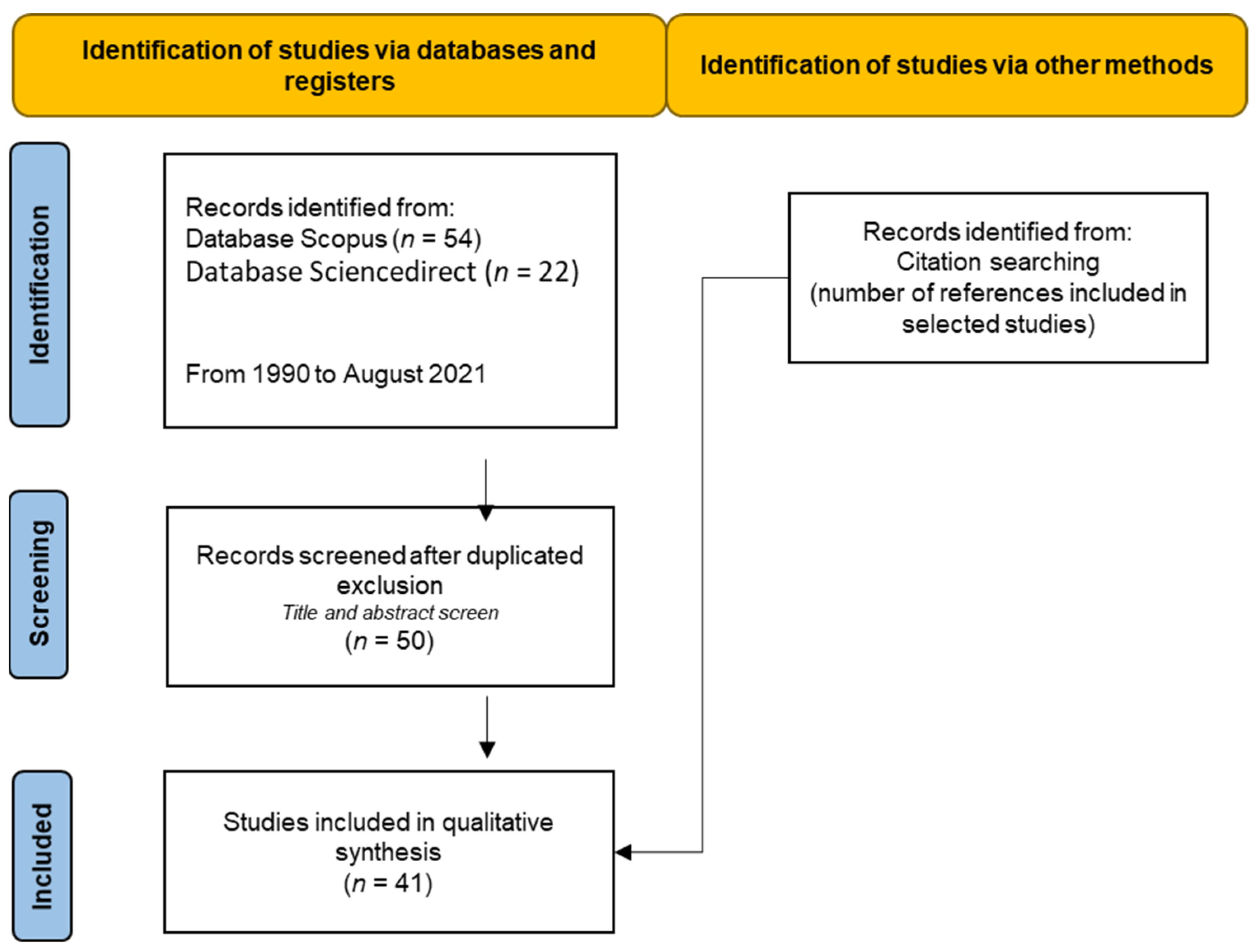
2. Scientific Literature Review
3. Bioactive Compounds in Different Fig Parts
4. Bioactive Content of Fig-Based Products and Their Antioxidant Activity
5. Conclusions
Author Contributions
Funding
Institutional Review Board Statement
Informed Consent Statement
Data Availability Statement
Conflicts of Interest
References
- Barolo, M.I.; Ruiz Mostacero, N.; López, S.N. Ficus carica L. (Moraceae): An ancient source of food and health. Food Chem. 2014, 164, 119–127. [Google Scholar] [CrossRef] [PubMed]
- Vallejo, F.; Marín, J.G.; Tomás-Barberán, F.A. Phenolic compound content of fresh and dried figs (Ficus carica L.). Food Chem. 2012, 130, 485–492. [Google Scholar] [CrossRef]
- Melgarejo, P. El Cultivo de la Higuera (F. carica, L.); A. Madrid Vicente, Ediciones: Madrid, Spain, 1999. [Google Scholar]
- Aksoy, U. The dried fig management and the potential for new products. Acta Hortic. 2017, 1173, 377–382. [Google Scholar] [CrossRef]
- Arvaniti, O.S.; Samaras, Y.; Gatidou, G.; Thomaidis, N.S.; Stasinakis, A.S. Review on fresh and dried figs: Chemical analysis and occurrence of phytochemical compounds, antioxidant capacity and health effects. Food Res. Int. 2019, 119, 244–267. [Google Scholar] [CrossRef] [PubMed]
- Veberic, R.; Mikulic-Petkovsek, M. Phytochemical Composition of Common Fig (Ficus carica L.) Cultivars. In Nutritional Composition of Fruit Cultivars; Academic Press: Cambridge, MA, USA, 2016; pp. 235–255. [Google Scholar]
- FAOSTAT. 2019. Available online: http://www.fao.org/faostat/en/#data/QCL (accessed on 30 March 2021).
- Ministerio de Agricultura Pesca y Alimentación (MAPA). Statistics Yearbook 2020. Available online: https://www.mapa.gob.es/es/estadistica/temas/publicaciones/anuario-de-estadistica/2019/default.aspx?parte=3&capitulo=07&grupo=9&seccion=12 (accessed on 24 August 2021).
- Sánchez, M.J.; Melgarejo, P.; Hernández, F.; Martínez, J.J. Chemical and morphological characterization of four fig tree cultivars (Ficus carica L.) grown under similar culture conditions. Acta Hortic. 2003, 605, 33–36. [Google Scholar] [CrossRef]
- Pereira, C.; López Corrales, M.; Martín, A.; Villalobos, M.C.; Córdoba, M.G.; Serradilla, M.J. Physicochemical and nutritional characterization of brebas for fresh consumption from nine fig varieties (Ficus carica L.) grown in Extremadura (Spain). J. Food Qual. 2017, 2017, 6302109. [Google Scholar] [CrossRef] [Green Version]
- Pereira, C.; Serradilla, M.J.; Martín, A.; Villalobos, M.D.C.; Pérez-Gragera, F.; López-Corrales, M. Agronomic behaviour and quality of six fig cultivars for fresh consumption. Sci. Hortic. 2015, 185, 121–128. [Google Scholar] [CrossRef]
- Wojdyło, A.; Nowicka, P.; Carbonell-Barrachina, Á.A.; Hernández, F. Phenolic compounds, antioxidant and antidiabetic activity of different cultivars of Ficus carica L. fruits. J. Funct. Foods 2016, 25, 421–432. [Google Scholar] [CrossRef]
- Petruccelli, R.; Ieri, F.; Ciaccheri, L.; Bonetti, A. Polyphenolic profiling and chemometric analysis of leaves from Italian Ficus carica L. Varieties. Polyphenol compounds in common fig. Eur. J. Hortic. Sci. 2018, 83, 94–103. [Google Scholar] [CrossRef]
- Li, Z.; Yang, Y.; Liu, M.; Zhang, C.; Shao, J.; Hou, X.; Cui, Q. A comprehensive review on phytochemistry, bioactivities, toxicity studies, and clinical studies on Ficus carica Linn. leaves. Biomed. Pharmacother. 2021, 137, 111393. [Google Scholar] [CrossRef]
- Badgujar, S.B.; Patel, V.V.; Bandivdekar, A.H.; Mahajan, R.T. Traditional uses, phytochemistry and pharmacology of Ficus carica: A review. Pharm. Biol. 2014, 52, 1487–1503. [Google Scholar] [CrossRef] [Green Version]
- Mawa, S.; Husain, K.; Jantan, I. Ficus carica L. (Moraceae): Phytochemistry, Traditional Uses and Biological Activities. Evid. Based Complement. Altern. Med. 2013, 2013, 974256. [Google Scholar] [CrossRef] [PubMed] [Green Version]
- Mirshekari, A.; Madani, B.; Wall, M.; Biggs, A.R. Aloe vera coatings maintain antioxidants of fig (Ficus carica L.) fruit during storage. Adv. Hortic. Sci. 2020, 34, 205–212. [Google Scholar] [CrossRef]
- Zhang, Y.; Li, Y.; Ma, P.; Chen, J.; Xie, W. Ficus carica leaves extract inhibited pancreatic β-cell apoptosis by inhibiting AMPK/JNK/caspase-3 signaling pathway and antioxidation. Biomed. Pharmacother. 2020, 122, 109689. [Google Scholar] [CrossRef]
- Abbasi, S.; Kamalinejad, M.; Babaie, D.; Shams, S.; Sadr, Z.; Gheysari, M.; Rakhshandeh, H. A new topical treatment of atopic dermatitis in pediatric patients based on Ficus carica L. (Fig): A randomized, placebo-controlled clinical trial. Complement. Ther. Med. 2017, 35, 85–91. [Google Scholar] [CrossRef] [PubMed]
- Ghanbari, A.; Le Gresley, A.; Naughton, D.; Kuhnert, N.; Sirbu, D.; Ashrafi, G.H. Biological activities of Ficus carica latex for potential therapeutics in Human Papillomavirus (HPV) related cervical cancers. Sci. Rep. 2019, 9, 1013. [Google Scholar] [CrossRef] [Green Version]
- Slavin, J.L. Figs: Past, present, and future. Nutr. Today 2006, 41, 180–184. [Google Scholar] [CrossRef]
- Lianju, W.; Weibin, J.; Kai, M.; Zhifeng, L.; Yelin, W. The production and research of fig (Ficus carica L.) in China. Acta Hortic. 2003, 605, 191–196. [Google Scholar] [CrossRef]
- Tabrizi, A.; Dargahi, R.; Tehrani Ghadim, S.; Javadi, M.; Rasouli Pirouzian, H.; Azizi, A.; Homayouni Rad, A. Functional laxative foods: Concepts, trends and health benefits. In Studies in Natural Products Chemistry; Elsevier: Amsterdam, The Netherlands, 2020; Volume 66, pp. 305–330. [Google Scholar]
- Al-Ogaili, N.A.; Osama, S.; Jazme, D.; Saad, S. In vitro antibacterial investigation and synergistic effect of Ficus carica and olea Europaea aqueous extracts. Res. J. Pharm. Technol. 2020, 13, 1198–1203. [Google Scholar] [CrossRef]
- Ajmal, M.; Arshad, M.U.; Saeed, F.; Ahmed, T.; Khan, A.U.; Bader-ul-Ain, H.; Suleria, H.A.r. Exploring the nutritional characteristics of different parts of fig in relation to hypoglycemic potential. Pak. J. Life Soc. Sci. 2016, 14, 115–122. [Google Scholar]
- Page, M.J.; McKenzie, J.E.; Bossuyt, P.M.; Boutron, I.; Hoffmann, T.C.; Mulrow, C.D.; Shamseer, L.; Tetzlaff, J.M.; Akl, E.A.; Brennan, S.E.; et al. The prisma 2020 statement: An updated guideline for reporting systematic reviews. BMJ 2021, 372, n71. [Google Scholar] [CrossRef] [PubMed]
- Veberic, R.; Colaric, M.; Stampar, F. Phenolic acids and flavonoids of fig fruit (Ficus carica L.) in the northern Mediterranean region. Food Chem. 2008, 106, 153–157. [Google Scholar] [CrossRef]
- Hssaini, L.; Hernandez, F.; Viuda-Martos, M.; Charafi, J.; Razouk, R.; Houmanat, K.; Hanine, H. Survey of Phenolic Acids, Flavonoids and In Vitro Antioxidant Potency Between Fig Peels and Pulps: Chemical and Chemometric Approach. Molecules 2021, 26, 2574. [Google Scholar] [CrossRef]
- Dueñas, M.; Pérez-Alonso, J.J.; Santos-Buelga, C.; Escribano-Bailón, T. Anthocyanin composition in fig (Ficus carica L.). J. Food Compos. Anal. 2008, 21, 107–115. [Google Scholar] [CrossRef]
- Ladhari, A.; Gaaliche, B.; Zarrelli, A.; Ghannem, M.; Ben Mimoun, M. Allelopathic potential and phenolic allelochemicals discrepancies in Ficus carica L. cultivars. S. Afr. J. Bot. 2020, 130, 30–44. [Google Scholar] [CrossRef]
- El Dessouky Abdel-Aziz, M.; Darwish, M.S.; Mohamed, A.H.; El-Khateeb, A.Y.; Hamed, S.E. Potential activity of aqueous fig leaves extract, olive leaves extract and their mixture as natural preservatives to extend the shelf life of pasteurized buffalo milk. Foods 2020, 9, 615. [Google Scholar] [CrossRef]
- Oliveira, A.P.; Valentão, P.; Pereira, J.A.; Silva, B.M.; Tavares, F.; Andrade, P.B. Ficus carica L.: Metabolic and biological screening. Food Chem. Toxicol. 2009, 47, 2841–2846. [Google Scholar] [CrossRef] [PubMed]
- Rababah, T.M.; Al-Mahasneh, M.A.; Kilani, I.; Yang, W.; Alhamad, M.N.; Ereifej, K.; Al-u’datt, M. Effect of jam processing and storage on total phenolics, antioxidant activity, and anthocyanins of different fruits. J. Sci. Food Agric. 2011, 91, 1096–1102. [Google Scholar] [CrossRef]
- Slatnar, A.; Klancar, U.; Stampar, F.; Veberic, R. Effect of drying of figs (Ficus carica L.) on the contents of sugars, organic acids, and phenolic compounds. J. Agric. Food Chem. 2011, 59, 11696–11702. [Google Scholar] [CrossRef]
- Miletić, N.; Popović, B.; Mitrović, O.; Kandić, M.; Leposavić, A. Phenolic compounds and antioxidant capacity of dried and candied fruits commonly consumed in Serbia. Czech J. Food Sci. 2014, 32, 360–368. [Google Scholar] [CrossRef] [Green Version]
- Khadhraoui, M.; Bagues, M.; Artés, F.; Ferchichi, A. Phytochemical content, antioxidant potential, and fatty acid composition of dried Tunisian fig (Ficus carica L.) cultivars. J. Appl. Bot. Food Quality 2019, 92, 143–150. [Google Scholar] [CrossRef]
- Martínez-García, J.J.; Gallegos-Infante, J.A.; Rocha-Guzmán, N.E.; Ramírez-Baca, P.; Candelas-Cadillo, M.G.; González-Laredo, R.F. Drying parameters of half-cut and ground figs (Ficus carica L.) var. mission and the effect on their functional properties. J. Eng. 2013, 2013, 710830. [Google Scholar] [CrossRef] [Green Version]
- Buenrostro-Figueroa, J.J.; Velázquez, M.; Flores-Ortega, O.; Ascacio-Valdés, J.A.; Huerta-Ochoa, S.; Aguilar, C.N.; Prado-Barragán, L.A. Solid state fermentation of fig (Ficus carica L.) by-products using fungi to obtain phenolic compounds with antioxidant activity and qualitative evaluation of phenolics obtained. Process. Biochem. 2017, 62, 16–23. [Google Scholar] [CrossRef]
- Bölek, S. Effects of waste fig seed powder on quality as an innovative ingredient in biscuit formulation. J. Food Sci. 2020, 86, 55–60. [Google Scholar] [CrossRef]
- Jahromi, M.; Niakousari, M. Development and characterisation of a sugar-free milk-based dessert formulation with fig (Ficus carica L.) and carboxymethylcellulose. Int. J. Dairy Technol. 2018, 71, 801–809. [Google Scholar] [CrossRef]
- Yeganehzad, S.; Kiumarsi, M.; Nadali, N.; Rabie Ashkezary, M. Formulation, development and characterization of a novel functional fruit snack based on fig (Ficus carica L.) coated with sugar-free chocolate. Heliyon 2020, 6, e04350. [Google Scholar] [CrossRef]
- Viuda-Martos, M.; Barber, X.; Pérez-Álvarez, J.A.; Fernández-López, J. Assessment of chemical, physico-chemical, techno-functional and antioxidant properties of fig (Ficus carica L.) powder co-products. Ind. Crop. Prod. 2015, 69, 472–479. [Google Scholar] [CrossRef]
- Issa-Issa, H.; Cano-Lamadrid, M.; Calín-Sánchez, Á.; Wojdyło, A.; Carbonell-Barrachina, Á.A. Volatile composition and sensory attributes of smoothies based on pomegranate juice and mediterranean fruit purées (Fig, Jujube and Quince). Foods 2020, 9, A19. [Google Scholar] [CrossRef]
- Cano-Lamadrid, M.; Nowicka, P.; Hernández, F.; Carbonell-Barrachina, A.A.; Wojdyło, A. Phytochemical composition of smoothies combining pomegranate juice (Punica granatum L.) and Mediterranean minor crop purées (Ficus carica, Cydonia oblonga, and Ziziphus jujube). J. Sci. Food Agric. 2018, 98, 5731–5741. [Google Scholar] [CrossRef]
- Cano-Lamadrid, M.; Hernández, F.; Nowicka, P.; Carbonell-Barrachina, A.A.; Wojdyło, A. Formulation and storage effects on pomegranate smoothie phenolic composition, antioxidant capacity and color. LWT 2018, 96, 322–328. [Google Scholar] [CrossRef]
- Lu, Y.; Xu, K.; Song, Y.; Zhao, Z.; Guo, M. Effect of thermal processing on the phenolic profiles, antioxidant capacity, and volatile compounds of fig wines. J. Food Process. Preserv. 2021, 45, e15321. [Google Scholar] [CrossRef]
- Liu, X.; Xu, S.; Wang, M.; Wang, L.; Liu, J. Effect of mixed fermentation with Pichia fermentans, Hanseniaspora uvarum, and Wickeramomyces anomala on the quality of fig (Ficus carica L.) wines. J. Food Process. Preserv. 2021, 45, e15169. [Google Scholar] [CrossRef]
- De Pilli, T.; Lopriore, G.; Montemitro, M.; Alessandrino, O. Effects of two sweet cherry cultivars (Prunus avium L., cvv. ‘Ferrovia’ and ‘Lapins’) on the shelf life of an innovative bakery product. J. Food Technol. 2019, 56, 310–320. [Google Scholar] [CrossRef] [PubMed]
- Petkova, N.; Ivanov, I.; Denev, P. Changes in phytochemical compounds and antioxidant potential of fresh, frozen, and processed figs (Ficus carica L.). Int. Food Res. J. 2019, 26, 1881–1888. [Google Scholar]
- Iqbal, S.Z.; Mehmood, Z.; Asi, M.R.; Shahid, M.; Sehar, M.; Malik, N. Co-occurrence of aflatoxins and ochratoxin A in nuts, dry fruits, and nuty products. J. Food Saf. 2018, 38, e12462. [Google Scholar] [CrossRef]
- Petrić, J.; Šarkanj, B.; Mujić, I.; Mujić, A.; Sulyok, M.; Krska, R.; Jokić, S. Effect of pretreatments on mycotoxin profiles and levels in dried figs. Arhiv. Hig. Rada Toksikol. 2018, 69, 328–333. [Google Scholar] [CrossRef] [PubMed] [Green Version]
- Chauhan, A.; Tanwar, B. Development of value added products (bun, muffin, noodles, and nuggets) by substitution with Carissa Spinarum and ficus carica powder. Asian J. Pharm. Clin. Res. 2016, 9, 95–101. [Google Scholar]
- De Pilli, T.; Lopriore, G. Ripeness stage effects on quality characteristics of smoothies made up of sweet cherries (P. avium L., cv. ‘Lapins’). Emir. J. Food Agric. 2018, 30, 959–967. [Google Scholar] [CrossRef]
- Elshaafi, I.M.; Musa, K.H.; Abdullah Sani, N. Effect of oven and freeze drying on antioxidant activity, total phenolic and total flavonoid contents of fig (Ficus carica L.) leaves. Food Res. 2020, 4, 2114–2121. [Google Scholar] [CrossRef]
- Zhao, J.; Gong, L.; Wu, L.; She, S.; Liao, Y.; Zheng, H.; Yan, S. Immunomodulatory effects of fermented fig (Ficus carica L.) fruit extracts on cyclophosphamide-treated mice. J. Funct. Foods 2020, 75, 104219. [Google Scholar] [CrossRef]
- Backes, E.; Leichtweis, M.G.; Pereira, C.; Carocho, M.; Barreira, J.C.M.; Kamal Genena, A.; Ferreira, I.C.F.R. Ficus carica L. and Prunus spinosa L. extracts as new anthocyanin-based food colorants: A thorough study in confectionery products. Food Chem. 2020, 333, 127457. [Google Scholar] [CrossRef] [PubMed]
- Backes, E.; Pereira, C.; Barros, L.; Prieto, M.A.; Genena, A.K.; Barreiro, M.F.; Ferreira, I.C.F.R. Recovery of bioactive anthocyanin pigments from Ficus carica L. peel by heat, microwave, and ultrasound based extraction techniques. Food Res. Int. 2018, 113, 197–209. [Google Scholar] [CrossRef] [Green Version]
- Gharibzahedi, S.M.T.; Smith, B.; Guo, Y. Pectin extraction from common fig skin by different methods: The physicochemical, rheological, functional, and structural evaluations. Int. J. Biol. Macromol. 2019, 136, 275–283. [Google Scholar] [CrossRef]
- Desta, W.; Shumbahri, M.; Gebrehiwot, S. Application of Ficus carica L. And Solanum incanum L. Extracts in Coagulation of Milk. And Case of Traditional Practice in Ab’ala Area, Afar Regional State, Ethiopia. Biochem. Res. Int. 2020, 2020, 9874949. [Google Scholar] [CrossRef]
- Nirwana, I.; Rianti, D.; Helal Soekartono, R.; Listyorini, R.D.; Basuki, D.P. Antibacterial activity of fig leaf (Ficus carica Linn.) extract against Enterococcus faecalis and its cytotoxicity effects on fibroblast cells. Vet. World 2018, 11, 342–347. [Google Scholar] [CrossRef] [PubMed] [Green Version]
- Üstün, E.; Önbaş, S.C.; Çelik, S.K.; Ayvaz, M.Ç.; Şahin, N. Green synthesis of iron oxide nanoparticles by using Ficus carica leaf extract and its antioxidant activity. Biointerface Res. Appl. Chem. 2022, 12, 2108–2116. [Google Scholar] [CrossRef]
- Hachana, Y.; Aloui, O.; Fortina, R. Use of caprifig tree extract as a substitute for calf rennet in goat’s fresh cheese production. Small Rumin. Res. 2021, 199, 106382. [Google Scholar] [CrossRef]
- Yu, L.; Meng, Y.; Wang, Z.L.; Cao, L.; Liu, C.; Gao, M.Z.; Fu, Y.J. Sustainable and efficient surfactant-based microwave-assisted extraction of target polyphenols and furanocoumarins from fig (Ficus carica L.) leaves. J. Mol. Liq. 2020, 318, 114196. [Google Scholar] [CrossRef]
- Marvdashti, L.M.; Abdolshahi, A.; Hedayati, S.; Sharifi-Rad, M.; Iriti, M.; Salehi, B.; Sharifi-Rad, J. Pullulan gum production from low-quality fig syrup using Aureobasidium pullulans. Cell. Mol. Biol. 2018, 64, 22–26. [Google Scholar] [CrossRef] [Green Version]
- Amessis-Ouchemoukh, N.; Ouchemoukh, S.; Meziant, N.; Idiri, Y.; Hernanz, D.; Stinco, C.M.; Luis, J. Bioactive metabolites involved in the antioxidant, anticancer and anticalpain activities of Ficus carica L., Ceratonia siliqua L. and Quercus ilex L. extracts. Ind. Crop. Prod. 2017, 95, 6–17. [Google Scholar] [CrossRef]
- Gençdağ, E.; Görgüç, A.; Aylan, F.; Arı, G.; Bilgin, Ö.; Yılmaz, F.M. Techno-functional effect of stevia extract substitution on dry fig–fortified ice cream. J. Food Process. Preserv. 2021, 45, e15578. [Google Scholar] [CrossRef]

| Plant Part | Compound | Minimun Value | Maximum Value | Unit | Reference |
|---|---|---|---|---|---|
| Whole figs | |||||
| Catechin | 0.2060 | 0.9570 | (mg g−1 dw) | [12] | |
| 0.0127 | 0.1670 | (mg g−1 fw) | [6] | ||
| Epicatechin | 0.0900 | 0.4310 | (mg g−1 dw) | [12] | |
| 0.0058 | 0.3210 | (mg g−1 fw) | [6] | ||
| Polymeric procyanidins | 0.5560 | 2.6800 | (mg g−1 dw) | [12] | |
| Rutin | 0.0489 | 0.2870 | (mg g−1 fw) | [27] | |
| 0.0089 | 0.2870 | (mg g−1 fw) | [6] | ||
| Cyanidin-3,5-O-diglucoside | 0.0000 | 0.0190 | (mg g−1 dw) | [12] | |
| Cyanidin-3-O-rutinoside | 0.0040 | 1.1620 | (mg g−1 dw) | [12] | |
| Pelargonidin-3-O-rutinoside | 0.0000 | 0.0380 | (mg g−1 dw) | [12] | |
| Chlorogenic acid | 0.0880 | 1.2450 | (mg g−1 dw) | [12] | |
| 0.0105 | 0.0157 | (mg g−1 fw) | [6] | ||
| keampferol-3-glucoside | 0.0013 | (mg g−1 fw) | [6] | ||
| keampferol-3-O-rutinoside | 0.0060 | 0.3050 | (mg g−1 dw) | [12] | |
| Quercetin 3-glucoside | 0.0041 | 1.4020 | (mg g−1 fw) | [6] | |
| Quercetin-3-O-rutioside | 0.3990 | 3.2830 | (mg g−1 dw) | [12] | |
| Quercetin-3-galactoside | 0.0460 | 0.1420 | (mg g−1 dw) | [12] | |
| Quercetin-3-O-malonyl-galactoside | 0.0530 | 0.5800 | (mg g−1 dw) | [12] | |
| Apigenin-C-hexoside-pentoside | 0.0050 | 0.2430 | (mg g−1 dw) | [12] | |
| Gallic acid | 0.0010 | 0.0038 | (mg g−1 fw) | [27] | |
| 0.0030 | 0.0280 | (mg g−1 fw) | [6] | ||
| Syringic acid | 0.0002 | 0.0010 | (mg g−1 fw) | [27] | |
| Ellagic acid | 0.0020 | (mg g−1 fw) | [6] | ||
| Syringic acid | 0.0003 | 0.0008 | (mg g−1 fw) | [6] | |
| Peel | |||||
| Catechin | 0.0220 | 0.2060 | (mg g−1) | [10] | |
| 0.0009 | 0.0239 | (mg g−1 dw) | [28] | ||
| Epicatechin | 0.0350 | 0.2570 | (mg g−1) | [10] | |
| 0.0027 | 0.0547 | (mg g−1 dw) | [28] | ||
| (epi)catechin-(4-8)-Cy 3-rutinoside | 0.0004 | 0.0009 | (mg g−1 fw) | [29] | |
| Carboxypyrano-Cy 3-rutinoside | 0.0005 | 0.0013 | (mg g−1 fw) | [29] | |
| Cyanidin-3,5-diglucoside | 0.0020 | 0.0052 | (mg g−1 fw) | [29] | |
| 0.0008 | 0.4941 | (mg g−1 dw) | [28] | ||
| Cyanidin-3-malonylglycosyl-5-glucoside | 0.0005 | 0.0014 | (mg g−1 fw) | [29] | |
| Cyanidin-3-glucoside | 0.0015 | 0.0154 | (mg g−1 fw) | [29] | |
| 0.1100 | 0.0060 | (mg g−1 fw) | [2] | ||
| 0.0001 | 0.0083 | (mg g−1) | [10] | ||
| Cyanidin-3-rutinoside dimer | 0.0004 | 0.0009 | (mg g−1 fw) | [29] | |
| Cyanidin-3-malonylglucoside | 0.0006 | 0.0035 | (mg g−1 fw) | [29] | |
| Pg 3-rutinoside | 0.0005 | 0.0035 | (mg g−1 fw) | [29] | |
| Cyanidin-3-O-rutinoside | 0.0079 | 0.1050 | (mg g−1) | [10] | |
| 0.0154 | 0.0783 | (mg g−1 fw) | [29] | ||
| 0.2410 | 1.0890 | (mg g−1 fw) | [2] | ||
| 0.0008 | 0.4787 | (mg g−1 dw) | [28] | ||
| Pelargonidin-3-O-rutinoside | 0.0000 | 0.0107 | (mg g−1) | [10] | |
| 0.0042 | 0.0126 | (mg g−1 dw) | [28] | ||
| Chlorogenic acid | 0.0005 | 0.0088 | (mg g−1 dw) | [28] | |
| 0.0200 | 0.0580 | (mg g−1 fw) | [2] | ||
| 0.0020 | 0.0260 | (mg g−1) | [10] | ||
| Luteolin-7- OGlucoside | 0.0019 | 0.0179 | (mg g−1 dw) | [28] | |
| Luteolin 6C-hexose-8C-pentose | 0.0010 | 0.0190 | (mg g−1 fw) | [2] | |
| Kaempferol-rutinoside | 0.0020 | 0.0070 | (mg g−1 fw) | [2] | |
| Quercetin | 0.0009 | 0.0595 | (mg g−1 dw) | [28] | |
| Quercetine-acetilglucoside | 0.0020 | 0.0170 | (mg g−1 fw) | [2] | |
| Quercetin-rutinoside | 0.0290 | 0.1580 | (mg g−1 fw) | [2] | |
| Quercetine-glucoside | 0.0020 | 0.0320 | (mg g−1 fw) | [2] | |
| Ellagic acid | 0.0150 | 0.0330 | (mg g−1) | [10] | |
| Pulp | |||||
| Catechin | 0.0140 | 0.0670 | (mg g−1) | [10] | |
| Epicatechin | 0.0140 | 0.1330 | (mg g−1) | [10] | |
| (epi)catechin-(4-8)-Cy 3-glucoside | 0.0000 | 0.0001 | (mg g−1 fw) | [29] | |
| (epi)catechin-(4-8)-Cy 3-rutinoside | 0.0000 | 0.0006 | (mg g−1 fw) | [29] | |
| Cyanidin-3,5-diglucoside | 0.0001 | 0.0006 | (mg g−1 fw) | [29] | |
| Cyanidin-33-malonylglycosyl-5-glucoside | 0.0000 | 0.0001 | (mg g−1 fw) | [29] | |
| Cyanidin-33-glucoside | 0.0005 | 0.0022 | (mg g−1 fw) | [29] | |
| Cyanidin-33-rutinoside | 0.0045 | 0.0102 | (mg g−1 fw) | [29] | |
| Cyanidine-3-ORutinoside | 0.0008 | 0.0105 | (mg g−1 dw) | [28] | |
| Cyanidin-33-malonylglucoside | 0.0000 | 0.0001 | (mg g−1 fw) | [29] | |
| Carboxypyrano-Cy 3-rutinoside | 0.0000 | 0.0009 | (mg g−1 fw) | [29] | |
| Pelargonidin-3-rutinoside | 0.0000 | 0.0001 | (mg g−1 fw) | [29] | |
| Pn 3-rutinoside | 0.0000 | 0.0001 | (mg g−1 fw) | [29] | |
| Chlorogenic acid | 0.0010 | 0.0130 | (mg g−1 fw) | [2] | |
| 0.0010 | 0.0140 | (mg g−1) | [10] | ||
| Quercetinrutinoside | 0.0040 | 0.0170 | (mg g−1 fw) | [2] | |
| Cyanidin-3-rutinoside | 0.0100 | 0.0950 | (mg g−1 fw) | [2] | |
| Cyanidin-3-O-glucoside | 0.0001 | 0.0083 | (mg g−1) | [10] | |
| Cyanidin-3-O-rutinoside | 0.0079 | 0.1050 | (mg g−1) | [10] | |
| Pelargonidin-3-O-rutinoside | 0.0001 | 0.0107 | (mg g−1) | [10] | |
| Quercitin-3-O-rutinoside | 0.0010 | 0.0190 | (mg g−1) | [10] | |
| Quercitin-3-acetylglucoside | 0.0010 | 0.0140 | (mg g−1) | [10] | |
| Ellagic acid | 0.0070 | 0.0140 | (mg g−1) | [10] | |
| Leaf | |||||
| (+)-catechin | 0.5200 | 0.7400 | (mg g−1 dw) | [30] | |
| Caffeoylmalic acid | 0.7900 | 5.9700 | (mg g−1 dw) | [30] | |
| 1.3860 | 7.4650 | (mg g−1 dw) | [13] | ||
| p-Coumaroyl derivative | 0.3920 | 0.7130 | (mg g−1 dw) | [13] | |
| p-Coumaroylquinic acid | 0.3500 | 1.3710 | (mg g−1 dw) | [13] | |
| p-Coumaroyl malic acid | 0.3380 | 0.7740 | (mg g−1 dw) | [13] | |
| Caffeic acid derivates | 0.4240 | 0.5920 | (mg g−1 dw) | [13] | |
| Caffeic acid | 2.4800 | (mg g−1 dw) | [31] | ||
| Isoschaftoside | 0.1420 | 0.9910 | (mg g−1 dw) | [13] | |
| Schaftoside | 0.0940 | 0.5180 | (mg g−1 dw) | [13] | |
| Kampherol | 0.8800 | (mg g−1 dw) | [31] | ||
| kaempferol 3-O-glucoside (astragalin) | 12.4300 | 22.7000 | (mg g−1 dw) | [30] | |
| 0.0400 | 0.3890 | (mg g−1 dw) | [13] | ||
| Kaempferol derivative | 0.0190 | 0.0600 | (mg g−1 dw) | [13] | |
| Quercitin | 13.4000 | (mg g−1 dw) | [31] | ||
| Quercetin derivative | 0.0480 | 0.2110 | (mg g−1 dw) | [13] | |
| Rutin (quercetin-3-O-rutinoside) | 3.7200 | 7.5100 | (mg g−1 dw) | [30] | |
| 0.0097 | 0.6874 | (mg g−1 fw) | [27] | ||
| 1.6480 | 8.2180 | (mg g−1 dw) | [13] | ||
| Quercetin 3-O-glucoside (isoquercetin) | 5.3600 | 12.4500 | (mg g−1 dw) | [30] | |
| Quercetin 3-O-malonyl-glucoside | 0.1640 | 2.6210 | (mg g−1 dw) | [13] | |
| Isoquercetin | 0.0760 | 1.5460 | (mg g−1 dw) | [13] | |
| Gallic acid | 1.5000 | (mg g−1 dw) | [31] | ||
| Psolaren | 0.3620 | 1.4920 | (mg g−1 dw) | [13] | |
| Bergapten (5 methoxypsolaren) | 0.4450 | 0.6270 | (mg g−1 dw) | [13] | |
| Psolaric acid isobar | 0.3440 | 0.4710 | (mg g−1 dw) | [13] | |
| 3-O-caffeoylquinic acid (chlorogenic acid) | 0.0020 | (mg g−1 dw) | [31] | ||
| 1.3100 | 3.5400 | (mg g−1 dw) | [30] | ||
| 5-O-caffeoylquinic acid | 0.3400 | 0.5900 | (mg g−1 dw) | [30] | |
| 0.4050 | 2.0610 | (mg g−1 dw) | [13] | ||
| 0.4736 | 1.158.8 | (mg g−1 dw) | [32] | ||
| Ferulic acid | 0.0320 | (mg g−1 dw) | [31] | ||
| 11.9838 | (mg g−1 dw) | [32] | |||
| Pyrogallol | 0.0060 | (mg g−1 dw) | [31] | ||
| Quinol | 0.0110 | (mg g−1 dw) | [31] | ||
| p-Hydroxy benzoic acid | 3.5000 | (mg g−1 dw) | [31] | ||
| Dihydroxybenzoic acid | 1.1500 | 2.1500 | (mg g−1 dw) | [30] | |
| Vanillic acid | 0.0790 | (mg g−1 dw) | [31] | ||
| Syringic acid | 0.0970 | (mg g−1 dw) | [31] | ||
| o-Coumaric acid | 0.0110 | (mg g−1 dw) | [31] | ||
| p-Coumaric acid | 0.0130 | (mg g−1 dw) | [31] | ||
| Benzoic acid | 0.3200 | (mg g−1 dw) | [31] | ||
| Caftaric acid | 40.2000 | (mg g−1 dw) | [31] | ||
| Ellagic acid | 0.5240 | (mg g−1 dw) | [31] | ||
| Salicylic acid | 0.0450 | (mg g−1 dw) | [31] | ||
| Myricetin | 0.4140 | (mg g−1 dw) | [31] | ||
| Rosmarinic acid | 0.2700 | (mg g−1 dw) | [31] | ||
| Ligstroside | 0.1880 | (mg g−1 dw) | [31] | ||
| Sample | Variety/Origin | Treatment | Total Phenols | Total Flavonoids | Total Anthocyanins | Antioxidative Capacity | References | |
|---|---|---|---|---|---|---|---|---|
| Fig jam | Khudeiri | 0 a | 291.42 ± 44.9 (mg GAE kg−1) | nd | 16.45 ± 1.2 (mg cya-3-glu kg−1) | DPPH | 15.52 ± 0.5 (%) | [33] |
| Fig jam | Khudeiri | 1 a | 235.45 ± 2.6 (mg GAE kg−1) | nd | 13.70 ± 1.0 (mg cya-3-glu kg−1) | DPPH | 13.71 ± 0.3 (%) | [33] |
| Fig jam | Khudeiri | 2 a | 233.57 ± 0.5 (mg GAE kg−1) | nd | 13.80 ± 1.1 (mg cya-3-glu kg−1) | DPPH | 15.11 ± 2.0 (%) | [33] |
| Fig jam | Khudeiri | 3 a | 140.30 ± 5.3 (mg GAE kg−1) | nd | 11.95 ± 1.7 (mg cya-3-glu kg−1) | DPPH | 13.52 ± 0.4 (%) | [33] |
| Fig jam | Khudeiri | 4 a | 145.90 ± 13.2 (mg GAE kg−1) | nd | 13.45 ± 0.1 (mg cya-3-glu kg−1) | DPPH | 12.35 ± 0.5 (%) | [33] |
| Fig jam | Khudeiri | 5 a | 130.97 ± 2.6 (mg GAE kg−1) | nd | 11.20 ± 0.6 (mg cya-3-glu kg−1) | DPPH | 8.96 ± 2.1 (%) | [33] |
| Dry figs | “Bela petrovka” | Drying oven | 530.2 mg (GAE kg–1 dw) | nd | nd | nd | [34] | |
| Dry figs | Serbia | 195.33 ± 1.07 (mg/100 g dm) | nd | nd | ABTS | 0.388 ± 0.042 (mmol/100 g DM) | [35] | |
| Dry figs | Turkey | 19.2 (mg/100 g fw) | nd | nd | nd | [2] | ||
| Dry figs | Spain | 19.1 (mg/100 g fw) | nd | nd | nd | [2] | ||
| Dry figs | Cuello dama | 17.8 (mg/100 g fw) | nd | nd | nd | [2] | ||
| Dry figs | Saoudi douiret | Direct solar dryer | 201.76 mg (GAE/100 g DM) | 112.28 mg (QE/100g DM) | nd | DPPH | 418.51 mg (TEAC/100 g DM) | [36] |
| Dry figs | Bayoudhi douiret | Direct solar dryer | 73.74 mg (GAE/100 g DM) | 57.96 mg (QE/100g DM) | nd | DPPH | 131.55 mg (TEAC/100 g DM) | [36] |
| Dry figs | Mission | Freeze drying b | 3.08 ± 0.4 (mg CEg−1) | nd | nd | DPPH | 2.0 ± 0.3 (μM eq trolox g−1) | [37] |
| Dry figs | Mission | Drying 45 °C b | 3.35 ± 0.2 (mg CEg−1) | nd | nd | DPPH | 3.4 ± 0.3 (μM eq trolox g−1) | [37] |
| Dry figs | Mission | Drying 55 °C b | 3.23 ± 0.3 (mg CEg−1) | nd | nd | DPPH | 3.7 ± 0.2 (μM eq trolox g−1) | [37] |
| Dry figs | Mission | Drying 65 °C b | 3.72 ± 0.2 (mg CEg−1) | nd | nd | DPPH | 3.8 ± 0.3 (μM eq trolox g−1) | [37] |
| Dry figs | Mission | Freeze drying c | 3.08 ± 0.4 (mg CEg−1) | nd | nd | DPPH | 2.0 ± 0.3 (μM eq trolox g−1) | [37] |
| Dry figs | Mission | Drying 45 °C c | 2.62 ± 0.2 (mg CEg−1) | nd | nd | DPPH | 3.5 ± 0.3 (μM eq trolox g−1) | [37] |
| Dry figs | Mission | Drying 55 °C c | 3.13 ± 0.3 (mg CEg−1) | nd | nd | DPPH | 3.4 ± 0.3 (μM eq trolox g−1) | [37] |
| Dry figs | Mission | Drying 65 °C c | 4.73 ± 0.7 (mg CEg−1) | nd | nd | DPPH | 3.4 ± 0.7 (μM eq trolox g−1) | [37] |
| Fermented figs | Mission | 4.77 (mg GAE/g of dm) | nd | nd | DPPH | 0.53 (mg of GAE/g of dm) | [38] | |
| Biscuit | Turkey | 5% Fig seed d | 145.28 ± 0.34 (mg GAE/100 g) | nd | nd | DPPH | 10.36 ± 0.04 (%) | [39] |
| Biscuit | Turkey | 10% Fig seed d | 163.21 ± 0.16 (mg GAE/100 g) | nd | nd | DPPH | 17.48 ± 0.09 (%) | [39] |
| Biscuit | Turkey | 15% Fig seed d | 76.84 ± 0.44 (mg GAE/100 g) | nd | nd | DPPH | 25.36 ± 0.07 (%) | [39] |
| “Shir Anjir” | Iran | (13/0) e | No tested | No tested | No tested | No tested | [40] | |
| “Shir Anjir” | Iran | (16.5/0) e | No tested | No tested | No tested | No tested | [40] | |
| “Shir Anjir” | Iran | (20/0) e | No tested | No tested | No tested | No tested | [40] | |
| “Shir Anjir” | Iran | (13/0.35) e | No tested | No tested | No tested | No tested | [40] | |
| “Shir Anjir” | Iran | (16.5/0.35) e | No tested | No tested | No tested | No tested | [40] | |
| “Shir Anjir” | Iran | (20/0.35) e | No tested | No tested | No tested | No tested | [40] | |
| “Shir Anjir” | Iran | (13/0.7) e | No tested | No tested | No tested | No tested | [40] | |
| “Shir Anjir” | Iran | (16.5/0.7) e | No tested | No tested | No tested | No tested | [40] | |
| “Shir Anjir” | Iran | (20/0.7) e | No tested | No tested | No tested | No tested | [40] | |
| Power fig | Iran | FP 707 f | No tested | No tested | No tested | No tested | [41] | |
| Power fig | Iran | FP 505 f | No tested | No tested | No tested | No tested | [41] | |
| Powerfig | Iran | FP 354 f | No tested | No tested | No tested | No tested | [41] | |
| Powder figs | Cuello dama | Peel | 4.78 ± 0.28 (mg GAE g−1) | 17.61 ± 0.45 (mg RE g−1) | 6.21 ± 0.28 (mg CGE g−1) | DPPH | 9.50 ± 0.11 (%) g | [42] |
| Powder figs | Colar | Peel | 5.76 ± 0.13 (mg GAE g−1) | 19.12 ± 0.04 (mg RE g−1) | 16.63 ± 0.85 (mg CGE g−1) | DPPH | 21.48 ± 0.53 (%) g | [42] |
| Powder figs | Cuello dama | Pulp | 2.67 ± 0.01 (mg GAE g−1) | 13.51 ± 0.14 (mg RE g−1) | nd | DPPH | 8.98 ± 0.08 (%) g | [42] |
| Powder figs | Colar | Pulp | 1.92 ± 0.07 (mg GAE g−1) | 9.24 ± 0.22 (mg RE g−1) | nd | DPPH | 4.12 ± 0.10 (%) g | [42] |
| Smoothie | Colar | 40% F + 60% Mo h | nd | nd | 43.1 (mg/100 g fw) | ABTS | 0.68 (mmol Trolox/100 g fw) | [43,44,45] |
| Smoothie | Colar | 40% F + 60% W h | nd | nd | 75 (mg/100 g fw) | ABTS | 1.01 (mmol Trolox/100 g fw) | [43,44,45] |
| Smoothie | Colar | 60% F + 40% Mo h | nd | nd | 41.9 (mg/100 g fw) | ABTS | 0.72 (mmol Trolox/100 g fw) | [43,44,45] |
| Smoothie | Colar | 60% F + 40%W h | nd | nd | 50.8 (mg/100 g fw) | ABTS | 0.66 (mmol Trolox/100 g fw) | [43,44,45] |
| Wine | Brown turkey | HT-winess i | 651 ± 12 (mg L−1) | 126 ± 2 (mg L−1) | 5.9 ± 0.5 (mg L−1) | DPPH | 22.4 ± 0.9 (%) j | [46] |
| Wine | Brown turkey | Co-winess i | 679 ± 9 (mg L−1) | 135 ± 6 (mg L−1) | 6.5 ± 0.3 (mg L−1) | DPPH | 31.9 ± 1.3 (%) j | [46] |
| Wine | Brown turkey | HT-winedf i | 705 ± 15 (mg L−1) | 110 ± 7 (mg L−1) | 3.0 ± 0.2 (mg L−1) | DPPH | 25.2 ± 1.2 (%) j | [46] |
| Wine | Brown turkey | Co-winedf i | 731 ± 9 (mg L−1) | 116 ± 5 (mg L−1) | 3.0 ± 0.1 (mg L−1) | DPPH | 29.6 ± 0.8 (%) j | [46] |
| Wine | Hunan, China | WA:PF 1:7 k | 725.58 ± 11.45 (mg L−1) | 124.39 ± 3.36 (mg L−1) | 148.94 ± 2.67 (mg L−1) | DPPH | 88.21 ± 0.23 (%) | [47] |
| Wine | Hunan, China | PF:HU 3:1 k | 682.67 ±16.13 (mg L−1) | 180.7 ± 1.79 (mg L−1) | 115.17 ± 4.96 (mg L−1) | DPPH | 84.65 ± 0.54 (%) | [47] |
| Wine | Hunan, China | WA:HU 7:1 k | 744.07 ± 9.81 (mg L−1) | 143.58 ± 2.67 (mg L−1) | 116.80 ± 1.35 (mg L−1) | DPPH | 86.51 ± 0.42 (%) | [47] |
| Wine | Hunan, China | WA:PF:HU 3:1:3 k | 765.20 ± 5.51 (mg L−1) | 158.07 ± 0.71 (mg L−1) | 142.37 ± 3.72 (mg L−1) | DPPH | 88.65 ± 0.10 (%) | [47] |
| Wine | Hunan, China | Saccharomyces 1012 k | 735.86 ± 8.15 (mg L−1) | 115.74 ± 0.76 (mg L−1) | 90.49 ± 0.70 (mg L−1) | DPPH | 86.37 ± 0.34 (%) | [47] |
| Wine | Hunan, China | uninoculated k | 538.35 ± 26.65 (mg L−1) | 112.72 ± 1.84 (mg L−1) | 52.50 ± 2.21 (mg L−1) | DPPH | 6.62 ± 0.23 (%) | [47] |
| Plant Part | Extract | Method | Uses | References |
|---|---|---|---|---|
| Peel | Lyophilized powdered | Extracted with 100 mL of acidified solvent 100% etanol | Natural purple colorants | [56] |
| Lyophilized powdered | Heat-assisted extraction Microwave-assisted extraction Ultrasound-assisted extraction | Bioactive anthocyanin pigments | [57] | |
| Pectin | Hot-water extraction Ultrasound-assisted extraction Microwave-assisted extraction | The strong antioxidant and emulsification capacities | [58] | |
| Leaves | Aqueous extract | Finely ground leaf powder suspended in 96 mL deionized water filtered by sterilized membrane filter, concentrated by using a rotary evaporator at 50 °C and followed by drying in an oven at 50 °C | Prolong the shelf life of pasteurized milk | [31] |
| Powdered | Ethanol and chloroform were used as extracting solvents | Milk-clotting activity, which is most likely due to an enzyme component | [59] | |
| Fresh Leaf | Fig leaf extract, 96% ethanol. Using the maceration method | Antibacterial activity of fig leaf extracts | [60] | |
| Powdered | 10 g of the finely divided leaf particles was dissolved in 200 mL of deionized water in a 500 mL flat bottom flask | Synthesis of eco-friendly and sustainable nanoparticles | [61] | |
| Fresh leaves and stems of the wild fig | Simple and chemical-free method (crushed and centrifuged). | Clotting ability in goat’s fresh cheese production | [62] | |
| Powdered | Surfactant (PEG8000)-based microwave-assisted extraction method | Source of bioactive compounds | [63] | |
| Powdered | 0.1 g of sample and 10 mL aqueous 50% acetone, centrifuged using Eppendorf centrifuge and filtered with a 0.22 µm PTFE syringe filter. | Source of bioactive compounds | [54] | |
| Whole figs | Syrup | 100 g of low-quality dried fig fruits were soaked in 500 mL distilled water, mixed and then centrifuged to remove solids. | Pullulan gum production from low-quality fig syrup using Aureobasidium pullulans | [64] |
| Powdered | Samples (1 g) were mixed with ethanol (50 mL) and left macerating for 24 h; then, solutions were centrifuged (6800× g/20 min) and extraction was repeated three times. | Source of bioactive compounds | [65] | |
| Dry fig and stevia extract | Microwave-assisted extraction of stevia | Sugar replacement in ice cream | [66] |
Publisher’s Note: MDPI stays neutral with regard to jurisdictional claims in published maps and institutional affiliations. |
© 2021 by the authors. Licensee MDPI, Basel, Switzerland. This article is an open access article distributed under the terms and conditions of the Creative Commons Attribution (CC BY) license (https://creativecommons.org/licenses/by/4.0/).
Share and Cite
Teruel-Andreu, C.; Andreu-Coll, L.; López-Lluch, D.; Sendra, E.; Hernández, F.; Cano-Lamadrid, M. Ficus carica Fruits, By-Products and Based Products as Potential Sources of Bioactive Compounds: A Review. Agronomy 2021, 11, 1834. https://doi.org/10.3390/agronomy11091834
Teruel-Andreu C, Andreu-Coll L, López-Lluch D, Sendra E, Hernández F, Cano-Lamadrid M. Ficus carica Fruits, By-Products and Based Products as Potential Sources of Bioactive Compounds: A Review. Agronomy. 2021; 11(9):1834. https://doi.org/10.3390/agronomy11091834
Chicago/Turabian StyleTeruel-Andreu, Candela, Lucía Andreu-Coll, David López-Lluch, Esther Sendra, Francisca Hernández, and Marina Cano-Lamadrid. 2021. "Ficus carica Fruits, By-Products and Based Products as Potential Sources of Bioactive Compounds: A Review" Agronomy 11, no. 9: 1834. https://doi.org/10.3390/agronomy11091834
APA StyleTeruel-Andreu, C., Andreu-Coll, L., López-Lluch, D., Sendra, E., Hernández, F., & Cano-Lamadrid, M. (2021). Ficus carica Fruits, By-Products and Based Products as Potential Sources of Bioactive Compounds: A Review. Agronomy, 11(9), 1834. https://doi.org/10.3390/agronomy11091834

