Comparisons of Thermo-Oxidative Ageing Performance and Lifespan Evaluation of Grafted Polypropylene and XLPE Cables: Combined Effect of Temperature and Thickness

 ,
,  ,
, 
Abstract
1. Introduction
2. Materials and Methods
2.1. Sample Preparation
2.2. Accelerated Ageing Experiment Procedure
2.3. Performance Testing Methods
2.3.1. Thermogravimetry (TG) Testing
2.3.2. Conductivity Testing
2.3.3. Tensile Testing
2.3.4. Breakdown Strength Testing
2.3.5. FTIR Testing
2.3.6. Scanning Electron Microscopy (SEM)
2.3.7. Atomic Force Microscopy (AFM)
3. Results and Discussion
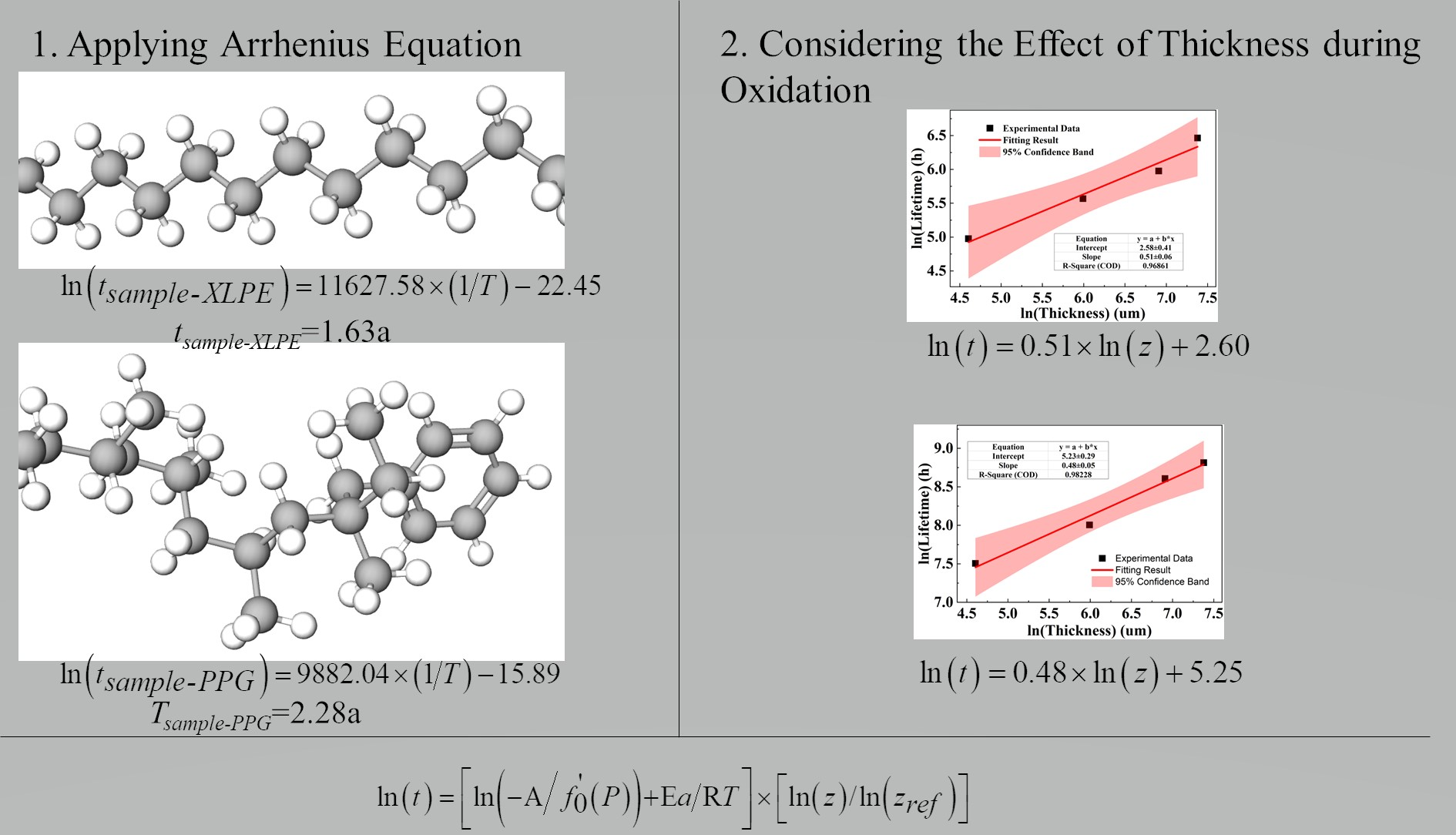
3.1. Fitting Formula
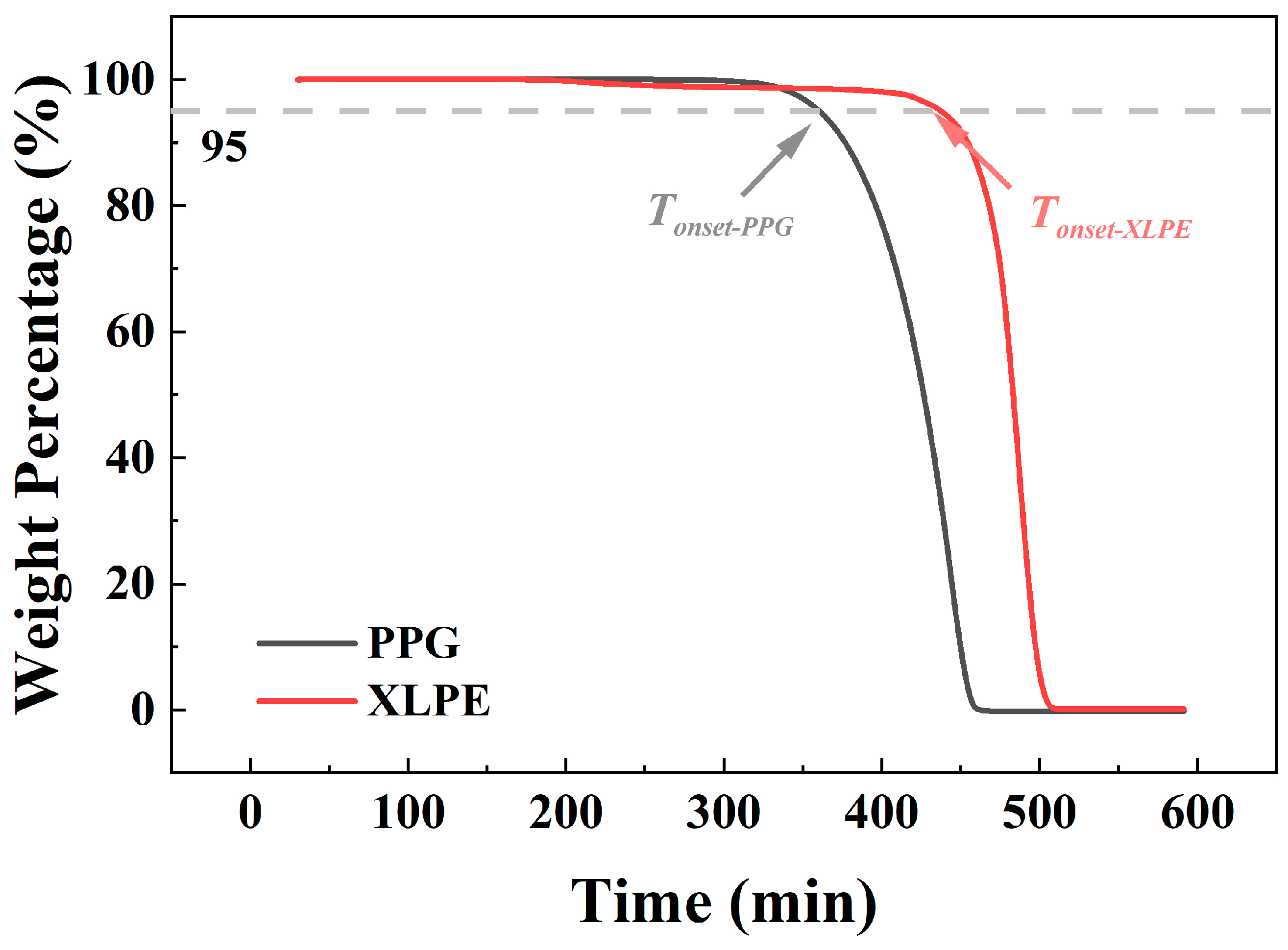
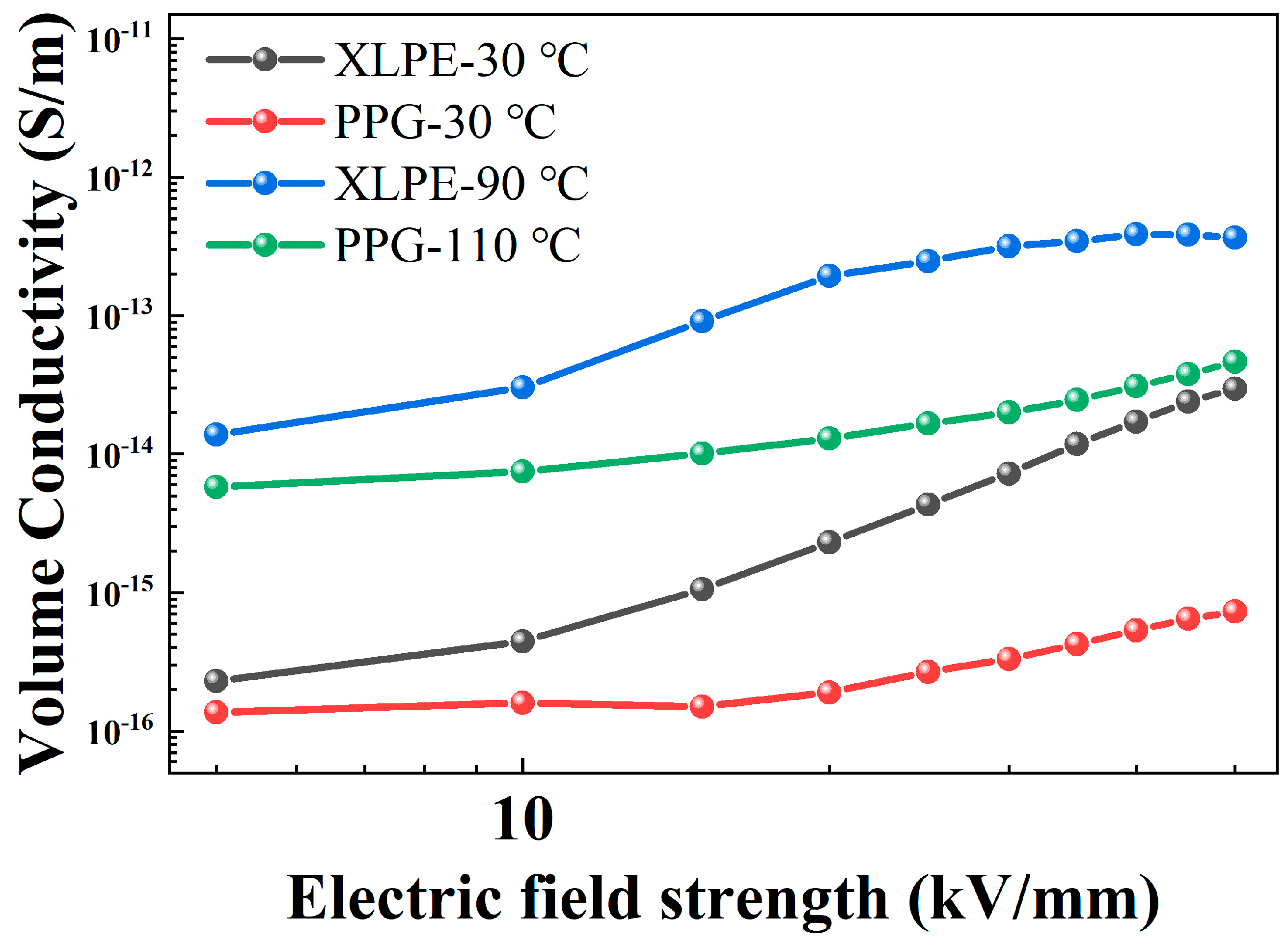
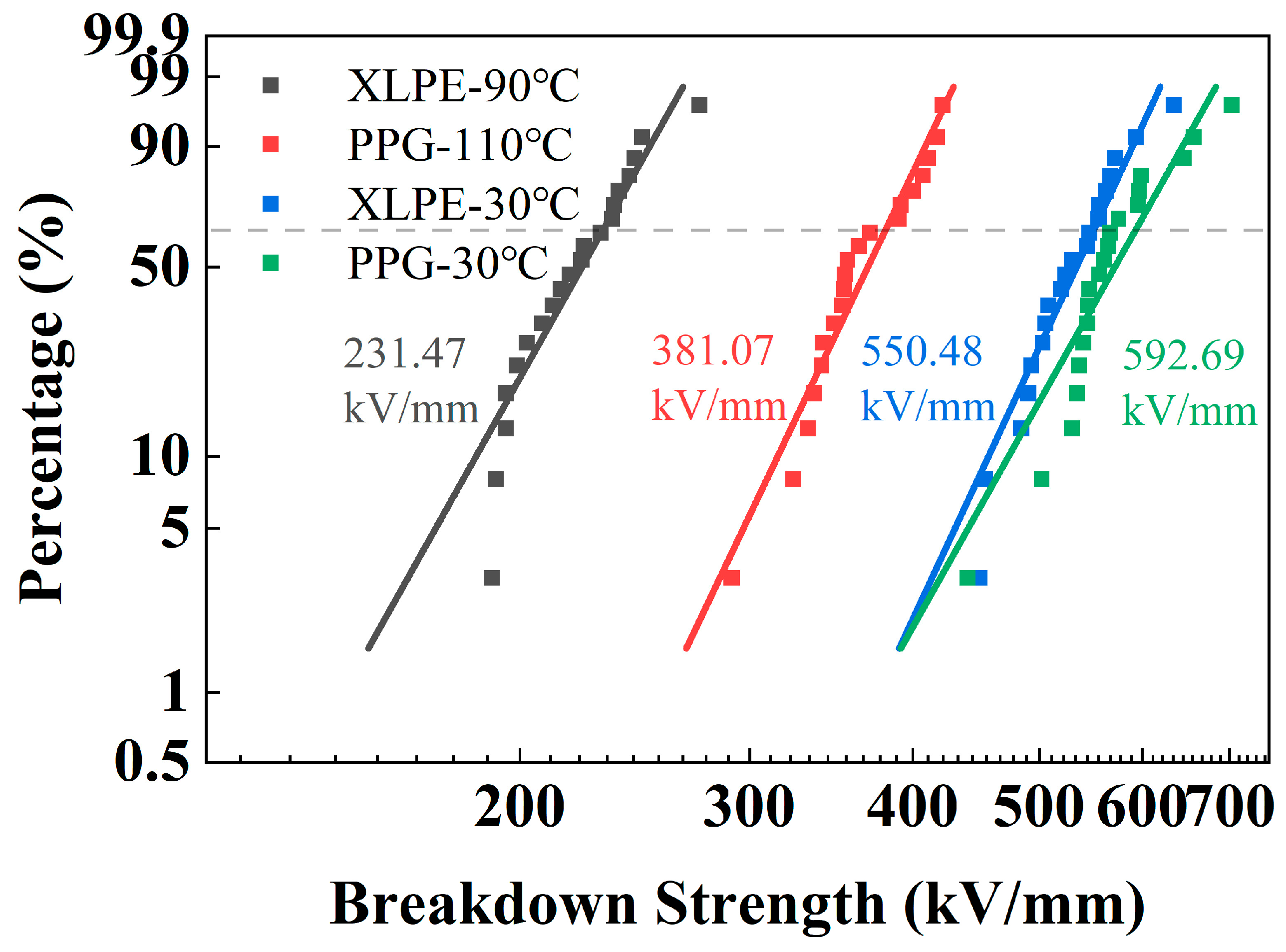
3.2. Basic Properties Comparison Between XLPE and PPG
3.3. Temperature-Accelerated Ageing of XLPE
3.4. Temperature-Accelerated Ageing of PPG
3.5. Thickness-Accelerated Ageing of XLPE
3.6. Thickness-Accelerated Ageing of PPG
3.7. Uncertainty Analysis
- (1)
- The median result from the temperature-accelerated experiment, , is approximately 0.489, with a standard error and degrees of freedom .
- (2)
- The median result from the thickness-accelerated experiment, , is approximately 3.142, with a standard error and degrees of freedom .
- (1)
- The median result from the temperature-accelerated experiment, , is approximately 0.824, with a standard error and degrees of freedom .
- (2)
- The median result from the thickness-accelerated experiment, , is approximately 2.996, with a standard error and degrees of freedom .
- (1)
- Limited sample size in accelerated tests: The temperature acceleration and the thickness-scaling model are each derived from only four accelerated ageing data points. In such small-sample scenarios, quantifying the prediction uncertainty correctly requires the use of the t-distribution with low degrees of freedom, which has heavier tails than the normal distribution, and leading to wider and more conservative confidence intervals. Using a normal distribution would narrow the intervals by over 50%, while significantly underestimating the true uncertainty.
- (2)
- Compounding of uncertainties in a two-step extrapolation: The uncertainties from each step propagate multiplicatively. This compounding effect is a fundamental characteristic of such predictive models and is not an error of the analysis.
- (3)
- Inherent challenge of long-term prediction from short-term tests: Predicting a lifetime of decades based on experiments lasting months or weeks is intrinsically uncertain. The wide confidence interval honestly reflects this challenge.
3.8. Discussion
4. Conclusions
Supplementary Materials
Author Contributions
Funding
Institutional Review Board Statement
Data Availability Statement
Conflicts of Interest
References
- He, J.; Peng, L.; Zhou, Y. Research Progress of Environment-friendly HVDC Power Cable Insulation Materials. High Voltage Eng. 2017, 43, 337–343. [Google Scholar]
- Hu, S.; Zhang, Y.; Shao, Q.; Li, J.; Wang, W.; Hu, J.; Li, Q.; Yuan, H.; He, J. Comprehensive performance comparisons of polypropylene-based HVDC cable insulating materials adopting different modification technical routes. Proc. CSEE 2022, 42, 1243–1251. [Google Scholar]
- Fan, L.; Li, Q.; Yuan, H.; Huang, S.; He, J. Influence and mechanism of grafting on thermal oxidative aging of polypropylene. Proc. CSEE 2022, 42, 4227–4237. [Google Scholar]
- Chen, X.; Huang, X.; Wang, Q.; Zhu, H.; Hong, Z. Effect of Voltage Stabilizer Grafting on Electrical Properties of 500 kV DC XLPE Cable Insulation Materials. Trans. China Electrotech. Soc. 2024, 39, 23–33. [Google Scholar]
- Zhao, P.; Ouyang, B.; Huang, K.; Zhao, J.; Tian, Y.; Chen, H. Thermal aging characteristics and selection of different modified polypropylene cable insulating materials. High Voltage Eng. 2022, 48, 2642–2649. [Google Scholar]
- Ouyang, B.; Zhao, P.; Huang, K.; Wang, G.; Rao, W.; Zhao, J.; He, Y. Review on progress of thermoplastic polypropylene cable materials. High Voltage Eng. 2023, 49, 907–919. [Google Scholar]
- Xu, H.; Du, B.; Li, J.; Li, Z. Mechanical and space charge properties of polypropylene/elastomer blends. High Voltage Eng. 2019, 45, 3214–3220. [Google Scholar]
- Zhou, Y.; He, J.; Hu, J.; Huang, X.; Jiang, P. Evaluation of polypropylene/polyolefin elastomer blends for potential recyclable HVDC cable insulation applications. IEEE Trans. Dielectr. Electr. Insul. 2015, 22, 673–681. [Google Scholar] [CrossRef]
- Meng, F.; Shao, M.; Niu, Y.; Hu, W.; Li, C.; Zhao, H. Influence of voltage stabilizer on the DC breakdown strength of PP/elastomer blends. J. Electr. Eng. 2022, 17, 234–243. [Google Scholar]
- Xie, J.; Liu, Q.; Li, L.; Liu, Z.; Xie, Q. TiO2@SiO2 Research on Synergistically Improving the Insulation Performance of Polypropylene Film with Montmorillonite Nanomaterials. Trans. China Electrotech. Soc. 2025, 40, 2282–2294. [Google Scholar]
- Hu, S.; Yuan, H.; Zhang, Q.; Li, J.; Wang, M.; Huang, S.; Hu, J.; Li, Q.; He, J. Deep trap origins, characteristics, and related mechanisms in chemically grafted polypropylene with enhanced direct current volume resistivity. J. Phys. Chem. C 2022, 126, 16280–16288. [Google Scholar] [CrossRef]
- Hu, S.; Dong, X.; Wang, W.; Huang, S.; Hu, J.; Li, Q.; He, J.; Shao, Q.; Yuan, H.; Shi, H.; et al. Dielectric properties improvement of grafting-modified polypropylene by silane for HVDC cable insulation. IEEE Trans. Dielectr. Electr. Insul. 2021, 28, 2004–2010. [Google Scholar] [CrossRef]
- Liu, H.; Du, B.X.; Xiao, M. Improved energy density and charge discharge efficiency of polypropylene capacitor film based on surface grafting. IEEE Trans. Dielectr. Electr. Insul. 2021, 28, 1539–1546. [Google Scholar] [CrossRef]
- Zhou, Y.; Hu, J.; Dang, B.; He, J. Mechanism of highly improved electrical properties in polypropylene by chemical modification of grafting maleic anhydride. J. Phys. D Appl. Phys. 2016, 49, 415301. [Google Scholar] [CrossRef]
- Fan, L.; Hao, G.; Zhang, W.; Dong, X.; Tu, Y.; Hu, S.; Shao, Q.; Zheng, Z.; Wang, W.; Yuan, H.; et al. Effect of grafting styrene on the dielectric properties of polypropylene insulating material. Proc. CSEE 2023, 43, 5251–5260. [Google Scholar]
- Zhang, W.; Wang, W.; Yuan, H.; Qi, L.; He, J. Effect of grafting styrene on the dielectric properties of polypropylene insulating material. Trans. China Electrotech. Soc. 2023, 38, 246–256. [Google Scholar]
- Wang, W.; Li, B.; Wang, J.; Ren, H.; Li, Q. Remaining Life Assessment of Silicone Gel Package Insulation Based on Pyrolysis Kinetics. IEEE Trans. Dielectr. Electr. Insul. 2025, 60, 2295–2305. [Google Scholar]
- He, J.; Yuan, H.; Song, W.; Li, Q.; Shao, Q.; Hu, J.; Shi, H.; Zhou, Y. A Cable with a Thermoplastic Insulating Layer. China Patent Application 202011195858X, 30 October 2020. [Google Scholar]
- GB/T 2951.12-2008; Common Test Methods for Insulating and Sheathing Materials of Electric and Optical Cables—Part 12: Methods for General Application—Thermal Ageing Methods. China Standard Press: Beijing, China, 2008.
- GB/T 12706.3-2020; Power Cables with Extruded Insulation and Their Accessories for Rated Voltages from 1 kV (Um = 1.2 kV) up to 35 kV (Um = 40.5 kV)—Part 3: Cables for Rated Voltages of 35 kV (Um = 40.5 kV). China Standard Press: Beijing, China, 2020.
- Li, Q.; Chen, L.; Gadinski, M.R.; Zhang, S.; Zhang, G.; Li, H.U.; Iagodkine, E.; Haque, A.; Chen, L.-Q.; Jackson, T.N.; et al. Flexible high-temperature dielectric materials from polymer nanocomposites. Nature 2015, 523, 576–579. [Google Scholar] [CrossRef]
- Thomas, W.D. Electrical insulation deterioration treated as a chemical rate phenomenon. AIEE Trans. 1948, 67, 113–122. [Google Scholar]
- GB/T 11026.2-2012; Electrical Insulating Materials—Thermal Endurance Properties—Part 2: Choice of Test Criteria. China Standard Press: Beijing, China, 2008.
- Hou, S.; Fu, M.; Jia, L.; Wu, G.; Luo, Z.; Xu, S. Long term aging performances and life evaluation of 220 kV XLPE insulation materials. High Voltage Eng. 2023, 49, 4900–4910. [Google Scholar]
- Wise, J.; Gillen, K.T.; Clough, R.L. Quantative model for the time development of diffusion-limited oxidation profiles. Polymer 1997, 38, 1929–1944. [Google Scholar] [CrossRef]
- Adam, Q.; Mathew, C.C. Overview of DLO modeling and approaches to predict heterogeneous oxidative polymer degradation. Polym. Degrad. Stab. 2018, 149, 173–191. [Google Scholar] [CrossRef]
- Cheng, H. Effect of Specimen Thickness on Hygrothermal Ageing of BFRP Laminate. Master’s Thesis, Dalian University of Technology, Dalian, China, May 2014. [Google Scholar]
- Qu, Y. Heat Aging Properties and Size Accelerating Effect of CFRP. Master’s Thesis, Dalian University of Technology, Dalian, China, May 2014. [Google Scholar]
- Tang, S. Effect of Sample Size on the Long-Term Properties of Epoxy Resins Immersed Water and Alkaline Solution. Master’s Thesis, Harbin Institute of Technology, Harbin, China, June 2013. [Google Scholar]









| Sample | Thickness (μm) | Elongation at Break (%) | Tensile Strength (MPa) | |
|---|---|---|---|---|
| XLPE | 100 | 870.26 (±103.44) | 21.97 (±1.38) | |
| 400 | 720.51 (±52.99) | 20.01 (±0.67) | ||
| 1000 | 602.85 (±106.53) | 19.81 (±1.25) | ||
| 1600 | 623.53 (±65.1) | 20.54 (±0.78) | ||
| PPG | 100 | 897.10 (±92.64) | 31.03 (±1.52) | |
| 400 | 978.29 (±108.70) | 31.08 (±1.83) | ||
| 1000 | 1147.91 (±119.71) | 29.29 (±1.14) | ||
| 1600 | 1087.99 (±75.87) | 37.19 (±0.85) | ||
| Ageing Temperatures (°C) | Fitting Equation | Standard Error (SE) of Slope | SE of Intercept | Coefficient of Determination |
|---|---|---|---|---|
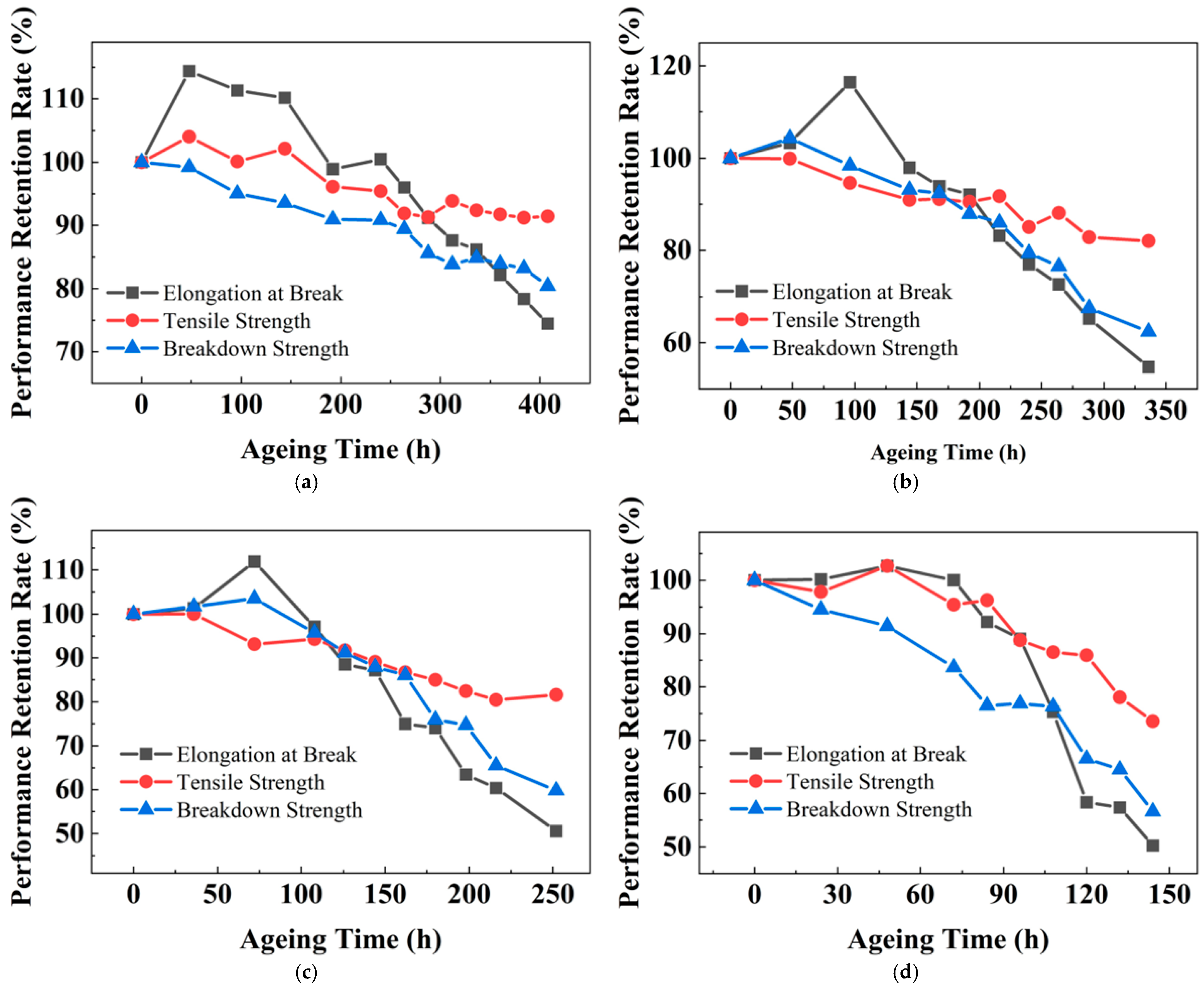
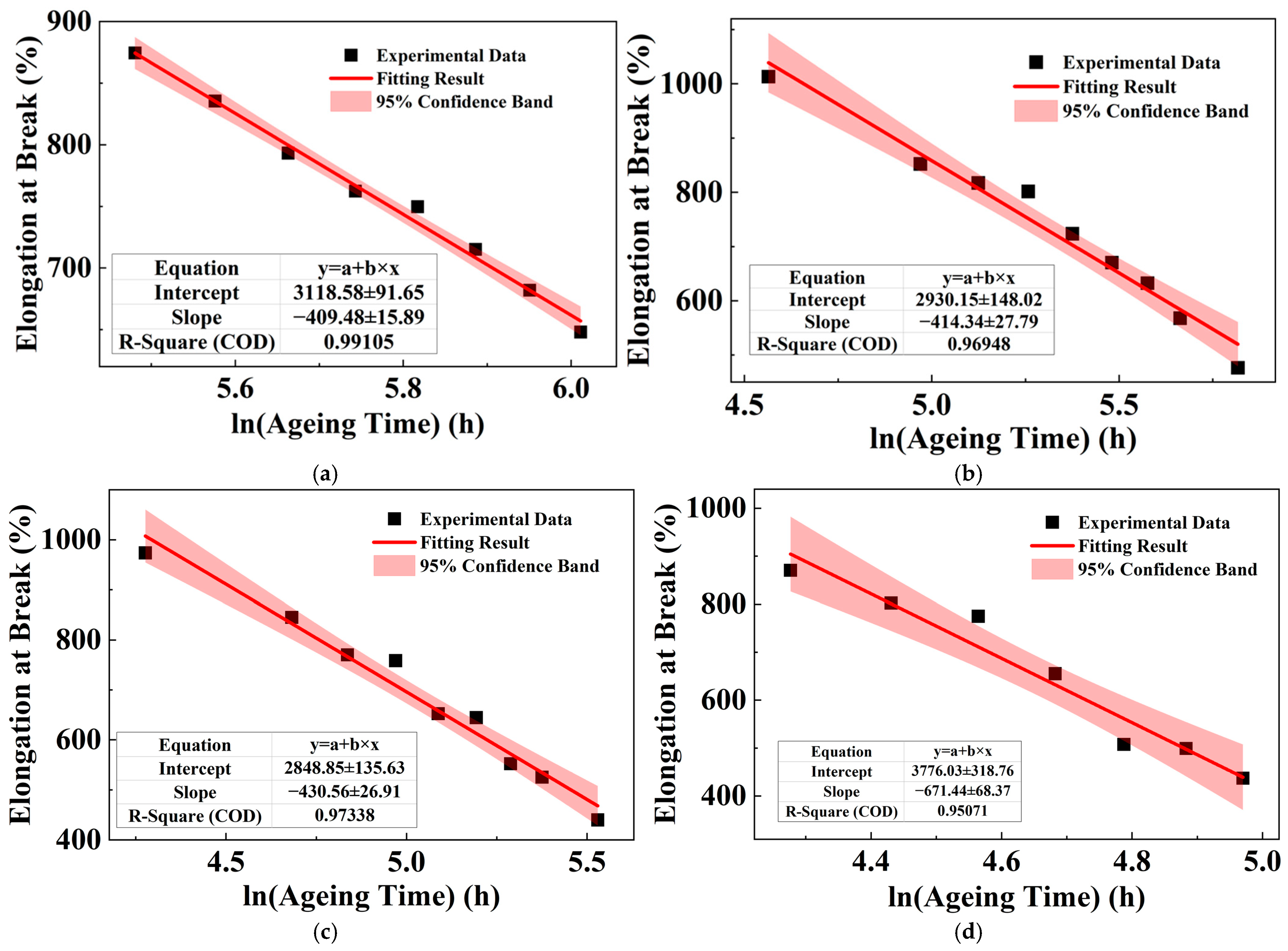
| 127.5 | y = −409.48 × ln(t) + 3118.58 | 15.89 | 91.65 | 0.9911 |
| 135 | y = −414.34 × ln(t) + 2930.15 | 27.79 | 148.02 | 0.9695 |
| 142.5 | y = −430.56 × ln(t) + 2848.85 | 26.91 | 135.63 | 0.9734 |
| 150 | y = −671.44 × ln(t) + 3776.03 | 68.37 | 318.76 | 0.9507 |
| Ageing Temperatures (°C) | Initial Elongation at Break (%) | Lifetime (h) |
|---|---|---|
| 127.5 | 870.26 | 701.56 |
| 135 | 412.27 | |
| 142.5 | 272.05 | |
| 150 | 144.85 |
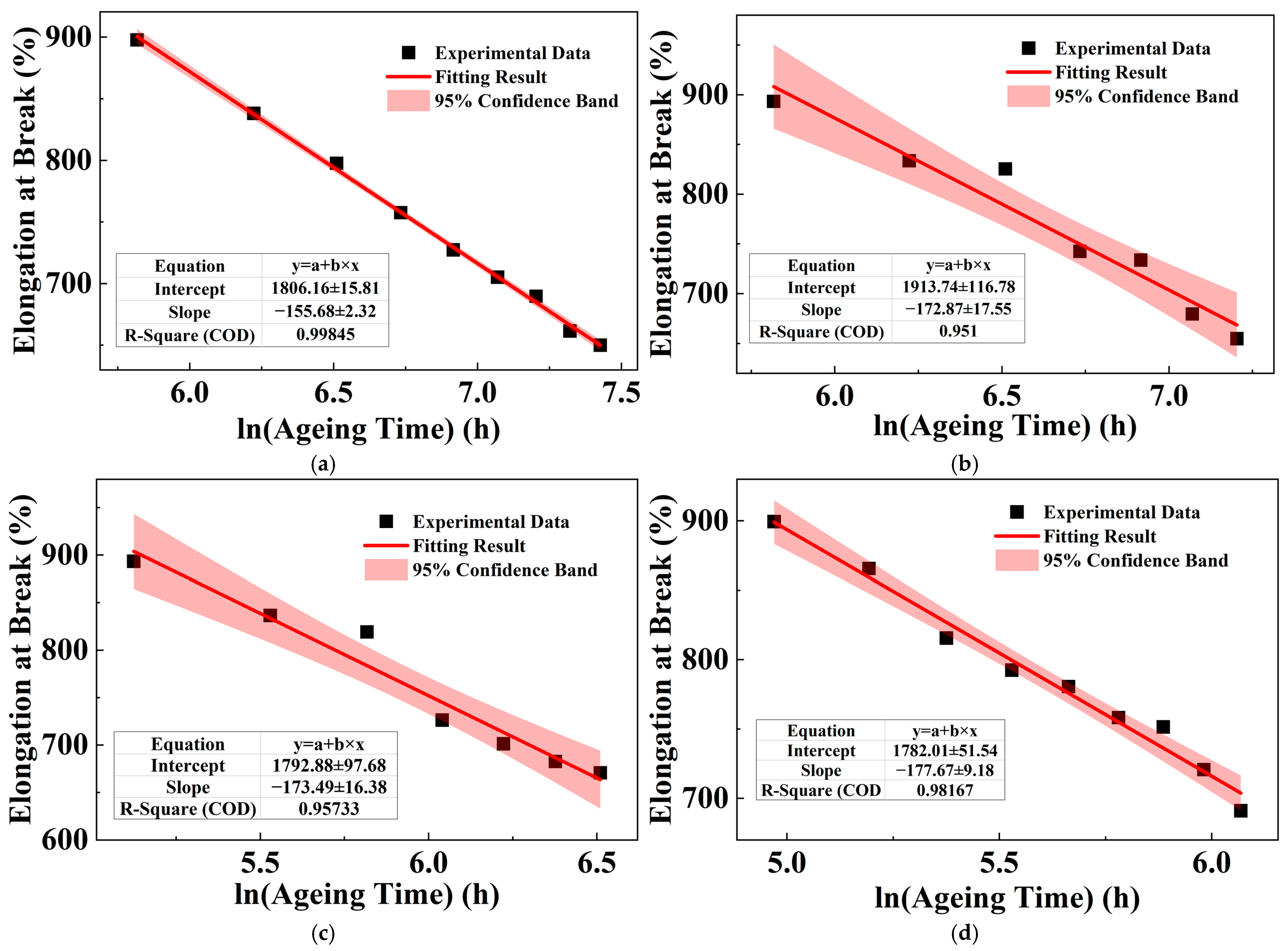
| Ageing Temperatures (°C) | Fitting Equation | SE of Slope | SE of Intercept | Coefficient of Determination |
|---|---|---|---|---|
| 127.5 | y = −155.68 × ln(t) + 1806.16 | 2.32 | 15.81 | 0.9985 |
| 135 | y = −172.87 × ln(t) + 1913.74 | 17.55 | 116.78 | 0.951 |
| 142.5 | y = −173.49 × ln(t) + 1792.88 | 16.38 | 97.68 | 0.9573 |
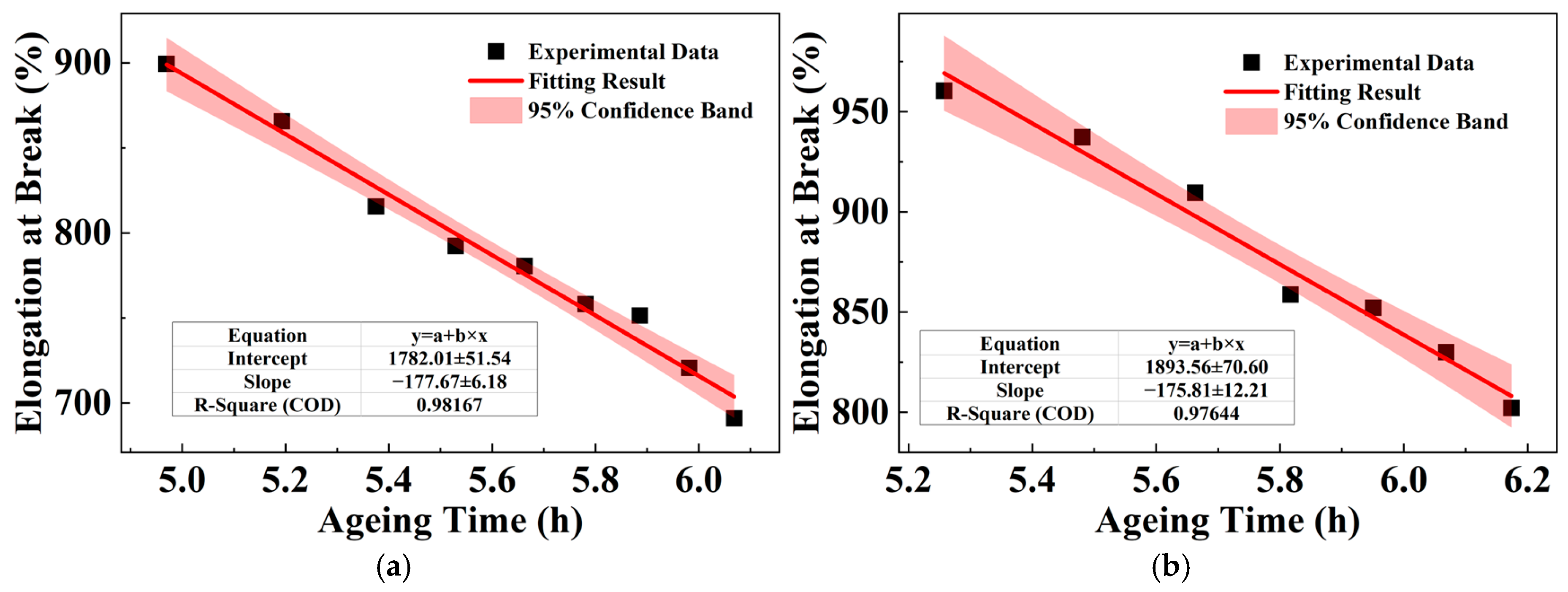
| 150 | y = −177.67 × ln(t) + 1782.01 | 9.18 | 51.54 | 0.9817 |
| Ageing Temperatures (°C) | Initial Value of Elongation at Break (%) | Lifetime (h) |
|---|---|---|
| 127.5 | 897.10 | 6127.34 |
| 135 | 4796.66 | |
| 142.5 | 2318.66 | |
| 150 | 1817.58 |
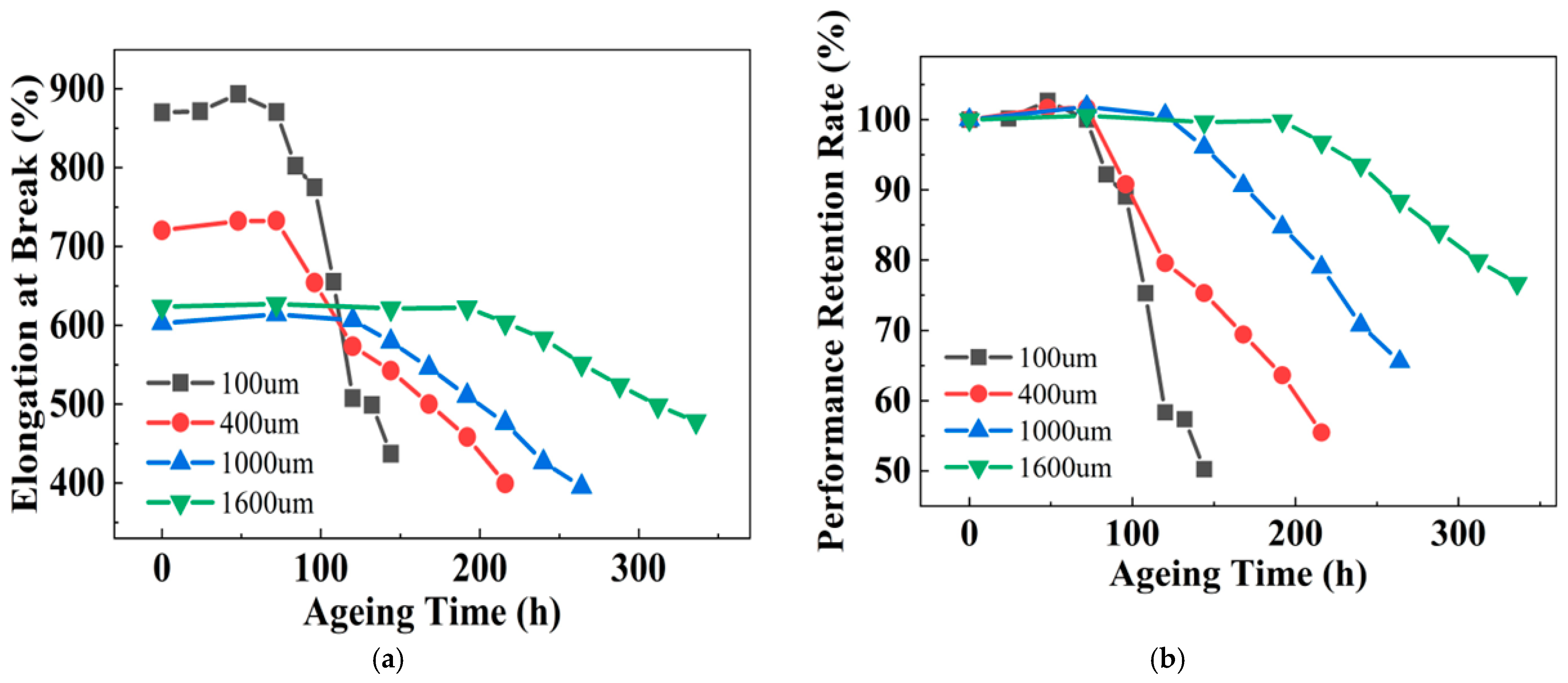
| Thickness (μm) | Fitting Equations | SE of Slope | SE of Intercept | Coefficient of Determination |
|---|---|---|---|---|
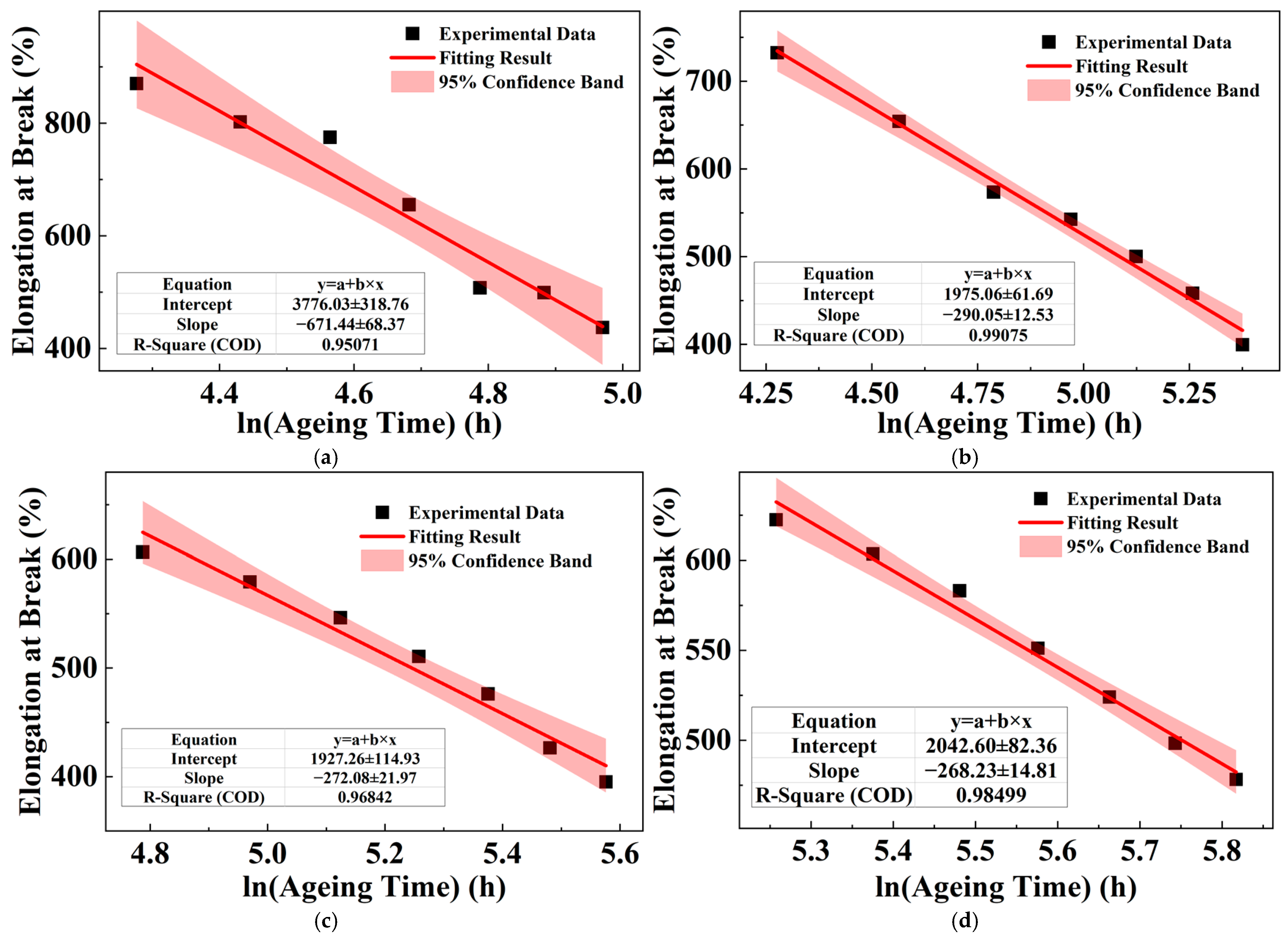
| 100 | y = −671.44 × ln(t) + 3776.03 | 68.37 | 82.36 | 0.9507 |
| 400 | y = −290.05 × ln(t) + 1975.07 | 12.53 | 114.93 | 0.9908 |
| 1000 | y = −272.08 × ln(t) + 1927.26 | 21.97 | 61.69 | 0.9684 |
| 1600 | y = −268.23 × ln(t) + 2045.60 | 14.81 | 318.76 | 0.9850 |
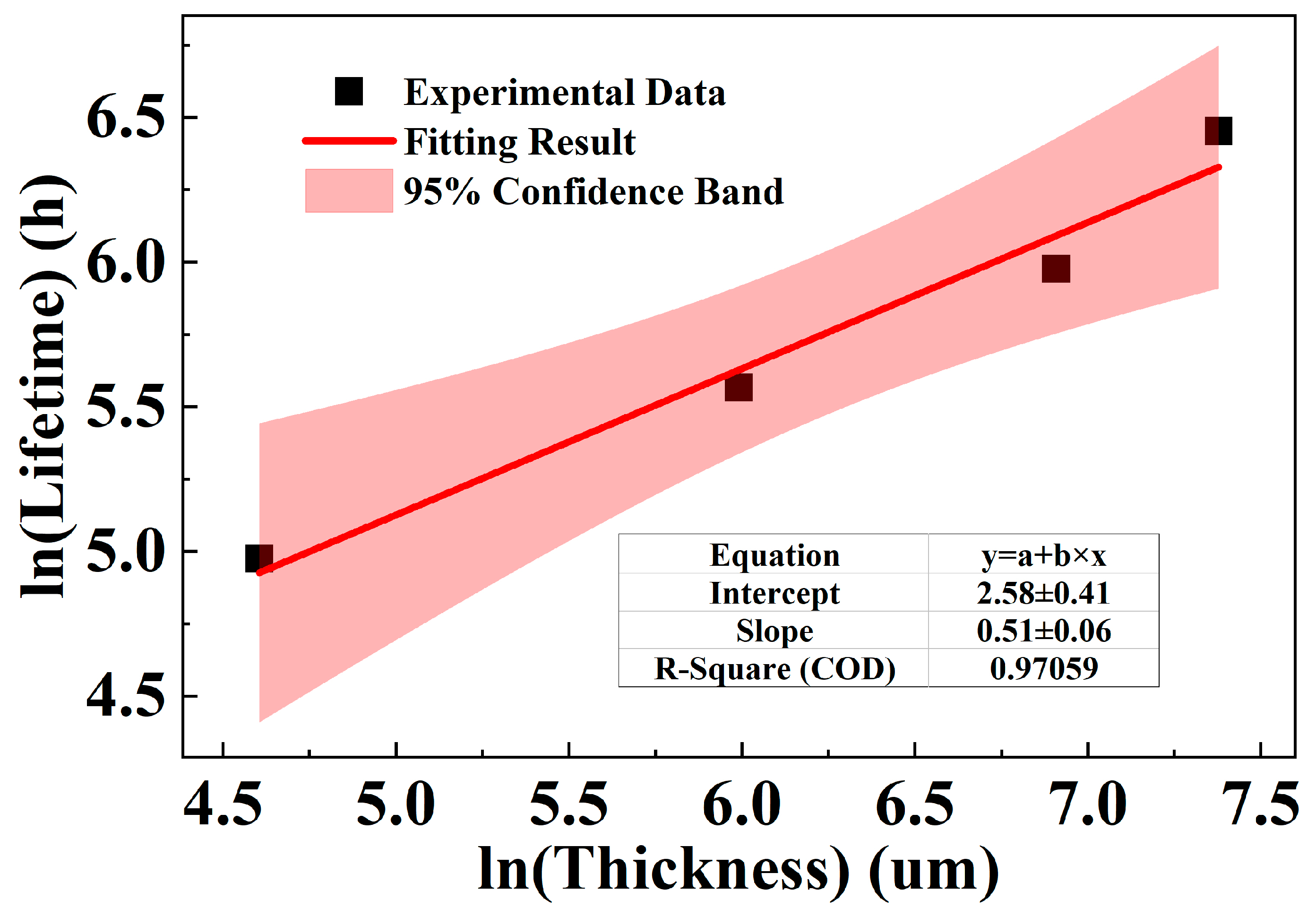
| Thickness (μm) | Initial Value of Elongation at Break (%) | Lifetime (h) |
|---|---|---|
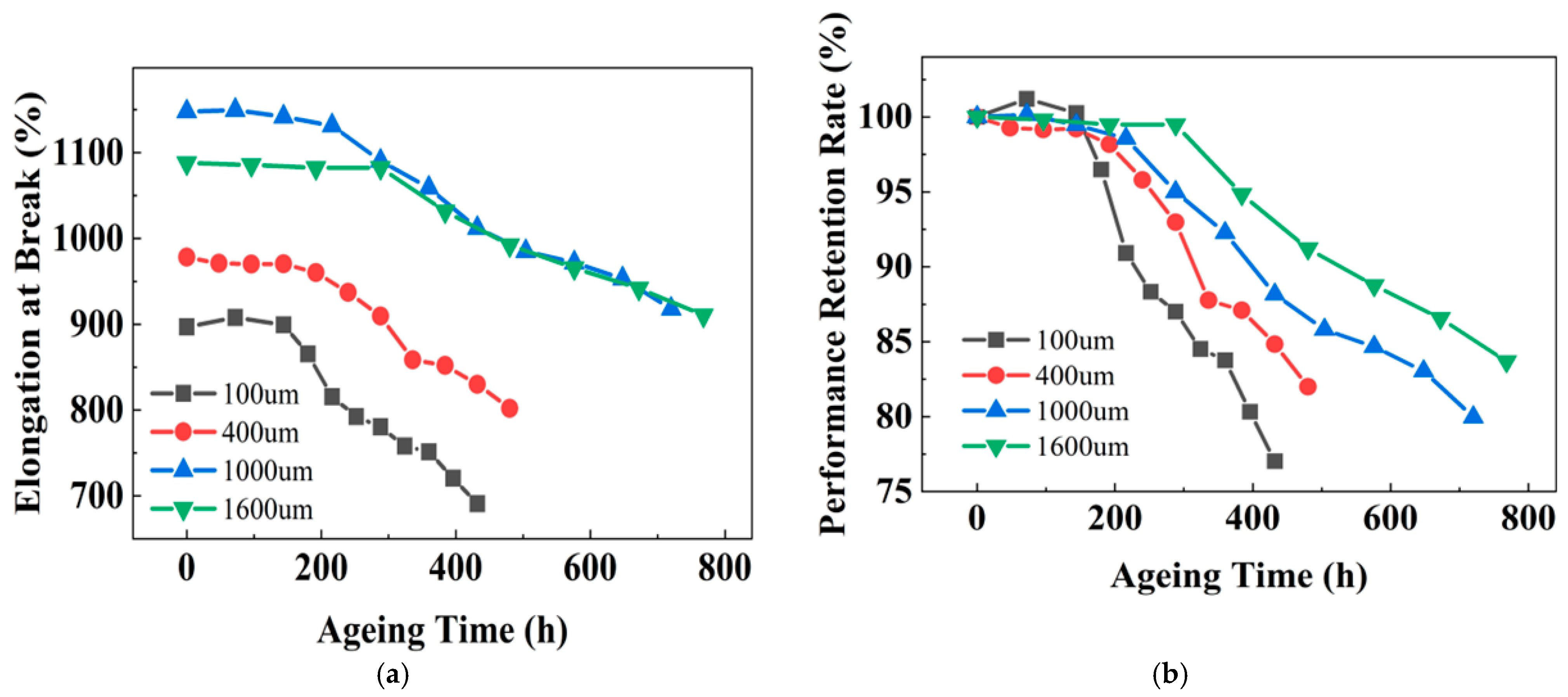
| 100 | 870.26 | 144.85 |
| 400 | 720.51 | 261.74 |
| 1000 | 602.85 | 393.95 |
| 1600 | 623.53 | 634.53 |
| Thickness (μm) | Fitting Equations | SE of Slope | SE of Intercept | Coefficient of Determination |
|---|---|---|---|---|
| 100 | y = −177.67 × ln(t) + 1782.01 | 6.18 | 51.54 | 0.9817 |
| 400 | y = −175.13 × ln(t) + 1891.04 | 12.21 | 70.60 | 0.9839 |
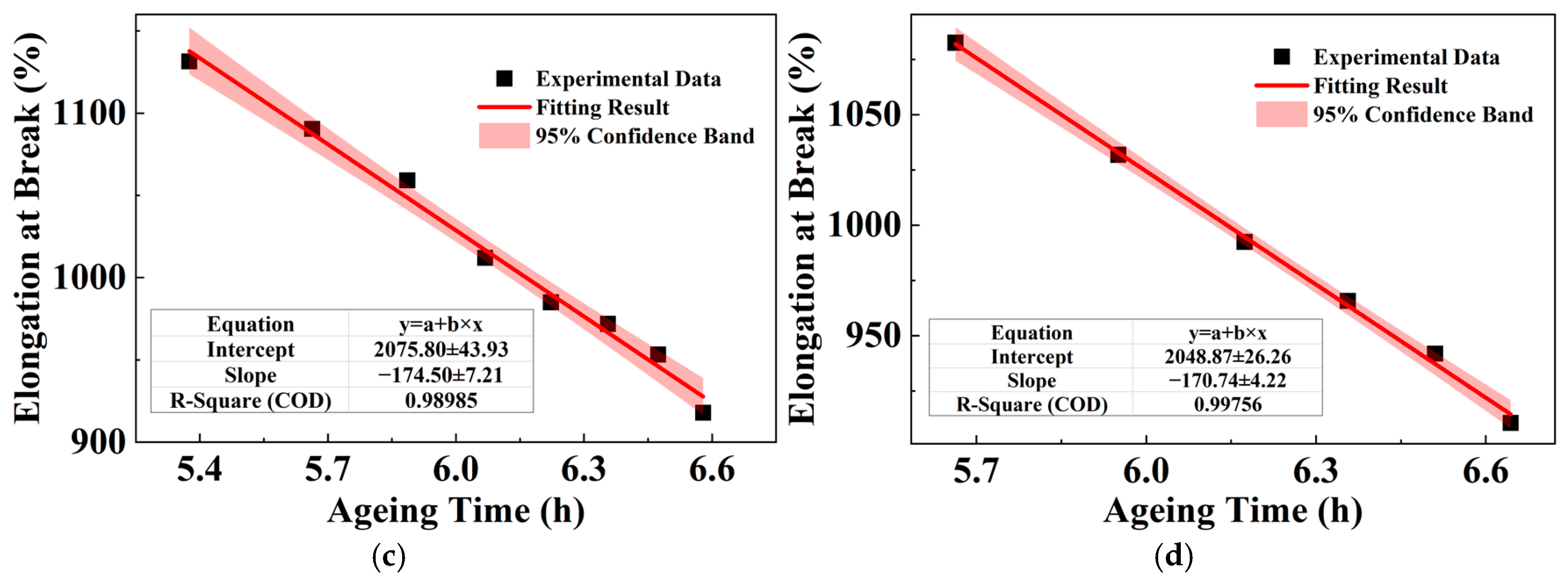
| 1000 | y = −174.50 × ln(t) + 2075.80 | 7.21 | 43.93 | 0.9899 |
| 1600 | y = −170.74 × ln(t) + 2048.87 | 4.22 | 26.26 | 0.9976 |
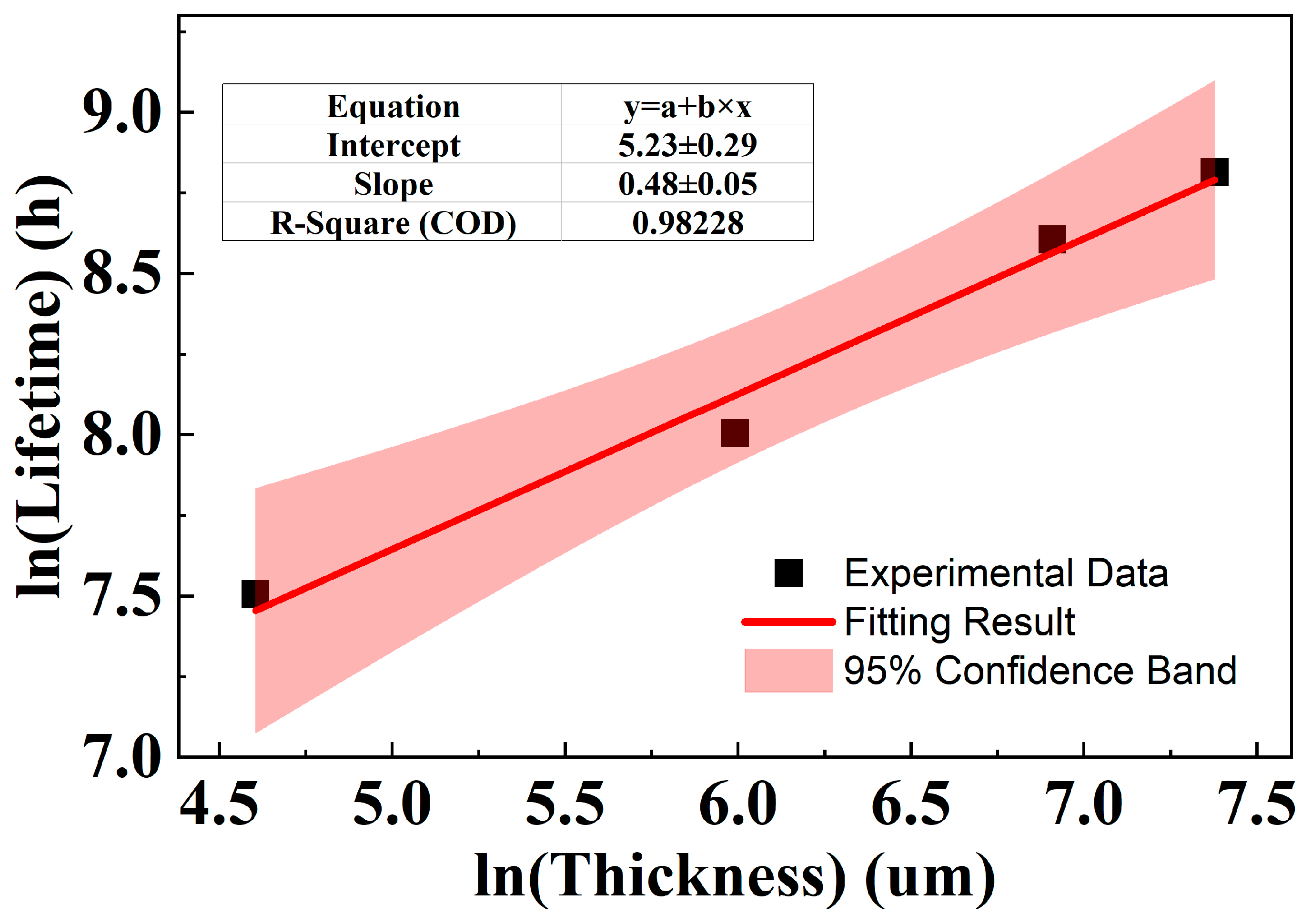
| Thickness (μm) | Initial Value of Elongation at Break (%) | Lifetime (h) |
|---|---|---|
| 100 | 897.10 | 1825.89 |
| 400 | 978.29 | 2995.57 |
| 1000 | 1147.91 | 5467.39 |
| 1600 | 1087.99 | 6726.68 |
| Properties | XLPE | PPG |
|---|---|---|
| Maximum operating temperature (°C) | 90 | 110 |
| Tm (°C) | 102 | 159 |
| Tonset (°C) | 435 | 359 |
| Conductivity at 30 °C under 20 kV/mm (S/m) | 2.23 × 10⁻¹⁵ | 1.90 × 10⁻¹⁶ |
| Breakdown Strength at 30 °C (kV/mm) | 550.48 | 592.69 |
| Elongation at break of a 100 μm sample | 870.26 | 897.10 |
| Expected lifespan (Median value) (years) | 37.5 | 45.60 |
Disclaimer/Publisher’s Note: The statements, opinions and data contained in all publications are solely those of the individual author(s) and contributor(s) and not of MDPI and/or the editor(s). MDPI and/or the editor(s) disclaim responsibility for any injury to people or property resulting from any ideas, methods, instructions or products referred to in the content. |
© 2026 by the authors. Licensee MDPI, Basel, Switzerland. This article is an open access article distributed under the terms and conditions of the Creative Commons Attribution (CC BY) license.
Share and Cite
Zhang, W.; Huang, S.; Wang, M.; Li, J.; Wang, W.; Hu, S.; He, J. Comparisons of Thermo-Oxidative Ageing Performance and Lifespan Evaluation of Grafted Polypropylene and XLPE Cables: Combined Effect of Temperature and Thickness. Polymers 2026, 18, 386. https://doi.org/10.3390/polym18030386
Zhang W, Huang S, Wang M, Li J, Wang W, Hu S, He J. Comparisons of Thermo-Oxidative Ageing Performance and Lifespan Evaluation of Grafted Polypropylene and XLPE Cables: Combined Effect of Temperature and Thickness. Polymers. 2026; 18(3):386. https://doi.org/10.3390/polym18030386
Chicago/Turabian StyleZhang, Wenjia, Shangshi Huang, Mingti Wang, Juan Li, Wei Wang, Shixun Hu, and Jinliang He. 2026. "Comparisons of Thermo-Oxidative Ageing Performance and Lifespan Evaluation of Grafted Polypropylene and XLPE Cables: Combined Effect of Temperature and Thickness" Polymers 18, no. 3: 386. https://doi.org/10.3390/polym18030386
APA StyleZhang, W., Huang, S., Wang, M., Li, J., Wang, W., Hu, S., & He, J. (2026). Comparisons of Thermo-Oxidative Ageing Performance and Lifespan Evaluation of Grafted Polypropylene and XLPE Cables: Combined Effect of Temperature and Thickness. Polymers, 18(3), 386. https://doi.org/10.3390/polym18030386