Patients with Very High Risk of Cardiovascular Adverse Events during Carfilzomib Therapy: Prevention and Management of Events in a Single Center Experience
by
 , , ,
, , ,
Giulia Mingrone
1 ,
,
Anna Astarita
1,
Anna Colomba
1,
Cinzia Catarinella
1,
Marco Cesareo
1,
Lorenzo Airale
1,
Arianna Paladino
1,
Dario Leone
1,
Fabrizio Vallelonga
1,
Sara Bringhen
2,
Francesca Gay
2,3 ,
,
Franco Veglio
1 and
Alberto Milan
1,*
1
Hypertension Unit, Department of Medical Sciences, Division of Internal Medicine, AO “Città della Salute e della Scienza” University Hospital, 10126 Turin, Italy
2
SSD Clinical Trial in Oncoematologia e Mieloma Multiplo, Division of Hematology, AOU Città della Salute e della Scienza di Torino, 10126 Turin, Italy
3
Division of Hematology, Department of Molecular Biotechnology and Health Sciences, University of Torino, 10124 Turin, Italy
*
Author to whom correspondence should be addressed.
Cancers 2023, 15(4), 1149; https://doi.org/10.3390/cancers15041149
Submission received: 29 December 2022
/
Revised: 3 February 2023
/
Accepted: 9 February 2023
/
Published: 10 February 2023
(This article belongs to the Special Issue Latest Development in B Cell Malignancies)
Simple Summary
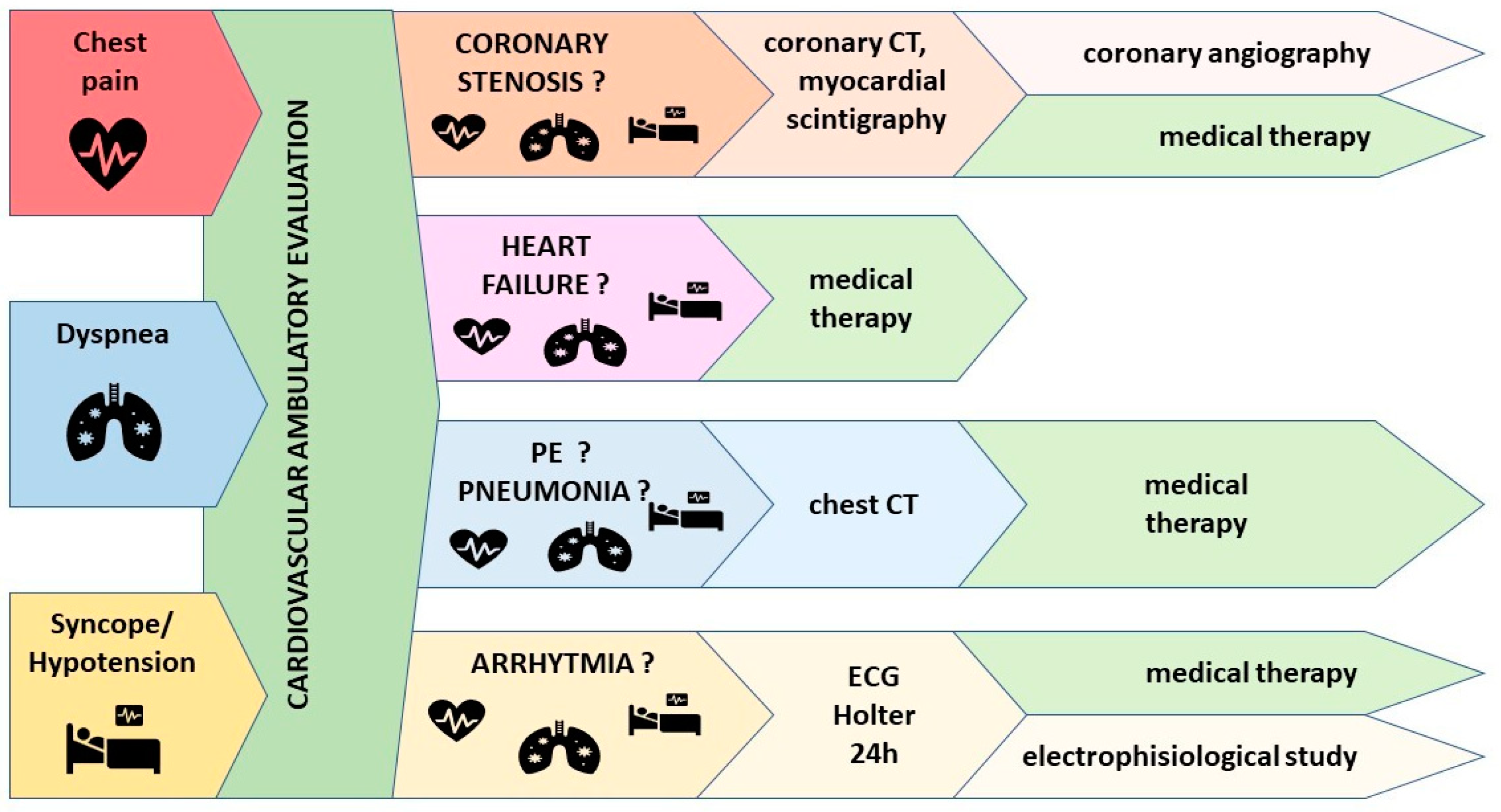
The use of carfilzomib in multiple myeloma is burdened by cardiovascular toxicity. Currently, the risk stratification of cardiovascular adverse events appears well established, while the prognosis of patients classified as being at high risk or experiencing adverse events is uncertain. We aimed to provide practical insight on the prevention and management of cardiovascular adverse events during carfilzomib therapy, taking advantage of the experience of our specialized center in managing patients with increased cardiovascular risk. After baseline evaluation, we shared a diagnostic workup, eventually including advanced cardiac imaging testing to identify inducible ischemia in patients with a high-cardiovascular-risk profile. We aimed for timely identification and treatment of underlying conditions and prevention of major cardiovascular events. With the same purpose, we suggest a management protocol for the main cardiovascular adverse events based on the presenting symptoms.
Abstract
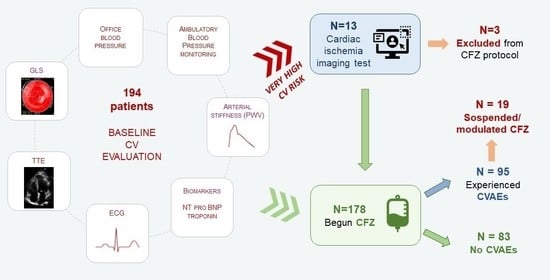
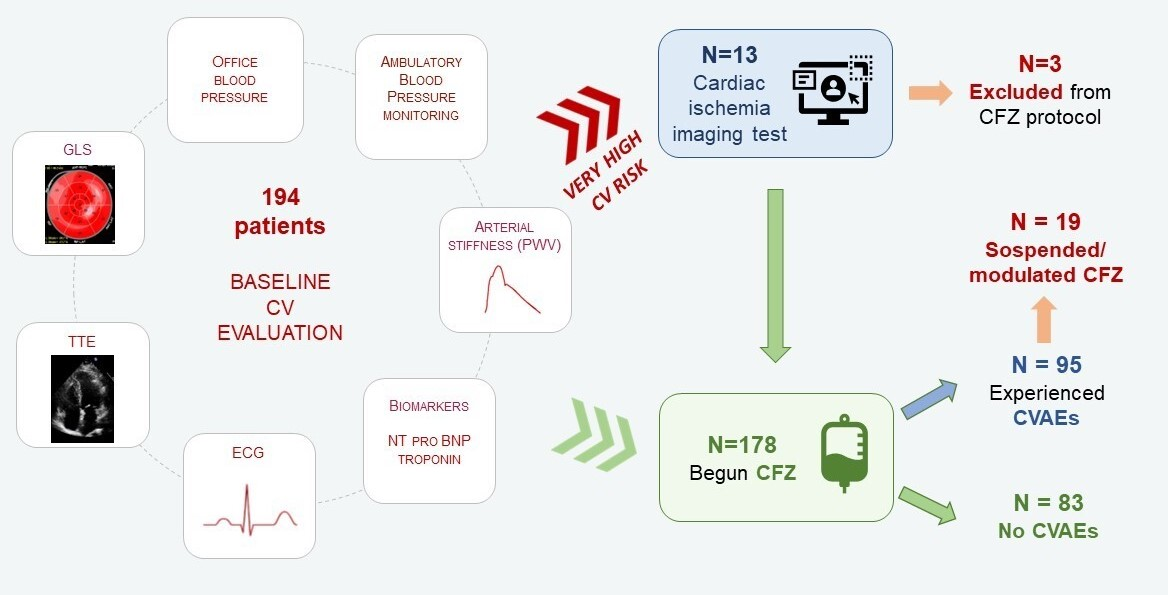
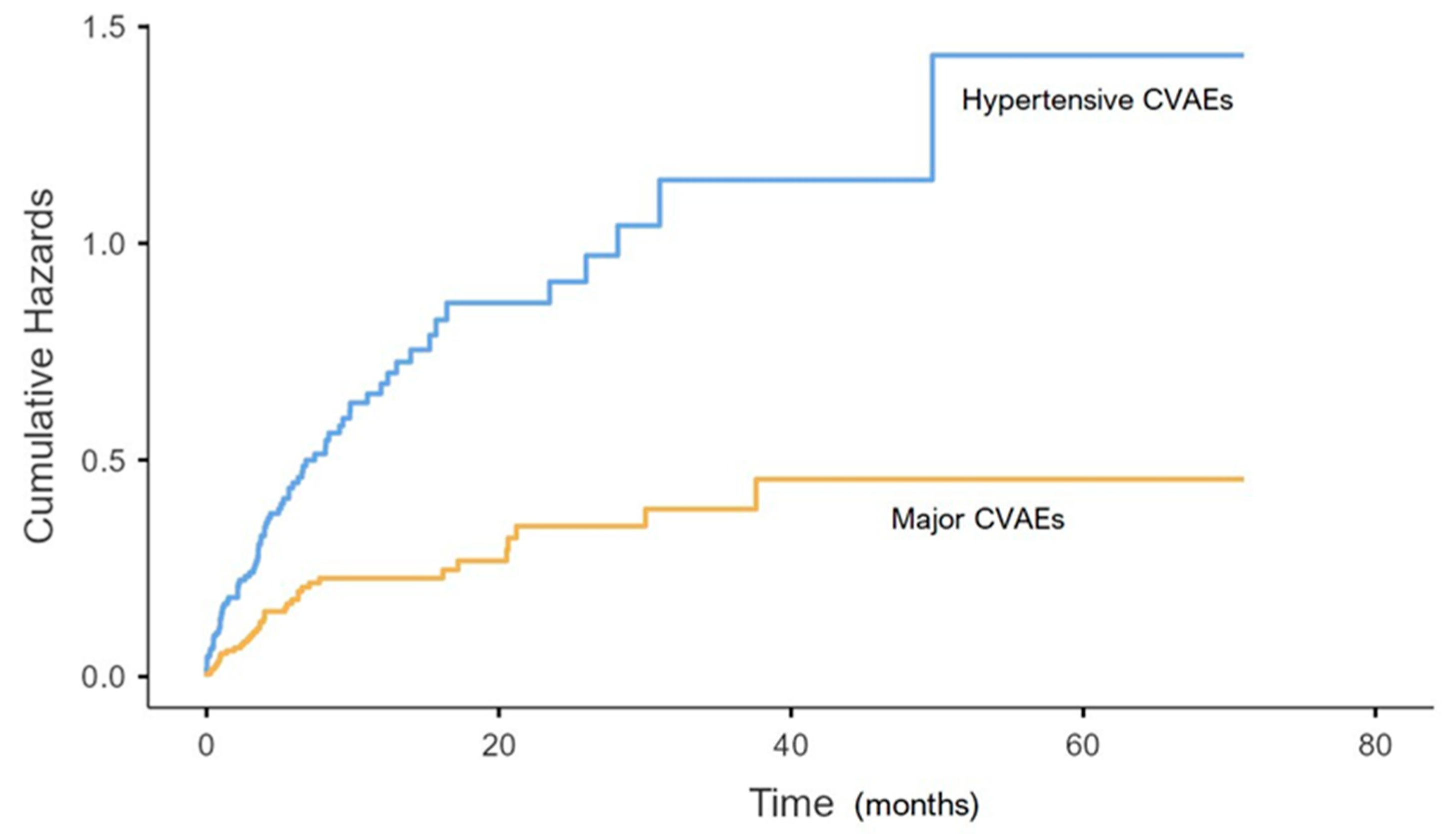
Carfilzomib (CFZ) improves the prognosis of multiple myeloma (MM) patients but has shown cardiovascular toxicity. The risk stratification of cardiovascular adverse events (CVAEs) now seems well established, while little is known about the course and management of patients with a high-cardiovascular-risk profile or experiencing CVAEs during therapy. Therefore, we aimed to describe our experience in decision making to support health professionals in selecting the best management strategies to prevent and treat CVAEs. A total of 194 patients with indication to CFZ underwent baseline evaluation of CVAEs risk and were prospectively followed. We propose a novel approach, which includes advanced cardiac imaging testing for patients at high baseline CV risk to rule out clinical conditions that could contraindicate starting CFZ. After baseline evaluation, 19 (9.8%) patients were found at high risk of CVAEs: 13 (6.7%) patients underwent advanced cardiac testing and 3 (1.5%) could not receive CFZ due to CV contraindications. A total of 178 (91.7%) patients started CFZ: 82 (46%) experienced arterial-hypertension-related events and 37 (20.8%) major CVAEs; 19 (10.7%) patients had to discontinue or modify the CFZ dosing regimen. Along with baseline risk stratification, subsequent cardiovascular clinical events and diagnostic follow-up both provided critical data to help identify conditions that could contraindicate the anticancer therapy.