Experimental Study on Laser-Induced Damage Performance of CO2 Laser-Polished Fused Silica Components

 ,
, 
Abstract
1. Introduction
2. Materials and Methods
2.1. Materials
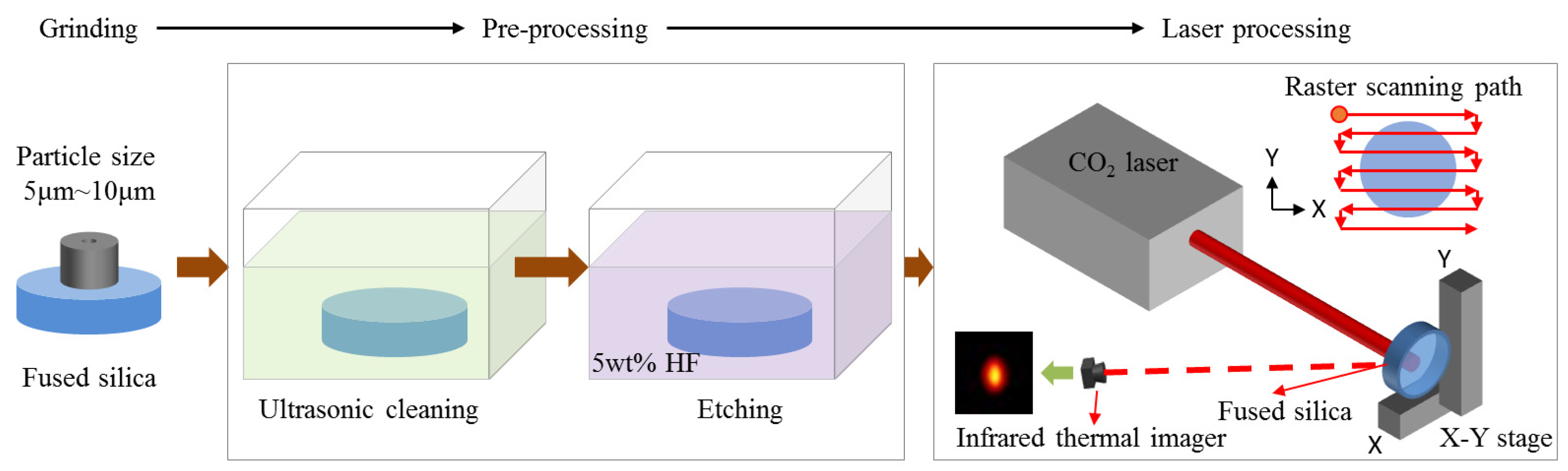
2.2. Methods
3. Results and Discussion
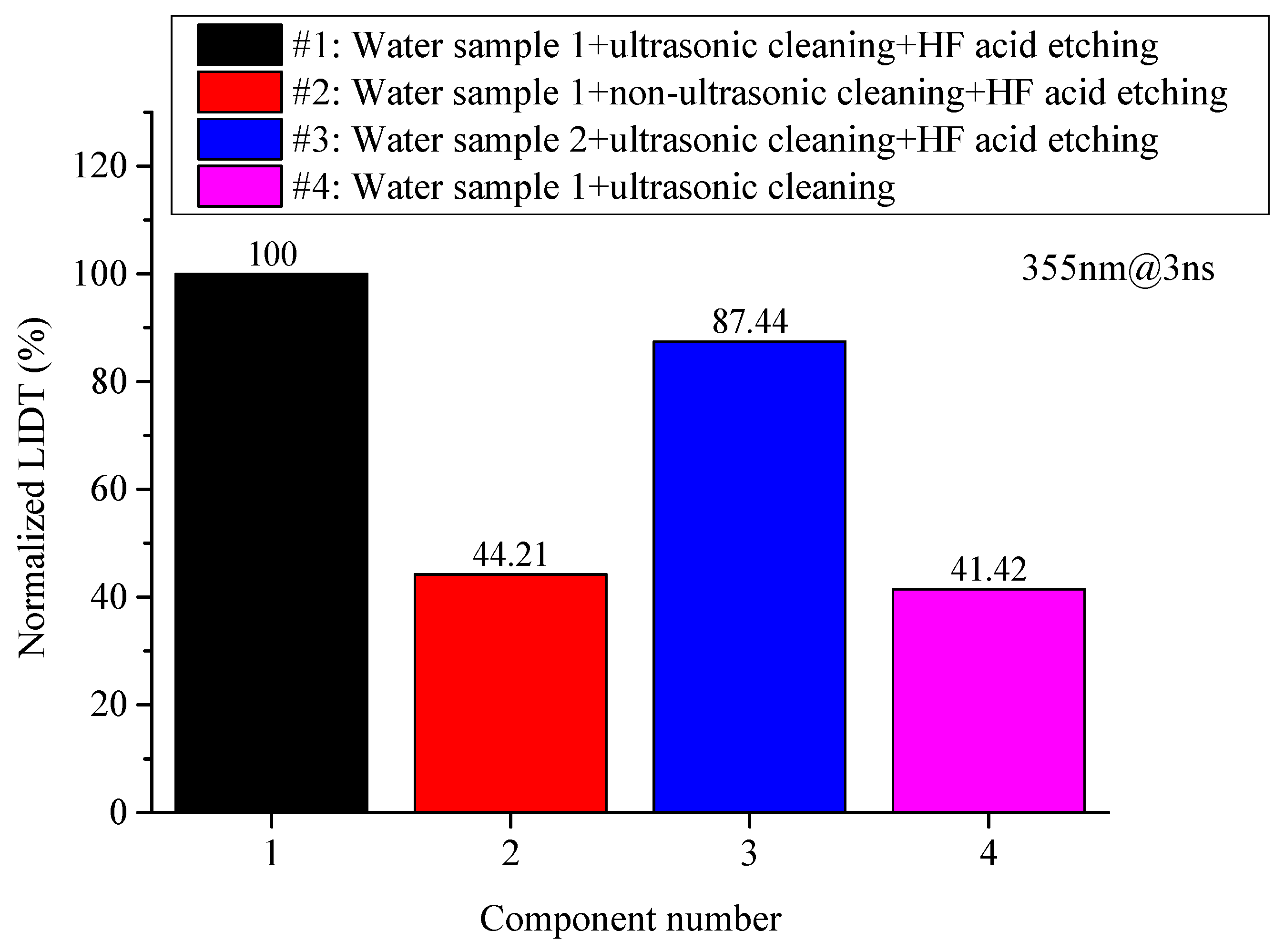
3.1. Influence of Pre-Treatment Processes
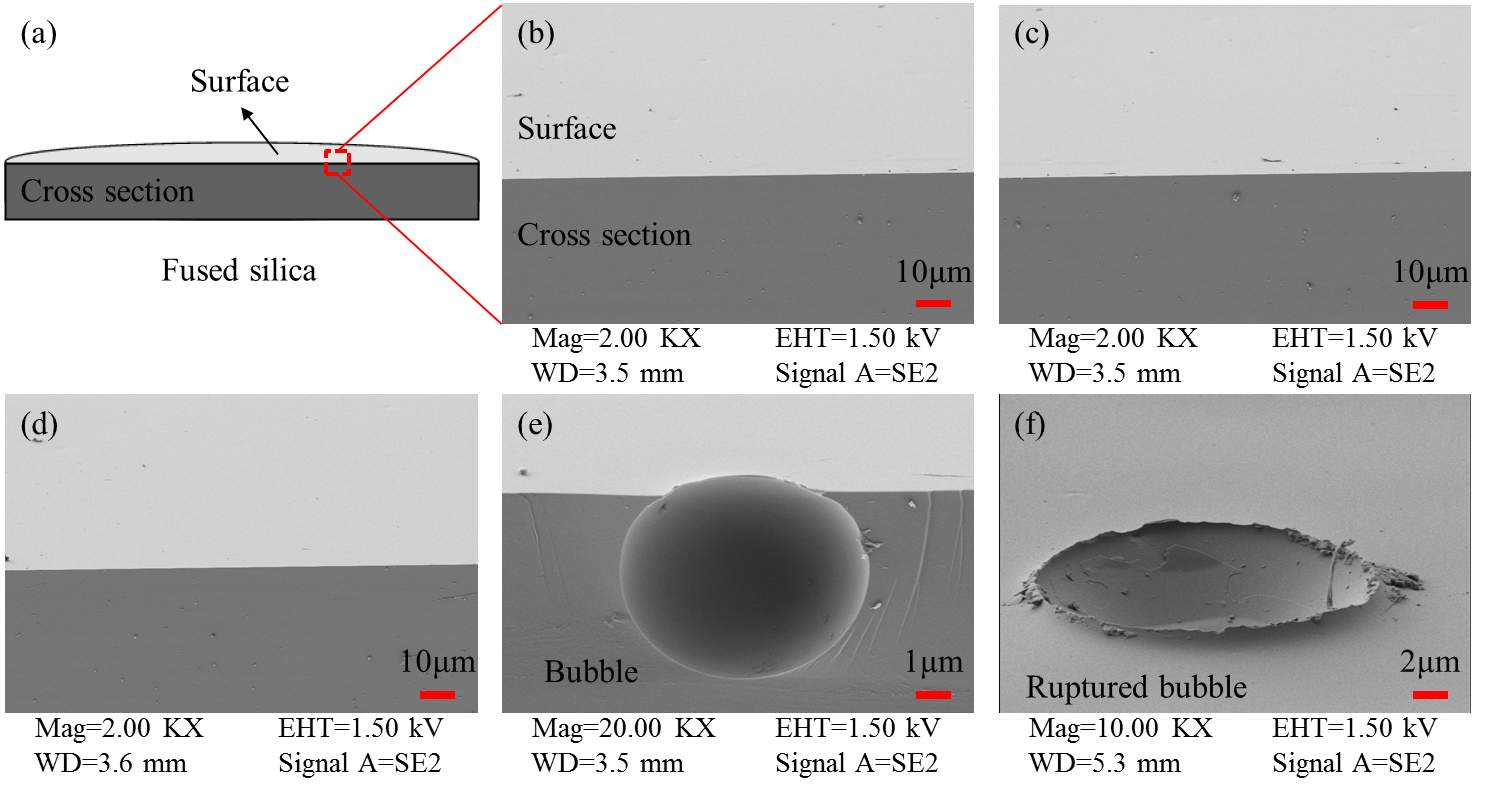
3.2. Influence of Laser Processing Parameters
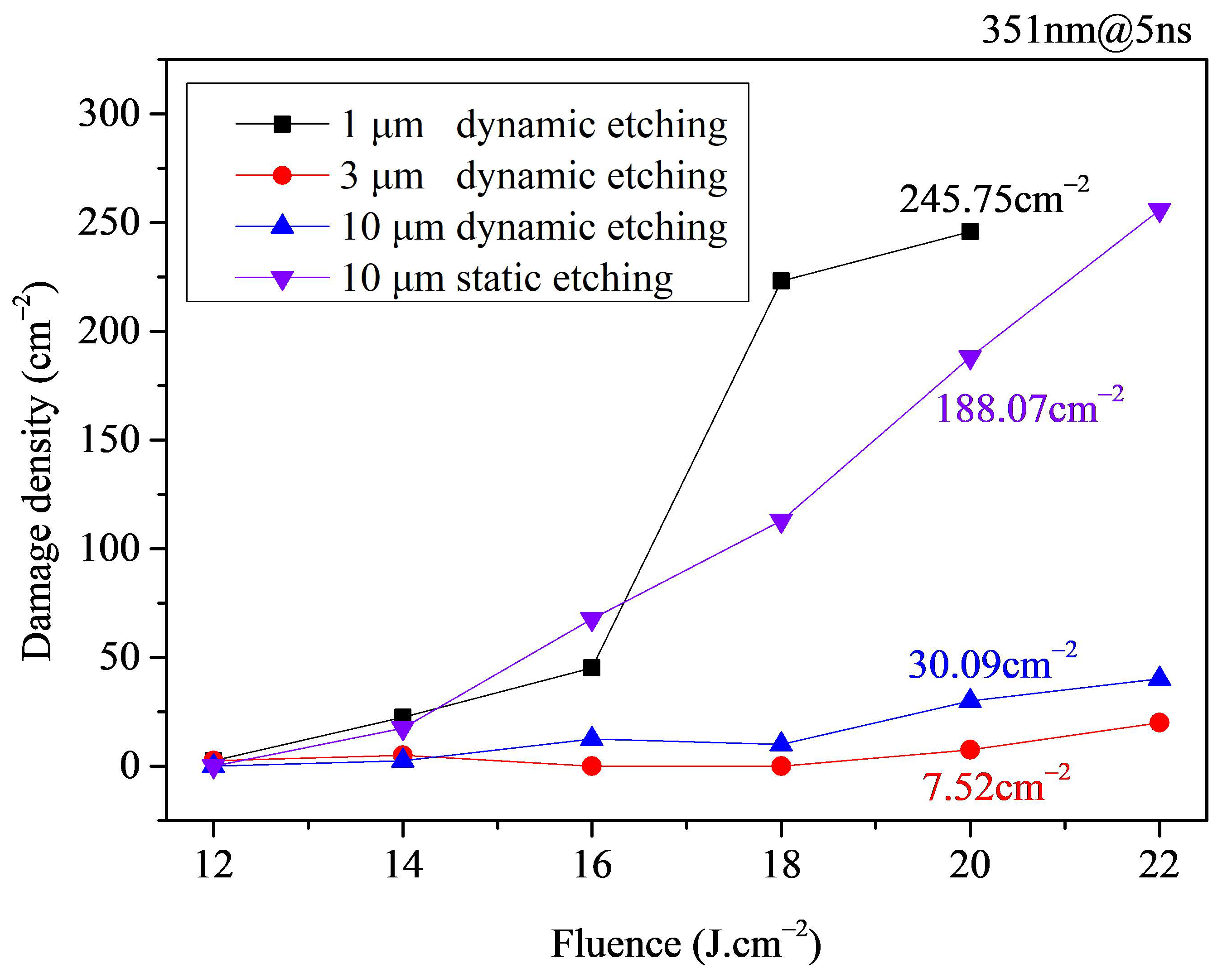
3.3. Comparison with Conventional Polished and Etched Samples
4. Conclusions
- (1)
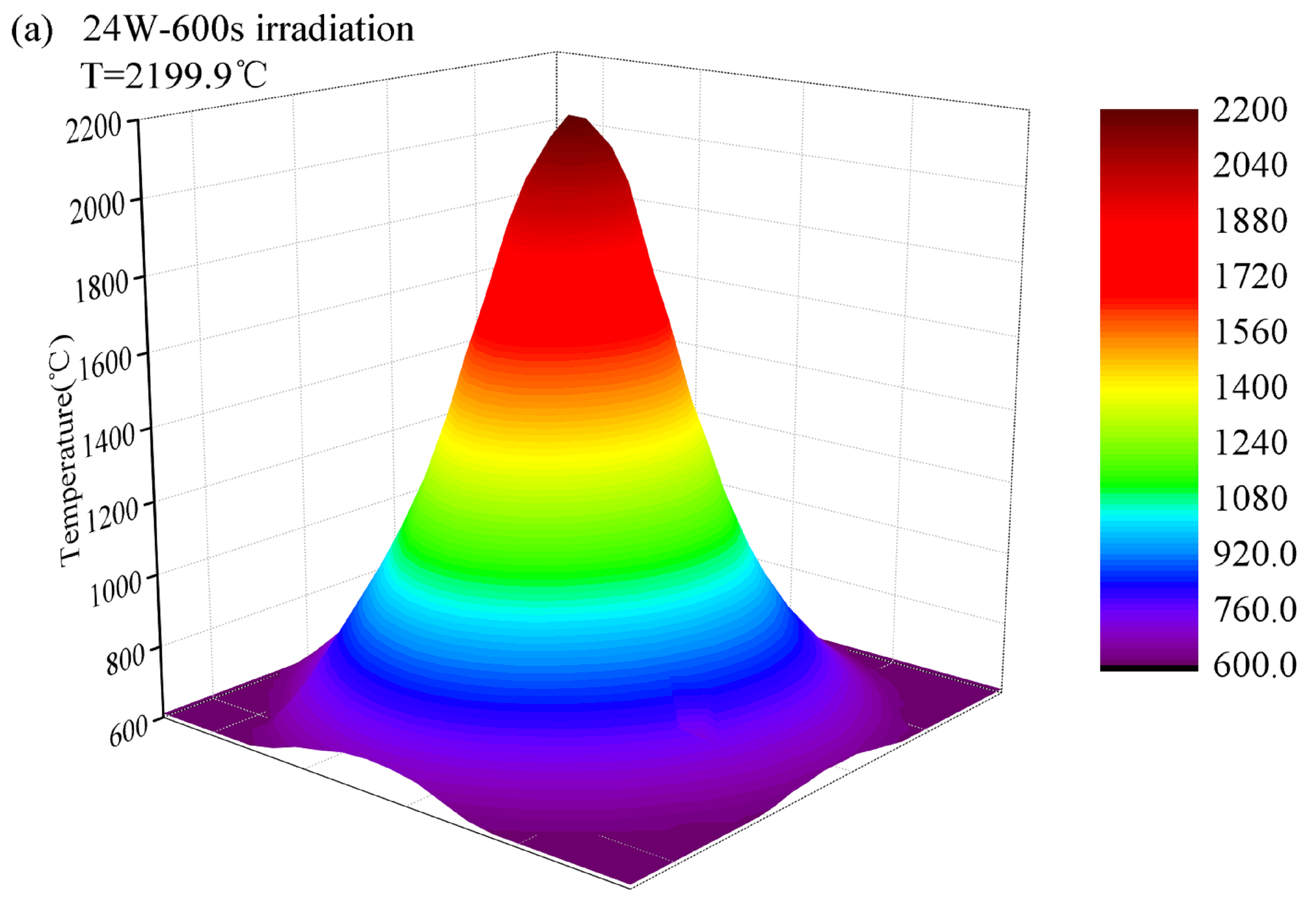
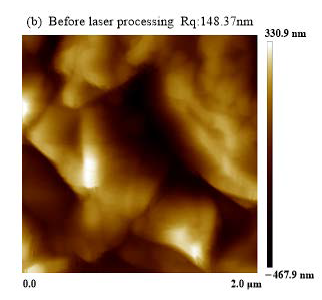
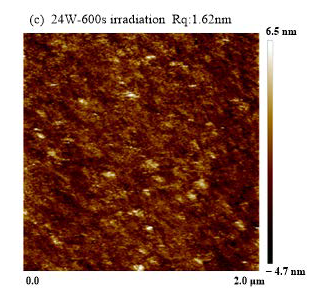
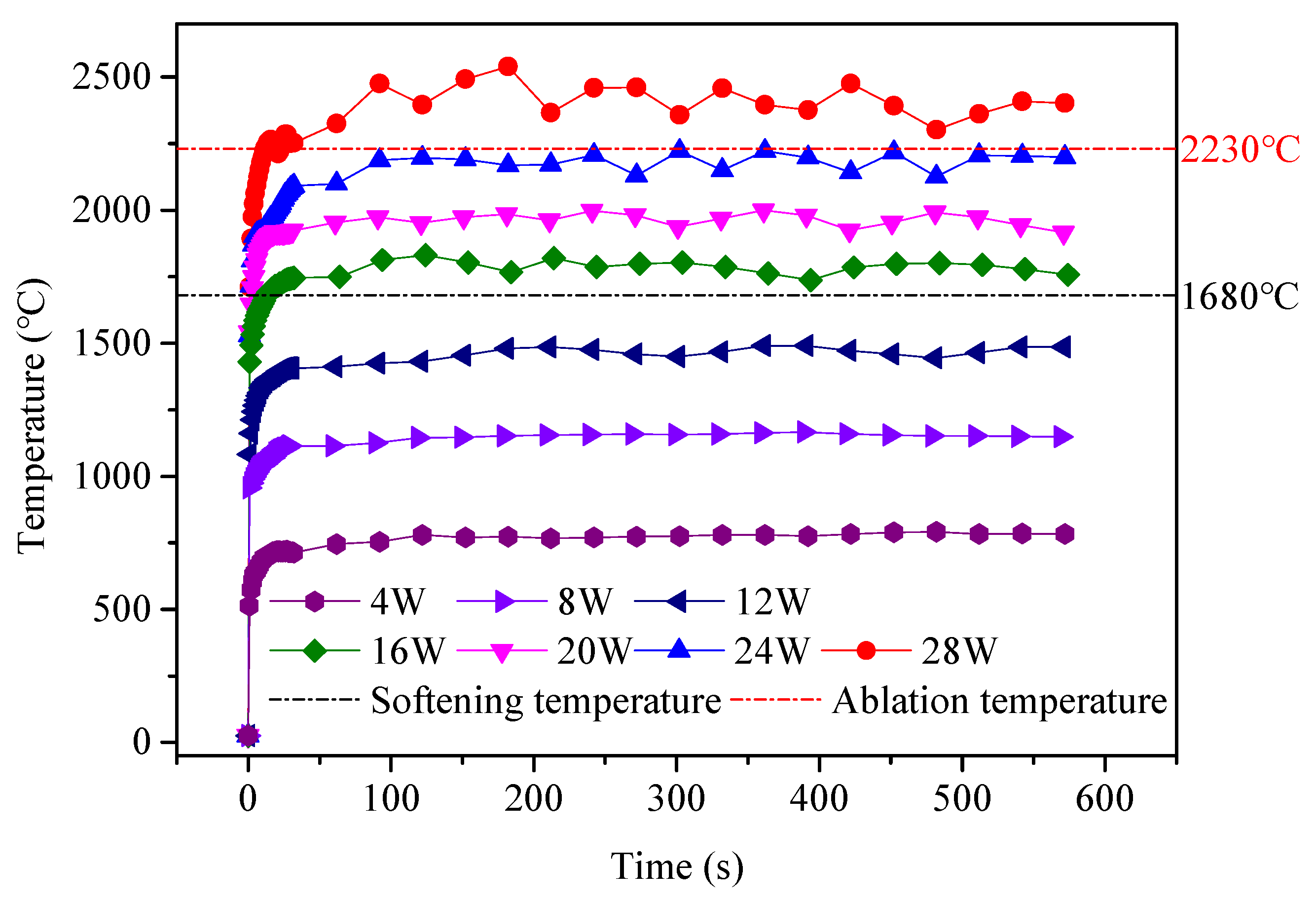
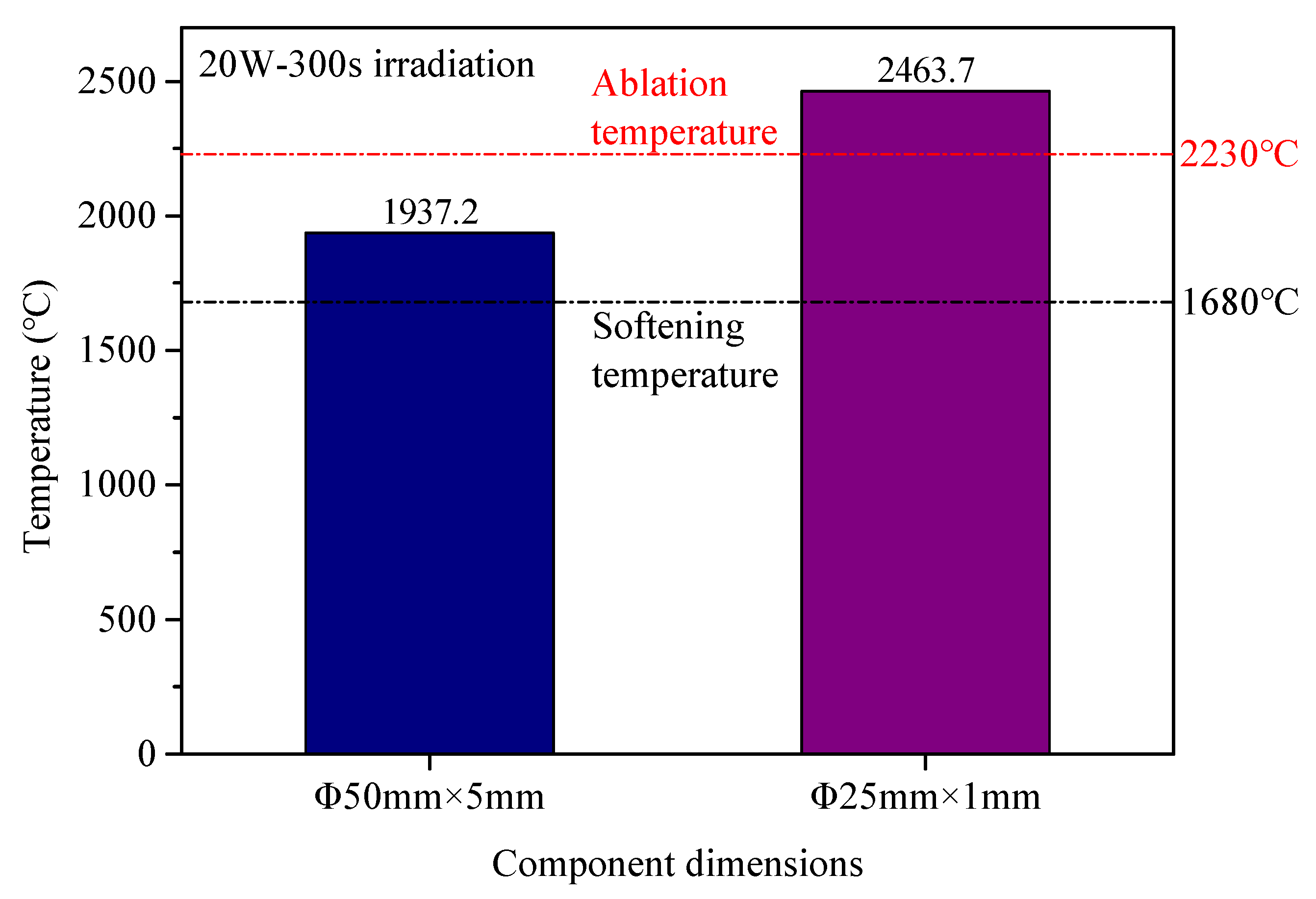
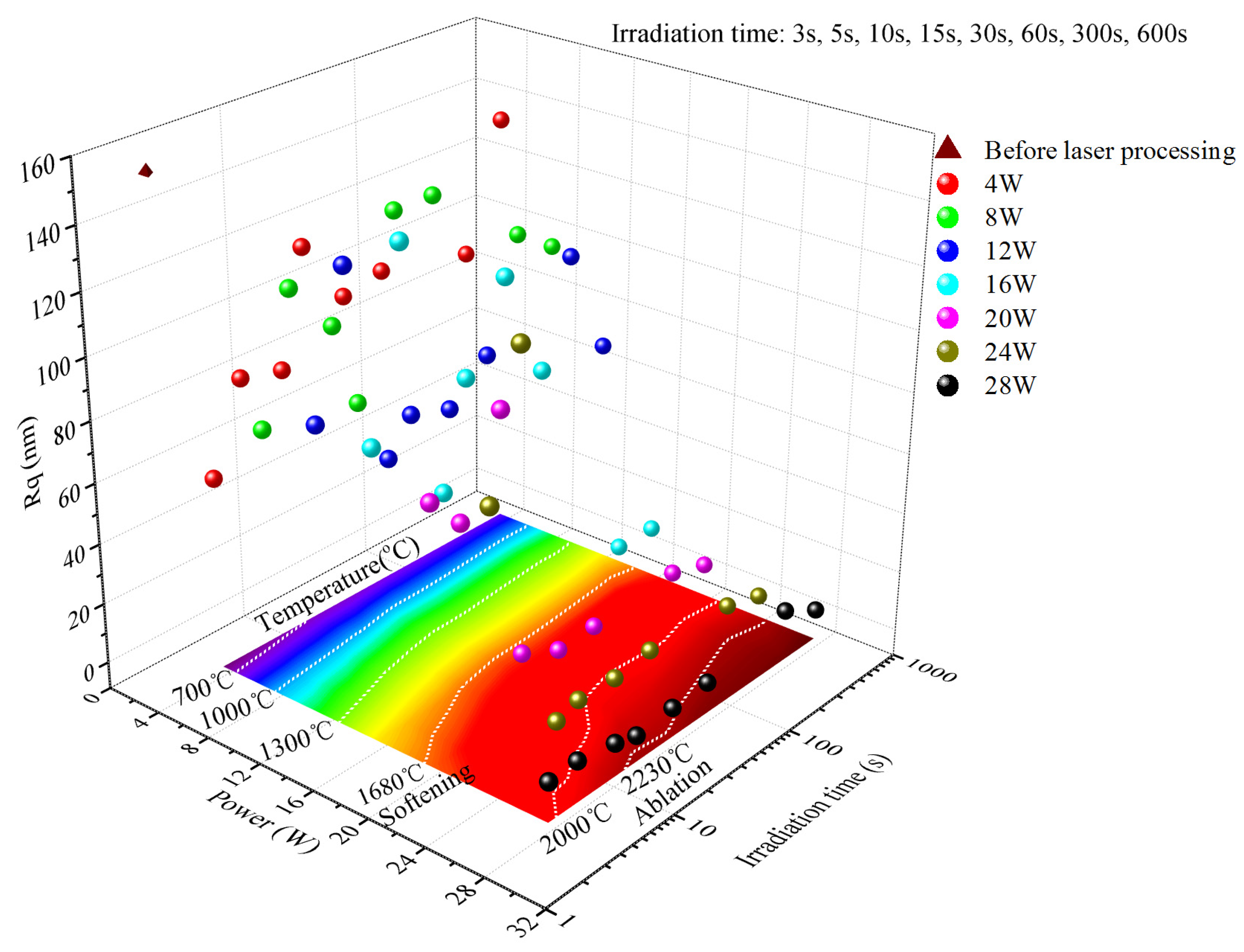
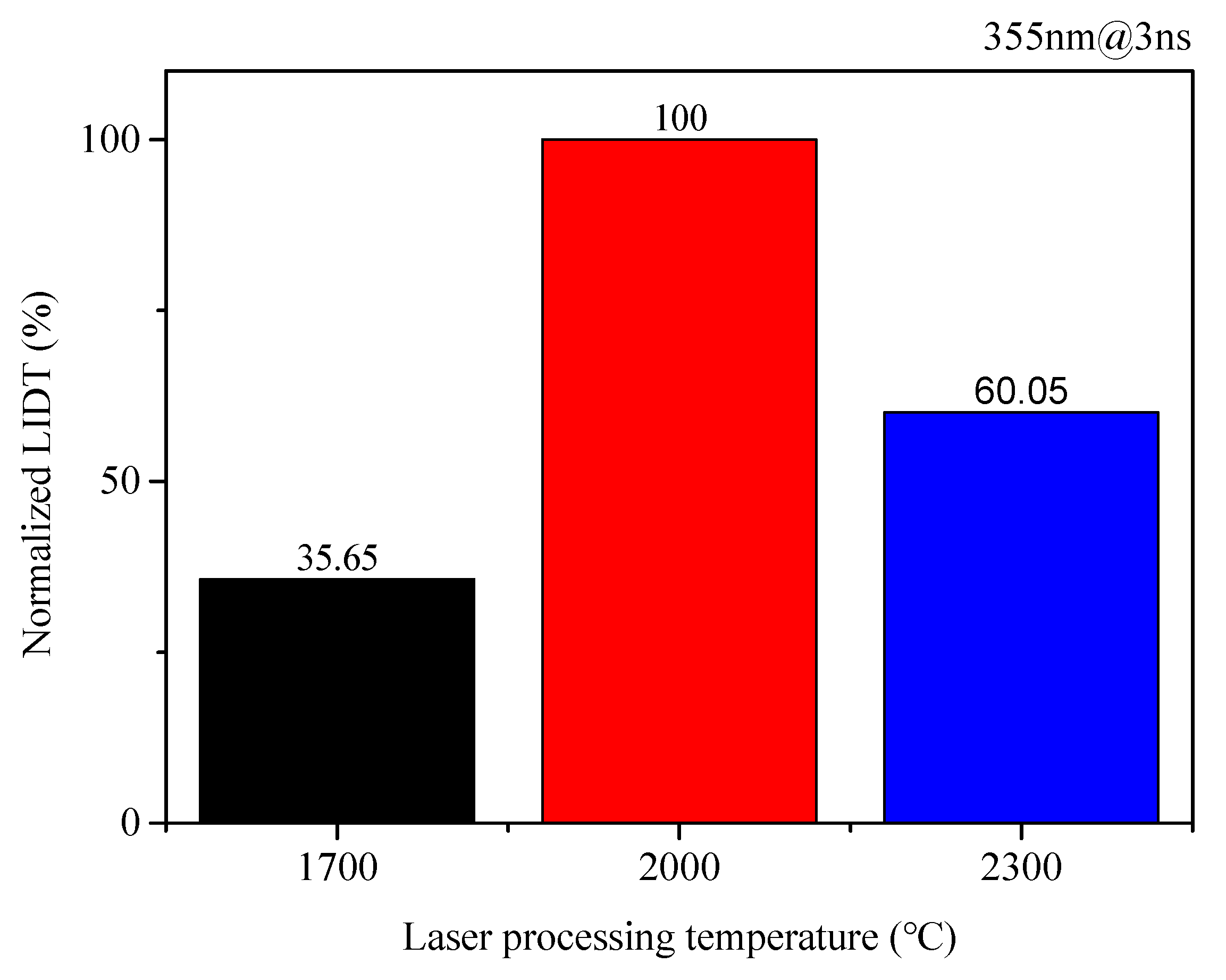
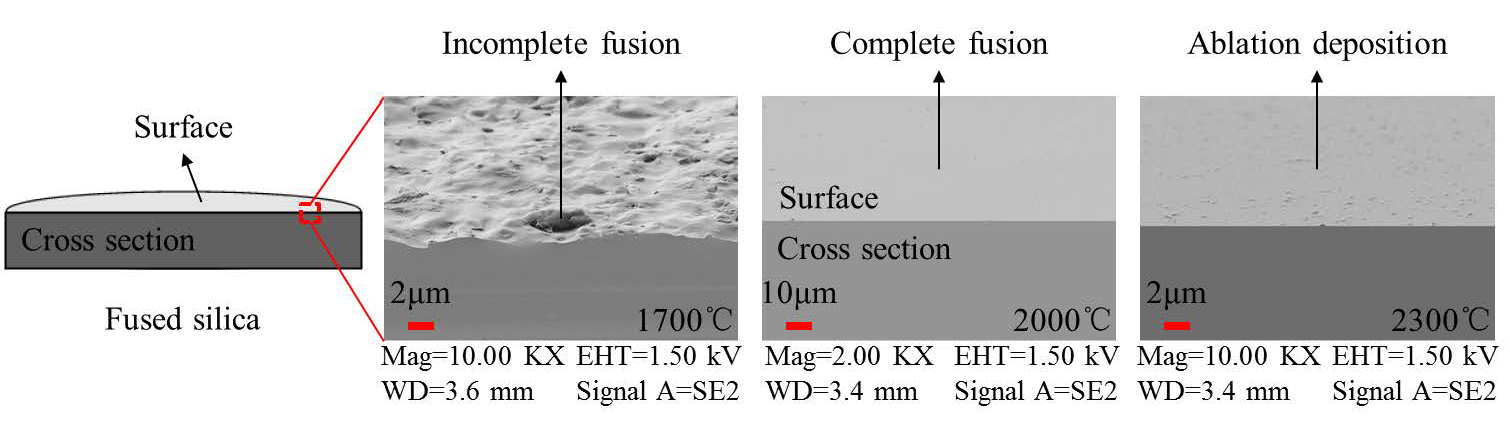
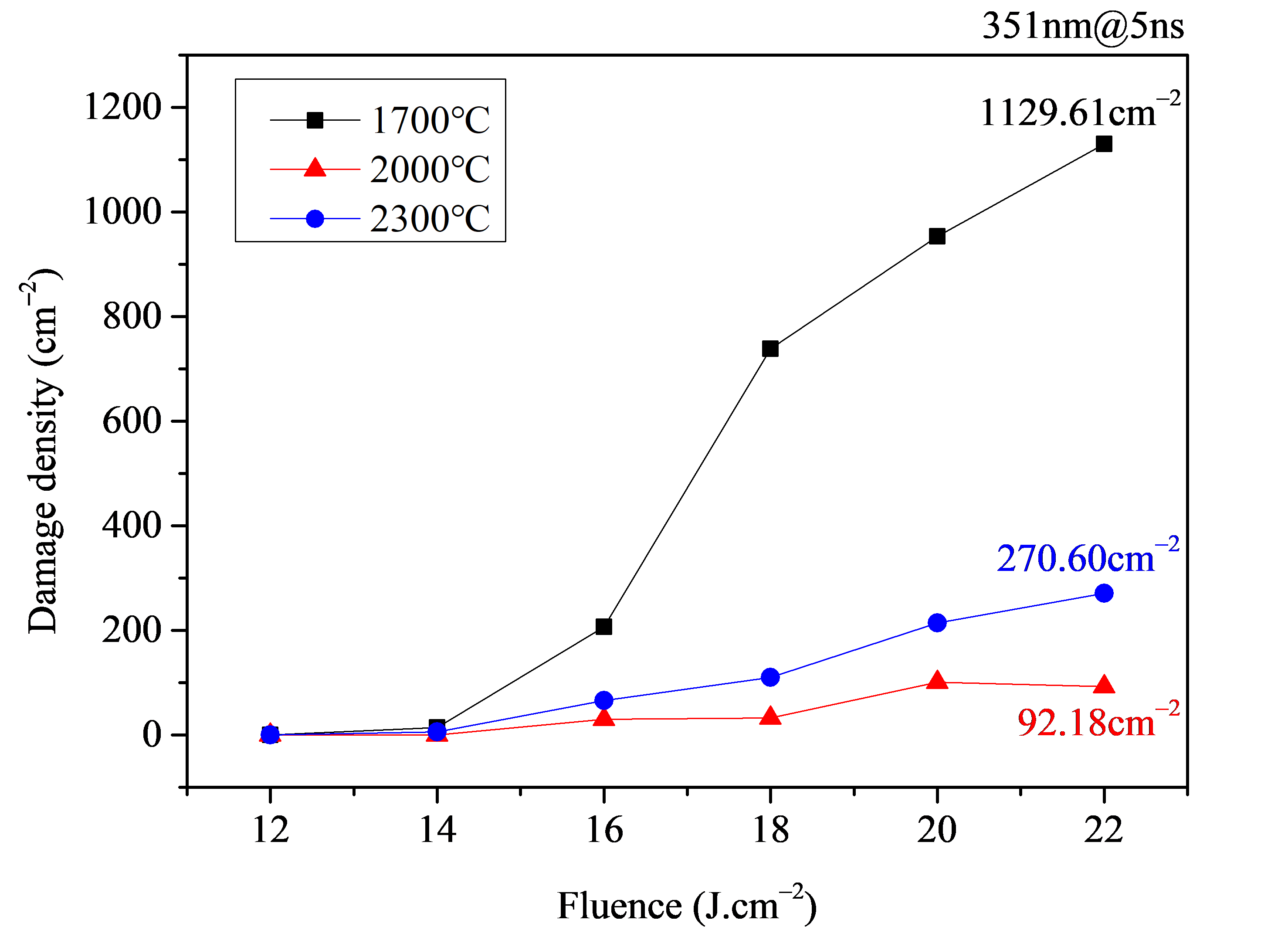
- In terms of damage performance optimization, the analysis results of the influence of pre-treatment processes and laser processing parameters during CO2 laser polishing on the damage performance of fused silica samples indicate that the improvement in the damage performance of laser-polished samples is directly related to the removal of surface contaminants and the fusion of subsurface cracks. The pre-treatment process primarily involves cleaning and etching to eliminate surface contaminants and expose subsurface cracks, while the laser processing technique employs laser fusion to achieve molten healing of these subsurface cracks. Therefore, to obtain laser-polished fused silica samples with optimized damage performance, the pre-treatment stage must maintain standard cleaning procedures, appropriate etching, and a clean water environment. Concurrently, the laser processing stage requires establishment of an appropriate thermal melting temperature to maximize subsurface crack fusion without inducing ablation. For instance, in the laser polishing of a φ50 mm × 5 mm component, standard ultrasonic cleaning and HF etching are first performed in a clean water environment. Subsequently, based on temperature control requirements, the laser power is adjusted to 16~24 W, thereby obtaining a laser-polished sample with optimized damage performance.
- (2)
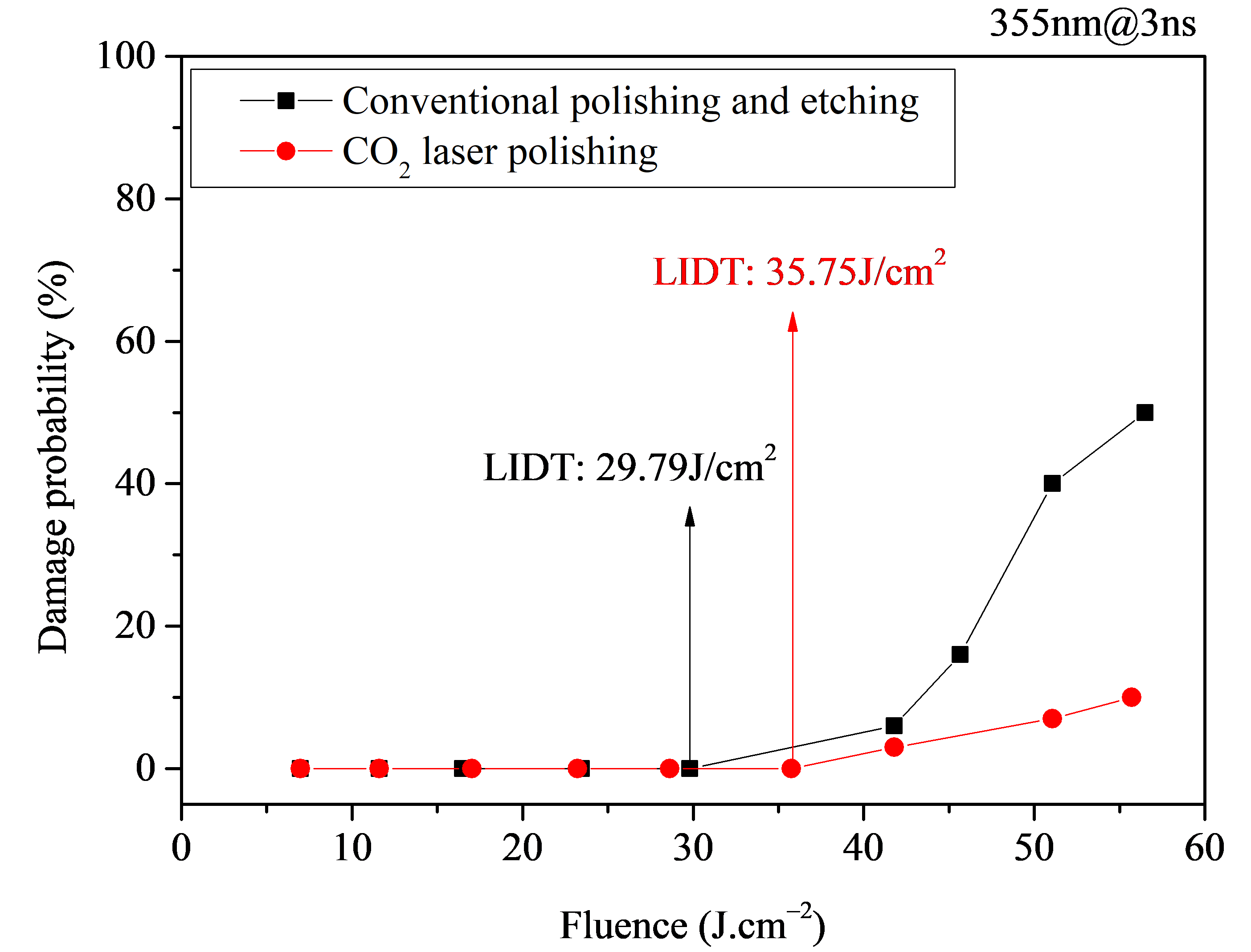
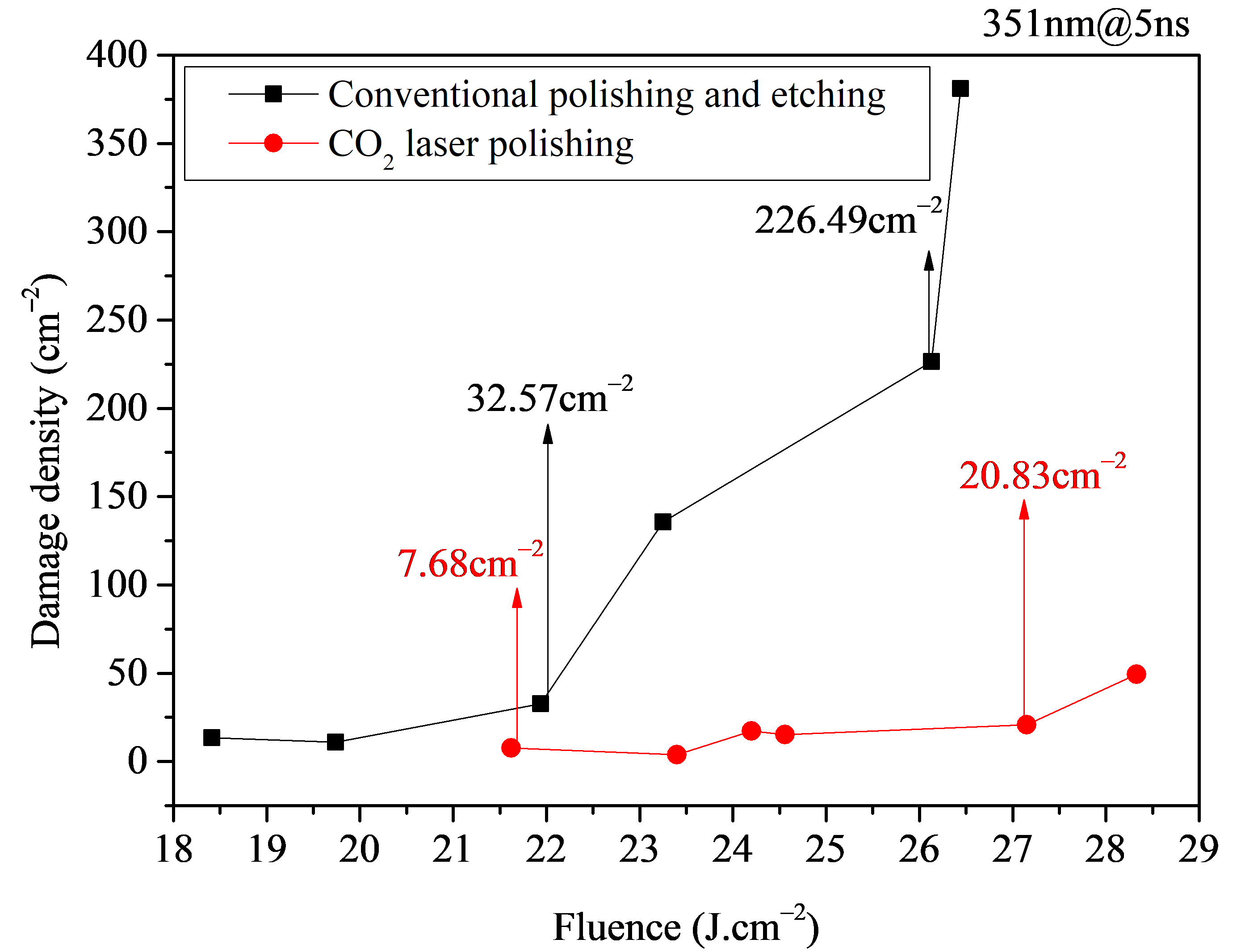
- Regarding the validation of damage performance, the comparative results of damage performance between optimized laser-polished samples and samples treated with conventional polishing and etching demonstrate that the damage performance of laser-polished samples is significantly superior to that of conventional polished and etched samples. The LIDT of the laser-polished samples can reach 1.2 times that of the conventional polished and etched samples, and the damage density under high fluences (>25 J/cm2) can be reduced by more than an order of magnitude compared with the conventional polished and etched samples.
Author Contributions
Funding
Data Availability Statement
Conflicts of Interest
Abbreviations
| LIDR | Laser-Induced Damage Resistance |
| SEM | Scanning Electron Microscope |
| AFM | Atomic Force Microscope |
| LIDT | Laser-Induced Damage Threshold |
References
- Jiang, L.W.; Chi, H.L.; Xu, Y.Y.; Tao, H.M. Current status and development prospects of the fused quartz industry. Chin. Mark. 2020, 14, 83+91. [Google Scholar] [CrossRef]
- Li, Y.G.; Yuan, Z.G.; Wang, J.; Xu, Q. Laser-induced damage characteristics in fused silica surface due to mechanical and chemical defects during manufacturing process. Opt. Laser Technol. 2017, 91, 149–158. [Google Scholar] [CrossRef]
- Miller, P.E.; Bude, J.D.; Suratwala, T.I.; Shen, N.; Laurence, T.A. Fracture-induced subbandgap absorption as a precursor to optical damage on fused silica surfaces. Opt. Lett. 2010, 35, 2702–2704. [Google Scholar] [CrossRef]
- Suratwala, T.I.; Miller, P.E.; Bude, J.D.; Steele, W.A.; Wong, L.L. HF-based etching processes for improving laser damae resistance of fused silica optical surfaces. J. Am. Ceram. Soc. 2011, 94, 416–428. [Google Scholar] [CrossRef]
- Manes, K.R.; Spaeth, M.L.; Adams, J.J.; Bowers, M.W.; Bude, J.D.; Carr, C.W.; Yang, S.T. Damage mechanisms avoided or managed for NIF large optics. Fusion Sci. Technol. 2016, 69, 146–249. [Google Scholar] [CrossRef]
- Neauport, J.; Lamaignere, L.; Bercegol, H.; Pilon, F.; Birolleau, J.C. Polishing-induced contamination of fused silica optics and laser induced damage density at 351nm. Opt. Express 2005, 13, 10163–10171. [Google Scholar] [CrossRef] [PubMed]
- Campbell, J.H.; Suratwala, T.I. Nd-doped phosphate glasses for high-energy/high-peak-power lasers. J. Non-Cryst. Solids 2000, 263, 318–341. [Google Scholar] [CrossRef]
- Zhao, L.J. Study on CO2 Laser Polishing Mechanism and Removal Process of Fused Silica Material. Ph.D. Thesis, Harbin Institute of Technology, Harbin, China, 2022. [Google Scholar]
- Wang, D.; Fan, F.; Liu, M.; Tan, T.; Li, Y. Top-hat and Gaussian laser beam smoothing of ground fused silica surface. Opt. Laser Technol. 2020, 127, 106141. [Google Scholar] [CrossRef]
- Temple, P.A.; Lowdermilk, W.H.; Milam, D. Carbon dioxide laser polishing of fused silica surfaces for increased laser-damage resistance at 1064 nm. Appl. Opt. 1982, 21, 3249–3255. [Google Scholar] [CrossRef] [PubMed]
- Hildebrand, J.; Hecht, K.; Bliedtner, J.; Muller, H. Laser beam polishing of quartz glass surfaces. Phys. Procedia 2011, 12, 452–461. [Google Scholar] [CrossRef]
- Hecht, K.; Bliedtner, J.; Rost, M.; Muller, H.; Schmidt, T. Carbon dioxide laser beam polishing of fused silica surfaces-process development and optimization. Adv. Eng. Mater. 2015, 17, 240–246. [Google Scholar] [CrossRef]
- Weingarten, C.; Schmickler, A.; Willenborg, E.; Wissenbach, K.; Poprawe, R. Laser polishing and laser shape correction of optical glass. J. Laser Appl. 2017, 29, 011702. [Google Scholar] [CrossRef]
- Cormont, P.; Bourgeade, A.; Carvaro, S.; Donval, T.; Doualle, T.; Gaborit, G.; Gallais, L.; Rullier, J.L. Relevance of carbon dioxide laser to remove scratches on large fused silica polished optics. Adv. Eng. Mater. 2015, 17, 253–259. [Google Scholar] [CrossRef]
- Luo, X.Y.; Yang, W.; Li, Y.G. The influence of laser beam shaping on surface roughness, surface figure and mid-spatial frequency of fused silica glass in CO2 laser smoothing. Opt. Laser Technol. 2024, 171, 110426. [Google Scholar] [CrossRef]
- Xiang, X.; Zheng, W.G. Irradiation effects of CO2 laser parameters on surface morphology of fused silica. Chin. Phys. B 2011, 20, 350–355. [Google Scholar] [CrossRef]
- Zhao, L.J.; Cheng, J.; Chen, M.J.; Yuan, X.; Liao, W.; Liu, Q.; Yang, H.; Wang, H. Formation mechanism of a smooth, defect-free surface of fused silica optics using rapid CO2 laser polishing. Int. J. Extrem. Manuf. 2019, 1, 88–98. [Google Scholar] [CrossRef]
- He, T.; Wei, C.Y.; Jiang, Z.; Zhao, Y.; Shao, J. Super-smooth surface demonstration and the physical mechanism of CO2 laser polishing of fused silica. Opt. Lett. 2018, 43, 5777–5780. [Google Scholar] [CrossRef]
- Nowak, K.M.; Baker, H.J.; Hall, D.R. Analytical model for CO2 laser ablation of fused quartz. Appl. Opt. 2015, 54, 8653–8663. [Google Scholar] [CrossRef] [PubMed]
- Doualle, T.; Hebert, D.; Combis, P.; Hecquet, C.; Gallais, L.; Rullier, J. Comparison between fused silica of type II and III after surface heating with a CO2 laser. Appl. Phys. A Mater. Sci. Process. 2016, 122, 90. [Google Scholar] [CrossRef]
- He, T.; Wei, Z.Y.; Jiang, Z.G.; Yu, Z.; Chao, Z.; Shao, J.D. Numerical model and experimental demonstration of high precision ablation of pulse CO2 laser. Chin. Opt. Lett. 2018, 16, 74–79. [Google Scholar] [CrossRef]
- Jiang, Y. Theoretical and Experimental Study on Surface Damage Repair of Fused Silica Optical Components. Ph.D. Thesis, University of Electronic Science and Technology, Chengdu, China, 2012. [Google Scholar]
- Tan, C.; Zhao, L.J.; Chen, M.J.; Cheng, J.; Zhang, Y.; Zhang, J.; Yang, H.; Yin, Z.Y. Repaired morphology of CO2 laser rapid ablation mitigation of fused silica and its influence on downstream light modulation. Sci. China (Technol. Sci.) 2022, 65, 1116–1126. [Google Scholar] [CrossRef]
- Jiang, Y.; Xiang, X.; Liu, C.M.; Luo, C.S.; Wang, H.J.; Yuan, X.D.; He, S.B.; Ren, W.; Zheng, W.G. Two localized CO2 laser treatment methods for mitigation of UV damage grouth in fused silica. Chin. Phys. B 2012, 21, 303–310. [Google Scholar] [CrossRef]
- Shen, X.; Song, C.; Shi, F.; Tian, Y.; Tie, G.; Qiao, S.; Peng, X.; Zhang, W.; Hou, Z. Research on Laser-Induced Damage Post-Restoration Morphology of Fused Silica and Optimization of Patterned CO2 Laser Repair Strategy. Micromachines 2023, 14, 1359. [Google Scholar] [CrossRef]
- Tan, C.; Zhao, L.J.; Chen, M.J.; Cheng, J.; Yang, H.; Liu, Q.; Yin, Z.Y.; Ding, W.Y. Morphology evolution mechanisms and localized structural modification of repaired sites on fused silica optics processed by CO2 laser rapid ablation mitigation. Opt. Laser Technol. 2022, 147, 107648. [Google Scholar] [CrossRef]
- Luo, X.Y. Study on the Evolution of Full-Bandwidth Surface Errors in Fused Silica Components Processed by CO2 Laser Polishing. Master’s Thesis, Xiamen University, Xiamen, China, 2022. [Google Scholar]
- Lu, G.; Li, X.; Yan, D.; Wang, D.; Peng, Y.; Wang, K. Influence of parameters on the surface roughness of the CO2 laser polished fused silica glass. J. Light Electronoptic 2021, 248, 168044. [Google Scholar] [CrossRef]
- Adamčík, L.; Igaz, R.; Štefančin, L.; Kubovský, I.; Kminiak, R. Evaluation of the Surface Irregularities of the Cross-Section of the Wood after CO2 Laser Cutting. Materials 2023, 16, 7175. [Google Scholar] [CrossRef] [PubMed]
- Wang, H.J.; Li, X.B.; Lv, H.B.; Yuan, X.D.; Zheng, W.G. Effect of CO2 Laser Pretreatment Parameters on the Surface Roughness of Quartz Substrates. High Power Laser Part. Beams 2010, 22, 1031–1034. [Google Scholar] [CrossRef]



| Water Sample | Conductivity (25 °C) | ICP-OES Elemental Analysis (Compared with Ultra-Pure Water) | ICP-MS Elemental Analysis (Compared with Ultra-Pure Water) |
|---|---|---|---|
| ultra-pure water | 0.0055 mS/m | — | — |
| water sample1 | 0.064 mS/m | higher Si content | no significant difference |
| water sample2 | 0.008 mS/m | higher Ca content | higher Ti, Mn, Sr, Sn, Ba content |
Disclaimer/Publisher’s Note: The statements, opinions and data contained in all publications are solely those of the individual author(s) and contributor(s) and not of MDPI and/or the editor(s). MDPI and/or the editor(s) disclaim responsibility for any injury to people or property resulting from any ideas, methods, instructions or products referred to in the content. |
© 2025 by the authors. Licensee MDPI, Basel, Switzerland. This article is an open access article distributed under the terms and conditions of the Creative Commons Attribution (CC BY) license (https://creativecommons.org/licenses/by/4.0/).
Share and Cite
Tan, T.; Xu, Q.; Wang, S.; Zhuo, J.; Geng, F.; Liu, Z.; Jin, H.; Wang, X.; Liu, H.; Zhang, Q. Experimental Study on Laser-Induced Damage Performance of CO2 Laser-Polished Fused Silica Components. Micromachines 2025, 16, 1400. https://doi.org/10.3390/mi16121400
Tan T, Xu Q, Wang S, Zhuo J, Geng F, Liu Z, Jin H, Wang X, Liu H, Zhang Q. Experimental Study on Laser-Induced Damage Performance of CO2 Laser-Polished Fused Silica Components. Micromachines. 2025; 16(12):1400. https://doi.org/10.3390/mi16121400
Chicago/Turabian StyleTan, Ting, Qiao Xu, Shengfei Wang, Jin Zhuo, Feng Geng, Zhichao Liu, Huiliang Jin, Xiangfeng Wang, Hongjun Liu, and Qinghua Zhang. 2025. "Experimental Study on Laser-Induced Damage Performance of CO2 Laser-Polished Fused Silica Components" Micromachines 16, no. 12: 1400. https://doi.org/10.3390/mi16121400
APA StyleTan, T., Xu, Q., Wang, S., Zhuo, J., Geng, F., Liu, Z., Jin, H., Wang, X., Liu, H., & Zhang, Q. (2025). Experimental Study on Laser-Induced Damage Performance of CO2 Laser-Polished Fused Silica Components. Micromachines, 16(12), 1400. https://doi.org/10.3390/mi16121400