Review

Saffron (Crocus sativus L.): A Source of Nutrients for Health and for the Treatment of Neuropsychiatric and Age-Related Diseases

by
Adil El Midaoui
1,2,3,*,
Imen Ghzaiel
4,5,
Dominique Vervandier-Fasseur
6,
Mohamed Ksila
4,7,
Amira Zarrouk
5,8,
Thomas Nury
4,
Farid Khallouki
2,
Aboubaker El Hessni
3,
Salama Ouazzani Ibrahimi
3,
Norbert Latruffe
4,
Réjean Couture
1,
Omar Kharoubi
9,
Fatiha Brahmi
10,
Sonia Hammami
5,
Olfa Masmoudi-Kouki
7,
Mohamed Hammami
5,
Taoufik Ghrairi
7,
Anne Vejux
4 and
Gérard Lizard
4,*
1
Department of Pharmacology and Physiology, Faculty of Medicine, University of Montreal, Montreal, QC H3C 3J7, Canada
2
Department of Biology, Faculty of Sciences and Techniques Errachidia, Moulay Ismail University of Meknes, Errachidia 52000, Morocco
3
Laboratory of Genetics, Neuroendocrinology, and Biotechnology, Department of Biology, Faculty of Sciences, Ibn Tofail University, Kenitra 14020, Morocco
4
Team ‘Biochemistry of the Peroxisome, Inflammation and Lipid Metabolism’, University of Bourgogne Franche-Comte, 21000 Dijon, France
5
Lab-NAFS ‘Nutritio—Functional Food & Vascular Health’, Faculty of Medicine, LR12ES05, University Monastir, Monastir 5000, Tunisia
6
Team OCS, Institute of Molecular Chemistry (ICMUB UMR CNRS 6302), University of Bourgogne Franche-Comte, 21000 Dijon, France
7
Laboratory Neurophysiology, Cellular Physiopathology and Valorisation of Biomolecules, (LR18ES03), Department of Biology, Faculty of Sciences, University Tunis El Manar, Tunis 2092, Tunisia
8
Laboratory of Biochemistry, Faculty of Medicine, University of Sousse, Sousse 4000, Tunisia
9
Laboratory of Experimental Biotoxicology, Biodepollution and Phytoremediation, Faculty of Life and Natural Sciences, University Oran1 ABB, Oran 31000, Algeria
10
Laboratory Biomathématique, Biochimie, Biophysique et Scientométrie, Faculté des Sciences de la Nature et de la Vie, Université de Bejaia, Bejaia 06000, Algeria
*
Authors to whom correspondence should be addressed.
Nutrients 2022, 14(3), 597; https://doi.org/10.3390/nu14030597
Submission received: 7 January 2022 / Revised: 25 January 2022 / Accepted: 27 January 2022 / Published: 29 January 2022
(This article belongs to the Special Issue Mediterranean Nutrients and Oils)

Abstract

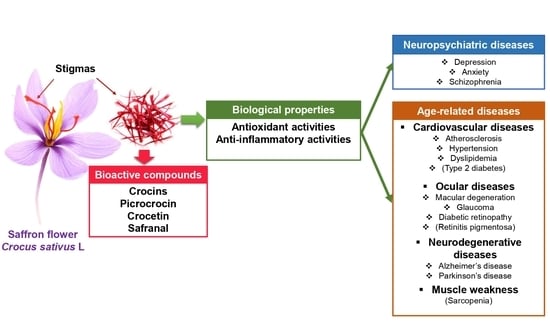
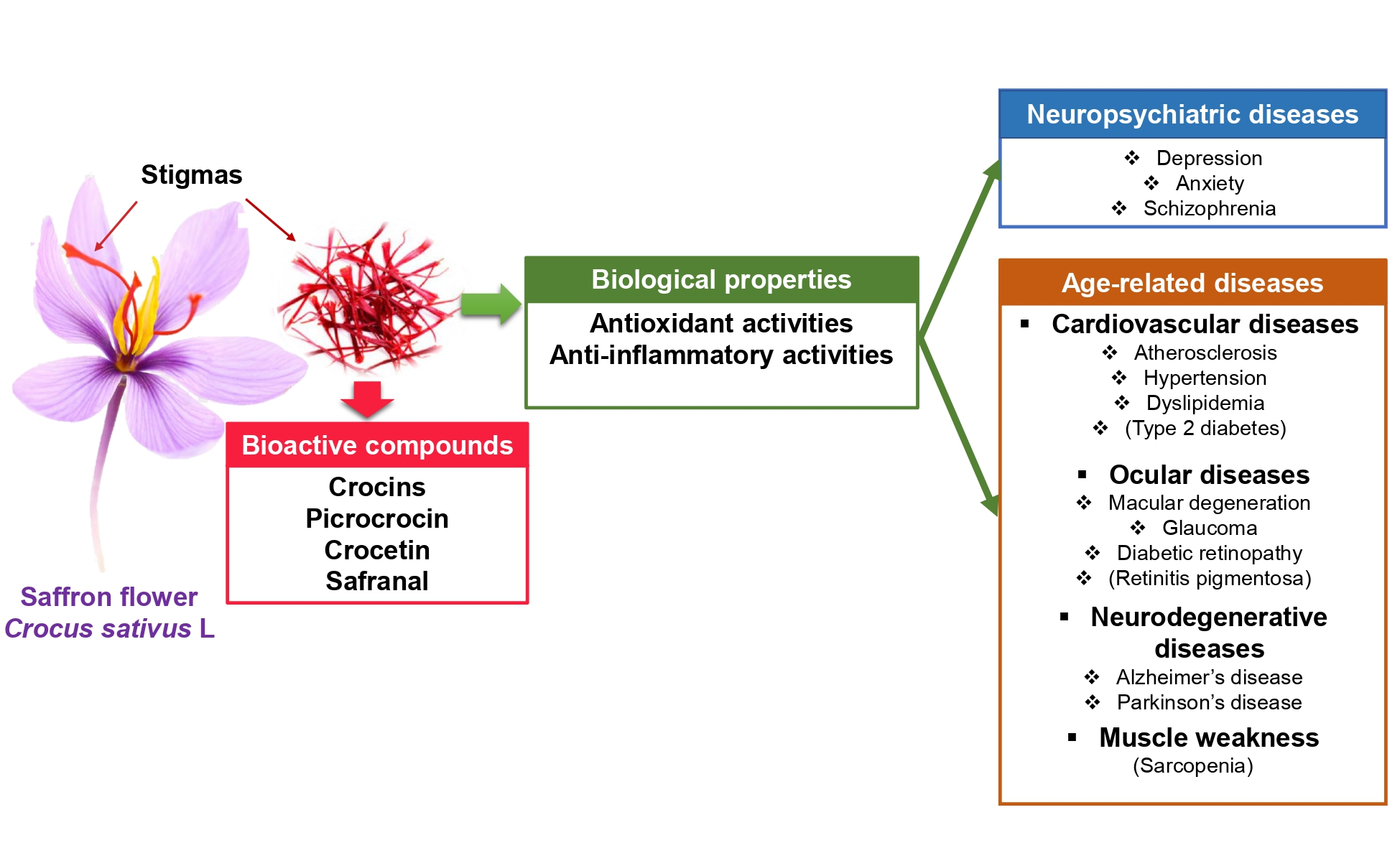
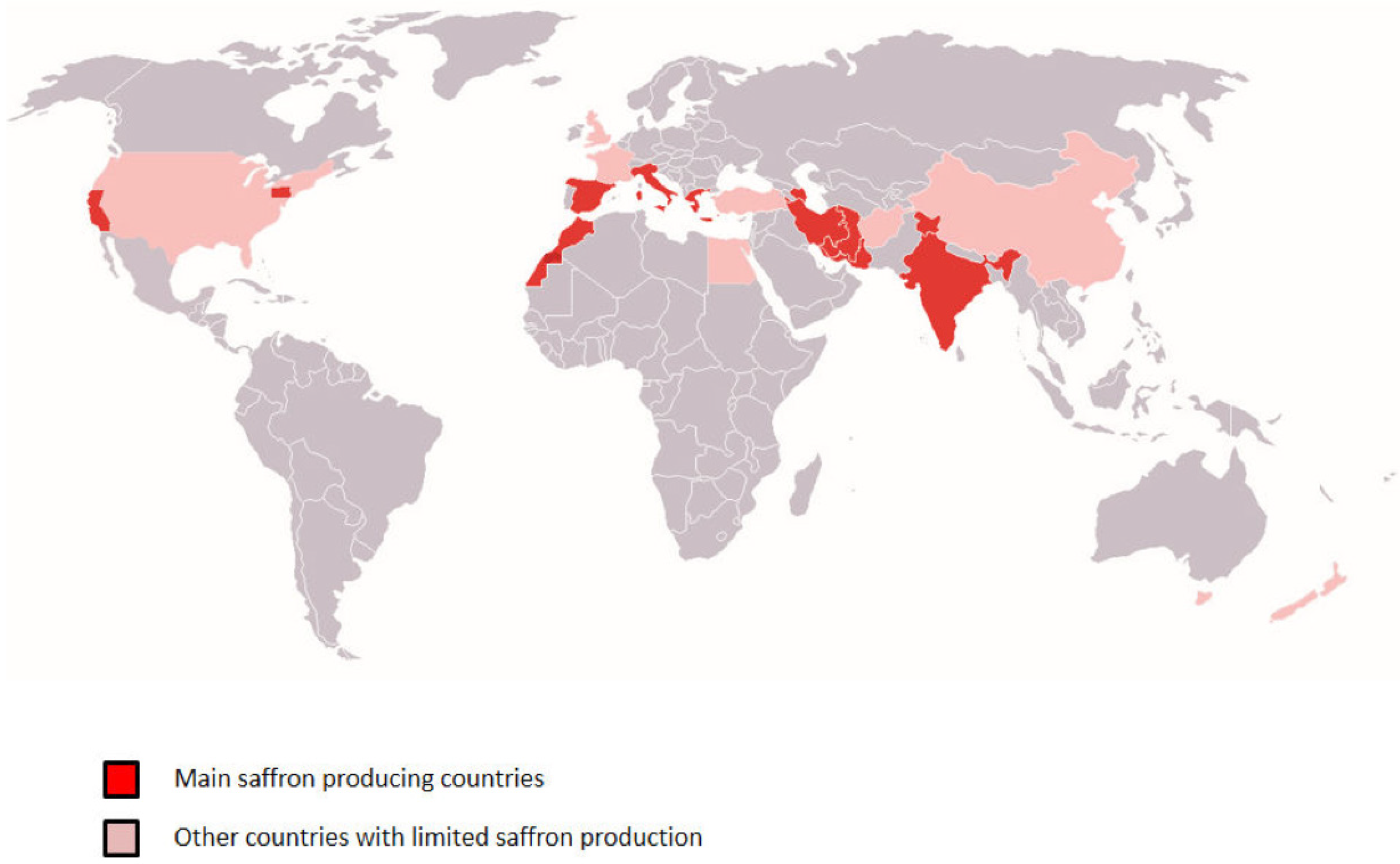
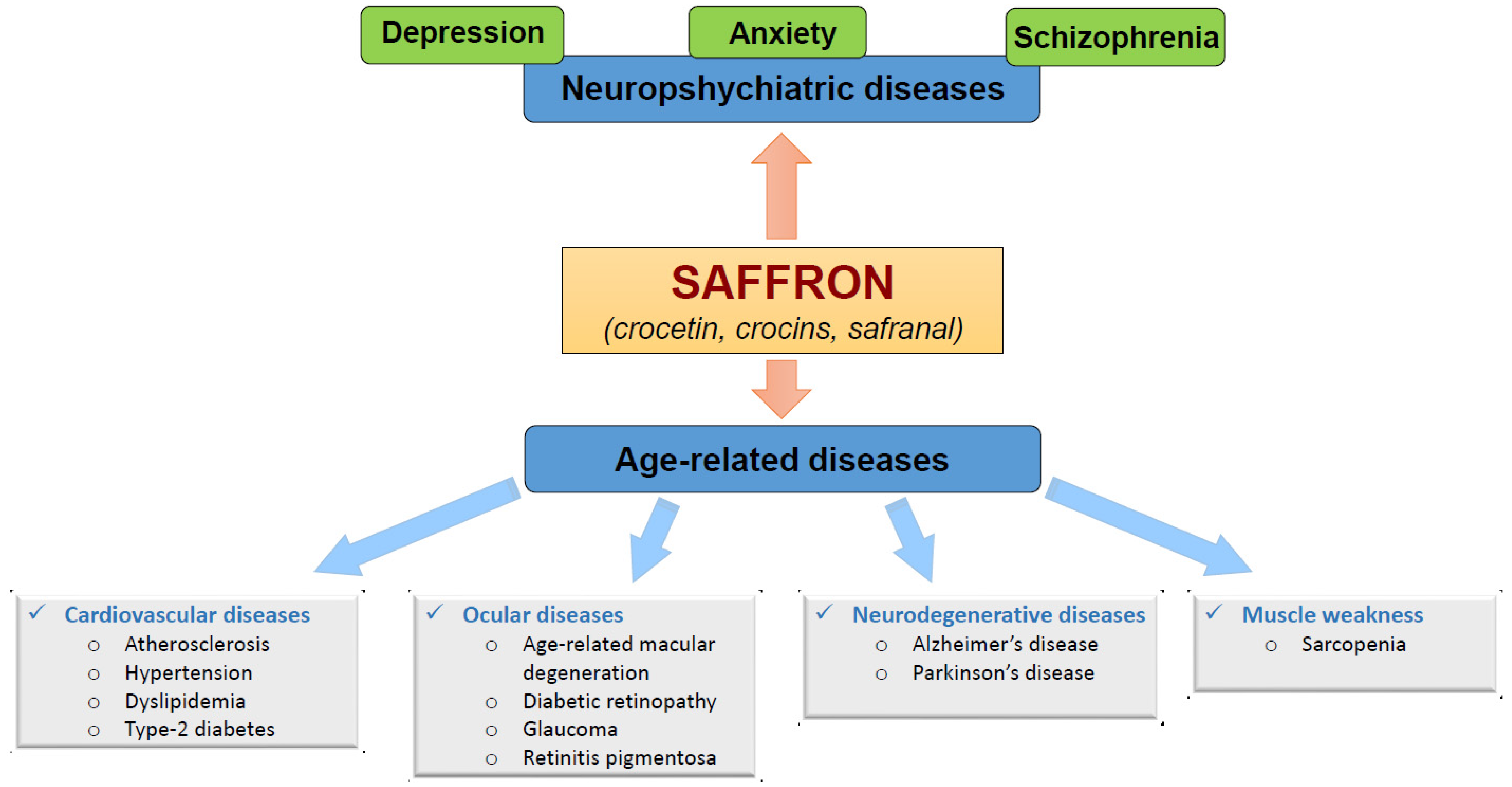
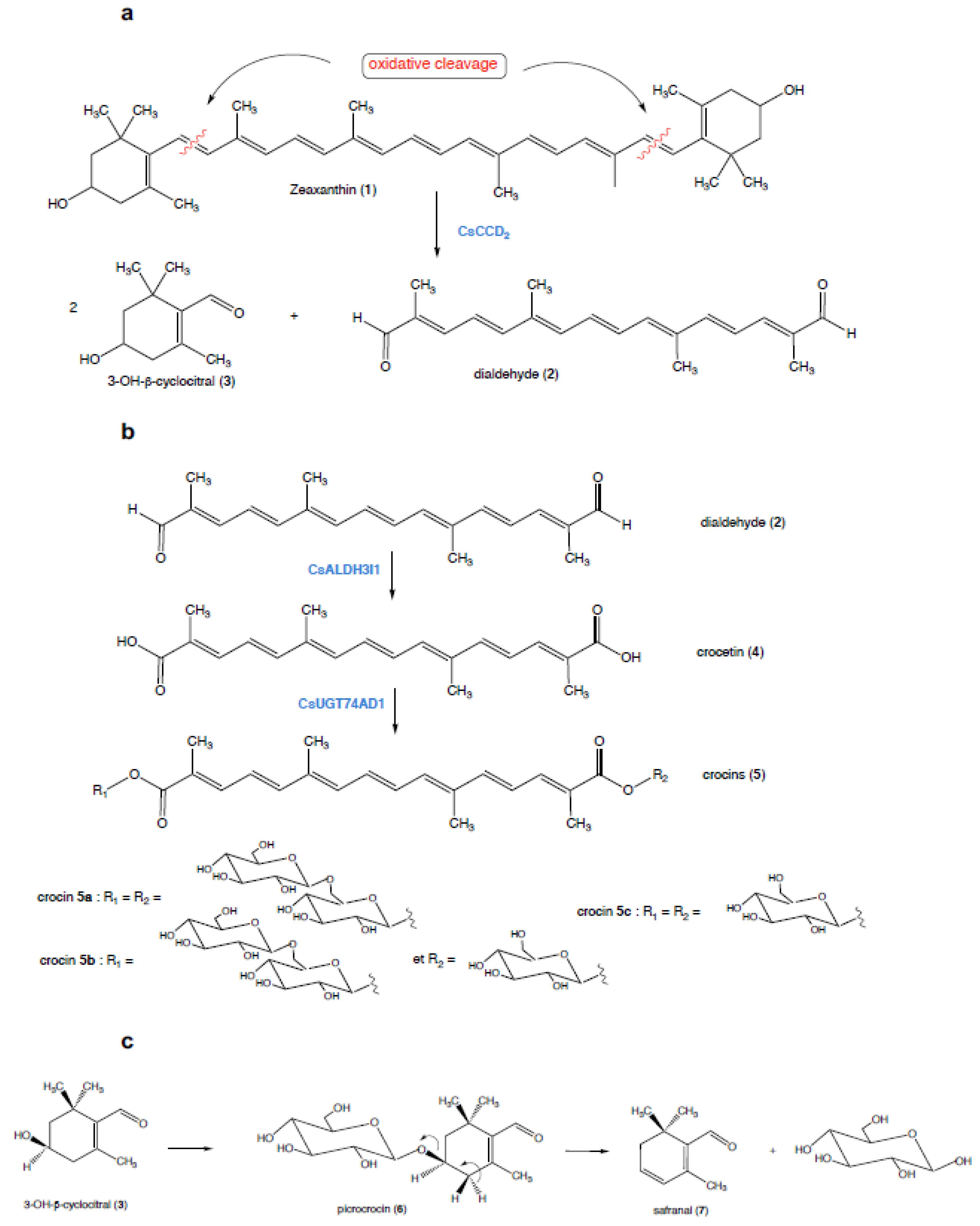
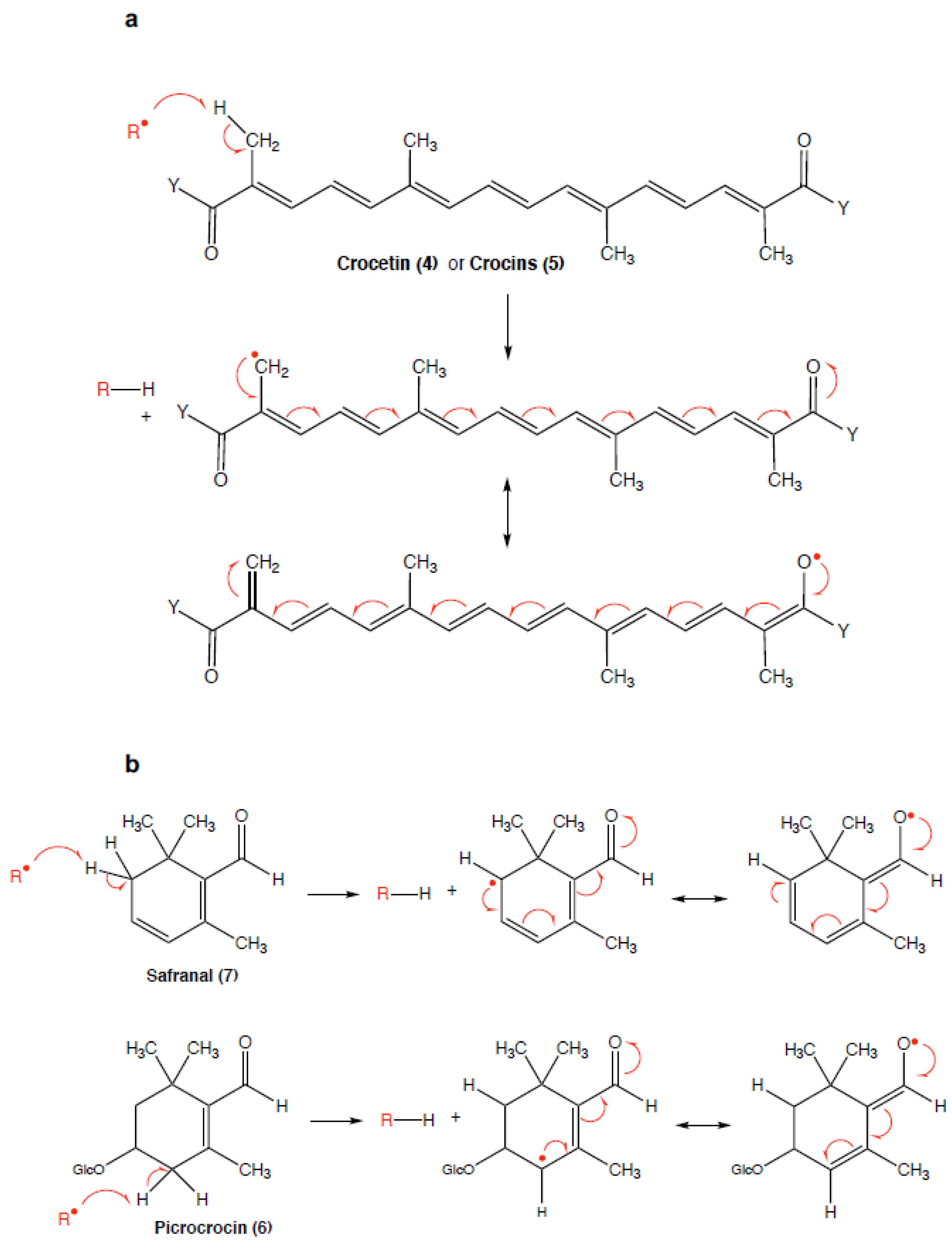
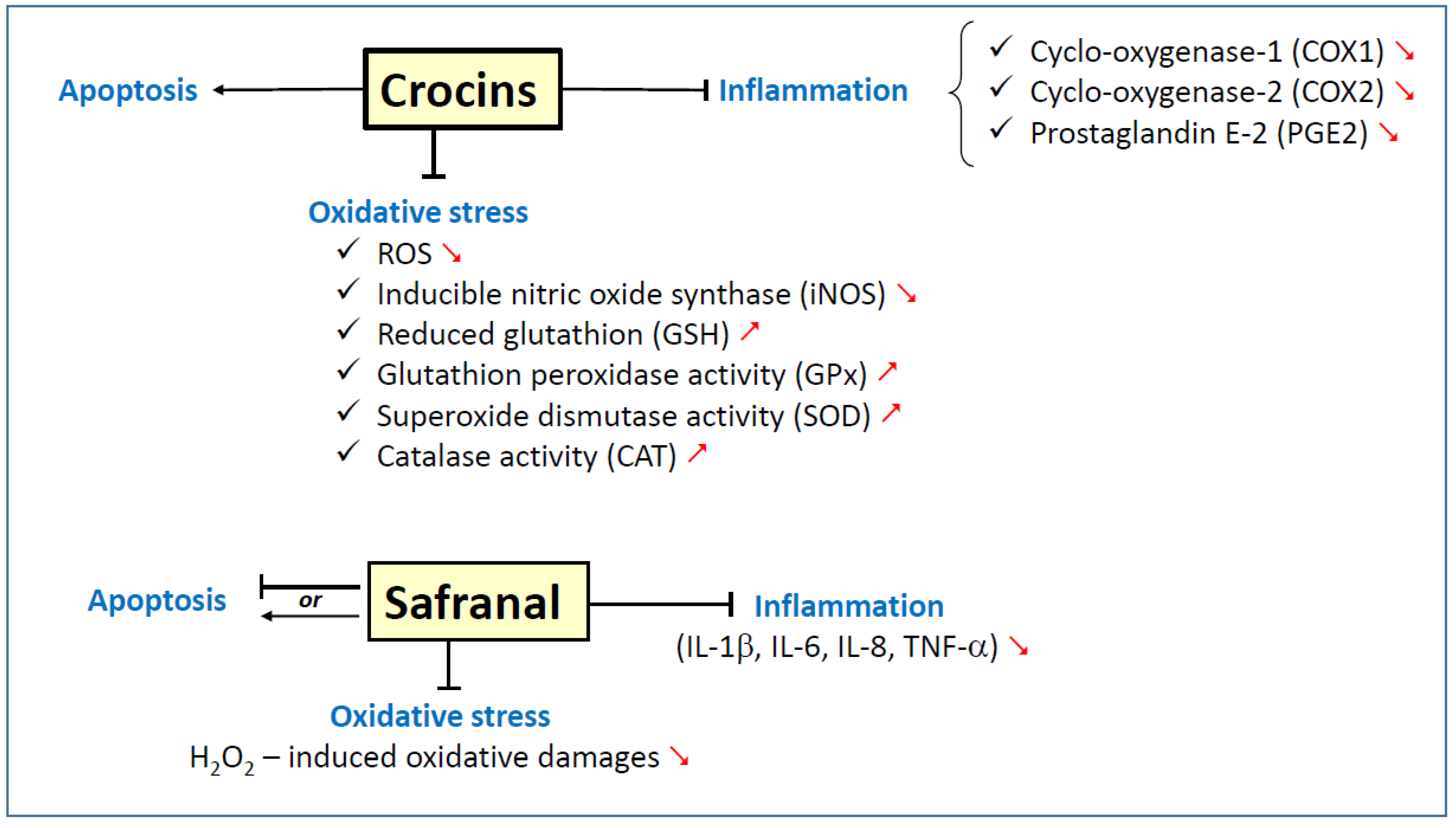
Saffron (Crocus sativus L.) is a medicinal plant, originally cultivated in the East and Middle East, and later in some Mediterranean countries. Saffron is obtained from the stigmas of the plant. Currently, the use of saffron is undergoing a revival. The medicinal virtues of saffron, its culinary use and its high added value have led to the clarification of its phytochemical profile and its biological and therapeutic characteristics. Saffron is rich in carotenoids and terpenes. The major products of saffron are crocins and crocetin (carotenoids) deriving from zeaxanthin, pirocrocin and safranal, which give it its taste and aroma, respectively. Saffron and its major compounds have powerful antioxidant and anti-inflammatory properties in vitro and in vivo. Anti-tumor properties have also been described. The goal of this review is to present the beneficial effects of saffron and its main constituent molecules on neuropsychiatric diseases (depression, anxiety and schizophrenia) as well as on the most frequent age-related diseases (cardiovascular, ocular and neurodegenerative diseases, as well as sarcopenia). Overall, the phytochemical profile of saffron confers many beneficial virtues on human health and, in particular, on the prevention of age-related diseases, which is a major asset reinforcing the interest for this medicinal plant.
Keywords: saffron; crocus sativus; crocins; crocetin; picrocrocin; safranal; nutrients; neuropsychiatric diseases; age-related diseases saffron; crocus sativus; crocins; crocetin; picrocrocin; safranal; nutrients; neuropsychiatric diseases; age-related diseases
Graphical Abstract