Article

Hyperspectral Alteration Information from Drill Cores and Deep Uranium Exploration in the Baiyanghe Uranium Deposit in the Xuemisitan Area, Xinjiang, China
1
State Key Laboratory of Geological Processes and Mineral Resources, School of Earth Sciences and Resources, China University of Geosciences, Beijing 100083, China
2
National Key Laboratory of Science and Technology on Remote Sensing Information and Image Analysis, Beijing Research Institute of Uranium Geology, Beijing 100029, China
3
Institute of Remote Sensing and Digital Earth Chinese Academy of Sciences, University of Chinese Academy of Sciences, Beijing 100101, China
*
Author to whom correspondence should be addressed.
Remote Sens. 2017, 9(5), 451; https://doi.org/10.3390/rs9050451
Submission received: 13 March 2017 / Revised: 29 April 2017 / Accepted: 4 May 2017 / Published: 6 May 2017

Abstract

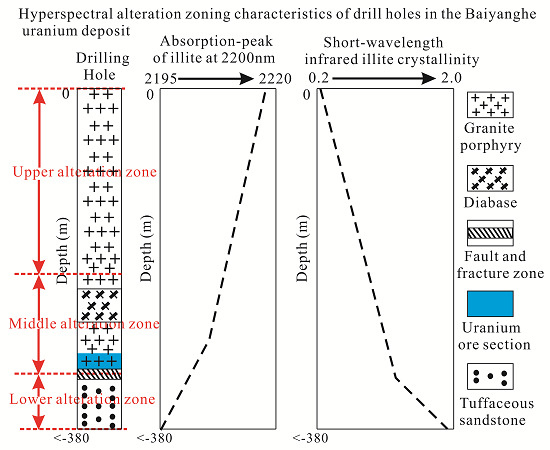
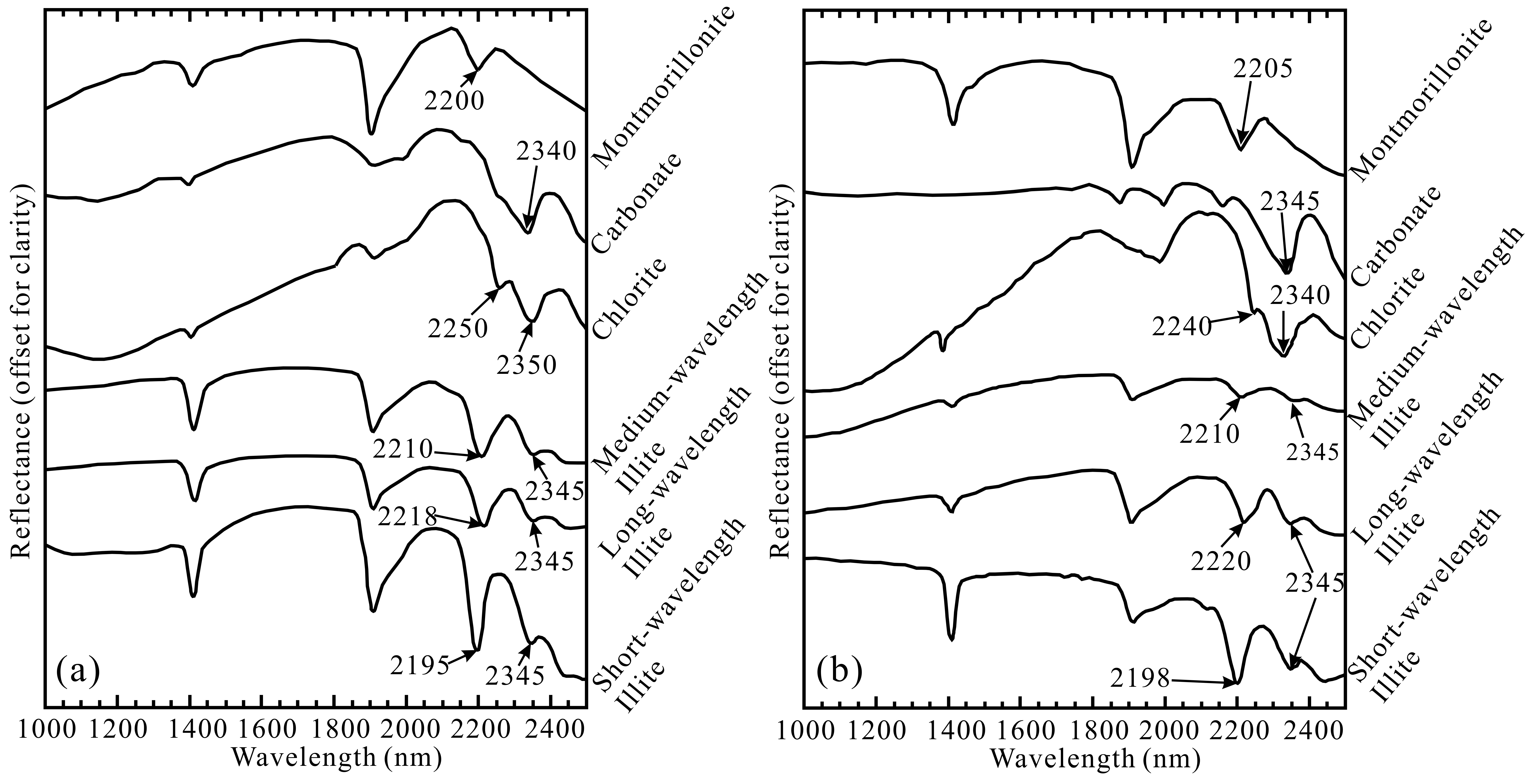
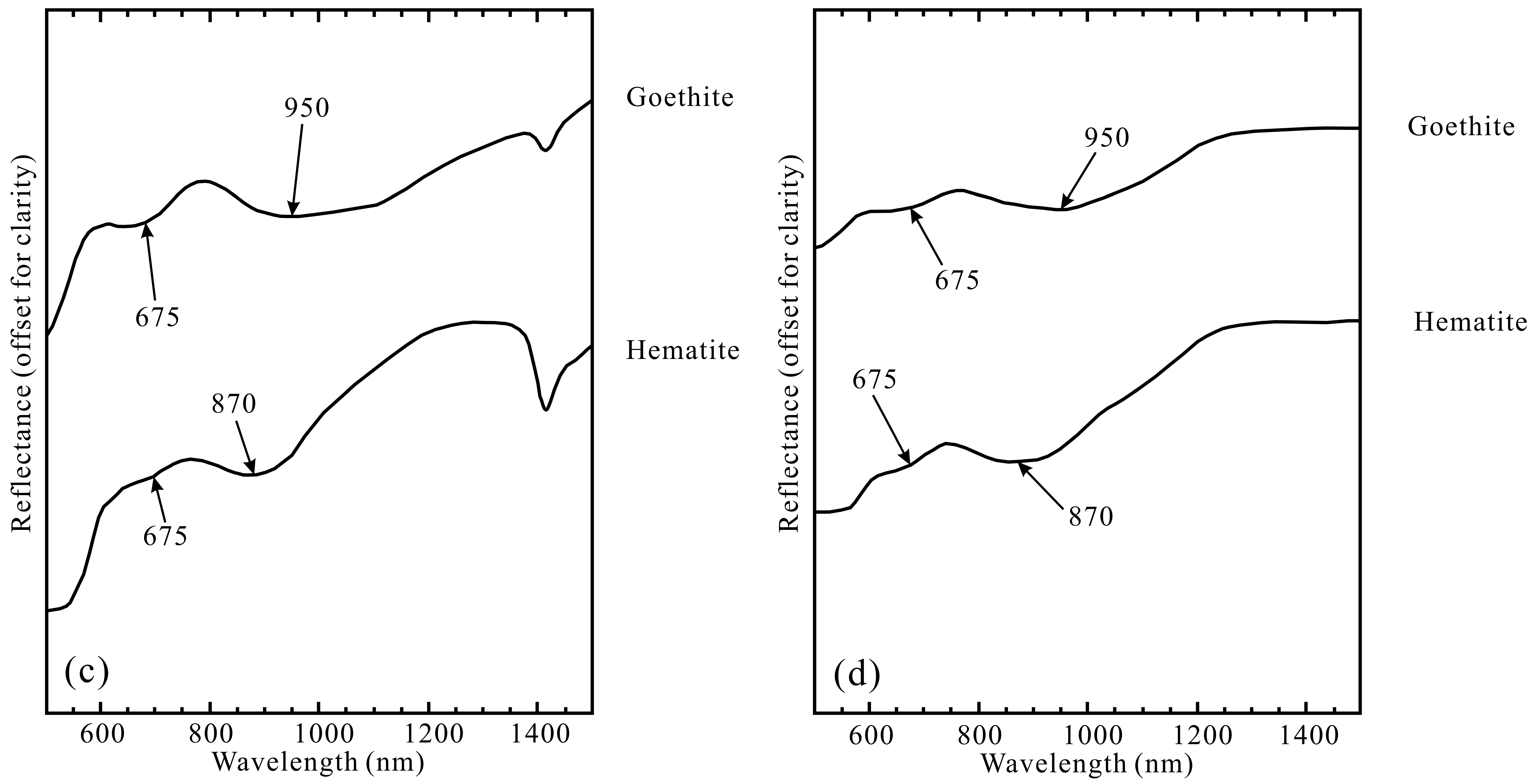
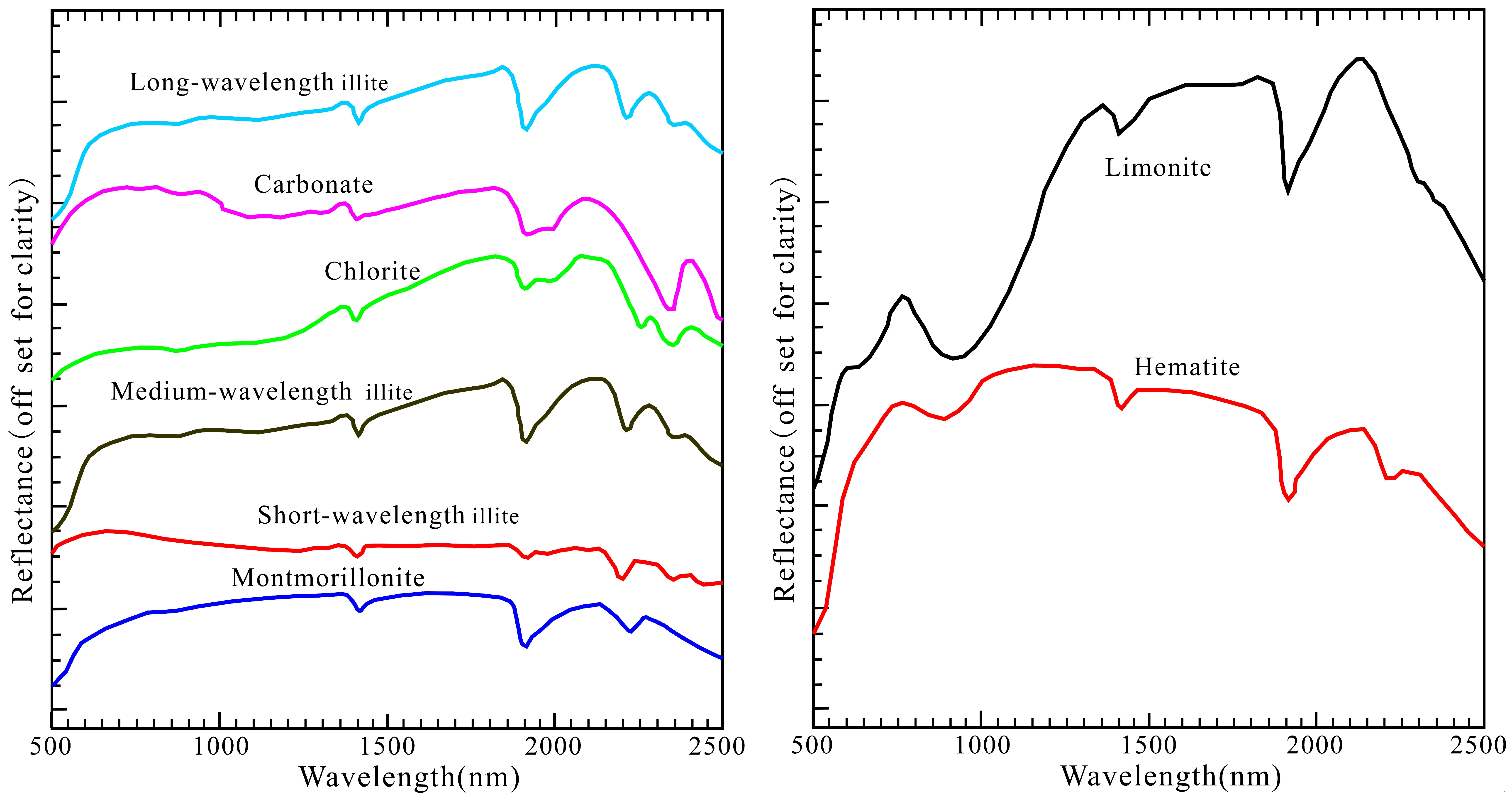
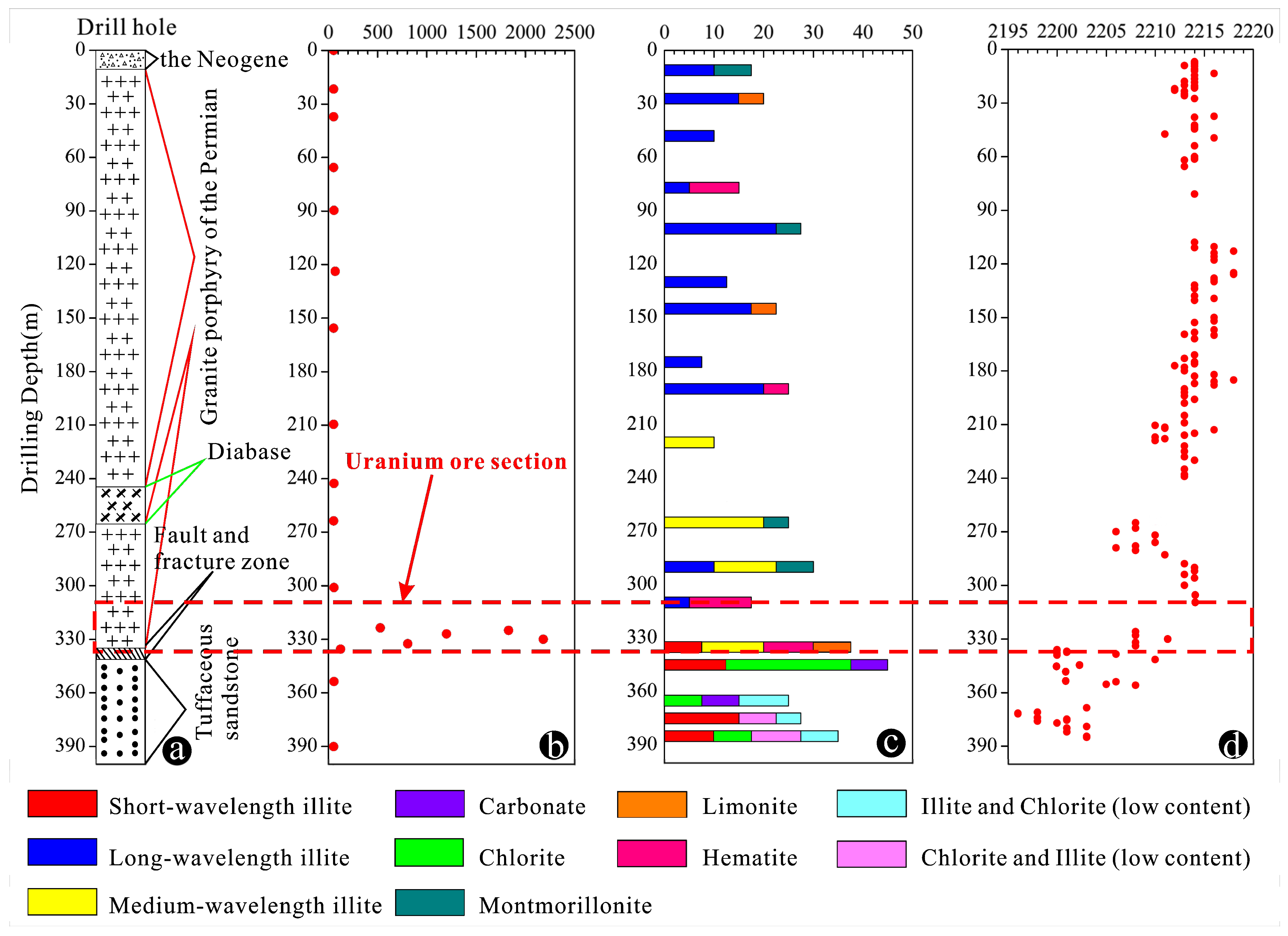
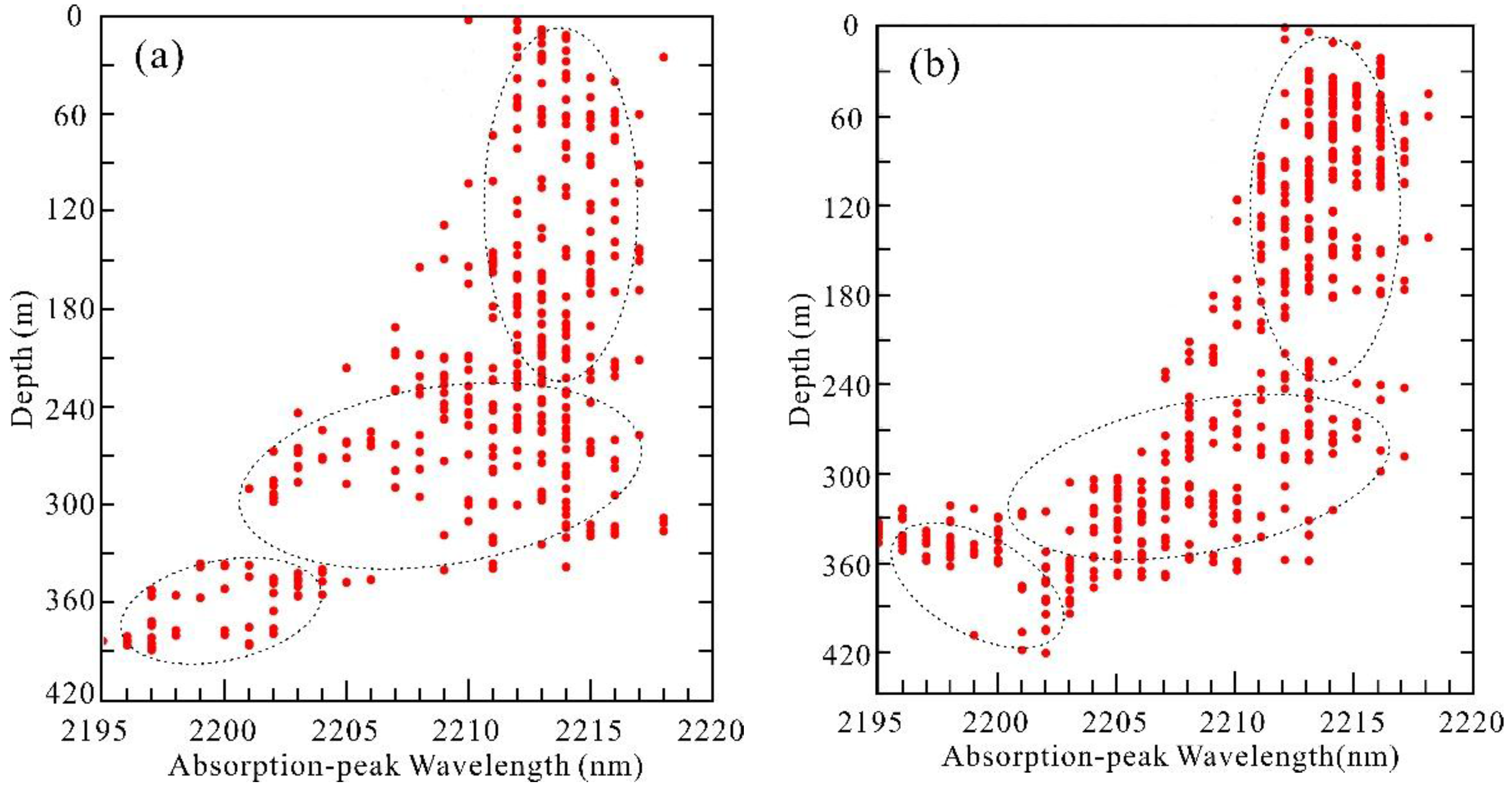
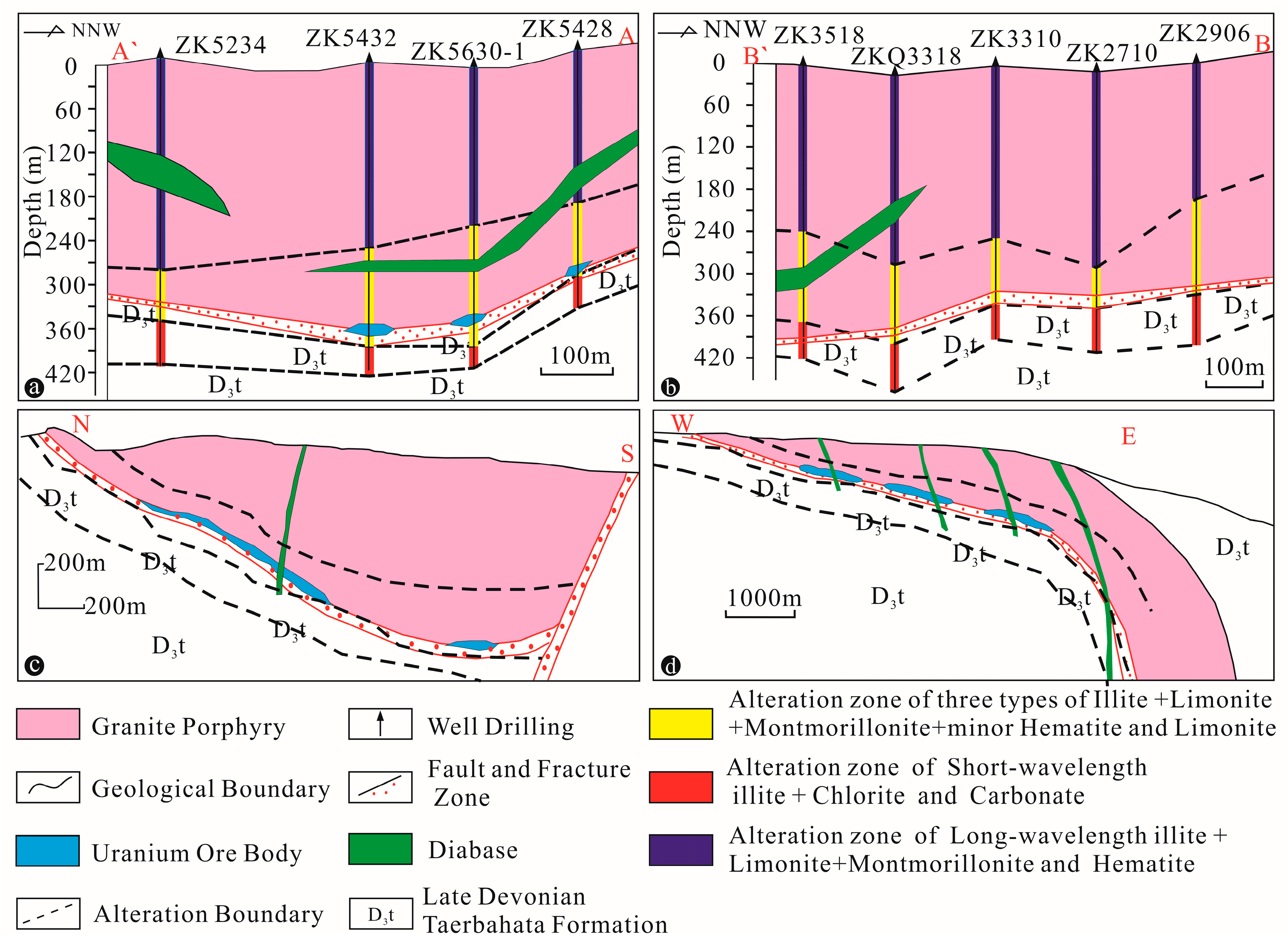
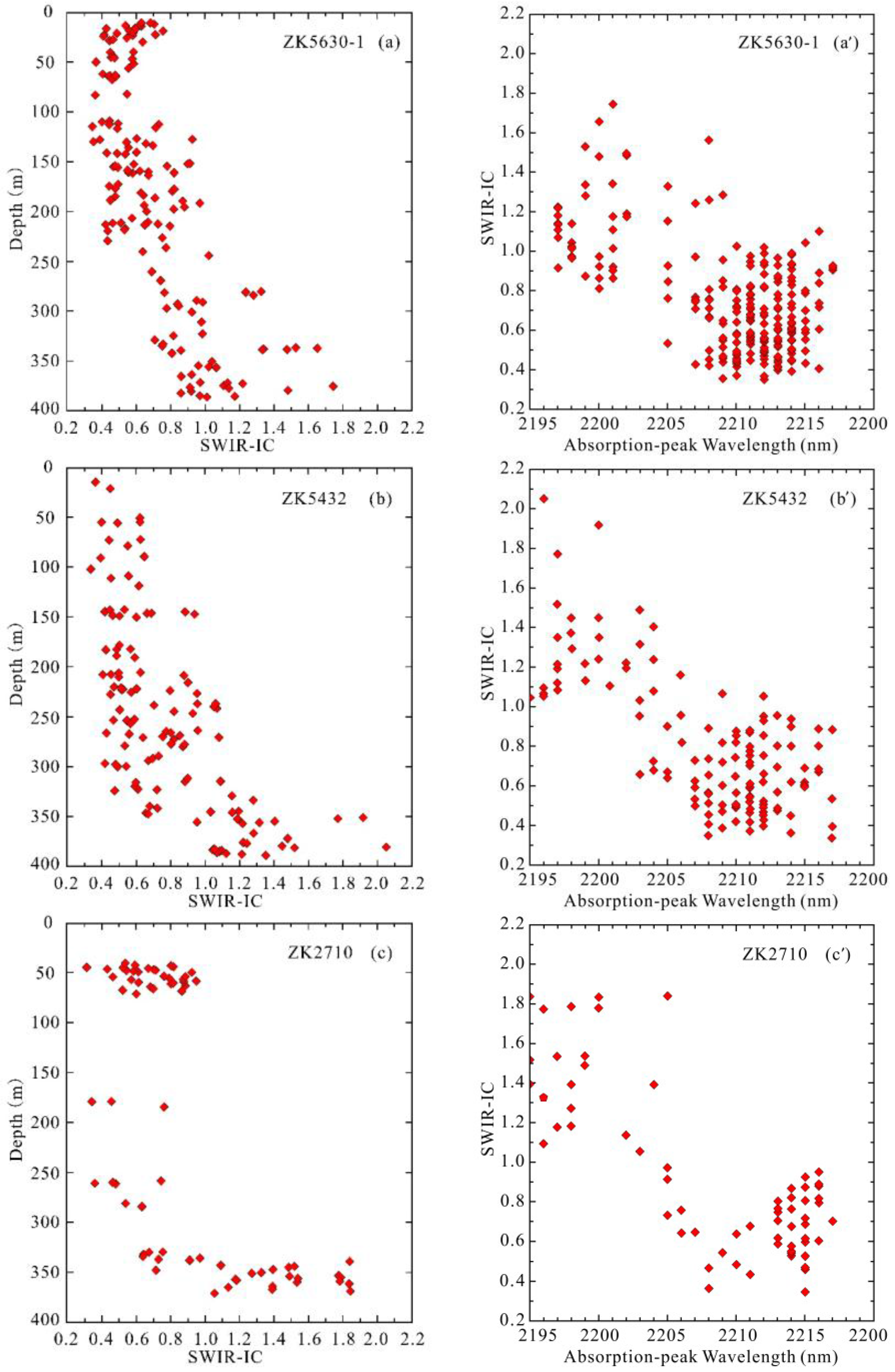
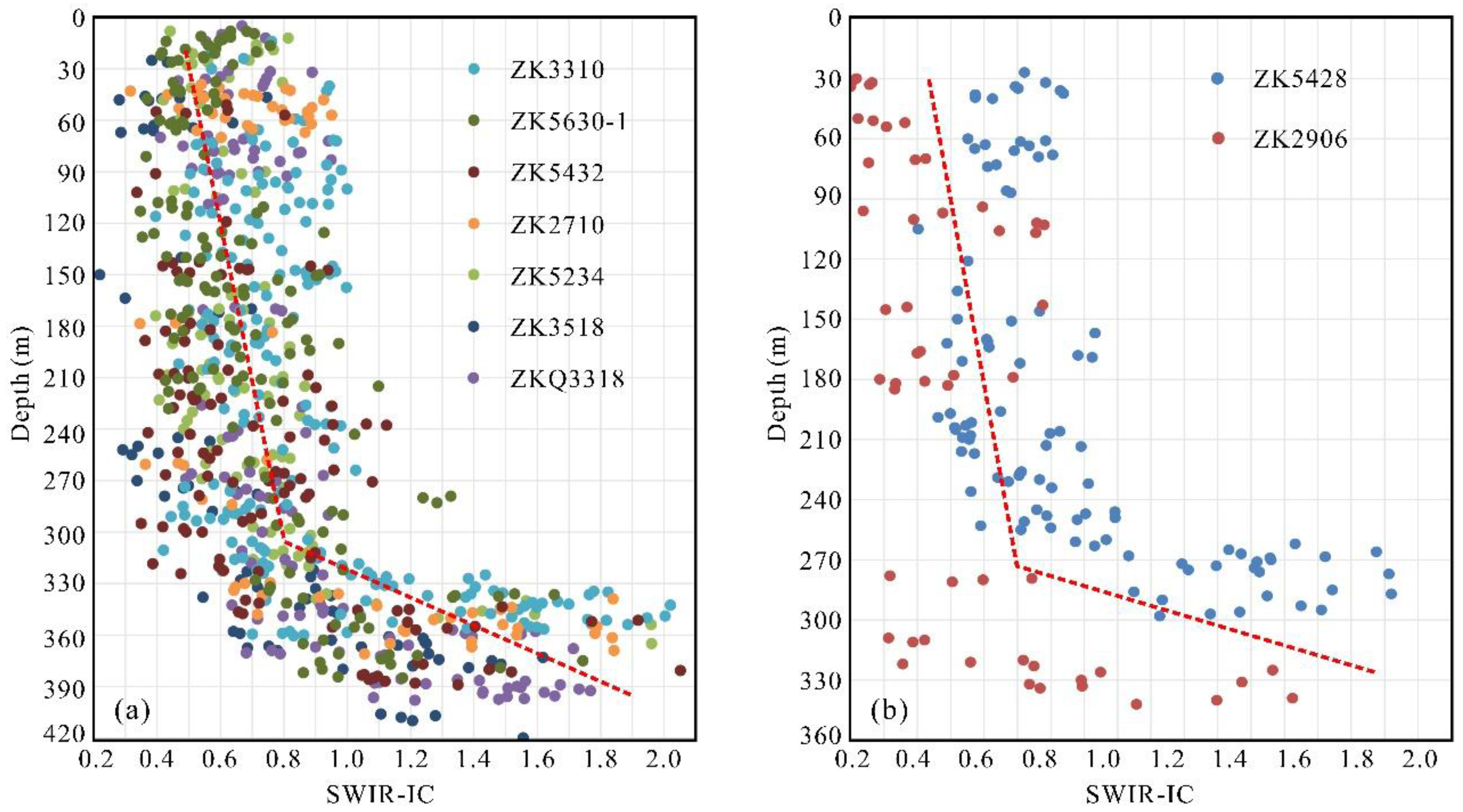
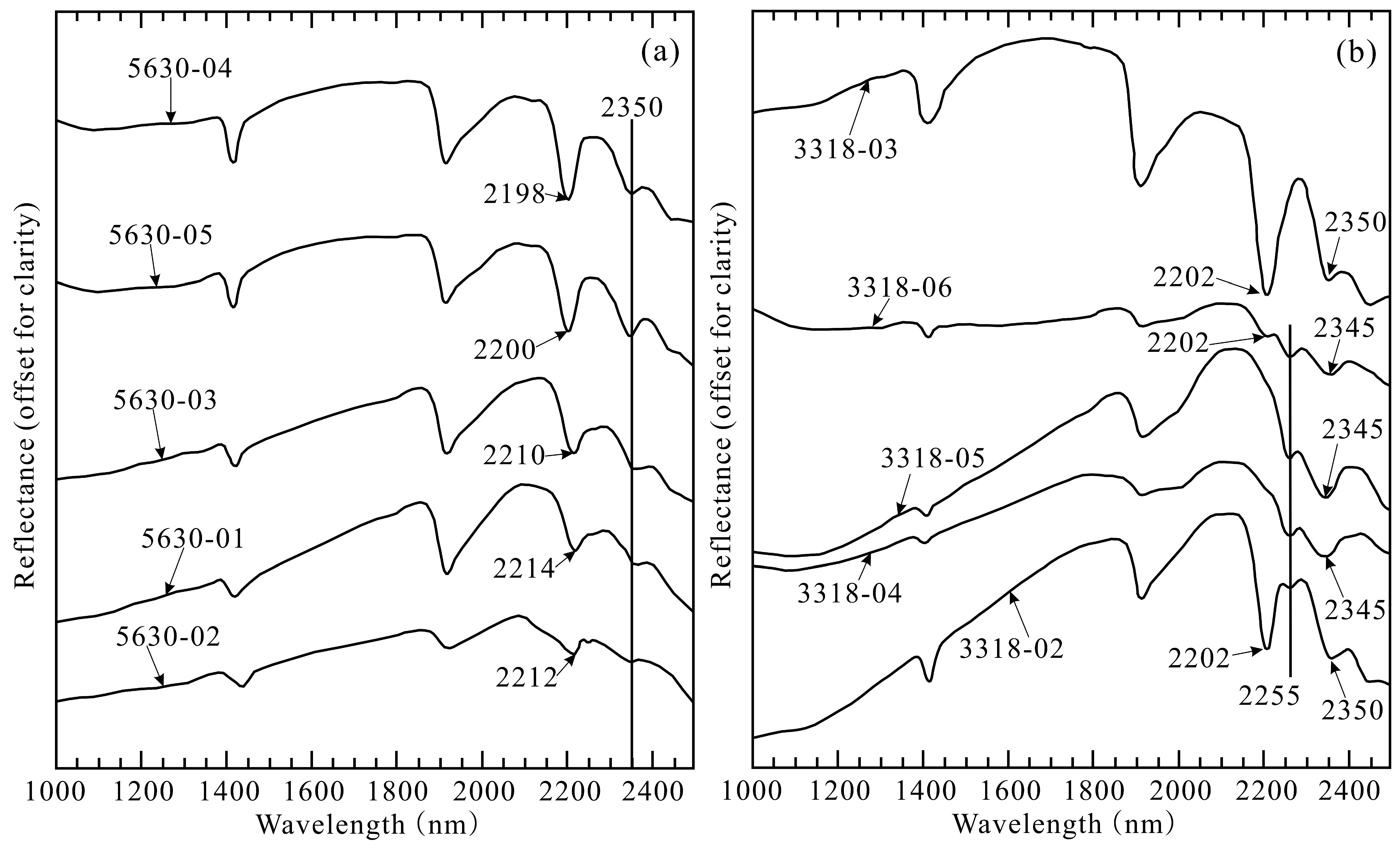
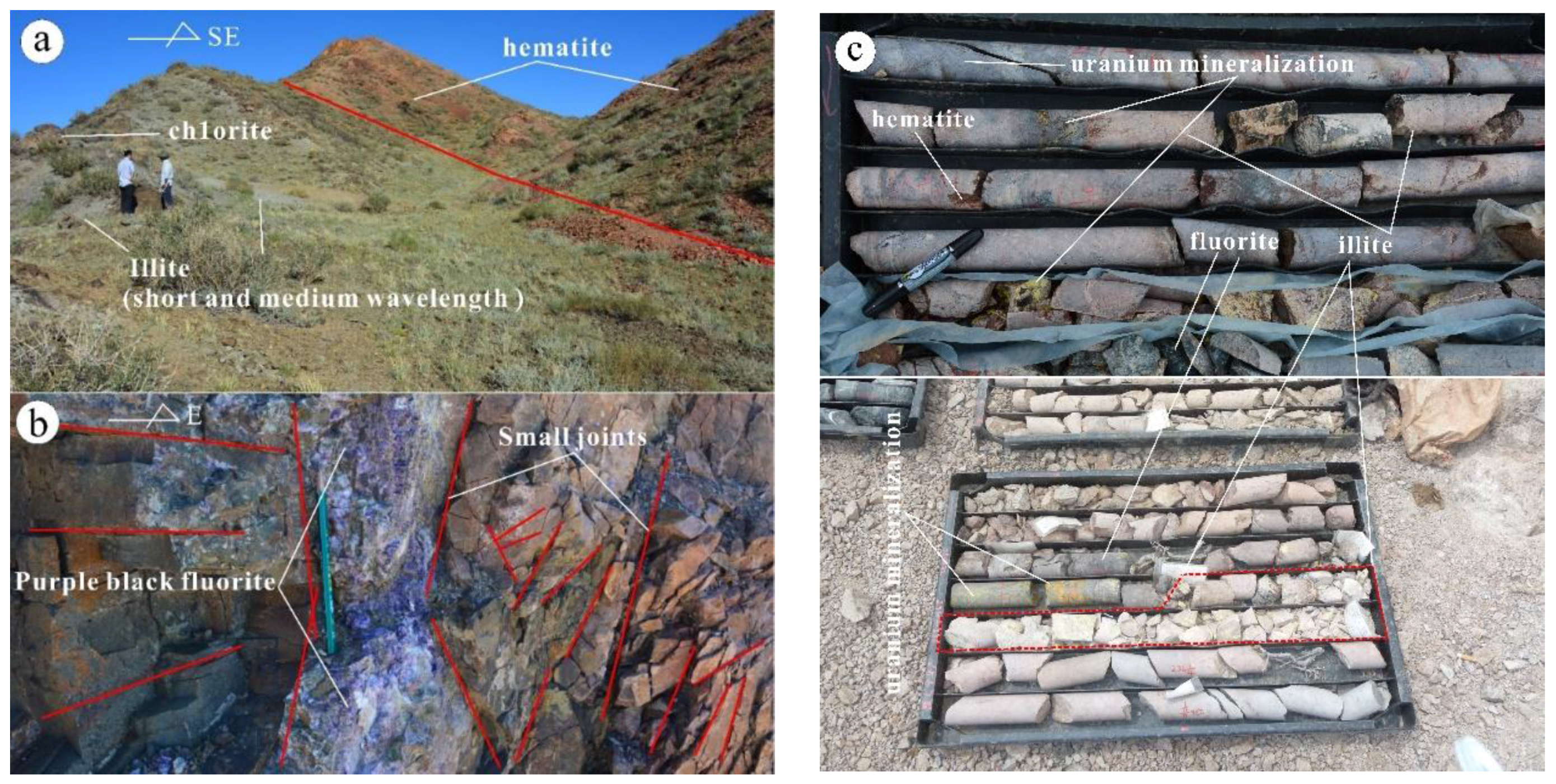
The Baiyanghe uranium deposit is a currently important medium-sized deposit in the Xuemisitan area, Xinjiang. The hydrothermal alteration in this deposit is closely related to the uranium mineralization of the deposit. In this study, hyperspectral data are collected from drill cores in the Baiyanghe uranium deposit using a FieldSpec4 visible-shortwave infrared spectrometer to study the hydrothermal alteration. The results reveal that the altered mineral assemblages have obvious zonation characteristics: (1) the upper section comprises long-wavelength illite and minor hematite and montmorillonite; (2) the middle section contains three types of illite (long-, medium- and short-wavelength illite) and hematite; and (3) the lower section includes short-wavelength illite, chlorite and carbonate. Additionally, the variety in the characteristic absorption-peak wavelength of illite at 2200 nm gradually shifts to shorter wavelength and ranges between 2195 nm and 2220 nm with increasing depth, while the SWIR-IC (short-wavelength infrared illite crystallinity, a dimensionless quantity) of the drill holes gradually increases from 0.2 to 2.1. These patterns reflect the hydrothermal fluid activity in the deposit, which features relatively high-temperature, high-pressure hydrothermal fluid in the deeper section and low-temperature, low-pressure hydrothermal fluid in the shallower section. Additionally, the uranium mineralization is located near the fracture zone, which represents the center of hydrothermal fluid activity or mineralization. This area has abundant alteration minerals, and the minerals illite (short- and medium-wavelength), hematite and fluorite can be used as uranium-prospecting indicators for uranium exploration in the deeper sections of the Baiyanghe uranium deposit.
Keywords: hyperspectral; Baiyanghe uranium deposit; drill holes; illite; SWIR-IC; hydrothermal fluid hyperspectral; Baiyanghe uranium deposit; drill holes; illite; SWIR-IC; hydrothermal fluid
Graphical Abstract