Analysis of Ionospheric Disturbances during X-Class Solar Flares (2021–2022) Using GNSS Data and Wavelet Analysis

Abstract
:1. Introduction
2. Data and Methods
2.1. TEC Data
2.2. Wavelets
2.3. Analysis Methods
3. Results and Discussion
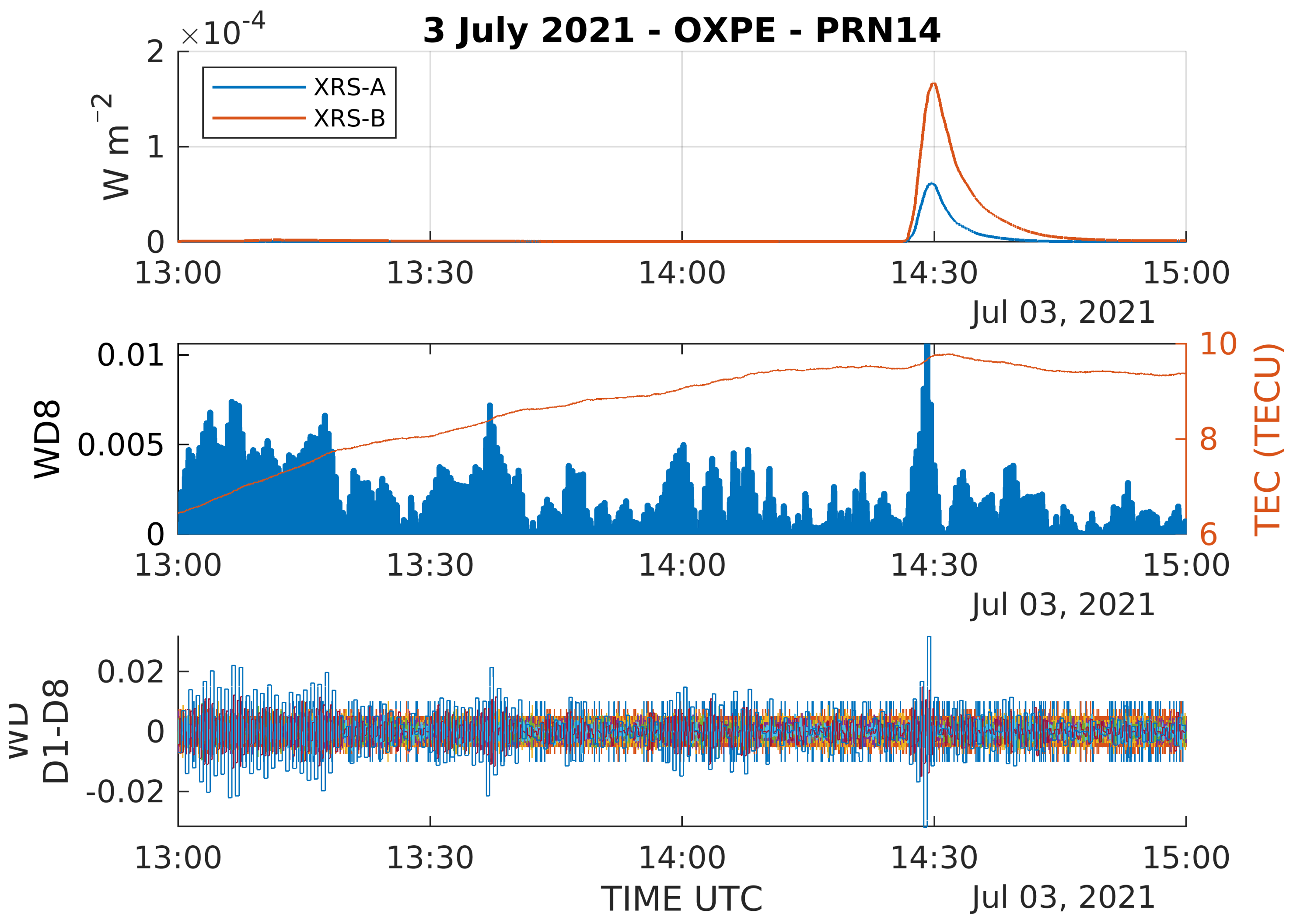
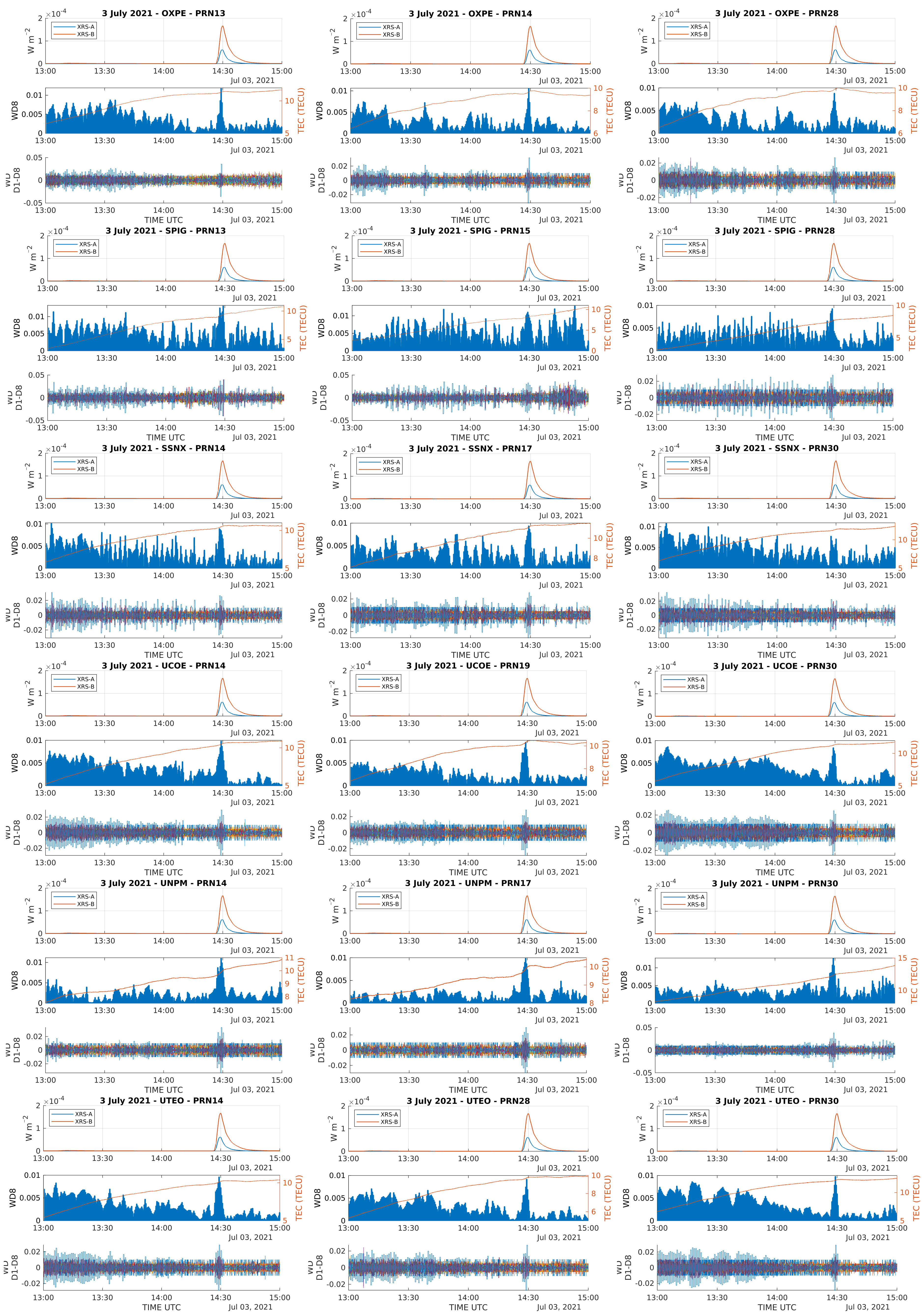
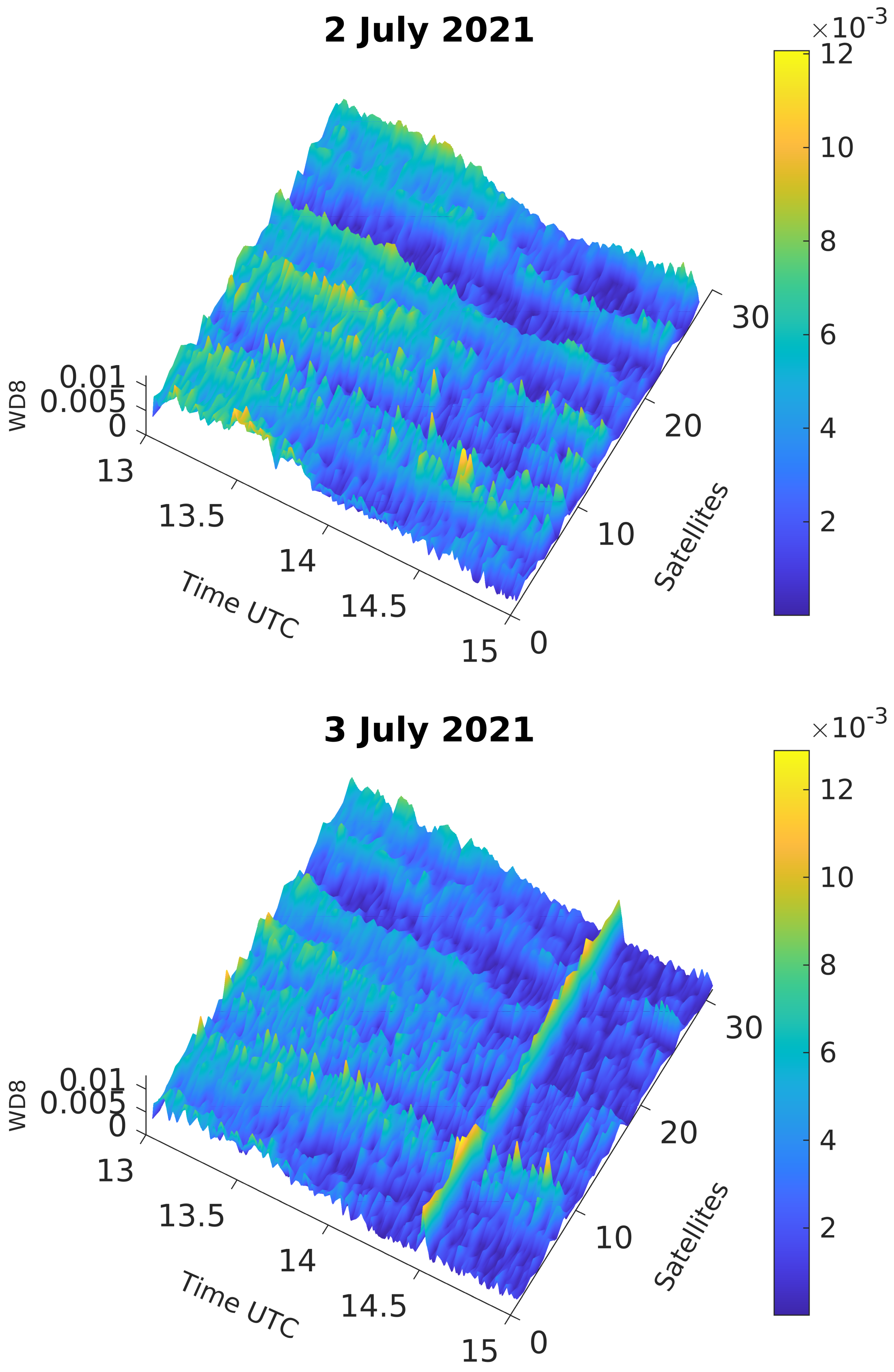
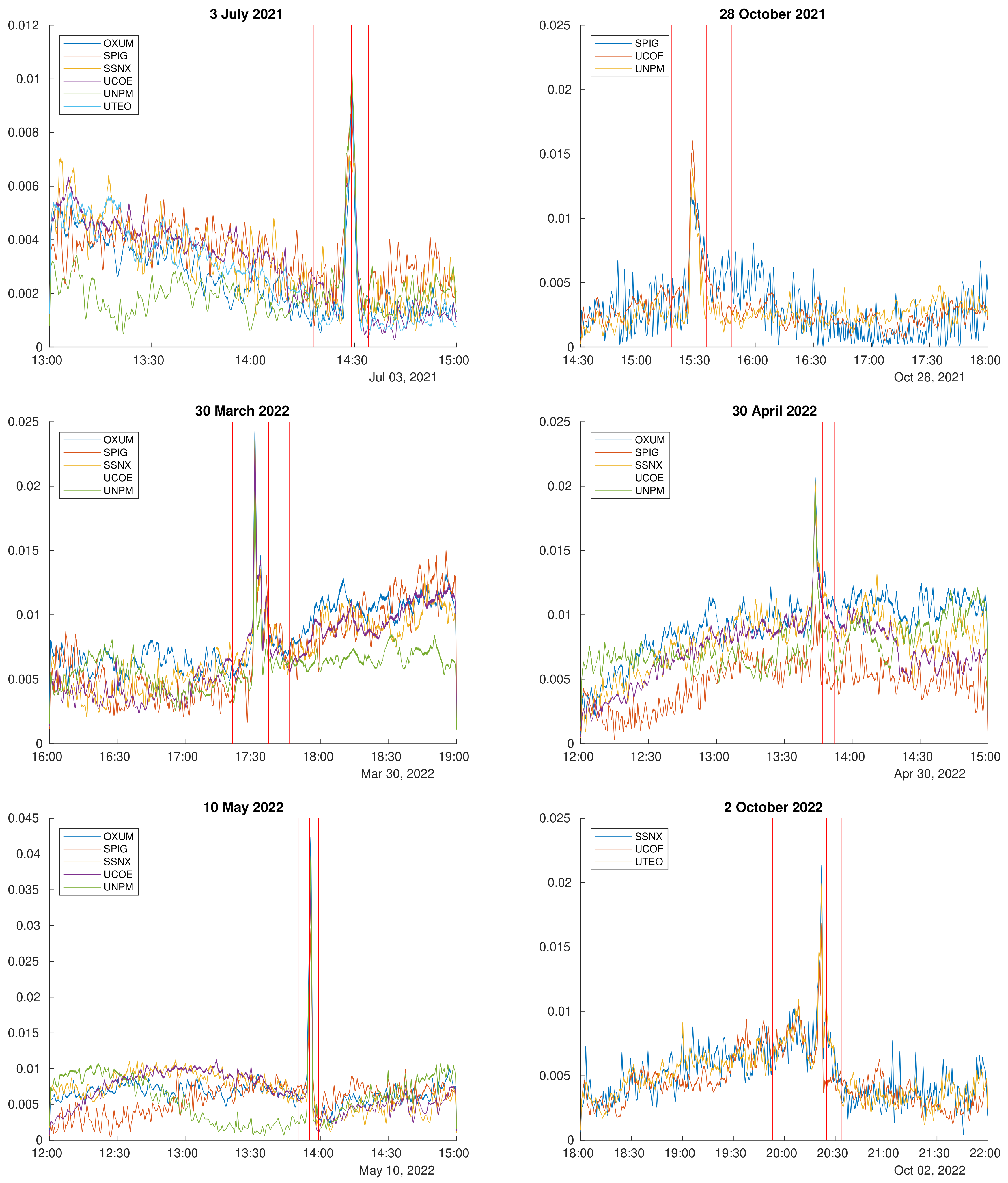
3.1. Event 1 (3 July 2021)
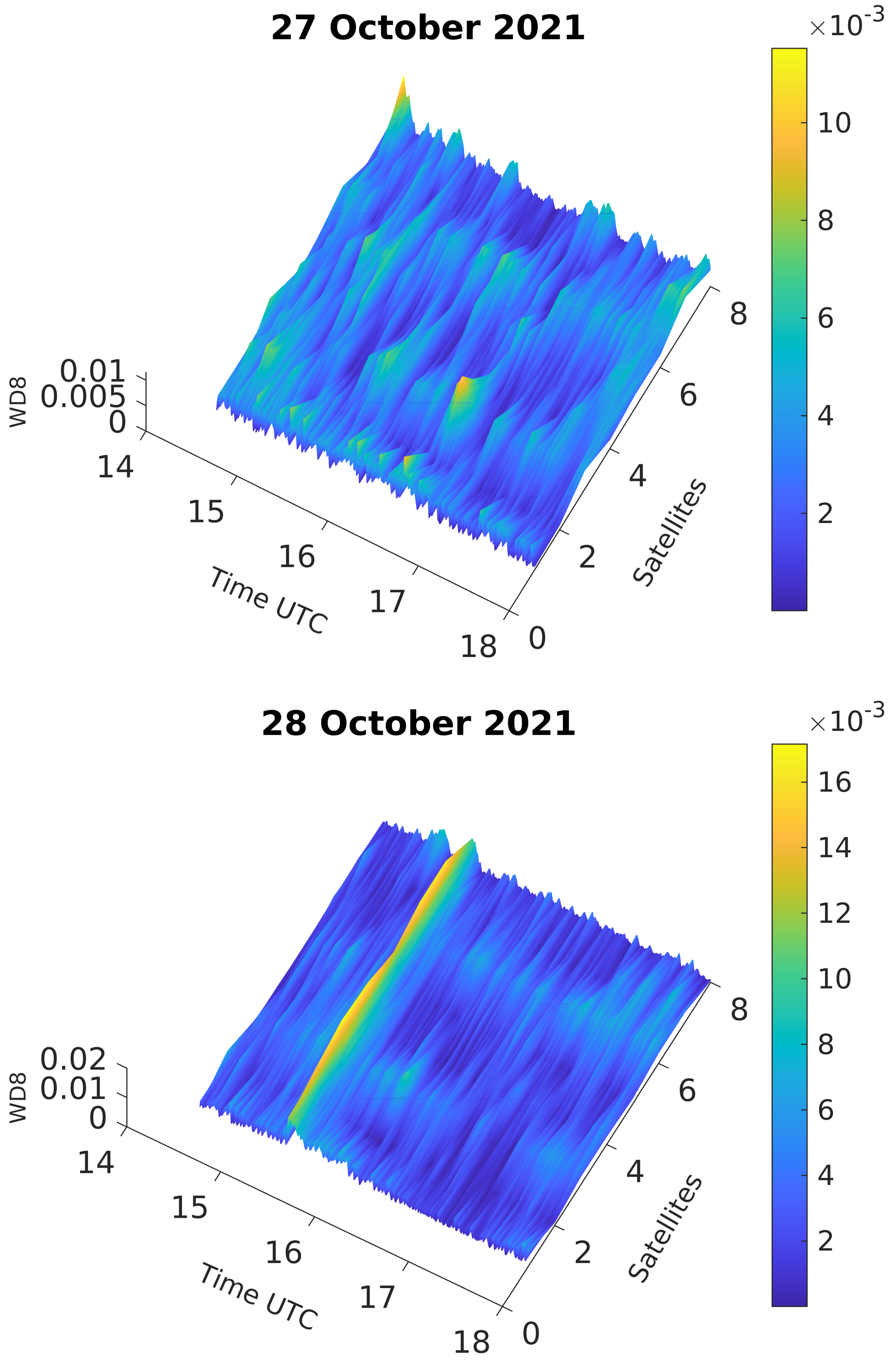
3.2. Event 2 (28 October 2021)
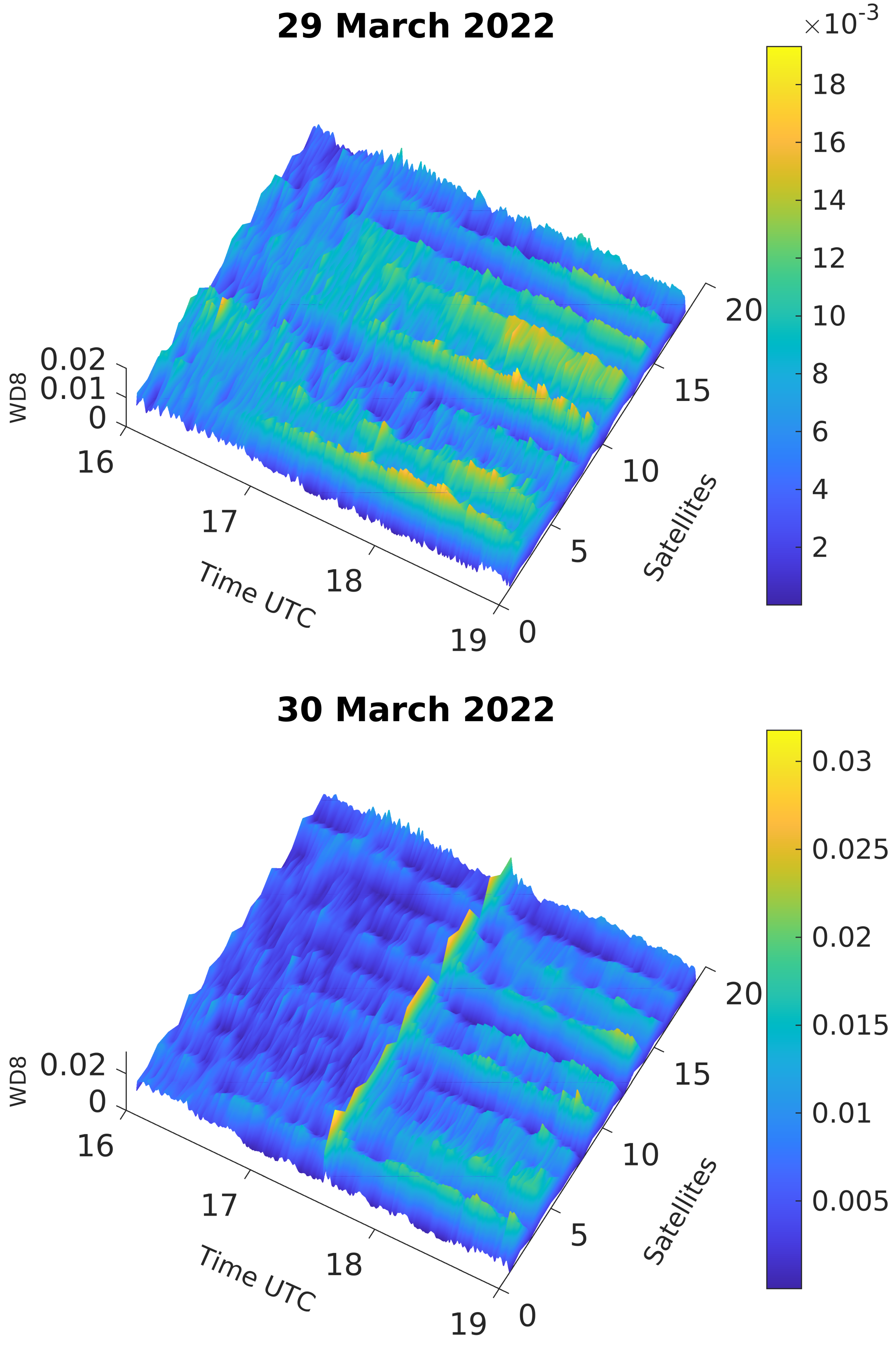
3.3. Event 3 (30 March 2022)
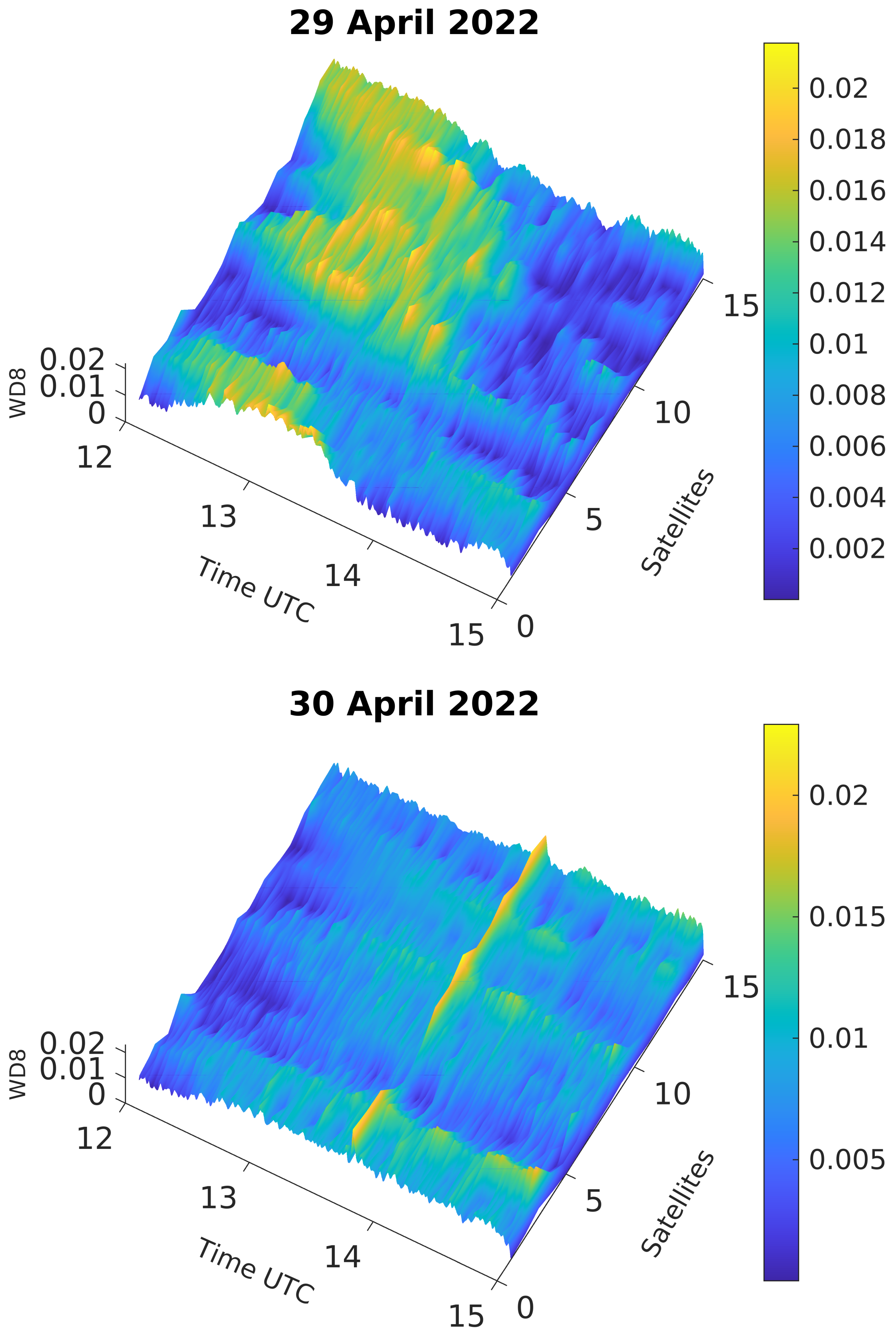
3.4. Event 4 (30 April 2022)
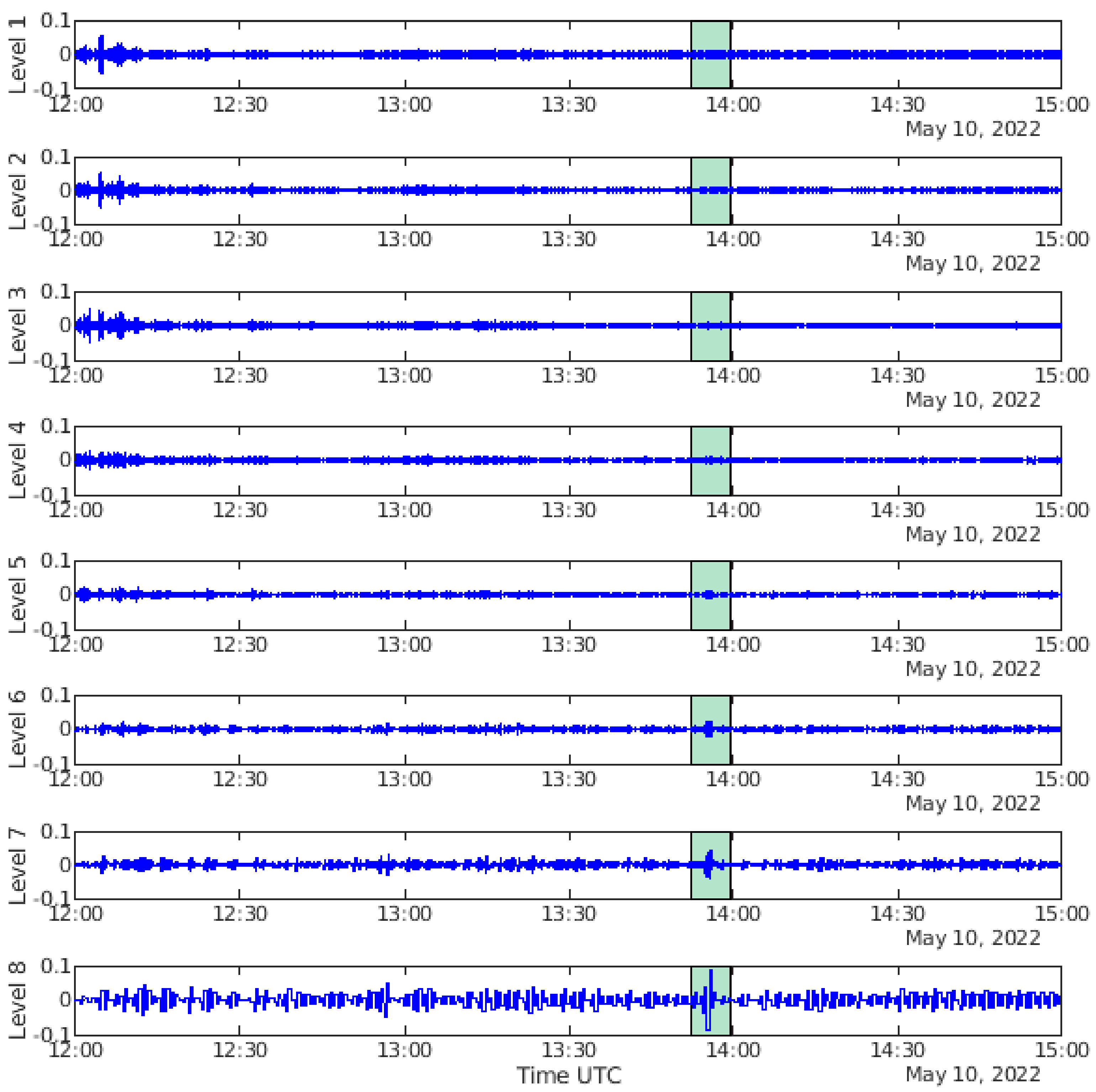
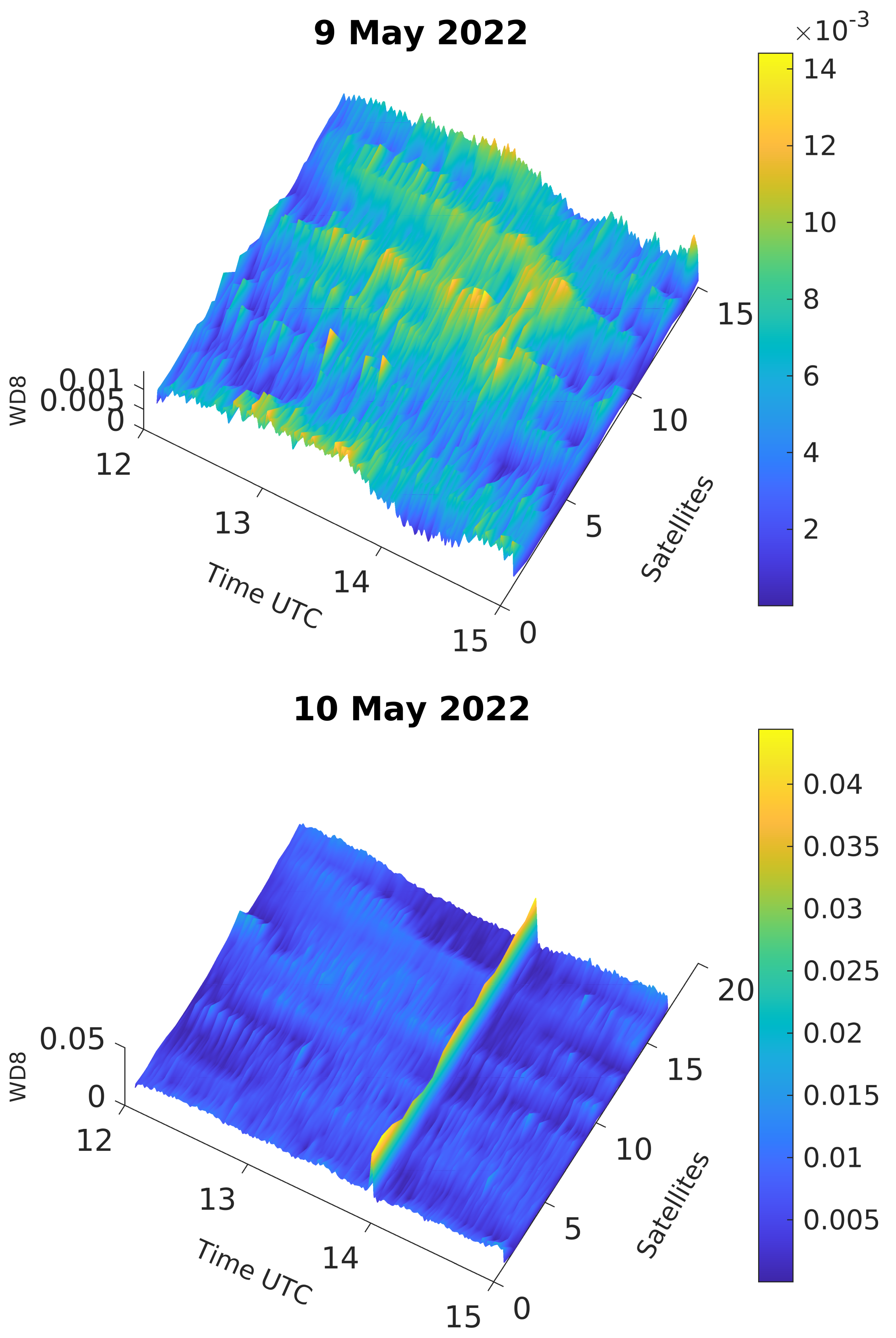
3.5. Event 5 (10 May 2022)
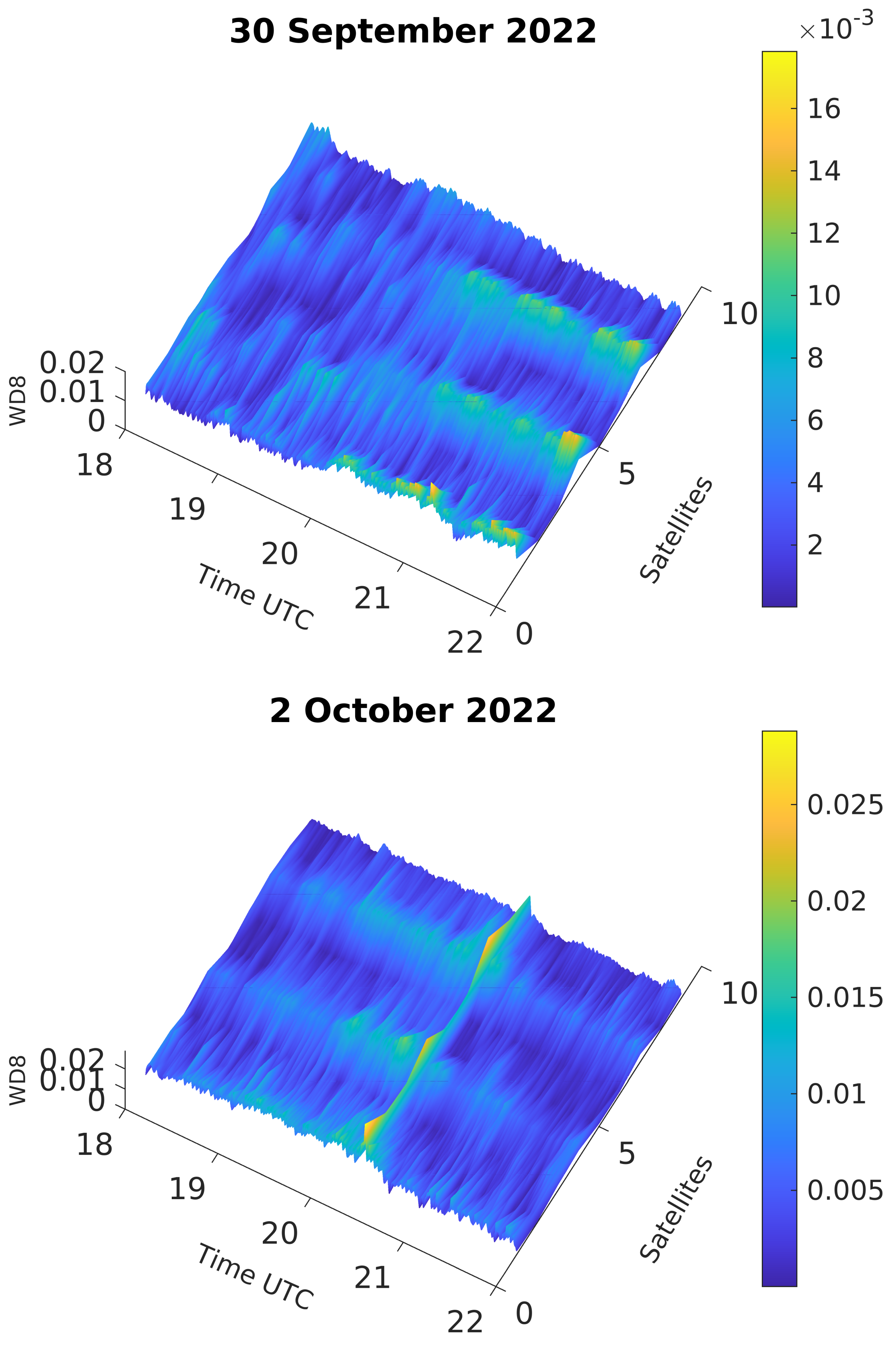
3.6. Event 6 (2 October 2022)
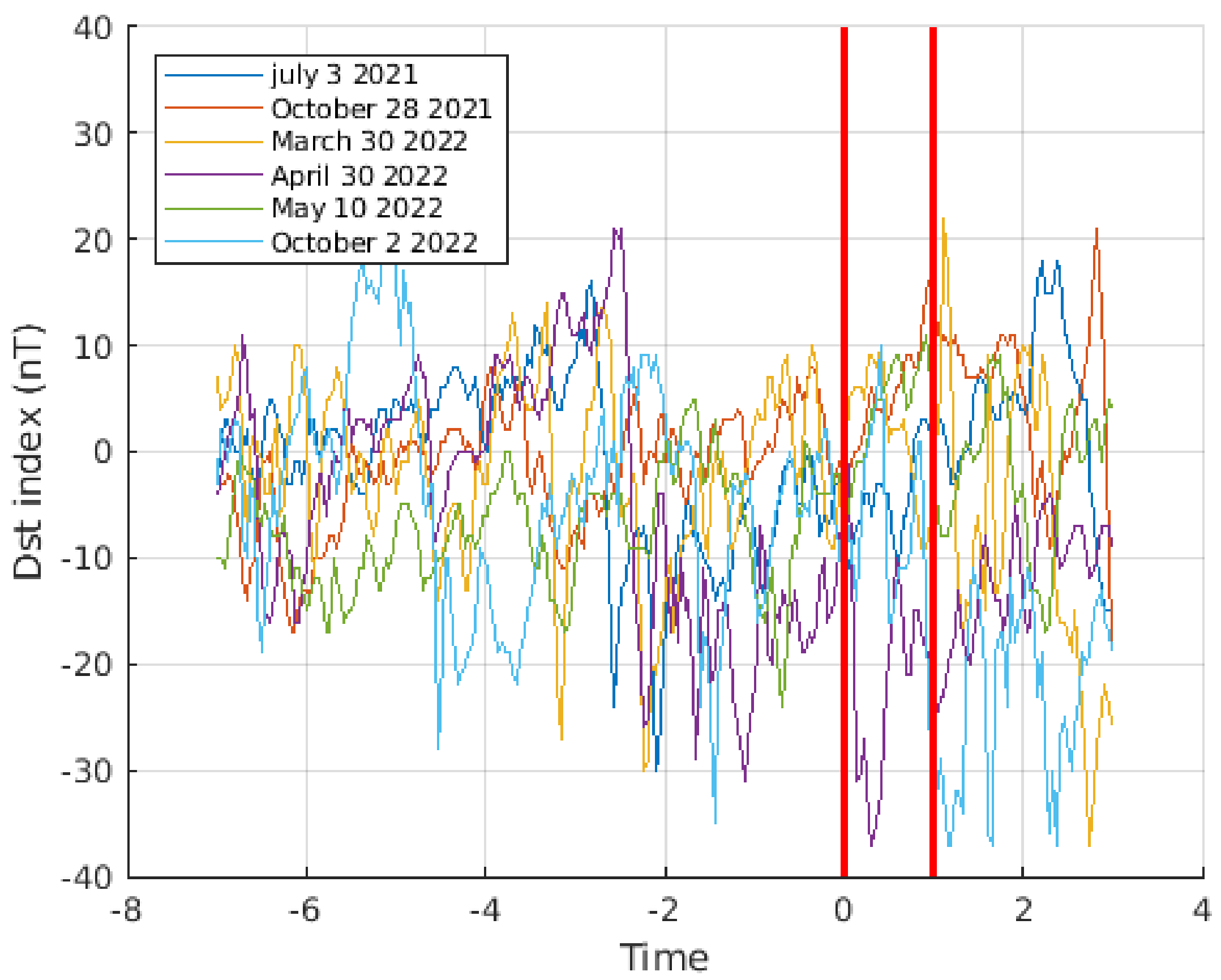
4. Conclusions
Author Contributions
Funding
Data Availability Statement
Acknowledgments
Conflicts of Interest
References
- Budden, K.G. The Propagation of Radio Waves: The Theory of Radio Waves of Low Power in the Ionosphere and Magnetosphere; Cambridge University Press: Cambridge, UK, 1988. [Google Scholar]
- Davies, K.; Smith, E.K. Ionospheric effects on satellite land mobile systems. IEEE Antennas Propag. Mag. 2002, 44, 24–31. [Google Scholar] [CrossRef]
- Yuan, Y.; Tscherning, C.; Knudsen, P.; Xu, G.; Ou, J. The ionospheric eclipse factor method (IEFM) and its application to determining the ionospheric delay for GPS. J. Geod. 2008, 82, 1–8. [Google Scholar] [CrossRef]
- Klobuchar, J.A. Ionospheric time-delay algorithm for single-frequency GPS users. IEEE Trans. Aerosp. Electron. Syst. 1987, AES-23, 325–331. [Google Scholar] [CrossRef]
- Prieto-Cerdeira, R.; Orús-Pérez, R.; Breeuwer, E.; Lucas-Rodriguez, R.; Falcone, M. Performance of the Galileo single-frequency ionospheric correction during in-orbit validation. GPS World 2014, 25, 53–58. [Google Scholar]
- Yuan, Y.; Wang, N.; Li, Z.; Huo, X. The BeiDou global broadcast ionospheric delay correction model (BDGIM) and its preliminary performance evaluation results. Navigation 2019, 66, 55–69. [Google Scholar] [CrossRef]
- Feng, J.; Zhang, Y.; Li, W.; Han, B.; Zhao, Z.; Zhang, T.; Huang, R. Analysis of ionospheric TEC response to solar and geomagnetic activities at different solar activity stages. Adv. Space Res. 2023, 71, 2225–2239. [Google Scholar] [CrossRef]
- Bilitza, D.; McKinnell, L.A.; Reinisch, B.; Fuller-Rowell, T. The international reference ionosphere today and in the future. J. Geod. 2011, 85, 909–920. [Google Scholar] [CrossRef]
- Bhuyan, P.; Borah, R.R. TEC derived from GPS network in India and comparison with the IRI. Adv. Space Res. 2007, 39, 830–840. [Google Scholar] [CrossRef]
- Eastwood, J.; Biffis, E.; Hapgood, M.; Green, L.; Bisi, M.; Bentley, R.; Wicks, R.; McKinnell, L.A.; Gibbs, M.; Burnett, C. The economic impact of space weather: Where do we stand? Risk Anal. 2017, 37, 206–218. [Google Scholar] [CrossRef]
- Baker, D.; Daly, E.; Daglis, I.; Kappenman, J.G.; Panasyuk, M. Effects of space weather on technology infrastructure. Space Weather 2004, 2. [Google Scholar] [CrossRef]
- Nishimoto, S.; Watanabe, K.; Kawai, T.; Imada, S.; Kawate, T. Validation of computed extreme ultraviolet emission spectra during solar flares. Earth Planets Space 2021, 73, 79. [Google Scholar] [CrossRef]
- Yasyukevich, Y.; Astafyeva, E.; Padokhin, A.; Ivanova, V.; Syrovatskii, S.; Podlesnyi, A. The 6 September 2017 X-class solar flares and their impacts on the ionosphere, GNSS, and HF radio wave propagation. Space Weather 2018, 16, 1013–1027. [Google Scholar] [CrossRef]
- Sreeja, V. Impact and mitigation of space weather effects on GNSS receiver performance. Geosci. Lett. 2016, 3, 24. [Google Scholar] [CrossRef]
- Yadav, S.; Sunda, S.; Sridharan, R. The impact of the 17 March 2015 St. Patrick’s Day storm on the evolutionary pattern of equatorial ionization anomaly over the Indian longitudes using high-resolution spatiotemporal TEC maps: New insights. Space Weather 2016, 14, 786–801. [Google Scholar] [CrossRef]
- Reddybattula, K.D.; Panda, S.K.; Sharma, S.K.; Singh, A.K.; Kurnala, K.; Haritha, C.S.; Wuyyuru, S. Anomaly effects of 6–10 September 2017 solar flares on ionospheric total electron content over Saudi Arabian low latitudes. Acta Astronaut. 2020, 177, 332–340. [Google Scholar] [CrossRef]
- Yuan, Y.; Ou, J. Auto-covariance estimation of variable samples (ACEVS) and its application for monitoring random ionospheric disturbances using GPS. J. Geod. 2001, 75, 438–447. [Google Scholar] [CrossRef]
- Olwendo, O.; Baki, P.; Mito, C.; Doherty, P. Characterization of ionospheric GPS Total Electron Content (GPS–TEC) in low latitude zone over the Kenyan region during a very low solar activity phase. J. Atmos. Sol.-Terr. Phys. 2012, 84–85, 52–61. [Google Scholar] [CrossRef]
- Eftaxiadis, K.; Cervera, M.A.; Thomas, R.M. A Global Positioning System Receiver for Monitoring Ionospheric Total Electron Content; Technical Report; Defence Science and Technology Organisation: Canberra, Australia, 1999.
- Turel, N.; Arikan, F. Probability density function estimation for characterizing hourly variability of ionospheric total electron content. Radio Sci. 2010, 45, 1–10. [Google Scholar] [CrossRef]
- Sardon, E.; Rius, A.; Zarraoa, N. Estimación del contenido total de electrones en la ionosfera usando datos del Sistema de Posicionamiento Global. Física Tierra 1993, 5, 167–182. [Google Scholar]
- Araujo-Pradere, E. GPS-derived total electron content response for the Bastille Day magnetic storm of 2000 at a low mid-latitude station. Geofísica Int. 2005, 44, 211–218. [Google Scholar] [CrossRef]
- Rodríguez, M. Estudio de Perturbaciones Ionosféricas a Través del Contenido Total de Electrones en Europa Meridional. Ph.D. Thesis, Universidad Complutense de Madrid, Madrid, Spain, 2017. [Google Scholar]
- Brunini, C.; Camilion, E.; Azpilicueta, F. Simulation study of the influence of the ionospheric layer height in the thin layer ionospheric model. J. Geod. 2011, 85, 637–645. [Google Scholar] [CrossRef]
- Colom, R.J.; Gadea, R.; Sebastia, A.; Martinez, M.; Ballester, F.; Herrero, V. Implementación de la Transformada Wavelet Discreta 2D con filtros no separables. In Proceedings of the I Jornadas Sobre Computación Reconfigurable y Aplicaciones, Alicante, España, 19 September 2001. [Google Scholar]
- Mallat, S. Multifrequency channel decompositions of images and wavelet models. IEEE Trans. Acoust. Speech Signal Process. 1989, 37, 2091–2110. [Google Scholar] [CrossRef]
- Osorio Sánchez, A. Algoritmo Para Detección de Vibraciones Anormales en Maquinarias Utilizando la Transformada Wavelet. Repos. Nac. Conacyt. 2006. Available online: http://catarina.udlap.mx/u_dl_a/tales/documentos/meie/osorio_s_a (accessed on 21 August 2023).
- Eparvier, F.G.; Crotser, D.; Jones, A.R.; McClintock, W.E.; Snow, M.; Woods, T.N. The extreme ultraviolet sensor (EUVS) for GOES-R. In Proceedings of the Solar Physics and Space Weather Instrumentation III, San Diego, CA, USA, 4–6 August 2009; Volume 7438, pp. 31–38. [Google Scholar]


| Station | Latitude (N) | Longitude (W) | Height (m) |
|---|---|---|---|
| SPIG | 2751.110 | ||
| UCOE | 1977.427 | ||
| UNPM | 1.800 | ||
| OXUM | 82.267 | ||
| SSNX | 2275.850 | ||
| UTEO | 2267.452 |
| Date | Day GPS | Start Time (UT) | Peak Time (UT) | End Time (UT) | Flare Class |
|---|---|---|---|---|---|
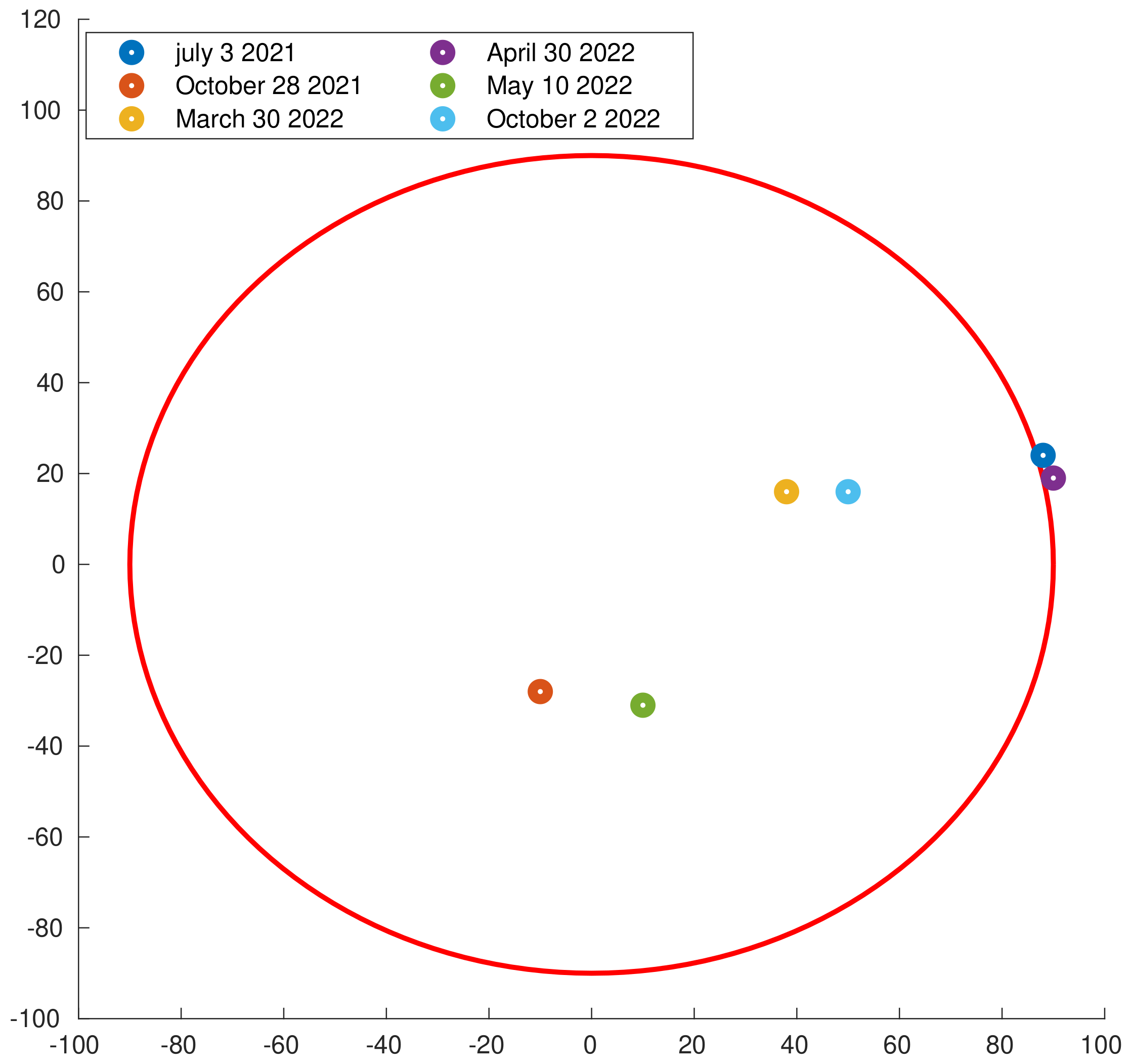
| 3 July 2021 | 184 | 14:18 | 14:29 | 14:34 | X1.5 |
| 28 October 2021 | 301 | 15:17 | 15:35 | 15:48 | X1 |
| 30 March 2022 | 89 | 17:21 | 17:37 | 17:46 | X1.3 |
| 30 April 2022 | 120 | 13:37 | 13:47 | 13:52 | X1.1 |
| 10 May 2022 | 130 | 13:50 | 13:55 | 13:59 | X1.5 |
| 2 October 2022 | 275 | 19:53 | 20:25 | 20:34 | X1.0 |
Disclaimer/Publisher’s Note: The statements, opinions and data contained in all publications are solely those of the individual author(s) and contributor(s) and not of MDPI and/or the editor(s). MDPI and/or the editor(s) disclaim responsibility for any injury to people or property resulting from any ideas, methods, instructions or products referred to in the content. |
© 2023 by the authors. Licensee MDPI, Basel, Switzerland. This article is an open access article distributed under the terms and conditions of the Creative Commons Attribution (CC BY) license (https://creativecommons.org/licenses/by/4.0/).
Share and Cite
López-Urias, C.; Vazquez-Becerra, G.E.; Nayak, K.; López-Montes, R. Analysis of Ionospheric Disturbances during X-Class Solar Flares (2021–2022) Using GNSS Data and Wavelet Analysis. Remote Sens. 2023, 15, 4626. https://doi.org/10.3390/rs15184626
López-Urias C, Vazquez-Becerra GE, Nayak K, López-Montes R. Analysis of Ionospheric Disturbances during X-Class Solar Flares (2021–2022) Using GNSS Data and Wavelet Analysis. Remote Sensing. 2023; 15(18):4626. https://doi.org/10.3390/rs15184626
Chicago/Turabian StyleLópez-Urias, Charbeth, G. Esteban Vazquez-Becerra, Karan Nayak, and Rebeca López-Montes. 2023. "Analysis of Ionospheric Disturbances during X-Class Solar Flares (2021–2022) Using GNSS Data and Wavelet Analysis" Remote Sensing 15, no. 18: 4626. https://doi.org/10.3390/rs15184626
APA StyleLópez-Urias, C., Vazquez-Becerra, G. E., Nayak, K., & López-Montes, R. (2023). Analysis of Ionospheric Disturbances during X-Class Solar Flares (2021–2022) Using GNSS Data and Wavelet Analysis. Remote Sensing, 15(18), 4626. https://doi.org/10.3390/rs15184626