Article

Multi-Segment Rupture Model of the 2016 Kumamoto Earthquake Revealed by InSAR and GPS Data


1
School of Geodesy and Geomatics, Wuhan University, Wuhan 430079, China
2
Key Laboratory of Geospace Environment and Geodesy, Ministry of Education, Wuhan University, Wuhan 430079, China
*
Author to whom correspondence should be addressed.
Remote Sens. 2020, 12(22), 3721; https://doi.org/10.3390/rs12223721
Submission received: 5 October 2020 / Revised: 6 November 2020 / Accepted: 9 November 2020 / Published: 12 November 2020
(This article belongs to the Special Issue Ground Deformation Patterns Detection by InSAR and GNSS Techniques)

Abstract

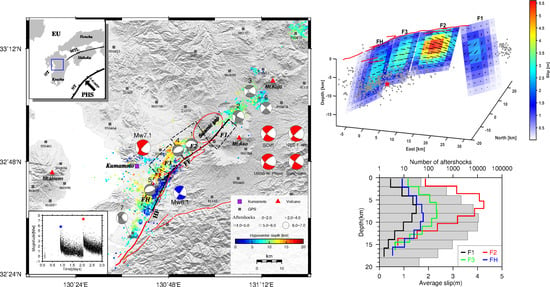
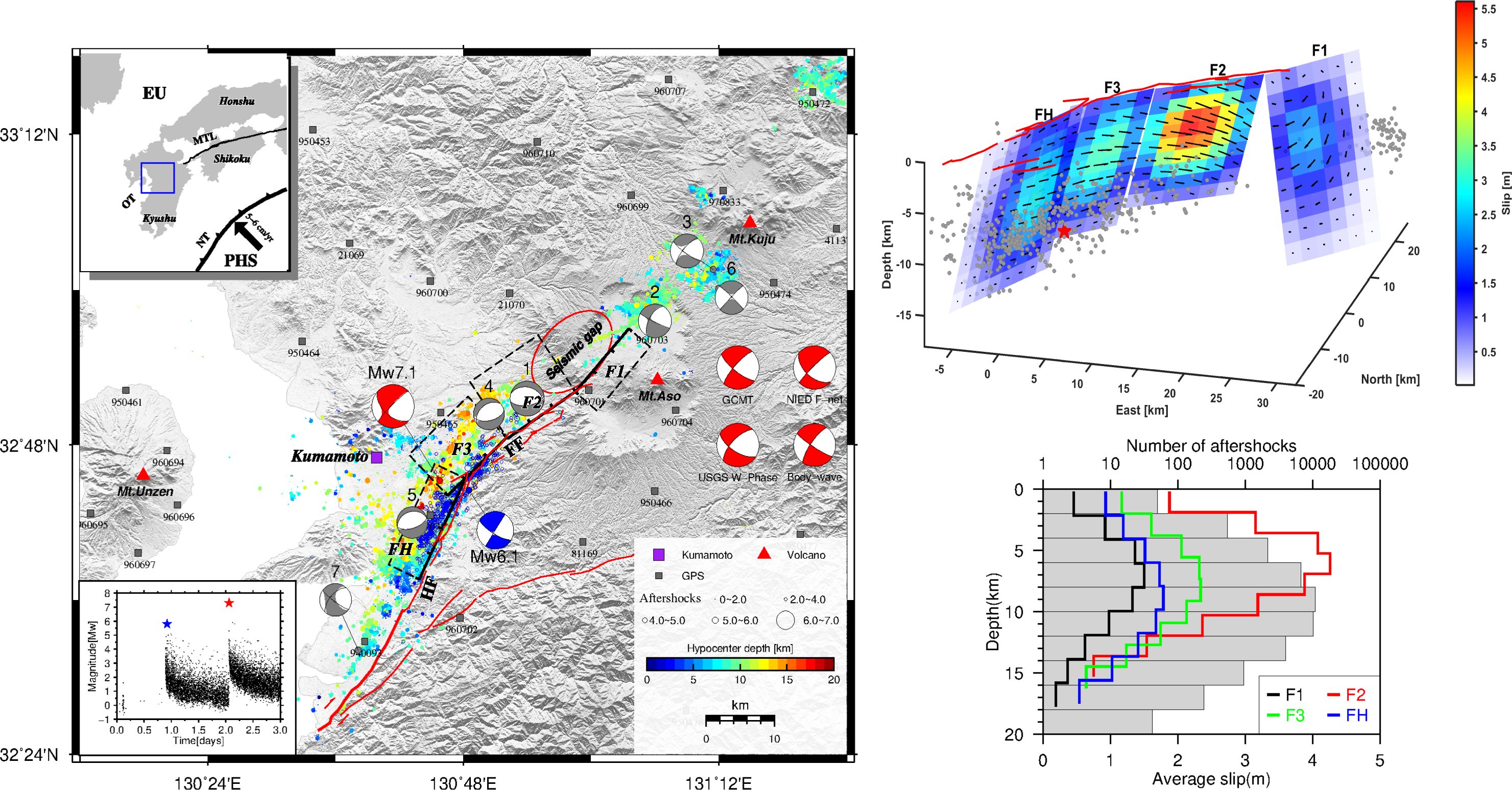
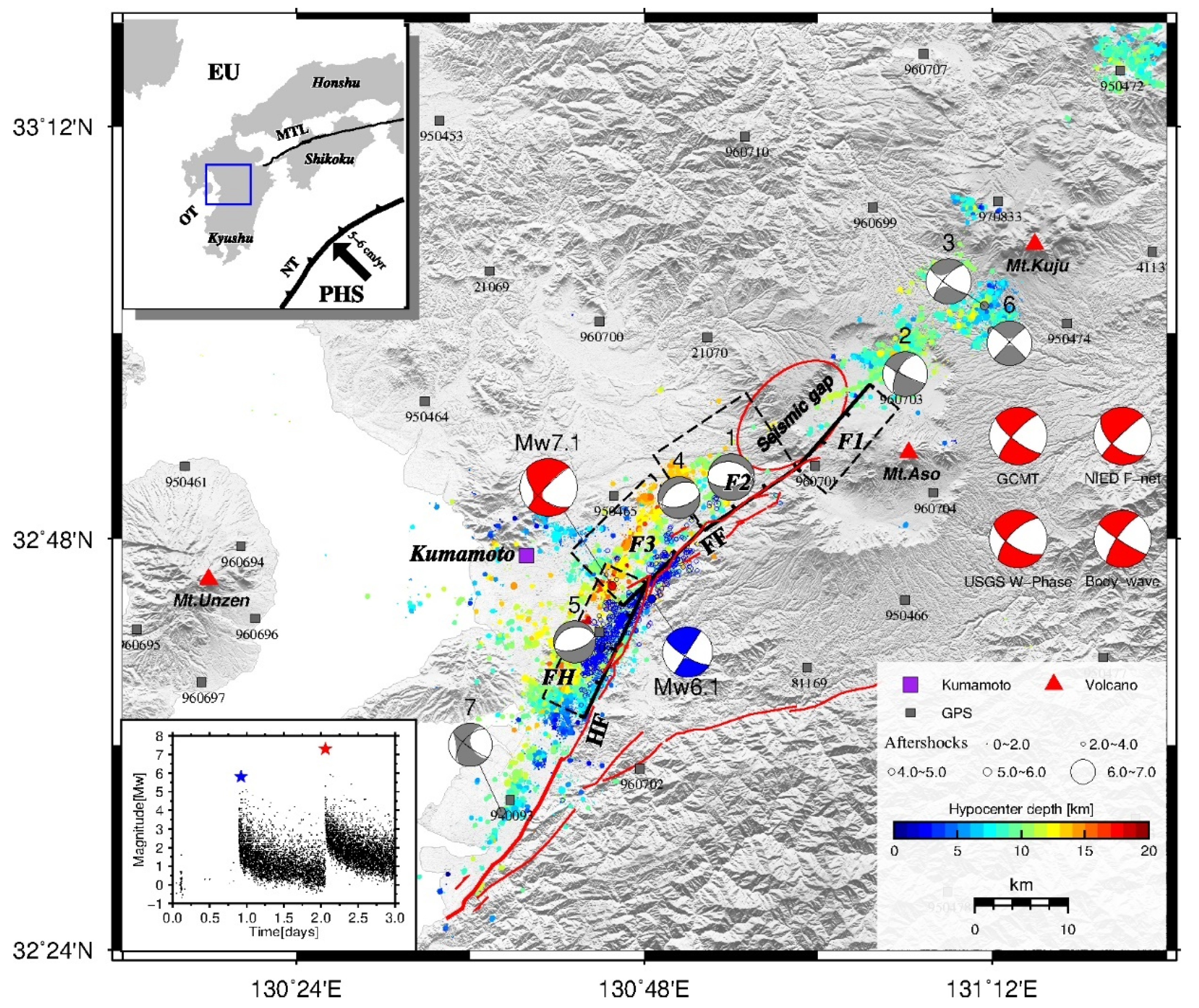
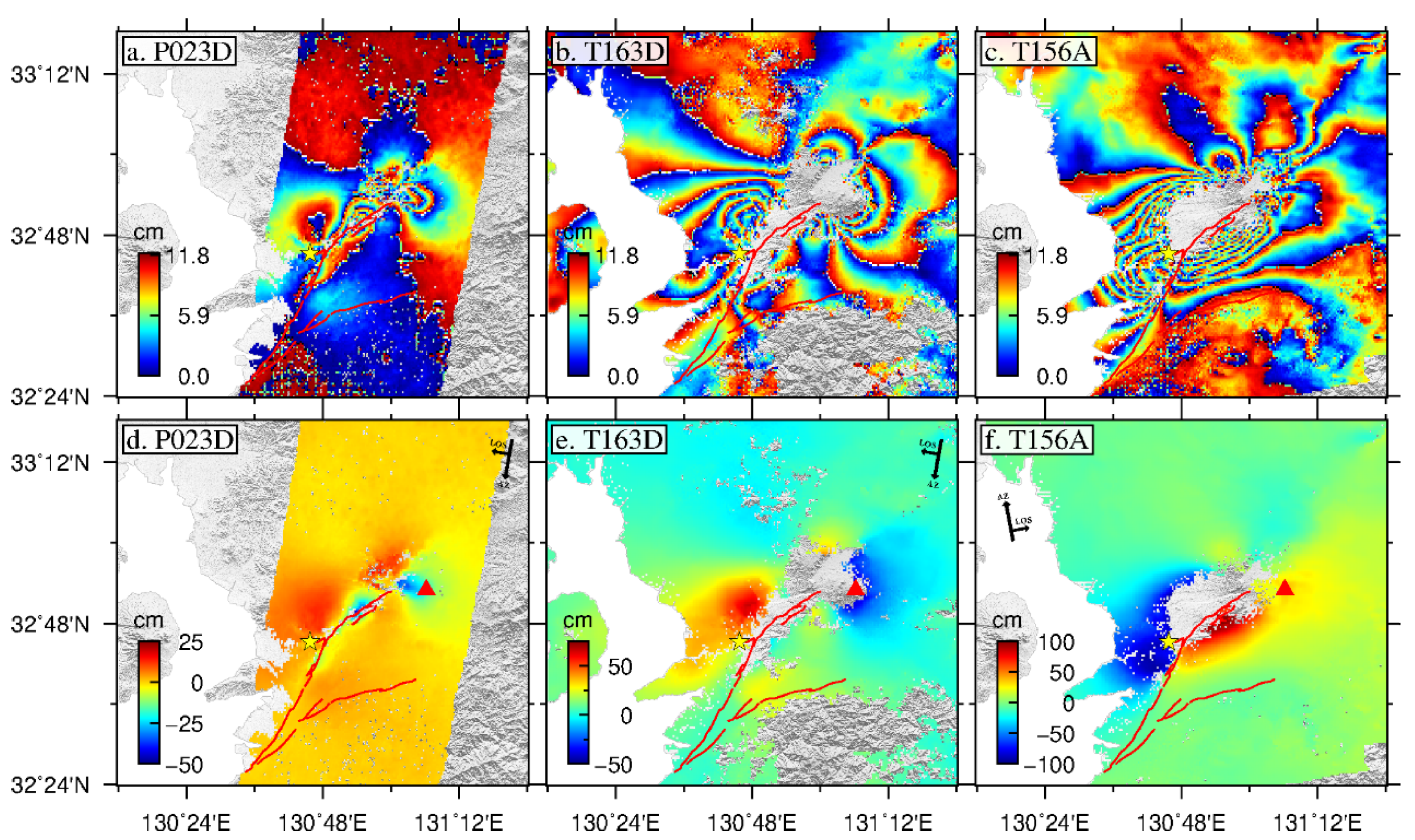
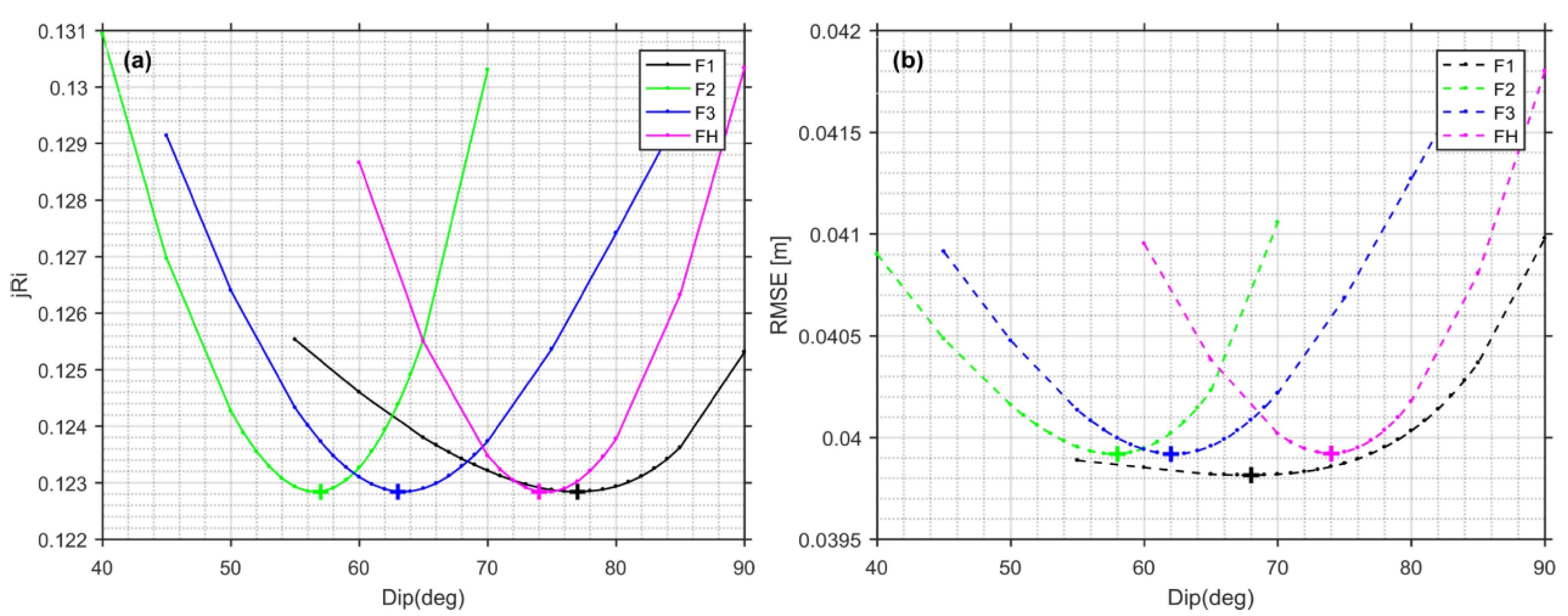
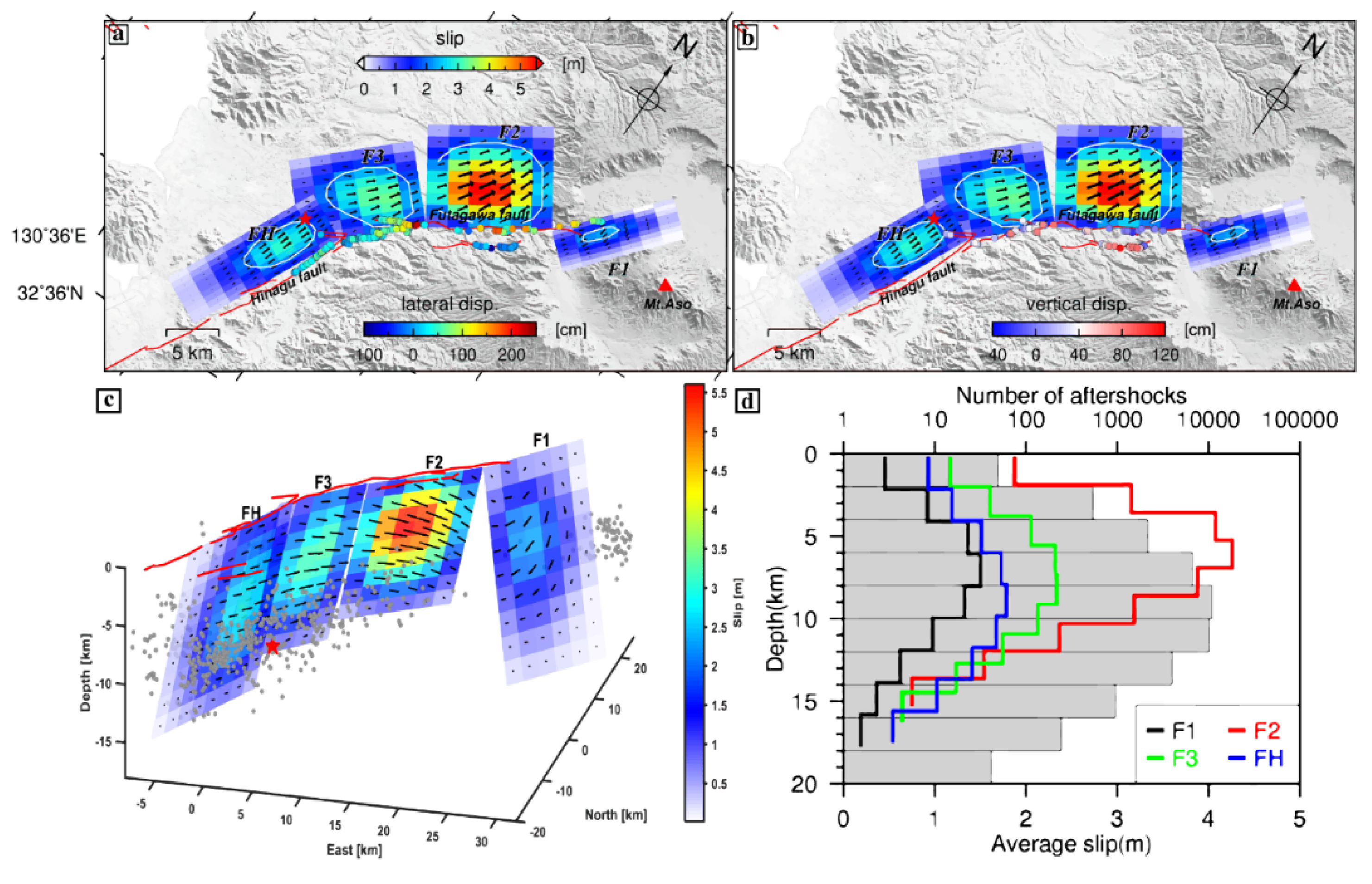
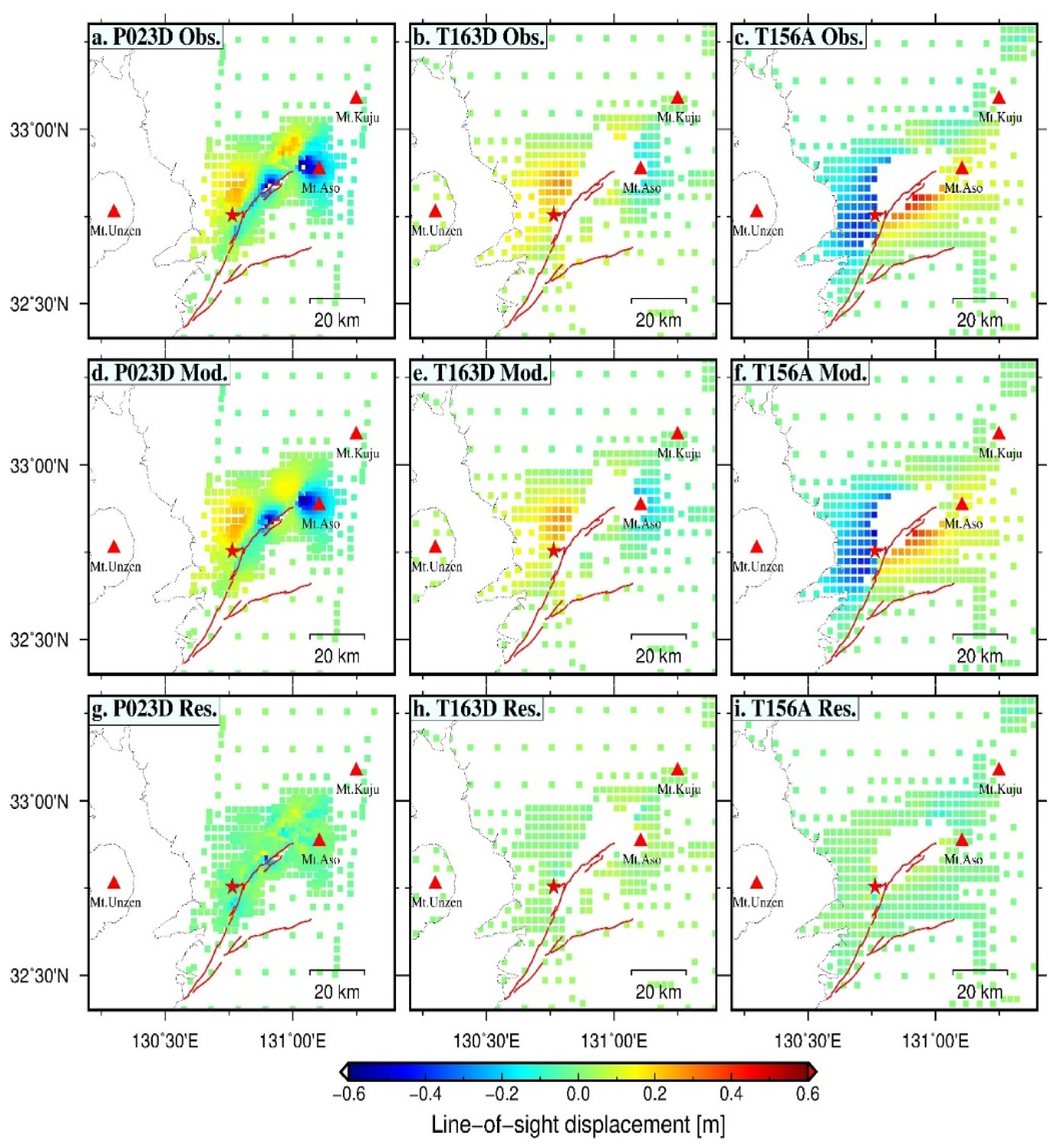
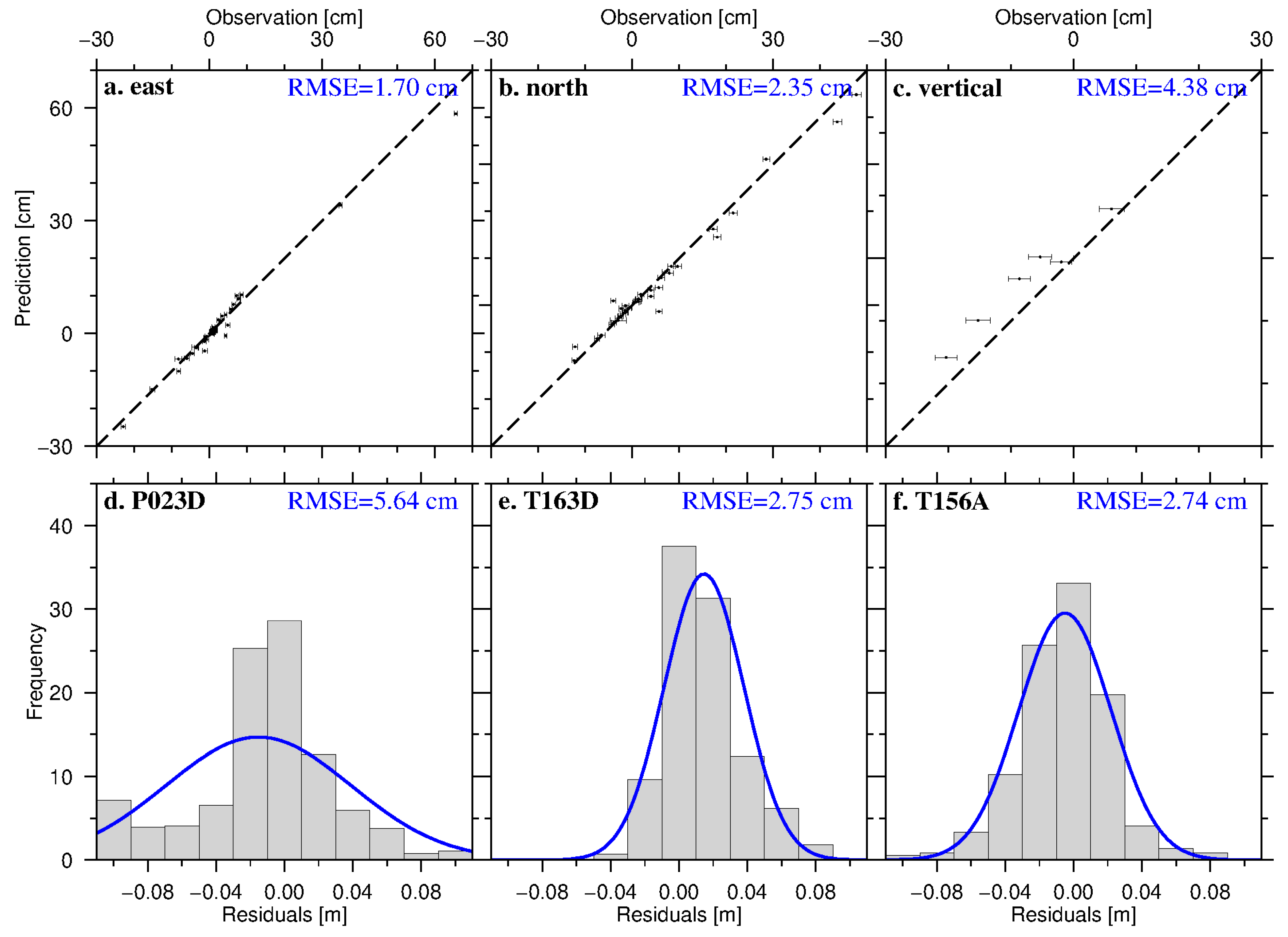
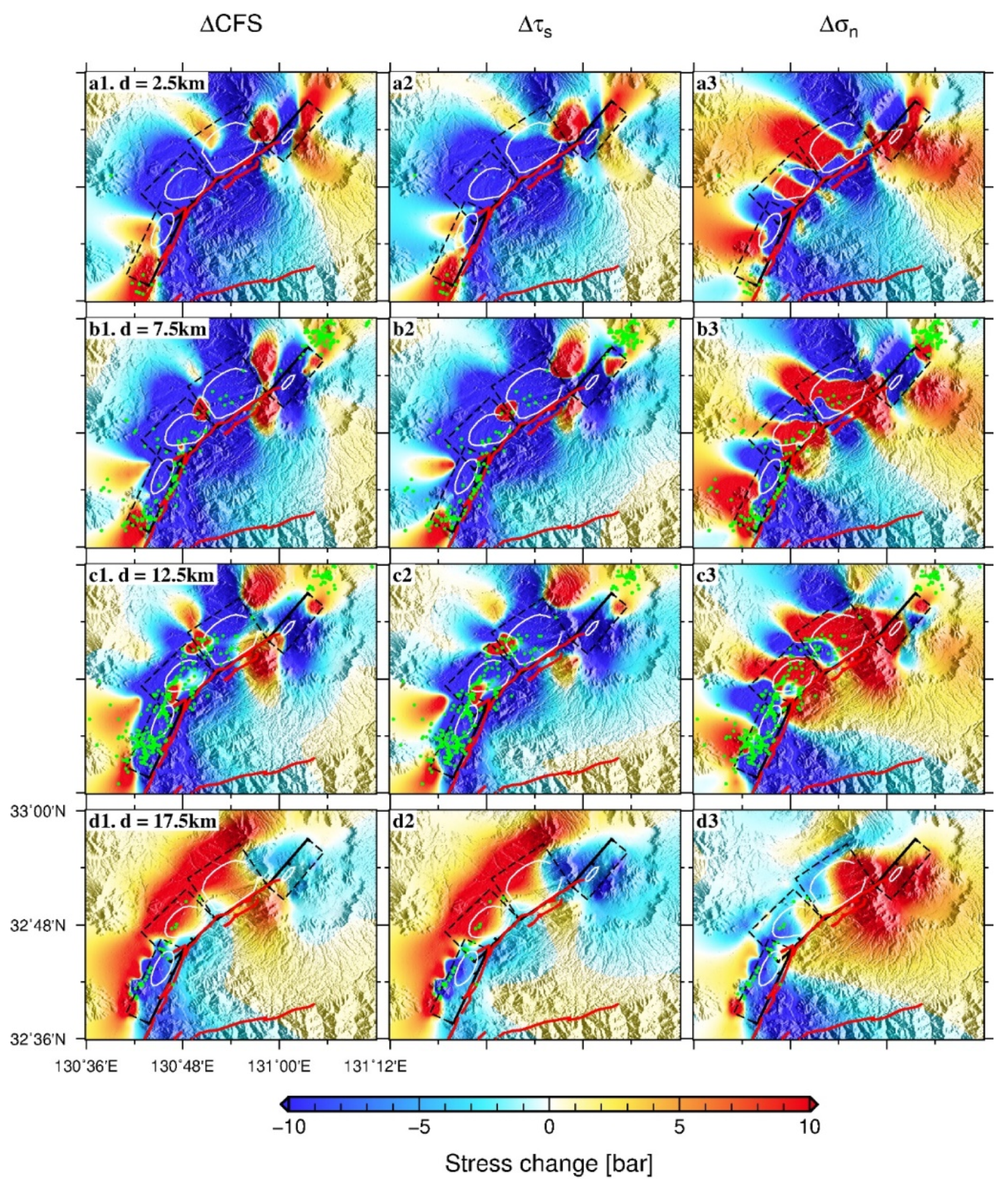
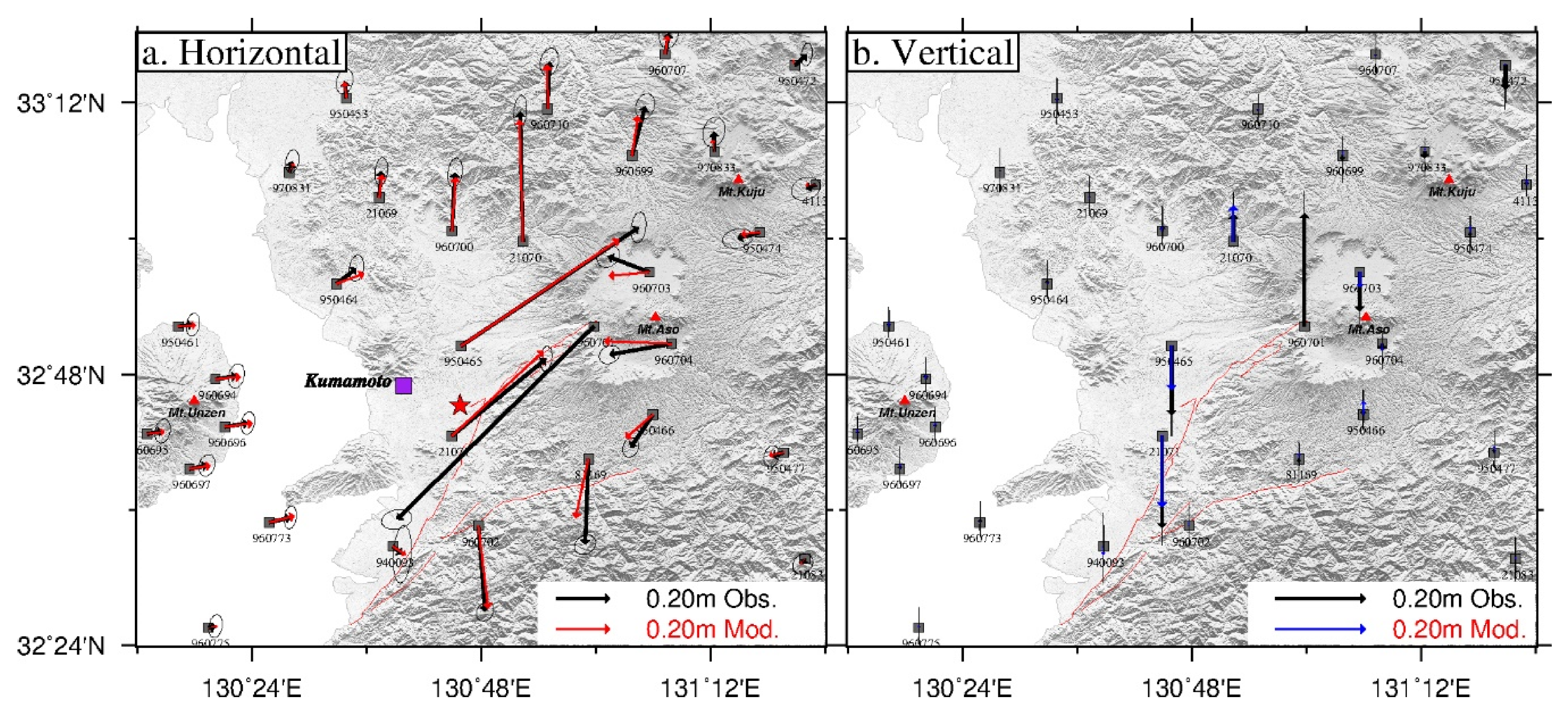
The 2016 Kumamoto earthquake, including two large (Mw ≥ 6.0) foreshocks and an Mw 7.0 mainshock, occurred in the Hinagu and Futagawa fault zones in the middle of Kyushu island, Japan. Here, we obtain the complex coseismic deformation field associated with this earthquake from Advanced Land Observation Satellite-2 (ALOS-2) and Sentinel-1A Interferometric Synthetic Aperture Radar (InSAR) data. These InSAR data, in combination with available Global Positioning System (GPS) data, are then used to determine an optimal four-segment fault geometry with the jRi method, which considers both data misfit and the perturbation error from data noise. Our preferred slip distribution model indicates that the rupture is dominated by right-lateral strike-slip, with a significant normal slip component. The largest asperity is located on the northern segment of the Futagawa fault, with a maximum slip of 5.6 m at a 5–6 km depth. The estimated shallow slips along the Futagawa fault and northern Hinagu fault are consistent with the displacements of surface ruptures from the field investigation, suggesting a shallow slip deficit. The total geodetic moment release is estimated to be 4.89 × 10¹⁹ Nm (Mw 7.09), which is slightly larger than seismological estimates. The calculated static Coulomb stress changes induced by the preferred slip distribution model cannot completely explain the spatial distribution of aftershocks. Sensitivity analysis of Coulomb stress change implies that aftershocks in the stress shadow area may be driven by aseismic creep or triggered by dynamic stress transfer, requiring further investigation.
Keywords: 2016 Kumamoto earthquake; InSAR; GPS; slip distribution; shallow slip deficit; Coulomb stress change 2016 Kumamoto earthquake; InSAR; GPS; slip distribution; shallow slip deficit; Coulomb stress change
Graphical Abstract