


Abstract
Radon (222Rn) is a naturally occurring radioactive noble gas that is a major source of ionising radiation in the environment. Many measurement techniques can be used to monitor 222Rn concentrations in the workplace. The main purpose of conducting such measurements is to identify locations of exposure, determine the effective dose for workers and, if necessary, define actions for reducing the exposure. As part of this study, a series of measurements were conducted in the underground tourist route at Książ Castle in Poland. The route has been open to visitors since late 2018. The measurements included long- and short-term tests. Passive and active methods were used to measure the 222Rn activity concentration. Additionally, the potential alpha energy concentration and ambient and radioactive aerosol size distributions were measured. Finally, the annual effective dose for workers was estimated. The dose was calculated while factoring in the legal regulations in the Czech Republic and Poland to demonstrate their effect on the final results. The obtained values were low—they did not exceed 0.218 mSv (for the specified exposure time)—indicating the effectiveness of natural ventilation and a low radiation risk to personnel.
1. Introduction
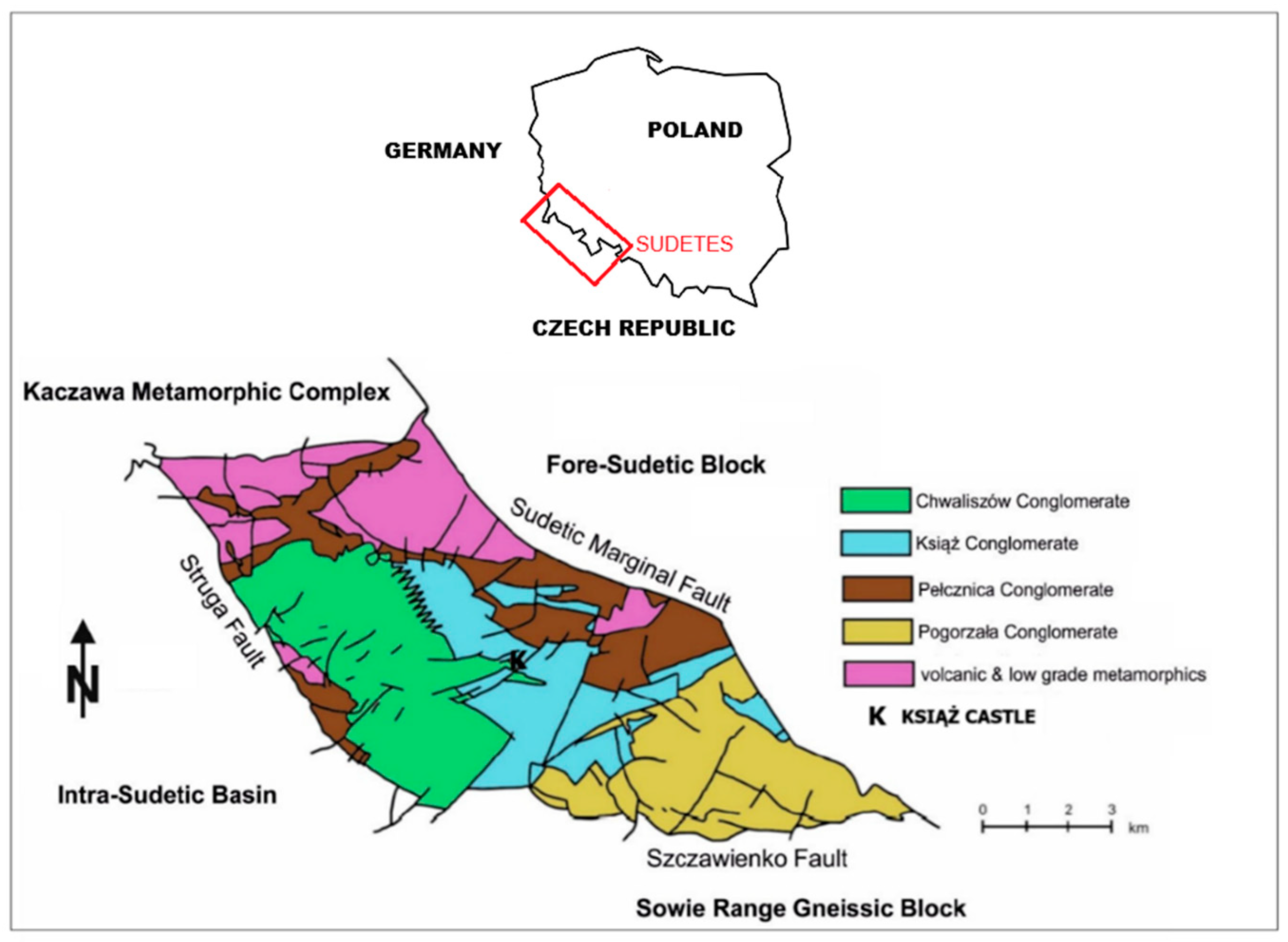
Książ Castle is situated in the central part of the Sudetes, within the Wałbrzych Foothills area (SW Poland). Geologically, the Książ orogeny lies near the centre of the Świebodzice Unit (ŚU), which in older literature is referred to as a depression, trough, synclinorium or basin (Figure 1) [1,2,3,4,5]. ŚU is a rhomb-shaped mountain sedimentary basin of Varsician age in the NW-SE direction and an area of about 100 km2. The Marginal Sudetic Fault separates it from the Fore-Sudetic Block to the northeast, the Szczawienko Fault from the gneiss block of the Owl Mountains to the south, and the Struga Fault from the Intrasudetic Basin to the southwest. The unit’s northeastern boundary with the metamorphic rock complex of the Kaczawa Mountains is less well-defined and marked by a system of minor faults. ŚU is composed primarily of Carboniferous sedimentary rocks, traditionally assigned to the Pogorzała, Pełcznica, Chwaliszów and Książ formations. Blocks of Upper-Devonin rocks, forming isolated and likely allochthonous rock bodies of various sizes, occur subordinately in the ŚU structure [5]. Regarding the tectonic conditions, the structure of the Książ area and the whole ŚU is much more complex. The unit is cut by numerous faults, and several of them intersect the underground tunnels of Książ (Figure 1) [6,7,8]. At least three active extensional faults, striking NE-SW, show a clayey gouge and young, possibly recent, mineralisation. Moreover, they are accompanied by several complementary structures, such as the Riedel fractures or slickensides and silicolithes [9].
Figure 1.
Simplified geological map of the Świebodzice Unit (ŚU) [10].
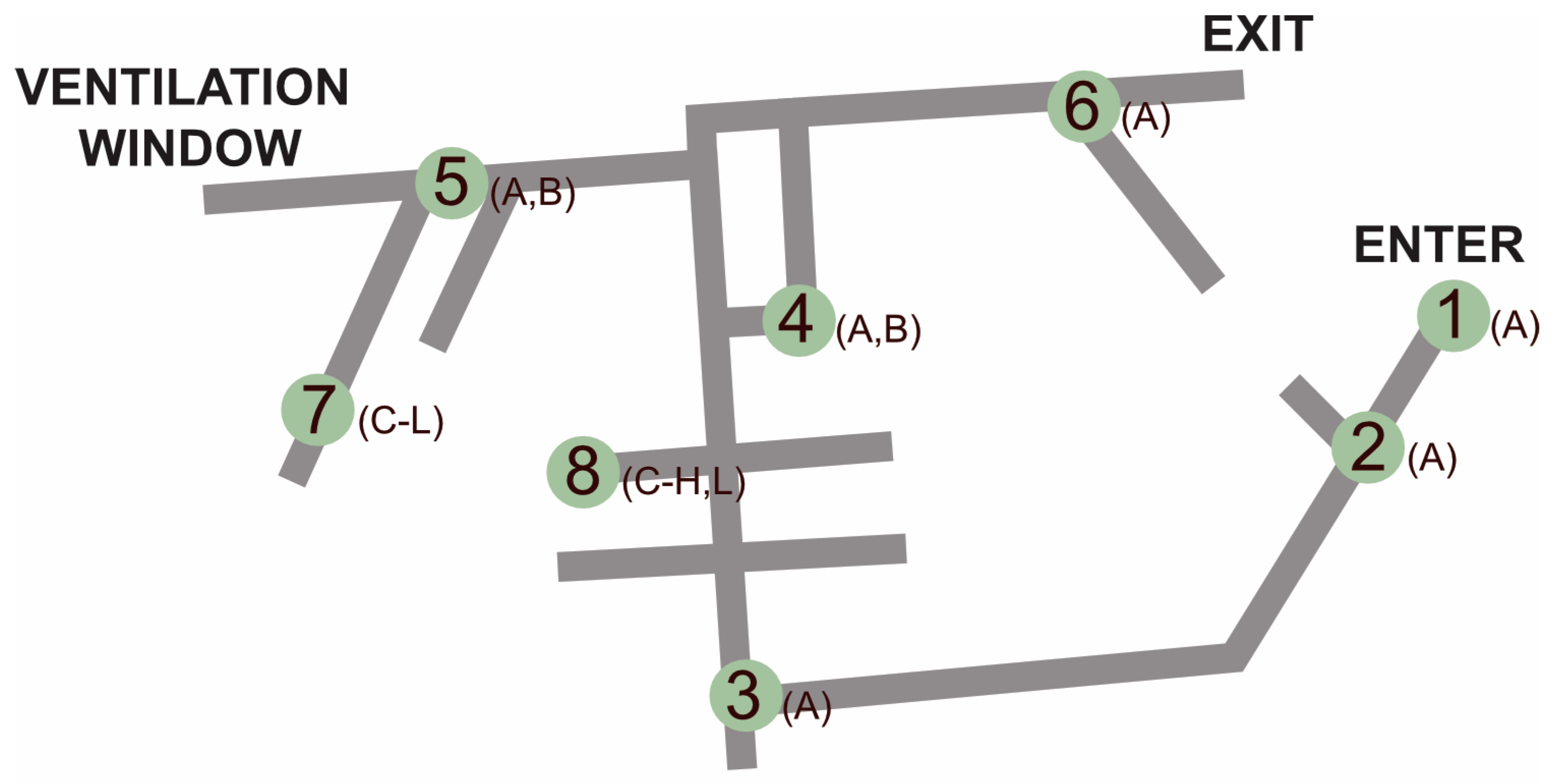
The Książ underground tourist route is not equipped with a mechanical ventilation system. The air circulation is driven by the pressure differential between staircase shafts (entry and exit) and a ventilation window (Figure 2). The ventilation window is located in an adit situated opposite the abovementioned shafts, about 15 m below the doors closing the staircases on the entry and exit shafts. The air movement is also forced by temperature differences between the complex’s interior and the external environment. The temperature inside the underground complex is about 10 °C, which means that from autumn to spring, the air moves from the underground structure to the atmosphere, whereas during summer, the air stagnates inside the tunnels. The efficiency of natural ventilation varies depending on the prevailing wind direction. South and southeastern winds aid in pushing atmospheric air through the ventilation window to the adits of the underground complex and then to the staircase, where it is released into the atmosphere.
Figure 2.
Layout of measurement points equipped with: (A) passive detectors, (B) AlphaGuard-EF, (C) AlphaGuard 2000Pro, (D) ALPHA, (E) Triathler liquid scintillation spectrometer, (F) Radon Progeny Particle Size Spectrometer, (G) RGR-40, (H) MAAF, (I) TS-96, (J) Aerodynamic Particle Sizer, (K) Scanning Mobility Particle Sizer, (L) Dekati ELPI+.
Previous studies showed that the 222Rn activity concentration was high in the corridors under the castle. Later, before they were made available to visitors, a ventilation window was installed at the end of the corridor network to improve airflow through the route. The entire route is ventilated by gravity. Therefore, the measurements aimed to investigate whether this had changed the radiological situation at the site. Three institutes from Poland and the Czech Republic used different methods to conduct these measurements. This provided an opportunity to compare the obtained results.
1.1. Object Description
In 2016–2018, the employees of the Wrocław University of Science and Technology measured the 222Rn activity concentration using an SRDN-3 probe equipped with a semiconductor detector. The measurement results indicated seasonal changes typical for underground sites—higher concentrations were recorded in the warmer period. During the entire research period, the average 222Rn activity concentration was 1025 Bq/m3 with a maximum value of 3629 Bq/m3. It is worth noting that during these measurements, the underground rooms were quite well isolated from external air [11]. The gravity ventilation system was installed at the end of 2018. Therefore, it was decided to repeat the measurements to reassess the exposure for workers.
1.2. Purpose of the Work
The paper presents the results of a series of 222Rn measurements performed in the Książ Castle underground tourist route. The long-term measurements of radon activity concentration were conducted over a 12-month period using passive PADC track detectors, which provided integrated information on seasonal variations and typical exposure levels under standard operating conditions. Short-term measurements, based on active techniques, were performed over a two-day campaign from 25 to 26 April 2022 and allowed for high-resolution assessment of short-term fluctuations in radon levels and related parameters.
To obtain a more accurate estimate of employee exposure, additional measurements of PAEC were carried out, along with a determination of the size distribution of radon progeny and environmental aerosols diameter. These measurements enabled a more detailed characterisation of the radiation field, taking into account the behaviour of radioactive aerosols within the confined underground environment.
Finally, the annual effective dose for guides on the underground route was estimated. The dose was calculated using legal regulations applicable in the Czech Republic and Poland to highlight how they affect the final result.
Because the various components of the study were performed using different instruments and methodological approaches, the paper not only evaluates occupational exposure of the Książ Castle guides but also provides a comparison of multiple measurement techniques and analytical strategies, highlighting their applicability and limitations in complex underground settings.
2. Methods
The measurements were performed by the Central Laboratory for Radiological Protection (CLOR, Warsaw, Poland), the National Institute for Nuclear, Chemical and Biological Protection (SUJCHBO, Kamenna, Czech Republic) and the Central Mining Institute (GIG, Katowice, Poland).
Measurements of 222Rn activity concentration, potential alpha energy concentration (PAEC), equilibrium equivalent activity concentration (EEAC), and particle size distribution of ambient and radioactive aerosols (RnDP) were taken at Książ Castle. The effective dose for workers was calculated based on the obtained measurement results.
The research was carried out at eight sites located in the underground tourist route of Książ Castle in Wałbrzych (Figure 2). Designations from 1 to 6 correspond to locations where measurements were taken using passive 222Rn detectors. At stations 7 and 8, the PAEC and the size distribution of ambient and radioactive aerosols were determined. Measurements of 222Rn activity concentration in the air were carried out using active devices in all the locations marked on the plan. In addition, a continuous 18-h 222Rn measurement was conducted at locations 4 and 5, covering the night of 25–26 April 2022.
2.1. Radon Activity Concentration
Two methods were used to measure the 222Rn activity concentration: passive track detectors and an active device equipped with an ionisation chamber (A and B in Figure 2).
One of the most popular devices available on the market, the AlphaGuard-EF radiometer (Genitron, Frankfurt, Germany; Bertin Technologies, Montigny-le-Bretonneux, France), was used to measure the 222Rn activity concentrations. The instrument provides the ability to conduct long-term, continuous measurements of 222Rn concentrations in the air. The concentrations were analysed at a frequency of every 60 min. It can also be used to record humidity, pressure and air temperature. The device has an ionisation chamber with a volume of about 0.6 dm3. During the measurement, ambient air diffuses inside through a filter that traps aerosols. The alpha radiation emitted by 222Rn and its decay products ionises the air, generating a current in the electrostatic field of the chamber, the intensity of which is proportional to the number of alpha particles and thus to the 222Rn activity concentration in the air. The measurement range of the AlphaGuard-EF is from 2 Bq/m3 to 2,000,000 Bq/m3. The older version of this device, AlphaGuard-2000Pro, Heerstr. 149, 60488 Frankfurt a. Main, Germany (C in Figure 2), was also used during the measurements.
One of the most common approaches to assessing the risk resulting from 222Rn in buildings is the measurement method using passive solid-state nuclear track detectors. These detectors consist of a small container called a diffusion chamber that the ambient air is diffused into. A special plate, usually made of PADC (poly allyl diglycol carbonate), is placed inside, which is the actual 222Rn meter. 222Rn and its decay products formed inside the chamber emit alpha particles, which, when penetrating the detector material, damage chemical bonds on their way, creating invisible tracks. As a result of chemical etching in concentrated sodium hydroxide and high temperature, the tracks become visible under the microscope. Their density corresponds to the number of alpha particles that produced them, so it is proportional to the 222Rn activity concentration in the air. Detectors made of PADC register alpha particles in a wide energy range from about 0.1 MeV to 20 MeV [12].
2.2. Potential Alpha Energy Concentration
The potential alpha energy concentration measurements were performed using three different methods. The first was based on the use of thermoluminescence detectors (TLD). A special kit called the ALPHA probe contains three heads housing TLD (CaSO4: Dy) detectors [13,14] (D in Figure 2). There are two detectors in each head, separated by a spacer so that the background can be recorded by one detector behind the spacer, while the detector located immediately above the filter additionally records the alpha radiation released by 222Rn progeny collected on the filter during air pumping. The alpha probe is placed in a cyclone that separates the respirable aerosol fraction, and only such aerosols reach the filter. The whole unit is connected to an AP-2000EX aspirator (Two-Met, Zgierz, Poland), which provides stable airflow through the filter. The aspirator is battery-powered. The pumping time was two hours. After the measurements, the detectors were analysed in a Harshaw-5500 reader (Thermofisher Scientific, Waltham, MA, USA).
The second employed method involved the RGR-40 (G in Figure 2) mining radiometer (Institute of Chemistry and Nuclear Technology, Warsaw, Poland), designed for PAEC measurements in difficult mine conditions. The radiometer has a silicon detector with a surface barrier to record the alpha radiation. One measurement cycle lasts 15 min, with 5 min of sampling and two time intervals to measure the activity of 222Rn progeny collected on a fibreglass filter during air pumping.
The last method to measure PAEC involved pumping air through a filter for 10 min. The Pragopor-4 membrane filter composed of nitrocellulose, with a thickness of 150 μm and a pore diameter of 0.85 μm, was used to collect the 222Rn progeny (Pragochema, Prague, Czech Republic). After pumping, the filter was immersed in a vial containing 10 mL of toluene scintillator. The vial was placed in a liquid scintillation spectrometer [15]. The Triathler liquid scintillation spectrometer (Hidex, Turku, Finland) was applied to measure the filter activity (E in Figure 2). The measurements were carried out according to the Thomas method [16]. The potential alpha energy concentration was calculated from the obtained results.
2.3. Equilibrium Equivalent Activity Concentration
The grab sampling measuring method was developed based on the long-term research of SUJCHBO. For example, many popular methods were published in the Safety Series by Raabe et al. [17]. However, the measuring time regime was optimised and published in 1988 [18]. The method is based on sucking air through an AFPC microfiber filter (Merck SA, an affiliate of Merck KGaA, Darmstadt, Germany) by a QuickTake30 sampling pump (SKC INC., Valley View Road, PA, USA) with a constant flow rate of 20 L/min. After the defined sampling time, it is necessary to keep the manipulation break no longer than 30 s. The filter in a unique holder is placed inside a MAAF measuring device (Jiri Plch-SMM, Neumannova, Praha, Czech Republic) (H in Figure 2), a two-channel alpha spectrometer with a semiconductor detector, and the device response in defined times is measured. Finally, at least four results are used for the equilibrium equivalent activity concentration calculation by means of a PC program. This method is used in the Authorised Metrological Centre and Calibration Laboratory of SUJCHBO, and the results are periodically compared to those of BfS (Bundesamt für Strahlenschutz, Berlin, Germany) with excellent results.
The second method of measuring the equilibrium equivalent activity concentration is based on the continual sucking of sampled air with a volumetric flow rate of 1 L/min through an AFPC microfiber filter placed in a special holder inside a TS-96 measuring device (TS Company, Plzen, Czech Republic) (I in Figure 2). The Si-detector on the 200 mm2 surface continually measures the device response from alpha particles deposited on the filter. Instantaneous values of equilibrium equivalent activity concentration are displayed every 30 min or downloaded through the analogue port to the PC.
2.4. Ambient Aerosol Size Distribution
The Aerodynamic Particle Sizer (APS, TSI Incorporated, Shoreview MN, USA) (J in Figure 2) was used to measure the ambient aerosol size distribution. The spectrometer analyses the particle size distribution in real-time. The APS measures particles from 0.5 to 20 µm in size. The air stream entering the device is split just after the inlet at a ratio of 4:1. The larger air volume is filtered and merges with the stream containing aerosols near the laser system. As a result, the particles are accelerated, and a high-speed timing processor measures their flight time. The flight time of the particles depends on their size. The optical system implemented in the spectrometer allows coincidence detection. Particle size and intensity are assessed after a comparison with the calibration curve. Moreover, the Scanning Mobility Particle Sizer (SMPS, TSI Incorporated, Shoreview, MN, USA) (K in Figure 2) was used to measure the aerosol size distribution for finer particles. The spectrometer is a nanoparticle sizer capable of accurately measuring the size distribution of airborne submicron particles. It combines electrical mobility sizing with single-particle counting to deliver nanoparticle concentrations in discrete-size channels. The size resolution capability of the SMPS is as high as 128 channels per decade, resulting in up to 384 channels in total. Two different DMAs (Differential Mobility Analyzers) and the APS (Aerodynamic Particle Sizer) (J in Figure 2) were used to enable a continuous measurement from 1 nm up to 20 µm.
2.5. Radioactive Aerosol Size Distribution
The radioactive aerosol size distribution was measured by means of two methods. A Dekati ELPI+ (Dekati LTD., Kangasala, Finland) (L in Figure 2) and a Radon Progeny Particle Size Spectrometer (F in Figure 2) were used. The Dekati ELPI+ (Electrical Low-Pressure Impactor) is a fourteen-stage particle spectrometer for the real-time measurements of airborne particle size distribution (non-radioactive). The operating principle is based on the particle’s charging to a known charge level in the corona charger. Afterwards, the particles are classified in a low-pressure cascade impactor according to their aerodynamic diameter. The impactor stages are electrically isolated, and sensitive electrometers are connected to each impactor stage. The produced electrical current at each impactor stage is recorded by the respective electrometer channel and corresponds to the number concentration of particles on the stage [19]. For the purposes of the radioactive aerosol size distribution determination, the cascade impactor ELPI+ collects samples and selects aerosol particles without their electrical charging. Fourteen impaction stages operating in the range of 17 nm–10 µm are equipped with sampling plates so that the collected sample can be laboratory analysed. The solid-state nuclear track detectors (LR-115, Algade, Bessines-sur-Gartempe, France) are placed on the cascade impactor sampling plates, and after their chemical processing, the equilibrium equivalent activity concentration at different stages is determined. The measurement result is the radioactive aerosol size distribution of equilibrium equivalent activity concentration connected with short-lived 222Rn daughter products.
The second device used to measure the radioactive aerosol size distribution was the 222Rn Progeny Particle Size Spectrometer, New York, NY, USA (RPPSS), which makes it possible to measure the particle size distribution of short-lived 222Rn decay products in the diameter range of 0.6 nm to 2494 nm, and to determine dose conversion factors (DCF). It is a research instrument designed and built by the Australian Radiation Protection and Nuclear Safety Agency (ARPANSA). The RPPSS consists of eight parallel measuring stages. Particle selection is performed by four diffusion batteries and three single-stage impactors connected in parallel. In addition, one of the elements of the system is an open filter that captures particles without selection, which, combined with the results obtained for other systems, makes it possible to estimate the proportions of the free and captured fractions of 222Rn decay products. There are filters behind each diffusion battery and Mylar foils behind the impactors. PIP CAM 400 semiconductor silicon detectors, Atlanta, GA, USA, with a surface barrier, with an area of 450 mm2 and a diameter of 24 mm, were used to measure the activity of radionuclides deposited on the filters and Mylar foil. The RPPSS software allows the particle size distribution of radioactive aerosols to be determined using two independent algorithms, Twomey and Emax.
2.6. Dose Assessments from Different Countries
Annual effective doses were calculated based on the obtained results. The calculations were made with reference to the laws applicable in the authors’ countries. Since 17 people work in the underground tourist route, and the nature of their work and working hours is different, it was decided that the doses should be determined for all the employees.
- (a)
- Poland
According to Polish regulations [20], when the source of exposure is 222Rn present in the air, the effective dose is determined as the product of the potential alpha energy concentration (PAEC), exposure time (t) and the dose conversion factor (DCF), which for 222Rn in the workplace is 1.4 mSv/(mJ·h/m3), and it can be expressed by the following formula:
The average potential alpha energy concentration from two days of measurements was used for the dose calculations (0.27 µJ/m3). The obtained values range from 0.003 mSv to 0.101 mSv.
- (b)
- Czech Republic
According to the Czech approach (where the dose conversion coefficient from ICRP 137 was adopted), the effective dose at workplaces with natural ventilation, when the source of exposure is 222Rn present in the air, is determined as the product of the equilibrium equivalent activity concentration (EEAC), exposure time (t) and the dose conversion factor (DCF), which for 222Rn in the case of the workplace in question is 1.35 × 10⁻⁵ mSv/(Bq·h·m−3), as expressed by the following formula:
where
- E: effective dose per year (mSv).
- : time integral of equilibrium equivalent activity concentration over an annual working time; it is assumed that a time integral of EEAC equalling 1.2 MBq h·m−3 causes an effective dose of 20 mSv.
3. Results and Discussion
The measurement results for 222Rn activity concentration, potential alpha energy concentration, equilibrium equivalent activity concentration, and the size distribution of ambient and radioactive aerosols are presented below.
3.1. 222Rn Activity Concentration
222Rn activity concentration measurements were conducted in the underground tourist route and in the office spaces situated on the ground floor of the castle. This methodology enabled the determination of the effective dose for various occupational groups, including office workers, management personnel and tourist guides.
Four exposures were investigated during the passive measurements in the underground route: 14 August–14 November 2019; 14 November 2019–27 February 2020; 27 February–25 May 2020; and 25 May–2 September 2020. Each time, three detectors were exposed per one measurement stand. In addition, one annual exposure was carried out, covering the period from 30 December 2020, until 2 January 2022, using two detectors at each measurement site.
The measurements in the office spaces were conducted in two distinct periods: the first between 15 June 2023 and 18 September 2023, which corresponded to the summer season; and the second between 29 January 2024 and 15 April 2024, which represented the winter season. In each instance, a single passive detector was allocated to a single measurement stand.
After each exposure, the detectors were etched under the same conditions, according to the procedure used by an accredited testing laboratory. The track density on the detectors was determined using the Politrack automatic reader. The results of measurements carried out using passive detectors are presented in Table 1 and Table 2.
Table 1.
Results of 222Rn activity concentration measurements in the underground route using passive detectors.
Table 2.
Results of 222Rn activity concentration measurements in office spaces using passive detectors.
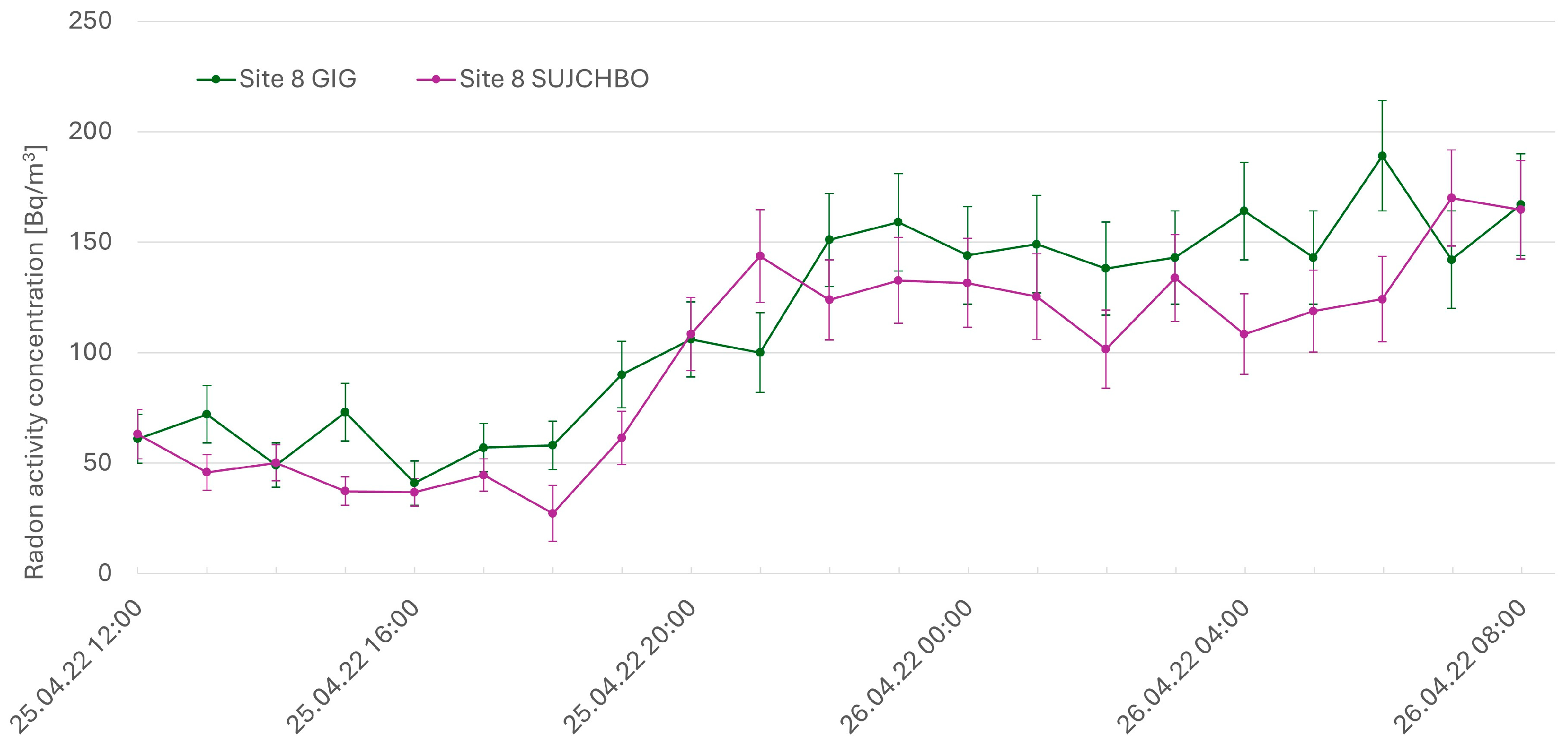
222Rn concentration measurements were also carried out using the active method. Figure 3 compares the results obtained by two laboratories (GIG and SUJCHBO). Both laboratories used the AlphaGuard meter to measure the 222Rn concentration. On the first measurement day (from 12 a.m. 25 April 2022 to 8 a.m. 26 April 2022), the meters were placed in Site 8 (geological chamber) as provided in Figure 2. The results were measured every 60 min. The average 222Rn concentration measured by SUJCHBO was 94 ± 44 Bq/m3 and by GIG—114 ± 46 Bq/m3. The minimum measured 222Rn concentration was 23 Bq/m3 (SUJCHBO) and the maximum—189 Bq/m3 (GIG). Measurement uncertainties are marked on the graph (k = 2). The figure shows a good convergence of results between the laboratories. The measured concentrations did not exceed 300 Bq/m3. It was concluded that the gravity ventilation is effective in the case of the tested facility.
Figure 3.
Results of 222Rn activity concentration measurements using AlphaGuards in Site 8 (GIG, SUJCHBO). Measurements performed on 25–26 April 2022.
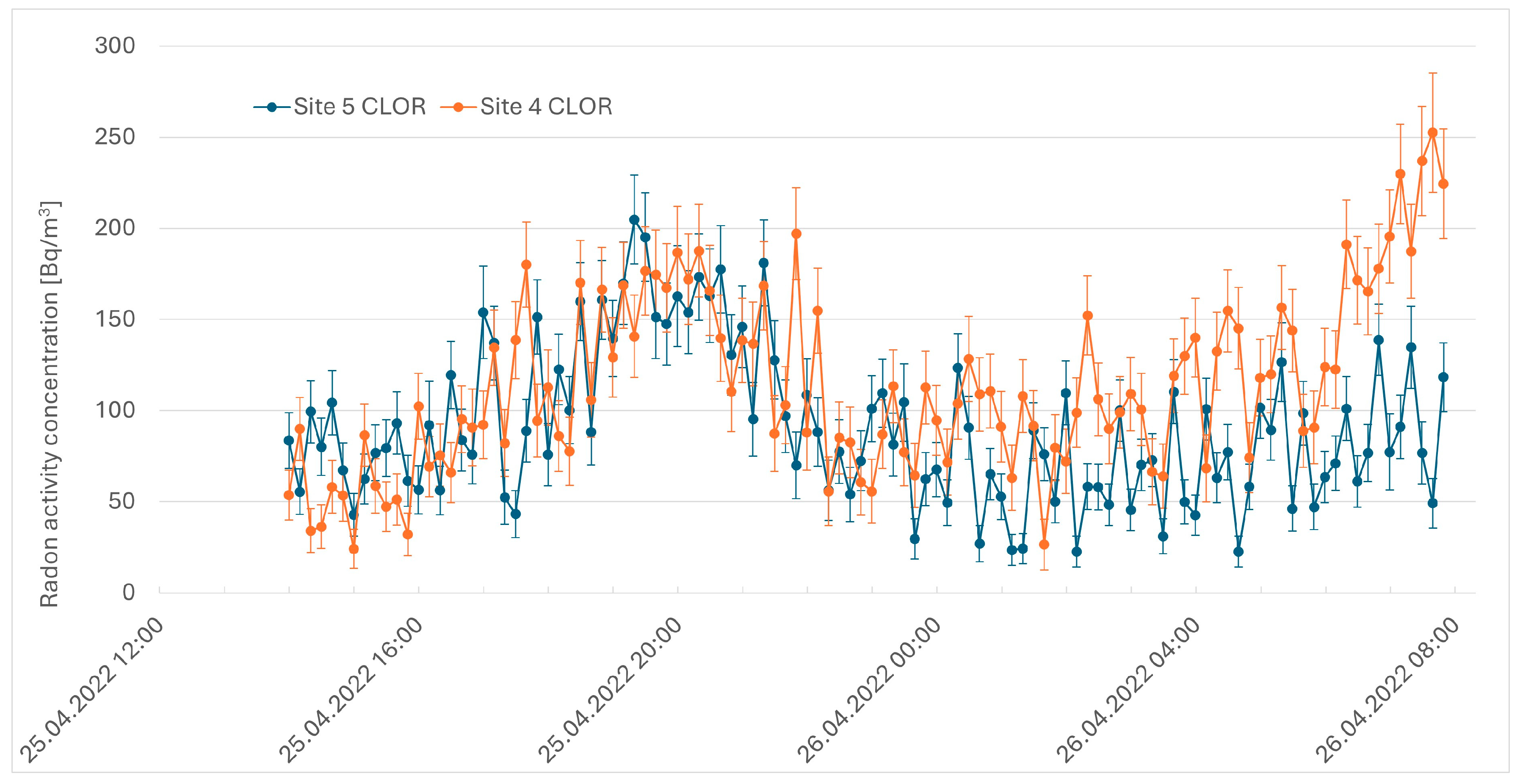
Two further devices (AlphaGuard) were placed at Site 4 and Site 5 within the tourist route. These devices worked from 2 p.m. on the first day (25 April 2022) to 7:50 a.m. on the next day (26 April 2024). The results were measured every 10 min. Figure 4 demonstrates the obtained results. The average 222Rn concentration was 114 Bq/m3 (standard deviation 49 Bq/m3) and 91 Bq/m3 (standard deviation 42 Bq/m3) at Sites 4 and 5, respectively. The highest measured 222Rn activity concentration was recorded at Site 4 and amounted to 253 Bq/m3. The minimum measured 222Rn concentration was 23 Bq/m3 and was recorded at Site 5. Measurement uncertainties are marked on the graph (k = 2). As with Site 8, 222Rn concentrations at Sites 4 and 5 did not exceed 300 Bq/m3, which is the reference level in the Czech Republic and Poland. The slight differences in the results at all the studied points indicate that the 222Rn concentrations remain stable throughout the tourist route.
Figure 4.
222Rn activity concentration at the locations of Site 4 and Site 5 (CLOR). Measurements performed on 25–26 April 2022.
The results obtained in this study provide comprehensive insight into the radiological conditions in the underground tourist route of Książ Castle several years after the installation of a gravity-based ventilation system. The measurements clearly demonstrate that the current ventilation strategy is effective in maintaining radon concentrations well below the reference level of 300 Bq/m3 adopted in both Poland and the Czech Republic. This represents a significant improvement in comparison with earlier studies conducted between 2016 and 2018, when the underground rooms were more isolated from outdoor air and radon concentrations reached average values above 1000 Bq/m3, with maxima exceeding 3600 Bq/m3. The reduction in radon levels highlights the importance of even simple ventilation interventions, such as the installation of a ventilation window, in mitigating radon accumulation in underground structures [20,21].
The measurements performed by different laboratories (GIG and SUJCHBO) using AlphaGuard devices showed very good agreement, despite slight variations related to the location and microclimatic features of specific measurement sites. No considerable spatial variability was observed across the tourist route, which further indicates stable and uniform air exchange within the tunnel network. Seasonal fluctuations were recorded, particularly an increase in radon concentration during the warmer months, consistent with the typical behaviour of naturally ventilated underground systems where summer air stagnation reduces ventilation efficiency. However, even during summer, the measured radon levels remained close to but did not exceed the applicable reference level.
3.2. Potential Alpha Energy Concentration
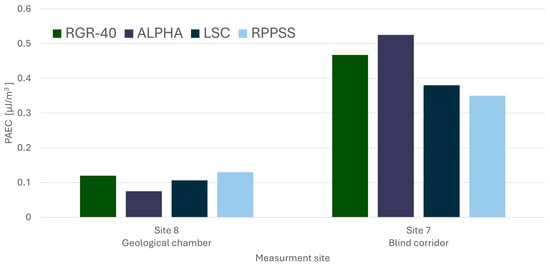
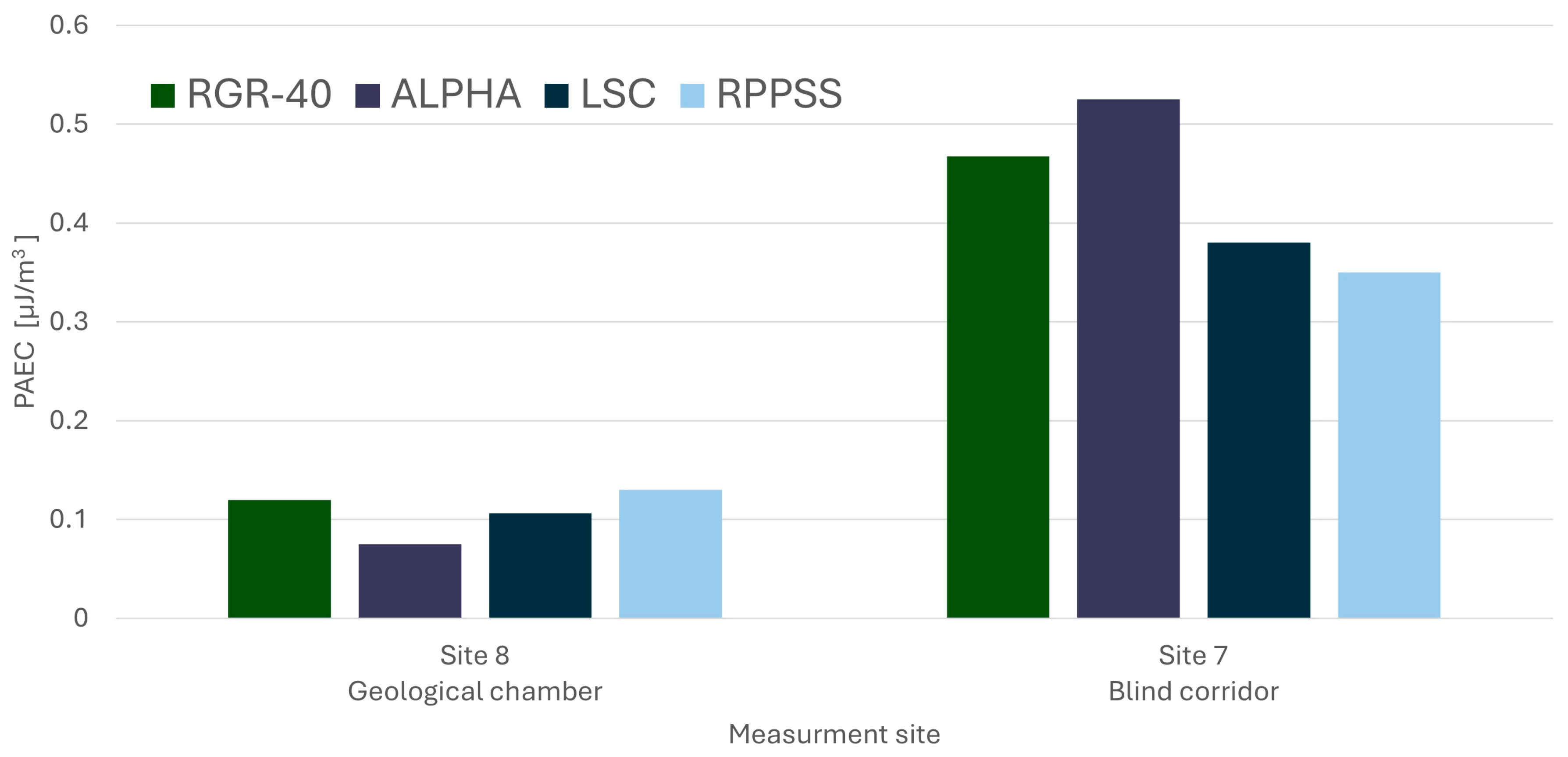
The potential alpha energy concentration was measured at two locations. On the first day (25 April 2022), measurements were taken in Site 8 (geological chamber), and on the second day (26 April 2022), in Site 7 (blind corridor). The following devices were used: RGR-40 mining radiometer, liquid scintillation spectrometer, alpha probe with TLDs, Radon Progeny Particle Size Spectrometer and ELPI+ cascade impactor. The obtained results with expanded uncertainty (k = 2) are presented in Table 3. Figure 5 displays the average values obtained using the individual methods. The highest PAEC was measured in the blind corridor and was 0.55 µJ/m3. The lowest PAEC was measured in the geological chamber and was 0.05 µJ/m3. The horizontal lines in Figure 5 indicate the average potential alpha energy concentrations, which are 0.11 in the geological chamber and 0.43 in the blind corridor.
Table 3.
Results of the potential alpha energy concentration measurements using different methods.
Figure 5.
Results of PAEC measurements using different methods. Measurements performed on 25–26 April 2022.
3.3. Equivalent Equilibrium Activity Concentration
On the first day of measurements, the equilibrium equivalent activity concentration (EEAC) was measured twice in Site 8 using the grab sampling method. On average, it amounted to 19 Bq/m3. The EEAC was also measured in the morning on the second day of measurements in the same area. The EEAC value increased nearly ten times, to 130 Bq/m3. On the second day, after moving the measuring stations to Site 7, the EEAC was measured two times and varied from 83 to 103 Bq/m3, with an average of 93 Bq/m3.
The measurements of PAEC and EEAC further corroborate the observations based on radon activity concentration. The agreement between different measurement methodologies (TLD-based alpha probes, RGR-40 radiometer, liquid scintillation, ELPI+, RPPSS) indicates that the radiological conditions are characterised by low aerosol-bound radon progeny levels. The values obtained for PAEC and EEAC fall within the lower range expected for ventilated underground environments. Notably, the blind corridor (Site 7) exhibited higher PAEC and EEAC levels compared to the geological chamber (Site 8), which is consistent with its geometry and less favourable airflow, illustrating the impact of tunnel morphology on local exposure conditions [11].
3.4. Ambient Aerosol Size Distribution
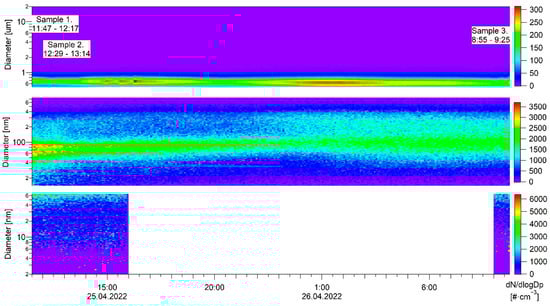
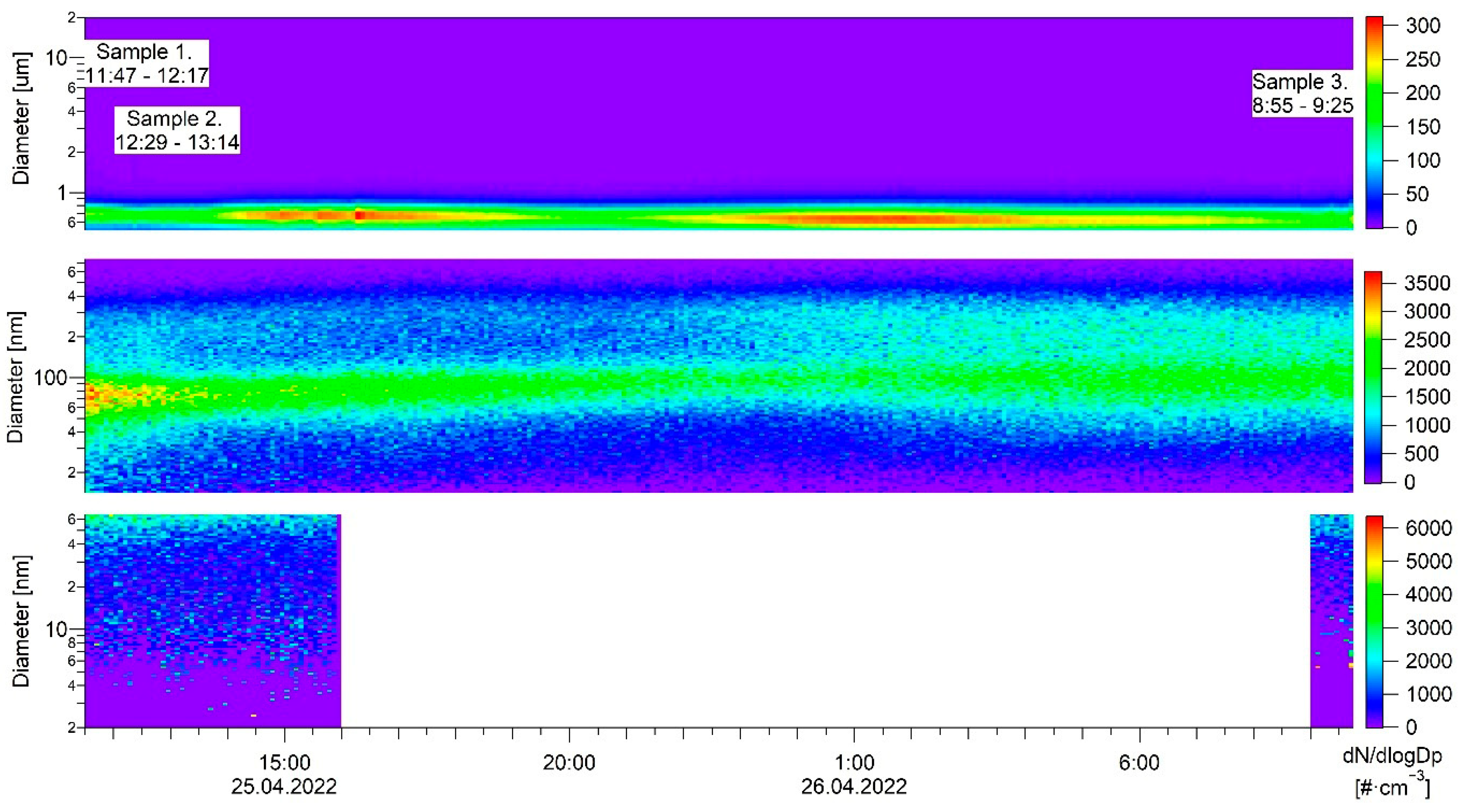
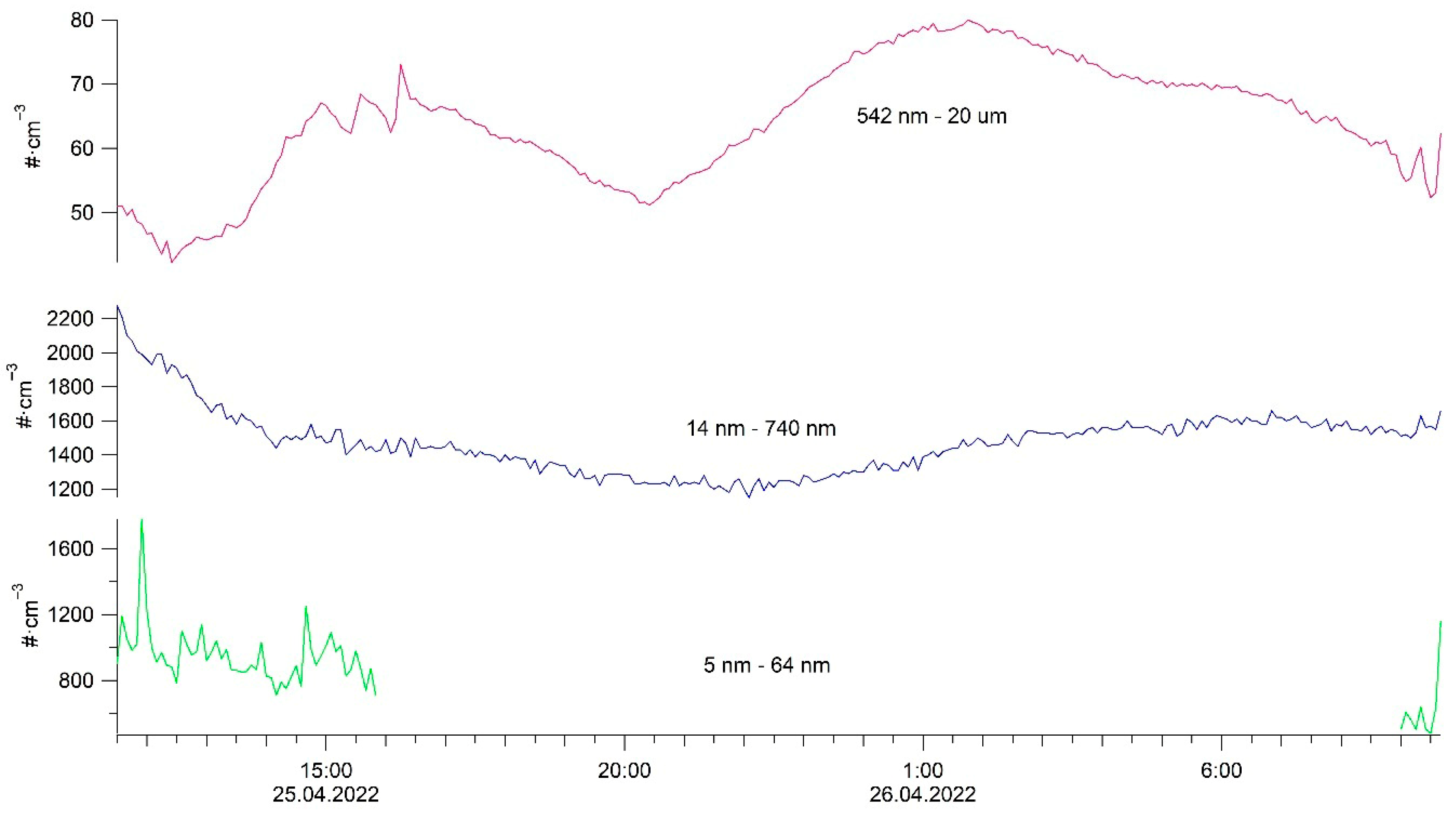
In order to assess the air quality, the spectrum of environmental aerosols was also examined. The SMPS spectrometer (K in Figure 2) was used to determine the mobility diameter of particles, and the APS spectrometer was used to assess the aerodynamic diameter. Figure 6 and Figure 7 present the obtained results. These measurements were only available on the first measuring day in the geological chamber. The graphs depict the averaged particle spectra after every two hours of measurements. Particles with a mobility diameter of 50 to 400 nm had the largest share in the total concentration of particles in the tested air. Particles of such sizes tend to remain in the atmosphere for a longer time, as they do not fall as quickly as large particles. The total particle concentration (for the SMPS range) was 1.5·103 particles/cm3. As for the aerodynamic diameter of aerosols, a clear peak can be observed in the region of 500−700 nm. Therefore, the particles in the underground tourist route air can be classified as PM1 fractions. The share of registered particles with a diameter larger than 1 µm is negligible. This indicates that the air in the tested location is clean and free from dust and industrial pollution. The total particle concentration (for the APS range) was 65 particles/cm3. The gap in the measurement conducted by SMPS with a short DMA probe was caused by a technical problem during the evening and night.
Figure 6.
Ambient aerosol size distribution on Site 7 as measured using an SMPS with a long DMA probe, an SMPS with a short DMA probe, and an APS—the particle number concentration per logarithmic particle diameter interval. # means the number of particles in one cubic centimetre.
Figure 7.
Ambient aerosol size distribution on Site 7 as measured using an SMPS with a long DMA probe, an SMPS with a short DMA probe, and an APS—the course of the aerosol particle number concentration across three size ranges. # means the number of particles in one cubic centimetre.
3.5. Radioactive Aerosol Size Distribution
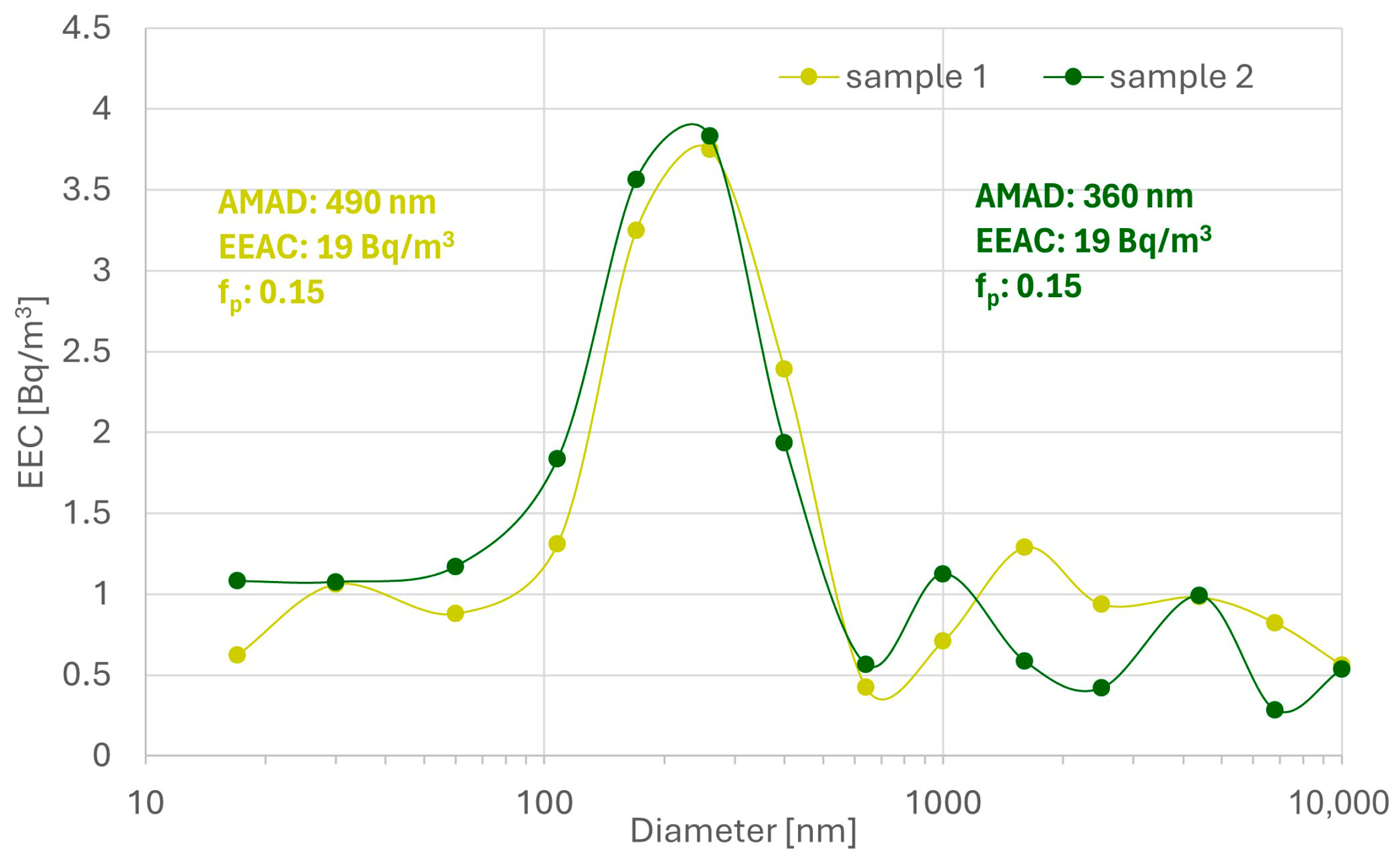
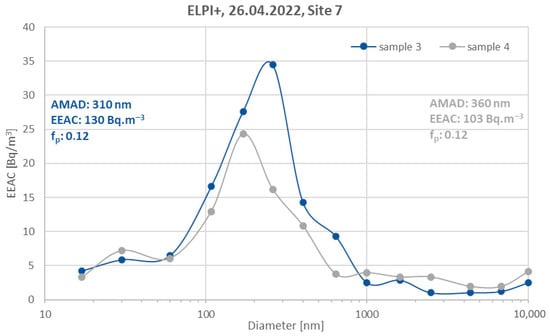
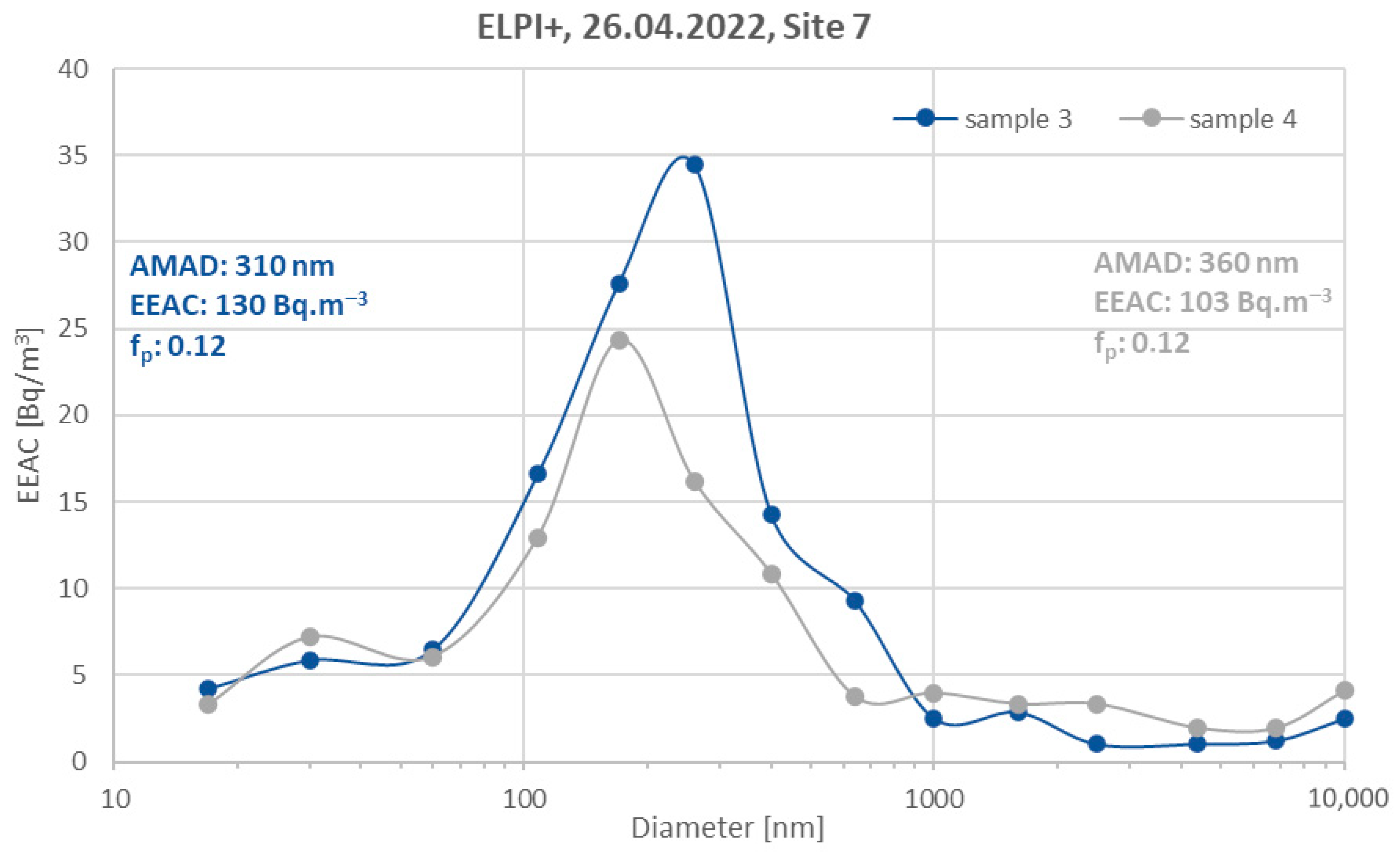
The radioactive aerosol size distribution measurements were carried out using two different methods: the Dekati ELPI+ with solid-state nuclear track detectors and the RPPSS (Radon Progeny Particle Size Spectrometer). Figure 8 and Figure 9 present the activity size distribution of RnDP obtained using the ELPI+ fourteen-stage cascade impactor from the first and second day of measurements, respectively. The Activity Median of Aerodynamic Diameter (AMAD denotes that fifty percent of the activity in the aerosol is associated with particles of aerodynamic diameter greater/smaller than the AMAD) was determined as well and varied from 310 nm to 490 nm. The fp value (unattached fraction, defined as the fraction of the potential alpha energy concentration of short-lived 222Rn progeny not attached to the ambient aerosol) was measured by the grab sampling method and varied from 0.12 to 0.15. The calculated unattached fraction shares conform very well with the values recommended by ICRP for caves [21].
Figure 8.
Radioactive aerosol size distribution in Site 8—geological chamber (ELPI+). Measurements performed on 25 April 2022.
Figure 9.
Radioactive aerosol size distribution in Site 7—blind corridor (ELPI+). Measurements performed on 26 April 2022.
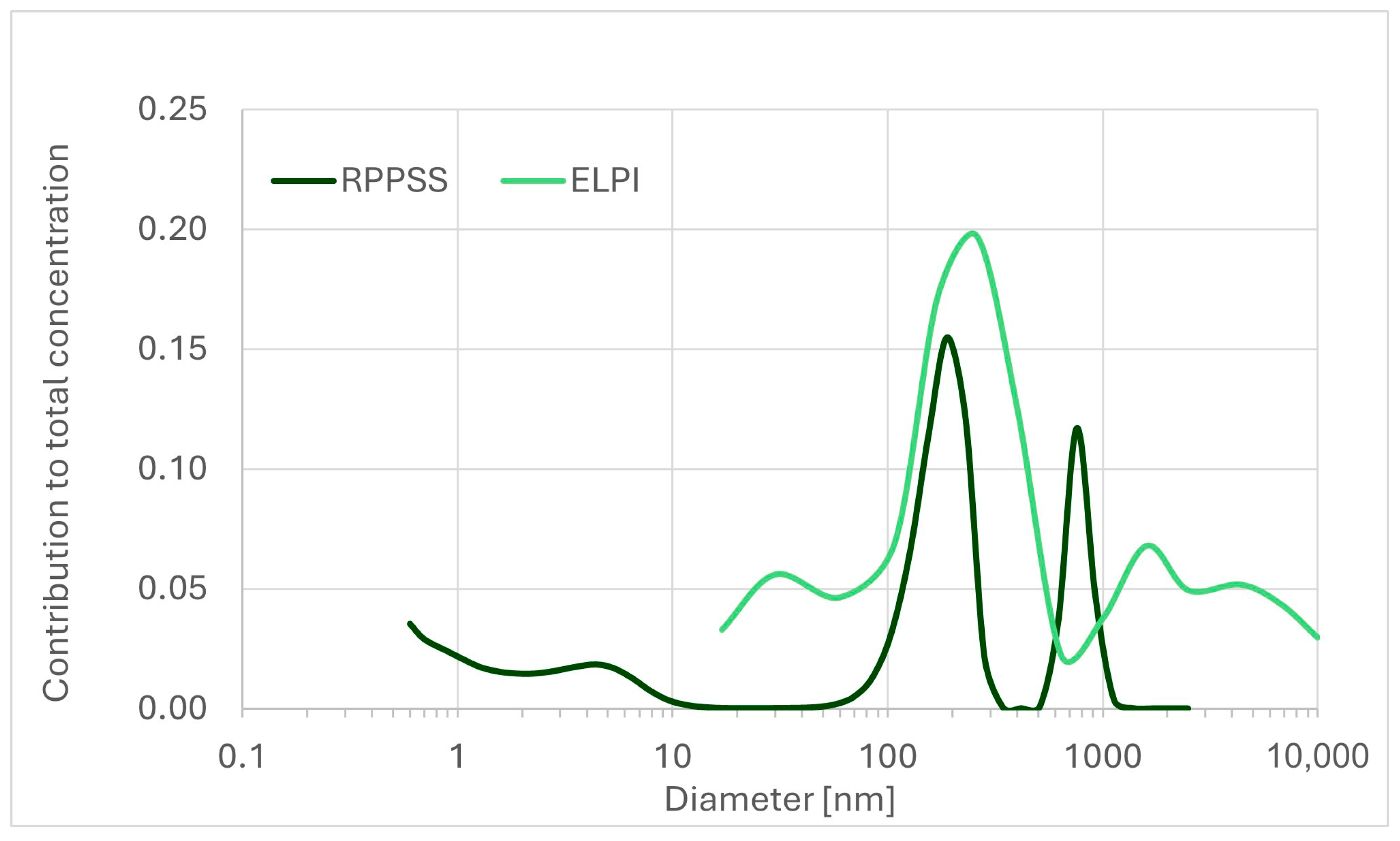
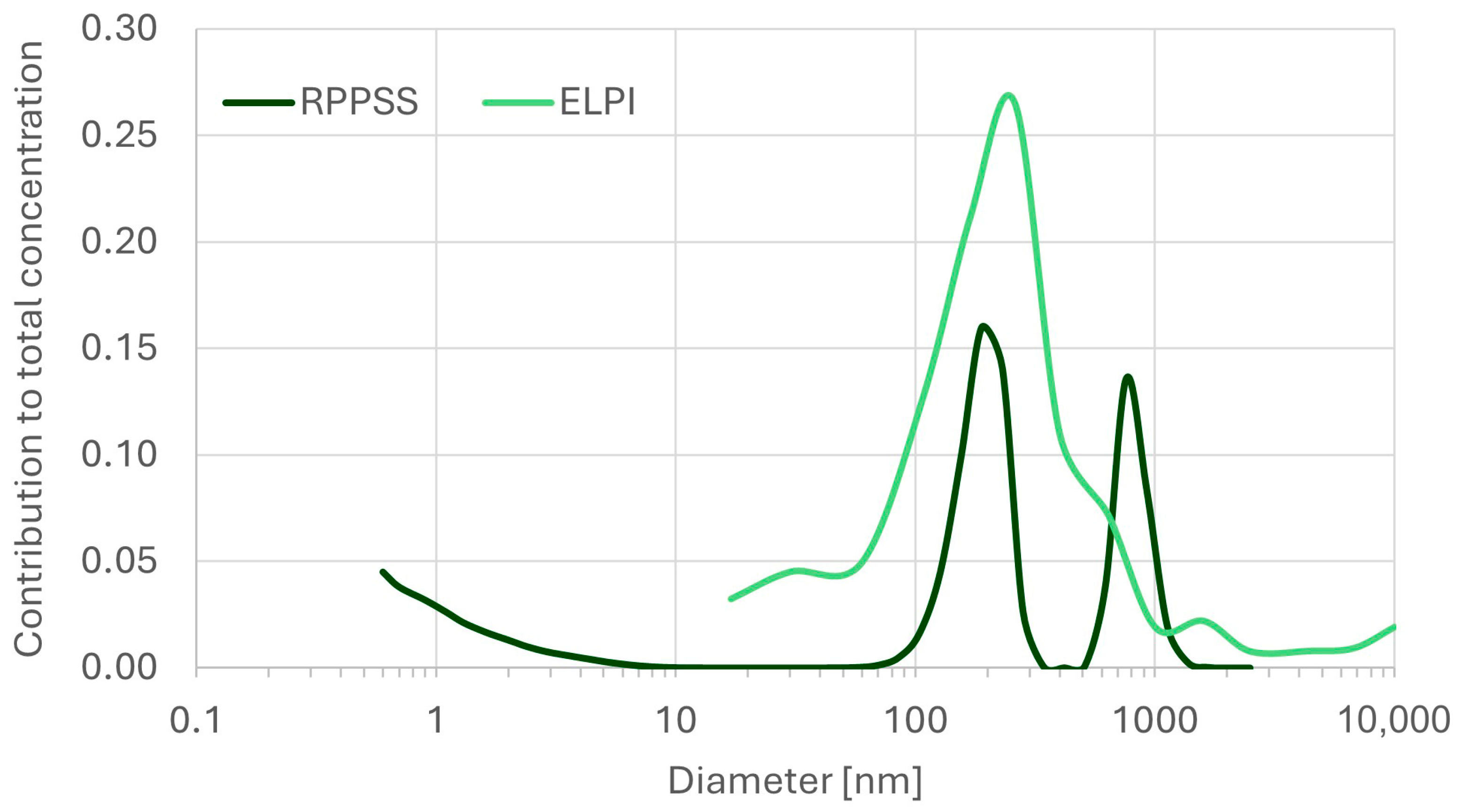
Figure 10 and Figure 11 compare results obtained by two methods (ELPI+ and RPPSS) in Site 8 (geological chamber) and Site 7 (blind corridor). A convergence was observed between the results obtained for the different techniques. Relatively higher concentrations of radioactive aerosols were observed at Site 7. The main size mode of about 200 nm is the same for both the measuring methods. Due to the low concentration of 222Rn activity and aerosol particles, the peaks of smaller and higher particles of more than 200 nm could be the result of background disturbance.
Figure 10.
Comparison of radioactive aerosol size distribution for ELPI+ and RPPSS (Twomey) in Site 8. Measurements performed on 25 April 2022.
Figure 11.
Comparison of radioactive aerosol size distribution for ELPI+ and RPPSS in Site 7. Measurements performed 26 April 2022.
The aerosol size distribution results confirm that the underground environment at Książ Castle is dominated by the PM1 fraction, with typical particle sizes in the 0.1–0.4 µm range. These values agree with findings from similar studies in subterranean tourist routes and caves, where ultrafine particles constitute the main carrier of radon progeny. Although such small aerosols can penetrate deeply into the respiratory system, the overall particle concentration was low, reflecting the absence of dust or industrial pollution sources.
3.6. Dose Assessments from Different Countries
The average EEAC from two days of measurements was used for the dose calculations (49.1 Bq/m3). The obtained results are presented in Table 4. The values range from 0.015 mSv to 0.401 mSv.
Table 4.
Annual effective dose calculated for workers (tourist-route staff), based on different approaches.
A key component of the study was the comparison of effective dose assessment methods based on the regulatory frameworks in Poland and the Czech Republic. Despite differences in the formal approach—Poland relying on PAEC and the Czech Republic on EEAC—the resulting annual effective doses for workers were consistently low, ranging from 0.003 to 0.101 mSv (Poland) and 0.015 to 0.435 mSv (Czech Republic). Even the highest calculated doses remain far below the 1 mSv/year limit for the general population and well below occupational limits for exposed workers. It also indicates that naturally ventilated underground workplaces can meet radiological protection standards without the need for energy-intensive ventilation systems.
The study’s findings contribute to ongoing discussions about radon risk management in underground cultural heritage sites. The results support the view that passive ventilation solutions—when carefully adapted to local geology, tunnel geometry and atmospheric conditions—can provide adequate radiological protection while minimising environmental footprint and operating costs. The study also underscores the importance of periodic monitoring, as seasonal variations and site-specific airflow dynamics may evolve over time.
Some limitations should be acknowledged. The short-term measurements of PAEC, EEAC and aerosol distributions were conducted during the spring period, which is not representative of the full annual cycle. Although long-term data were collected for radon concentration, a more extensive seasonal dataset for progeny and aerosol parameters would strengthen future exposure assessments. Additionally, the complex geological heterogeneity of the Świebodzice Unit may influence radon exhalation in ways that were not captured by the limited number of measurement sites. Nevertheless, the present study offers the most complete radiological characterisation of this facility to date. Overall, the results confirm that the underground tourist route at Książ Castle poses a low radiological risk to staff and visitors. The effectiveness of the gravity ventilation system, the low concentration of airborne particles and radon progeny, and the low calculated effective doses together support the continued safe operation of the site without the need for additional mitigation measures.
4. Conclusions
In most cases, the measured 222Rn activity concentrations did not exceed 300 Bq/m3; only slightly higher concentrations were recorded in the summer. No spatial variability was observed in the studied points in the underground route. A conformity between the readings of the AlphaGuard meters of the Central Mining Institute and the National Institute for Nuclear, Chemical and Biological Protection was observed. A conformity of the results between the equilibrium equivalent activity concentration and the potential alpha energy concentration measured using different methods was also demonstrated.
The size distribution of radioactive and ambient aerosols was examined. The obtained distributions indicate that the main share of aerosols in the underground tourist route air is the PM1 fraction (particles with a diameter of less than 1 µm) and the main size mode is between 0.1 and 0.2 µm. Aerosols of this diameter can easily penetrate the lower respiratory tract, and alpha particles emitted by 222Rn decay products can deposit their energy inside, causing damage. The measured unattached fraction fp (0.12) conformed very well with the values recommended by ICRP for caves.
Annual effective doses for employees were determined based on the provided work time. The results obtained do not exceed 1 mSv (permissible dose for the general population), regardless of the adopted conversion factors. The route is well-ventilated, and there is no need to introduce additional measures to limit the exposure to 222Rn and its decay products. Moreover, the measurements used to calculate the doses were taken at the beginning of the warm season. Taking into account the appropriate correction factors would not increase the calculated doses because lower 222Rn concentrations are recorded during winter.
This study is situated within the context of sustainable development, and its findings directly contribute to the United Nations Sustainable Development Goals (SDGs). The assessment of occupational exposure and the confirmation of a low radiological risk for workers on the underground tourist route can be considered a contribution to SDG 3 (Good Health and Well-being) and SDG 8 (Decent Work and Economic Growth) by ensuring safe working conditions in the tourism sector. The demonstrated effectiveness of gravity ventilation as a low-cost and energy-efficient solution also represents a significant contribution to SDG 11 (Sustainable Cities and Communities), supporting the sustainable management of cultural heritage.
Author Contributions
All authors contributed to the study conception and design. Material preparation, data collection and analysis were performed by K.W., A.G., K.S., E.F., P.P.S.O., Z.P. and D.E.T.-T. The first draft of the manuscript was written by K.W., A.G., K.S., E.F., P.P.S.O., Z.P., D.E.T.-T. and M.S.-S. and all authors commented on previous versions of the manuscript. All authors have read and agreed to the published version of the manuscript.
Funding
This work was supported by the European project RadoNorm. This project has received funding from the Euratom Research and Training Programme 2019–2020 under grant agreement No. 900009 and the Programme of the Polish Minister of Science and Higher Education “PMW” (International Co-funded Projects) under grant agreement No. 5156/H2020-Euratom/2020/2021/2.
Institutional Review Board Statement
Not applicable.
Informed Consent Statement
Not applicable.
Data Availability Statement
The original contributions presented in this study are included in the article; further inquiries can be directed to the corresponding author.
Conflicts of Interest
The authors declare no conflicts of interest.
References
- Oberc, J. The Pre-Assyntian and Assyntian (Baikalian) Elements in South-Western Poland. In Geology of Poland; Książkiewicz, M., Oberc, J., Pożaryski, W., Eds.; Wydawnictwa Geologiczne: Warszawa, Poland, 1978; pp. 99–173. [Google Scholar]
- Nemec, W.; Porębski, S.J.; Steel, R.J. Texture and structure of resedimented conglomerates: Examples from the Książ Formation (Famennian-Tournaisian), south-western Poland. Sedimentology 1980, 27, 519–538. [Google Scholar] [CrossRef] [Scilit]
- Żelaźniewicz, A.; Aleksandrowski, P. Tectonic subdivision of Poland: Southwestern Poland. Przegl. Geol. 2008, 56, 904–911, (In Polisho in the Content). [Google Scholar]
- Kasza, D.; Kaczorowski, M.; Zdunek, R.; Wronowski, R. The damages of Ksiaz castle architecture in relation to routes of recognized tectonic faults and indications of recent tectonic activity of Swiebodzice Depression Orogen—Central Sudetes, SW Poland. Acta Geodyn. Geomater. 2014, 11, 225–234. [Google Scholar] [CrossRef] [Scilit]
- Kasza, D.; Kowalski, A.; Wojewoda, J.; Kaczorowski, M. Indicators of recent geodynamic activity in the Książ Castle area (Świebodzice Unit, Sudetes) in the light of structural analysis and geodetic measurements. E3S Web Conf. 2018, 29, 00021. [Google Scholar] [CrossRef] [Scilit]
- Teisseyre, H. The geological structure of Świebodzice Depression. Ann. Soc. Geol. Pol. 1951, 21, 380–386. (In Polish) [Google Scholar]
- Teisseyre, H.; Gawroński, O. Świebodzice Sheet—Geological Detailed Map of Sudetes on Scale 1:25,000; Państwowy Instytut Geologiczny: Warszawa, Poland, 1965. [Google Scholar]
- Štepančiíová, P.; Hók, J.; Nývlt, D.; Dohnal, J.; Sýkorová, I.; Stemberk, J. Active tectonics research using trenching technique on the south-eastern section of the Sudetic Marginal Fault (NE Bohemian Massif, central Europe). Tectonophysics 2010, 485, 269–282. [Google Scholar] [CrossRef] [Scilit]
- Kaczorowski, M.; Wojewoda, J. Neotectonic activity interpreted from a long water-tube tiltmeter record at the SRC Geodynamic Laboratory in Książ, Central Sudetes, SW Poland. Acta Geodyn. Geomater. 2011, 8, 249–261. [Google Scholar]
- Kaczorowski, M.; Kasza, D.; Zdunek, R.; Wronowski, R. Time Distribution of Strong Seismic Events in the Fore-Sudetic Monocline in Context of Signals Registered by Water-Tube Gauges in Książ Geodynamic Laboratory. Sensors 2021, 21, 1603. [Google Scholar] [CrossRef] [Scilit] [PubMed]
- Fijałkowska-Lichwa, L.; Przylibski, T.A. Assessment of occupational exposure from radon in the newly formed underground tourist route under Książ castle, Poland. Radiat. Environ. Biophys. 2021, 60, 329–345. [Google Scholar] [CrossRef] [Scilit] [PubMed]
- Hadler, N.J.C.; Iunes, P.J.; Osorio, A.A.M.; Paulo, S.R. Relationship between track size and energy for alpha particles in CR-39. Int. J. Radiat. Appl. Instrum. Part D Nucl. Tracks Radiat. Meas. 1991, 19, 313–318. [Google Scholar] [CrossRef] [Scilit]
- Skubacz, K.; Bywalec, T. Monitoring of short-lived radon progeny in mines. Radiat. Prot. Dosim. 2003, 103, 241–246. [Google Scholar] [CrossRef] [Scilit] [PubMed]
- Chałupnik, S.; Skubacz, K.; Grygier, A.; Nowak, S. Application of TLD devices for radon and thoron PAEC measurements in the air is the concept of “total PAEC” useful? J. Environ. Radioact. 2021, 234, 106616. [Google Scholar] [CrossRef] [Scilit] [PubMed]
- Chałupnik, S.; Meisenberg, O.; Bi, L.; Wang, J.; Skubacz, K.; Tschiersch, J. Application of LSC and TLD methods for the measurement of radon and thoron decay products in air. Radiat. Prot. Dosim. 2010, 141, 390–394. [Google Scholar] [CrossRef] [Scilit] [PubMed]
- Thomas, J.W. Modification of the Tsivoglou method for radon daughters in air. Health Phys. 1970, 19, 691. [Google Scholar] [PubMed]
- Raabe, O.G.; Patterson, F.S. A Method of Analysis of Air Sampling Data for Particulate Alpha Emitters in a Radon-Thoron Atmosphere; University of Rochester: New York, NY, USA, 1965. [Google Scholar]
- Burian, I. Metody zjištění objemových aktivit dceřiných produktů 222Rn. Rádioakt. Zivotn. Prostr. 1988, 11, 223–237. [Google Scholar]
- Dekati Ltd. ELPI+ Brochure. 2022. Available online: https://www.dekati.com/wp-content/uploads/dekati_elpi_brochure.pdf (accessed on 13 December 2025).
- Ordinance of the Council of Ministers of 11 August 2021 on Indicators Enabling the Determination of Ionizing Radiation Doses Used When Assessing Exposure to Ionizing Radiation (Polish Title: Rozporządzenie Rady Ministrów z Dnia 11 Sierpnia 2021 r. w Sprawie Wskazników Pozwalajacych na Wyznaczenie Dawek Promieniowania Jonizujacego Stosowanych Przy Ocenie Narazenia na Promieniowanie Jonizujace). Polish Journal of Acts of 2021, No. 1657; Warsaw, Poland. Available online: https://isap.sejm.gov.pl/isap.nsf/DocDetails.xsp?id=WDU20210001657 (accessed on 13 December 2025).
- International Commission on Radiological Protection [ICRP]. Occupational intakes of radionuclides, part 3. In Annals of the ICRP; ICRP publication 137; International Commission on Radiological Protection: Ottawa, ON, Canada, 2017. [Google Scholar]









Disclaimer/Publisher’s Note: The statements, opinions and data contained in all publications are solely those of the individual author(s) and contributor(s) and not of MDPI and/or the editor(s). MDPI and/or the editor(s) disclaim responsibility for any injury to people or property resulting from any ideas, methods, instructions or products referred to in the content. |
© 2026 by the authors. Licensee MDPI, Basel, Switzerland. This article is an open access article distributed under the terms and conditions of the Creative Commons Attribution (CC BY) license.