Towards Sustainable Heritage Conservation: A Hybrid Landslide Susceptibility Mapping Framework in Japan’s UNESCO Mountain Villages



Abstract
1. Introduction
1.1. Background and Recent Advances in LSM
1.2. Challenges in ML-Based LSM
2. Materials and Methods
2.1. Study Area
2.2. Landslide Inventory
2.3. Data Acquisition
2.3.1. Topographic Factors
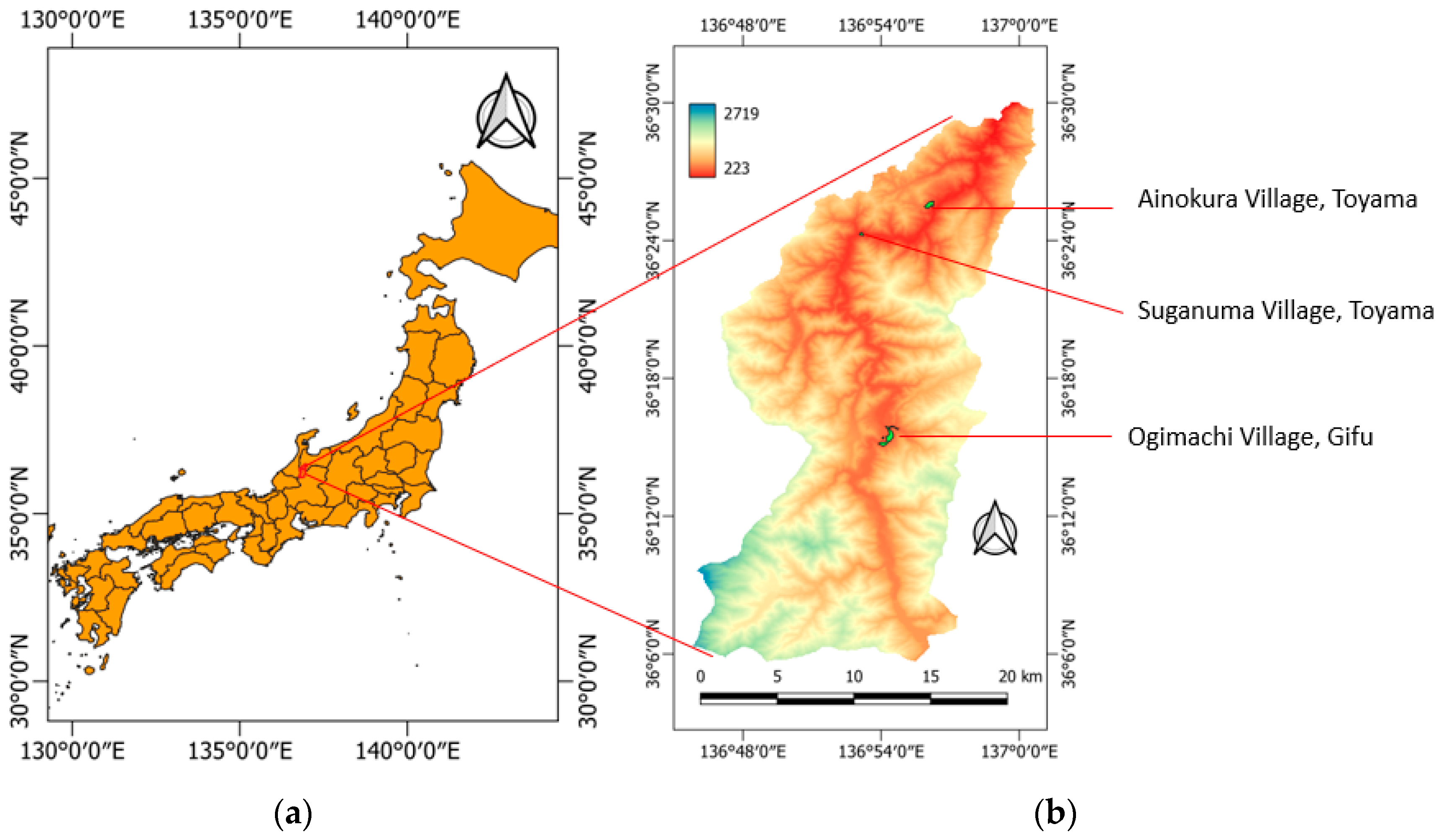
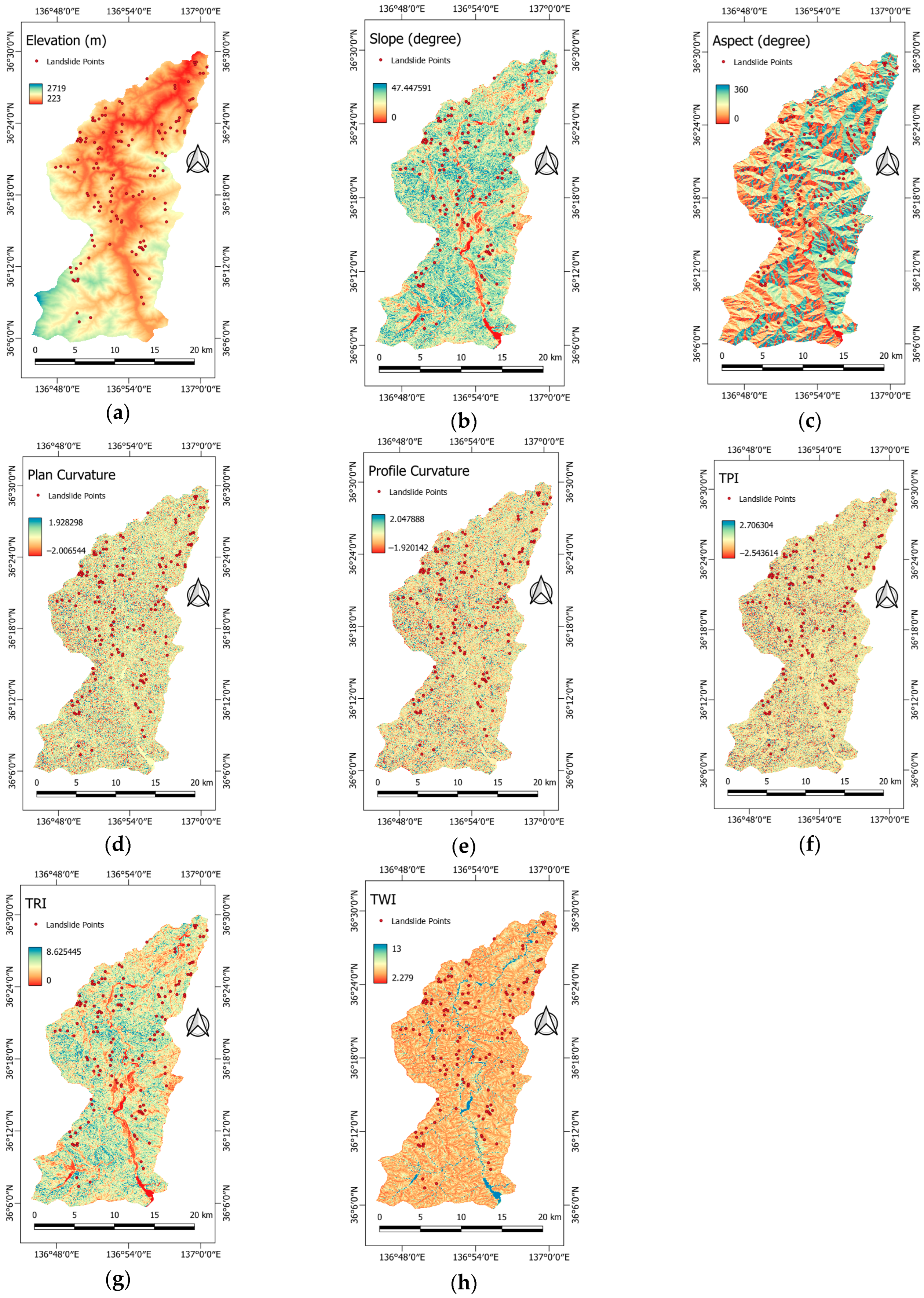
- Elevation allows for the calculation of potential energy along the slope. The increase in elevation correlates generally with mass movement potential. The elevations of the study area range from 223 to 2719 m above sea level (Figure 6a).
- Slope Height is estimated as the difference between the maximum and minimum elevations in each slope unit (). This is a metric that is particularly useful in assessing landslide magnitude [46].
- Profile Curvature represents the curvature along a vertical slice of the terrain, as it influences the acceleration of flowing surface water. The upwardly concave slope is reflected by positive values, while negative values relate to convex surfaces and zero relates to flat terrain [48] (Figure 6e).
- Topographic Position Index (TPI) defines the relative position of a particular cell based on the comparison of its elevation with the average elevation of neighboring cells.
- Topographic Wetness Index (TWI) is a measure of the effect of topography on soil moisture accumulation, a key factor for landslide initiation (Figure 6h). It is calculated as follows:
2.3.2. Soil-Related Factors
2.3.3. Geological and Seismic Factors
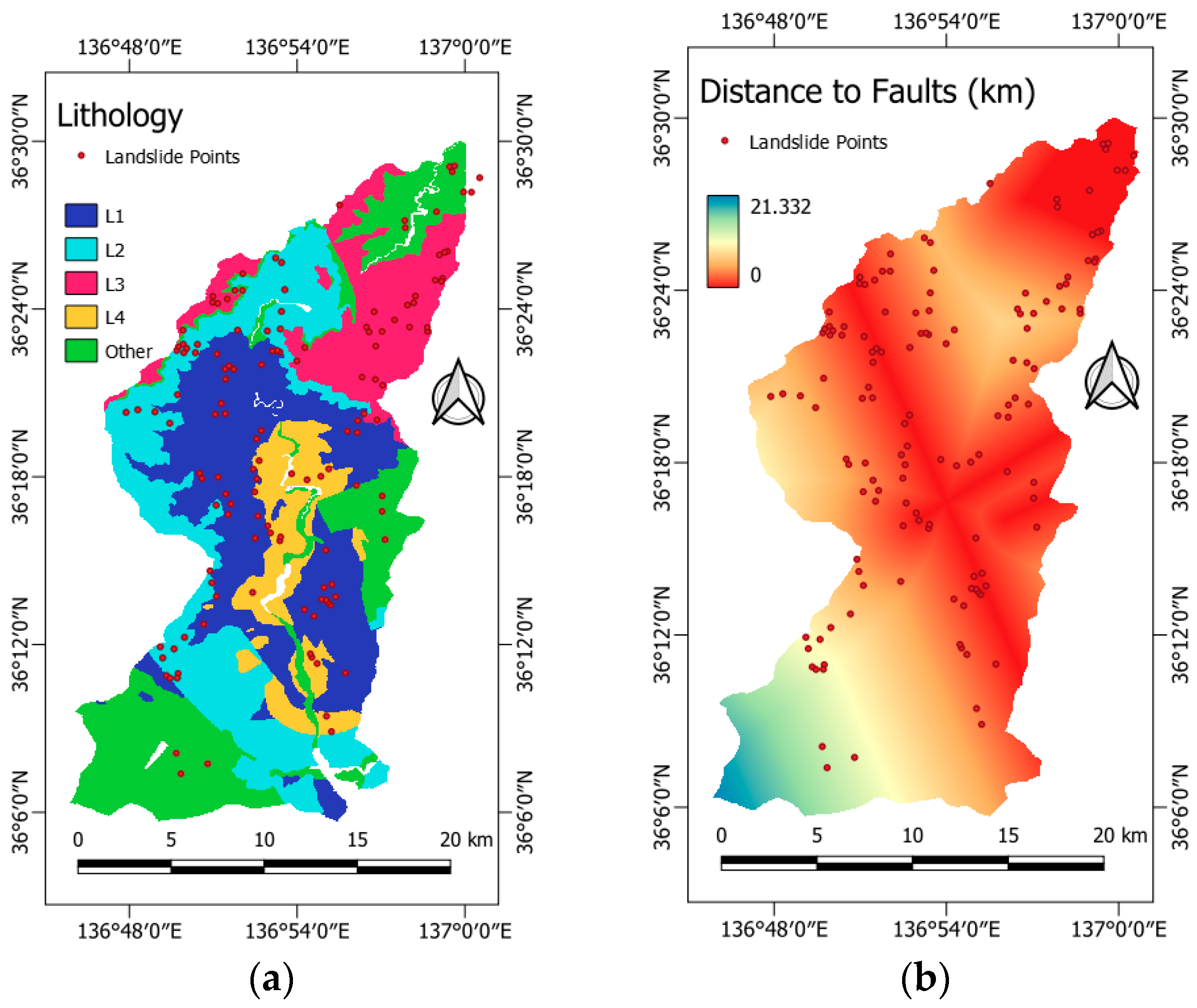
- Lithology is a key element affecting landslide susceptibility by Reflecting the strength and weathering behavior of rocks. Variations in lithological and structural composition result in significant differences in the strength of rocks and soils [52]. In this research, a seamless geological map from the Geological Survey of Japan (Figure 8a) was rasterized at the same resolution as DEM (12.5 m). The dominant lithological units include the igneous rocks listed in Table 2. These geological formations control the mechanical properties of the ground, which control the spatial pattern and frequency of landslides.Table 2. Main lithologies in the study area and their formation era [53].Table 2. Main lithologies in the study area and their formation era [53].
Symbol Formation Era Lithology L1 Mesozoic Era Late Cretaceous Campanian to Maastrichtian Dacite–rhyolite (Large-scale pyroclastic flow) L2 Cenozoic Era Paleogene Paleocene Danian to Eocene Yaplesian Dacite–rhyolite (Lava and pyroclastic rock) L3 Cenozoic Era Neogene Miocene Burdigalian to Early Rangian Andesite–basaltic andesite (lava and pyroclastic rock) L4 Cenozoic Era Paleogene Paleocene Danian to Eocene Yaplesian Granite (Massive)

- Distance to Faults is another important geological factor that controls landslide susceptibility. Areas close to active faults generally have rock strength considerably weakened, which increases the possibility of landslide events. Therefore, distance to lines of fault become a very significant factor in LSM [54]. Fault data were obtained from the Geological Survey of Japan. Line faults in the area include the Atotsugawa, Kokufu, Ushikubi, and Shokawa fault zones, and area faults include the eastern part of the Tonami-heiya/Kurehayama fault zone and the Morimoto-Togashi fault zone [28]. A distance raster with a resolution of 12.5 m was generated to quantify proximity to these faults (Figure 8b).
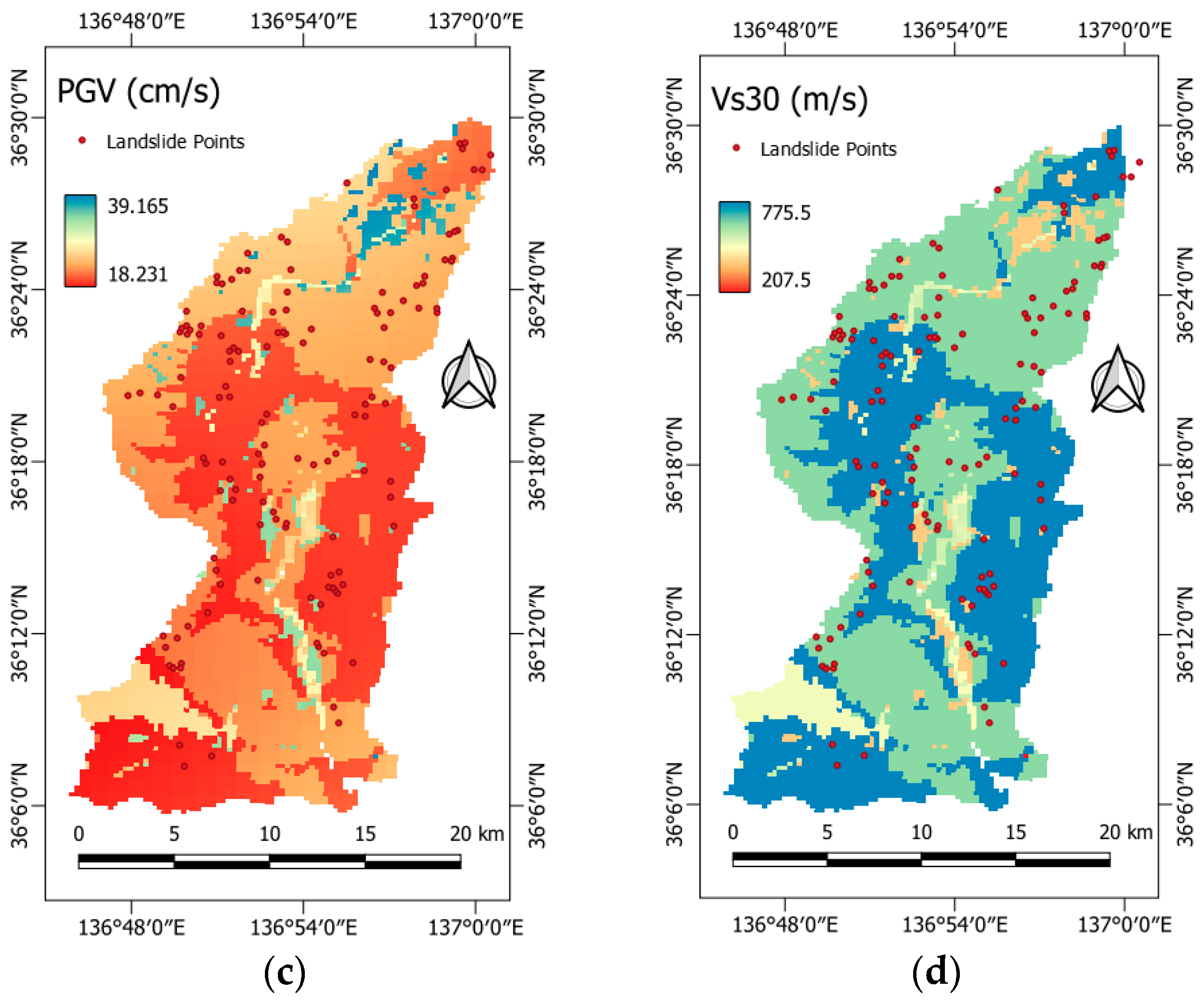
- Peak Ground Velocity (PGV) is an important seismic parameter quantifying the intensity of an earthquake and has been illustrated to be closely related to landslide initiation. In the study of Liu et al. [55], PGV was among the most important predictors in LSM. The PGV dataset was obtained from the Japan Seismic Hazard Information Station (Figure 8c).
- Shear-Wave Velocity (Vs30) is used to estimate the local site amplification for the top 30 m of material during seismic shaking and is one of the most widely accepted parameters in seismic hazard analysis. It represents the shear modulus and elastic properties of near-surface materials [56]. Vs30 data was obtained from the Japan Seismic Hazard Information Station in a 250 m resolution raster format (Figure 8d).
2.3.4. Hydrological Factors
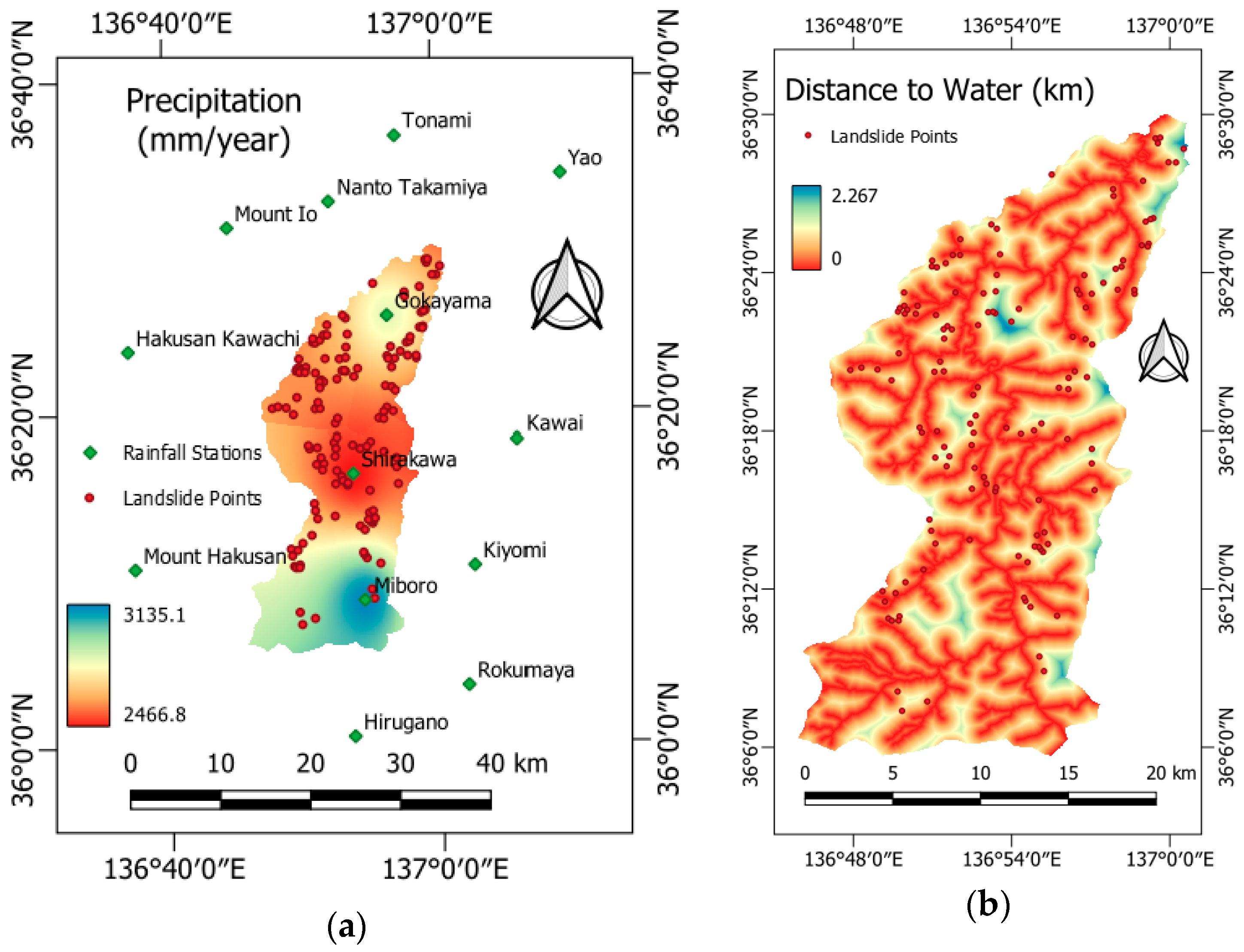
- Precipitation (Annual) is a primary contributing factor to landslides because it increases the level of soil moisture, which decreases shear strength and increases slope instability [57]. This study adopted average annual rainfall data from 2000 to 2024 from 13 meteorological stations operated by the Japan Meteorological Agency, following [57], which used average 10-year precipitation for LSM. The utilization of ground-based observation overcomes the limitation raised by Allam et al. [58], who asserted that the basis of hazard studies on remote sensing data solely without considering gauge station records may limit the accuracy of the precipitation data used in hazard assessments. The presented station records (Table 3) were used to form a precipitation map in a 12.5 m resolution through the application of the Inverse Distance Weighted (IDW) interpolation technique. The annual rainfall in the investigation area falls in a range between 2466 and 3135 mm (Figure 9a).Future rainfall was modeled using a seasonal AutoRegressive Integrated Moving Average (ARIMA) approach to enable temporal transfer of landslide susceptibility. Monthly precipitation records from 2000–2024 were analyzed for each meteorological station using the pmdarima python library [59]. Seasonality was represented with a 12-month period, while the orders of non-seasonal and seasonal differencing were determined automatically using the KPSS and OCSB tests. Model orders were identified through a grid search over non-seasonal (p,q ≤ 4) and seasonal terms (P,Q ≤ 3) [60]. The last two years (24 months) were reserved for validation, and the optimal model for generating future rainfall projections was selected based on parameters configuration that minimizes the mean absolute error (MAE) of the validation set.Following model selection process, the final ARIMA configuration was applied to the complete 2000–2024 rainfall dataset to generate future rainfall projections. The monthly rainfall estimates for the target year (2035) were summed to calculate the total annual precipitation, then they were spatially interpolated using IDW, and the mean projected rainfall was extracted for each slope unit. These future rainfall values (instead of historical precipitation values) with other conditioning factors were used to estimate future landslide susceptibility [61,62].
- Distance to Water is another important factor that affects landslide occurrence [19]. Proximity to water bodies tends to lead to increased surface erosion and soil moisture, reduction in soil cohesion, and thereby increased likelihood of slope instability. Water bodies, including rivers, streams, canals, and ditches, were mapped in vector format, and a corresponding 12.5 m resolution distance-to-water raster was derived (Figure 9b).

| Station | Latitude | Longitude | Average Annual Precipitation (2000–2024) “mm/Year” | Projected Precipitation (2035) |
|---|---|---|---|---|
| Shirakawa | 36.27333 | 136.8967 | 2466.78 | 2458.5 |
| Miboro | 36.14667 | 136.9083 | 3135.06 | 3143.9 |
| Kawai | 36.305 | 137.1 | 2038.06 | 2045.4 |
| Kiyomi | 36.18 | 137.045 | 2355.16 | 2337.6 |
| Hakusan Kawachi | 36.39667 | 136.62 | 2934.34 | 2968.1 |
| Mount Hakusan | 36.18 | 136.625 | 2956.04 | 2965.7 |
| Mount Io | 36.52 | 136.745 | 2235.68 | 2719.4 |
| Hirugano | 36.01 | 136.8933 | 3398.96 | 3455.2 |
| Rokumaya | 36.06 | 137.035 | 2555.80 | 2599.3 |
| Gokayama | 36.43 | 136.9417 | 2837.80 | 2974.1 |
| Nanto Takamiya | 36.545 | 136.8717 | 2645.92 | 2650.5 |
| Tonami | 36.61 | 136.955 | 2218.16 | 2280.2 |
| Yao | 36.57 | 137.1583 | 2611.56 | 2609.2 |
2.3.5. Land Cover and Anthropogenic Factors
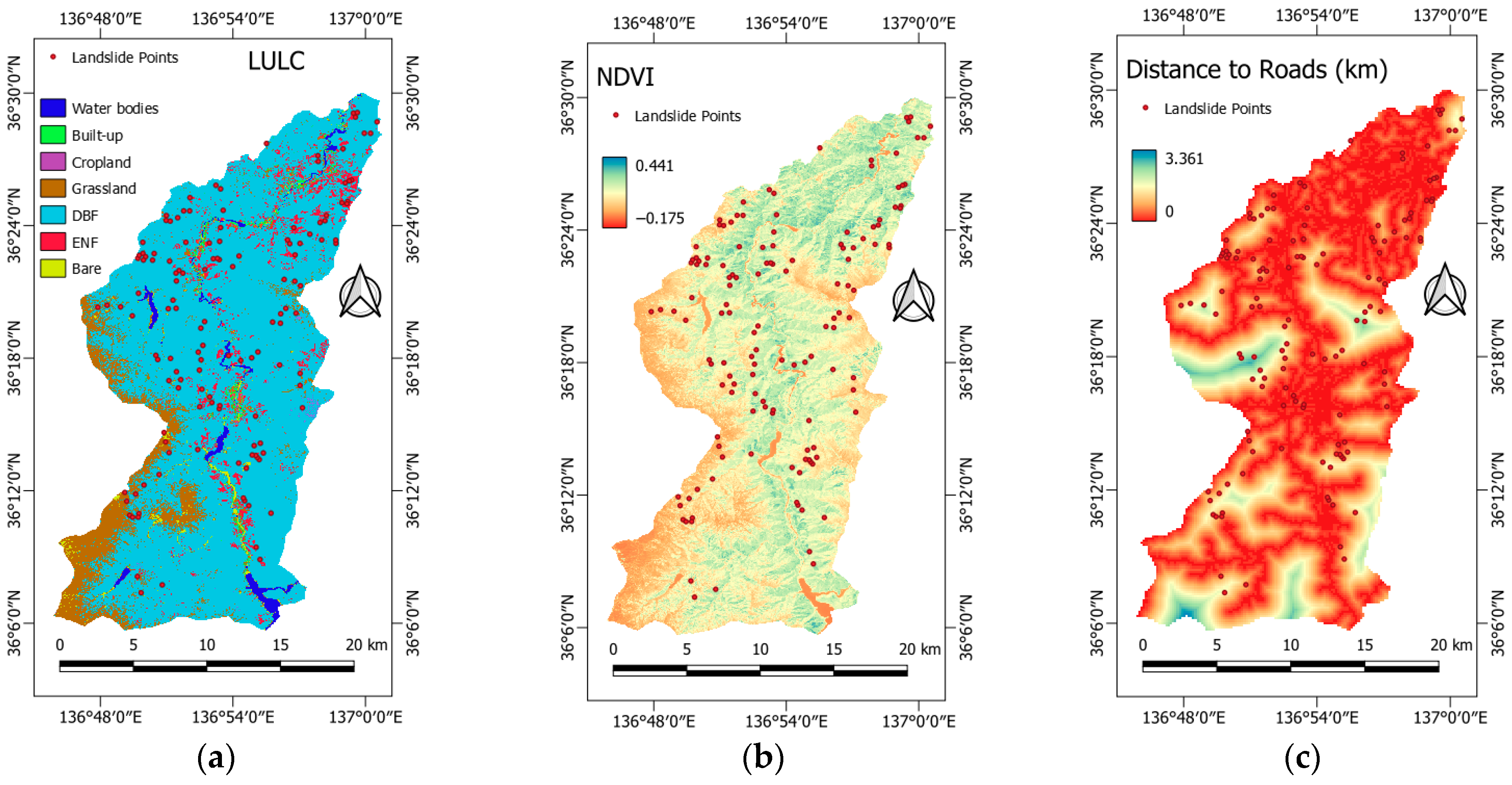
- Land Use/Land Cover (LULC) maps classify the Earth’s surface based on physical features such as forests, croplands, lakes, and wetlands. Land cover is considered as a tool to evaluate the influence of human activities on landslide initiation [63]. In this study, land cover classification was derived from ALOS-JAXA data, revealing that the majority of the investigated area is occupied by deciduous broadleaf forest (DBF) then by grassland and evergreen needleleaf forest (ENF) (Figure 10a).
- Normalized Difference Vegetation Index (NDVI) is a frequently utilized parameter to assess vegetation density (Figure 10b). High vegetation would decrease erosion, hold soil by means of rooting systems, and increase stability on slopes [63,64]. NDVI was estimated from Landsat 8 satellite imagery with the formula: NDVI = (IR − R)/(IR + R), where IR is the infrared band and R is the red band [65].
2.4. Enhanced Slope Units Delineation
2.5. Sample Selection Strategies
2.5.1. Buffer Method (500 m Buffer from Landslides)
2.5.2. Physically Based Method with Monte Carlo Simulation
2.6. Machine Learning Models
2.6.1. Data Preprocessing
2.6.2. Dataset Splitting
2.6.3. Feature Selection and Importance
2.6.4. Spatial Cross-Validation Strategy
2.6.5. Model Training and Hyperparameter Optimization
2.6.6. Performance Evaluation
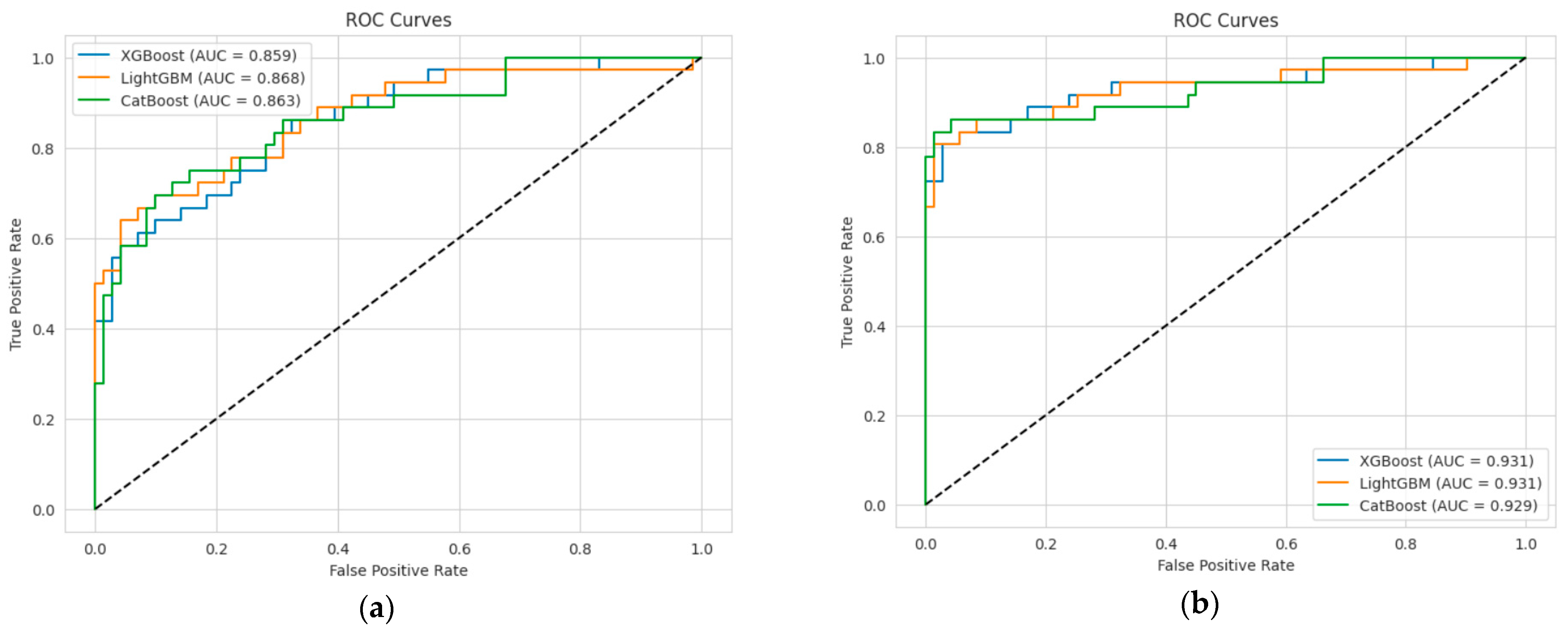
- Area Under the Receiver Operating Characteristic Curve (AUC): This is a basic measure representing the overall classification power of the model. The higher the value of AUC, the greater the reliability and predictive power of the model.
- Accuracy: It is the ratio of correctly identified landslide and non-landslide cases to the total count of instances.
- Precision and Recall (Sensitivity): Precision represents the ratio of true positive predictions to all predicted positives, whereas recall (or sensitivity) indicates the ratio of true positives to the total number of actual positives.
- F1-Score: The harmonic mean of precision and recall, offering a balanced measure of model performance.
2.6.7. Susceptibility Scores Prediction
3. Results
3.1. Slope Unit Generation
3.2. Feature Selection and Importance
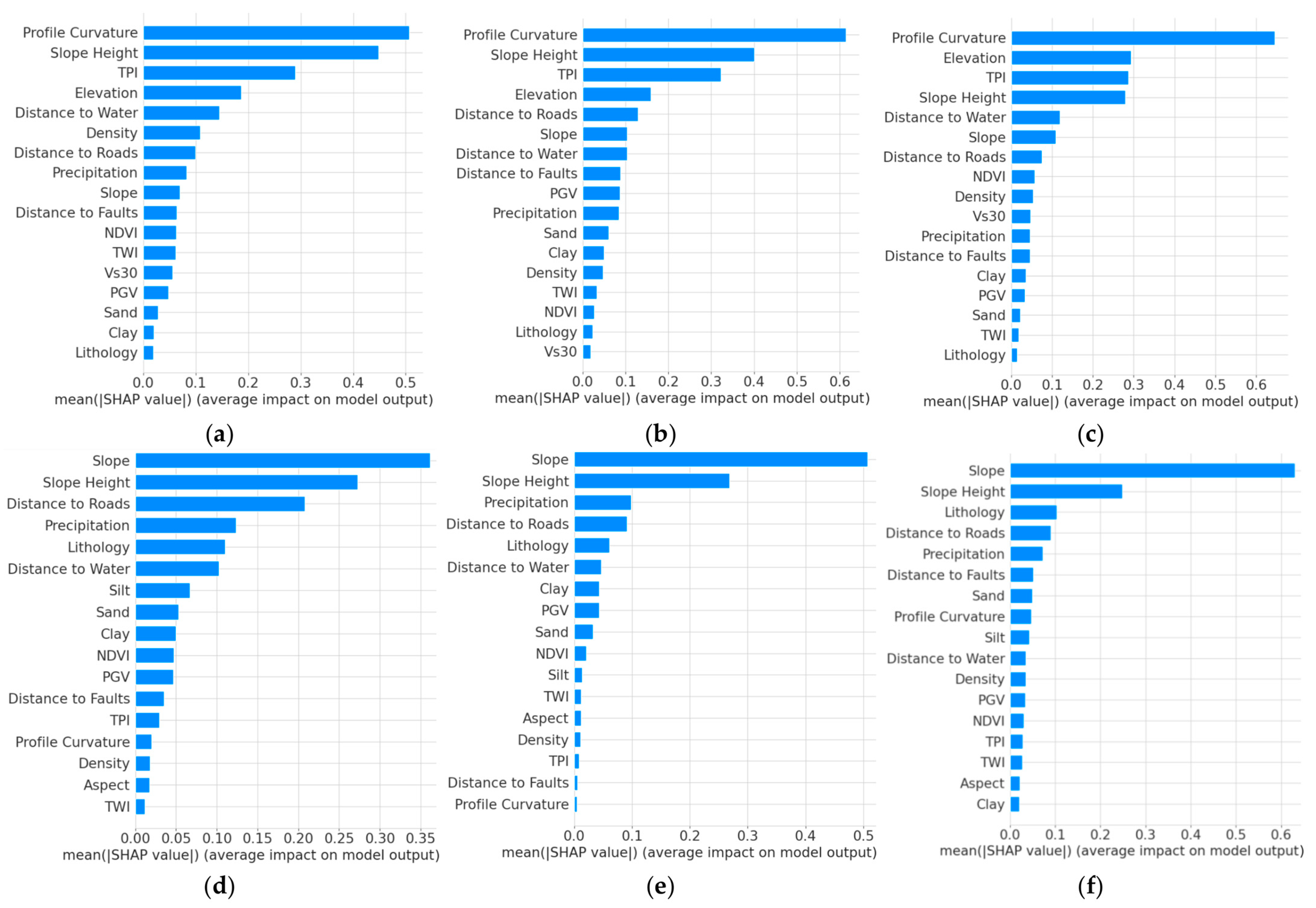
- Buffer-Based Strategy: SHAP plots reveal that the most influential features across all three models are profile curvature, slope height, elevation, and TPI.
- Physics-Based Strategy: Common dominant features across the models include slope angle, slope height, precipitation, lithology, and distance to roads, while the hybrid approach also highlights the enhanced importance of soil-related parameters such as clay, silt, and sand proportions.
3.3. Model Performance
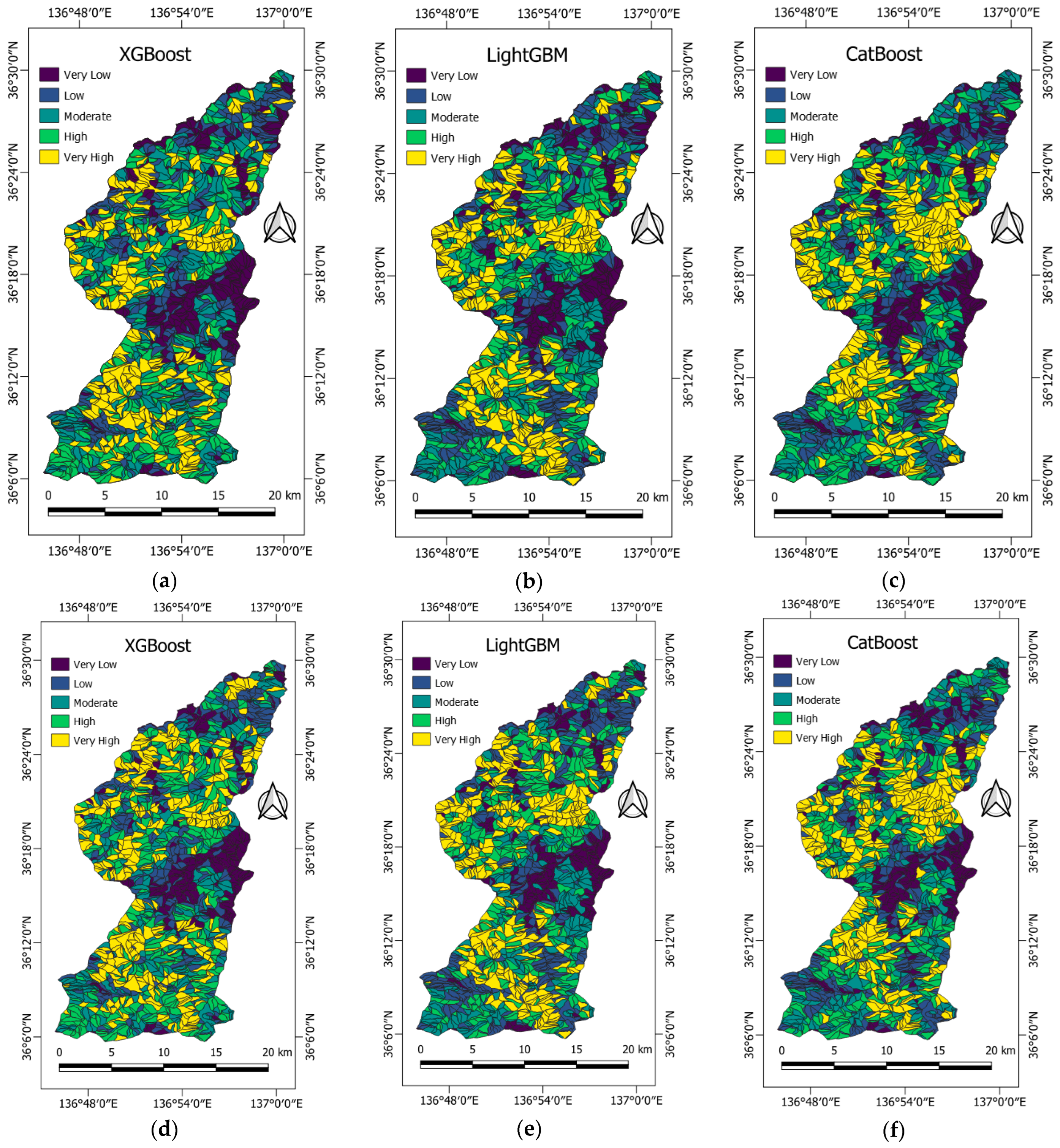
3.4. Susceptibility Mapping
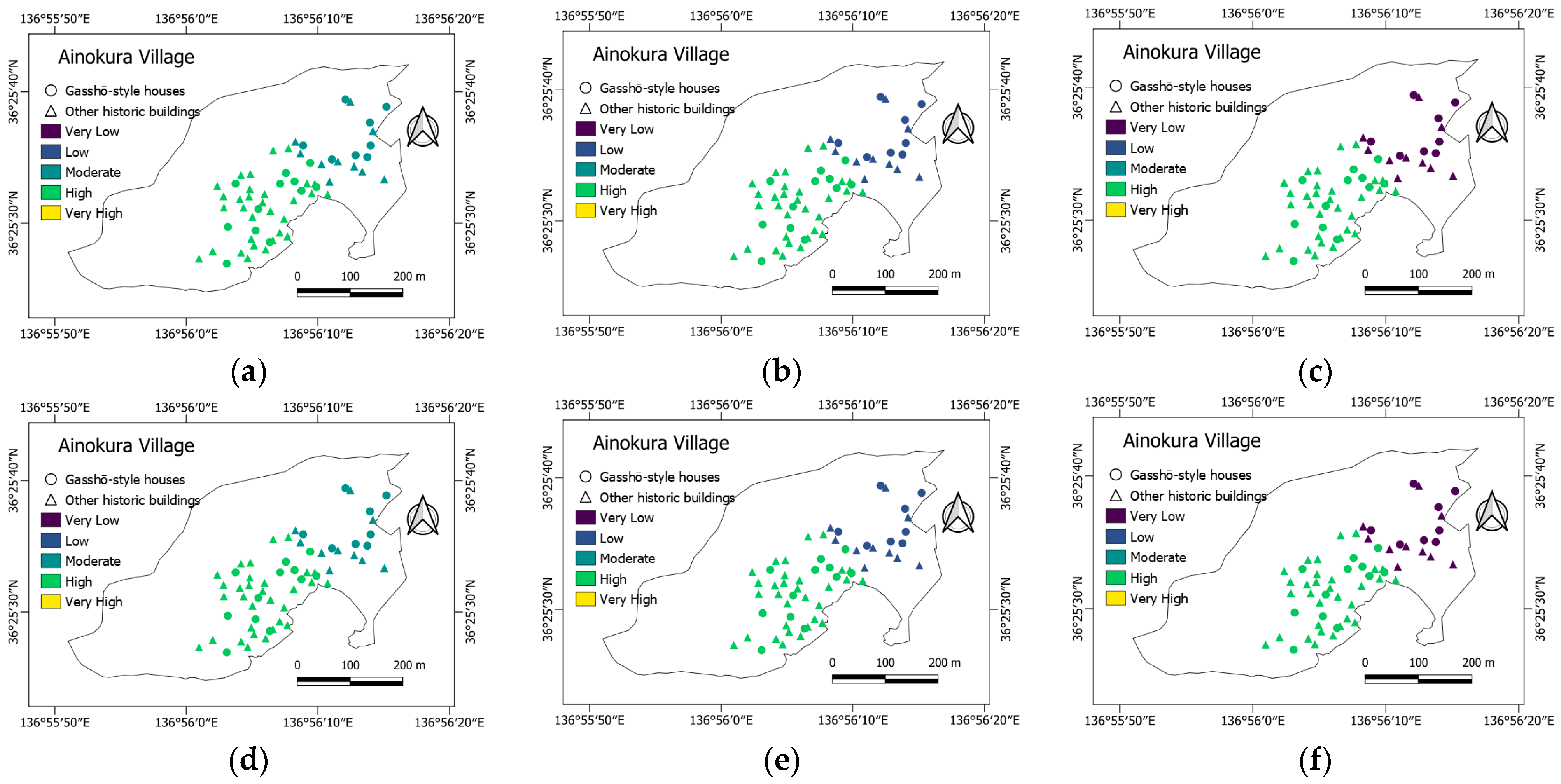
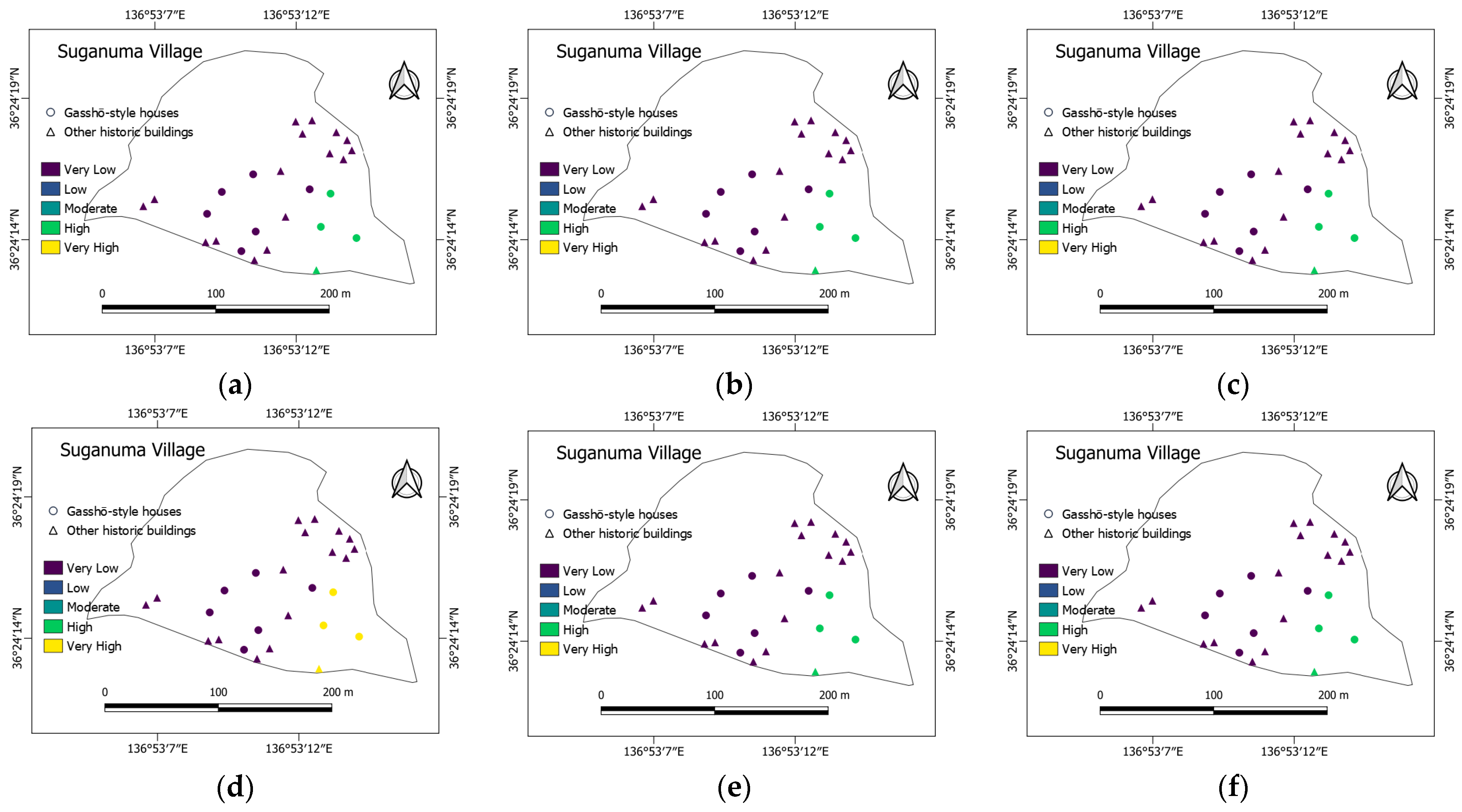
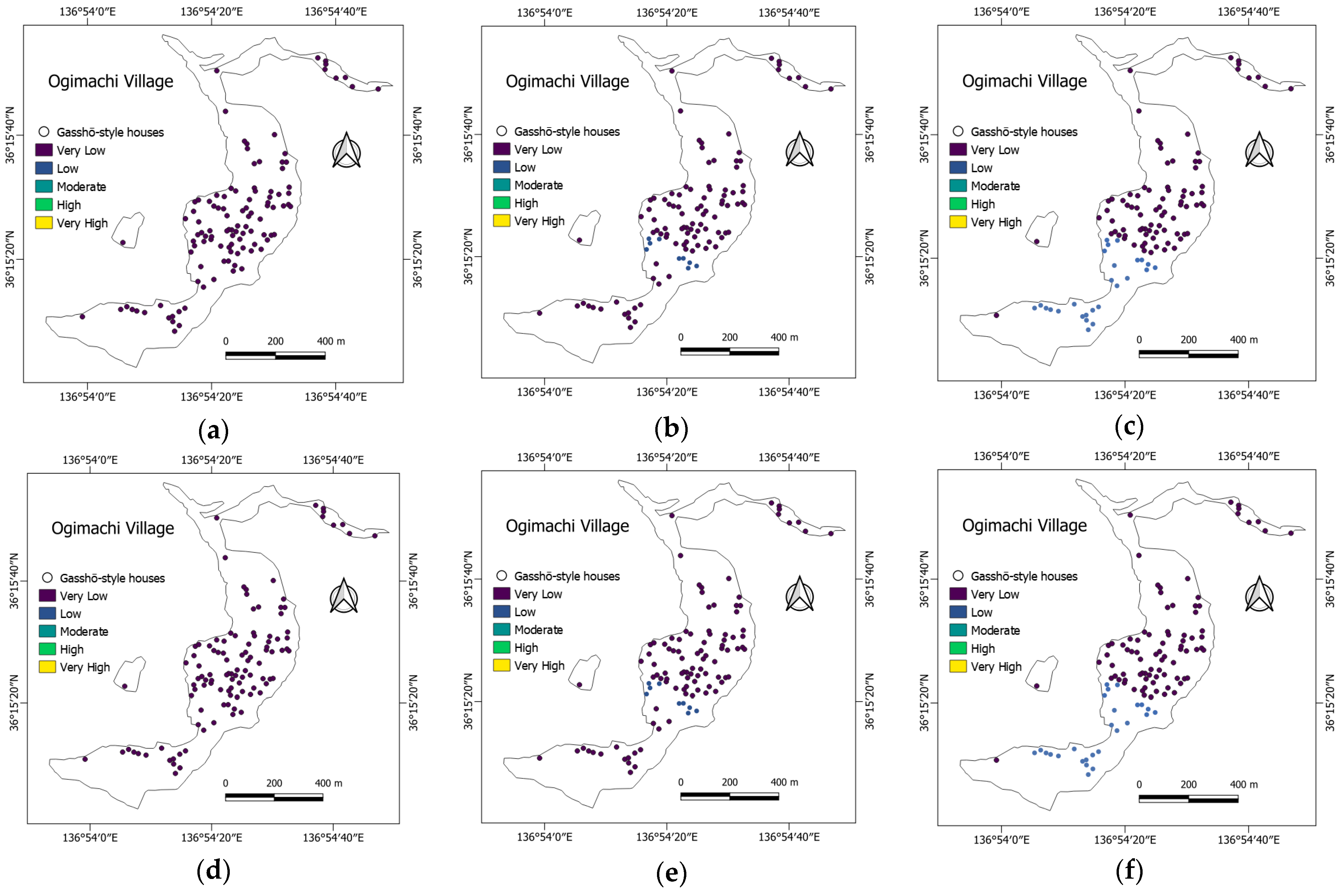
3.5. Distribution of Gasshō-Style and Other Historic Buildings Across Susceptibility Classes
4. Discussion
4.1. Impact of Slope Unit Optimization
4.2. Effect of Negative Sample Selection Strategy
- XGBoost increased from 0.859 to 0.931, which is 0.072 higher.
- LightGBM went from 0.868 to 0.931, a gain of 0.063.
- CatBoost improved from 0.863 to 0.929, an increase of 0.066.
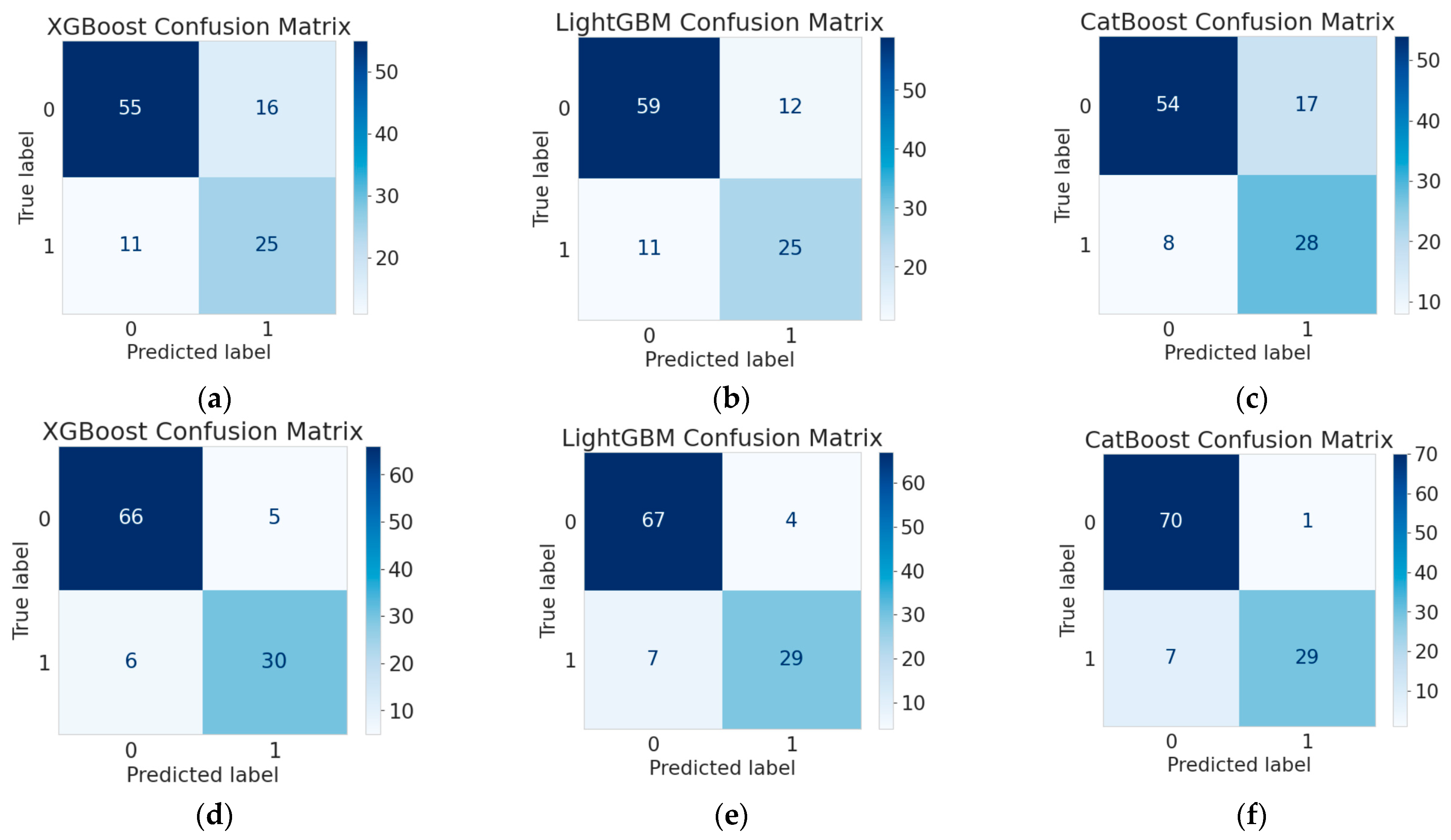
- Accuracy for CatBoost increased from 0.766 to 0.925, precision from 0.622 to 0.967, recall from 0.778 to 0.806, and F1-score from 0.0.691 to 0.879.
- LightGBM had significant improvements under the hybrid strategy across all metrics, especially precision (from 0.676 to 0.879).
- Also, XGBoost had a similar trend: accuracy rose from 0.748 to 0.897 and F1-score from 0.649 to 0.845.
4.3. Feature Importance and Interpretability
- Buffer-based strategy: the dominant features across all models include profile curvature, slope height, elevation, and TPI. The strong presence of purely topographic features reflects the nature of this sampling strategy, where physical factors are less considered.
- Physics-Based Strategy: Slope angle, slope height, precipitation, lithology, and distance to roads were the most relevant feature predictors, which are closely related to the physical initiation of landslides. Interestingly, the SHAP plots also highlighted higher levels of importance for soil-related variables (proportions of clay, silt, and sand).
4.4. Comparative Performance of ML Models
4.5. Implications for Landslide Risk Management in Shirakawa-go and Gokayama
- Targeted mitigation can thus focus on specific slope stabilization, improved drainage, and land-use restrictions in those most vulnerable areas, minimizing impact on the unique cultural landscape.
- Integrating LSM with real-time monitoring of triggering factors such as heavy rainfall in susceptible zones can strengthen early warning systems and disaster preparedness.
4.6. Limitations of This Study and Future Work Proposal
- Some input layers in this study, such as soil parameters, were available only at a coarser spatial resolution of 250 m that can affect the prediction accuracy.
- Incomplete or imprecise mapping of past landslides could introduce bias in the process of sample selection.
- Acquiring finer-scale soil parameters will help in giving more accurate estimates of PoF.
- Enhancing the physics-based approach by incorporating more sophisticated slope stability models and applying sensitivity analysis to identify which type of parameters contributes the most to PoF.
- Integrating spatial exposure of Gasshō-style houses with physical vulnerability models will allow a more complete and focused landslide risk assessment for the area.
5. Conclusions
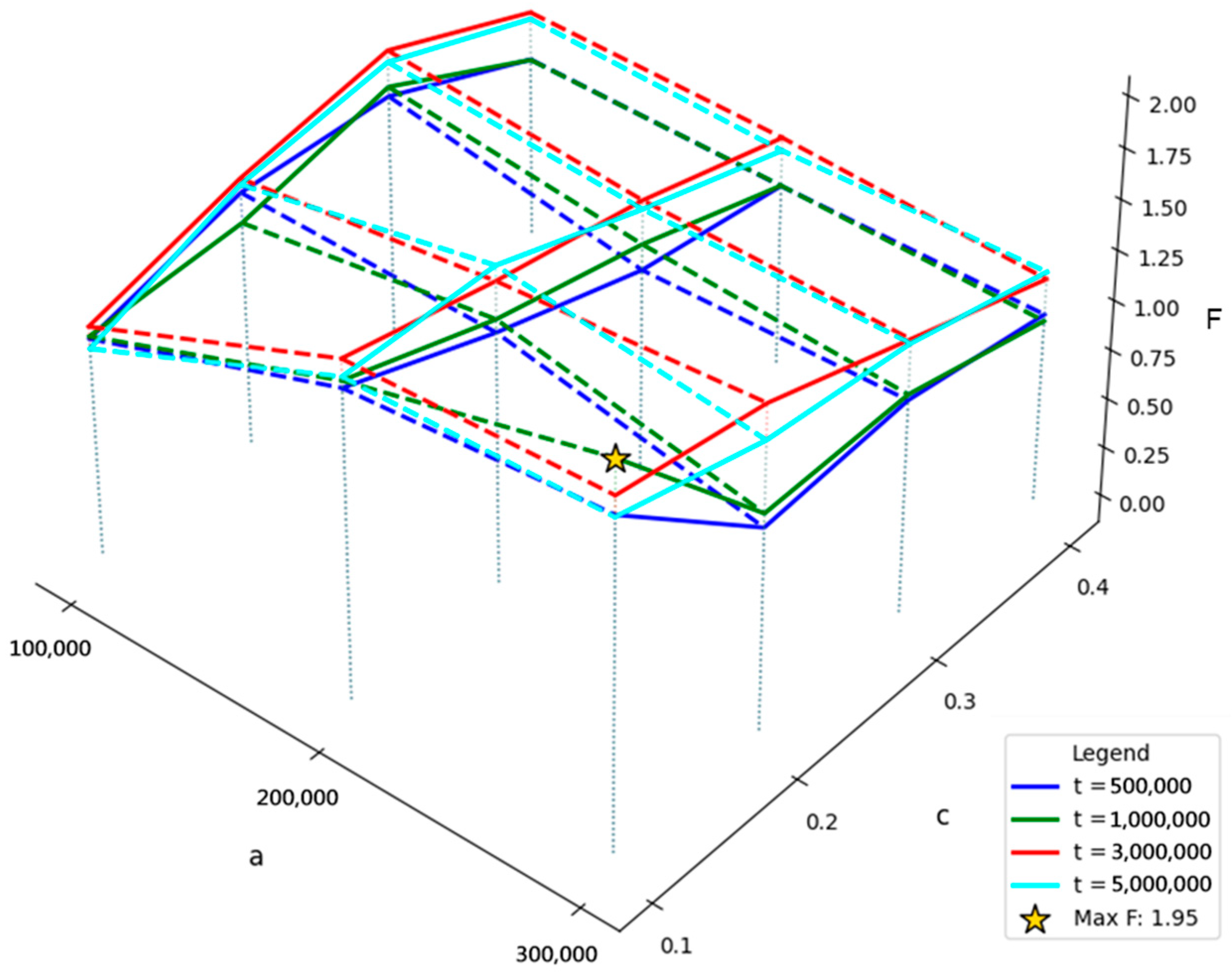
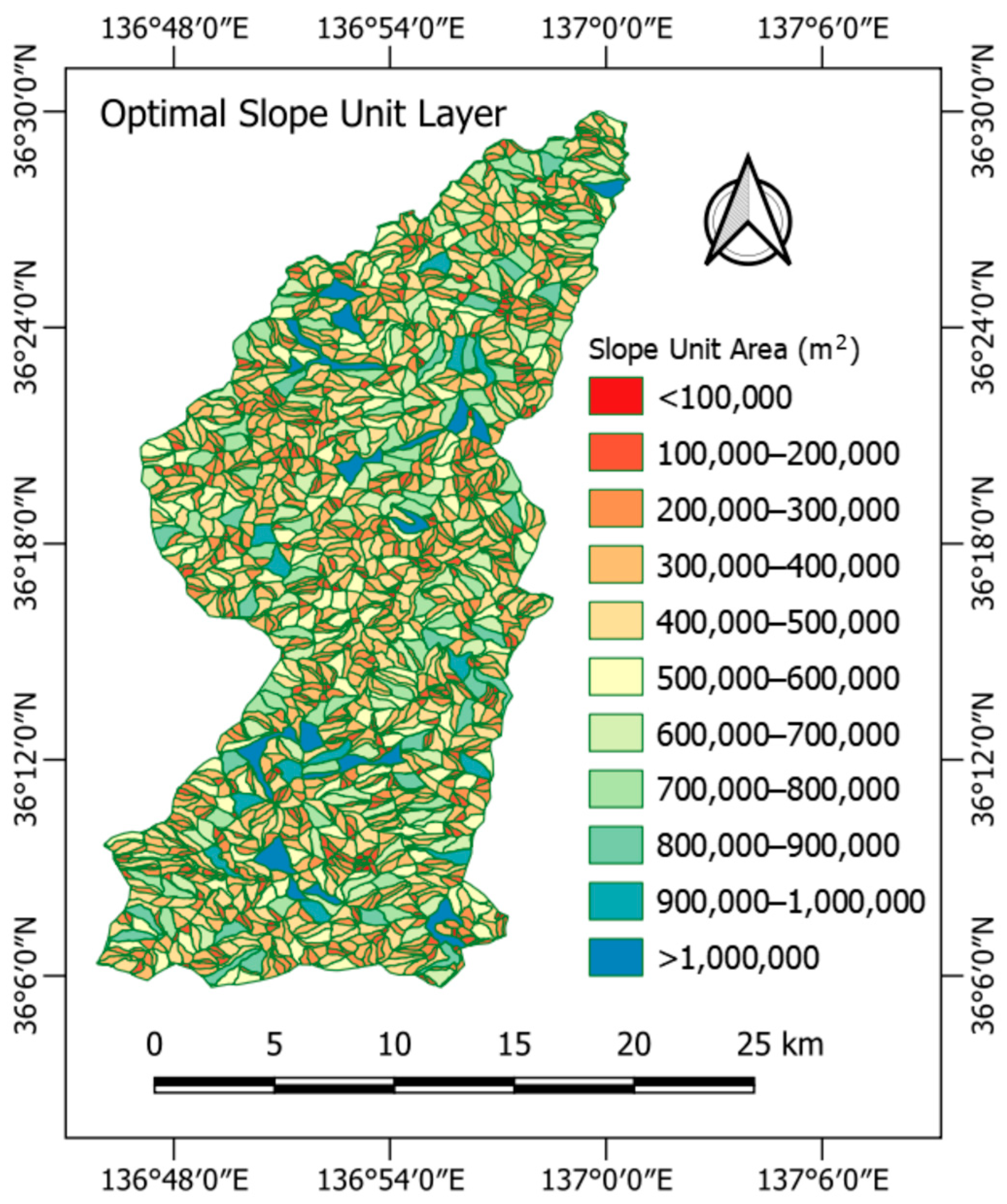
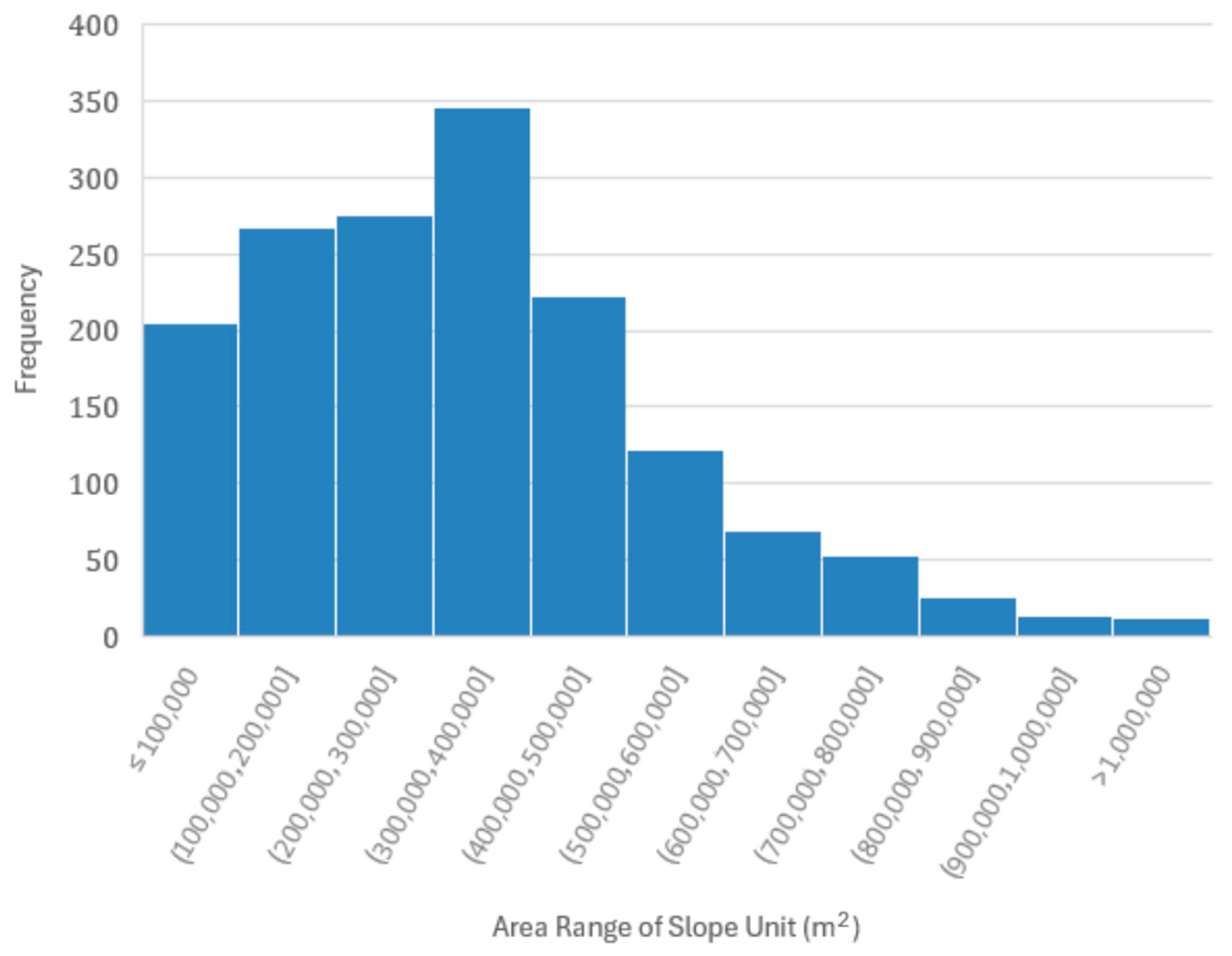
- The systematic investigation of the three parameters, flow accumulation threshold (t), minimum surface area (a), and circular variance (c) showed how they are inter-related in influencing the segmentation quality metric F. The oscillations of F demonstrated that segmentation quality was sensitive to this tri-parametric optimization.
- The integration of MC gave an enhanced landslide hazard estimation by providing probabilities of failure instead of single deterministic safety factors.
- The selection of negative samples in hybrid models relied on low probability of failure (PoF) values. This provided much cleaner and more reliable training data, with a significant reduction in classification errors, and enhanced interpretability.
- SHAP analyses highlighted physically meaningful variables like precipitation, lithology and soil properties in hybrid models, while the buffer-based models emphasized topographic indicators.
- All three gradient boosting classifiers demonstrated strong and consistent performance across both sampling strategies, with notable improvements observed when trained on physically derived datasets. This close performance across models suggests that factors such as input data quality, and sampling strategy have a greater influence on final outcomes than the specific algorithm used.
Author Contributions
Funding
Institutional Review Board Statement
Informed Consent Statement
Data Availability Statement
Acknowledgments
Conflicts of Interest
Abbreviations
| LSM | Landslide susceptibility mapping |
| ML | Machine learning |
| MC | Monte Carlo simulations |
| PoF | Probability of failure |
| AUC | Area under the receiver operating characteristic curve |
| SHAP | Shapley additive explanations |
| SDG | Sustainable development goal |
| PGV | Peak ground velocity |
| DEM | Digital elevation model |
| TPI | Topographic position index |
| TRI | Terrain ruggedness index |
| TWI | Topographic wetness index |
| ARIMA | Autoregressive integrated moving average |
| LULC | Land use/land cover |
| NDVI | Normalized difference vegetation index |
| SU | Slope unit |
| FoS | Factor of safety |
References
- Wang, X.; Wang, Y.; Lin, Q.; Yang, X. Assessing global landslide casualty risk under moderate climate change based on multiple GCM projections. Int. J. Disaster Risk Sci. 2023, 14, 751–767. [Google Scholar] [CrossRef]
- Bandyopadhyay, S.; De, S.K. Anthropogenic impacts on the morphology of the Haora River, Tripura, India. Géomorphologie Relief Process. Environ. 2018, 24, 151–166. [Google Scholar]
- Haque, U.; Blum, P.; Da Silva, P.F.; Andersen, P.; Pilz, J.; Chalov, S.R.; Malet, J.-P.; Auflič, M.J.; Andres, N.; Poyiadji, E.; et al. Fatal landslides in Europe. Landslides 2016, 13, 1545–1554. [Google Scholar] [CrossRef]
- Petley, D. Global patterns of loss of life from landslides. Geology 2012, 40, 927–930. [Google Scholar] [CrossRef]
- Jemec Auflič, M.; Bezak, N.; Šegina, E.; Frantar, P.; Gariano, S.L.; Medved, A.; Peternel, T. Climate change increases the number of landslides at the juncture of the Alpine, Pannonian and Mediterranean regions. Sci. Rep. 2023, 13, 23085. [Google Scholar] [CrossRef]
- Huabin, W.; Gangjun, L.; Weiya, X.; Gonghui, W. GIS-based landslide hazard assessment: An overview. Prog. Phys. Geogr. 2005, 29, 548–567. [Google Scholar] [CrossRef]
- Corominas, J.; van Westen, C.; Frattini, P.; Cascini, L.; Malet, J.P.; Fotopoulou, S.; Catani, F.; Van Den Eeckhaut, M.; Mavrouli, O.; Agliardi, F.; et al. Recommendations for the quantitative analysis of landslide risk. Bull. Eng. Geol. Environ. 2014, 73, 209–263. [Google Scholar] [CrossRef]
- He, H.; Wang, W.; Wang, Z.; Li, S.; Chen, J. Enhancing seismic landslide susceptibility analysis for sustainable disaster risk management through machine learning. Sustainability 2024, 16, 3828. [Google Scholar] [CrossRef]
- Usta, Z.; Akıncı, H.; Akın, A.T. Comparison of tree-based ensemble learning algorithms for landslide susceptibility mapping in Murgul (Artvin), Turkey. Earth Sci. Inform. 2024, 17, 1459–1481. [Google Scholar] [CrossRef]
- Sahin, E.K. Comparative analysis of gradient boosting algorithms for landslide susceptibility mapping. Geocarto Int. 2022, 37, 2441–2465. [Google Scholar] [CrossRef]
- Pei, T.; Qiu, T. Landslide susceptibility mapping using physics-guided machine learning: A case study of a debris flow event in colorado front range. Acta Geotech. 2024, 19, 6617–6641. [Google Scholar] [CrossRef]
- An, B.; Zhang, Z.; Xiong, S.; Zhang, W.; Yi, Y.; Liu, Z.; Liu, C. Landslide Susceptibility Mapping Based on Ensemble Learning in the Jiuzhaigou Region, Sichuan, China. Remote Sens. 2024, 16, 4218. [Google Scholar] [CrossRef]
- Woodard, J.B.; Mirus, B.B.; Wood, N.J.; Allstadt, K.E.; Leshchinsky, B.A.; Crawford, M.M. Slope Unit Maker (SUMak): An efficient and parameter-free algorithm for delineating slope units to improve landslide modeling. Nat. Hazards Earth Syst. Sci. 2024, 24, 1–12. [Google Scholar] [CrossRef]
- Alvioli, M.; Marchesini, I.; Reichenbach, P.; Rossi, M.; Ardizzone, F.; Fiorucci, F.; Guzzetti, F. Automatic delineation of geomorphological slope units with r. slopeunits v1. 0 and their optimization for landslide susceptibility modeling. Geosci. Model Dev. 2016, 9, 3975–3991. [Google Scholar] [CrossRef]
- Alvioli, M.; Guzzetti, F.; Marchesini, I. Parameter-free delineation of slope units and terrain subdivision of Italy. Geomorphology 2020, 358, 107124. [Google Scholar] [CrossRef]
- Lucchese, L.V.; de Oliveira, G.G.; Pedrollo, O.C. Investigation of the influence of nonoccurrence sampling on landslide susceptibility assessment using Artificial Neural Networks. Catena 2021, 198, 105067. [Google Scholar] [CrossRef]
- Wahba, M.; El-Rawy, M.; Al-Arifi, N.; Mansour, M.M. A novel estimation of the composite hazard of landslides and flash floods utilizing an artificial intelligence approach. Water 2023, 15, 4138. [Google Scholar] [CrossRef]
- Wang, J.; Wang, Y.; Li, C.; Li, Y.; Qi, H. Landslide susceptibility evaluation based on landslide classification and ANN-NFR modelling in the Three Gorges Reservoir area, China. Ecol. Indic. 2024, 160, 111920. [Google Scholar] [CrossRef]
- Zhang, G.; Liu, Y.; Chen, Z.; Xu, Z.; Yuan, Y.; Wang, S.; Lian, W.; Xu, H.; Ding, Z.; Wang, R. Production and Analysis of a Landslide Susceptibility Map Covering Entire China. Remote Sens. 2025, 17, 1615. [Google Scholar] [CrossRef]
- Liu, S.; Wang, L.; Zhang, W.; Sun, W.; Fu, J.; Xiao, T.; Dai, Z. A physics-informed data-driven model for landslide susceptibility assessment in the Three Gorges Reservoir Area. Geosci. Front. 2023, 14, 101621. [Google Scholar] [CrossRef]
- Wei, X.; Zhang, L.; Gardoni, P.; Chen, Y.; Tan, L.; Liu, D.; Du, C.; Li, H. Comparison of hybrid data-driven and physical models for landslide susceptibility mapping at regional scales. Acta Geotech. 2023, 18, 4453–4476. [Google Scholar] [CrossRef]
- Zhang, S.; Zhao, L.; Delgado-Tellez, R.; Bao, H. A physics-based probabilistic forecasting model for rainfall-induced shallow landslides at regional scale. Nat. Hazards Earth Syst. Sci. 2018, 18, 969–982. [Google Scholar] [CrossRef]
- Li, C.; Wang, G.; He, J.; Wang, Y. A novel approach to probabilistic seismic landslide hazard mapping using Monte Carlo simulations. Eng. Geol. 2022, 301, 106616. [Google Scholar] [CrossRef]
- Marin, R.J.; Mattos, Á.J. Physically-based landslide susceptibility analysis using Monte Carlo simulation in a tropical mountain basin. Georisk Assess. Manag. Risk Eng. Syst. Geohazards 2020, 14, 192–205. [Google Scholar] [CrossRef]
- Ochiai, C. Traditional Community-Based Disaster Management in World Heritage Site of Shirakawa Village. In Community Practices for Disaster Risk Reduction in Japan; Springer: Tokyo, Japan, 2014; pp. 155–173. [Google Scholar]
- Shevtsova, G.V. Traditional settlements historic experience of “non-detached” preservation (cases of Shirakawa village Ogimachi in Japan and Kryvorivnia village in Ukraine). In IOP Conference Series: Earth and Environmental Science; IOP Publishing: Bristol, UK, 2023; Volume 1254, p. 012077. [Google Scholar]
- Kuroda, N. Conservation design for traditional agricultural villages: A case Study of shirakawa-go and Gokayama in Japan. Built Herit. 2019, 3, 7–23. [Google Scholar] [CrossRef]
- Geological Survey of Japan, AIST. Japan Active Fault Database. Available online: https://gbank.gsj.jp/activefault/search (accessed on 4 March 2025).
- Kohno, M.; Higuchi, Y. Landslide susceptibility assessment in the Japanese archipelago based on a landslide distribution map. ISPRS Int. J. Geo-Inf. 2023, 12, 37. [Google Scholar] [CrossRef]
- Japan Aerospace Exploration Agency. Historic Village Shirakawa-go. Earth Observation Research Center. 2009. Available online: https://www.eorc.jaxa.jp/en/earthview/2009/tp090304.html (accessed on 4 December 2025).
- Newman, J.P.; Minguez Garcia, B.; Kawakami, K.; Akieda, Y.I.N. Resilient Cultural Heritage: Learning from the Japanese Experience; World Bank Group: Washington, DC, USA, 2020. [Google Scholar]
- Van Westen, C.J.; Castellanos, E.; Kuriakose, S.L. Spatial data for landslide susceptibility, hazard, and vulnerability assessment: An overview. Eng. Geol. 2008, 102, 112–131. [Google Scholar] [CrossRef]
- Aleotti, P.; Chowdhury, R. Landslide hazard assessment: Summary review and new perspectives. Bull. Eng. Geol. Environ. 1999, 58, 21–44. [Google Scholar] [CrossRef]
- Zêzere, J.L.; Reis, E.; Garcia, R.; Oliveira, S.; Rodrigues, M.L.; Vieira, G.; Ferreira, A.B. Integration of spatial and temporal data for the definition of different landslide hazard scenarios in the area north of Lisbon (Portugal). Nat. Hazards Earth Syst. Sci. 2004, 4, 133–146. [Google Scholar] [CrossRef]
- Dou, J.; Yunus, A.P.; Tien Bui, D.; Sahana, M.; Chen, C.W.; Zhu, Z.; Wang, W.; Pham, B.T. Evaluating GIS-based multiple statistical models and data mining for earthquake and rainfall-induced landslide susceptibility using the LiDAR DEM. Remote Sens. 2019, 11, 638. [Google Scholar] [CrossRef]
- Malamud, B.D.; Turcotte, D.L.; Guzzetti, F.; Reichenbach, P. Landslide inventories and their statistical properties. Earth Surf. Process. Landf. 2004, 29, 687–711. [Google Scholar] [CrossRef]
- Guzzetti, F.; Mondini, A.C.; Cardinali, M.; Fiorucci, F.; Santangelo, M.; Chang, K.T. Landslide inventory maps: New tools for an old problem. Earth-Sci. Rev. 2012, 112, 42–66. [Google Scholar] [CrossRef]
- Paudel, U.; Oguchi, T.; Hayakawa, Y. Multi-resolution landslide susceptibility analysis using a DEM and random forest. Int. J. Geosci. 2016, 7, 726–743. [Google Scholar] [CrossRef]
- Sîrbu, F.; Drăguț, L.; Oguchi, T.; Hayakawa, Y.; Micu, M. Scaling land-surface variables for landslide detection. Prog. Earth Planet. Sci. 2019, 6, 44. [Google Scholar] [CrossRef]
- National Research Institute for Earth Science and Disaster Resilience (NIED). Landslide Distribution Map GIS Database. Available online: https://dil-opac.bosai.go.jp/publication/nied_tech_note/landslidemap/gis.html (accessed on 4 March 2025).
- Akinci, H. Assessment of rainfall-induced landslide susceptibility in Artvin, Turkey using machine learning techniques. J. Afr. Earth Sci. 2022, 191, 104535. [Google Scholar] [CrossRef]
- Guo, Z.; Guo, F.; Zhang, Y.; He, J.; Li, G.; Yang, Y.; Zhang, X. A python system for regional landslide susceptibility assessment by integrating machine learning models and its application. Heliyon 2023, 9, e21542. [Google Scholar] [CrossRef]
- Basheer, M.; Oommen, T. PyLandslide: A Python tool for landslide susceptibility mapping and uncertainty analysis. Environ. Model. Softw. 2024, 177, 106055. [Google Scholar] [CrossRef]
- Abdelkader, M.M.; Csámer, Á. Comparative assessment of machine learning models for landslide susceptibility mapping: A focus on validation and accuracy. Nat. Hazards 2025, 121, 10299–10321. [Google Scholar] [CrossRef]
- Wang, Z.; Zhao, C. Assessment of Landslide Susceptibility Based on ReliefF Feature Weight Fusion: A Case Study of Wenxian County, Longnan City. Sustainability 2025, 17, 3536. [Google Scholar] [CrossRef]
- Qiu, H.; Regmi, A.D.; Cui, P.; Cao, M.; Lee, J.; Zhu, X. Size distribution of loess slides in relation to local slope height within different slope morphologies. Catena 2016, 145, 155–163. [Google Scholar] [CrossRef]
- Putra, A.N.; Jaenudin Prasetya, N.R.; Sugiarto, M.T.; Sudarto Prayogo, C.; Maritimo, F.; Admajaya, F.T. Utilizing Remote Sensing and Random Forests to Identify Optimal Land Use Scenarios and Address the Increase in Landslide Susceptibility. Sustainability 2025, 17, 4227. [Google Scholar] [CrossRef]
- Hussain, M.A.; Chen, Z.; Zhou, Y.; Meena, S.R.; Ali, N.; Shah, S.U. Landslide susceptibility mapping using artificial intelligence models: A case study in the Himalayas. Landslides 2025, 22, 2089–2103. [Google Scholar] [CrossRef]
- Riley, S.J.; DeGloria, S.D.; Elliot, R. Index that quantifies topographic heterogeneity. Intermt. J. Sci. 1999, 5, 23–27. [Google Scholar]
- Hengl, T.; Mendes de Jesus, J.; Heuvelink, G.B.; Ruiperez Gonzalez, M.; Kilibarda, M.; Blagotić, A.; Shangguan, W.; Wright, M.N.; Geng, X.; Bauer-Marschallinger, B.; et al. SoilGrids250m: Global gridded soil information based on machine learning. PLoS ONE 2017, 12, e0169748. [Google Scholar] [CrossRef] [PubMed]
- Dahal, A.; Lombardo, L. Explainable artificial intelligence in geoscience: A glimpse into the future of landslide susceptibility modeling. Comput. Geosci. 2023, 176, 105364. [Google Scholar] [CrossRef]
- Kavzoglu, T.; Sahin, E.K.; Colkesen, I. Landslide susceptibility mapping using GIS-based multi-criteria decision analysis, support vector machines, and logistic regression. Landslides 2014, 11, 425–439. [Google Scholar] [CrossRef]
- Geological Survey of Japan, AIST. Seamless Digital Geological Map of Japan. Available online: https://gbank.gsj.jp/seamless/v2/api/1.3.1/legend.html (accessed on 4 March 2025).
- Youssef, A.M.; Pourghasemi, H.R. Landslide susceptibility mapping using machine learning algorithms and comparison of their performance at Abha Basin, Asir Region, Saudi Arabia. Geosci. Front. 2021, 12, 639–655. [Google Scholar] [CrossRef]
- Liu, Y.; Zhang, W.; Zhang, Z.; Xu, Q.; Li, W. Risk factor detection and landslide susceptibility mapping using Geo-Detector and Random Forest Models: The 2018 Hokkaido eastern Iburi earthquake. Remote Sens. 2021, 13, 1157. [Google Scholar] [CrossRef]
- Putriani, E.; Wu, Y.M.; Chen, C.W.; Ismulhadi, A.; Fadli, D.I. Development of landslide susceptibility mapping with a multi-variance statistical method approach in Kepahiang Indonesia. Terr. Atmos. Ocean. Sci. 2023, 34, 18. [Google Scholar] [CrossRef]
- Jari, A.; Khaddari, A.; Hajaj, S.; Bachaoui, E.M.; Mohammedi, S.; Jellouli, A.; Mosaid, H.; El Harti, A.; Barakat, A. Landslide susceptibility mapping using multi-criteria decision-making (MCDM), statistical, and machine learning models in the Aube Department, France. Earth 2023, 4, 698–713. [Google Scholar]
- Allam, A.M.; Ibrahim, M.G.; Kanae, S.; Sharaan, M. Evaluating flood and landslide hazards to cultural heritage sites in Historic Cairo. Nat. Hazards 2025, 121, 15491–15535. [Google Scholar] [CrossRef]
- Smith, T.G. pmdarima: ARIMA Estimators for Python (Version 2.1.0). 2017. Available online: https://alkaline-ml.com/pmdarima/ (accessed on 4 December 2025).
- Fayaz, M.; Meraj, G.; Khader, S.A.; Farooq, M. ARIMA and SPSS statistics based assessment of landslide occurrence in western Himalayas. Environ. Chall. 2022, 9, 100624. [Google Scholar] [CrossRef]
- Zheng, H.; Ding, M. Spatiotemporal changes of landslide susceptibility in response to rainfall and its future prediction—A case study of Sichuan Province, China. Ecol. Inform. 2024, 84, 102862. [Google Scholar] [CrossRef]
- Duan, Y.; Ding, M.; He, Y.; Zheng, H.; Delgado-Téllez, R.; Sokratov, S.; Dourado, F.; Fuchs, S. Global projections of future landslide susceptibility under climate change. Geosci. Front. 2025, 16, 102074. [Google Scholar] [CrossRef]
- Rabby, Y.W.; Li, Y. Landslide susceptibility mapping using integrated methods: A case study in the Chittagong hilly areas, Bangladesh. Geosciences 2020, 10, 483. [Google Scholar] [CrossRef]
- Bostan, T. Generating a landslide susceptibility map using integrated meta-heuristic optimization and machine learning models. Sustainability 2024, 16, 9396. [Google Scholar] [CrossRef]
- Gozdowski, D.; Stępień, M.; Panek, E.; Varghese, J.; Bodecka, E.; Rozbicki, J.; Samborski, S. Comparison of winter wheat NDVI data derived from Landsat 8 and active optical sensor at field scale. Remote Sens. Appl. Soc. Environ. 2020, 20, 100409. [Google Scholar] [CrossRef]
- Demir, G.; Aytekin, M.; Akgün, A.; Ikizler, S.B.; Tatar, O. A comparison of landslide susceptibility mapping of the eastern part of the North Anatolian Fault Zone (Turkey) by likelihood-frequency ratio and analytic hierarchy process methods. Nat. Hazards 2013, 65, 1481–1506. [Google Scholar] [CrossRef]
- Guzzetti, F.; Carrara, A.; Cardinali, M.; Reichenbach, P. Landslide hazard evaluation: A review of current techniques and their application in a multi-scale study, Central Italy. Geomorphology 1999, 31, 181–216. [Google Scholar] [CrossRef]
- Deng, H.; Wu, X.; Zhang, W.; Liu, Y.; Li, W.; Li, X.; Zhou, P.; Zhuo, W. Slope-unit scale landslide susceptibility mapping based on the random forest model in deep valley areas. Remote Sens. 2022, 14, 4245. [Google Scholar] [CrossRef]
- Ahmed, M.; Titti, G.; Trevisani, S.; Borgatti, L.; Francioni, M. Is higher resolution always better? Open-access DEM comparison for Slope Units delineation and regional landslide prediction. Nat. Hazards Earth Syst. Sci. Discuss. 2024, 2024, 1–32. [Google Scholar] [CrossRef]
- Yang, Z.; Wei, J.; Deng, J.; Zhao, S. An improved method for the evaluation and local multi-scale optimization of the automatic extraction of slope units in complex terrains. Remote Sens. 2022, 14, 3444. [Google Scholar] [CrossRef]
- Espindola, G.M.; Câmara, G.; Reis, I.A.; Bins, L.S.; Monteiro, A.M. Parameter selection for region-growing image segmentation algorithms using spatial autocorrelation. Int. J. Remote Sens. 2006, 27, 3035–3040. [Google Scholar] [CrossRef]
- Li, Y.; Fu, B.; Han, Z.; Fang, Z.; Chen, N.; Hu, G.; Wang, W.; Chen, G. PSO-SLIC algorithm: A novel automated method for the generation of high-homogeneity slope units using DEM data. Geomorphology 2024, 463, 109367. [Google Scholar] [CrossRef]
- Wang, J.; Wang, Y.; Li, M.; Qi, Z.; Li, C.; Qi, H.; Zhang, X. Improved landslide susceptibility assessment: A new negative sample collection strategy and a comparative analysis of zoning methods. Ecol. Indic. 2024, 169, 112948. [Google Scholar] [CrossRef]
- Craig, A.D.L.; Augusto Filho, O. Landslide susceptibility mapping of highway slopes, using stability analyses and GIS methods. Soils Rocks 2020, 43, 71–84. [Google Scholar] [CrossRef]
- Zhou, W.; Minnick, M.D.; Chen, J.; Garrett, J.; Acikalin, E. GIS-based landslide susceptibility analyses: Case studies at different scales. Nat. Hazards Rev. 2021, 22, 05021007. [Google Scholar] [CrossRef]
- Bishop, A.W. The use of the slip circle in the stability analysis of slopes. Geotechnique 1955, 5, 7–17. [Google Scholar] [CrossRef]
- Al-Najjar, H.A.; Pradhan, B.; He, X.; Sheng, D.; Alamri, A.; Gite, S.; Park, H.J. Integrating Physical and Machine Learning Models for Enhanced Landslide Prediction in Data-Scarce Environments. Earth Syst. Environ. 2024, 9, 3179–3206. [Google Scholar] [CrossRef]
- Wei, Y.; Wu, X.; Cai, C. Splash erosion of clay–sand mixtures and its relationship with soil physical properties: The effects of particle size distribution on soil structure. Catena 2015, 135, 254–262. [Google Scholar] [CrossRef]
- Arvanitidis, C.; Steiakakis, E.; Agioutantis, Z. Peak friction angle of soils as a function of grain size. Geotech. Geol. Eng. 2019, 37, 1155–1167. [Google Scholar] [CrossRef]
- Bonanno, J. PySlope (Version 1.4.0). 2025. Available online: https://pypi.org/project/pyslope/ (accessed on 4 December 2025).
- Sharma, A.; Prakash, C.; Manivasagam, V.S. Entropy-based hybrid integration of random forest and support vector machine for landslide susceptibility analysis. Geomatics 2021, 1, 399–416. [Google Scholar] [CrossRef]
- Szczyrba, L.; Zhang, Y.; Pamukcu, D.; Eroglu, D.I.; Weiss, R. Quantifying the role of vulnerability in hurricane damage via a machine learning case study. Nat. Hazards Rev. 2021, 22, 04021028. [Google Scholar] [CrossRef]
- Lu, J.; Ren, C.; Yue, W.; Zhou, Y.; Xue, X.; Liu, Y.; Ding, C. Investigation of landslide susceptibility decision mechanisms in different ensemble-based machine learning models with various types of factor data. Sustainability 2023, 15, 13563. [Google Scholar] [CrossRef]
- Liu, S.; Wang, L.; Zhang, W.; Sun, W.; Wang, Y.; Liu, J. Physics-informed optimization for a data-driven approach in landslide susceptibility evaluation. J. Rock Mech. Geotech. Eng. 2024, 16, 3192–3205. [Google Scholar] [CrossRef]
- Wang, Y.H.; Wang, L.Q.; Zhang, W.G.; Liu, S.L.; Sun, W.X.; Hong, L.; Zhu, Z.W. A physics-informed machine learning solution for landslide susceptibility mapping based on three-dimensional slope stability evaluation. J. Cent. South Univ. 2024, 31, 3838–3853. [Google Scholar] [CrossRef]


| Feature Name | Resolution | Data Sources |
|---|---|---|
| Elevation | 12.5 m | https://search.asf.alaska.edu/ (accessed on 4 March 2025) |
| Slope, Aspect, Slope height, Plan curvature, Profile curvature, TPI, TRI, and TWI | 12.5 m | Processing of DEM |
| Sand, Silt, Clay contents, and Density | 250 m | https://soilgrids.org/ (accessed on 4 March 2025) |
| Lithology and Distance to faults | Vectors | https://gbank.gsj.jp/ (accessed on 4 March 2025) |
| Peak Ground Velocity (PGV) and Shear Wave Velocity (VS30) | 250 m | https://www.j-shis.bosai.go.jp/ (accessed on 4 March 2025) |
| Precipitation | Stations | https://www.data.jma.go.jp/ (accessed on 4 March 2025) |
| Distance to water | Vectors | https://data.humdata.org/ (accessed on 4 March 2025) |
| LULC | 10 m | https://www.eorc.jaxa.jp/ALOS/en/index_e.htm (accessed on 4 March 2025) |
| NDVI | 30 m | https://glovis.usgs.gov/app (accessed on 4 March 2025) |
| Distance to roads | Vectors | https://data.humdata.org/ (accessed on 4 March 2025) |
| Parameter | Value |
|---|---|
| Initial flow accumulation threshold (t) | (50, 100, 300, 500) × 104 m2 |
| Minimum circular variance (c) | (0.1, 0.2, 0.3, 0.4) |
| Minimum surface area (a) | (10, 20, 30) × 104 m2 |
| Reduction factor (r) | 10 |
| Cleaning size | 30,000 m2 |
| Parameter | XGBoost | LightGBM | CatBoost |
|---|---|---|---|
| Iterations | 100, 300, 500 | 100, 300, 500 | 100, 300, 500 |
| Depth | 3, 5, 7 | 3, 5, 7 | 3, 5, 7 |
| Learning Rate | 0.05, 0.1 | 0.05, 0.1 | 0.05, 0.1 |
| Regularization | reg_lambda: 1, 3, 5 | reg_lambda: 1, 3, 5 | l2_leaf_reg: 1, 3, 5 |
| Model-specific | tree_method: “hist” | boosting_type: ‘dart’ | random_strength: 1.25 |
| gamma: 0.5 | skip_drop: 0.15 | max_bin: 8 |
| Strategy | Algorithm | Depth | Iterations | Learning Rate | L2 Regularization |
|---|---|---|---|---|---|
| Buffer | XGBoost | 7 | 100 | 0.1 | 3 |
| LightGBM | 7 | 500 | 0.1 | 3 | |
| CatBoost | 3 | 100 | 0.1 | 1 | |
| Hybrid | XGBoost | 5 | 100 | 0.1 | 5 |
| LightGBM | 5 | 100 | 0.1 | 5 | |
| CatBoost | 7 | 100 | 0.1 | 1 |
| Strategy | Algorithm | Accuracy | Precision | Recall | F1-Score | AUC |
|---|---|---|---|---|---|---|
| Buffer | XGBoost | 0.747664 | 0.609756 | 0.694444 | 0.649351 | 0.859 |
| LightGBM | 0.785047 | 0.675676 | 0.694444 | 0.684932 | 0.868 | |
| CatBoost | 0.766355 | 0.622222 | 0.777778 | 0.691358 | 0.863 | |
| Hybrid | XGBoost | 0.897196 | 0.857143 | 0.833333 | 0.845070 | 0.931 |
| LightGBM | 0.897196 | 0.878788 | 0.805556 | 0.840580 | 0.931 | |
| CatBoost | 0.925234 | 0.966667 | 0.805556 | 0.878788 | 0.929 |
Disclaimer/Publisher’s Note: The statements, opinions and data contained in all publications are solely those of the individual author(s) and contributor(s) and not of MDPI and/or the editor(s). MDPI and/or the editor(s) disclaim responsibility for any injury to people or property resulting from any ideas, methods, instructions or products referred to in the content. |
© 2025 by the authors. Licensee MDPI, Basel, Switzerland. This article is an open access article distributed under the terms and conditions of the Creative Commons Attribution (CC BY) license.
Share and Cite
Bassem, A.; Shokry, H.; Kanae, S.; Sharaan, M. Towards Sustainable Heritage Conservation: A Hybrid Landslide Susceptibility Mapping Framework in Japan’s UNESCO Mountain Villages. Sustainability 2026, 18, 237. https://doi.org/10.3390/su18010237
Bassem A, Shokry H, Kanae S, Sharaan M. Towards Sustainable Heritage Conservation: A Hybrid Landslide Susceptibility Mapping Framework in Japan’s UNESCO Mountain Villages. Sustainability. 2026; 18(1):237. https://doi.org/10.3390/su18010237
Chicago/Turabian StyleBassem, Ahmed, Hassan Shokry, Shinjiro Kanae, and Mahmoud Sharaan. 2026. "Towards Sustainable Heritage Conservation: A Hybrid Landslide Susceptibility Mapping Framework in Japan’s UNESCO Mountain Villages" Sustainability 18, no. 1: 237. https://doi.org/10.3390/su18010237
APA StyleBassem, A., Shokry, H., Kanae, S., & Sharaan, M. (2026). Towards Sustainable Heritage Conservation: A Hybrid Landslide Susceptibility Mapping Framework in Japan’s UNESCO Mountain Villages. Sustainability, 18(1), 237. https://doi.org/10.3390/su18010237