


Abstract
This study analyzes, quantifies, and maps, from a bibliometric perspective, scientific production, bioeconomy and computational simulations regarding avocado use in the timeframe of 2004–2023 in Scopus. To categorize and evaluate the contributions of authors, countries, institutions, and journals, Biblioshiny software in RStudio was used. Their collaborative networks were also visualized using VOSviewer. The analysis reveals an exponential increase in scientific output, especially from 2019 onwards, driven by the growing importance of sustainable avocado use in bioeconomy models. The main findings highlight the valorization of avocado waste for producing biofuels, cosmetics, pharmaceuticals, and food. In addition, the use of computational tools such as Aspen Plus, ArcGIS Pro, Unscrambler-X, SIMCA, and DOCK-6 to optimize conversion processes, model climate change effects, perform chemometrics, and conduct multivariate analyses, and molecular docking, respectively, is discussed. This knowledge highlights potential uses of avocado waste and computational modeling tools for stakeholders in the avocado industry, reinforcing their value chain through bioeconomy models and strengthening their competitiveness by promoting more efficient and sustainable processes. This work provides a comprehensive overview of the avocado-based bioeconomy, serving as a reference for future studies that integrate process simulation in the valorization of agro-industrial waste.
1. Introduction
The world is slowly moving toward economic developments that are tailored to sustainable processes. Global warming, inequality, and hunger are major concerns caused by the depletion of natural resources, boosted by centuries of extractive economies. In this context, the bioeconomy emerges as an environmental solution to provide energy, chemicals, and biomaterials for society [1].
The introduction of biorefineries for valorizing agro-industrial wastes—circular economy—has become part of this approach since biomass stocks require multiproduct processes to be more attractive to investors. In this regard, avocado has the potential to generate products for the cosmetic, pharmaceutical, energy, food, and other industrial sectors. Avocado pulp and seed contain oil-rich fatty acids that are useful for the food and cosmetic industries [2]. The peels and seeds are sources of antioxidant and anti-inflammatory compounds, proving useful in nutraceutical and pharmaceutical products [3]. In the energy sector, organic avocado waste can be anaerobically fermented to produce biogas, while extracted oils can be transformed into biodiesel through transesterification [4]. As for bio-based materials, the polysaccharides present in the waste can be used to manufacture biodegradable plastics and avocado fibers to develop sustainable packaging [5]. In addition, just as organic waste can be composted into fertilizer, avocado waste can be processed into animal feed [6].
Integrated avocado utilization in bioeconomy models poses feasibility challenges that can be addressed by computer-aided process simulation in biorefineries [7]. Computational simulation allows the design, optimization, and evaluation of biomass conversion processes. For instance, it considers economic, energy, and environmental variables. Software such as Aspen Plus, SuperPro Designer, Ansys, and MATLAB are used in this context to explore diverse process scenarios to obtain the most sustainability and profitable conditions [8,9,10,11,12,13]. The specific application to the processing of avocado and its residues is still limited. However, important works, such as those of Herrera-Rodríguez et al. [14,15,16], show how the multi-product utilization of avocado generates the best economic, environmental, and energy results. They identified destination and centrifugation as the process with the highest energy losses, proposing improvements to optimize the overall energy efficiency, estimated at 26.80%. Also, by applying the waste reduction (WAR) algorithm, it was found that the avocado oil extraction process is environmentally friendly. These studies conclude that using waste streams such as seeds and peels is recommended for reducing environmental residue accumulation, simultaneously obtaining products for the cosmetic sector as an added value.
On the other hand, bibliometric research can lead to the development and discovery of trends in the field of research. It can help the scientific community to identify new hotbeds of innovation based on a desired window of observation [17]. This sector has not been elusive to bibliometrics, so the following lines show the studies that have published to date. The bibliometric analysis by Zakaria et al. [18] was one of the first to comprehensively study the state-of-the-art avocado industry research, revealing emerging issues in recent decades around its medicinal properties, the use of technologies for crop management, and the utilization of its residues. Cáceres-Zambrano et al. [19] identified a disconnect between the technological needs of the avocado sector in Colombia and current offers, highlighting the concentration of studies on the Hass variety from 2000 to 2021. Nazir et al. [20] focused on studies conducted between 2018 and 2022 around the extended use of avocado starch in biofilm production, indicating that more research is needed to improve its quality. Finally, Taramuel-Taramuel et al. [21], based on an observation window between 2012 and 2024, analyzed technological innovations in precision agriculture applied to avocados, remarking that these initiatives are limited outside developed countries. These bibliometric studies have not studied the avocado-based bioeconomy and its aided computer simulation-related optimization processes. Hence, this research aims to provide a broader and more complete scientometric vision of the avocado agroindustry by considering the period of 2004–2023, retrieving original articles published in Scopus, and using the bibliometrics of RStudio for data mining and VOSviewer for the analysis of collaborations and co-occurrences. The following research questions were considered:
- Q1: How many research articles were published annually between 2004 and 2023 in bioeconomy and computational simulations related to avocado use?
- Q2: Who are the most cited authors in these research areas?
- Q3: What are the most cited papers?
- Q4: Which journals publish the most papers?
- Q5: What are the leading institutions in the focused research area?
- Q6: Which are the most active funding institutions in the selected period?
- Q7: Which are the top ten countries publishing on the topic?
- Q8: What are the thematic trends in these fields?
This article is organized as follows. The design of the bibliometric study and its limitations are presented in Section 2. Section 3 presents the results, subdivided into trends in the annual production of articles, most cited authors and their collaborations, most referenced articles, journals with the highest number of publications, institutions and their collaborative networks, funding agencies, and leading countries. Section 4 discusses the emerging trends related to the avocado bioeconomy and computational simulation of processes. Finally, Section 5 presents the main conclusions.
2. Materials and Methods
2.1. Study Design
This study used bibliometric analysis, a tool commonly used to map research in fuzzy scientific fields. Scientometrics—bibliometry—uses mathematics and statistics to describe scientific activity and relevance over some time in numerical terms [17]. Typically, bibliometric analyses are multidisciplinary, providing a quantitative view of a field of study. They use metrics and knowledge graphs to map the scientific evolution related to some field of knowledge, providing objective evidence of recent advances and trends.
2.2. Data Source
Scopus was chosen for its wide range of high-quality journals and research documents [22]. Institutional access was required to download and confirm the content of the study files.
2.3. Search Strategy
We introduced a compressive list of keywords, covering computational process simulation and bioeconomy around avocado exploitation, compiling a database of 946 documents (see Figure 1). The search equation used was the following: TITLE-ABS-KEY ((bioeconomy OR “bio economy” OR “bio-based economy” OR “bio based economy” OR “circular economy” OR “green economy” OR “sustainable economy” OR biorefinery OR biotechnology OR “sustainable development” OR “eco-innovation” OR simulation* OR computational* OR model* OR framework* OR optimiz* OR “system dynamics” OR “scenario analys*” OR “economic analys*” OR “life cycle assessment” OR “life cycle analysis” OR lca OR “socio-economic analys*” OR “process modeling” OR “process modelling” OR “process simulation” OR “Aspen Plus” OR simapro OR “SuperPro Designer” OR “GaBi software” OR hysys OR chemcad OR “computational fluid dynamics” OR cfd) AND (“avocado” OR “avocado*” OR “Persea americana” OR “Hass avocado” OR “Fuerte avocado” OR “Bacon avocado” OR “Reed avocado” OR “Pinkerton avocado” OR “Gwen avocado” OR “Lamb Hass avocado” OR “avocado variet*” OR “avocado cultivar*” OR “avocado type*”)). On behalf of process simulation and bioeconomy, the words used were the following: bioeconomy, bio-based economy, circular economy, green economy, sustainable economy, biorefinery, biotechnology, sustainable development, eco-innovation, simulation, computational, model, framework, optimization, system dynamics, scenario analysis, economic analysis, life cycle assessment, life cycle analysis, LCA, socio-economic analysis, process modeling, process simulation, Aspen Plus, SimaPro, SuperPro Designer, GaBi software, HYSYS, CHEMCAD, computational fluid dynamics, and CFD. Representing avocado varieties, the selected words were avocado, Persea Americana, Hass avocado, Fuerte avocado, Bacon avocado, Reed avocado, Pinkerton avocado, Gwen avocado, and Lamb Hass avocado. These keywords were obtained in a cyclical process, starting with the articles returned by the databases and adding more words to cover the initially unforeseen topics. The timeframe established covered data from 2004 to 2023. The search was reduced to titles and keywords in order to increase the effectiveness of the equation for collecting papers from the target areas [23,24]. The selection of the time window was made by considering the number of articles found using the search equation, where it was determined that a time frame of 20 years would be appropriate to cover the genesis of the selected topic and its evolution until 2023 (see Figure 2). Furthermore, only original articles were considered as document types, guaranteeing exclusive access to the original findings and thus avoiding reworkings and biases that could be introduced by secondary documents, such as reviews. The Scopus web page was consulted for the last time on 11 October.
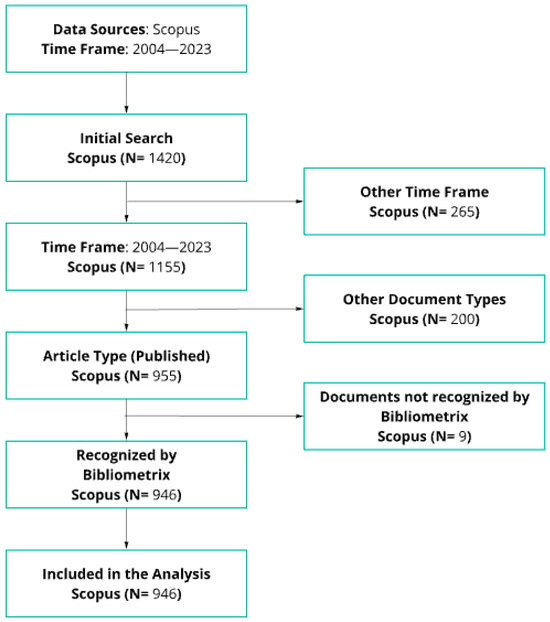
Figure 1.
Flowchart of used bibliometric methodology.
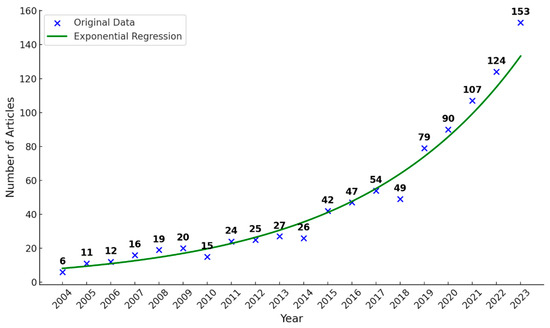
Figure 2.
Annual trend of publication from Scopus in the 2004–2023 timeframe.
2.4. Bibliometric Analysis
Charts and tables were created from the database data downloaded in the BibTeX and CSV formats. The Biblioshiny 4.1.2 application from RStudio 4.3.0 was useful to obtain and organize the compiled database before manual manipulation. It provides data on the most productive countries, institutions, authors, research areas, journals, subject headings, h-index, impact factors, total citations, and so on [25]. In addition, VOSviewer 1.6.19 was used for the data mining, mapping, and visualization of collaborative networks [26].
2.5. Limitations
The Scopus database is not perfectly suited to bibliometric analyses, so it often yields some erroneous data (e.g., duplicates), potentially limiting the reliability of the extracted metrics and findings. Also, qualitative statements can be subjective since—originally—this type of study is quantitative [27]. Moreover, this academic exercise only offers a short-term forecast of the area under investigation [28].
3. Results and Discussion
Based on the collected Scopus database, the results and discussion of each of the above research questions are presented in the following subsections.
3.1. Trends in the Annual Production of Original Papers
Figure 2 shows that the interest in the research on the use of avocado as a bioeconomic model or in the areas of computer-aided simulation has followed an exponential growth from 2004 to 2023—with a coefficient of determination equal to 0.97—reaching its highest peak in 2019. Furthermore, the average annual growth rate in the observed period was found to be 18.58%. These numbers and trends are consistent with the global avocado trade outlook. According to FAO, the world’s avocado trade represents more than 60% of tropical fruit commercialization, highlighting its importance and appeal to multiple industries and communities [29]. In addition, growing environmental awareness and the emergence of sustainable government policies may have played a critical role, leading industry and academia sectors to accomplish waste management regulations and seek innovative ways to promote avocado biorefineries—revalorizing by-products and reducing the environmental footprint [30,31]. In addition to all of this, there is the accelerated technological development promoted by Industry 4.0, from which precision agriculture is emerging to increase the productivity and profitability of crops [21]. As a result, scientific productivity has been encouraged in the last two decades.
The average total citation per year in the studied timeframe is 2.85, while the average citation per document is 20.56. According to a recent study, biorefinery publications have superior citation characteristics compared to other research areas [32]. This gives context to the average citation data of this work and reflects the relevance and impact of research in this sector.
The average total annual citations peaked in 2005 and 2015, after which they began to decline (see Figure 3). This decline can be explained by, among other things, the time it takes researchers to identify newly published works, their accessibility, their novelty, and the dissemination of science [33,34,35].
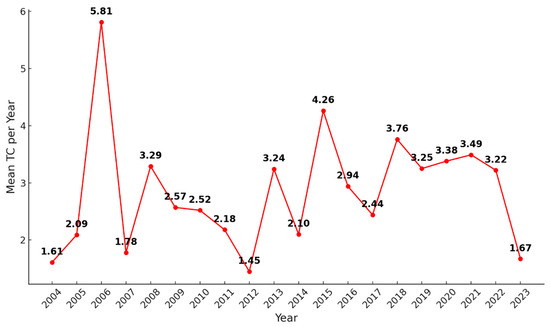
Figure 3.
Mean total citation per year from Scopus in the 2004–2023 timeframe.
3.2. Most Cited Authors and Their Collaborations
The Scopus-retrieved data highlight Soltis D. and Soltis P. as the most productive researchers in subjects related to avocado use (see Table 1). These authors count with the same metrics, so it can be assumed that they worked collaboratively on all the documents published. In addition, as shown in Figure 4, both researchers are the leaders in the collaborations item with (54), followed by Holscher H. (43), Khan N. (43), and Bonilla-Petriciolet (41) (see Table A1 from Appendix A). As such, Soltis D. and Soltis P. can be considered the dominant authors in the studied topics. In some of their most cited papers, they have used avocado (Persea americana) to study various aspects of its biology and evolution [36,37,38]. These studies show how advanced genomic and transcriptomic tools have been used to study the avocado from its molecular biology to its floral evolution. This knowledge is related to biorefinery models because it can be applied to optimize the use of the avocado and its residues to obtain bioproducts.

Table 1.
Top 10 most productive and cited authors.
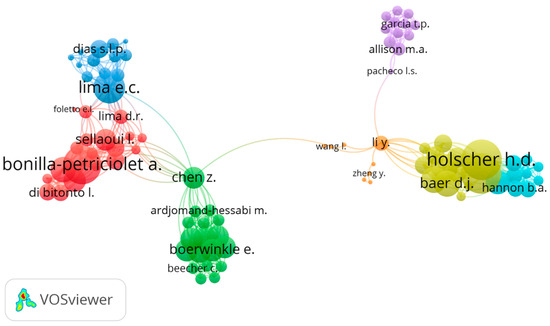
Figure 4.
Most collaborative authors, considering a minimum of one document in VOSviewer.
It should be noted that Figure 4 is not fully adapted to the data in Table 1, since the graphs of these networks focus on the search for collaborations—total link strength—which depends on the minimum number of articles per author and the decision to display the interconnection of the nodes. In this case, the size of the nodes is proportional to the number of links per author. The same logic applies to the following VOSviewer figures and their interpretation.
On the other hand, Lotka’s law suggests that three articles is the critical limit of published documents, under which the number of authors with more documents reaches below 2.2%. Finally, the international co-authorship and the co-authors per doc in the studied areas are 5.16 and 27.17%, respectively.
3.3. Most Cited Research Articles
The use of avocado and its residues has been explored in several research works for its potential in industrial and environmental applications in line with bioeconomy and biorefinery concepts (see Table 2). Mallampati et al. [39] and Machado et al. [40,41] investigated the use of avocado peels for the removal of heavy metals and the production of iron nanoparticles, highlighting their capacity as bio-adsorbents in water purification and environmental remediation, both key processes in a sustainable biorefinery. These studies demonstrate how avocado bioproducts can be used in remediation and water treatment, creating value from agricultural residues. In addition, the research of Tatsumi et al. [42] and Lobell et al. [43] addressed the modeling of avocado crops using tools such as satellite imagery and climate projections, allowing for the optimization of agricultural production for long-term sustainability. Works on avocado genetics and transcriptomics provide important information for genetic improvement and efficient management of this crop, maximizing its use in biotechnological processes [44,45,46]. The contributions of Sowbhagya et al. [47] and González-Miret et al. [48] can be integrated to strengthen the concept of avocado waste valorization for cosmetic and food industries within biorefinery initiatives. Having looked through all these research papers, it is feasible to highlight the importance of avocado fruit as an integral resource for bioproducts, environmental remediation, and the modeling of sustainable agricultural processes.
Table 2.
Top 10 most cited articles.
3.4. Journals That Host the Highest Number of Articles
Table 3 shows that Postharvest Biology and Technology, Food Chemistry, and Scientia Horticulturae are the principal journals associated with avocado bioeconomy and computational models. The research papers’ cumulative average hosted in these three journals is less than 4.33%, hence, there exists a wide variety of journals (>95%) that publish articles related to avocado use. According to Bradford’s law, it is viable to classify sources into core areas, related areas, and non-relevant areas regarding the field targeted by the papers hosted in the journals—see Equation (1).
where represents the number of journals that belong to the core area, is the Euler’s constant , and is the number of articles published in the journal with more hosted documents [49]. For this case, . As a result, the sources below the journal Computers and Electronics in Agriculture in Table 3 are out of the core collection. Also, it is noteworthy that Postharvest Biology and Technology is the preferred journal publishing contributions to these fields.
Table 3.
Top 10 journal hosting papers of the studied research field.
3.5. Most Productive Institutions and Their Collaborations
The top three universities in the research field studied are the University of Florida, the University of California, and Universidad Nacional de Colombia (see Table 4). From the collaborative perspective, the University of California places number one with a betweenness (number of collaborations) of 63, as shown in Figure 5 and Table A2 of Appendix B. The University of California conducts important avocado research because of several key factors related to its agricultural, technological, and economic environment. California is one of the leading avocado producers in the United States, dominating national production with more than 90–95% of the total crops [50]. This high industry concentration has driven research into crop optimization, utilization, and disease resistance [51,52]. As for the participation of Latin American countries such as Mexico and Colombia, some international cooperation has been encouraged to optimize avocado supply chains. Inter-institutional collaboration is essential to reduce structural inefficiencies and improve sustainability in these networks [53]. Real partnerships between institutions, producers, and exporters also seem crucial for the academic sector to find solutions to these international concerns.
Table 4.
Top 10 most productive institutions.
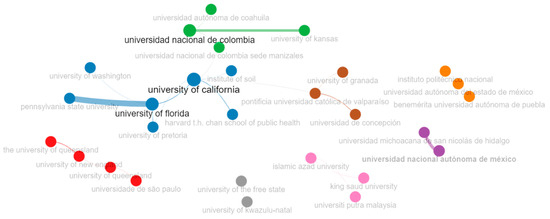
Figure 5.
Most collaborative institution clusters obtained from collaboration networks in Bibliometrix 4.1.2.
3.6. Most Participative Funding Agencies
The Conselho Nacional de Desenvolvimento Científico e Tecnológico and the Coordenação de Aperfeiçoamento de Pessoal de Nível Superior from Brazil were found to be the main funding agencies (see Table 5). These institutions are essential for developing scientific research in Brazil and fund a wide range of studies in various fields, including agricultural research, such as those related to avocado uses. These agencies nearly fund 70% of Brazilian research, including projects focused on agriculture and sustainability [54]. For Latin America, the National Council of Science and Technology of Mexico and the National University of Colombia are also public entities that play an important role in funding research in these countries. For European countries, the European Commission is the provider of most of the funding for research in this area. Through programs such as Horizon 2020 and the Seventh Framework Program (FP7), the commission has provided significant funding for scientific research, ranging from agricultural biotechnology to food sustainability [55]. In the United States, the National Science Foundation remains the agency that funds much of the country’s scientific research, including agriculture and biotechnology [56].
Table 5.
Top 10 most participative funding agencies.
3.7. Most Contributing Countries and Their Collaborations
The notable presence of the United States in avocado research, reflected in the highest frequencies, citations, and collaborations (see Figure 6, Table 6, and Table A3 in Appendix C), is due to its leading role in producing and consuming this fruit, particularly in California. In addition, research on the nutritional composition of avocados, the handling of avocados after harvest, and the use of avocados in the food industry has impacted the U.S. scientific community. For instance, research focused on biorefineries from Hass avocado generates products such as phenolic compounds, ethanol, oil, and xylitol, underscoring the status of this research to the agricultural sector in the United States [57]. The National Science Foundation and other U.S. funding agencies have also played a key role in these metrics.
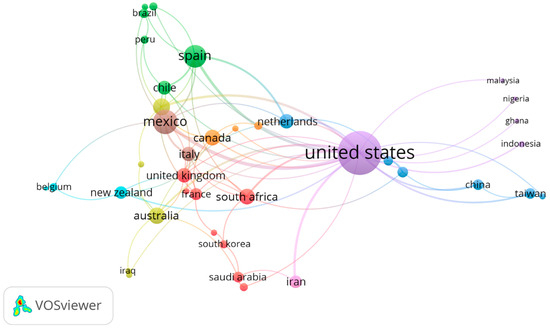
Figure 6.
Most collaborative countries, considering a minimum of five documents in VOSviewer.
Table 6.
Top 10 countries.
Mexico is the most representative among Latin American countries due to its collaboration networks and world leadership in avocado production—the largest with Peru. Research on quality and phytosanitary standards, such as that conducted by Stanford in the Michoacán avocado industry, has been essential in improving exports and the global competitiveness of this product [58]. In Brazil, research on the use of avocados has also increased, with a focus on biotechnological and food applications, as described in the work of Duarte et al. [59], which highlights the value of avocado oils in the cosmetic and pharmaceutical industries. In Europe, Spain is the leading country in this area. This is due to the importance of the crop in the Mediterranean region. However, in contrast to countries such as Mexico and the United States, European research is more focused on improving agricultural management and sustainable use of water resources, as reflected in recent studies on postharvest avocado management to reduce losses in the supply chain [60]. Finally, the low representation of China and other Asian countries in avocado research may be because avocado is a relatively new crop in the region. Although the Asian market is emerging, it has not yet reached the levels of production and research seen in traditional producing continents such as the Americas and Europe [61].
4. Emerging Trends in Avocado Harvesting: Bioeconomics and Computational Process Simulation
Keywords are faithful representations of scientific articles, whose frequent use can reflect the hotspots of a particular field of study. The visualization of the Scopus keywords’ clusters and trend topics chart (see Figure 7 and Figure 8) outlines the most relevant research fields regarding avocado bioeconomy and computational-aided simulations (CASs).
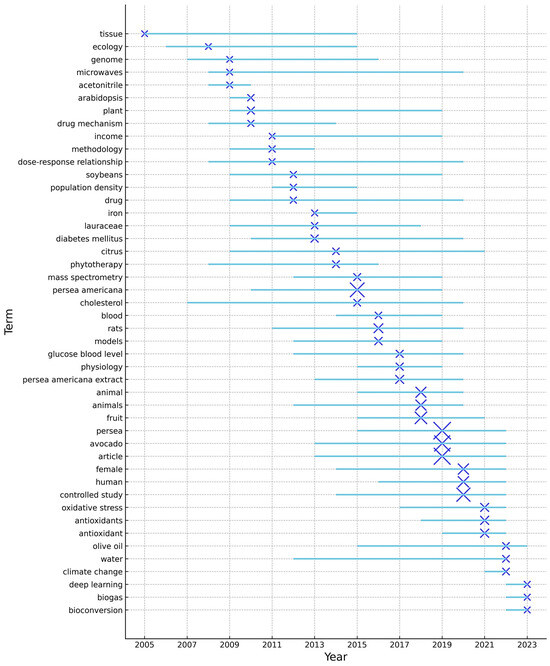
Figure 7.
Trend topics obtained through the software bibliometrix.
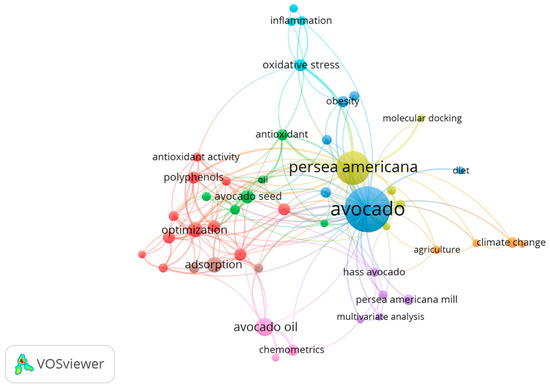
Figure 8.
Keywords most used by authors, considering a minimum of six occurrences in VOSviewer.
As part of bioeconomy subjects, we highlight the following keywords: adsorption, polyphenols, extraction, antioxidant, osteoarthritis, inflammation, oxidative stress, activated carbon, oil, seed, peel, climate change, and biorefinery while in CAS, optimization, modeling, kinetics, response surface methodology, multivariable analysis, chemometrics, molecular docking, central composite design, life cycle assessment, and machine learning (see Table A4 in Appendix D Figure A1 in Appendix D, and Figure A2 in Appendix E). The trend analysis shown in Figure 7 indicates that the avocado processing industry has shown a growing interest in bioeconomy and computational process modeling in the last five years. Biogas and bioconversion have been highlighted as strategical applications of avocado residues to be transformed into biofuels and other value-added products [62]. At the same time, advanced technologies such as deep learning are being used to optimize production processes in avocado crops through remote sensing and image processing, while climate change has motivated all this research in favor of more sustainable economies and industries [63]. In health, studies on antioxidants and oxidative stress have gained importance, drawing attention to the benefits of avocado bioactive compounds. An avocado a day reduces circulating oxidized LDL and markers of oxidative stress in adults with obesity [64]. In addition, research into avocado extracts for food, cosmetic, and pharmaceutical applications continues to grow, supported by analytical techniques such as mass spectrometry, which allows for detailed characterization of its constituents [65]. Finally, controlled studies continue to evaluate the positive effects of avocado consumption on human health, consolidating the importance of avocado consumption in various industries. For instance, avocado/soy unsaponifiable may be an effective supplement in the treatment of osteoarthritis by controlling the balance between antioxidant and oxidant molecular markers [66]. Below is a more detailed discussion on the growing contributions of bioeconomic models and CASs around avocado uses suggested by the clusters of Figure 8.
4.1. Trends in Avocado’s Bioeconomy Models
Bioeconomy involves developing modern, viable, competitive, and efficient societies to produce food, materials, or energy due to smart, sustainable, and inclusive growth of economic sectors that depend on biomass resources. In this context, various models that reflect different approaches to biological resource uses, technological innovation, and sustainability have been outlined. There is no universal classification of bioeconomy models, but concepts have evolved from different contributions in the scientific literature. Hence, this study covers models such as the circular bioeconomy, which aims to maximize the reuse and recycling of biological resources; the innovation-based bioeconomy, which prioritizes the research and development of new biological technologies; and the sustainable bioeconomy, which integrally promotes economic, environmental, and social sustainability. These models aim to encourage a sustainable, competitive, and environmentally friendly economy based on biological resources. Below are presented examples of these models applied to avocado use.
4.1.1. Circular Bioeconomy
Biodiesel and Biorefineries for Valorizing Residues
This is one of the most widely used models, especially in industrial sectors that seek to maximize the use of resources and reduce waste. Important efforts have been made to utilize avocado wastes to produce biofuels. Extractors such as Soxhlet have proven useful in optimizing the extraction of avocado seed oil, resulting in yields of 78% in obtaining biodiesel with good physical properties and meeting quality standards [67]. Similarly, Sathish et al. [68] developed a kinetic model for extracting avocado seed oil, demonstrating that transesterification can efficiently convert the extracted lipids into high-quality biodiesel. Conversely, biorefineries based on avocado residues highlight their potential for the circular bioeconomy. Sandoval-Contreras et al. [30] presented an integrated approach for valorizing avocado seeds, peels, and pulp for conversion into biofuels such as biogas, biodiesel, and bioethanol. Mora-Sandí et al. [31] reinforce this idea by demonstrating that avocado agro-industrial residues can be used to produce bioplastics, pharmaceuticals, and biofuels, expanding the range of industrial applications of these by-products. Along the same line, Dávila et al. [57] evaluated a Hass avocado-based biorefinery’s technical and economic feasibility, obtaining value-added products such as phenolic compounds, ethanol, oil, and xylitol. Moreover, García-Vargas et al. [62] propose introducing green technologies such as microwaves and ultrasound to maximize the recovery of bioactive compounds, favoring greater sustainability in biorefineries.
Antioxidants and Polyphenols for the Cosmetic and Food Industries
With the development of optimized techniques for the extraction of bioactive compounds, the avocado bioeconomy has made significant progress. For instance, the study by Araújo et al. [69] optimized the extraction of antioxidant compounds from avocado peels using the microwave-assisted extraction (MAE) technique and found the presence of phenolic acids and proanthocyanins, highlighting the potential of avocado peels in food and cosmetic industries [70]. Similarly, Weremfo et al. [71] demonstrated that microwave-assisted extraction of phenolic compounds from avocado seeds is highly efficient, with potential applications in the nutraceutical industry due to their high antioxidant activity. In addition, avocado peel extracts obtained by this technique have promising applications in the food industry due to their high antioxidant and antimicrobial capacity, suggesting their use as natural preservatives [72]. Similarly, Rosero et al. [73] found that Colombian avocados have high concentrations of catechins and proanthocyanins in the peel and seeds, reinforcing their value for bioeconomic applications.
4.1.2. Sustainable Bioeconomy
Nutraceutical and Pharmaceutical Applications on Human Health
Avocado applications are also related to inflammation, oxidative stress, and osteoarthritis. Jangravi et al. [66] demonstrated that avocado unsaponifiables reduced oxidative stress levels and increased antioxidant capacity in patients with osteoarthritis. Similarly, Ansari et al. [74] discussed how plant-derived polyphenols, including those found in avocado, can inhibit reactive oxygen species (ROS) production and inflammation in chondrocytes, suggesting that these compounds may be key in the treatment of osteoarthritis due to their protective effects on cartilage. In addition, García-Berumen et al. [75] investigated the effects of avocado oil in models of non-alcoholic fatty liver disease and showed that supplementation with this oil improved mitochondrial function, decreased oxidative stress, and reduced inflammation in mice, which may have implications for the management of oxidative stress in joint disease.
4.1.3. Innovation Bioeconomy
Biomaterials for Contaminants Removal
The production of activated carbon from avocado seeds has shown potential in adsorption processes for contaminant removal. Ukpong et al. [76] investigated avocado seed-activated carbon for dye removal—crystal violet—achieving an adsorption efficiency of 99.9%. Sellaoui et al. [77] carried out a thermodynamic and kinetic analysis of 3-aminophenol and resorcinol adsorption on avocado seed-activated carbon, showing endothermic adsorption and spontaneous process, with maximum adsorption capacities of 406 and 455 mg/g, respectively. In another study, Tefera et al. [78] evaluated the use of avocado seed-activated carbon for the removal of fluoride in aqueous solutions and groundwater, achieving an adsorption efficiency of 86% with a pseudo-second-order kinetic model, indicating that the process was mainly chemisorption.
Finally, the thematic map of Figure A2 (Appendix E) indicates that works related to antioxidants and adsorption applications represent established fields in avocado use. Treatments for inflammation are part of specialized lines, while health and nutrition topics are areas that are in development.
4.2. Trends in Computational-Aided Simulations in the Avocado Industry
4.2.1. Climate Change Models
Models of climate change and water scarcity in different worldwide regions highlight the urgent need to adopt more sustainable agricultural practices. Deficit irrigation has been strategically proposed to maintain avocado yields under water scarcity scenarios [79]. Equally important is using technologies such as fertigation and moisture sensors to optimize water use [80]. In this context of climate change, Grüter et al. [81] modeled the potential distribution of avocado crops using ArcGIS Pro, finding that, although areas may expand into temperate zones, current regions will face a progressive reduction due to increasing temperatures and decreasing precipitation in several places. Climate change is expected to reduce the risk of frost in California, allowing avocado growers to save on water resources and energy costs for crop protection. However, this will not exempt the industry from other challenges, such as increased water demand during the growing season [82].
4.2.2. Molecular Docking, Modeling, and Optimization
Molecular modeling and docking techniques in the avocado context show important advances, especially in regard to bioactive compound discovery and their pharmacological potential. Ulayya et al. [83] performed a molecular docking study with avocado-derived compounds against carbapenem-resistant Pseudomonas aeruginosa bacteria using DOCK-6 software. This study showed that several avocado compounds showed better inhibitory activity than native ligands, suggesting their potential use in antimicrobial therapies. Molecular markers based on single nucleotide polymorphisms (SNPs) were also developed to optimize avocado germplasm selection using advanced genomic techniques, improving the efficiency of avocado breeding programs by integrating molecular and traditional tools [84].
On the other hand, in the context of avocado utilization in biorefineries, other studies have focused on simulations in Aspen Plus. Piedrahita-Rodríguez et al. [8] performed a techno-economic analysis of a biorefinery based on the avocado residue use of biogas and essential oil production, demonstrating its industrial viability. Similarly, Herrera-Rodríguez et al. [14,15,16,85,86,87,88] carried out several important optimization-related studies with Aspen Plus. One was a techno-economic analysis of the dual use of avocado oil and biochar, which showed a return on investment of 6.67 years, suggesting a viable option for by-product valorization. Another study focused on the avocado oil production process simulation, evaluating the mass and energy balance, which allowed a detailed analysis of the process yield. Also, the WAR was used for the environmental impact evaluation, confirming that avocado oil production is environmentally friendly. Finally, they proposed energy efficiency improvements through an exergetic analysis, identifying the main irreversible elements of the extraction process.
4.2.3. Multivariate Analysis and Chemometrics
Multivariate analysis and chemometrics are outstanding tools that allow for accurate and non-invasive assessment of key avocado parameters, such as dry matter content, optimizing fruit sorting, and quality. Jhon Jairo Vega Díaz et al. [89] studied the use of hyperspectral images with the Unscramble-X software to predict the dry matter content in Hass avocado fruits using linear regression techniques and support vector machines, with a high prediction accuracy (R2 = 0.9), demonstrating that these techniques allow for the classification of export fruits and make optimal harvesting decisions. Milton Medina and Bustamante-Mejía [90] used dynamic infrared thermography to calculate dry matter content in avocados, using neural networks to process more than 17,000 images taken during fruit cooling, which allowed estimating dry matter content with high accuracy. Tang et al. [91] used chemometrics in combination with nuclear magnetic resonance (NMR) spectroscopy to authenticate avocado oil and detect adulteration. Using chemometric models, they differentiate avocado oil from other vegetable oils, such as sunflower and canola, highlighting the value of this method for quality control and authenticity of commercial products. Finally, Jiménez-Carvelo et al. [92] applied a Partial Least Squares Projection Discriminant Analysis (PLS-DA) chemometric analysis using SIMCA software to classify avocado samples according to their geographical origin, achieving high accuracy in the authentication of Hass, Fuerte, and Bacon avocado varieties, demonstrating the usefulness of these techniques for food traceability.
In addition, Figure A2 (Appendix E) indicates that optimization-related studies represent an established field of research, while chemometrics is located within a field of growing interest. Overall, the figure shows that the bulk of research is concentrated on the functional properties of avocado and its processing. Areas such as health constitute lines that are still expanding or which have become more focused.
On the other hand, compared to these previous bibliometric works, our bibliometric study goes deeper into the analysis of scientific production from 2004 to 2023, demonstrating not only medicinal applications and technological advances in the management of avocado and its residues, as highlighted by Zakaria et al. [18], but also the consolidation of the bioeconomy and the computational simulation of processes within the avocado industry. In contrast to Cáceres-Zambrano et al. [19], who focused mainly on the value chain of the Hass variety in Colombia and its technological limitations, this study provides a global overview, covering several varieties and producing regions. Similarly, the contribution of Nazir et al. [20] regarding using avocado starch in biofilms is complemented by findings on other forms of waste valorization. Additionally, the findings of Taramuel-Taramuel et al. [21] on the uneven adoption of precision agriculture are reinforced by the growing, but still limited, incorporation of computational models and simulation tools in emerging production regions.
Based on the obtained results of this novel bibliometric approach around avocado use (Table 7), future research is encouraged to focus on case studies evaluating the real application of avocado biorefineries on the pilot scale, including economic, environmental, and social analysis, to validate their viability, making use of computational models to optimize all the key performing indicators.
Table 7.
Answering the addressed research questions.
5. Conclusions
This review is a response to the recent growing interest of institutions, journals, researchers, countries, and funding agencies in avocado use linked to bioeconomy models and computational-aided simulations. The main conclusions derived by responding to each one of the settled research questions are the following:
- The production of original papers around the avocado bioeconomy is facing exponential growth.
- To become one of the most cited authors, six published papers are needed.
- The most cited articles in this research field are diversified, covering different initiatives from genomic editions to innovative processes to use avocado derivates.
- The top journals preferred to spread avocado-based research works with an SJR higher than 0.744, with Postharvest Biology and Technology being the preferred journal.
- The most productive institutions deliver at least 15 documents to be part of the top ten.
- The top ten list funding agencies sponsor a minimum of 12 papers.
- The United States and Mexico are the most participative countries related to avocado use, whose success stems from their huge agroindustry.
This bibliometric analysis also highlights the valorization of avocado agro-industrial waste in applications in the biofuel, cosmetic, nutraceutical, and food industries. In parallel, simulation tools such as Aspen Plus have allowed for the optimization of multi-product biorefinery processes, improving the efficiency and sustainability of avocado waste conversion. In addition, advanced technologies such as deep learning and climate change modeling allow for better planning of future scenarios to increase agricultural yields. The trends revealed by this analysis underline the growing relevance of bioeconomics and computer simulation to maximize the use of avocado and its residues, promoting a more sustainable and efficient circular economy. This study provides a solid foundation for future research to strive for bioeconomy models and computational-aided simulations in agro-industrial processes.
Author Contributions
Conceptualization, A.A.-M. and Á.D.G.-D.; methodology, A.A.-M.; software, A.A.-M.; validation, A.A.-M.; formal analysis, A.A.-M. and Á.D.G.-D.; investigation, A.A.-M.; resources, A.A.-M.; data curation, A.A.-M.; writing—original draft preparation, A.A.-M.; writing—review and editing, A.A.-M. and Á.D.G.-D.; visualization, A.A.-M.; supervision, Á.D.G.-D.; project administration, Á.D.G.-D.; funding acquisition, Á.D.G.-D. All authors have read and agreed to the published version of the manuscript.
Funding
This research was funded by the Colombian Ministry of Science, Technology and Innovation MINCIENCIAS through the project “Sustainable Use of Avocado (Laurus persea L.) Produced in the Montes de María to obtain Value Added Products under the Biorefinery Concept in the Department of Bolívar” and “Evaluation of the sustainability of a cascade biorefinery topology for the use of Hass avocado seeds cultivated in the Amazon region”, Codes BPIN 2020000100325 and SIGP 100307.
Data Availability Statement
The used databases can be freely downloaded from the Scopus website.
Acknowledgments
The authors thank the Universidad de Cartagena for its technical support and for providing databases, equipment, and software to conclude this research successfully. Alviz-Meza A. gratefully acknowledges his wife, Erika Quintero, and daughter, Annia Katarina, for their unwavering support and love throughout the writing of this paper.
Conflicts of Interest
The authors declare no conflicts of interest. The funders had no role in the design of the study; in the collection, analyses, or interpretation of data; in the writing of the manuscript; or in the decision to publish the results.
Appendix A
Table A1.
Top five collaborative authors.
Table A1.
Top five collaborative authors.
| Scopus | |||
|---|---|---|---|
| Rank | Author | No. of Paper | T. Link Strength |
| 1st | Soltis D.E. | 7 | 54 |
| 2nd | Soltis P.S. | 7 | 54 |
| 3rd | Bonilla-Petriciolet A. | 8 | 43 |
| 4th | Khan N.A. | 5 | 43 |
| 5th | Holscher H.D. | 5 | 43 |
Appendix B
Table A2.
Top five collaborative institutions.
Table A2.
Top five collaborative institutions.
| Scopus | |||
|---|---|---|---|
| Rank | Institution | Betweenness | PageRank |
| 1st | University of California | 63 | 0.075 |
| 2nd | Universidad Nacional de Colombia sede Manizales | 30 | 0.022 |
| 3rd | University of Florida | 23 | 0.084 |
| 4th | Universidad Nacional de Colombia | 23 | 0.060 |
| 5th | Pontificia Universidad Católica de Valparaíso | 23 | 0.049 |
Appendix C
Table A3.
Top five countries.
Table A3.
Top five countries.
| Scopus | ||
|---|---|---|
| Rank | Country | Citations/Total Link Strength |
| 1st | United States | 4838/76 |
| 2nd | Mexico | 2187/25 |
| 3rd | Spain | 1996/21 |
| 4th | Colombia | 735/13 |
| 5th | Australia | 1098/12 |
Appendix D
Table A4.
Top 10 most used author keywords according to bibliometrix.
Table A4.
Top 10 most used author keywords according to bibliometrix.
| Scopus | ||||
|---|---|---|---|---|
| Rank | Bioeconomy Terms | Frequency | CAS Terms | Frequency |
| 1st | Adsorption | 21 | Optimization | 19 |
| 2nd | Avocado Seed | 15 | Response Surface Methodology | 13 |
| 3rd | Avocado Peel | 13 | Chemometrics | 11 |
| 4th | Extraction | 13 | Kinetics | 8 |
| 5th | Oxidative Stress | 13 | Modeling | 7 |
| 6th | Polyphenols | 13 | Molecular Docking | 6 |
| 7th | Antioxidant | 12 | Multivariate Analysis | 6 |
| 8th | Climate Change | 10 | Central Composite Design | 5 |
| 9th | Activated Carbon | 9 | Life Cycle Assessment | 5 |
| 10th | Biorefinery | 8 | Machine Learning | 5 |
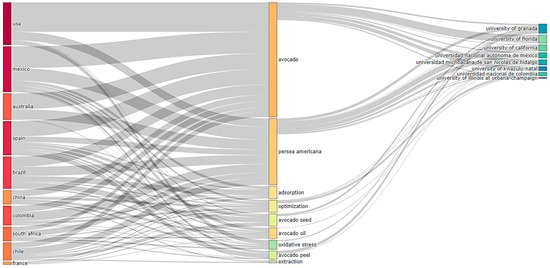
Figure A1.
Relationship between institutions, countries, and most used author keywords.
Appendix E
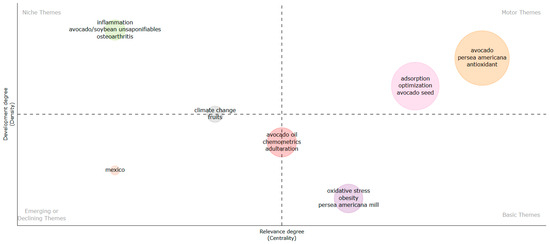
Figure A2.
Thematic map according to bibliometrix.
References
- Lara-Flores, A.A.; Araújo, R.G.; Rodríguez-Jasso, R.M.; Aguedo, M.; Aguilar, C.N.; Trajano, H.L.; Ruiz, H.A. Bioeconomy and Biorefinery: Valorization of Hemicellulose from Lignocellulosic Biomass and Potential Use of Avocado Residues as a Promising Resource of Bioproducts. In Waste to Wealth: Energy, Environment, and Sustainability; Springer: Singapore, 2018; pp. 141–170. [Google Scholar] [CrossRef]
- Charles, A.C.; Dadmohammadi, Y.; Abbaspourrad, A. Food and cosmetic applications of the avocado seed: A review. Food Funct. 2022, 13, 6894–6901. [Google Scholar] [CrossRef]
- Rodríguez-Martínez, B.; Ferreira-Santos, P.; Gullón, B.; Teixeira, J.A.; Botelho, C.M.; Yáñez, R. Exploiting the Potential of Bioactive Molecules Extracted by Ultrasounds from Avocado Peels—Food and Nutraceutical Applications. Antioxidants 2021, 10, 1475. [Google Scholar] [CrossRef]
- Ginting, M.H.S.; Irvan Misran, E.; Maulina, S. Potential of durian, avocado and jackfruit seed as raw material of bioethanol: A review. IOP Conf. Ser. Mater. Sci. Eng. 2020, 801, 012045. [Google Scholar] [CrossRef]
- Merino, D.; Bertolacci, L.; Paul, U.C.; Simonutti, R.; Athanassiou, A. Avocado Peels and Seeds: Processing Strategies for the Development of Highly Antioxidant Bioplastic Films. ACS Appl. Mater. Interfaces 2021, 13, 38688–38699. [Google Scholar] [CrossRef]
- Nyakang’i, C.O.; Ebere, R.; Marete, E.; Arimi, J.M. Avocado production in Kenya in relation to the world, Avocado by-products (seeds and peels) functionality and utilization in food products. Appl. Food Res. 2023, 3, 100275. [Google Scholar] [CrossRef]
- Solarte-Toro, J.C.; Ortiz-Sanchez, M.; Restrepo-Serna, D.L.; Peroza Piñeres, P.; Pérez Cordero, A.; Cardona Alzate, C.A. Influence of products portfolio and process contextualization on the economic performance of small- and large-scale avocado biorefineries. Bioresour. Technol. 2021, 342, 126060. [Google Scholar] [CrossRef]
- Piedrahita-Rodríguez, S.; Solarte-Toro, J.C.; Piñeres, P.P.; Ortiz-Sánchez, M.; Pérez-Cordero, A.; Cardona-Alzate, C.A. Analysis of a biorefinery with multiple raw materials in the context of post-conflict zones in Colombia: Plantain and avocado integration in the Montes de María region. Biomass Convers. Biorefinery 2022, 12, 4531–4548. [Google Scholar] [CrossRef]
- Restrepo-Serna, D.L.; Solarte-Toro, J.C.; Cardona-Alzate, C.A. A Biorefinery Approach for an Integral Valorisation of Avocado Peel and Seeds Through Supercritical Fluids. Waste Biomass Valorization 2022, 13, 3973–3988. [Google Scholar] [CrossRef]
- Salsabilah, N.; Karuniahaj, M.E.; Kautsar, D.B.; Suari, N.M.I.P.; Setyawan, H.; Nurtono, T. Simulation of Microencapsulation Avocado Seeds Oil by Spray Drying. IOP Conf. Ser. Earth Environ. Sci. 2021, 830, 012061. [Google Scholar] [CrossRef]
- Gómez, J.A.; Matallana, L.G.; Sánchez, Ó.J. Towards a Biorefinery Processing Waste from Plantain Agro-Industry: Process Design and Techno-Economic Assessment of Single-Cell Protein, Natural Fibers, and Biomethane Production through Process Simulation. Fermentation 2022, 8, 582. [Google Scholar] [CrossRef]
- Elhalwagy, M.; Dyck, N.; Straatman, A.G. A Multi–Level Approach for Simulation of Storage and Respiration of Produce. Appl. Sci. 2019, 9, 1052. [Google Scholar] [CrossRef]
- Sousa, D.; Rodrigues, D.; Castro, P.M.; Matos, H.A. Equation-Oriented Modeling and Optimization of a Biorefinery Based on Avocado Waste. Process 2023, 12, 91. [Google Scholar] [CrossRef]
- Herrera-Rodríguez, T.; Parejo-Palacio, V.; González-Delgado, Á. Computer-Aided Simulation of Avocado Oil Production in North Colombia. Chem. Eng. Trans. 2022, 92, 415–420. [Google Scholar]
- Herrera, T.; Parejo, V.; González-Delgado, Á. Quality of Energy Conservation in an Avocado Oil Extraction Process Via Exergy Analysis. Chem. Eng. Trans. 2022, 91, 241–246. [Google Scholar]
- Herrera, T.; Parejo, V.; González-Delgado, Á. Environmental Analysis of Avocado (Laurus persea L.) Oil Production in North Colombia using the Waste Reduction Algorithm. Chem. Eng. Trans. 2022, 91, 235–240. [Google Scholar]
- Donthu, N.; Kumar, S.; Mukherjee, D.; Pandey, N.; Lim, W.M. How to conduct a bibliometric analysis: An overview and guidelines. J. Bus. Res. 2021, 133, 285–296. [Google Scholar] [CrossRef]
- Zakaria, R.; Vit, P.; Wijaya, A.; Ahmad, A.H.; Othman, Z.; Mezzetti, B. A bibliometric review of Persea americana Mill. (Lauraceae): A green gold in agroindustry. AIMS Agric. Food. 2022, 7, 831–854. [Google Scholar] [CrossRef]
- Cáceres-Zambrano, J.; Ramírez-Gil, J.G.; Barrios, D. Perception and trends towards research and technological development in the avocado value chain using data science tools. Rev. Ceres 2024, 71, e71020. [Google Scholar] [CrossRef]
- Nazir, N.; Hariry, A.; Widiyastuti, W.; Panatarani, C.; Praseptiangga, D.; Aziz, R.; Syamani, F.A. Research Trends on the Use of Avocado Starch for Biofilm Production: Bibliometric Analysis Using VOSviewer. AJARCDE Asian J. Appl. Res. Community Dev. Empower. 2023, 7, 169–176. [Google Scholar] [CrossRef]
- Taramuel-Taramuel, J.P.; Jiménez-Hernández, C.N.; Barrios, D. Precision agriculture in avocado production: Mapping the landscape of scientific and technological developments. Rev. Colomb. Cienc. Hortic. 2024, 18, e17428. [Google Scholar] [CrossRef]
- Zhu, J.; Liu, W. A tale of two databases: The use of Web of Science and Scopus in academic papers. Scientometrics 2020, 123, 321–335. [Google Scholar] [CrossRef]
- Bibliometric, A.; Alviz-Meza, A.; Orozco-Agamez, J.; PQuinayá, D.C.; Alviz-Amador, A. Bibliometric Analysis of Fourth Industrial Revolution Applied to Material Sciences Based on Web of Science and Scopus Databases from 2017 to 2021. ChemEngineering 2023, 7, 2. [Google Scholar] [CrossRef]
- Camargo, L.; Comas, D.; Escorcia, Y.C.; Alviz-Meza, A.; Carrillo Caballero, G.; Portnoy, I. Bibliometric Analysis of Global Trends around Hydrogen Production Based on the Scopus Database in the Period 2011–2021. Energies 2022, 16, 87. [Google Scholar] [CrossRef]
- Aria, M.; Cuccurullo, C. bibliometrix: An R-tool for comprehensive science mapping analysis. J. Informetr. 2017, 11, 959–975. [Google Scholar] [CrossRef]
- Karahan, S.; Gül, L.F. Mapping Current Trends on Gamification of Cultural Heritage. In Game + Design Education; Springer International Publishing: Cham, Switzerland, 2021; pp. 281–293. [Google Scholar] [CrossRef]
- Gaur, A.; Kumar, M. A systematic approach to conducting review studies: An assessment of content analysis in 25 years of IB research. J. World Bus. 2018, 53, 280–289. [Google Scholar] [CrossRef]
- Wallin, J.A. Bibliometric Methods: Pitfalls and Possibilities. Basic Clin. Pharmacol. Toxicol. 2005, 97, 261–275. [Google Scholar] [CrossRef] [PubMed]
- FAO. Principales Frutas Tropicales. Análisis del Mercado. Resultados Preliminares 2023; FAO: Rome, Italy, 2023. [Google Scholar]
- Sandoval-Contreras, T.; González Chávez, F.; Poonia, A.; Iñiguez-Moreno, M.; Aguirre-Güitrón, L. Avocado Waste Biorefinery: Towards Sustainable Development. Recycling 2023, 8, 81. [Google Scholar] [CrossRef]
- Mora-Sandí, A.; Ramírez-González, A.; Castillo-Henríquez, L.; Lopretti-Correa, M.; Vega-Baudrit, J.R. Persea Americana Agro-Industrial Waste Biorefinery for Sustainable High-Value-Added Products. Polymers 2021, 13, 1727. [Google Scholar] [CrossRef]
- Kokorevics, A. The Research Landscape of Biorefinery: A Scientometrics Viewpoint. Mater. Sci. Forum 2022, 1071, 155–165. [Google Scholar] [CrossRef]
- Saberi, M.K.; Abedi, H. Accessibility and decay of web citations in five open access ISI journals. Internet Res. 2012, 22, 234–247. [Google Scholar] [CrossRef]
- Parolo, P.D.B.; Pan, R.K.; Ghosh, R.; Huberman, B.A.; Kaski, K.; Fortunato, S. Attention decay in science. J. Informetr. 2015, 9, 734–745. [Google Scholar] [CrossRef]
- Repiso, R.; Moreno-Delgado, A.; Aguaded, I. Factors affecting the frequency of citation of an article. Iberoam. J. Sci. Meas. Commun. 2021, 1, 7. [Google Scholar] [CrossRef]
- Chanderbali, A.S.; Albert, V.A.; Ashworth, V.E.; Clegg, M.T.; Litz, R.E.; Soltis, D.E.; Soltis, P.S. Persea americana (avocado): Bringing ancient flowers to fruit in the genomics era. BioEssays 2008, 30, 386–396. [Google Scholar] [CrossRef]
- Chanderbali, A.S.; Albert, V.A.; Leebens-Mack, J.; Altman, N.S.; Soltis, D.E.; Soltis, P.S. Transcriptional signatures of ancient floral developmental genetics in avocado (Persea americana; Lauraceae). Proc. Natl. Acad. Sci. USA 2009, 106, 8929–8934. [Google Scholar] [CrossRef]
- Chanderbali, A.S.; Kim, S.; Buzgo, M.; Zheng, Z.; Oppenheimer, D.G.; Soltis, D.E.; Soltis, P.S. Genetic Footprints of Stamen Ancestors Guide Perianth Evolution in Persea (Lauraceae). Int. J. Plant Sci. 2006, 167, 1075–1089. [Google Scholar] [CrossRef][Green Version]
- Mallampati, R.; Xuanjun, L.; Adin, A.; Valiyaveettil, S. Fruit peels as efficient renewable adsorbents for removal of dissolved heavy metals and dyes from water. ACS Sustain. Chem. Eng. 2015, 3, 1117–1124. [Google Scholar] [CrossRef]
- Machado, S.; Pacheco, J.G.; Nouws, H.P.A.; Albergaria, J.T.; Delerue-Matos, C. Characterization of green zero-valent iron nanoparticles produced with tree leaf extracts. Sci. Total Environ. 2015, 533, 76–81. [Google Scholar] [CrossRef] [PubMed]
- Machado, S.; Pinto, S.L.; Grosso, J.P.; Nouws, H.P.A.; Albergaria, J.T.; Delerue-Matos, C. Green production of zero-valent iron nanoparticles using tree leaf extracts. Sci. Total Environ. 2013, 445–446, 1–8. [Google Scholar] [CrossRef] [PubMed]
- Tatsumi, K.; Yamashiki, Y.; Canales Torres, M.A.; Taipe, C.L.R. Crop classification of upland fields using Random forest of time-series Landsat 7 ETM+ data. Comput. Electron. Agric. 2015, 115, 171–179. [Google Scholar] [CrossRef]
- Lobell, D.B.; Field, C.B.; Cahill, K.N.; Bonfils, C. Impacts of future climate change on California perennial crop yields: Model projections with climate and crop uncertainties. Agric. For. Meteorol. 2006, 141, 208–218. [Google Scholar] [CrossRef]
- Cui, L.; Wall, P.K.; Leebens-Mack, J.H.; Lindsay, B.G.; Soltis, D.E.; Doyle, J.J.; Soltis, P.S.; Carlson, J.E.; Arumuganathan, K.; Barakat, A.; et al. Widespread genome duplications throughout the history of flowering plants. Genome Res. 2006, 16, 738–749. [Google Scholar] [CrossRef] [PubMed]
- Wall, P.K.; Leebens-Mack, J.; Chanderbali, A.S.; Barakat, A.; Wolcott, E.; Liang, H.; Landherr, L.; Tomsho, L.P.; Hu, Y.; Carlson, J.E.; et al. Comparison of next generation sequencing technologies for transcriptome characterization. BMC Genom. 2009, 10, 347. [Google Scholar] [CrossRef] [PubMed]
- Cara, B.; Giovannoni, J.J. Molecular biology of ethylene during tomato fruit development and maturation. Plant Sci. 2008, 175, 106–113. [Google Scholar] [CrossRef]
- Sowbhagya, H.B.; Chitra, V.N. Enzyme-assisted extraction of flavorings and colorants from plant materials. Crit. Rev. Food Sci. Nutr. 2010, 50, 146–161. [Google Scholar] [CrossRef]
- González-Miret, M.L.; Terrab, A.; Hernanz, D.; Fernández-Recamales, M.Á.; Heredia, F.J. Multivariate correlation between color and mineral composition of honeys and by their botanical origin. J. Agric. Food Chem. 2005, 53, 2574–2580. [Google Scholar] [CrossRef]
- Zhu, Z.; Yao, X.; Qin, Y.; Lu, Z.; Ma, Q.; Zhao, X.; Liu, L. Visualization and mapping of literature on the scientific analysis of wall paintings: A bibliometric analysis from 2011 to 2021. Herit. Sci 2022, 10, 105. [Google Scholar] [CrossRef]
- Bauer, R. California Farmland: The Largest Food Producer in the US. Farm Together. 2022. Available online: https://farmtogether.com/learn/blog/california-farmland-the-largest-food-producer-in-the-us (accessed on 18 October 2024).
- Pagliaccia, D.; Pond, E.; McKee, B.; Douhan, G.W. Population Genetic Structure of Phytophthora cinnamomi Associated with Avocado in California and the Discovery of a Potentially Recent Introduction of a New Clonal Lineage. Phytopathology 2012, 103, 91–97. [Google Scholar] [CrossRef]
- Mickelbart, M.V.; Robinson, P.W.; Witney, G.; Arpaia, M.L. ‘Hass’ Avocado tree growth on four rootstocks in California. I. Yield and flowering. Sci. Hortic. 2012, 143, 184–188. [Google Scholar] [CrossRef]
- Arias Bustos, C.; Moors, E.H.M. Reducing post-harvest food losses through innovative collaboration: Insights from the Colombian and Mexican avocado supply chains. J. Clean. Prod. 2018, 199, 1020–1034. [Google Scholar] [CrossRef]
- McManus, C.; Baeta Neves, A.A. Funding research in Brazil. Scientometrics 2021, 126, 801–823. [Google Scholar] [CrossRef]
- Hoekman, J.; Scherngell, T.; Frenken, K.; Tijssen, R. Acquisition of European research funds and its effect on international scientific collaboration. J. Econ. Geogr. 2013, 13, 23–52. [Google Scholar] [CrossRef]
- Robertson, G.P.; Barry, P.J.; Busta, F.F.; Collier, R.J.; Keen, N.T.; Sederoff, R.R.; Simpkins, W.W.; Stormshak, F.; Urban, T.N. Moribund Funding in Agricultural Research. Science 2001, 291, 2089–2090. [Google Scholar] [CrossRef] [PubMed]
- Dávila, J.A.; Rosenberg, M.; Castro, E.; Cardona, C.A. A model biorefinery for avocado (Persea americana mill.) processing. Bioresour. Technol. 2017, 243, 17–29. [Google Scholar] [CrossRef] [PubMed]
- Stanford, L. Constructing “quality”: The political economy of standards in Mexico’s avocado industry. Agric. Human. Values 2002, 19, 293–310. [Google Scholar] [CrossRef]
- Duarte, P.F.; Chaves, M.A.; Borges, C.D.; Mendonça, C.R.B. Avocado: Characteristics, health benefits and uses. Ciênc. Rural 2016, 46, 747–754. [Google Scholar] [CrossRef]
- Bill, M.; Sivakumar, D.; Thompson, A.K.; Korsten, L. Avocado Fruit Quality Management during the Postharvest Supply Chain. Food Rev. Int. 2014, 30, 169–202. [Google Scholar] [CrossRef]
- Gomez, E.; Roberts, R.E. Avocadoes and Chinese cuisine. Acta Hortic. 2018, 1213, 95–103. [Google Scholar] [CrossRef]
- García-Vargas, M.C.; Contreras, M.D.M.; Castro, E. Avocado-Derived Biomass as a Source of Bioenergy and Bioproducts. Appl. Sci. 2020, 10, 8195. [Google Scholar] [CrossRef]
- El Amraoui, K.; Ezzaki, A.; Masmoudi, L.; Hadri, M.; El Belrhiti, H.; El Ansari, M.; Amari, A. Machine learning algorithm for Avocado image segmentation based on quantum enhancement and Random forest. In Proceedings of the 2022 2nd International Conference on Innovative Research in Applied Science, Engineering and Technology (IRASET), Meknes, Morocco, 3–4 March 2022. [Google Scholar]
- Wang, L.; Tao, L.; Hao, L.; Stanley, T.H.; Huang, K.-H.; Lambert, J.D.; Kris-Etherton, P.M. A Moderate-Fat Diet with One Avocado per Day Increases Plasma Antioxidants and Decreases the Oxidation of Small, Dense LDL in Adults with Overweight and Obesity: A Randomized Controlled Trial. J. Nutr. 2020, 150, 276–284. [Google Scholar] [CrossRef]
- Baidhe, E.; Kiggundu, N.; Banadda, N.; Baidhe, E.; Kiggundu, N.; Banadda, N. The Bioprocessing Quick Wins from Avocado Fruit in Uganda. Adv. Biosci. Biotechnol. 2020, 11, 405–419. [Google Scholar] [CrossRef]
- Jangravi, Z.; Basereh, S.; Zaree Mahmoudabadi, A.; Saberi, M.; Alishiri, G.H.; Korani, M. Avocado/soy unsaponifiables can redress the balance between serum antioxidant and oxidant levels in patients with osteoarthritis: A double-blind, randomized, placebo-controlled, cross-over study. J. Complement. Integr. Med. 2021, 18, 769–774. [Google Scholar] [CrossRef] [PubMed]
- Dagde, K.K. Extraction of vegetable oil from avocado seeds for production of biodiesel. J. Appl. Sci. Environ. Manag. 2019, 23, 215–221. [Google Scholar] [CrossRef]
- Sathish, S.; Narendrakumar, G.; Vaithyasubramanian, S.; Sinduri, E. Mechanistic model for the batch extraction of oil from avocado seeds available for biofuel production. Int. J. Green Energy 2021, 18, 1645–1657. [Google Scholar] [CrossRef]
- Araujo, R.G.; Rodríguez-Jasso, R.M.; Ruíz, H.A.; Govea-Salas, M.; Pintado, M.; Aguilar, C.N. Recovery of bioactive components from avocado peels using microwave-assisted extraction. Food Bioprod. Process. 2021, 127, 152–161. [Google Scholar] [CrossRef]
- Trujillo-Mayol, I.; Badillo-Muñoz, G.; Céspedes-Acuña, C.; Alarcón-Enos, J. The Relationship between Fruit Size and Phenolic and Enzymatic Composition of Avocado Byproducts (Persea americana Mill.): The Importance for Biorefinery Applications. Hortic. 2020, 6, 91. [Google Scholar] [CrossRef]
- Weremfo, A.; Adulley, F.; Adarkwah-Yiadom, M. Simultaneous Optimization of Microwave-Assisted Extraction of Phenolic Compounds and Antioxidant Activity of Avocado (Persea americana Mill.) Seeds Using Response Surface Methodology. J. Anal. Methods Chem. 2020, 2020, 7541927. [Google Scholar] [CrossRef] [PubMed]
- Figueroa, J.G.; Borrás-Linares, I.; Del Pino-García, R.; Curiel, J.A.; Lozano-Sánchez, J.; Segura-Carretero, A. Functional ingredient from avocado peel: Microwave-assisted extraction, characterization and potential applications for the food industry. Food Chem. 2021, 352, 129300. [Google Scholar] [CrossRef] [PubMed]
- Rosero, J.C.; Cruz, S.; Osorio, C.; Hurtado, N. Analysis of Phenolic Composition of Byproducts (Seeds and Peels) of Avocado (Persea americana Mill.) Cultivated in Colombia. Molecules 2019, 24, 3209. [Google Scholar] [CrossRef] [PubMed]
- Ansari, M.Y.; Ahmad, N.; Haqqi, T.M. Oxidative stress and inflammation in osteoarthritis pathogenesis: Role of polyphenols. Biomed. Pharmacother. 2020, 129, 110452. [Google Scholar] [CrossRef] [PubMed]
- García-Berumen, C.I.; Vargas-Vargas, M.A.; Ortiz-Avila, O.; Piña-Zentella, R.M.; Ramos-Gómez, M.; Figueroa-García, M.D.C.; Mejía-Zepeda, R.; Rodríguez-Orozco, A.R.; Saavedra-Molina, A.; Cortés-Rojo, C. Avocado oil alleviates non-alcoholic fatty liver disease by improving mitochondrial function, oxidative stress and inflammation in rats fed a high fat-High fructose diet. Front. Pharmacol. 2022, 13, 1089130. [Google Scholar] [CrossRef] [PubMed]
- Ukpong, A.A.; Asuquo, O.; Ime, G. The Adsorption Equilibrium and Kinetic Studies for the Removal of Crystal Violet Dye (Methyl Violet 6b) from Aqueous Solution Using Avocado Pear Seed Activated Carbon. Available online: www.rsisinternational.org (accessed on 18 October 2024).
- Sellaoui, L.; Yazidi, A.; Taamalli, S.; Bonilla-Petriciolet, A.; Louis, F.; El Bakali, A.; Badawi, M.; Lima, E.C.; Lima, D.R.; Chen, Z. Adsorption of 3-aminophenol and resorcinol on avocado seed activated carbon: Mathematical modelling, thermodynamic study and description of adsorbent performance. J. Mol. Liq. 2021, 342, 116952. [Google Scholar] [CrossRef]
- Tefera, N.; Mulualem, Y.; Fito, J. Adsorption of Fluoride from Aqueous Solution and Groundwater onto Activated Carbon of Avocado Seeds. Water Conserv. Sci. Eng. 2020, 5, 187–197. [Google Scholar] [CrossRef]
- Cárceles Rodríguez, B.; Durán Zuazo, V.H.; Franco Tarifa, D.; Cuadros Tavira, S.; Sacristan, P.C.; García-Tejero, I.F. Irrigation Alternatives for Avocado (Persea americana Mill.) in the Mediterranean Subtropical Region in the Context of Climate Change: A Review. Agriculture 2023, 13, 1049. [Google Scholar] [CrossRef]
- Kourgialas, N.N.; Dokou, Z. Water management and salinity adaptation approaches of Avocado trees: A review for hot-summer Mediterranean climate. Agric. Water Manag. 2021, 252, 106923. [Google Scholar] [CrossRef]
- Grüter, R.; Trachsel, T.; Laube, P.; Jaisli, I. Expected global suitability of coffee, cashew and avocado due to climate change. PLoS ONE 2022, 17, e0261976. [Google Scholar] [CrossRef] [PubMed]
- Parker, L.; Pathak, T.; Ostoja, S. Climate change reduces frost exposure for high-value California orchard crops. Sci. Total Environ. 2021, 762, 143971. [Google Scholar] [CrossRef] [PubMed]
- Ulayya, H.F.; Nursayyida, A.; Atmaja, F.I.; Santoso, B. Study of Virtual Molecular Docking of Avocados Compounds against Pseudomonas aeruginosa (5N5H) by Carbapenemase using DOCK 6 Algorithm. JKPK J. Kim. Dan Pendidik. Kim. 2021, 6, 183–191. [Google Scholar] [CrossRef]
- Kuhn, D.N.; Livingstone, D.S.; Richards, J.H.; Manosalva, P.; Van den Berg, N.; Chambers, A.H. Application of genomic tools to avocado (Persea americana) breeding: SNP discovery for genotyping and germplasm characterization. Sci. Hortic. 2019, 246, 1–11. [Google Scholar] [CrossRef]
- Herrera-Rodríguez, T.; Parejo-Palacio, V.; González-Delgado, Á. Technoeconomic Analysis of Dual Oil and Biochar Production from Creole Avocado in North-Colombia. Chem. Eng. Trans. 2022, 92, 403–408. [Google Scholar]
- Aguilar-Vasquez, E.A.; Herrera-Rodriguez, T.C.; González-Delgado, Á.D. Comprehensive Utilization of Avocado in Biorefinery: A Bibliometric and Co-Occurrence Approach 2003–2023. Sustainability 2024, 16, 9414. [Google Scholar] [CrossRef]
- Herrera-Rodriguez, T.; Parejo-Palacio, V.; Gonzalez-Delgado, A. Techno-economic Evaluation of Creole Avocado Biomass Valorization via Oil Production in North-colombia. Chem. Eng. Trans. 2022, 92, 409–414. [Google Scholar]
- Herrera, T.; Parejo, V.; González-Delgado, Á. Chemical and Process Inherent Safety Evaluation of Avocado Oil Production (Laurus persea L.) in North Colombia. Chem. Eng. Trans. 2022, 91, 247–252. [Google Scholar]
- Vega Díaz, J.J.; Sandoval Aldana, A.P.; Reina Zuluaga, D.V. Prediction of dry matter content of recently harvested ‘Hass’ avocado fruits using hyperspectral imaging. J. Sci. Food Agric. 2021, 101, 897–906. [Google Scholar] [CrossRef] [PubMed]
- Medina-Barreto, M.H.; Bustamante-Mejía, J. Non-invasive analysis with dynamic infrared thermography to calculate dry matter in Hass avocado via neural networks. In Proceedings of the 16th Quantitative InfraRed Thermography Conference, Paris, France, 4–8 July 2022. [Google Scholar]
- Tang, F.; Green, H.S.; Wang, S.C.; Hatzakis, E. Analysis and Authentication of Avocado Oil Using High Resolution NMR Spectroscopy. Molecules 2021, 26, 310. [Google Scholar] [CrossRef] [PubMed]
- Jiménez-Carvelo, A.M.; Martín-Torres, S.; Ortega-Gavilán, F.; Camacho, J. PLS-DA vs sparse PLS-DA in food traceability. A case study: Authentication of avocado samples. Talanta 2021, 224, 121904. [Google Scholar] [CrossRef] [PubMed]
Disclaimer/Publisher’s Note: The statements, opinions and data contained in all publications are solely those of the individual author(s) and contributor(s) and not of MDPI and/or the editor(s). MDPI and/or the editor(s) disclaim responsibility for any injury to people or property resulting from any ideas, methods, instructions or products referred to in the content. |
© 2025 by the authors. Licensee MDPI, Basel, Switzerland. This article is an open access article distributed under the terms and conditions of the Creative Commons Attribution (CC BY) license (https://creativecommons.org/licenses/by/4.0/).