Essay

Enhancing Innovation Performance in Chinese Agribusinesses: A Dynamic Panel–QCA of Configurational Effects


College of Economics and Management, Shandong Agricultural University, Taishan District, Tai’an 271018, China
*
Author to whom correspondence should be addressed.
Sustainability 2025, 17(24), 11250; https://doi.org/10.3390/su172411250
Submission received: 18 November 2025 / Revised: 10 December 2025 / Accepted: 12 December 2025 / Published: 16 December 2025

Abstract

The strengthened role of agribusinesses as innovators depends on improvements in their innovation performance, yet how to achieve this remains unresolved. Grounded in the technology–organization–environment (TOE) framework and drawing on 2020–2022 panel data from 73 Chinese agribusinesses, we apply panel–QCA to examine how R&D personnel, managerial innovativeness, and digital technology adoption interact to generate superior innovation outcomes. The results reveal that no single technological, organizational, or environmental factor constitutes a necessary condition; instead, high innovation performance results from specific configurations. Three dominant pathways are identified: organization-driven, technology–organization synergistic, and organization–technology synergistic. In particular, organizational factors serve as core conditions across all configurations, offering stage-appropriate routes for firms at different development phases. Over time, all three configurations decline under external shocks. Furthermore, heterogeneity across firms underscores the need for tailored, dynamic strategies. Therefore, agribusinesses should “configure by context,” continuously monitor shifting configurational elements, and select adaptive pathways to sustain sustainable innovation performance amid environmental volatility.

1. Introduction

In the context of globalization, sustainable development is crucial for the survival and prosperity of all nations. From the perspective of the United Nations Sustainable Development Goals (SDGs) [1,2], sustainable development involves balancing economic, social, and environmental needs and interests to achieve sustainable resource utilization, ecosystem stability, and improved human well-being [3,4,5,6]. Among these, UN Sustainable Development Goal 9 (SDG-9) highlights innovation as a core driver for countries to promote economic growth, enhance their international standing, and achieve sustainable development. Innovation within agricultural enterprises is directly linked to national food security and strategic reserves [7]. Therefore, activating the innovative potential of agricultural enterprises contributes to improving resource efficiency, reducing environmental pollution, and generating sustainable value for nations [8,9].
As a country with a long agricultural history, China actively responds to the goals of innovative sustainable development and is currently at a critical juncture in its transition to modern agriculture. The outline of the “14th Five-Year Plan” emphasizes consolidating the central role of agricultural enterprises in innovation by guiding various innovation resources towards them. This aims to enable these enterprises to lead agricultural innovation, protect fundamental industries, and safeguard national food security. Enhancing the innovation performance of agricultural enterprises is not only a guarantee for accelerating the building of a strong agricultural sector and improving overall agricultural efficiency and competitiveness [10], but also a vital support and solid foundation for ensuring sustained growth in national agricultural output [11]. “The 2025 Report on Innovation in China’s Agriculture-Related Enterprises” notes that while corporate innovation investment capacity has shown steady growth and the innovation environment continues to improve, gaps remain compared to other industries in terms of R&D intensity, policy support, and corporate capability building. Furthermore, a realistic assessment reveals that the innovative and sustainable development of Chinese agricultural enterprises is affected not only by external shocks such as the COVID-19 pandemic and trade disputes but also faces a series of challenges including insufficient R&D investment with low fund utilization efficiency, weak talent attraction and retention coupled with relatively low personnel competency, and underdeveloped supportive policies [12,13]. Overall, the innovation capacity of agricultural enterprises remains relatively weak. These shortcomings constrain the improvement of innovation performance in Chinese agricultural enterprises and simultaneously represent key areas for future enhancement. Consequently, accelerating innovation performance improvements in China’s agricultural sector, a foundational industry, can provide valuable insights for other countries seeking to enhance the innovation performance of their own agricultural enterprises by adapting strategies to their specific resource endowments.
Existing domestic and international research on the innovation performance of agricultural enterprises primarily explores factors from two dimensions: the external environment and the internal enterprise environment. External influencing factors mainly include government actions such as fiscal subsidies [14], policy frameworks [15], formal and informal regulations [16], as well as market competition mechanisms. Internal influencing factors mainly encompass R&D capital and personnel investment [17], digital technology adoption [18], internal management systems and innovation strategies [19,20], management’s innovation awareness [21], and marketing strategy style [22]. These studies on internal and external environmental factors have established a solid theoretical foundation for subsequent in-depth research. In terms of research content, existing work has largely been confined to the technological dimension, delving into the role of factors like digital transformation and technological renewal in driving corporate innovation performance, while studies from the perspectives of internal organizational structure and the broader external environment remain relatively insufficient. The Technology–Organization–Environment (TOE) framework, as a comprehensive theoretical lens, can effectively encompass the factors influencing agricultural enterprise innovation performance and systematically categorize them into technological, organizational, and environmental dimensions. Regarding research methodology, studies have predominantly relied on constructing evaluation indicator systems, single case study analysis, or quantitative regression analysis. These approaches often focus solely on the “net effect” of individual antecedent variables on innovation performance, failing to fully account for the complexity and non-linear characteristics of agricultural enterprise innovation performance and neglecting the synergistic effects arising from the interaction of multi-level, multi-factor conditions. In terms of research subjects, the focus has mainly been on market entities such as manufacturing enterprises, technology firms, state-owned enterprises, and private enterprises, with very few studies specifically targeting agricultural enterprises as the primary subject of investigation.
Based on the literature review, we find that enhancing the innovation performance of agricultural enterprises results from the joint effects of multi-level influencing factors, and different enterprises may adopt diverse improvement strategies. Therefore, this study raises two fundamental questions: How do multi-level factors synergistically influence the enhancement of agricultural enterprise innovation performance? How can agricultural enterprises be assisted in generating high innovation performance differentially based on their specific resource conditions?
The potential contributions of this paper are as follows: First, it establishes a theoretical framework for driving agricultural enterprise innovation performance and enriches the application of the Technology–Organization–Environment (TOE) theory by focusing on agricultural enterprises as the research subject. Second, while existing research tends to employ static methods focusing on the impact of single variables on innovation performance, this study breaks through the limitation of traditional Qualitative Comparative Analysis (QCA) using cross-sectional data. By employing a dynamic QCA method with panel data, it analyzes the temporal and individual effects on high innovation performance in agricultural enterprises, exploring the interaction mechanisms among antecedent variables and the relationships between different configurations of these variables and enterprise innovation performance. Furthermore, from a configurational perspective, this study explores and identifies three equivalent paradigmatic pathways that drive high innovation performance in agricultural enterprises, based on the analysis of core conditions and their complex interaction mechanisms. This provides new perspectives and empirical references for enhancing innovation performance in agricultural enterprises at different stages (initial, development, and maturity) under varying contextual conditions. Finally, as the largest emerging economy, the adaptive capacity and innovation performance demonstrated by Chinese agricultural enterprises amidst challenges such as external shocks can offer valuable lessons for similar enterprises in other countries.

2. Literature Review and Research Framework

2.1. TOE Theory

TOE theory was constructed by Tornatzky and Fleischer and is mainly used for research on enterprise technological innovation. In this theoretical framework, the conditions affecting enterprise technological innovation are divided into three dimensions: technology, organization, and environment. The technology dimension focuses on assessing the core characteristics of technology, such as technological capabilities and governance strategies. This framework also emphasizes the integration of technology with overall organizational capabilities and how technology can be effectively transformed into actual organizational benefits. The organizational dimension focuses on the core elements of organizational management (i.e., business boundaries, size, and structure of an organization) and explores how these factors promote the effective use of technology and maximize its performance. The environmental dimension mainly considers related aspects, such as the economic, political, and institutional environment.
The application of TOE theory in enterprise innovation research has expanded over the years to include the innovation performance of manufacturing enterprises [23,24] and listed companies in the pharmaceutical manufacturing industry [25,26]. After continuous innovation and development, this theory has been applied to various application scenarios, such as enterprise digital transformation [27,28], the green transformation of enterprises [29,30], and government service levels [31,32]—all of which are closely aligned with and contribute to national sustainable development efforts, demonstrating its high generality, flexibility, and practicality.
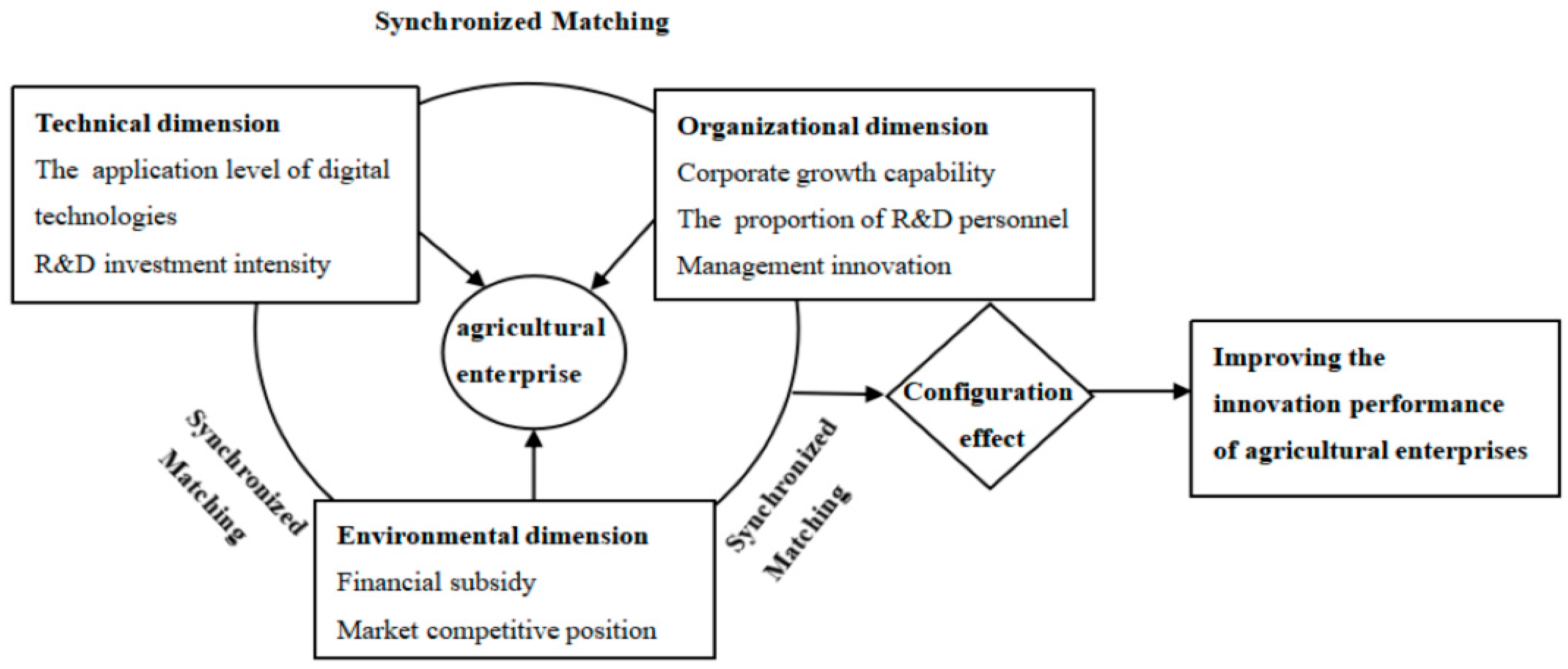
Agricultural enterprises are fundamental building blocks for national and social sustainable development, and enhancing their innovation performance represents a systematic and complex undertaking. Improving agricultural enterprises’ innovation performance is a systematic project. Drawing on TOE theory, the present study constructs a research framework covering seven influencing factors in three dimensions, technology (T), organization (O), and environment (E), aiming to conduct an in-depth analysis of the complex mechanisms of multifactor interactions and their complex causal relationships, which lead to high innovation performance among enterprises. The specific framework is shown in Figure 1.

2.2. TOE Analysis Framework for Factors Driving Innovation Performance Enhancement in Listed Agricultural Enterprises

Improving agricultural enterprises’ innovation performance is a process in which enterprises transform their innovation resources and capabilities into effectiveness through innovation activities. In turn, these activities enhance enterprise economic benefits, drive technological progress, and promote comprehensive social and economic development. The improvement of agricultural enterprises’ innovation performance is influenced by multiple factors. Therefore, this study integrates the TOE theoretical framework to summarize and refine seven antecedent variables affecting the improvement of innovation performance in agricultural enterprises: (1) R&D investment intensity, (2) digital technology application level, (3) R&D personnel proportion, (4) management innovation, (5) enterprise growth capacity, (6) fiscal subsidies, and (7) market competition status. With the support of the fsQCA method, this study clarifies the linkages and coordination mechanisms between multilevel TOE factors to derive the configuration paths leading to high innovation performance in agricultural enterprises. The specific framework is shown in Figure 1.

2.2.1. Technological Dimension Factors

R&D investment intensity and the level of digital technology application constitute the technological dimensions considered in this study when examining drivers of innovation performance in agricultural enterprises. R&D investment intensity is widely acknowledged as a pivotal determinant of corporate innovation. In fact, a large body of empirical research has linked R&D expenditures to firm performance and uncovered the dynamic mechanisms governing their relationship. Several studies have reported a clear positive association between the two constructs. For instance, an investigation into the performance determinants of leading Chinese agricultural firms found that R&D investments exerted a positive influence on product performance [33]. Another study found that R&D intensity served as a crucial engine within the continuous innovation cycle, thus enabling firms to sustain the renewal and expansion of new products or services, thereby enhancing their innovation performance [34,35]. By contrast, other empirical evidence suggests that the relationship between R&D investment and firm performance is not necessarily positive and significant [36]. The discrepancy in findings is largely attributed to scholars’ focus on the net effect of R&D intensity as a single variable, without fully accounting for its synergistic interaction with other factors.
As the cornerstone of enterprise digital transformation, digital technology plays a critical role in significantly elevating innovation performance. In the era of the digital economy, the impact of digital technology application on agricultural enterprises’ innovation performance is a double-edged sword. On the one hand, the extant research indicates a significant positive relationship between the level of digital technology application and innovation performance. Agricultural science and technology innovations can stimulate corporate R&D investments, raise agricultural output levels, and ultimately enhance innovation performance [37]. Thus, as digital transformation deepens, firms’ commitment to technological innovation intensifies, propelling innovation outputs to higher levels [38,39]. On the other hand, the adoption of digital technologies is accompanied by risks and challenges. For instance, some studies revealed an inverted U-shaped relationship between digital transformation and innovation performance, implying that while initial digital investment strongly boosts innovation, a subsequent sharp rise in information-processing costs could lead to inefficient resource allocation and distortions [40]. Other studies have identified a positive U-shaped relationship between digital technology adoption and innovation performance, indicating that innovation performance improves only after the adoption rate surpasses a critical threshold point [41]. As prior scholarly views on the effect of digital technology application on innovation performance remain inconclusive, the current study incorporates this variable into the research model in order to better explain its role from a configurational perspective.

2.2.2. Organizational Dimension Factors

The proportions of R&D personnel, managerial innovation orientation, and firm growth capacity comprise the organizational dimensions examined in this study as drivers of agricultural enterprises’ innovation performance. R&D personnel are a critical resource for innovation in that their creativity accelerates shifts in corporate thinking and ensures the effective delivery of innovative outcomes. Consequently, a larger number of R&D staff not only diffuses an innovative ethos throughout the firm but also facilitates innovative development [42]. Further research employing both quantitative and qualitative comparative analysis has confirmed that R&D personnel investment serves as a key determinant of corporate innovation performance, demonstrating a significant positive correlation [43,44]. Moreover, compared with R&D expenditure, the proportion of scientific personnel has been shown to have a more pronounced impact on technological innovation [45].
In fiercely competitive markets, senior management bears the responsibility of guiding corporate development. Studies have shown that the strategic insights and unique preferences of top executives directly shape corporate strategy and ultimately determine firm survival and growth. Studies have found that executives’ professional and technical backgrounds, as well as experience in sectors such as pharmaceuticals, contribute positively to corporate innovation performance [46,47]. Furthermore, some scholars have introduced upper echelons theory to verify that executives’ cognitive emphasis on innovation can directly enhance innovation performance [48], and can also promote it indirectly through mechanisms such as increased innovation investment and improved corporate ESG performance [49,50]. To date, domestic and international research on management characteristics has primarily focused on areas such as career backgrounds, overseas experience, and political connections [51], whereas analyses of how managerial innovation preferences affect innovation performance remain scarce. Drawing on the work of Greeven and Yip, we therefore classify managerial innovation preferences into six dimensions, (1) technological innovation preference, (2) organizational innovation preference, (3) product innovation preference, (4) process innovation preference, (5) business-model innovation preference, and (6) customer-value innovation preference, thereby enabling a more nuanced quantification of managerial innovation orientation.
Firm growth capacity is an important organizational condition signaling innovative capability [52]. During operations, firms interact dynamically with the external environment, creating a virtuous cycle in which firms’ growth potential increases when they demonstrate stronger resource-integration capabilities. This potential, in turn, channels additional resources and momentum into the innovation system, fostering dynamic innovation, enhancing long-term benefits and future development potential, and ultimately generating greater competitive advantages and growth opportunities for the enterprises.

2.2.3. Environmental Dimension Factors

Government subsidies and market competitive position constitute the environmental dimension examined in this study as drivers of agricultural enterprises’ innovation performance. As a traditional agricultural powerhouse, China’s agricultural modernization is of great significance for economic development and social stability. Agricultural research is a public-interest endeavor supported by public finance. Specifically, the government provides resource support for firms’ innovation activities through tax reductions, government procurement, and fiscal subsidies. For instance, supporting corporate R&D to reduce food loss and waste, implement climate-smart agriculture, and promote the conservation and sustainable management of agroecosystems. Government subsidies not only effectively stimulate firms’ innovative behavior [53,54,55] but also help them attract public attention and broaden their financing channels. Therefore, through the dual mechanisms of resource tilting and signal transmission, these subsidies enhance firms’ innovation vitality and comprehensively optimize and advance regional innovation [56].
Different competitive market environments also influence the enhancement of corporate innovation performance. To secure a foothold and gain a competitive edge in intense market competition, firms must offer more compelling products and services to strengthen customer loyalty, while also making a “net contribution” to society and the environment by embedding sustainability into their innovation strategies [57]. Domestic research has confirmed that firms’ innovation performance depends not only on their own R&D activities but also on three key factors: regional openness, the pace of marketization, and the strength of intellectual-property protection [58]. Some scholars abroad argue that market competition stimulates corporate innovation by increasing investor attention [59], while others contend that competition reduces supernormal profits within an industry, leading firms to cut back on innovative activities [60]. To date, no consensus has been reached regarding the singular influence of market competition on innovation performance. As the “invisible hand [61],” the market directly influences firms’ innovative activities, yet market competition can be a double-edged sword that can foster and hinder innovation. Therefore, to explore optimal resource allocation and the synergistic effects among factors, the present study incorporates market competition into the proposed TOE configurational framework.

3. Research Design

3.1. Research Method

Qualitative comparative analysis (QCA), which emerged in the 1980s within the social sciences, originates from the confluence of comparative macrosociology and comparative political science. QCA eliminates the traditional divide between qualitative and quantitative inquiries by integrating the essential features of both, leading to a set-theoretic and macroscopic synthetic methodology. This paper adopts the dynamic fsQCA method for the following reasons: First, traditional statistical analysis focuses on causal relationships between independent and dependent variables while overlooking endogenous issues among the independent variables. In contrast, QCA, based on set theory and Boolean algebra, reveals causal asymmetry and overcomes the limitations of traditional methods [62]. Second, compared with csQCA and mvQCA, fsQCA can more thoroughly dissect the logical relationships between conditions and outcomes [63]. Third, the conventional QCA is constrained by its static analytical frame and its reliance on cross-sectional data, rendering it incapable of adequately capturing configurational evolution over time. Consequently, theoretical construction using conventional QCA suffers from temporal limitation, and empirical analysis is vulnerable to sample-time truncation bias that, in turn, undermines the robustness of configurational findings [64]. Dynamic QCA examines the complex trajectories through which configurations formed by multiple conditions influence outcomes across different temporal and spatial contexts, utilizing methods such as between-group and within-group consistency analysis [65]. Agricultural enterprises’ innovation performance is not accomplished overnight. Furthermore, firms at different temporal junctures and with varying characteristic attributes follow distinct pathways to improved innovation performance.
In light of the limitations of traditional analytical methods and static fsQCA in addressing causality and temporal analysis, the present study adopts a dynamic panel–QCA approach implemented in the R programming environment. The proposed method integrates a three-dimensional (3D) measurement system that encompasses between-case variation, within-case evolution, and pooled analysis, as well as employs consistency adjustment distances (i.e., pooled, between-case, and within-case consistencies and coverage), thus systematically capturing the dynamic evolution of configurations along temporal and case dimensions [66].

3.2. Sample Selection and Data Sources

To ensure data sufficiency and availability, the study draws on the full population of A-share listed agricultural enterprises identified in the Shenyin and Wanguo Industry Classification (2021 revision) for the period 2020–2022. The observation period is set from 2020 to 2022 because this phase spans both the shock and recovery periods of external challenges such as the COVID-19 pandemic. This timeframe allows for a clearer identification of the key conditions and configurational pathways through which agricultural enterprises sustain and enhance innovation performance under adversity, thereby highlighting their resilience in responding to risks. The findings offer practically relevant insights for designing effective corporate strategies and policy measures aimed at boosting innovation performance in the post-crisis era. The sample was processed as follows: (1) firms that experienced special-treatment status during the observation window were excluded, (2) only firms possessing complete annual-report data for the three consecutive years (2020–2022) were retained, and finally, (3) observations with missing values for either outcome or condition variables were removed. After performing these procedures, 73 listed agricultural enterprises were retained from the China Stock Market & Accounting Research (CSMAR) database. Patent data were obtained from the China Research Data Services Platform (CNRDS), while indicators, such as R&D intensity, share of R&D personnel, firm growth capacity, government subsidies, and competitive position, were extracted from the CSMAR database. Furthermore, data on digital technology application and managerial innovation orientation were manually collected from firms’ annual reports.

3.3. Variable Selection and Measurement

In defining the variables, this study follows the innovation process of “resource input–transformation process–output outcome.” Conditions such as R&D investment, digital technology, R&D personnel, corporate growth capability, management innovation, market factors, and government support are treated as antecedent variables from the perspective of innovation input, reflecting the firm’s innovation commitment and strategic orientation. The number of patent applications is regarded as the outcome variable from the perspective of innovation output, representing the direct results of innovation activities. This distinction not only avoids serious endogeneity issues that would arise from discussing factors such as R&D intensity and patent counts within the same dimension but also confirms that the study focuses on examining the core question: “Which configurations of conditions can effectively translate innovation inputs into innovation outputs?”

3.3.1. Outcome Variable

Patent value is of significant importance, and the number of patent applications serves as a strong indicator of the timeliness of innovation. According to existing scholarly perspectives, the number of patent applications is currently one of the most reflective measures of innovative output and is widely adopted as a proxy for corporate innovation [67,68,69,70]. Accordingly, this study employs the annual count of patent applications to measure innovation performance.

3.3.2. Condition Variables

(1) R&D Investment Intensity
R&D investment intensity represents a firm’s technological capability. In line with common practices in both domestic and international literature [71,72], we measured R&D intensity as the ratio of R&D expenditure to operating revenue. In this case, a higher ratio indicates greater intensity.
(2) Level of Digital Technology Application
Another key technological indicator, the level of digital technology application, is typically gauged through textual analysis. Drawing on the measurement framework for digital technology application level established in domestic and international literature [73,74], we quantified this construct using the frequency with which keywords related to digital technology appeared in annual reports.
(3) Share of R&D Personnel
R&D personnel are the driving force behind innovative activities. Drawing on Li and Liu [75], we calculated the share of R&D Personnel as the ratio of R&D staff to total employees.
(4) Firm Growth Capacity
Firm growth capacity reflects developmental level and potential. Referring to Wan et al. [76], we measured growth capacity by the year-over-year growth rate of sales revenue.
(5) Managerial Innovation Orientation
Following Luo [77], we captured managerial innovation orientation through textual analysis. In particular, we counted the frequency of high-impact keywords (e.g., technology, product, culture, process, marketing, and customer) in annual reports, thereby inferring the importance management attaches to each domain.
(6) Market Competition
The Lerner index measures the degree of monopoly power, ranging from 0 to 1, in which values closer to 1 indicate a stronger competitive position. Competitive position is a critical determinant of innovation strategy implementation. Therefore, building on the methodology of relevant studies [78,79], we employed the firm-specific Lerner index to assess industry-level competitive standing.
(7) Government Subsidy
Government subsidy is a key driver of innovation. In this study, we used the ratio of direct government subsidy to main business revenue, averaged over the three-year observation window, as its proxy [80,81].

3.4. Data Calibration

Calibration, a crucial step in fuzzy-set QCA, assigns membership scores between 0 and 1 to raw data. Following extant research [82], the 75th (full membership), 50th (crossover point), and 25th (full nonmembership) percentiles of each outcome and condition variable were used as the three qualitative anchors, respectively. Because the software cannot process an exact 0.50 cross-over threshold, we manually adjusted the cross-over value from 0.50 to 0.499 after initial calibration. Given the minimal adjustment, this modification did not materially affect the configurational results. Other variable definitions and calibration outcomes are presented in Table 1,the descriptive statistics of the variables are presented in Table 2.
The raw data were processed through fsQCA and calibrated based on established anchors to generate the dataset presented above. Descriptive statistics of the original data are summarized in Table 2.
The results in Table 2 reveal heterogeneity in resource endowments across enterprises during the study period, highlighting the need to explore diversified pathways for enhancing dynamic innovation performance in agricultural enterprises.

4. Empirical Results and Analysis

4.1. Analysis of Necessary Conditions for Single Conditions

Prior to conducting the standard configurational analysis with QCA, we examined whether any individual condition constituted a necessary condition for enhanced innovation performance in agricultural enterprises. In line with established guidelines, when the pooled consistency level exceeds 0.9 and the pooled coverage is greater than 0.5, the condition is typically regarded as a necessary condition for the outcome [83]. Within the context of panel-data QCA, if the adjusted distance is below 0.2, the pooled consistency is considered sufficiently precise and can thus be used as the primary criterion [65]. Conversely, when the adjusted distance surpasses 0.2, further investigation is required to determine whether the condition genuinely exhibits necessity. The results of the necessary condition analysis (NCA) are presented in Table 3.
In accordance with the consistency indices reported in Table 2 and the corresponding between-case and within-case adjusted distances, none of the TOE dimension factors achieves a pooled consistency above 0.9 when tested for necessity in relation to high innovation performance. Specifically, six variables—government subsidies, competitive position, firm growth capacity, managerial innovation orientation, R&D investment intensity, and digital technology application level—display between-case adjusted distances below 0.2, thereby failing to qualify as necessary conditions for high innovation performance [65].
When the proportion of R&D personnel is examined for necessity, its causal combination indicates between-case adjusted distance exceeding the reference value of 0.2. Following the procedure recommended in the literature [84], we investigated the configuration of low R&D personnel together with high innovation performance. The results reveal that the between-case consistency for each year remains below 0.9. Consequently, this condition is not a necessary condition for the outcome and can legitimately be incorporated into the subsequent configurational analysis. The above findings demonstrate that no single condition can serve as a necessary prerequisite for high ambidextrous innovation in agricultural enterprises. Instead, the enhancement of innovation performance stems from the combined effect of multiple factors across the technological, organizational, and environmental dimensions.

4.2. Sufficiency Analysis of Configurations

The core of QCA is to examine how specific combinations of conditions—known as configurations—generate the outcome of interest through sufficiency analysis. Consistency serves as a key indicator of a configuration’s explanatory power. In accordance with established guidelines [62], we constructed the truth table using a consistency threshold of 0.8, a proportional reduction in inconsistency (PRI) threshold of 0.7, and a frequency threshold of 1.
During counterfactual analysis, we first excluded contradictory simplifying assumptions. The preceding NCA demonstrates that no single condition is necessary for high innovation performance and that no significant conflict exists among the conditions. Moreover, the sample encompasses agricultural enterprises located in different regions and of varying sizes, whose economic development levels and resource endowments show considerable differences. Therefore, in the enhanced standard analysis based on the truth table, no directional restriction is imposed on any antecedent condition—both presence and absence are allowed.
This procedure yields enhanced parsimonious, intermediate, and complex solutions. In particular, the enhanced intermediate solution serves as the primary analytical reference, while the parsimonious solution is used for cross-validation. By comparing the conditions appearing in both solutions, we distinguished the core conditions from the peripheral ones. Then, we determined whether each condition was present or absent and identified the extent of its coreness within each configuration based on its differential presence or absence in the two solutions. Table 4 presents three configurations that enhance the innovation performance of Chinese agricultural enterprises, namely the organization-supportive, technology-led and organization-supported, and organization-dominant and technology-coordinated archetypes.

4.2.1. Synthesis of Results and Analysis

The configurational analysis summarized in Table 3 identifies three multidimensional antecedent configurations that enhance agricultural enterprises’ innovation performance. The overall consistency for these three configurations is 0.807, which exceeds the reference threshold of 0.8, thus indicating strong explanatory power. Each of the three sub-paths also demonstrates consistency scores above the 0.8 threshold. Furthermore, for all configurations, the adjusted distance in between-case consistency is below 0.2, which suggests that these configurations exhibit statistically significant structural stability across different time dimensions. Meanwhile, no significant temporal variation is detected, thereby confirming the cross-period robustness of these configurational pathways. However, the adjusted distance for within-case consistency generally exceeds the critical value of 0.1, indicating that the three configurations exhibit pronounced case-specific effects.
(1) Organization-Supportive Configuration (S1)
This configuration is labeled as the organization-supportive type. Within this configuration, the core presence conditions include the proportion of R&D personnel at the organizational level, firm growth capacity, and the innovation-oriented mindset of senior management. In contrast, the core absence conditions are market-competitive position and R&D investment intensity at the environmental and technological levels, respectively. Specifically, even when agricultural enterprises occupy a disadvantaged market position and operate with low R&D investment intensity, they can still effectively drive sustained R&D and innovation activities—provided they maintain strong managerial emphasis on innovation, recruit sufficient R&D personnel, and consistently transform acquired resources into competitive advantages. This aligns with the findings of Zhang et al. [85], who argue that senior management teams that promptly respond to market shifts lay the decision-making foundation for corporate innovation, while substantial innovation investment generates new technologies and products. By activating and optimizing existing resource endowments to realize commercial value, this approach offers a viable model for supporting early-stage innovation development, making it particularly suitable for agricultural enterprises in their initial growth phases.
The developmental trajectory of China Hunan Jinjian Rice Industry Company Limited between 2020 and 2022 offers a concrete illustration of this innovation-driven model under resource constraints. Despite facing dual constraints of weak market competitiveness and insufficient R&D investment intensity, the firm achieved sustained innovation through the synergistic interaction of strategic innovation-oriented management, systematic talent cultivation mechanisms, and a stable financial foundation. Furthermore, achieving significant growth in its main business revenue provided continuous financial support for its R&D activities, thereby establishing a positive feedback loop of “innovation–revenue–re-innovation.” By fostering an organizational innovation climate through strategic awareness and leveraging R&D talent reserves to advance technological upgrades and product innovation, the firm effectively used its profitability to reinvest in R&D. Such an innovation model significantly helped Jinjian Rice Industry improve its resource allocation efficiency and overcome the limitations of R&D investment scale, thus offering critical insights into how early-stage agricultural enterprises can achieve sustainable innovation under resource constraints.
(2) Technology-Led and Organization-Supported Configuration (S2)
This configuration is labeled as the technology-led and organization-supported type. It is characterized by the full-dimensional presence of technological-level elements, namely R&D investment intensity and digital technology application, combined with the core presence of organizational-level elements, namely R&D personnel proportion and managerial innovation orientation. In this configuration, the environmental-level condition of enterprise competitive position is a core absence. Under such conditions, the dual-dimensional synergy between technology and organization facilitates agricultural enterprises’ innovation performance. Specifically, when agricultural enterprises lack external government funding and possess relatively weak competitive positions, they can still drive innovation by amplifying R&D investments, expanding their R&D workforce, and deepening the application of digital technologies. Through this mutually reinforcing dual mechanism, and under the guidance of management, enterprises achieve optimal allocation and synergistic value-addition of innovation-related resources. The underlying mechanism operates as follows: the underlying mechanism is such that technological elements provide foundational support for innovation [86], while organizational elements ensure the efficiency of innovation implementation [35]. In turn, the dynamic alignment between these two dimensions generates a synergistic force for innovation, which aligns with the findings of relevant studies [30]. This model is particularly suitable for growth-stage agricultural enterprises possessing a certain level of technological accumulation but face resource constraints. The model also offers theoretical justification and practical guidance for overcoming innovation bottlenecks during the mid-stage development of such enterprises.
The innovation-driven development of China Shenzhen Jinxinnong Technology Company Limited between 2020 and 2022 serves as a representative case of how agricultural enterprises can break through resource limitations. By constructing a dual-element synergy mechanism between technology and organization, the enterprise achieved significant improvements in innovation performance despite unfavorable external conditions. From a technological perspective, Jinxinnong adopted digital transformation as its core strategic orientation. Then, the enterprise achieved full-chain digitalization across its operations through the deployment of intelligent management systems. Using this strategy enabled Jinxinnong to not only keep breeding costs at an industry-leading low level but also to substantially improve overall operational efficiency. At the organizational level, the strategic innovation orientation of senior management and the professional R&D team formed a positive interactive relationship, jointly driving the industrialization of technological innovation outcomes. Therefore, despite a relatively weak market position and a lack of government financial support, the enterprise maintained high growth in innovation output, thereby achieving high-quality innovation development under resource constraints.
(3) Organization-Dominant and Technology-Coordinated Configuration (S3)
This configuration is designated as the organization-dominant and technology-coordinated type. In this configurational pathway, the core conditions include the proportion of R&D personnel, firm growth capacity, and managerial innovation orientation at the organizational level, which are then supplemented by digital technology application at the technological level. These multidimensional elements collectively and effectively promote innovation performance in Chinese agricultural enterprises. Such a configuration is particularly suitable for mature-stage agricultural enterprises. Specifically, under the guidance of managerial innovation orientation, the synergistic interactions among sufficient R&D human resources, digital technology capabilities, and favorable market return mechanisms form the core support system for continuous R&D and innovation activities. This, in turn, enables enterprises to achieve sustained technological innovation and product upgrades. This extends the work of Urbinati et al., Berchicci, and Yoon et al., who examined the net effect of digital transformation [87], innovation investment [88], and top management team heterogeneity [89] on innovation performance, respectively, each from a single perspective.
The case of China Shenzhen BGI Genomics Company Limited provides an empirical observation of its development trajectory between 2020 and 2022. The firm’s innovation-driven model exhibits clear characteristics of synergistic evolution. Specifically, the company continuously strengthened its core competitiveness by constructing a deeply integrated mechanism between R&D investment and innovation management. At the R&D system level, the Guangdong Haid Group established a scientific research framework encompassing seven specialized fields, including animal genetics and breeding and nutritional feed. A high-level R&D team of over 3000 personnel played a pivotal role in achieving sustained innovation capacity. Furthermore, at the management innovation level, senior management strategically promoted technology transfer and digital integration. By constructing intelligent production bases and IoT systems, the company optimized production processes and effectively increased the proportion of high-value-added products. In terms of the application of digital technology, the Guangdong Haid Group built a digital industrial ecosystem of “feed–seedlings–animal health” and successfully replicated this model in overseas markets. Ultimately, in terms of market performance, this multielement synergistic innovation mechanism translated into strong profit resilience. Against the backdrop of cyclical fluctuations in the industry, the company achieved continuous breakthroughs in revenue and market share through technological innovation and digital cost reduction and efficiency enhancement. Therefore, its enhanced global market position provides strong evidence for the operational effectiveness of the “R&D support–management drive–digital empowerment–market feedback” innovation ecosystem.

4.2.2. Between-Configuration Analysis

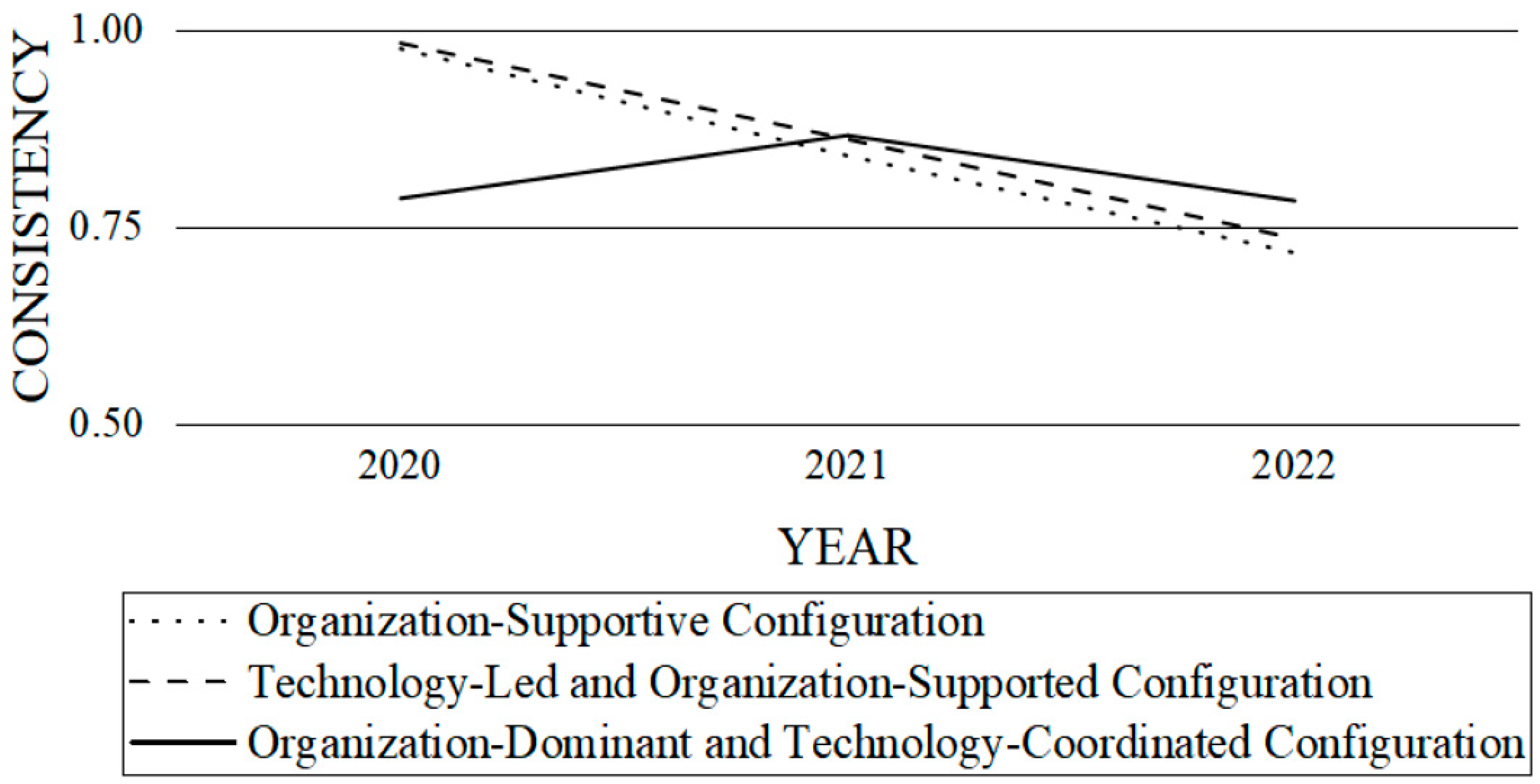
Between-configuration consistency analysis was conducted in this study to verify the temporal stability with which each combination of antecedent conditions influences high innovation performance in agricultural enterprises, thus leading to an evaluation of whether these configurational pathways possess cross-temporal generalizability. Applying this procedure, the results indicate that the three high-quality development configurations exhibit pronounced temporal stability over the 2020–2022 period. Additionally, their consistency coefficients remain around the 0.8 threshold, indicating that these archetypal pathways provide robust cross-temporal explanatory power for high innovation performance.
Observing the overall temporal trend in Figure 2, the consistency levels of all three configurations show a gradual decay—a pattern that is plausibly linked to the distinctive macro-economic context of the observation window. In particular, during the normalization phase of COVID-19 prevention and control, the dual shocks of global economic downturn and supply-chain restructuring exerted sustained pressure on China’s agricultural enterprises, particularly on small, medium, and micro firms with fragile capital bases.
As a representative innovation paradigm for mature enterprises, the fluctuations observed in Configuration S3 aptly reflect the adaptive adjustment processes undertaken by firms in response to external shocks. Collectively, the configurations maintain strong explanatory power, confirming the resilience of core pathways for innovation development in agricultural enterprises against external disruptions. This finding provides important empirical evidence for understanding the mechanisms that sustain innovation performance in agricultural enterprises during extraordinary periods.

4.2.3. Within-Configuration Analysis

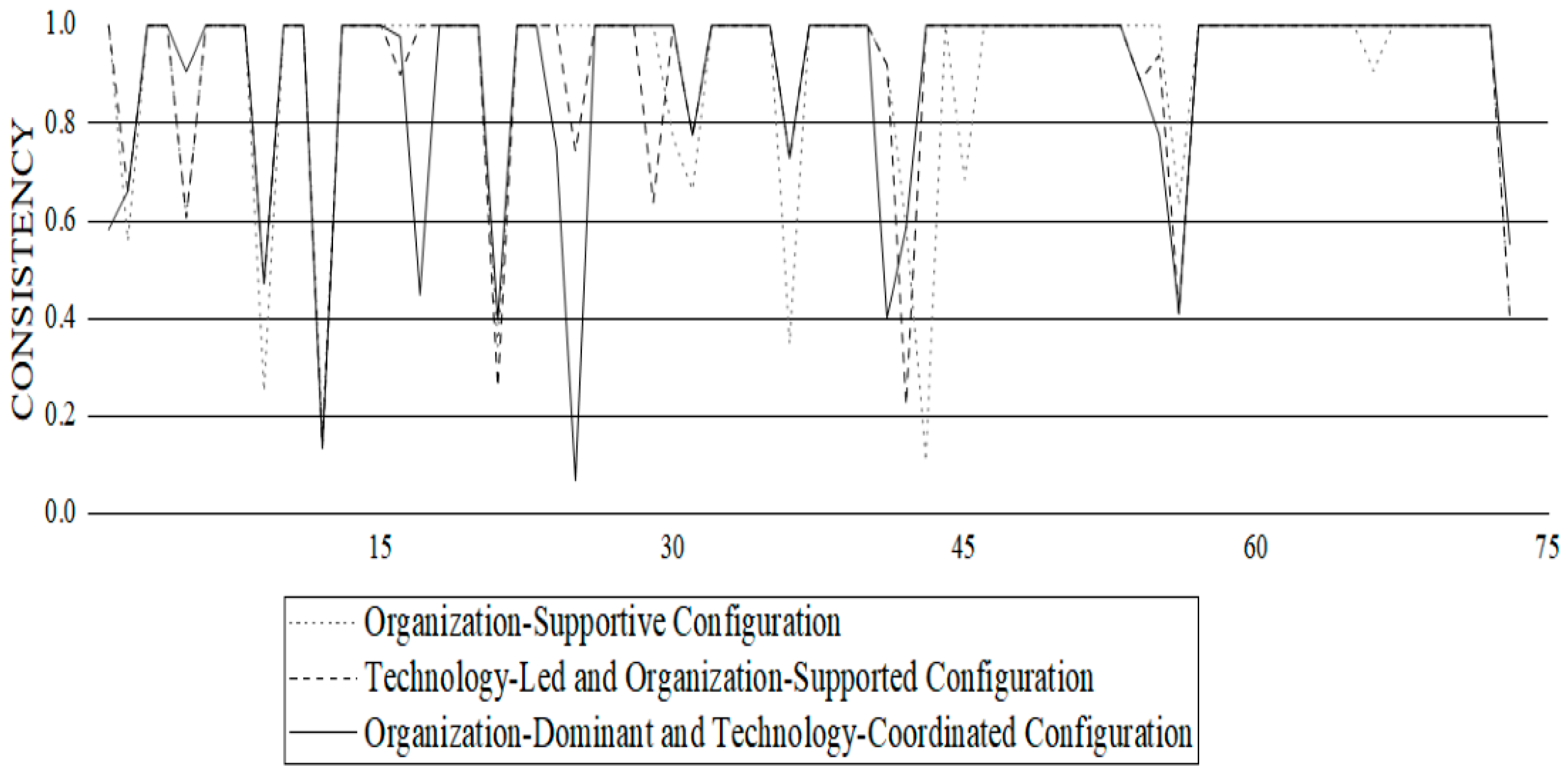
As illustrated in Figure 3, the configurational pathways of innovation performance improvement among agricultural enterprises exhibit pronounced characteristics of multiplicity and dynamism. For the majority of sample firms, within-configuration consistency coefficients exceed the 0.8 threshold, indicating a high degree of alignment with the respective configuration. This finding substantiates the proposition that enterprises may simultaneously entertain several feasible configurational options during the innovation process, and that these choices are subject to dynamic adjustment as developmental stages and operating environments evolve. At the same time, when viewed in aggregate, the adjusted distance in within-configuration consistency for all configurations surpasses the 0.2 threshold, thereby signifying marked firm-level heterogeneity in the pursuit of high innovation performance. Meanwhile, a minority of firms display innovation trajectories that deviate conspicuously from the dominant archetypes, with consistency coefficients that are markedly below the overall mean. Such evidence points to the existence of atypical yet successful innovation paradigms within the agricultural sector.
A further comparative assessment reveals that the adjusted distance in within-configuration consistency is generally larger than that observed between configurations. Such a pattern implies that firm-specific attributes tend to exert a stronger influence on innovation performance than temporal factors. Therefore, when formulating innovation-development strategies for agricultural enterprises, policy-makers and managers should thoroughly consider the unique resource endowments and idiosyncratic element combinations of each firm, as well as adopt differentiated support policies that are suitable for the unique needs of each firm.

4.3. Robustness Testing

This study conducted robustness checks by adjusting the case frequency threshold [90]. When the case threshold was increased from 1 to 2 while keeping all other values unchanged, the results were as presented in Table 5.
As shown in the table, the configurational outcomes differ only in minor details from the original configurations and exhibit a clear subset relationship. Both overall consistency and coverage remain largely unchanged, indicating that the research findings are robust [90].

5. Research Conclusions and Implications

5.1. Research Conclusions

Drawing upon the panel data of Chinese agricultural firms listed on the Shanghai and Shenzhen A-share markets from 2020 to 2022, and grounded in the TOE framework, this study employs the Panel–QCA method to systematically investigate the complex causal mechanisms through which multidimensional TOE factors jointly drive innovation performance in agricultural enterprises. The main conclusions are as follows.
First, the necessity test of antecedent conditions reveals that no single technological, organizational, or environmental factor alone constitutes a necessary condition for high innovation performance in agricultural enterprises. Rather, the enhancement of innovation performance must rely on a composite mechanism that integrates collaborations from multiple actors and multifactor linkages. Only through the organic matching and synergistic interactions among factors can a benign ecological environment be constructed in ways that are conducive to innovation development.
Second, the sufficiency analysis of condition configurations identifies three equifinal pathways leading to high innovation performance, which can be summarized as the organization-supportive, the technology-led and organization-supported, and the organization-dominant and technology-coordinated archetypes. These distinct pathways provide differentiated yet flexible routes that facilitate the innovation of start-up, growth-stage, and mature Chinese agricultural enterprises. A horizontal comparison reveals that organizational-level factors serve as core present conditions across all configurational pathways, thus underscoring the pivotal role of organizational capability in buffering external shocks. Specifically, when confronted with exogenous shocks, such as the COVID-19 pandemic, firms can still maintain the stability of innovation performance through adaptive strategies, such as organizational learning, technological iteration, and process reengineering, thereby confirming the resilience characteristics of core innovation pathways in agricultural enterprises.
Third, the joint analysis of between-configurational, within-configurational, and dynamic evolutionary features corroborates the potential temporal linkages among different configurations. Regarding between-configurational effects, the consistency levels of the three configurations display a gradual decay trend, which is attributable to the specific economic disturbances during the study period. Nonetheless, this does not undermine the overall robustness of the conclusions. From the perspective of adjusted within-configurational consistency distances, the explanatory power of configurations is heterogeneous, and the configurational pathways to innovation performance among firms reveal stage-specific and intricate characteristics. Thus, enterprises may adopt differentiated innovation configurations across developmental stages, or even operate multiple innovation models concurrently within the same period, in accordance with their own innovation resources and dynamic operating environments.

5.2. Managerial Implications

Based on the above conclusions, several managerial implications are offered.
First, organizational factors (the proportion of R&D personnel, firm growth capacity, and managerial innovation orientation), together with technological factors (R&D investment intensity and digital technology application), constitute the core configuration for high innovation performance, with cross-sectional analysis further highlighting the more critical role of management and R&D personnel. In line with this finding, firms should implement a dual-wheel-drive strategy. At the organizational level, agricultural enterprises should strengthen their innovation capacity by increasing R&D investment, introducing high-skilled technical talent, selecting executive teams with innovative vision and leveraging their strategic leadership, thereby cultivating the firm’s innovation core. For managers specifically, it is essential to enhance their awareness of innovation, improve innovation management practices, integrate innovation theory into corporate culture, and adopt a holistic technology–organization–environment perspective to select innovation performance pathways that align with both the firm’s internal resources and the external environment.
At the technological level, firms should deepen the dominant position of technological innovation and foster industry–university–research collaborations, with particular emphasis on intensifying investment in digital technologies. Concrete measures that may be taken include building intelligent computing infrastructure, delivering digital-skills training, promoting cross-departmental knowledge sharing, and systematically embedding artificial intelligence, big data, blockchain, and other digital technologies into the entire production and operation process. Currently, significant advances have been made in various models of smart agriculture worldwide: large-field precision farming represented by the United States, intelligent agricultural machinery manufacturing exemplified by Germany, smart greenhouse production led by the Netherlands, and compact intelligent equipment developed in Japan. These developments offer valuable references for the technological progress of agricultural enterprises. Furthermore, enterprises must focus on nurturing advantageous core elements and fully leverage their synergistic and complementary effects.
Second, innovation pathways in agricultural enterprises are markedly heterogeneous. Empirical evidence from this work indicates that no universally optimal innovation pathway exists; instead, firms must select adaptive configurations based on their resource endowments and developmental stages. The innovation performance of agricultural enterprises is a long-term, dynamic, and complex process. Moreover, the salience of factors and the effectiveness of configurations evolve dynamically. Therefore, enterprises must establish dynamic adjustment mechanisms, periodically evaluate the efficiency of innovation-factor allocation, and timely optimize innovation strategies to achieve sustained improvement in innovation performance. Agricultural enterprises should translate concepts into practice based on actual needs, reduce dependence on external resources, and place greater emphasis on internal development. By efficiently allocating innovation funding and talent resources, and aligning with the transformational trends of agricultural technology in the digital era, they can build enterprise competitiveness. From a developmental-stage perspective, differentiated innovation-support strategies are also needed. On the one hand, policies for mature firms should leverage their resource concentration advantages to realize breakthroughs through multifactor synergy. On the other hand, support for start-up and growth-stage firms, support should prioritize cultivating strategic flexibility and achieving innovation catch-up through factor-focused strategies.
Furthermore, the ripple effects of innovation in agricultural enterprises spread to other sectors through multiple pathways, including technology spillovers, industry chain linkages, and sustainable practices. Agricultural innovation not only stimulates upstream industries such as high-end equipment and biological agents but also gives rise to new downstream formats like food processing and smart logistics, thereby driving the evolution of the entire industrial chain. Meanwhile, agricultural enterprises’ explorations in areas such as environmental resilience, technology-enabled production models, and product traceability systems provide valuable references for other industries—including pharmaceuticals and manufacturing—in pursuing sustainable operations and building trust.
Third, the government should construct a multitiered policy-support system, aligned with the United Nations Sustainable Development Goals (SDGs), to provide systematic guarantees for the innovation development of agricultural enterprises. Initially, differentiated support policies should be implemented. Specifically, mature firms should receive targeted assistance in building technological innovation systems, while start-ups should be offered general support, such as R&D subsidies and tax reductions.
Second, innovation infrastructure must be improved through several ways, including the establishment of digital-technology platforms for agriculture, the strengthening of intellectual-property protection, and the formulation of industry technical standards. Third, collaborative innovation among industry, academia, and research institutes should be promoted through dedicated funds that encourage partnerships between enterprises and research institutions. Such efforts should also include educational reform to cultivate interdisciplinary talent for agricultural innovation. Finally, the government should actively implement strategic documents such as the “Implementation Opinions on Accelerating the Overall Effectiveness of the Agricultural Science and Technology Innovation System”. By leveraging policy tools to stimulate market vitality and collaborating with agricultural enterprises, it should foster and refine a sustainable innovation environment characterized by “policy guidance, market drive, and enterprise leadership.”

5.3. Limitations and Future Research

This study constructed a research framework based on the Technology–Organization–Environment theory to examine the factors influencing the innovation performance of Chinese agricultural enterprises and explore the underlying mechanisms. However, the following limitations remain: (1) The research scope and selection of conditional variables are limited. Future studies could expand the sample set and incorporate a wider range of influencing factors to improve the quality and generalizability of the research. (2) Due to data availability, this study selected 73 listed enterprises from 2020 to 2022 as the sample. Future research could increase the coverage of panel data to further deepen the analysis of the temporal and spatial evolution characteristics of innovation performance. (3) This study employed the dynamic QCA method to observe the findings during the sample period, making it difficult to infer the specific impact of agricultural enterprises’ innovation performance or future trends. Subsequent research could combine qualitative analysis methods and longitudinal case studies to enrich our findings.

Author Contributions

Y.C.: Conceptualization, Data curation, Formal analysis, Investigation, Methodology, Writing—original draft, Validation, Software. B.C.: Funding acquisition, Project administration, Resources, Writing—review & editing, Supervision. All authors have read and agreed to the published version of the manuscript.

Funding

The National Social Science Foundation Project: Research on the Pathways and Countermeasures for Expanding and Accelerating the Industrialization of Biological Breeding, Project Number: 24BGL185. Shandong Provincial Key Research and Development Program (Soft Science Project): Research on the Innovation Development Strategy and Countermeasures for Biological Breeding in Shandong Province During the 15th Five-Year Plan Period, Project Number: 2025RZB0602.

Institutional Review Board Statement

Not applicable.

Informed Consent Statement

Not applicable.

Data availability statement

The original contributions presented in the study are included in the article, further inquiries can be directed to the corresponding author/s.

Conflicts of Interest

The authors declare no conflicts of interest.

References

  1. Pedersen, C.S. The UN sustainable development goals (SDGs) are a great gift to business! Procedia CIRP 2018, 69, 21–24. [Google Scholar] [CrossRef]
  2. Pizzi, S.; Caputo, A.; Corvino, A.; Venturelli, A. Management research and the UN sustainable development goals (SDGs): A bibliometric investigation and systematic review. J. Clean. Prod. 2020, 276, 124033. [Google Scholar] [CrossRef]
  3. Gillan, S.L.; Koch, A.; Starks, L.T. Firms and social responsibility: A review of ESG and CSR research in corporate finance. J. Corp. Financ. 2021, 66, 101889. [Google Scholar] [CrossRef]
  4. Sun, G.; Guo, C.; Ye, J.; Ji, C.; Xu, N.; Li, H. How ESG Contribute to the High-Quality Development of State-Owned Enterprise in China: A Multi-Stage fsQCA Method. Sustainability 2022, 14, 15993. [Google Scholar] [CrossRef]
  5. Cheng, B.; Ioannou, I.; Serafeim, G. Corporate Social Responsibility and Access to Finance. Strateg. Manag. J. 2014, 35, 1–23. [Google Scholar] [CrossRef]
  6. Su, K. Does religion benefit corporate social responsibility (CSR)? Evidence from China. Corp. Soc. Responsib. Environ. Manag. 2019, 26, 1206–1221. [Google Scholar] [CrossRef]
  7. Huang, J. Implement the Greater Food ApproachView and Innovative Policy Support System. Issues Agric. Econ. 2023, 2023, 22–35. [Google Scholar]
  8. Silvestre, B.S. Capability accumulation, innovation, and technology diffusion: Lessons from a Base of the Pyramid cluster. Technovation 2014, 34, 270–283. [Google Scholar] [CrossRef]
  9. Silvestre, B.S.; Ţîrcă, D.M. Innovations for sustainable development: Moving toward a sustainable future. J. Clean. Prod. 2019, 208, 325–332. [Google Scholar] [CrossRef]
  10. Qu, Y.; Zheng, F.F.; Wang, L.S. The Impact of Public Data Openness on Technological Innovation of Agricultural Enterprises. J. Henan Agric. Univ. 2025, 12, 1–17. [Google Scholar] [CrossRef]
  11. Liu, C.; Ma, H.C.; Jiang, Z.Z. An Empirical Analysis of Digital Finance and Agricultural Enterprise Innovation. J. Henan Agric. Univ. 2023, 57, 352–362. [Google Scholar] [CrossRef]
  12. Zhang, G.F.; Cheng, X.J.; Xiong, X.L. The Development of China’s Agricultural Leading Enterprises: Basic Trends, Realistic Dilemmas, and Path Choices. Agric. Econ. 2024, 7–10. [Google Scholar] [CrossRef]
  13. Gao, Q.; Ding, J.Z. How Does Digital Inclusive Finance Empower High-Quality Development of Agricultural Enterprises? An Empirical Test Based on A-Share Agricultural Listed Companies. Rural. Financ. Res. 2025, 10, 27–40. [Google Scholar] [CrossRef]
  14. Wu, L.; Hu, K.; Lyulyov, O.; Pimonenko, T.; Hamid, I. The impact of government subsidies on technological innovation in agribusiness: The case for China. Sustainability 2022, 14, 14003. [Google Scholar] [CrossRef]
  15. Guo, L.; Wang, P.J. Evaluation of the Innovation Effect of Intellectual Property Pilot Policies on Agricultural Enterprises. Rural. Financ. Res. 2024, 4, 12–23. [Google Scholar] [CrossRef]
  16. Liu, Y.; She, Y.; Liu, S.; Lan, H. Supply-shock, demand-induced or superposition effect? The impacts of formal and informal environmental regulations on total factor productivity of Chinese agricultural enterprises. J. Clean. Prod. 2022, 380, 135052. [Google Scholar] [CrossRef]
  17. Li, L.; Lin, Q.; Wang, X. Internal drive or external pull: Independent innovation and sustainable growth of Chinese agricultural enterprises. Foods 2024, 13, 3185. [Google Scholar] [CrossRef]
  18. Cheng, L.; Zhou, Y. Can’digital-real integration’enable the innovation output of agricultural enterprises? an analysis based on the moderating role of financial flexibility. Technol. Anal. Strateg. Manag. 2025, 37, 599–613. [Google Scholar] [CrossRef]
  19. Han, Y.; Fan, J. The Impact of Governance Structure and Technological Innovation on Corporate Performance in Agricultural Listed Companies: A Review of ‘Research on the Influence of Technological Innovation Mode Combination on Enterprise Innovation Performance’. J. Guangdong Univ. Financ. Econ. 2022, 37, 114–115. [Google Scholar] [CrossRef]
  20. Urbancová, H.; Vrabcová, P. Implementing selected strategic documents focused on increasing efficiency and competitiveness of agricultural enterprises in the Czech Republic. Agric. Econ. 2021, 67, 144–151. [Google Scholar] [CrossRef]
  21. Wang, Z.D.; Xi, A.Q. Thoughts on Enhancing the Scientific and Technological Innovation Capability of Chinese Agricultural Enterprises in the New Era. Agric. Econ. 2014, 9, 16–17. Available online: https://www.cnki.com.cn/Article/CJFDTOTAL-NYJJ201409005.htm (accessed on 13 November 2025).
  22. Cui, B.Q.; Meng, H.Y.; Chu, Y.Q. Research on the Antecedent Configuration of Marketing Strategy Style Transformation and Its Impact on Enterprise Performance. J. Cap. Univ. Econ. Bus. 2024, 26, 98–112. [Google Scholar] [CrossRef]
  23. Zhang, Y.; Wang, A.Q. Configurational Paths of Manufacturing Enterprise Innovation Performance under the TOE Theoretical Framework. Financ. Account. Mon. 2023, 44, 152–160. [Google Scholar] [CrossRef]
  24. N’Dri, A.B.; Su, Z. Successful configurations of technology–organization–environment factors in digital transformation: Evidence from exporting small and medium-sized enterprises in the manufacturing industry. Inf. Manag. 2024, 61, 104030. [Google Scholar] [CrossRef]
  25. Li, X.R.; Mou, C.L.; Cui, T.T. Configurations and Paths of Factors Influencing Innovation Performance of Listed Pharmaceutical Manufacturing Companies under the TOE Framework. Financ. Account. Mon. 2023, 44, 114–120. [Google Scholar] [CrossRef]
  26. Jin, L.; Li, D.; Zhang, Y.; Zhao, Y. Analyzing influencing factors of low-carbon technology adoption in hospital construction projects based on TAM-TOE framework. Buildings 2025, 15, 2703. [Google Scholar] [CrossRef]
  27. Lin, Y.; Ya, J.M. Driving Forces and Implementation Paths of Digital Transformation in Manufacturing Enterprises: A Case Study Based on the TOE Framework. J. Manag. 2023, 36, 96–113. [Google Scholar] [CrossRef]
  28. Xu, K. Promotion path of digital transformation in China’s manufacturing industry based on technology-organisation-environment framework. J. Bus. Econ. Manag. 2025, 26, 1090–1111. [Google Scholar] [CrossRef]
  29. Li, Y.Y.; Xue, X.M.; Ke, D. Research on Green Transformation Paths under the TOE Framework: A Fuzzy-Set Qualitative Comparative Analysis Based on 117 Resource-Based Enterprises. Ind. Technol. Econ. 2023, 42, 85–94. [Google Scholar] [CrossRef]
  30. Li, L.; Che, W. Internal logic and driving path of enterprise green innovation performance improvement under TOE framework: Based on linkage effect analysis of fsQCA and NCA. Environ. Dev. Sustain. 2024, 1–22. [Google Scholar] [CrossRef]
  31. Feng, C.R.; Zhao, Q.Y. Driving Paths of High-Level Development of Smart Government: An Analysis of Configurational Effects in 31 Provinces (Cities) Based on the TOE Framework. J. Kunming Univ. Sci. Technol. 2022, 22, 88–97. [Google Scholar] [CrossRef]
  32. Zhang, H.; Zhu, Z. Mobile government service promotion strategies: Exploring sustainable development pathways based on provincial government practices in China. Sustainability 2024, 16, 7191. [Google Scholar] [CrossRef]
  33. Jia, W.; Qin, F. An Empirical Analysis of Factors Influencing the Performance of Leading Agricultural Enterprises: From the Perspective of Chairman and General Manager Duality and Separation. J. China Agric. Univ. 2013, 18, 181–188. Available online: https://www.cnki.com.cn/Article/CJFDTOTAL-NYDX201305026.htm (accessed on 13 November 2025).
  34. Zhang, Y.Q.; Lu, Y.; Li, L.Y. The Impact of Big Data Application on the Market Value of Chinese Enterprises: Evidence from Text Analysis of Annual Reports of Chinese Listed Companies. Econ. Res. J. 2021, 56, 42–59. Available online: https://www.cnki.com.cn/Article/CJFDTOTAL-JJYJ202112003.htm (accessed on 13 November 2025).
  35. Yin, X.; Qi, L.; Ji, J.; Zhou, J. How does innovation spirit affect R&D investment and innovation performance? The moderating role of business environment. J. Innov. Knowl. 2023, 8, 100398. [Google Scholar] [CrossRef]
  36. Song, B.; Yuan, K.; Jin, Y.; Zhao, L. Regional institutional environment and R&D performance: Evidence from marketization index of China’s provinces and panel data of high-tech manufacturing firms. Chin. Manag. Stud. 2024, 18, 1613–1633. [Google Scholar] [CrossRef]
  37. Wu, F.; Hu, H.Z.; Lin, H.Y.; Ren, X.Y. Enterprise Digital Transformation and Capital Market Performance: Empirical Evidence from Stock Liquidity. Manag. World 2021, 37, 130–144+10. [Google Scholar] [CrossRef]
  38. Duan, H.Y.; Yang, X.L.; Dong, F. Digital Transformation, Financing Constraints and Enterprise Innovation. Stat. Decis. 2023, 39, 164–168. [Google Scholar] [CrossRef]
  39. Sun, Y. Digital transformation and corporates’ green technology innovation performance–The mediating role of knowledge sharing. Financ. Res. Lett. 2024, 62, 105105. [Google Scholar] [CrossRef]
  40. Tang, L.M. Digital Transformation and Enterprise Technological Innovation: The Formation Mechanism and Test of an Inverted U-Shaped Relationship. Mod. Econ. Res. 2022, 12, 91–102. [Google Scholar] [CrossRef]
  41. Wan, H.; Ren, G.; Zhong, X. Unlocking the U-shaped relationship between digital technology adoption and firms’ innovation performance. Knowl. Manag. Res. Pract. 2025, 1–16. [Google Scholar] [CrossRef]
  42. Zhang, Z.F.; Luo, J.L.; Li, S.W.; Zhong, J. Research on Capability Construction and Catch-Up Effects of Latecomer Digital Enterprises Based on Technological Paradigm Shifts. Nankai Bus. Rev. 2024, 27, 17–28. [Google Scholar]
  43. Chen, P.; Kim, S. The impact of digital transformation on innovation performance-The mediating role of innovation factors. Heliyon 2023, 9, e13916. [Google Scholar] [CrossRef]
  44. Qiao, N.; Niu, L. The impact of the industrial innovation ecosystem on innovation performance—Using the equipment manufacturing industry as an example. Systems 2024, 12, 578. [Google Scholar] [CrossRef]
  45. Ren, X. The Influence of Major Input Factors of Technological Innovation on Innovation Outcomes. J. Quant. Tech. Econ. 2001, 11, 19–22. [Google Scholar] [CrossRef]
  46. Marvel, M.R.; Lumpkin, G.T. Technology Entrepreneurs’ Human Capital and Its Effects on Innovation Radicalness. Entrep. Theory Pract. 2010, 31, 807–828. [Google Scholar] [CrossRef]
  47. Zhang, L.; Li, S.; Wu, M. Executive pharmaceutical background, R&D investment and corporate innovation performance. Am. J. Transl. Res. 2023, 15, 6576–6585. [Google Scholar] [PubMed]
  48. Wang, J.; Wu, Y.W.; Lan, M.; Ning, X.B. Research on Influencing Factors of Innovation Performance in the Electronics Industry Based on Upper Echelons Theory: From the Perspective of Executive Cognition. Ind. Technol. Econ. 2018, 37, 20–27. [Google Scholar] [CrossRef]
  49. Huang, S.S.; Shao, Y.H. Executive Innovation Awareness, Enterprise Innovation Investment and Innovation Performance: An Empirical Study Based on China’s GEM Listed Companies. East China Econ. Manag. 2017, 31, 151–157. [Google Scholar] [CrossRef]
  50. Wu, L.; Wang, C.; Ren, H.; Zhang, W. How does executive green cognition affect enterprise green technology innovation? The mediating effect of ESG performance. Heliyon 2024, 10, e34287. [Google Scholar] [CrossRef]
  51. Zhao, Q.; Lee, B.H.; Luo, J.; Chen, H. R&D internationalization and innovation performance: The impact of executives’ characteristics. J. Knowl. Econ. 2024, 15, 8118–8147. [Google Scholar] [CrossRef]
  52. Tang, S.Q.; Zhan, X.M.; Li, J.L.; Yang, Y.R. Research on the Relationship Between R&D Investment and Corporate Growth of Listed Companies in the Technology Sector. China Soft Sci. 2021, 3, 64–73. [Google Scholar] [CrossRef]
  53. Hewitt-Dundas, N.; Roper, S. Output Additionality of Public Support for Innovation: Evidence for Irish Manufacturing Plants. Eur. Plan. Stud. 2010, 18, 107–122. [Google Scholar] [CrossRef]
  54. Shi, H.; Zhou, Q. Government R&D Subsidies, Environmental regulation and corporate green innovation performance. Financ. Res. Lett. 2024, 69, 106088. [Google Scholar] [CrossRef]
  55. Yin, H.; Zhang, L.; Cai, C.; Zhang, Z.; Zhu, Q. Fiscal & tax incentives, ESG responsibility fulfillments, and corporate green innovation performance. Int. Rev. Econ. Financ. 2025, 98, 103838. [Google Scholar] [CrossRef]
  56. Zhang, Y.A.; Yan, J.X.; Hu, P. Research on the Dual Mechanism of Government Subsidies on Enterprise Innovation Performance: A Case Study of Listed Biopharmaceutical Enterprises. Sci. Technol. Manag. Res. 2020, 40, 32–39. [Google Scholar] [CrossRef]
  57. Polman, P.; Winston, A. Net Positive: How Courageous Companies Thrive by Giving More Than They Take; Harvard Business Review Press: Brighton, MA, USA, 2021. [Google Scholar]
  58. Hong, J.J.; Shi, L.J. Independent R&D, Regional Institutional Differences and Enterprise Innovation Performance: Empirical Evidence from 371 Innovative Enterprises. Stud. Sci. Sci. 2017, 35, 310–320. [Google Scholar] [CrossRef]
  59. Ji, H.; Yu, Z.; Tian, G.L.; Wang, D.H.; Wen, Y. Market competition, environmental, social and corporate governance investment, and enterprise green innovation performance. Financ. Res. Lett. 2025, 77, 107057. [Google Scholar] [CrossRef]
  60. Mulkay, B. How does competition affect innovation behaviour in french firms? Struct. Change Econ. Dyn. 2019, 51, 237–251. [Google Scholar] [CrossRef]
  61. Smith, A. An Inquiry into the Nature and Causes of the Wealth of Nations; Cannan, E., Ed.; Tuttle Company: Rock Hill, SC, USA, 1979. [Google Scholar]
  62. Du, Y.Z.; Li, J.X.; Liu, Q.C.; Chen, K.W. Configuration Theory and QCA Method from the Perspective of Complex Dynamics: Research Progress and Future Directions. Manag. World 2021, 37, 180–197+12–13. [Google Scholar] [CrossRef]
  63. Du, Y.Z.; Jia, L.D. Configuration Perspective and Qualitative Comparative Analysis (QCA): A New Path for Management Research. Manag. World 2017, 6, 155–167. [Google Scholar] [CrossRef]
  64. Meng, K.; Wei, B. Reflecting on the “Temporal Blind Spot” of QCA Methods: Bringing “Time” Back into Public Management Research. Chin. Public Adm. 2023, 1, 96–104. [Google Scholar] [CrossRef]
  65. Castro, R.G.; Ariño, M.A. A General Approach to Panel Data Set-Theoretic Research. J. Adv. Manag. Sci. Inf. Syst. 2016, 2, 63–76. [Google Scholar] [CrossRef]
  66. Zhang, F. Factors Influencing Local Government Information Disclosure: A Dynamic QCA Analysis Based on Provincial Panel Data. J. Intell. 2023, 42, 133–141, 207. [Google Scholar] [CrossRef]
  67. Thakur, R.; Sharma, S. Does global value chain participation and position lead to innovation in an emerging economy? Industry-level evidence from Indian manufacturing industries. J. Bus. Res. 2025, 186, 114989. [Google Scholar] [CrossRef]
  68. Yang, F.; Wang, Y.; Whang, U. Impact of technical barriers to trade measures on innovation–evidence from Chinese manufacturing firms. Econ. Innov. New Technol. 2025, 34, 705–723. [Google Scholar] [CrossRef]
  69. Liu, M.; Shan, Y.; Li, Y. Heterogeneous Partners, R&D cooperation and corporate innovation capability: Evidence from Chinese manufacturing firms. Technol. Soc. 2023, 72, 102183. [Google Scholar] [CrossRef]
  70. Sun, W.; Zhao, Y.; Sun, L. Big data analytics for venture capital application: Towards innovation performance improvement. Int. J. Inf. Manag. 2020, 50, 557–565. [Google Scholar] [CrossRef]
  71. Zhou, J.; Qin, R.; Wang, S.H. Interlocking Directorates’ Experience and Enterprise Innovation: The Moderating Role of Organizational Slack. RD Manag. 2021, 33, 40–53. [Google Scholar] [CrossRef]
  72. Wei, S.; Yang, K.; Bai, X. Impact of financial subsidies on the R&D intensity of new energy vehicles: A case study of 88 listed enterprises in China. J. Energy Strategy Rev. 2021, 33, 100580. [Google Scholar] [CrossRef]
  73. Liang, L.L.; Li, Y.; Chen, S. Research on Enterprise Open Innovation Paths Driven by Digital Technology: A Configurational Effect Analysis Based on fsQCA Method. Sci. Technol. Manag. Res. 2022, 42, 142–150. [Google Scholar] [CrossRef]
  74. Ren, C.M.; Lin, X.X. Digital transformation, competitive strategy choices and firm value: Evidence from China. J. Ind. Manag. Data Syst. 2024, 124, 1656–1676. [Google Scholar] [CrossRef]
  75. Li, W.Q.; Liu, Y. Technological Innovation, Corporate Social Responsibility and Enterprise Competitiveness: An Empirical Analysis Based on Listed Company Data. Sci. Sci. Manag. Sci. Technol. 2017, 38, 154–165. Available online: https://www.cnki.com.cn/Article/CJFDTOTAL-KXXG201701015.htm (accessed on 13 November 2025).
  76. Wan, X.L.; Bi, L.W.; Qiu, L.L. Supply Chain Pressure, Strategic Flexibility and Open Green Innovation in Manufacturing Enterprises: A Configurational Analysis Based on the TOE Framework. China Soft Sci. 2022, 10, 99–113. Available online: https://www.cnki.com.cn/Article/CJFDTOTAL-ZGRK202210010.htm (accessed on 13 November 2025).
  77. Luo, Y.M. Research on the Relationship among Management’s Innovation Preference, Innovation Knowledge Diffusion and Agricultural Enterprise Innovation Performance. Master’s Thesis, Jiangsu University, Zhenjiang, China, 2022. [Google Scholar]
  78. Chen, Z.B.; Wang, S.Y. Research on the Impact of Product Market Competition on Enterprise Cash Flow Risk: A Dual Consideration of Industry Competition Level and Enterprise Competitive Position. China Ind. Econ. 2015, 3, 96–108. [Google Scholar] [CrossRef]
  79. Yu, J.; Wang, Y. Senior managers’ academic background and innovation investment from the perspective of market competitive position: An evidence from resource-based listed companies. J. Nanjing Univ. Financ. Econ. 2021, 6, 56–65. [Google Scholar]
  80. Huang, W.D.; Li, Y. Research on the Heterogeneous Threshold Effect of Government Subsidies on Enterprise R&D Investment: Verification Based on Guangdong Data. Sci. Technol. Manag. Res. 2022, 42, 36–44. [Google Scholar] [CrossRef]
  81. Xu, R.; Shen, Y.; Liu, M.; Li, L.; Xia, X.; Luo, K. Can government subsidies improve innovation performance? Evidence from Chinese listed companies. J. Econ. Model. 2023, 120, 106151. [Google Scholar] [CrossRef]
  82. Fiss, C.C. Building better causal theories: A fuzzy set approach to typologies in organization research. Acad. Manag. J. 2011, 54, 393–420. [Google Scholar] [CrossRef]
  83. Schneider, C.Q.; Wagemann, C. Set-Theoretic Methods for the Social Sciences: A Guide to Qualitative Comparative Analysis; Cambridge University Press: Cambridge, UK, 2012. [Google Scholar] [CrossRef]
  84. Jing, L.L.; Huang, H.L. Research on the Stimulation and Impact of Digital Innovation Ecosystem on Regional Innovation Capability in Time-Space Dimensions: A Dynamic QCA Analysis Based on Provincial Panel Data. Sci. Technol. Prog. Policy 2024, 41, 13–23. [Google Scholar] [CrossRef]
  85. Zhang, Q.; Wang, B.C.; Jiang, T. Multiple Driving Paths of Business Model Spin-Offs in New Economy Enterprises: A Mixed Method Based on Grounded Theory and QCA. Enterp. Econ. 2025, 44, 52–63. [Google Scholar] [CrossRef]
  86. Jiang, Y. Digital technologies and innovation performance in enterprises: A resource orchestration perspective. Technol. Anal. Strateg. Manag. 2025, 1–20. [Google Scholar] [CrossRef]
  87. Urbinati, A.; Chiaroni, D.; Chiesa, V.; Frattini, F. The role of digital technologies in open innovation processes: An exploratory multiple case study analysis. RD Manag. 2020, 50, 136–160. [Google Scholar] [CrossRef]
  88. Berchicci, L. Towards an open R&D system: Internal R&D investment, external knowledge acquisition and innovative performance. Res. Policy 2013, 42, 117–127. [Google Scholar] [CrossRef]
  89. Yoon, W.; Kim, S.J.; Song, J. Top management team characteristics and organizational creativity. Rev. Manag. Sci. 2016, 10, 757–779. [Google Scholar] [CrossRef]
  90. Luo, W.; Zuo, S.; Tang, S.; Li, C. The formation of new quality productivity of agriculture under the perspectives of digitalization and innovation: A dynamic qualitative comparative analysis based on the “Technology-organization-environment” framework. Sustainability 2025, 17, 597. [Google Scholar] [CrossRef]
Figure 1. Configuration Effect Model of Enterprises.
Sustainability 17 11250 g001
Figure 2. Between-Configuration Consistency Changes. Note: POCONS denotes the consistency for each configuration.
Sustainability 17 11250 g002
Figure 3. Within-Configuration Consistency Changes. Note: POCONS denotes the consistency of each configuration. The horizontal axis lists the serial numbers of the firms; the sample comprises 73 enterprises.
Sustainability 17 11250 g003
Table 1. Variable Selection and Calibration.
Variable ClassesStudy VariablesVariable InterpretationAnchor Point
Whole Affiliate PointCross PointWhole No Affiliation Point
Outcome variable High enterprise innovation performanceNumber of patent applications32.00012.0003.000
Condition variableTechnical dimensionR&D investment intensityProportion of enterprise R&D investments in operating revenue0.0160.0070.003
Application level of digital technologiesLog of keyword frequency in the annual report0.1360.0680.026
Organizational dimensionProportion of R&D personnelProportion of in-service R&D personnel in the total number of employees11.9705.7802.140
Corporate Growth CapabilityYear-over-year growth0.2870.125−0.019
Management innovationKey high-frequency words appearing frequently in the annual report6.6466.2956.032
Environmental dimensionFinancial subsidyAverage of the ratio of direct government subsidies to the main operating income3.2751.0100.480
Market competitive positionIndividual Lerner index2.0000.0000.000
Table 2. Descriptive Statistics of Variables.
Variable ClassesStudy VariablesDescriptive Statistics
MeanStandard DeviationMinimumMaximum
Outcome variableHigh enterprise innovation performance32.27057.9600.000405.000
Condition variableR&D investment intensity0.0130.0230.0000.212
Application level of digital technologies0.0880.133−0.3740.641
Proportion of R&D personnel7.9546.9510.12033.490
Corporate Growth Capability0.1580.295−0.5111.783
Management innovation6.2980.6302.4857.514
Financial subsidy2.5123.4150.00020.560
Market competitive position1.8313.4170.00021.000
Table 3. Results of the Necessary Condition Analysis.
Condition VariableHigh Innovation Performance
ConsistencyCoverageBetween-Case Consistency Adjustment DistanceWithin-Case Consistency Adjustment Distance
Environmental levelHigh financial subsidies0.5100.5030.1270.628
Low financial subsidies0.5780.5480.1370.663
High market competitive position0.5300.5150.1470.602
Low-market competitive position0.5660.5430.1630.593
Organizational levelHigh proportion of R&D personnel0.6130.6000.1680.462
Low proportion of R&D personnel0.4770.4550.2070.532
High corporate growth ability0.5700.5570.1030.610
Low corporate growth ability0.5040.4800.0770.671
High management innovation0.6760.6650.1830.619
Low management innovation0.4320.4100.1600.663
Technical levelHigh R&D investment intensity0.5390.5400.0260.663
Low R&D investment intensity0.5370.5000.0310.671
High digital technology application level0.8120.5730.0770.183
Low digital technology application level0.3570.5460.1500.671
Table 4. Results of the Configurational Analysis.
Condition VariablesHigh Innovation Performance
Organization-SupportedTechnology-Led and Organization-SupportedOrganization-Dominant and Technology-Synergistic
Configuration S1Configuration S2ConfigurationS3
Fiscal Subsidies
Competitive Position
Share of R&D Personnel
Firm Growth Capability
Managerial Innovation Orientation
R&D Intensity
Level of Digital-Technology Adoption
Consistency0.8240.8430.806
PRI0.7530.7380.726
Coverage0.1190.1240.272
Unique Coverage0.0070.0090.117
Between-Case Consistency Adjustment Distance0.1860.1760.096
Within-Case Consistency Adjustment Distance0.2440.2270.296
Overall Consistency0.804
Overall PRI0.726
Overall Coverage0.289
Note: ● indicates the presence of a core condition, and ⊕ the absence of a core condition; a blank cell indicates that the condition is irrelevant to the outcome. The same notations apply hereafter.
Table 5. Robustness test result.
Condition VariablesHigh Innovation Performance
Organization-SupportedOrganization-Dominant and Technology-Synergistic
Configuration S1Configuration S3
Fiscal Subsidies
Competitive Position
Share of R&D Personnel
Firm Growth Capability
Managerial Innovation Orientation
R&D Intensity
Level of Digital-Technology Adoption
Consistency0.8240.806
PRI0.7530.726
Coverage0.1190.272
Unique Coverage0.0070.161
Between-Case Consistency Adjustment Distance0.1860.096
Within-Case Consistency Adjustment Distance0.2440.296
Overall Consistency0.810
Overall PRI0.734
Overall Coverage0.280
Note: ● indicates the presence of a core condition, and ⊕ the absence of a core condition; a blank cell indicates that the condition is irrelevant to the outcome. The same notations apply hereafter.
Disclaimer/Publisher’s Note: The statements, opinions and data contained in all publications are solely those of the individual author(s) and contributor(s) and not of MDPI and/or the editor(s). MDPI and/or the editor(s) disclaim responsibility for any injury to people or property resulting from any ideas, methods, instructions or products referred to in the content.