Article

Study on the Synergistic Effect of Pollution Reduction and Carbon Emission Reduction in the Construction of “Zero-Waste Cities”

1
School of Business, City University of Hong Kong, Hong Kong, China
2
School of Economics, Guizhou University of Finance and Economics, Guiyang 550025, China
*
Author to whom correspondence should be addressed.
Sustainability 2025, 17(24), 11251; https://doi.org/10.3390/su172411251
Submission received: 11 November 2025 / Revised: 8 December 2025 / Accepted: 15 December 2025 / Published: 16 December 2025

Abstract

This study approaches the “Zero-Waste City (ZWC)” initiative as a quasi-natural experiment. Utilizing panel data from 273 prefecture-level cities in China from 2013 to 2023, it employs a multi-period difference-in-differences model to systematically assess the initiative’s synergistic impacts on pollution and carbon emission (CE) reductions. The findings indicate that the initiative has notably lowered both urban pollution and CEs. These results remain robust following a series of stability tests, which include dynamic effect analyses, placebo tests, and propensity score matching. Mechanism analysis suggests that the policy primarily achieves its pollution and carbon reduction goals through four pathways: green technological innovation, public participation and oversight, source control, and end-of-pipe treatment. Heterogeneity analysis further demonstrates that the policy’s effects are more pronounced in resource-based cities, regions with advanced digitalization, and areas with stringent environmental regulations. Additionally, “ZWC” initiatives notably enhance synergies between pollution reduction and carbon mitigation, especially in controlling pollutants closely associated with energy consumption, such as sulfur dioxide and particulate matter. This research provides empirical evidence and policy recommendations for promoting “ZWC” development and optimizing environmental governance systems.

1. Introduction

Global warming is now an established fact, with global surface temperatures during the period from 2011 to 2020 surpassing those recorded between 1850 and 1900 by 1.1 °C. This phenomenon is primarily attributable to excessive consumption of fossil fuels and unsustainable lifestyle and production practices, which have precipitated extreme weather and climate events, adversely affecting human well-being [1]. In response to global climate change, the Chinese government has been actively engaged in multilateral international climate governance cooperation, thereby demonstrating the responsibility and commitment expected of a major nation. In September 2020, General Secretary Xi Jinping made a solemn commitment to the international community, declaring that “China will strive to reach peak carbon dioxide emissions before 2030 and achieve carbon neutrality before 2060.” Through ongoing governance and preventative measures, China has achieved interim results in ecological and environmental protection, evidenced by steadily improving environmental performance indices and air quality. Nevertheless, challenges such as substantial pollution emissions, significant discrepancies in the energy consumption structure, and persistent bottlenecks in economic transformation indicate that the pressures of ecological and environmental governance remain unmitigated. The journey towards effective governance is still fraught with difficulties. Considering that atmospheric pollutants and carbon emissions (CEs) originate from similar sources and share common underlying causes [2], and constrained by the objectives of the “dual carbon” goals and environmental governance, it is imperative to abandon the fragmented approach to pollution and carbon reduction. Advancing synergistic efforts in pollution and carbon reduction through integrated control across the entire chain, and achieving multiple benefits from a single intervention, are crucial for accelerating the green economic transformation. It is also essential for achieving a comprehensive understanding of the systemic and holistic nature of climate governance and pollution prevention, and for realizing sustainable development [3].
The report presented at the 20th CPC National Congress underscored the imperative to “coordinate industrial restructuring, pollution control, ecological conservation, and climate change response; synergistically advance carbon reduction, pollution control, ecological expansion, and economic growth; and promote ecological priority, resource conservation, intensive development, and green low-carbon development.” This directive notably elevates the status of ecological conservation and environmental governance, emphasizing the coordinated advancement of both pollution and carbon reduction. This strategic approach is not merely a policy orientation but a fundamental component of China’s modernization vision, which seeks a harmonious coexistence between humanity and nature, aligned with the “dual carbon” objectives. It insightfully addresses the inherent interconnection between pollutant and CEs at their source, representing a crucial strategy for simultaneously enhancing ecological and environmental quality alongside high-quality economic development. In June 2022, the Ministry of Ecology and Environment, in collaboration with six other ministries, issued the Implementation Plan for Synergistic Pollution Reduction and Carbon Emission Reduction. This plan highlights the significance and necessity of ecological and environmental governance from a national strategic perspective and emphasizes that the synergistic advancement of pollution and CE reduction is a pivotal element for fostering ecological civilization in China’s new developmental phase. By adhering to the inherent logic of pollution and carbon reduction, this approach deviates from the traditional paradigm of addressing pollution and carbon reduction separately. It establishes a comprehensive system of coordinated objectives, fields, and mechanisms, thereby transforming the theoretical understanding of the integrated nature of pollution and carbon sources into practical governance measures. This framework lays the groundwork for China’s medium- and long-term ecological and environmental governance strategies and the realization of its “dual carbon” goals.
Environmental regulation serves as an essential instrument for compelling enterprises to engage in environmental governance. Its primary objective is to diminish pollution emissions and enhance environmental performance through either administrative or market-based measures [4]. Historically, China has predominantly relied on command-and-control policies for environmental regulation. By establishing precise policy targets, the government mandated reductions in pollution and CEs. Although this regulatory approach delivered rapid results and enhanced policy effectiveness, it also encouraged rent-seeking behavior between enterprises and the government. Consequently, this led to a development model that prioritized environmental protection at the expense of economic growth, resulting in detrimental economic impacts [5]. Recognizing the constraints of such a singular approach, contemporary policies have increasingly adopted integrated environmental regulations that combine both administrative and market-based mechanisms. This integration aims to achieve reductions in pollution and CEs while simultaneously improving environmental performance. Current research supports that environmental regulations notably reduce pollution and CEs. Notable examples include low-carbon city pilot programs [6], carbon and pollution rights trading [7,8,9], energy rights trading [10], and the environmental protection tax [11]. Furthermore, the vertical management reform of environmental protection departments [12] has also contributed to significant reductions in urban pollution and CEs, providing actionable insights for other pilot cities. Additionally, digital-physical integration [13], public participation [14], judicial reinforcement [15], clean production [16], industrial transformation and upgrading [17], and green technological innovation [18] all serve as crucial mechanisms for advancing synergistic pollution and carbon reduction through environmental regulation. The “Zero-Waste City (ZWC)” initiative exemplifies a quintessential environmental regulation policy. By establishing a comprehensive indicator system, this initiative effectively reduces pollution and CEs at the source, during production, and at the end of the lifecycle. It employs several strategies: guiding and leading the implementation of green mining practices to minimize the generation, storage, and disposal of mining solid waste; promoting green production to decrease resource consumption at the source and enhance resource utilization; and stimulating market vitality to foster new industrial development models.
The concept of the “ZWC” is guided by innovative development strategies that advocate for green development and sustainable lifestyles. This initiative aims to maximize the reduction in solid waste at its source and enhance resource utilization, thereby notably reducing the volume of solid waste destined for landfills [19]. Current research on the “ZWC” predominantly explores development strategies, yet there remains a gap in the assessment of policy impacts. In analyzing these strategies, scholars who advocate for the principles of a circular economy focus on enhancing resource recycling by improving the reduction, recovery, and harmless treatment of solid waste [20]. Additionally, other researchers have identified a robust correlation and synergistic relationship between the “ZWC” initiative and the reduction in CEs. Industries such as coal mining, power generation, thermal energy, steel production, and construction not only are major producers of solid waste, greenhouse gases, and air pollutants but also share common origins at their point of generation [21]. Conversely, the development of a “ZWC” aligns closely with pollution reduction and carbon mitigation, both in terms of policy goals and implementation strategies [22]. By establishing scientifically based strategic objectives, enhancing overarching design, and adopting tailored approaches that reflect local conditions, it is possible to refine the development pathways of “ZWC” through legal, policy, technical, and market reforms. This comprehensive approach will contribute to the realization of a “Beautiful China” [23]. Research further suggests that the implementation of “ZWC” initiatives can enhance corporate innovation levels [24] and ESG performance [25], reduce urban CEs [26], and facilitate urban transformation [27]. Structural models have also been utilized to assess the effectiveness of “ZWC” development [28].
Based on the analysis presented above, it becomes clear that the development of the “ZWC” aligns closely with the objectives of pollution and CE reduction in terms of both policy goals and implementation strategies. However, the effectiveness of this policy has been insufficiently studied. Consequently, this study considers the development of the “ZWC” as an exogenous shock and establishes a quasi-natural experiment to ascertain whether it facilitates the achievement of urban pollution and CE reduction targets. This study makes several potential contributions. (1) It provides systematic empirical evidence concerning the effectiveness of “ZWC” initiatives. While existing research predominantly concentrates on theoretical discussions and pathway analyses, it often lacks rigorous causal identification of actual outcomes [29]. This study utilizes city-level panel data and a multi-period difference-in-differences (DID) model to empirically assess the policy impacts of “ZWC” initiatives on pollution and carbon mitigation. (2) It methodically examines the various transmission mechanisms through which “ZWC” initiatives affect pollution and carbon mitigation, thereby elucidating the policy mechanisms. This analysis identifies the intrinsic pathways by which these initiatives exert their influence, encompassing green technological innovation, public participation and oversight, source control, and end-of-pipe treatment. (3) It further investigates the synergistic effects between pollution reduction and carbon mitigation within the framework of “ZWC” development. This exploration enhances the precision of policy implementation and offers practical references for the construction of an ecological civilization.

2. Policy Context and Theoretical Analysis

2.1. Policy Context

As one of the world’s leading producers of solid waste, China has consistently faced significant challenges in governance. These challenges are characterized by high generation rates, suboptimal resource utilization, and considerable environmental risks. These issues have become a pivotal bottleneck, impeding both ecological enhancement and high-quality economic growth. The initiation of the “ZWC” policy is both a necessary response to China’s acute solid waste management crises and a crucial strategy for promoting ecological civilization and urban green governance. The evolution and development of this policy focus on two fundamental pillars: solid waste management and the sustainable transformation of cities. This initiative offers practical support at the urban level for establishing “ZWC” and achieving the vision of a Beautiful China.
Before the implementation of pilot programs for the “ZWC,” a six-year policy incubation period occurred. In 2013, the revised “Law on the Prevention and Control of Environmental Pollution by Solid Waste” enhanced corporate accountability and government oversight. In 2015, pilot programs for household waste sorting were launched in 46 cities, including Beijing. In 2017, the issuance of the Circular Economy Development Action Plan aimed to promote the comprehensive use of industrial solid waste, accumulating reform experience and laying the groundwork for the systematic piloting of “ZWC.” In December 2018, the General Office of the State Council released the Pilot Program for “ZWC” Construction, marking the transition to a citywide systematic pilot phase. Eleven cities and five regions were selected for the pilot projects. In November 2021, the “Opinions of the Central Committee of the Communist Party of China and the State Council on Deepening the Fight Against Pollution” further underscored the necessity to “steadily advance the construction of ‘ZWC,’ enhance the relevant systems, technologies, markets, and regulatory frameworks for such cities, and promote refined management of urban solid waste.” In April 2022, to implement the “Work Plan for Building ‘ZWC’ During the 14th Five-Year Plan Period,” the initiative expanded nationwide to include all provinces, encompassing 113 prefecture-level cities (autonomous prefectures). The development of “ZWC” holds substantial significance for synergistically advancing pollution reduction, CE mitigation, and the construction of ecological civilization. Conceptually, it redefines the notion of “ZWC” not as locales devoid of waste, but as entities that promote full lifecycle management of solid waste through advanced management principles, departing from the traditional focus on disposal to prioritize reduction. Institutionally, it achieves innovation by establishing a tripartite governance framework that integrates “indicator systems, interdepartmental coordination, and market incentives” to address the fragmentation in solid waste management. Practically, it adopts an approach centered on the four core types of solid waste, tailoring strategies according to urban typologies to ensure precise policy implementation and targeted effectiveness.

2.2. Theoretical Analysis

The development of the “ZWC” represents a comprehensive environmental regulatory policy. On one hand, this initiative establishes an indicator system for the construction of a “ZWC,” enhances the solid waste statistical system, and standardizes the scope, criteria, and methodology for the collection of industrial solid waste data. These measures aim to constrain corporate energy consumption and pollution emissions. On the other hand, the policy effectively leverages existing tax incentives, such as the value-added tax and the environmental protection tax, to encourage resource utilization. It promotes the comprehensive use of solid waste and employs market-based mechanisms to regulate corporate pollution emissions, thereby achieving synergistic benefits in both pollution and CE reductions. Moreover, the generation of solid waste releases substantial greenhouse gases and other pollutants, exhibiting the characteristics of “common origin, common source, and common process” [21]. Consequently, the development of “ZWC” aims to reduce pollution and CEs by minimizing solid waste generation, promoting resource recovery, and ensuring harmless treatment. Based on this analysis, the following hypothesis is proposed:
H1. 
The development of “ZWC” notably reduces urban pollution and CE levels.
1
Building “ZWC” and Green Technology Innovation
According to the Porter Hypothesis [30], environmental regulations can incentivize enterprises to pursue green technology innovation, thereby enhancing production efficiency and offsetting the initial costs associated with environmental compliance over the long term. This effect is referred to as the “innovation compensation effect.” In the context of “ZWC” development, regulatory measures that target solid waste emissions fundamentally alter the cost–benefit structures of corporations, compelling them to adopt green technologies. These technologies not only reduce solid waste generation but also lower compliance costs. Through green technological innovation, companies can optimize production processes, refine manufacturing techniques, replace high-pollution resources, and enhance treatment efficiency. This comprehensive approach achieves significant reductions in resource consumption and pollution emissions across multiple dimensions, fulfilling the development goals of pollution reduction and carbon mitigation. Moreover, “ZWC” initiatives provide clear policy direction and objectives that directly address the challenges of solid waste treatment. Consequently, enterprises are increasingly motivated to pursue “substantive innovation” that facilitates the recycling and harmless treatment of solid waste, thus synergistically advancing both pollution and CE reductions [5]. Based on this analysis, the following hypothesis is proposed:
H2. 
Development of “ZWC” contributes to pollution reduction and CE reduction through the enhancement of green technological innovation.
2
Building “ZWC” and Public Participation in Oversight
Environmental governance is contingent upon the engagement and oversight of the public. The active participation of citizens in oversight activities provides a crucial social foundation that addresses fragmented governance and facilitates sustainable operations. The “ZWC” initiative promotes enhanced information transparency, which in turn supports the creation and use of social media accounts across various regions. This development increases public awareness and involvement in environmental matters, thereby promoting extensive external oversight. As a result, corporate violations become more detectable [31]. Through ongoing public education campaigns, governments can bolster environmental consciousness by enhancing both online and offline feedback mechanisms, streamlining reporting and oversight processes, and ensuring timely responses to public concerns. This transformation of public engagement into effective oversight not only strengthens corporate self-regulation but also cultivates a collaborative governance synergy. Such non-institutional measures improve the efficiency of environmental governance, thus effectively achieving the dual objectives of pollution reduction and carbon mitigation. Based on this analysis, the following hypothesis is proposed:
H3. 
The “ZWC” initiative facilitates pollution reduction and carbon mitigation through enhanced public participation in oversight.
3
“ZWC” Development and Source Control
The “ZWC” initiative advocates for sustainable lifestyles and production practices, thoroughly implements household waste fee systems, manages construction waste effectively, and rigorously controls approvals for high-pollution projects. These strategies diminish the generation of pollutants and improve recycling efforts, thereby managing pollutant and CEs at their source and promoting the green transformation of industrial structures. In the realm of industrial production, the adoption of eco-design, cleaner production practices, and green supply chain management encourages companies to utilize non-toxic and harmless materials, refine production processes, and increase the durability and recyclability of products. In the sectors of distribution and consumption, efforts are made to limit excessive packaging, promote green procurement and sharing models, and guide the public towards embracing a philosophy of minimal and responsible consumption. This approach effectively curtails waste generation from the demand side, thus preventing the entire spectrum of pollution and CEs related to the production, transportation, and disposal of goods, and synergistically promotes both pollution and CE reduction. Based on this analysis, the following hypothesis is proposed:
H4. 
The development of “ZWC” leads to pollution reduction and CE reduction by controlling sources of pollution.
4
“ZWC” Development and End-of-Pipe Treatment
On the one hand, the development of “ZWC” promotes resource recovery from solid waste through material circulation, which replaces the extraction of virgin resources and transforms waste into valuable resources. This strategy achieves dual benefits: pollution reduction and cuts in CEs. On the other hand, it emphasizes the integration of harmless disposal methods with low-carbon technologies to mitigate environmental risks and reduce carbon footprints. By raising environmental standards for disposal facilities, waste incineration now requires integrated flue gas purification systems, and landfills must install methane capture devices. Centralized treatment replaces dispersed emissions, thereby lowering the pollution risks from heavy metals and toxic organics. This approach notably enhances the efficiency of pollution treatment and reduces energy consumption. The installation of monitoring systems at end-of-pipe solid waste disposal facilities ensures stable compliance with pollutant discharge standards. Coupled with source control, this end-of-pipe monitoring system forms a closed-loop management system. It minimizes the environmental and climate impacts of residual waste during final disposal, thereby solidifying the synergistic pathway for pollution reduction and carbon mitigation in “ZWC” development. Based on the preceding analysis, Hypothesis 5 is proposed:
H5. 
“ZWC” development achieves pollution reduction and carbon mitigation by strengthening end-of-pipe treatment.

3. Research Design

3.1. Model Specification

To examine the policy effects of “ZWC” initiatives on urban pollution reduction and CE mitigation, we treat the designation of pilot cities in 2019, and those designated during the 14th Five-Year Plan period in 2022, as a quasi-natural experiment. We utilize a multi-period DID approach for causal identification. This method involves comparing whether the differences in pollution and CE outcomes between pilot cities and non-pilot cities are statistically significant both before and after the policy implementation. This preliminary assessment draws upon the policy effects identified. Building on the methodology proposed by Baker et al. [32], we construct the following multi-period DID model:
P E i t = α 0 + α 1 × t r e a t i * p o s t t + α 2 × X i t + u i + v t + ε i t
C E i t = β 0 + β 1 × t r e a t i * p o s t t + β 2 × X i t + u i + v t + ε i t
In Equations (1) and (2), i denotes individual cities, t represents the year, PE and C E , respectively, indicate urban pollution emission levels and urban CE levels. t r e a t * p o s t is the core explanatory variable of this study, a dummy variable representing policy implementation in pilot cities. t r e a t i is assigned values of 1 or 0, depending on whether a city is involved in “ZWC” construction. p o s t t is determined by the timing of “ZWC” implementation, assigned a value of 0 before policy implementation and 1 thereafter. The coefficients α 1 and β 1 are the target observational indicators, reflecting the disparity in pollution reduction and CE impacts between pilot and non-pilot cities before and after policy implementation. X i t denotes the value of control variables for city i in year t, u i represents city fixed effects, v t indicates time fixed effects, and ε i t signifies the random disturbance term.

3.2. Variable Definitions

Dependent Variables: The dependent variables selected for this study are pollution emission levels (PE) and carbon emission levels (CE). Pollution emission levels are quantified using an enhanced entropy-weighted TOPSIS method, which integrates three indicators: urban wastewater discharge volume, sulfur dioxide emissions, and particulate matter emissions. Following the methodology established by Wu Jianxin and Guo Zhiyong [33], urban CEs are segmented into contributions from electricity, coal, gas, liquefied petroleum gas, transportation, and thermal energy consumption. The CEs for each component are calculated by multiplying the respective energy consumption figures by the corresponding CE coefficients. The aggregated emissions from these components are then computed, and the total urban CEs are log-transformed to establish the urban CE level indicator.
Core Explanatory Variable (treat*post): The core explanatory variable for this study is a dummy variable that represents the enactment of the “ZWC” policy. This variable is designated as ‘treat,’ which is assigned a value of 1 if a city is recognized as a “ZWC”; otherwise, it remains 0. The variable ‘post’ is assigned a value of 0 for the years preceding the policy implementation and 1 for subsequent years. The interaction term between ‘treat’ and ‘post’ constitutes the core explanatory variable.
Control Variables: The control variables selected for this study are actual per capita GDP (pgdp), level of industrialization (ind), population density (popd), social consumption level (con), degree of government intervention (gov), and technology expenditure (tec). Actual per capita GDP captures regional economic development, which is intricately linked to energy consumption and pollution emissions. By controlling for economic development, the study aims to mitigate the impact of scale effects on the results. Actual per capita GDP was computed by deflating the 2013 regional per capita GDP with price indices and subsequently taking the logarithm [34]. The regional level of industrialization, a primary source of pollution and CEs, is measured by the proportion of the secondary industry in the GDP [35]. Regions characterized by high population density tend to exhibit increased demand for resources and energy, where excessive population concentration simultaneously strains the regional ecological capacity and impedes the achievement of pollution reduction and CE targets. Population density is quantified by the ratio of the urban population to the land area [36]. Rising levels of social consumption indicate an expanded scale of consumption, which, in turn, increases the demand for products and may lead to resource overuse and waste. This parameter is quantified by the ratio of total retail sales of consumer goods to regional GDP [37]. Local governments, which possess significant authority and regulatory capacity over initiatives such as pollution control and energy conservation, promote regional pollution reduction and CEs reduction through mandatory oversight, tax adjustments, and policy guidance to foster green transformation. The intensity of government intervention is characterized by the ratio of local government general budget expenditures to regional GDP [38]. Science and technology expenditures are pivotal in driving the reduction in pollution and CEs by fostering the development of emission-reduction technologies, enhancing production efficiency, and advancing the transformation of energy structures. This metric is measured by the ratio of local science and technology expenditures to local general budget expenditures [39].

3.3. Data Sources

This study employs panel data from 273 prefecture-level cities and above in China, spanning from 2013 to 2023, as its research sample. The primary variables are sourced from the China Urban Statistical Yearbook (2014–2024), alongside annual statistical yearbooks and bulletins from the respective prefecture-level cities. For the calculations of CEs, data on thermal energy consumption and fossil fuel consumption are derived from the China Urban Construction Statistical Yearbook and the China Energy Statistical Yearbook. Missing data points were imputed using the average growth rate method. Due to severe data deficiencies in certain provinces (e.g., Tibet Autonomous Region) and cities, some samples from prefecture-level cities were excluded to ensure the integrity of the data and the validity of the conclusions. The final panel data includes 273 cities nationwide. Descriptive statistics for key variables in the sample are presented in Table 1:

4. Empirical Results Analysis

4.1. Benchmark Regression Results

Before the regression analysis, we conducted the VIF test on the relevant variables. According to the test results in Table 2, the overall average VIF is small, and the VIF values among the variables are also small, indicating that the variables are less affected by multicollinearity.
This study examines whether the “ZWC” initiative effectively achieves its objectives of reducing pollution and CEs. The analysis employs the models constructed as models (1) and (2), with the regression results displayed in Table 3. Columns (1) and (2) of the table show the policy effects without the inclusion of control variables, whereas columns (3) and (4) detail the results with control variables incorporated. The results indicate that the “ZWC” initiatives notably reduce urban pollution and CEs, thus meeting the expected goals of pollution abatement and carbon mitigation while fostering green and sustainable urban development. Specifically, Column (3) displays an interaction term coefficient of −0.0107, significant at the 1% confidence level, suggesting a substantial reduction in urban pollution emissions due to the “ZWC” initiative. Additionally, in Column (4), the interaction term coefficient is −0.2242, also significant at 1%, demonstrating a significant effect on carbon reduction. After the implementation of the policy, cities participating in the “ZWC” program reduced their CEs by 20.09% (It is calculated by 1 e 0.2242 20.09 % ) compared to non-participating cities. These findings underscore the significant policy impacts of the “ZWC” initiative in promoting urban pollution reduction, carbon mitigation, and the achievement of green development, thus confirming Hypothesis 1. Concerning control variables, factors such as the level of economic development, population density, and expenditure on science and technology have significant influences on the reduction in urban pollution and CEs. Although certain individual control variables were not statistically significant, the core explanatory variables’ estimated results remain reliable. This is because the city and time fixed effects have controlled for substantial unobservable heterogeneity, and the model exhibits a high overall goodness-of-fit.

4.2. Dynamic Effect Testing

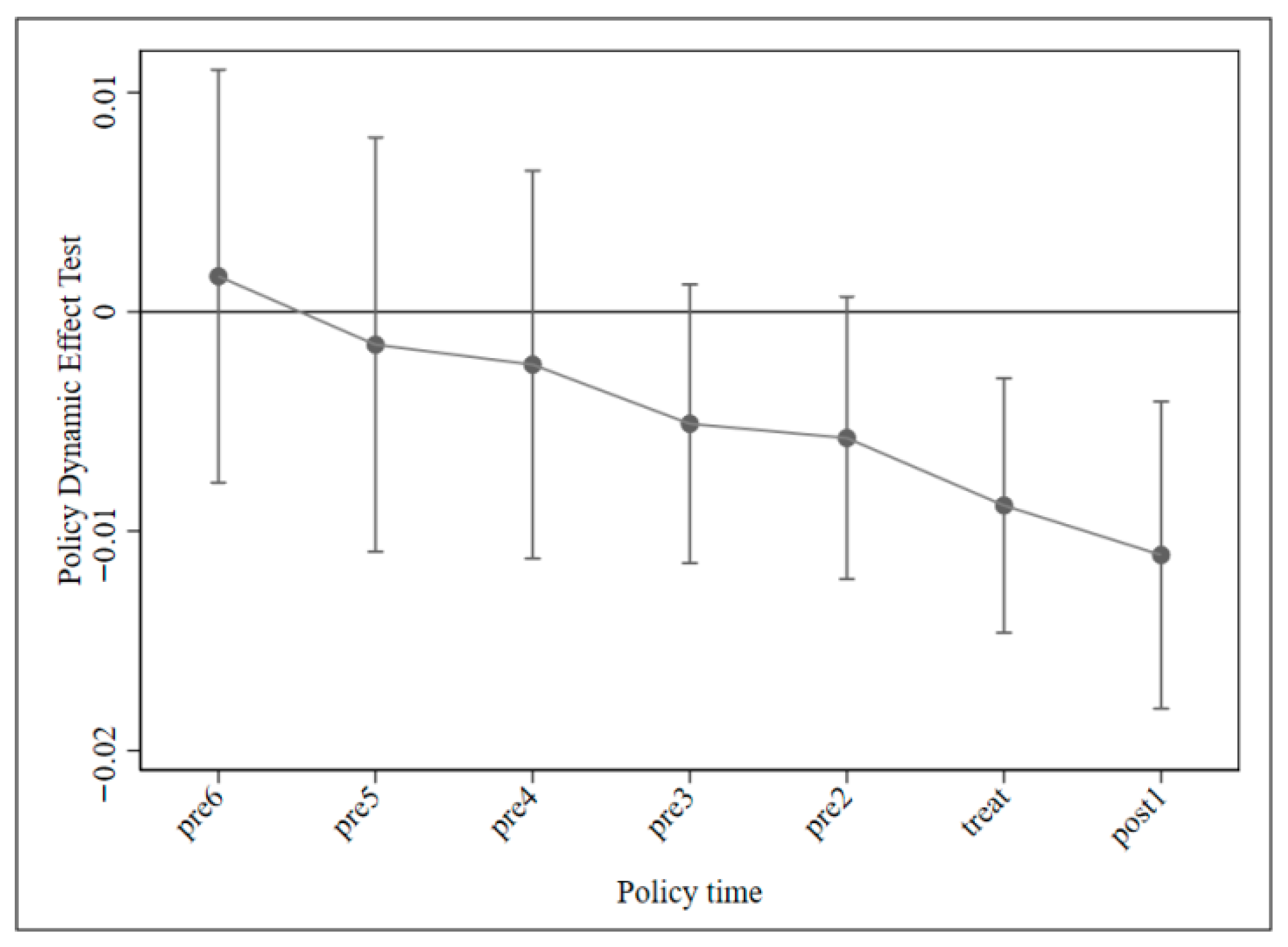
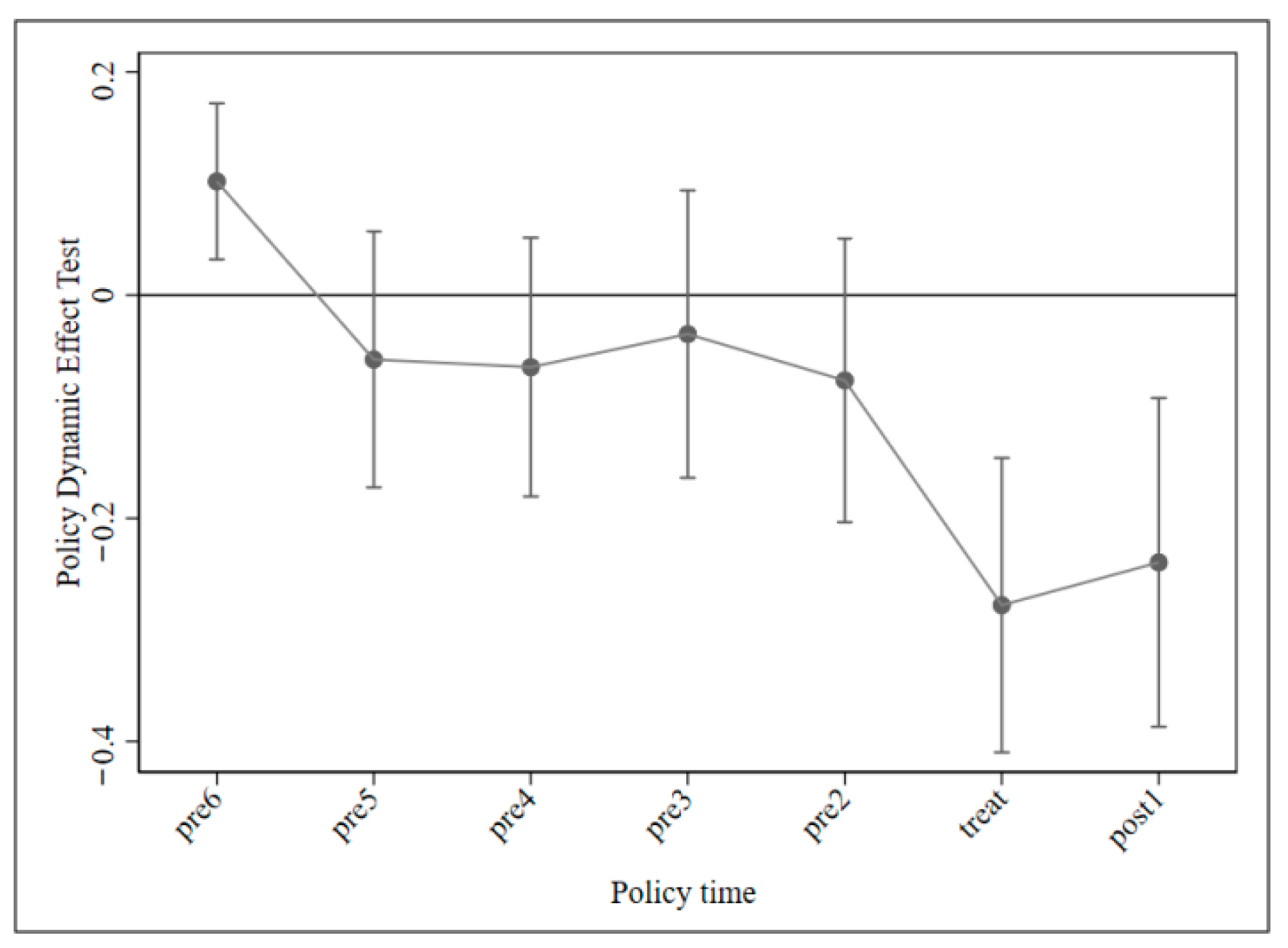
The efficacy of the DID method for causal identification hinges on the prerequisite that the experimental and control groups adhere to the parallel trends hypothesis. Specifically, there should be no significant disparities in pollution and CE reduction levels between the “ZWC” initiative cities and other cities prior to the implementation of the policy. This pre-condition ensures that any significant policy effects observed in the post-intervention stages regarding pollution and CE reductions across the experimental and control groups can be attributed to the “ZWC” initiative. Considering that the “ZWC” initiative was rolled out in two phases, in 2019 and 2022, respectively, the sample period for testing the ex-ante parallel trends was selected based on the completeness and reliability of data: this encompasses the six periods preceding the policy, the period during policy implementation, and the single period following the policy implementation. To counteract the issue of perfect multicollinearity, the period immediately before the policy implementation was established as the baseline. The findings from the dynamic effect test are illustrated in Figure 1 and Figure 2. Figure 1 illustrates that before the implementation of the policy, the confidence intervals for both the experimental and control groups intersect with zero in every period, indicating no statistically significant differences between them, thus satisfying the ex-ante parallel trend assumption. However, during and after the policy implementation period, significant disparities begin to emerge between the experimental and control groups, with coefficients indicating a decreasing trend, which signifies an increasing gap between the groups. The dynamic alterations in CE levels, as depicted in Figure 2, follow a similar pattern, reinforcing the satisfaction of the ex-ante parallel trend assumption. Consequently, the DID method can be effectively utilized to conduct a causal identification test of the policy.

4.3. Robustness Tests

The preceding section utilized a DID approach to establish the causal effects of “waste-free city” initiatives on reducing pollution and CEs. To further mitigate confounding influences from external variables, a series of robustness tests were conducted.

4.3.1. Replacing the Dependent Variable

To address potential limitations associated with the choice of the dependent variable, a robustness test was performed using alternative measures. Given the strong correlation between regional pollution levels and air quality, the regional PM2.5 index was chosen to represent pollution emission levels. In assessing regional CEs, reliance solely on total emissions might ignore the influences of economies of scale and the accumulation of human capital. Therefore, regional per capita CEs were employed as an alternative metric. As indicated in Table 3, columns (1) and (2), cities implementing “ZWC” initiatives demonstrated notably lower PM2.5 indices and per capita CEs compared to other cities. These findings are statistically significant at 5% and 1%, respectively.

4.3.2. Eliminating Outlier Interference

During data collection and statistical analysis, the presence of extreme values can notably skew regression outcomes, potentially leading to biased estimates. To counteract this, a 1% tail trimming procedure was applied to key variables. The adjusted regression results, displayed in columns (3) and (4) of Table 3, remained notably negative at 1%, affirming the robustness of the initial findings.

4.3.3. Mitigating Sample Selection Bias

The selection process for the “ZWC” study potentially suffered from biases due to factors like a city’s resources, economic conditions, and environmental characteristics, which could deviate from strict randomization principles. To reduce the impact of sample selection bias, propensity score matching was utilized to derive comparable samples. Following this, a DID analysis was conducted. Due to excessive sample loss with nearest neighbor matching, kernel matching was employed for propensity score matching. The regression outcomes, presented in columns (5) and (6) of Table 4, show that the interaction term coefficient for pollution emission levels was notably negative at 5%, while that for CE levels was notably negative at 1%. These results substantiate the significant environmental benefits of the “ZWC” initiative.

4.3.4. Placebo Test

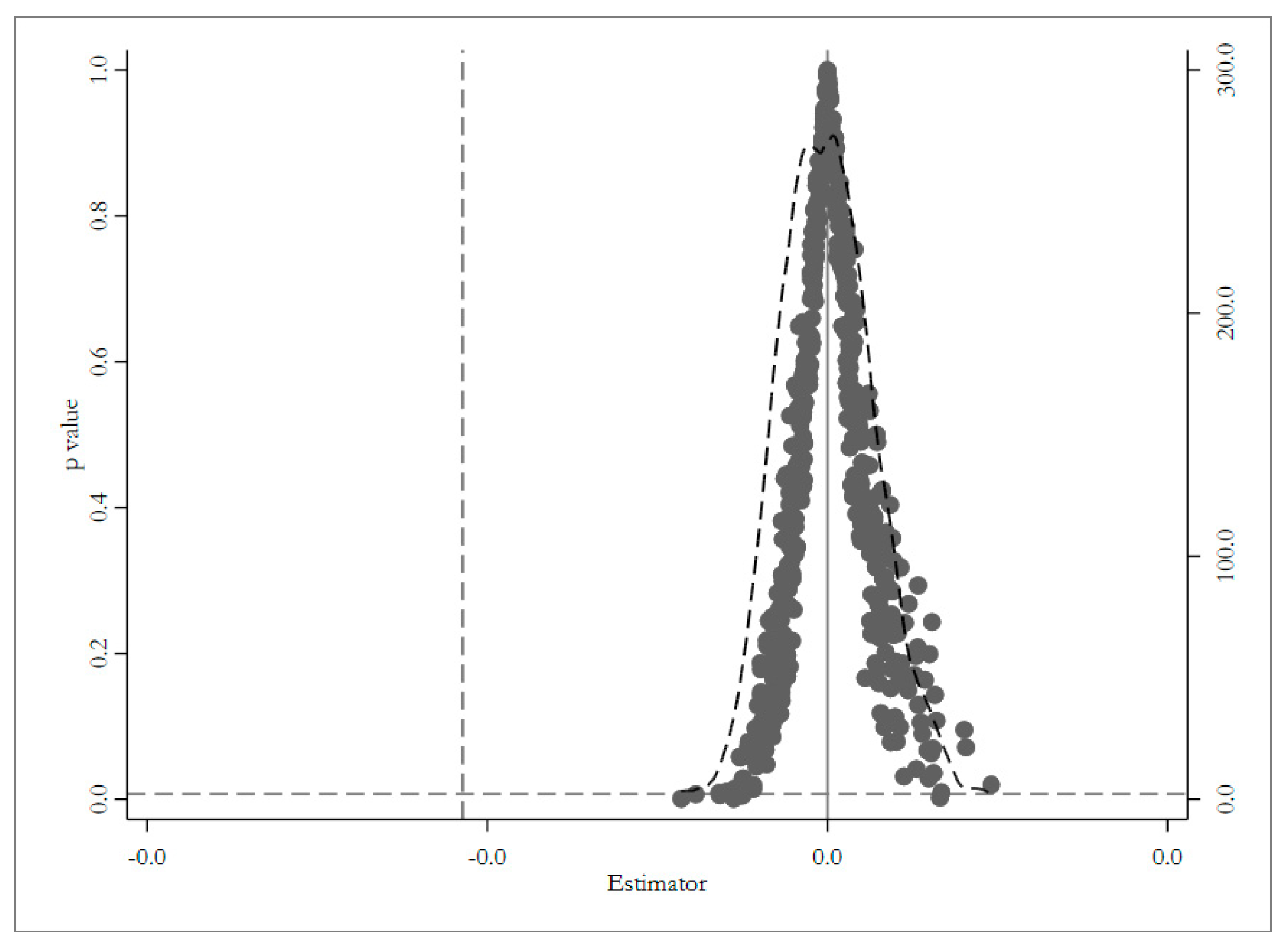
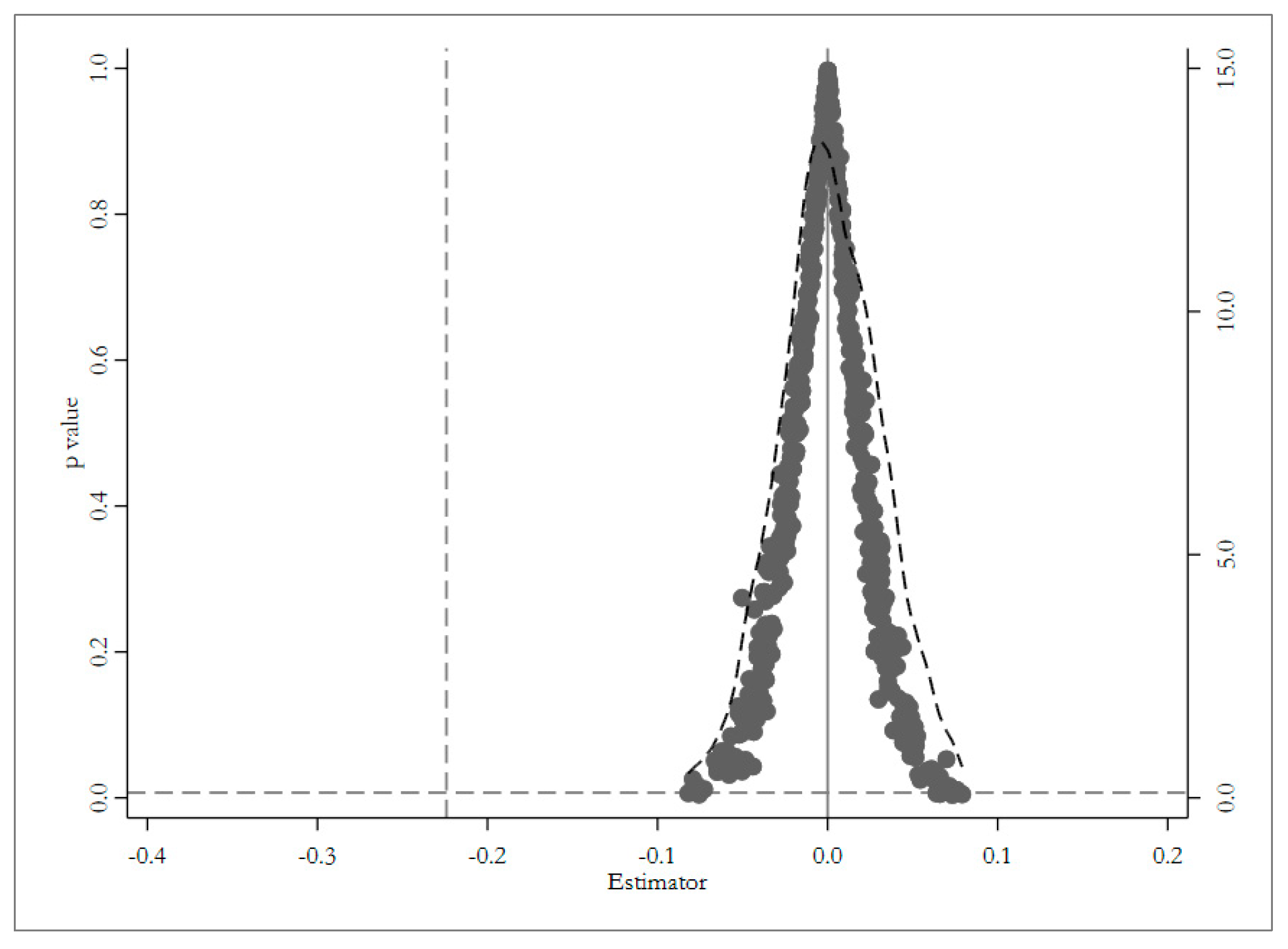
To enhance the credibility of the regression results and mitigate the influence of other unobserved variables, a new randomized trial was conducted. This involved randomly sampling to construct virtual experimental and control groups, a process repeated 500 times. The regression yielded virtual coefficients and p-values, which were used to create the placebo test plots depicted in Figure 3 and Figure 4. These figures represent the placebo test plots for pollutant emission levels and CE levels, respectively. The virtual regression coefficients are normally distributed around zero, and their distribution does not overlap with that of the actual coefficients. This discrepancy indicates that the placebo test is successful, confirming that the randomly sampled experimental group did not replicate the policy effect of reducing pollution and CEs. The observed policy effect in the baseline regression is attributable to the “ZWC” initiative, thereby validating the reliability of the earlier conclusions.

4.3.5. Eliminating the Influence of Special Cities

During the selection of pilot cities, municipalities directly under the central government, provincial capitals, and sub-provincial cities are often prioritized due to their robust economic strength, well-developed infrastructure, superior resource endowments, and concentrated human resources. These factors introduce numerous confounding variables that complicate the isolation of a pure policy effect. To ascertain a more genuine policy effect, the influence of municipalities directly under the central government, provincial capitals, and sub-provincial cities was excluded from the sample. The analysis then focused on comparisons among ordinary prefecture-level cities to assess the presence of a significant policy effect. The regression results, displayed in Table 5, show that after excluding the influence of these specific cities, the results remain notably negative at 5% or higher. This finding indicates that the “ZWC” initiative continues to produce significant effects in reducing pollution and CEs in ordinary prefecture-level cities, further substantiating the authenticity of the baseline regression results.

4.3.6. Eliminating Interference from Other Policies

Sustainable green development represents a pivotal future direction, with urban areas implementing various policy measures to achieve strategic objectives related to pollution and CE reduction. To minimize the impact of concurrent policies on the effectiveness of “ZWC” initiatives in reducing pollution and CEs, this section systematically investigates the influence of all relevant controlled policies, including emissions trading schemes, CEs trading policies, and green financial reform pilot zone policies. Emissions trading policies facilitate pollution and carbon reduction through market-based mechanisms. Initially, the government sets a cap on total pollutant or CEs and allocates quotas to enterprises. Enterprises that reduce emissions via technological upgrades can sell their surplus quotas on the market for a profit; those exceeding emission limits are compelled to purchase additional quotas or face penalties. This system incentivizes enterprises to proactively adopt energy-saving and emission-reduction measures, thereby reducing costs and generating revenue. Collectively, these efforts contribute to the achievement of pollution reduction and CE reduction goals, driving green economic and social transformation. Green financial reform and innovation pilot zone policies channel capital into sectors focused on pollution and CE reduction through financial mechanisms. On one hand, pilot zones introduce financial products such as green loans and green bonds, providing low-cost financing for low-carbon projects and lowering the financial barriers for corporate emissions reduction and transformation, while also promoting technological innovation in pollution and carbon reduction. On the other hand, the establishment of environmental risk assessment mechanisms that integrate corporate pollution and CEs into credit approval processes compels high-energy-consuming and high-polluting enterprises to reduce emissions. This approach actively incentivizes market entities to participate, ultimately driving industrial green upgrading and ecological environment improvement within these regions. These policies exert significant impacts on both pollution reduction and CE reduction in urban settings. Therefore, by constructing an interaction term between the policy dummy variables and the time trend and controlling for it in the baseline regression, a more authentic policy effect is obtained. The regression results, presented in Table 6, indicate that even after controlling for the individual and combined effects of emissions trading policies, CEs trading policies, and green financial reform pilot zone policies, the coefficient of the interaction term remains notably negative at 1%. This confirms that “ZWC” initiatives effectively facilitate urban pollution reduction and CE reduction goals, advance sustainable development objectives, and further validate the stability of the preceding conclusions.

4.3.7. Bacon Decomposition

In light of the “ZWC” initiative being implemented in stages, with distinct policy rollout timelines, discrepancies in baseline periods when employing the multi-period DID method for control and treatment groups can introduce temporal trend effects into the average effects, potentially biasing the estimated results [40]. To enhance the robustness of the regression results and mitigate potential biases arising from inadequate control and treatment groups, a Bacon decomposition was utilized for robustness testing. The findings are displayed in Table 7. The table shows that 88.17% of the effect is attributed to the treatment group compared to the never-treated group in the Bacon decomposition, indicating that the overwhelming majority of the policy impact is genuine, with minimal influence from suboptimal treatment groups. This further supports the initial conclusion that “Zero Waste City” initiatives can substantially reduce urban pollution and CEs.

5. Mechanism Testing and Heterogeneity Analysis

5.1. Mechanism Testing

The empirical analysis, utilizing the DID approach, demonstrated that “ZWC” initiatives lead to significant reductions in pollution and CEs, providing valuable insights for urban green development. Driven by innovative development concepts and bolstered by green technological innovations, “ZWC” initiatives control waste production at its source to minimize resource and energy consumption. They facilitate the recovery and reuse of waste at the end of its life cycle while ensuring its harmless treatment, thereby enhancing resource and energy efficiency. Simultaneously, these initiatives develop and reinforce public environmental consciousness, promoting active citizen participation in oversight. This model advances ecological conservation and plays a crucial role in the broader vision of creating a Beautiful China. Consequently, this article examines the mechanisms from four perspectives—green technological innovation, source control, end-of-pipe treatment, and public participation in oversight—to further elucidate the transmission mechanisms of pollution and CE reduction in “ZWC” development.

5.1.1. Analysis of Green Technology Innovation Mechanisms

The Porter Hypothesis suggests that moderate environmental regulations can stimulate corporate technological innovation, thereby improving production efficiency. The “ZWC” initiative exemplifies such an environmental regulatory policy. By addressing challenges like significant waste production and low resource utilization rates, this initiative implements appropriate policy measures that compel enterprises to engage in targeted “substantive innovation” to overcome these issues. According to the research by Gu Cheng et al. [41], the level of green technology innovation in a city is quantified using the logarithm of the number of green invention patents granted in that year plus one. The regression results, presented in Column (1) of Table 7, show that the interaction term coefficient is notably positive, indicating that the “ZWC” initiatives contribute to enhancing a city’s green technology innovation level, which in turn facilitates pollution reduction and CE goals. Thus, Hypothesis 2 is supported.

5.1.2. Analysis of Public Participation and Oversight Mechanisms

Green, low-carbon, and circular development are fundamental to the “ZWC” initiative. Key goals of this initiative include enhancing public environmental awareness and promoting a resource-conserving and environmentally friendly society. Drawing on the research by Yi, Z et al. [42], the keywords “environmental pollution” and “haze” from the Baidu Index were chosen to assess public concern about environmental issues. Adjusting for variations in urban population and scale, the annual per capita search index was employed to measure the level of public participation in oversight. The regression results, displayed in Column (2) of Table 7, show that the interaction term coefficient is notably negative at 1%. This indicates that after the implementation of “ZWC” initiatives, the frequency of public searches for pollution-related terms notably decreases in these cities compared to others. This reduction indirectly demonstrates that environmental pollution issues have been effectively addressed following the implementation of “ZWC” initiatives, confirming the validity of Hypothesis 3.

5.1.3. Mechanism Analysis of Source Control

The generation of pollutants and CEs is primarily attributed to excessive resource and energy consumption. Consequently, rational control of resource and energy usage, enhancement of energy efficiency, and reduction in pollutant generation at the source are pivotal steps in the establishment of a “ZWC.” To assess the efficacy of source control measures, per capita energy consumption serves as an indicator. Employing the calculation methods proposed by Wu Jiansheng [43] and others, DMSP/OLS stable nighttime light data along with provincial energy consumption data are used to simulate and estimate the energy consumption of prefecture-level cities. The regression results, presented in column (3) of Table 8, show a notably negative coefficient for the interaction term. This finding indicates that the development of “ZWC” reduces energy consumption at its source, thereby supporting the achievement of the developmental goals of pollution reduction and CE decrement. Thus, Hypothesis 4 is substantiated.

5.1.4. Mechanism Analysis of End-of-Pipe Treatment

End-of-pipe treatment in the context of “ZWC” initiatives surpasses the traditional linear disposal models that rely on passive landfilling. Instead, it emphasizes pollution reduction through harmless disposal and carbon mitigation through resource utilization. By fostering technological innovation and optimizing models, this approach transforms the final stage of solid waste management into a closed-loop system where pollution reduction and carbon mitigation are achieved synergistically. The “ZWC” initiative, as a government-led environmental regulatory policy, highlights the essential role of fiscal support in pollution reduction and management. Urban environmental expenditure (Urban environmental expenditure: Calculated by multiplying the ratio of each prefecture-level city’s local general budget expenditure to the province’s total general budget expenditure by the province’s total environmental expenditure) is utilized as a metric to gauge the level of end-of-pipe treatment. The regression results, displayed in Column (4) of Table 8, demonstrate a notably positive interaction coefficient, indicating that the “ZWC” initiative enhances local environmental protection expenditures for pollution control. This confirms Hypothesis 5.

5.2. Heterogeneity Analysis

5.2.1. Analysis of Resource Endowment Heterogeneity

The abundance of urban resources notably influences city development and environmental governance. On one hand, an excessive reliance on resources contributes to a monolithic economic structure and reduced resilience, thereby hindering urban transformation. On the other hand, overconsumption exacerbates pollution and intensifies the fiscal pressures associated with environmental management. To examine the heterogeneous impacts of resource-richness levels on the development of “ZWC,” cities in the sample were categorized into resource-based and non-resource-based cities according to the State Council’s National Sustainable Development Plan for Resource-Based Cities (2013–2020). As illustrated in Table 8, “ZWC” initiatives demonstrate significant pollution reduction and CE reduction effects in both resource-based and non-resource-based cities, further validating the reliability of the baseline regression results previously discussed. In resource-based cities, the effects of policies on pollution and CE reductions are more pronounced than in non-resource-based cities. The relatively monolithic development model of resource-based cities leads to elevated levels of urban pollution and CEs. When these cities are subjected to environmental regulations through “ZWC” initiatives, they actively explore alternative, green development pathways. Consequently, compared to resource-based cities unaffected by such policies, the effects on pollution and carbon reduction are immediate. In contrast, non-resource-based cities exhibit greater resilience due to their diversified development models and relatively lower levels of pollution and CEs. Therefore, the policy impact in these cities is less pronounced than in their resource-based counterparts.

5.2.2. Analysis of Heterogeneity in Digitalization Levels

Enhancing urban digitalization exploits digital technologies to bridge the gap in traditional environmental governance. By leveraging data-driven efficiency optimization, this approach establishes pathways for the reduction in pollution and CEs across the sectors of production, daily life, and governance. It achieves both short-term emission reductions and a long-term transformation towards low-carbon development models. On one hand, the integration of digital and physical systems mitigates additional pollution and energy consumption, which are often caused by operational deviations during production processes. This integration improves energy efficiency and increases the share of clean energy. On the other hand, it enhances management efficiency by strengthening the government’s capabilities for real-time monitoring of pollution emissions, enhancing the accuracy of environmental monitoring and governance, and ensuring the effective implementation of measures for pollution and CE reduction [13]. Drawing on the methodology proposed by Zhao Tao et al. [44] for measuring urban digitalization levels, cities were categorized into high-digitalization and low-digitalization samples based on median values. The regression results, presented in Table 9, indicate that in samples from highly digitalized cities, the “ZWC” initiatives exhibit significant effects on pollution and CE reduction. Conversely, these effects are not significant in samples from low-digitalization cities. Moreover, the absolute value of the interaction term coefficient in highly digitalized city samples exceeds that of the baseline regression, suggesting that higher levels of urban digitalization facilitate the realization of policy-driven effects on pollution reduction and CE reduction through digital integration.

5.2.3. Analysis of Heterogeneity in Environmental Regulation Intensity

The development of the “ZWC” initiative exemplifies a quintessential environmental regulation policy, in which top-down policy objectives established by the government play a decisive role in shaping urban development trajectories. By instituting clear pollutant discharge standards, governments mandate that enterprises upgrade their pollution control facilities. Increased penalties for unauthorized discharges and violations, combined with rigorous enforcement, raise the cost of non-compliance, thereby facilitating the achievement of pollution reduction and CE targets. Market-based incentives, such as tax and fee reductions, encourage enterprises to develop green technologies, lower emissions, and improve production efficiency. These measures further direct capital towards green industries, enhance resource allocation efficiency, optimize energy structures, and promote industrial greening and transformation. Drawing on the research by Shao Shuai et al. [45], this study quantifies the intensity of government environmental regulation by analyzing the frequency of environmental protection terms in government work reports. Based on the median intensity of environmental regulation, the sample is bifurcated into two groups: high environmental regulation intensity and low environmental regulation intensity. This division facilitates the analysis of differences in policy effects under varying levels of environmental regulation intensity. The results presented in Table 10 suggest that in the sample with high environmental regulation intensity, the policy effects of pollution reduction and CE reduction from the “ZWC” initiative are more pronounced. This outcome indicates that an increased governmental focus on environmental protection is likely to lead to the adoption of more stringent requirements and standards, which in turn prompts a more proactive response from enterprises in reducing pollution and CEs.

6. Further Analysis: Synergistic Effects of Pollution Reduction and Carbon Mitigation

Given the shared foundations of pollution reduction and carbon mitigation, the implementation of environmental regulatory measures aimed at curbing pollutant emissions may also inadvertently lead to reductions in CEs. By addressing the entire lifecycle, these policies can foster synergistic advancements across multiple objectives. Initiatives such as “ZWC” demonstrate how source control measures not only decrease solid waste pollution but also indirectly reduce CEs linked to fossil fuel consumption by diminishing the demand for primary resource extraction and processing. Technological innovations enhance production processes and increase efficiency, while robust end-of-pipe treatments ensure the harmless disposal of pollutants, thereby simultaneously diminishing both pollutant and carbon intensities. Consequently, by refining urban material circulation systems, “ZWC” projects disrupt the fragmented governance models that previously separated pollution and carbon reduction, transitioning these goals from independent to synergistic pursuits. Previous evidence has shown that the construction of “ZWC” notably lowers both urban pollution and CEs. This study further investigates whether such initiatives generate synergistic effects in both pollution and carbon reduction. Building on the work of Gu Cheng et al. [41], a coupled coordination model for pollutant and CEs is developed to quantify the synergy between these two reduction efforts in urban settings. The model is outlined as follows:
C O U _ D i = P E i * C E P E i + C E / 2 2 1 / 2
C O O _ D i = 0.5 * P E i + 0.5 * C E
C C _ D i = C O U _ D i * C O O _ D i
where C O U _ D   denotes the coupling degree between pollutant emissions and CEs, C O O _ D denotes the synergy degree between pollutant emissions and CEs, and C C _ D denotes the coupling synergy degree between pollutant emissions and CEs. The values of i are labeled 1, 2, 3, and 4, representing sulfur dioxide emissions, particulate matter emissions, wastewater emissions, and comprehensive pollutant emissions, respectively.
The results presented in Table 11 reveal that the coupling synergistic coefficients between sulfur dioxide emissions, particulate matter emissions, and comprehensive pollutant emissions with CEs are all statistically significant at 1%. However, the coupling synergy coefficient between wastewater emissions and CEs is not statistically significant. Given that atmospheric pollutants such as sulfur dioxide commonly originate from the combustion of fossil fuels, a major source of carbon dioxide, synergistic effects are feasible both through source control measures that reduce fossil fuel consumption and through technological innovations that optimize production processes. This enables the harmless treatment of pollutants and promotes cleaner production practices. Compared to non-pilot cities, the synergistic effects of pollution and CE reduction in “ZWC” initiatives are more pronounced. Thus, the development of “ZWC” not only reduces urban pollution and CEs but also notably enhances the synergistic effects of these reductions. This dual benefit from a single initiative substantially improves urban environmental governance efficiency and supports the advancement of ecological civilization.


7. Conclusions and Policy Recommendations

7.1. Conclusions

The development of the “ZWC” initiative represents a critical strategy for China to achieve its dual carbon objectives and promote ecological civilization. Conducting accurate and objective assessments of the policy’s effects on pollution and CEs reduction can notably enhance sustainable urban development. This study utilizes a multi-period DID methodology to systematically assess the pollution and carbon reduction impacts of the “ZWC” initiative, employing panel data from 273 prefecture-level cities in China spanning from 2013 to 2023. Through mechanism analysis, heterogeneity analysis, and robustness tests, this research clarifies the underlying rationale and confirms the reliability of the findings, while also preliminarily investigating the synergistic effects in pollution and carbon reduction. The results demonstrate that the “ZWC” initiatives substantially meet their objectives of reducing pollution and mitigating CEs, thus playing an essential role in advancing urban green sustainable development. A series of robustness tests substantiate the reliability and validity of these findings. The mechanism analysis indicates that these initiatives facilitate pollution reduction and carbon mitigation through four primary channels: enhancing green technological innovation, strengthening source control, reinforcing end-of-pipe treatment, and encouraging public participation and oversight. Moreover, heterogeneity analysis shows that the urban resource endowments, digitalization levels, and intensity of environmental regulations notably affect the pollution and carbon reduction outcomes. The “ZWC” initiative exhibits more pronounced impacts on pollution and carbon reduction in regions characterized by richer resources, higher digitalization levels, and stricter environmental regulations.
7.2. Policy Recommendations

  • Continuously refine the “ZWC” initiative and expand its pilot scope. The results of the mechanism test show that GTI is an important transmission path for the “waste-free city” policy to generate environmental benefits. Existing research supports that the implementation of the “ZWC” model not only facilitates reductions in pollution and CEs but also promotes sustainable urban development. Further implementation should involve strengthening the top-level design, establishing long-term strategic guidelines for urban sustainability, balancing environmental protection with economic growth, and broadening the scope of green development from pilot cities to more extensive urban areas. Augment support for green technological innovation by providing dedicated technological subsidies to pilot cities. Support research and development of waste recycling technologies and low-carbon processes. Simultaneously it is suggested to incorporate the quantity and quality of green patents into the performance appraisal system of local governments, so as to form a stable and strong innovation orientation, transform the “innovation compensation effect” predicted by Porter hypothesis into a continuous policy dividend, and consolidate and expand the effect of pollution reduction and carbon reduction in the construction of “ZWC”.
  • Enhancing policy effectiveness through precise management by deepening the integration of digital technologies with the waste-free city governance system. Analysis of heterogeneity reveals that the pollution and carbon emission reduction effects of “ZWC” initiatives are more pronounced in cities with higher levels of digitalization. The government should make full use of digital technology to empower environmental governance, promote the construction of Internet of Things monitoring network and big data platform covering the whole life cycle of solid waste generation, collection, transportation and disposal, and realize real-time tracking and intelligent early warning of pollution sources and carbon emissions. Through data sharing and analysis, optimize waste sorting, recycling routes and the layout of disposal facilities to enhance resource circulation efficiency.
  • Implement a targeted control strategy combining comprehensive oversight with focused intervention at critical junctures, particularly strengthening the coordinated management of pollutants associated with energy consumption. Benchmark regression and further analysis confirm that the development of “ZWC” can effectively reduce pollution and carbon emissions, demonstrating stronger synergistic effects in controlling pollutants such as sulfur dioxide and particulate matter that are closely linked to energy consumption. Therefore, the government should enhance end-of-pipe treatment capabilities by increasing local government investment in environmental protection facilities. Mandate that waste incineration plants install flue gas purification systems and require landfills to implement methane recovery equipment. Simultaneously establish a “full lifecycle traceability platform” for solid waste management to achieve comprehensive oversight from generation to utilization. Promote the deep integration of resource-intensive industries with the “zero-waste” philosophy. In sectors with significant pollution, such as steel and non-ferrous metals, advance short-process production and solid waste recycling models while fostering the development of green alternative industries to decrease reliance on high-carbon sectors, maximize the synergy gains from the policy.
  • Establish institutionalized and diversified channels for public participation and oversight, transforming societal pressure into sustainable governance capacity. Mechanism verification confirms that public participation and oversight constitute one of the effective pathways for the “ZWC” policy to achieve its objectives. Environmental governance cannot succeed without public oversight. As living standards improve, public concern about environmental issues increases, with a growing number of people demanding stronger pollution control measures. Public oversight drives green economic development through transparent information disclosure and effective feedback channels. Improve public participation and oversight mechanisms by establishing diverse “online + offline” feedback channels, such as environmental reporting apps and community monitoring stations. Streamline reporting procedures and provide timely feedback. Simultaneously, promote the “zero-waste” concept through short videos and public service announcements. Transform public environmental concerns into corporate accountability by implementing corresponding incentive measures. Strengthen public education on environmental taxes and enhance environmental awareness through multiple channels, promoting a shift from passive compliance to active oversight.

8. Deficiencies and Prospects

8.1. Insufficient Research

Based on the quasi-natural experiment of the construction of “ZWC,” this study systematically evaluated the synergistic effect of pollution reduction and carbon reduction. The technology promotion and industrial coordination of the construction of “ZWC” may have a radiation effect on the surrounding non-pilot cities, such as the transfer of solid waste recycling technology from resource-based cities to neighboring cities. However, this study adopts the traditional multi-period DID model, only focuses on the policy effect of the city itself, ignores the spatial correlation between regions, and cannot reveal the global governance value of the policy. Secondly, in terms of research subject selection, the article is based on data at the city level rather than more granular enterprise-level data. Consequently, the research conclusions may reflect an overall average effect rather than the precise realities revealed at the enterprise level. Then, the evaluation of the long-term effect of the policy is insufficient. The observation period of the study is 2013–2023, while the pilot implementation of the 2022 batch of “ZWC” is only one year, so it is difficult to evaluate the synergistic effect of pollution reduction and carbon reduction in the long-term stage such as the maturity of the solid waste recycling system and the iteration of green technology after the implementation of the policy.

8.2. Prospect

  • Expand the research perspective: incorporate spatial econometric model to analyze the spillover effect of “waste-free city” construction on surrounding cities; heterogeneity dimensions such as urban agglomeration and industrial structure should be added to comprehensively identify the applicable boundaries of policies.
  • Extend the observation period: after the policy implementation time is sufficient, evaluate the long-term effect of the construction of “waste-free city” and analyze the change in governance efficiency after the solid waste recycling system is mature.
  • Sinking research scale: the micro-data of enterprises are used to analyze the micro impact of the “waste-free city” policy on solid waste treatment and green innovation of enterprises, so as to break through the transmission chain from macro policies to micro subjects.

Author Contributions

Conceptualization, J.H.; methodology, Z.X., J.H.; software, Z.X.; validation, Z.X.; formal analysis, Z.X.; investigation, J.H.; resources, J.H.; data curation, Z.X.; writing—original draft preparation, Z.X.; writing—review and editing, J.H.; visualization, J.H.; supervision, J.H.; project administration, J.H. All authors have read and agreed to the published version of the manuscript.

Funding

This research received no external funding.

Institutional Review Board Statement

Not applicable.

Informed Consent Statement

Not applicable.

Data Availability Statement

The original contributions presented in this study are included in the article. Further inquiries can be directed to the corresponding author.

Conflicts of Interest

The authors declare no conflicts of interest.

References

  1. IPCC. AR6 Synthesis Report: Climate Change 2023; IPCC: Geneva, Switzerland, 2023. [Google Scholar]
  2. Song, D.; Chen, L.; Wang, B. How environmental trading achieve the synergistic effects of pollution and carbon reduction: Theoretical and empirical evidence. J. Quant. Technol. Econ. 2024, 41, 171–192. [Google Scholar]
  3. Nie, C.; Lee, C.C. Synergy of pollution control and carbon reduction in China: Spatial–temporal characteristics, regional differences, and convergence. Environ. Impact Assess. Rev. 2023, 101, 107110. [Google Scholar] [CrossRef]
  4. Rugman, A.M.; Verbeke, A. Corporate strategies and environmental regulations: An organizing framework. Strateg. Manag. J. 1998, 19, 363–375. [Google Scholar] [CrossRef]
  5. Liu, J.; Xiao, Y. China’s environmental protection tax and green innovation: Incentive effect or crowding-out effect. Econ. Res. J. 2022, 57, 72–88. [Google Scholar]
  6. Wang, H.; Gu, K.; Dong, F.; Sun, H. Does the low-carbon city pilot policy achieve the synergistic effect of pollution and carbon reduction? Energy Environ. 2024, 35, 569–596. [Google Scholar] [CrossRef]
  7. Zhao, Z.Y.; Gao, L.; Zuo, J. How national policies facilitate low carbon city development: A China study. J. Clean. Prod. 2019, 234, 743–754. [Google Scholar] [CrossRef]
  8. Li, L.; Jin, X.; Li, Y.; Chen, H.; Wang, Y. The impact of carbon trading policy on regional ecological risk: Synergy between market-based environmental policy and government intervention. Front. Environ. Sci. 2022, 10, 1010522. [Google Scholar] [CrossRef]
  9. Zhu, S.Y.; Yu, B. Research on the co-benefits of pollution reduction and carbon reduction of “emissions trading” and “carbon emissions trading”—Based on the dual perspectives of pollution control and policy management. Chin. J. Environ. Mgmt 2023, 15, 102–109. [Google Scholar]
  10. Wang, W.; Sun, H.; Zhang, X.; Ding, C.; Gong, Y. Can the energy quota trading system achieve the double environmental benefits of reducing pollution and carbon emissions? Ind. Econ. Res. 2023, 125, 15–26. [Google Scholar]
  11. Xu, Y.; Wen, S.; Tao, C.Q. Impact of environmental tax on pollution control: A sustainable development perspective. Econ. Anal. Policy 2023, 79, 89–106. [Google Scholar] [CrossRef]
  12. Zhu, J.; Wu, S.; Xu, J. Synergy between pollution control and carbon reduction: China’s evidence. Energy Econ. 2023, 119, 106541. [Google Scholar] [CrossRef]
  13. Hu, J. Synergistic effect of pollution reduction and carbon emission mitigation in the digital economy. J. Environ. Manag. 2023, 337, 117755. [Google Scholar] [CrossRef]
  14. Wu, L.; Ma, T.; Bian, Y.; Li, S.; Yi, Z. Improvement of regional environmental quality: Government environmental governance and public participation. Sci. Total Environ. 2020, 717, 137265. [Google Scholar] [CrossRef]
  15. Hou, X.; Yang, J.; Hou, C. Can strengthening environmental justice promote carbon reduction? Evidence from environmental courts in China. Environ. Sci. Pollut. Res. 2024, 31, 57081–57098. [Google Scholar] [CrossRef]
  16. Han, Y. Impact of environmental regulation policy on environmental regulation level: A quasi-natural experiment based on carbon emission trading pilot. Environ. Sci. Pollut. Res. 2020, 27, 23602–23615. [Google Scholar] [CrossRef]
  17. Yue, L.; Yang, X. Industrial transformation and upgrading under the constraints of dual environmental objectives: How pollution control and carbon reduction are synergistic. China Popul. Resour. Environ. 2024, 34, 46. [Google Scholar]
  18. Zhang, H.; Wang, Y.; Wang, W. Does renewable energy technology innovation achieve the synergistic effect of pollution and carbon reduction? Renew. Energy 2025, 250, 123329. [Google Scholar] [CrossRef]
  19. Chen, Y.; Teng, J.; Zhao, N.; Wang, F. The content, objectives and path of “Zero-Waste Cities” construction. Environ. Prot. 2019, 47, 21–25. [Google Scholar]
  20. Zhang, Z.; Teng, J. Role of government in the construction of zero-waste cities: A case study of China’s pearl river delta city cluster. Sustainability 2023, 15, 1258. [Google Scholar] [CrossRef]
  21. Meng, M.; Wen, Z.; Luo, W.; Wang, S. Approaches and policies to promote Zero-waste City construction: China’s practices and lessons. Sustainability 2021, 13, 13537. [Google Scholar] [CrossRef]
  22. Zhang, N.; Liu, W.; Li, J.; Liu, L.; Tan, Q. Quantifying carbon reduction potential of “Zero-Waste City” pilot: A case study of Shenzhen based on source reduction-recycling-disposal framework. J. Environ. Sci. 2025, in press. [Google Scholar] [CrossRef]
  23. Qin, T.; She, L.; Wang, Z.; Chen, L.; Xu, W.; Jiang, G.; Zhang, Z. The practical experience of “Zero Waste City” construction in Foshan City condenses the Chinese solution to the Sustainable Development Goals. Sustainability 2022, 14, 12118. [Google Scholar] [CrossRef]
  24. Qian, Y.; Jiang, J.; Guo, B.; Hu, F. The impact of “zero-waste city” pilot policy on corporate green transformation: A causal inference based on double machine learning. Front. Environ. Sci. 2025, 13, 1564418. [Google Scholar] [CrossRef]
  25. Shuai, Y.; Li, J.; Jiao, J.; Chen, Z. Public attention and ESG performance of solid waste disposal companies: Empirical evidence from China. In Environment, Development and Sustainability; Springer: Berlin/Heidelberg, Germany, 2025; pp. 1–25. [Google Scholar]
  26. Han, Y.; Liu, J.; Xu, H. A comprehensive assessment of the performance of China’s provincial zero-waste cities and impact factor diagnosis. Environ. Impact Assess. Rev. 2022, 95, 106778. [Google Scholar] [CrossRef]
  27. Li, Y.; Fu, Z.; Li, J. Assessing the policy benefits of constructing “Zero-waste Cities” in China: From the perspective of hazardous waste lifecycle management. Sci. Total Environ. 2024, 918, 170184. [Google Scholar] [CrossRef] [PubMed]
  28. Li, Y.S.; Li, J.H. Method development and empirical research in examining the construction of China’s “Zero-waste Cities”. Sci. Total Environ. 2024, 906, 167345. [Google Scholar] [CrossRef] [PubMed]
  29. Qi, S.; Chen, Y.; Wang, X.; Yang, Y.; Teng, J.; Wang, Y. Exploration and practice of “zero-waste city” in China. Circ. Econ. 2024, 3, 100079. [Google Scholar] [CrossRef]
  30. Porter, M.E.; Linde, C. Toward a new conception of the environment-competitiveness relationship. J. Econ. Perspect. 1995, 9, 97–118. [Google Scholar] [CrossRef]
  31. Jiao, Y.; Li, C.; Yao, Z.; Weng, C.; Lian, A.; Dong, R. How can online citizen complaints provide solutions to refine environmental management: A spatio-temporal perspective. Inf. Process. Manag. 2024, 61, 103611. [Google Scholar] [CrossRef]
  32. Baker, A.C.; Larcker, D.F.; Wang, C.C.Y. How much should we trust staggered difference-in-differences estimates? J. Financ. Econ. 2022, 144, 370–395. [Google Scholar] [CrossRef]
  33. Wu, J.; Guo, Z. Research on the convergence of carbon dioxide emissions in China: A continuous dynamic distribution approach. Stat. Res. 2016, 33, 54–60. [Google Scholar]
  34. Yan, X.; He, Y.; Fan, A. Carbon footprint prediction considering the evolution of alternative fuels and cargo: A case study of Yangtze river ships. Renew. Sustain. Energy Rev. 2023, 173, 113068. [Google Scholar] [CrossRef]
  35. Qiao, R.; Liu, X.; Gao, S.; Liang, D.; GesangYangji, G.; Xia, L.; Zhou, S.; Ao, X.; Jiang, Q.; Wu, Z. Industrialization, urbanization, and innovation: Nonlinear drivers of carbon emissions in Chinese cities. Appl. Energy 2024, 358, 122598. [Google Scholar] [CrossRef]
  36. Gao, F.; Wu, J.; Xiao, J.; Li, X.; Liao, S.; Chen, W. Spatially explicit carbon emissions by remote sensing and social sensing. Environ. Res. 2023, 221, 115257. [Google Scholar] [CrossRef]
  37. Zhang, J.; Zheng, Z.; Zhang, L.; Li, X.; Liao, S.; Chen, W. Digital consumption innovation, socio-economic factors and low-carbon consumption: Empirical analysis based on China. Technol. Soc. 2021, 67, 101730. [Google Scholar] [CrossRef]
  38. Rios, F.C.; Panic, S.; Grau, D.; Khanna, V.; Zapitelli, J.; Bilec, M. Exploring circular economies in the built environment from a complex systems perspective: A systematic review and conceptual model at the city scale. Sustain. Cities Soc. 2022, 80, 103411. [Google Scholar] [CrossRef]
  39. Chen, J.; Li, Y.; Xu, Y.; Vardanyan, M.; Shen, Z.; Song, M. The impact of fiscal technology expenditures on innovation drive and carbon emissions in China. Technol. Forecast. Social. Change 2023, 193, 122631. [Google Scholar] [CrossRef]
  40. Goodman-Bacon, A. Difference-in-differences with variation in treatment timing. J. Econom. 2021, 225, 254–277. [Google Scholar] [CrossRef]
  41. Cheng, G.; Shushan, Z.; Tianrong, Y.; Peiwen, Z. The Pollution and Carbon Reduction Effect of Logistics Standardization. J. Finan. Econ. 2025, 51, 4–18. [Google Scholar]
  42. Yi, Z.; Chen, X.; Tian, L. The effect of public environmental concerns on corporate green innovation. Econ. Theory Bus. Manag. 2022, 42, 32–48. [Google Scholar]
  43. Wu, J.; Yan, N.; Jian, P.; Zheng, W.; Xiulan, H. Research on energy consumption dynamic among prefecture-level cities in China based on DMSP/OLS Nighttime Light. Geogr. Res. 2014, 33, 625–634. [Google Scholar]
  44. Tao, Z.; Zhang, Z.; Shangkun, L. Digital economy, entrepreneurship, and high-quality economic development: Empirical evidence from urban China. Front. Econ. China 2022, 17, 393. [Google Scholar]
  45. Shao, S.; Ge, L.M.; Zhu, J.L. How to achieve the harmony between humanity and nature: Environmental regulation and environmental welfare performance from the perspective of geographical factors. J. Manag. World 2024, 8, 88–102. [Google Scholar]
Figure 1. Dynamic Effect Diagram of Pollutant Emission Levels.
Sustainability 17 11251 g001
Figure 2. Dynamic Effects of CE Levels.
Sustainability 17 11251 g002
Figure 3. Placebo Test Plot for Pollutant Emission Levels.
Sustainability 17 11251 g003
Figure 4. CE Level Placebo Test Plot.
Sustainability 17 11251 g004
Table 1. Descriptive Statistics of Key Variables.
VariableVariable NameObserved ValuesMeanStandard DeviationMinimumMedianMaximum
PEPollutant emission levels30030.0210.0300.0000.0090.413
CECE levels300316.2101.08312.16016.20519.036
pgdpActual per capita GDP300310.9150.6499.03710.88112.994
indLevel of industrialization30030.4340.1070.1160.4390.794
popdPopulation density30035.4270.9681.4695.5278.396
conLevel of social consumption30034.8990.8740.8694.9787.383
govGovernment intervention intensity30030.2050.1000.0440.1790.916
tecTechnology spending30030.0190.0190.0010.0130.207
Table 2. VIF test results.
VariableVIF1/VIF
gov2.840.351856
pgdp2.270.440516
popd2.140.468323
con1.930.518020
tec1.660.603445
ind1.630.614293
treat*post1.140.880932
Mean VIF1.94
Table 3. Benchmark Regression Results.
(1)(2)(3)(4)
PECEPECE
treat*post−0.0100 ***−0.2206 ***−0.0107 ***−0.2242 ***
(0.0038)(0.0716)(0.0041)(0.0682)
pgdp 0.0561 *2.5437 ***
(0.0288)(0.4823)
ind −0.02920.3634
(0.0191)(0.4045)
popd −0.1357 **1.0120
(0.0624)(1.6496)
con −0.0004−0.0177
(0.0036)(0.0682)
gov 0.0040−0.2357
(0.0209)(0.6595)
tec −0.0135−3.8290 ***
(0.0617)(1.3480)
Cons0.0217 ***16.2273 ***0.1600−16.9792 *
(0.0003)(0.0057)(0.4812)(9.8272)
Time fixedYesYesYesYes
City fixedYesYesYesYes
N3003300330033003
adj. R20.6090.8450.6140.851
Note: * p < 0. 10, ** p < 0. 05, *** p < 0. 01; The values in parentheses represent robust standard errors. The same below.
Table 4. Robustness Test Results.
(1)(2)(3)(4)(5)(6)
PM2.5pcePECEPECE
treat*post−1.7913 **−0.8063 ***−0.0054 ***−0.2048 ***−0.0097 **−0.1717 ***
(0.7425)(0.1895)(0.0017)(0.0628)(0.0041)(0.0655)
Control variablesYesYesYesYesYesYes
Time fixedYesYesYesYesYesYes
City fixedYesYesYesYesYesYes
Cons422.1167 ***−28.11250.0270−15.50290.3402−13.3957
(105.0375)(33.0409)(0.3344)(10.1193)(0.5465)(10.7919)
N300330032941294226602660
adj. R20.8570.9000.7140.8560.6150.849
Table 5. Robustness Test Results Excluding the Impact of Specific Cities.
(1)(2)(3)(4)(5)(6)(7)(8)
PECEPECEPECEPECE
treat*post−0.0074 **−0.2037 ***−0.0114 **−0.2104 ***−0.0115 ***−0.2181 ***−0.0076 **−0.1713 **
(0.0029)(0.0688)(0.0047)(0.0738)(0.0044)(0.0737)(0.0033)(0.0768)
MunicipalityExcludeExclude ExcludeExclude
Provincial Capital ExcludeExclude ExcludeExclude
sub-provincial city ExcludeExcludeExcludeExclude
Control variablesYesYesYesYesYesYesYesYes
Time fixedYesYesYesYesYesYesYesYes
City fixedYesYesYesYesYesYesYesYes
Cons0.1973−15.74290.2562−19.7468 **0.3221−14.03110.4020−16.9923
(0.4316)(10.1426)(0.5080)(9.7584)(0.4971)(10.2975)(0.4614)(10.3534)
N29592959271727172838283826182618
adj. R20.6180.8420.6010.8400.6070.8360.6010.819
Table 6. Robustness Test Results Excluding Other Policy Interferences.
(1)(2)(3)(4)(5)(6)(7)(8)
PEPEPECECECEPECE
treat*post−0.0107 ***−0.0106 ***−0.0109 ***−0.2242 ***−0.2232 ***−0.2232 ***−0.0108 ***−0.2225 ***
(0.0041)(0.0041)(0.0041)(0.0682)(0.0683)(0.0684)(0.0041)(0.0684)
Emissions TradingYes Yes YesYes
CEs Trading Yes Yes YesYes
Green Finance Innovation Pilot Zone Yes YesYesYes
Control variablesYesYesYesYesYesYesYesYes
Time fixedYesYesYesYesYesYesYesYes
City fixedYesYesYesYesYesYesYesYes
Cons0.16000.20270.1737−16.9792 *−16.6360 *−17.0720 *0.2244−16.7364 *
(0.4812)(0.4720)(0.4821)(9.8272)(9.8701)(9.7999)(0.4723)(9.8328)
N30033003300330033003300330033003
adj. R20.6140.6150.6150.8510.8510.8510.6160.851
Table 7. Bacon Decomposition Results.
CategoryPE CoefficientWeightCE CoefficientWeight
Timing_groups−0.00880.0675−0.75710.0675
Never_vs_timing−0.01010.8817−0.18530.8817
Within−0.02500.0508−0.19110.0508
Table 8. Mechanism Verification Results.
(1)(2)(3)(4)
Green Technology InnovationPublic Participation In OversightSource ControlEnd-of-Pipe Treatment
treat*post0.2079 ***−0.0363 ***−0.8063 ***2.9761 *
(0.0559)(0.0081)(0.1895)(1.5647)
Control variablesYesYesYesYes
Time fixedYesYesYesYes
City fixedYesYesYesYes
Cons−4.4712−6.3478 ***−28.1125−2.5 × 10²
(7.6803)(1.7629)(33.0409)(251.6132)
N3003300330033003
adj. R20.9310.7350.9000.879
Table 9. Analysis Results of Resource Endowment and Digitalization Level Heterogeneity.
(1)(2)(3)(4)(5)(6)(7)(8)
Non-Resource-Based CityResource-Based CityLow Level of DigitizationHighly Digitized
PECEPECEPECEPECE
treat*post−0.0050 **−0.2257 ***−0.0167 *−0.2666 **−0.0038 *−0.0627−0.0138 **−1.3120 ***
(0.0061)(0.0729)(0.0040)(0.1314)(0.0022)(0.0652)(0.0059)(0.1739)
Control variablesYesYesYesYesYesYesYesYes
Time fixedYesYesYesYesYesYesYesYes
City fixedYesYesYesYesYesYesYesYes
Cons−0.1230−25.0928 **−0.37511.12540.9447 *−6.60111.7952−4.0775
(0.6030)(11.6504)(1.2181)(23.4295)(0.5612)(25.4028)(2.1943)(47.4259)
N18041804119911991887188710881088
adj. R20.5580.8950.6970.7550.5900.8510.7200.895
Table 10. Analysis Results of Heterogeneity in Environmental Regulation Intensity.
(1)(2)(3)(4)
Low Environmental Regulation IntensityHigh Environmental Regulatory Intensity
PECEPECE
treat*post−0.0048−0.1434 **−0.0108 **−1.0639 ***
(0.0030)(0.0700)(0.0049)(0.1960)
Control variablesYesYesYesYes
Time fixedYesYesYesYes
City fixedYesYesYesYes
Cons0.0971−18.3537 *−0.1516−11.2313
(0.4413)(9.7553)(0.6275)(13.4288)
N1704170418941894
adj. R20.5910.8740.7390.901
Table 11. Synergistic Effects of Pollution Reduction and CE Reduction.
(1)(2)(3)(4)
CC_D1CC_D4CC_D3CC_D4
treat*post0.0236 ***0.0119 ***0.00150.0244 ***
(0.0060)(0.0037)(0.0043)(0.0064)
Control variablesYesYesYesYes
Time fixedYesYesYesYes
City fixedYesYesYesYes
Cons−1.6736−1.6156 **−0.0925−1.3329
(1.1118)(0.7092)(0.6478)(1.1219)
N3003300330033003
adj. R20.8420.8070.8560.837
Disclaimer/Publisher’s Note: The statements, opinions and data contained in all publications are solely those of the individual author(s) and contributor(s) and not of MDPI and/or the editor(s). MDPI and/or the editor(s) disclaim responsibility for any injury to people or property resulting from any ideas, methods, instructions or products referred to in the content.