Article

Leading Sustainability in the Age of Eco-Anxiety: The Role of Employee Well-Being in Driving Environmental Performance Among Green Companies


by
Panteha Farmanesh
1,
Parisa Gharibi Khoshkar
2,
Asim Vehbi
3 and
Niloofar Solati Dehkordi
3,*
1
Faculty of Communication, Arkin University of Creative Arts & Design, Kyrenia 99300, Northern Cyprus, Turkey
2
Department of Psychology, Faculty of Economic Administrative and Social Sciences, Bahçeşehir Cyprus University, Nicosia 99200, Northern Cyprus, Turkey
3
ARUCAD Research Center, Arkin University of Creative Arts & Design, Kyrenia 99300, Northern Cyprus, Turkey
*
Author to whom correspondence should be addressed.
Sustainability 2025, 17(24), 10989; https://doi.org/10.3390/su172410989
Submission received: 22 October 2025 / Revised: 3 December 2025 / Accepted: 6 December 2025 / Published: 8 December 2025

Abstract

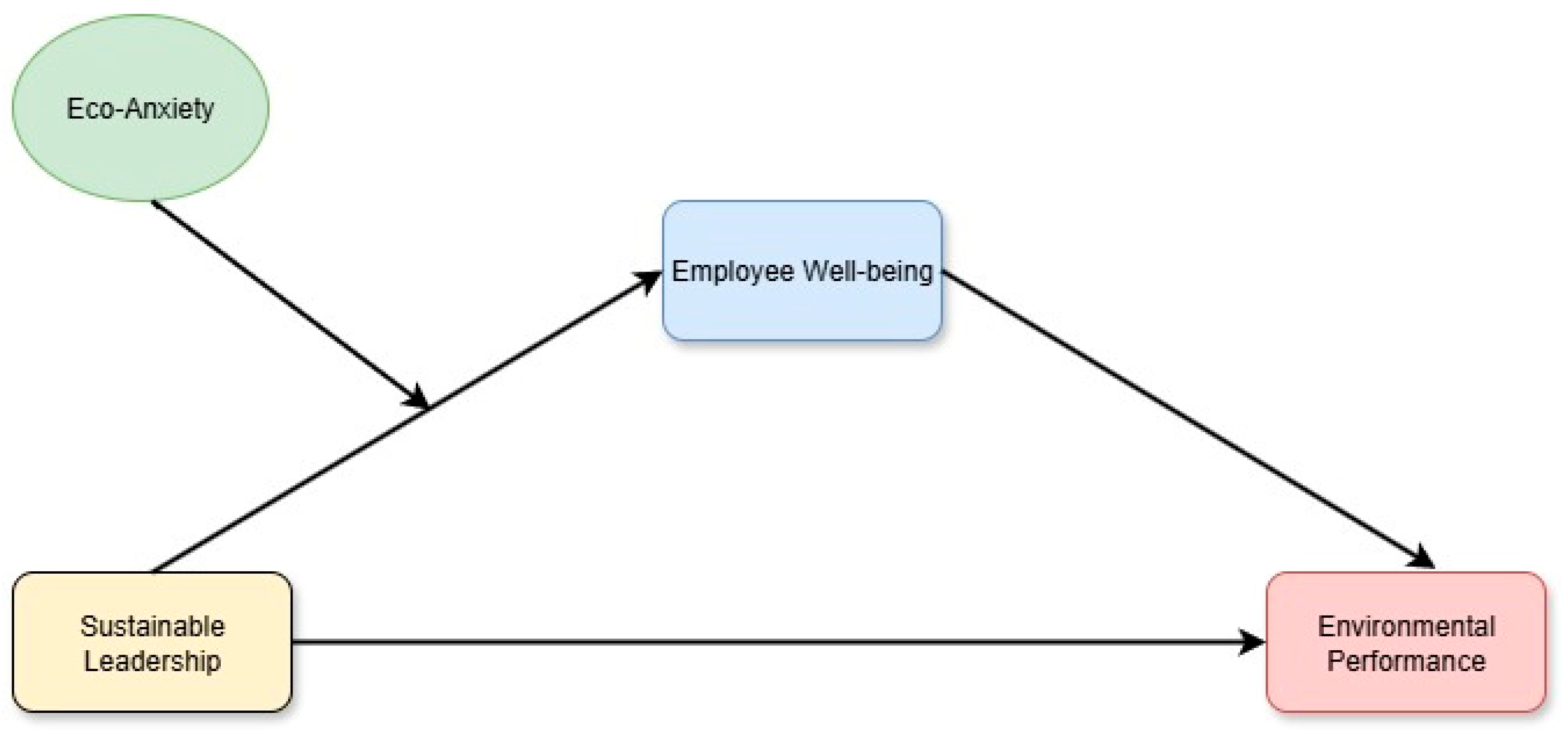
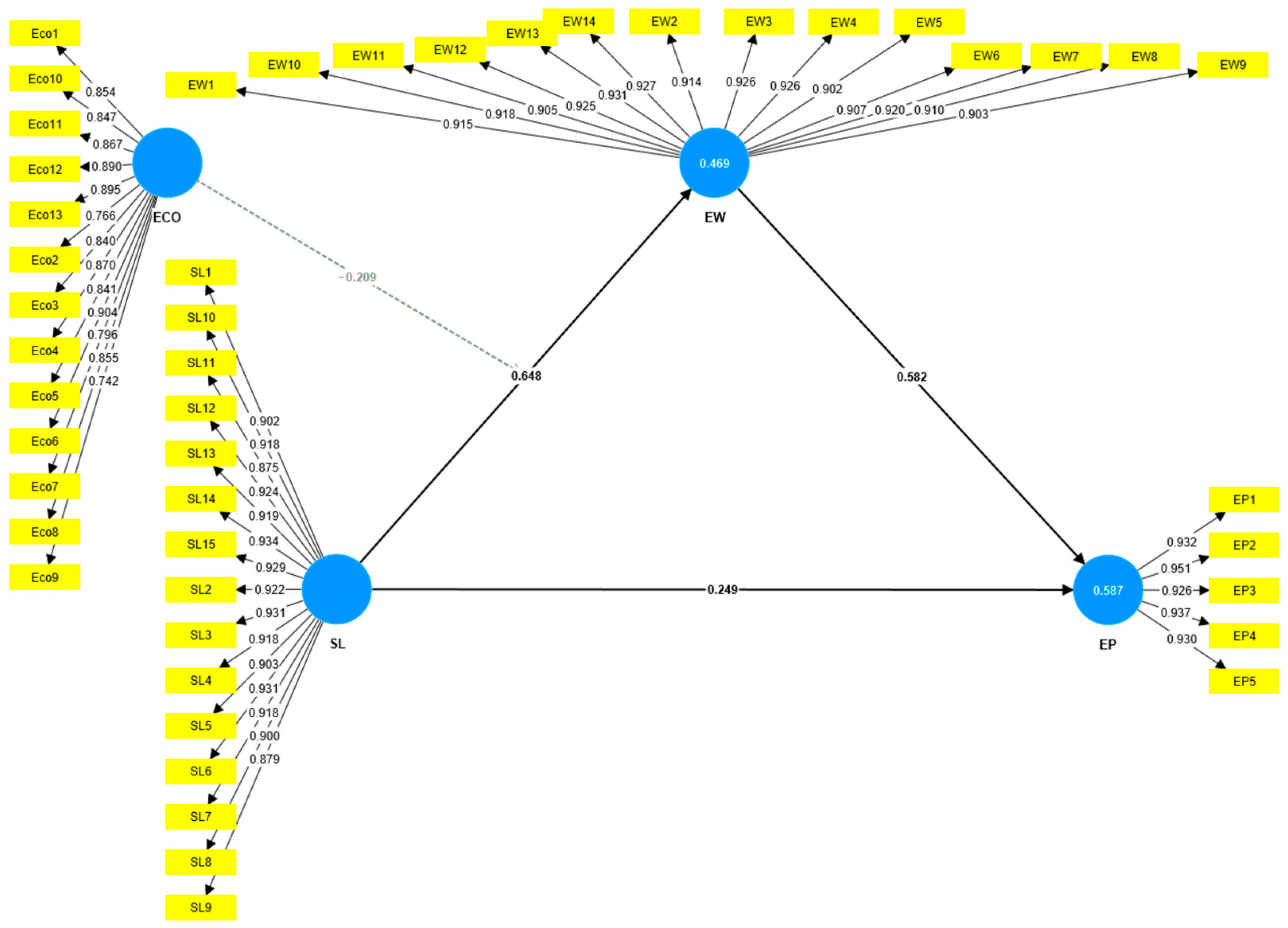
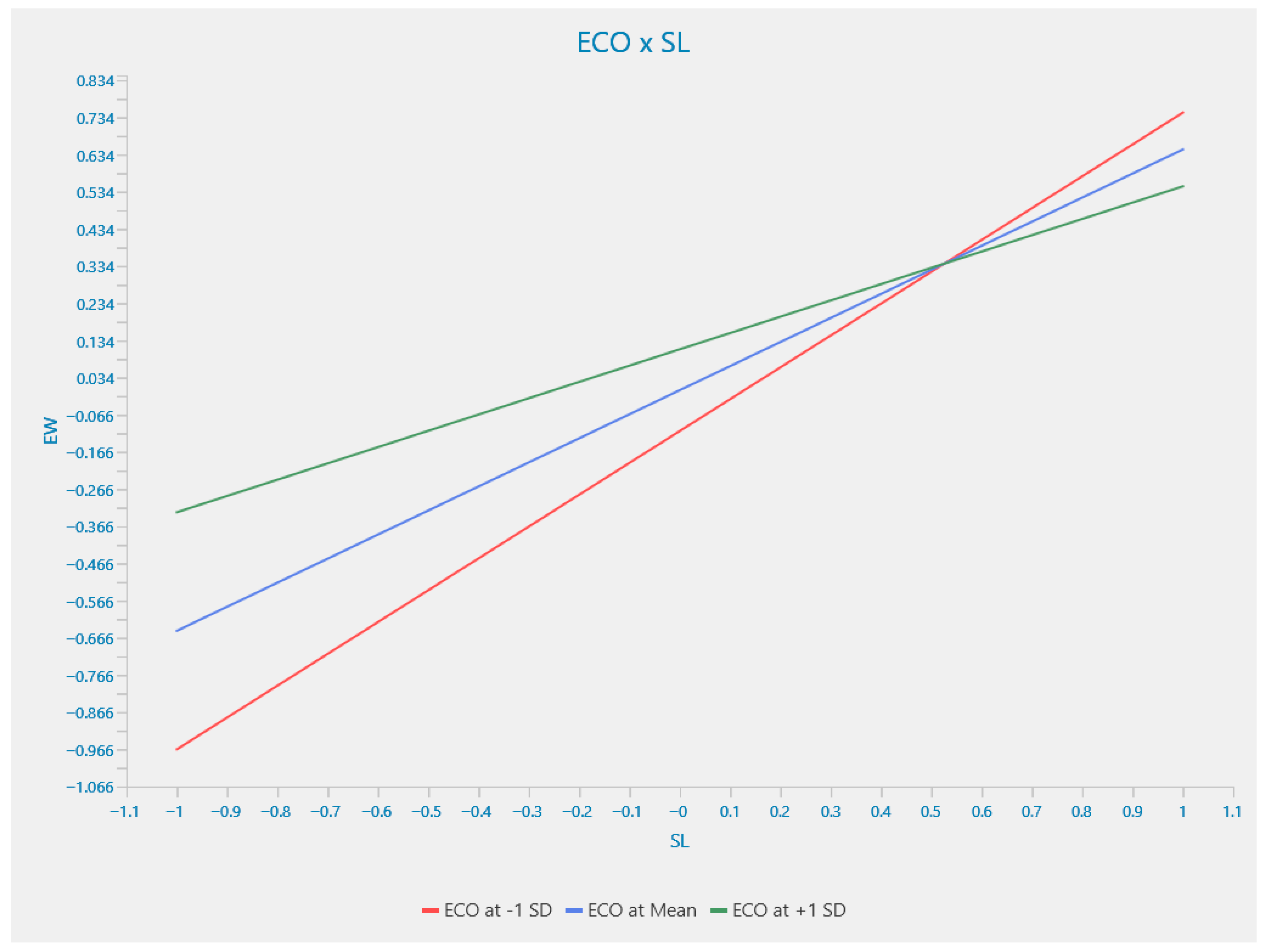
This study explores the impact of sustainable leadership (SL) on environmental performance (EP), focusing on the mediating role of employee well-being (EW) and the moderating role of eco-anxiety in green companies in Turkey. The framework is founded on the Job Demands-Resources (JD-R) paradigm and is enhanced by Sustainable Leadership Theory, Bottom-Up Spillover Theory, and Terror Management Theory. Data were collected from 289 employees at five environmentally sustainable enterprises in Turkey, using a standardized questionnaire to evaluate characteristics through validated multi-item scales. Structural equation modeling (SEM) with SmartPLS4 was employed to assess reliability, validity, and the suggested correlations. The study’s findings demonstrate that SL has a substantial and favorable impact on EP, both directly and indirectly, through the enhancement of staff well-being. Furthermore, research indicates that eco-anxiety mitigates the association between SL and well-being, suggesting that increased eco-anxiety diminishes the beneficial effects of leadership. These findings underline the significance of robust, SL and proactive management of eco-anxiety to enhance employee well-being and optimize corporate environmental results. The outcomes indicate that firms should allocate resources to leadership development initiatives and staff support frameworks to alleviate climate-related anxiety and enhance resilience. The study advances Sustainable Development Goal 3 (Good Health and Well-being) by demonstrating how psychological health and leadership synergize to enhance environmental performance. It also offers practical implications for sustainable workplace practices.
Keywords: eco-anxiety; environmental performance; sustainable leadership; well-being; SDG 3 eco-anxiety; environmental performance; sustainable leadership; well-being; SDG 3