This is an early access version, the complete PDF, HTML, and XML versions will be available soon.
Article

Sustainable Cross-Cultural Service Management: Cultural Intelligence as a Mediating Mechanism Between Cultural Values and Influence Tactics in International Civil Aviation

by
Ercan Ergün
1,
Tunay Sever Elüstün
2 and
Yavuz Selim Balcıoğlu
3,*
1
Department of Business Administration, Faculty of Business Administration, Gebze Technical University, Gebze, Kocaeli 41400, Türkiye
2
Civil Aviation Cabin Services Program, Vocational School, Istanbul Gedik University, Pendik, Istanbul 34913, Türkiye
3
Department of Management Information Systems, Faculty of Economics and Administrative Sciences, Doğuş University, Çengelköy, Istanbul 34722, Türkiye
*
Author to whom correspondence should be addressed.
Sustainability 2026, 18(3), 1443; https://doi.org/10.3390/su18031443 (registering DOI)
Submission received: 14 December 2025 / Revised: 26 January 2026 / Accepted: 27 January 2026 / Published: 1 February 2026

Abstract

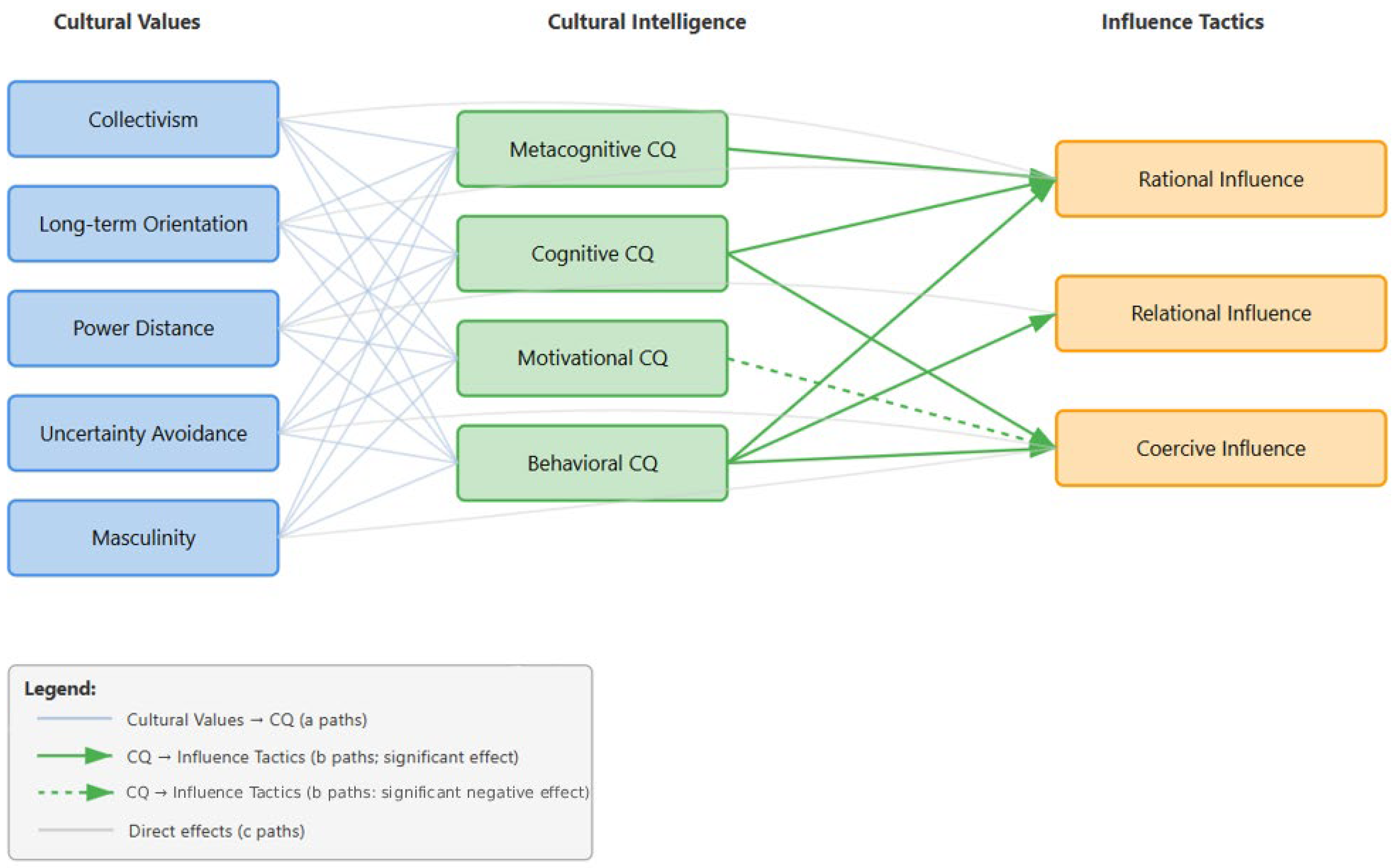
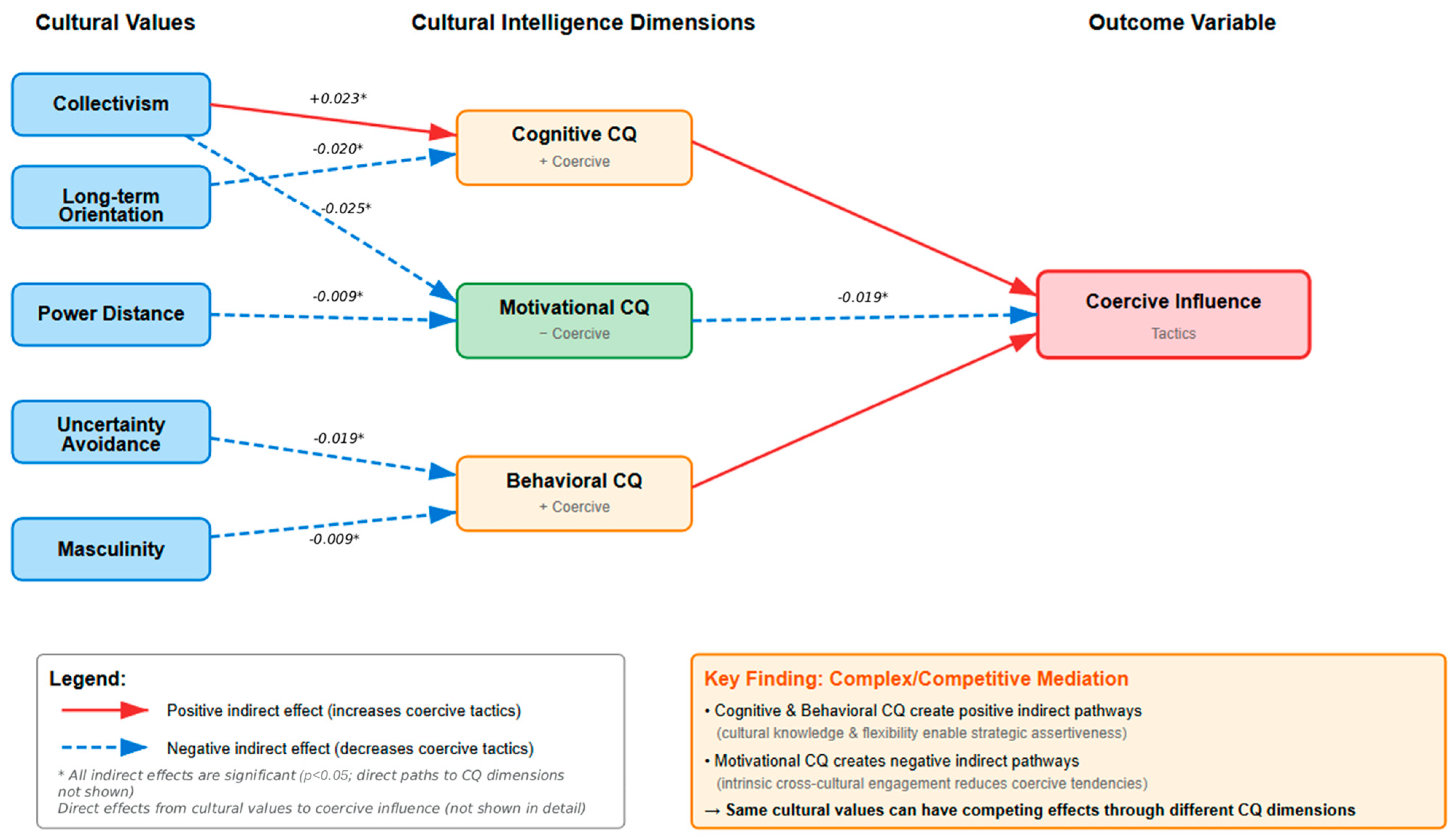
Sustainable service excellence in globalized industries requires organizations to develop workforce capabilities that support long-term relationship-building, cultural respect, and effective cross-cultural communication. This study examines how cultural intelligence functions as a mechanism for sustainable cross-cultural workforce development by investigating relationships among individual cultural values, cultural intelligence dimensions, and influence tactics among airline cabin crew members. Integrating Hofstede’s cultural dimensions framework, Ang and colleagues’ cultural intelligence model, and Yukl’s influence tactics taxonomy, we test a comprehensive mediation model using survey data from six hundred and sixty-three cabin crew members employed by international airlines operating in Turkey. The findings reveal that collectivism, long-term orientation, and uncertainty avoidance positively predict cultural intelligence development, creating foundations for sustainable cross-cultural competence. Cultural intelligence dimensions demonstrate differentiated effects on influence tactics, with metacognitive and behavioral cultural intelligence enhancing rational persuasion, behavioral cultural intelligence exclusively predicting relational tactics, and complex competitive mediation patterns for coercive tactics wherein motivational cultural intelligence reduces pressure-based influence while cognitive and behavioral dimensions increase strategic assertiveness. Cultural values directly influence tactics beyond cultural intelligence effects, with uncertainty avoidance most strongly predicting both rational and relational approaches that support relationship sustainability, while masculinity and power distance drive coercive tactics that may undermine long-term service relationships. These findings demonstrate that cultural intelligence functions as a multidimensional mediating mechanism with sometimes opposing effects, challenging assumptions that cross-cultural competencies uniformly produce sustainable outcomes. The research contributes to sustainable human resource management theory by illuminating how cultural socialization influences behavioral outcomes through complex psychological pathways, while offering practical guidance for aviation industry recruitment, training, and performance management systems seeking to build sustainable cross-cultural service capabilities. By revealing that certain cultural intelligence dimensions can enable both relationship-building and strategic coercion, the study highlights the importance of coupling cross-cultural skill development with ethical frameworks and motivational engagement to ensure that enhanced cultural capabilities support rather than undermine sustainable, respectful cross-cultural service relationships.
Keywords: cultural intelligence; cultural values; influence tactics; sustainable human resource management; cross-cultural service; airline cabin crew; workforce sustainability; sustainable service excellence; social sustainability; organizational sustainability cultural intelligence; cultural values; influence tactics; sustainable human resource management; cross-cultural service; airline cabin crew; workforce sustainability; sustainable service excellence; social sustainability; organizational sustainability