2.1. Overview of Research Approach
This research adopted a multifaceted methodological approach to assess and improve students’ knowledge. It aimed to develop and implement innovative interventions that can help improve sustainability education. The following methodology reflects a carefully structured process to enhance future engineers’ sustainability competencies. It progresses through the design and adaptation of knowledge assessment instruments to gauge and benchmark students’ baseline sustainability knowledge and improve students’ prior knowledge.
Given the interdisciplinary nature of AE and sustainability education, the research methodology combines empirical rigor with pedagogical reflection. The use of a mixed-methods approach was specifically chosen to capture both quantitative learning outcomes and qualitative dimensions such as collaboration, reflection, and systems thinking. By doing so, the research procedure aligns well with the study’s scientific premise: that sustainability learning is shaped by interactions between cognitive, social, and technical factors. This premise justifies the need for a rigorous, interdisciplinary methodological design.
By describing each step of the research process, from the initial assessment of existing knowledge to the interpretation and discussion for future inquiry, the approach reflects the research strategies and outlines a detailed roadmap for the study.
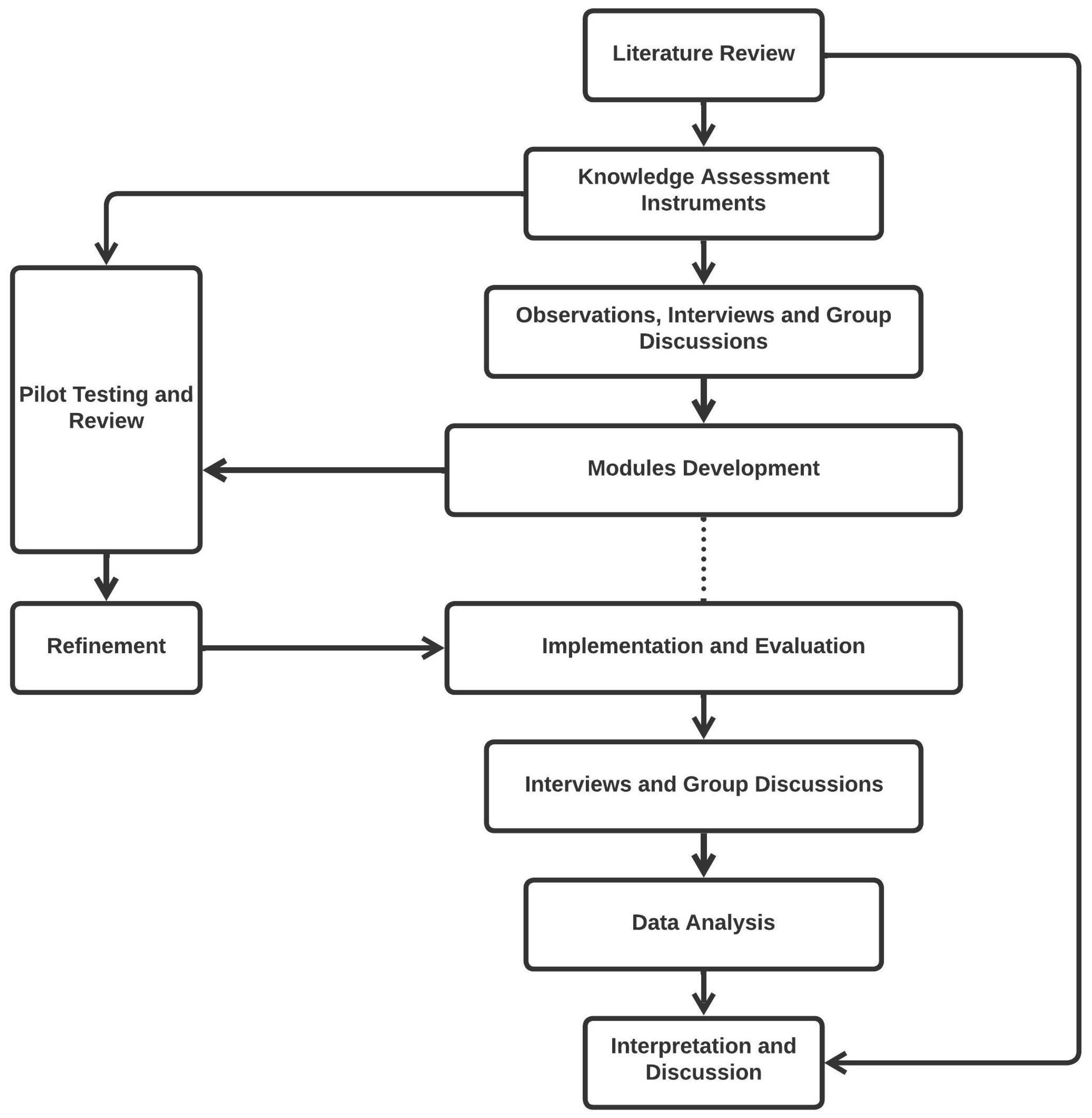
Figure 1 shows the complete flowchart of the design methodology, providing context and highlighting the significance of each step, offering a structured overview of how the research was conducted. It reflects an iterative and integrated design-based approach: identifying gaps in student sustainability knowledge, designing and refining targeted interventions, implementing a pilot study, and conducting structured assessment and evaluation. The feedback from each stage informs the following stage, allowing the interventions to be adapted with time. The following subsections describe this process in detail, from module development and piloting to participant recruitment, data collection, and analytical strategy.
This study adopts a mixed-method approach for data collection and analysis. The quantitative data comprises surveys and knowledge assessment tests, emphasizing objective measurements and analyses of data collected using statistical methods to highlight characteristics and trends in the data. In contrast, the qualitative data, consisting of observations, reflections, open-ended questions, group discussions, and interviews, guides the researcher in understanding where a student’s knowledge is lacking and what areas need improvement. These qualitative methods are adept at uncovering underlying reasons, opinions, and motivations, offering a deeper understanding of the research subject [
15].
2.2. Intervention Design: Sustainability Modules—Development and Implementation
The design of practical educational modules for AE design studio students requires a blend of theoretical knowledge and practical or hands-on application, particularly regarding sustainability. The modules ensure that the study goals and objectives were met, providing the preliminary feedback collected in informing the design process, consisting of interactive workshops, collaborative group sessions, and crits with regular checkpoints for feedback and adjustments. The module development process involves a series of systematic steps that ensure the new modules are tailored to meet the current study’s specific educational objectives.
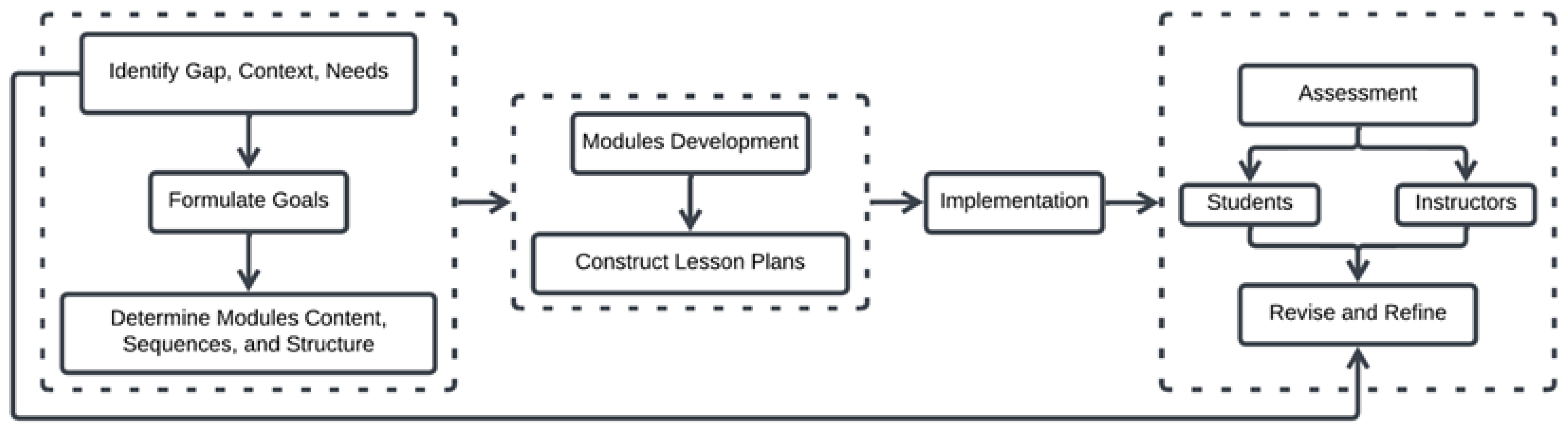
Figure 2 presents a structured approach for the modules’ design, development, and implementation. The first step is the identification of gaps, needs, goal formulation, and module structure, followed by the development of modules and lesson planning. These modules are then implemented and assessed later by the instructors and the students. Lastly, the modules were revised and refined based on the feedback collected to go through an iterative process that compares with the initial gaps identified, ensuring they are aligned with learning goals and adaptable to feedback.
These modules were evaluated through assessment criteria of different surveys and tests to determine the modules’ effectiveness. This systematic approach ensures the enhancement of student sustainability knowledge while preparing them to apply these principles in practical design projects. The process within the context of the modules’ development and implementation phase is described in the following sections.
2.2.1. Review and Development
A review of existing educational modules or frameworks, instruments, and research studies was conducted, and successful models and approaches were identified. The developed modules, dissected into five sessions, aim to enhance student engagement and learning outcomes, ensuring their alignment with the evolving needs of AE students and the sustainability objectives. These sessions incorporate conceptual foundation and exploration, specialization and peer teaching, practical applications, project-based sustainability analysis, reflections, and future applications. They also aim to gradually build students’ awareness of sustainability concepts using teaching strategies that involve active and reflective learning. Additionally, the interdisciplinary learning approaches ensure the modules encourage active participation from students in interactive workshops, incorporate hands-on projects, and develop forums for discussion and collaboration, promoting interdisciplinary learning and collaboration between students from different subdisciplines within AE.
2.2.2. Pilot Study
The researcher explored the feasibility of conducting a pilot study to improve an educational design studio course in the AE department. It broadens the research goals to integrate sustainability in the design studio and identifies sustainability outcomes and elements to support future learning. This study aimed to determine what improvements are needed to understand the course dynamics. It was designed for pedagogical purposes, with the primary objective of developing modules, conducting structured and unstructured interviews, and analyzing the data. Before proceeding, the researcher carefully considered the purpose of the study, how to collect data for identifying gaps or lack of student knowledge, understanding design studio dynamics, and how to comply with the other aspects, such as students’ learning and gathering preliminary data analysis results, which form the basis of the study.
In addition, the researcher adhered to the guidelines of the intent and use of data, ensuring confidentiality and minimizing potential participants’ risks per the approved Institutional Review Board (IRB) protocol. Feedback from students and instructors addressed content relevance, engagement level, perceived impact on sustainability understanding, and logistical feasibility. Before adaptation began, the researcher met with potential instructors to present the existing instruments and research findings. The goal was to gather initial thoughts on relevance, applicability, and possible challenges in the AE studio context and make necessary adjustments based on feedback, adjusting the modules’ structure to better align with student learning patterns.
2.2.3. Assessment and Improvement
The research study aims to enhance sustainability education in a comprehensive and multi-phased endeavor. It aims to assess and improve sustainability education through three phases of inquiry. The initial phase evaluates students’ prior knowledge through tests and surveys about their perceptions and understanding of sustainability and interviews with faculty to analyze how sustainability concepts are currently integrated. The goal is to understand the students’ baseline knowledge from which improvements can be made. The intermediate phase builds upon the previous phase’s findings, where the initial assessments’ insights are utilized to create a comprehensive guide or framework aimed at helping and teaching students to learn and apply sustainability concepts.
The final phase evaluates the effectiveness of integrating the newly developed sustainability modules or guides. This assessment focuses on understanding how these changes in the curriculum and teaching methods impact student learning and knowledge acquisition. The key aspects of this assessment include measuring improvements in students’ sustainability knowledge, their ability to apply sustainability principles in design projects, and changes in attitudes or perceptions towards sustainable design. This phase involves pre- and post-intervention studies, student feedback, project evaluations, and a comparison with groups that did not receive the new sustainability-focused education.
The goal is to gauge the effectiveness of new educational interventions and identify areas for further improvement. Sustainability in AE should integrate environmental, social, and economic considerations into the design process, where sustainability is not just an add-on but an integral part of the design process. The study systematically assesses the students’ prior knowledge, implements targeted educational modules and methods, and evaluates the outcomes, aiming to improve student knowledge and foster a generation of professionals well-equipped to contribute to sustainable development in their field.
2.2.4. Implementation and Evaluation
The fully developed and refined modules were implemented as part of the AE design studio. A process was adopted to evaluate the modules’ effectiveness, including regular updates based on student feedback. This approach is in parallel with the existing frameworks within sustainability and engineering education, highlighting that focused interventions integrated within design courses have shown considerable improvement in students’ conceptual understanding and interpretations [
8]. Similarly, many works have indicated that the embedding of sustainability and its core principles through iterative, feedback-based studios promotes deeper and more enriched learning outcomes and collaboration skills [
11,
16,
17]. Incorporating these pedagogies promotes the validity of the designed modules and situates them within the growing field of sustainability-education research.
This development process ensures that the designed modules are based not only on proven effective practices but are also customized to meet the specific needs and objectives of the AE program. By doing so, it not only leverages existing knowledge but also fosters innovation and continuous improvement in sustainability education. Building on this, the modules (sessions) outlined below were designed to guide students through a progressive learning journey, from foundational understanding to applying sustainability principles in their design projects. In this study, Alhassani developed the modules, and the details are available in [
18].
Session 1: Conceptual Foundation and Exploration The first session was designed to lay the groundwork for understanding sustainability within an AE context. By starting with a broad conceptual exploration, students could define sustainability in their own terms, which was essential for building a personal connection to the subject matter. Including minute papers and concept maps was strategic; it encouraged immediate engagement and allowed students to visualize the interconnectedness of various aspects of sustainability.
Session 2: Specialization and Peer Teaching Building upon the foundational knowledge from the first session, the second session focused on specialized themes within sustainability. By assigning students to become ‘experts’ in a particular area, the session leveraged peer-to-peer learning, a powerful pedagogical tool that reinforces learning through teaching. This session aimed to deepen students’ understanding by encouraging them to synthesize and present information to their peers, fostering a collaborative learning environment.
Session 3: Practical Application The third session transitioned from theoretical understanding to practical application, a critical step in AE education. The group work in this session reflected the collaborative nature of the AE field, allowing students to practice sustainability assessments in a controlled academic setting and preparing them for similar tasks they would face as professionals.
Session 4: Project-based Sustainability Analysis This session was the most hands-on, requiring students to integrate sustainability principles into their ongoing design projects. It was crucial for bridging the gap between classroom learning and practical application and provided students with frameworks that solidified the modules’ hypothesis that experiential learning is essential for effective education.
Session 5: Reflection and Future Application This session served as a capstone for the modules, allowing students to reflect on their learning journey and envision how they would apply sustainability principles in their future careers. This session was critical for reinforcing the modules’ learning outcomes and ensuring that students left with a comprehensive understanding of sustainability and were committed to incorporating these principles into their work as architects and engineers.
Each session was designed with specific goals and educational strategies to build competency and foster a sustainable mindset among students. The progressive structure of the modules was intentional; each session built upon the previous one, gradually increasing in complexity and engagement with the material. This approach was based on the pedagogical principle that active, applied, and reflective learning is most effective. The chosen format for the sessions reflects a balance between individual work, group collaboration, and class discussion, imitating the variety of interactions professionals will experience. The sessions encourage knowledge acquisition, critical thinking, creativity, ethical consideration, and innovation—skills paramount for future leaders in sustainable architectural engineering.
2.3. Study Context and Data Collection
To gauge knowledge retention and understanding of pre- and post-surveys and tests, bi-weekly or monthly surveys were conducted during the semester to track the evolution of sustainability understanding. These surveys were complemented by qualitative interviews and focus groups, offering deeper insights into participants’ experiences and perceptions [
19,
20]. Quantitative analyses used parametric and non-parametric techniques such as the Wilcoxon Signed-Rank test [
21] and Mann-Whitney U test [
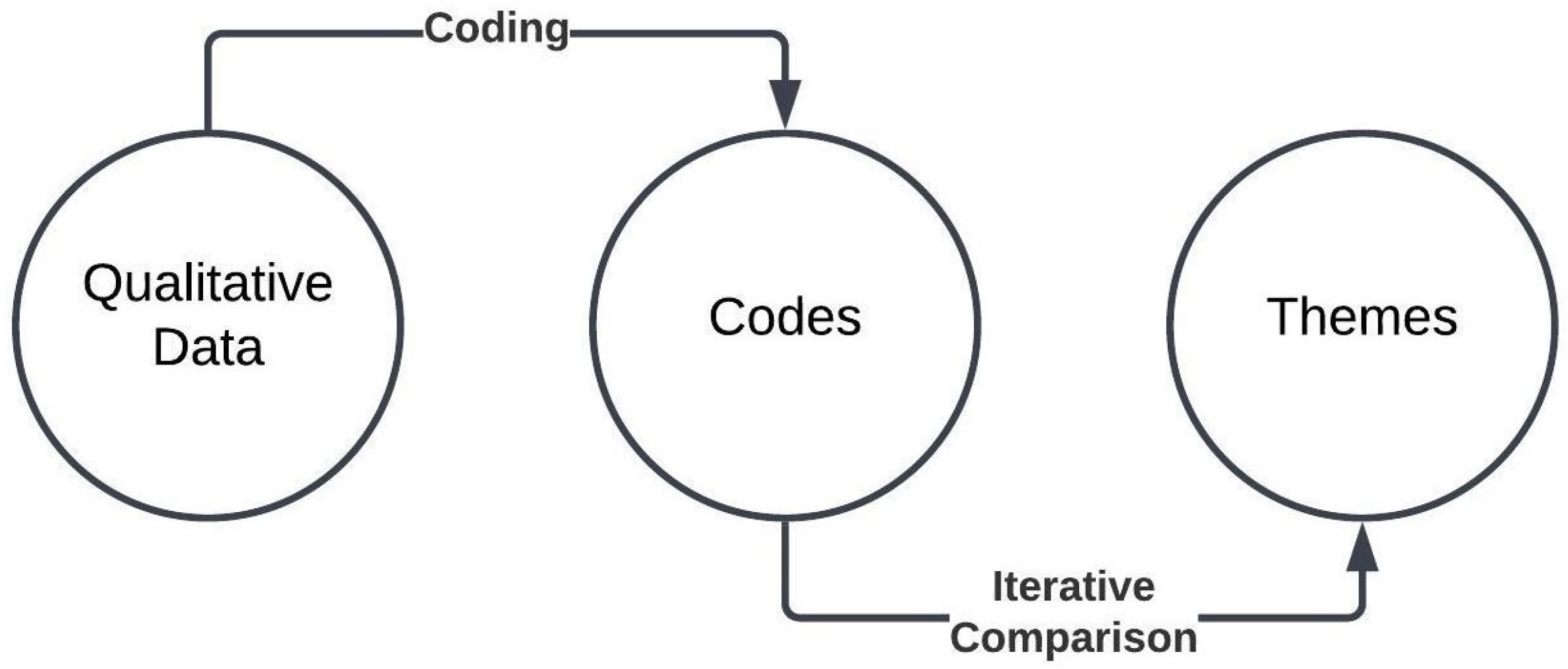
22] to compare pre- and post-survey scores for knowledge retention assessment, and a longitudinal analysis approach was used to understand the progression of sustainability understanding over time. Qualitative data undergo thematic analyses to highlight contextual factors influencing knowledge retention and understanding evolution [
23]. Using this mixed-methods approach [
24] and analyzing the data through tools such as SPSS and NVivo, the researcher could effectively measure the impact of different team-based learning environments on students’ sustainability knowledge and perceptions. This approach offers a deeper understanding of the educational process and its outcomes.
2.3.1. Participants
The target population includes students enrolled in the specified courses at the University Park Campus of Penn State, particularly those from the Architectural Engineering Department and the College of Arts and Architecture. This study examines sustainability education within the AE curriculum at Penn State, and efforts were made to improve student sustainability learning in two specific courses: (1) ARCH 441- Architecture Design Analysis, and (2) Mission-Driven Integrated Design Studio (MDID). The design studio (ARCH 441) is intended to be completed during the 4th year, although some students take the course later in their programs since it is not a prerequisite course and is attended solely by AE students. Also, the students should take the MDID design studio during their 4th or 5th year. It is a collaborative studio course that utilizes integrative project design and delivery to address a mission-driven real-case project working in teams of interdisciplinary areas, bringing together students from different disciplines—Architecture (ARCH 491), Landscape Architecture (LARCH 414), and Architectural Engineering (AE 497/498). Each team includes one architecture student, one landscape architecture student, and four or more architectural engineering students from the same class or group.
2.3.2. Recruitment Strategy
Recruitment was facilitated through faculty members teaching MDID studio and ARCH 441 courses, whose support and endorsement helped encourage student participation. At the beginning of the semester, brief presentations were given to the students, providing an overview of the project, its objectives, research goals, and the significance of students’ involvement. Following this, detailed communication that outlines the research goals, time commitment, and incentives offered was carried out, ensuring transparency and clarity. Consent forms were also given to participants to guarantee they understood the study’s purpose and their right to withdraw and voluntarily participate. The research outlines data collection methods and study protocols that received approval from the University’s IRB, highlighting the procedures and recruitment strategy involved for human subjects under the Human Research Protection Program (HRPP) for the STUDY00023850.
2.3.3. Data Collection Methods
The data collection involves a multi-layered approach to improve the extensive research design, focusing on assessing students’ knowledge and understanding of sustainability that evolves by implementing interventions. These interventions are implemented bi-weekly and/or monthly in addition to the pre- and post-surveys and tests, serving as intermediate checkpoints to gather students’ insight over time [
25]. Additionally, the self-reflection exercises helped students to introspect on their thought processes and how their knowledge acquisition and retention can be improved. By incorporating different data collection techniques, the study informs students’ comprehension of sustainability, which can be used to improve different pedagogical strategies in engineering education.