1. Introduction
Butanol is widely used in many industries, e.g., as a solvent for paints and varnishes, in the textile industry, as an additive to perfumes and as motor fuels. Butanol is regarded as a biofuel owing to its properties, such as a high energy density of 29.2 MJ·L
−1 and lower hygroscopicity compared to ethanol [
1]. Butanol salts are used as an intermediate product in chemical reactions. This alcohol is produced on an industrial scale mainly from fossil raw materials. Another method of producing butanol is the fermentation of plant biomass (mainly straw, but also any other plant waste containing carbohydrates). The fermentation process involves different kinds of microorganisms. The most popular approach is the use of Clostridium acetobutylicum bacteria in the process called ABE (acetone–butanol–ethanol). This process allows butanol to be obtained at a concentration of up to 1–2%
v/
v butanol. Higher concentrations are not possible due to the toxicity of biobutanol to toxicity for microbial cells [
2,
3,
4]. For this reason, the process of producing biobutanol by ABE fermentation is costly, as it requires the continuous removal of alcohol from the mash and its return to the reactor. For many years, research has been conducted to reduce production costs and increase process efficiency. It was performed mainly by searching for new strains of bacteria that are less sensitive to butanol concentration. For example, a newly isolated strain,
Clostridium acetobutylicum YM1, was used for butanol production, yielding 17 g/L of butanol and 21.71 g/L of total ABE [
5]. In general, higher concentrations of butanol would also allow the alcohol to separate automatically from the aqueous phase during fermentation. This approach has a positive impact on further cost reduction.
According to the literature, the main strategies for enhancing the production efficiency of biobutanol by ABE fermentation include: pH control to promote the metabolic transition from acidogenesis to solventogenesis, the application of in situ product removal methods, and the development of metabolic engineering approaches to improve solvent tolerance in
Clostridium acetobutylicum [
6,
7].
One of the most interesting and promising methods of increasing the efficiency of processes using microorganisms is electrical stimulation. This method enables stimulation of the growth of microorganisms and can lead to changes in their metabolism. In recent years, there has also been growing interest in the use of electrical techniques for fermentation processes, so-called electro-fermentation.
Electro-fermentation is an innovative technology that combines traditional industrial fermentation with electrochemistry [
8]. Electrochemical control of microbial metabolism increases the potential of conventional fermentation methods [
9,
10]. The electrodes used in this process can act as either a source or sink of electrons, allowing the fermentation process to be carried out under unstable conditions. This effect significantly affects microbial metabolism or the selection of the dominant population in a mixed culture [
11,
12]. Electrofermentation can find application in various research areas of materials science, engineering, waste management and microbiology [
13,
14,
15]. Using electro-fermentation methods, various chemical compounds can be produced, e.g., organic acids (C1-C6), alcohols (ethanol, (iso)butanol and hexanol) [
16]. In this case, the electrostimulation was used to change the metabolism of microorganisms. However, the production of these substances was lower than that associated with those observed in conventional acetic acid production (regardless of differences in reactors, organisms, and working potentials). Additionally, some compounds—such as formic acid and ethanol—appeared only as intermediates, leading to low concentrations in the final product.
In the work by Patil et al., 2023 [
17], the authors used electric stimulation to produce biobutanol. In experiments with the cathode potential set to –600 mV vs. Ag/AgCl (so-called cathodic electrofermentation), the highest butanol production was observed—approx. 5.8 g/L, corresponding to ~0.6% concentration in the fermentation broth. This represents nearly a 50% increase compared to the control fermentation without an electrochemical field. This indicates that electrostimulation can play an important role in increasing the production of various chemical compounds by biological methods. The electrical potential was also used in fermentation, leading to alcohols and medium-chain fatty acids [
18,
19]. In this study, sequential acetogenesis, solventogenesis, and reverse β-oxidation reactions were performed, during which fermentative bacteria were stimulated with electricity.
Existing publications mainly refer to the butanol fermentation process without electrical stimulation. For example, in the publication [
20], the environmental impact of the technology for obtaining biobutanol using cyanobacteria is described. This technology allows for significant reductions in greenhouse gases (approx. 60%) compared to its fossil fuel equivalent for transport (REDIII), although it is economically unviable. Similar conclusions were reached by the authors of the study [
21]. They analysed six conceptual process scenarios for the production of biobutanol from lignocellulosic biomass through ABE fermentation. In the publication Natomist [
22], the authors analysed the ABE fermentation process, where they use as e substrate corn as a dedicated crop and wheat straw as an agricultural residue. The results obtained indicate that ABE fermentation of corn has a greater negative impact on the environment than fermentation using straw. The authors of the publication emphasised that the economic viability of ABE processes depends on: the price of substrates, the presence of inhibitors and the efficiency of butanol separation. Similar results were obtained by the authors of the study [
23]. The authors focused on one aspect of LCA, namely greenhouse gases (GHG) emissions. Similar results were obtained by the authors of the study [
23].
The literature on the subject also contains a few research results concerning LCA analysis of various processes based on electrofermentation [
23]. The study [
24] describes the production of medium-chain fatty acids (MCFA) through the electrofermentation of sewage sludge. This method proved to be economically and environmentally effective, as confirmed by a life cycle assessment and economic benefit analysis. In addition, the use of electrical stimulation in the fermentation process increased the concentration of key enzymes in metabolic pathways. The publication [
25] assessed the reduction of carbon dioxide using microorganisms in a gas fermentation system and gas electrofermentation with and without applied potential by using a selective biocatalyst. It was found that the highest concentrations of the product in the form of acetic acid were obtained for the electrofermentation process. The life cycle assessment showed that the critical point of the process is the source of energy raw materials, and therefore the authors emphasised the need to use energy from renewable sources in order to achieve a low carbon footprint. In their paper [
26], the authors described the process of CO
2 conversion using gas electrofermentation and gas fermentation carried out under increased pressure to produce acetic acid and ethanol. They found that the electrofermentation process is more efficient in terms of product yield compared to the pressure process. In addition, a life cycle analysis showed a reduction in GHG emissions of approximately −7 kg CO
2eq when using electrofermentation and a lower impact across endpoint categories compared to the pressure process.
Considering that there is virtually no literature describing the life cycle analysis of the butanol production process using electrofermentation, this publication aims to present the environmental impact of this process using the LCA method. In addition, the authors conducted a sensitivity analysis of the results depending on the analytical method used and the source of electricity supply to the installation.
2. Methodology
2.1. Goal and Scope
This work aims to carry out an LCA analysis of biobutanol production from waste biomass via the electrofermentation process. The technology subject to environmental assessment is a prototype, operating on a laboratory scale. It was developed as part of the BesTECH project.
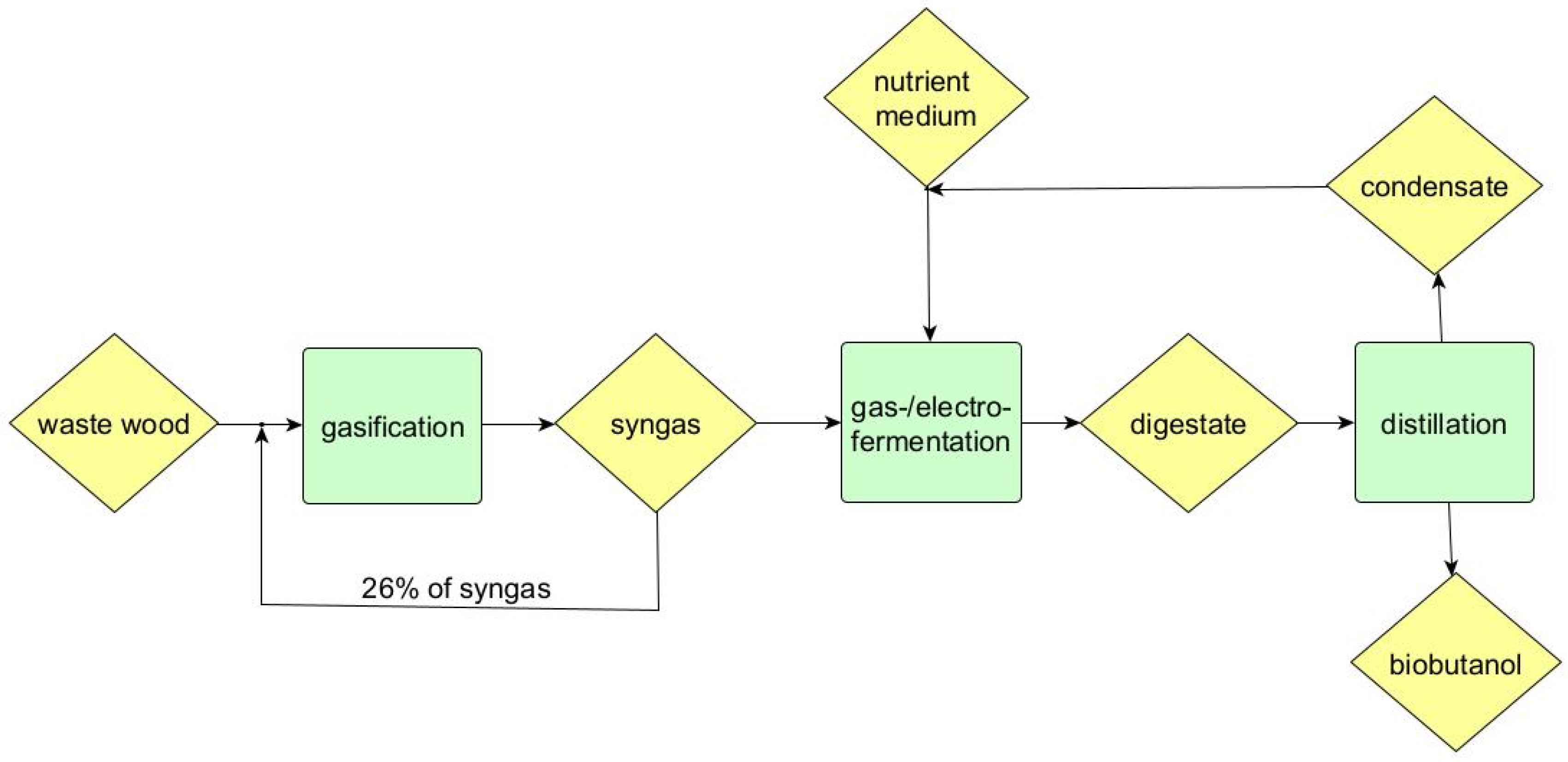
The electrofermentation process consists of several stages: synthesis gas production, gas fermentation, electrofermentation and biobutanol enrichment. A general diagram of the process is shown in
Figure 1.
Stage 1: Production of gas substrate
The first stage of the technology involves the production of a gas substrate. This gas is generated by gasifying wood waste or residues from the wood industry (such as sawmill waste, wood processing by-products, or forestry residues). This process occurs via thermal decomposition in a fluidised bed pyrolysis reactor, yielding a pyrolysis gas composed mainly of CO2, CO, and H2. Using the water–gas shift reaction, CO is converted into additional CO2 and H2. The result is a gas mixture with an approximate H2-to-CO2 ratio of 1.0–1.5:2, which is then used as the feedstock for gas fermentation. The assumptions made for this stage are based on extensive pilot-scale operational data obtained from a 1 MW demonstration-scale reactor installed at the premises of one of the project partners (BEST).
It should be noted that scaling the installation from laboratory to a larger scale may result in changes in heat and mass transfer within the reactor. Conducting the wood biomass pyrolysis process on a larger scale may result in incomplete gasification of the feedstock, leading to a more complex gas composition. Therefore, it may be necessary to implement additional processes to increase gasification efficiency, thus increasing the complexity of the installation. Changing the post-process gas composition may also require the introduction of gas purification processes before further conversion, which will also impact the complexity of the installation.
Stage 2: Gas fermentation
Gas fermentation occurs in a column reactor equipped with plastic fittings (polypropylene with 30% conductive carbon black). In the reactor, the media (liquid and gas phases) are fed in countercurrent—the liquid medium is fed into the upper part of the reactor, while the gas is fed into the lower part of the reactor. Microorganisms are inoculated onto the reactor packing. They convert the substrate gas into acetic acid and water according to the following equation:
The liquid medium is recirculated in a loop with a constant flow rate of 10 l/h by a peristaltic pump. Fresh gas is humidified and flows through the reactor at a rate of 55.50 l/d (= 2.3 l gas/h). The gas is not circulated. System overpressure is maintained by non-return valves in conjunction with a hydrostatic water column within the gas outlet line. The acetic acid obtained during gas fermentation is sent to the electro-fermentation module.
Stage 3: Electro-fermentation
In the electro-fermentation (EF) reactor, acetic acid is biologically converted into biobutanol by anaerobic fermentation. Bacteria convert acetic acid into biobutanol using electrons from the flowing electric current according to the equation:
The conversion process efficiency is 95%. The resulting mixture of biobutanol and carrier is sent for distillation.
Stage 4: Biobutanol enrichment
The next stage is biobutanol enrichment. The process is carried out in two rectification columns separated by a decanter, each consisting of 20 shelves. The pressure at the top of both columns is atmospheric pressure, so no additional energy is required for its regulation. The mixture containing biobutanol is heated to 50 °C before entering the first column. The biobutanol obtained has a purity of 99.8% (m/m). The aqueous fraction obtained as a by-product is enriched with nutrient medium and fed back into the fermentation process.
2.2. Life Cycle Inventory (LCI) Analysis
LCA analyses were conducted following the ISO 14,040 and ISO 14,044 standards [
27,
28]. The general requirements for the quality of input data for LCA analysis are described in ISO 14040. According to ISO EN 14040, it is necessary to establish data quality requirements in publicly available comparative analyses. The range of uncertainty of the input data will be reflected both in the results of the analysis and in the method of their interpretation. The quality of the input data for the analysis is determined on the basis of parameters such as time interval, geographical region, technology area, precision, completeness, representativeness, consistency, reproducibility, data source and uncertainty.
Most of the data used for the LCA analysis is actual data obtained during the research phase conducted as part of the bilateral Austrian-Polish BesTECH project (ERA-NET Bioenergy). The input data for the LCA analysis included: water consumption, electricity and heat consumption, ingredients, waste and sewage generated at the end of life, as well as biomass consumption. Missing data has been completed from the Ecoinvent database [
29].
To calculate the environmental impact of the biobutanol production process by electrofermentation, the method of electricity generation used in Austria was adopted due to the location of the technology in question. The Austrian energy mix is mostly based on hydroelectric power plants, which account for over 60% of electricity production. It should be noted that this contribution is gradually declining due to climatic reasons (low water levels caused by droughts), which makes it necessary to balance renewable energy sources with energy from fossil fuels.
2.3. Methodologies and Impact Categories Used in the LCA
The LCA analysis was conducted using SimaPro software. Several different analytical methods are available within this software. Considering the purpose and scope of the analysis, two methods were selected:
ReCiPe 2016 v1.1 midpoint as the baseline method for comprehensive environmental analysis;
IPCC 2021 GWP 100 (including CO2 absorption)—as a method for determining the carbon footprint of a product. In this analysis, it was used to assess how sensitive the results are to the choice of analytical method.
In the case of ReCiPe, the results obtained were analysed concerning midpoint categories (18 different impact categories) [
30]. This method is one of the most widely used methods in LCA analyses.
The IPCC 2021 GWP 100 (incl. CO
2 uptake) method is an update of the IPCC 2013 method, which was developed by the Intergovernmental Panel on Climate Change. This method is based on the IPCC report ‘AR6 Climate Change 2021: The Physical Science Basis’ [
31]. The IPCC 2021 distinguishes between six methods for quantifying global warming potential (GWP) and two methods for quantifying global temperature potential (GTP). SimaPro includes two versions of this method: one takes into account carbon dioxide absorption and biogenic CO
2 emissions, and the other does not. For GWP, it is possible to choose different time horizons: 20 years, 100 years (default) and 500 years. It should be noted that the GWP 100 factors are recommended as the default, and the GWP 20 and GTP1 00 factors are used for sensitivity analysis. Considering the above, the IPCC 2021 GWP 100 (incl. CO
2 uptake) method was selected for the analysis.
When calculating global warming potential using the IPCC method, the following factors are taken into account:
carbon cycle reactions (climate carbon feedback).
non-consideration of indirect nitrogen oxide formation from nitrogen emissions.
Failure to take into account radiation forcing resulting from NTCF (from near-term climate forcers) emissions: nitrogen oxides (NOx), carbon monoxide (CO), volatile organic compounds (VOCs), fossil carbon, organic carbon and sulphur oxides (SOx).
The results of the analysis presented in this article using the GWP100 method show the following categories of CO2 emission sources and their reduction:
In addition, a sensitivity analysis was also carried out, taking into account:
2.4. The Functional Unit
When conducting LCA research, selecting an appropriate functional unit is crucial for enabling meaningful comparison of the results. The purpose of the functional unit is to provide a reference point for normalising input and output data (in mathematical terms). In this analysis, the functional unit was identified as 1 kg of biobutanol.
3. Results
3.1. LCA Results
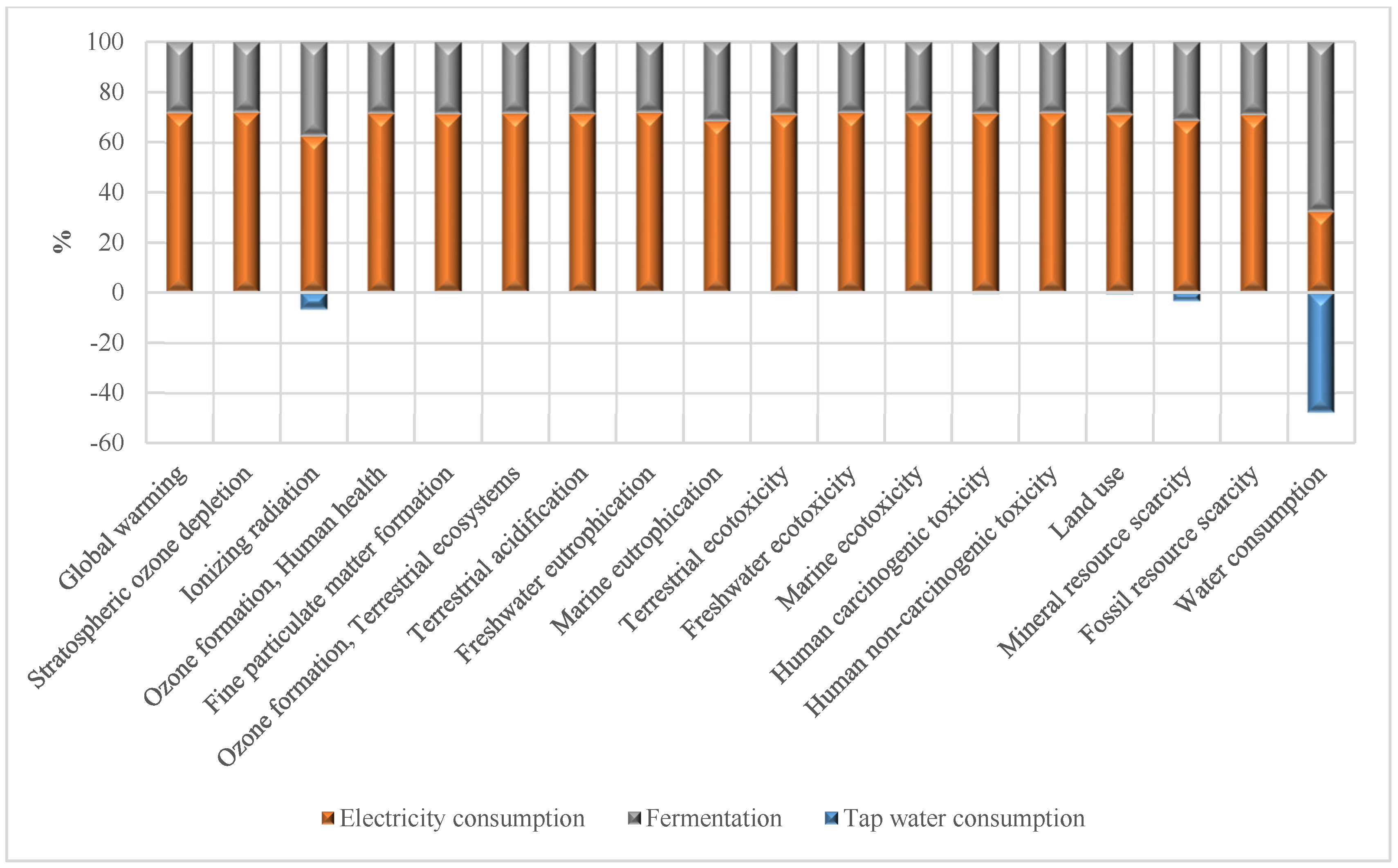
Figure 2 presents the results of the environmental impact assessment of biobutanol production technology using the electrofermentation process. The analyses were carried out using the ReCiPe 2016 Midpoint method available in the SimaPro 10.2 software.
As shown in
Figure 2, the greatest environmental impact in all 18 impact categories is associated with electricity consumption. This energy is mainly used for the distillation of the post-fermentation solution during the biobutanol enrichment stage. Despite the high share of renewable energy sources (hydroelectric power plants) in Austria’s energy mix, the environmental impact of electricity consumption remains significant. The additional energy impact in the life cycle of the analysed technology results from the use of a nutrient medium in the fermentation process. The nutrient solution contains substances such as KH
2PO
3, Na
2HPO
4, NH
4Cl, CaCl
2 * 2H
2O, MgCl
2 * 6H
2O and NaCl. The production processes of these nutrient solution components are energy-intensive and highly emissive, which significantly affects the analysis results. Phosphates have the greatest impact on GHG emissions from nutrient solutions. Their impact, according to the Ecoinvent database, is approximately 4.86 kg CO
2eq/kg KH
2PO
3 and approximately 5.0 kg CO
2eq/kg Na
2HPO
4. In the case of chlorides, GHG emissions are lower, and, for example, for calcium chloride, they are 1.53 kg CO
2eq/kg CaCl
2.
For fermentation processes (gas fermentation and electrofermentation), the negative environmental impact of these stages in all analysed categories results from the low efficiency of the biobutanol production process concerning energy input. This is mainly since the analysed installation operates on a small, laboratory scale. Increasing the scale can significantly reduce the negative impact of the technology on the environment. In addition, in the case of fermentation processes, the category of ‘water consumption’ also draws attention. Water consumption for these stages is the highest compared to the other stages of biobutanol production. However, considering the recirculation of process water, the overall impact on water consumption is negative.
It is also worth noting that the first stage of the technology is related to the production of raw gas. The feedstock for its production is wood that has the status of waste or residues. The use of this type of raw material throughout the biobutanol life cycle does not have a negative impact on the environment at the stage of its extraction. This approach is based, among other things, on the provisions of Directive (EU) 2023/2413 of the European Parliament and of the Council of 18 October 2023 amending Directive (EU) 2018/2001, Regulation (EU) 2018/1999 and Directive 98/70/EC as regards the promotion of energy from renewable sources, and repealing Council Directive (EU) 2015/652 (European Parliament & Council of the European Union, 2023) [
32].
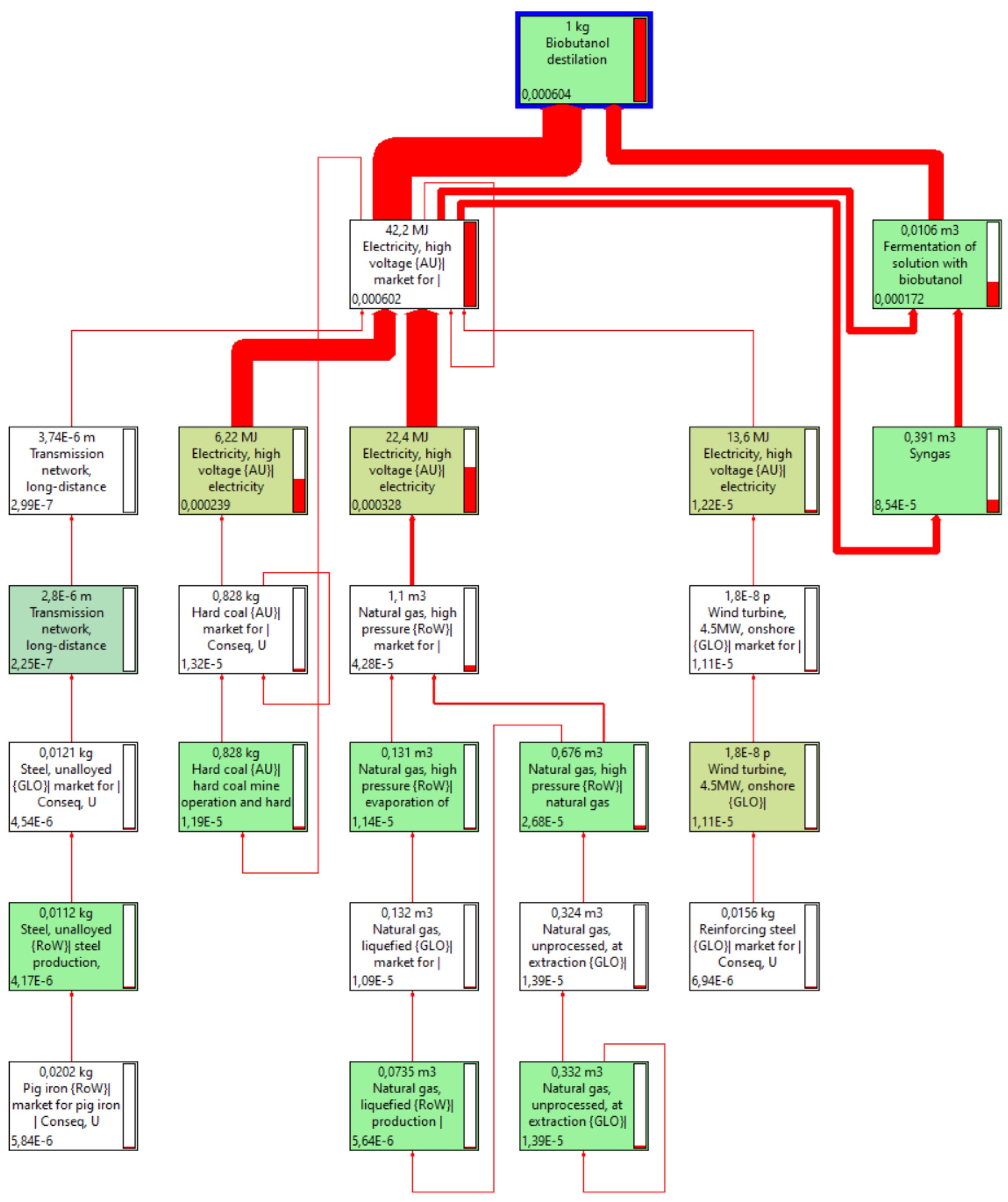
The detailed contribution of individual components in the life cycle of the biobutanol production process using electrofermentation in terms of material and energy inputs is presented in the Sankey diagram (
Figure 3). This diagram shows which processes have the greatest negative impact on the final environmental impact of biobutanol production (height of the red bar). The diagram only includes processes whose share is greater than 0.3%. These mainly concern material and energy inputs and greenhouse gas emissions associated with the combustion of fossil fuels to generate electricity, as well as processes related to the production of the feedstock.
3.2. Sensitivity Analysis
Sensitivity analysis is a method that allows you to check the impact of changes, e.g., in input parameters or analytical methods, on LCA results. Most often, sensitivity analysis examines the impact of changes in allocation methods, functional units, system boundaries, data sources or impact assessment methods.
For this publication, the following were subjected to sensitivity analysis:
a change in the method of electricity production from the available raw material mix for Austria to energy produced only from renewable energy sources (RES);
a change in the life cycle impact assessment method—the results obtained using the ReCiPe method were compared with the results of the assessment carried out using the IPCC 2021 GWP100 method, with a simultaneous change in the method of electricity production,
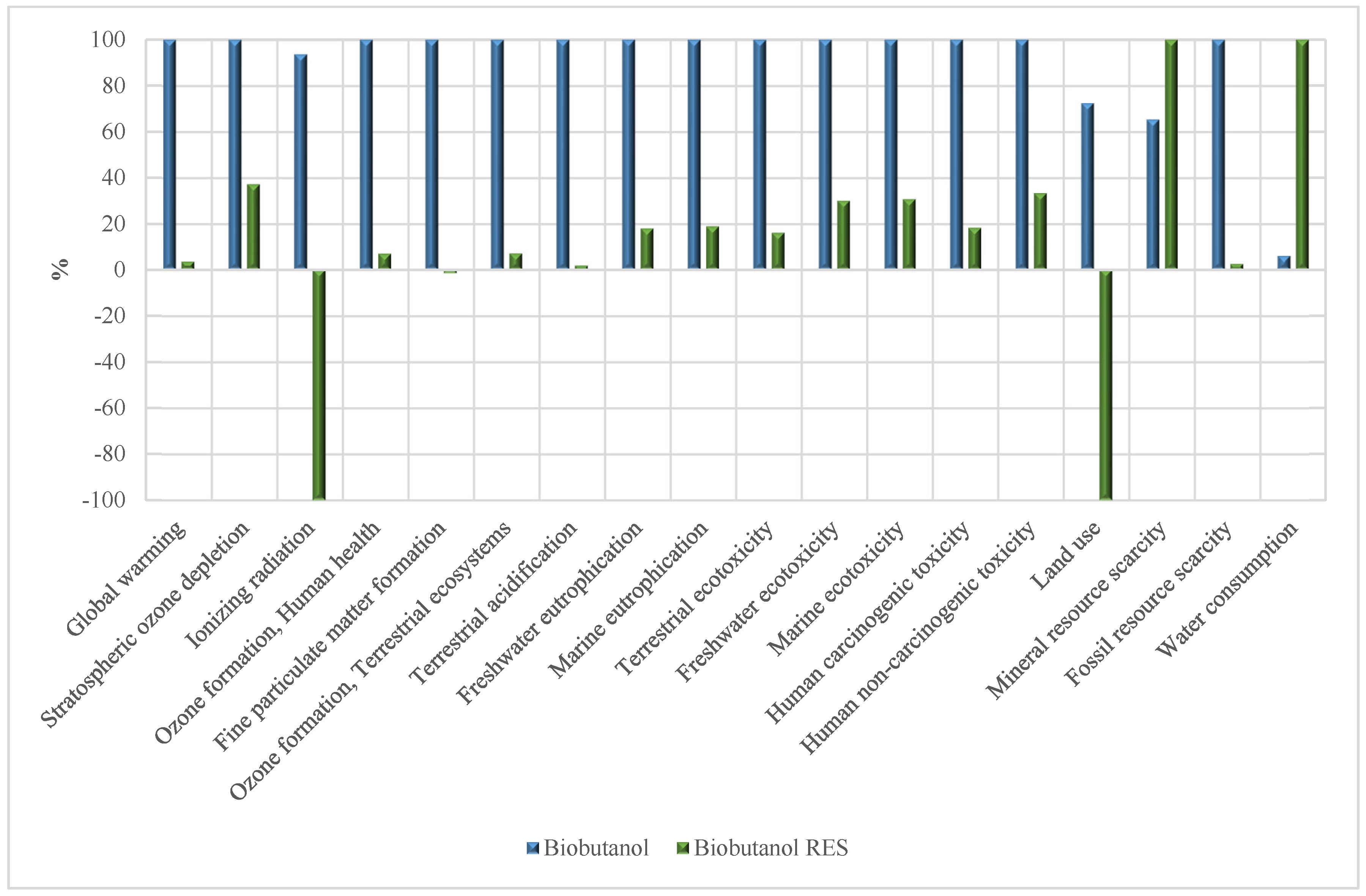
If the method of electricity production used for the production of biobutanol from the available energy mix for Austria were changed to energy produced entirely from renewable sources, the environmental impact of the technology in question would be significantly reduced in all impact categories except for ‘mineral resource depletion’ and ‘water consumption’ (
Figure 4).
The increased impact of biobutanol production technology using energy from renewable sources compared to the baseline technology in the category of ‘mineral resource scarcity’ is primarily due to the extraction of rare earth elements for the production of photovoltaic cells. As regards the ‘water consumption’ category, its result is influenced not so much by actual water consumption as by the use of water flow in hydropower.
An analysis of the results presented in
Figure 4 shows that switching to entirely renewable energy sources results in the greatest reductions in negative environmental impact in terms of ionising radiation and land use. Burning coal emits ionising radiation, albeit in small quantities. Coal contains natural amounts of radioactive isotopes, which release radiation during combustion. Hard coal and lignite contain trace amounts of natural radioactive isotopes, such as uranium and thorium, which emit alpha and beta radiation. In the case of the ‘land use’ category, the positive impact results from the absence of the need to extract fossil fuels and the associated land degradation. In the second sensitivity analysis simulation, the results obtained using the ReCiPe method and IPCC 2021 GWP 100 were compared. Since the IPCC method only applies to greenhouse gas emissions expressed in carbon dioxide equivalent (Global Warming Potential), only the results in the ‘climate change’ category obtained using the ReCiPe method were referenced.
IPCC 2-21 GWP 100 allows CO2 emissions to be broken down into four categories: fossil and biogenic emissions, emissions from land conversion, and CO2 absorption. Given that greenhouse gas emissions in the ReCiPe method are presented only in relation to emissions of fossil origin, the analysis of the results did not take into account the other emission components available in the IPCC method.
Table 1 summarises the greenhouse gas emissions calculated in carbon dioxide equivalent (CO
2eq) using two methods for biobutanol production technology via electrofermentation using different energy sources. The difference in CO
2eq emissions between the two calculation methods did not exceed 1.5% for both butanol production by electrofermentation using grid energy and renewable energy sources. This result indicates that the LCA analysis is not sensitive to changes in the calculation method.
4. Discussion
This article examines the environmental impact of the production of biobutanol from waste biomass using electrofermentation. The process was conducted on a laboratory scale due to the early stage of technology development. This study aimed to test the hypothesis that stimulating gas fermentation to butanol with electricity has a positive effect on process efficiency and may contribute to reducing greenhouse gas emissions, depending on the source of energy supply. For this purpose, LCA analysis was used as a recognised tool for comprehensive environmental impact assessment. In addition, the authors conducted a sensitivity analysis of the results depending on the analytical method used and the source of electricity supply to the installation. The results of this study demonstrated the importance of life cycle assessment (LCA) for assessing the environmental impact of new technologies at an early stage of development. Conducting such an assessment at the laboratory scale allows for the modification of the technology, among other things, in terms of the environment, including the technical and technological solutions used. The results of the life cycle analysis of the biobutanol production process by electrofermentation show that, from an environmental point of view, attention should be focused on the selection of the type of substrate for fermentation. Butanol production processes using biological methods and biodegradable raw materials (fermentation) are much more environmentally friendly than methods based on fossil fuels. In addition, the use of waste/residues (e.g., wood waste, which was used in the studies described in this article) as substrates increases the environmental benefits compared to technologies using purpose-grown biomass. Unfortunately, the disadvantage of biological processes compared to petrochemical processes is their low efficiency, which is why various methods are being sought to increase their effectiveness. One such method may be the stimulation of microorganisms responsible for fermentation with electricity. The efficiency achieved is still low, but it allows for the partial replacement of butanol produced industrially from fossil fuels.
Another important aspect to consider is the source of electricity for the process. The LCA analysis conducted as part of this study showed that the greatest negative impact on the environment is caused by emissions associated with the combustion of fossil fuels. The analysis assumed the energy mix used in Austria due to the location of the technology in question. This mix is based mainly on renewable energy sources (approx. 60% is energy from hydroelectric power plants). With the aforementioned share of energy from RES, the emission intensity from medium-voltage electricity consumption is 240 g CO
2eq/kWh [
33]. For comparison, this indicator for Poland is 720 g CO
2eq/kWh [
33], which is related to the significant share of fossil fuels in the electricity generation process. As can be seen, increasing the share of green energy in the mix allows for a significant reduction in the native burden on the natural environment. If a production plant uses only energy from renewable sources, its negative impact on the environment will be significantly reduced (by almost 100%).
The last element that was highlighted during the analysis is the production of the fermentation medium, due to the energy-intensive and therefore highly emissive nature of its production process. As in the case of fermentation, it is reasonable to consider the possibility of switching to a renewable energy source. The results may be sensitive to changes in, among other things, input data, process parameters or the analytical method used. Therefore, the second objective of the authors’ work was to conduct a sensitivity analysis of the results, not only depending on the source of electricity supply to the installation, but also on the analytical method used. Two methods were used in the sensitivity analysis: GWP100 and ReCiPe. It was found that the difference in CO2eq emissions for the two compared calculation methods is insignificant (not exceeding 1.5%), which indicates that the LCA analysis is not sensitive to changes in the calculation method.
It should be noted that the LCA was conducted for a technology with a low technology readiness level (TRL), which makes it complex and difficult due to limited access to data. Increasing the scale of biobutanol production and raising the TRL may change the results of the environmental assessment.




 ,
,