You are currently viewing a new version of our website. To view the old version click .
Sustainability
  • Article
  • Open Access

19 November 2024

Hybrid Reinforced Concrete Frames with Engineering Cementitious Composites: Experimental and Numerical Investigations

,
and
Department of Civil & Environmental Engineering, College of Engineering, University of Sharjah, University City, Sharjah P.O. Box 27272, United Arab Emirates
*
Author to whom correspondence should be addressed.
This article belongs to the Special Issue Research Advances in Sustainable Materials and Structural Engineering

Abstract

Reinforced concrete (RC) structures are vulnerable to damage under dynamic loads such as earthquakes, necessitating innovative solutions that enhance both performance and sustainability. This study investigates the integration of Engineered Cementitious Composites (ECC) in RC frames to improve ductility, durability, and energy dissipation while considering cost-effectiveness. To achieve this, the partial replacement of concrete with ECC at key structural locations, such as beam–column joints, was explored through experimental testing and numerical simulations. Small-scale beams with varying ECC replacements were tested for failure modes, load–deflection responses, and crack propagation patterns. Additionally, nonlinear quasi-static cyclic and modal analyses were performed on full RC frames, ECC-reinforced frames, and hybrid frames with ECC at the joints. The results demonstrate that ECC reduces the need for shear reinforcement due to its crack-bridging ability, enhances ductility by up to 25% in cyclic loading scenarios, and lowers the formation of plastic hinges, thereby contributing to improved structural resilience. These findings suggest that ECC is a viable, sustainable solution for achieving resilient infrastructure in seismic regions, with an optimal balance between performance and cost.

1. Introduction

Recent seismic events, such as the 2023 Turkish earthquakes, have highlighted the severe structural vulnerabilities in existing buildings. These events caused extensive damage and loss of life, underscoring the need for advanced materials that can improve structural resilience and energy dissipation in RC frames [1]. This study addresses this demand by exploring ECC for enhanced ductility and sustainability in RC structures under seismic loads.
Structural engineers have been working to reduce earthquake-related damage to buildings and other structures. Their efforts have focused on understanding how earthquakes cause damage, quantifying the effects, and developing methods to mitigate the damage. Earthquakes create seismic waves that can cause compressive, tensile, and bending stresses in a structure, leading to the release of energy and damage to the structure. By understanding how these stresses occur and dissipating energy through hysteresis in structural members, engineers can help to reduce the amount of damage an earthquake can cause [2,3,4,5,6,7].
In addition to direct structural damage, earthquakes can have extensive environmental impacts, largely due to the high volume of construction and demolition waste (CDW) and the resource-intensive rebuilding efforts that follow. The 2023 earthquakes in East Anatolia [8] illustrate the severe environmental toll associated with large-scale structural collapse. According to [9], the loose enforcement of building codes, along with poor construction standards, exacerbated the destruction across Türkiye, resulting in widespread building failure and significant environmental degradation. The intersection of coseismic surface ruptures and secondary earthquake environmental effects (EEEs) like liquefaction and landslides further contributed to the high levels of structural damage and waste generation.
This extensive CDW includes materials such as concrete, steel, and other construction components that demand considerable resources for disposal or recycling. Bilgili and Çetinkaya [10] quantified the environmental burden of managing earthquake-generated CDW, finding that improper waste management, such as sending all debris to landfills, can result in substantial CO₂ emissions. However, alternative strategies like reusing concrete and recycling materials can reduce these emissions significantly, demonstrating the environmental benefit of sustainable material choices in construction.
In this context, Engineered Cementitious Composites (ECC) present a valuable approach to mitigating these impacts. By enhancing ductility and crack resistance, ECC can extend the lifecycle of RC structures and reduce the need for frequent repairs or replacements following seismic events. Gonzalez et al. [11] propose that incorporating environmental impact metrics into seismic design—rather than adhering solely to life-safety objectives—can reduce the lifecycle environmental costs of buildings, especially when aiming for structures that are less prone to demolition and extensive repair after earthquakes. ECC’s durability and energy dissipation properties align with this sustainable design philosophy, as it minimizes structural damage, thereby reducing CDW and the associated environmental footprint. This research investigates ECC’s potential to support both seismic resilience and environmental sustainability, offering a dual benefit for earthquake-prone regions seeking sustainable infrastructure resilience.
Portland cement concrete (PCC) is a commonly used construction material with low tensile strength and toughness/strain capacity. However, by adding discrete high-strength fibers to the cementitious matrix, the ultimate tensile strength and tensile strain can be increased, and the energy dissipation capacity is enhanced. This behavioral change can also change the crack distribution, leading to the better control of crack width [12,13,14].
The addition of macrofibers makes fiber-reinforced concrete (FRC) [15,16,17,18]. There are two types of FRCs: thin-sheet products and bulk-structure products. Thin-sheet products require a high fiber volume fraction (3–10%) and unique processing methods, such as spray-up, layup, and extrusion. Bulk-structure products, such as ECC (engineered cementitious composites) [18,19,20,21,22], have a moderate fiber volume fraction (1–2%) and are typically mixed and cast using specialized techniques.
FRC has many advantages over traditional concrete [23,24], including increased strain-hardening capacity, improved toughness and ductility, and reduced weight. Despite these advantages, a fully detailed understanding of the structural behavior of FRCs is still needed to develop a design methodology for this composite [25].
ECC is a material that features an increasing tensile capacity under tension, which means that it can withstand significant stresses before breaking for extended periods. The development of multiple cracks in an ECC material results in strain-hardening behavior. Thus, allowing it to absorb and dissipate energy without significant damage is a good choice for engineering applications [26,27,28].
Kesner and Billington [29,30,31] conducted the monotonic compressive stress–strain testing of ECCs. Their results reveal that the inclusion of fibers drastically increased the ductility of a material; the curing process, the type of fibers and the existence of aggregates, and the shape of the specimens affected the tensile response characteristics of a material. Cyclic compressive testing indicated that fibers maintained the integrity of a material, and stable hysteresis loops were observed without any notable reduction from the backbone curve obtained from monotonic compressive testing. Similar findings on the cyclic response of ECCs by a study that investigated a relatively limited number of parameters [32] were also confirmed.
Said and Abdul Razak [33] investigated the effects of ECC on the behavior of RC exterior beam–column joints under reversed cyclic loading. They found that the ECC joint showed significant improvements in the ultimate shear and moment capacities, deformation behavior, and damage tolerance compared with the RC specimen at the ultimate and failure stages.
Yu et al. [34] found that ECC has a high tensile strain capacity and that different curing and drying processes, types of fibers, and loading protocols can produce ECCs with other properties. This research provides a detailed understanding of ECC properties and can be used to produce ECCs with desired properties.
The first analysis of crack bridging was conducted by Cox and Marshall [35], who found that the usage of fibers to bridge cracks endowed the material with a strain-hardening behavior. Li investigated short-fiber reinforced cementitious composites and developed a micromechanical model. Furthermore, Li and coresearchers [36] discovered a relationship between bridging stress and the width of a crack opening with a statistical approach and different volumes of fibers. The model was further expanded to account for the rupture of carbon and glass fibers by Maalej et al. [37]. Further analysis of the debonding interface was conducted to investigate the shear stress owing to fiber pullout, which characterizes slip-hardening behavior [38].
ECCs are primarily applied for the utilization of high ductility and crack-width control. For instance, Fischer and Li [39] concluded that ECC deformation is compatible with primary steel reinforcement after the first crack, leading to high damage tolerance and deformation.
In summary, the presence of fibers in the material increases its ductility, integrity, and resistance to load reversal. Additionally, compression softening does not cause significant strength degradation in tension.
Furthermore, studies have found that using an engineered cementitious composite (ECC) in beam–column joints can improve the ultimate shear and moment capacities, the deformation behavior, the damage tolerance, and the structure’s overall performance compared to regular concrete [19]. This information is essential for engineers designing materials subjected to cyclic loading, as it can help them choose materials that will be more resistant to failure.
The high cost of ECC microfibers has limited their widespread application in civil structures, with usage typically minimized to meet safety standards while balancing budget constraints. However, as sustainability and long-term performance become increasingly vital in infrastructure design, there is a growing need for innovative approaches that optimize the use of advanced materials like ECC. This study seeks to address this challenge by experimentally investigating the performance of reinforced concrete (RC) beams with partial and full ECC integration, considering both the presence and absence of steel stirrups. By evaluating structural behavior under different configurations, this research aims to propose more efficient and sustainable design strategies that leverage ECC’s superior properties while minimizing costs. The following section outlines the specific problem statement and research objectives driving this investigation.

2. Problem Statement and Research Objectives

The integration of microfibers in ECC significantly improves the mechanical performance of concrete, especially in terms of strain hardening and crack control. However, the high cost of microfibers and the specialized processes required for ECC applications make large-scale use economically challenging. This presents a critical trade-off between enhanced structural performance and cost-effectiveness, particularly in industrial and infrastructure projects where sustainability and long-term resilience are paramount.
While the strain-hardening behavior of ECC is one of its most desirable properties, the performance of the composite matrix can degrade into strain-softening when the fiber volume is not optimally controlled. Additionally, the design of ECC-based structures is often complex and reliant on empirical engineering expertise, highlighting the need for more systematic experimental and numerical investigations. Current design approaches may lead to undesirable failure mechanisms, such as unexpected shear failures under cyclic loading conditions, which compromise both safety and structural integrity.
Given these challenges, a sustainable and durable design framework for ECC structures must be developed. Such a framework should minimize costs while mitigating potential damage and ensuring performance under seismic and dynamic loads. To date, the cyclic and dynamic modal behavior of reinforced concrete (RC) frames with partial ECC replacement at critical locations—such as beam–column joints—remains largely unexplored in the literature. Addressing this gap is essential for advancing both the scientific understanding and practical applications of ECC in civil infrastructure.
While previous studies have addressed the static performance of RC and ECC beams, this research uniquely explores the impact of partial ECC replacement at critical locations with varying stirrup configurations. By evaluating these configurations, this study contributes to understanding ECC’s role in reducing shear reinforcement requirements, improving ductility, and achieving more sustainable RC frame designs, especially for seismic applications.
Moreover, integrating ECC into RC frames remains an emerging field, with limited studies addressing its combined effects on energy dissipation, ductility, and sustainability. This research aims to bridge this gap by providing a comprehensive analysis of ECC’s potential in enhancing RC frame performance.
This study sets the following research objectives to fill these knowledge gaps:
Construct and test small-scale RC beams, including two beams with partial ECC replacement and one fully reinforced ECC beam, to identify failure modes and crack propagation patterns in the presence and absence of steel stirrups.
Perform numerical simulations to study the structural behavior of RC frames when ECC is introduced at different strategic locations, such as beam–column joints.
Investigate energy dissipation through hysteresis and assess the residual deflection ratios of these framed structures under cyclic loading conditions.
Although cyclic load tests were not conducted experimentally, this study utilizes Zeus-NL simulations to examine cyclic behavior due to the software’s proven reliability in capturing ECC and RC material responses under seismic conditions. These simulations allow for an effective preliminary analysis of ECC’s potential in dynamic applications, setting a foundation for future experimental studies under cyclic loads.

3. Experimental Investigation

The experimental program consists of testing four beams under three-point loading: (1) an ordinary Portland cement RC beam with stirrups, (2) an RC beam with an ECC layer in the tension zone (RC–ECC) and without stirrups, (3) an RC–ECC beam with stirrups, and (4) a beam with ECC only and without stirrups. One reinforced concrete (RC) beam had different materials (ECC and RC) and different beam reinforcement patterns. This section first presents the materials, geometry, and test setup of the test specimens. The results obtained from the tests are discussed in detail; in particular, the failure modes and crack patterns are addressed.

3.1. Materials and Mix Design

3.1.1. Concrete Mix Design and Properties

A normal-weight ordinary PCC mixture was developed to obtain a 28-day nominal compressive strength of 45 MPa. The mixture binder was composed of type I cement with a water-cement ratio of 0.45. The aggregates used were 20 mm, 10 mm, and 5 mm, and dune sand was obtained from a local aggregate supplier. The sieve analysis, specific gravity, and absorption of the aggregates were determined in the lab according to ASTM C136 [40], and the testing results are shown in Table 1. A superplasticizer admixture, ADVA Flow 480, was used to reduce the water–cement ratio and give workability to the mix. Samples of 100 × 100 × 100 cubes were tested to have an average compressive strength of 49 MPa at 56 days with a standard deviation of 0.5. Statistical analysis of the test-to-nominal ratio of the compressive strength is log-normally distributed with a bias factor of 1.09 and a coefficient of variation of 10.2%. The concrete mix design used to cast the beams is presented in Table 2.
Table 1. Percentage of aggregate passing by size.
Table 2. Reinforced concrete mix design.

3.1.2. Steel Reinforcement

Here, 6 mm and 8 mm nominal diameter steel bars were used to reinforce the test specimens. The bars were made of hot-rolled unfinished tempered steel with grade 40 designation. A sample of these bars was tested according to ASTM A570 to obtain the actual mechanical properties. The average test results are shown in Table 3.
Table 3. Properties of reinforcing steel bars.

3.1.3. ECC Mix Design and Properties

The ECC mix design used in this study used the same formula as that developed by Maalej and Li [41]. The ECC mixture binder was composed of Type I cement and silica fumes with a water–cement ratio of 0.27. A superplasticizer admixture, ADVA Flow 480, was used to give workability to the mix. The ECC mixture fibers used were a Honeywell Spectra® 900 fiber, a manufactured fiber with a high strength–weight ratio; the fiber volume used in the mix was 2% by volume of the total mixture volume. The manufacturer’s fiber specifications are listed in Table 4. The sample cubes were cast and tested; they gave an average compressive strength of 60 MPa at 56 days with a standard deviation of 2 MPa. Similarly, dog-bone test samples were cast to assess the tensile strength, and the average stress was 1.6 MPa. The ECC mix design is presented in Table 5.
Table 4. Fiber dimensions and mechanical properties.
Table 5. Engineered cementitious composite mix design.

3.2. Geometry and Preparation of Test Specimens

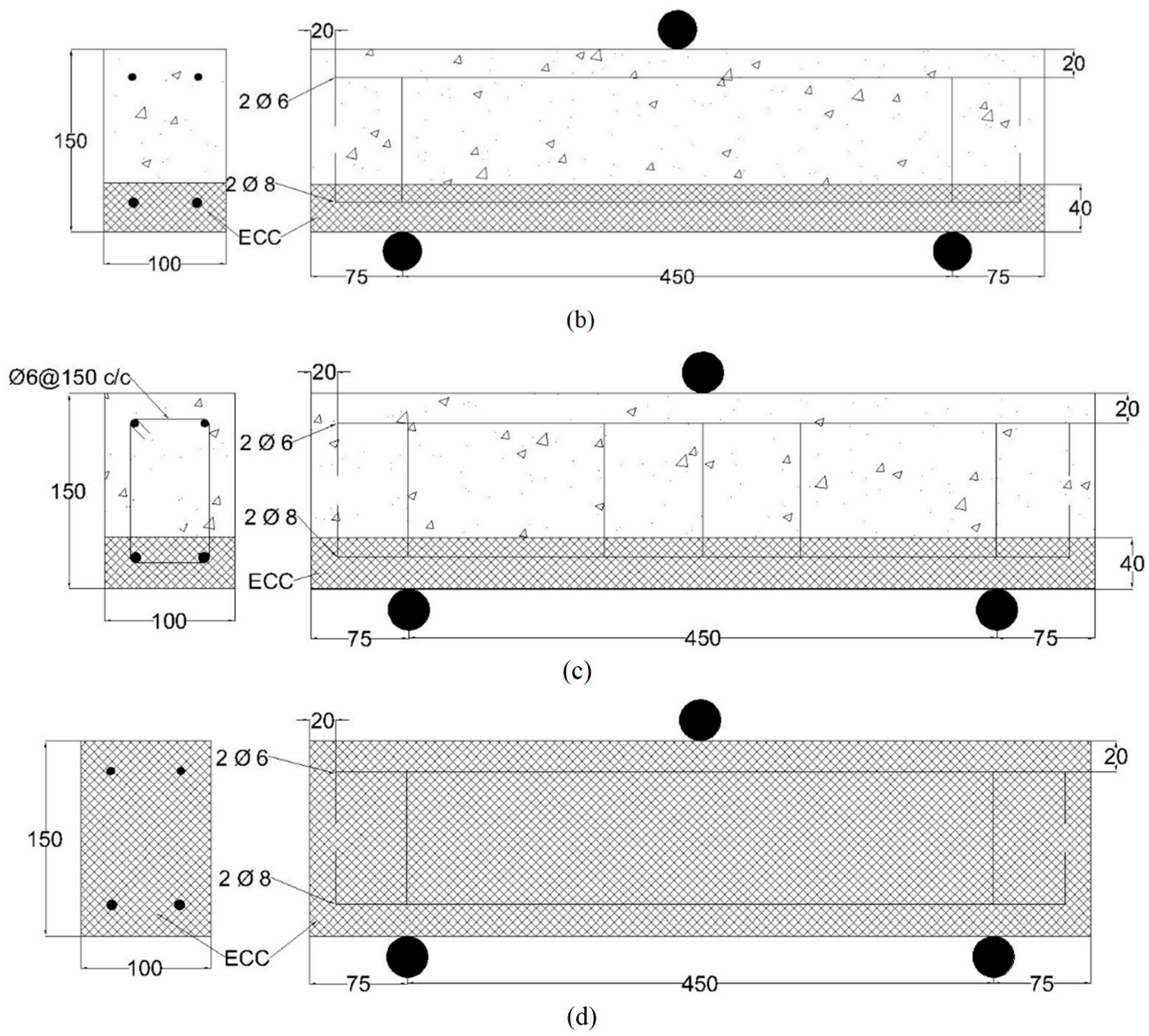
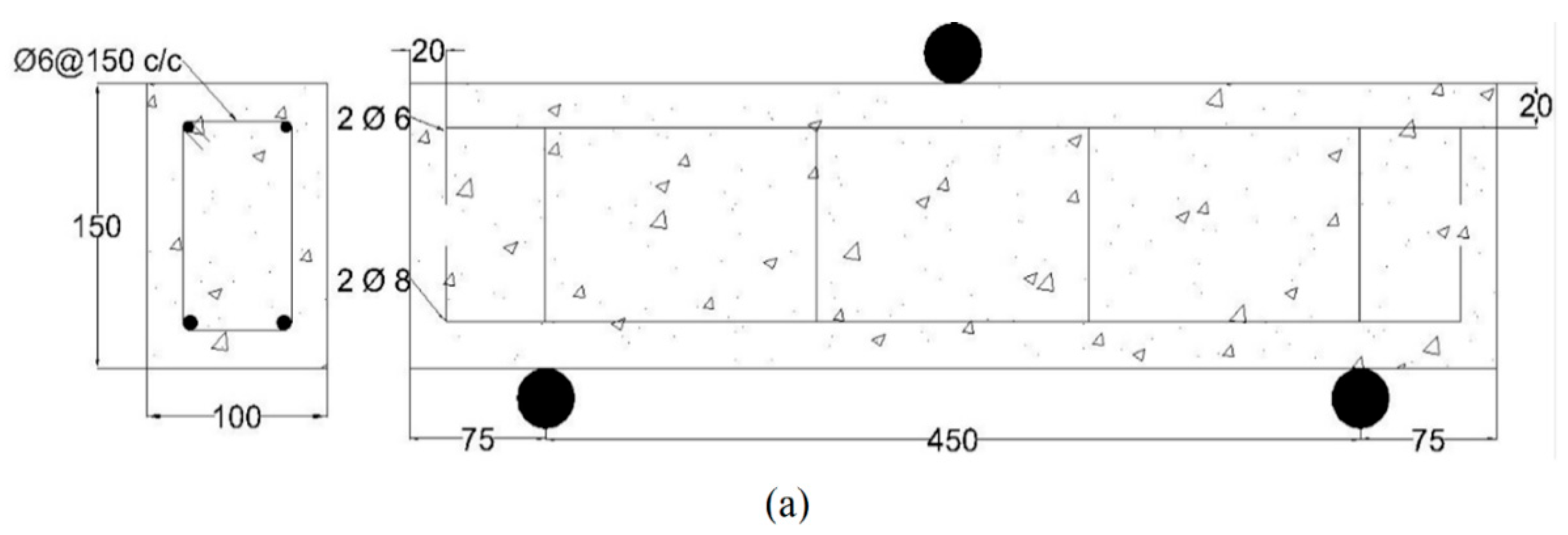
Four beam specimens with rectangular cross-sections were tested in the university’s laboratory. The specimens were a regular RC beam with stirrups (designated RC-St and shown in Figure 1a), an RC beam with an ECC layer (designated RC-ECC and shown in Figure 1b) but without stirrups, an RC-ECC beam with stirrups (designated RC-ECC-St and shown Figure 1c), and a reinforced ECC beam without stirrups (designated ECC and shown Figure 1d). All beams have a clear span of 450 mm, a width of 100 mm, and an effective depth of 130 mm. The bottom flexural reinforcement of all the beams is two 8 mm bars, and the top reinforcement is two 6 mm bars. The stirrups are 6 mm bars with a spacing of 150 center-to-center. The ECC layer of the RC-ECC beams covered the bottom reinforcement to a depth of 40 mm from the bottom of the beam. Figure 1 shows detailed drawings of all test specimens with the support and loading conditions.
Figure 1. Test specimens: (a) RC-St; (b) RC-ECC; (c) RC-ECC-St; (d) ECC (units: mm).
The configurations in Figure 1a–d were specifically selected to explore the role of ECC placement and stirrup reinforcement in enhancing the seismic performance of RC beams. By varying the presence and location of ECC and stirrups, this study aims to evaluate how these configurations impact failure modes, crack propagation, and energy dissipation under cyclic loads. These configurations allow for a comparative assessment of ECC’s effectiveness in crack control and structural ductility.

3.3. Test Setup and Instrumentation

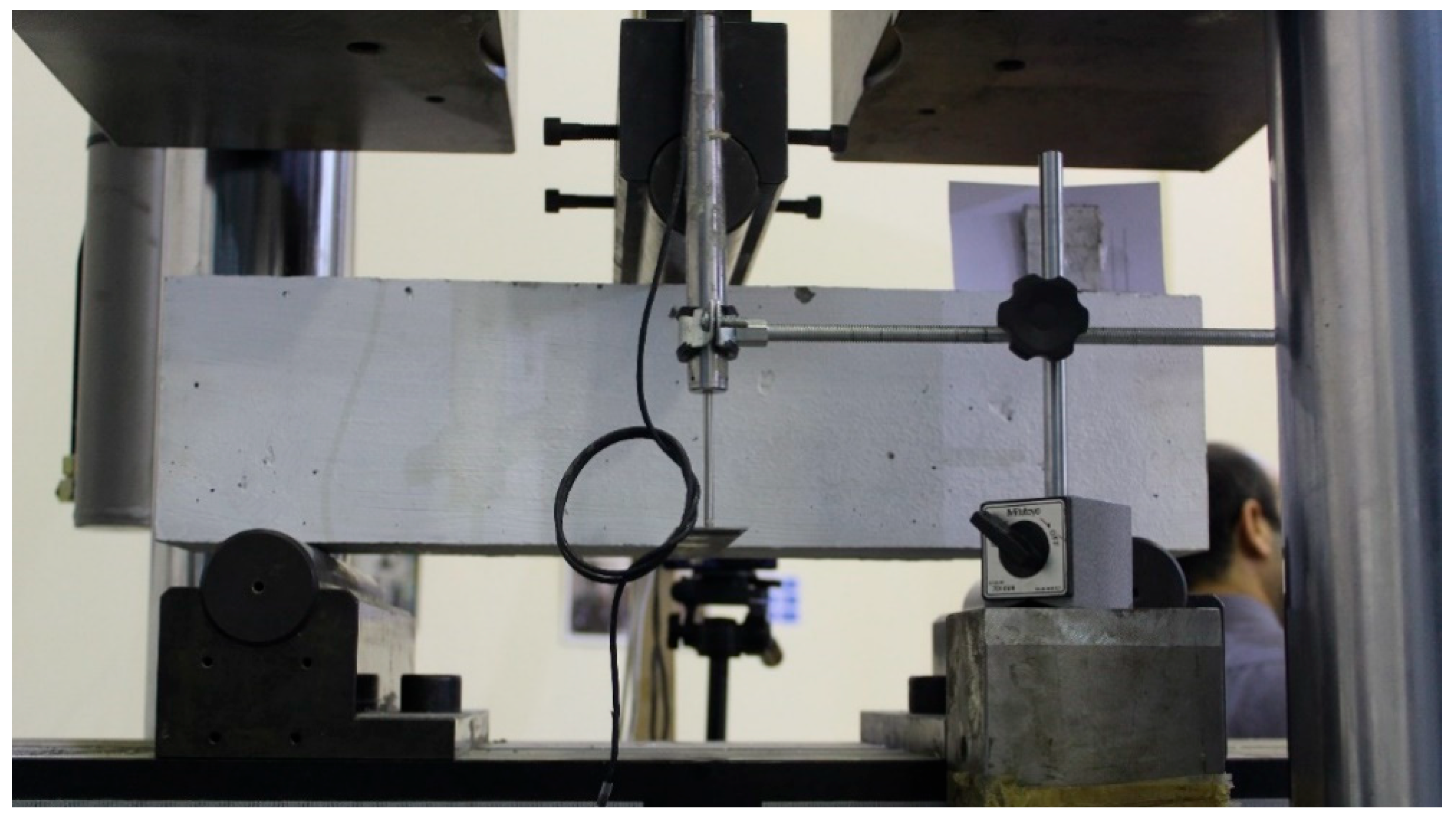
The beam specimens were tested under a simply supported three-point flexure test by applying a point load using a DARTEC hydraulic actuator with a 1500 kN loading capacity. The beams had a clear span and shear span of 450 mm and 225 mm, respectively. The testing mode was displacement-controlled with a 0.01 mm/sec loading rate. A linear voltage displacement transducer (LVDT) was placed at the midpoint of the clear span of the specimen to measure the mid-span deflection. Figure 2 shows the test setup and the position of the LVDT. All test specimens were painted white to monitor the crack development and propagation during the tests. A crack-width ruler and crack-width microscope were used to measure cracks while the specimen was under loading.
Figure 2. Test setup and instrumentation.

3.4. Results and Discussion

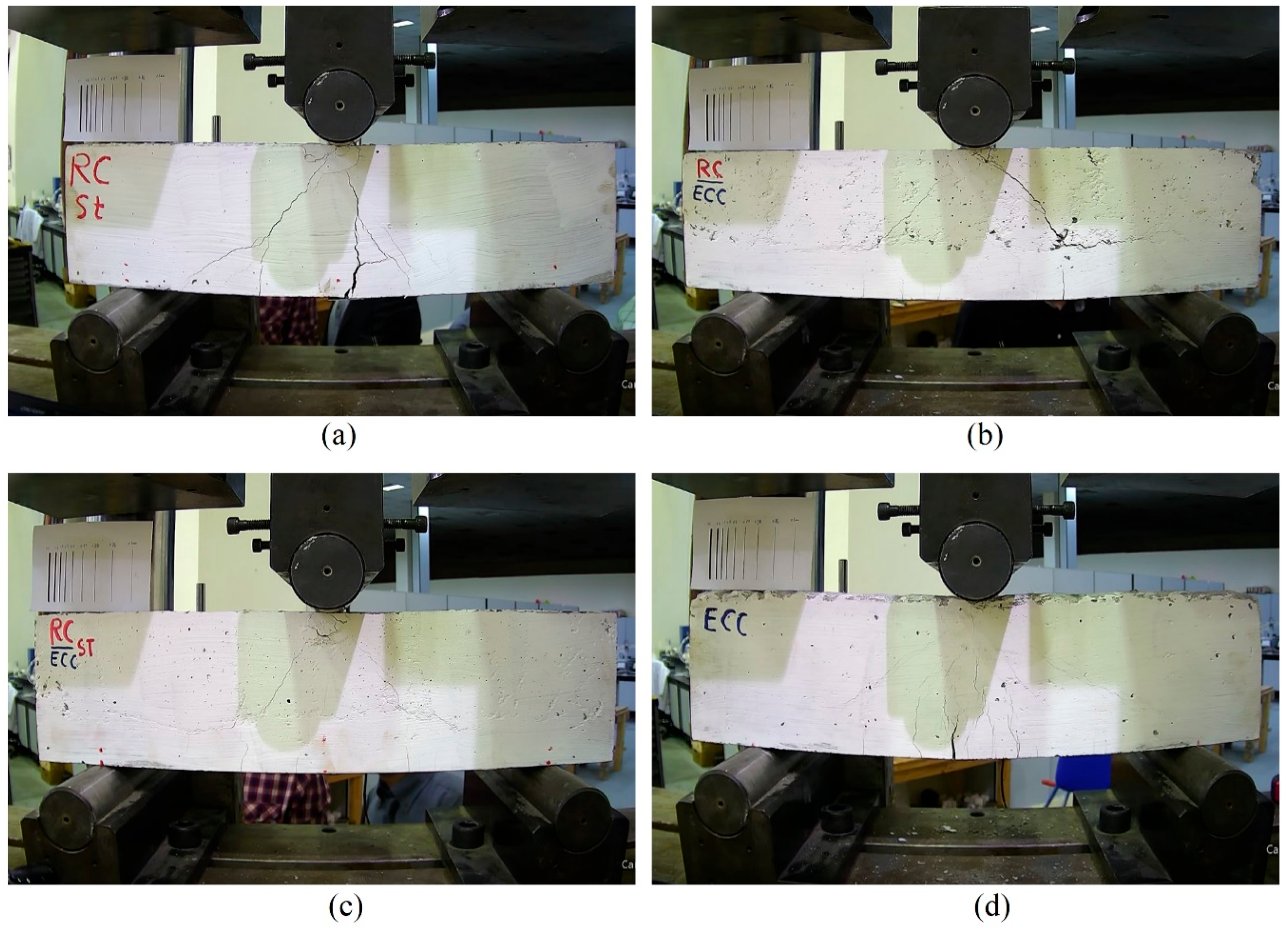
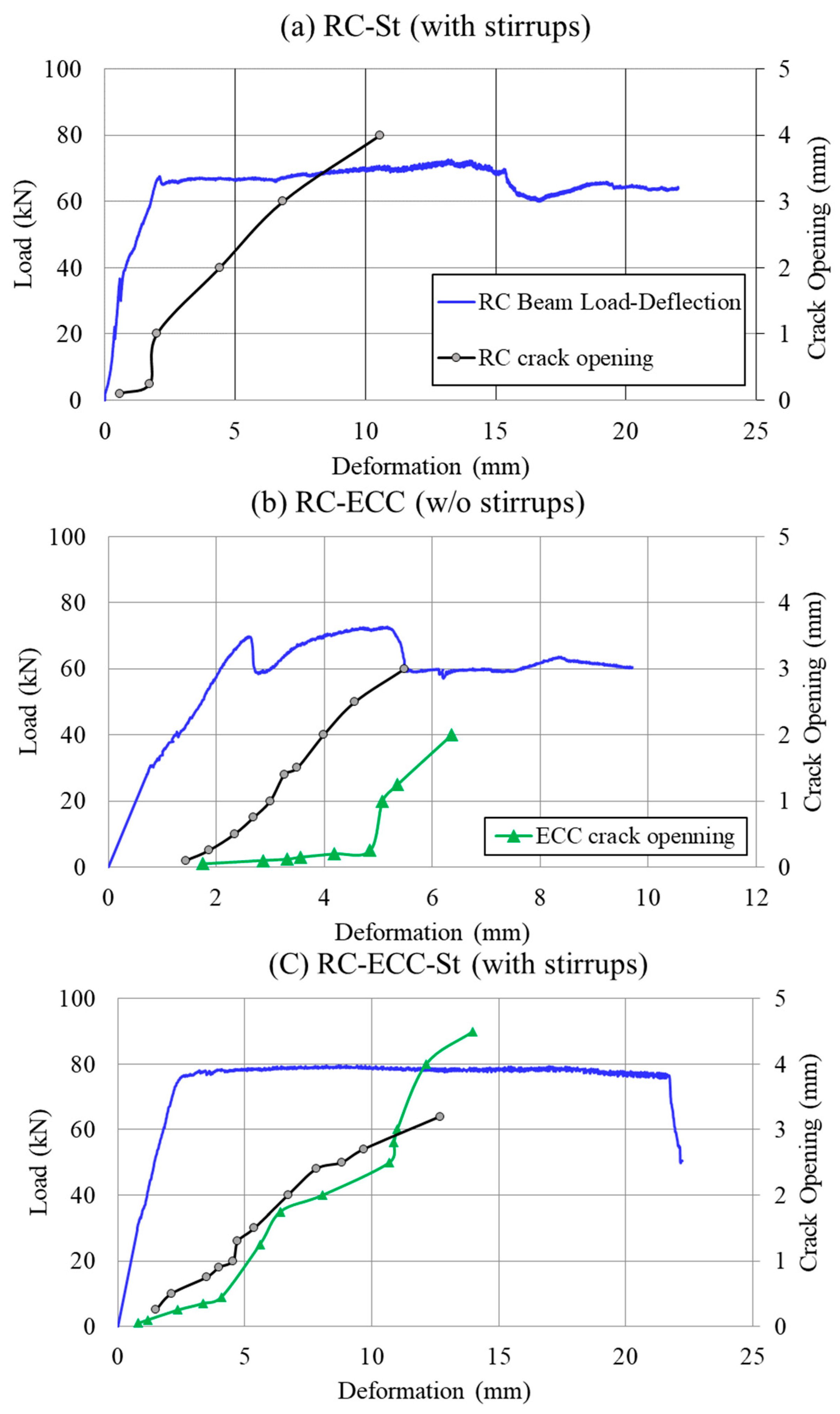
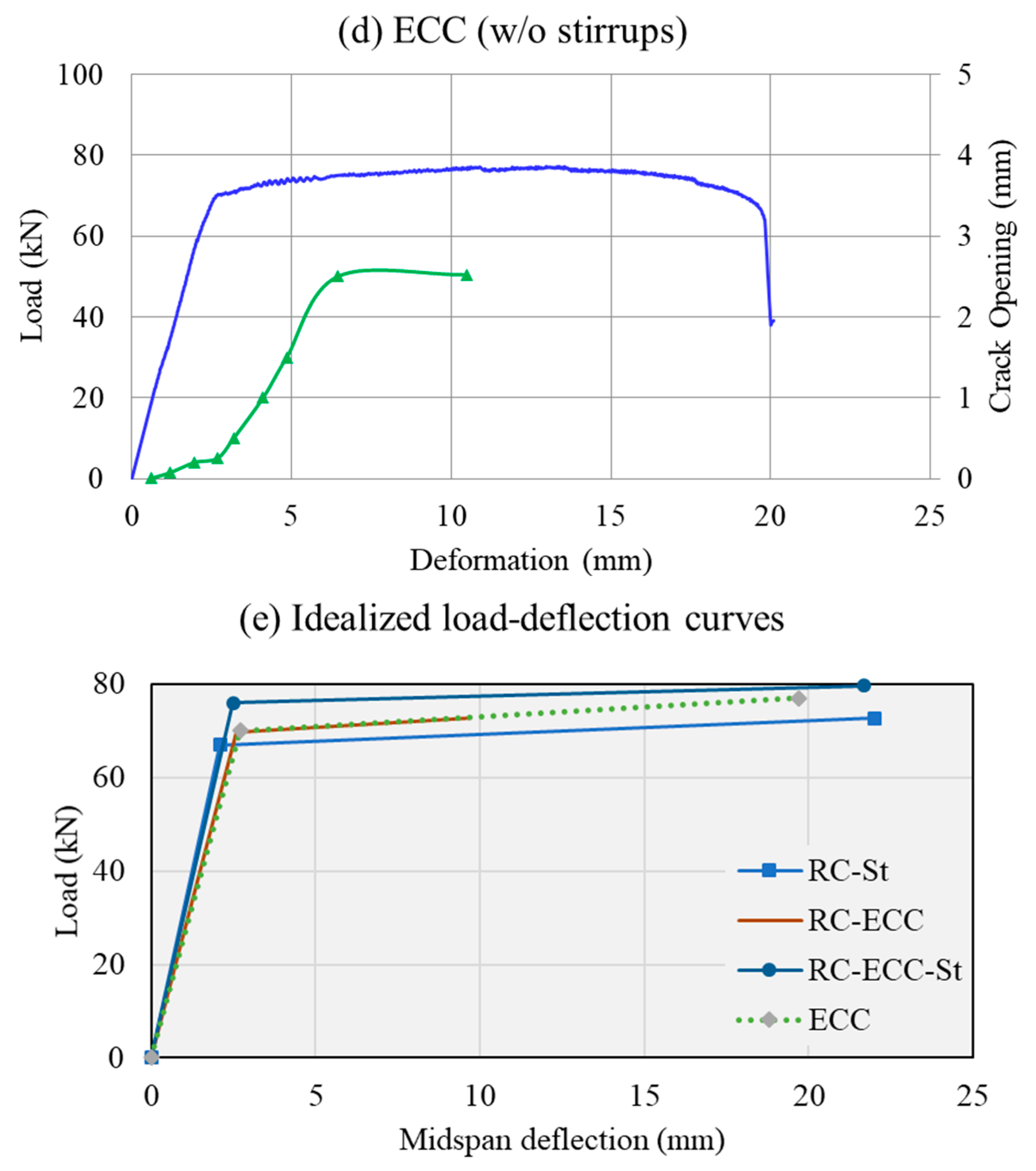
Figure 3 shows the failure state of the test specimens at the end of the loading protocol. During each test, the load and mid-span deflection were recorded automatically, crack development and propagation were observed in all specimens, and measurements of crack openings were taken at different deflection levels. The load–deflection curves and crack openings are plotted in Figure 4. Out of the four tested beams, only the RC-ECC (Figure 3b) beam without stirrups suffered a shear–tension failure, while the rest had a flexural failure. Note that this includes the ECC beam (Figure 3d) without stirrups; no shear failure was observed on the surface.
Figure 3. Beam specimens after testing: (a) RC-St; (b) RC-ECC; (c) RC-ECC-St; (d) ECC.
Figure 4. Load–deflection and crack openings: (a) RC; (b) RC-ECC; (c) RC-ECC-St; (d) ECC; (e) idealized load–deflection curves.
The RC-St beam with stirrups (Figure 3a) showed three significant cracks that continued to open throughout the test until failure. The initial crack, which formed at a load level of 36 kN, developed at mid-span in the tension side of the beam cross-section. Then, the second flexural crack started while the first one grew wider near 59 kN of loading. The third crack appeared at a load level of 67 kN. The beam failed directly after the main cracks widened, propagated, and converged at the load application point.
As shown in the load–deflection curves of Figure 4a–d, all beam specimens followed the typical linear elastic behavior with an approximately similar elastic stiffness of approximately 29 kN/mm until reaching the yielding point. The yielding displacement and yielding load were close and in the narrow ranges in all specimens. They were [2.1, 2.7] mm and [67, 70] kN, respectively (see Table 6)—the behavior after yielding shifted to the nonlinear plastic regime but with different displacement ductility. As reported in Table 6, the specimens with stirrups (i.e., RC-St and RC-ECC-St) were the most ductile beams, followed by ECC and RC-ECC. Specimen ECC was the most flexible among all tested beams.
Table 6. Properties of the idealized load–deflection curves.
The RC beam with the layer of ECC but without stirrups (RC–ECC) showed a significant shear–tension crack that caused the failure of the beam (Figure 3b). Unlike the RC beam, this beam had microcracks that started to appear at a load of approximately 32 kN. These cracks were distributed in the tension side of the beam cross-section and localized in the ECC layer. At approximately 70 kN, two major diagonal cracks at a 45-degree angle appeared in the upper layer of the beam on the RC side, and then the load dropped noticeably (Figure 4b). One of the two cracks increased in size until it reached the ECC layer, following which the crack changed direction and became horizontal, splitting the beam at the interface between the RC and ECC layer. This kind of behavior is mainly due to the absence of stirrups in the upper layer of the beam. The ECC beam without stirrups did not fail due to shear or experience sudden failure, as evidenced by Figure 3d.
Moreover, comparing the load–deflection curves of beams RC-ECC-St and ECC (Figure 4c,d) shows that they behaved similarly, especially in terms of the overall behavior, displacement ductility, and cracking pattern. Both specimens did not fail due to shear even though the ECC beam had no stirrups. Therefore, it is safe to say that in this investigation, the use of ECC reduces or eliminates the need for shear stirrups due to the microfiber’s function in bridging any possible shear cracks.
As shown in Figure 3c, the RC-ECC-St beam with stirrups showed two major flexure cracks that caused the failure of the beam. While increasing the load, two major diagonal cracks appeared at the yield load (see Figure 4c and Table 6). Then, the concrete compression zone experienced concrete crushing. Since the load did not drop, the two cracks became very large such that the beam was almost split into three pieces, and the ECC fibers could be seen under high tension trying to bridge the cracks.

5. Conclusions

This study investigated the structural performance of reinforced concrete (RC) beams and frames with the partial and full replacement of concrete by Engineered Cementitious Composites (ECC), using both experimental testing and numerical analysis. The findings demonstrate that ECC significantly enhances ductility, crack control, and energy dissipation in RC structures, establishing it as a promising material for improving the seismic resilience of civil infrastructure. Specifically, ECC’s crack-bridging capabilities and its ability to reduce reliance on traditional shear reinforcement make it an ideal material for key structural locations, such as beam–column joints, where enhanced performance is essential.
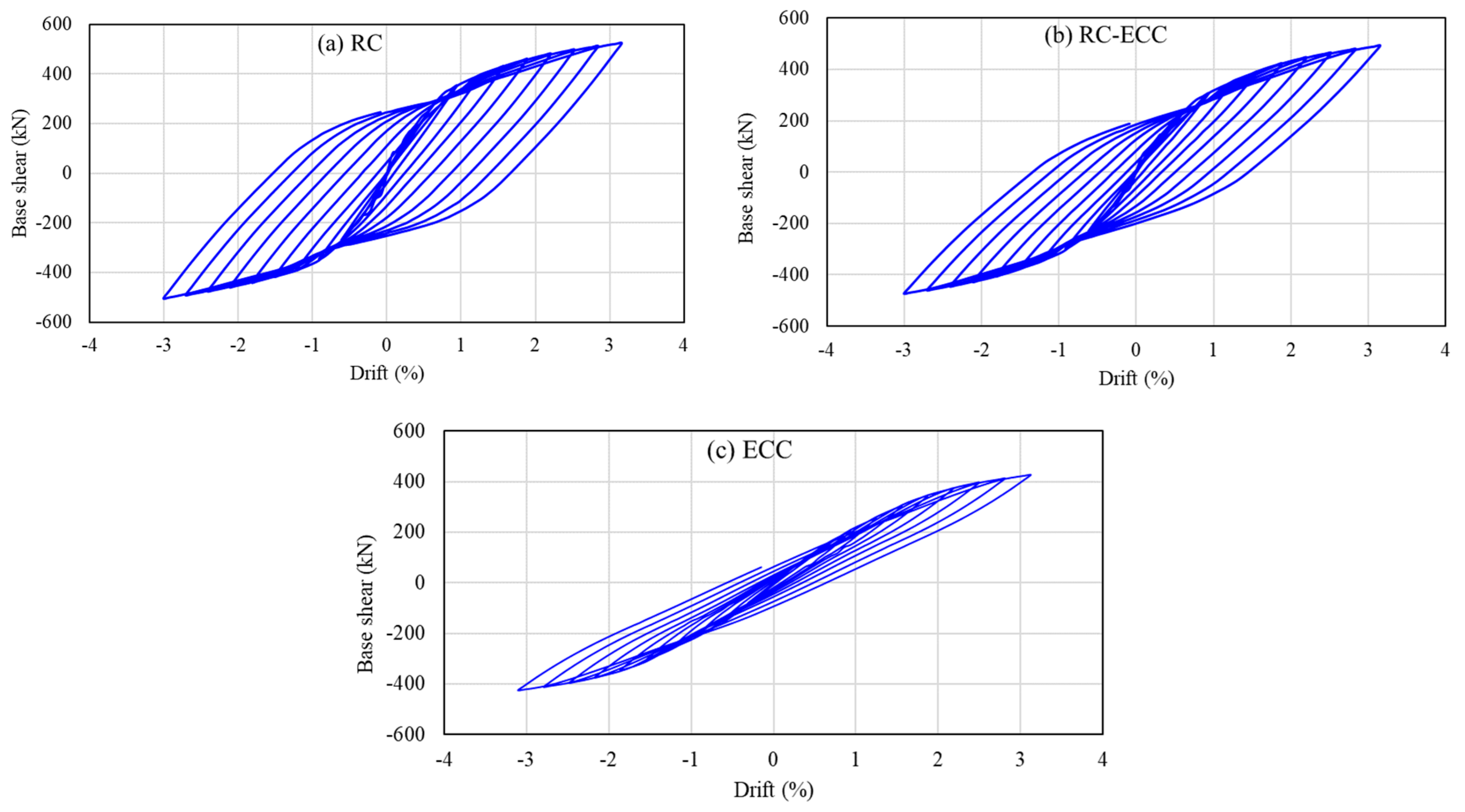
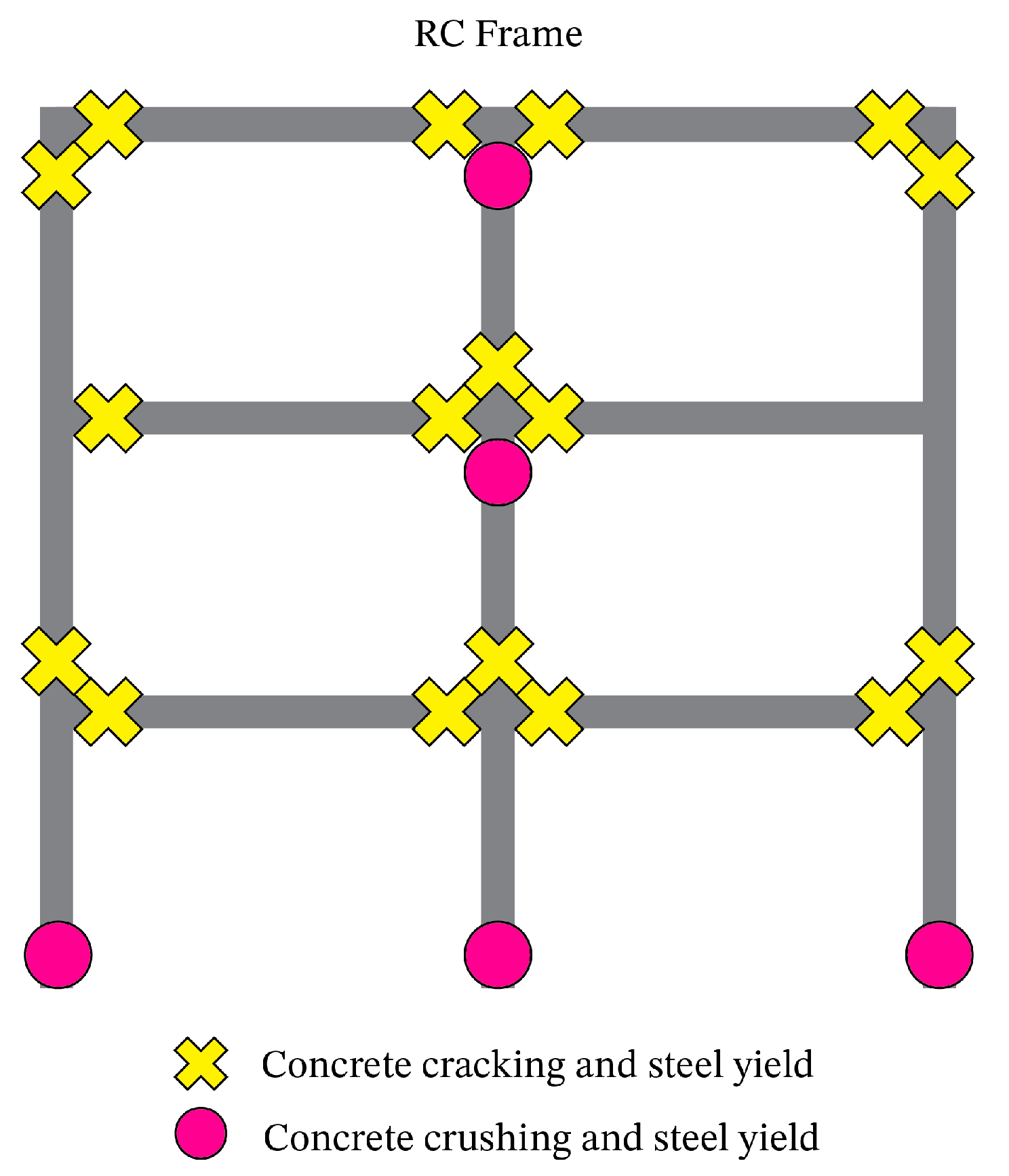
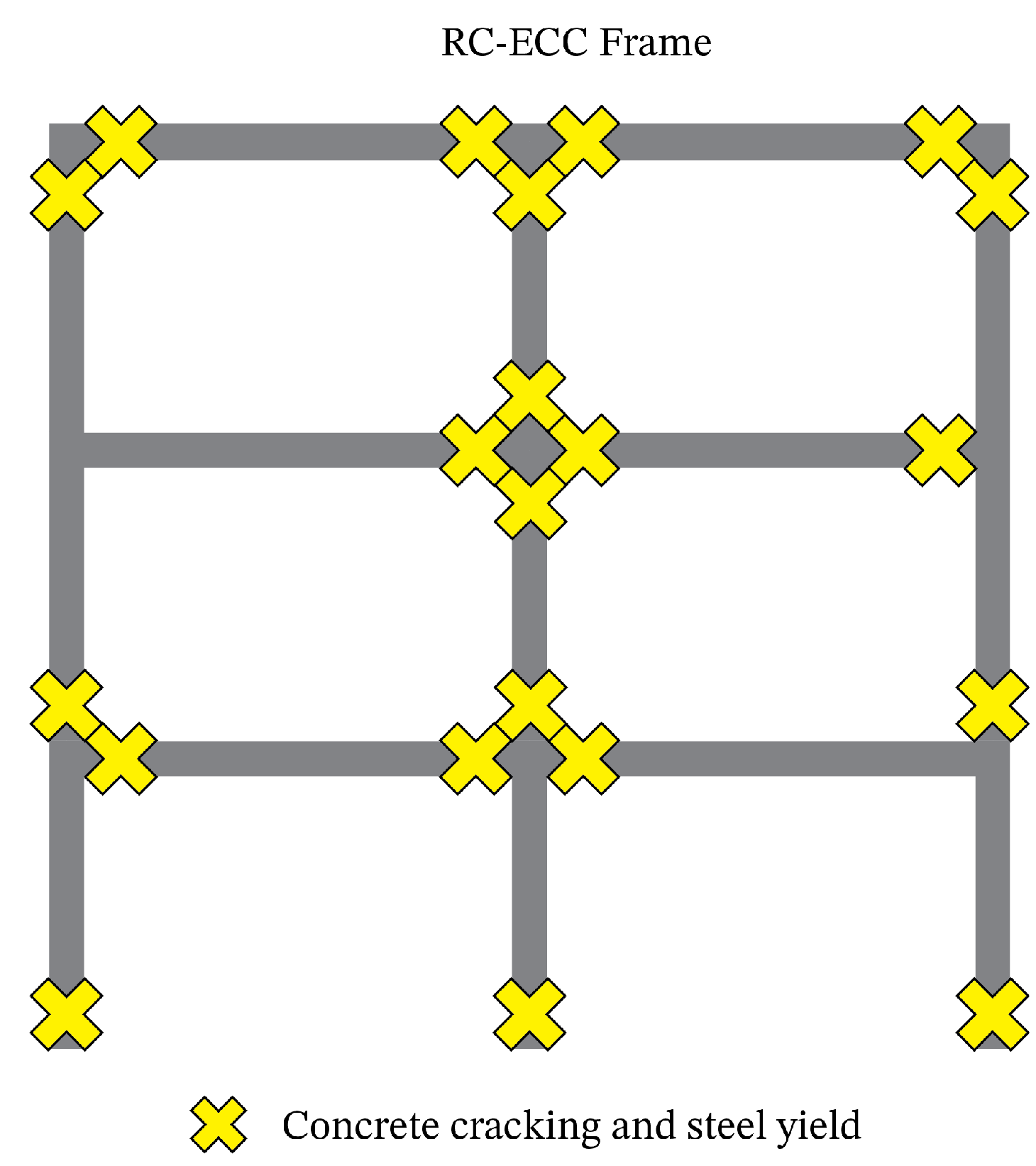
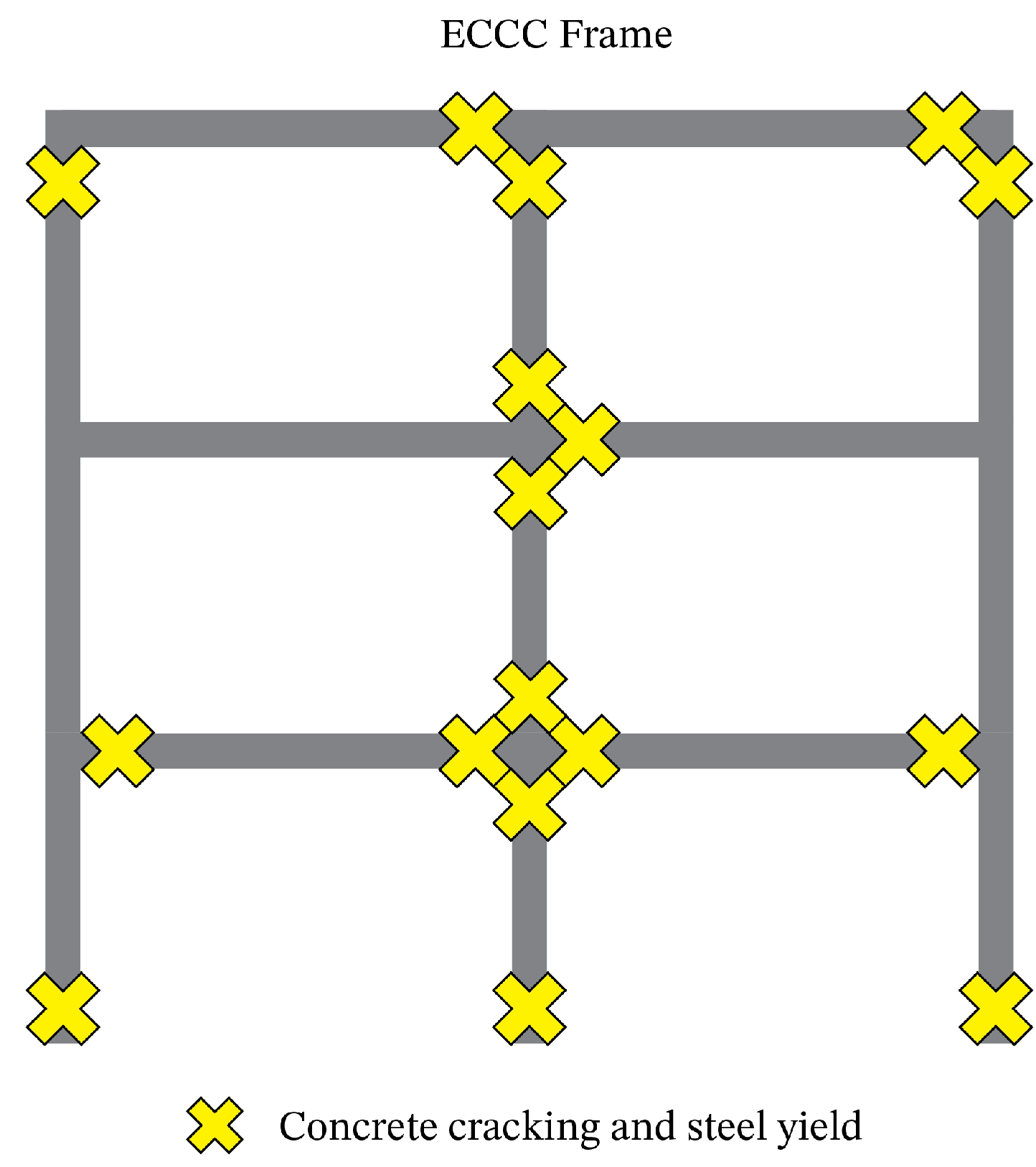
In the experimental phase, small-scale beam tests showed that ECC effectively mitigates shear failure and enhances flexural performance, even in configurations without stirrups. This suggests that ECC can reduce the amount of shear reinforcement needed, therefore offering an economical and sustainable solution for seismic applications. Numerical simulations further validated these results at the frame level, where ECC-reinforced joints led to a substantial reduction in base shear and a decrease in the formation of plastic hinges under cyclic loading. This improved energy dissipation capacity under seismic conditions highlights ECC’s effectiveness in enhancing overall structural resilience.
The results of this study demonstrate the ECC’s potential to achieve sustainable and resilient designs in earthquake-prone regions. By reducing the demand for additional shear reinforcement, ECC not only lowers construction costs but also contributes to the longevity and durability of RC structures. As the industry moves towards sustainable design solutions, ECC stands out as a material that combines high seismic performance with reduced environmental impact, supporting the development of safer and more sustainable infrastructure in regions vulnerable to seismic activity.

Author Contributions

All authors contributed to the study’s conception and design. Material preparation, data collection, and analysis were performed by M.L. and A.M. The first draft of the manuscript was written by M.L. and all authors commented on previous versions of the manuscript. All authors have read and agreed to the published version of the manuscript.

Funding

The University of Sharjah supported this work through the College of Graduate Studies via funds to the graduate student (author #2) and the Research Institute of Sciences and Engineering (RISE) via funds to the corresponding author (author #1).

Data Availability Statement

All data can be requested from the corresponding author, without the need to provide a reason.

Acknowledgments

The University of Sharjah supported this work through the College of Graduate Studies and the Research Institute of Sciences and Engineering, RISE. This support is duly acknowledged.

Conflicts of Interest

The authors report there are no competing interests to declare.

References

  1. Avcil, F.; Işık, E.; İzol, R.; Büyüksaraç, A.; Arkan, E.; Arslan, M.H.; Aksoylu, C.; Eyisüren, O.; Harirchian, E. Effects of the February 6, 2023, Kahramanmaraş earthquake on structures in Kahramanmaraş city. Nat. Hazards 2024, 120, 2953–2991. [Google Scholar] [CrossRef]
  2. Achour, N.; Miyajima, M.; Kitaura, M.; Price, A. Earthquake-Induced Structural and Nonstructural Damage in Hospitals. Earthq. Spectra 2011, 27, 617–634. [Google Scholar] [CrossRef]
  3. Sucuoǧlu, H.; Erberik, A. Energy-based hysteresis and damage models for deteriorating systems. Earthq. Eng. Struct. Dyn. 2004, 33, 69–88. [Google Scholar] [CrossRef]
  4. Mieler, M.W.; Mitrani-Reiser, J. Review of the State of the Art in Assessing Earthquake-Induced Loss of Functionality in Buildings. J. Struct. Eng. 2017, 144, 04017218. Available online: https://ascelibrary.org/doi/full/10.1061/%28ASCE%29ST.1943-541X.0001959 (accessed on 11 May 2022). [CrossRef]
  5. Williams, M.S.; Sexsmith, R.G. Seismic Damage Indices for Concrete Structures: A State-of-the-Art Review. Earthq. Spectra 1995, 11, 319–349. [Google Scholar] [CrossRef]
  6. ASCE/SEI. Seismic Evaluation and Retrofit of Existing Buildings; American Society of Civil Engineers: Washington, DC, USA, 2017. [Google Scholar]
  7. Loh, C.; Mao, C.; Huang, J.; Pan, T. System identification and damage evaluation of degrading hysteresis of reinforced concrete frames. Earthq. Eng. Struct. Dyn. 2011, 40, 623–640. [Google Scholar] [CrossRef]
  8. Yolsal-Çevikbilen, S.; Taymaz, T.; Irmak, T.S.; Erman, C.; Kahraman, M.; Özkan, B.; Eken, T.; Öcalan, T.; Doğan, A.H.; Altuntaş, C. Source geometry and rupture characteristics of the 20 February 2023 Mw 6.4 Hatay (Türkiye) earthquake at southwest edge of the East Anatolian Fault. Geochem. Geophys. Geosystems 2024, 25, e2023GC011353. [Google Scholar] [CrossRef]
  9. Mavroulis, S.; Argyropoulos, I.; Vassilakis, E.; Carydis, P.; Lekkas, E. Earthquake Environmental Effects and Building Properties Controlling Damage Caused by the 6 February 2023 Earthquakes in East Anatolia. Geosciences 2023, 13, 303. [Google Scholar] [CrossRef]
  10. Bilgili, L.; Çetinkaya, A.Y. Environmental impact assessment of earthquake-generated construction and demolition waste management: A life cycle perspective in Turkey. Environ. Syst. Decis. 2024, 44, 424–432. [Google Scholar] [CrossRef]
  11. Gonzalez, R.E.; Stephens, M.T.; Toma, C.; Dowdell, D. Incorporating potential environmental impacts in building seismic design decisions. Bull. Earthq. Eng. 2023, 21, 4385–4428. [Google Scholar] [CrossRef]
  12. Cuenca, E.; Ferrara, L. Self-healing capacity of fiber reinforced cementitious composites. State of the art and perspectives. KSCE J. Civ. Eng. 2017, 21, 2777–2789. [Google Scholar] [CrossRef]
  13. Yu, K.; Ding, Y.; Liu, J.; Bai, Y. Energy dissipation characteristics of all-grade polyethylene fiber-reinforced engineered cementitious composites (PE-ECC). Cem. Concr. Compos. 2020, 106, 103459. [Google Scholar] [CrossRef]
  14. Abrishambaf, A.; Pimentel, M.; Nunes, S. Influence of fibre orientation on the tensile behaviour of ultra-high performance fibre reinforced cementitious composites. Cem. Concr. Res. 2017, 97, 28–40. [Google Scholar] [CrossRef]
  15. Zollo, R.F. Fiber-reinforced concrete: An overview after 30 years of development. Cem. Concr. Compos. 1997, 19, 107–122. [Google Scholar] [CrossRef]
  16. Altoubat, S.; Yazdanbakhsh, A.; Rieder, K.-A. Shear Behavior of Macro-Synthetic Fiber-Reinforced Concrete Beams without Stirrups. ACI Mater. J. 2009, 106, 381–389. [Google Scholar]
  17. Altoubat, S.A.; Lange, D.A. A New Look at Tensile Creep of Fiber-Reinforced Concrete. ACI Spec. Publ. Fiber Reinf. Concr. 2003, 216, 143–160. [Google Scholar] [CrossRef]
  18. Leblouba, M.; Al-Toubat, S.; Maalej, M. Engineered Cementitious Composites for Improved Crack-Width Control of FRC Beams—A Review. Spec. Publ. 2017, 319, 7.1–7.14. [Google Scholar] [CrossRef]
  19. Qudah, S.; Maalej, M. Application of Engineered Cementitious Composites (ECC) in interior beam–column connections for enhanced seismic resistance. Eng. Struct. 2014, 69, 235–245. [Google Scholar] [CrossRef]
  20. Zhang, J.; Maalej, M.; Quek, S.T. Performance of Hybrid-Fiber ECC Blast/Shelter Panels Subjected to Drop Weight Impact. J. Mater. Civ. Eng. 2007, 19, 855–863. [Google Scholar] [CrossRef]
  21. Leblouba, M.; Altoubat, S.; Karzad, A.; Maalej, M.; Barakat, S.; Metawa, A. Impact response and endurance of unreinforced masonry walls strengthened with cement-based composites. Structures 2022, 36, 262–279. [Google Scholar] [CrossRef]
  22. Altoubat, S.; Maalej, M.; Leblouba, M.; Karzad, A.S. Experimental study on the out-of-plane strengthening of unreinforced masonry walls using cement-based fiber composites. IOP Conf. Ser. Mater. Sci. Eng. 2019, 601, 012028. [Google Scholar] [CrossRef]
  23. Hasgul, U.; Yavas, A.; Birol, T.; Turker, K. Steel Fiber Use as Shear Reinforcement on I-Shaped UHP-FRC Beams. Appl. Sci. 2019, 9, 5526. [Google Scholar] [CrossRef]
  24. Sorelli, L.G.; Meda, A.; Plizzari, G.A. Bending and Uniaxial Tensile Tests on Concrete Reinforced with Hybrid Steel Fibers. J. Mater. Civ. Eng. 2005, 17, 519–527. [Google Scholar] [CrossRef]
  25. Stang, H.; Li, V.C. Classification of Fiber Reinforced Cementitious Materials for Structural Applications. In Proceedings of the 6th Rilem Symposium on Fibre-Rienfoced Concretes BEFIB 2004, Varenna, Italy, 20–22 September 2004. [Google Scholar]
  26. Yang, E.-H.; Li, V.C. Strain-hardening fiber cement optimization and component tailoring by means of a micromechanical model. Constr. Build. Mater. 2010, 24, 130–139. [Google Scholar] [CrossRef]
  27. Singh, M.; Saini, B.; Chalak, H. Performance and composition analysis of engineered cementitious composite (ECC)—A review. J. Build. Eng. 2019, 26, 100851. [Google Scholar] [CrossRef]
  28. Said, S.H.; Razak, H.A. The effect of synthetic polyethylene fiber on the strain hardening behavior of engineered cementitious composite (ECC). Mater. Des. 2015, 86, 447–457. [Google Scholar] [CrossRef]
  29. Kesner, K.; Billington, S.L. Investigation of Infill Panels Made from Engineered Cementitious Composites for Seismic Strengthening and Retrofit. J. Struct. Eng. 2005, 131, 1712–1720. [Google Scholar] [CrossRef]
  30. Kesner, K.E.; Billington, S.L.; Douglas, K.S. Cyclic Response of Highly Ductile Fiber-Reinforced Cement-Based Composites. ACI Mater. J. 2003, 100, 381–390. [Google Scholar] [CrossRef]
  31. Kesner, K.; Billington, S.L. Tension, Compression and Cyclic Testing of Engineered Cementitious Composite Materials. Art. No. MCEER-04-0002, March 2004. Available online: https://trid.trb.org/view/756217 (accessed on 11 May 2022).
  32. Yuan, F.; Pan, J.; Dong, L.; Leung, C.K.Y. Mechanical Behaviors of Steel Reinforced ECC or ECC/Concrete Composite Beams under Reversed Cyclic Loading. J. Mater. Civ. Eng. 2014, 26, 04014047. [Google Scholar] [CrossRef]
  33. Said, S.H.; Razak, H.A. Structural behavior of RC engineered cementitious composite (ECC) exterior beam–column joints under reversed cyclic loading. Constr. Build. Mater. 2016, 107, 226–234. [Google Scholar] [CrossRef]
  34. Yu, K.; Li, L.; Yu, J.; Wang, Y.; Ye, J.; Xu, Q. Direct tensile properties of engineered cementitious composites: A review. Constr. Build. Mater. 2018, 165, 346–362. [Google Scholar] [CrossRef]
  35. Cox, B.N.; Marshall, D.B. Crack Bridging in the Fatigue of Fibrous Composites. Fatigue Fract. Eng. Mater. Struct. 1991, 14, 847–861. [Google Scholar] [CrossRef]
  36. Li, V.C.; Maalej, M.; Hashida, T. Experimental determination of the stress-crack opening relation in fibre cementitious composites with a crack-tip singularity. J. Mater. Sci. 1994, 29, 2719–2724. [Google Scholar] [CrossRef]
  37. Maalej, M.; Li, V.C.; Hashida, T. Effect of Fiber Rupture on Tensile Properties of Short Fiber Composites. J. Eng. Mech. 1995, 121, 903–913. [Google Scholar] [CrossRef]
  38. Huang, T.; Zhang, Y.X.; Su, C.; Lo, S.R. Effect of Slip-Hardening Interface Behavior on Fiber Rupture and Crack Bridging in Fiber-Reinforced Cementitious Composites. J. Eng. Mech. 2015, 141, 04015035. [Google Scholar] [CrossRef]
  39. Fischer, G.; Li, V.C. Effect of Matrix Ductility on Deformation Behavior of Steel-Reinforced ECC Flexural Members under Reversed Cyclic Loading Conditions. ACI Struct. J. 2002, 99, 781–790. [Google Scholar] [CrossRef]
  40. ASTM C136; Standard Test Method for Sieve Analysis of Fine and Coarse Aggregates. ASTM: West Conshohocken, PA, USA, 2015.
  41. Maalej, M.; Li, V.C. Introduction of Strain-Hardening Engineered Cementitious Composites in Design of Reinforced Concrete Flexural Members for Improved Durability. ACI Struct. J. 1995, 92, 167–176. [Google Scholar] [CrossRef]
  42. Elnashai, A.; Papanikolaou, V.; Lee, D. Zeus-NL—A System for Inelastic Analysis of Structures-User Manual; Mid-America Earthquake (MAE) Center, Department of Civil and Environmental Engineering, University of Illinois at Urbana-Champaign: Urbana, IL, USA, 2010. [Google Scholar]
  43. Gencturk, B.E. Multi-Objective Optimal Seismic Design of Buildings Using Advanced Engineering Materials; University of Illinois at Urbana-Champaign: Urbana, IL, USA, 2011. [Google Scholar]
  44. Gencturk, B.; Elnashai, A.S. Numerical modeling and analysis of ECC structures. Mater. Struct. 2013, 46, 663–682. [Google Scholar] [CrossRef]
  45. Martínez-Rueda, J.E.; Elnashai, A.S. Confined concrete model under cyclic load. Mater. Struct. 1997, 30, 139–147. [Google Scholar] [CrossRef]
  46. Mander, J.B.; Priestley, M.J.N.; Park, R. Theoretical stress-strain model for confined concrete. J. Struct. Eng. 1988, 114, 1804–1826. [Google Scholar] [CrossRef]
  47. Design Guide on the ACI 318 Building Code Requirements for Structural Concrete—CRSI Resource Materials. Available online: https://resources.crsi.org/resources/design-guide-aci-318-19-building-code/ (accessed on 11 May 2022).
  48. ACI Committee 318. Building Code Requirements for Structural Concrete (ACI 318-08) and Commentary; American Concrete Institute: Farmington Hills, MI, USA, 2008. [Google Scholar]
  49. 2000 International Building Code® (PDF Download). Available online: https://shop.iccsafe.org/2000-international-building-coder-pdf-download.html (accessed on 11 May 2022).
  50. ASCE 7 Standard. Available online: https://www.asce.org/publications-and-news/asce-7 (accessed on 11 May 2022).
  51. Publications:: FEMA, Interim Testing Protocols for Determining the Seismic Performance Characteristics of Structural and Nonstructural Components—Applied Technology Council Online Store. Available online: https://store.atcouncil.org/index.php?dispatch=products.view&product_id=209 (accessed on 12 May 2022).
  52. Dominguez-Santos, D. Optimization and analysis of hysteretic energy dissipators in reinforced concrete frame structures of five, 10 and 15 stories. Int. J. Prot. Struct. 2024, 20414196241286157. [Google Scholar] [CrossRef]
  53. Pekgökgöz, R.K.; Avcil, F. Effect of steel fibres on reinforced concrete beam-column joints under reversed cyclic loading. Građevinar 2021, 73, 1185–1194. [Google Scholar]
Disclaimer/Publisher’s Note: The statements, opinions and data contained in all publications are solely those of the individual author(s) and contributor(s) and not of MDPI and/or the editor(s). MDPI and/or the editor(s) disclaim responsibility for any injury to people or property resulting from any ideas, methods, instructions or products referred to in the content.

Article Metrics

Citations

Article Access Statistics

Multiple requests from the same IP address are counted as one view.