You are currently viewing a new version of our website. To view the old version click .
Sustainability
  • Article
  • Open Access

25 June 2024

Promotion of Sustainable Products: Can Sustainability Labels Promote User Selection of Environmentally Friendly Products?

,
and
School of Design and Informatics, Abertay University, Bell Street, Dundee DD1 1HG, UK
*
Author to whom correspondence should be addressed.
This article belongs to the Special Issue Consumer Behaviour and Environmental Sustainability

Abstract

Sustainable development is growing in importance in today’s climate crisis. With the percentage of sales via digital channels increasing annually and consumers becoming aware of the environmental impact of their choices, a huge opportunity presents itself for promoting sustainable goods online if designers can find an effective way to raise awareness in consumers. Using a simulated e-commerce site (webshop), we investigated whether the presence or absence of sustainability labels displayed next to product images influenced users’ product selections. There was a significant association between the presentation of sustainability labels and the number of selected sustainable products. Overall, participants were familiar with sustainability labels and indicated willingness to pay ‘extra’ for sustainable products, while there was more variation in the way they felt that sustainability labels influenced their product choices. The findings highlight the complexities of factors influencing purchasing decisions and the need for more design-inspired research in this area. Whilst user interface design may be an effective means to influence sustainable product choices, design should also enable consumers to make informed product choices, while still providing a ‘fair’ e-commerce environment.

1. Introduction

The rise of e-commerce has transformed the global economy, changing the way we shop and do business. Over the last two decades, e-commerce has transformed from a niche market to a global economic juggernaut, with current and predicted sales steadily increasing [1]. The expansion of e-commerce can be attributed to several factors, such as the widespread access to broadband internet, the rise of smartphones and tablets, and the increased comfort and convenience for consumers shopping from home. The COVID-19 pandemic also contributed to more recent growth [2], as individuals and businesses have been forced to digitalize both essential and non-essential purchases, with the vast majority of local businesses being closed during lockdowns in various countries. The predicted increase of e-commerce in 2024 across Europe will make this sector a key driver of economic growth [3,4], and so research in consumer behavior will become increasingly important.
E-commerce allows users to efficiently search for products and compare prices from home. This reduces the need to travel to shops [5], which in turn may lower carbon emissions, a positive development. Concurrently, while the benefits of e-commerce to shoppers in terms of convenience and time savings are evident, there may still be a negative environmental impact of increased carbon emissions arising from consumer behavior, product delivery, product packaging, and waste [6,7,8]. Consumer concerns about sustainability in e-commerce are also reflected in research on shopper perspectives. For example, a study involving nine countries revealed that e-commerce is perceived to be a problem for the environment, especially in Europe but less so in the US [9]. The consumption of sustainable products themselves adds another dimension to the notion of sustainable transactions. The findings from a large-scale study [10] on the purchases of eco-friendly products showed that 72% of online shoppers in Vietnam reported buying sustainable products always or frequently, compared to a 42% worldwide percentage. While sustainability is internationally recognized to be key to our survival [11], especially affecting younger and future generations that need to live with the consequences of a lack of sustainability for the foreseeable future, these data suggest that there is a vast heterogeneity of sustainability considerations across the globe. Within societies, however, it may be unsurprising that it is predominantly the young (Zoomers, or Generation Z) that are considered to be willing to show eco-friendly behavior [12,13,14].
Against this backdrop, there is a huge opportunity for interface designers and researchers to become involved in advancing eco-friendly consumer attitudes, decisions, and behaviors online, due to the capacity of such e-commerce interfaces to reach a vast audience via green marketing. Green marketing can be described as the advertising of products with a focus on their environmental sustainability. Online consumer decisions are associated with a multitude of factors, such as economic, social, and individual influences, as well as the online environment itself (e.g., [15]). Graphical interfaces are important in directing a consumer’s attention [16]. As online transactions largely rely on usable interfaces and the appearance of product presentations to affect consumer decisions, the role of user interface design to guide user choices should not be underestimated as a means to promote the purchase of sustainable products. Specifically, drawing attention to the visual representation of products is key to the current research and resonates with the notion that e-commerce platforms are pivotal in promoting sustainable products, resulting in conscious consumer decisions [2]. Kemppainen et al. [17] also highlight that research on the influence of interface factors, online tools, and apps are important components in overcoming barriers to sustainable product choices, such as product availability, information, and transparency, as well as consumer factors, including habits.
The research in this paper explores whether online product information can influence user decision making, and specifically, whether the presentation of sustainability labels is associated with consumer product selections on a simulated e-commerce site. While existing work has addressed the impact of ecolabels on user decisions using mostly choice or survey studies (for a review, see [18]), few projects have investigated the impact of labels in a semi-real, natural environment using an e-commerce setup. The use of more naturalistic tasks compared with conventional research approaches may be preferable in respect of the ecological validity of findings [19]. In choice or survey studies, participants are typically faced with explicit sustainability choices (i.e., a choice task) or being directly asked about sustainability aspects (e.g., via a survey) as the main component of the study. Further, as others have noted [14], a social desirability bias, whereby participants respond in a way that they think may be expected of them—here, in line with social conventions of sustainability—may interfere with participants’ responses, raising questions pertaining to the veracity, bias, or generalizability of findings. The current study aims to address this dearth of studies investigating ‘natural’ behavior in the context of e-commerce. In order to assess whether users would select sustainable products in a less controlled, more realistic environment, we asked users to select products from a simulated e-commerce platform to increase the likelihood of the findings having some degree of ecological validity. The main hypothesis of interest is thus:
H1. 
The presence of ecolabels is associated with sustainable consumer product choices.
This paper is organized as follows: First, we describe aspects of sustainability to clarify our use of the terminology and specify which aspect of sustainability is addressed in the study. We then review research on the implementation of sustainable product features or labels as a design element to promote sustainability in e-commerce. Subsequently, an overview of theoretical frameworks to derive expectations regarding consumers’ online product selections is provided, contextualizing the derived hypothesis. We then describe the methodology and outcomes of the work and conclude the paper with a discussion and an outlook on promoting sustainability via design.

3. Materials and Methods

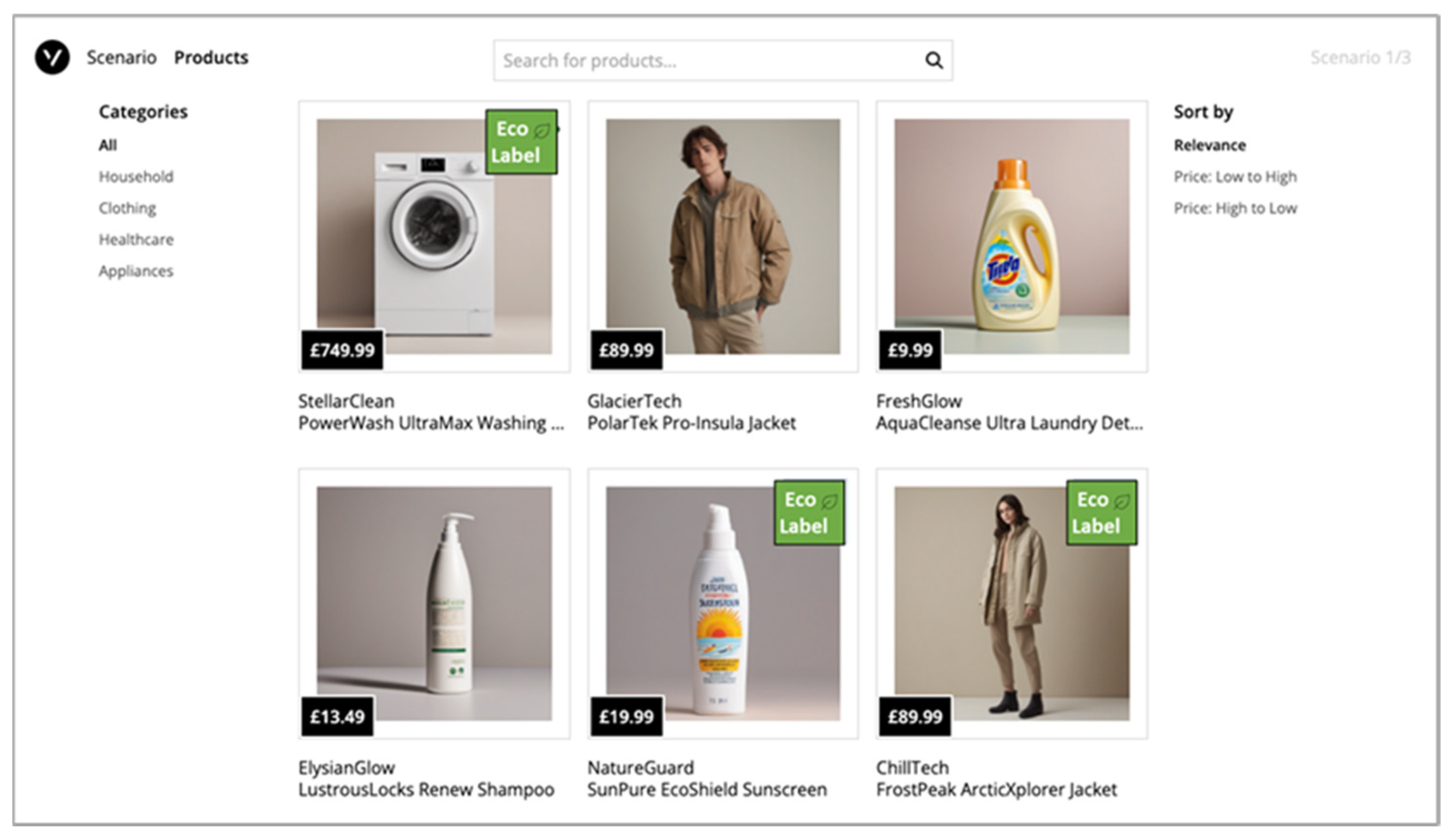
A simulated e-commerce site, a webshop, was created to investigate consumers’ product selections, contrasting the effectiveness of adding sustainability labels as a selling point in the product branding compared to not labeling products as sustainable. The webshop page (Figure 1) resembled an online storefront, including a search bar, permitted product filtering and sorting capabilities, and displayed product descriptions. The order of product listings was randomized each time the page was loaded, with all products shown in every case to counteract order effects. All text was presented in English.
Figure 1. Search page of the webshop with sustainability label placeholders added to some items for illustration. Appropriate, existing product-relevant ecolabels replaced the ones shown in the figure.

3.1. Participant Selection

The webshop was designed to be responsive, which means that the experiment could be viewed and completed on any device, including mobile phones and laptops. This made it easy for participants to access the experiment from anywhere at any time, and more importantly, from an environment of their choice to make online purchases, resembling a natural shopping experience.
The experiment was clearly advertised as a study and participants were recruited on online platforms like LinkedIn and through word of mouth. In total, 68 volunteers participated in the experiment.

3.2. Design Conditions and Products

Using a between-subjects design, the participants in the study were randomly assigned to two groups: one group was shown a selection of products that were presented with sustainability labels; the other group was shown products without such labels. Apart from the use of the sustainability labels next to product images, the products and purchasing scenarios were identical in each design condition, as well as the product descriptions users could click on for further product details, images, and prices.
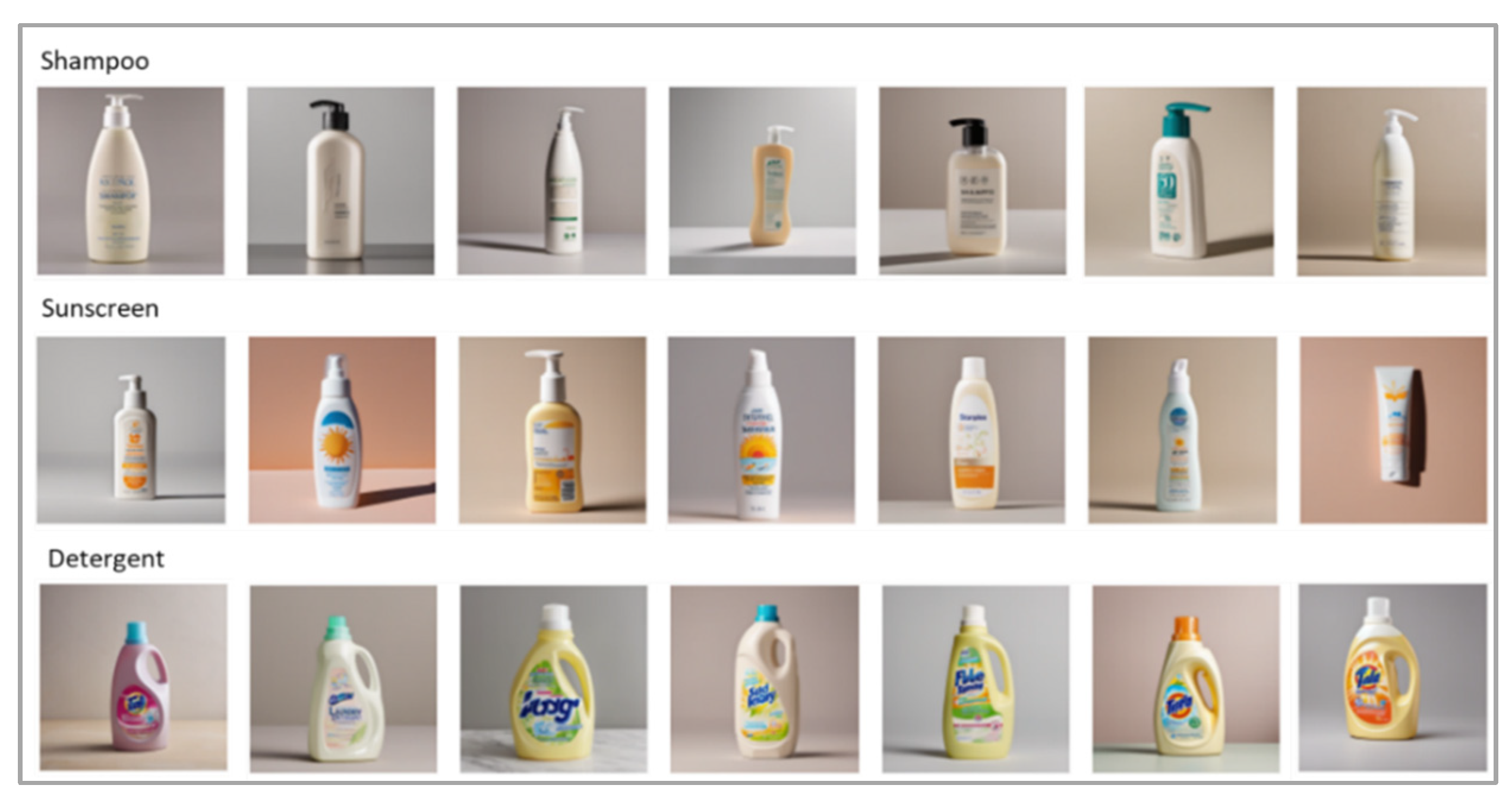
The products presented in the webshop were designed to look like real-world products while having no references to existing products to reduce participant expectations or preferences, which may have biased product choices. Three common household product categories that were not considered to be gender-specific, i.e., shampoo, sunscreen, and detergent, with seven images in each category, were created using AI software to generate product images and descriptions (see Figure 2). The GPT3.5 model was used to generate suitable product descriptions, and the Stable Diffusion XL model was used to generate product images. A Python script was written to automate this process. The generated products were created such that they did not differ substantially in color, shape, or size to minimize the influence of product design features on product selection. In addition to these critical household products, 34 filler products from other product categories (e.g., clothes, appliances, etc.) that were not meant to be selected for purchase were also generated and added to the product site, for a total of 55 images. The presence of filler items was meant to mask or distract from the demand characteristics of the task and create a realistic looking webshop environment, which typically has a greater number of product choices.
Figure 2. Shown are images of the three product categories (shampoo, sunscreen, detergent) with seven products per category that were used on the webshop. Products were shown with and without existing sustainability labels on the webshop (labels not shown here).
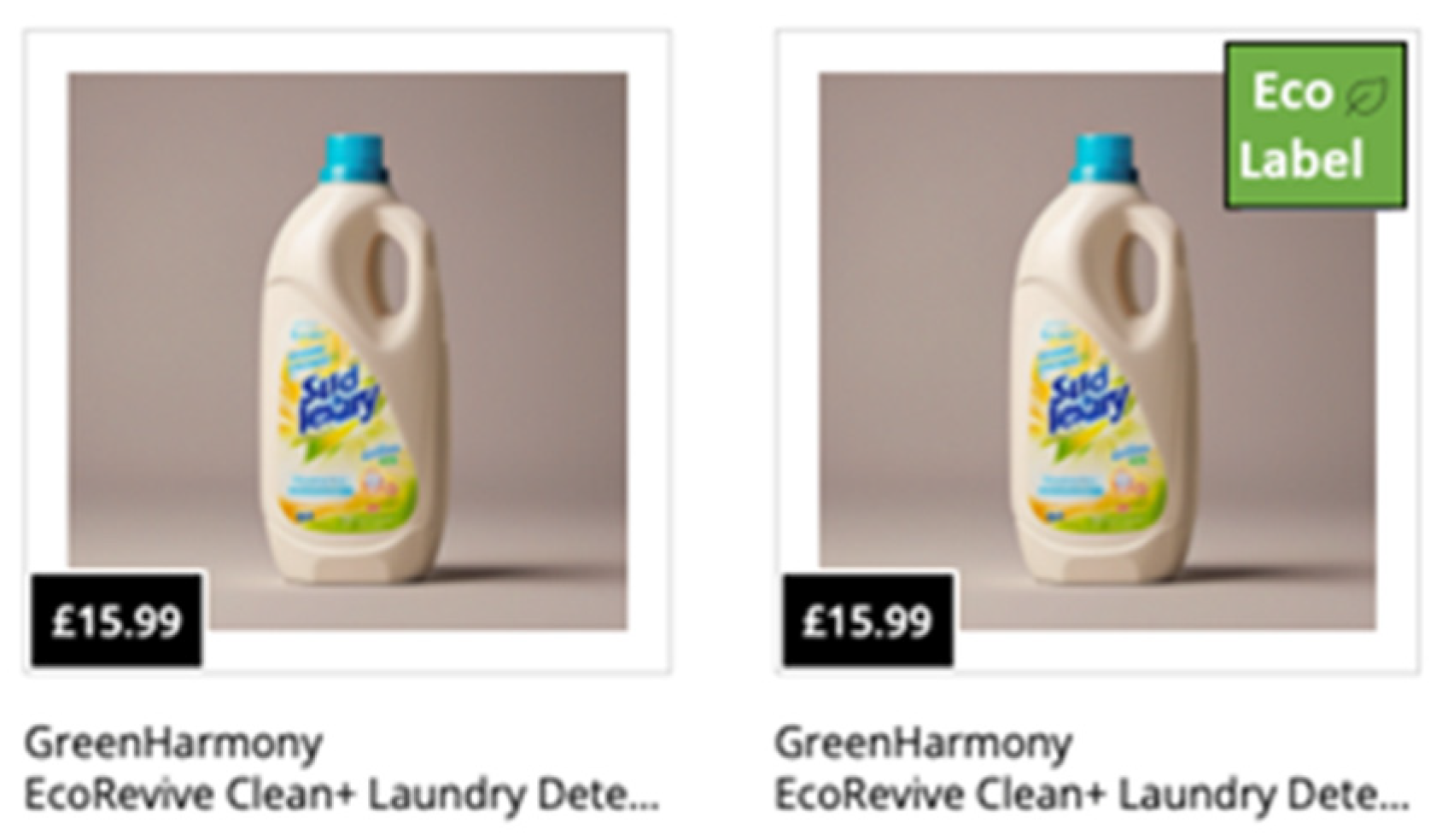
Once a participant clicked on a product, the product description appeared, which could be closed again, just like on a real website. Figure 3 provides an illustration of the same product (laundry detergent) with and without a label in the respective webshop designs. For a non-sustainable product, an example product description was “Discover SunBlock ProShield by SunArmor, your ultimate defense against the sun’s harmful rays. This high-performance sunscreen is designed to keep your skin protected, nourished, and glowing all day long”. As an example for a sustainable product, the product description was “Discover SunPure EcoShield by NatureGuard, your eco-friendly companion for guilt-free sun protection. This revolutionary sunscreen is thoughtfully crafted to not only shield your skin but also to take care of the environment we cherish”.
Figure 3. Illustration of the same product without and with sustainability label. An appropriate, existing product-relevant ecolabel replaced the one shown in the figure.
Although price markups for sustainable products can range between 20% and 220% [53] compared to other products, a more conservative markup was chosen in the current study to avoid crossing the price threshold. The average markup between non-sustainable and sustainable products was set at 25%.
As most participants were expected to be based in the EU, the experiment contained regulated EU sustainability labels. For electronics, this is the EU Energy Label [54]. For all other products, this is the EU Ecolabel [31]. The EU Ecolabel is also one of the most popular ecolabels in the EU [55]. For the experimental condition using sustainability labels, the label was displayed on the product page and absent in the no-label condition.

3.3. Questionnaires

Two questionnaires were used in the study and were presented in the English language. The first, run at the start of the study, was a brief demographic online survey, asking for information on participant age, gender, education, location, and frequency of online shopping to ascertain participant characteristics but also to establish whether, in principle, participants could have been exposed to sustainability labels. The second online survey consisted of three questions and explored participants’ views on sustainability labels and purchasing. It was administered after the completed experiment and asked participants about their familiarity with sustainability labels (“How familiar are you with sustainability labels and classifications?”, with the options very unfamiliar, unfamiliar, somewhat familiar, familiar, very familiar), their willingness to pay extra for sustainable products (“How much are you willing to pay extra for a sustainable product?”, with options not at all willing to pay extra, somewhat willing to pay extra, very willing to pay extra), and how often their purchasing behavior may be influenced by sustainability (“How often do sustainability labels and classifications influence your purchasing behaviour?”, with options never, rarely, sometimes, often, always). Participants could also use a text field to provide any comments on the experiment.

3.4. Procedure and Scenarios

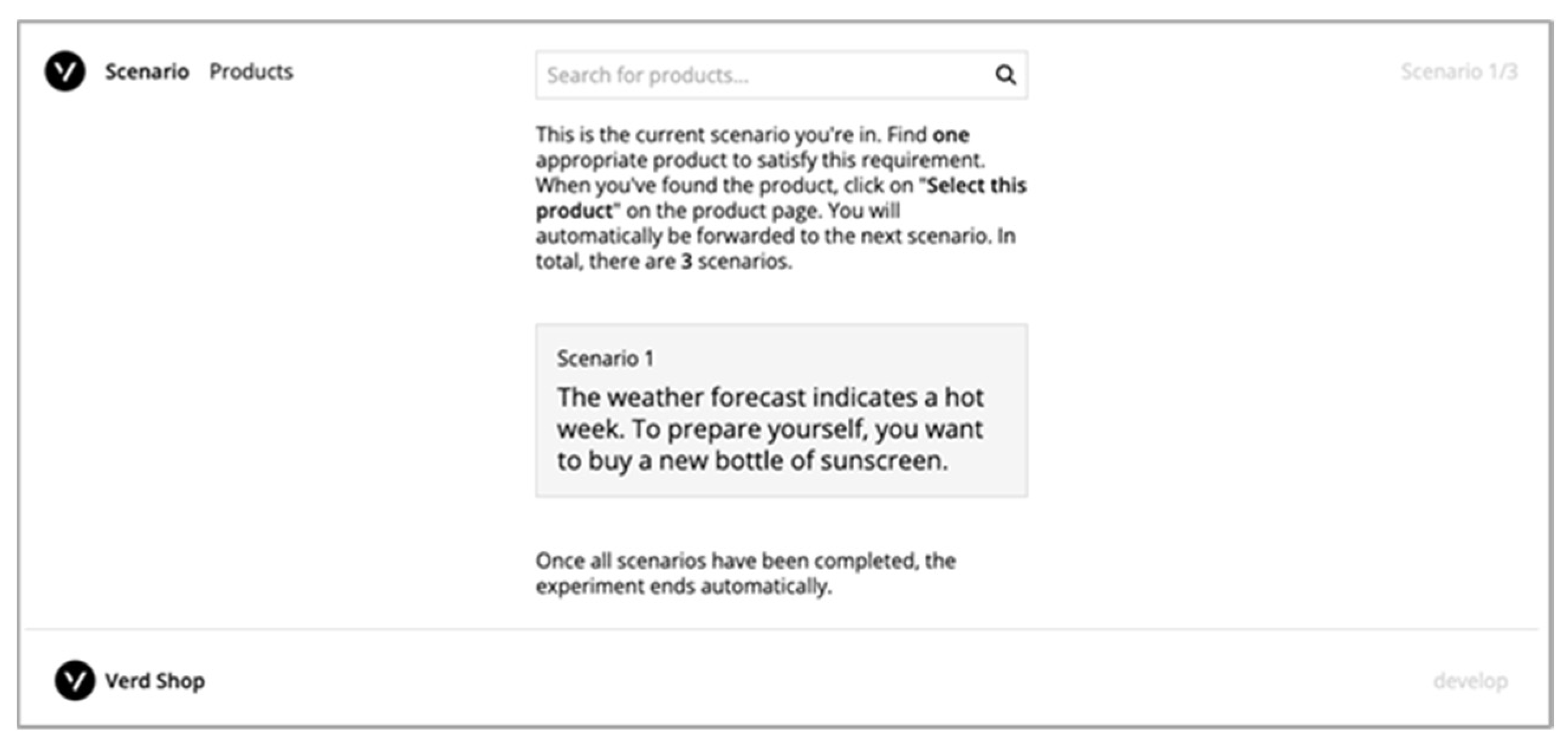
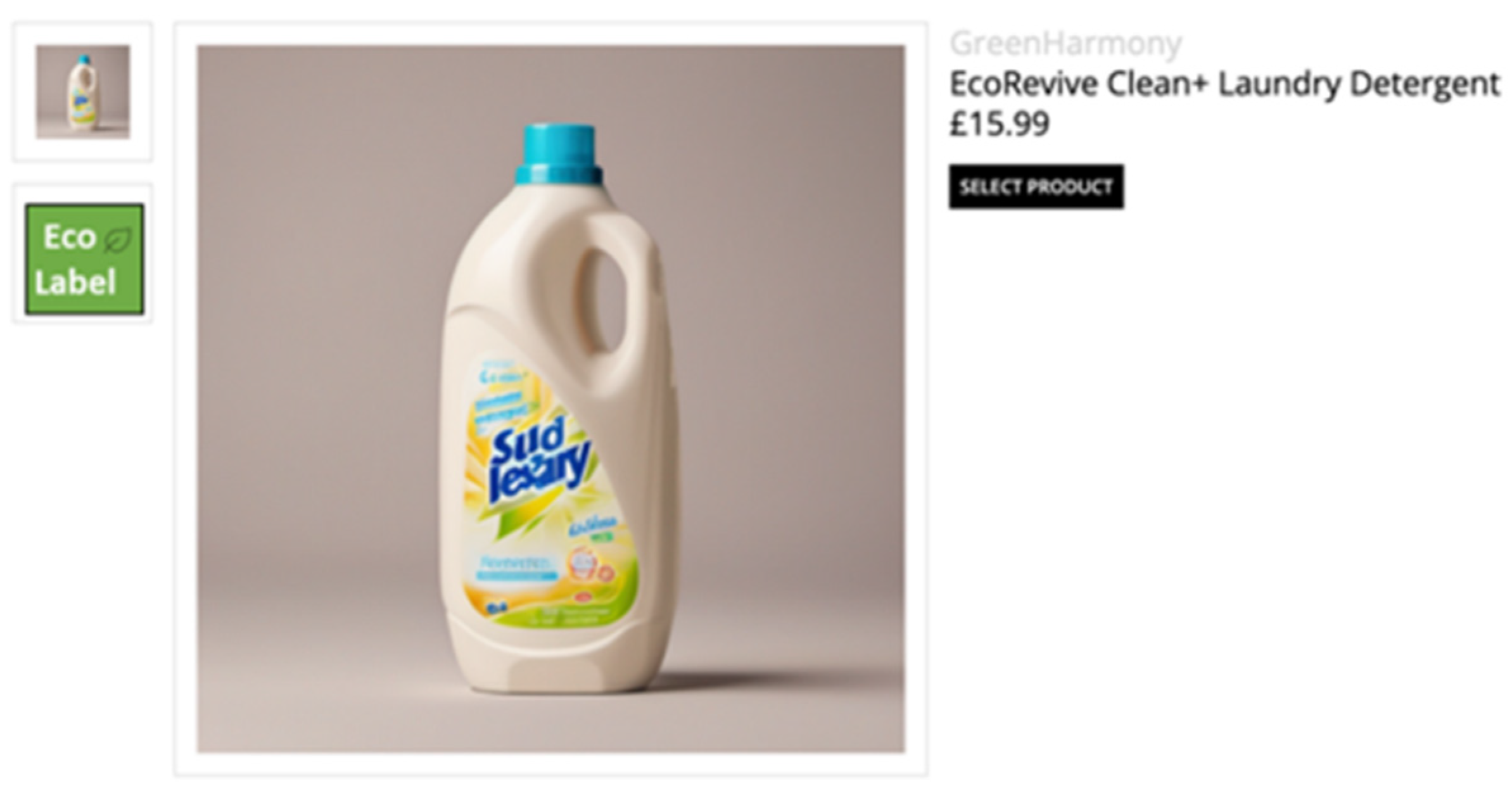
A pilot before the study proper was conducted with four participants to ensure that the instructions, flow, and wording of the experiment were clear. The experiment was run online and gave participants the choice of device. Participants were informed that the study was ‘about digital storefronts’. After reading the information and providing informed consent, the study began. First, participants provided demographic information, after which they were shown one of three scenarios, providing them with guidance on which product type to select on the webshop (Figure 4). In addition to browsing, it was possible to use the search bar to find products or view the product list page. Once a product was selected by clicking the ‘select product’ button (Figure 5), the participant was redirected to the scenario screen with information about the next purchase scenario. Table 1 contains the scenarios for each product. Every webshop condition contained seven possible product choices, two of which were described as sustainable in the product description.
Figure 4. Illustration of how participants were given guidance on which product to shop for on the webshop.
Figure 5. Illustration of completing a scenario by clicking on the ‘select product’ button. An appropriate, existing product-relevant ecolabel replaced the one shown in the figure.
Table 1. Purchasing scenarios for the three product categories.
Each scenario was shown to the participant in sequence, one at a time, in the same order (sunscreen, laundry detergent, shampoo). The next scenario was shown after the participant completed product selection for a current scenario. When the third product was selected and all scenarios had been completed, the experiment ended with the online survey on user views on sustainability and the participant debrief. In each scenario, the entire product catalogue was available on the site, with initially 55 product images, which was then reduced when participants searched for the relevant item (consistent with a realistic webshop). The variable of interest was the number of sustainable products that participants selected, which could range from zero to three, in the latter case, if sustainable products were bought in all scenarios. Thus, participants in each group were categorized into buying zero, one, two, or three sustainable products.

4. Results

4.1. Participants

Of the 68 participants that took part in the study, five were excluded from further analysis. As participants were free to select any products from the webshop environment, these could also have been products that were not asked for in the scenario. Three participants selected product types that did not align with the scenario and were excluded. Additionally, two participants stated in the optional comment field that they hypothesized the objective of the study was to explore sustainability labels while doing the experiment. To avoid any biases or expectations from influencing the analysis, their data were also excluded. The analysis was conducted with 63 participants, 32 participants in the condition without the presentation of sustainability labels and 31 participants in the condition with the presentation of sustainability labels. Table 2 provides an overview of participant demographics.
Table 2. Participant demographics.
Most of the participants reported to be between 18 and 34 years of age, with the two pooled age groups making up 65% of all participants. Most participants were male (approximately 60%) and 32% of the participants were female. Participants had a wide range of educational backgrounds, with the largest group (37%) having a Bachelor’s degree.
Almost half of the participants (40%) had a background in a computing-related area. Regarding location, the majority of participants were located in Europe (73%), and 51% were based in the European Union. Thus, the chosen sustainability labels for the experiment could have been familiar to participants. Most participants indicated that they purchased products online less than once a month (38%), while two participants (3%) indicated that they purchased products more than 11 times per month.

4.2. Product Selections

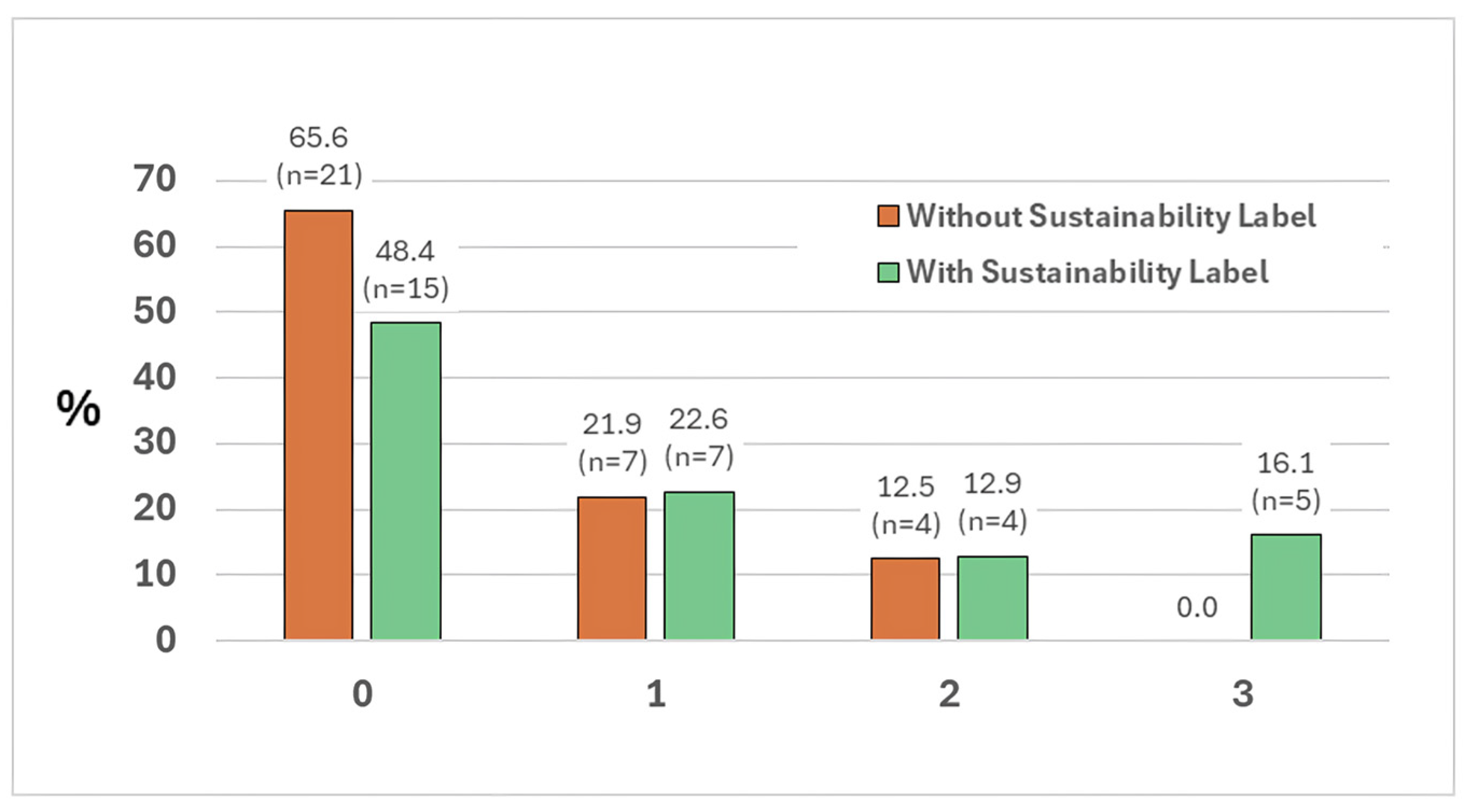
To ascertain whether the presence of sustainability labels had any effect on product choices, a 2 (sustainability label vs. no sustainability label) × 4 (zero, one, two, three selected sustainable products) chi-square test was conducted. Each cell contained the number of participants that selected zero, one, two, or three sustainable products per design group (with and without sustainability product labels). As more than 20% of cells had an expected count of less than 5, the assumption for this 2 × 4 chi-square test was violated and the likelihood ratio [56] was chosen as the appropriate statistic. There was a significant association between the presentation of sustainability labels and the number of selected sustainable products LR = 7.920 (3, n = 63), p = 0.048, revealing a medium strength of the association v = 0.308. The difference for one and two selected products, respectively, between webshop designs appears negligible. However, it appears that the number of participants that selected zero sustainable products was lower in the design condition where product images were presented with a sustainability label (48.4%, n = 15) compared to the design condition where no label was presented (65.6%, n = 21) (Figure 6). In the latter condition, no participants selected three sustainable products, in contrast to the design with sustainability labels presented, in which five participants (16.1%) selected three sustainable products across scenarios. Thus, we may infer that the presence of sustainability labels was associated with a higher number of sustainable products being selected.
Figure 6. Percentage of participants who selected zero, one, two, or three sustainable products for the different webshop conditions. Numbers in parentheses indicate raw numbers.

4.3. Sustainable Labels and Purchasing Decisions

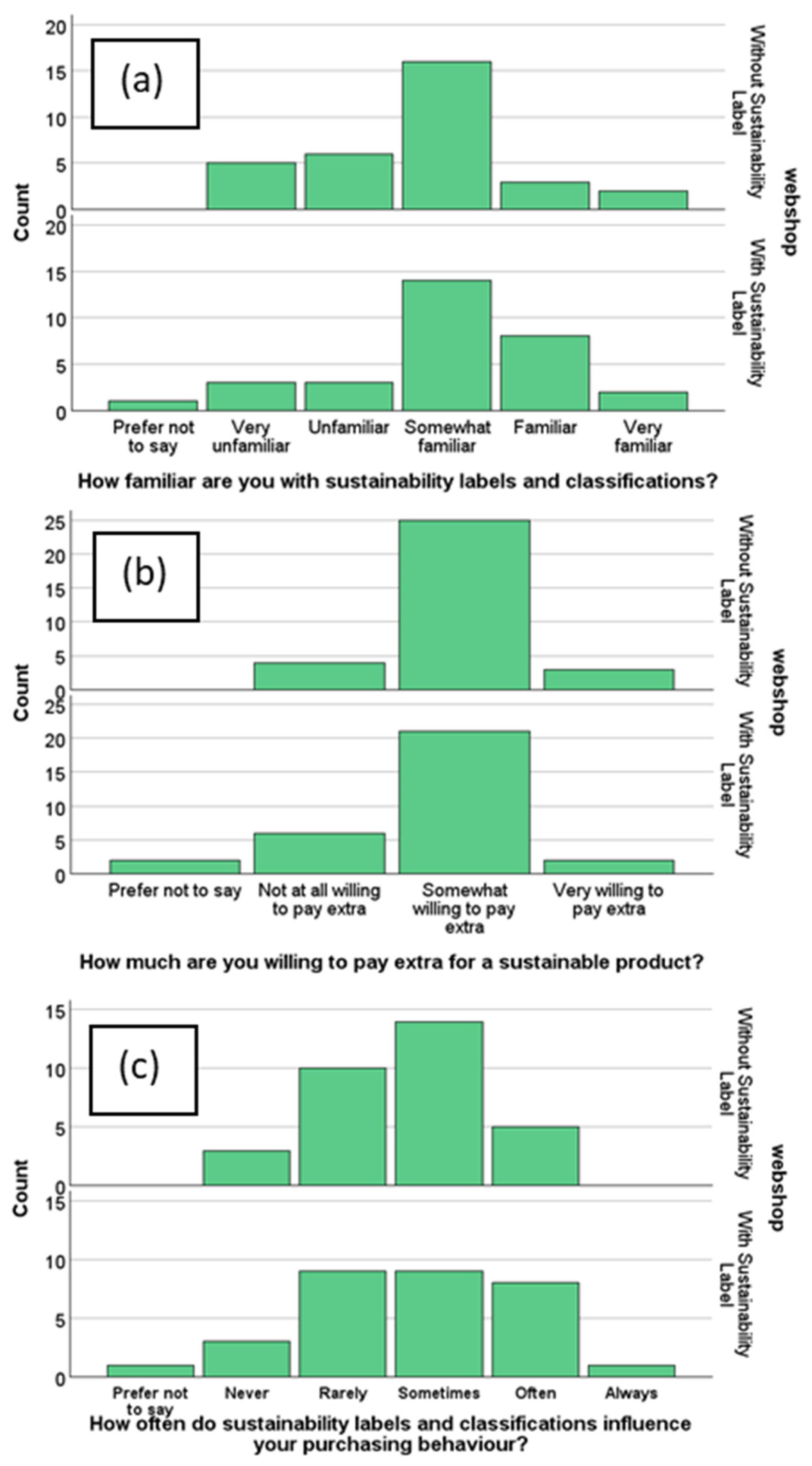
In order to put the findings into context, it is important to establish how familiar participants were with sustainability labels and how they viewed sustainable products in relation to purchasing decisions. Figure 7a (top and bottom panels) shows that the most frequent response in relation to sustainability labels and classifications was ‘somewhat familiar’ for both webshop groups. Most participants in each group were ‘somewhat willing’ to pay extra (Figure 7b, top and bottom panels) for sustainable products. The responses in relation to how often sustainability labels and classifications influence purchasing behavior were varied, with the most frequent response in the no-label design group being ‘sometimes’ (Figure 7c, top panel); however, the data were more spread out in the group that saw the sustainability labels (Figure 7c, bottom panel). Roughly the same number of participants in each webshop design group indicated to be at least sometimes influenced by labels and classifications (Figure 7c, top and bottom panels).
Figure 7. Participants’ familiarity with sustainability labels (a), their willingness to pay extra for sustainable products (b), and reported influence of sustainability labels on their purchasing behavior (c) for each webshop condition (without sustainability labels (top panel) and with sustainability labels (bottom panel)).

5. Discussion

This study was set within the context of the growing importance of sustainability initiatives across the globe, with a focus on one ‘pillar’ of sustainability, i.e., environmental sustainability [26]. We specifically explored whether the presence or absence of sustainability labels next to product images was associated with product selections on a semi-realistic, simulated webshop. This hypothesis was based on the notions that the visual presence of sustainability labels makes these products salient [16] to the consumer, places green product selection (social norm) under the control of the consumer (theory of planned behavior), and/or reflects the aspect of endorsement of products. The intention of the study was not to contrast these frameworks against each other but to contextualize why ecolabels may be effective in influencing consumer selections in green marketing. It was presumed that the experimental setup resembled a natural shopping experience via the use of responsive design and the possibility to browse and select products on a webshop similar to a real-life online shopping experience. This setup contrasts with typical studies in this area that employ a more controlled choice design setting or surveys and addresses a dearth of this methodology in the field. The findings showed that there was a significant association between the presence or absence of sustainability labels and the selection of sustainable products, in line with the hypothesized outcome. This association appeared to be due to participants choosing more sustainable products when a sustainability label was added to the product images, compared to the condition in which the label was not presented (Figure 6). This is a promising finding, as the freedom participants had to browse the webshop did not prevent them from making (un-/prompted) sustainable product choices, thus reducing the influence of a potential social desirability bias associated with participants’ responses [14] or demand characteristics inferred from the setup. This is reassuring, given that the findings are consistent with those of others, using more controlled, choice design-based studies (e.g., [51,52]) than in the current design. The findings thus contribute to the broader, increasing knowledge base of sustainability research, suggesting the validity of the chosen approach. From a design and development perspective, a more natural test environment can give researchers confidence that the data are an adequate reflection of real-life behavior (for a discussion see [57]), which is informative (and desirable) for companies wanting to promote green products online.
It is important to consider participant demographics and responses to sustainability questions to build a comprehensive picture of the findings. In the study, about half of the participants saw sustainability labels next to products whereas the other half did not. For this label, a Type I ecolabel was used, as these labels are given by third parties after a rigorous life cycle check of the product. The ecolabel used was the EU Ecolabel, as this is one of the most popular ecolabels in the European Union [55], and most participants were expected to be based in this area. This turned out to be the case, with the majority of participants being located in Europe. Although the United Kingdom is not part of the European Union, the EU Ecolabel was used in this area until 2020 [58]. Most participants reported to be at least somewhat familiar with labels and classifications in both webshop conditions (Figure 7a), which contrasts with previous research showing that most ecolabels were not widely recognized [33].
The majority of participants in the current study had a Bachelor’s degree. A study by Naz et al. [59] showed that, while university students expressed concern towards environmental protection, this mindset was not reflected in their behavior of purchasing green products. If the price was too high, then there was less motivation to buy green products compared to a cheaper alternative [59]. In the current study, the price increase for sustainable products was only 25%. In real life, the price increase of sustainable products over their non-sustainable counterparts is, on average, 75% to 85% [53] (range 20–220%) and the higher price tag associated with sustainable products is a recognized barrier to sustainable product consumption [17]. Thus, the low markup may have swayed participants to more readily select sustainable products. However, given that the prices were the same in both label-absent and -present conditions, with identical product descriptions (only the absence or presence of the sustainability label next to the product distinguished the two webshop conditions), it could be argued that the presence of the sustainability labels themselves had an effect on product selection, e.g., by making these products salient. The responses of participants towards sustainable product consumption were positive, as most participants indicated to be at least somewhat willing to pay extra for sustainable products (Figure 7b). Given that most participants had a Bachelor’s degree or higher it could be argued that price was not so much of an obstacle in selecting sustainable products for the group in the current study, perhaps due to adequate income.
Regarding how often participants indicated their purchasing behavior was influenced by sustainability labels and classifications, both webshop groups had similar responses, which were varied across the response alternatives. More than 50% of participants in each webshop group indicated being at least sometimes influenced by sustainability labels and classifications (Figure 7c, pooled across ‘sometimes’, ‘often’, ‘always’ response categories). Again, given that the sample was biased towards younger age groups, this finding may resonate with research that reports young people considering sustainability an important subject in our society [14,60]. It is noteworthy that an effect of sustainability labels on product selection was found, given that both groups (with and without label) seemed to indicate similar views on the perceived influence of sustainability labels and classifications.
While the findings of this study are promising, contributing to the wider knowledge of sustainable product promotion in e-commerce, there are of course limitations associated with the chosen research approach. With realistic experimental setups comes a lack of control, such as participants not complying with instructions, or randomly selecting products, or having preconceived notions regarding the purpose of the study, which may dilute the data. However, data from participants that did not comply with instructions or that explicitly noted the purpose of the study were excluded to avoid pre-set biases participants may have had regarding product selections. We can thus have confidence that the findings have a degree of ecological validity. Nevertheless, as neither this current study, nor other more controlled studies, required participants to actually buy a product, we cannot conclude with certainty that labels are indeed effective in promoting sustainable product purchases. A more conclusive approach to explore this aspect may be data analytics, although such an approach may suffer from a lack of causal inference as many variables in addition to the ones of interest are typically present when consumer behavior is analyzed based on available, real-life data. The intention–behavior gap is a widely demonstrated inconsistency between intention and behavior [61], and especially in green consumption [46]. However, research has also shown that this gap may be bridged via the moderating factor of greater availability of green products [46].
While the majority of participants came from younger age groups, it would have been useful to have explored older age groups’ choices in relation to sustainable products in the current study, as research has shown that older people also value sustainability [62]. Younger and middle-aged users represent the largest proportion of online shoppers, which is perhaps reflected in our participant pool, but the proportion of older users using online services is growing [63,64]. However, a global study [65] highlighted that sustainability considerations may affect purchase decisions differently across generations, with 33% of millennials choosing a sustainable alternative, when available, compared to between 24–29% of older generations making such a choice. All age groups were represented in the current study but very unevenly, with a large proportion of participants under the age of 35 years. While the association between the label condition and selecting sustainable products had a medium strength given the sample size, it would still have been worthwhile to have a more varied participant pool to increase the generalizability of interpretations to various age groups.
Related to the lack of diversity of age groups may be the existence of preconceived notions that younger consumers may hold in relation to greenwashing. The webshop provided no information about the sustainability labels themselves when they were presented next to the product. Research has shown that younger individuals are more skeptical about sustainable product labels in fear of greenwashing compared to older adults [66]. Thus, it cannot be excluded that this effect may have influenced the findings. In hindsight, it may have been useful to have provided users with information about acceptable ecolabels, but this may have raised explicit expectations on the part of the participants in relation to the purpose of the study and we sought to avoid such expectations.
Nevertheless, going forward, future studies on promoting green products via e-commerce should perhaps provide education in the form of extra information on product pages regarding certification of products. Advertising campaigns about certifications and how to detect greenwashing may be beneficial to inform consumer decision making. Effective education about sustainability labels may also encourage more companies to apply for sustainability labels [67], thereby creating a positive feedback loop. Regarding consumers, knowledge of sustainability itself is an important factor to promote sustainable product consumption; for instance, Zoomers perceive sustainability mostly focusing on the environmental ‘pillar’, while knowledge of all facets of sustainability and intention to purchase green items were associated [14]. Thus, more education of consumers in relation to sustainability may also be an avenue to promote sustainable purchases.
The default effect [48] reflects our tendency to choose what has been pre-selected (as a default) when making decisions. Making sustainable, online products more salient or attention-catching, or indeed pre-selecting these products, is a provocative approach that is not without challenges regarding fair e-commerce. The implementation of such a design itself ventures into manipulative or deceptive (dark) pattern territory [68], which, apart from ethical issues, also has been flagged up by the European Commission [35] as unfair commercial practice regarding choice architecture design. At the same time, drawing attention to the concept of sustainability via design may induce consumers to at least consider the selection of sustainable products, especially if the authenticity of a sustainability label can be recognized. From a consumer perspective, if sustainability is seen as important by a large proportion of the population, purchasing sustainable products may increase an individual’s perceived social worth [69], especially for consumer groups that are not already convinced of the importance of sustainable product consumption. According to the theory of planned behavior [40], the influence of the subjective norm could then also contribute to converting sustainable product purchase intentions to actual sustainable purchases, especially if it is under a consumer’s control to make this choice. Research has also considered the role of social media—and associated recognized norms—in promoting sustainable product choices [42], which suggests that the role of social influence may need to be considered by businesses. Consistent with this, it has also been suggested [70] that companies have to change their practices, including marketing, if sustainability is to be achieved. Retailers may adopt green marketing strategies to increase sales and credibility, while still incorporating transparency and honest communication of product information [71,72]. As has been noted [2], e-commerce can play a major role in facilitating the consumption of sustainable and ethically sourced products.
In conclusion, the proliferation of online shopping presents an effective format to reach a vast audience in the endeavor to promote the purchase of sustainable or ‘green’ products that will benefit the environment in the long run. While anthropogenic climate change is a worldwide threat it would be naïve to presume that product design alone can combat the challenges we face as people across the globe. However, the use of design to promote sustainable initiatives, combined with the vast reach that online commerce represents, should seed a consumer mindset that, albeit gradually, may become ever more cognizant of the opportunities and control we have as consumers to engage in sustainable and ethical life choices.

Author Contributions

Conceptualization, L.H., A.S. and L.A.S.; methodology, L.H., A.S. and L.A.S.; software, L.H.; validation, LH., A.S. and L.A.S.; formal analysis, L.H., A.S. and L.A.S.; investigation, L.H., A.S. and L.A.S.; resources, L.H.; data curation, L.H., A.S. and L.A.S.; writing—original draft preparation, L.H. and A.S.; writing—review and editing, L.H., A.S. and L.A.S.; visualization, L.H. and A.S.; supervision, L.H., A.S. and L.A.S.; project administration, L.H., A.S. and L.A.S. All authors have read and agreed to the published version of the manuscript.

Funding

This research received no external funding.

Institutional Review Board Statement

The study was approved by the Institutional Ethics Committee of Abertay University (EMS7274, 13 June 2023).

Data Availability Statement

We can supply a data link on request.

Acknowledgments

The authors wish to thank the participants that took the time to take part in this study. We also thank Ahmed Abdullah for insightful discussions on the use of chi-square tests.

Conflicts of Interest

The authors declare no conflicts of interest.

References

  1. Morgan Stanley 2022. Here’s Why E-Commerce Growth Can Stay Stronger for Longer. Available online: https://www.morganstanley.com/ideas/global-ecommerce-growth-forecast-2022 (accessed on 10 April 2024).
  2. Roszko-Wójtowicz, E.; Deep Sharma, G.; Dańska-Borsiak, B.; Grzelak, M.M. Innovation-driven e-Commerce growth in the EU: An empirical study of the propensity for online purchases and sustainable consumption. Sustainability 2024, 16, 1563. [Google Scholar] [CrossRef]
  3. Eurostat. E-Commerce Statistics for Individuals. Statistics Explained. 2023. Available online: https://ec.europa.eu/eurostat/statistics-explained/SEPDF/cache/46776.pdf (accessed on 10 April 2024).
  4. Eurostat. E-Commerce Statistics. Statistics Explained. 2023. Available online: https://ec.europa.eu/eurostat/statistics-explained/SEPDF/cache/14386.pdf (accessed on 10 April 2024).
  5. Tiwari, S.; Singh, P. Environmental impacts of e-commerce. In Proceedings of the International Conference on Environment Science and Engineering, Bali, Indonesia, 1–3 April 2011; Volume 8, pp. 202–207. [Google Scholar]
  6. Manerba, D.; Mansini, R.; Zanotti, R. Attended home delivery: Reducing last-mile environmental impact by changing customer habits. IFAC-PapersOnLine 2018, 51, 55–60. [Google Scholar] [CrossRef]
  7. Van Loon, P.; Deketele, L.; Dewaele, J.; McKinnon, A.; Rutherford, C. A comparative analysis of carbon emissions from online retailing of fast moving consumer goods. J. Clean. Prod. 2015, 106, 478–486. [Google Scholar] [CrossRef]
  8. Visser, J.; Nemoto, T.; Browne, M. Home delivery and the impacts on urban freight transport: A review. Procedia Soc. Behav. Sci. 2014, 125, 15–27. [Google Scholar] [CrossRef]
  9. Statista. 2022. Available online: https://www.statista.com/statistics/1364119/consumers-opinions-on-sustainability-in-e-commerce-by-country/ (accessed on 10 April 2024).
  10. Statista. 2023. Available online: https://www.statista.com/statistics/1285023/sustainable-online-shopping-by-country/ (accessed on 10 April 2024).
  11. United Nations. 2023. Available online: https://www.un.org/sustainabledevelopment/ (accessed on 10 April 2024).
  12. Casalegno, C.; Candelo, E.; Santoro, G. Exploring the antecedents of green and sustainable purchase behaviour: A comparison among different generations. Psychol. Mark. 2022, 39, 1007–1021. [Google Scholar] [CrossRef]
  13. Ham, C.D.; Chung, U.C.; Kim, W.J.; Lee, S.Y.; Oh, S.H. Greener than others? Exploring generational differences in green purchase intent. Int. J. Mark. Res. 2022, 64, 376–396. [Google Scholar] [CrossRef]
  14. Damico, A.B.; Vecchio, Y.; Masi, M.; Di Pasquale, J. Perceptions and attitudes of Argentine Zoomers towards sustainable food production. Foods 2023, 12, 1019. [Google Scholar] [CrossRef] [PubMed]
  15. Darley, W.K.; Blankson, C.; Luethge, D.J. Toward an integrated framework for online consumer behavior and decision making process: A review. Psych. Market. 2010, 27, 94–116. [Google Scholar] [CrossRef]
  16. Modi, N.; Singh, J. Understanding online consumer behavior at e-commerce portals using eye-gaze tracking. Int. J. Hum.–Comp. Int. 2023, 39, 721–742. [Google Scholar] [CrossRef]
  17. Kemppainen, T.; Frank, L.; Makkonen, M.; Hyvönen, O.I. Barriers to responsible consumption in e-commerce: Evidence from fashion shoppers. In Bled eConference; University of Maribor: Maribor, Slovenia, 2021. [Google Scholar] [CrossRef]
  18. Majer, J.M.; Henscher, H.A.; Reuber, P.; Fischer-Kreer, D.; Fischer, D. The effects of visual sustainability labels on consumer perception and behavior: A systematic review of the empirical literature. Sust. Prod. Consump. 2022, 33, 1–14. [Google Scholar] [CrossRef]
  19. Osborne-Crowley, K. Social cognition in the real world: Reconnecting the study of social cognition with social reality. Rev. Gen. Psychol. 2020, 24, 144–158. [Google Scholar] [CrossRef]
  20. United Nations General Assembly. Transforming our World: The 2030 Agenda for Sustainable Development. 2015. Available online: https://sdgs.un.org/2030agenda (accessed on 10 April 2024).
  21. European Commission, Directorate-General for Communication. Circular Economy Action Plan—For a Cleaner and More Competitive Europe; Publications Office of the European Union: Luxembourg, 2020. [Google Scholar] [CrossRef]
  22. European Commission. Circular Economy Action Plan. 2023. Available online: https://environment.ec.europa.eu/strategy/circular-economy-action-plan_en (accessed on 10 April 2024).
  23. Wolf, M.J.; Emerson, J.W.; Esty, D.C.; de Sherbinin, A.; Wendling, Z.A. Environmental Performance Index; Yale Center for Environmental Law & Policy: New Haven, CT, USA, 2022; Available online: https://epi.yale.edu/epi-results/2022/component/epi (accessed on 10 April 2024).
  24. Brundtland, G.H. Report of the World Commission on Environment and Development: Our Common Future. 1987. Available online: https://www.are.admin.ch/are/en/home/media/publications/sustainable-development/brundtland-report.html (accessed on 10 April 2024).
  25. Haryanti, T.; Subriadi, A.P. E-commerce acceptance in the dimension of sustainability. J. Model. Manag. 2022, 17, 715–745. [Google Scholar] [CrossRef]
  26. Purvis, B.; Mao, Y.; Robinson, D. Three pillars of sustainability: In search of conceptual origins. Sustain. Sci. 2019, 14, 681–695. [Google Scholar] [CrossRef]
  27. Bocken, N.M.; De Pauw, I.; Bakker, C.; Van Der Grinten, B. Product design and business model strategies for a circular economy. J. Ind. Prod. Eng. 2016, 33, 308–320. [Google Scholar] [CrossRef]
  28. Rebitzer, G.; Ekvall, T.; Frischknecht, R.; Hunkeler, D.; Norris, G.; Rydberg, T.; Schmidt, W.P.; Suh, S.; Weidema, B.P.; Pennington, D.W. Life cycle assessment Part 1: Framework, goal and scope definition, inventory analysis, and applications. Environ. Int. 2004, 30, 701–720. [Google Scholar] [CrossRef] [PubMed]
  29. HOINKA. Blue Angel Assesses Risks to the Local Environment. 22 July 2016. Available online: https://www.greenbuildingproducts.eu/blue-angel-assesses-risks-to-the-local-environment/?lang=en (accessed on 10 April 2024).
  30. Global Ecolabelling Network. The Blue Angel Eco-Label (German Federal Environment Agency). 21 July 2023. Available online: https://globalecolabelling.net/organisation/the-blue-angel-eco-label/ (accessed on 10 April 2024).
  31. European Commission. EU Ecolabel. 2020. Available online: https://ec.europa.eu/environment/ecolabel/ (accessed on 10 April 2024).
  32. European Commission. EU Ecolabel Facts and Figures. March 2023. Available online: https://environment.ec.europa.eu/topics/circular-economy/eu-ecolabel-home/business/ecolabel-facts-and-figures_en (accessed on 10 April 2024).
  33. Kabaja, B.; Wojnarowska, M.; Cesarani, M.C.; Varese, E. Recognizability of ecolabels on E-commerce websites: The case for younger consumers in Poland. Sustainability 2022, 14, 5351. [Google Scholar] [CrossRef]
  34. Galarraga Gallastegui, I. The use of eco-labels: A review of the literature. Europ. Environ. 2002, 12, 316–331. [Google Scholar] [CrossRef]
  35. European Commission. Unfair Commercial Practices Directive. 2019. Available online: https://commission.europa.eu/law/law-topic/consumer-protection-law/unfair-commercial-practices-law/unfair-commercial-practices-directive_en (accessed on 10 April 2024).
  36. Nuttavuthisit, K.; Thøgersen, J. The importance of consumer trust for the emergence of a market for green products: The case of organic food. J. Bus. Ethics 2017, 140, 323–337. [Google Scholar] [CrossRef]
  37. Gorton, M.; Tocco, B.; Yeh, C.H.; Hartmann, M. What determines consumers’ use of eco-labels? Taking a close look at label trust. Ecol. Econ. 2021, 189, 107173. [Google Scholar] [CrossRef]
  38. Grant, J. The Green Marketing Manifesto; John Wiley & Sons Ltd.: Hoboken, NJ, USA, 2012. [Google Scholar]
  39. Štofejová, L.; Kráľ, Š.; Fedorko, R.; Bačík, R.; Tomášová, M. Sustainability and consumer behavior in electronic commerce. Sustainability 2023, 15, 15902. [Google Scholar] [CrossRef]
  40. Ajzen, I. The theory of planned behavior. Organ. Behav. Hum. Decis. Process 1991, 50, 179–211. [Google Scholar] [CrossRef]
  41. Kumar, P.; Ghodeswar, B.M. Factors affecting consumers’ green product purchase decisions. Market. Int. Plan. 2015, 33, 330–347. [Google Scholar] [CrossRef]
  42. Nekmahmud, M.; Naz, F.; Ramkissoon, H.; Fekete-Farkas, M. Transforming consumers’ intention to purchase green products: Role of social media. Technol. Forecas. Soc. Change 2022, 185, 122067. [Google Scholar] [CrossRef]
  43. Haws, K.L.; Winterich, K.P.; Naylor, R.W. Seeing the world through GREEN-tinted glasses: Green consumption values and responses to environmentally friendly products. J. Cons. Psych. 2014, 24, 336–354. [Google Scholar] [CrossRef]
  44. Ovaska, M.; Hallikainen, H.; Laukkanen, T. How green consumption values affect the intention-behavior relationship in C2C e-commerce. In Proceedings of the 57th Hawaii International Conference on System Sciences, Honolulu, HI, USA, 3–6 January 2024. [Google Scholar]
  45. Do Paco, A.; Shiel, C.; Alves, H. A new model for testing green consumer behaviour. J. Clean. Prod. 2019, 207, 998–1006. [Google Scholar] [CrossRef]
  46. Nguyen, H.V.; Nguyen, C.H.; Hoang, T.T.B. Green consumption: Closing the intention-behavior gap. Sust. Dev. 2019, 27, 118–129. [Google Scholar] [CrossRef]
  47. Beldad, A.; Hegner, S. Determinants of fair trade product purchase intention of Dutch consumers according to the extended Theory of Planned Behaviour: The moderating role of gender. J. Consum. Policy 2018, 41, 191–210. [Google Scholar] [CrossRef]
  48. Altman, M. (Ed.) Handbook of Behavioural Economics and Smart Decision-Making: Rational Decision-Making within the Bounds of Reason; Edward Elgar Publishing: Cheltenham, UK, 2017. [Google Scholar] [CrossRef]
  49. Dinner, I.; Johnson, E.J.; Goldstein, D.G.; Liu, K. Partitioning default effects: Why people choose not to choose. J. Exp. Psychol. Appl. 2011, 17, 332–341. [Google Scholar] [CrossRef] [PubMed]
  50. Jachimowicz, J.M.; Duncan, S.; Weber, E.U.; Johnson, E.J. When and why defaults influence decisions: A meta-analysis of default effects. Behav. Publ. Policy 2019, 3, 159–186. [Google Scholar] [CrossRef]
  51. Neumayr, L.; Moosauer, C. How to induce sales of sustainable and organic food: The case of a traffic light eco-label in online grocery shopping. J. Clean. Prod. 2021, 328, 129584. [Google Scholar] [CrossRef]
  52. Feuß, S.; Fischer-Kreer, D.; Majer, J.; Kemper, J.; Brettel, M. The interplay of eco-labels and price cues: Empirical evidence from a large-scale field experiment in an online fashion store. J. Clean. Prod. 2022, 373, 133707. [Google Scholar] [CrossRef]
  53. Kearney. Why Today’s Pricing is Sabotaging Sustainability. 11 September 2020. Available online: https://www.kearney.com/industry/consumer-retail/article/-/insights/why-todays-pricing-is-sabotaging-sustainability (accessed on 10 April 2024).
  54. European Commission. About the Energy Label and Ecodesign. 2022. Available online: https://commission.europa.eu/energy-climate-change-environment/standards-tools-and-labels/products-labelling-rules-and-requirements/energy-label-and-ecodesign/about_en (accessed on 10 April 2024).
  55. Valeur, C.C. The Potential for Green Textile sourcing from Tirupur: On the Path to More Sustainable Global Textile Chains; Nordic Council of Ministers: Copenhagen, Denmark, 2013. [Google Scholar] [CrossRef][Green Version]
  56. McHugh, M.L. The chi-square test of independence. Biochem. Medica 2013, 23, 143–149. [Google Scholar] [CrossRef]
  57. Holleman, G.A.; Hooge, I.T.; Kemner, C.; Hessels, R.S. The ‘real-world approach’ and its problems: A critique of the term ecological validity. Front. Psychol. 2020, 11, 721. [Google Scholar] [CrossRef] [PubMed]
  58. Department for Environment Food & Rural Affairs. Using the EU Ecolabel Scheme for NI businesses. 31 December 2020. Available online: https://www.gov.uk/guidance/apply-for-an-eu-ecolabel (accessed on 10 April 2024).
  59. Naz, F.; Oláh, J.; Vasile, D.; Magda, R. Green purchase behavior of university students in Hungary: An empirical study. Sustainability 2020, 12, 10077. [Google Scholar] [CrossRef]
  60. Piscitelli, A.; D’Uggento, A.M. Do young people really engage in sustainable behaviors in their lifestyles? Soc. Indic. Res. 2022, 163, 1467–1485. [Google Scholar] [CrossRef]
  61. Nguyen, D.H.; de Leeuw, S.; Dullaert, W.E. Consumer behaviour and order fulfilment in online retailing: A systematic review. Int. J. Manag. Rev. 2018, 20, 255–276. [Google Scholar] [CrossRef]
  62. Xia, B.; Zuo, J.; Skitmore, M.; Buys, L.; Hu, X. Sustainability literacy of older people in retirement villages. J. Aging Res. 2014, 2014, 919054. [Google Scholar] [CrossRef] [PubMed]
  63. Lian, J.W.; Yen, D.C. Online shopping drivers and barriers for older adults: Age and gender differences. Comput. Hum. Behav. 2014, 37, 133–143. [Google Scholar] [CrossRef]
  64. Ismail, K.A.; Abdul Wahid, N. The drivers and barriers of online shopping behaviours for older adults: A review. Int. J. Educ. Psychol. Couns. 2022, 7, 90–103. [Google Scholar] [CrossRef]
  65. Simon-Kucher and Partners. Global Sustainability Study 2021. 2021. Available online: https://www.simon-kucher.com/sites/default/files/studies/Simon-Kucher_Global_Sustainability_Study_2021.pdf (accessed on 10 April 2024).
  66. Urbański, M.; ul Haque, A. Are you environmentally conscious enough to differentiate between greenwashed and sustainable items? A global consumers perspective. Sustainability 2020, 12, 1786. [Google Scholar] [CrossRef]
  67. Iraldo, F.; Barberio, M. Drivers, barriers and benefits of the EU ecolabel in European companies’ perception. Sustainability 2017, 9, 751. [Google Scholar] [CrossRef]
  68. Brignull, H. Deceptive Patterns: Exposing the Tricks Tech Companies Use to Control You; Testimonium: Rugby, UK, 2023. [Google Scholar]
  69. Tezer, A.; Bodur, H.O. The greenconsumption effect: How using green products improves consumption experience. J. Consum. Res. 2021, 47, 25–39. [Google Scholar] [CrossRef]
  70. Kotler, P. Reinventing Marketing to Manage the Environmental Imperative. J. Mark. 2011, 75, 132–135. [Google Scholar] [CrossRef]
  71. Arora, S. Devising e-commerce and green e-commerce sustainability. Int. J. Eng. Dev. Res. 2019, 7, 206–210. [Google Scholar]
  72. Li, Y.; Martínez-López, F.J.; Feng, C.; Chen, Y. Green communication for more package-free ecommerce returns. J. Theor. Appl. Elect. Commer. Res. 2022, 17, 1450–1472. [Google Scholar] [CrossRef]
Disclaimer/Publisher’s Note: The statements, opinions and data contained in all publications are solely those of the individual author(s) and contributor(s) and not of MDPI and/or the editor(s). MDPI and/or the editor(s) disclaim responsibility for any injury to people or property resulting from any ideas, methods, instructions or products referred to in the content.

Article Metrics

Citations

Article Access Statistics

Multiple requests from the same IP address are counted as one view.