


Abstract
Incorrect pencil-holding posture is the main cause of children’s handwriting difficulties and significantly impacts their learning and development. Most pencil holders are used to write English letters, which may not be suitable for the Chinese writing environment. Therefore, this study designed a pencil holder suitable for children to write in Chinese. Two experiments were conducted herein: (1) Measurement and design of the new pencil holder and (2) Chinese handwriting efficiency detection. Firstly, 27 children were asked to hold clay to derive the hand curves of pencil holding posture and measure curve data using a contour gauge for designing a new universal pencil holder. Secondly, 30 children wrote seven representative structures of Chinese words using iPad with Apple pencil devices to compare the three types of pencil holders for writing quality assessment. The results of this study can provide a suitable shape design of the pencil holder for children in a Chinese writing environment and provide reference directions for occupational therapists and elementary school teachers to correct children’s pencil holding.
1. Introduction
Handwriting is an essential skill for school-age children [1]. Handwriting difficulties can profoundly affect children’s learning development by negatively affecting their academic performance, which in turn can be detrimental to self-esteem, interpersonal relationships, and others’ perceptions of these children’s abilities [2,3]. However, 10–34% of school-age children do not fully master handwriting [1] based on the fact that incorrect pencil grip is a common cause of handwriting difficulties [4]. There are many “pencil holders” on the market that help children hold pens correctly. For example, The Pencil Grip in the United States sells six types of pen grippers with different functions which assist children in writing according to the needs of children at different stages of holding a pen. It can be seen that correctly holding a pen has an important impact on children’s learning. However, these writing aid stationeries may not be suitable for the Chinese handwriting environment. Writing Chinese words is more difficult than writing in English because Chinese words require more visual recognition to identify subtle differences in stroke form and position [5]. In the school education of the Chinese culture, when children are required to write in a small square grid, the children in the higher grades (above the fourth grade) can finely control their handwriting ability and visual perception so that they can fill in the words within the small box. In writing, English words must emphasize the accuracy of spelling, while Chinese words must rely on the accuracy of strokes. The alphabetic language emphasizes the fluency and continuity of the written form [6], while Chinese words contain sharp changes in strokes and require writers to often lift their pencils to complete their writing [7]. In addition, Chinese words are often characterized by the complexity of different structures, multiple stroke sequences, and directions. The author of [8] pointed out that Chinese words have the characteristics of stroke—style configuration, so they cannot provide clues to the writer regarding where to start and which stroke to follow when writing. In addition, Chinese words not only involve complex geometric figures and stroke order in a square area [9,10], but also the proper position of strokes and the proportion of radicals are also important considerations [11]. Because Chinese words have different proportions and orientations that can form different characters, they can have completely different meanings and pronunciation characteristics [12].
The pen-holding aid also has a significant correction effect on pen-holding posture [13], which shows that handwriting difficulties can be corrected by the pen-holding aid. Many past studies have examined children’s pen-holding patterns [7,14,15,16,17,18] and established four mature pen-holding modes for children (Figure 1). They photographed one-hundred twenty fourth-grade children writing with pencils in their hands, categorized the pencil-holding patterns, and assessed their writing speed and the legibility of their handwriting. Finally, the relationships between different grip modes and writing quality were studied by screening the legible handwriting and examining the corresponding grip modes [19]. In addition, [16] we found that 20% of the children used alternate grip modes in their writing tasks without compromising writing quality, indicating that fast and clear handwriting can also be achieved with other grip positions.
- Dynamic Tripod: DT grip is the most commonly used handwriting grip [17]. Moreover, it is the most effective solution to handwriting difficulties [15]. This grip involves the thumb, index, and middle fingers to act as a tripod [20]. The DT grip enables small, well-coordinated movements of the fingers originating from the interphalangeal joints and muscles of the hand and forearm [21,22]. This pen-holding pattern develops between the ages of 4 and 6 [17] and continues until age 14 [23].
- Dynamic Quadrupod: While the DQ grasp is very similar to the DT grasp, it involves the thumb and three fingers. It is a common grasp for second-grade children [24].
- Lateral Tripod: The LT grip is the second most common grip [17]. In this grip, the thumb is tucked in against the side of the index finger and over the top of the writing instrument. By the nature of its position, the thumb is not involved in the distal movement of the pencil; however, the index and middle fingers are involved.
- Lateral Quadrupod: The LQ grip identified by [14] is similar to the LT except that four fingers touch the writing instrument, and the index, middle, and ring fingers initiate the pencil movement.
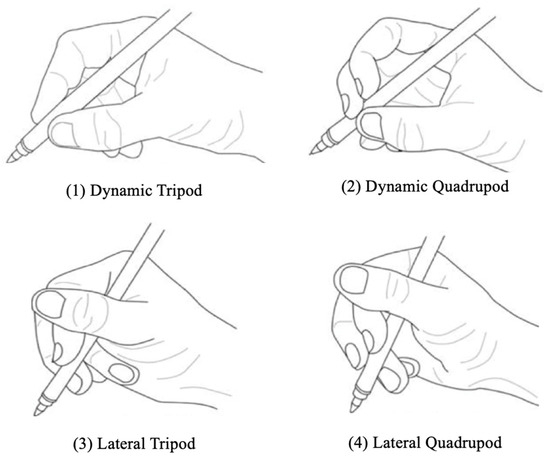
Figure 1.
Handwriting four-grip positions.
This research aims to develop a pencil holder design that is suitable for Chinese writing through the research and comparison of children’s pencil-holding posture and handwriting in Chinese writing. Most of the past research focused on English writing ability, but a few focused on Chinese writing quality. This study recruited elementary school students in low, middle, and high grades to conduct tests, including: (1) investigating the distribution pattern of children’s pencil holding in the Chinese writing environment, (2) designing a pencil-holding device suitable for children to write in Chinese, and (3) comparison and verification of the Chinese writing quality of the new pencil holder. The research results can provide corrections for children’s correct posture in holding a pen and help improve students’ performance and self-confidence. It also provides design references for relevant designers to design suitable pencil shapes for different grades.
2. Method
2.1. Experiment 1: Measurement and Design of the New Pencil Holder
2.1.1. Participants
This study recruited 27 children (14 males, 13 females, mean age 9.41 years old, standard deviation 1.53 years old) from Xinping Elementary School in Taichung City, Taiwan, including: 8 children in the low grades (first and second grades), 10 children in the middle grades (third and fourth grades), and 9 children in the high grades (fifth and sixth grades) (Table 1). The children were all right-handed, native Chinese speakers, and had no documented developmental delays, or neurological or physical impairments. The classification of primary school students’ pencil-holding posture [16] can be divided into 15 children who are DT, 9 who are DQ, 2 who are LT, and only 1 who is LQ. The averages of the hand lengths for these 3 sizes were based on the anthropometric measurements of the Taiwanese population for 7–8, 9–10, and 11–12 years old [25] (Table 2). The one-sample t-test found that the hand length in this study did not significantly differ from the anthropometrical data of [25] (t[7] = 0.21, p = 0.84, t[9] = −0.19, p = 0.85, and t[8] = −1.12, p = 0.30, respectively), indicating that these three sizes correspond to Taiwanese hand sizes.

Table 1.
Participant information.
2.1.2. Procedure
In order to obtain a grid size suitable for handwriting Chinese on a tablet computer screen, the selection of suitable participants is first based on Wang et al.’s (2002) recommended value of the average hand length of 10–12 year olds in Taiwan (the error range is ±5 mm). The children in the low, middle, and high grades wrote their names on grids of different sizes: 2 × 2 cm, 3 × 3 cm, and 4 × 4 cm using pencils 9 mm in diameter. Finally, each child was asked to hold a cylindrical shape of white clay (2 cm in diameter and 4 cm in length) in the habitual posture of holding a pencil until a shape is formed, and stickers mark the child’s finger position to provide a data reference on the size measurement of the new type of pencil holder.
2.1.3. Design of New Pencil Holder
According to the basic survey of the 27 participants, the most commonly used postures are DT and DQ. The purpose of this study is to design a universal style that is suitable for both DT and DQ. The design process is divided into three stages, the details of which are described below.
- Curve measurement: The measured curve is divided into four main grip directions according to the grasp posture (as shown in Figure 2), including: (a) thumb curve, (b) middle-finger curve, (c) index-finger curve, and (d) the curve of the index finger (and middle finger).
- Data calculation and stakeout: Use a contour gauge to measure the curve value of the clay (Figure 3). Record the data of each point of all children’s pencil holding postures and calculate the average value. Next, stake out these measured curves to the lattice diagram. Mark the x and y coordinates of each line and use the ruler to obtain the size. This study found that in children’s pencil-holding posture, the middle finger and index finger are placed on the same side (Figure 4), and the main appearance of the pencil-holding device presents a double low-peak curve shape. In addition, the junction of the index finger and the thumb presents a 45-degree triangle. The measurement results and three views are listed in Table 2 and Figure 5, respectively.
- 3D model establishment: According to the curve measurement results, import the data into the Rhino 3D software, and finally design a pencil holder that conforms to the general DT and DQ grip postures (Figure 6).
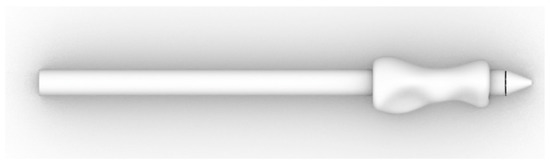 Figure 6. 3D model design of pencil holder.
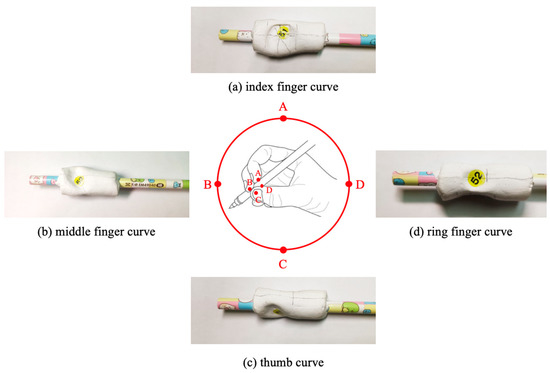
Figure 2.
Definition and measurement of pencil holding posture.
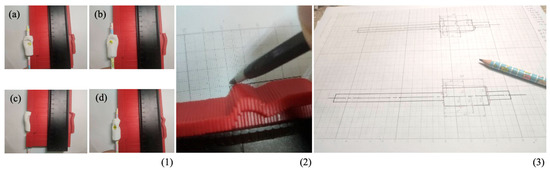
Figure 3.
The measurement and establishment process of the grip curve graph: (1) use the contour gauge to obtain the a to d curve; (2) draw the curve along the edge of the contour gauge; and (3) calculate the value.
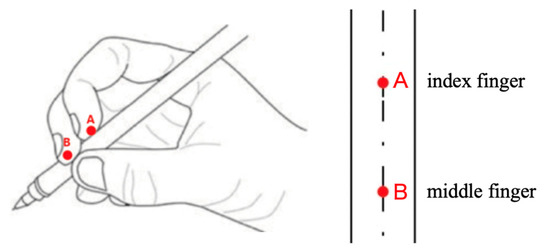
Figure 4.
Children’s pen-holding posture with the middle finger and index finger on the same side.
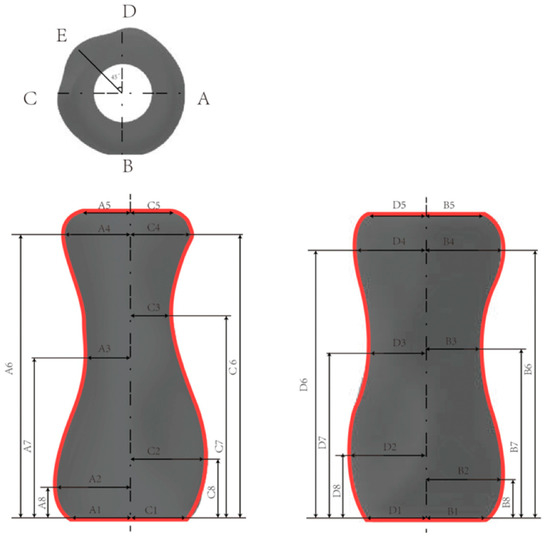
Figure 5.
The measuring position of the pencil holder.
Table 2.
Measurement results for pencil holder.
Table 2.
Measurement results for pencil holder.
| Curve | M | SD | Curve | M | SD | Curve | M | SD | Curve | M | SD | Curve | M | SD |
|---|---|---|---|---|---|---|---|---|---|---|---|---|---|---|
| A1 | 9.47 | 1.76 | B1 | 8.42 | 1.96 | C1 | 8.83 | 1.75 | D1 | 9.40 | 1.59 | E1 | 11.00 | 1.41 |
| A2 | 11.13 | 1.03 | B2 | 10.33 | 1.30 | C2 | 10.63 | 1.66 | D2 | 11.13 | 1.32 | E2 | 11.00 | 1.41 |
| A3 | 7.03 | 0.99 | B3 | 7.42 | 1.76 | C3 | 6.43 | 1.28 | D3 | 8.79 | 0.96 | E3 | 7.00 | 1.41 |
| A4 | 10.47 | 1.17 | B4 | 9.92 | 0.97 | C4 | 9.37 | 1.26 | D4 | 10.57 | 0.65 | E4 | 9.75 | 0.35 |
| A5 | 8.33 | 1.54 | B5 | 8.33 | 1.71 | C5 | 6.43 | 1.84 | D5 | 7.46 | 2.35 | E5 | 6.50 | 0.71 |
| A6 | 37.73 | 4.33 | B6 | 34.33 | 5.60 | C6 | 38.80 | 2.60 | D6 | 37.29 | 4.91 | E6 | 9.00 | 2.12 |
| A7 | 21.47 | 4.53 | B7 | 22.17 | 7.98 | C7 | 29.97 | 6.17 | D7 | 25.21 | 6.68 | E7 | 4.50 | 1.20 |
| A8 | 4.87 | 3.85 | B8 | 7.08 | 7.50 | C8 | 9.27 | 7.35 | D8 | 11.00 | 5.53 | E8 | 39.50 | 0.71 |
| A9 | 43.67 | 3.09 | B9 | 43.17 | 3.49 | C9 | 43.67 | 2.77 | D9 | 43.82 | 3.00 | E9 | 32.50 | 2.12 |
| E10 | 22.00 | 1.41 | ||||||||||||
| E11 | 12.00 | 1.41 | ||||||||||||
| E12 | 2.50 | 3.54 | ||||||||||||
| E13 | 43.00 | 1.41 |
Note: M = mean; SD = standard deviation.
2.2. Experiment 2: Chinese Handwriting Efficiency Detection
2.2.1. Participants
Thirty children (13 males, 7 females, mean age 9.6 years old, standard deviation 1.45 years old) from Xinping Elementary School in Taichung participated in the experiment, including: 10 children in the low grades (1st and 2nd grades), 10 children in the middle grades (3rd and 4th grades), and 10 children in the high grades (fifth and sixth grades). The hand lengths are 139.50 mm, 152.70 mm, and 161.20 mm respectively, which are all in line with the standard of children’s hand length suggested by [25]. The children were all right-handed, native Chinese speakers, with no documented developmental delays, or neurological or physical impairments.
2.2.2. Chinese Words
Eighty-four Chinese words selected from [26] in Taiwan were commonly used by elementary school students. These words have seven representative structures (Table 3), including the six main basic structures (independent (W1), top—bottom (W2), top—c enter—bottom (W3), left—right (W4), left—center—right (W5), and inner—outside (W6)) defined in a previous study [27] and adds the semi-enclosed (W7) conclusions of this study. Each structure has twelve words.
Table 3.
Seven representative structures of Chinese words.
2.2.3. Children’s Chinese Handwriting System (CCHS)
The Children’s Chinese Handwriting System (CCHS) of this study referred to the Chinese Handwriting Analysis System (CHAS) [28,29] which wrote the programs using Unity software. This system was specially designed for primary school students who have handwriting difficulties, and it could show excellent reliability for assessments of writing quality (Table 4) related to writing efficiency and writing pressure.
Table 4.
Factors of writing quality assessment.
2.2.4. Writing Devices
The iPad Pro 12.9-inch with Apple pencil (diameter 8.9 mm) was used for Chinese writing tasks. The screen size is 12.04 × 8.69 inches (305.7 × 220.6 mm). The pencil holder is divided into three modes (Table 5): (1) No pencil holder (Type I): only uses Apple pencil without applying any pencil holder. (2) Existing pencil holder (Type II): use three types of The Pencil Grip made in the United States; there are small triangular types for low grades, pear types for middle grades, and disc types for high grades. (3) Designed pencil holder (Type III): it is divided into 25%, 50%, and 75% sizes according to grade. This is based on the design suggestion in [30] that low, middle, and high grades with large, middle, and small hands should be equipped with large (75%), medium (50%), and small (25%) scale pencil holders, respectively. In order to solve the problem of smooth writing on the screen with the stylus, and to imitate the tactile feeling of a pencil writing on paper, the tip of the stylus is covered with a high-friction silicone sleeve and a screen protector.
Table 5.
Four types of pencil holders for different grades.
2.2.5. Procedure
The children were assessed in a quiet room, with a camera set up to observe the children’s pencil holding. In order to make children familiar with writing on the tablet computer, they first practice the 6 pre-tested Chinese words, such as小, 關, 因, 漸, 以, and 公.
In a formal writing task, the children were asked to copy as accurately as possible the Chinese words displayed on a screen divided into left—right screens (Figure 7). The picture on the left is the Microsoft Standard Chinese Traditional “BiauKai”, with a scale of 26 pts. The right screen is the area for writing Chinese words. There are a total of 84 words in Chinese. The screen displays 28 words (4 columns and 7 lines) at a time with a total of 3 pages. Each word is filled in a 2 × 2 cm box. The writing order is from top to bottom, and from right to left. Words are displayed in random order. During the writing process, children should not erase or rewrite any wrong words. Each word is written three times, corresponding to the three types of pencil-holder modes. The writing time limit for each mode is 30 min. These three modes were performed on different days to avoid writing fatigue.
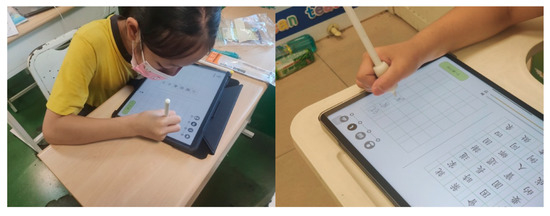
Figure 7.
Equipment used in the Chinese handwriting experiment.
2.2.6. Data Analysis
Data analysis was performed using the SPSS 24 statistical analysis software. A repeated measure ANOVA was used to analyze the influence of these three holding-pencil modes on writing quality. In variable settings, “grades” (low grades, middle grades, and high grades), “type of grip” (Type I, Type II, and Type III), and “word structure” (W1, W2, W3, W4, W5, W6, and W7) are independent variables. The dependent variables include: “writing efficiency” (“paper time”, “pause time”, “writing time”, “writing ability”, and “writing speed”), and “writing pressure” (maximum pressure value). Finally, the paired sample t-test was used to further compare the factors with significant differences.
3. Results
Table 6 shows examples of children’s Chinese writing using the three types of pencil holders (see Appendix A for details) for comparing the writing quality of the handwriting. In terms of the appearance of the words, the overall word shape using Type I is round, but it does not have the angular sense that Chinese should have. Words using Type II have serious strokes connected, and the lines are obviously shaking. Words using Type III are sharper and more legible. Moreover, in terms of the accuracy of the word position, the word using Type I appears to exceed the writing box. The position of the overall word using Type II is slanted to one side. Using Type III can better control the central position of the word in the writing box and the structure and proportion of the word are correct.
Table 6.
Chinese written by children holding three types of pencil holders: Taking the “樹” (tree) with left—middle—right structure as an example.
Table 7 shows the overall results of the MANOVA for assessing writing quality. The inspection items of Chinese handwriting quality, including “writing efficiency” and “writing pressure”, are described as follows.
Table 7.
Overall results of MANOVA for assessments of writing quality.
3.1. “Writing Efficiency”
The overall average “writing efficiency” data on Chinese characters include: “paper time”, “pause time”, “writing time”, “writing ability”, and “writing speed”; details are as follows.
- 1.
- Paper time
The average “paper time” for writing Chinese (Figure 8) for children in high grades is the shortest, followed by middle grades, and the longest for children in the low grades. The “paper time” for writing Chinese with Type II is the fastest (28.11 s), followed by Type III (28.97 s), and the slowest for Type I (29.14 s). In addition, the “paper time” for writing W1 words is the shortest, followed by W2 words, and the longest for W3 words.
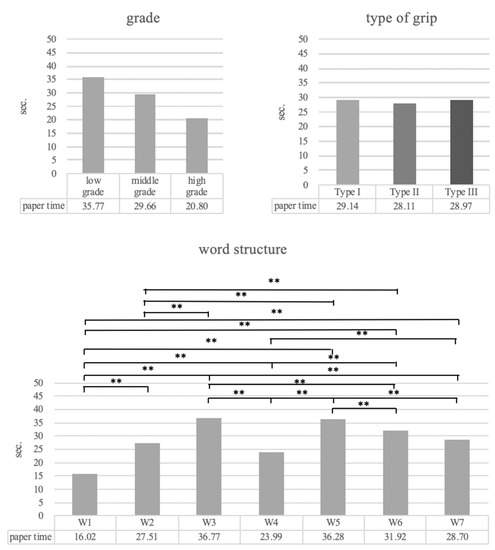
Figure 8.
Average and MANOVA analysis results of paper time. ** p < 0.001.
The MANOVA test “paper time” results found that only “word structure” has a significant main effect (F[6162] = 94.10, p = 0.000), and that there is a significant interaction between “word structure” × “grade” (F[12162] = 3.92, p = 0.000), while the “type of grip” had no significant effect.
Further paired sample’s t-test for the “paper time” of different “word structure” found that the time for children to write W1 words was significantly less than that of W2, W3, W4, W5, W6, and W7 words (t[29] = −12.08, p = 0.000; t[29] = −17.85, p = 0.000; t[29] = −9.87, p = 0.000; t[29] = −13.44, p = 0.000; t[29] = −9.93, p = 0.000; t[29] = −15.75, p = 0.000, respectively). In addition, the “paper time” of writing words of W2 is significantly less than that of words of W3, W5 and W6 (t[29] = −14.45, p = 0.000; t[29] = −6.69, p = 0.000; t[29] = −3.24; p = 0.000, respectively). However, the “paper time” of writing W2 words is longer than that of W4 words (t[29] = −4.92, p = 0.000). The “paper time” for writing W3 words is shorter than that of W4, W6 and W7 words (respectively, t[29] = 13.36, p = 0.000; t[29] = 4.07, p = 0.000; t[29] = 8.30, p = 0.000). In addition, the “paper time” of writing W4 words is shorter than that of W5, W6, and W7 words (t[29] = 9.42, p= 0.000; t[29] = 5.61; p = 0.000; t[29] = 5.48; p = 0.000, respectively). Conversely, the “paper time” of writing W5 words is shorter than that of W6 and W7 words (t[29] = 3.58, p = 0.001 and t[29] = 4.95, p = 0.025, respectively).
- 2.
- Pause time
The average “pause time” (Figure 9) for children in high grades is the shortest, followed by the middle grades and low grades. The “pause time” of words written with Type III is the shortest (60.29 s), followed by Type II (60.35 s), and the longest for Type I (63.05 s). In addition, the “pause time” for writing W2 words is the shortest, followed by W4 words, and the longest for W1 words.
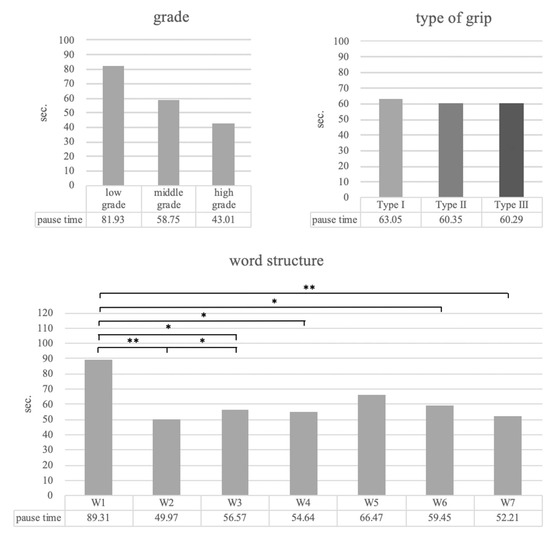
Figure 9.
Average and MANOVA analysis results of pause time. * p < 0.05; ** p < 0.001.
The MANOVA test for “pause time” found that only “word structure” has a significant main effect (F[6162] = 4.01, p = 0.004), while the “type of grip” had no significant effect.
The further paired sample t-test examined the “pause time” of different “text structures” and found that the “pause time” of children writing W1 words was significantly longer than that of W2, W3, “left—right structure”, W6 and W7 words (t[29] = 3.75, p = 0.001; t[29] = 3.08, p = 0.005; t[29] = 2.79, p = 0.009; t[29] = 2.62, p = 0.014; t[29] = 3.52, p = 0.001, respectively). Moreover, the “pause time” of W3 words is obviously longer than that of W2 words (t[29] = 2.08, p = 0.046).
- 3.
- Writing time
The average value of “writing time” (Figure 10) for children in high grades is significantly shorter than the “writing time” of middle and low grades, followed by middle grades, and the longest for low grades. The “writing time” using Type II was the shortest (88.46 s), followed by Type III (89.27 s), and the “writing time” of Type I was the longest (92.19 s). The words of W2 for “writing time” are the shortest, followed by W4 words, the longest for W1 words.
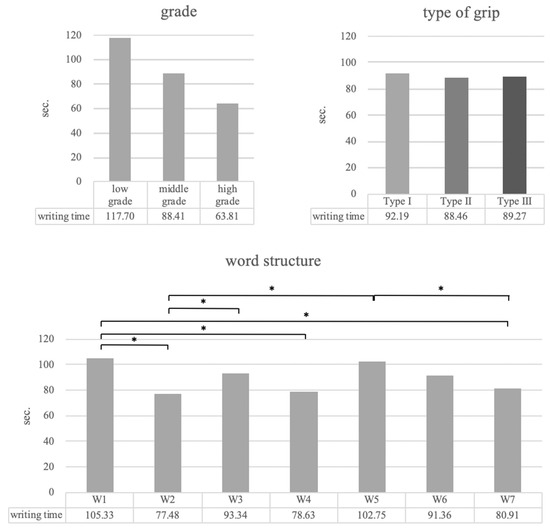
Figure 10.
Average and MANOVA analysis results of writing time. * p < 0.05.
The MANOVA test “writing time” results found that “word structure” has a significant main effect (F[6162] = 2.59, p = 0.037). Moreover, “type of grip” × “word structure” × “grade” has a significant interaction with each other (F[24,324] = 1.54, p = 0.053).
Further paired sample t-test analysis of “writing time” in different “word structure” found that children wrote W1 words significantly slower than W2, W4 and W7 words (t[29] = 2.54, p = 0.017; t[29] = 2.08, p = 0.046; t[29] = 2.29, p = 0.030, respectively). Moreover, writing W2 words is obviously faster than W3 and W5 words (t[29] = −2.90, p = 0.007; t[29] = −2.92, p = 0.007, respectively). Similarly, writing W4 words is faster than W5 words (t[29] = −2.01, p = 0.054). However, writing W5 words is slower than W7 words (t[29] = 2.16, p = 0.039).
In addition, in the paired sample t-test analysis of “writing time” of “type of grip” × “word structure” × “grade” (Figure 11), it was found that children in low grades held Type III and “writing time” of W3 words significantly faster than Type I (t[9] = −2.06, p = 0.050). However, there was no significant difference in the “writing time” of children in middle grades holding any type of pencil holder. In addition, children in high grades holding Type III and Type II wrote W4 words significantly faster than Type I (t[9] = −2.53, p = 0.048 and t[9] = −3.41, p = 0.008, respectively). Finally, using the Type III to write the words of W4 was significantly slower than Type I (t[9] = 2.53, p = 0.032).
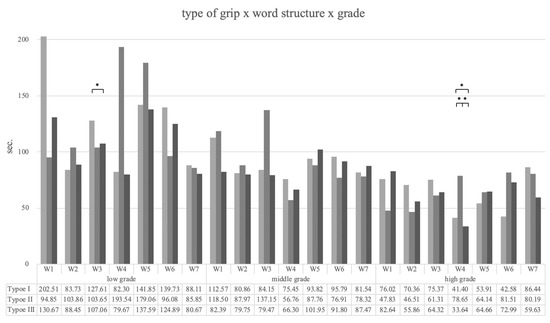
Figure 11.
Average and MANOVA analysis results of type of grip × word structure × grade for writing time. * p < 0.05; ** p < 0.001.
- 4.
- Writing ability
The smaller the value of “writing ability”, the higher the quality. The average value (Figure 12) for children in low grades has the best “writing ability”, and the “writing ability” of middle grades and low grades is close to their result. The “writing ability” using Type III (0.65) is the best, followed by Type II (1.65), and the worst (0.73) using Type II. In addition, the “writing ability” of W1 words is the best, followed by the words of W4, while the worst is W3.
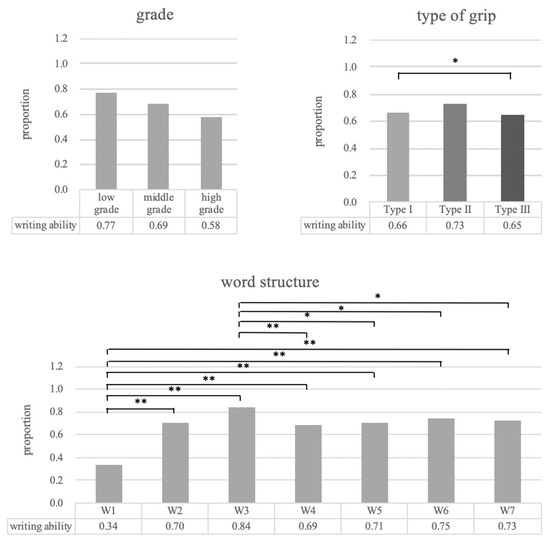
Figure 12.
Average and MANOVA analysis results of writing ability. * p < 0.05; ** p < 0.001.
The MANOVA test “pause time” results found that “type of grip” and “word structure” have a significant main effect (F[2,54] = 4.21, p = 0.025 and F[6162] = 32.7, p = 0.000, respectively), and “word structure” × “grade” has a significant interaction (F[12,162] = 1.90, p = 0.037). In addition, “type of grip” × “word structure” × “grade” also has a significant interaction (F[24,324] = 1.70, p = 0.024).
Further paired sample t-test testing of the “writing ability” of different “type of grip” found that the “writing ability” of children holding Type II is better than Type II (t[9] = −3.52, p = 0.006). Type I compared to the other two pencil holders shows no significant difference in “writing ability” (p = 0.079 and p = 0.705, respectively).
The results of the paired sample t-test analysis of the “word structure” show that the “writing ability” of children writing W1 words is better than W2, W3, W4, “left—center—right structure”, W6, W7 words (t[29] = −10.82, p = 0.000; t[29] = −9.90, p = 0.000; t[29] =−8.05, p = 0.000; t[29] = −10.05, p = 0.000; t[29] = −11.76, p = 0.000; t[29] = −10.29, p = 0.000, respectively). Moreover, there is a significant difference between W2 and W3 words (t = −4.11, p = 0.000). Children write W3 words worse than W4, W5, W6 and W7 words (t[29] = 3.76, p = 0.001; t[29] = 3.35, p = 0.002; t[29] = 2.14, p = 0.042; t[29] = 3.81, p = 0.024, respectively).
In addition, the paired sample t-test for the “writing ability” of different “word structure” × “grade” (Figure 13) found that the “writing ability” of children in high grades in W3, W4, and W5 words is significantly better than that of children in low grades (t[9] = −2.64, p = 0.027; t[9] = −3.76, p = 0.004; t[9] = −3.43, p = 0.007, respectively). However, the “writing ability” of children in middle grades holding other pencil holders was not significantly different from that of children in low and high grades.
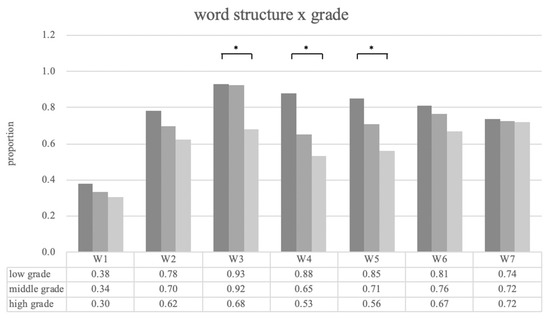
Figure 13.
Average and MANOVA analysis results of word structure × grade for writing ability. * p < 0.05.
In addition, the paired sample t-test analyzed the “writing ability” of different “type of grip” × “word structure” × “grade” (Figure 14) and found that the “writing ability” of children in high grades holding Type III to write W1 and W6 words is better than Type I (t[9] = −2.47, p = 0.036 and t[9] = −2.65, p = 0.026, respectively). Moreover, for children in low grades holding Type II to write W3 words, the “writing ability” is better than Type I (t[9] = 2.58, p = 0.030). However, there was no significant difference in children in middle grades holding any pencil holder and writing any text structure. In addition, the “writing ability” of children in low grades using Type III to write W4 words is better than Type II.
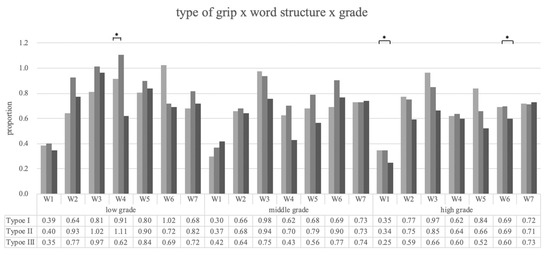
Figure 14.
Average and MANOVA analysis results of type of grip × word structure × grade for writing ability. * p < 0.05.
- 5.
- Writing speed
The average value of the “writing speed” (Figure 15) for children in high grades is the best, followed by low grades, while the “writing speed” of middle grades is the slowest. The “writing speed” using Type III and Type II was the fastest (7.90 s and 7.95 s, respectively), while the “writing speed” using Type I was the slowest (8.47 s). In addition, the “writing speed” of W2 words is the fastest, followed by W4 words, and the slowest for W1 words.
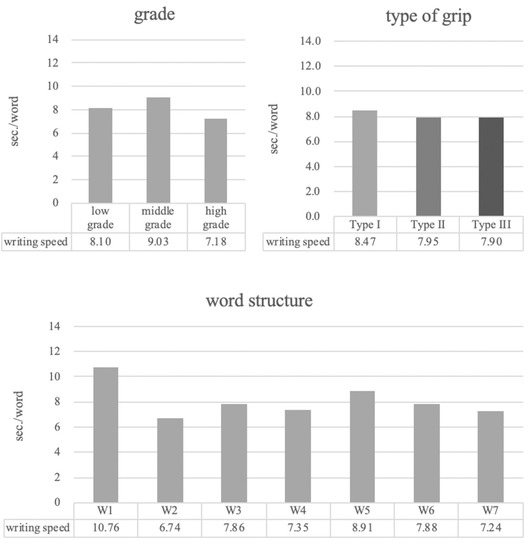
Figure 15.
Average and MANOVA analysis results of writing speed.
The MANOVA test “writing speed” results found that all the factors have no significant effect. Among them, “word structure” is close to a significant difference (p = 0.073). This means that no matter the grade, the type of pencil holder, or even any kind of text structure, there is no difference or improvement in “writing speed”.
3.2. Writing Pressure
The average value of “writing pressure” (Figure 16) is the largest for children in high grades and middle grades (0.80 and 0.83, respectively), and smallest for children in low grades (0.75). Interestingly, words written with Type III had the highest “writing pressure” (0.82). Conversely, children’s “writing pressure” is the smallest (both 0.78) using Type II and Type I. In addition, the “writing pressure” of children writing W3, W4, and W7 words is the smallest, followed by W2 words, while W1 and W6 words for “writing pressure” are the largest.
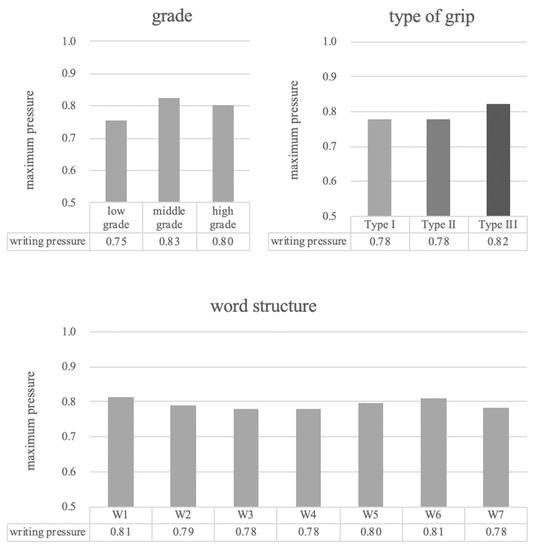
Figure 16.
Average and MANOVA analysis results of writing pressure.
The MANOVA test “writing pressure” results found that all factors have no significant effect. This means that “writing pressure” has no effect on the overall “writing efficiency”.
3.3. Overall Writing Quality
Table 8 shows the overall average value of writing quality for the three types of pencil holders. The overall performance of Type III in writing quality is higher than that of Type I and Type II. Type III had the best performances for paper time, pause time, writing ability, and writing speed, even though Type III performs slightly slower than Type II at writing time. The writing performance of Type I is worse than that of Type II and Type III in all conditions.
Table 8.
Overall writing quality of the three types of pencil holders.
However, the writing pressure of Type III is higher than that of Type I and Type II. It is speculated that it may improve the fit between the hand and the shape of the pen holder when holding the Type III, which can make the writing straighter and improve the fluency of handwriting.
4. Discussion
4.1. Design of Universal Pencil Holder
Handwriting difficulties affect children’s academic development and the cultivation of their self-confidence. Ref. [31] pointed out that changing the posture of holding the pencil can effectively solve the situation of handwriting difficulties. It means that the wrong pencil-holding posture is a major cause of handwriting difficulties, and the consequences of wrong pencil-holding posture go beyond that. According to the research in [32], the biggest cause of myopia is the wrong way of holding a pen. Therefore, using the wrong pen-holding posture is not only related to the quality of children’s writing but also affects their vision. Over the past decade, U.S. education programs have incorporated occupational therapists into school teams to target children with handwriting difficulties. These therapists and educators work together to provide timely and individualized support during the course [33,34]. However, under the current educational environment in Taiwan, occupational therapists are not yet popular enough to provide individualized treatment plans for each student. Therefore, students in Taiwan need simpler, low-cost alternatives to solve their handwriting difficulties. The students participating in this experiment are all interested in Chinese handwriting tasks. They would actively provide many suggestions for the improvement of the pencil grip. For example, which part of the grip is uncomfortable for the hand, or how to adjust the angle or part of the grip to improve the handwriting speed, etc. These suggestions were incorporated into the consideration list for the newly designed pen grip.
The authors of Ref. [15] believe that the DT grip is the most effective way to solve handwriting difficulties. But [14,35] believe that the DT grip is not the only effective writing posture. This study found that the DT grip was equally effective as the DQ grip in a Chinese writing environment, showing that the children’s Chinese writing conditions are indeed different from English. However, most of the pencil holders currently on the market are designed with the DT posture as the correction target, which may result in many users being unwillingly forced into a DT grip based on the fact that different grip positions require different muscle groups to be mobilized. Among them, compared with other grips, the DT grip needs to mobilize more proximal arm muscles. When the user with other grip postures is forced to correct to the DT-grip posture, this will prevent the user from adapting to the use of the proximal arm muscles and initiate an uncomfortable writing experience [36]. Once an unfamiliar grip is used, it can also affect writing ability in the event of an injury or disease state [37]. Therefore, users who are forced to correct the DT grip will not improve their writing quality; rather, it may reduce writing efficiency.
This study posits that the design of the universal style should be considered in the design of the pencil holder, so that it can meet the two holding positions of DT and DQ, to ensure that writers use the correct holding position. This design allows users to maintain their original writing habits and can improve “writing efficiency” and quality. In order to achieve this goal, this study measured the hand shape data on all DQ and DT grip participants in the experimental data and recorded their writing postures by curve profiler pairs. This study summarizes the differences between the DT- and DQ-grip postures and designs the key curve E (that is, the curve formed by the index finger and middle finger; see Table 2). This new type of pencil holder can ensure that users with different holding postures can write according to their own pencil-holding posture when using the pencil holder.
4.2. The Importance of the Guiding Shape of the New Pencil Holder
Many therapists working with children often use instructions such as stabilizing the pencil grip, relaxing the fingers, or reducing downward force to help children with handwriting difficulties and may even attempt to directly correct the pencil grip the child is using. However, these instructions are ambiguous for children according to clinical observation or experience because they do not correlate with describing the exact motion of the fingers, which often leaves children wondering how the fingers are to be positioned [38,39,40]. This is not only the current situation in regard to the treatment, but also the general problem of unclear guidelines in many existing pencil-holder products on the market. The original intention of these pencil grips was for users to correct their pencil-holding posture to a DT-grip posture by holding their fingers on the groove or contour of the pencil grip. Therefore, an inconspicuous use guide design may instead cause children to use the wrong pen-holding posture, which in turn leads to other problems.
In this writing experiment, participants were provided with three types of pencil grips designed by The Pencil Grip Company and the styles designed in this study. It was found that different designs of pencil grips did cause different reactions. For the pear type of pencil holder, most children do not know how to hold it or where to put their fingers when they use it for the first time. In contrast, when using discs and small triangle types of pencil holders, almost all the children found the correct pencil holding position at the first use. This study posits that the reason for these two completely different holding experiences is that the shape of the disc and small triangle is more guiding than the pear type of pencil holder. The small triangle type of pencil holder has protruding edges and corners. The shape is simple, and it is easy to follow the preset way of holding the pen. The appearance of the disc type of pencil holder has two holes that can accommodate fingers. Therefore, most children will unconsciously try to insert their fingers into it for the first-time when writing. The pear type of pencil holder is symmetrical in shape and does not have eye-catching visual guidance, so it can be held by children from any angle. Most children will find a comfortable holding position for writing after position switching for 3–5 times. However, some children still ca not find the correct holding position after switching many times. This wrong holding method may try children’s patience, resulting in poorer writing quality, which in turn leads to children’s resistance to the pencil holder. This study posits that guiding children to use the pencil holder correctly is a topic that should be paid attention to in future designs.
4.3. Differences in Writing Efficiency between Chinese and English Environments
Writing efficiency depends on the complexity of the children’s subsequent written words. Ref. [41] pointed out that when students know what to write, they must first retrieve the correct letters or words from memory, organize them into the correct order, convert phonemes into graphemes, and plan and execute a series of writing exercise programs. This means that writing efficiency is closely related to the word structure.
However, the Chinese and English writing environments have completely different writing requirements for children. This study posits that Type III is not suitable for the Chinese writing environment. It is developed and designed for English writers, so the grip-shape setting may not be conducive to writing Chinese. Compared with English letters, Chinese words are more complex in structure and strokes. Moreover, Chinese have visual features of pictographic symbols, which makes Chinese writing more challenging [42]. Wrong strokes, radical positions, or spacing can turn into another Chinese word with the opposite meaning. In English writing, even if the spacing between words is incorrect, it is still possible to guess the meaning of the expression [28].
The results of this study show that pencil holders can improve children’s writing efficiency. In particular, Type III of this study can indeed improve the performance of the evaluation items on their writing ability and writing speed and is better than the other two in writing speed, the simplest and most common element to evaluate writing ability [43]. In addition, the writing time performance of Type III is higher than that of Type I. These results indicate that Type III can improve children’s writing efficiency to a certain extent. Based on the fact that Type II has been on the market for many years, the feasibility of its product use has been fully verified. Type III is better than Type II in many evaluation items, which means that it has met the market standards like Type II, proving that it can effectively solve the problem of children’s handwriting difficulties in the Chinese environment.
4.4. Differences in Chinese Structures in Writing Efficiency
The structure of Chinese words is completely different from that of English letters; strokes, radicals, and whole words are three levels of the Chinese shape [44]. This study posits that the different structures and writing sequences of Chinese are the key factors affecting writing efficiency. For example, W1 has fewer strokes than other word structures, and the characteristics of a single structure and non-repetitive shapes. It has the shortest time on paper, but the longest pause time. The frequency of use of W1 is in the top 50 of all structures [26], indicating that it is often used in the daily life of elementary school students; so children are familiar with this structure word. Therefore, this study speculates that children may need to spend more time thinking about how to write (pause time) when writing tasks, but they can finish writing quickly once they start writing (paper time).
In addition, the difficulty of word structure also affects writing efficiency. For example, W3 may be considered the most difficult of all structures for children to write, followed by W5. The writing ability of these structures is significantly lower than that of other structures and requires more writing time because these two structures are the common characteristics of words made up of three parts. Moreover, the writing sequence is regular, and the structure is complex. Horizontal structures must be written from left to right, whereas vertical structures must be written from top to bottom. Because this writing order is important in the learning process of remembering Chinese form and spelling [45] children are generally more likely to be exposed to horizontal word structures (such as letters, TV subtitles, posters, advertisements, etc.) than vertically presented words in daily life. Therefore, W3 is almost the least efficient in writing among all characters.
Although the conclusion of this study is close to the experiment of [46], their research on word structure is not complete (only W2, W3, W4, and W5). They believe that the top—bottom structure (such as W2) is still the most difficult to recognize and write. In addition, they only asked participants to rank according to the difficulty of their handwriting and recognition and could not compare their handwriting ability. In contrast, this study uses the handwriting system to truly record the children’s writing time, dwell time, writing pressure and other values on paper with words of different structures. These real values can provide a clearer and more complete understanding of children’s writing conditions when writing words in different structures. This study is also able to deeply explore the reasons why words with different structures have a deeper impact on children’s writing efficiency.
5. Conclusions
The new pencil grip in this study is designed to fit the hand shape and holding posture by measuring the curve of children’s hands, allowing children to orientate the holding direction according to the fitting position of the palm arc when using it for the first time. The results of this study show that the designed pencil holder is indeed suitable for children’s Chinese handwriting; it not only helps to improve children’s writing efficiency but also effectively improves word recognition. In the future, these product designs can be extended and developed in courses, such as recording programming-related content on the mind map by handwriting [47,48], so as to accelerate the understanding and innovation of ideas between teachers and students. The human factor measurement method and design of the pen holder proposed in this study is believed to be widely extended and applied in related product designs and research fields, such as watercolor pens and brushes.
In addition, the pencil holder designed in this study adopts the universal principle, that is, it can be used in both pencil-holding postures (DT and DQ) enabling children with different gripping postures that correspond to their own posture when using the pencil holder, instead of forcibly correcting it to another posture, thereby reducing children’s discomfort and negative emotions during the stage of grip posture correction. However, the number of children in this study is limited. It is expected that future research can expand the number of participants in order to discover more complete results. In the design of future pencil holders, this study suggests that designers may consider marking the position of fingers in different colors to increase the visual guidance of the pencil holder. This action can make the user more aware of the correct pencil-holding posture. However, at present, children can still only use the existing pencil holders sold on the market. This is worrisome for children learning Chinese at the beginning. If there is an opportunity to expose and develop pencil holders into a product that can be sold on the market, this will greatly help many children improve their pen-holding posture and handwriting quality.
Author Contributions
C.-Y.W. is responsible for the entire research planning, data interpretation and article writing. Z.-T.C. is responsible for collecting literature. All authors have read and agreed to the published version of the manuscript.
Funding
This research was supported by grants from the National Science Council (MOST 111-2221-E-468-003-MY2) and MOE Teaching Practice Research Program (PHA1110018) of Taiwan to Ching-Yi Wang for helping experiment implementation fee.
Institutional Review Board Statement
The experimental standards of the study were approved by the China Medical University & Hospital Research Ethics Center of Taiwan (CRREC-110-050). Written informed consent was obtained from all participants prior to participation. All methods were carried out in accordance with relevant guidelines and regulations.
Informed Consent Statement
Written informed consent has been obtained from the patient(s) to publish this paper if applicable.
Data Availability Statement
The datasets generated during and/or analysed during the current study are available from the corresponding author on reasonable request.
Acknowledgments
This research was supported by grants from the National Science Council, Taiwan, to Ching-Yi Wang (MOST 111-2221-E-468-003-MY2).
Conflicts of Interest
The authors declare no conflict of interest.
Appendix A
Table A1.
Children in low grades hold three types of pencil holders to write handwriting in seven text structures.
Table A1.
Children in low grades hold three types of pencil holders to write handwriting in seven text structures.
| Word Structure | Type I | Type II | Type III |
|---|---|---|---|
| W1 |  |  |  |
| W2 |  |  |  |
| W3 |  |  |  |
| W4 |  |  |  |
| W5 |  |  |  |
| W6 |  |  |  |
| W7 |  |  |  |
Table A2.
Children in middle grades hold three types of pencil holders to write handwriting in seven text structures.
Table A2.
Children in middle grades hold three types of pencil holders to write handwriting in seven text structures.
| Word Structure | Type I | Type II | Type III |
|---|---|---|---|
| W1 |  |  |  |
| W2 |  |  |  |
| W3 |  |  |  |
| W4 |  |  |  |
| W5 |  |  |  |
| W6 |  |  |  |
| W7 |  |  |  |
Table A3.
Children in high grades hold three types of pencil holders to write handwriting in seven text structures.
Table A3.
Children in high grades hold three types of pencil holders to write handwriting in seven text structures.
| Word Structure | Type I | Type II | Type III |
|---|---|---|---|
| W1 |  |  |  |
| W2 |  |  |  |
| W3 |  |  |  |
| W4 |  |  |  |
| W5 |  |  |  |
| W6 |  |  |  |
| W7 |  |  |  |
References
- Smits-Engelsman, B.C.; Niemeijer, A.S.; van Galen, G.P. Fine motor deficiencies in children diagnosed as DCD based on poor graphomotor ability. Hum. Mov. Sci. 2001, 20, 161–182. [Google Scholar] [CrossRef] [PubMed]
- Feder, K.P.; Majnemer, A. Handwriting development, competency, and intervention. Dev. Med. Child Neurol. 2007, 49, 312–317. [Google Scholar] [CrossRef]
- Graham, S.; Weintraub, N. A Review of Handwriting Research: Progress and Prospects from 1980 to 1994. Educ. Psychol. Rev. 1996, 8, 7–87. [Google Scholar] [CrossRef]
- Graham, S.; Harris, K.R.; Mason, L.; Fink-Chorzempa, B.; Moran, S.; Saddler, B. How do primary grade teachers teach handwriting? A national survey. Read. Writ. 2008, 21, 49–69. [Google Scholar] [CrossRef]
- Huang, C.-R. A cognitive analysis of Chinese character acquisition. J. Chin. Linguist. 1984, 12, 44–67. [Google Scholar]
- Rosenblum, S.; Parush, S.; Weiss, P.L. Computerized temporal handwriting characteristics of proficient and non-proficient handwriters. Am. J. Occup. Ther. 2003, 57, 129–138. [Google Scholar] [CrossRef]
- Tseng, M.H. Development of pencil grip position in preschool children. Occup. Ther. J. Res. 1998, 18, 207–224. [Google Scholar] [CrossRef]
- Tan, L.H.; Hoosain, R.; Siok, W.W.T. Activation of phonological codes before access to character meaning in written Chinese. J. Exp. Psychol. Learn. Mem. Cogn. 1996, 22, 865–882. [Google Scholar] [CrossRef]
- Chow, H.M.; Chen, Y.J.; McBride-Chang, C. When does alphabetic coding influence visual word recognition? Dev. Psychol. 2010, 46, 1192–1198. [Google Scholar]
- Tan, L.H.; Feng, C.-M.; Fox, P.T.; Gao, J.-H. An fMRI study with written Chinese. Brain Imaging 2001, 12, 83–88. [Google Scholar] [CrossRef]
- Tseng, M.H. Factorial validity of the Tseng Handwriting Problem Checklist. J. Occup. Ther. Assoc. Repub. China 1993, 11, 13–28. [Google Scholar]
- Chan, L.; Nunes, T. Children’s understanding of the formal and functional characteristics of written Chinese. Appl. Psycholinguist. 1998, 19, 115–131. [Google Scholar] [CrossRef]
- Hsiung, Y.H. Evaluation of the Corrective Effect of Pencil Grip Aids. Unpublished Master’s Thesis, Institute of Industrial Management, Mingchi University of Science and Technology, New Taipei City, Taiwan, 2009. [Google Scholar]
- Dennis, J.L.; Swinth, Y. Pencil grasp and children’s handwriting legibility during different-length writing tasks. Am. J. Occup. Ther. 2001, 55, 175–183. [Google Scholar] [CrossRef]
- Rigby, P.; Schwellnus, H. Occupational therapy decision-making guidelines for problems in written productivity. Phys. Occup. Ther. Pediatr. 1999, 19, 5–27. [Google Scholar] [CrossRef]
- Schwellnus, H.; Carnahan, H.; Kushki, A.; Polatajko, H.; Missiuna, C.; Chau, T. Effect of Pencil Grasp on the Speed and Legibility of Handwriting in Children. Am. J. Occup. Ther. 2012, 66, 718–726. [Google Scholar] [CrossRef]
- Schneck, C.M.; Henderson, A. Descriptive analysis of the developmental progression of grip position for pencil and crayon control in no dysfunctional children. Am. J. Occup. Ther. 1990, 44, 893–900. [Google Scholar] [CrossRef]
- Selin, A.-S. Pencil Grip: A Descriptive Model and Four Empirical Studies. Unpublished Master’s Thesis, Åbo Akademi University, Turku, Finland, 2003. Available online: https://www.researchgate.net/profile/Ann-Sofie-Selin/publication/36190927_Pencil_grip_A_descriptive_model_and_four_empirical_studies/links/555d592108ae8c0cab2ad1ca/Pencil-grip-A-descriptive-model-and-four-empirical-studies.pdf (accessed on 2 May 2022).
- Berninger, V.W.; Fuller, F.; Whitaker, D. A process model of writing development across the life span. Educ. Psychol. Rev. 1996, 8, 193–218. [Google Scholar] [CrossRef]
- Benbow, M.; Hanft, B.; Marsh, D.; Royeen, C.B. Handwriting in the classroom: Improving written communication. In AOTA Self Study Series: Classroom Applications for School-Based Practice; AOTA: Rockville, MD, USA, 1992. [Google Scholar]
- Elliott, J.M.; Connolly, K.J. A classification of manipulative hand movements. Dev. Med. Child Neurol. 1984, 26, 283–296. [Google Scholar] [CrossRef]
- Trombly, C.A.; Cole, J.M. Electromyographic study of four hand muscles during selected activities. Am. J. Occup. Ther. 1979, 33, 440–449. [Google Scholar]
- Ziviani, J. Upper limb function in children with cerebral palsy: A review of the literature. Aust. Occup. Ther. J. 1983, 30, 1–10. [Google Scholar]
- Benbow, M. Sensory and Motor Measurements of Dynamic Tripod Skill. Unpublished Master’s Thesis, Boston University, Boston, MA, USA, 1987. [Google Scholar]
- Wang, M.J.; Wang, M.Y.; Lin, Y.C. The Anthropometric Database Manual of Taiwan; Ergonomics Society of Taiwan: Hsinchu, Taiwan, 2002. [Google Scholar]
- Ministry of Education. Survey Report on Common Words Used by Elementary School Children. 2000. Available online: https://pair.nknu.edu.tw/literacy/UploadFile/News/201712291806/%E6%95%99%E8%82%B2%E9%83%A8%E5%AD%97%E5%BA%AB5021%E5%AD%97.pdf (accessed on 29 May 2022).
- Li, M.; Leung, H.; Li, T.M.H.; Li-Tsang, C.W.P. Measuring the tilt and slant of Chinese handwriting in primary school students: A computerized approach. PLoS ONE 2019, 14, e02234. [Google Scholar] [CrossRef] [PubMed]
- Li-Tsang, C.W.; Wong, A.S.; Leung, H.W.; Cheng, J.S.; Chiu, B.H.; Linda, F.; Chung, R.C. Validation of the Chinese handwriting analysis system (CHAS) for primary school students in Hong Kong. Res. Dev. Disabil. 2013, 34, 2872–2883. [Google Scholar] [CrossRef] [PubMed]
- Li-Tsang, C.; Wong, A.; Tse, L.; Lam, H.; Pang, V.; Kwok, C.; Lin, M. The Effect of a Visual Memory Training Program on Chinese Handwriting Performance of Primary School Students with Dyslexia in Hong Kong. Opencil J. Ther. Rehabil. 2015, 3, 146–158. [Google Scholar] [CrossRef]
- Wang, C.Y.; Cai, D.C. Hand tool handle size and shape determination based on hand measurements using a contour gauge. Hum. Factors Ergon. Manuf. Serv. Ind. 2020, 30, 349–364. [Google Scholar] [CrossRef]
- van Drempt, N.; McCluskey, A.; Lannin, N. A review of factors that influence adult handwriting performance. Aust. Occup. Ther. J. 2011, 58, 321–328. [Google Scholar] [CrossRef]
- Chinese Ministry of Health. A Survey by The Ministry of Health Shows that Wrong Pencil Holding Posture Leads to Myopia. Science and Technology Daily. 2006. Available online: http://big5.gov.cn/gate/big5/www.gov.cn/fwxx/kp/2006-09/01/content_375170.htm (accessed on 3 August 2022).
- Missiuna, C.; Pollock, N.; Campbell, W.; DeCola, C.; Hecimovich, C.; Sahagian Whalen, S.; Siemon, J.; Song, K.; Gaines, R.; Bennett, S.; et al. Using an innovative model of service delivery to identify children who are struggling in school. Br. J. Occup. Ther. 2017, 80, 145–154. [Google Scholar] [CrossRef]
- Taverna, L.; Tremolada, M.; Tosetto, B.; Dozza, L.; Renata, Z.S. Impact of psycho-educational activities on visual-motor integration, fine motor skills and name writing among first graders: A kinematic pilot study. Children 2020, 7, 27. [Google Scholar] [CrossRef]
- Koziatek, S.M.; Powell, N.J. Pencil grips, legibility, and speed of fourth-graders’ writing in cursive. Am. J. Occup. Ther. 2003, 57, 284–288. [Google Scholar] [CrossRef]
- Ferriell, B.R.; Fogo, J.L.; McDaniel, S.A. Determining the effectiveness of pencil grips: An electromyographical analysis. Occup. Health Care 2019, 12, 47–62. [Google Scholar] [CrossRef]
- Farris, K.; Fehrenbacher, R.; Hayes, E.; McEvoy, R.; Smith, A.; McCulloch, R. The relationship between muscle activation and handwriting quality with non-native grip styles. J. Hand Ther. 2021, 35, 558–568. [Google Scholar] [CrossRef]
- Herrick, V.E.; Otto, W. Pressure on point and barrel of a writing instrument. J. Exp. Educ. 1961, 30, 215–230. [Google Scholar] [CrossRef]
- Hooke, E.H.; Erlandson, R.F.; Larsen, S.C. Effective handwriting instruction: Modeling principles of practice. Interv. Sch. Clin. 2008, 43, 26–32. [Google Scholar]
- Shim, J.H.; Kim, S.Y.; Kim, M.J.; Lee, J.H. A study on the effect of paper tilt angle and writing pressure on pen tip trajectory. J. Korean Soc. Occup. Ther. 2010, 18, 1–11. [Google Scholar]
- Volman, M.; van Schendel, B.; Jongmans, M. Handwriting Difficulties in Primary School Children: A Search for Underlying Mechanisms. Am. J. Occup. Ther. 2006, 60, 451–460. [Google Scholar] [CrossRef]
- Li, K.I.; Ho, T.H.; Wang, T.N. Writing therapy program based on Chinese characters: Program development and feasibility study. J. Occup. Ther. Soc. 2021, 39, 126–150. [Google Scholar]
- Tseng, M.H.; Hsueh, I.P. Performance of school-aged children on a Chinese handwriting speed test. Occup. Ther. Int. 1997, 4, 294–303. [Google Scholar] [CrossRef]
- Hsiung, H.; Chang, Y.; Chen, H.; Sung, Y. Effect of stroke-order learning and handwriting exercises on recognizing and writing Chinese characters by Chinese as a foreign language learners. Comput. Hum. Behav. 2017, 74, 303–310. [Google Scholar] [CrossRef]
- Tsai, C.H.; Kuo, C.H.; Horng, W.B.; Chen, C.W. Effects on learning logographic character formation in computer-assisted handwriting instruction. Lang. Learn. Technol. 2012, 16, 110–113. [Google Scholar]
- Miao, Z. Research on the influence of Chinese word structures and radicals on word learning of foreign students. Mod. Lang. 2012, 8, 123–125. [Google Scholar]
- Li, W.-T.; Lin, C.-H.; Chang, H.-Y.; Chen, Y.-L. A study of using mind maps to teach programming in a college course. In Proceedings of the 2013 IEEE 13th International Conference on Advanced Learning Technologies, Beijing, China, 15–18 July 2013; pp. 397–399. [Google Scholar] [CrossRef]
- Bobeck, P.; Lummis, A.; Lampley, J.; Ramirez, M. Mind mapping as a tool for teaching writing: A systematic review. Educ. Sci. 2021, 11, 540. [Google Scholar] [CrossRef]




Disclaimer/Publisher’s Note: The statements, opinions and data contained in all publications are solely those of the individual author(s) and contributor(s) and not of MDPI and/or the editor(s). MDPI and/or the editor(s) disclaim responsibility for any injury to people or property resulting from any ideas, methods, instructions or products referred to in the content. |
© 2023 by the authors. Licensee MDPI, Basel, Switzerland. This article is an open access article distributed under the terms and conditions of the Creative Commons Attribution (CC BY) license (https://creativecommons.org/licenses/by/4.0/).