Abstract
This study investigates the main aspects of the quality of service (QoS) assessment process at airport passenger terminals to find gaps, highlight trends, and discuss current day challenges. A systematic literature review (SLR) was conducted in Scopus and ISI Web of Science databases. Excluding redundancies, the searches resulted in an initial set of 565 articles. After preliminary steps, 61 of these studies were selected for in depth analysis. The research findings and discussions are organized into subsections focused on: (1) places of application (countries/regions); (2) airport areas; (3) evaluators profile; (4) methods; and (5) evaluation criteria. The main gaps revealed are the lack of: (a) applied studies in underdeveloped or developing countries; (b) specific studies for important airport areas, such as those related to access; (c) studies using assessments from arriving and transfer passengers, as well as from travel professionals and experts; and (d) full noncompensatory multicriteria sorting methods. In terms of trends, there is a clear advance in the use of data mining and sentiment analysis, evidencing the challenge for airport managers in dealing with the sources of online information as a management tool. Finally, the challenge of including in assessment process new criteria related to sustainability and COVID-19 era aspects is also noteworthy.
1. Introduction
The large scale use of air transport as a means of transport in the globalized world caused studies on the quality of service (QoS) available at airport passenger terminals to emerge in the late 1980s. From experiences with highway planning, ref. [1] suggested a pioneering method of improving airport terminal design, using the service level concept to indicate the interaction of time with space provision.
The growth in these studies has been clear in the past two decades, with the consolidation of the relevance given to the QoS offered by airports around the world, especially through the perception of passengers. Following this trend, there is an increased urgency among airport managers to differentiate airports based on customer needs.
The QoS at airports is often expressed in terms of perceived level of service offered to users of airport terminals [2]. According to [3], there are two main reasons for the development of ways of measuring the level of service in airport passenger terminals. The first is to know if the desired objective is being achieved, since one of the objectives of airport planning is to improve, or at least maintain, the level of service experienced by users. The other reason is related to justifying a certain expense resulting from a change in the level of service, since improvements in airport terminals rarely occur without associated costs.
QoS provided by airport terminals can be measured from the point of view of different actors involved in the process. Most studies use opinion surveys with passengers, since they are end customers. However, there are studies that use other types of evaluator profiles, such as travel professionals [4,5,6], as well as specialists, ranging from executives of airport operators and airlines [7], government regulatory agents [8], to professionals from the academic community and the aviation industry [9].
The relevance of these studies has reached the global level, so that the QoS analysis has been addressed in studies applied in airport terminals in varied and most regions of the world. The authors of [4], for example, assess the quality of service at the 14 major airports in Asia-Pacific, involving 11 countries. On the other side of the world, ref. [10] investigate users’ satisfaction with the security procedures applied by access control points in North American airports. The authors of [11], in turn, analyze the perceptions of passengers about the quality of service at the international airport of Johannesburg, in South Africa.
The problem of passenger perception regarding the QoS offered in airport terminals has been addressed by several types of studies. Some of these with a generalist view, adopting procedures that included both passenger observations, as well as the collection of socioeconomic and physical variables that could influence the evaluation of the airport infrastructure user as a whole [12,13,14,15]. Other works, however, use more specific views, as they evaluate components of the airport infrastructure individually, such as check in, departure lounge, and arrival components [16,17,18].
The establishment of measures to assess the effectiveness of airport terminals and the QoS available to passengers is one of the most relevant problems currently faced by airport operators. QoS assessment in airport terminals involves a very diverse range of variables, which must be analyzed according to the perception of multiple evaluators, in this case, passengers, the main actors and final customers of the process.
Thus, analyzing the perception of the QoS available in airport terminals is a very complex task, as it involves several factors that need to be duly taken into consideration. The methodology used must be able to model and process data, using techniques that are as close as possible to the reality perceived by the hundreds of passengers at the airport terminals analyzed. Studies developed up to now present very diverse criteria to assess airport terminals QoS, and there is still no universally accepted standard or procedure.
In addition to all this complexity, the economy and rationality in the allocation of resources has become a decisive factor for the sustainability of airport operators, who need high efficiency to survive and remain competitive in the market. The COVID-19 era also brought great challenges to airport operators, who began to face greater economic difficulties due to the drop in passenger movement.
The authors of [19] present the first reported study in the literature aiming to review previous research efforts to evaluate level of service (LoS) at airport passenger terminals, categorized relative to the objective and the technique used. In a similar way, ref. [20] review state of the art and state of practice methods and techniques used for assessing the performance of airport passenger terminals, concluding that there was a convergence on the types of facilities that should be used in assessing the LoS and the key performance indicators (KPIs) that should be used in order to assess them. In turn, ref. [21] provide an overview of the literature related to performance measurement (PM) in airport settings, with a strong emphasis on performance dimensions. More recently, ref. [22] present a review of the existing approaches for functional efficiency assessment in airport terminal buildings (PTB), focusing on key performance indicators and techniques for evaluating service quality, and [23] explore selected studies analyzing some aspects of service quality from the passengers’ point of view.
Despite the advances achieved in these previous studies, it became necessary and relevant to research the entire path taken by the service quality assessment process in airport passenger terminals. In this regard, the following research question arises: what are the main gaps, trends and challenges in assessing QoS at airport passenger terminals? Only after answering this question, will it be possible to move towards the consolidation of a robust QoS assessment, which will be able to truly deal with current needs.
Thus, the aim of this study is to investigate the main aspects of the QoS assessment process at airport passenger terminals to find gaps, highlight trends, and discuss current day challenges.
The work is organized into three more sections, in addition to this introduction. The second section lays out the research design. Findings and discussions are presented in the third section. Lastly, in the fourth and final section, the concluding remarks are summarized.
2. Review Methodology
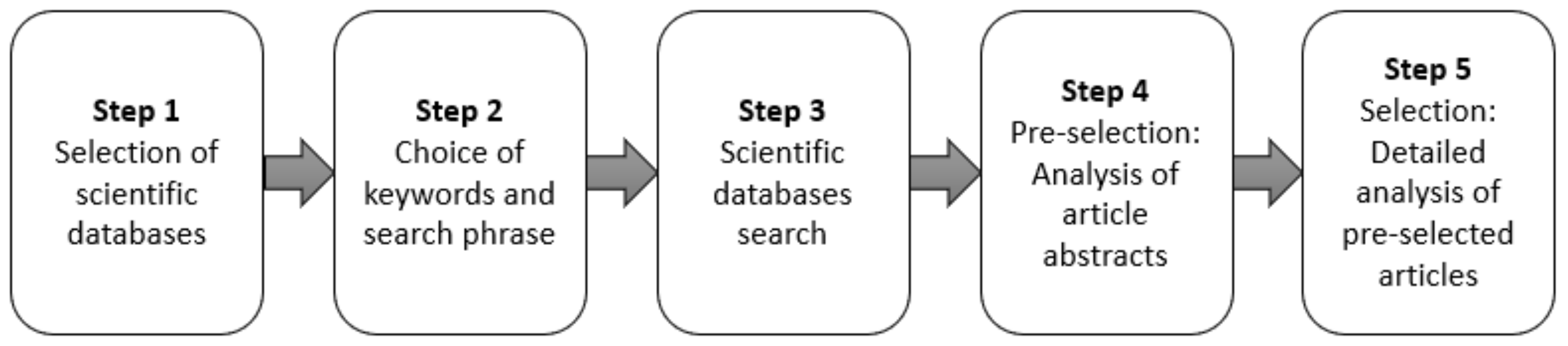
The systematic literature review was based on the studies of [24,25,26], according to the five steps briefly described in Figure 1.
Figure 1.
Steps of the systematic literature review.
In view of the scope and recognition as sources of dissemination of scientific knowledge, the Scopus and Web of Science databases were selected. The focus on scientific journals follows the argument presented by [24], which justify the use of these means due to representing the highest level of investigation, since such vehicles are generally used by academics and professionals to acquire knowledge and disseminate new results. The use of such databases also allows to avoid the gray literature.
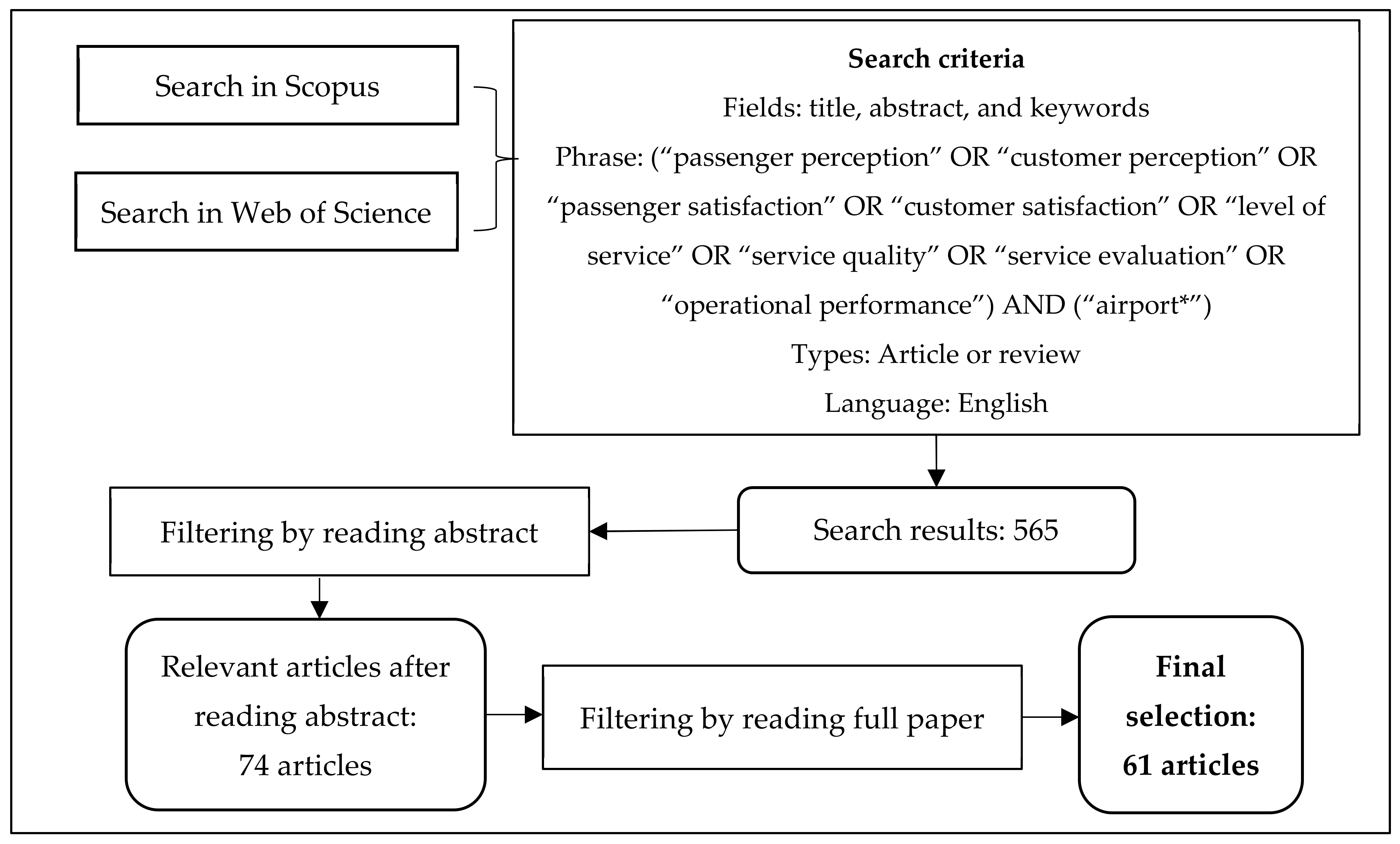
The keywords were chosen for their affinity with the purpose of the study. They were combined in the following search phrase: (“passenger perception” OR “customer perception” OR “passenger satisfaction” OR “customer satisfaction” OR “level of service” OR “service quality” OR “service evaluation” OR “operational performance”) AND (“airport*”).
The search fields were title, abstract and, keywords. Time limitation (years) filters were not applied since the intention was to cover all studies at any time. The search covered only articles and reviews from journals (so technical reports/congress proceedings were not considered). Excluding redundant studies, present in both databases, final set resulted in 565 articles. Table 1 summarizes the results.
Table 1.
Results from searches in databases.
The preselection of articles involved reading abstracts of all articles identified in the databases. At the end of the analysis of article abstracts, 74 studies were preselected, as they involved somehow evaluating the quality of service at airport passenger terminals. It is important to note that studies involving other aspects of air service quality, such as customer behavior or travel experience (including onboard), were not selected, as they are not related to the objective of the present research.
Finally, after reading and analyzing the full papers in detail, 61 studies were selected to compose the final basis of this article, due to their adequacy to research problem. Regarding the type, the final set of studies presents 57 articles and only 4 reviews. A list of the final selection is presented in Table A1 in Appendix A. Figure 2 summarizes the framework of the search and analysis process.
Figure 2.
Framework of the search and analysis process.
3. Results and Discussion
In this section, results from the analysis of the systematic literature review are presented. In order to facilitate understanding and discussion, the analysis is divided into subsections, focused on: (1) places of application (countries/regions); (2) airport areas; (3) evaluators profile; (4) methods; and (5) evaluation criteria.
3.1. Places of Application
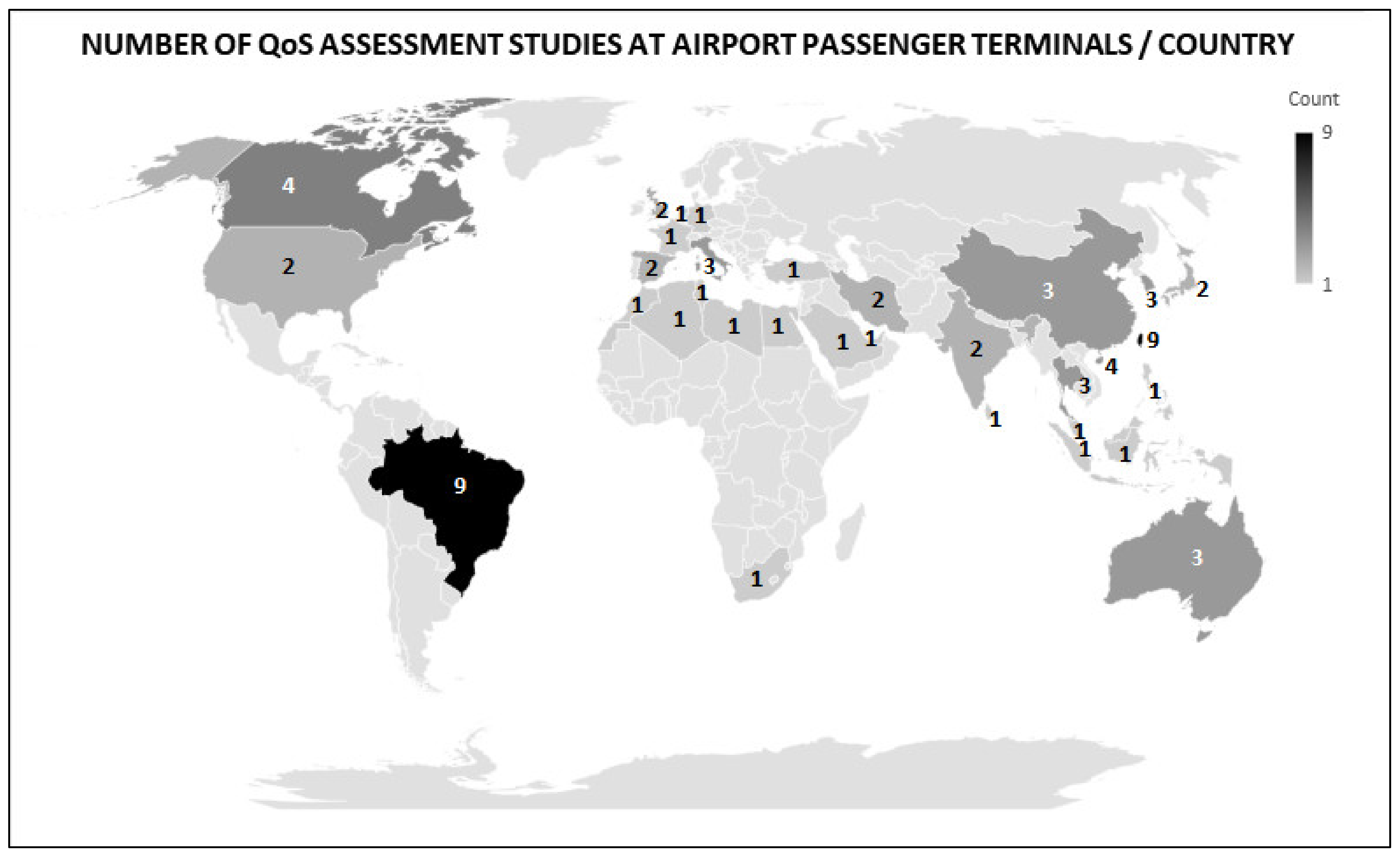
Most studies of the final selection (approximately 85%) have applications in certain locations. Taiwan and Brazil are the countries with the highest number of applied studies, each presenting nine studies. Then, Canada and Hong Kong, each with four applied studies. In order to have a better visualization of the geographic distribution and concentration of the studies, Figure 3 presents a map with the representation of the countries and the respective number of applied studies. It is noteworthy that the counting of studies was based on the location where the airports are sited and not the country of origin of the authors (or even the institution to which they are affiliated).
Figure 3.
Geographical distribution of QoS assessment studies at airport passenger terminals (application).
Figure 3 demonstrates that the applications of QoS studies at airport passenger terminals are concentrated mainly in the following regions: North America; Brazil; North Africa; southern Europe; south, southeast, and east Asia; and Australia. This scenario shows that the following regions lack applications: Central America and the Caribbean; South America (with the exception of Brazil); Africa (with the exception of the northern region); Northern and Eastern Europe; and Central Asia.
As we can see, studies are lacking for many regions with underdeveloped or developing countries. This finding goes against the fact that these regions need a greater concentration of studies to leverage the development of airport infrastructure, precisely because they are less economically developed.
It is also noteworthy that most studies are applied to only one location, being restricted to a single country or even, in many cases, to a single airport. The study of [4] was identified in the literature as the study that covered the largest number of airports and countries. The paper presents a fuzzy multi-attribute decision-making approach to assess the quality of service of the 14 major airports in Asia-Pacific, involving 11 countries (Thailand, Indonesia, Hong Kong, Japan, Malaysia, Australia, Philippines, China, South Korea, Singapore, and Taiwan).
Three other studies applied to more than one country were identified. Firstly, ref. [27], using a multicriteria fuzzy approach, evaluate the QoS of the five main airports in Northeast Asia, located in Hong Kong, Japan, China, South Korea, and Taiwan. Furthermore, ref. [6], in turn, also using a multicriteria fuzzy method, evaluate and compare the QoS of the five main airports in North Africa, including Algeria, Egypt, Tunisia, Morocco, and Libya. Finally, ref. [28] measure service level using textual analysis of a blog that contains passenger opinions about airport services. The study is applied to the opinions of five European airports, located in the Netherlands, Germany, Spain, England, and France.
There are still other studies that, even though restricted to a single country, were applied to more than one airport. The authors of [15], for example, through a multicriteria approach with De Borda and AHP integration, analyze the operational performance of twelve international airports located in Brazil.
In this context, we can also mention the studies of [29,30]. The former compares the QoS of three airports in the United Arab Emirates (Sharjah International Airport, Abu Dhabi International Airport and Dubai International Airport), while the latter comparatively evaluates the QoS of three Italian airports located in Sicily (Catania-Fontanarossa International Airport, Palermo-Punta Raisi International Airport and Trapani-Birgi International Airport).
3.2. Airport Areas
The QoS assessment studies at airport passenger terminals can be divided according to the breadth of their application. There are those who want to assess the QoS globally, including all areas of the airport, from access and check in, to the components of arrival (disembarkation) at the airport. On the other hand, there are those who are evaluating specific areas of the airport terminal, without claiming to be a global assessment of the QoS.
It was found that approximately 75% of the studies are global, evaluating all areas of the airport terminal, while 25% are specific studies, focusing on a certain area of the airport, such as check in, security screening, and wayfinding, among others.
Table 2 presents a compilation of the specific studies.
Table 2.
Specific studies.
As shown in Table 2, arrival components, check in, and wayfinding each have three specific studies to assess the QoS. The check in and baggage claim areas, departure lounge, airport environment, ground staff and security screening, each have only one assessment study. In view of the distribution of specific studies, it is possible to observe that there is still a lack of work that focuses on certain areas of the airport terminal. There are no specific studies for access, including ground transportation, parking, and rental car facilities. As well as the lack of a greater number of specific studies for important areas, such as: security screening, evaluating waiting time, efficiency of security inspection and courtesy/helpfulness of security staff; and airport environment, checking general cleanliness, levels of thermal and acoustic comfort, lighting, and aesthetics, among other ambience aspects.
3.3. Evaluators Profile
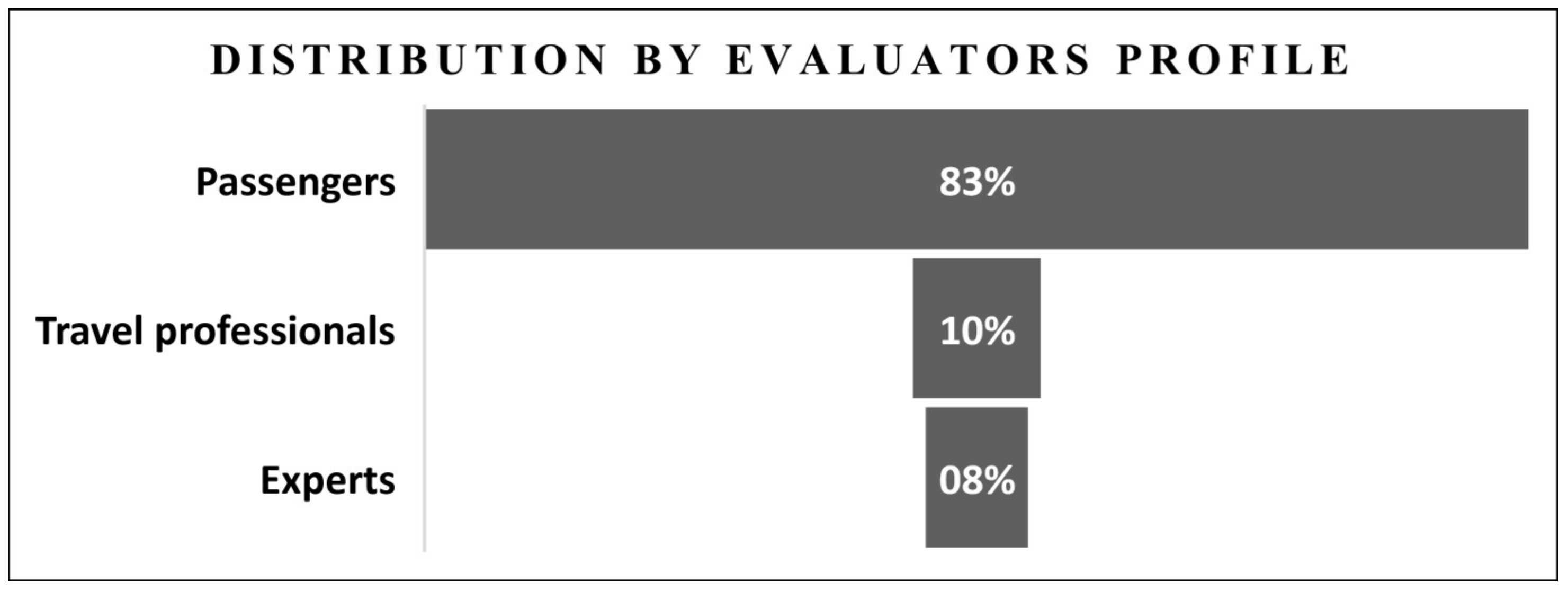
In general, QoS assessment studies use opinions or judgments from different evaluators profiles to compose the measurement of the level of services at airport terminals. The vast majority make use of opinion polls with passengers, since they are the end customers of the service provided. However, there are studies that use other types of evaluator profiles, such as travel professionals (tour guides and travel agents), as well as experts, ranging from airport and airlines executives, government regulatory managers, to professionals from academics and aviation industry. Figure 4 shows the percentage distribution of studies by profile.
Figure 4.
Distribution of studies by evaluators profile.
As explained in Figure 4, approximately 83% of the studies analyzed use passengers as evaluators. On the other hand, only 17% use travel professionals and experts. Although the quality of service is usually defined as customer satisfaction (in this case, passenger satisfaction), it is also important to be attentive to the eyes of other subjects in the airport context, as they have experienced visions to achieve passenger satisfaction.
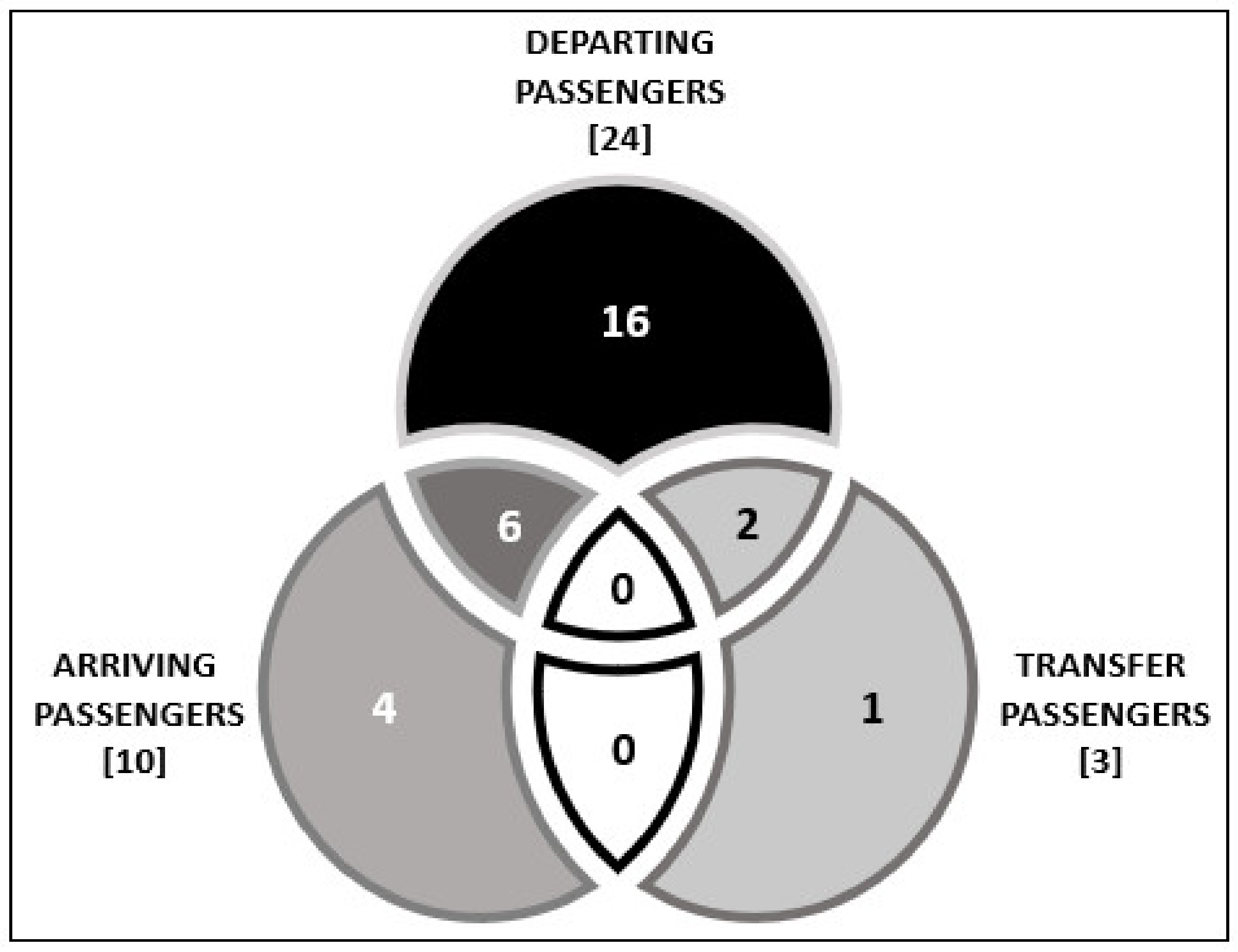
Considering only the studies that used passengers as evaluators, an important question about the profile of these passengers emerges as, depending on the purpose of passing through the airport, such passengers will use different types of services. For example, a passenger boarding will use check in, security screening and services related to the departure lounge. A passenger disembarking, in turn, will use immigration, customs, and baggage claim services. In this context, it is relevant to verify which passenger profiles are being used by the studies. Figure 5 presents a Venn diagram with the distribution of study quantities by passengers’ profile.
Figure 5.
Distribution of study quantities by passengers’ profile.
As can be seen from the diagram shown in Figure 5, the portion with the largest number (16) represents studies that used exclusively evaluations from departing passengers. If seen in general, the portion of studies that used evaluations from departing passengers (24) is also larger than those that used evaluations from arriving (10) and transfer passengers (3).
The authors of [41] carried out the only study dedicated exclusively to transfer passengers. The study is justified by the fact that the needs of transfer passengers are slightly different from those departing or arriving at the airport. The authors argue that, although the importance of this type of passenger is increasing, little research has been carried out to determine their specific needs.
In addition to the study by [41], only two other studies were identified that record the use of evaluations from transfer passengers, but not exclusively [35,36]. Both studies used the opinions from departing and transfer passengers and had the same objective, of assessing the ease of wayfinding in the departure lounge of Hong Kong International Airport.
Finally, it should be noted that there are no studies that recorded the use of assessments from arriving and transfer passengers together. Furthermore, even more alarmingly, there is no record of studies that use the three passenger profiles together.
3.4. Methods
QoS assessment at airport passenger terminals has been the subject of scientific studies over practically three decades, from the late 1980s to the present day. During this period, evaluation methods have evolved and modified greatly, some being used extensively for more than a decade, and others only occasionally.
From highway planning experiences, ref. [1] suggested the first study in the airport area, proposing a method for improving the design of airport terminals that uses the service level concept to indicate the interaction of time with space provision. After this pioneering study, others have emerged using different methods.
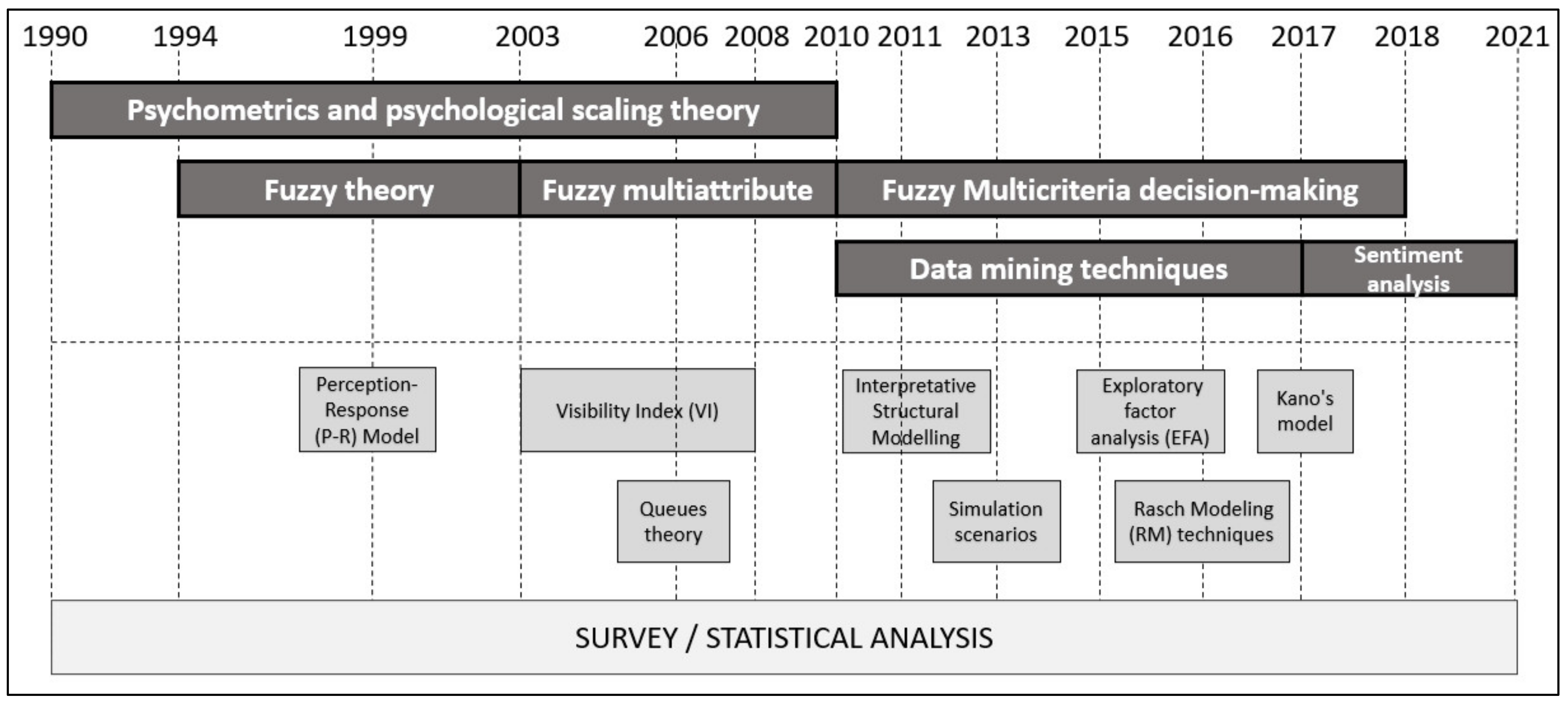
At the beginning of the 1990s, QoS studies were initiated based on psychometric theory, a branch of psychology that is oriented to the measurement of psychic processes, making it possible to compare the psychological characteristics of different people in an objective way. The first report was made by [33], which transformed qualitative evaluations from a survey with passengers at San Francisco international airport, in the United States, into a quantitative scale, allowing the validation of the level of service experienced by users. As a result, the authors present a causal relationship between waiting time and congestion in the check in area, and the consequent perceived level of service.
The use of psychometric theory has spanned decades. The authors of [17], for example, proposed a methodology for assessing service level using psychometry as a mathematical tool for transforming qualitative data into quantitative ones. The study was conducted in the check in area of São Paulo international airport/Guarulhos and considered the factors of processing time, waiting time and available space per person. Psychometric techniques were also used by [13,17,32].
Soon after psychometrics, another important group of methods that began to be used to assess the QoS performance was multicriteria decision-making (MCDM), mainly associated with fuzzy logic. As pointed out by [4], with simplicity in concept and computation, this type of approach has practical use in performance evaluations of airport services involving subjective judgments of qualitative attributes.
Although still not incorporating MCDM, ref. [42] brought the first use of fuzzy set theory to assess QoS at airport passenger terminals. The authors reported the failure of previous methodologies to directly incorporate passengers’ perceptions. Thus, they explored the use of fuzzy sets, particularly linguistic models. The authors of [4], in turn, developed a multi-attribute fuzzy evaluation model to obtain a global service performance index for each of the 14 major airports in Asia-Pacific. Based on the concept of optimization degree, a general service performance index was obtained for each airport, incorporating the level of confidence of the decision maker and the preference in the respondents’ fuzzy assessments.
The authors of [43] effectively reported the first attempt to establish an MCDM method in which passengers can assign weights (importance) to evaluation criteria. The survey was carried out at the international airports of Taipei and Kaohsiung, both located in Taiwan, based on several evaluation criteria, grouped in the following dimensions: check in; immigration process; customs inspection; and general. MCDM techniques have been widely used since then, as reported by [6,9,14,15,27,30,44,45,46,47,48].
A relevant issue in the MCDM methods used so far refers to the fact that modellings apply compensatory methods, such as AHP and TOPSIS. There was found only one study using a noncompensatory MCDA method. The study [30] applies Electre III ranking method, although it uses a compensatory preprocessing algorithm (the weighted sum) to define the inputs to Electre III. Therefore, there is a lack of full noncompensatory multicriteria sorting methods to classify the QoS in airport context.
The third and last major group of methods for assessing QoS at airport passenger terminals is data mining and sentiment analysis techniques. The authors of [49] reported the first use of a data mining—DRSA (the dominance based rough set approach) technique—to assess the overall service level of an airport terminal from the point of view of passengers. A set of "if…then…" decision rules was used in the preference model. The empirical results confirmed the adequacy of the DRSA method, which proved to be more reliable than traditional methodologies, since the user does not need to make unrealistic hypotheses.
Still in the field of data mining, based on Herzberg’s two factor motivation theory, ref. [50] identified which air travel factors demotivate and which enhance the satisfaction of passengers. The study employed varied data mining techniques to analyze 1095 traveler comments posted between 2010 and 2013 on a website about 33 airports. Data mining techniques produced summaries of qualitative comments in the form of clouds, networks, and word tree images.
In 2017, the first report on the use of sentiment analysis was identified in the literature. The authors of [28] assessed QoS using the textual analysis of a blog that contains passenger opinions about airport services. The study identified the strengths, weaknesses, and synergies of the proposed approach in assessing users’ perceptions about quality of airport services. Data mining and sentiment analysis techniques were also used by [51,52,53].
In addition to the previous methods, the literature still presents several other methods, but in a less intense and more punctual way, such as a perception–response (PR) model [54], queuing theory [34], structural equation modelling [55], and importance–performance analysis [56,57,58]. It should also be noted that surveys and statistical analysis, especially regressions, have always been frequent in assessing QoS at airport passenger terminals, either as tools to support the methods or as the main instrument of the studies [59,60,61,62,63,64,65,66,67].
Figure 6 presents a chronological scheme to assist in understanding the evolution of the methods. The main groups of methods are allocated at the top of the scheme.
Figure 6.
Chronological scheme of methods for assessing QoS at airport passenger terminals.
3.5. Evaluation Criteria
The last focus of literature review analysis is related to evaluation criteria used by the studies. A total of 53 studies were identified that made explicit the criteria used to assess QoS. The number of criteria used by studies varies widely. There are both studies that used only a single criterion and studies that used dozens of evaluation criteria. The authors of [35,36,37], for example, used only “wayfinding” as evaluation criterion. On the other hand, ref. [47] used 41 criteria to assess QoS.
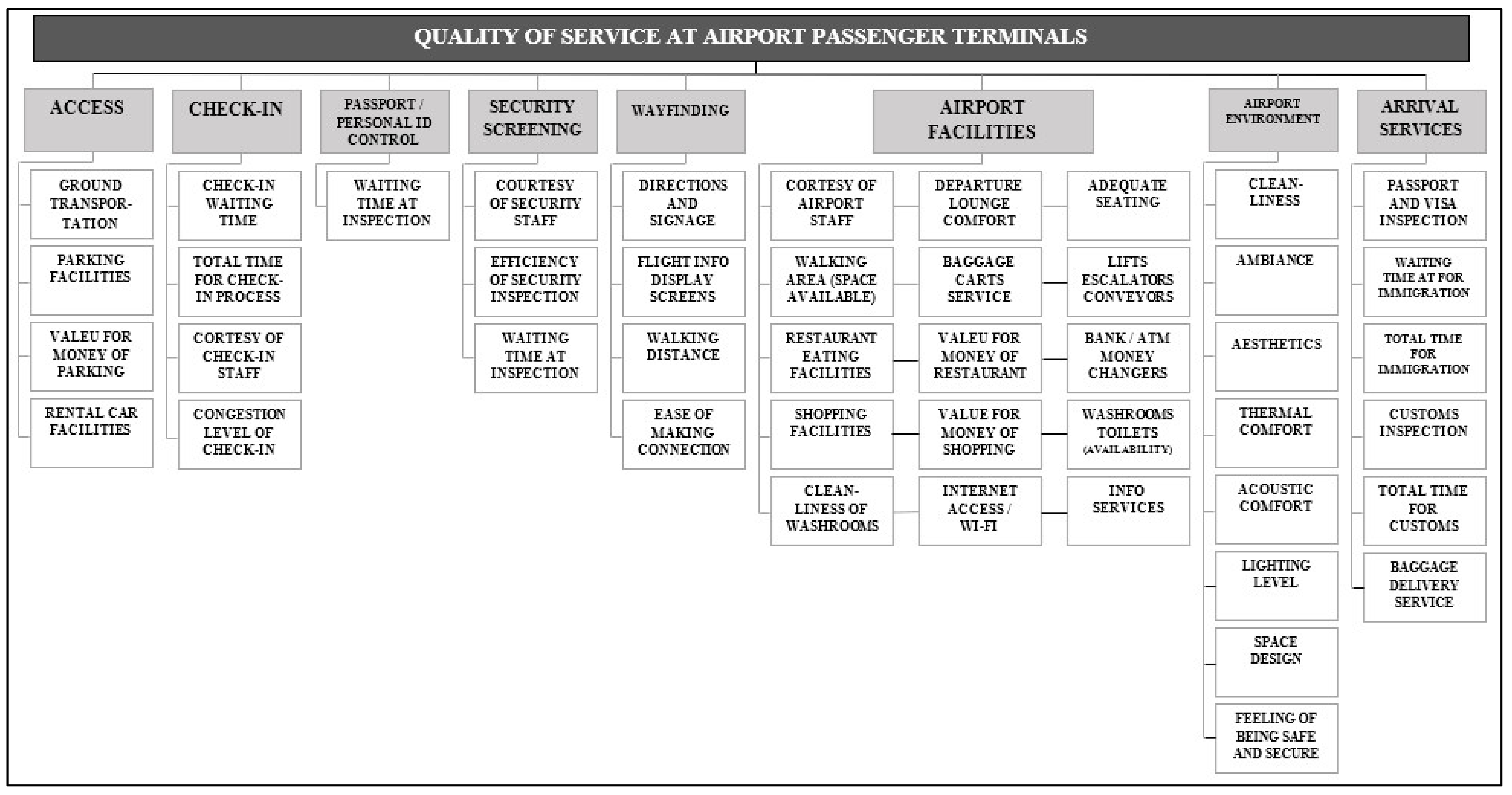
After extensive analysis of the studies, the criteria used were grouped by analogy and similarity. Ultimately, 83 criteria were identified, which were grouped into eight major dimensions: (I) Access; (II) Check-in; (III) Passport/Personal ID Control; (IV) Security Screening; (V) Wayfinding; (VI) Airport Facilities; (VII) Airport Environment; and (VIII) Arrival Services. The criterion “general satisfaction” was also identified, but it was not included in any dimension.
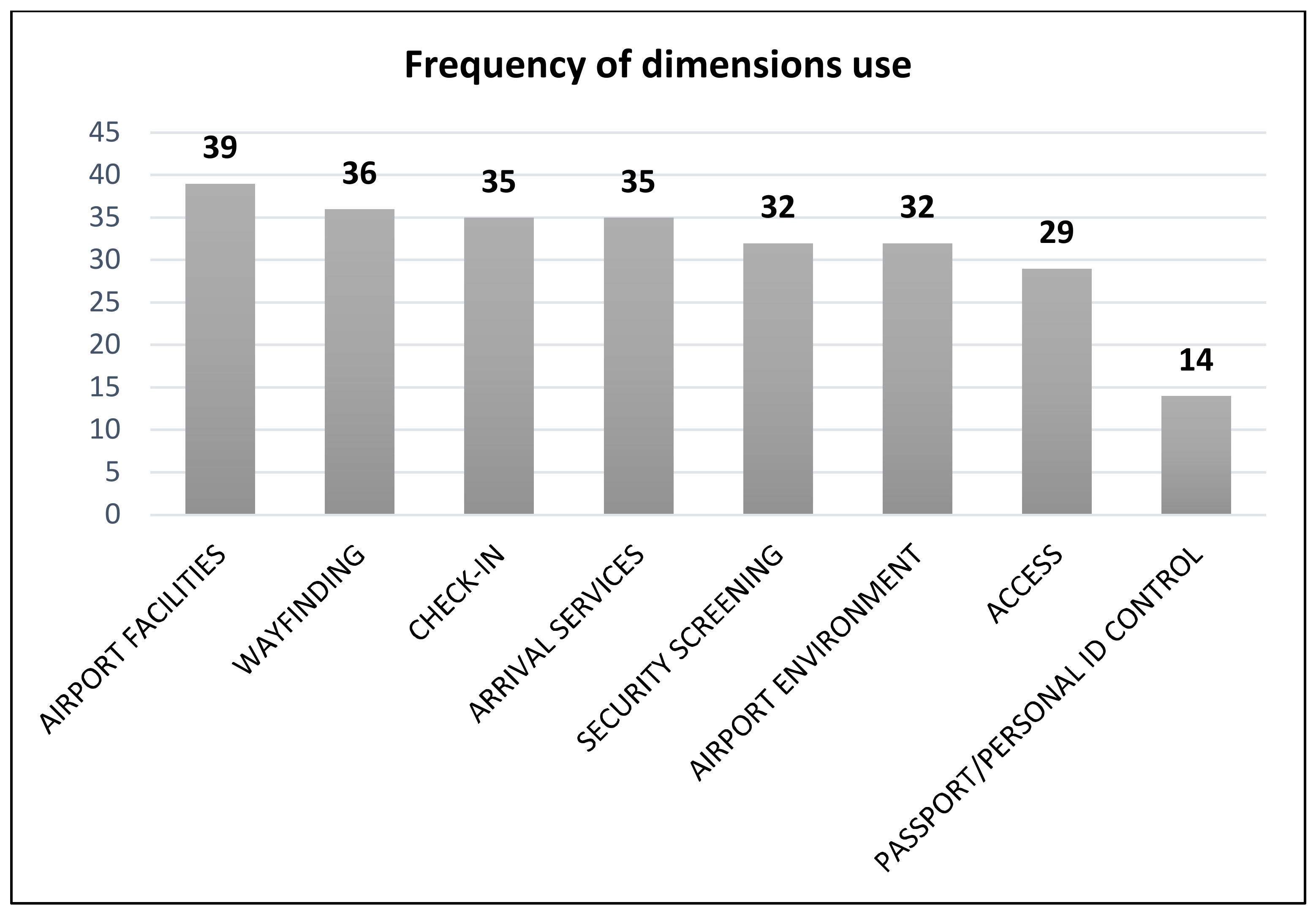
Based on the frequency of use in the studies, the dimension “Airport Facilities” was the most used (39 studies), followed by “Wayfinding”, “Arrival Services” and “Check-in”. The “Passport/Personal ID Control” dimension is the only one with a frequency well below the average, having been used in only 14 studies. Figure 7 shows a graph with the frequency of each dimension in the studies.
Figure 7.
Frequency of dimensions use.
Due to the large number of identified criteria (83), a structure composed of the criteria with relevant use throughout the literature was developed. A criterion was considered relevant when used in at least 10% of the studies analyzed. This cut aims to remove aspects disused, specific, or minimally expected by airport passenger terminals. Figure 8 presents the proposed multicriteria structure for assessing QoS at airport passenger terminals. At this point, it is important to note that the structure proposed covers the usual needs of criteria evaluation in the pre-COVID-19 era.
Figure 8.
Multicriteria structure for assessing QoS at airport passenger terminals.
As we can see in Figure 8, it is not possible to verify criteria directly related to sustainability, showing that they are not yet considered in a relevant way by the studies. Due to the growing importance of the topic, criteria such as a terminal’s energy efficiency, green areas, selective collection, and recycling could be included in a new dimension, named “Sustainability”.
4. Conclusions
One of the biggest challenges found today, worldwide, by airport operators is the availability of a service that not only meets the quality desired by its customers, but that surpasses it. In this context, several important issues must be considered so that the method of establishing QoS is consistent with the reality presented at airport terminals.
Research carried out on the subject so far has not yet managed to converge to a single procedure or standard, universally accepted for assessing the QoS at airport passenger terminals. These studies have very diverse characteristics, varying considerably, from the methods and criteria to the places of application and evaluators profiles of the studies. It is not an easy task for an airport operator to have a clear vision of which path to follow within its particular context. Thus, to assist airport managers in this great challenge, the present study investigated the evolution of QoS assessment processes at airport passenger terminals, deeply analyzing its main aspects, in order to find the gaps and evidence trends.
The first gap revealed by the systematic literature review of assessing QoS at airport passenger terminals is related to the places of the application of the studies. The regions that lack applied studies to assess the QoS at their airports are predominantly locations with underdeveloped or developing countries—such as, Central and South America (with the exception of Brazil) and Africa (with the exception of northern region)—and that, precisely because of this, would need a greater concentration of studies to leverage the development of airport infrastructure.
In terms of the breadth of studies’ application in airport areas, the majority of studies are global, presenting the intention of evaluating all areas. However, in the context of specific studies, which assess a limited number of areas, studies are still needed for important airport areas, such as the dimension “access”, including ground transportation, parking, and rental car facilities.
The analysis also revealed an important issue regarding the evaluators profile used in the studies. Passengers are the evaluators in approximately 4/5 of the studies, highlighting the great importance given to the final customer of the service as the main actor in the process. However, the views of other stakeholders, such as travel professionals and experts, may be relevant in some ways, especially the more technical ones. In such aspects, customers’ point of view can be very immediate, while that of specialists can be more critical and collaborate more effectively for continuous improvement, in the medium and long term.
Still regarding the profile of the evaluators, another important gap appears: the vast majority of studies use exclusively evaluations from departing passengers. Therefore, studies using assessments from arriving and transfer passengers are lacking. It is essential that opinions from different passenger profiles are heard when evaluating the QoS of an airport terminal, so that all possible experiences are properly considered in the assessment process.
Regarding the assessment methods, three main groups were identified in the literature over time. The first one—psychometrics—was used for two decades, from the 1990s to 2010. The second group of methods—fuzzy multicriteria decision-making—has been used widely since the 1990s, with the most varied approaches. However, a relevant aspect refers to the fact that modellings apply compensatory methods, revealing a lack of full noncompensatory multicriteria sorting methods to classify the QoS in airport context. Lastly, the advancement in the use of data mining, especially and more recently sentiment analysis, shows the enormous importance of dealing with the sources of online information nowadays. In the new era of social media, the performance of QoS attributes can also be detected through these platforms, being crucial as a management tool for any airport operator.
The evaluation criteria were the last focus of the literature review. From the analysis by analogy and similarity, 83 criteria were identified and grouped into eight major dimensions. The dimension “Airport Facilities” was the most used by the studies, while “Passport/Personal ID Control” was the least used. It is important to be clear that the criteria/dimensions found cover the usual needs of evaluation criteria in the pre-COVID-19 era. Nowadays, it would be interesting to introduce new criteria, such as biological security, social distancing space, and digital channels/technologies.
Furthermore, it is recommended that a new dimension related to sustainability be included in the multicriteria structure for assessing QoS at airport passenger terminals. This new “Sustainability” dimension will not only help to increase customer satisfaction, but also to achieve sustainable development goals pursued by airport operators.
The findings of this study have to be seen in light of some limitations that concern mainly the framework of the search and analysis process, including the selected databases and the fact of covering only articles and reviews from journals. Furthermore, it is important to highlight that, in line with the research objective, the selection of studies focused on papers assessing the quality of service at airport passenger terminals, so that other aspects of air service quality, such as customer behavior or travel experience, were not covered.
Finally, by pointing out gaps and trends in the context of assessing QoS at airport passenger terminals, the present work hopes to have achieved its goal of going beyond previous review studies, contributing to the development of a robust model, capable of meeting today’s major challenges and that can be widely accepted. The main conclusions highlighted in this study can greatly help managers in deciding what variables, criteria, or methods to be applied in customizing the QoS assessment process. It is also expected to assist them for continuous improvement, as well as for strategic planning and investment allocation.
Author Contributions
P.M.d.R., H.G.C. and G.B.d.S. have contributed equally. All authors have read and agreed to the published version of the manuscript.
Funding
This research received no external funding.
Institutional Review Board Statement
Not applicable.
Informed Consent Statement
Not applicable.
Data Availability Statement
Not applicable.
Acknowledgments
Coordenação de Aperfeiçoamento de Pessoal de Ensino Superior; and Conselho Nacional de Desenvolvimento Científico e Tecnológico.
Conflicts of Interest
The authors declare no conflict of interest.
Appendix A
Table A1.
Final selection: list of the papers studied.
Table A1.
Final selection: list of the papers studied.
| No. | Title | Journal |
|---|---|---|
| 1 | Level of service design concept for airport passenger terminals: A european view | Transportation Planning and Technology |
| 2 | A framework for evaluating level of service for airport terminals | Transportation Planning and Technology |
| 3 | Variables influencing performance of air terminal building | Transportation Planning and Technology |
| 4 | Evaluation of transportation level of service using fuzzy sets | Transportation Research Record |
| 5 | A methodology for establishing operational standards of airport passenger terminals | Journal of Air Transport Management |
| 6 | Developing a quality index for US airports | Managing Service Quality |
| 7 | Measuring the level of services at airport passenger terminals: Comparison of perceived and observed time | Transportation Research Record |
| 8 | User-perceived level-of-service evaluation model for airport baggage-handling systems | Transportation Research Record |
| 9 | Evaluating passenger services of Asia-Pacific international airports | Transportation Research Part E: Logistics and Transportation Review |
| 10 | Wayfinding in the passenger terminal of Hong Kong International Airport | Journal of Air Transport Management |
| 11 | Evaluating level of service at airport passenger terminals: Review of research approaches | Transportation Research Record |
| 12 | Determination of service levels for passenger orientation in Hong Kong International Airport | Journal of Air Transport Management |
| 13 | Measuring service quality at King Fahd International Airport | International Journal of Services and Standards |
| 14 | Airport security screening and changing passenger satisfaction: An exploratory assessment | Journal of Air Transport Management |
| 15 | Tourism service quality begins at the airport | Tourism Management |
| 16 | Passengers’ expectations of airport service quality | Journal of Services Marketing |
| 17 | Development of level of service standards for airport facilities: Application to São Paulo International Airport | Journal of Air Transport Management |
| 18 | Evaluation of level of service for transfer passengers at airports | Journal of Air Transport Management |
| 19 | Overall level of service measures for airport passenger terminals | Transportation Research Part A: Policy and Practice |
| 20 | Analysis of level of service at airport departure lounges: User perception approach | Journal of Transportation Engineering |
| 21 | Quantifying and validating measures of airport terminal wayfinding | Journal of Air Transport Management |
| 22 | A global index for level of service evaluation at airport passenger terminals | Transportation Research Part E: Logistics and Transportation Review |
| 23 | Voice of Turkish customer: Importance of expectations and level of satisfaction at airport facilities | Review of European Studies |
| 24 | An ordinal logistic regression model for analysing airport passenger satisfaction | EuroMed Journal of Business |
| 25 | A model for the evaluation of airport service quality | Proceedings of the Institution of Civil Engineers: Transport |
| 26 | A quality approach to airport management | Quality & Quantity |
| 27 | Level of service analysis for airport baggage claim with a case study of the Calgary International Airport | Journal of Advanced Transportation |
| 28 | Combining VIKOR with GRA techniques to evaluate service quality of airports under fuzzy environment | Expert Systems with Applications |
| 29 | A gap analysis model for improving airport service quality | Total Quality Management & Business Excellence |
| 30 | Measuring quality of service in airport passenger terminals | Transportation Research Record |
| 31 | An application of the airport service quality model in South Africa | Journal of Air Transport Management |
| 32 | A decision rules approach for improvement of airport service quality | Expert Systems with Applications |
| 33 | A hybrid approach for multi-criteria evaluation of airport service quality | International Journal of Services and Standards |
| 34 | Evaluating the quality of airport service using the fuzzy multi-criteria decision-making method: A case study of Taiwanese airports | Expert Systems |
| 35 | Airport service quality drivers of passenger satisfaction | Tourism Review |
| 36 | A method for evaluating the level of service arrival components at airports | Journal of Air Transport Management |
| 37 | Customer service in the aviation industry - An exploratory analysis of UAE airports | Journal of Air Transport Management |
| 38 | ASQual: Measuring tourist perceived service quality in an airport setting | International Journal of Business Excellence |
| 39 | Fuzzy ServPerf model combined with ELECTRE III to comparatively evaluate service quality of international airports in Sicily | Journal of Air Transport Management |
| 40 | The effects of service quality dimensions and passenger characteristics on passenger’s overall satisfaction with an airport | Journal of Air Transport Management |
| 41 | Passengers’ perspective toward airport service quality: The comparison between TPE and TSA | Journal of Aeronautics, Astronautics and Aviation: Series A |
| 42 | Performance measurement in airport settings: a systematic literature review | Benchmarking: An International Journal |
| 43 | A Robust Multi-Criteria Decision-Making Framework for Evaluation of the Airport Service Quality Enablers for Ranking the Airports | Journal of Quality Assurance in Hospitality & Tourism |
| 44 | Analysis of the operational performance of brazilian airport terminals: A multicriteria approach with De Borda-AHP integration | Journal of Air Transport Management |
| 45 | Evaluating service quality of airports with integrating TOPSIS and VIKOR under fuzzy environment | International Journal of Services, Economics and Management |
| 46 | Exploring different nationality perceptions of airport service quality | Journal of Air Transport Management |
| 47 | Measuring airport service quality: A multidimensional approach | Journal of Air Transport Management |
| 48 | An assessment of passenger experience at Melbourne Airport | Journal of Air Transport Management |
| 49 | Evaluating the service quality of airports in Thailand using fuzzy multi-criteria decision making method | Journal of Air Transport Management |
| 50 | Impact of individual IEQ factors on passengers’ overall satisfaction in Chinese airport terminals | Building and Environment |
| 51 | A TOPSIS method based on intuitionistic fuzzy values: A case study of North African airports | Management Science Letters |
| 52 | Improving airport services using sentiment analysis of the website | Tourism Management Perspectives |
| 53 | Monitoring quality of service at Australian airports: A critical analysis | Journal of Air Transport Management |
| 54 | Assessment of airport service quality: A complementary approach to measure perceived service quality based on Google review | Journal of Air Transport Management |
| 55 | An integrated approach for prioritizing the barriers to airport service quality in an intuitionistic-fuzzy environment | Cogent Business and Management |
| 56 | Service quality improvement of ground staff at Don Mueang International Airport | Kasetsart Journal of Social Sciences |
| 57 | Social media as a resource for sentiment analysis of Airport Service Quality (ASQ) | Journal of Air Transport Management |
| 58 | An IPA-Kano model for classifying and diagnosing airport service attributes | Research in Transportation Business & Management |
| 59 | Functional efficiency in airport terminals: A review on overall and stratified service quality | Journal of Air Transport Management |
| 60 | Key drivers of passengers’ overall satisfaction at klia2 terminal | Journal of Air Transport Management |
| 61 | Applying deep learning models to twitter data to detect airport service quality | Journal of Air Transport Management |
References
- Ashford, N. Level of service design concept for airport passenger terminals: A european view. Transp. Plan. Technol. 1988, 12, 5–21. [Google Scholar] [CrossRef]
- Francis, G.; Humphreys, I.; Fry, J. An international survey of the nature and prevalence of quality management systems in airports. Total Qual. Manag. Bussiness Excell. 2003, 14, 819–829. [Google Scholar] [CrossRef]
- Gosling, G.D. Airport Landside Planning Techniques: Introduction. Transp. Res. Rec. 1988, 1199, 1–3. [Google Scholar]
- Yeh, C.-H.; Kuo, Y.-L. Evaluating passenger services of Asia-Pacific international airports. Transp. Res. Part E Logist. Transp. Rev. 2003, 39, 35–48. [Google Scholar] [CrossRef]
- Tsai, W.-H.; Kuo, H.-C. A hybrid approach for multi-criteria evaluation of airport service quality. Int. J. Serv. Stand. 2011, 7, 78–94. [Google Scholar] [CrossRef]
- Tlig, H.; Rebai, A. A TOPSIS method based on intuitionistic fuzzy values: A case study of North African airports. Manag. Sci. Lett. 2017, 7, 351–358. [Google Scholar] [CrossRef]
- Rhoades, D.L.; Waguespack, B., Jr.; Young, S. Developing a quality index for US airports. Manag. Serv. Qual. 2000, 10, 257–262. [Google Scholar] [CrossRef]
- Trischler, J.; Lohmann, G. Monitoring quality of service at Australian airports: A critical analysis. J. Air Transp. Manag. 2018, 67, 63–71. [Google Scholar] [CrossRef]
- Prakash, C.; Barua, M.K. A Robust Multi-Criteria Decision-Making Framework for Evaluation of the Airport Service Quality Enablers for Ranking the Airports. J. Qual. Assur. Hosp. Tour. 2016, 17, 351–370. [Google Scholar] [CrossRef]
- Gkritza, K.; Niemeier, D.; Mannering, F. Airport security screening and changing passenger satisfaction: An exploratory assessment. J. Air Transp. Manag. 2006, 12, 213–219. [Google Scholar] [CrossRef]
- Lubbe, B.; Douglas, A.; Zambellis, J. An application of the airport service quality model in South Africa. J. Air Transp. Manag. 2011, 17, 224–227. [Google Scholar] [CrossRef]
- Correia, A.R.; Wirasinghe, S.C.; De Barros, A.G. A global index for level of service evaluation at airport passenger terminals. Transp. Res. Part E Logist. Transp. Rev. 2008, 44, 607–620. [Google Scholar] [CrossRef]
- Correia, A.R.; Wirasinghe, S.C.; De Barros, A.G. Overall level of service measures for airport passenger terminals. Transp. Res. Part A Policy Pract. 2008, 42, 330–346. [Google Scholar] [CrossRef]
- Fernandes, E.; Pacheco, R.R. A quality approach to airport management. Qual. Quant. 2010, 44, 551–564. [Google Scholar] [CrossRef]
- Rocha, P.M.; Barros, A.P.; Silva, G.B.; Costa, H.G. Analysis of the operational performance of Brazilian airport terminals: A multicriteria approach with De Borda-AHP integration. J. Air Transp. Manag. 2016, 51, 19–26. [Google Scholar] [CrossRef]
- Correia, A.R.; Wirasinghe, S.C. Development of level of service standards for airport facilities: Application to São Paulo International Airport. J. Air Transp. Manag. 2007, 13, 97–103. [Google Scholar] [CrossRef]
- Correia, A.R.; Wirasinghe, S.C. Analysis of level of service at airport departure lounges: User perception approach. J. Transp. Eng. 2008, 134, 105–109. [Google Scholar] [CrossRef]
- Borille, G.M.R.; Correia, A.R. A method for evaluating the level of service arrival components at airports. J. Air Transp. Manag. 2013, 27, 5–10. [Google Scholar] [CrossRef]
- Correia, A.R.; Wirasinghe, S.C. Evaluating level of service at airport passenger terminals: Review of research approaches. Transp. Res. Rec. 2004, 1888, 1–6. [Google Scholar] [CrossRef]
- Zidarova, E.D.; Zografos, K.G. Measuring quality of service in airport passenger terminals. Transp. Res. Rec. 2011, 2214, 69–76. [Google Scholar] [CrossRef]
- Bezerra, G.C.L.; Gomes, C.F. Performance measurement in airport settings: A systematic literature review. Benchmarking Int. J. 2016, 23, 1027–1050. [Google Scholar] [CrossRef]
- Thampan, A.; Sinha, K.; Gurjar, B.R.; Rajasekar, E. Functional efficiency in airport terminals: A review on overall and stratified service quality. J. Air Transp. Manag. 2020, 87, 101837. [Google Scholar] [CrossRef]
- Bellizzi, M.G.; Eboli, L.; Mazzulla, G. Air transport service quality factors: A systematic literature review. Transp. Res. Procedia 2020, 45, 218–225. [Google Scholar] [CrossRef]
- Rodriguez, D.S.S.; Costa, H.G.; Do Carmo, L.F.R.R.S. Métodos de auxílio multicritério à decisão aplicados a problemas de PCP: Mapeamento da produção em periódicos publicados no Brasil. Gestão Produção 2013, 20, 134–146. [Google Scholar] [CrossRef][Green Version]
- Neves, R.B.; Pereira, V.; Costa, H.G. Auxílio multicritério à decisão aplicado ao planejamento e gestão na indústria de petróleo e gás. Produção 2015, 25, 43–53. [Google Scholar] [CrossRef][Green Version]
- Silva, G.B.; Costa, H.G. Mapeamento de um núcleo de partida de referências em Data Mining a partir de periódicos publicados no Brasil. Gestão Produção 2015, 22, 107–118. [Google Scholar] [CrossRef][Green Version]
- Kuo, M.-S.; Liang, G.-S. Combining VIKOR with GRA techniques to evaluate service quality of airports under fuzzy environment. Expert Syst. Appl. 2011, 38, 1304–1312. [Google Scholar] [CrossRef]
- Gitto, S.; Mancuso, P. Improving airport services using sentiment analysis of the website. Tour. Manag. Perspect. 2017, 22, 132–136. [Google Scholar] [CrossRef]
- Arif, M.; Gupta, A.; Williams, A. Customer service in the aviation industry: An exploratory analysis of UAE airports. J. Air Transp. Manag. 2013, 32, 1–7. [Google Scholar] [CrossRef]
- Lupo, T. Fuzzy ServPerf model combined with ELECTRE III to comparatively evaluate service quality of international airports in Sicily. J. Air Transp. Manag. 2015, 42, 249–259. [Google Scholar] [CrossRef]
- Pagani, J.; Abd El Halim, A.O.; Hassan, Y.; Easa, S. User-perceived level-of-service evaluation model for airport baggage-handling systems. Transp. Res. Rec. 2002, 1788, 33–42. [Google Scholar] [CrossRef]
- Correia, A.R.; Wirasinghe, S.C. Level of service analysis for airport baggage claim with a case study of the Calgary International Airport. J. Adv. Transp. 2010, 44, 103–112. [Google Scholar] [CrossRef]
- Müller, C.; Gosling, G.D. A framework for evaluating level of service for airport terminals. Transp. Plan. Technol. 1991, 16, 45–61. [Google Scholar] [CrossRef]
- Martín-Cejas, R.R. Tourism service quality begins at the airport. Tour. Manag. 2006, 27, 874–877. [Google Scholar] [CrossRef]
- Lam, W.H.K.; Tam, M.-L.; Wong, S.C.; Wirasingue, S.C. Wayfinding in the passenger terminal of Hong Kong International Airport. J. Air Transp. Manag. 2003, 9, 73–81. [Google Scholar] [CrossRef]
- Tam, M.-L.; Lam, W.H.K. Determination of service levels for passenger orientation in Hong Kong International Airport. J. Air Transp. Manag. 2004, 10, 181–189. [Google Scholar] [CrossRef]
- Churchill, A.; Dada, E.; De Barros, A.G.; Wirasingue, S.C. Quantifying and validating measures of airport terminal wayfinding. J. Air Transp. Manag. 2008, 14, 151–158. [Google Scholar] [CrossRef]
- Yen, J.-R.; Teng, C.-H.; Chen, P.S. Measuring the level of services at airport passenger terminals: Comparison of perceived and observed time. Transp. Res. Rec. 2001, 1744, 17–23. [Google Scholar] [CrossRef]
- Geng, Y.; Yu, J.; Lin, B.; Wang, Z.; Huang, Y. Impact of individual IEQ factors on passengers’ overall satisfaction in Chinese airport terminals. Build. Environ. 2017, 112, 241–249. [Google Scholar] [CrossRef]
- Sricharoenpramong, S. Service quality improvement of ground staff at Don Mueang International Airport. Kasetsart J. Soc. Sci. 2018, 39, 15–21. [Google Scholar] [CrossRef]
- De Barros, A.G.; Somasundaraswaran, A.K.; Wirasinghe, S.C. Evaluation of level of service for transfer passengers at airports. J. Air Transp. Manag. 2007, 13, 293–298. [Google Scholar] [CrossRef]
- Ndoh, N.N.; Ashford, N.J. Evaluation of transportation level of service using fuzzy sets. Transp. Res. Rec. 1994, 1461, 31–37. [Google Scholar]
- Chien-Chang, C. A model for the evaluation of airport service quality. Proc. Inst. Civ. Eng. Transp. 2009, 162, 207–213. [Google Scholar] [CrossRef]
- Tsai, W.-H.; Hsu, W.; Chou, W.-C. A gap analysis model for improving airport service quality. Total Qual. Manag. Bus. Excell. 2011, 22, 1025–1040. [Google Scholar] [CrossRef]
- Chien-Chang, C. Evaluating the quality of airport service using the fuzzy multi-criteria decision-making method: A case study of Taiwanese airports. Expert Syst. 2012, 29, 246–260. [Google Scholar] [CrossRef]
- Kazemi, A.; Attari, M.Y.N.; Khorasani, M. Evaluating service quality of airports with integrating TOPSIS and VIKOR under fuzzy environment. Int. J. Serv. Econ. Manag. 2016, 7, 154–166. [Google Scholar] [CrossRef]
- Pandey, M.M. Evaluating the service quality of airports in Thailand using fuzzy multi-criteria decision making method. J. Air Transp. Manag. 2016, 57, 241–249. [Google Scholar] [CrossRef]
- Mirghafoori, S.H.; Izadi, M.R.; Daei, A. An integrated approach for prioritizing the barriers to airport service quality in an intuitionistic-fuzzy environment. Cogent Bus. Manag. 2018, 5, 1532277. [Google Scholar] [CrossRef]
- Liou, J.J.H.; Tang, C.-H.; Yeh, W.-C.; Tsai, C.-Y. A decision rules approach for improvement of airport service quality. Expert Syst. Appl. 2011, 38, 13723–13730. [Google Scholar] [CrossRef]
- Bogicevic, V.; Yang, W.; Bilgihan, A.; Bujisic, M. Airport service quality drivers of passenger satisfaction. Tour. Rev. 2013, 68, 3–18. [Google Scholar] [CrossRef]
- Lee, K.; Yu, C. Assessment of airport service quality: A complementary approach to measure perceived service quality based on Google review. J. Air Transp. Manag. 2018, 71, 28–44. [Google Scholar] [CrossRef]
- Martin-Domingo, L.; Martín, J.C.; Mandsberg, G. Social media as a resource for sentiment analysis of Airport Service Quality (ASQ). J. Air Transp. Manag. 2019, 78, 106–115. [Google Scholar] [CrossRef]
- Barakat, H.; Yeniterzi, R.; Martin-Domingo, L. Applying deep learning models to twitter data to detect airport service quality. J. Air Transp. Manag. 2021, 91, 102003. [Google Scholar] [CrossRef]
- Park, Y. A methodology for establishing operational standards of airport passenger terminals. J. Air Transp. Manag. 1999, 5, 73–80. [Google Scholar] [CrossRef]
- Isa, N.A.M.; Ghaus, H.; Hamid, N.A.; Tan, P.-L. Key drivers of passengers’ overall satisfaction at klia2 terminal. J. Air Transp. Manag. 2020, 87, 101859. [Google Scholar] [CrossRef]
- Kuo, S.-Y.; Chen, S.-C. Passengers’ perspective toward airport service quality: The comparison between TPE and TSA. J. Aeronaut. Astronaut. Aviat. Ser. A 2015, 47, 335–342. [Google Scholar] [CrossRef]
- Jiang, H.; Zhang, Y. An assessment of passenger experience at Melbourne Airport. J. Air Transp. Manag. 2016, 54, 88–92. [Google Scholar] [CrossRef]
- Tseng, C.C. An IPA-Kano model for classifying and diagnosing airport service attributes. Res. Transp. Bus. Manag. 2020, 37, 100499. [Google Scholar] [CrossRef]
- Seneviratne, P.N.; Martel, N. Variables influencing performance of air terminal building. Transp. Plan. Technol. 1991, 16, 3–28. [Google Scholar] [CrossRef]
- Sohail, M.S.; Al-Gahtani, A.S. Measuring service quality at King Fahd International Airport. Int. J. Serv. Stand. 2005, 1, 482–493. [Google Scholar] [CrossRef]
- Fodness, D.; Murray, B. Passengers’ expectations of airport service quality. J. Serv. Mark. 2007, 21, 492–506. [Google Scholar] [CrossRef]
- Atalik, O. Voice of Turkish customer: Importance of expectations and level of satisfaction at airport facilities. Rev. Eur. Stud. 2009, 1, 61–67. [Google Scholar] [CrossRef][Green Version]
- Eboli, L.; Mazzulla, G. An ordinal logistic regression model for analysing airport passenger satisfaction. EuroMed J. Bus. 2009, 4, 40–57. [Google Scholar] [CrossRef]
- George, B.P.; Henthorne, T.L.; Panko, T.R. ASQual: Measuring tourist perceived service quality in an airport setting. Int. J. Bus. Excell. 2013, 6, 526–536. [Google Scholar] [CrossRef]
- Bezerra, G.C.L.; Gomes, C.F. The effects of service quality dimensions and passenger characteristics on passenger’s overall satisfaction with an airport. J. Air Transp. Manag. 2015, 44–45, 77–81. [Google Scholar] [CrossRef]
- Bezerra, G.C.L.; Gomes, C.F. Measuring airport service quality: A multidimensional approach. J. Air Transp. Manag. 2016, 53, 85–93. [Google Scholar] [CrossRef]
- Pantouvakis, A.; Renzi, M.F. Exploring different nationality perceptions of airport service quality. J. Air Transp. Manag. 2016, 52, 90–98. [Google Scholar] [CrossRef]
Publisher’s Note: MDPI stays neutral with regard to jurisdictional claims in published maps and institutional affiliations. |
© 2022 by the authors. Licensee MDPI, Basel, Switzerland. This article is an open access article distributed under the terms and conditions of the Creative Commons Attribution (CC BY) license (https://creativecommons.org/licenses/by/4.0/).