


A-SHIP: Ontology-Based Adaptive Sustainable Healthcare Insurance Policy

 ,
, 
 and
and
Abstract
:1. Introduction
2. Materials and Methods
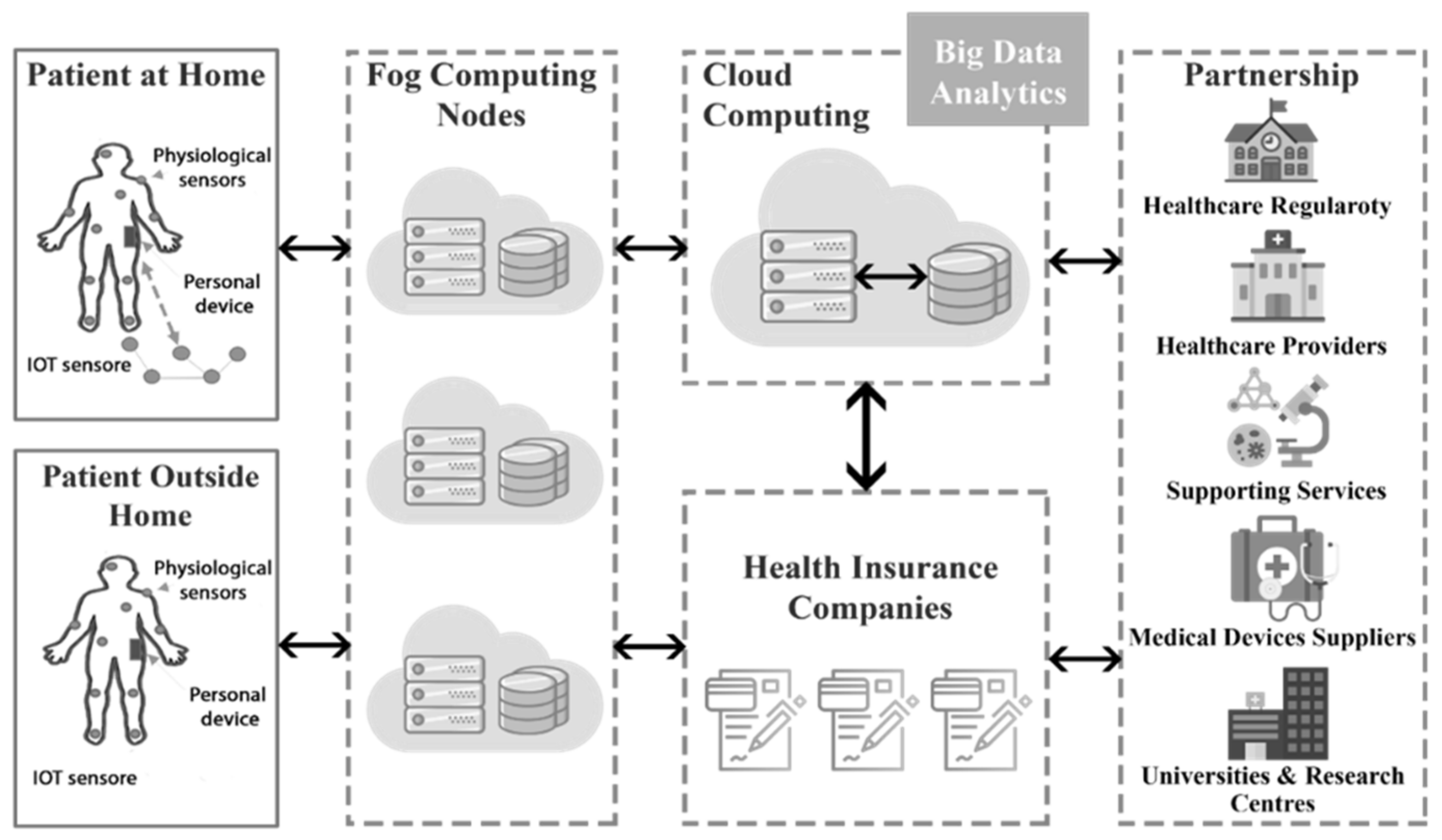
- A lifestyle management patient is a healthy and normal person. The American Society of Anesthesiologists (ASA) defines a normal healthy patient as a non-smoking person, with a BMI under 30, who exercises within the accepted practicing range [23]. This type of patient requires adjustment to their lifestyle when diagnosed with an interim disease to avoid worse medical situations.
- A self-management patient is a person who is diagnosed with one or more chronic diseases and requires education to manage the illness and enhance their life quality [24].
- Basic policy packages
- Child basic policy;
- Adult basic policy;
- Elderly basic policy.
- 2.
- Lifestyle management policy packages
- Lifestyle management package.
- 3.
- Self-management policy packages
- Implant heart monitoring package;
- Wearable heart monitoring package;
- Implant vital signs package;
- Wearable vital signs package;
- Body area network (BAN) & Ambient Assisted Living package (AAL)
- 4.
- Support treatment policy packages
- Appointment management package
2.1. A-SHIP Implementation Model
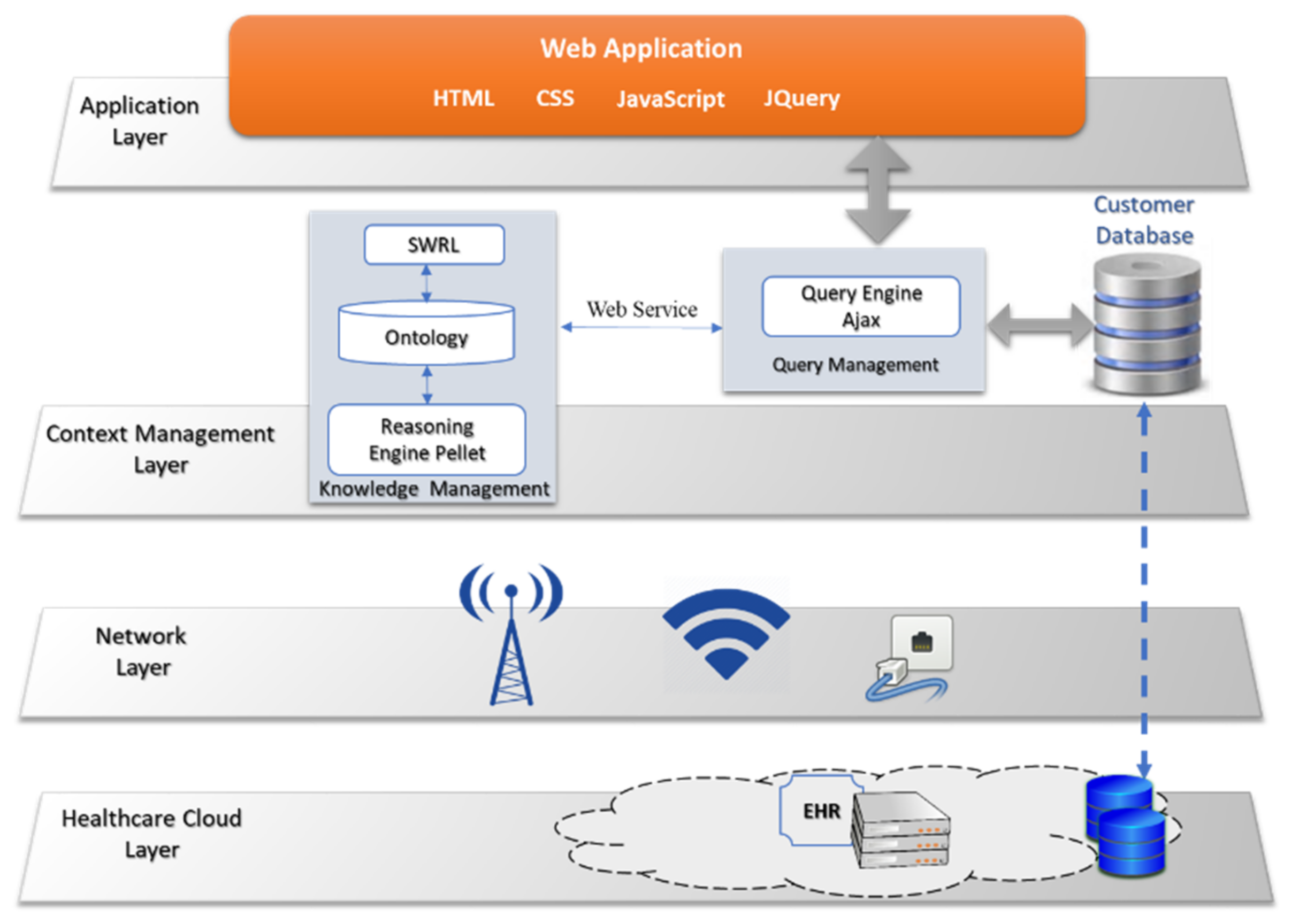
- Healthcare Cloud Layer: the Healthcare insurance company, retrieves customers’ data from the shared database of the smart healthcare system hosted in the cloud as a component of the model. This system assumes that EHRs consist of all required data needed to determine the healthcare insurance policy. EHRs consist of basic patients’ details, health status, diagnosis, technological requirements, and other attributes.
- Network Layer: provides all communication means between the different layers in the smart healthcare system.
- Context Management Layer: consists of the following four main components: query engine, data retrieving engine, knowledge manager, and customer database. These components are discussed as follows:
- ○
- Query Management Engine is the middleware between the application layer and the data retrieving model. It receives the customer ID from the application layer and sends it to the data retrieving model requesting customer’s information, including all EHRs attributes. AJAX (Asynchronous JavaScript and XML) is a set of web development techniques on the client-side that enables the accessing of data from a server asynchronously without interfering with the web page.
- ○
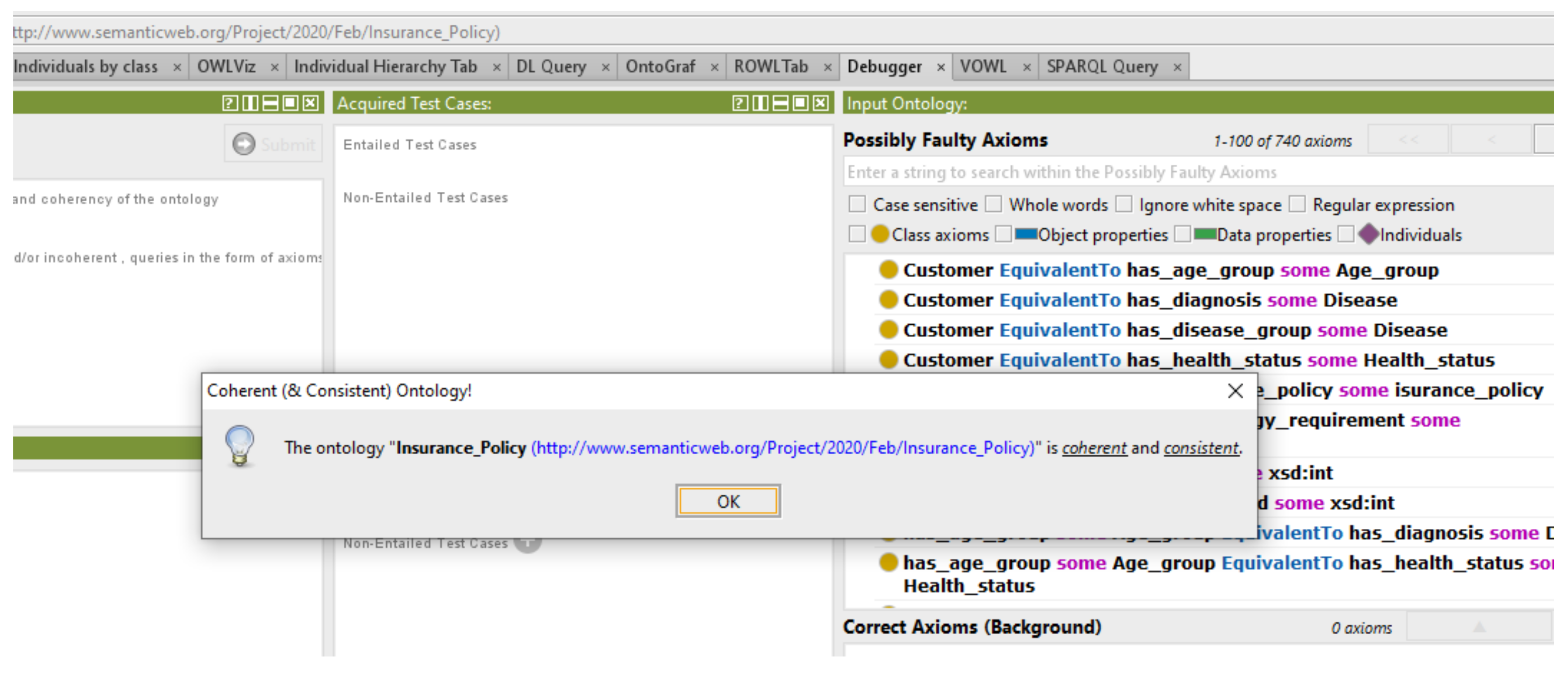
- Knowledge Management Engine consists of the ontology-based context model and the reasoning engine for specifying the health insurance policy. SWRL (Semantic Web Rule Language) used to express the rules as logic in OWL web ontology language. Pellet reasoner was used to assure the ontology consistency and coherence [30,31,32].
- ○
- Customer Database is the insurance company data warehouse that consists of customers’ data and insurance policies details. It is the source for updating any patient’s healthcare insurance policy database stored in the cloud.
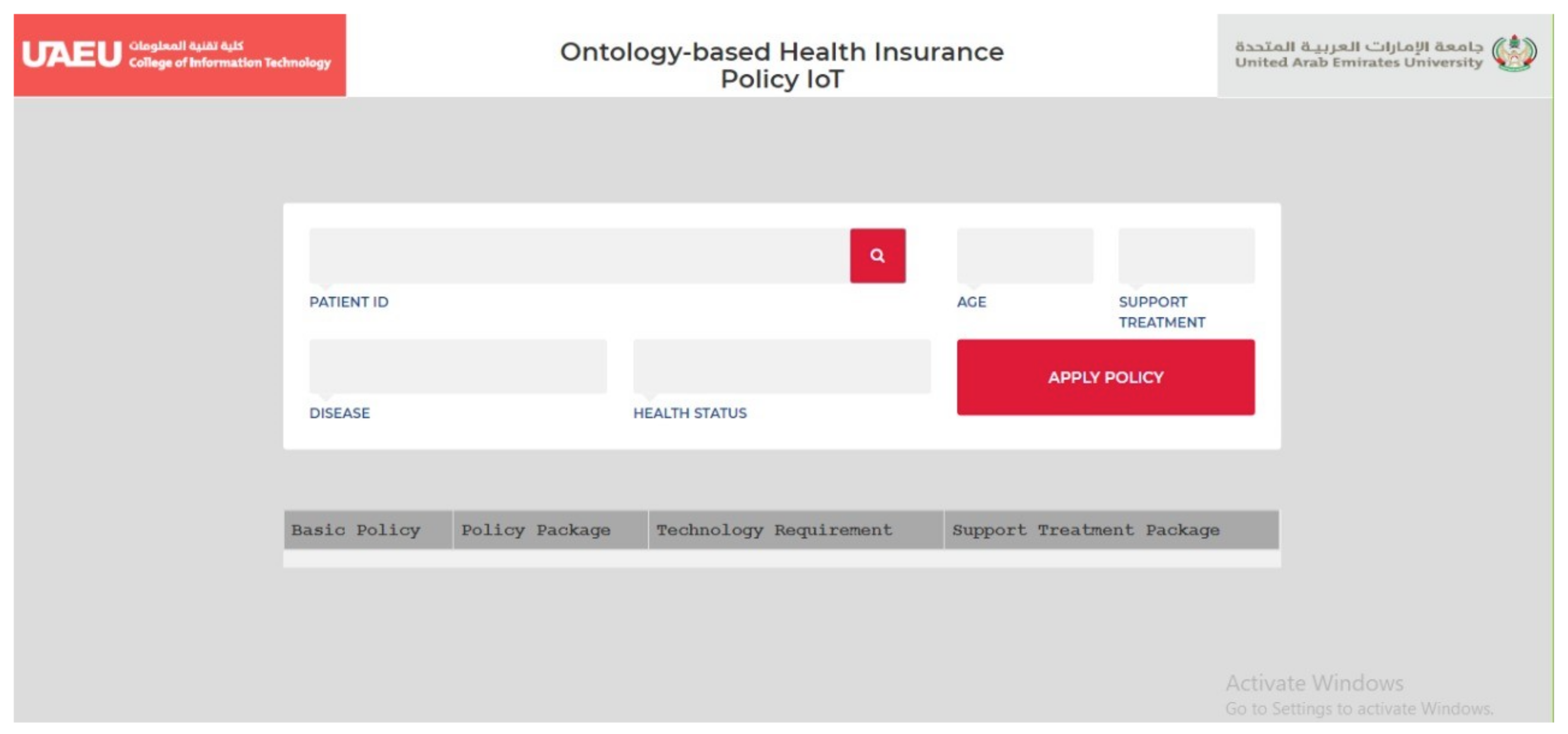
- Application Layer: is a web-based application that implements the application user interface (API). It is based on HTML, JavaScript, jQuery, etc.
2.2. Ontology Engineering for A-SHIP
2.3. Ontology Scope
2.4. Ontology Classes and Sub-Classes
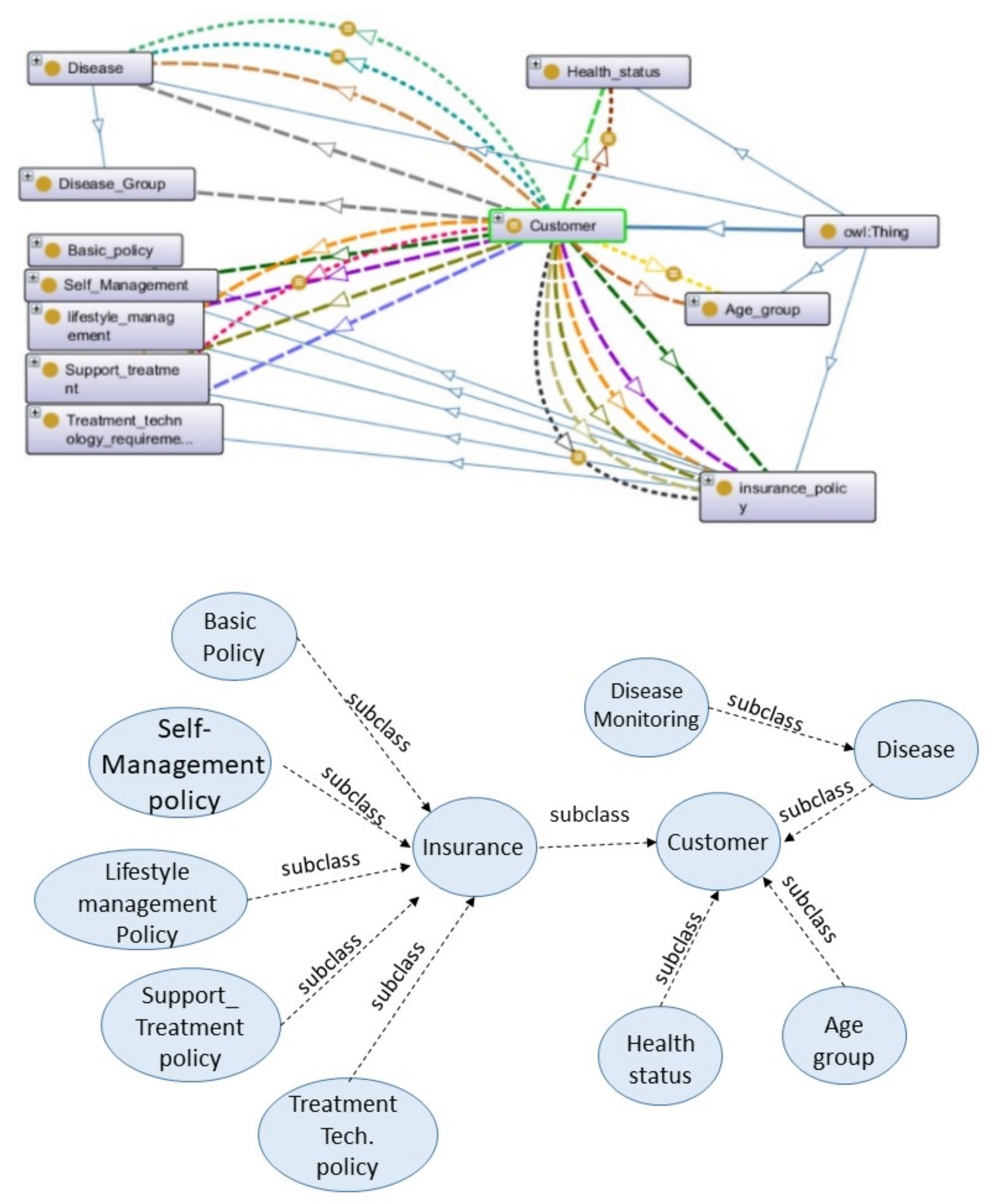
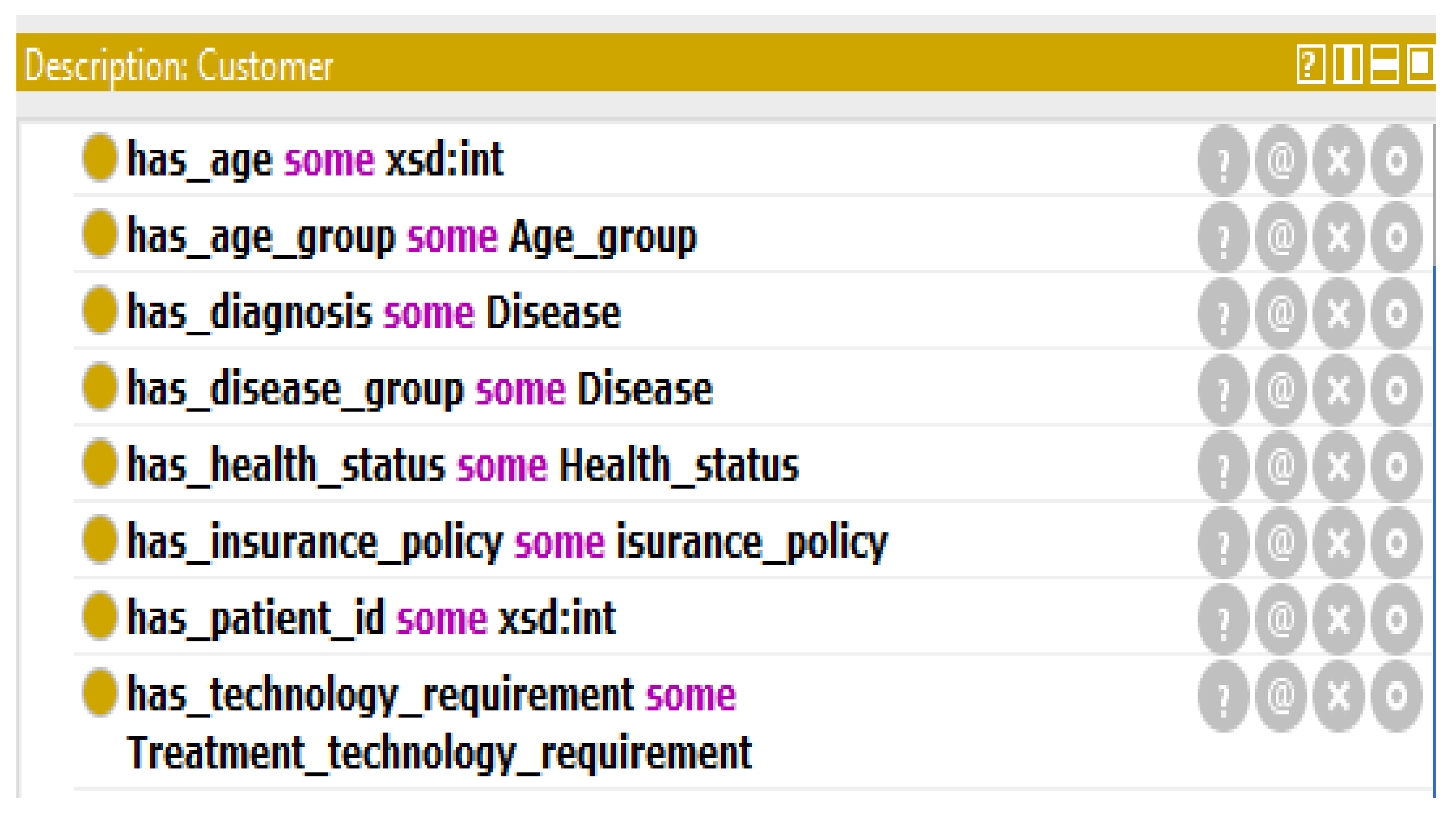
- Class: Customer—represents the customer’s profile retrieved from his EHR. The policy is selected based on the customer’s profile. This research not only focuses on regular treatment but also considers the technological requirements to enhance the treatments and improve customers’ health and wellness. Figure 4 presents the customer class description;
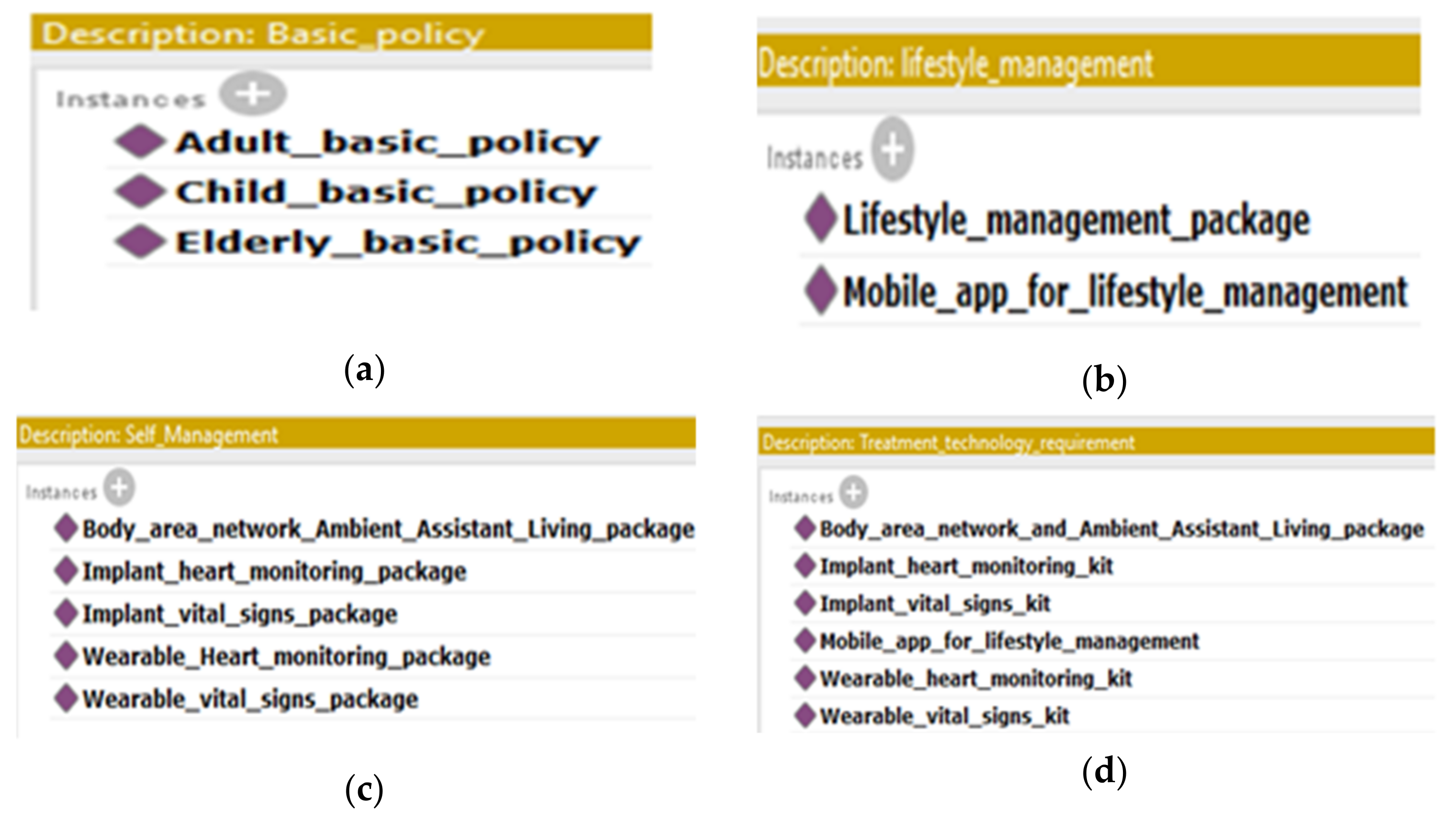
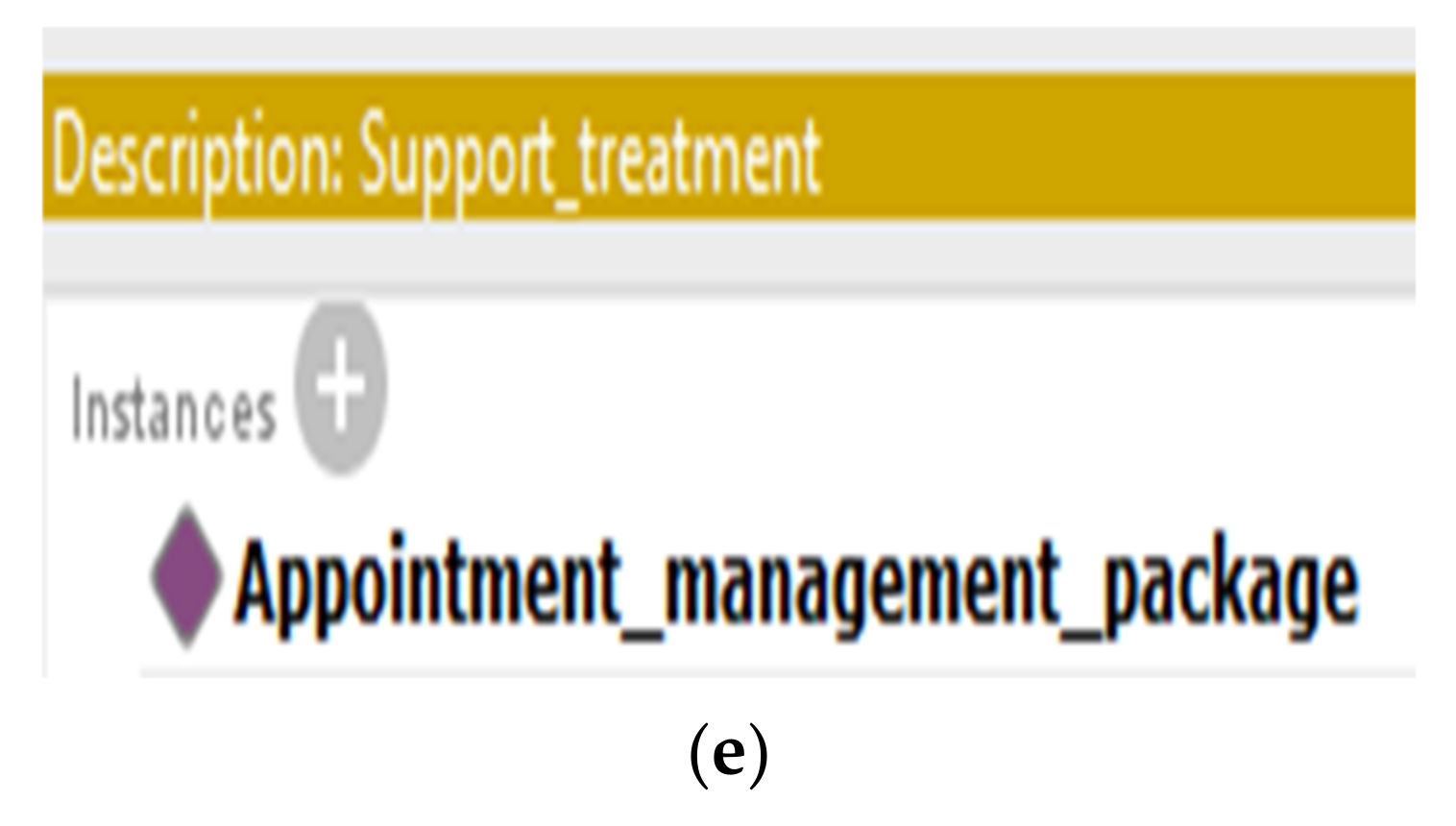
- Class: Insurance Policy—consists of five sub-classes. Figure 5 presents the instances of each sub-class in the insurance policy class;
- ○
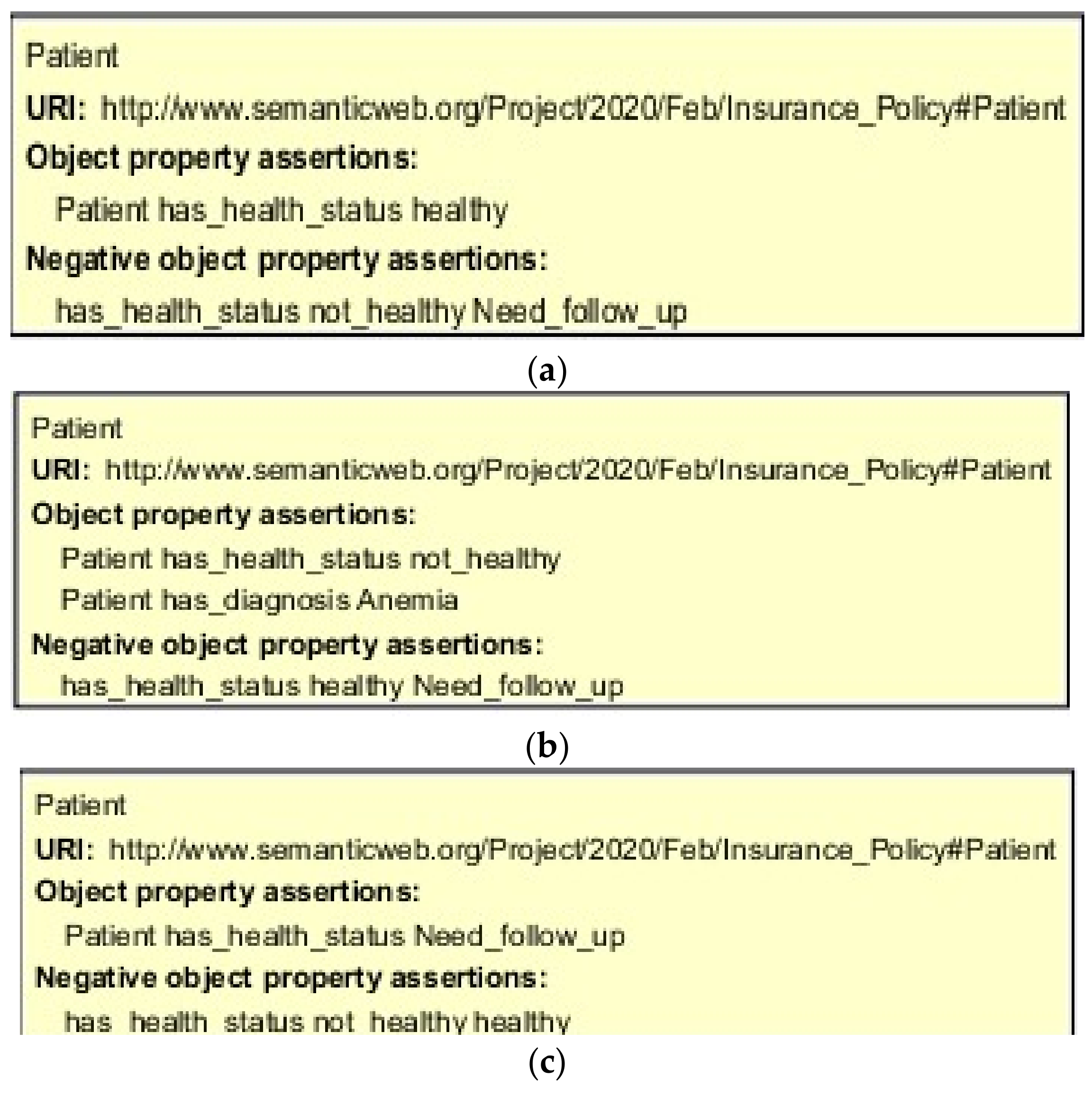
- Sub-class: Basic_policy—provides packages for customers with a “Healthy” health status. Figure 5a presents instances of the “Basic_policy”;
- ○
- Sub-class: Lifestyle_management—provides customers with a “need to follow up” health status. Figure 5b presents the instances of “Lifestyle_management”;
- ○
- Sub-class: Self_management—provides packages for customers with “unhealthy” health status. Figure 5c presents the instances of “Self_management”;
- ○
- Sub-class: Treatment_technology_requirement—identifies the technological requirement of each insurance packages. Figure 5d presents the instances of the “Treatment_technology_requirement” subclass;
- ○
- Sub-class: Support_treatment—identifies if the customer required a support treatment as an additional package. Figure 5e presents the instances of the “Support_treatment” subclass.
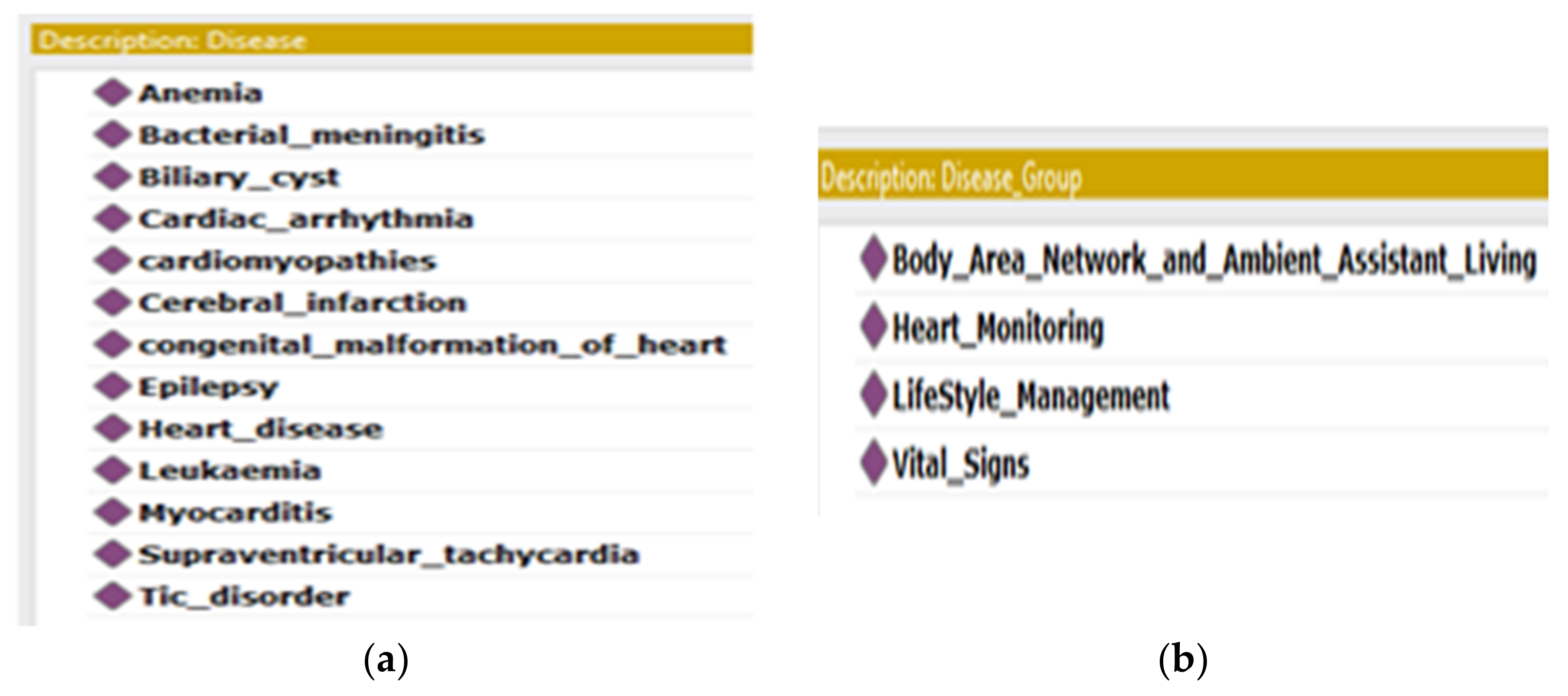
- Class: Disease monitoring—groups the diseases according to the disease monitoring technological requirements. Figure 6b presents the disease monitoring description.
2.5. Web Ontology Language (OWL) Object Type Properties
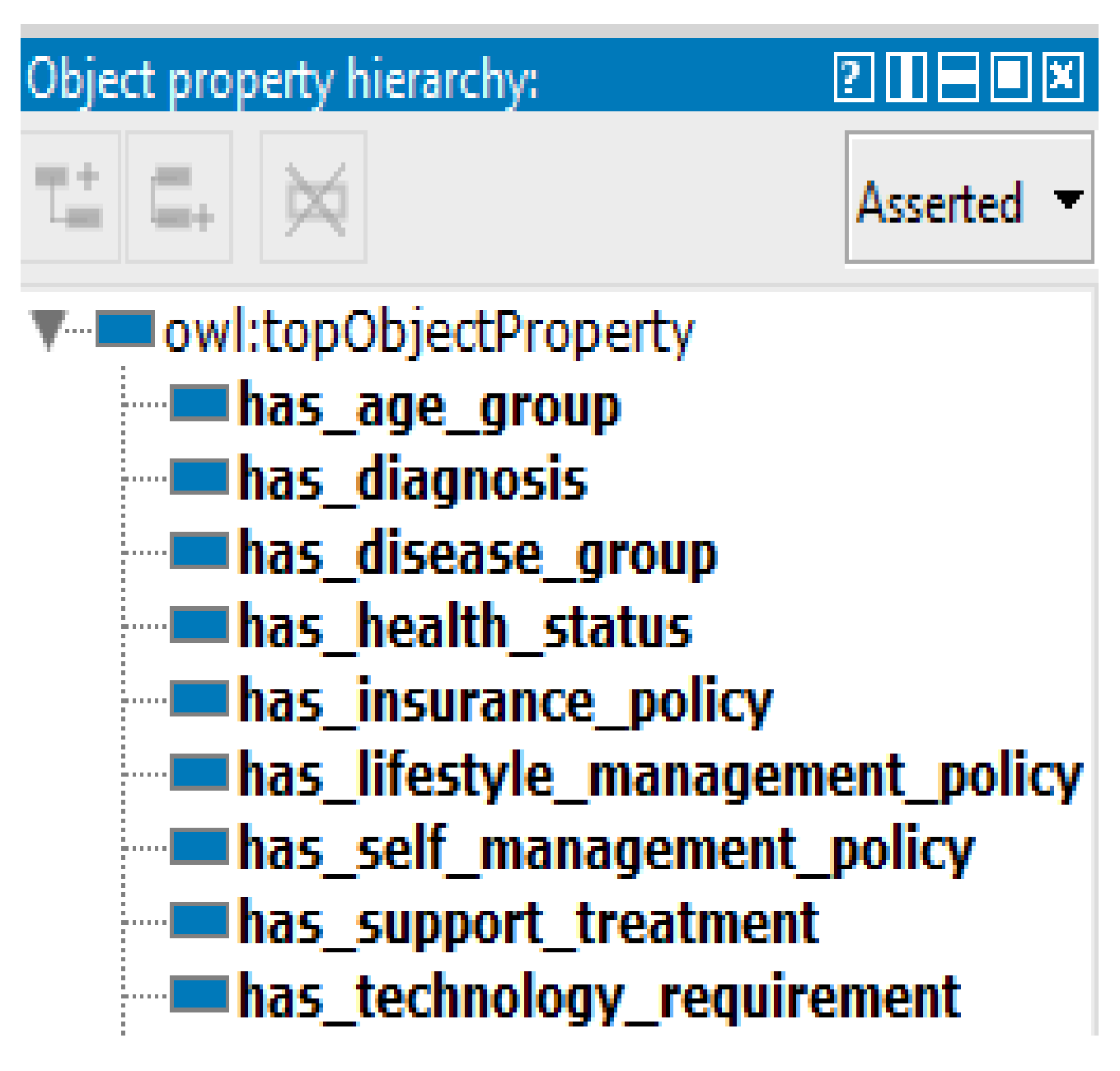
- “Has Age Group”: each customer is assigned to an age group according to the age classifications. The domain of this property is “Customer class” and the range is “Age Group class”;
- “Has diagnosis”: each customer with “unhealthy” or “need to follow up” status is diagnosed with one or more diseases. This property’s domain is “Customer class” and the range is “Disease class”;
- “Has Disease Group”: each disease is affiliated with a disease group. The domain of this property is “Disease class” and the range is “Disease Group”;
- “Has Health Status”: each customer has a health status. This property’s domain is “Customer class” and the range is “Health status class”;
- “Has Insurance Policy”: each customer has a collection of insurance policy packages representing the healthcare insurance policy. This property’s domain is “Customer class” and the range is “Insurance policy class”;
- “Has Lifestyle Management Policy”: assigns a lifestyle management policy package to the required customer. The domain of this property is “Customer class” and the range is “Lifestyle Management Policy class”;
- “Has Self-Management Policy”: assigns a self-management policy package to the required customer. This property’s domain is “Customer class” and the range is “Self-management policy class”;
- “Has Support Treatment”: assigns a support treatment policy package to the required customer. This property’s domain is “Customer class” and the range is “Support treatment class”;
- “Has Technology Requirement”: assigned if the customer required any technology requirement alongside insurance policy. The domain of this property is “Customer class” and the range is “Technology Requirement”.
2.6. OWL Data Properties
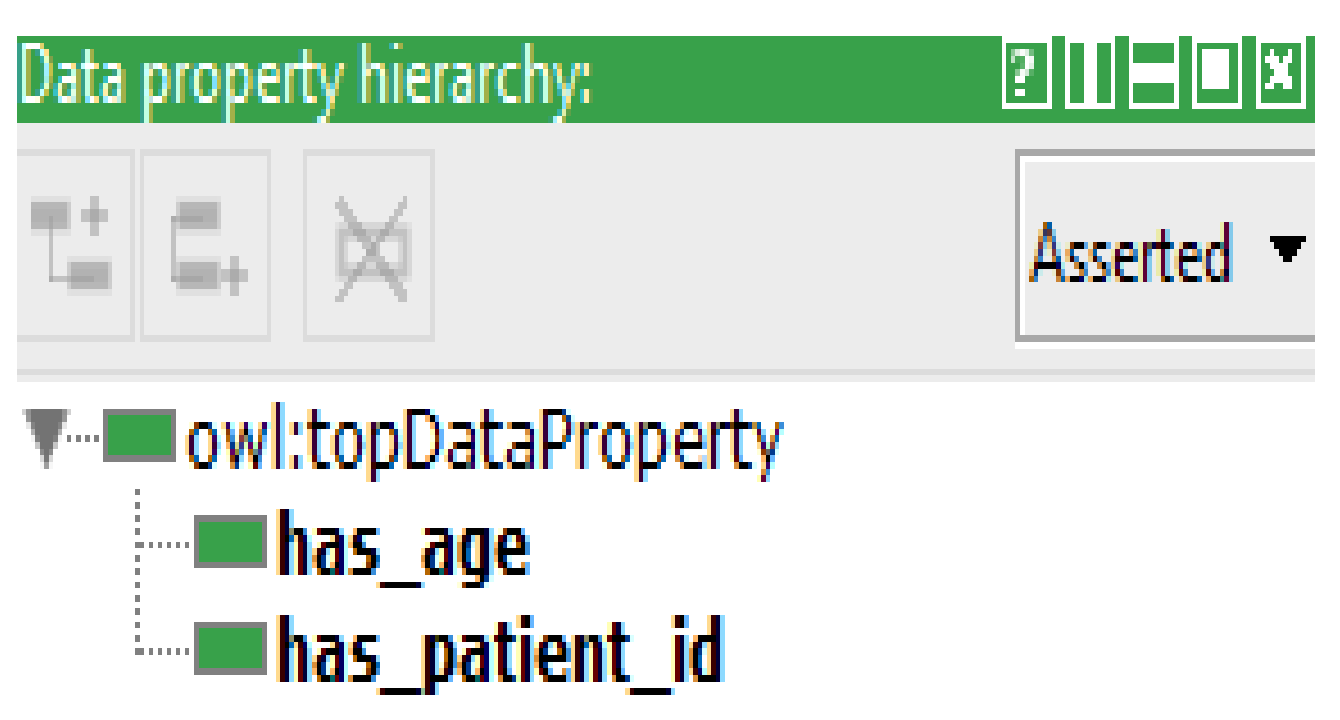
- “Has Age” defines the value of the customer’s age. The domain of this property is “Customer class” and the range is “integer”;
- “Has Patient Id” defines the customer’s ID value. The domain of this property is “Customer class” and the range is “integer”.
2.7. Semantic Constraints
2.8. Reasoner Engine
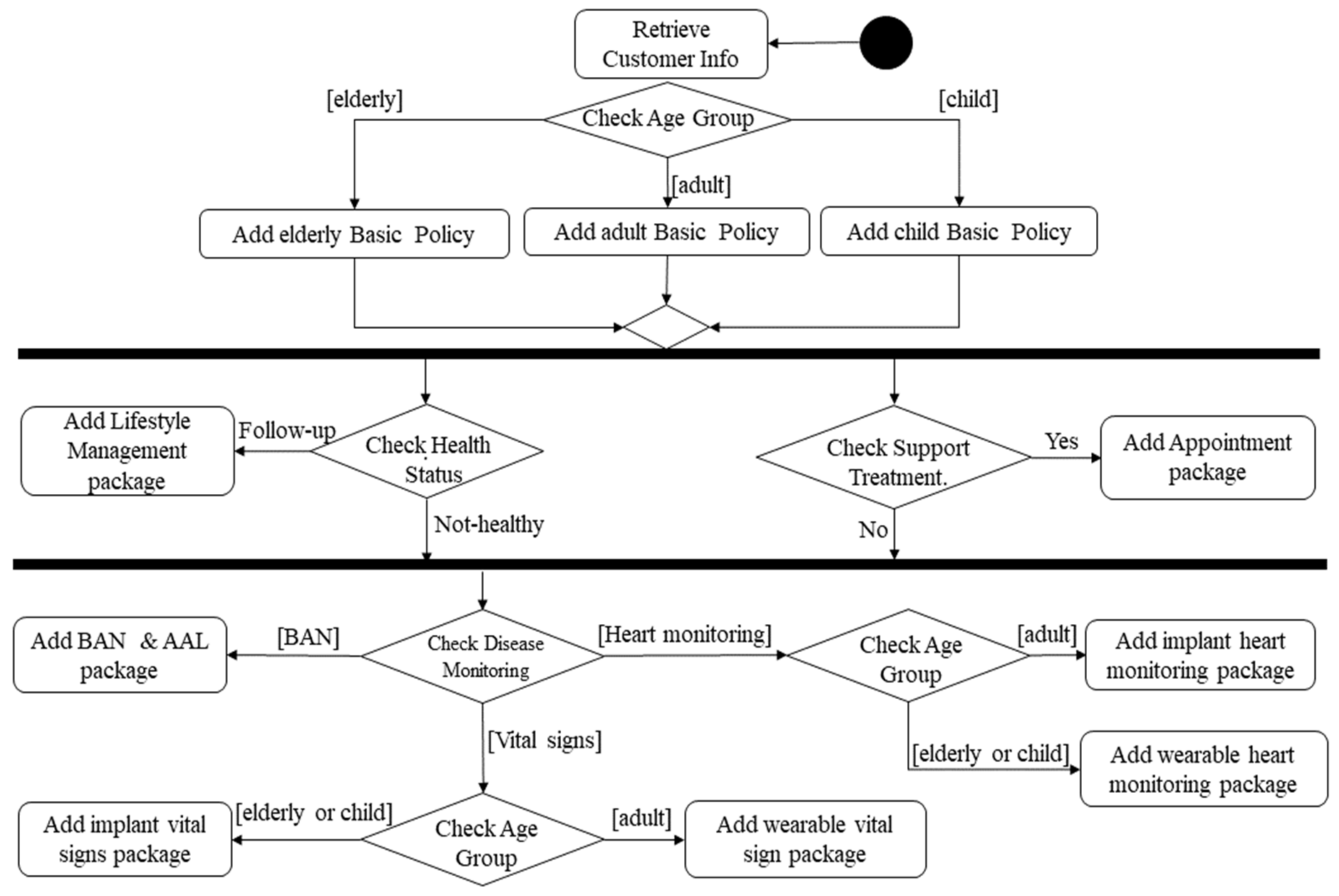
- If the patient is a newborn or does not have an EHR record, they are assigned a basic policy;
- If a person is a child and needs support treatment, then their insurance package will include a child basic policy with an appointment supplement package;
- If a person is elderly and suffers from a disease, their health status requires follow-up. The insurance package will include elderly basic with lifestyle and BAN/AAL packages;
- If a person is elderly and suffers from heart disease, their health status requires support treatment. The insurance package will include elderly basic with appointment package and implant heart monitoring packages.
2.9. Validation
3. Results
- Retrieve the ontology and the Reasoner;
- Recuperate the patient dataset;
- Feed the Reasoner with the instances;
- Present the patient data and the insurance policy.
3.1. Data Source
3.2. System Testing
4. Conclusions
Author Contributions
Funding
Data Availability Statement
Conflicts of Interest
References
- WHO. About WHO; World Health Organization. 2020. Available online: http://www.who.int/about/en/ (accessed on 4 May 2020).
- WHO. eHealth. 2020. Available online: http://www.who.int/ehealth/en/ (accessed on 4 May 2020).
- World Bank. Current Health Expenditure (% of GDP). 2019. Available online: https://data.worldbank.org/indicator/SH.XPD.CHEX.GD.ZS?end=2016&start=2000&view=chart (accessed on 26 October 2019).
- Statista. US National Health Expenditure as Percent of GDP from 1960 to 2019. 2019. Available online: https://www.statista.com/statistics/184968/us-health-expenditure-as-percent-of-gdp-since-1960/ (accessed on 26 April 2021).
- Healthcare.gov. Premiums, How Insurance Companies Set Health, USA. Available online: https://www.healthcare.gov/how-plans-set-your-premiums/ (accessed on 30 December 2020).
- Tian, S.; Yang, W.; le Grange, J.M.; Wang, P.; Huang, W.; Ye, Z. Smart healthcare: Making medical care more intelligent. Glob. Health J. 2019, 3, 62–65. [Google Scholar] [CrossRef]
- Moses, M.A.; Pedroza, P.; Baral, R.; Bloom, S.; Brown, J.; Chapin, A.M.; Compton, K.; Fullman, N.; Eldrenkamp, E.; Jung, A. The future of health insurance. Lancet 2015, 204, 759–760. [Google Scholar]
- IBM, Define Customer Segments in the Insurance Sample; IBM Knowledge Center. Available online: https://www.ibm.com/support/knowledgecenter/en/SSCJHT_1.0.0/com.ibm.swg.ba.cognos.pci_oth.1.0.0.doc/c_pci_pm_insur_cust_seg.html (accessed on 11 April 2019).
- Punke, H. Why Doctors Review Health Insurance Claims. 2018. Available online: https://www.makingthehealthcaresystemwork.com/2018/10/23/why-doctors-review-health-insurance-claims/ (accessed on 23 March 2019).
- Rose, S. What is the Main Business Model for Insurance Companies? 2018. Available online: https://www.investopedia.com/ask/answers/052015/what-main-business-model-insurance-companies.asp (accessed on 6 April 2019).
- Sharma, N.; Mangla, M.; Nandan, S.; Gupta, D.; Tiwari, P. Biomedical signal processing and control a smart ontology-based IoT framework for remote patient monitoring. Biomed. Signal Process. Control 2021, 68, 102717. [Google Scholar] [CrossRef]
- Chen, L.; Lu, D.; Zhu, M.; Muzammal, M.; Samuel, O.S.; Huang, G.; Li, W.; Wu, H. OMDP: An ontology-based model for diagnosis and treatment of diabetes patients in remote healthcare systems. Int. J. Distrib. Sens. Netw. 2019, 15, 5. [Google Scholar] [CrossRef]
- Shen, Y.; Yuan, K.; Chen, D.; Colloc, J.; Yang, M.; Li, Y.; Lei, K. An ontology-driven clinical decision support system (IDDAP) for infectious disease diagnosis and antibiotic prescription. Artif. Intell. Med. 2018, 86, 20–32. [Google Scholar] [CrossRef] [PubMed]
- Hristoskova, A.; Sakkalis, V.; Zacharioudakis, G.; Tsiknakis, M.; de Turck, F. Ontology-driven monitoring of patient’s vital signs enabling personalized medical detection and alert. Sensors 2014, 14, 1598–1628. [Google Scholar] [CrossRef] [PubMed]
- Abbas, A.; Bilal, K.; Zhang, L.; Khan, S.U. A cloud based health insurance plan recommendation system: A user centered approach. Futur. Gener. Comput. Syst. 2015, 43–44, 99–109. [Google Scholar] [CrossRef]
- Sahi, M.A.; Abbas, H.; Saleem, K.; Yang, X.; Derhab, A.; Orgun, M.A.; Iqbal, W.; Rashid, I.; Yaseen, A. Privacy preservation in e-Healthcare environments: State of the art and future directions. IEEE Access 2017, 6, 464–478. [Google Scholar] [CrossRef]
- Mahmoud, M.M.E.; Rodrigues, J.J.P.C.; Ahmed, S.H.; Shah, S.C.; Al-Muhtadi, J.F.; Korotaev, V.V.; De Albuquerque, V.H.C. Enabling technologies on cloud of things for smart healthcare. IEEE Access 2018, 6, 31950–31967. [Google Scholar] [CrossRef]
- Pham, M.; Yehenew, D.H.; Weihua, S. Delivering home healthcare through a Cloud-based Smart Home Environment (CoSHE). Futur. Gener. Comput. Syst. 2018, 81, 129–140. [Google Scholar] [CrossRef]
- Bansal, M.; Bani, G. IoT Based development boards for smart healthcare applications. In Proceedings of the 2018 4th International Conference on Computing Communication and Automation (ICCCA), Greater Noidia, India, 14–15 December 2018; pp. 1–7. [Google Scholar]
- Firouzi, F.; Rahmani, A.M.; Mankodiya, K.; Badaroglu, M.; Merrett, G.V. Internet-of-Things and big data for smarter healthcare: From device to architecture, applications, and analytics. Futur. Gener. Comput. Syst. 2018, 78, 583–586. [Google Scholar] [CrossRef] [Green Version]
- Al Thawadi, M.; Sallabi, F.; Awad, M.; Shuaib, K. Disruptive IoT-based healthcare insurance business model. In Proceedings of the 22nd IEEE International Conference on Computational Science and Engineering and 17th IEEE International Conference on Embedded Ubiquitous Computing CSE/EUC, New York, NY, USA, 1–3 August 2019; pp. 397–403. [Google Scholar]
- Osterwalder, A.; Pigneur, Y. Business Model Generation-A handbook for visionaries, Game Changers and challengers striving to defy outmoded business models and design tomorrow’s enterprises. In The Medieval Opus: Imitation, Rewriting, and Transmission in the French Tradition; University of Sheffield: Sheffield, UK, 2010; pp. 45–58. [Google Scholar]
- Doyle, D.J.; Garmon, E.H. American Society of Anesthesiologists Classification (ASA Class). 2019. Available online: https://www.ncbi.nlm.nih.gov/books/NBK441940/ (accessed on 26 April 2021).
- Bodenheimer, T.; Lorig, K.; Holman, H.; Grumbach, K. Patient self-management of chronic disease in primary care. JAMA 2002, 288, 2469–2475. [Google Scholar] [CrossRef] [PubMed]
- Uddin, Z. Ambient sensors for elderly care and independent living: A survey. Sensors 2018, 18, 2027. [Google Scholar] [CrossRef] [Green Version]
- Marcelino, I.; Laza, R.; Domingues, P.; Gomez-Meire, S.; Fdez-Riverola, F.; Pereira, A. Active and assisted living ecosystem for the elderly. Sensors 2018, 18, 1246. [Google Scholar] [CrossRef] [Green Version]
- Healthy Communities Institute. How Are the Different Age Groups Defined? Conduent Healthy Communities Institute. 2020. Available online: https://help.healthycities.org/hc/en-us/articles/219556208-How-are-the-different-age-groups-defined (accessed on 22 June 2020).
- UpToDate. Available online: https://www.uptodate.com/home (accessed on 20 February 2020).
- Bioportal. International Classification of Diseases, Version 10. 2019. Available online: https://bioportal.bioontology.org/ontologies/ICD10/?p=summary (accessed on 21 June 2019).
- Naqvi, M.R.; Iqbal, M.W.; Ashraf, M.U.; Ahamd, S.; Soliman, A.T.; Khurram, S.; Choi, J.-G. Ontology driven testing strategies for IoT applications. Comput. Mater. Continua 2022, 70, 5855–5869. [Google Scholar] [CrossRef]
- Naz, T.; Akhtar, M.; Shahzad, S.K.; Fasli, M.; Iqbal, M.W.; Naqvi, M.R. Ontology-driven advanced drug-drug interaction. Comput. Electr. Eng. 2020, 86, 106695. [Google Scholar] [CrossRef]
- Shahzad, S.K.; Ahmed, D.; Naqvi, M.R.; Mushtaq, M.T.; Iqbal, M.W.; Munir, F. Ontology driven smart health service integration. Comput. Methods Progr. Biomed. 2021, 207, 106146. [Google Scholar] [CrossRef]
- Lasierra, N.; Alesanco, A.; Guillén, S.; García, J. A three stage ontology-driven solution to provide personalized care to chronic patients at home. J. Biomed. Inform. 2013, 46, 516–529. [Google Scholar] [CrossRef]
- Riaño, D.; Real, F.; Lopez-Vallverdu, J.A.; Campana, F.; Ercolani, S.; Mecoci, P.; Annicchiarico, R.; Caltagirone, C. An ontology-based personalization of healthcare knowledge to support clinical decisions for chronically ill patients. J. Biomed. Inform. 2012, 45, 429–446. [Google Scholar] [CrossRef]
- Noy, N.F.; McGuinness, D.L.; Arcos-Novillo, D.A.; Güemes-Castorena, D. Development of an additive manufacturing technology scenario for opportunity identification—The case of Mexico. Futures 2017, 90, 1–15. [Google Scholar]
- Protege. Available online: https://protege.stanford.edu/ (accessed on 20 February 2019).
- Zhao, H.; Zhang, S.; Zhao, J. Research of using protégé to build ontology. In Proceedings of the 2012 IEEE/ACIS 11th International Conference on Computer and Information Science ICIS 2012, Shanghai, China, 30 May–1 June 2012; pp. 697–700. [Google Scholar]
- Abburu, S. A survey on ontology reasoners and comparison. Int. J. Comput. Appl. 2012, 57, 33–39. [Google Scholar]
- Johnson, A.E.W.; Pollard, T.J.; Shen, L.; Lehman, L.-W.H.; Feng, M.; Ghassemi, M.; Moody, B.; Szolovits, P.; Celi, L.A.; Mark, R.G. MIMIC-III, a freely accessible critical care database. Sci. Data 2016, 3, 1–9. [Google Scholar] [CrossRef] [PubMed] [Green Version]
- Hindawi. Available online: https://www.hindawi.com/about/ (accessed on 15 February 2020).
- The IoT Marketplace. Available online: https://www.the-iot-marketplace.com/ (accessed on 15 February 2020).

| Health Insurance Plan | Description |
|---|---|
| Indemnity plans | Repaid the patients’ and providers’ expenses. |
| Conventional indemnity plan | Repaid the patients’ expenses without limitation to the provider selection. |
| Preferred provider organization (PPO) plan | It covers the expenses for selected providers, and the patient can select a provider outside the network, but the rates will be higher than the company’s providers’ network. |
| Exclusive provider organization (EPO) plan | It covers the expenses for selected providers, and the patient can select a provider outside the network, but it will not cover the expenses unless in emergency cases. |
| Health maintenance organization (HMO) | A healthcare system that focuses on the assumption of financial risks and provides comprehensive medical services. It covers a particular geographic area to HMO members, and the return is a fixed, prepaid fee. |
| Group Model HMO | A type of HMO that deals with a single multi-specialty medical group to provide the services for the HMO members. The medical group can provide services to non-HMO members as well. |
| Staff Model HMO | A type of HMO with its employees (physicians) and the member can have the medical services from these providers only. |
| Network Model HMO | A type of HMO that has contracts with different services providers. These groups can provide services for the non-HMO members as well. |
| Individual Practice Association (IPA) HMO | A type of HMO that consists of a group of independent practicing physicians. An IPA provides services to HMO and non-HMO plan participants. |
| Point-of-service (POS) plan | A hybrid plan (HMO/PPO) covers the cost for the providers in the network as in HMO and applies the traditional compensation for the other providers. |
| Physician-hospital organization (PHO) | An association between physicians and hospitals to help providers increase their market share, enhance bargaining power, and reduce administrative costs. |
| Medigap Supplemental Plans | Medigap is the most popular plan used in the USA. It provides the participant a limited amount of money to spend during the year that pays the services deductibles, copayments, and other expenses. |
| Parameter | Description |
|---|---|
| Health Status |
|
| Age | It is an integer number that represents the patient’s age. Our system categorizes patients based on age into three groups: child, adult, and elderly. |
| Diagnose | The final diagnosis of the patient before being discharged from a hospital. |
| Support Treatment | The treatment enhances the healing process and has two values: Yes or No. |
| Age Group | Age Range |
|---|---|
| Child | Greater or Equal to 0 and Less than 18 Years |
| Adult | Greater or Equal to 18 and Less than 64 Years |
| Elderly | Greater than or Equal to 65 |
| Group Name | Diseases |
|---|---|
| Heart monitoring | Portal hypertension Cardiac arrhythmia, unspecified Supraventricular tachycardia Cardiomyopathies Congenital malformation of the heart Heart disease Myocarditis |
| Vital signs | Bacterial meningitis Cerebral infarction Leukemia |
| Body Area Network & Ambient Assisted Living | Epilepsy Tic disorder |
| Lifestyle management | Anemia |
| Ontology Competency Questions | |
|---|---|
|
|
|
|
|
|
|
|
|
|
|
|
|
|
|
|
|
|
|
|
|
|
|
|
|
|
|
|
|
|
|
|
|
|
|
|
|
|
|
|
| Policy Package Functional Requirements |
|---|
| The ontology shall define a basic policy for each age group; child (0–17), adult (18–64), and elderly (65+). |
| The ontology shall define the policy package based on the health status: healthy, unhealthy, and need follow-up. |
| The ontology shall specify if the customer requires support treatment. |
| The ontology shall define the policy package based on a disease affiliated with a certain disease group such as Heart monitoring, Vital signs group, Liver parameters, Body area network and ambient assisted living, etc. |
| Disease Monitoring Functional Requirement |
| The system shall specify the diseases under each disease group such as Heart monitoring group, Vital signs group, Liver parameters group, Body area network and ambient assisted living group, Lifestyle management group. |
| Technology Requirements |
| The ontology shall specify the technological requirements for each of the following policy packages: Lifestyle management package, Implant heart monitoring package, Wearable Heart monitoring package, implant vital signs package, Implant vital signs package, Wearable vital signs package, Wearable vital signs package, Wearable vital signs package, Body area network and Ambient Assisted Living package, Appointment management package |
| Data Source | Description | Used Field | Website |
|---|---|---|---|
| MIMIC dataset [39] | Provides patients real data from a hospital | Patient ID | https://mimic.physionet.org/gettingstarted/access/ (accessed on 15 December 2019). |
| Age | |||
| Diagnose | |||
| Uptodate.com [28] | Clinical support source and used to explore and investigate the treatment of the disease | Insurance policy packages | https://www.uptodate.com/home (accessed on 20 February 2020). |
| Hindawi.com [40] | An open-access publishing website that has several journals and was used to specify the technological requirements | technological requirements | https://www.hindawi.com/ (accessed on 15 February 2020). |
| IoT marketplace.com [41] | Offers complete healthcare IoT solutions | technological requirements | https://www.the-iot-marketplace.com/ (accessed on 15 February 2020). |
| # | Description | Outcome | Figure |
|---|---|---|---|
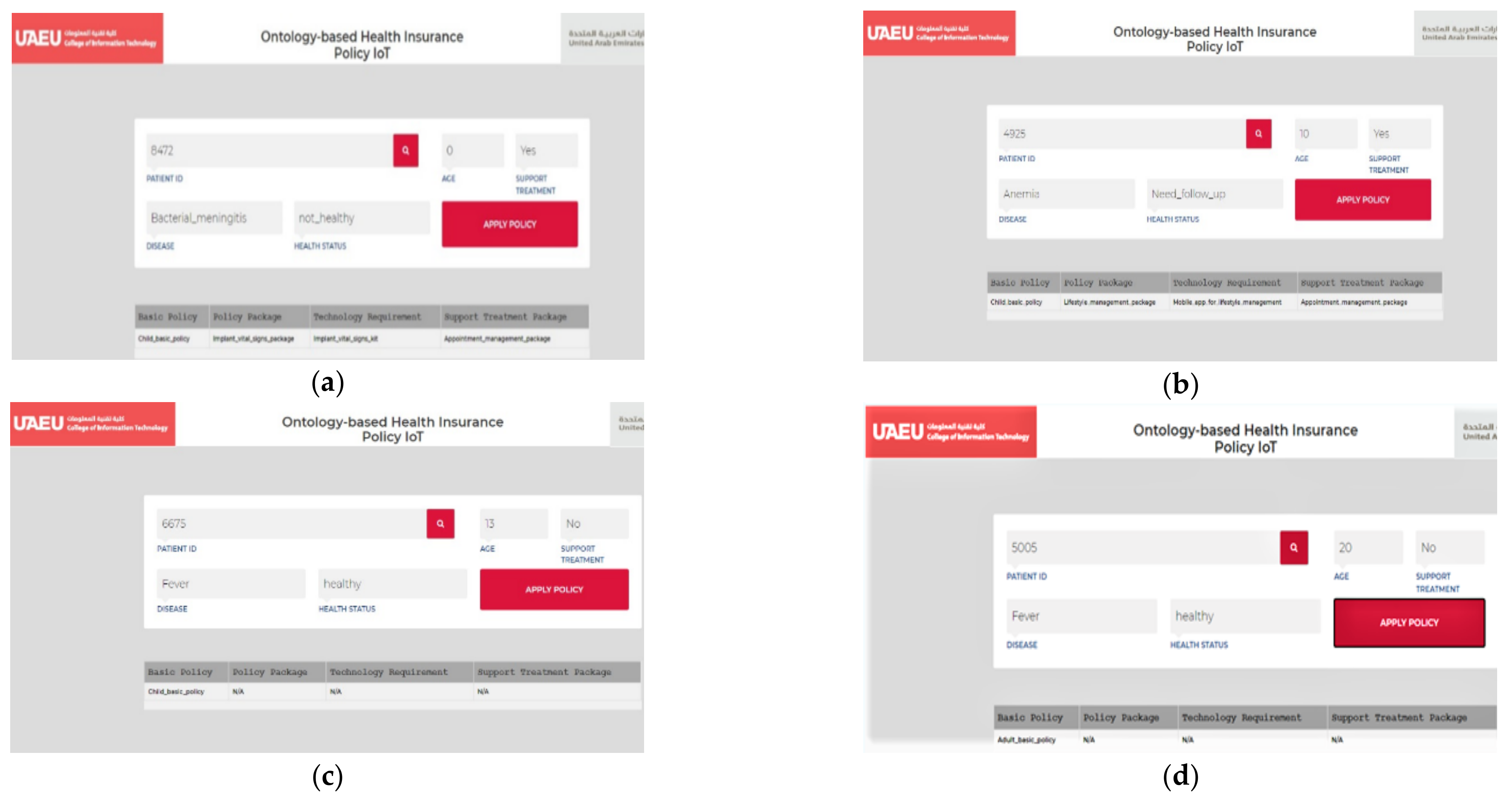
| 1. | customer ID# 8472, who is a child diagnosed with Bacterial meningitis and required support treatment | Child basic policy + Implant vital sign package + Appointment management package. | Figure 13a |
| 2. | customer ID# 4925, who is a child diagnosed with Anemia and required support treatment | Child basic policy + Lifestyle management package + Appointment management package. | Figure 13b |
| 3. | customer ID# 6675, who is a child diagnosed with fever | Child basic policy. | Figure 13c |
| 4. | customer ID# 5005, who is an adult diagnosed with fever | Adult basic policy. | Figure 13d |
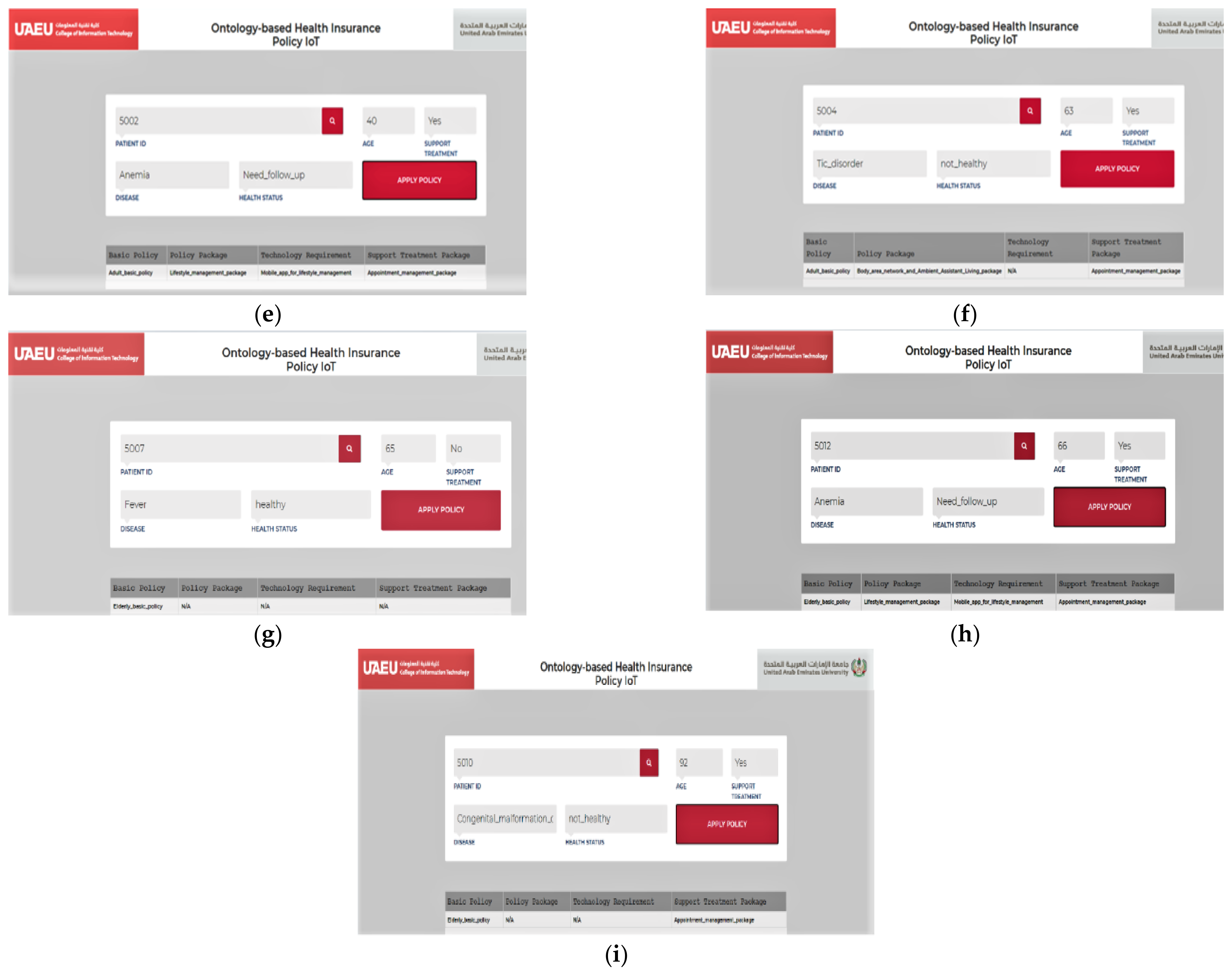
| 5. | customer ID# 5002, who is an adult diagnosed with Anemia and require support treatment | Adult basic policy + Lifestyle management package + Appointment management package. | Figure 13e |
| 6. | customer ID# 5004, who is an adult diagnosed with Tic disorder and require support treatment | Adult basic policy + Body area network and ambient assisted living package + Appointment management package. | Figure 13f |
| 7. | customer ID# 5007, who is elderly, diagnosed with fever | Elderly basic policy. | Figure 13g |
| 8. | customer ID# 5012, who is elderly, diagnosed with Anemia, and require support treatment | Elderly basic policy. Lifestyle management package + Appointment management package. | Figure 13h |
| 9. | customer ID# 5010, who is elderly, diagnosed with congenital malformation and require support treatment | Elderly basic policy. Implant heart monitoring package + Appointment management package. | Figure 13i |
Publisher’s Note: MDPI stays neutral with regard to jurisdictional claims in published maps and institutional affiliations. |
© 2022 by the authors. Licensee MDPI, Basel, Switzerland. This article is an open access article distributed under the terms and conditions of the Creative Commons Attribution (CC BY) license (https://creativecommons.org/licenses/by/4.0/).
Share and Cite
Al-Thawadi, M.; Sallabi, F.; Awad, M.; Shuaib, K.; Naqvi, M.R.; Ben Elhadj, H. A-SHIP: Ontology-Based Adaptive Sustainable Healthcare Insurance Policy. Sustainability 2022, 14, 1917. https://doi.org/10.3390/su14031917
Al-Thawadi M, Sallabi F, Awad M, Shuaib K, Naqvi MR, Ben Elhadj H. A-SHIP: Ontology-Based Adaptive Sustainable Healthcare Insurance Policy. Sustainability. 2022; 14(3):1917. https://doi.org/10.3390/su14031917
Chicago/Turabian StyleAl-Thawadi, Maryam, Farag Sallabi, Mamoun Awad, Khaled Shuaib, Muhammad Raza Naqvi, and Hadda Ben Elhadj. 2022. "A-SHIP: Ontology-Based Adaptive Sustainable Healthcare Insurance Policy" Sustainability 14, no. 3: 1917. https://doi.org/10.3390/su14031917
APA StyleAl-Thawadi, M., Sallabi, F., Awad, M., Shuaib, K., Naqvi, M. R., & Ben Elhadj, H. (2022). A-SHIP: Ontology-Based Adaptive Sustainable Healthcare Insurance Policy. Sustainability, 14(3), 1917. https://doi.org/10.3390/su14031917


