Abstract
Tourism is recognized as one of the world’s most significant cultural and economic forces and an essential strategy for enhancing local communities. The Phong Dien tourist village, for example, has experienced tremendous development in serving tourism activities for domestic and international tourists. However, despite the rapid growth in this industry, their benefits also have been affected. Therefore, a study on the Phong Dien tourist village, Vietnam, was conducted to explore and identify factors that affected the usefulness of households that participated in tourism activities. A household survey based on stratified random sampling was conducted in Phong Dien, and 125 questionnaires were completed. An exploratory factor analysis (EFA) and linear regression analysis were carried out to identify the factors that influenced the advantages of households engaging in tourism-related activities in the Phong Dien tourist village. Findings from the data analysis identified three factors that represented 66.5% of the explained variance extracted from 23 variables: (1) natural environment, (2) government support, (3) social environment, and (4) household participation. Finally, we suggest some solutions to enhance the households’ benefits.
1. Introduction
Vietnam is one of the outstanding spots in Asia that contributes to the development of the area’s tourism industry. Vietnam was announced as “Asia’s Leading Destination 2021” ahead of Singapore, China, Indonesia, and Thailand [1]. With its strength in ecotourism, Can Tho city is one of the distinguishing features of Vietnam. Can Tho city is the capital of the Mekong Delta area and is situated on the banks of the Hau River, a distributary of the Mekong River. This city possesses potential resources for growing tourism, especially the Phong Dien tourism village. The Phong Dien district is situated in a key area where large rivers and gardens meet. Although the impact of COVID-19 remains, according to the Department of Planning and Development of Can Tho city, Phong Dien welcomed more than 2.72 million visitors in the first five months of 2022. The number of domestic tourists was 526,869 (up 55% during the same period) and of foreign tourists was 3170 (up 100% during the same period). Revenue from tourism was estimated at over VND 191 billion, which was up 62% compared to the same period in 2021. The Phong Dien tourism industry plays an essential role in the southwestern region of Vietnam.
Tourism contributes 10.4% of the world’s GDP and 10% of global employment [2]. Tourism can improve local life by improving local infrastructure and services, which can improve access to health care, educational possibilities, and income levels [3]. In addition to the benefits of rapidly developed tourism, it also negatively affects several aspects such as culture/society and the environment [4]. Once a community becomes a tourist destination, the lives of its inhabitants will be affected, and the support of the entire population in the community is essential for the planning, operation, and sustainable development of the tourism industry [5,6]. Community support is crucial to ensure the industry’s sustainability [7].
The importance of local involvement in tourism development was emphasized early. The success of tourism relies on the goodwill and cooperation of local people because they are facets of tourism. If tourism development and planning do not match the local aspirations and capabilities, this could destroy the potential of the industry [8]. Residents, especially households that directly participate in tourism activities, are more positive and supportive when they benefit from the development [9]. In addition, people’s perceptions of and attitudes toward the impacts of tourism can be part of an essential policy and plan to be considered in the development of current and future projects [10,11]. Thus, this study aimed to analyze factors that affected the benefits of households participating in tourism activities, which play a key role in sustainable development. An exploratory factor analysis (EFA) and linear regression analysis were carried out. This study contributed to the literature on human resource management in tourism by determining the factors that influenced the advantages of families who engaged in tourism-related activities in the Phong Dien tourist village. These factors were: the natural environment, government support, social environment, and household participation. It also advanced the literature on tourism management by identifying which element had the most substantial impact on the households’ benefits. The findings also supported and complemented recent empirical studies that found that the natural and social environments directly affected a community when it participated in tourism. Since there are many studies on the developing tourism in Phong Dien but no study dedicated to the benefits for households in Phong Dien, we expected this study to make an essential contribution to the literature by filling this gap.
2. Materials and Methods
2.1. Theoretical Framework
There are three types of impacts on tourism development: economic, socio-cultural, and environmental [12,13]. In addition, the development of the destination also leads to changes in the structure of the society in terms of income enhancement, education, employment opportunities, infrastructure, and services [14,15]. Tourism positively affects residents’ quality of life regarding income, health, leisure, personal services, and sales per capita [16].
The growth of the economy via the tourism industry has long been recognized as a critical factor [17,18,19]. Economic impacts are often the most obvious of the effects. The most crucial benefit is the generation of income [20]. Tourism creates a source of income for any individual or business that provided tourist goods or services. All owners and employees of a company receive payments directly from member of the tourism industry, including hotels, restaurants, bars, transportation, entertainment, etc. In addition, many indirectly get their income (in part) from the tourism industry [13]. The main benefits of tourism development are reductions in unemployment and attracting young people to accept jobs [21,22]. Tourism acts as an export industry by generating new revenue from external sources. The host country will obtain a source of foreign exchange, thereby contributing to an improvement in the country’s balance of payments [23,24]. In addition, increasing tourism demand encourages new investments in infrastructure and superstructures [20,25], communications, and transport capabilities in terms of quality and quantity [26]. Tourism development was found to improve the standard of living [27,28]. When considering the opportunity cost and the necessity of seasonal changes to their adverse economic effects, the benefits of tourism regarding the positive economic impact, balance of payments, interregional development, and other economic sectors were proved [29].
Social or cultural impacts often occur as tourism develops. While tourism has the potential to help achieve international harmony and understanding [13], culture is also preserved, and some traditional products are made more often for tourists. There is a cultural exchange between tourists and local people [30]. Tourists are interested in traditional activities, and locals love to engage in them in order to teach visitors about local traditions [31]. Tourism will lead to more significant investments in social services, which benefits the community at large, including more excellent investments in education, health care, and social services [32]. It is a social process that connects people through social interactions [22]. Moreover, large-scale tourism alters the native culture by causing traditional rites, amusements, regional cuisine, and cultural events to lose their novelty and originality [33]. Local communities have specific detrimental effects on the increasing noise and traffic volume [34]. The extent of socio-cultural impacts depends on several factors including the amount and type of tourism, the nature of tourism development in the area, and the growth rate. Many commentators have argued that tourism often contributes to social and cultural change rather than causing it. However, because the industry is so intuitive, it usually has become the cause of cultural and social change [35]. Thanks to the development of tourism, infrastructure systems such as those for transportation, water, and electricity are enhanced. This study took local resources into consideration regarding whether they affected households’ benefits.
One of the most important effects of tourism is on the physical environment. The main advantages of tourism are its good environmental consequences such as increased environmental awareness and better environmental management, restoration of historical structures and monuments, and protection of natural and cultural heritage sites [20,36]. In addition, tourism development also helps to enhance the image of the destination [37]. In addition, many people of different cultures coming together through tourism will facilitate cultural exchange [38]. Finally, the surrounding environment is also improved thanks to tourism development [39]. However, if a resident begins construction without approval from the planning authority, this can degrade the environment and natural resources and result in contaminated air and water and destroyed woods. Such behaviors negatively impact local populations as well as the ecological system [40,41]. Due to the high consumption levels on the part of tourists, the local population, and the government, the demand for natural resources can increase and lead to their depletion. The primary cause of environmental degradation and increasing carbon dioxide emissions is tourism. Since the natural environment is a significant feature in tourism development, this study suggested that the natural environment affects the household’s benefits when participating in tourism activities.
There are two main reasons why people perceive the impact of travel differently [42]. Firstly, some community subgroups are affected more significantly than others because they live closer to where tourism takes place, have a higher degree of contact with tourists, or work in the tourism industry. Secondly, some residents may perceive the effects differently because they have different social and political values. Some see economic growth as their primary concern, while others prioritize socio-cultural goals.
It has been argued that demographic factors such as population growth, life expectancy, and age are significant for tourism [43]. Age, as one of the most easily accessible demographic indicators, powerfully demonstrates disparities in perception. The results showed that older residents (60 and over) paid less attention to tourism development than the other three age groups. Compared with middle-aged groups, young residents seemed to be more concerned about the social impacts of local tourism development [44]. The respondents whose relatives were then working in the tourism industry tended to have a more positive attitude toward the tourism industry. Residents who had jobs associated with this industry had stronger beliefs about the economic benefits of tourism development, especially in creating job opportunities. People who lived closer had more positive [45,46] or negative perceptions [47], while those who lived further away may have been less concerned [48].
2.2. Materials and Methods
The data were collected by directly interviewing the residents who joined in tourism activities in Phong Dien tourist village through a pre-prepared questionnaire. The questionnaire explored factors that affected the benefits of households participating in tourism activities. Respondents were given 23 questions on the benefits of households based on a 5-point Likert scale where 1 represented “strongly disagree” and 5 represented “strongly agree”. We used a convenience sampling method. Because the research subjects were limited in number, it was necessary to obtain an introduction or guidance from the first interviewees.
The first method tested the scale’s reliability through Cronbach’s alpha. This method allowed us to eliminate inappropriate variables and limit the garbage variables in the research model. Many researchers agree that when the Cronbach’s alpha ranges from 0.8 to close to 1, the scale is good, and a score of 0.7 to nearly 0.8 is usable. Some researchers suggest that a Cronbach alpha’s of 0.6 or more can be used; in special studies, Cronbach’s alpha can be accepted at a low level [49,50]. The value of the variable correlated with the sum variable must be greater than or equal to 0.3 to accept the variable.
An exploratory factor analysis (EFA) and linear regression analysis were carried out. To use an EFA, the sample size should be at least 50 and preferably 100; in addition, the sample-to-observed ratio should be 5:1 [51]. Therefore, this study used 24 variables for measurement, so 125 respondents were approached. In Table 1, sampling frame of the study area was presented.
Table 1.
Sampling frame of the study area.
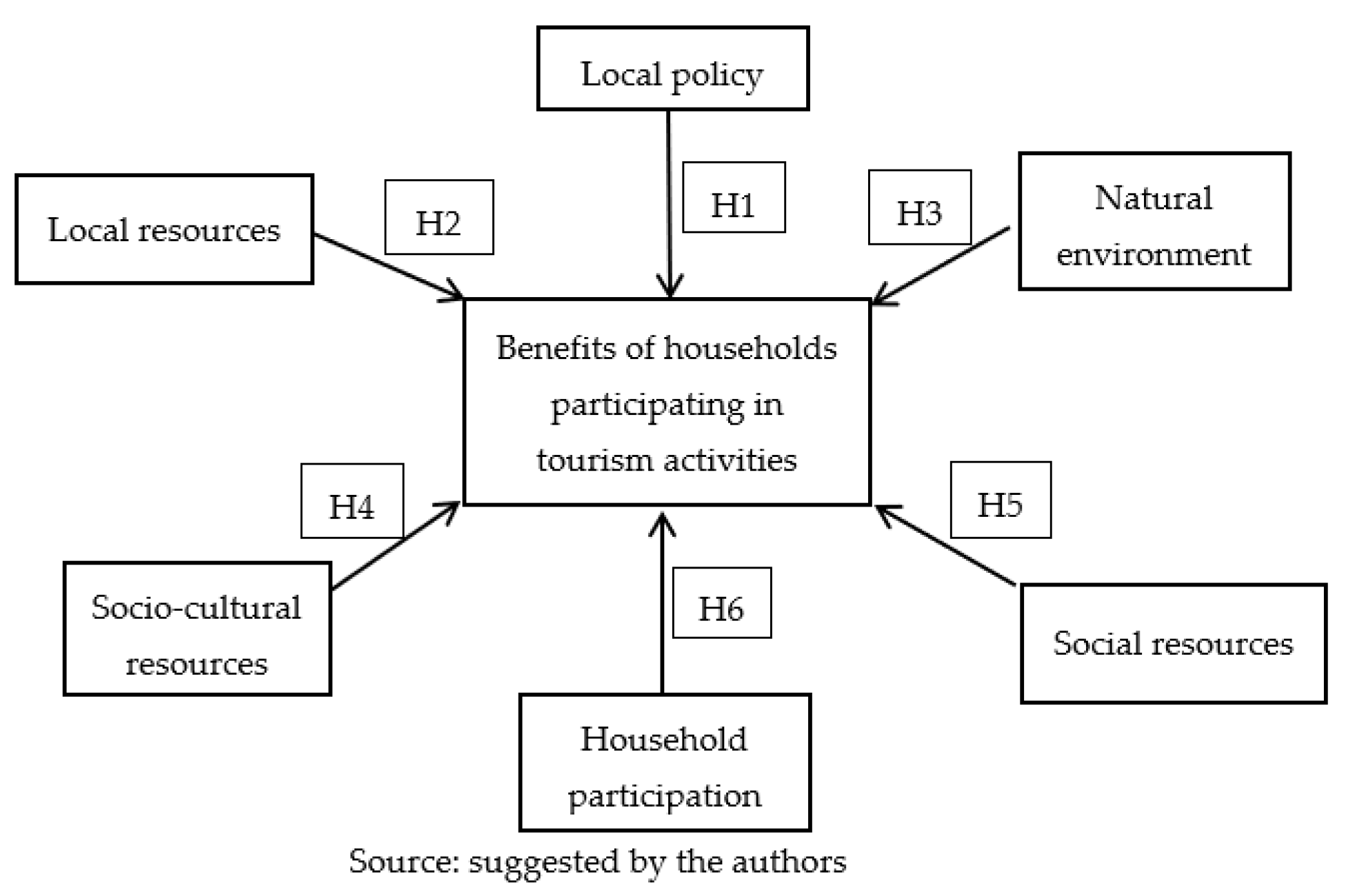
The variables in the research model can be explained as follows:
- Local policy: the support and provision of information by the locality, the friendliness of the people, and the people’s trust in the government.
- Local resources: transport system, waste treatment, water and electricity supplies, reasonable and secure means of communication.
- Natural environment: beautiful landscapes, no pollution, spacious public space.
- Socio-cultural resources: near tourist attractions, cultural exchange with tourists, cultural traditions, and historical relics.
- Social resources: having a good relationship with the government and travel agencies, friendly people, good relationships between family members, a safe place to live, and cooperation of households.
- Household participation: families actively make decisions to participate in tourism service activities, always plan tourism service activities, consistently participate in tourism activities, and always participate in the management and evaluation of the tourism service activities of the family.
The proposed research model was presented in Figure 1.
Figure 1.
Proposed research model.
The research model was proposed to solve the following hypotheses:
H1:
Local policy affects households’ benefits when participating in tourism activities.
H2:
Local resources have an influence on the benefits of households when participating in tourism activities.
H3:
The natural environment affects households’ benefits when participating in tourism activities.
H4:
Socio-cultural resources influence the benefits of households when participating in tourism activities.
H5:
Social resources have an influence on the benefits of households when participating in tourism activities.
H6:
Household participation affects households’ benefits when participating in tourism activities.
3. Results and Discussion
3.1. Household Participation in Tourism Activities
3.1.1. Characteristics of Surveyed Households
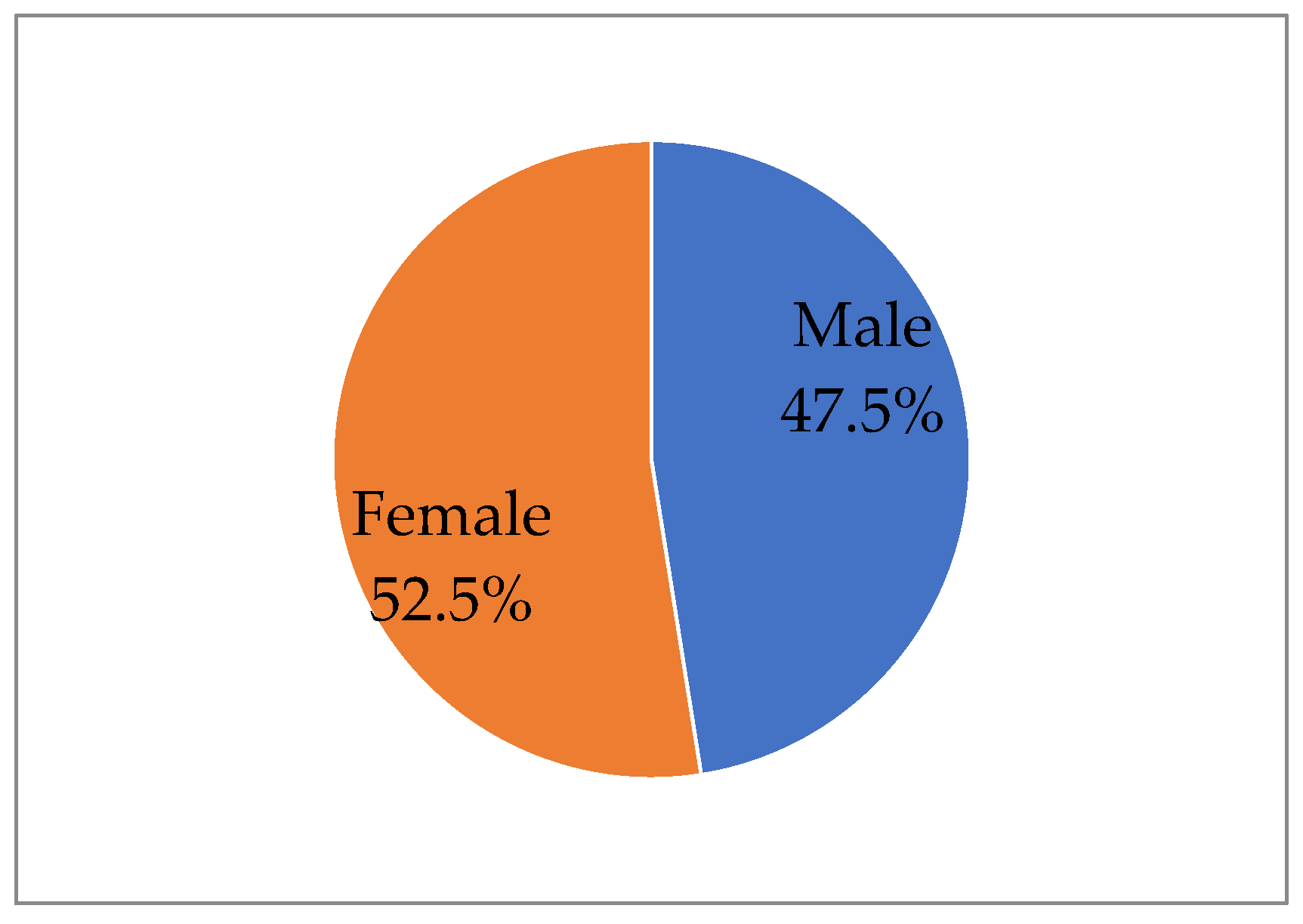
Based on the results for 125 interviewees, the gender ratio was relatively equal—precisely 47.5% male and 52.5% female. The percentage of the gender of surveyed households is presented in Figure 2.
Figure 2.
Genders of surveyed households.
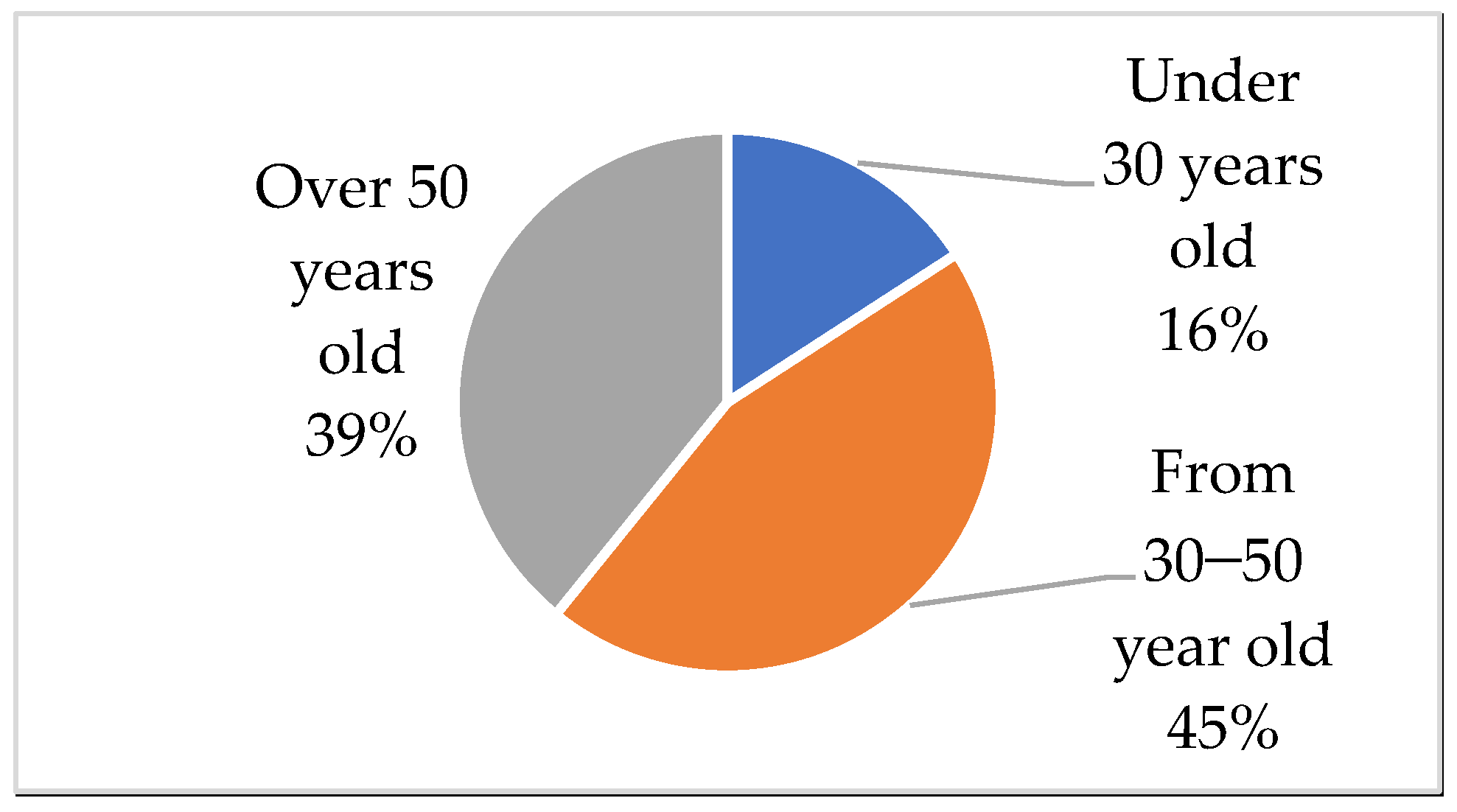
According to Figure 3, up to 45% of the respondents were between the ages of 30 and 50 because this was the age range when they had enough capacity to manage a business. In addition, they could learn to improve their skills to enhance tourism activities. This was followed by 39% who were over 50; the lowest percentage was those who were under 30 (16%).
Figure 3.
Ages of surveyed households.
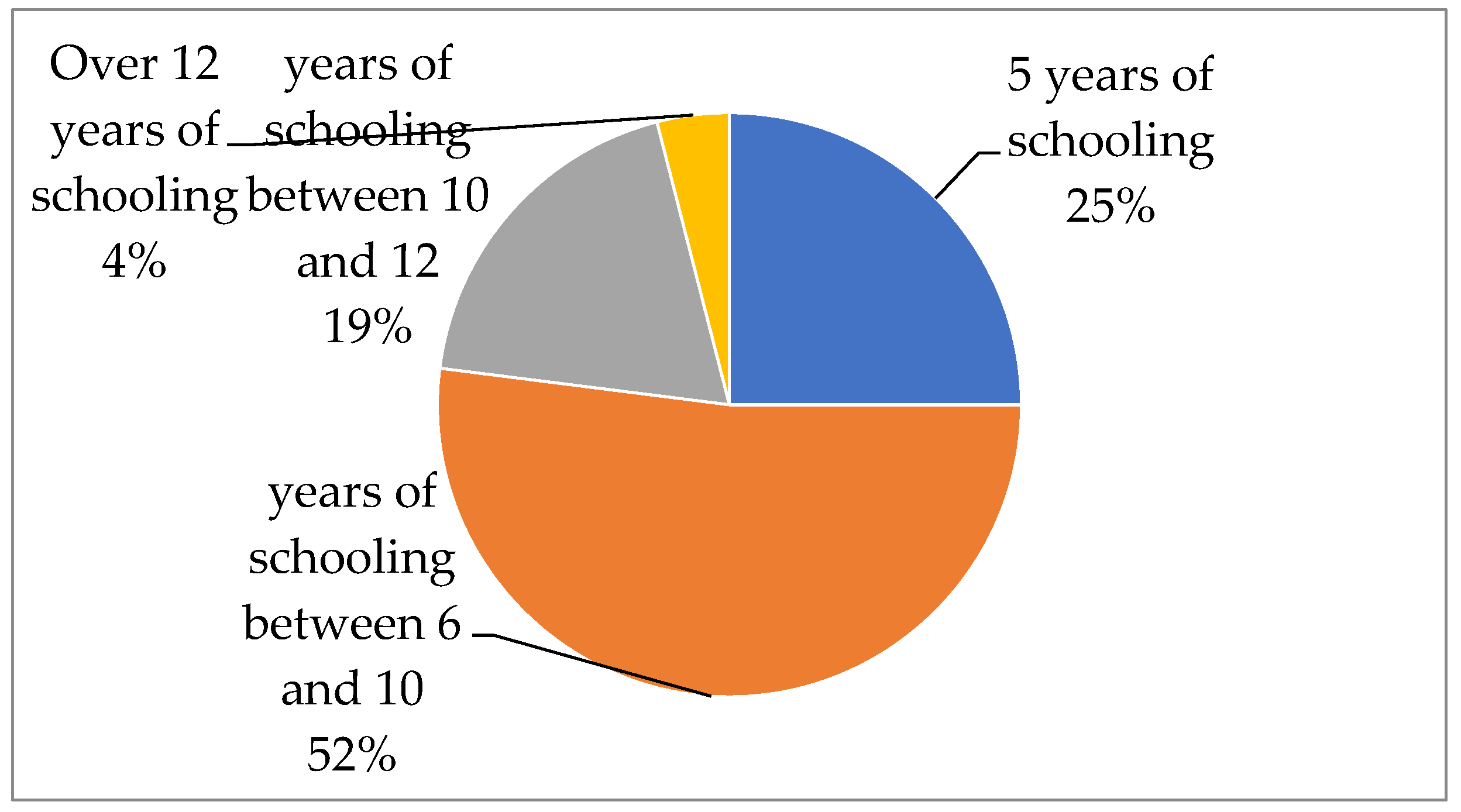
Regarding the educational level, Figure 4 shows that more than half of the respondents had between 6 and 10 years of schooling, accounting for 52%. Most households in the Phong Dien district could update information about the market with advanced knowledge to upgrade their family’s tourism development. In addition, respondents with high school and bachelor/postgraduate degrees accounted for only 19% and 4%, respectively, showing that people who engaged in tourism activities in Phong Dien did not have much professional or advanced knowledge to develop the local tourism industry. However, a quarter of household heads with less than 5 years of schooling need to be informed and imparted basic and adequate knowledge about tourism development activities.
Figure 4.
Educational levels of surveyed households.
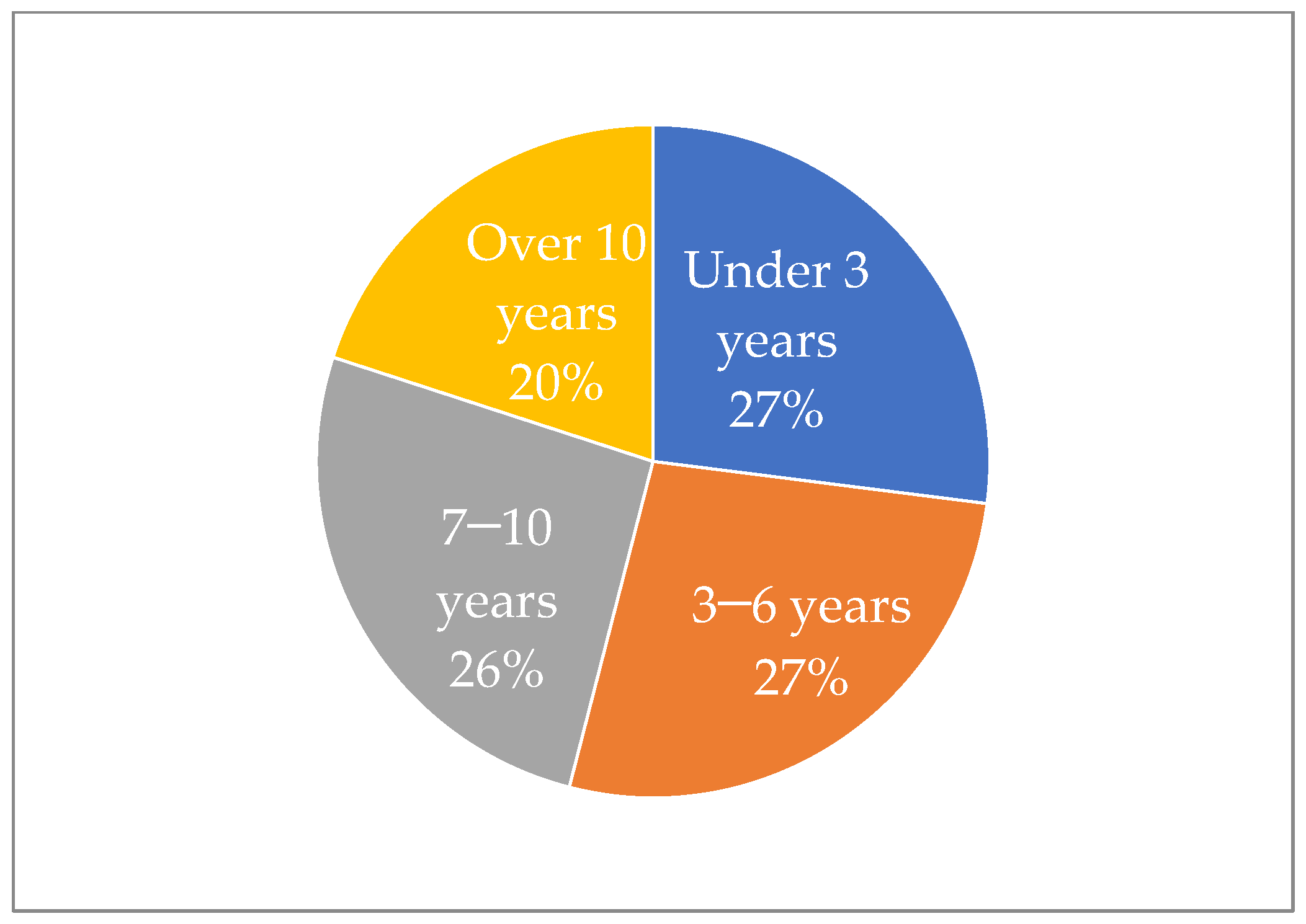
Regarding the number of years of participating in tourism activities, Figure 5 illustrates that most households had been operating for 9 to 12 years, accounting for 27%. In addition, up to 20% of households had been working for more than 12 years, showing that tourism in Phong Dien has developed for a long time, and families engaging in tourism activities had many years of experience. Moreover, households operating for less than nine years also accounted for the highest rate of 27%, proving that tourism activities in Phong Dien were still developing and attracting an increasing number of participants.
Figure 5.
Number of years of participating in tourism activities.
In addition, 69.2% of households with only 1 or 2 family members were involved in tourism activities in each home, which showed that the number of participants was quite limited. Therefore, investing more in quantity and quality is necessary because people are the most critical factor in the service sector and tourism.
3.1.2. Impacts on Household Decisions to Participate in Tourism Activities
Many influences affect households’ decisions to participate in tourism activities. The major reason was their assessment of Phong Dien’s tourism development potential; they decided to participate, accounting for 81.7%. In addition, the local government was also a cause that affected the decision to participate: 3.3% of households were regulated by local authorities, and 26.7% of households had experience thanks to incentives from the government.
3.1.3. Types of Tourism and Forms of the Household Participating in Tourism Activities
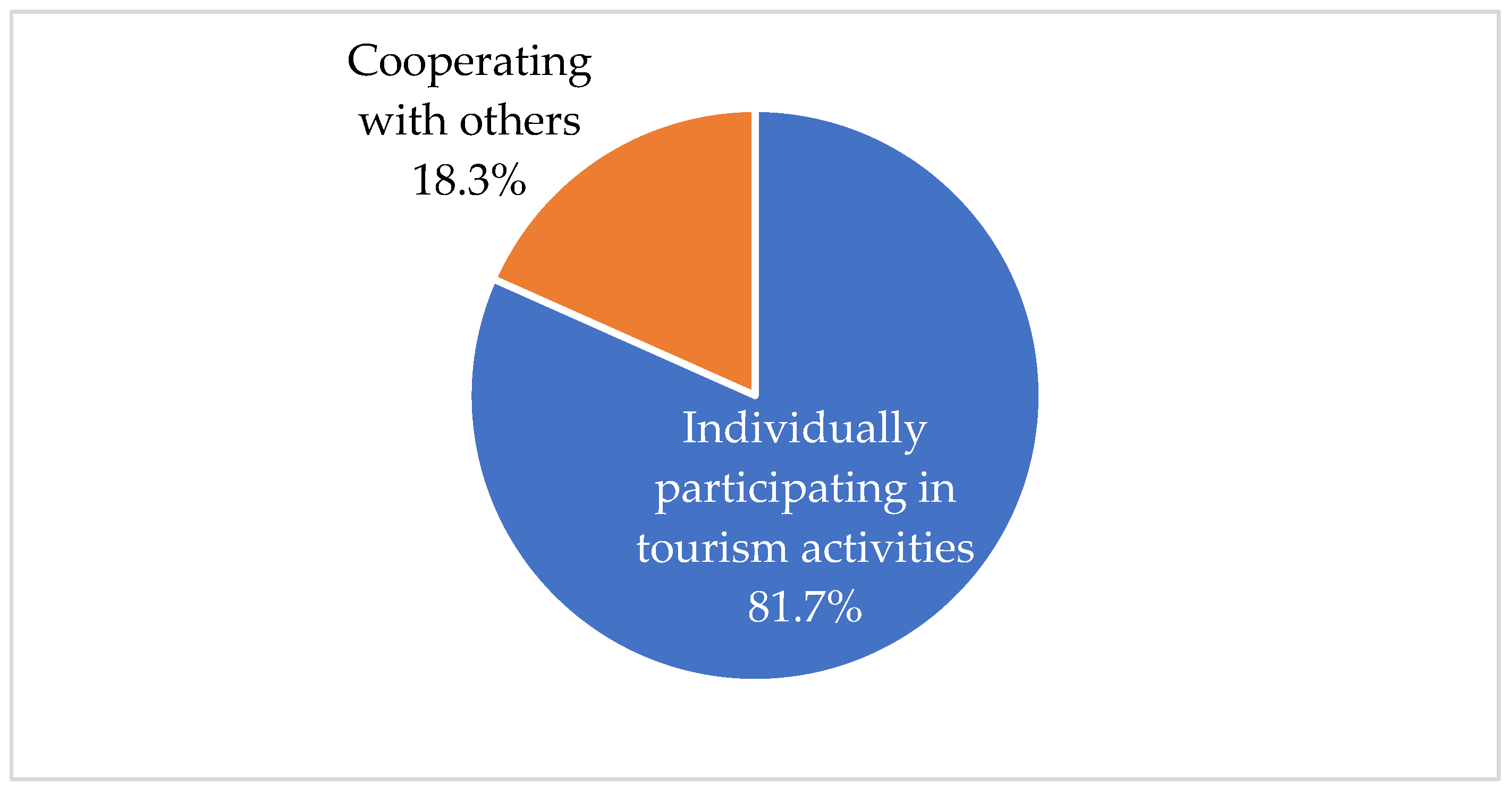
According to Figure 6, most households individually participated in tourism activities (81.7%), while the rest cooperated with other homes, but the rate was low (18.3%). Families that collaborated with other households made handicrafts for indirect tourism. Some households made row boats on a small scale, often associating with other households for transport when many tourists arrive.
Figure 6.
Forms of the households participating in tourism activities.
Regarding participation in tourism activities, households that directly served and sold tourism products accounted for a high proportion (90%) while indirect households accounted for only 10%, most of which were households that engaged in handicrafts such as hyacinth basket weaving and knitting.
3.1.4. Activities That Generated Income for Households Participating in Tourism Activities
According to Table 2, most households participated in tourism activities that allowed visitors to visit the fruit and ornamental flower gardens (accounting for 40.8%). Due to the favorable natural conditions of the area, it is easy for households to develop fruit orchards, which can be combined with several other activities such as serving food, picking fruit, and various folk games (fishing, canoeing, catching chickens, etc.). The next-highest proportion was serving tourist transportation (accounting for 27.5%) and other indispensable activities such as serving food, selling fruit and souvenirs, etc. In addition to providing products for tourism, handicraft households sometimes undertook vocational training to perform and guide tourists. Tourist transport households are increasingly improving in service quality through actions such as cleaning boats before and after taking tourists to visit. Some boating households also made a difference by giving gifts to tourists. Women are given flowers, and men receive bracelets made from leaves, both of which are memorable and efficient in creating a good impression for tourists. Activities with the lowest percentage served entertainment services (accounting for only 10.8%) and others (accounting for 5.8%) such as raising pythons for tourists to visit, renting bicycles, etc.
Table 2.
Activities that generated income for households participating in tourism activities.
In addition to tourism activities, 59.2% of the 125 interviewed households also engaged in other activities to earn additional income. The most frequent were gardening (accounting for 77%); trading (9.5%); and other occupations such as teaching, selling lottery tickets, etc. (13.5%). This proved that tourism was not the primary income in some households and that participation in tourism activities was not enough for them to make ends meet.
3.1.5. Sources of Information on the Tourism Market That Households Receive
Most households observed and identified the needs of tourists based on actual contact, so the primary source of information was the real tourism market, which accounted for 63.8%. In addition, households still obtained indirect information from tourism companies and local authorities at the same rate of 22.5% and the rest from other sources of information, which accounted for 1.7%.
3.2. Factors That Affected the Benefits of Households Participating in Tourism Activities
3.2.1. Factors That Affected the Benefits of Households That Participated in Tourism Activities in the Phong Dien Tourist Village, Vietnam
Assessing Reliability via Cronbach’s Alpha Coefficient
The test results for the Cronbach’s alpha coefficient of the group of independent variables was 0.9 and ranged from 0.7 to 1.0, which showed that the scale was good. All correlation coefficients of the total variables were higher than 0.3 except VXH3, which had a total correlation coefficient of 0.2, so it was excluded from the model. Thus, 23 variables were used in the subsequent factor analysis.
Exploratory Factor Analysis (EFA) Results
The results of the EFA were as follows:
- Test of the suitability of the model (0.5 < KMO = 0.816 < 1.0);
- Bartlett’s test of the correlation of the observed variables (Sig. = 0.000 < 0.05);
- Test of cumulative variance = 66.5% (cumulative variance > 50%), which showed that the first five factors explained 66.5% of the variation in the data. This showed that the results of the EFA were completely appropriate.
Based on the rotated factor matrix with a factor-loading coefficient > 0.5, there were five groups of factors created as shown in Table 3:
Table 3.
Results of the rotated factor matrix.
Results of the Linear Regression Model
As indicated in Table 4, the linear regression model of factors that affected the benefits of households that participated in tourism activities was rewritten as follows:
Table 4.
Results of linear regression analysis of factors that affected the benefits of households participating in tourism activities.
- Y = 0.009 + 0.354·X1 + 0.222·X2 + 0.254·X3 + 0.349·X5;
- Y: Benefits of households participating in tourism activities;
- X1: Natural environment;
- X2: Government’s support;
- X3: Social environment;
- X5: Household participation.
The natural environment (X1) was essential for the community’s participation in tourism activities. The more tourism resources a place possessed, the more tourism would develop, and the more benefits that tourism brings to people would increase. This is the natural resource component of tourism. As society evolves, the need for knowledge enhancement is expanding. Traveling is no longer just a trip to a resort with beautiful scenery but also is combined with learning about the destination’s culture, customs, and habits. A place with many cultural-exchange activities that are held regularly and in various forms will attract more tourists, especially international ones. This is also a component of human resources in tourism.
The fact that the area had many beautiful scenes was not a decisive factor for tourism development but instead was the government’s support (X2). It enhanced beautiful landscapes into tourist destinations by improving the transportation system so tourists could easily access the place, advertising promotion programs, or pricing policies. In addition, the government’s friendliness to the people was also an essential factor, and the people-friendly government received support and contributed to local tourism development.
Regarding the social environment (X3), one of the most appreciated features of Vietnam tourism is the friendliness of the local people. A tourist area with the friendliness and hospitality of the people will help tourism develop, thereby attracting more participation from households. The more tourism develops, the more benefits it will bring the community. Security is also a significant factor in tourism development. Security issues must be ensured, even more so in a famous tourist destination that is crowded with tourists. This is also an indispensable factor for tourism to develop in the short and long term.
The variable that affected households’ benefits when participating in tourism that was agreed upon chiefly was household participation (X5). Most households were self-aware of local tourism development and actively participated in the industry. Actively participating in the sector has partly brought economic benefits such as income and employment to households. Most households joined in activities that directly served tourists, such as accommodation and transportation, and from there, they received direct benefits from tourism.
3.2.2. Assessing the Influence of Factors That Affected the Benefits of Households Participating in Tourism Activities in the Phong Dien Tourist Village, Vietnam
Based on the results of the linear regression, the study showed that four variables—X1, X2, X3, and X5—positively impacted the households’ benefits when they participated in tourism activities. However, the model only provided a general overview of the factors that affected the households’ benefits, but the level of influence of these factors has yet to be discovered. Therefore, this study used descriptive statistics with the mean of the elements.
Based on a scale of 1 to 5 (from 1—strongly disagree to 5—strongly agree), we obtained the following results:
According to Table 5, the “Natural environment” factor was essential to the community’s participation in tourism activities. The more tourism resources a place has, the more tourism will develop, and the more benefits that tourism brings to people will increase. That is why the variable “Having many beautiful landscapes” had the highest mean score (3.93). This is the natural attraction of tourism. The variable with the highest average score was “Regular cultural exchange with tourists” (3.83). Today, as society develops, the need for knowledge enhancement is increasing. Traveling is no longer just simply relaxing and admiring the beautiful scenery but is also combined with learning about the destination’s culture, customs, and habits. A place where cultural exchange activities are held regularly and in various forms will attract more tourists, especially international ones. This is the cultural attraction in tourism.
Table 5.
Assessing the influence of the “Natural environment” factor on the benefits for households when participating in tourism activities in the Phong Dien tourist village.
Table 6 shows that the variable with the highest agreement on “Government’s support” was “Living near many tourist attractions” (3.73). The location of many beautiful scenes was not a decisive factor for tourism development, but instead was the government’s planning. It helped develop beautiful landscapes into tourist destinations by improving the transportation system for tourists to easily access the place, advertising promotion programs or pricing policies, etc. In addition, “The government is very friendly to the residents” was also an essential factor (3.48). The resident-friendly government will receive support and contributions to local tourism development from the residents.
Table 6.
Assessing the influence of the factor “Government’s support” on the benefits for households when participating in tourism activities in the Phong Dien tourist village.
As shown in Table 7, in “Social environment,” the variable that had the most influence on the benefits of households when participating in tourism activities was “The residents are friendly” (4.13). One of the most appreciated features of Vietnam tourism is the friendliness of the local people. A tourist area with the friendliness and hospitality of the residents will help tourism develop, thereby attracting more participation from households. The more tourism enhances a community, the more benefits it will bring to that community. The variable with the following highest mean was “The area is secure” (4.02). Security is a significant factor in tourism development. Security issues must be ensured, even more so in a famous tourist destination that is crowded with tourists. This is also an indispensable factor for tourism to develop in the short and long term.
Table 7.
Assessing the influence of the factor “Government’s support” on the benefits for households when participating in tourism activities in the Phong Dien tourist village.
Table 8 illustrates that “Water and electricity supply systems are always guaranteed” was the most agreed-upon variable in terms of “Local resources” (3.98). Electricity and water are two necessities for travelers wherever they go. If this issue is not guaranteed, visitors will not stay long or overnight in the locality. With guaranteed electricity and water systems, visitors will tend to spend the night, bringing economic benefits to households. “Having suitable means of communication” was the second highest score (3.83). In addition to the transportation system, electricity, and water, the means of communication are also vital. The better the media system, the more professional it is for tourism activities and investments in tourism development.
Table 8.
Assessing the influence of the factor “Local resources” on the benefits for households when participating in tourism activities in the Phong Dien tourist village.
As can be seen in Table 9, the variable that affected the households’ benefits when participating in tourism that most households agreed with was “Your family actively makes decisions to participate in tourism activities” (4.27). This was also the variable that had the highest mean score among all of the variables. Most households were self-aware of local tourism development and actively participated in the industry. Actively participating in the tourism industry has partly brought economic benefits such as income and employment to households. The variable with the next-highest mean score was “Your family is involved in tourism activities” (4.12). Most households participated in activities that directly served tourists, such as food and beverage, accommodation, and transportation. They obtained direct benefits from tourism.
Table 9.
Assessing the influence of the factor “Household participation” on the benefits for households when participating in tourism activities in the Phong Dien tourist village.
The above data tables show that households highly appreciated most of the five total variables included in the model. Households agreed with the factors that affected their participation in tourism activities. Specifically, of the five variables, “Social environment” had the most agreement among households with an average value of 3.94. The variables that had lower levels were “Household participation” (3.85), “Local resources” (3.79), “Natural environment” (3.59), and “Government’s support (3.21).
4. Conclusions
In conclusion, developing eco-tourism is one of Vietnam’s critical issues. Although tourism has appeared in Phong Dien for a long time, in general, the number of households that participate in tourism is still very high and is not on a large scale. The natural features as well as the characteristics of the river and garden culture were the advantages of Phong Dien tourism. Still, the tourism products provided almost overlapped and were not specific.
The research results showed that most member of households that participated in tourism services were middle-aged or older and had a relatively good education level. Most families knew the benefits of participating in tourism and determined that they would commit to local development for a long time. The research results showed that four factors affected household benefits when participating in tourism activities: “Natural environment”, “Government’s support”, “Social environment”, and “Household participation”. All factors were positively correlated with the benefits of households participating in tourism activities in the Phong Dien district. In addition, “Natural environment” was the most crucial factor that affected the interests of families when participating in tourism activities in the locality.
In addition, this study also proposed solutions to improve the efficiency of household tourism activities in order to increase the benefits households receive when participating in tourism. The solutions were as follows. Firstly, enhance the conservation and development of natural landscapes, make effective use of natural advantages, and create an environment for learning and cultural exchange among local people and visitors. Secondly, ensure adequate and prompt information, carry issue policies to support households, create conditions for tourism service business development, and have a close relationship with households. Then, strengthen security in the area, create a friendly and hospitable environment for tourists, and ensure safety for both tourists and locals. Finally, educate local people about the long-term development policy of the local tourism industry and the benefits that tourism has brought, thereby encouraging households to participate in the tourism industry actively.
Finally, we discuss some recommendations:
For local government, local authorities need to create programs and plans for tourism development in a consistent and specific manner. They should propagate such plans and encourage the participation in tourism activities by new households and support tourism development for families who have been engaging in tourism for many years and have a great deal of experience. They should regularly organize meetings, talks, and exchanges on tourism issues with the participation of households, travel agencies, and reputable newspapers to create opportunities for people to update information, exchange experiences, and seek cooperation. In addition, the government should provide tax-reduction policies; loan policies for the tourism business; and professional support for organizing training courses on soft skills, English skills, and knowledge of tourism. In addition, the government must plan to improve the infrastructure as well as ensure the safety of tourists and residents.
For households that participate in tourism activities:
For gardeners, it is necessary to pay attention to the diversification of products, intercrop many kinds of fruit trees, design beautiful and eye-catching gardens, and build facilities suitable to the rural culture. They can combine visiting fruit orchards with various activities such as boating, catching chickens, catching fish, looking for frogs, etc. They can create favorable conditions for tourists to experience being a farmer.
For households that provide food services and selling fruit, it is necessary to ensure food safety and hygiene for tourists. They should focus on limiting the use of chemical drugs and increasing the production of clean agricultural products. They can provide dishes with significant flavor that bear the region’s characteristics.
For households that sell souvenirs and crafts, they should organize performances for tourists and teach them how to make products. They can support local vocational training classes, earn more income, create more jobs for people, and contribute to the expansion and development of traditional village products. In addition, the artisans can actively create new and more unique products to attract and generate novelty for visitors.
For households that transport tourists, it is necessary to ensure the safety of tourists. There are specific souvenir products to attract and impress visitors, such as flowers, pinwheels, etc. They can connect with gardeners and food vendors to plan unique and attractive tours.

Author Contributions
Conceptualization, M.-U.N. and P.-T.H.; methodology, M.-U.N. and P.-T.H.; software, M.-U.N.; validation, N.A.N. and P.-T.H.; investigation, M.-U.N.; resources, N.A.N.; data curation, M.-U.N.; writing—original draft preparation, M.-U.N.; writing—review and editing, M.-U.N. and Y.-M.L.; funding acquisition, Y.-M.L. All authors have read and agreed to the published version of the manuscript.
Funding
This research received no external funding.
Institutional Review Board Statement
The National Kaohsiung University of Science and Technology (NKUST) Human Subjects Review Policy states that the research that requires IRB approval only includes the studies that investigate a subject’s privacy, collected human body tissues, fluid, or other subjects that might expose an individual’s identity (NKUST Human Research Policy Item 4.2; NKUST, 2010). This study did not require an ethical review for human subject research.
Informed Consent Statement
Informed consent was obtained from all subjects involved in the study.
Data Availability Statement
Not applicable.
Conflicts of Interest
The authors declare no conflict of interest.
References
- Vietnam National Administration of Tourism. Vietnam Is Honored as Asia’s Leading Destination 2021. Available online: https://vietnam.travel/things-to-do/vietnam-is-honored-as-asias-leading-destination-2021 (accessed on 23 November 2022).
- WTTC. Travel & Tourism: Global Economic Impact & Issues 2018; World Travel and Tourism Council: London, UK, 2018. [Google Scholar]
- Zaei, M.E. The impacts of tourism industry on host community. Eur. J. Tour. Hosp. Res. 2013, 1, 12–21. [Google Scholar]
- Green, H.; Hunter, C.; Moore, B. Assessing the environmental impact of tourism development: Use of the Delphi technique. Tour. Manag. 1990, 11, 111–120. [Google Scholar] [CrossRef]
- Drake, S.P. Local Participation in Ecotourism Projects. In Nature Tourism: Managing for the Environment; Island Press: Washington, DC, USA, 1991; pp. 132–163. [Google Scholar]
- Cater, E. Ecotourism in the Third World: Problems and Prospects for Sustainability; John Wiley & Sons: Chichester, UK, 1994; pp. 69–86. [Google Scholar]
- Woodley, A. Tourism and sustainable development: The community perspective. In Tourism and Sustainable Development: Monitoring, Planning, Managing Decision Making: A Civic Approach; Nelson, J.G., Butler, R.W., Wall, G., Eds.; University of Waterloo: Waterloo, ON, Canada, 1999. [Google Scholar]
- Renwick, H.L.; Murphy, P.E. Tourism: A Community Approach. Geogr. Rev. 1987, 77, 246. [Google Scholar] [CrossRef]
- Wall, G. Perspectives on tourism in selected Balinese villages. Ann. Tour. Res. 1996, 23, 123–137. [Google Scholar] [CrossRef]
- Ap, J. Residents’ perceptions on tourism impacts. Ann. Tour. Res. 1992, 19, 665–690. [Google Scholar] [CrossRef]
- Lankford, S.V. Attitudes and Perceptions Toward Tourism and Rural Regional Development. J. Travel Res. 1994, 32, 35–43. [Google Scholar] [CrossRef]
- Hall, M.C.; Lew, A.A. Understanding and Managing Tourism Impacts: An Integrated Approach; Routledge: New York, NY, USA, 2009. [Google Scholar]
- Telfer, D.J.; Sharpley, R. Tourism and Development in the Developing World; Routledge: New York, NY, USA, 2008. [Google Scholar]
- Ross, G.F. Resident Perceptions of the Impact of Tourism on an Australian City. J. Travel Res. 1992, 30, 13–17. [Google Scholar] [CrossRef]
- McCool, S.F.; Martin, S.R. Community Attachment and Attitudes Toward Tourism Development. J. Travel Res. 1994, 32, 29–34. [Google Scholar] [CrossRef]
- Crotts, J.C.; Holland, S.M. Objective indicators of the impact of rural tourism development in the state of Florida. J. Sustain. Tour. 1993, 1, 112–120. [Google Scholar] [CrossRef]
- Tang, C.F.; Tan, E.C. Does tourism effectively stimulate Malaysia’s economic growth? Tour. Manag. 2015, 46, 158–163. [Google Scholar] [CrossRef]
- Shahzad, S.J.H.; Shahbaz, M.; Ferrer, R.; Kumar, R.R. Tourism-led growth hypothesis in the top ten tourist destinations: New evidence using the quantile-on-quantile approach. Tour. Manag. 2017, 60, 223–232. [Google Scholar] [CrossRef]
- Ekeocha, D.O.; Ogbuabor, J.E.; Orji, A.; Kalu, U.I. International tourism and economic growth in Africa: A post-global financial crisis analysis. Tour. Manag. Perspect. 2021, 40, 100896. [Google Scholar] [CrossRef]
- Oztürk, A.B.; Özer, Ö.; Çalışkan, U. The relationship between local residents’ perceptions of tourism and their happiness: A case of Kusadasi, Turkey. Tour. Rev. 2015, 70, 232–242. [Google Scholar] [CrossRef]
- Sheldon, P.J.; Var, T. Resident attitudes to tourism in North Wales. Tour. Manag. 1984, 5, 40–47. [Google Scholar] [CrossRef]
- Sharpley, R. Tourism, Tourists and Society; ELM: Huntingdon, UK, 1994. [Google Scholar]
- Gee, C.Y.; Makens, J.C.; Choy, D.J.L. The Travel Industry, 3rd ed.; Van Nostrand Reinhold: New York, NY, USA, 1997. [Google Scholar]
- Liu, J.C.; Var, T. Resident attitudes toward tourism impacts in Hawaii. Ann. Tour. Res. 1986, 13, 193–214. [Google Scholar] [CrossRef]
- Inskeep, E. Tourism Planning—An Integrated and Sustainable Development Approach; Van Nostrand Reinhold: New York, NY, USA, 1991. [Google Scholar]
- Milman, A.; Pizam, A. Social impacts of tourism on central Florida. Ann. Tour. Res. 1988, 15, 191–204. [Google Scholar] [CrossRef]
- Yang, L. Tourism development and quality of life. In Travel and Tourism Research Association: Advancing Tourism Research Globally; University of Massachusetts Amherst: Amherst, MA, USA, 2016. [Google Scholar]
- Tang, J.; Cai, C.; Liu, Y.; Sun, J. Can Tourism Development Help Improve Urban Liveability? An Examination of the Chinese Case. Sustainability 2022, 14, 11427. [Google Scholar] [CrossRef]
- Kozak, N.; Kozak, M.A.; Kozak, M. Genel turizm. Yenilenmiş 17. In Detay Yayıncılık. Turkey; Nadirkitap: Istanbul, Turkey, 2015. [Google Scholar]
- Thullah, A.; Liu, H. The Socio-Economic Impacts of Tourism Development in Sierra Leone: A Pilot Study. Eur. Bus. Manag. 2020, 6, 128. [Google Scholar] [CrossRef]
- McKean, P.F. A symbolic form in transition: The Balinese Ketjak. In The World Imagination of Reality: Symbol System in Southeast Asia; University Arizona Press: Tucson, AZ, USA, 1976; pp. 293–302. [Google Scholar]
- Konstantakopoulou, I. Does health quality affect tourism? Evidence from system GMM estimates. Econ. Anal. Policy 2021, 73, 425–440. [Google Scholar] [CrossRef]
- Garau-Vadell, J.B.; Gutierrez-Taño, D.; Díaz-Armas, R. Economic crisis and residents’ perception of the impacts of tourism in mass tourism destinations. J. Destin. Mark. Manag. 2018, 7, 68–75. [Google Scholar] [CrossRef]
- Linderová, I.; Scholz, P.; Almeida, N. Attitudes of Local Population Towards the Impacts of Tourism Development: Evidence from Czechia. Front. Psychol. 2021, 12, 684773. [Google Scholar] [CrossRef] [PubMed]
- Crick, M. Representations of International Tourism in the Social Sciences. Annu. Rev. Anthropol. 1989, 18, 307–344. [Google Scholar] [CrossRef]
- Rath, N.; Gupta, R. Environmental Impact of Tourism. Int. J. Adv. Res. Innov. Ideas Educ. 2017, 2, 50–53. [Google Scholar]
- Sajad, A.E.; Mahdi, K. Perception of Community in Tourism Impacts and their Participation in Tourism Planning: Ramsar, Iran. J. Asian Behav. Stud. 2017, 2, 59–69. [Google Scholar]
- Brayley, R.; Var, T.; Sheldon, P. Perceived influence of tourism on social issues. Ann. Tour. Res. 1990, 17, 285–289. [Google Scholar] [CrossRef]
- Perdue, R.R.; Long, P.T.; Allen, L. Rural resident tourism perceptions and attitudes. Ann. Tour. Res. 1987, 14, 420–429. [Google Scholar] [CrossRef]
- Alshuwaikhat, H.M. Strategic environmental assessment can help solve environmental impact assessment failures in developing countries. Environ. Impact Assess. Rev. 2005, 25, 307–317. [Google Scholar] [CrossRef]
- Zhang, N.; Ren, R.; Zhang, Q.; Zhang, T. Air pollution and tourism development: An interplay. Ann. Tour. Res. 2020, 85, 103032. [Google Scholar] [CrossRef]
- Fredline, L.; Deery, M.; Jago, L.K. Development of a Scale to Assess the Social Impact of Tourism within Communities; Technical Report; Cooperative Research Centre for Sustainable Tourism: Brisbane, QLD, Australia, 2006. [Google Scholar]
- Lickorish, L.J. Developing Tourism Destinations—Policies and Perspectives; Longman: Essex, UK, 1991. [Google Scholar]
- Wang, Y.; Li, G.; Bai, X. A Residential Survey on Urban Tourism Impacts in Harbin. J. China Tour. Res. 2005, 1, 116–129. [Google Scholar]
- Belisle, F.J.; Hoy, D.R. The perceived impact of tourism by residents a case study in Santa Marta, Colombia. Ann. Tour. Res. 1980, 7, 83–101. [Google Scholar] [CrossRef]
- Keogh, B. Public participation in community tourism planning. Ann. Tour. Res. 1990, 17, 449–465. [Google Scholar] [CrossRef]
- Brougham, J.; Butler, R. A segmentation analysis of resident attitudes to the social impact of tourism. Ann. Tour. Res. 1981, 8, 569–590. [Google Scholar] [CrossRef]
- Perdue, R.R.; Long, P.T.; Allen, L. Resident support for tourism development. Ann. Tour. Res. 1990, 17, 586–599. [Google Scholar] [CrossRef]
- Peterson, R.A. A Meta-Analysis of Cronbach’s Coefficient Alpha. J. Consum. Res. 1994, 21, 381–391. [Google Scholar] [CrossRef]
- Slater, S.F. Issues in conducting marketing strategy research. J. Strat. Mark. 1995, 3, 257–270. [Google Scholar] [CrossRef]
- Hair, J.F.; Black, W.C.; Babin, B.J.; Anderson, R.E.; Tatham, R.L. Multivariate data analysis 6th Edition. Pearson Prentice Hall. New Jersey. Humans: Critique and reformulation. J. Abnorm. Psychol. 2006, 87, 49–74. [Google Scholar]
Publisher’s Note: MDPI stays neutral with regard to jurisdictional claims in published maps and institutional affiliations. |
© 2022 by the authors. Licensee MDPI, Basel, Switzerland. This article is an open access article distributed under the terms and conditions of the Creative Commons Attribution (CC BY) license (https://creativecommons.org/licenses/by/4.0/).