


Abstract
The COVID-19 pandemic has caused severe disturbances in the work of hundreds of millions of people around the world. One of the groups affected is the academic staff at higher education institutions, whose original business model, i.e., presence teaching, suddenly changed to online learning. This has, in turn, exacerbated pre-existing problems such as shortage of time, busy schedules, and challenges to a work-life balance. Since academic staff plays a key role in respect of teaching and research, often acting as leaders in their fields, it is important to reflect on the influences of the lockdowns on their work routines. In order to address this research need, this paper reports on a study that examined the impacts of the lockdowns on the work of academic staff at universities. Using a bibliometric analysis and investigation of a set of case studies, the study sheds light on the difficulties encountered and the means deployed to address them. Our study did not identify a one-size-fits-all response to manage the manifold changes brought on HEIs by the COVID-19 pandemic. Selected arising priorities include creating a culture of educational resilience through a container of complementary measures.
1. Introduction
As of October 2022, the confirmed cases of the COVID-19 pandemic have reached over 615.310 million and are responsible for more than 6.524 million deaths worldwide [1]. To mitigate the spread of COVID-19, governments around the world have imposed social distancing measures, lockdowns, and the cessation of personal contact outside immediate households [2]. Therefore, COVID-19 had a great impact on educational activities. Within a few weeks, entire education systems, from elementary to higher education, had to completely change activities towards an online-learning scenario [3]. According to UNESCO, higher education institutions (HEIs) were closed completely in 185 countries in April 2020, affecting more than 1000 million learners around the globe [4,5].
Higher education institutions have shifted from face-to-face or blended to fully remote instruction, termed as Emergency Remote Teaching (ERT), to ensure their students continue to obtain the required education while shielding them from the spread of the virus. ERT is described by Hodges et al. [6] as a “temporary shift of instructional delivery to an alternate delivery mode due to crisis circumstances”. Suspending standard class-based teaching and transitioning to fully online instruction dramatically altered students’ lives and disrupted their psychosocial functioning [7,8]. The hardship that ERT might have imposed combined with the sudden change in their lifestyles, the attenuation of social interaction, the financial challenges, and the uncertainty of the future, may have intensified the level of anxiety among students [9,10].
Hence, one consequence of COVID-19 is that HEIs in many countries directed their teaching staff to move to teach and learn on online platforms where possible without delay, and to do so as comprehensively as possible [11]. Since teaching and administrative staff and students in universities have variable levels of preparedness and experience in the use of online provisions, both groups have achieved diverse outcomes in making the necessary transition to online education [12]. For example, there have been difficulties using online platforms for examinations and quality assurance and monitoring of students during tests and exams [13]. Furthermore, practical assessments that require the use of laboratories or involve fieldwork have been unable to continue during this time [14], while some courses cannot be taught online [15]. Fundamentally, many HEIs, their staff, and their students lack the infrastructure to rapidly transition to online learning platforms [14]. As the ‘digital divide’ has already been observed, the deployment of online learning is expected to broaden the learning gap between higher-income and lower-income families. Further, in developing countries, the provision of online teaching and learning platforms is hampered because internet access and connectivity have imposed a limitation on access to education during the pandemic [16]. In addition, in developing countries, the provision of online teaching and learning platforms has become difficult because access to the internet has placed restrictions on access to education during the pandemic. At the same time, some universities have had the relative luxury of access and sufficient IT resources to set up online support systems and counseling sessions to help staff and students during these difficult times [14].
Academics are engaged in multiple responsibilities, including teaching, research, supervision and mentoring, community services, and other collegiate events within and beyond academia. However, the pandemic has demanded working remotely from home, which is challenged by the lack of infrastructure to support academic activities, increased workload, disrupted personal routines, and difficulty balancing work and household and family duties [17,18]. The lockdowns also meant reduced contact with colleagues and students, leading to some degree of social distancing, in addition to disruptions in the work schedule [19]. These challenges can lead to psychological stress on work performance and losses in productivity and creativity, in addition to risks of anxiety and depression [20]. According to Omary et al. [21], key frustrations of the academic staff include being homebound, less productive, and incapable of advancing research. Less time could be dedicated to undertaking research due to the increased demand to prepare and deliver online teaching. In a Saudi Arabian university, academic staff struggled to adapt to new and untested teaching practices and methodologies, including managing online course delivery, technical issues, and course assessment formats [22]. In the United Arab Emirates, a study found that during the COVID-19 lockdown, more than half of academic staff experienced mild psychological problems such as difficulties concentrating and changes in sleep patterns [23]. In contrast, Carreri and Dordoni [17] investigated how the pandemic influenced the work of academic staff in Italy and found that the lockdown provided them with an opportunity for critical reflection without the arduous schedules of an academic environment.
Pandemic-related disruptions exacerbated pre-existing challenges faced by academic staff such as shortage of time, busy schedules, and striking a balance between work and personal life, which often aggravate inequalities by gender, geographical regions, and diverse disciplines. Therefore, the present study aims to review a set of case studies on the influence of the pandemic on the work and personal routines of academic staff and to shed some light on the challenges encountered and the means of addressing them.
Although there are no pandemic-related lockdowns in most parts of the globe nowadays, online education has come to stay, with lasting implications on pedagogy, research, and the modus operandi of HEIs and the identity of students and teachers. Building resilience by adequately adapting to the dramatically transformed teaching environment involving online and blended learning is a long-term strategy critical to the survival of HEIs. Naidu [24] calls for redesigning and developing policies governing learning and teaching at HEIs to adapt to the post-COVID learning and teaching context. Effective online learning and teaching require course redesign and redevelopment, including assessment of learning outcomes, resources, and technologies. Students and faculty need to be reskilled and upskilled to adapt to nontraditional learning scenarios, such as in-class discussions, assessments, peer feedback, and time management. Real targets should be set to facilitate progress from emergency online delivery to online teaching [25]. Pellegrini et al. [26] emphasise a new governance model, breaking from the old bureaucratic cultures and organizational rigidity and fostering resilience and adaptability to the sudden and massive utilisation of e-learning and a smart working environment. The authors maintain that capabilities and skills for collaborative problem-solving, critical thinking, and cognitive flexibility allow students and academics to adapt to new contexts, challenges, and opportunities rapidly. Without the strict separation between study time, work time, and personal life, they can easily transition to the logic of lifelong, daily learning. Zhao and Watterston [27] opined that curriculum frameworks of HEIs must change to assist students in developing competencies and capabilities to thrive in the age of information and communication technologies (ICT) and smart machines, and be creative, entrepreneurial, and globally competent. The curriculum should be developmental, evolving, and personalised, conforming to students’ unique learning pathways and catering to their social needs and emotional well-being without being overly constrained. Pedagogy should be authentic, purposeful, inquiry-based, and student-centred, and instruction delivery should capitalise on the strengths of both synchronous and asynchronous learning.
Even if pandemic-related lockdowns no longer exist in the majority of the world’s areas, online education will continue to exist, with long-term implications for education, research, the operational model of HEIs, and the identities of students and teachers. A long-term strategy essential to the survival of HEIs is the development of resilience through proper adaptation to the significantly changed teaching environment including online learning platforms [28]. Hill and Fitzgerald [29] revealed that the online learning environment in Ireland presented several difficulties that may have decreased student engagement and interfered with learning possibilities. The adaptability of learning, such as the ability for students to learn in comfort and in a convenient place, was among the academics’ list of advantageous elements of online learning experiences. They also proposed that a hybrid strategy, with enhanced staff and student participation through interactive activities, may be beneficial in the future. Research conducted at a dentistry school in the USA revealed that students preferred recorded live lectures with synchronous follow-up sessions and asynchronous pre-recorded lectures over live lectures without recordings. The same survey found that students believed that innovative uses of technology and flipped classrooms will enhance their online education [30]. In another similar study conducted in China (a medical school) the results showed that earlier learning experiences were significantly associated with students’ appraisal of and happiness with current virtual learning, despite all the obstacles and problems faced by the students in remote learning [31]. Gonzalez et al. [32] discovered that the COVID-19 lockdown had a considerable positive impact on student academic achievement in Spain. According to their findings, this impact was substantial in areas where the number of assessment activities was increased as well as areas where the student workload was not changed. They also believe that the COVID-19 lockdown transformed students’ learning techniques to be more consistent.
Given this background, the purpose of the research is to identify the impact of COVID-19 lockdowns on working conditions and social isolation imposed on academic staff and university students of HEIs worldwide. This study contributes to the subjective experiences of HEI staff and students around the world and their subjective constructs (perceived level of institutional support or isolation) as a response to forced isolation. In addition, this study contributes to highlighting the implications of broad policy approaches for emerging teaching and learning, increasing reliance on social interaction in a particular online environment, the need to secure technological enfranchisement for all students, and staff well-being.
To understand how the COVID-19 pandemic has affected a wide range of aspects of academic staff and students, the following research questions will be answered:
- What are the challenges and difficulties facing academic staff and students during the COVID-19 lockdown?
- How are academic staff and students dealing with these challenges and difficulties?
- What stressors are affecting academic staff and students during the COVID-19 lockdown?
- What factors might help academic staff and students to overcome the challenges and difficulties they face during the COVID-19 pandemic?
2. Methods
Two approaches were purposely combined to respond to the research questions: a quantitative bibliometric analysis to allow for the understanding of knowledge trends in scientific publications [33,34] and the qualitative analysis of selected case studies to deepen this understanding in different contexts [35,36].
2.1. Bibliometric Analysis
Since the pandemic began in early 2020 a large body of literature has been published on various issues related to COVID-19, and the impact of the pandemic on higher education is no exception. A good way to gain an overall understanding of the structure and thematic focus of this research area is to use the text-mining features of bibliometric analysis software tools. VOSviewer is a frequently used software that was used in this study to identify major thematic focus areas related to the impacts of the pandemic on the work of academic staff in higher education institutions. The software was developed by Nees Jan van Eck and Ludo Waltman at Leiden University’s Centre for Science and Technology Studies (CWTSin), the Netherlands. It is publicly available at: https://www.vosviewer.com/ (accessed on 30 March 2021). We used version 1.6.18 of the software for this study. The objects of analysis are peer-reviewed publications that are indexed on the Web of Science (WoS). Other academic databases such as Scopus could also be used. However, we relied on the WoS for two reasons: first, it is well known for indexing quality peer-reviewed research related to the topic of this study; second, the input data provided by the WoS is more compatible with VOSviewer and allows obtaining more accurate outputs. To retrieve relevant literature, a broad-based search string was designed to include various terms related to the pandemic, academic staff, and work conditions (see Appendix A). This search string was developed iteratively to ensure its suitability. To be more specific, we started with an initial search string and checked the retrieved documents to add other potentially relevant terms to the string. This was repeated until adding new terms did not result in retrieving new relevant documents. The initial search was done in March 2021 and returned 1153 articles. After screening the titles and abstracts of these articles to check their relevance to the study objectives, 420 articles were selected for final inclusion in the term co-occurrence analysis. The search was updated in July 2022 so that the analysis could include the most up-to-date literature, and an additional 1043 documents were included in the study. VOSviewer can be used to conduct various types of bibliometric analyses, including co-citation analysis, bibliographic coupling, and term co-occurrence analysis. As we intended to understand major thematic areas related to the impacts of the COVID-19 pandemic on routines of higher education institutions, we only used the term co-occurrence analysis in this study. For this purpose, we downloaded the ‘Full Record and Cited References’ of the selected documents to be used as input data in the software. Results of term co-occurrence analysis in VOSviewer are presented as a network of nodes and links (see Figure 1). Each node represents a frequently used term and node size is proportional to the term’s frequency of occurrence. Closely linked terms are clustered together by the software and the link width is proportional to the strength of the connection between two words [37]. The clusters are shown in different colors and can be used to identify topics that have received more attention. Familiarity with the field is necessary to interpret the outputs of the term co-occurrence analysis. In addition to that, we relied on papers included in our database to interpret the results. More specifically, we read selected papers that included the key terms in the titles and abstracts to provide a more accurate interpretation of the term maps.
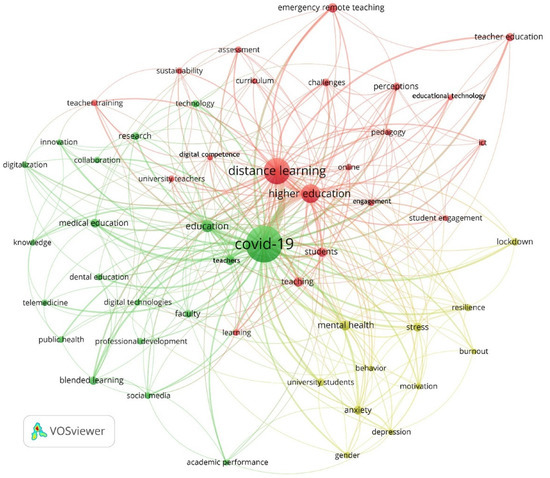
Figure 1.
The output of the term co-occurrence analysis.
2.2. Case Studies
The case studies were collected in a set of partner universities of the Inter-University Sustainable Development Research Programme (IUSDRP) in developed and developing countries: Australia, Brazil, Fiji, Germany, Hong Kong (SAR/PRC), India, Italy, Malaysia, Mexico, South Africa, and the USA. In total, eleven universities or higher education providers, one from each country, participated in this research. Representatives of these institutions—professors at the HEIs—received the following questions that guided this component of the study and submitted their responses for analysis:
- How did the COVID-19 lockdown impact university activities?
- How have academic staff coped with the changes? (e.g., general challenges, impacts on motivation, students’ assessment)
- Has the university offered training opportunities or other supporting mechanisms to teaching staff?
The universities were chosen by purposive and convenience sampling—for including different developing and developed countries and one institution per country, and for selecting universities where the representatives would have access to the information needed in data collection, respectively.
3. Results
3.1. Bibliometric Analysis
Results of the term co-occurrence analysis (Figure 1) show that the literature is mainly focused on issues related to distance learning and its challenges (red cluster), digital technologies and their adoption for education and research during the pandemic (green cluster), and impacts of the pandemic on the health conditions of the academic staff (yellow cluster).
The red cluster is focused on the widespread use of distance learning during the pandemic and its associated challenges. The pandemic had major disruptive impacts on teaching patterns across the world. In response, there was a sudden shift to online teaching, enabled by web-based platforms [5]. This replacement of physical presence-based classes, however, has caused difficulties, as not all academic staff had the competency to effectively use web-based platforms, and training for this purpose required additional time and effort by universities and faculty members [5,38]. Online teaching has also caused other problems, such as difficulties in making personal communications and connections with the students and/or engaging them in class activities [39,40]. In addition, performance assessment via online platforms has been challenging for many teachers [5,41]. Lack of access to digital equipment and a stable internet connection has intensified these problems in some contexts [39]. As training and physical presence-based teaching is more essential in some disciplines such as medicine or engineering, they have faced more challenges.
As a result, adaptive measures such as curriculum restructuring have been taken [42,43]. Despite these challenges, as terms in the green cluster show, in some contexts and depending on the level of preparation and the availability of administrative and technical support, the pandemic has provided opportunities to develop innovative solutions [44]. These include online teaching and assessment methods that have led to improved digital literacy, and enhanced performance and satisfaction of teachers and students [45,46,47,48]. Research is a key term that, although not dominant, is highlighted in the term co-occurrence map. Several studies have argued that the pandemic has caused challenges in conducting research. This is particularly the case for those fields that require a physical presence in laboratories. There is evidence suggesting that in instances where group-based experimental activities are needed the pandemic has disrupted normal patterns of conducting research and has even resulted in the suspension of routine research methods and activities [49,50]. As a result, the research productivity of some groups has been affected [51]. However, efforts have been made to also use digital technologies to overcome some of these issues and ensure research continuity [52]. Additionally, funding restrictions caused by the pandemic have also made it difficult to conduct research in some contexts [18].
The term co-occurrence analysis also indicates that the various groups in academia have faced health problems due to the pandemic (the yellow cluster). Various terms related to health and well-being (e.g., stress, anxiety, and mental health) are observed in Figure 1. This indicates that disruptions in normal teaching and research practices have affected the health and well-being of academic staff due to various reasons such as suddenly increased family responsibilities and an increase in workload to adapt to the changing conditions [14,53]. Such pressures have, however, varied depending on the availability of support mechanisms and various other factors such as age, gender, and the need to care for young children [51,54]. Also, the availability of support and counselling services and flexible work policies that allow working from home have been effective in mitigating the health impacts of the pandemic on academic staff [53,54].
More insights on how stress, anxiety, and mental health are linked to other terms can be obtained from Figure 2. In addition to their interconnection and relation with terms such as distance learning, behaviour, depression, and resilience, in all cases, some differences can be observed. Anxiety has fewer connections outside the yellow cluster and has a closer connection with gender, as studies have investigated differences across profiles and the higher impact felt by the female group [55,56]. Academic performance is also particularly connected with anxiety, as an additional factor that not only students are worried about, but also teaching staff in terms of the effectiveness of distance learning. Anxiety is also reported to be the most influential predictor of teachers’ negative emotional states [57]. Stress was a term with more connections and was closely associated with resilience and burnout [58,59]. The term has also several connections with the red cluster (distance learning and associated challenges), as the stress levels were usually reported as high in the educational sector, especially during the period of online lectures and due to the changes in the work conditions [60]. Mental health is a slightly more central term in the co-occurrence analysis and among clusters and has a special connection with the term public health. In addition to dealing with their own challenges, teaching staff had also to support students impacted by mental health issues [61]. Depending on the context of the study, contrasting views can be observed. When compared to students, teaching staff can be reported as having fewer difficulties with the distance learning approach and the confinement [62]. On the other hand, they might also have suffered more from stress in association with deadlines, workloads, and concerns with their families and work [63].
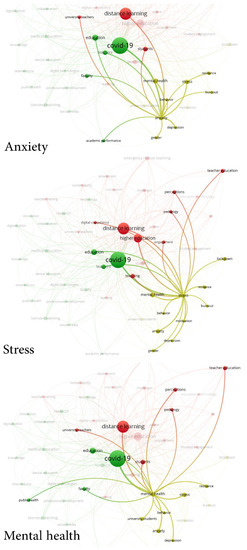
Figure 2.
The pandemic has resulted in various health impacts on the people involved in academia. The top left panel shows how the term ‘anxiety’ is linked to other terms. The top right panel and the bottom panel show linkages between ‘stress’ and ‘mental health’ with other terms, respectively.
3.2. Case Studies
As observed in Table 1, the emergence of the new COVID-19 pandemic caused severe disruptions to the universities participating in this study, including cancellations of face-to-face instruction, research projects and activities, final exams, seminars, congress and graduation ceremonies, student mobility, and athletic competitions. The damage from these disruptions is incommensurable, yet, whatever the damage is, it was expected that the pandemic’s outcome would impair human capital development [64]. In trying to prevent further negative effects, the higher education institutions in this study focused on implementing innovative online strategies to maintain the substantive functions and administrative tasks. Without regard to geographical location, universities relied on digital platforms, Zoom and Microsoft Teams, and other ICT tools to engage in synchronous and asynchronous online learning, virtual meetings, and practices in labs, among other activities. Still, the study did not identify a one-size-fits-all response to succeed in shifting to distance education. In addition to digital instruction, the mental health of university students was considered a critical factor in building resilience because some of them experienced multiple daily stressors that might cause emotional distress. Consequently, universities offered psychological counseling to support and encourage their students to adapt to the new normal. In general, responses from the participants in this study were in line with several measures suggested by the UNESCO International Institute for Higher Education in Latin America and the Caribbean to reestablish academic life during and after the COVID-19 era [65].

Table 1.
Assessed case studies.
Several examples of challenges associated with the move to online learning are revealed by the cases in this study (Table 1), with parallels that can be observed in research on this topic conducted worldwide (e.g., Russia—Alamazova et al. [66]; Oman—Slimi [67]; Malaysia—Kumaim et al. [68]; Australia—Ayling and Luetz [69]). With the implementation of online learning, combined with the speed at which it has been conducted during the onset of the COVID-19 pandemic, the relationship between the readiness of lecturers to work in this way, and the challenges and opportunities perceived by students in this regard, becomes evident. For the cases reported in this study, these challenges included unfamiliarity of staff with online teaching (Universiti Sains Malay-sia, Malaysia), online communication tools and delivery of interactive content which first had to be mastered (College of Charleston, USA), reduction or replacement of practical sessions (the University of Fiji, Fiji; University of Sonora, Mexico; Universiti Sains Malaysia, Malaysia), and an increased workload and longer time spent on work, including various forms of contact with students (the University of Passo Fundo, Brazil; University of South Africa, South Africa). The analyses of the cases reveal several responses to the challenges experienced with the move to online learning. Many of these are related to providing staff with training to teach online, although a variety of interventions in this regard can be distinguished. Some examples include online courses to support staff with the use of online teaching tools (Universiti Sains Malaysia, Malaysia; University of South Africa, South Africa; University of Fiji, Fiji), online counseling services for psychological stress (Politecnico di Torino, Italy; HAW, Germany; CHC Brisbane, Australia), and the provision of ICT resources, or funding to obtain such (University of Passo Fundo, Brazil; University of Sonora, Mexico).
4. Discussion
4.1. Overview
It is clear that COVID-19 has significantly impacted higher education since the disease started spreading. In this case, there is clearly a pre-pandemic “business as usual” approach to operations in higher education and the delivery of content, and a post-pandemic “everything has changed” aspect to higher education. This article does not focus on long-term trends post-COVID-19, so those will not be addressed in this discussion section. Rather, what the research undertaken in this article has found is that there was significant disruption in the basic operations of higher education, aligned with previous investigations [24,26,27].
One key area, and it could be argued, the key area, as higher education is based on educating students, was the interaction of faculty with their students. Virtually every university that went into lockdown had to rapidly transition to online learning. This required new skill sets for many faculty, especially those who had never taught online before. This also required the information technology departments/offices of many colleges and universities to have to procure hardware to assist faculty in teaching remotely, and for centres of teacher education to offer training to faculty on how to effectively teach online.
COVID-19 brought with it significant emotional, psychological, and mental stress, with these stresses impacting students, faculty, and staff alike. Many grappled with losing part-time jobs that paid tuition, or losing hours as a staff member, thus compromising the ability to pay bills, and a lack of confidence that the 2020–2021 school year would even be able to run. Many institutions rightfully feared major financial collapse and shutting of their doors if there would be no incoming freshmen class of 2020–2021 to populate both residence halls and classrooms. Meanwhile, many graduating seniors had to switch to online graduation ceremonies, forego internships and study away requirements that were relaxed to allow them to graduate, and navigate a murky job market as many businesses froze hiring when COVID-19 first began.
New ways of organising and sharing experiences emerged, where for some faculty COVID-19 created a context of renewed solidarity. This solidarity was in support of colleagues dealing with children at home, the mental challenges of navigating online teaching, lack of confidence in higher administration’s ability to navigate COVID-19’s impact on the fiscal and physical health of the campus, and foregoing travel for research and conferences. Tenure and promotion protocols were also often put on hold until new bylaws could be created that recognised the impact of COVID-19 on research and teaching evaluations.
Irrefutably, universities upgraded their ICT structure to accommodate online learning and teaching. Although there were several teething problems, it seems that generally, ICT has transformed the learning and teaching environment to the extent that ICT literacy has become an integral part of tertiary teaching and formal qualifications. The level of interaction between teachers and students also often increased as a result of a sudden shift in the mode of teaching. But, technological issues, internet connectivity, and lack of proper devices caused major disruptions to learning and teaching during the initial stages.
4.2. Coping at the Institutional Level
The readiness of universities to change to a partly or completely online modality was achieved throughout the eleven universities investigated in the case studies. The effectiveness of this migration had varying degrees of success within the various institutions, and this seemed to mainly depend on i. the availability of the necessary infrastructure and ii. the lecturers’ disposition and capacity to quickly adapt.
A framework infrastructure was seemingly present in most institutions, and this facilitated the migration to the online platform; however, the inadequacy of the current pedagogical online models in properly tackling the more hands-on aspects of teaching, including laboratory activity, events, and fieldwork activities, resulted in a disparity of success between the different disciplines.
The compulsory migration to online classes also brought changes to pedagogical approaches in teaching and learning. The way professors were obliged to impart education, evaluate their students, and engage them in the learning process had to adapt to the new circumstances. The practice classes in labs were canceled, moved to subsequent semesters, or changed to theoretical approaches. The exams switched to online and the weight of exams and assignments changed. Some of the support activities for student learning, such as seminars and conferences, were either canceled or shifted to virtual mode. Finally, the interactions between professors and students were expanded, with additional mixed teaching methods, modalities, and tools. All these aspects were highlighted by the universities. In assessing advantages and challenges, studies pointed out the preference of both teaching staff and students towards regular classes in a post-pandemic context [25,70,71], which indicates a need for further investigating how the observed challenges can be overcome to support online education.
Lecturers were often targeted with courses and training to help them cope with the migration to online teaching and learning. Nonetheless, an often-overlooked issue was the provision of training to students, with only Pondicherry University in India specifically mentioning student training as a support mechanism. Several reasons may account for this apparent lack of provision, including economic factors, prioritising teacher and administrative staff training, and perhaps an erroneous belief that students can manage the needed changes autonomously. The literature also seems to indicate to a larger extent the need for training for educators, while for students the attention is directed towards social/contextual disparities, access to technologies, and satisfaction and motivation with online learning [72,73,74]. This may be an emerging trend and should be further researched to understand possible links.
4.3. Coping at the Individual Level
The provision of training in software and online teaching and learning varied from online webinars (Hong Kong Institute of Education for Sustainable Development) to whole-week immersive training modules in online pedagogy and related technology (University of Passo Fundo). Other institutions offered cyclical online courses (University of South Africa, HAW Hamburg) to train and retrain staff at increasingly higher levels. The training was mostly delivered to academic staff and to a lesser extent to students. Our case studies corroborate the findings of Mishra et al. [3], who presented the institutional training offered to teach staff, especially in terms of transitioning from face-to-face to online classes, and on how to use the institution’s e-learning platform. While most training and the initiatives mentioned by our case studies were applied in a context of urgency and a forced and quick transition to the e-learning environment [28], it is important that these types of training continue being offered. This would support teaching staff to keep active and up to date in the technologies, and especially motivated for the digital transformation in the education sector.
Although the online pedagogic side appears to have been well covered, the developing mental health issues seemed to be less well provided for. In the majority of case studies, there is no mention of extra provision and availability of psychologists or counsellors or an increase in the marketing of such services that institutions provide. In fact, out of the 11 case studies, only 3 directly mention the improved provision of psychological or counselling services. The strengthening of such services during the pandemic was perhaps expected as a reactive mechanism to counter increased psychological stress from the diminished social interactions and the forced online pedagogic model. Nonetheless, it appears that the provision of such services was not accorded the same prioritisation around the globe, with universities from Italy, Germany, and Brazil seemingly ascribing such services the most importance. These results are aligned with Melnyk et al. [20], which call for HEIs to build wellness cultures and advance support in terms of mental health assistance for college faculty and staff. In the context of students, Nurunnabi et al. (2020) [8] also reported that many of the studied countries (G20) were not addressing issues of mental health in higher education, and recommended the creation of dedicated units to cover this topic.
4.4. Limitations
This paper has some limitations. Firstly, the case studies presented were derived from purposive convenience sampling and were prepared during the first half of 2021. They feature eleven universities or private higher education providers based in Australia, Brazil, Fiji, Germany, Hong Kong (SAR/PRC), India, Italy, Malaysia, Mexico, South Africa, and the USA and did not cover other countries.
Bibliometric analyses have known limitations, which our research design purposely sought to overcome. The study is subject to associated limitations regarding time, space, scale, and scope. More specifically, there is a possibility that not all relevant papers on the topic were considered in our analysis. Studies show that bibliometric analyses are most reliable after some time has elapsed following the publication of articles that are to be included in the research, typically two to three years [75]. Given the novelty of the COVID-19 pandemic at the time of data collection, it was pertinent to combine our quantitative bibliometric analyses with purposely selected qualitative case studies. Our approach follows the recommendation of Linnenluecke et al. [76], who suggest it as “a possible solution to overcome this limitation” (p. 191). Moreover, bibliometric analyses are most useful if undertaken in tandem with “qualitative methods of evaluation” (p. 191). By including the selected case studies in our methodological design, our research describes a diversity of rich and contextualised experiences in a single study.
Despite these limitations, the study provides a welcome addition to the literature, shedding some light on the impacts of the COVID-19 pandemic on academic activities. Also, the analysis using WoS-indexed papers offered a profile of the literature available. Finally, the inclusion of case studies with representation from six continents catered to a wide range of perspectives.
5. Conclusions
This study explores the global impacts of the COVID-19 pandemic on the operations of a sample of HEIs across various geographical regions and offers a rough profile of practices and processes used during it. This section synthesises the study’s key findings and ends with a set of forward-facing questions that arise from this global study.
The bibliometric analysis revealed that the literature is mainly focused on issues related to online learning and the cascading impacts that virtual instruction has had on the mental health and overall well-being of academic staff. The analysis further showed that lockdowns and disruptions to teaching and research mainly affected academic staff through diverse knock-on effects that arose from the need to adapt quickly to uncertain and changing conditions, including unanticipated family responsibilities, and corresponding increases in workloads. This comes in addition to the reported pressure of supporting and motivating students.
In many cases, arising pressures were mitigated by the implementation of flexible working-from-home policies, improved provisions for online learning, and the provision of tailored support and online counselling services. There is evidence that despite posing many challenges, the pandemic also opened opportunities to develop or enhance innovative online teaching and assessment methods that fostered improved digital literacy, helping to enhance the performance and satisfaction of both students and lecturers.
The analysis of case studies showed that the COVID-19 pandemic caused diverse disruptions to the operations of universities via cancellations of face-to-face instruction, research projects, final exams, graduation ceremonies, student mobility, athletic competitions, and congress/seminars. The negative socioeconomic and psychological damages caused by these disruptions were significant. In attempts to contain the fallout, universities implemented a portfolio of responses to maintain routine operations while at the same time mainstreaming synchronous and asynchronous online learning and virtual meetings. Importantly, our study did not identify a one-size-fits-all response to manage the manifold changes brought on HEIs by the COVID-19 pandemic. Selected arising priorities include creating a culture of educational resilience through a container of complementary measures that may include (1) implementing counselling services to support and encourage students and faculty; (2) familiarising and training students and staff to teach and learn online; (3) expanding the rollout of ICT resources or funding to obtain such; (4) developing web-based platforms and the competency to effectively operate them; (5) restructuring curricula to harmonise with fluid contextual realities; (6) cultivating personal communications and meaningful connections with and between students; and (7) implementing digital equipment and infrastructure on the back of stable and reliable internet connectivity.
The impacts of the study are two-fold. Firstly, it provides some important information on the extent to which the COVID-19 pandemic interfered with the routine of higher education institutions. Secondly, it identified some weaknesses in teaching practices, which should be addressed in cases where new virus mutations may make lockdowns needed again, or in cases of other pandemics which may require social isolation.
Pertinent forward-facing questions include: Will it be a mistake to revert too quickly to face-to-face instruction as the impacts of the pandemic wane and social distancing requirements are progressively relaxed? Is it conceivable that universities could be missing out on capitalising on this unique “moment in history” by returning to former pedagogies without first having fully harnessed and consolidated into established higher education practice the unprecedented power of online instruction and collaboration? Could universities be in danger of “squandering” an opportunity to solidify critically important shifts toward online learning? Could it be a mistake to instinctively hasten back to the primacy of traditional in-person pedagogy before having earmarked for retention many of the clear and compelling advantages of virtual formats for generating transformational learning? These are some of the questions that may be addressed in future studies.
Author Contributions
Conceptualisation: W.L.F.; investigation: I.R.A. and H.A.; methodology: A.S., A.L.S. and W.L.F.; writing—original draft: W.L.F., A.L.S., I.R.A., M.M., H.A., A.S., T.L., J.M.L., L.V., P.S., R.P., N.A.M.A., T.S., L.B., N.M. and P.L. All authors have read and agreed to the published version of the manuscript.
Funding
This research received no external funding.
Institutional Review Board Statement
The nature of the research, the methods used, and the fact that no personal data was stored or can be traced back to individuals, conforming with GDPR standards, means that the study is not subject to an ethics permit as specified by the Association of Medical Ethics Committee in Germany, the body responsible for such assessments in the country which led the study.
Informed Consent Statement
Not applicable.
Data Availability Statement
Not applicable.
Acknowledgments
This paper is part of the “100 papers to accelerate the implementation of the UN Sustainable Development Goals” initiative.
Conflicts of Interest
The authors declare no conflict of interest.
Appendix A
TS= ((“covid*” OR “coronavirus” OR “pandemic”) AND (“academi*” OR “universit*”OR “higher education institut*”) AND (“staff” OR “facult*” OR “professor*” OR “teacher*” OR “lecturer*” OR “postdoc*” OR “scholar*” OR “educator*” OR “researcher*”OR “research fellow*”) AND (“work” OR “works” OR “life” OR “living” OR “lives” OR “teach*” OR “research*”)).
References
- World Health Organization, Coronavirus (COVID-19) Dashboard. Available online: https://covid19.Who.Int/ (accessed on 4 October 2022).
- Krishnamurthy, S. The Future of Business Education: A Commentary in the Shadow of the COVID-19 Pandemic. J. Bus. Res. 2020, 117, 1–5. [Google Scholar] [CrossRef]
- Mishra, L.; Gupta, T.; Shree, A. Online Teaching-Learning in Higher Education during Lockdown Period of COVID-19 Pandemic. Int. J. Educ. Res. Open 2020, 1, 100012. [Google Scholar] [CrossRef]
- Biswas, S.; Dahan, O.; Solomonov, E.; Waksman, I.; Braun Benyamin, O. Advancing Global Health through Engineering: A Perspective on Teaching an Online Global Health Course to Engineers during a Global Pandemic. BioMedical Eng. OnLine 2021, 20, 82. [Google Scholar] [CrossRef]
- Leal Filho, W.; Price, E.; Wall, T.; Shiel, C.; Azeiteiro, U.M.; Mifsud, M.; Brandli, L.; Farinha, C.S.; Caeiro, S.; Salvia, A.L.; et al. COVID-19: The Impact of a Global Crisis on Sustainable Development Teaching. Environ. Dev. Sustain. 2021, 23, 11257–11278. [Google Scholar] [CrossRef] [PubMed]
- Hodges, C.; Moore, S.; Lockee, B.; Trust, T.; Bond, A. The Difference between Emergency Remote Teaching and Online Learning. Available online: https://er.educause.edu/articles/2020/3/the-difference-between-emergency-remote-teaching-and-online-learning (accessed on 30 June 2022).
- Robinson, E.; Sutin, A.R.; Daly, M.; Jones, A. A Systematic Review and Meta-Analysis of Longitudinal Cohort Studies Comparing Mental Health before versus during the COVID-19 Pandemic in 2020. J. Affect. Disord. 2022, 296, 567–576. [Google Scholar] [CrossRef]
- Nurunnabi, M.; Almusharraf, N.; Aldeghaither, D. Mental Health and Well-Being during the Covid-19 Pandemic in Higher Education: Evidence from G20 Countries. J. Public Health Res. 2020, 9, jphr-2020. [Google Scholar] [CrossRef]
- Tandon, R. COVID-19 and Mental Health: Preserving Humanity, Maintaining Sanity, and Promoting Health. Asian J. Psychiatry 2020, 51, 102256. [Google Scholar] [CrossRef]
- Iglesias-Pradas, S.; Hernández-García, Á.; Chaparro-Peláez, J.; Prieto, J.L. Emergency Remote Teaching and Students’ Academic Performance in Higher Education during the COVID-19 Pandemic: A Case Study. Comput. Hum. Behav. 2021, 119, 106713. [Google Scholar] [CrossRef]
- Bao, W. COVID-19 and Online Teaching in Higher Education: A Case Study of Peking University. Hum. Behav. Emerg. Technol. 2020, 2, 113–115. [Google Scholar] [CrossRef]
- Gewin, V. Five Tips for Moving Teaching Online as COVID-19 Takes Hold. Nature 2020, 580, 295–296. [Google Scholar] [CrossRef]
- Khan, R.A.; Jawaid, M. Technology Enhanced Assessment (TEA) in COVID 19 Pandemic: Technology Enhanced Assessment in COVID 19 Pandemic. Pak. J. Med. Sci. 2020, 36, S108–S110. [Google Scholar] [CrossRef] [PubMed]
- Sahu, P. Closure of Universities Due to Coronavirus Disease 2019 (COVID-19): Impact on Education and Mental Health of Students and Academic Staff. Cureus 2020, 12, e7541. [Google Scholar] [CrossRef]
- Van Lancker, W.; Parolin, Z. COVID-19, School Closures, and Child Poverty: A Social Crisis in the Making. Lancet Public Health 2020, 5, e243–e244. [Google Scholar] [CrossRef]
- Owusu-Fordjour, C.; Koomson, C.K.; Hanson, D. The Impact of COVID-19 on Learning-the Perspective of the Ghanaian Student. Eur. J. Educ. Stud. 2020, 7, 88–101. [Google Scholar] [CrossRef]
- Carreri, A.; Dordoni, A. Academic and Research Work from Home during the COVID-19 Pandemic in Italy: A Gender Perspective. Ital. Sociol. Rev. 2020, 10, 821–845. [Google Scholar]
- Carr, R.M.; Lane-Fall, M.B.; South, E.; Brady, D.; Momplaisir, F.; Guerra, C.E.; Montoya-Williams, D.; Dalembert, G.; Lavizzo-Mourey, R.; Hamilton, R. Academic Careers and the COVID-19 Pandemic: Reversing the Tide. Sci. Transl. Med. 2021, 13, eabe7189. [Google Scholar] [CrossRef]
- Leal Filho, W.; Wall, T.; Rayman-Bacchus, L.; Mifsud, M.; Pritchard, D.J.; Lovren, V.O.; Farinha, C.; Petrovic, D.S.; Balogun, A.-L. Impacts of COVID-19 and Social Isolation on Academic Staff and Students at Universities: A Cross-Sectional Study. BMC Public Health 2021, 21, 1213. [Google Scholar] [CrossRef]
- Melnyk, B.M.; Tan, A.; Hsieh, A.P.; Amaya, M.; Regan, E.P.; Stanley, L. Beliefs, Mental Health, Healthy Lifestyle Behaviors and Coping Strategies of College Faculty and Staff during the COVID-19 Pandemic. J. Am. Coll. Health 2021, 1–11. [Google Scholar] [CrossRef]
- Omary, M.B.; Eswaraka, J.; Kimball, S.D.; Moghe, P.V.; Panettieri, R.A., Jr.; Scotto, K.W. The COVID-19 Pandemic and Research Shutdown: Staying Safe and Productive. J. Clin. Invest. 2020, 130, 2745–2748. [Google Scholar] [CrossRef]
- Alatni, B.S.; Abubakar, I.R.; Iqbal, S.A. COVID-19 and Rapid Course Adaptations in Saudi Arabia: An Experiential Learning and Recommendations for Online Education. Front. Psychol. 2021, 12, 643203. [Google Scholar] [CrossRef]
- Al Miskry, A.S.A.; Hamid, A.A.M.; Darweesh, A.H.M. The Impact of COVID-19 Pandemic on University Faculty, Staff, and Students and Coping Strategies Used During the Lockdown in the United Arab Emirates. Front. Psychol. 2021, 12, 682757. [Google Scholar] [CrossRef] [PubMed]
- Naidu, S. Building Resilience in Education Systems Post-COVID-19. Distance Educ. 2021, 42, 1–4. [Google Scholar] [CrossRef]
- Crawford, J.; Butler-Henderson, K.; Rudolph, J.; Malkawi, B.; Glowatz, M.; Burton, R.; Magni, P.; Lam, S. COVID-19: 20 Countries’ Higher Education Intra-Period Digital Pedagogy Responses. J. Appl. Learn. Teach. 2020, 3, 1–20. [Google Scholar]
- Pellegrini, M.; Uskov, V.; Casalino, N. Reimagining and Re-Designing the Post-COVID-19 Higher Education Organizations to Address New Challenges and Responses for Safe and Effective Teaching Activities. Law Econ. Yrly. Rev. J. -LEYR Queen Mary Univ. Lond. UK 2020, 9, 219–248. [Google Scholar]
- Zhao, Y.; Watterston, J. The Changes We Need: Education Post COVID-19. J. Educ. Chang. 2021, 22, 3–12. [Google Scholar] [CrossRef]
- Kulikowski, K.; Przytuła, S.; Sułkowski, Ł. E-learning? Never Again! On the Unintended Consequences of COVID-19 Forced E-learning on Academic Teacher Motivational Job Characteristics. High. Educ. Q. 2022, 76, 174–189. [Google Scholar] [CrossRef]
- Hill, K.; Fitzgerald, R. Student Perspectives of the Impact of COVID-19 on Learning. All Irel. J. High. Educ. 2020, 12, 1–9. Available online: https://ojs.aishe.org/index.php/aishe-j/article/view/459/801 (accessed on 30 June 2022).
- Chen, E.; Kaczmarek, K.; Ohyama, H. Student Perceptions of Distance Learning Strategies during COVID-19. J. Dent. Educ. 2021, 85, 1190. [Google Scholar] [CrossRef]
- Wang, C.; Wang, W.; Wu, H. Association between Medical Students’ Prior Experiences and Perceptions of Formal Online Education Developed in Response to COVID-19: A Cross-Sectional Study in China. BMJ Open 2020, 10, e041886. [Google Scholar] [CrossRef]
- Gonzalez, T.; De La Rubia, M.A.; Hincz, K.P.; Comas-Lopez, M.; Subirats, L.; Fort, S.; Sacha, G.M. Influence of COVID-19 Confinement on Students’ Performance in Higher Education. PLoS ONE 2020, 15, e0239490. [Google Scholar] [CrossRef]
- Leal Filho, W.; Sima, M.; Sharifi, A.; Luetz, J.M.; Salvia, A.L.; Mifsud, M.; Olooto, F.M.; Djekic, I.; Anholon, R.; Rampasso, I.; et al. Handling Climate Change Education at Universities: An Overview. Environ. Sci. Eur. 2021, 33, 109. [Google Scholar] [CrossRef] [PubMed]
- Leal Filho, W.; Dinis, M.A.P.; Sivapalan, S.; Begum, H.; Ng, T.F.; Al-Amin, A.Q.; Alam, G.M.; Sharifi, A.; Salvia, A.L.; Kalsoom, Q.; et al. Sustainability Practices at Higher Education Institutions in Asia. Int. J. Sustain. High. Educ. 2022, 23, 1250–1276. [Google Scholar] [CrossRef]
- Yin, R.K. Case Study Research: Design and Methods; Sage: New York, NY, USA, 2009; Volume 5, ISBN 1-4129-6099-1. [Google Scholar]
- Leal Filho, W.; Yang, P.; Eustachio, J.H.P.P.; Azul, A.M.; Gellers, J.C.; Gielczyk, A.; Dinis, M.A.P.; Kozlova, V. Deploying Digitalisation and Artificial Intelligence in Sustainable Development Research. Environ. Dev. Sustain. 2022, 1–32. [Google Scholar] [CrossRef] [PubMed]
- van Eck, N.J.; Waltman, L. Software Survey: VOSviewer, a Computer Program for Bibliometric Mapping. Scientometrics 2010, 84, 523–538. [Google Scholar] [CrossRef]
- Tejedor, S.; Cervi, L.; Pérez-Escoda, A.; Jumbo, F.T. Digital Literacy and Higher Education during COVID-19 Lockdown: Spain, Italy, and Ecuador. Publications 2020, 8, 48. [Google Scholar] [CrossRef]
- Ali, I.; Narayan, A.K.; Sharma, U. Adapting to COVID-19 Disruptions: Student Engagement in Online Learning of Accounting. Account. Res. J. 2021, 34, 261–269. [Google Scholar] [CrossRef]
- Farooq, F.; Rathore, F.A.; Mansoor, S.N. Challenges of Online Medical Education in Pakistan during COVID-19 Pandemic. J. Coll. Physicians Surg. Pak. 2020, 30, 67–69. [Google Scholar]
- Shehata, M.H.; Abouzeid, E.; Wasfy, N.F.; Abdelaziz, A.; Wells, R.L.; Ahmed, S.A. Medical Education Adaptations Post COVID-19: An Egyptian Reflection. J. Med. Educ. Curric. Dev. 2020, 7, 2382120520951819. [Google Scholar] [CrossRef]
- Haridy, R.; Abdalla, M.A.; Kaisarly, D.; Gezawi, M.E. A Cross-Sectional Multicenter Survey on the Future of Dental Education in the Era of COVID-19: Alternatives and Implications. J. Dent. Educ. 2021, 85, 483–493. [Google Scholar] [CrossRef]
- Seifert, T.; Becker, T.; Büttcher, A.F.; Herwig, N.; Raupach, T. Restructuring the Clinical Curriculum at University Medical Center Göttingen: Effects of Distance Teaching on Students’ Satisfaction and Learning Outcome. GMS J. Med. Educ. 2021, 38, Doc1. [Google Scholar]
- Sharifi, A.; Khavarian-Garmsir, A.R.; Kummitha, R.K. Contributions of Smart City Solutions and Technologies to Resilience against the COVID-19 Pandemic: A Literature Review. Sustainability 2021, 13, 8018. [Google Scholar] [CrossRef]
- Chua, A.; Mendoza, M.J.; Ando, M.; Planilla, C.J.; Fernando, G.; Strebel, H.M.J.; Ignacio, J. Changing the Landscape of Medical Oncology Training at the National University Hospital in the Philippines during the Coronavirus Disease 2019 (COVID-19) Pandemic. J. Cancer Educ. 2020, 1–3. [Google Scholar] [CrossRef] [PubMed]
- Elzainy, A.; El Sadik, A.; Al Abdulmonem, W. Experience of E-Learning and Online Assessment during the COVID-19 Pandemic at the College of Medicine, Qassim University. J. Taibah Univ. Med. Sci. 2020, 15, 456–462. [Google Scholar] [CrossRef] [PubMed]
- Holton, A.J. Implementation of an Emergency Multisection Online General Chemistry Curriculum in Response to COVID-19 Pandemic. J. Chem. Educ. 2020, 97, 2878–2883. [Google Scholar] [CrossRef]
- Loda, T.; Löffler, T.; Erschens, R.; Zipfel, S.; Herrmann-Werner, A. Medical Education in Times of COVID-19: German Students’ Expectations—A Cross-Sectional Study. PLoS ONE 2020, 15, e0241660. [Google Scholar] [CrossRef] [PubMed]
- Adarmouch, L.; Sebbani, M.; Amine, M. Research Activity among Academic Medical Staff during the COVID-19 Pandemic in Marrakesh. Educ. Res. Int. 2020, 2020, 6648406. [Google Scholar] [CrossRef]
- Harper, L.; Kalfa, N.; Beckers, G.M.A.; Kaefer, M.; Nieuwhof-Leppink, A.J.; Fossum, M.; Herbst, K.W.; Bagli, D. The Impact of COVID-19 on Research. J. Pediatr. Urol. 2020, 16, 715–716. [Google Scholar] [CrossRef] [PubMed]
- Krukowski, R.A.; Jagsi, R.; Cardel, M.I. Academic Productivity Differences by Gender and Child Age in Science, Technology, Engineering, Mathematics, and Medicine Faculty During the COVID-19 Pandemic. J. Women’s Health 2021, 30, 341–347. [Google Scholar] [CrossRef] [PubMed]
- Marhefka, S.; Lockhart, E.; Turner, D. Achieve Research Continuity During Social Distancing by Rapidly Implementing Individual and Group Videoconferencing with Participants: Key Considerations, Best Practices, and Protocols. AIDS Behav. 2020, 24, 1983–1989. [Google Scholar] [CrossRef] [PubMed]
- Steidtmann, D.; McBride, S.; Mishkind, M.C. Experiences of Mental Health Clinicians and Staff in Rapidly Converting to Full-Time Telemental Health and Work from Home During the COVID-19 Pandemic. Telemed. E-Health 2021, 27, 785–791. [Google Scholar] [CrossRef] [PubMed]
- Minello, A.; Martucci, S.; Manzo, L.K.C. The Pandemic and the Academic Mothers: Present Hardships and Future Perspectives. Eur. Soc. 2021, 23, S82–S94. [Google Scholar] [CrossRef]
- Aruleba, K.; Jere, N.; Matarirano, O. Matarirano An Evaluation of Technology Adoption During Remote Teaching and Learning at Tertiary Institution by Gender. IEEE Trans. Comput. Soc. Syst. 2022, 1–12. [Google Scholar] [CrossRef]
- Jehi, T.; Khan, R.; Dos Santos, H.; Majzoub, N. Effect of COVID-19 Outbreak on Anxiety among Students of Higher Education; A Review of Literature. Curr. Psychol. 2022, 1–15. [Google Scholar] [CrossRef] [PubMed]
- Jelińska, M.; Paradowski, M.B. The Impact of Demographics, Life and Work Circumstances on College and University Instructors’ Well-Being During Quaranteaching. Front. Psychol. 2021, 12, 643229. [Google Scholar] [CrossRef]
- Morales-Rodríguez, F.M.; Martínez-Ramón, J.P.; Méndez, I.; Ruiz-Esteban, C. Stress, Coping, and Resilience Before and After COVID-19: A Predictive Model Based on Artificial Intelligence in the University Environment. Front. Psychol. 2021, 12, 647964. [Google Scholar] [CrossRef]
- Ozamiz-Etxebarria, N.; Idoiaga Mondragon, N.; Bueno-Notivol, J.; Pérez-Moreno, M.; Santabárbara, J. Prevalence of Anxiety, Depression, and Stress among Teachers during the COVID-19 Pandemic: A Rapid Systematic Review with Meta-Analysis. Brain Sci. 2021, 11, 1172. [Google Scholar] [CrossRef] [PubMed]
- Qurat-Ul-ain, A. Work-Related Stress: A Source of Psychological Distress among Private University Teachers during COVID-19. Rawal Med. J. 2021, 46, 681–684. [Google Scholar]
- Morris, B.L.; Short, M.; Bridges, D.; Crichton, M.; Velander, F.; Rush, E.; Iffland, B.; Duncombe, R. Responding to Student Mental Health Challenges during and Post-COVID-19. Soc. Work Educ. 2021, 41, 1821–1838. [Google Scholar] [CrossRef]
- Zapata-Garibay, R.; González-Fagoaga, J.E.; Asadi-González, A.A.; Martínez-Alvarado, J.R.; Chavez-Baray, S.M.; Plascencia-López, I.; González-Fagoaga, C.J. Mental Health Stressors in Higher Education Instructors and Students in Mexico During the Emergency Remote Teaching Implementation Due to COVID-19. Front. Educ. 2021, 6, 670400. [Google Scholar] [CrossRef]
- Idris, F.; Zulkipli, I.N.; Abdul-Mumin, K.H.; Ahmad, S.R.; Mitha, S.; Rahman, H.A.; Rajabalaya, R.; David, S.R.; Naing, L. Academic Experiences, Physical and Mental Health Impact of COVID-19 Pandemic on Students and Lecturers in Health Care Education. BMC Med. Educ. 2021, 21, 542. [Google Scholar] [CrossRef]
- Sachs, J.; Schmidt-Traub, G.; Kroll, C.; Lafortune, G.; Fuller, G.; Woelm, F. The Sustainable Development Goals and COVID-19. Sustainable Development Report 2020.; Cambridge University Press: Cambridge, UK, 2020; p. 520. [Google Scholar]
- UNESCO International Institute for Higher Education in Latin America and the Caribbean. COVID-19 and Higher Education: Today and Tomorrow; Impact Analysis, Policy Responses and Recommendations. Available online: https://unesdoc.unesco.org/ark:/48223/pf0000375693 (accessed on 30 June 2022).
- Almazova, N.; Krylova, E.; Rubtsova, A.; Odinokaya, M. Challenges and Opportunities for Russian Higher Education amid COVID-19: Teachers’ Perspective. Educ. Sci. 2020, 10, 368. [Google Scholar] [CrossRef]
- Slimi, Z. Online Learning and Teaching during COVID-19: A Case Study from Oman. Int. J. Inf. Technol. Lang. Stud. 2020, 4, 44–56. [Google Scholar]
- Al-Kumaim, N.H.; Mohammed, F.; Gazem, N.A.; Fazea, Y.; Alhazmi, A.K.; Dakkak, O. Exploring the Impact of Transformation to Fully Online Learning During COVID-19 on Malaysian University Students’ Academic Life and Performance. Int. J. Interact. Mob. Technol. 2021, 15, 140–158. [Google Scholar] [CrossRef]
- Ayling, D.; Luetz, J.M. Student Voices on the COVID-19 Crisis: An Australian Christian Higher Education Study. Christ. High. Educ. 2022, 1–26. [Google Scholar] [CrossRef]
- Selvaraj, A.; Radhin, V.; Nithin, K.; Benson, N.; Mathew, A.J. Effect of Pandemic Based Online Education on Teaching and Learning System. Int. J. Educ. Dev. 2021, 85, 102444. [Google Scholar] [CrossRef]
- Saha, S.M.; Pranty, S.A.; Rana, M.J.; Islam, M.J.; Hossain, M.E. Teaching during a Pandemic: Do University Teachers Prefer Online Teaching? Heliyon 2022, 8, e08663. [Google Scholar] [CrossRef]
- Coman, C.; Țîru, L.G.; Meseșan-Schmitz, L.; Stanciu, C.; Bularca, M.C. Online Teaching and Learning in Higher Education during the Coronavirus Pandemic: Students’ Perspective. Sustainability 2020, 12, 10367. [Google Scholar] [CrossRef]
- Flores, M.A.; Barros, A.; Simão, A.M.V.; Pereira, D.; Flores, P.; Fernandes, E.; Costa, L.; Ferreira, P.C. Portuguese Higher Education Students’ Adaptation to Online Teaching and Learning in Times of the COVID-19 Pandemic: Personal and Contextual Factors. High. Educ. 2022, 83, 1389–1408. [Google Scholar] [CrossRef]
- Tulaskar, R.; Turunen, M. What Students Want? Experiences, Challenges, and Engagement during Emergency Remote Learning amidst COVID-19 Crisis. Educ. Inf. Technol. 2022, 27, 551–587. [Google Scholar] [CrossRef]
- Belter, C.W. Bibliometric Indicators: Opportunities and Limits. J. Med. Libr. Assoc. JMLA 2015, 103, 219. [Google Scholar] [CrossRef]
- Linnenluecke, M.K.; Marrone, M.; Singh, A.K. Conducting Systematic Literature Reviews and Bibliometric Analyses. Aust. J. Manag. 2020, 45, 175–194. [Google Scholar] [CrossRef]
Publisher’s Note: MDPI stays neutral with regard to jurisdictional claims in published maps and institutional affiliations. |
© 2022 by the authors. Licensee MDPI, Basel, Switzerland. This article is an open access article distributed under the terms and conditions of the Creative Commons Attribution (CC BY) license (https://creativecommons.org/licenses/by/4.0/).