Article

Modeling Urban Freeway Rear-End Collision Risk Using Machine Learning Algorithms

1
School of Automobile, Chang’an University, Xi’an 710064, China
2
CCCC First Highway Consultants Co., Ltd., Xi’an 710065, China
*
Author to whom correspondence should be addressed.
Sustainability 2022, 14(19), 12047; https://doi.org/10.3390/su141912047
Submission received: 1 August 2022 / Revised: 19 September 2022 / Accepted: 20 September 2022 / Published: 23 September 2022

Abstract

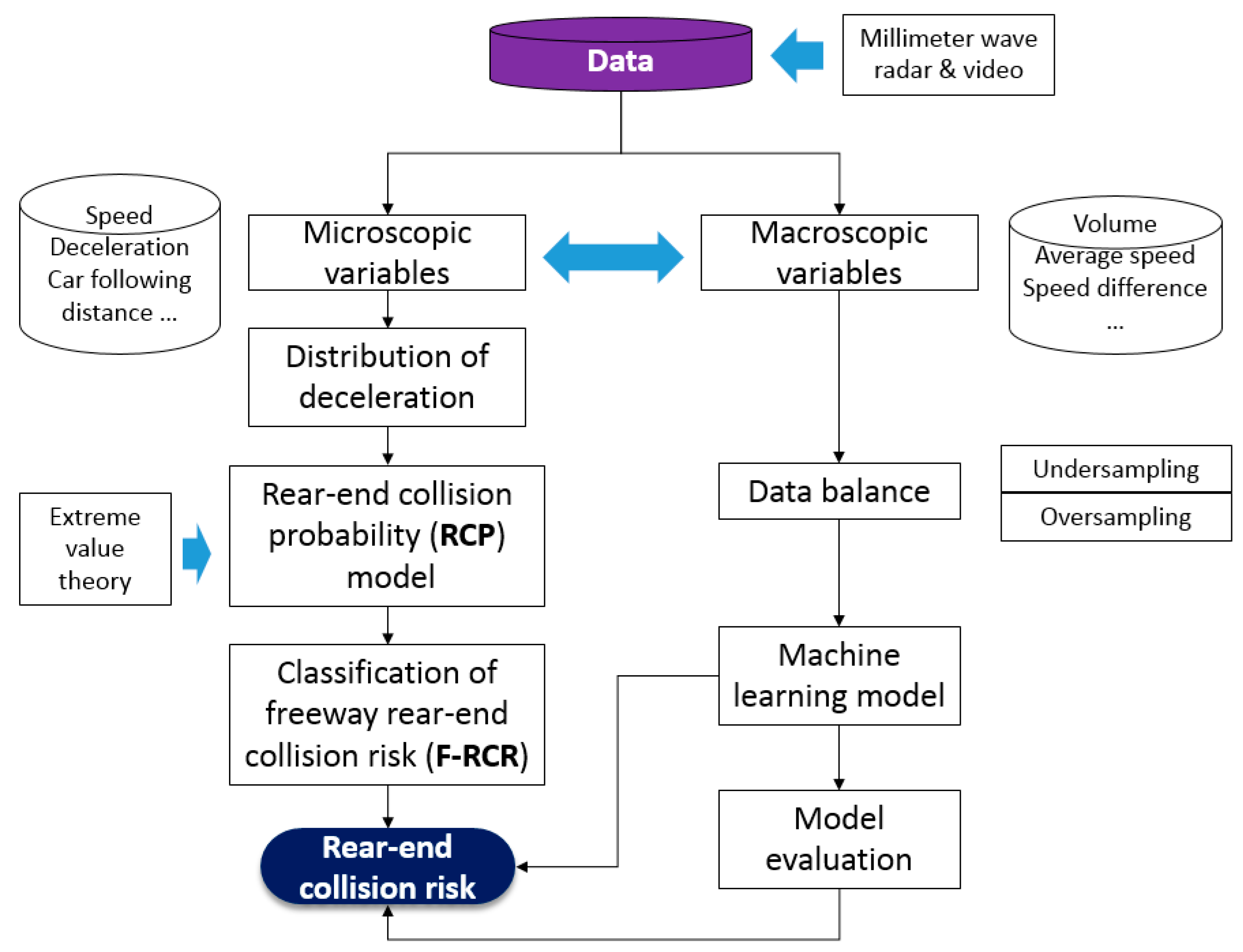
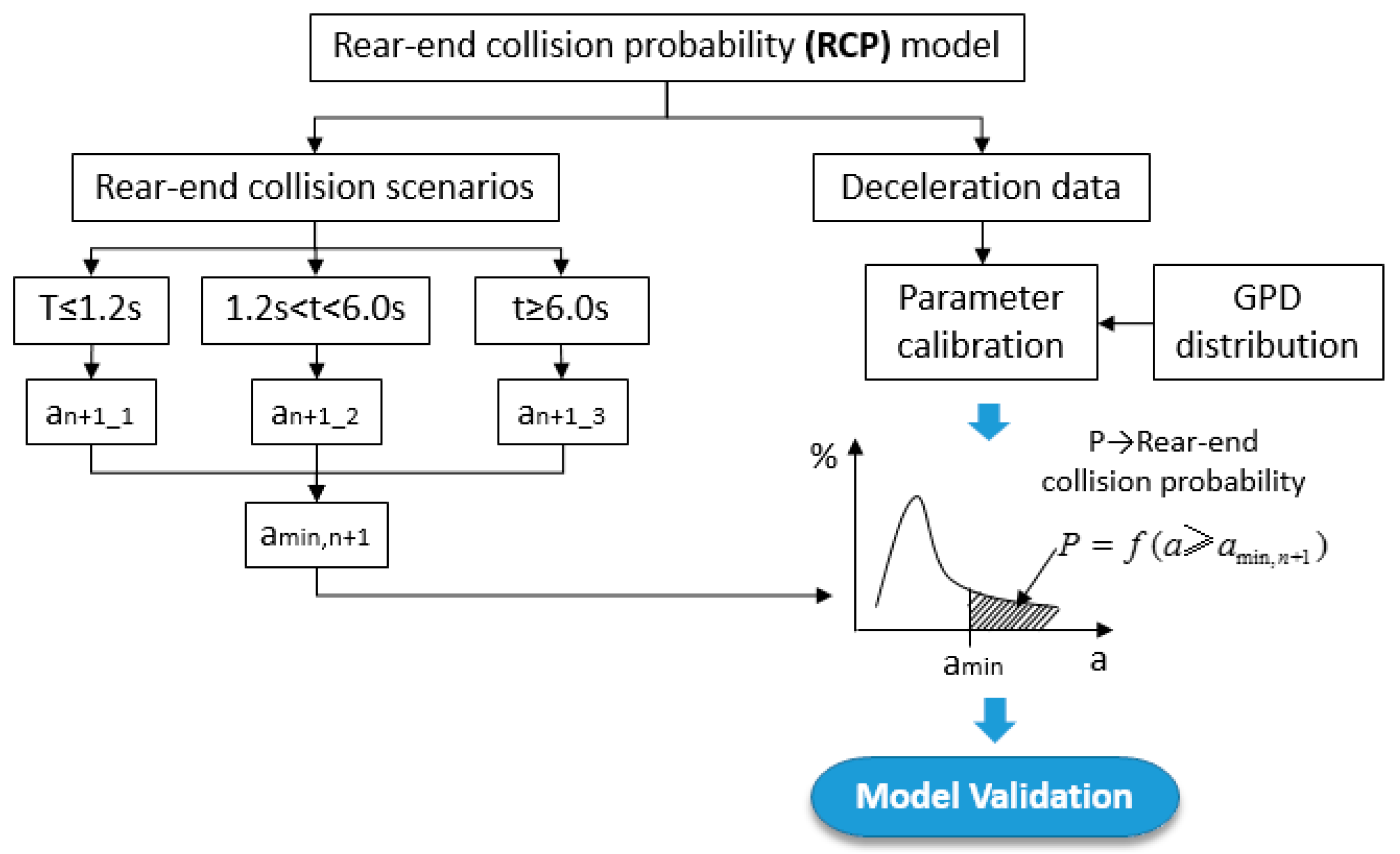
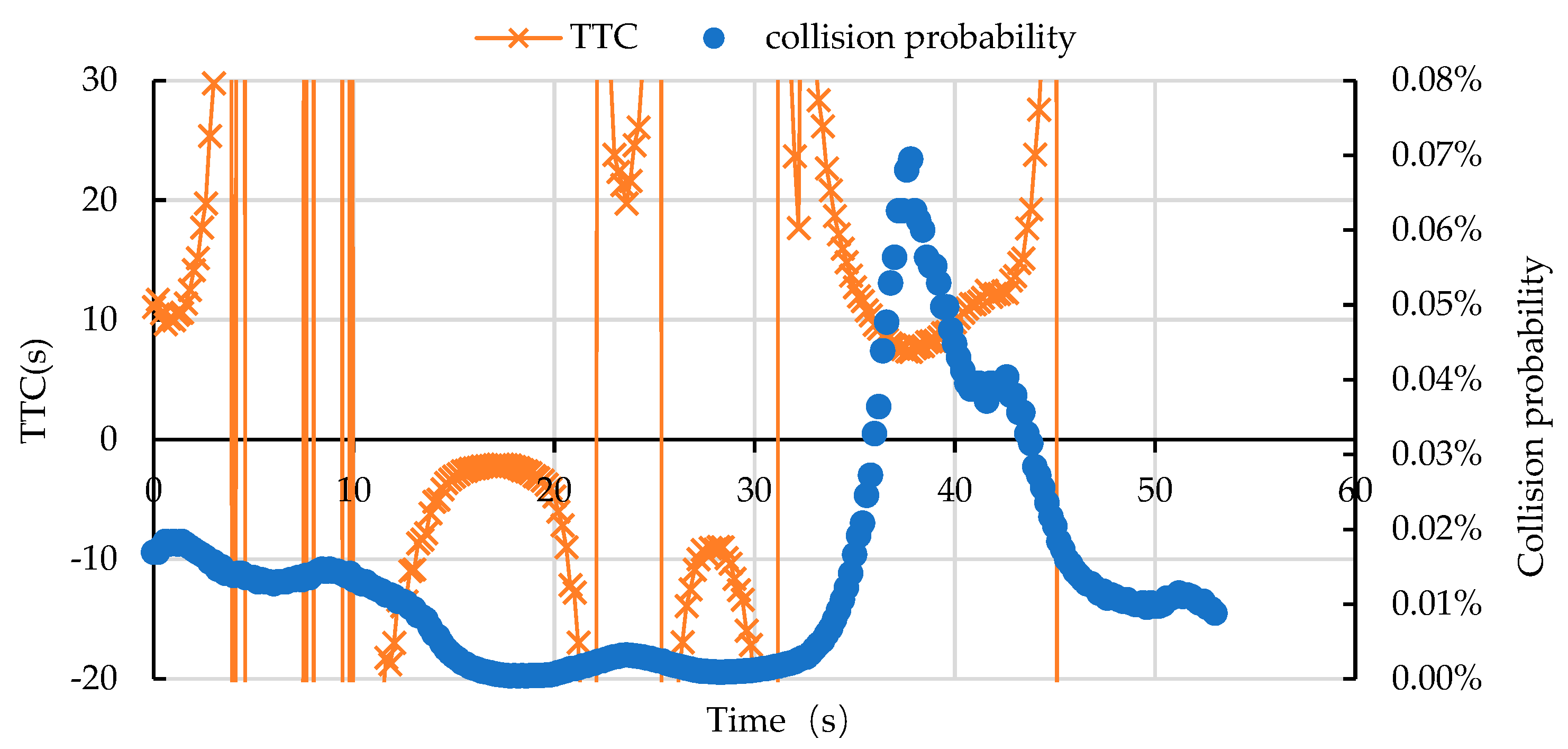
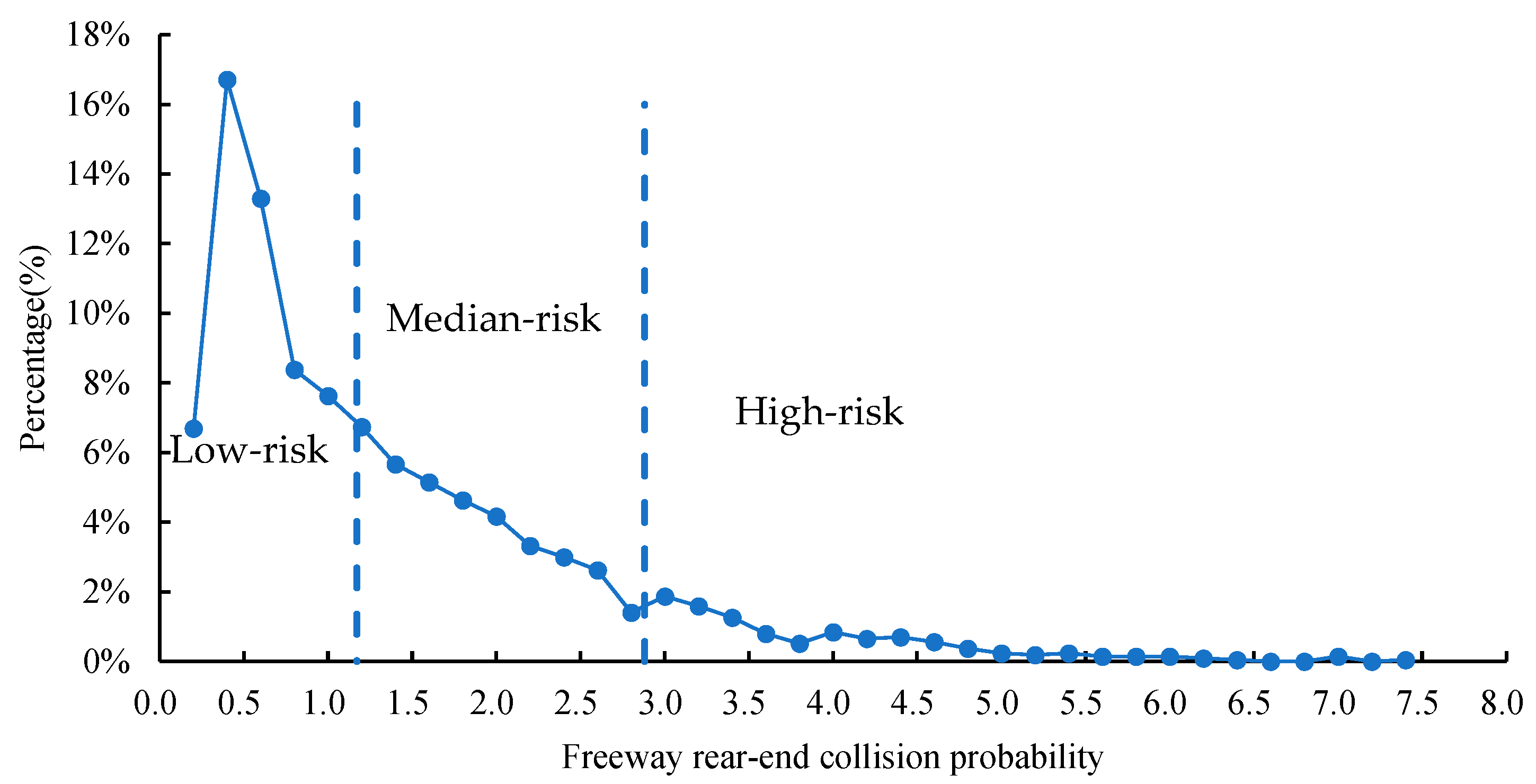
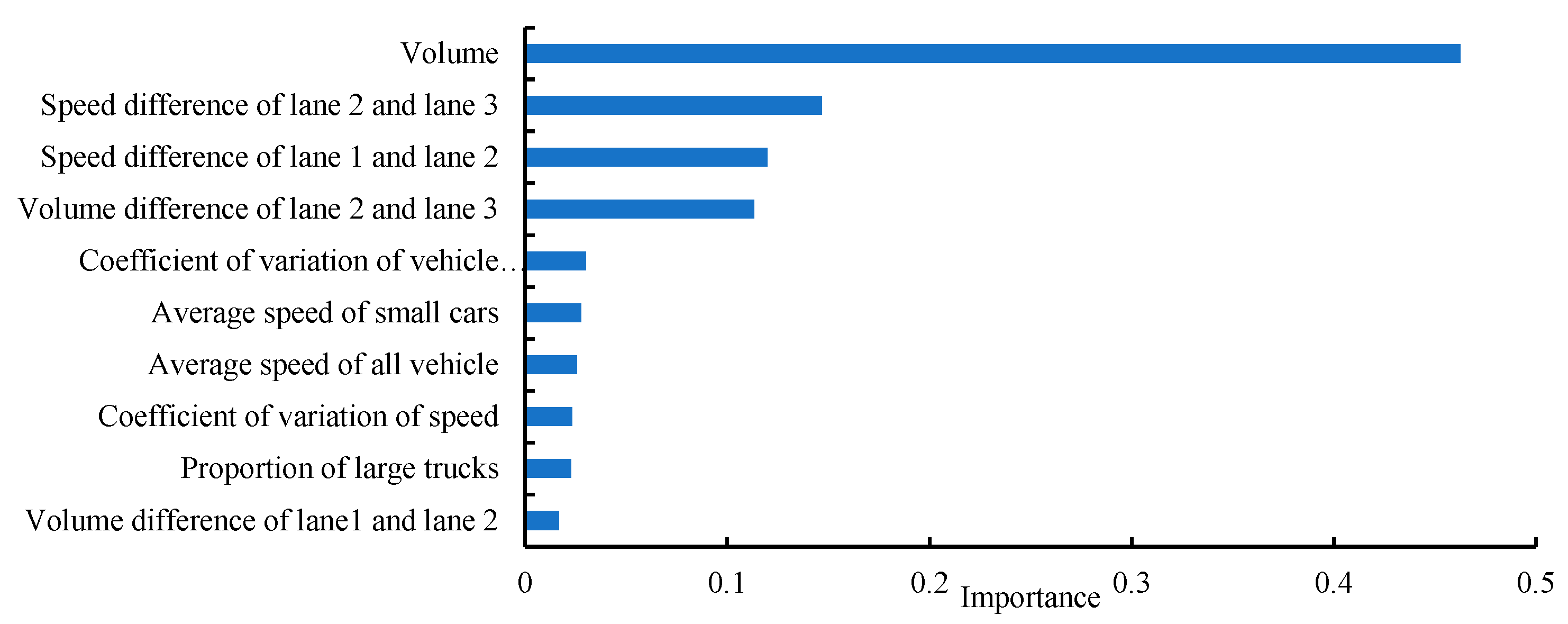
A large amount of traffic crash investigations have shown that rear-end collisions are the main type collisions on the freeway. The purpose of this study is to investigate the rear-end collision risk on the freeway. Firstly, a new framework was proposed to develop the rear-end collision probability (RCP) model between two vehicles based on Generalized Pareto Distribution (GPD). Secondly, the freeway rear-end collision risk (F-RCR) was defined as the sum of the rear-end collision probability of each vehicle and divided into three levels which was high, median, and low rear-end collision risk. Then, different machine learning algorithms were used to model F-RCR under the condition of an unbalanced dataset. The result of the RCP model showed continuous change and can identify the dangerous condition quickly compared to the traditional models even when the speed of the leading vehicle is faster than the following vehicle. When the vehicle distribution was unbalanced on road and the speed difference between adjacent lanes and the traffic volume was large, F-RCR will increase. Multi-Layer Perceptron (MLP) was found to be more suitable for modeling F-RCR. The framework provided in this research was transferrable and can be used in the freeway proactive traffic safety management system.
Keywords: rear-end collision probability (RCP); freeway rear-end collision risk (F-RCR); Generalized Pareto Distribution (GPD) model; machine learning; unbalanced dataset rear-end collision probability (RCP); freeway rear-end collision risk (F-RCR); Generalized Pareto Distribution (GPD) model; machine learning; unbalanced dataset