


Abstract
The bio-informed concept, which means “designing by learning from nature’s best ideas” as an approach, method, tool, discipline or strategy, is one of the most important research areas of today. It does not only shape designs, but also is based on collaborative/interactive/creative methods in education and can be integrated with contemporary educational approaches. This paper questions how to translate the bio-knowledge, which can be an effective and useful method for developing designers’ skills such as system-thinking, innovative thinking and problem-based learning, to design education in an easy and understandable way. In this context, the method of determining and applying biological phenomena/systems into architectural design process through the “natural language approach” is investigated. With this research, it is aimed to open the way to reach more innovative and sustainable solutions by establishing a bridge between architectural and biological terminology while creating architectural structures. It has been shown how to increase the biodiversity utilized for bio-informed solutions in the architectural field by proposing a systematic approach to search for biological systems. From this point of view, this study emphasizes the importance of promoting the bio-informed design approach, increasing interdisciplinary relationships and orienting individuals to nature for creativity and sustainability.
1. Introduction
“Whenever we talk about bio-design we should simply bear in mind just how amazingly superior a spider’s web is to any load-bearing structure man has made—and then derive from this insight that we should look to the superiority of nature for the solutions. If we want to tackle a new task in the studio, then it’s best to go outside first and look at what millenia-old answers there may already be to the problem.” [1]Luigi Colani
The harmful and sometimes irreversible effects of humanity on nature have now reached alarming levels and scientists from different disciplines have started to look for alternative solutions by turning to nature. Scientific and technological developments in the twenty-first century result in paradigmatic changes in the discipline of architecture as well as in many fields such as materials science, engineering, nano-technology, robotics, computer science, and create new research areas. As a result of all these changes, it is unavoidable to restructure and improve “education”. In this context, it is becoming more and more important to take advantage of interdisciplinary associations/approaches, to gain skills that will lead students to think critically and creatively, and to establish relationships and connections.
In the last two decades, the tendency of educational institutions to “teach students that nature and the environment must be protected” has been increasing [2]. Environmental education programs that provide/support students with knowledge and skills to take conscious decisions about their actions affecting nature have been developing [3]. With these programs, it is aimed to equip students with skills such as design, planning, system thinking and communication [4,5].
Likewise, with the “Education for Sustainable Development” policy recommended by UNESCO within the scope of the “Education 2030 Agenda and Framework for Action”, it is emphasized that societies and individuals should learn how to live together in a sustainable way with a limited natural resources and world population of 7 billion. Moreover, it is recommended that people should act responsibly; acting with the understanding that today’s interventions in nature can have impacts on the lives of the planet and people in the future. It aims to “improve access to a quality education on sustainability at all levels and in all social contexts, to transform society by reorienting education, and to help people develop the behaviors, values, knowledge and skills necessary for sustainable development” [6]. In this context, it is interested in including sustainable issues such as climate change and biodiversity in teaching and learning. With this training, individuals are encouraged to be responsible actors that respect cultural diversity, solve problems and contribute to creating a more sustainable world.
In this regard, Collado-Ruano [7] states that global citizenship of the twenty-first century requires new tools to understand reality and transform it. He considers the bio-knowledgeable approach to be one of the most innovative responses in recent years to improve the quality of life and protect the environment with new sustainable consumption and production habits. Hence, he argues that the epistemological common life between the interdisciplinary methodology and the bio-knowledgeable approach constitutes the Deoxyribonucleic Acid (DNA) of a true civilization transformation tool.
Similarly, Capra [8] expresses the importance of learning from nature for sustainability as follows: “The outstanding characteristic of the biosphere is its inherent ability to sustain life. To be sustainable, a human community must be designed so that its ways of life, technologies, and social institutions honour, support, and cooperate with nature’s ability to sustain life”. Moreover, Olaizola, Morales-Sánchez and Eguiguren Huerta [9], by encouraging business managers to move towards nature, learn from it and find creative ways to solve problems. They also propose the biomimicry approach as a model by which they can improve their existing management systems. Supporting all these views, our study emphasizes the importance of bio-informed design education for the sustainability approach.
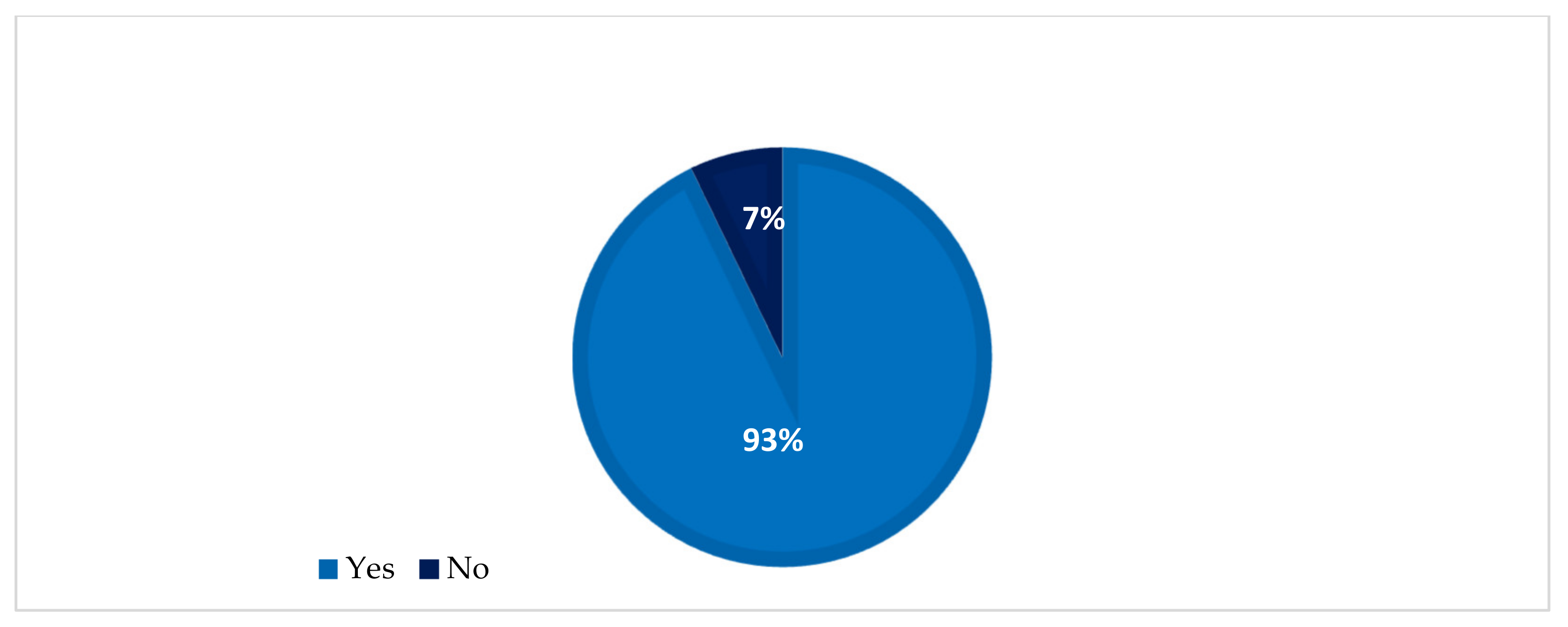
Students are now more “socially conscious” to acquire such skills, and they demand curricula that encourage education in this direction to be developed [10]. A similar result is seen with an online survey, which is conducted by the authors in December 2020 and posed questions to 280 students who are studying in different schools of architecture in Turkey. As a result of the survey conducted to learn the students’ perceptions of, attitudes toward and understandings about the bio-informed approach, it was determined that the students were willing to study bio-informed design.
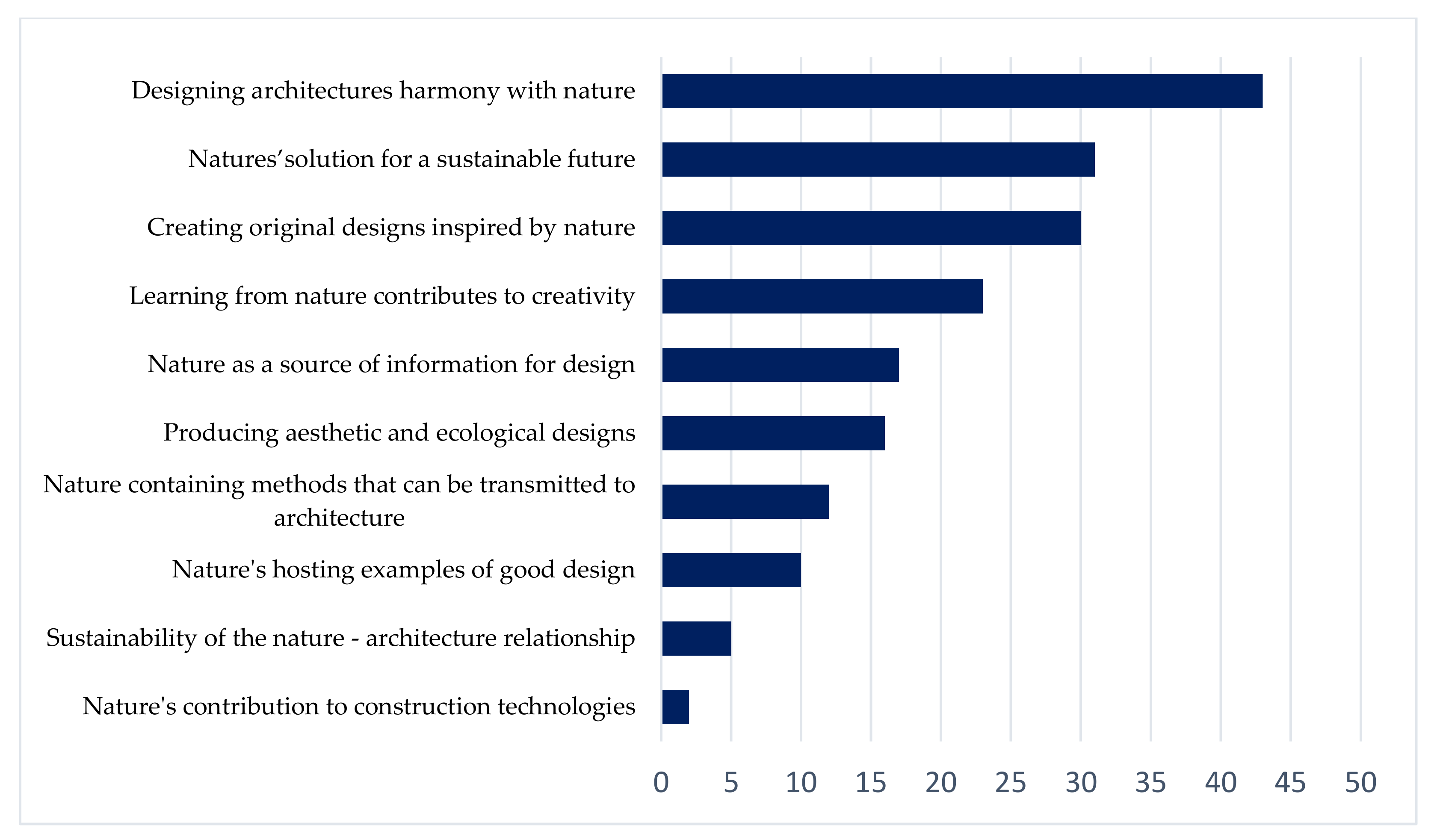
In this respect, the first question posed to students was “Do you have any information about designs inspired/learned from nature?” 260 students who participated in this questionnaire answered yes and 20 students answered no (Figure 1). Following, students who answered yes to the question, “Would you like to learn about the transfer of solutions in nature to design?” expressed the reason for this as designing structures compatible with nature by taking the nature as a reference and nature’s containing solutions for a sustainable future (Figure 2). In addition, they stated that nature will be a sample in terms of producing aesthetic, original, creative, and ecological designs.
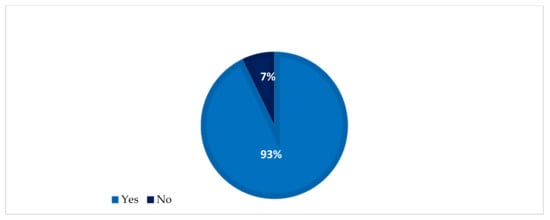
Figure 1.
Students answers to the question “Do you have any information about nature inspired/learned designs from nature?”.
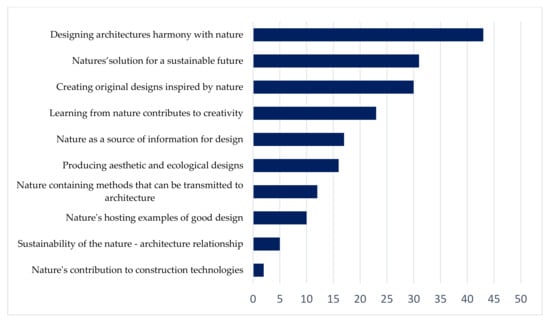
Figure 2.
The reason why students want to learn about the transfer of solutions in nature to design.
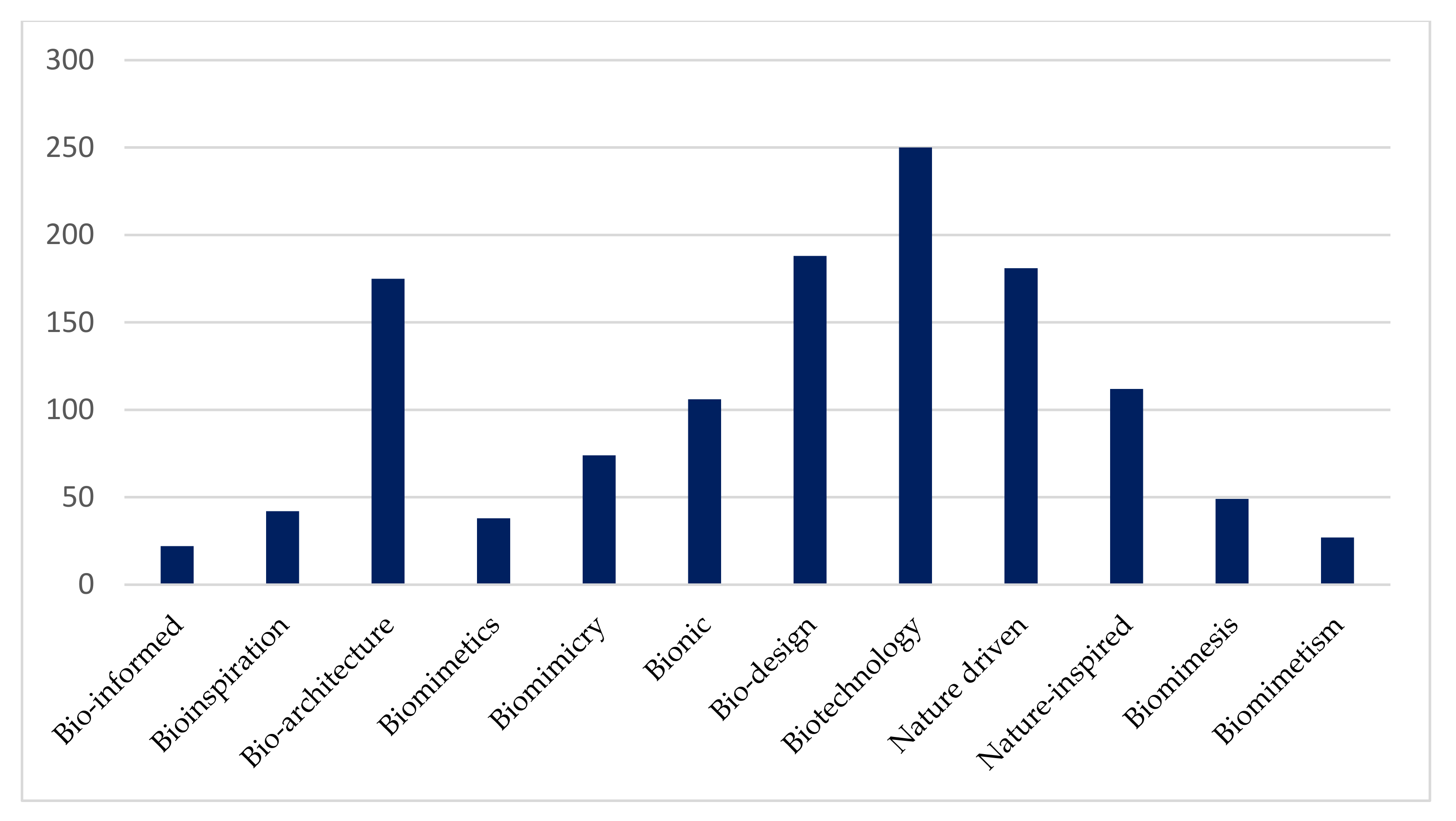
In another question, the students were asked whether they know the bio-knowledgeable approach that refers to nature and which of the concepts it is related to. The best-known concept was marked as “biotechnology” and the second concept as “bio-design” by 260 students who were aware of nature-inspired/learning approaches from nature (Figure 3).
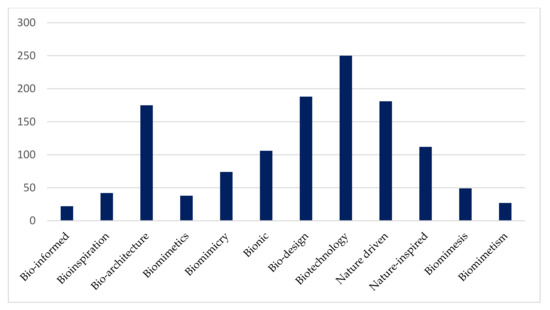
Figure 3.
Students answers to the question “Which of the following concepts do you know?”.
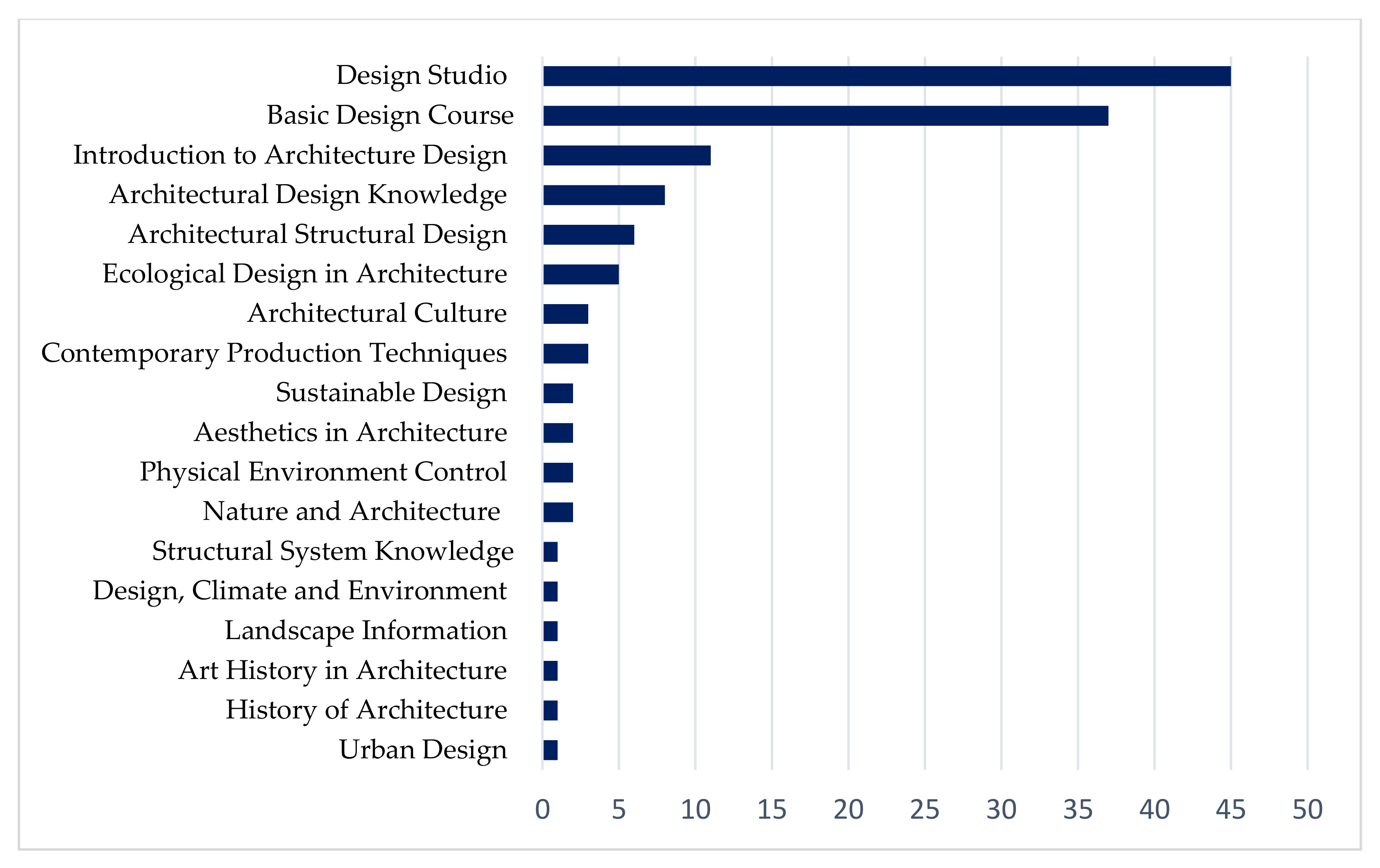
In order to determine whether the students are educated on bio-informed approaches, the question “Did you learn about the meaning or use of the concepts of nature inspiration or learning from nature in design lessons?” has been posed. 155 people said yes and then answered the question “If your answer is yes, in what course?” In this context, it is seen that the most given answer to this question is in “design studio”. This is followed by “basic design course” (Figure 4). These two courses are of great importance in architectural education.
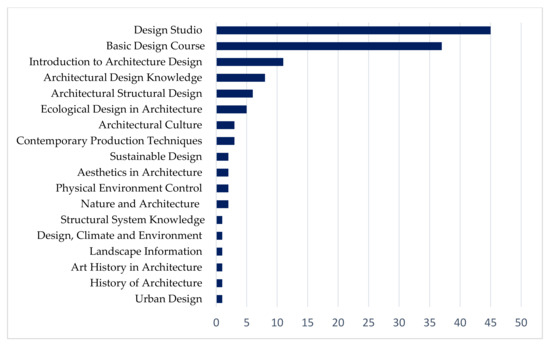
Figure 4.
Students’ answers to the question, “Did you learn about the meaning or the use of nature-based concepts or learning from nature in design lessons?” and then to the question “If your answer is yes, in what course?”.
As a result of the survey looking for the underground architecture students’ perceptions of, attitudes toward and understandings about the bio-informed approach, it was determined that the students were willing to receive biologically supported design education. The answers to a few questions are as follows:
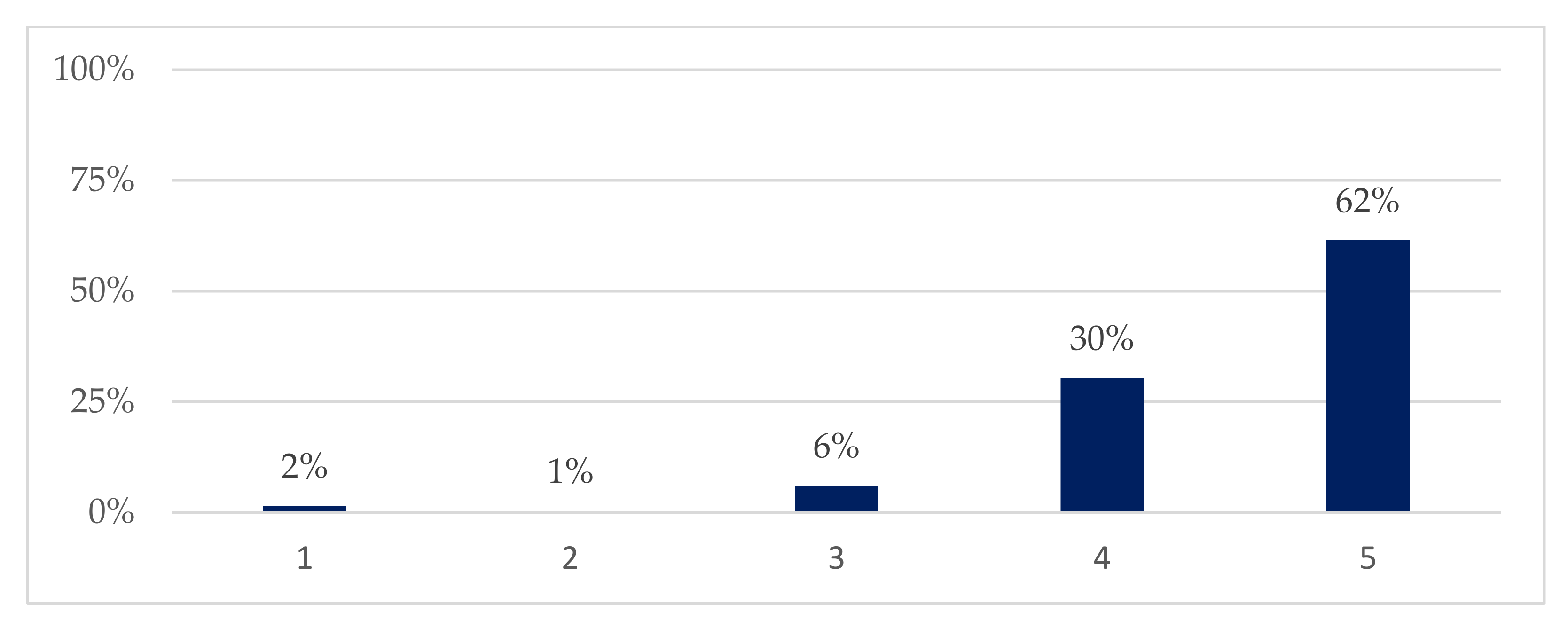
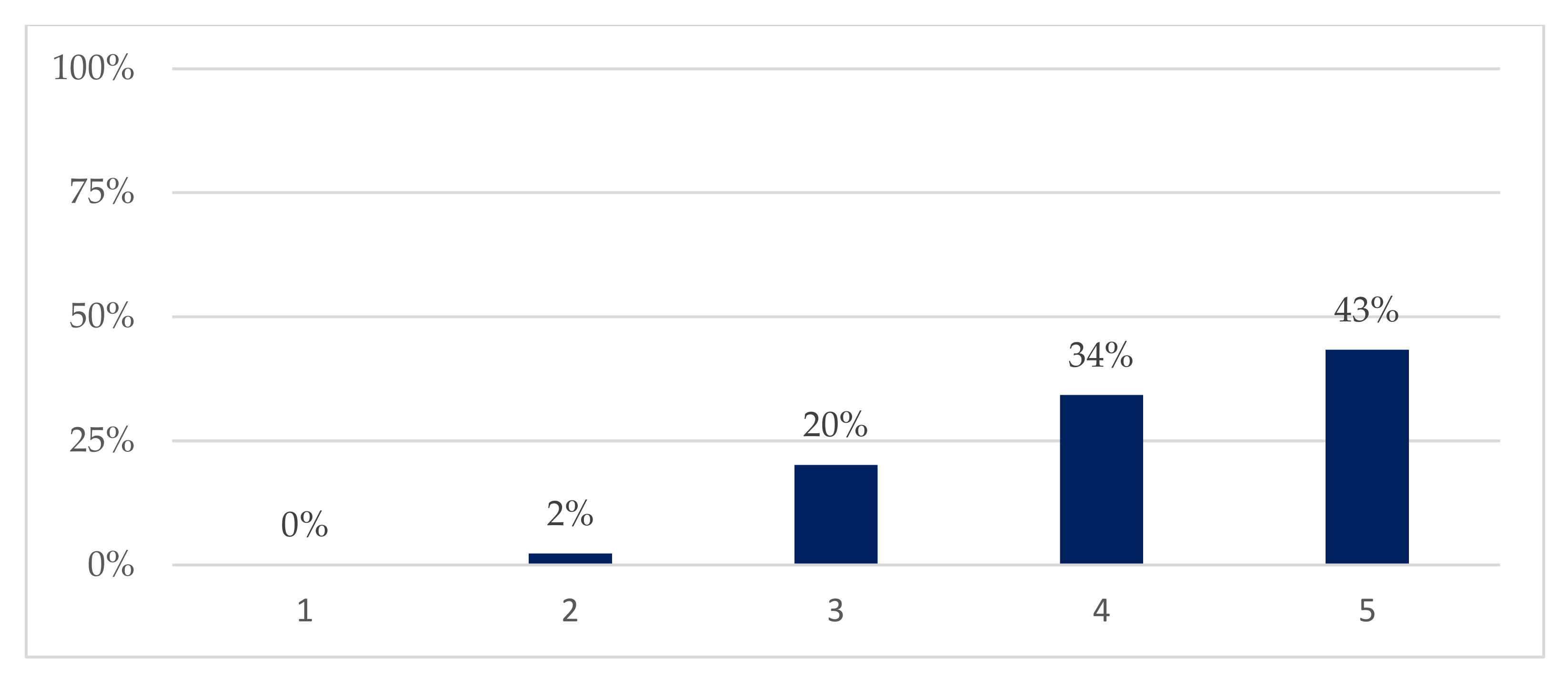
“Do you think inspiring/learning from nature contribute to architectural education?” The 62% of the students answered I strongly agree, 30% agree, 6% are undecided, and 1% strongly disagree. In this context, with an average of 4.50, it can be said that the majority of the students think that inspiring/learning from nature will contribute to architectural education (Figure 5).
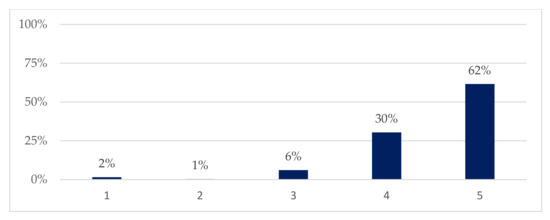
Figure 5.
Students’ answers to the question “Do you think inspiring/learning from nature contribute to architectural education?”.
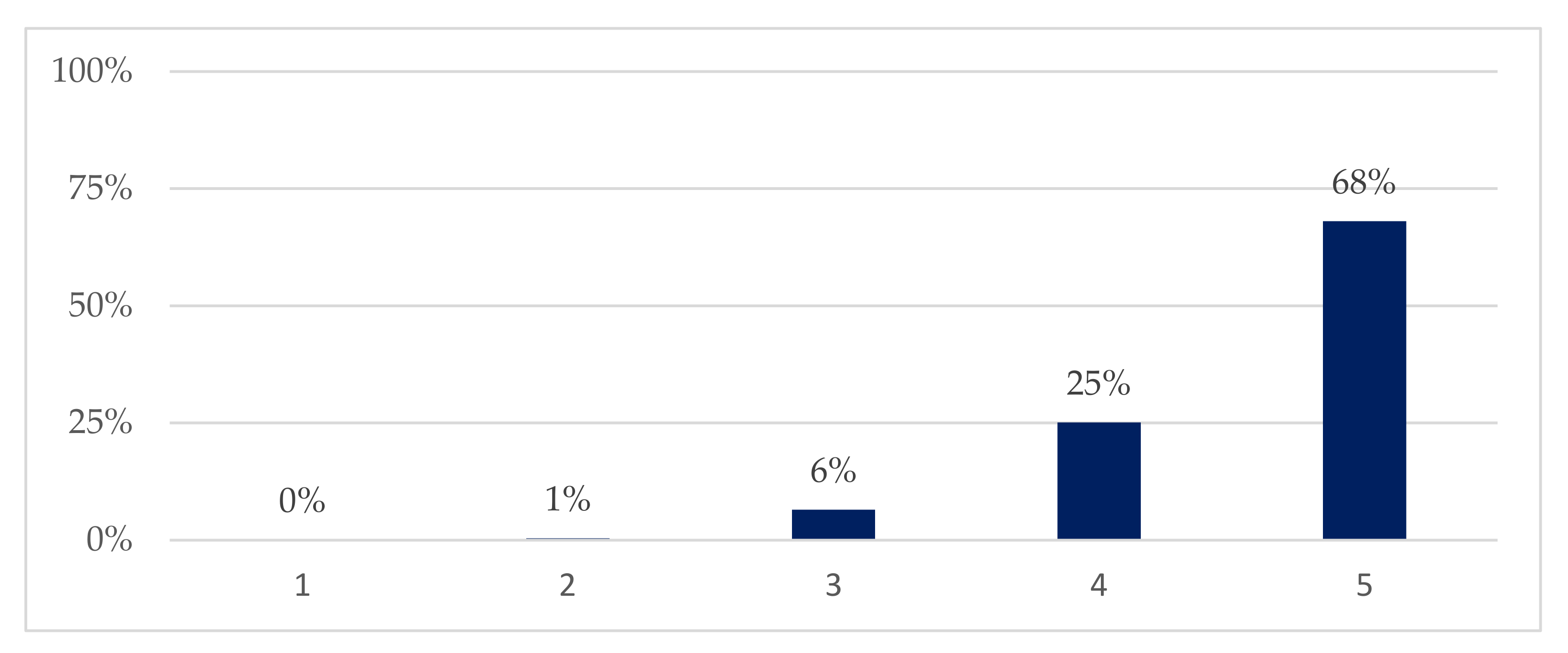
Similarly, “Does inspiring/learning from nature enable one to gain new perspectives in architectural education?” 69% of the students answered I absolutely agree, 24% agree, and 6% are indecisive. It is seen that the options evaluating the negativity are not marked. From the answers given to this question, whose average is calculated as 4.61, it can be deduced that students adopt the view that “Inspiring/learning by nature enables people to gain new perspectives in architectural education.” (Figure 6).
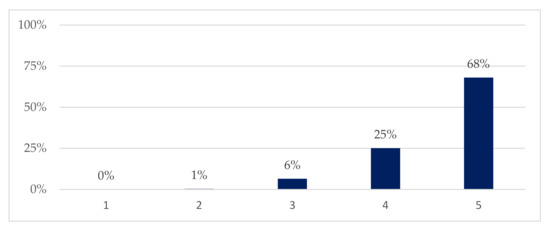
Figure 6.
Students’ answers to the question “Does inspiration/learning from nature enable a person to gain new perspectives in architectural education?”.
The question “Do you believe that the bio-informed/biomimetic/biomimicry/bio-inspired approach should be considered as an approach within the architecture curriculum?” is answered by 42% as strongly agree, by 35% as agree, by 21% as undecided, by 3% as disagree (Figure 7). Based on these results, it can be concluded that the majority of the students believe that “Bio-informed/biomimetic/biomimicry/bio-inspired approach should be considered as an approach in the architectural curriculum.”
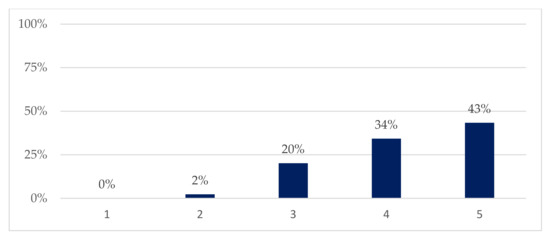
Figure 7.
Students’ answers to the question “Do you believe that the bio-informed/biomimetic/biomimicry/bio-inspired approach should be considered as an approach in the architecture curriculum?
Bio-informed/Biomimicry/Biomimetic(s)/Bionics/Bio-inspired/Bio-focused/Biomimesis, all these concepts are interpreted as an approach, method, tool, discipline or strategy while extracting ideas from nature. Bio-informed approach, which can be defined as a broad methodology that encourages learning from nature in order to produce effective, innovative and sustainable solutions to people’s problems [11], not only shapes design, but also causes revolutionary changes by allowing interdisciplinary interactions (between architecture-mathematics-art-biology-engineering, etc.), and by triggering creative problem-solving abilities.
Fortune Magazine defined the biomimicry methodology as “one of the smartest ideas of our day” in the article published in 2017. In addition, it emphasizes that the methodology provides solutions to the challenging problems facing the world today by enabling system thinking, creativity, sustainable design and interdisciplinary cooperation [12].
Bio-informed design approach has alternative thinking potentials for the solution of all kinds of problems of architecture students by providing “sustainable and innovative ideas” in their education and professional life. Since it is based on collaborative/interactive/creative methods and can be integrated with contemporary educational approaches, “bio-informed architectural education” is one of the hot topics of today. Biological processes/approaches/systems provide an adaptable and sustainable perspective for ecological, creative and sustainable designs [13]. Furthermore, bio-informed design is shown as a useful method for developing students’ skills such as design and systems thinking skills, especially when complemented with problem-based learning [14]. For instance, bio-informed design can develop students’ design and thinking skills, which is a fundamental competence [5,15,16,17] as it requires students to be problem solvers, creators and design thinkers.
Since architecture and biology have different working practices with different terminologies and approaches that there will inevitably be some obstacles in the realization of bio-informed design. For this reason, it is clear that architects or students of architecture, whose biological knowledge is “limited”, need a design method that will facilitate learning from nature in order to make bio-informed designs. It is important to highlight that the “method” should offer an approach that facilitates access to and the selection of biological data, and makes bio-informed design easier with the connection it will establish between architecture-biology terminologies. Since it is not easy to understand the working principles of natural systems [17], it is necessary to increase the frequency of designers to turn to nature for a solution, to strengthen their interest in nature, to establish terminological bridges and to make it understandable how to discover and transfer the logic of the biological system.
Research has revealed that “novice” designers have difficulties in revealing and analyzing the existing strategy/information within the systems/processes in the biological world [18]. In order to find a solution to this problem, many researchers from different disciplines are working on systematic approaches, techniques and methods that will help determine biological processes/events/strategies in the bio-informed design approach [11,18,19,20,21]. Hence, within the scope of this research, a method that can help designers develop creative ideas/products throughout the bio-information design process is presented.
This method is taught through a 14-week program within the scope of the “M5661-Parametric Approaches to Nature-Inspired Architectures” course that is given at the graduate level in the Department of Architecture of Gazi University, Ankara, Turkey. Throughout the semester, the lecturers try to ensure that the value of nature and the ideas she offers are understood by students and to establish the relationship of the bio- informed design approach with architectural education, which is also an effective method to increase students’ knowledge on “sustainability”.
In this study, the process and results that were carried out with a group of 8 students within the scope of the course in the spring semester of 2019–2020 were shared. The “process” which was initiated with the theme of “architectural structure design” was carried out with the individual studies of each student. This paper presents one of the students’ design in detail and evaluates all students’ designs in general and the feedbacks from them.
2. Methodology
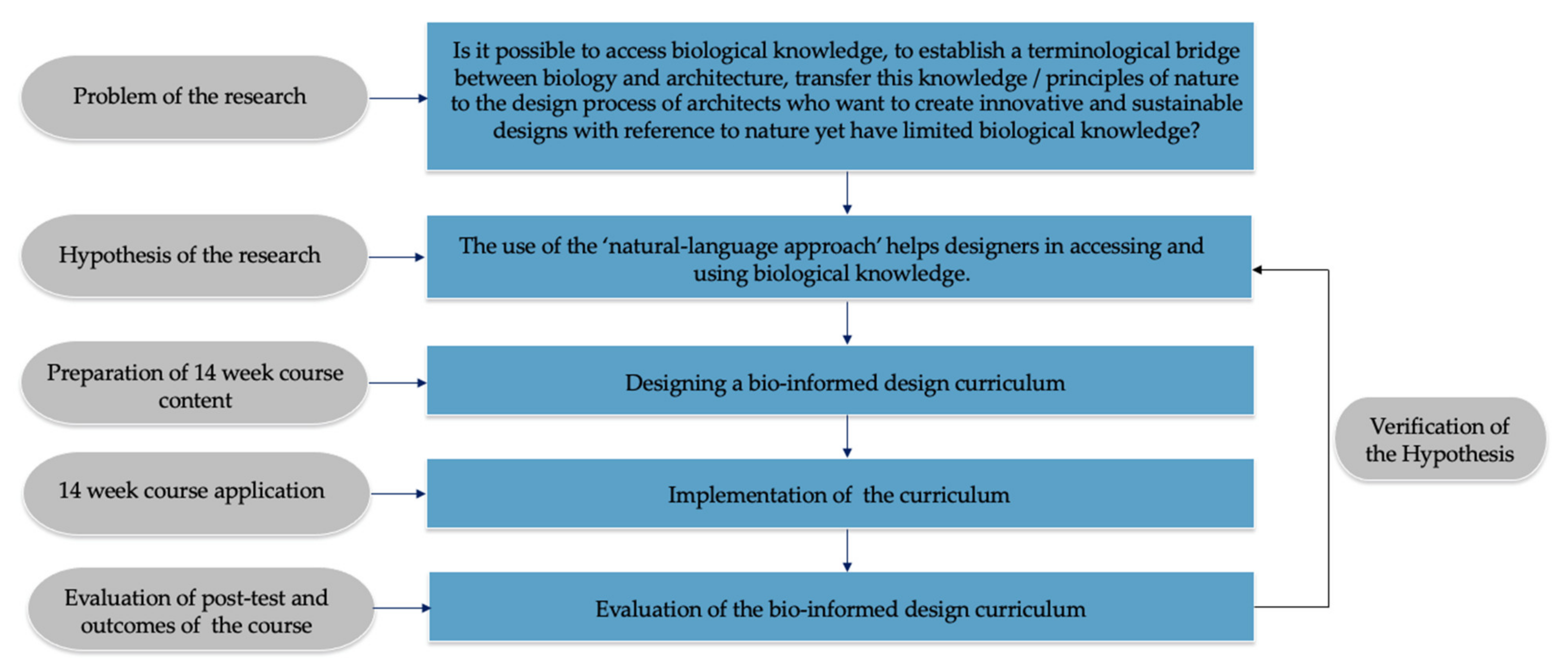
This study started with the problem “Is it possible to develop a method for architects who have limited biological knowledge and who want to create sustainable and novel designs with reference to nature, to reach biological knowledge, to establish a terminological bridge between biology and architecture, and to transfer the knowledge/principles they have acquired to their designs?”. In this context, the hypothesis of the study is that by using the “natural language approach” one of the bio-informed design methods that takes nature as a reference in architectural design, designers who have limited biological knowledge can easily access the basic biological data pool, grasp the working principles of the selected biological phenomena and transfer this knowledge they have acquired into their designs. Within the scope of the study, a general method is developed in which similar biological phenomena can be defined and used objectively and reproducibly for any architectural design problem. In order to test the hypothesis, a 14-week curriculum was designed, implemented and evaluated. The model that includes this process is presented in Figure 8.
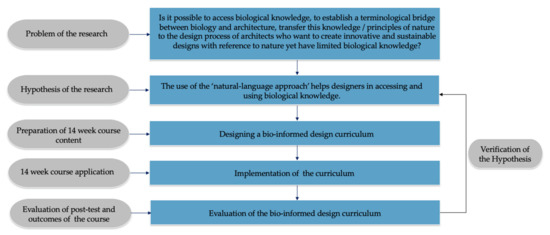
Figure 8.
Methodology of the research.
3. Bio-Informed Design Module and Strategy
The “program” prepared within the scope of the course is designed on the basis of the creativity, critical thinking and problem-solving strategies of graduate students in one semester (14 weeks). The theme of the semester was determined as “architectural structure with bio-informed design”, and the activities and goals to be held each week were detailed in the curriculum prepared at the beginning of the semester and shared with the students. The aim of the learning activity, the instructions that the students should follow and the learning objectives expected to be achieved were clearly defined by the course instructors. It was stated to the students that the lessons to be taught are interconnected and the new lesson will be conducted based on the skills and knowledge taught in the previous lessons.
Since the students taking the course have a limited background in bio- informed design, the module produced for the course was prepared in accordance with all levels of the Revised Bloom Taxonomy. Starting from the lowest level of taxonomy, “subject knowledge” was firstly created before proceeding to the next step of comprehension. At the beginner level, the basic knowledge of the subject is given and it is aimed for the students to absorb and explain the principles of the subject. At the same time, Vygotsky’s scaffolding approach has been adopted as one of the basic elements of effective teaching. The “scaffolding” in education includes various teaching techniques that encourage students to understand better and enable them to be more independent in the learning process. In the approach, “instructors” are in a position to support students’ achieving “understanding and skill acquisition levels” that they cannot achieve without assistance. Just as with the physical scaffolding, supportive strategies are phased out when they are no longer needed, and the instructor puts more and more responsibility on the student in the learning process [22,23].
3.1. Development of Module
Teaching modules are “learning elements with integrity in itself, showing the learning goals to be achieved behaviorally, determining the activities required to achieve the goals, giving the opportunity to control the achievement of the goals, and having the feature of being used effectively in the teaching of individuals with different learning conditions” [24]. Each module consists of certain parts that work in harmony with each other in order to ensure that students reach a specific goal [25].
Instructional design models are widely used in the development of teaching modules. Instructional design models cover the processes of planning the education-training, designing the tools to be used in this process, evaluating the process and making the necessary regulations. “Dick and Carey Model”, “Briggs Model”, “Kemp, Morrison and Ross Model”, “Rapid Prototyping Model”, “American Air Force Model”, “Analyze Learners, State Objectives, Select Media and Materials, Utilize Media and Materials, Require Learner Performance, Evaluate and Revise (ASSURE Model)”, “Attention, Relevance, Confidence, Satisfaction (ARCS Model)”, “Analyze, Design, Develop, Implement, and Evaluate (ADDIE Model)” are teaching design models. ADDIE Model, which is the most used model among these design models and defines clear instructions is a combination of the words Analysis, Design, Development, Implementation and Evaluation [26]. In this context, ADDIE model is taken as a reference while developing Bio-informed Design Curriculum Modules.
3.2. Natural Language Approach to Strengthen the Access to Bio-Information
The study has adopted the “bio-informed design method” and aimed to establish the terminological bridge between architecture and biology with a natural language approach. Natural language approach can be defined as a method that covers the “natural language format” [27,28] used to express written sources/texts and “concept mining” [29] and defined as the process of extracting meaningful concepts from written sources/texts and audio or visual files. It helps designers to obtain biological information from natural language texts containing biological information [27,30]. In this context, this approach takes place in the form of scanning the “key words” defining the architectural problem in biological resources such as books, encyclopedias and/or articles in order to reveal biological information and to reach the related organism. However, this methodology is not intended “to catalog” the biological model/system/material/process for architecture. Instead, it refers to the search for biological information directly related to the problem in a natural language format. With this proposed approach, there is no need to create a biological database for architectural design. After determining the keywords describing the design problem and problem, these words are used to search for biological information in resources such as articles and books.
The natural language approach is a tool for architects with limited biological knowledge to use nature’s creativity in many stages of the design process. It facilitates bio-informed design by providing a link between architecture and biology terminology, helping to extract knowledge from the biological field. Students search for biological knowledge within natural language resources such as articles and books with keywords explaining the “architectural problem.” [31] The proposed model presents a methodology that can be applied to any architectural design problem in an objective and reproducible manner of biological systems.
3.3. Targeted Skills in the Module
Changing scientific and technological developments enable us search for reviewing the education system of each discipline and adapting it to the skills/competencies of the century. Before moving on to the skills that stand out in the twenty-first century, it is necessary to touch on the concepts of talent, skill, competency and competence.
The concept of talent, as a phenomenon that lies at the basis of skill, competency and competence, can be defined as a natural skill or capability [32]. Skill is defined as “the ability to use and apply knowledge to fulfill tasks and solve problems”. In another source, it is stated as “using knowledge” which requires intuitive, logical and creative thinking acquired in a field of study or learning and the ability to use manual methods, skills, materials, equipment and tools and “problem solving” [33].
Competency is defined as “the use of knowledge and skills in a working or learning environment by taking responsibility and/or working autonomously, determining and meeting learning needs, taking social and ethical issues and responsibilities into consideration”. It is used in the meaning of “competence in the context of working life; the effectiveness of the sum of factors such as the distinctive qualities of the person and the whole of personal characteristics, personality traits, knowledge, skills, performance and behavior” [34].
Competence/proficiency is related to performance outcomes and is defined as “a concrete indicator of behavior, performance and success, and a harmonious whole of knowledge, skills, abilities and competencies” [34].
The skills that are aimed to be acquired by students within the scope of the course include some of the twenty-first century skills students need to succeed in their careers throughout the information age. These skills can be divided into three categories: Learning & Innovation Skills, Literacy Skills (Information, Media & Technology Skills) and Life & Career Skills [35,36]. The universal need skills determined for any career are “critical thinking/problem solving creativity & innovation, communication & collaboration” [35].
In this context, the problem-based learning skills and Information, Communications and Technology (ICT) and Sustainability Literacy (SL) skills that the students taking the course will gain are shown in Table 1.

Table 1.
Defined skills and Targeted skills.
4. Preparation Phase and Objectives
The module prepared within the scope of the course includes the components prepared to encourage learning from nature, including information such as subject/problem/research/evaluation methods. In the context of achieving teaching goals, it is planned to actively involve students in the learning process by applying the constructivist learning approach, which allows the learner to construct, interpret and develop knowledge.
The first lesson started with a presentation of learning objectives. At the end of the presentation, the trainers shared the basic resources on the bio-informed approach for the next lesson, and were asked to read these resources. These articles were distributed in a way that would bring an equal study load to each student and each student was asked to prepare a presentation. In this way, they were provided to reinforce each article they read by listening to them once as a presentation. With the start of the presentations, discussions were held on terminologies such as bio-informed, biomimicry, bio-inspiration, biomimesis, bionics, biotechnology, and biomimetics that could cause conceptual confusion. These discussions in the course help to reveal incomprehensible situations in the process by making thought processes visible, allowing assumptions to be clarified and questioned. The role of the instructors is very important in terms of conducting the discussion correctly and effectively [37]. For this reason, the discussions carefully carried out by the executives allowed the ideas to be questioned in a meaningful way. In order to examine and correct the problem dealt with in the process from different aspects, the “decision making” phase was focused. Discussions focused on the subject and which have determined aims are carried out by the executives in a process-based manner. The facilitators provide opportunities for all students participating in the class to take part in the discussion to make a decision, and involve students to evaluate the assumptions.
In the following weeks of the course, students were asked to prepare a presentation explaining what the structure is, what it expresses, and how it is shaped in architecture and nature. Students were directed to basic reading but were free to choose the structure and content of the presentation. At the end of this stage, they were asked to identify a problem specific to the “structure” in the discipline of architecture in the light of their readings and observations. The problems they identified were clarified with the suggestions and comments of the students and instructors in the classroom. In the next week, the students were asked to develop a solution with a system/organism they chose from nature, using the resources they could access during the lesson (with problem-based design) in the classroom environment. The solutions they found were discussed at the end of the lesson, and the difficulties of the student were emphasized.
At the middle of the semester, the “natural language approach” as a method that can be used in the search for bio-informed solutions in architectural education was explained by the instructors, and students were asked to identify the “keywords” that describe their problems. These determined keywords were expanded with other meanings such as synonyms/hypernym/hyponym/tronym and were scanned within biological resources. The information obtained as a result of these scans was questioned and how the solution occurred in nature was investigated. Bio-informed solution proposals determined by the students were transferred to their designs as data. The students were asked to finalize their designs by brainstorming and discussions with the presentations made in the classroom environment. During the semester, the dialogues between both students and students and students and instructors are closely linked to problem identification and solving. This dialogue, which helps defining the problem and clarifying the process, helps students learn to think together and therefore develop problem solving and critical thinking skills [37]. In this context, the content of the fourteen-week planned course is included in Table 2.
Table 2.
14-week course content of the “Parametric Approach to Nature-Inspired Architectures” course.
The module applied within the scope of the fourteen-week course is summarized in Table 3. This module consists of stages covering teaching goals and objectives, course content, teaching/learning activities and evaluation.
Table 3.
Application module.
5. Students’ Works
As stated before, the main goal of the course is to increase the interest of architects in using nature as a reference in order to develop creative and innovative solutions in their designs and to enable them to discover methods that can facilitate the transfer of knowledge between nature and architecture. In this context, in this part of the study, the outputs of a method developed and applied in the course are included.
Within the scope of the course held in the spring term of 2019–2020, students were asked to identify an architectural structure problem and to make a bio-informed design as a result of their research and development. This fourteen-week course was concluded with student designs by using tools such as research, presentation, brainstorming, exercise, discussion and design sketches in the context of the topics listed in Table 4. Throughout the semester, students were supported both in terms of bio-informed theoretical knowledge and defining/developing the problem. Various research assignments were given to the students to improve their critical thinking and problem-solving skills. Terminological readings on bio-informed design and related concepts in different disciplines were made and presentations were asked to prepare. Later, they were expected to define structural problems in architecture by dealing with the issue of structure in nature and architecture. In the process of defining and developing the problem, the instructors and all students taking the course exchanged ideas, and discussions were held.
Table 4.
The process that Student (A) progress before learning the proposed method.
After the clarification of the problems, the search for a solution for the problem began. During this process, it was observed that the students frequently reached the solutions that had entered the literature and were directed to the biological organisms previously taken as examples in the designs. At this point, the “natural language approach” was explained to the students, and how to access information in the biological resources was taught. Sample table formats were provided for students to analyze, systematize and organize the information they obtained from different sources. How biological principles can be obtained from the information they have been prepared has been clarified through the exchange of ideas, brainstorms, discussions and dialogues within the course.
In this context, the process can be explained through students’ project. First of all, they were asked to define the problem and start the design with a method they would develop themselves. This application was carried out in order to observe how the students approached the problem and solution. The students summarized the result of this stage by writing in a table provided to them (Table 4). This study was applied in order to contribute to the clarification of the problem in their minds and to reveal the way the student searched for the problem and which sources they used, and to see the difference with the next process. From now on the process has been explained in detail through one student’s studies designated as Student (A). The student defined her problem as “Is it possible to design a light and portable structure that expands when required?” and followed the course schedule accordingly.
In the next step, the student searched for the key words that define his/her problem in the dictionary and reached the synonymous, hyponyms, hypernyms, tronyms of the term (Table 5).
Table 5.
Search result for the term “expand” by Student (A).
The expanded keywords have been searched in “Biology” [38], “Campbell Biology” [39], “Principles of Life” [40], “The Royal Entomological Society Book of British Insects” [41] and “Asknature” [42]. Tables have been prepared as in Table 6, according to all keywords found in Table 5.
Table 6.
Keyword searches in biology resources tabulated by Student (A).
Searches and matches shown in Table 6 were applied for all expanded keywords. After the search completed, it has been seen that not every word has a matching in biological source. Frequently encountered biological systems/organisms/processes are shown in Table 7.
Table 7.
Matches found in “Biology” [37], “Campbell Biology” [38], “Principles of Life” [39], “The Royal Entomological Society Book of British Insects” [40] and “Asknature” [41] done by Student (A).
After this stage, the students started to search for a living thing that could offer a solution to the existing problem by using the natural language approach. As a result of the searches, they made with the help of keywords they expanded in different sources, a terminological bridge between biology and architecture began to form. Literary search was carried out with all keywords and the obtained information was tabulated (Table 8). Students who scan biological resources have started to determine the biological principles they have chosen.
Table 8.
An example of natural solutions found as a result of research with keywords by Student (A).
Later, a matrix table containing the analysis of detailed characteristics of the living things examined was created (Table 9).
Table 9.
Detailed trait matrix of the living creature studied.
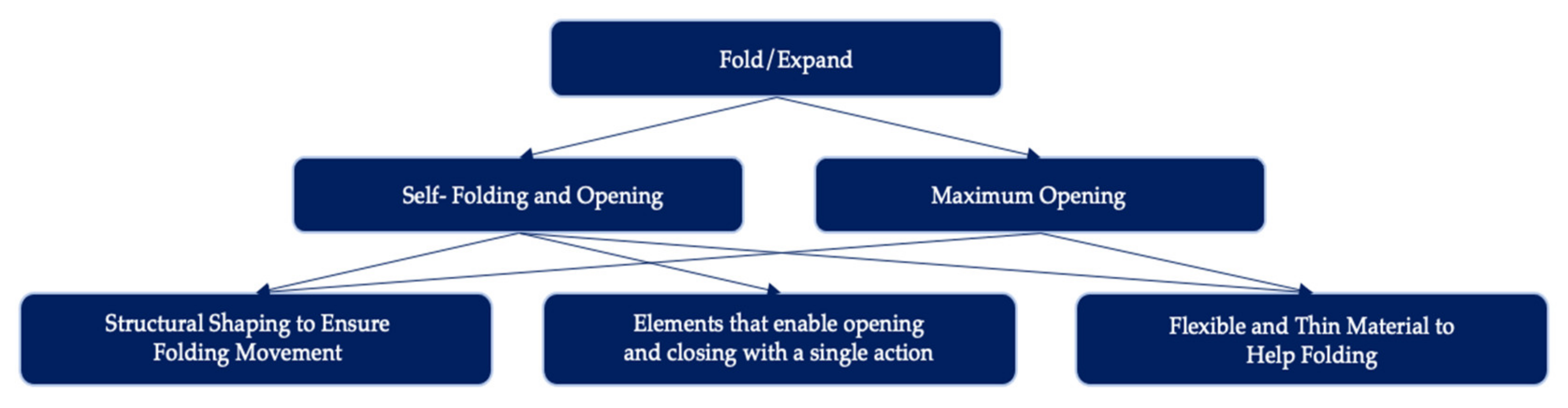
After all these detailed analyzes, the performance criteria expected from the structure to be designed are shown in Figure 9.
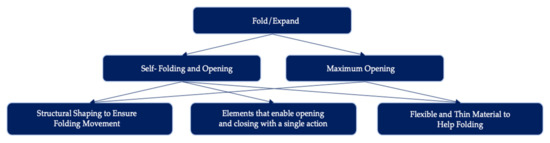
Figure 9.
Performance criteria expected from the structural system.
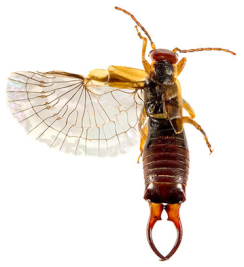
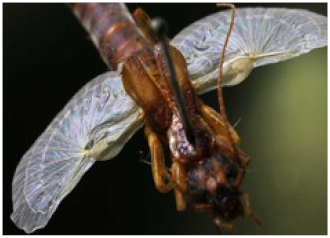
Dermaptera (earwigs) with wide wingspan was determined as the most suitable organism for the solution of the problem. The overall folding structure of the wing includes three convex and one concave folding pattern. In the fan section, the veins are arranged consecutively as concave and convex. This configuration is defined as the arrangement of convex and concave fold lines on the surface. In Figure 10, the stages of folding the wing can be seen [43].

Figure 10.
Folding simulation of the wing [43].
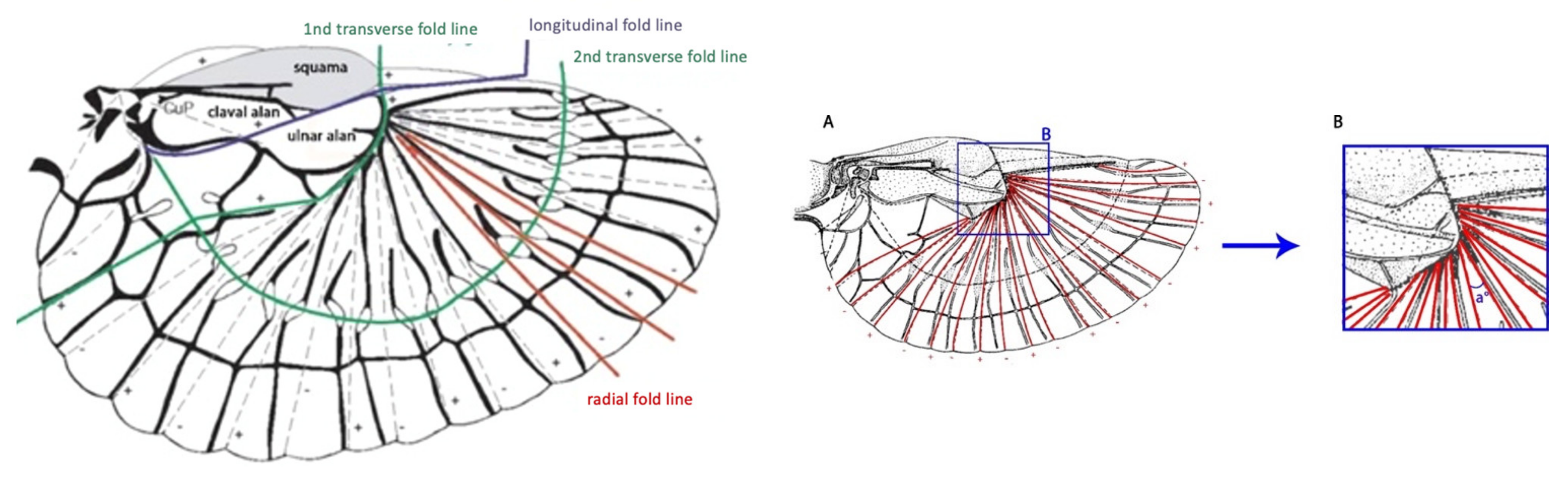
In the simulation, it can be seen that the wing was folded in four stages (Figure 11). In the first stage, the radial fold lines with successively concave and convex axes begin to fold. The second stage takes place almost together with the first stage and is folded along the second transverse fold line. Then, it is folded along the 1st transverse fold line. Finally, wing is folded along the longitudinal fold line. With this last movement, the wing is squeezed under the shell. In the opening movement, the wings are opened gradually as in the closing process (Figure 11) [44].
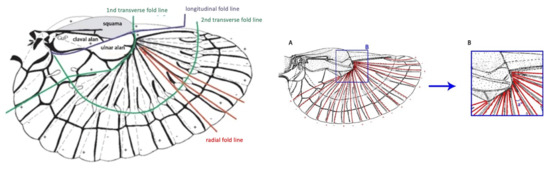
Figure 11.
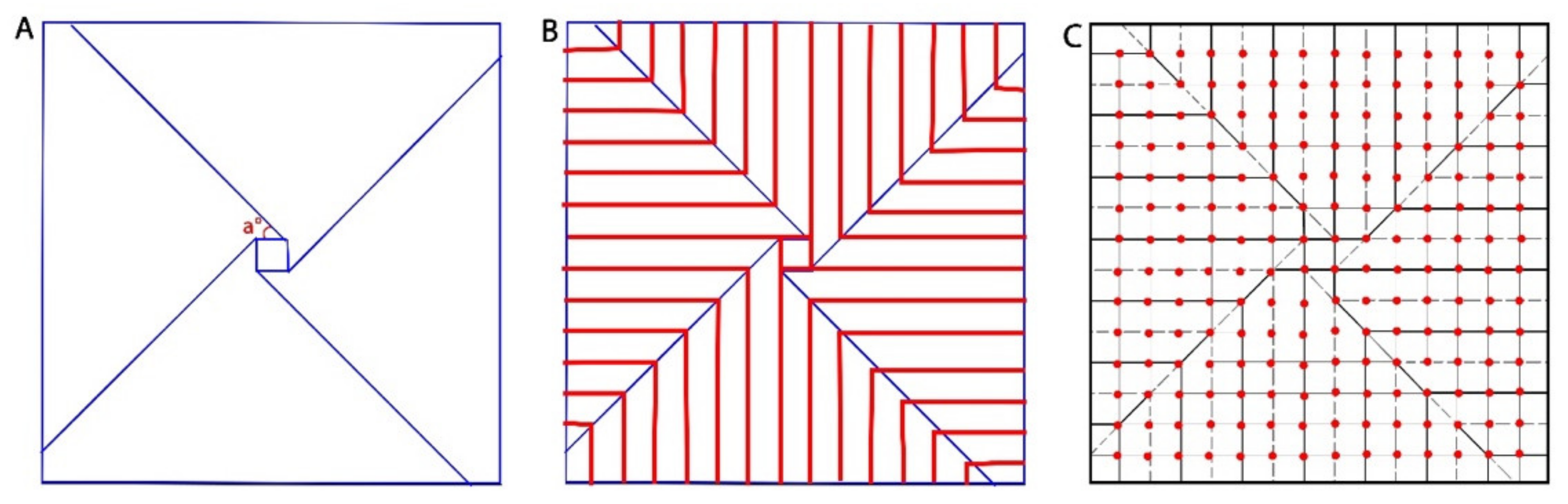
The folding axes are indicated on the open state of the wing, +: convex −: concave [44]; (A) Fold lines in the fan-shaped area with a radial fold axis, (B) A, which represents the angle between any two-fold axes, is always an angle less than 90° [45].
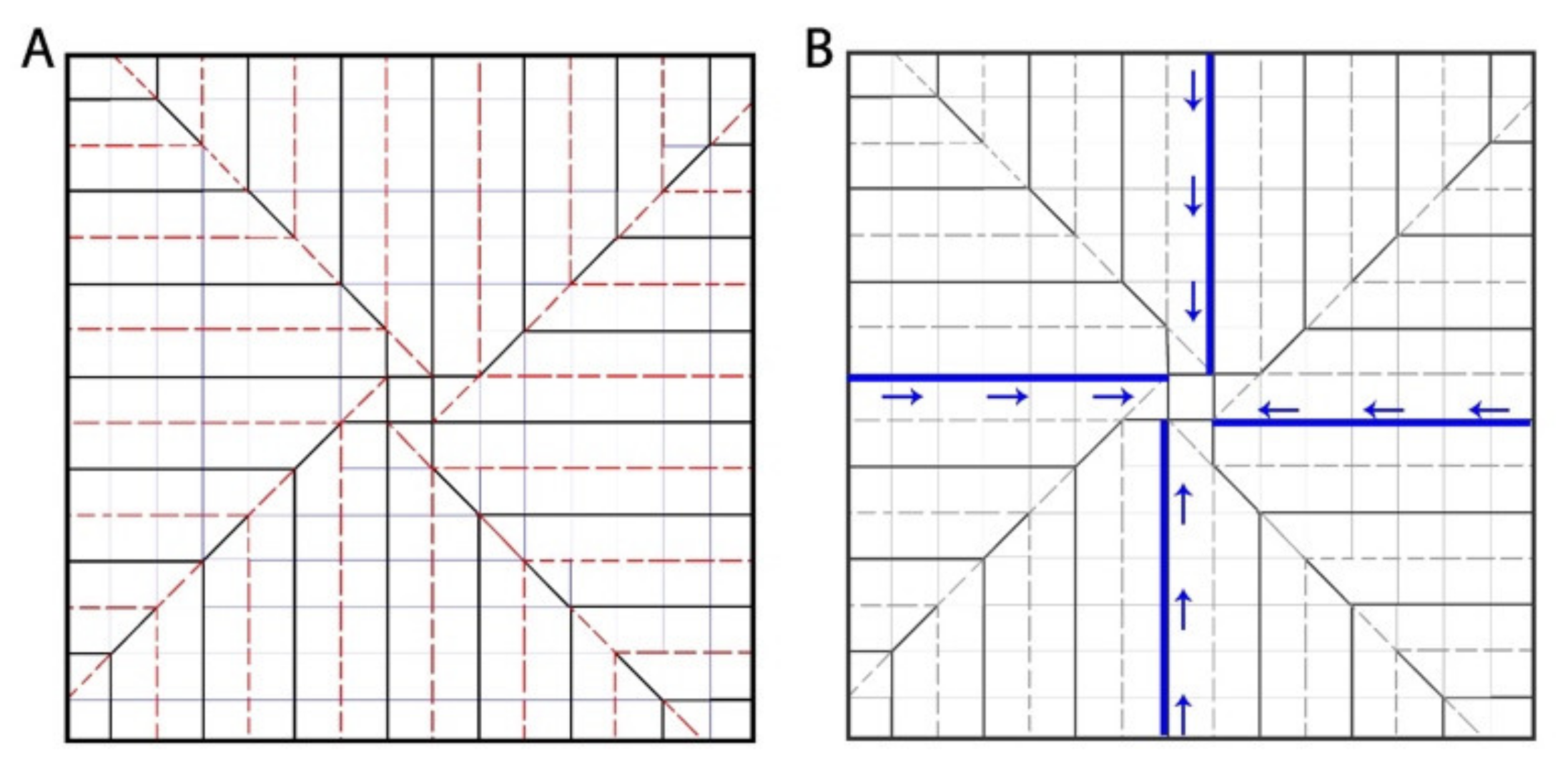
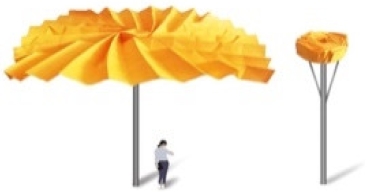
Based on the structure of the Dermaptera wing, a foldable structure design, with angular layout and sequentially concave and convex principles was designed (Figure 12 and Figure 13).
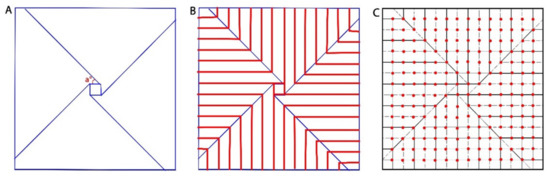
Figure 12.
Analysis of the structure system (A) Structural bars were placed angularly a = 45°. (B) Support elements are placed consecutively. (C) The position of the folding fasteners on the top cover system is shown.
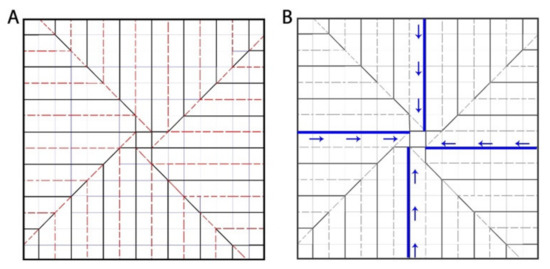
Figure 13.
(A) Folding axes, (B) Movement of the folding elements towards the center.
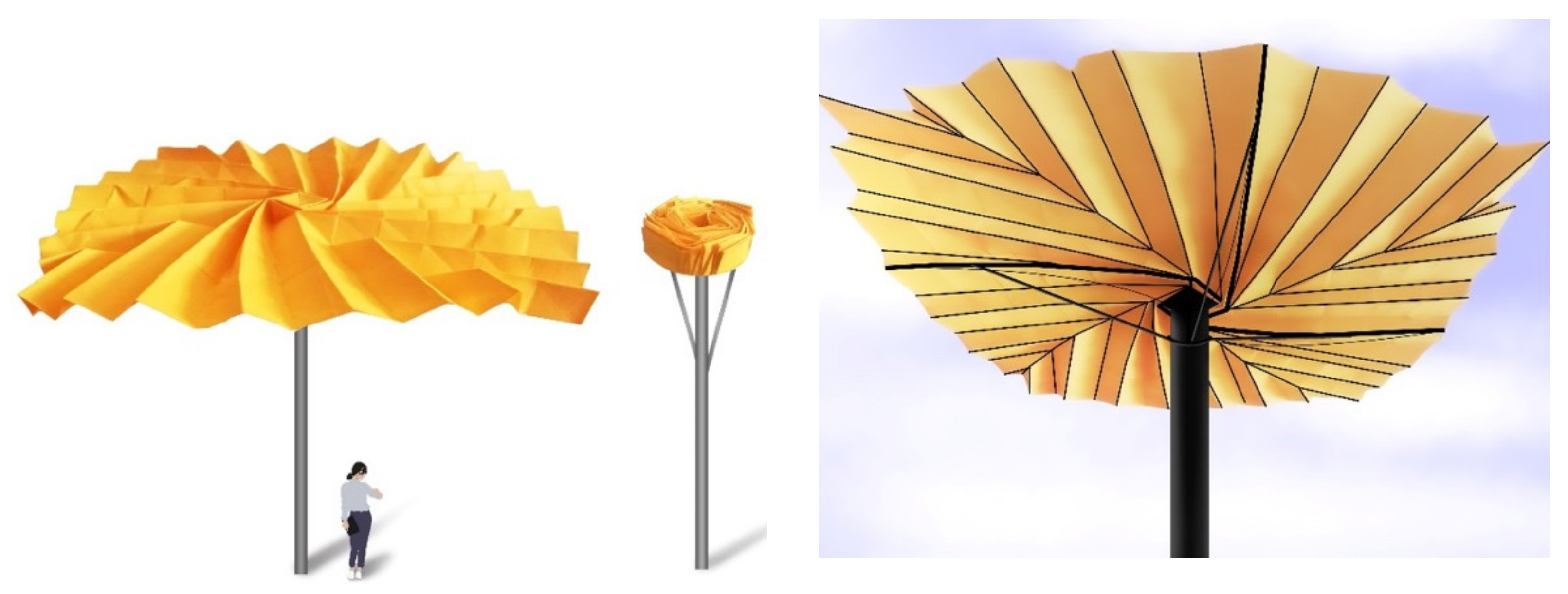
The designed structure can be folded and closed by rotating the upper cover by pulling the movable support elements towards the center, with an angled movement mechanism that enables opening and closing in one motion. Support elements are positioned on four axes connected to the center (Figure 14).
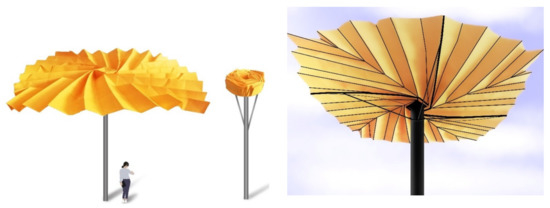
Figure 14.
Opened and closed form of the structure designed by Student (A).
In this student project, given as an example, it can be seen that biological principles have been transferred to an architectural design. In the process, defining the design problems themselves was helpful for them. Brainstorms, dialogues and discussions held during the course also provided a guide for their critical thinking. The natural language approach and the prepared tables enabled the students to reach the results systematically without losing their direction or getting lost in much information. At this point, the opinions of the students given in the section below support this issue.
As a result of all this process, the bio-information structures produced by the students in the course are presented in Table 10. As can be seen, all the design ideas obtained have been shaped as sustainable structures with light, the most effective construction with the least material and environmentally sensitive goals.
Table 10.
Bio-informed structures designed in the course.
6. Assessment of Students’ Pre-Test and Post-Test
The average of the pre-test scores of the students is (16), the average of the posttest scores is (80). A t-test was used to determine whether the difference between the two averages is significant. After the t-test conducted to compare the first test and posttest of the students, it was found that the average scores are different from each other. 0.05 was used as the level of significance and it was accepted that there was a significant dependency or relationship when p < 0.05 [46]. According to the results, this difference in the mean scores of the experimental and control groups was found to be statistically significant (t (9) = −24,000; p < 0.05), (Table 11).
Table 11.
t-test results of students’ pre-test and post-test “open-ended evaluation test consisting of 10 questions” scores.
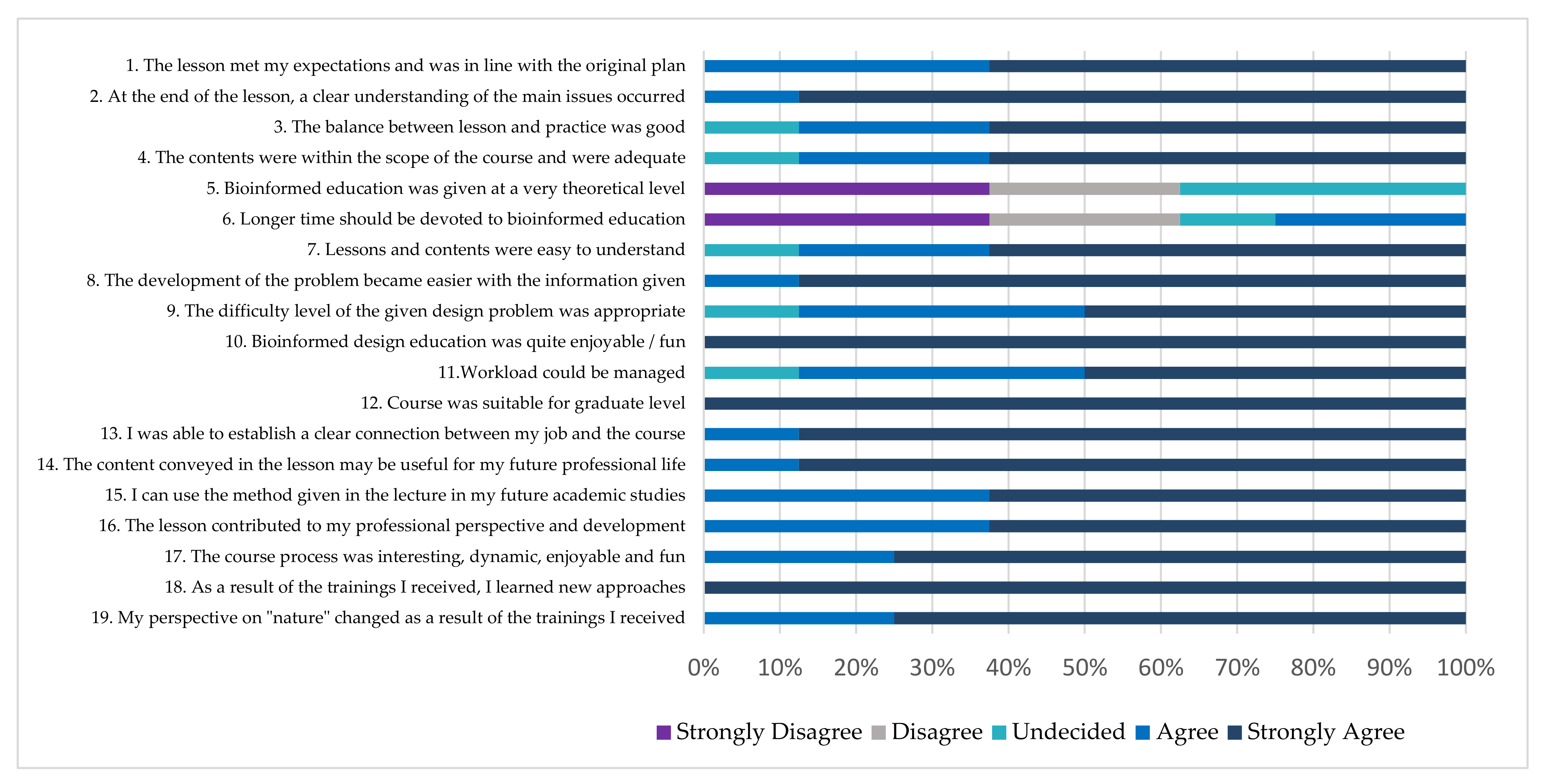
At the end of the semester, students were asked to fill out the “program result questionnaire” about the course. A total of 19 questions were asked to the students under four headings: success/process/future/satisfaction. In Figure 15, which includes the results of the survey, it can be seen that the students are satisfied with the subjects such as the course content, the course process, and the applications made in the course.
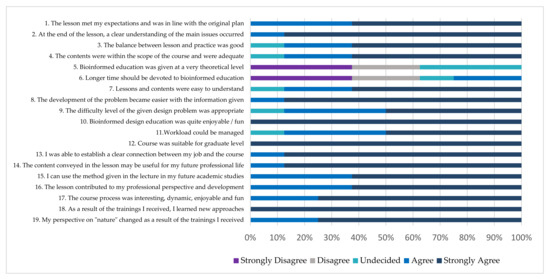
Figure 15.
Students’ responses to the “program results questionnaire”.
7. Conclusions
Bio-inspired method can help researchers handle their design problems with a different perspective from an interdisciplinary approach. The method offers an opportunity to understand “nature and architecture” as a whole through problem solving, and critical thinking technics as well as together with sustainable and innovative ideas that we want to gain students as twenty-first century skills.
This study propose that bio-inspired approach can be integrated with natural language approach and can support the content of the architectural curriculum in order to contribute to the development of systematic researches in the field. For this purpose, through the fourteen-week course at Gazi University, the conducted research process provided an opportunity to create an interest of architecture students in bio-informed solutions. Thanks to the natural language approach architecture students with limited biological knowledge have developed a systematic approach to their design problems.
Therefore, the outcome of this research can be stated as the themes of bio-informed design and natural language approach can be integrated to architectural education along with a sustainability point of view. With this method, it was observed that students deal with different natural systems/phenomena for innovative, sustainable and creative solutions beyond imitating well-known natural forms. The method was defined by the students as informative, creative and guiding. Furthermore, they state that bio-informed design can be applied in the architecture programs as a method that encourages creativity, critical thinking and problem solving to solve the problems they encounter. It is hoped that this attempt will encourage further studies for bio-informed design teaching as well as opening possible ways for the integration of the bio-informed approach to architectural education.
Author Contributions
Conceptualization, S.A.S. and G.M.A.; methodology, S.A.S. and G.M.A.; validation, S.A.S. and G.M.A.; formal analysis, S.A.S. and G.M.A.; investigation, S.A.S. and G.M.A.; resources, S.A.S. and G.M.A.; data curation, S.A.S. and G.M.A.; writing—original draft preparation, S.A.S. and G.M.A.; writing—review and editing, S.A.S. and G.M.A.; visualization, S.A.S. and G.M.A.; supervision, S.A.S. and G.M.A. All authors have read and agreed to the published version of the manuscript.
Funding
This research received no external funding.
Institutional Review Board Statement
Not applicable.
Informed Consent Statement
Not applicable.
Data Availability Statement
Data sharing not applicable.
Acknowledgments
The authors would like to thank all the students, who are taking “M5661-Parametric Approaches to Nature-Inspired Architectures” course in the spring semester of 2019–2020, for their participation, efforts and collaborations.
Conflicts of Interest
The authors declare no conflict of interest.
References
- Colani: Visions in Designs. Available online: https://www.colani.ch/ (accessed on 19 November 2020).
- McBride, B.B.; Brewer, C.A.; Berkowitz, A.R.; Borrie, W.T. Environmental Literacy, Ecological Literacy, Ecoliteracy: What Do We Mean and How Did We Get Here? Ecosphere 2013, 4, 1–20. [Google Scholar] [CrossRef]
- Barr, S.; Gilg, A.; Shaw, G. Helping People Make Better Choices: Exploring the Behaviour Change Agenda for Environmental Sustainability. Appl. Geogr. 2011, 31, 712–720. [Google Scholar] [CrossRef]
- Burns, H. Teaching for Transformation: (Re)designing Sustainability Courses Based on Ecological Principles. J. Sustain. Educ. 2011, 2, 1–16. [Google Scholar]
- Wiek, A.; Withycombe, L.; Redman, C.L. Key competencies in sustainability: A reference framework for academic program development. Sustain. Sci. 2011, 6, 203–218. [Google Scholar] [CrossRef]
- UNESCO. Available online: https://en.unesco.org/themes/education-sustainable-development (accessed on 13 January 2021).
- Collado-Ruano, J. Biomimicry: A necessary eco-ethical dimension for a future human sustainability. Future Hum. Image 2015, 5, 23–57. [Google Scholar]
- Capra, F. Sustainable living, ecological literacy, and the breath of life. Can. J. Environ. Educ. 2007, 12, 9–18. [Google Scholar]
- Olaizola, E.; Morales-Sánchez, R.; Eguiguren Huerta, M. Biomimetic organisations: A management model that learns from nature. Sustainability 2020, 12, 2329. [Google Scholar] [CrossRef]
- Kagawa, F. Dissonance in Students’ Perceptions of Sustainable Development and Sustainability: Implications for Curriculum Change. Int. J. Sustain. High. Educ. 2007, 8, 317–338. [Google Scholar] [CrossRef]
- Kennedy, B.; James, J.K.N. Integrating biology, design, and engineering for sustainable innovation. In Proceedings of the 5th IEEE Integrated STEM Education Conference, Princeton, NJ, USA, 7 March 2015; pp. 88–93. [Google Scholar]
- Greenwald, J. “Learning at Mother Nature’s Knee,” Fortune Magazine, 22 August 2005. Available online: https://money.cnn.com/magazines/fortune/fortune_archive/2005/08/22/8270023/index.htm (accessed on 2 February 2020).
- Nagel, J.K. A Thesaurus for Bioinspired Engineering Design. In Biologically Inspired Design; Springer: London, UK, 2014; pp. 63–94. [Google Scholar]
- Qureshi, S. How students engage in biomimicry. J. Biol. Educ. 2020, 54, 1–15. [Google Scholar] [CrossRef]
- Graham, P. Building Education for the Next Industrial Revolution: Teaching and Learning Environmental Literacy for the Building Professions. Constr. Manag. Econ. 2000, 18, 917–925. [Google Scholar] [CrossRef]
- Alfassi, M. Reading to Learn: Effects of Combined Strategy Instruction on High School Students. J. Educ. Res. 2004, 97, 171–185. [Google Scholar] [CrossRef]
- Dauer, J.; Dauer, J. A framework for understanding the characteristics of complexity in biology. Int. J. STEM Educ. 2016, 3, 1–8. [Google Scholar] [CrossRef]
- Cheong, H.; Chiu, I.; Shu, L.H. Extraction and transfer of biological analogies for creative concept generation. In Proceedings of the ASME 2010 International Design Engineering Technical Conferences & Computers and Information in Engineering Conference IDETC/CIE 2010, Montreal, QC, Canada, 15–18 August 2010; pp. 151–166. [Google Scholar]
- Nagel, J.K.; Pittman, P.; Pidaparti, R.; Rose, C.; Beverly, C. Teaching bioinspired design using C–K theory. Bioinspired Biomim. Nanobiomaterials 2016, 6, 77–86. [Google Scholar] [CrossRef]
- Nagel, J.K.; Schmidt, L.; Born, W. Establishing analogy categories for bio-inspired design. Designs 2018, 2, 47. [Google Scholar] [CrossRef]
- Cattano, C.; Nikou, T.; Klotz, L. Teaching Systems Thinking and Biomimicry to Civil Engineering Students. J. Prof. Issues Eng. Educ. Pract. 2011, 137, 176–182. [Google Scholar] [CrossRef]
- The Glossary of Education Reform. Available online: https://www.edglossary.org/Scaffolding/ (accessed on 15 November 2020).
- Eflatun, Eğitim Platosu. Available online: https://eflatunplatosucom.wordpress.com/2016/02/21/Yapi-%C4%B0skelesi-Scaffolding/ (accessed on 15 November 2020).
- Özkan, H.H. Öğrenme Öğretme Modelleri Açısından Modüler Öğretim. Atatürk Üniv. Sos. Bilim. Enst. Derg. 2005, 6, 117–128. [Google Scholar]
- Öğretim Programları ve Modüler Öğretim Uygulama Kılavuzu. Available online: http://vaneml.meb.k12.tr/meb_iys_dosyalar/65/01/960137/dosyalar/2015_02/18122728_uygulamaklavuzu.pdf (accessed on 17 December 2020).
- Özerbaş, M.A.; Kaya, A.B. Öğretim Tasarımı Çalışmalarının İçerik Analizi: ADDIE Modeli Örneklemi. J. Turk. Educ. Sci. 2017, 15, 26–42. [Google Scholar]
- Shu, L.H. A natural-language approach to biomimetic design. Artif. Intell. Eng. Des. Anal. Manuf. 2010, 24, 507–519. [Google Scholar] [CrossRef]
- Nagel, J.K.; Nagel, R.L.; Stone, R.B. Abstracting biology for engineering design. Int. J. Des. Eng. 2011, 4, 23–40. [Google Scholar] [CrossRef]
- Aydın, C.R.; Erkan, A.; Güngör, T.; Takçı, H. Sözlük Tabanlı Kavram Madenciliği: Türkçe için bir Uygulama, 30. Ulusal Bilişim Kurultayı, November 2013, Ankara. Available online: https://www.cmpe.boun.edu.tr/~gungort/papers/Sozluk%20Tabanli%20Kavram%20Madenciligi%20-%20Turkce%20icin%20bir%20Uygulama.pdf (accessed on 17 December 2020).
- Shu, L.H.; Ueda, K.; Chiu, I.; Cheong, H. Biologically inspired design. CIRP Ann. 2011, 60, 673–693. [Google Scholar] [CrossRef]
- Shu, L.H.; Ueda, K.; Chiu, L.; Cheong, H. A Natural Language Approach to Biomimetic Design. In Biologically Inspired Design; Goel, A.K., McAdams, D.A., Stone, R.B., Eds.; Springer: London, UK, 2014; pp. 29–61. [Google Scholar]
- Oxford English and Spanish Dictionary, Thesaurus, and Spanish to English Translator. Available online: https://www.lexico.com/definition/talent (accessed on 17 December 2020).
- Türkiye Yeterlilikler Çerçevesi Terimler Sözlüğü. Available online: https://tyc.gov.tr/sayfa/yeterlilik-kavrami-i435e32ed-363c-4540-8498-76651dc27001.html (accessed on 17 December 2020).
- Turan, N. Çalışma Yaşamında Yetenek, Beceri, Yetkinlik, Yeterlilik; Nobel: Ankara, İstanbul, 2015. [Google Scholar]
- Applied Educational Systems. Available online: https://www.aeseducation.com/blog/what-are-21st-century-skills (accessed on 17 December 2020).
- Partnership for 21st Century Skills (P21). Available online: https://www.imls.gov/assets/1/AssetManager/Bishop%20Pre-Con%202.pdf (accessed on 17 December 2020).
- Peterson, M. Skills to Enhance Problem-Based Learning. Med. Educ. Online 1997, 2, 4289. [Google Scholar] [CrossRef]
- Campbell, N.A.; Urry, L.A.; Cain, M.L.; Wasserman, S.A.; Minorsky, P.V. Biology; Pearson: New York, NY, USA, 2017. [Google Scholar]
- Reece, J.B.; Urry, L.A.; Cain, M.L.; Wasserman, S.A.; Minorsky, P.V.; Jackson, R.B. Campbell Biology; Pearson: Boston, MA, USA, 2014. [Google Scholar]
- Hillis, D.M.; Sadava, D.E.; Heller, H.C.; Price, M.V. Principles of Life; Macmillan: Basingstoke, UK, 2012. [Google Scholar]
- Barnard, P.C. The Royal Entomological Society Book of British Insects; John Wiley & Sons: Oxford, UK, 2011. [Google Scholar]
- AskNature. Available online: https://asknature.org/ (accessed on 19 November 2020).
- Faber, J.A.; Arrieta, A.F.; Studart, A.R. Bioinspired spring origami. Science 2018, 359, 1386–1391. [Google Scholar] [CrossRef]
- Haas, F. The evolution of wing folding and flight in the Dermaptera [Insecta]. Acta Zool. Crac. 2003, 46, 149–158. [Google Scholar]
- Henson, H. The Wings of Forficula Auricvlaria Linn. (Dermaptera). Physiol. Entomol. 1951, 26, 135–142. [Google Scholar] [CrossRef]
- Çepni, S. Araştırma ve Proje Çalışmalarına Giriş; Salih Çepni: Trabzon, Turkey, 2009. [Google Scholar]


Publisher’s Note: MDPI stays neutral with regard to jurisdictional claims in published maps and institutional affiliations. |
© 2021 by the authors. Licensee MDPI, Basel, Switzerland. This article is an open access article distributed under the terms and conditions of the Creative Commons Attribution (CC BY) license (http://creativecommons.org/licenses/by/4.0/).