You are currently viewing a new version of our website. To view the old version click .
Sustainability
  • Article
  • Open Access

17 May 2018

Computation Offloading Algorithm for Arbitrarily Divisible Applications in Mobile Edge Computing Environments: An OCR Case


,
,
,
and
1
School of Information Science and Engineering, Yunnan University, Kunming 650091, China
2
College of Electronics and Information Engineering, Sichuan University, Chengdu 610065, China
3
School of Computing Science and Engineering, Vellore Institute of Technology (VIT), Vellore 632014, India
4
Department of Embedded Systems Engineering, Incheon National University, Incheon 22012, Korea
This article belongs to the Special Issue 5G Mobile Services and Scenarios: Challenges and Solutions

Abstract

Divisible applications are a class of tasks whose loads can be partitioned into some smaller fractions, and each part can be executed independently by a processor. A wide variety of divisible applications have been found in the area of parallel and distributed processing. This paper addresses the problem of how to partition and allocate divisible applications to available resources in mobile edge computing environments with the aim of minimizing the completion time of the applications. A theoretical model was proposed for partitioning an entire divisible application according to the load of the application and the capabilities of available resources, and the solutions were derived in closed form. Both simulations and real experiments were carried out to justify this model.

1. Introduction

In mobile computing environments, computation offloading, also known as cyber foraging [1], is an important practice to augment resource-constrained devices by partitioning and transferring some of their computation intensive workloads to other computing resources, with the aim of enhancing the capability of those resource-constrained devices and/or to save energy consumption [2,3,4].
In recent years, with the rapid development of mobile computing and wireless communications, mobile edge computing (MEC) was proposed to provide cloud-like services at the edge of the mobile network in close proximity to mobile users [5,6]. MEC is defined as a distributed mobile cloud computing environment where computing resources (i.e., edge servers) are installed within or near base stations or WiFi access points to provide computing services for mobile users in a limited communication range. The concept of MEC is highly similar to cloudlets [7] or fog computing [8]. Especially, in future 5G communication systems, mobile edge computing is regarded as an important enabling technology to offer computing and storage services for various IoT devices and applications [6,9], and it will be helpful to provide quality of services (QoS) guarantees for various over-the-top (OTT) services [10,11], which will be beneficial for both OTT service providers and network operators [12].
Many technologies have been proposed to enable computation offloading in various mobile computing environments with the aim of addressing the challenges involved when offloading applications from mobile devices to edge services providers. Among all the challenges, how to partition applications into components and how to allocate available resources for such components to gain certain optimizing targets are the most important topics that have drawn lots of attention [13,14,15,16].
In existing partition and allocation related research, offloadable applications are usually regarded as being composed of multiple sections with various granularity levels and dependencies [13]. For example, an entire application may be partitioned at the methods level, the threads level, the classes level, or the tasks level, and the processing of these modules may be constrained by some precedence relations. Usually, such modularly divisible applications are represented as task interaction graphs, whose vertices correspond to the modules, and whose edges represent interactions or precedence relations between modules. Some graph- or network-based theoretical models, as well as algorithms, have already been proposed for partitioning and distributing such applications among available resources to achieve certain objectives, e.g., to reduce completion time, to reduce network overhead, or to save energy.
For modularly divisible applications, the number of modules, the size of each module, and the interactions are assumed to be predefined before making partition and distribution decisions. This assumption holds for many mobile applications. However, except if it is modularly divisible, an application may also be arbitrarily divisible [13,17,18,19], i.e., the number of portions and the size of each portion are not predefined before making partition and distribution decisions—actually, they are determined by the decisions. Compared with modularly divisible applications, arbitrarily divisible ones are more suitable for being processed among a set of dynamically organized resources: as the number and capabilities of available resources change, an arbitrarily divisible application can be divided into any number and size of portions to match available resources. Applications satisfying this arbitrarily divisible property include data processing of massive experimental data, matrix computations, signal processing applications, etc. [20]. Optical Character Recognition is a common method to convert images of typed, handwritten or printed text into digitized text. Since OCR images can be split into many slices and allocated among a group of processing resources to process in parallel, OCR is a kind of typical arbitrarily divisible application suitable for dynamic mobile computing environments. In [21], by using divisible load theory, the authors derived a hybrid partitioning scheme to solve the optical character recognition problem in a network of workstations, and presented a closed-form expression for the number of neurons assigned to each processor.
For offloading arbitrarily divisible applications in mobile edge computing environments, two important decision problems are about how to partition the applications into smaller sections and how to allocate these smaller sections to available computing units, so that the computation is completed in the shortest possible time. As far as the authors know, up to now, very little research has been carried out for these two basic problems.
In this paper, based on the Divisible Load Theory [20], we proposed a theoretical model for partitioning the arbitrarily divisible application in mobile edge computing environments. A set of linear functions were proposed to model the problem of the partitioning and allocating of an arbitrarily divisible application among a group of available resources, with the goal of minimizing the completion time of the entire application. In the model, all factors related to both communication and computation cost of the application and its segments were taken into account, including the amount of computation required by the application and its segment, the computation capability of the resources, the start-up delay of the resources, the amount of data to be transferred, the bandwidth and network latency between resources. In order to justify the feasibility and performance of the model, both simulations and real experiments were carried out.
The main contributions of this study include:
  • We propose a theoretical model for offloading arbitrarily divisible applications in mobile edge computing environments;
  • We derive closed-form expressions for the sizes of segments and the minimum makespan of the entire application;
  • Based on the closed-form expressions, a heuristic is proposed for partitioning and distributing arbitrarily divisible applications in mobile edge computing environments.
  • One method is proposed to estimate these decision parameters in real environments.

3. Model and Algorithm for Offloading Arbitrarily Divisible Applications

Optical Character Recognition is a kind of typical arbitrarily divisible application suitable for dynamic mobile computing environments. This section presents an example OCR application, and illustrates the processes to partition it into different sections and distribute them to resources. Then, based on the divisible load theory, a theoretical model was proposed for making offloading decisions for such arbitrarily divisible applications.

3.1. Optical Character Recognition: A Typical Arbitrarily Divisible Application

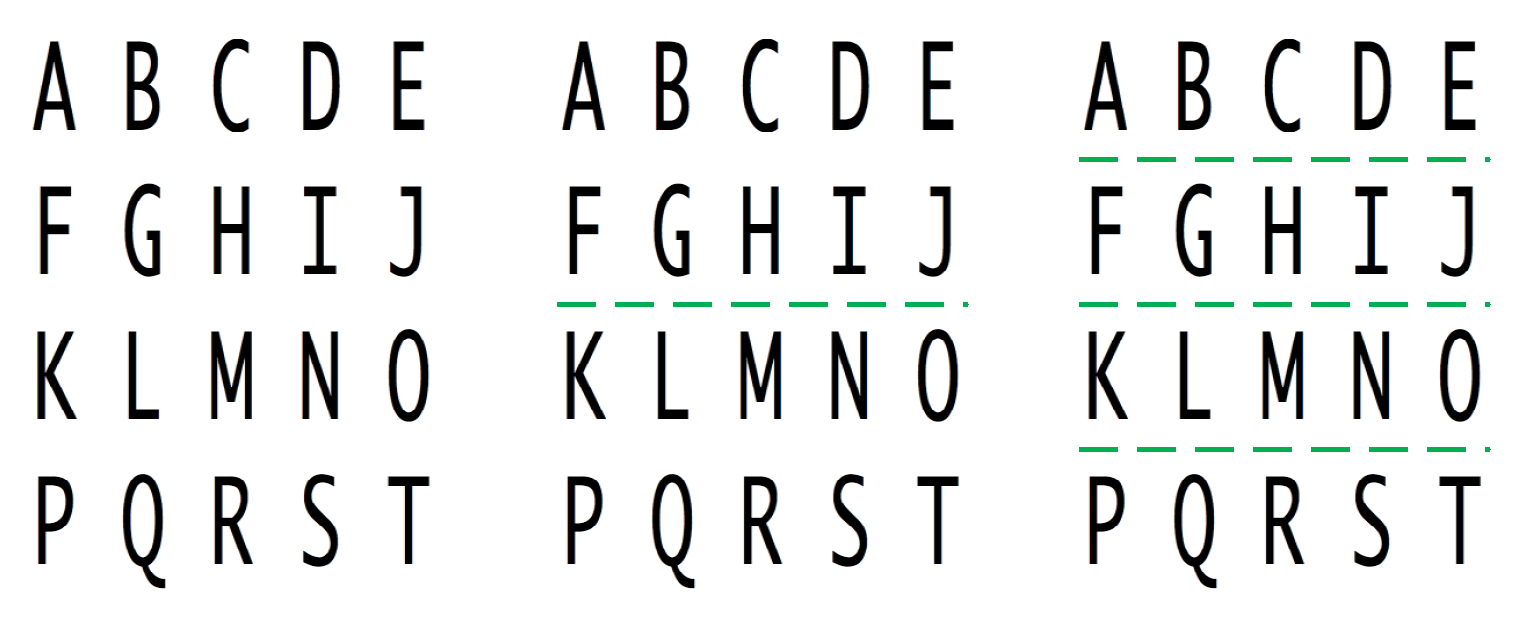
Optical Character Recognition is a kind of typical arbitrarily divisible application suitable for dynamic mobile computing environments. It is a common method to convert images of typed, handwritten or printed text into machine-encoded text, so that it can be electronically edited, searched, stored, and used in machine processes, such as machine translation and augmented reality. Figure 1 presents an example of partitioning an OCR image as the number of available resources changes. In the example, as the number of resources changes from one, to two, to four, the task is partitioned into one, two and four pieces; each piece is for one resource. In this example, we also assume the parameters of the resources are the same, thus the image is partitioned equally. If the parameters of the resources change to be not the same, the partition can be accordingly adjusted. Up to now, some networked computing systems have been reported to evaluate their performance by using OCR instances [36].
Figure 1. An example of an OCR image partition when the number of available resources is one (left), two (middle), and four (right).
A usage scenario for processing OCR application shown in Figure 1 is as follows. For example, when a group of people hang out together and one of them wants to recognize and translate a tourist guiding file in a foreign language into his/her native language, he or she may use a smart phone to take a picture of the file and then process it on the smart phone. When the size of the file is large, the recognition and translation process will take a long time and hurt the quality of experiences of the users. Assume that there are some computing devices in the vicinity that are connected through some wireless network and can work cooperatively; we can partition the picture into many pieces and send some of them to other available devices to process in parallel. In this way, the processing time will be much shorter and the quality of user experience will be much better.
In the OCR example illustrated in Figure 1, it is assumed that the partition of the OCR image is not completely arbitrary—it is nearly arbitrary, in that it is necessary to avoid partitioning the image across characters, to guarantee that different partition solutions can generate the same final result for the entire image.

3.2. Model and Algorithm for Offloading OCR-Like Applications

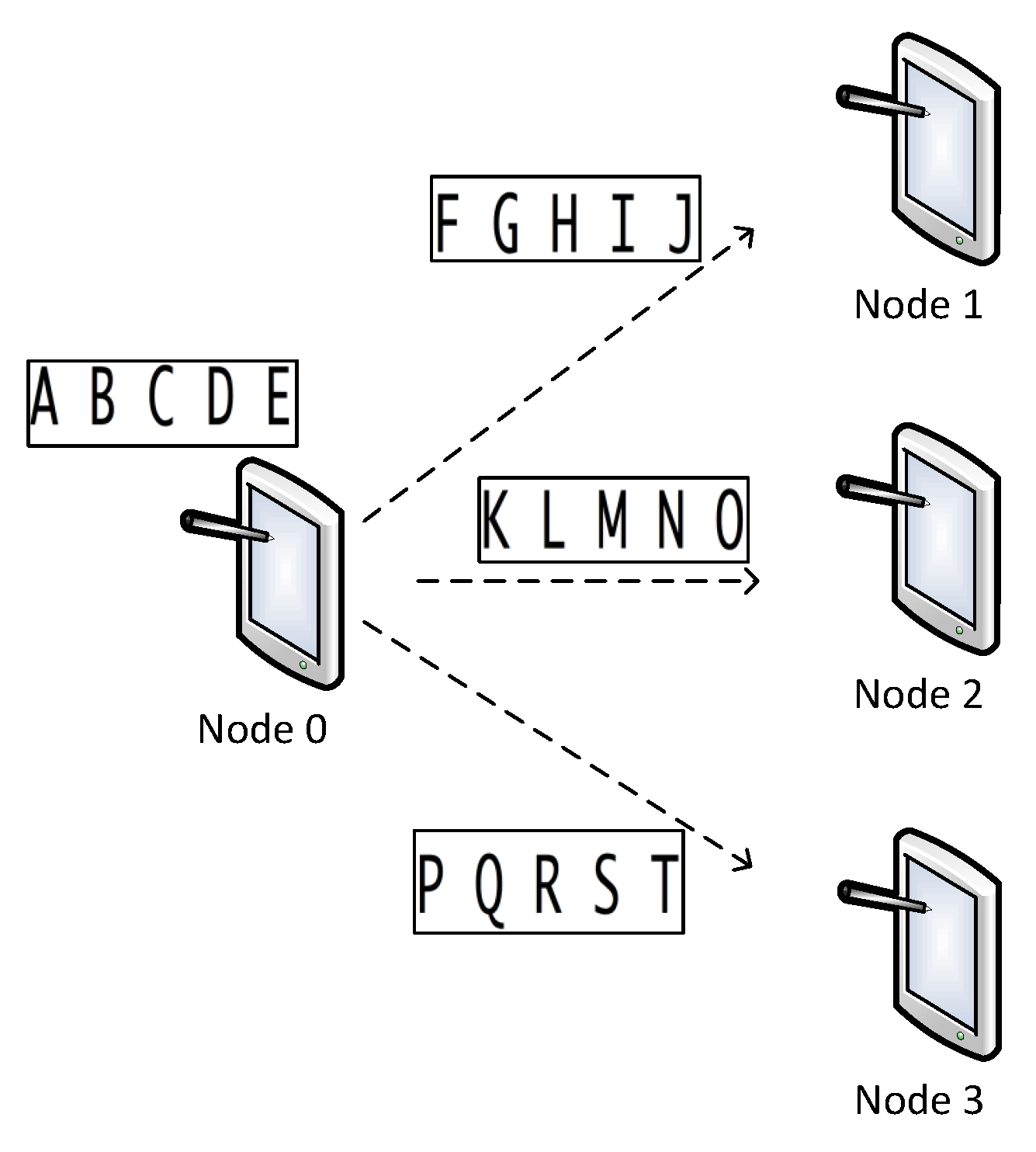
The computing environment to be considered here consists of one mobile client node and a set K of available resources (also known as surrogate nodes or edge servers), as shown in Figure 2. Without loss of generality, we assume that the nodes are indexed from 0 (the client node) to k = | K | . Assume the client node acquires an image as shown in Figure 1 and needs to convert it into text. The client node may process the image itself. However, it can also split the image into many fractions and distribute parts of them to the surrogate nodes to process.
Figure 2. An example of allocating the divisible OCR image in Figure 1 to process in a mobile edge computing environment consisting of one client (node 0) and three edge servers (nodes 1 to 3).
In order to make the best use of those available surrogate nodes, how to partition and allocate a divisible OCR image among the client node and the surrogate nodes to decrease the total completion time becomes an important problem. Notably, in Figure 1, the application is divided into equally sized fractions. However, this partition will result in poor performance for environments with heterogeneous processors and links. In the following, we will provide a mathematical model for this scheduling problem in heterogeneous environments. The notations and definitions that are used throughout this paper are shown in Table 2.
Table 2. Notations and definitions.
For a typical OCR image of x pixels, assume it is split into k + 1 horizontal (or vertical) slices with sizes x 0 , x 1 , , x k . For a slice with size x i , assume there is a linear function y i j = f j ( x i ) = a j x i + b j that can be used to estimate the processing time y i j when the slice is processed on node j. In this function, a j and b j are dependent on node j, not on x i , meaning that f j ( ) is determined by node j. Given the parameters of the nodes, the sizes of the slices, and the mapping of the slices to the nodes, we can calculate the processing time of every slice and the final completion time of the entire image.
When an OCR segment is processed on the client node, the completion time will be determined by the size of the segment x i , the start-up time F 0 and the computation capability of the node P 0 . Here, the start-up time is defined as a constant time interval needed to prepare for the processing of an OCR segment. For each node, its start-up time is constant, i.e., it will not change as the node processes different OCR images.
When an OCR segment is processed on a surrogate node, the entire process includes three phases:
(1)
The client node sends the OCR segment to the surrogate node;
(2)
After receiving the entire OCR segment, the surrogate node start processing the segment;
(3)
The surrogate node returns the result to the client node.
The entire completion time of the segment is the sum of processing time of the three phases.
In existing research, it is usually assumed that the client node distributes the load fractions to other nodes one by one. However, in this paper, as in [18], it is assumed that the client node is equipped with a front-end (also known as a communication co-processor) supporting collective communication model. After using the front-end, the client node may process its computation load and communicate with other nodes at the same time. By using this collective communication model, the client node can distribute/receive data from/to the surrogate nodes concurrently. For example, as soon as the partition decision is made, the client node may distribute the load fractions to corresponding nodes concurrently by using the broadcast model.
Assume there are k surrogates. For surrogate S i , i = 1 k , its computation capability is P i MIPS (millions of instructions per second), its start-up time is F i seconds, the bandwidth connecting to the client node is B i MB/s (megabyte per second), the round trip network latency is L i seconds, and the computation amount of the OCR segment is C i MI (millions of instructions). Considering the fact that the computation amount of recognizing an OCR image is usually linearly proportional to the size of the image, let D i = α C i , where α is defined as the ratio of size D i pixels of the image to its computation amount C i . For different OCR applications, α may change, depending on the image itself and the technologies for pro-processing, character recognition, and post-processing.
When scheduling divisible applications in distributed computing environments, the start-up costs in both the communication and computations times must be considered. Here, these overhead factors are considered as additive components. Assume the start-up cost in the computation time of node i is defined as F i . For the start-up cost in the communication time of the link between node 0 and node i, assume it is constant. Considering the fact that the network latency of the link between node 0 and node i is also regarded as a constant, we use L i to express the sum of the round trip latency and the start-up times of the link between node 0 and node i. In the following, for simplicity, we call L i the latency of the link, instead of calling it the sum of the latency and the start-up time of the link.
Given the information as above, when an OCR segment with computation amount C i is transferred from the client node to surrogate node S i to process, we can estimate the time needed in the three phases, and thus can estimate the entire processing time: In phase (1), the time needed will be the transmission time of the image plus the one way network latency, i.e., be D i / B i + L i / 2 = α C i / B i + L i / 2 ; In phase (2), the time needed will be the start-up time plus the recognition time of the OCR segment, i.e., be F i + C i / P i ; In phase (3), the time needed will be the transmission time of the result plus the one way network latency. Usually the result of an OCR application is in plain text and, compared with the size of the image, its size is very small. So, when calculating the time used to transfer the result, the size of the result will be neglected, and the time will be dominated by the one way network latency. So, the time needed for phase (3) can be expressed as L i / 2 .
Finally, assume an OCR application is processed in an opportunistic environment with one client node and k surrogate nodes. In order to process the application as soon as possible, the client node will partition and allocate the application to all available resources in a load balance way. Assuming all the results will be returned to the client node at the same time, we can get the following formula:
C 0 P 0 + F 0 = C 1 P 1 + α C 1 B 1 + F 1 + L 1 = C 2 P 2 + α C 2 B 2 + F 2 + L 2 = = C k P k + α C k B k + F k + L k
where C 0 + C 1 + + C k = C .
From Formula (1), following formula can be derived:
For i 1 k
C i P i + α C i B i + F i + L i = C i B i + α P i C i P i B i + F i + L i = ( B i + α P i ) C i P i B i + F i + L i = β i C i + F i + L i
where β i = ( B i + α P i ) / ( P i B i ) .
Considering Formulas (1) and (2), we have
C 0 = P 0 β i C i + P 0 ( F i + L i F 0 ) = γ i C i + δ i
C i = ( C 0 δ i ) / γ i
where γ i = P 0 β i and δ i = P 0 ( F i + L i F 0 ) .
Now, by introducing Formula (4) into C 0 + C 1 + + C k = C , we have
C 0 + C 1 + + C k = C 0 + ( C 0 δ 1 ) / γ 1 + ( C 0 δ 2 ) / γ 2 + + ( C 0 δ k ) / γ k
and
C 0 = C + ( δ 1 / γ 1 + δ 2 / γ 2 + + δ k / γ k ) 1 + 1 / γ 1 + 1 / γ 2 + + 1 / γ k
Finally, we have
m a k e s p a n = C 0 / P 0 + F 0 = C + ( δ 1 / γ 1 + δ 2 / γ 2 + + δ k / γ k ) P 0 ( 1 + 1 / γ 1 + 1 / γ 2 + . . . + 1 / γ k ) + F 0
where m a k e s p a n is defined as the time difference between the start and finish of the offloaded task.
Based on above models, Algorithm 1 was proposed here for partitioning a divisible OCR application among a group of resources.
Algorithm 1: Algorithm for adaptively partitioning and allocating a divisible OCR application.
input: Application Info: C , α
    Resource Info: P 0 , F 0 , P i , F i , B i , L i , i = 1 k
output: Offloading decision, C i , i = 0 k and makespan

 (1) Find out the number k of available resources and their parameters P i , F i , B i , L i , i = 1 k ;
 (2) Calculate and partition the task for the client node based on Formula (5);
 (3) Calculate and partition the task for each surrogate based on Formula (4);
 (4) Calculate the makespan based on Formula (6).
In the above theoretical analysis, the sizes of slices can be calculated by Formula (4). However, in some cases, if the image is partitioned exactly according to the resultant sizes, the boundary of slices may cross some characters. This will impact the final recognition result of the entire image. To avoid such cases, try to partition the image into slices according to the sizes in Formula (4), at the same time, do not cross characters. In practice, this can be implemented by considering the line spacing of the image and trying to make the size of the slices be as close as possible to the theoretical results.

4. Experiments and Results

In this section, we present a set of experiments to validate the mathematical model and to study the performance of the proposed algorithm in both simulation and real computing environments.

4.1. Simulation Environments

In simulation, it is assumed that the computing environment is composed of a mobile client node and some surrogate nodes in the vicinity, connected via wireless network. When an OCR task appears on the client node, the client node will try to find out the number and the parameters of available surrogates, and then, it will decide how to partition the task and allocate the subtasks to available surrogates, so as to make the maximum completion time of the subtasks as minimum as possible.
In simulation, it is assumed that the maximum number of available surrogate nodes is 5, and the parameters for the application and the nodes are listed in Table 3. For the surrogate nodes, their performance parameters, including the computation capacity ( P i ), the bandwidth to the client node ( B i ), and the network latency ( L i ), are random variables uniformly distributed in given ranges. In Table 3, U ( [ x 1 , x 2 , , x n ] ) represents a uniform distribution within x 1 , x 2 , to x n . For example, B i subjects to U ( [ 2 , 4 , 6 , 8 , 10 ] ) , meaning that the bandwidth from any one of those k surrogate nodes to the client node is chosen randomly and uniformly within 2, 4, 6, 8, and 10 MB/s. Since the parameters for every surrogate node are chosen independently, for different surrogate nodes, their parameters are also different. So, these variable parameters can be used to describe the characteristics of surrogate nodes in a dynamic computing environment. When all the parameters of the application and the resources are known, we can calculate the partition and the makespan based on the model and Formula in Section 3.
Table 3. Parameters for simulation.
In the following example, assume the processing capacity, bandwidth and network latency for the surrogates are [20 20 20 15 5] MIPS, [10 10 10 8 2] MB/s, and [0.5 0.5 0.5 0.4 0.1] second individually, i.e., for the ith surrogate, its processing capacity, bandwidth and latency are the value of the ith element of the vectors. For example, the processing capacity, bandwidth and latency of the first surrogate node are 20 MIPS, 10 MB/s, and 0.5 s individually.
In order to study the influence of the number of surrogate nodes on the partition of the task and the makespan, at first, the surrogate nodes were sorted decreasingly according to the value of γ in Formula (4). Then, assume the number of available surrogate nodes increases from zero (i.e., only the client node itself available), to one (i.e., only one surrogate node is available), and finally to five (i.e., all surrogate node are available).
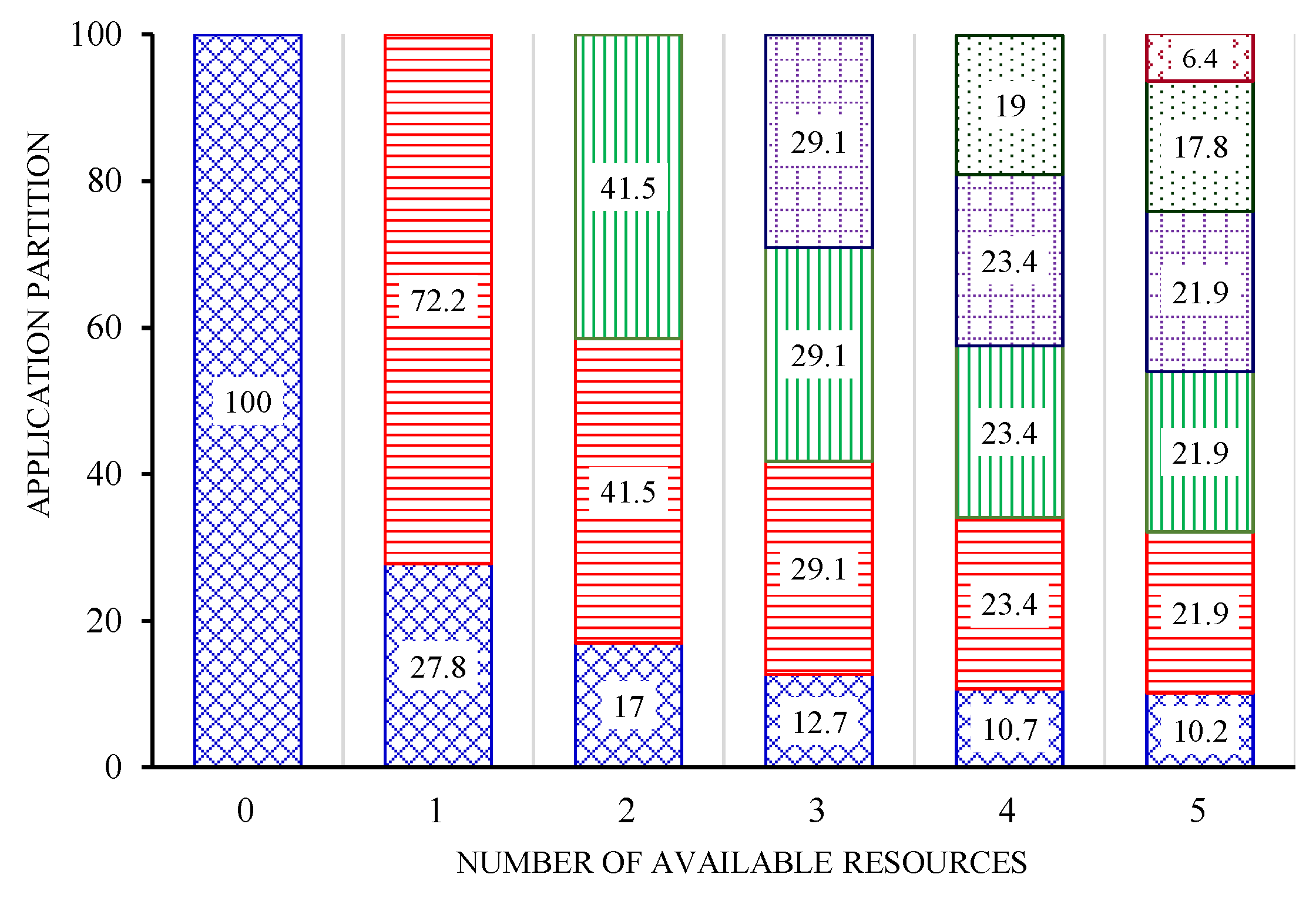
Figure 3 and Figure 4 present the partition and makespan results when different number of surrogates are available. In Figure 3, as the number of resource is 1, i.e., the client node itself, the whole application is allocated to the client node to execute, thus the amount of computation on the client node is 100 MI. In the second column, as the first surrogate becomes available and the number of resources increases to 2, the application is partitioned into two parts: 27.8 MI on the client node and 72.2 MI on the first surrogate. In the third column, as the second surrogate becomes available, the application is partitioned into three parts: 17 MI on the client node and 41.5 MI on each surrogate node. Here, because the two surrogates have the same parameters, this leads to the same partition for them. The partitions with other numbers of available resources are illustrated in corresponding columns. Finally, as the number of available resources increases to 6, we got the partition as shown in the last column.
Figure 3. An example of an OCR application partition against different number of available resources, without considering network latency.
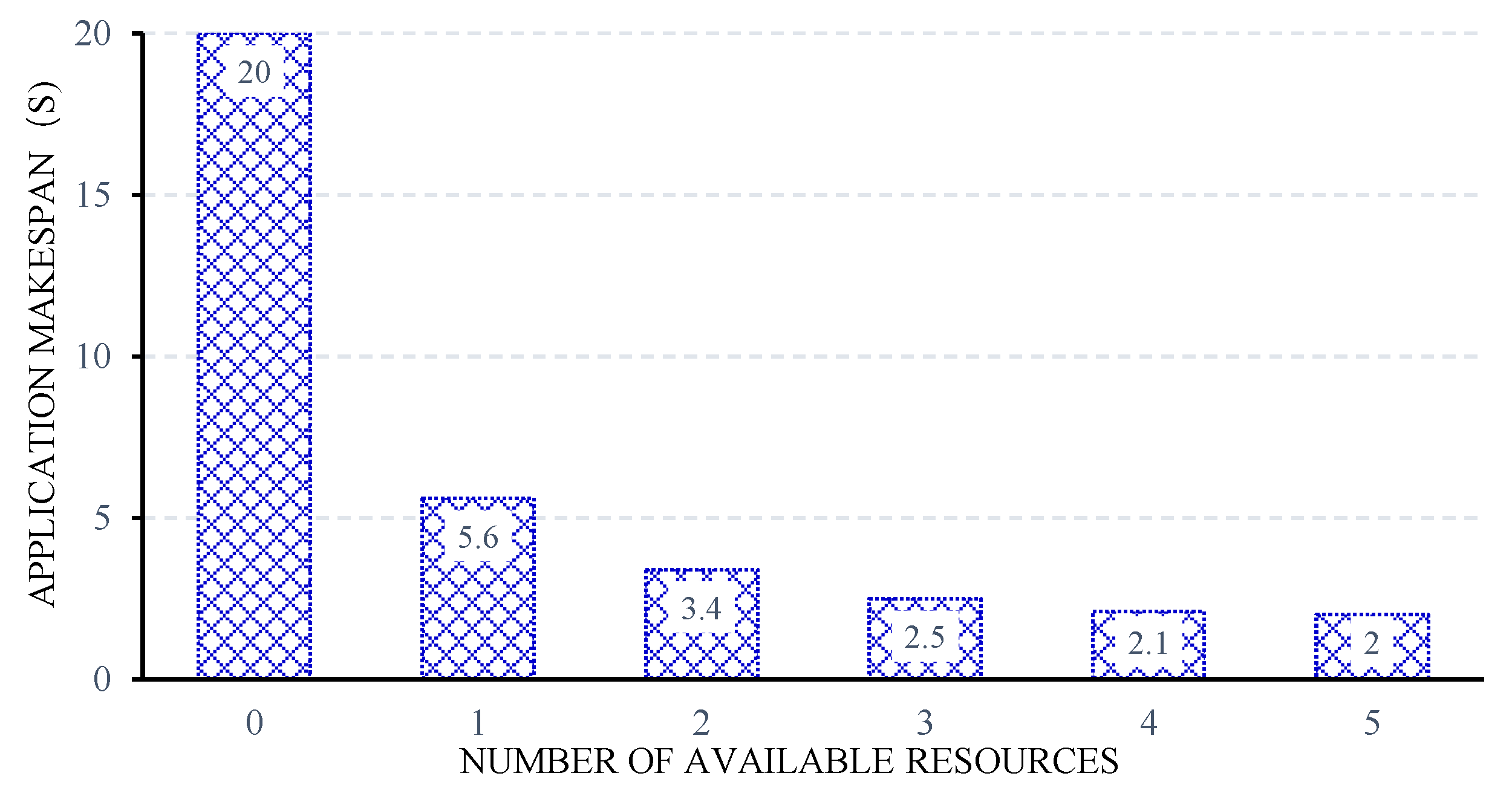
Figure 4. The makespan of the application executed on different number of available resources, without considering network latency.
Figure 4 presents the makespan results as the number of available resources changes. As can be seen, as the number of available resource increases, the makespan of the application will decrease. For each column, the makespan result is consistent with the corresponding partition result in Figure 3 divided by the processing capacity of the client node. This can be concluded based on Formula (6).

4.2. Real Experiments

A real experimental environment was built up to verify the feasibility and the performance of the model proposed in Section 3, in which an android phone acting as the client node, and another two laptops acting as the surrogate nodes, were connected via an 802.11b Wireless access point. The parameters of these devices are listed in Table 4.
Table 4. Real experimental environments.
In practice, in order to adopt the partition and allocation model to process a real OCR task, except for the size of the OCR image being known, any other parameters, including the computation amount of the task, and the parameters of the resources available (the computation capability, the bandwidth, and the latency) are deterministic. However, in real environment, it is not easy to predict them accurately. To handle this problem, a method that is a compromise is proposed as follows.
In the mathematical model in Section 3, it is assumed that, for a typical divisible OCR image, when it is partitioned into n (>1) segments of size x 1 , x 2 , to x n individually, and every segment is allocated to be processed on different resource, the completion time t i for the segment with size x i can be estimated by using a linear function, i.e.,
i = 0 k , t i = f i ( x i ) = a i x i + b i
Considering that the optimization object is to make the completion time of all the segments equal, the following equations can be constructed:
f i ( x i ) = f j ( x j ) , i , j 0 k
x = i = 0 k x i
By introducing Equation (7) into Equations (8) and (9), we can get:
x 0 = ( x i = 1 k b 0 b i a i ) / i = 0 k a 0 / a i
x i = a 0 x 0 / a i + ( b 0 b i ) / a i
t = a 0 x 0 + b 0
where x 0 is the size of sub image processed on the client node, and x i the size on the ith resource available, and t the completion time of the task.
For the method as above, how to get the value of a i in Equation (7) is the most important step. In practice, a group of OCR files can be used as training files and processed on every available resource. In this way, a i can be statistically calculated. After this training process, when a new OCR task arrives, we can partition and allocate it to available resources according to Equations (10) and (11), and estimate its completion time according to Equation (12).
In experiments, a set of training tasks were firstly processed on every resource. Assume the size of the OCR images ranges from 100 × 100 to 500 × 500 pixels. At first, these images are recognized on the smart phone, and their completion times were recorded. Then these images were transferred individually from the smart phone to the other two laptops to process, and the time points at which the results returning to the smart phone were recorded as the completion time. Finally, it is statistically found that t 0 = 0.19 x + 2850 , t 1 = 0.072 x + 1890 and t 2 = 0.039 x + 1630 , in which x representing the size of an OCR image, and t 0 , t 1 , and t 2 representing the completion time of recognizing the image on the smart phone, on surrogate 1 and on surrogate 2 individually.
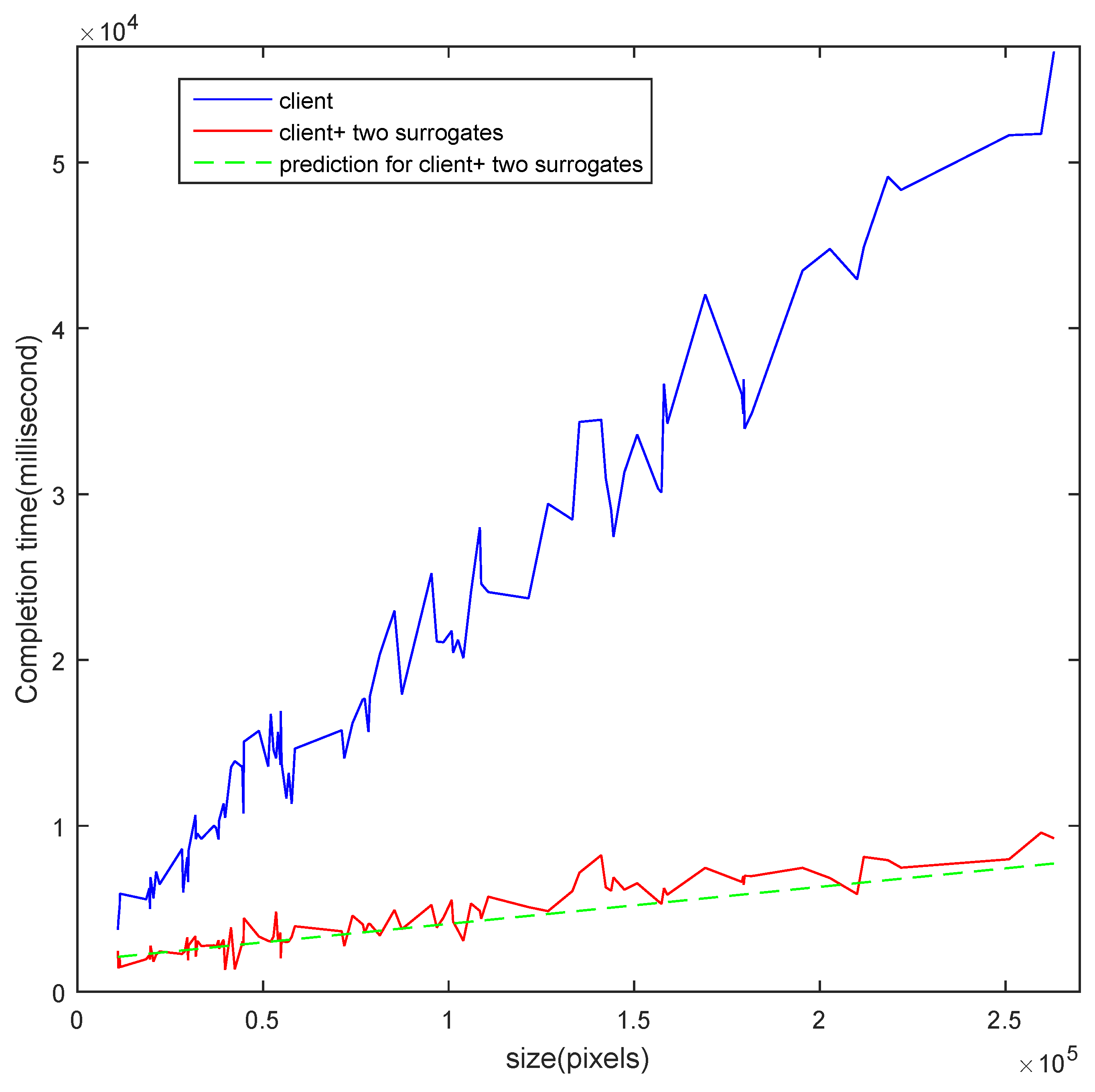
After predicting, as a new OCR task arrives at the smart phone, the scheduler will decide how to partition and allocate the task according to Equations (10) and (11). Figure 5 presents the completion time of the OCR tasks with sizes ranging from 100 × 100 to 500 × 500 pixels. When the tasks were executed only on the smart phone, as the sizes of the tasks increase, their makespan increases quickly (see the blue curve). However, when another two laptops were used for processing, we can partition the tasks according to Equations (10) and (11), and predict their makespan according to Equation (12) (see the dashed green curve). Finally, the actual makespans of the tasks are illustrated in the red curve. As can be seen, when another two surrogate nodes are used for processing, the completion time of the OCR images become much lower.
Figure 5. The makespan of the adaptive partition and allocation algorithm against the size of the tasks.
In addition, in Figure 5, as the sizes of the images increase, generally speaking, the actual makespan results in the red curve and the blue one increase linearly. However, this linearity cannot be guaranteed for every instance. This phenomenon can be explained as follows: for an OCR image, the processing requirement is related not only to the size of the image, but also to the complexity of the processing needed. If the size of the OCR image increases and the complexity of the processing needed decreases, the completion time may decrease. So, as the size of the images increase from small to large, the completion time is expected to increase linearly with fluctuation.

5. Conclusions

In this paper, OCR applications, as typical of divisible applications, were considered to be processed in a computing environment consisting of a group of mobile devices connected with single level star topology wireless network. By using the proposed scheduling model, the load of a divisible application can be partitioned and allocated based on both the communication and computation costs, so that the final completion time of the whole application can be made as short as possible. Based on the results of both the simulations and real experiments, it can be seen that the model proposed is very effective and practical for partitioning and allocating divisible applications in opportunistic computing environments. This model can be extended for scheduling divisible applications in other similar computing environments.
In this study, we focus on the benefit of offloading in terms of completion time, without considering the energy consumption that may be incurred. In future work, energy consumption can also be considered as an important factor for making offloading decisions.

Author Contributions

B.L., M.H., W.W. and G.J. conceived and designed the experiments; B.L. and M.H. performed the experiments, analyzed the data; W.W., A.K.S. and G.J. contributed analysis tools; B.L. and M.H. wrote the paper.

Acknowledgments

This work was partially supported by National Natural Science Foundation of China (No. 61562092, 61463049).

Conflicts of Interest

The authors declare no conflict of interest. The founding sponsors had no role in the design of the study; in the collection, analyses, or interpretation of data; in the writing of the manuscript, and in the decision to publish the results.

Abbreviations

The following abbreviations are used in this manuscript:
MECMobile Edge Computing
OCROptical Character Recognition
IoTthe Internet of Things

References

  1. Balan, R.; Flinn, J.; Satyanarayanan, M.; Sinnamohideen, S.; Yang, H.I. The case for cyber foraging. In Proceedings of the 10th Workshop on ACM SIGOPS European Workshop, Saint-Emilion, France, 1 July 2002; ACM: New York, NY, USA, 2002; pp. 87–92. [Google Scholar]
  2. Li, B.; Pei, Y.; Wu, H.; Shen, B. Heuristics to allocate high-performance cloudlets for computation offloading in mobile ad hoc clouds. J. Supercomput. 2015, 79, 3009–3036. [Google Scholar] [CrossRef]
  3. Abolfazli, S.; Sanaei, Z.; Ahmed, E.; Gani, A.; Buyya, R. Cloud-based augmentation for mobile devices: Motivation, taxonomies, and open challenges. IEEE Commun. Surv. Tutor. 2014, 16, 337–368. [Google Scholar] [CrossRef]
  4. Lee, B.D.; Lim, K.H.; Choi, Y.H.; Kim, N. An adaptive computation offloading decision for energy-efficient execution of mobile applications in clouds. IEICE Trans. Inf. Syst. 2014, 97, 1804–1811. [Google Scholar] [CrossRef]
  5. Mao, Y.; You, C.; Zhang, J.; Huang, K.; Letaief, K. A Survey on Mobile Edge Computing: The Communication Perspective. IEEE Commun. Surv. Tutor. 2017, 19, 2322–2358. [Google Scholar] [CrossRef]
  6. Chen, M.; Hao, Y. Task Offloading for Mobile Edge Computing in Software Defined Ultra-dense Network. IEEE J. Sel. Areas Commun. 2018. [Google Scholar] [CrossRef]
  7. Lewis, G.A.; Echeverria, S.; Simanta, S.; Bradshaw, B.; Root, J. Cloudlet-based cyber-foraging for mobile systems in resource-constrained edge environments. In Proceedings of the ICSE Companion 2014 Companion Proceedings of the 36th International Conference on Software Engineering, Hyderabad, India, 31 May–7 June 2014; pp. 412–415. [Google Scholar]
  8. Bonomi, F.; Milito, R.; Zhu, J.; Addepalli, S. Fog Computing and Its Role in the Internet of Things. In Proceedings of the First Edition of the MCC Workshop on Mobile Cloud Computing (MCC ’12), Helsinki, Finland, 17 August 2012; ACM: New York, NY, USA, 2012; pp. 13–16. [Google Scholar] [CrossRef]
  9. Neto, J.; Yu, S.; Macedo, D.; Nogueira, J.; Langar, R.; Secci, S. ULOOF: A User Level Online Offloading Framework for Mobile Edge Computing. IEEE Trans. Mob. Comput. 2018. [Google Scholar] [CrossRef]
  10. Giatsoglou, N.; Ntontin, K.; Kartsakli, E.; Antonopoulos, A.; Verikoukis, C. D2D-Aware Device Caching in mmWave-Cellular Networks. IEEE J. Sel. Areas Commun. 2017, 35, 2025–2037. [Google Scholar] [CrossRef]
  11. Datsika, E.; Antonopoulos, A.; Zorba, N.; Verikoukis, C. Software Defined Network Service Chaining for OTT Service Providers in 5G Networks. IEEE Commun. Mag. 2017, 55, 124–131. [Google Scholar] [CrossRef]
  12. Antonopoulos, A.; Kartsakli, E.; Perillo, C.; Verikoukis, C. Shedding Light on the Internet: Stakeholders and Network Neutrality. IEEE Commun. Mag. 2017, 55, 216–223. [Google Scholar] [CrossRef]
  13. Liu, J.; Ahmed, E.; Shiraz, M.; Gani, A.; Buyya, R.; Qureshi, A. Application partitioning algorithms in mobile cloud computing: Taxonomy, review and future directions. J. Netw. Comput. Appl. 2015, 48, 99–117. [Google Scholar] [CrossRef]
  14. Liu, L.; Chang, Z.; Guo, X.; Mao, S.; Ristaniemi, T. Multiobjective Optimization for Computation Offloading in Fog Computing. IEEE Internet Things J. 2018, 5, 283–294. [Google Scholar] [CrossRef]
  15. Wu, H. Multi-Objective Decision-Making for Mobile Cloud Offloading: A Survey. IEEE Access 2018, 6, 3962–3976. [Google Scholar] [CrossRef]
  16. Huang, C.M.; Chiang, M.S.; Dao, D.T.; Su, W.L.; Xu, S.; Zhou, H. V2V Data Offloading for Cellular Network Based on the Software Defined Network (SDN) Inside Mobile Edge Computing (MEC) Architecture. IEEE Access 2018, 6, 17741–17755. [Google Scholar] [CrossRef]
  17. Camp, T.; Boleng, J.; Davies, V. A survey of mobility models for ad hoc network research. Wirel. Commun. Mob. Comput. 2002, 2, 483–502. [Google Scholar] [CrossRef]
  18. Suresh, S.; Kim, H.; Run, C.; Robertazzi, T.G. Scheduling nonlinear divisible loads in a single level tree network. J. Supercomput. 2012, 61, 1068–1088. [Google Scholar] [CrossRef]
  19. Wang, K.; Robertazzi, T.G. Scheduling divisible loads with nonlinear communication time. IEEE Trans. Aerosp. Electron. Syst. 2015, 51, 2479–2485. [Google Scholar] [CrossRef]
  20. Bharadwaj, V.; Ghose, D.; Robertazzi, T. Divisible load theory: A new paradigm for load scheduling in distributed systems. Clust. Comput. 2003, 6, 7–17. [Google Scholar] [CrossRef]
  21. Suresh, S.; Omkar, S.N.; Mani, V. Parallel implementation of back-propagation algorithm in networks of workstations. IEEE Trans. Parallel Distrib. Syst. 2005, 16, 24–34. [Google Scholar] [CrossRef]
  22. Othman, S.G.M. Comprehensive Review on Divisible Load Theory: Concepts, Strategies, and Approaches. Math. Probl. Eng. 2014, 2014, 460354. [Google Scholar]
  23. Beaumont, O.; Casanova, H.; Legrand, A.; Robert, Y.; Yang, Y. Scheduling divisible loads on star and tree networks: Results and open problems. IEEE Trans. Parallel Distrib. Syst. 2005, 16, 207–218. [Google Scholar] [CrossRef]
  24. Li, X.; Liu, X.; Kang, H. Sensing workload scheduling in sensor networks using divisible load theory. In Proceedings of the IEEE GLOBECOM 2007, Washington, DC, USA, 26–30 November 2007; pp. 785–789. [Google Scholar]
  25. Redondi, A.; Cesana, M.; Tagliasacchi, M.; Filippini, I.; Dán, G.; Fodor, V. Cooperative image analysis in visual sensor networks. Ad Hoc Netw. 2015, 28, 38–51. [Google Scholar] [CrossRef]
  26. Zhu, T.; Wu, Y.; Yang, G. Scheduling divisible loads in the dynamic heterogeneous grid environment. In Proceedings of the 1st International Conference on Scalable Information Systems, Hong Kong, China, 1 June 2006; Volume 152, p. 8. [Google Scholar]
  27. Hu, M.; Luo, J.; Veeravalli, B. Optimal provisioning for scheduling divisible loads with reserved cloud resources. In Proceedings of the 2012 18th IEEE International Conference on Networks, Singapore, 12–14 December 2012; pp. 204–209. [Google Scholar]
  28. Lin, W.; Liang, C.; Wang, J.Z.; Buyya, R. Bandwidth-aware divisible task scheduling for cloud computing. Softw. Pract. Exp. 2014, 44, 163–174. [Google Scholar] [CrossRef]
  29. Khan, L.I.L. Implementation and performance evaluation of a scheduling algorithm for divisible load parallel applications in a cloud computing environment. Softw. Pract. Exp. 2015, 45, 765–781. [Google Scholar]
  30. Abdullah, M.; Othman, M. Cost-based multi-QoS job scheduling using divisible load theory in cloud computing. Procedia Comput. Sci. 2013, 18, 928–935. [Google Scholar] [CrossRef]
  31. Veeravalli, B.; Viswanadham, N. Suboptimal solutions using integer approximation techniques for scheduling divisible loads on distributed bus networks. IEEE Trans. Syst. Man Cybern. Part A Syst. Humans 2000, 30, 680–691. [Google Scholar] [CrossRef]
  32. Li, X.; Bharadwaj, V.; Ko, C. Divisible load scheduling on single-level tree networks with buffer constraints. IEEE Trans. Aerosp. Electron. Syst. 2000, 36, 1298–1308. [Google Scholar]
  33. Veeravalli, B.; Li, X.; Ko, C.C. On the influence of start-up costs in scheduling divisible loads on bus networks. IEEE Trans. Parallel Distrib. Syst. 2000, 11, 1288–1305. [Google Scholar] [CrossRef]
  34. Li, X.; Veeravalli, B. PPDD: Scheduling multi-site divisible loads in single-level tree networks. Clust. Comput. 2010, 13, 31–46. [Google Scholar] [CrossRef]
  35. Abdullah, M.; Othman, M. Scheduling Divisible Jobs to Optimize the Computation and Energy Costs. Int. J. Eng. Sci. Invent. 2015, 4, 27–33. [Google Scholar]
  36. Yang, K.; Ou, S.; Chen, H.H. On effective offloading services for resource-constrained mobile devices running heavier mobile Internet applications. IEEE Commun. Mag. 2008, 46, 56–63. [Google Scholar] [CrossRef]

Article Metrics

Citations

Article Access Statistics

Multiple requests from the same IP address are counted as one view.