1. Introduction
Electric mobility represents not only a technological transition, but also an educational and societal challenge. As electric vehicles increasingly shape everyday mobility, the long-term success of this transformation depends not only on advances in vehicle technology, infrastructure, and energy systems, but also on the development of early system understanding and acceptance among future users and engineers. Core concepts such as vehicle kinematics, energy flows, charging processes, and system interactions form the foundation of informed use. They also support later professional engagement with electric mobility.
Within this context, educational research that systematically describes and reflects hands-on learning formats is directly relevant to the electric vehicle research community. It contributes to the development of early engineering literacy. At the same time, it complements traditional EV research by addressing how complex vehicle systems can be meaningfully introduced at an early educational stage.
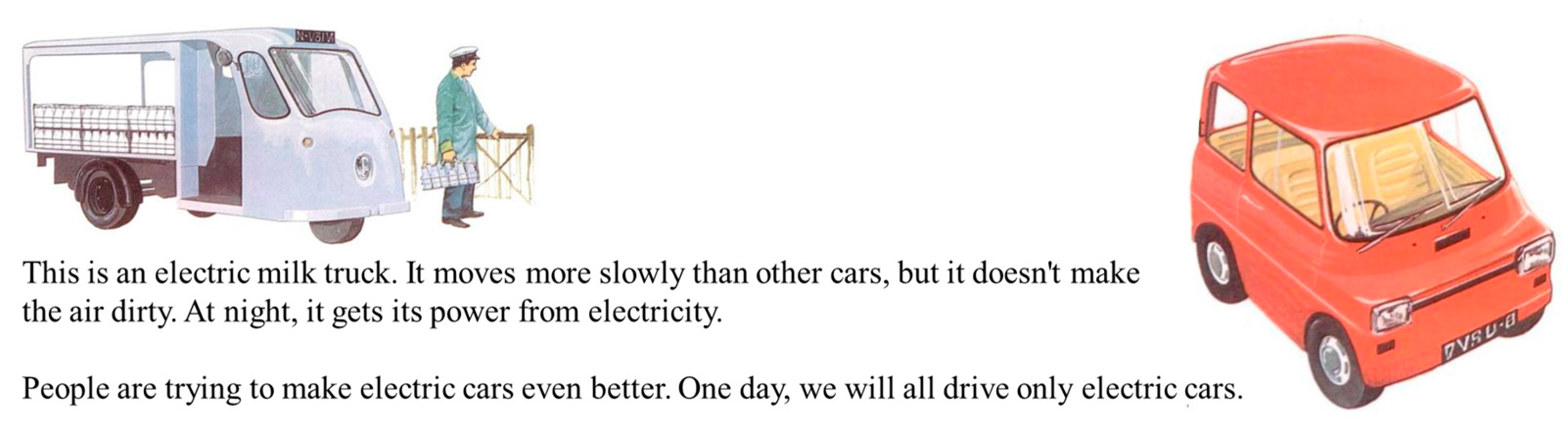
The topic of energy and mobility was already introduced to children in the 1970s under the title Electricity, a children’s book [
1]. In addition to everyday devices such as electric stoves, televisions, and batteries, it notably also features an example of electric mobility, see
Figure 1.
Building on this historical perspective, the present article extends and further develops the concepts first presented in the author’s contribution to the 38th Electric Vehicle Symposium and Exhibition (EVS38) in Gothenburg, Sweden [
2]. In that contribution, the foundations of the eMobility for Kids (eM4K) workshop were introduced. The present work expands these findings through refined didactic design considerations and new empirical insights collected between 2024 and 2025.
As early as 1972, electric driving was presented in [
1] to children as the mobility of the future! The book highlights key advantages such as lower emissions and the ability to charge overnight while also pointing out the technological development still required.
For educators—whether in schools, at the school-to-university transition, or in the context of inspiring future generations to pursue technical degree programs—this raises an important question: how can we spark school students’ enthusiasm for a new kind of mobility? From the perspective of the automotive industry and future customer segments, a related question arises: could school students form a new market for light electric vehicles operable from the age of 15?
1.1. Comparable Activities in the Context of This Topic
Construction-based learning (CBL), in which learners build physical devices as part of the conceptual learning process, has been the subject of research for several decades. A widely cited contribution to the field of hands-on, construction-based learning is the work of Resnick and Silverman from the MIT Media Lab. In their paper “Some Reflections on Designing Construction Kits for Kids” [
3], the authors formulate a set of ten key principles for the design of effective construction kits, such as LEGO Mindstorms and other programmable modular systems. These principles emphasize that children learn most effectively when they are able to build tangible artifacts. Through step-by-step testing and refinement of their ideas, they engage in a process of shared exploration and collaboration with peers. Resnick and Silverman highlight that well-designed construction kits enable multiple modes of engagement. These include hands-on manipulation of physical components, creative problem-solving, teamwork, and the development of personal ownership over a project. They further argue that construction kits are most effective when they combine simplicity and modularity with expandability. This allows learners to progress from basic assemblies to increasingly complex designs.
Santos Sánchez-Cambronero et al. [
4] present a similar construction-oriented, project-based learning format in which high-school students design, assemble, and test bridge structures using modular construction kits. Their study demonstrates that engaging learners in multidisciplinary, hands-on engineering tasks significantly increases motivation and conceptual understanding. It also enhances students’ interest in technical fields. These tasks include structural design, component assembly, teamwork, and performance testing. The authors emphasize that authentic construction projects provide a powerful link between classroom theory and tangible engineering practice.
Several organizations facilitate STEM (Science, Technology, Engineering, and Mathematics) workshops for children and adolescents. The non-profit organization FIRST
® (For Inspiration and Recognition of Science and Technology), founded in 1989 in Manchester, New Hampshire, is one of the world’s largest providers of hands-on STEM learning programs. FIRST engages young people in team-based engineering challenges in which participants design, build, and operate functional robots within structured competitions. In the 2023–2024 season, the organization reached over 785,000 students worldwide, supported by thousands of volunteer mentors and industry partners [
5]. These large-scale construction- and design-oriented activities provide strong evidence for the effectiveness of collaborative making and engineering challenges. They can significantly strengthen students’ motivation and interest in technical fields. This insight directly aligns with the educational goals of the eM4K workshop.
Another relevant example is the VDIni-Club initiative [
6], operated by the Association of German Engineers (VDI). Aimed at children aged 4 to 12 years, the initiative promotes early interest in technology and the natural sciences through playful activities involving experiments, building tasks, and cooperative projects. The VDIni-Club therefore provides an early foundation that can later be expanded through more advanced STEM workshops.
Collectively, these insights form the pedagogical foundations of the eMobility for Kids workshop. A hands-on, team-based construction process is intended to deepen technical understanding. It also fosters motivation, creativity, and confidence in working with mechanical and electrical systems.
1.2. Further Design Considerations for the Learning Format eM4K
Many years of experience within the author team in providing technical education for children and adolescents demonstrate that hands-on experimentation is highly effective. It helps to lower barriers and fosters a personal connection to the world of technology. Motorized vehicles for children involve a certain degree of structural complexity, both in design and assembly. For this reason, the teaching and learning format of eM4K was designed from the outset to target students aged 12 to 15 years. This pedagogically coherent age range reduces developmental variability compared to broader school samples while still allowing exploratory observation rather than standardized learning assessments. Due to the short workshop format and the remaining heterogeneity of participant groups, statistically validated learning gains were not feasible within the scope of this study. This includes approaches such as pre- and post-testing or effect-size analyses. Additionally, due to logistical considerations, the initial implementation phase was structured as a two-day “mini block week” scheduled during school holidays in the German state of Baden-Württemberg.
According to the principles outlined in [
7], science education should build upon the existing conceptions and prior knowledge that learners bring with them into the classroom. One of the key objectives of the eM4K learning workshop is to connect with school students’ everyday and school-based understandings of mobility. These existing conceptions are then explicitly developed further within the workshop framework. In doing so, school textbooks from the state of Baden-Württemberg are used as a reference point [
2]. The workshop eM4K is designed as a hands-on project-based format that integrates subject-specific instructional sequences. Participants are encouraged to recognize the value of energy in the context of mobility and to collaboratively interpret and implement vehicle assembly instructions. They also engage—often for the first time—with both practical and theoretical aspects of vehicle kinematics.
Based on the authors’ experience, further considerations indicate also that a purely class-lecture-based format can sustain school student engagement for no more than approximately two hours within a day-long program. Even with the integration of interactive sequences and multimedia elements such as videos, participants struggle to maintain attention over longer periods.
Experience shows that inquiry-based teaching and learning methods tend to be more suitable for university students. One such application, implemented as a module in a master’s program in Electromobility, is described in [
8]. This module focuses on the use of simulation tools to model the longitudinal dynamics of electric vehicles. The activities are conducted either in on-site computer labs or through online instruction at home within the framework of research-oriented learning.
Within the eM4K learning workshop, establishing strong references to the structure and content of physics education, as presented in school media, is therefore regarded as a key component [
2].
1.3. Framework of the Learning Workshop Theme
Following the preliminary considerations, the modular kits from the manufacturer Infento [
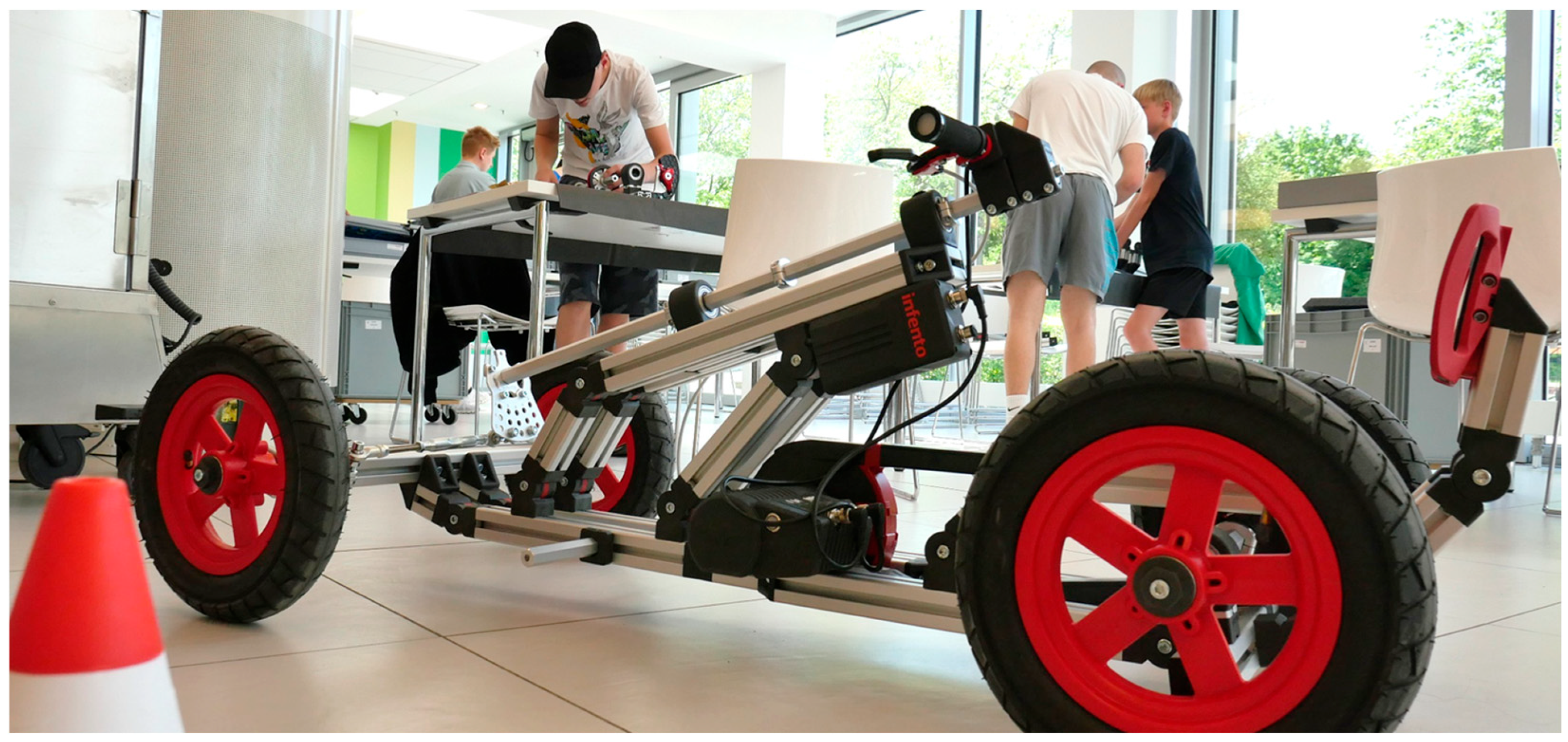
9] were selected. Infento offers a range of vehicle kits suitable for STEM education from the age of 10 onwards. For the eM4K workshop, four kits of the so-called electric “Hot Rod Edu” were purchased (
Figure 2). The vehicle is equipped with a lithium-ion cylindrical cell battery module with a nominal voltage of 22.2 V and an energy capacity of 88.8 Wh. The Brushless Direct Current (BLDC) electric motor provides a nominal torque of 20 Nm at 110 rpm. A twist-grip throttle transmits the driver’s propulsion request to the motor control unit. One of the rear wheels is driven via a toothed belt drive. Braking is provided by a mechanically actuated disc brake mounted on the rear axle and operated by means of a hand lever and Bowden cable, similar to that of a motorcycle. Suspension and ride comfort are achieved primarily through the air-filled rubber tires.
As shown clearly in
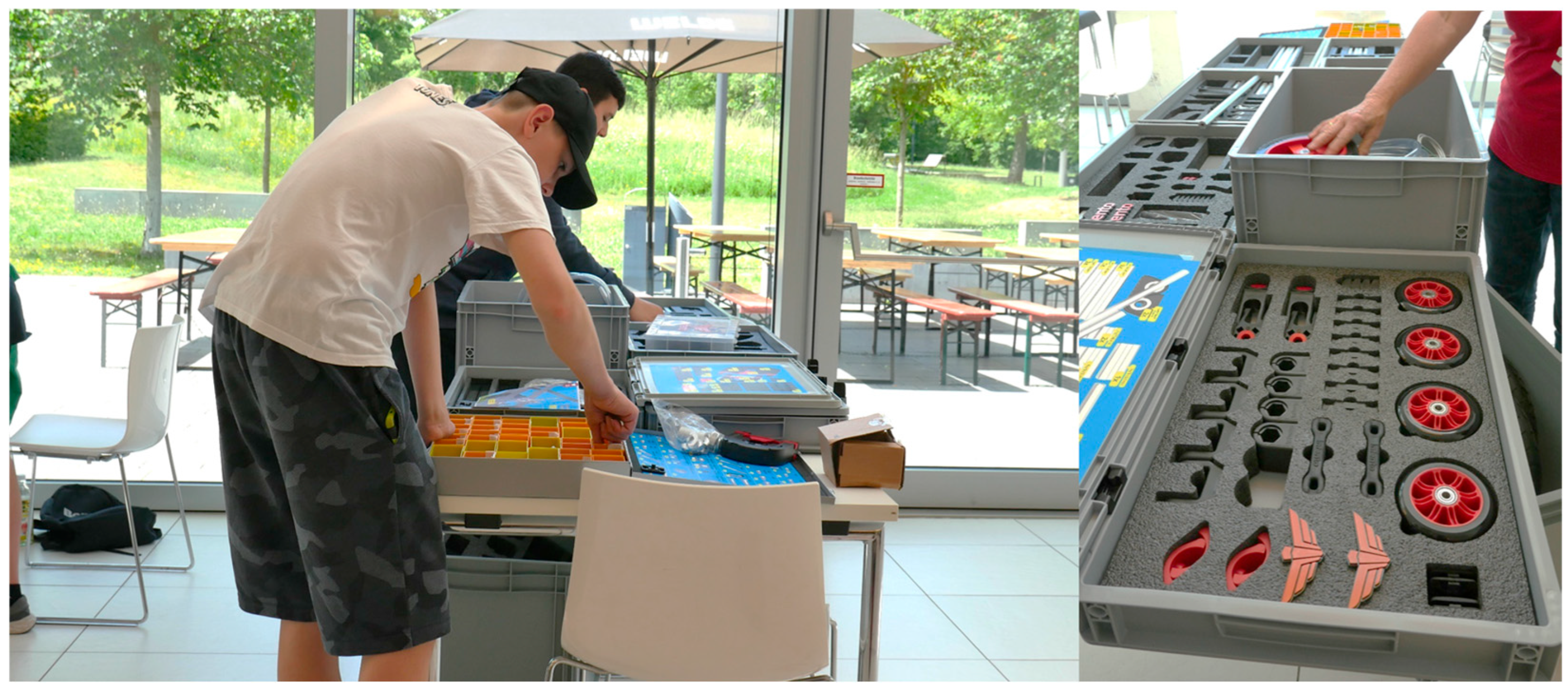
Figure 2, components such as the frame, the steering column, and the front axle are made from standardized modular profiles and are assembled in parallel by different team members. The battery is mounted on the steering column. The electric motor, which is attached to the frame, is installed at the end of the assembly sequence. One fully assembled vehicle serves as a reference model during the construction process. Three additional vehicles are available as kits, with all parts pre-sorted into component kit boxes (see
Figure 3).
The component kit boxes contain clearly identifiable individual parts, organized in a way that is easy for school students to recognize. Also included are assembly instruction manuals designed to enable the modular, kit-based construction of the vehicles. The vehicles are assembled over two days by three teams, each consisting of four school students. Each team is supported by three university students acting as mentors while two additional university staff members assist with organizational matters.
These staff members also deliver accompanying lecture segments in the students’ lab. They pay particular attention to the development of student competencies in communication and collaboration as integral aspects of problem-solving.
The learning workshop is conducted either in the university’s main cafeteria or in the auditorium, both of which are available during designated holiday periods. Practical driving tests are performed outdoors on the university campus when weather conditions permit, and are relocated to indoor facilities in the event of rain.
2. Operational Phase of the Learning Workshop
Between 2023 and 2025, the eM4K learning workshops were conducted three times per year. In addition, the fully assembled STEM learning electric vehicles were showcased during outreach events, where visiting students were able to test-drive them. The current structure of the format (see
Table 1 and
Table 2) seems suitable and begins on Day 1 with the setup of the component kit boxes and the reference vehicle at the workshop venue.
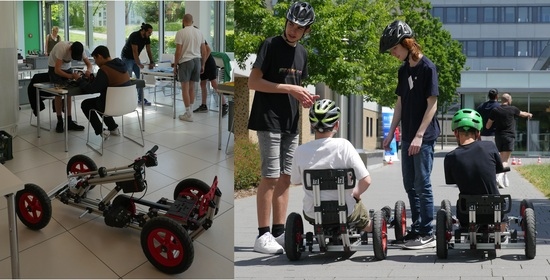
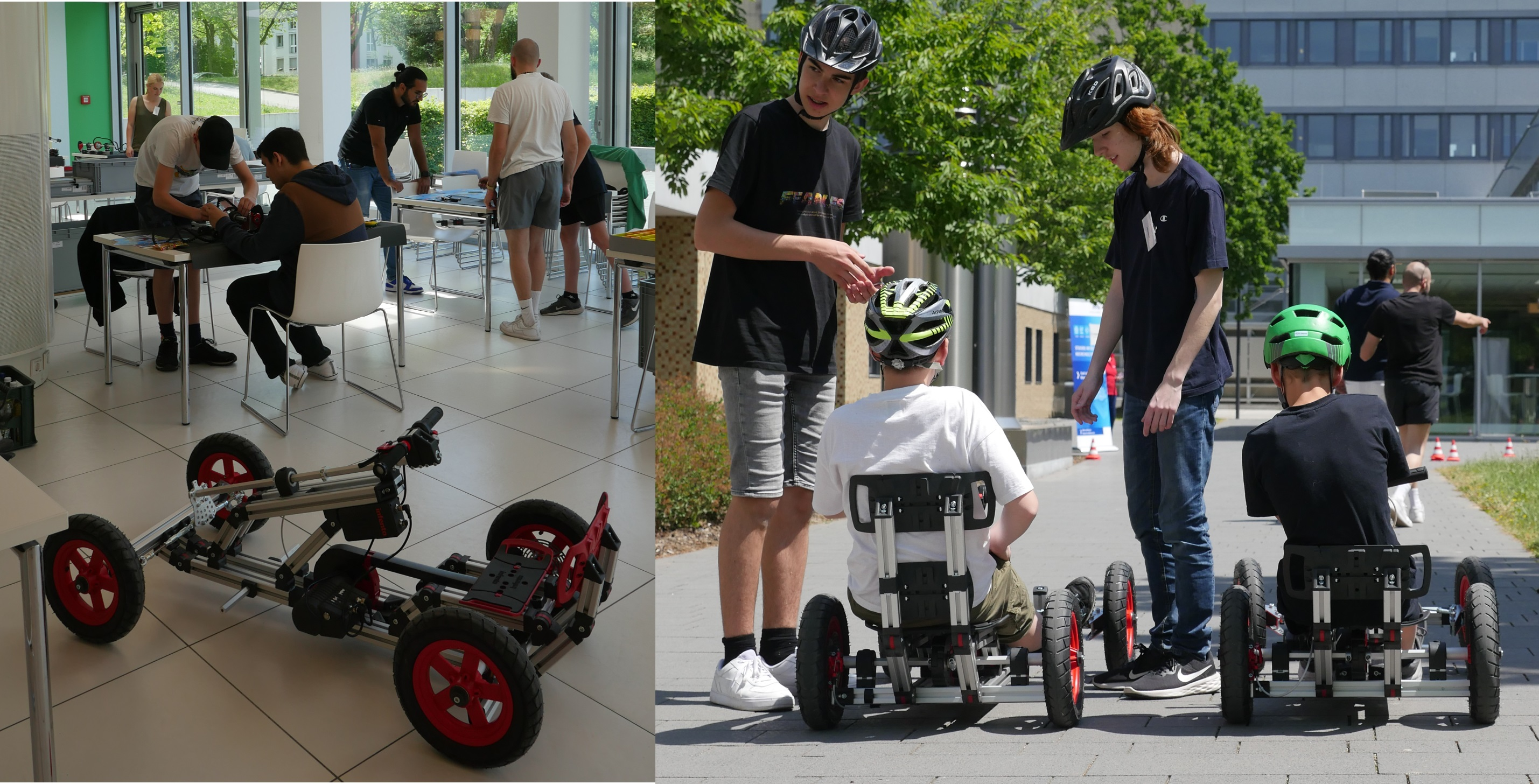
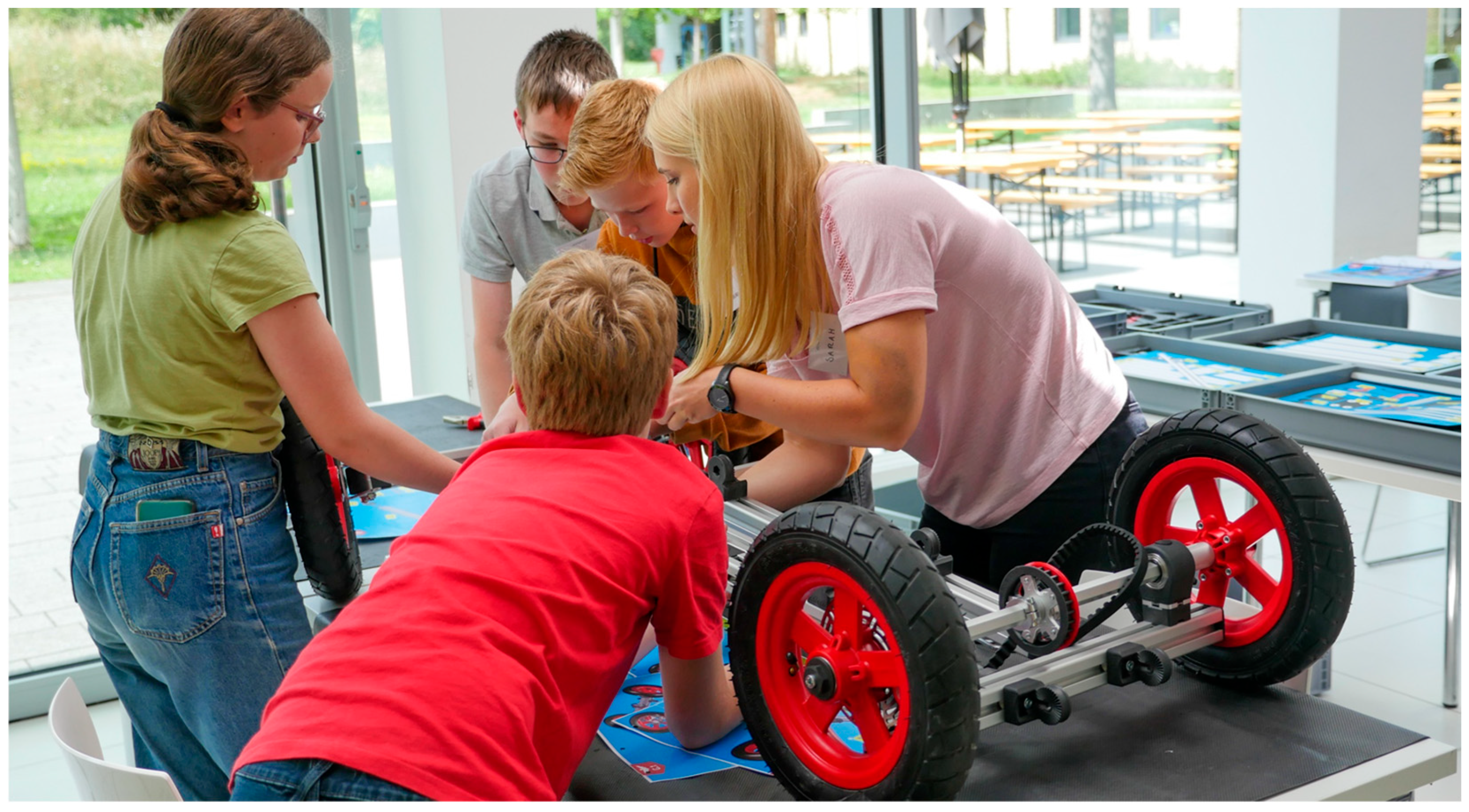
A scene of the supervised vehicle assembly is provided in
Figure 4. Another essential component of the eM4K format is the so-called Education Studio. This dedicated event space hosts the introductory lecture on the “History of Electromobility” (No. 2), the instructional unit on simplified “Vehicle Kinematics” (No. 5), and the lecture on “Power, Energy, and Charging” (No. 9).
In
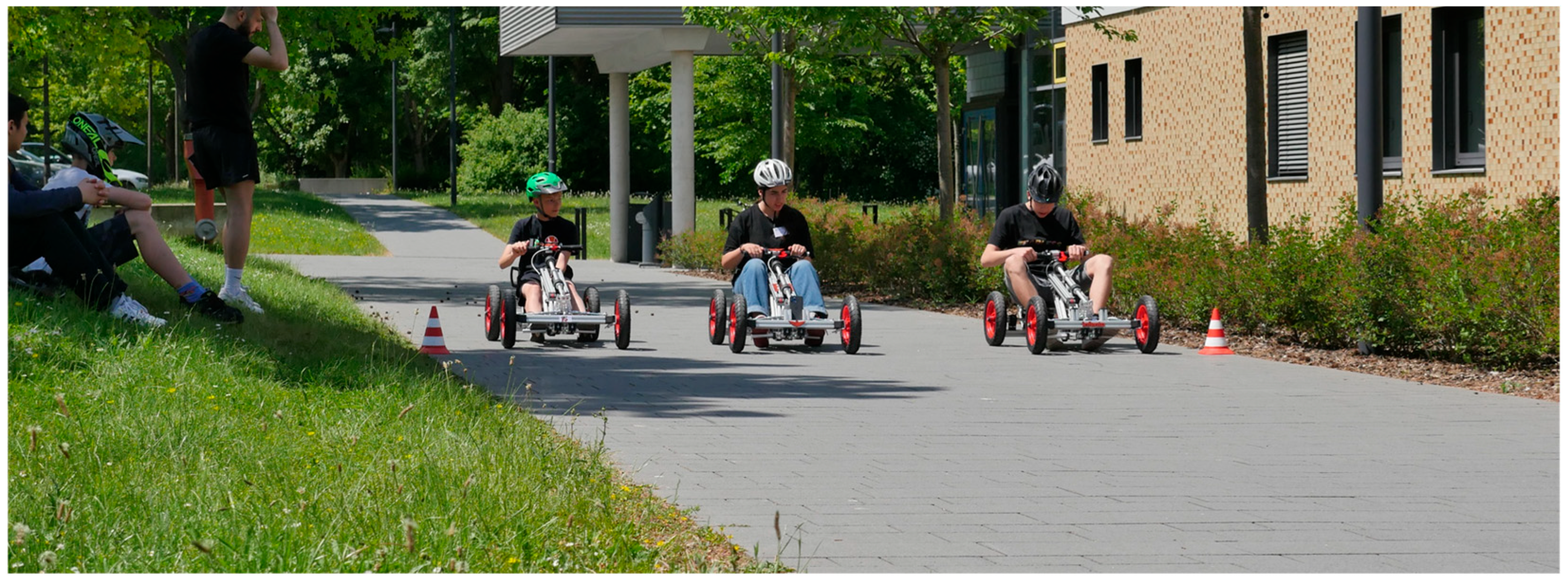
Figure 4, a university mentor student coaches a team of four participants. On Day 2, the vehicles are fully assembled from the individual components and equipped with the drive unit and battery. Setting up the driving course is also part of the teams’ responsibilities. This may include a precision course for parking maneuvers and reverse driving or a longer test route outdoors (see
Figure 5).
It became evident that the school students show an exceptional level of enthusiasm during vehicle assembly—so much so that transitioning them to the Education Studio is typically only possible at the start of the day or after the lunch break.
The concept of a circular economy can also be applied—at least in part—to the vehicles. Within the eM4K learning workshop, participants learn that here, waste production during the assembly process is minimal. Due to the design, the standardized modular profiles and the materials used, all vehicles can be fully disassembled. Remarkably, school students also approach this disassembly phase with enthusiasm. By sorting the parts back into the component boxes, they experience principles of circularity firsthand.
This disassembly phase also serves as a time buffer in case of delays during assembly or for organizing the transfer of school students from the university site.
3. Linking the eMobility Learning Workshop to the School Curriculum
The 2022 updated curriculum of the state of Baden-Württemberg (BW) for secondary schools (Gymnasien) [
10] is used as a reference for the content of the learning workshop. This curriculum is also implemented in the state-approved school textbooks [
11,
12].
3.1. Electric Vehicle Kinematics in Circular Paths
In the textbook Universum Physik 7/8 designed for grades 7 and 8, one of the competencies aligned with [
10] is the ability to “describe and classify motion verbally and using diagrams (in terms of time, position, direction, path shape, and speed)” [
10]. Circular motion is only mentioned briefly in this context.
In grades 9 and 10, this is expanded to include the competency, as defined in [
10], of being able to “describe uniform circular motion using radius and tangential velocity.” In [
12] (pp. 244–249), this is supported by a dedicated chapter on circular motion, which introduces terms such as arc radius and angular velocity.
Within the workshop schedule, workshop item No. 5 in
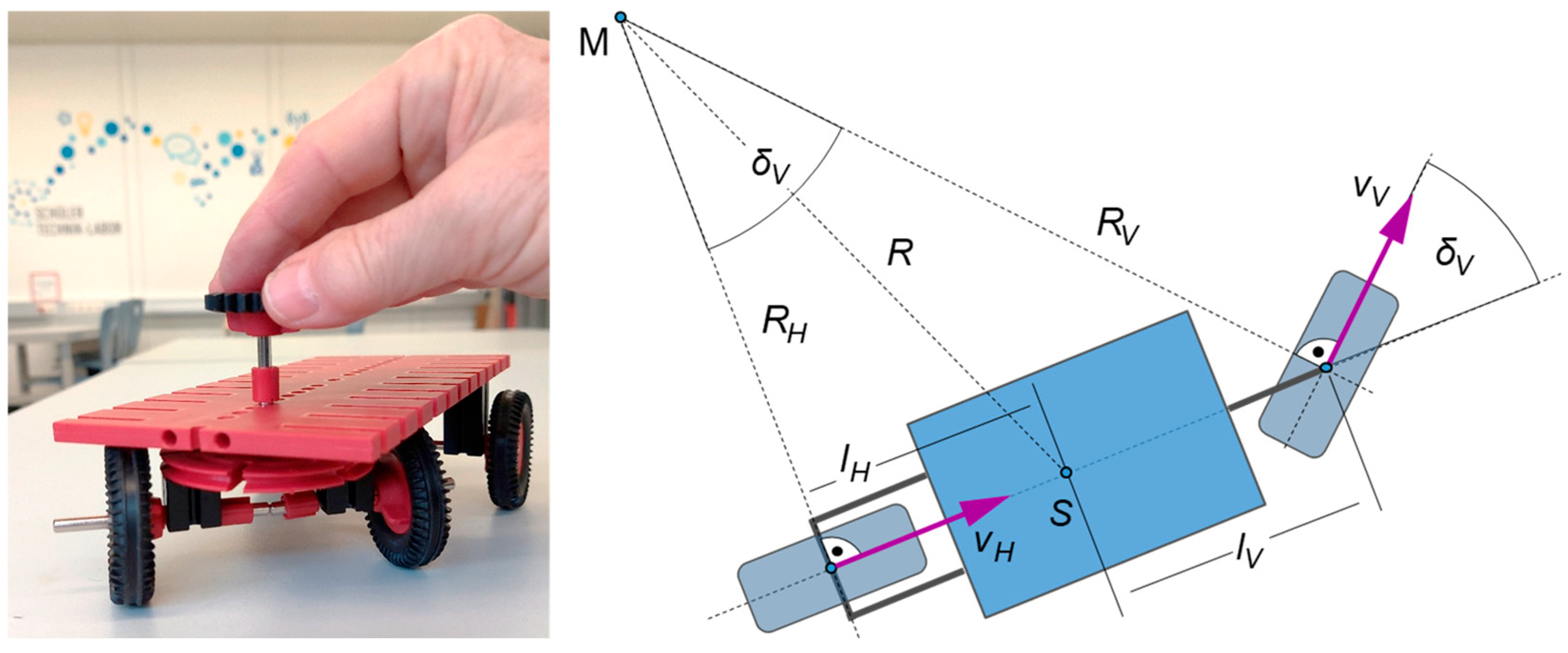
Table 1 addresses basic geometric relationships relevant to vehicle dynamics. As part of the learning workshop, an additional lab experiment is conducted in the Education Studio. Each participant constructs a so-called pivot steering mechanism using kit components. This steering concept is commonly experienced by children in everyday life through devices such as handcarts, see
Figure 6 left.
With this handcart, participants can set circular arcs and independently conduct basic driving experiments on the school student lab tables.
A first theoretical investigation of the four-wheeled Infento workshop vehicle is the so-called single-track model of planar vehicle dynamics [
13]. This model makes it possible to apply the simple steering principle of the handcart to four-wheeled vehicles at low speeds (
Figure 6 right).
The single-track model is introduced as a simplified planar representation. In this planar model the wheels of the steered front axle (index
V, steering angle
δV) and those of the rear axle (index
H) are each represented by a single wheel. From the center of the circular path
M, different arc radii
RR,
R and
RV emerge. The school students are reminded that the velocity vectors
vV and
vH are tangent to the circular path (“velocity arrow” [
12] (p. 177)).
Based on the vehicle reference point S and the distances to the front and rear axles lV and lH, a relationship can be derived between the steering angle, the arc radii, and the vehicle geometry. Within the workshop, the model is used solely as a conceptual illustration to connect school-level kinematics with later university-level vehicle dynamics. It does not claim analytical derivation or experimental validation. Initial experiences with this learning unit indicate that school students around the age of 15 are able to understand this relationship, including its trigonometric formulation. Future sessions will show how large this group of students might be. The relationship between steering angle, vehicle geometry, and circular path radius can even be explored directly on the student-built STEM learning electric vehicles using a simple tape measure.
3.2. Electric Power and Energy
In the textbook Universum Physik 7/8 [
11] designed for grades 7 and 8, students are expected to “describe energy transfer in electric circuits and the relationship between current, voltage, power, and energy”. They are also expected to “interpret physical specifications on every-day devices (voltage, current, power)”. Additionally, they should be able to “describe the formulaic relationship between energy and power,
P =
ΔE/Δt,” and “determine the orders of magnitude of typical power values in everyday life” [
10]. The textbook [
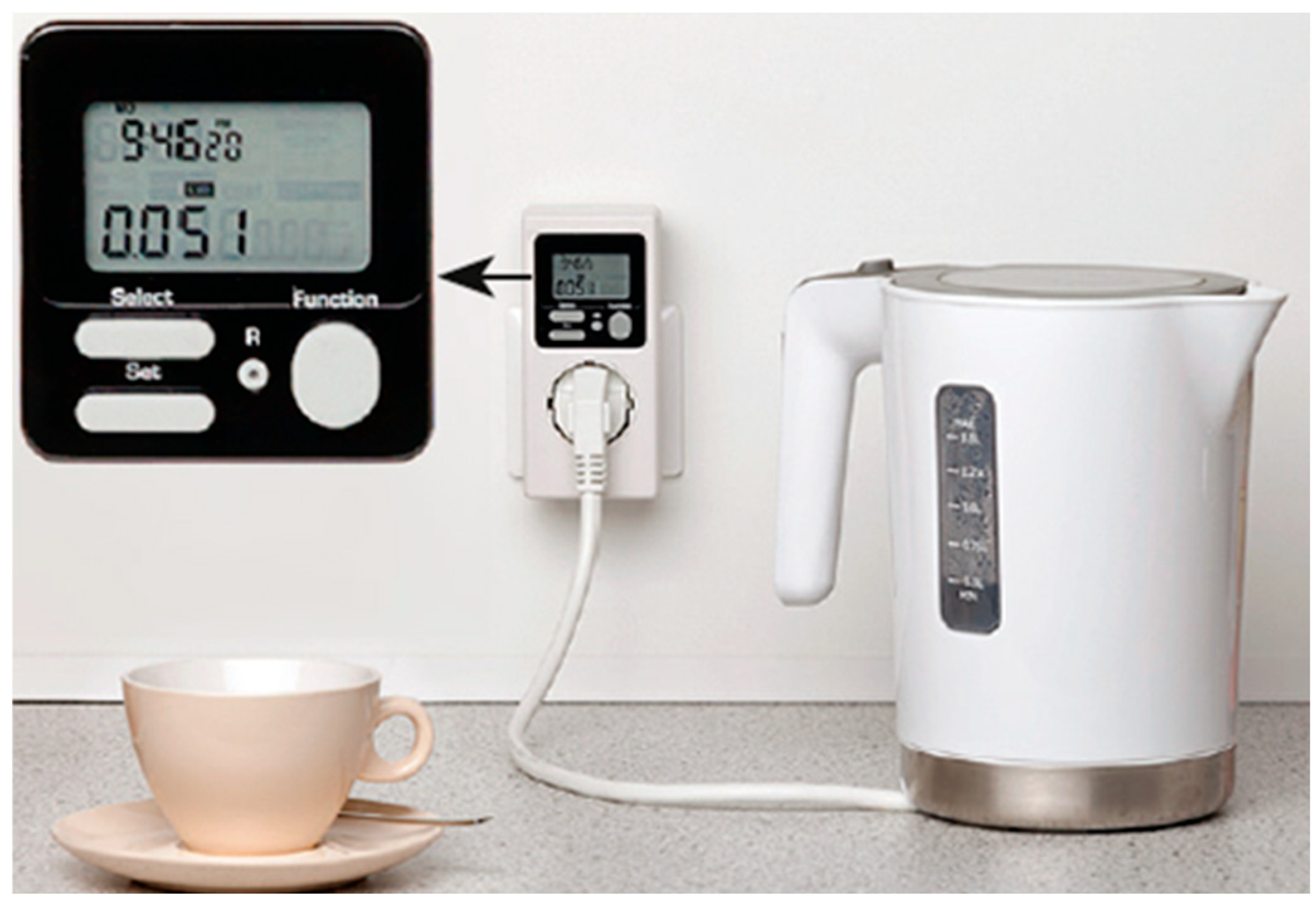
11] (p. 139) includes an experiment on the power and energy consumption of devices as shown in
Figure 7 and also the theoretical foundation [
11] of the exercise (p. 270).
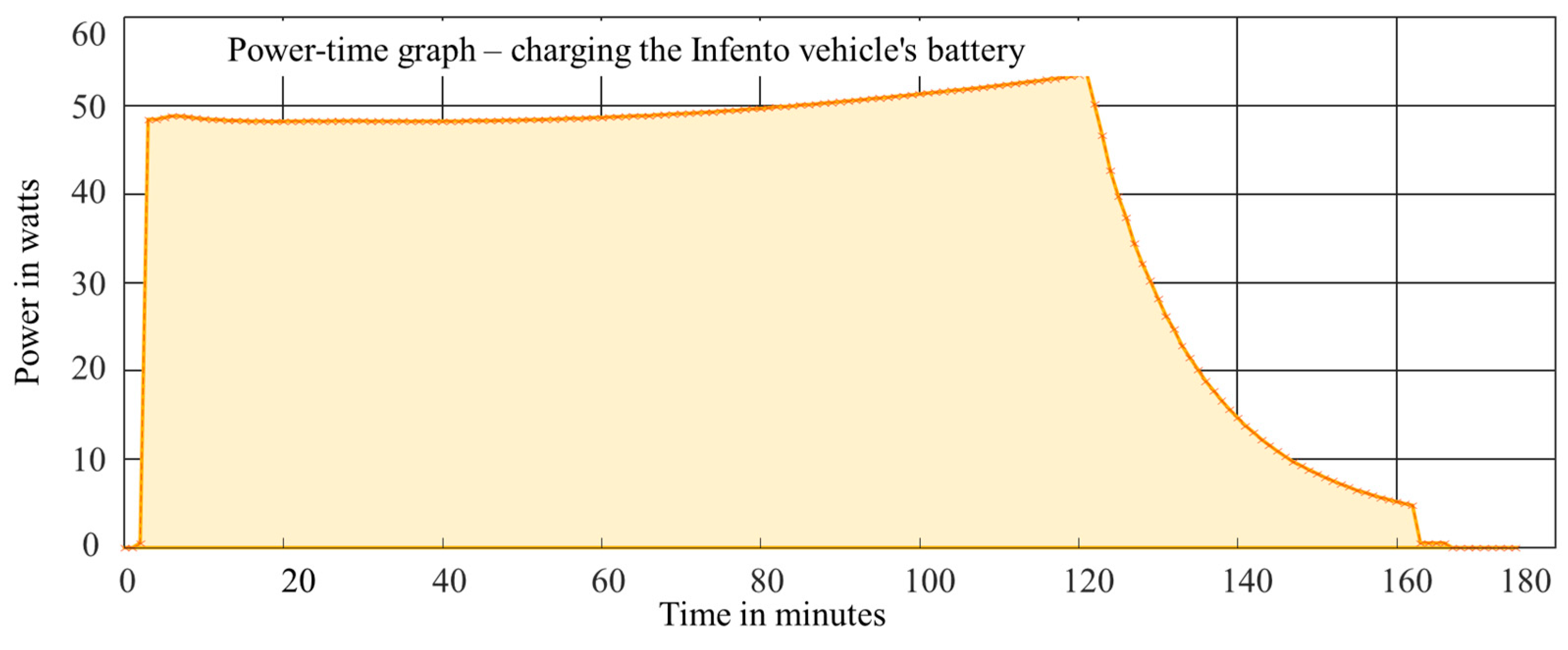
In the eM4K learning workshop, the school students are provided with an energy meter, a suitable power outlet, and an electrical appliance (e.g., an electric kettle) to conduct a simple experiment in the Education Studio. During the workshop’s timeline, this activity is represented by item No. 9. In the Education Studio, participants are also tasked with determining the energy consumed during the charging process of the Infento vehicle’s battery. This is done by analyzing a graph of the measured power over time, as shown in
Figure 8. This determination can be performed graphically by dividing the area under the power-time curve into simple rectangles and adding these rectangular areas together. This exercise leads to the understanding that some energy loss always occurs during battery charging. These losses depend on the quality of the components and must be considered when calculating efficiency in the overall energy balance.
In this exercise, the commonly used term “charging time” in today’s electromobility context is illustrated by having school students read and document the power values themselves. However, the typical terms “range” and “charging time” for electric vehicles are not mentioned in the current curriculum of the state of Baden-Württemberg [
10]. This introductory approach allows students to develop an initial, intuitive understanding of charging-related concepts without requiring detailed numerical analysis. It also provides a foundation for more advanced discussions of charging time, efficiency, and charging infrastructure in later educational stages.
4. Workshop and Digital 3D Model Introduction
The broad field of digitalization is an increasingly relevant topic that pupils encounter both in school and in everyday life. This served as the motivation to introduce a low-threshold form of digitalization into the 2025 eM4K workshops and to observe how 12–15-year-old participants would interact with it. Following the definition provided in “Towards the future of smart electric vehicles: Digital twin technology” [
14], a Digital Twin (DT) is understood as “an integrated multi-physics, multiscale, probabilistic simulation of a complex product”. Such a model “functions to mirror the life of its corresponding physical twin.”
Such a comprehensive, simulation-based DT cannot be provided within the scope of the course, nor do the instructional units (
Table 1 and
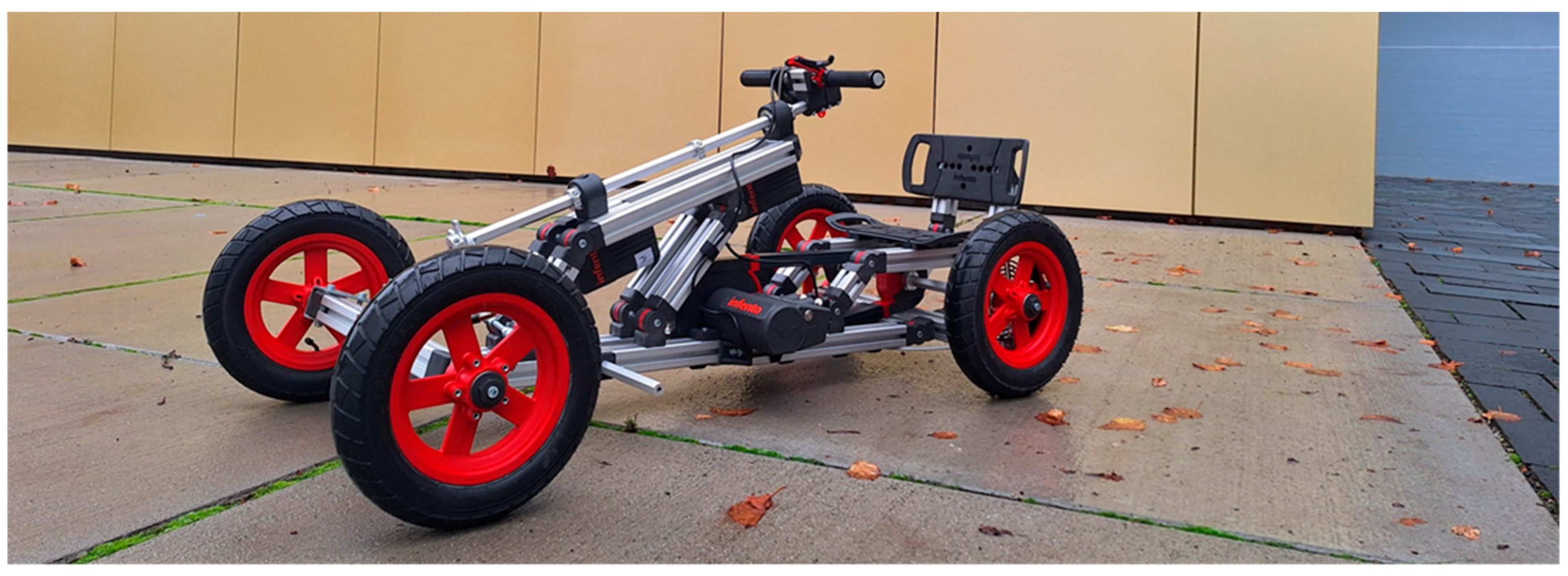
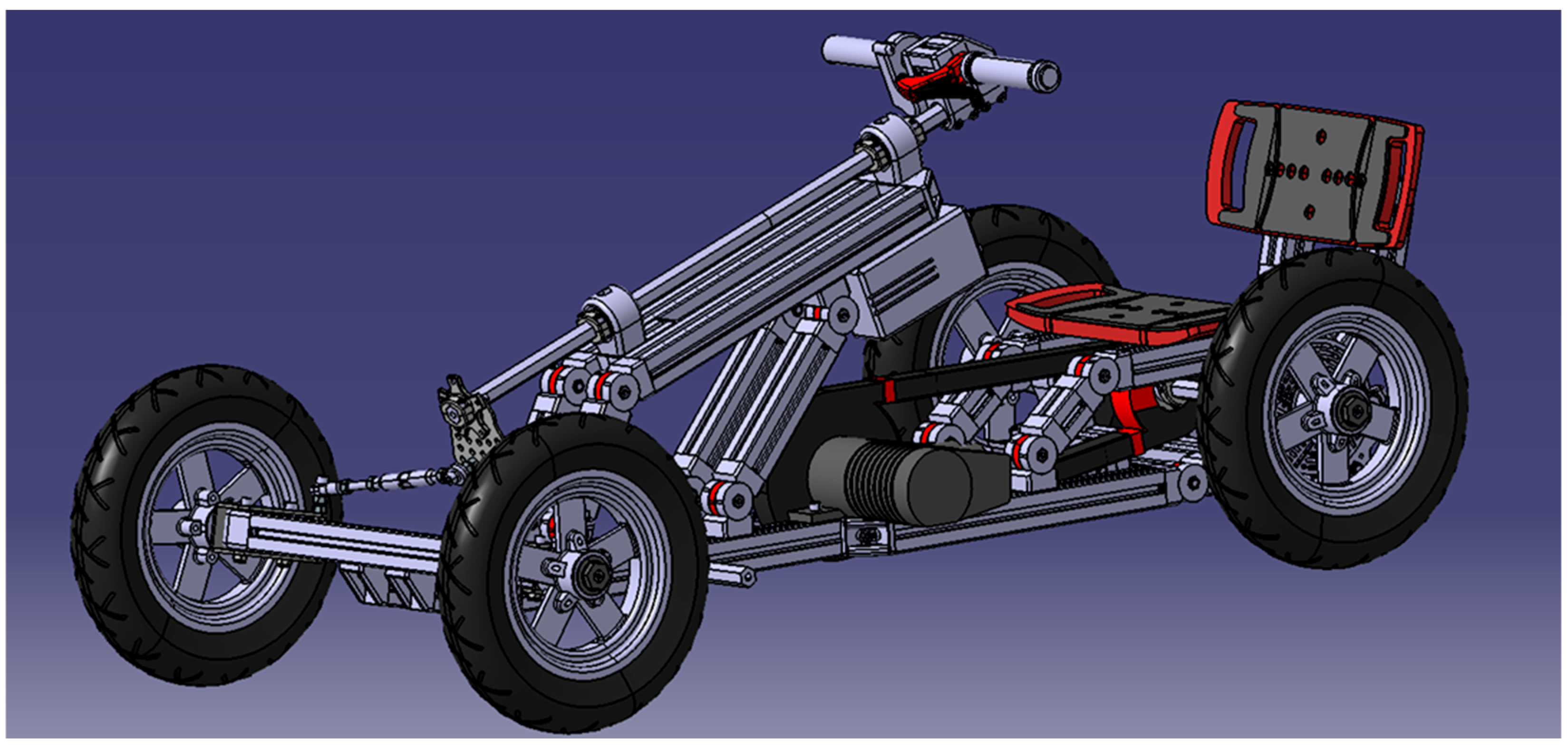
Table 2) offer sufficient time to introduce the underlying theory in a meaningful way. For this reason, a highly simplified Digital Mock-Up (DMU), implemented as a complete CAD 3D model of the STEM learning electric vehicle, is presented to the workshop participants. This digital model is shown in parallel to a fully assembled physical vehicle (
Figure 9 and
Figure 10). The CAD 3D model is not a mere collection of individual parts, but is structured into functional subassemblies that mirror the physical vehicle architecture and enable understanding of the underlying mechanical and physical system relationships.
During the workshop, the fully assembled physical STEM learning electric vehicle is available to the participants (also see
Figure 2) and is typically used to verify subsystems during the assembly process. As an alternative to examining the physical reference vehicle, the school students are offered the option to inspect their partial assemblies using the large-screen visualization of the DMU. Interested participants are shown how to interact with the CAD 3D model using simple mouse-based controls—rotating, zooming, and navigating the assembly. They are also introduced to functions that allow individual parts and subassemblies to be isolated, hidden, or displayed, including the identification of part names.
Observations show that younger participants tend to engage more cautiously with this additional digital option. They generally prefer examining the physical STEM learning electric vehicle. In contrast, older school students, after a brief introduction, enthusiastically explore the CAD 3D model. They appreciate the expanded possibilities it offers for assembly verification compared to the physical vehicle alone. The Digital Mock-Up component is planned to be continued in the 2026 and 2027 workshop cycles, with further observation of school student engagement and learning behavior.
5. Survey—School Students and Their Future Individual Mobility
The high level of enthusiasm observed during the very first workshop motivated the authors to explore students’ expectations regarding future individual mobility. For this purpose, a short, exploratory snapshot survey was conducted. Between 2023 and 2025, the snapshot survey was administered to school students aged 11–18 during further workshops and outreach events. The survey was designed to capture an initial impression of attitudes toward electric mobility rather than to provide a statistically representative or psychometric assessment.
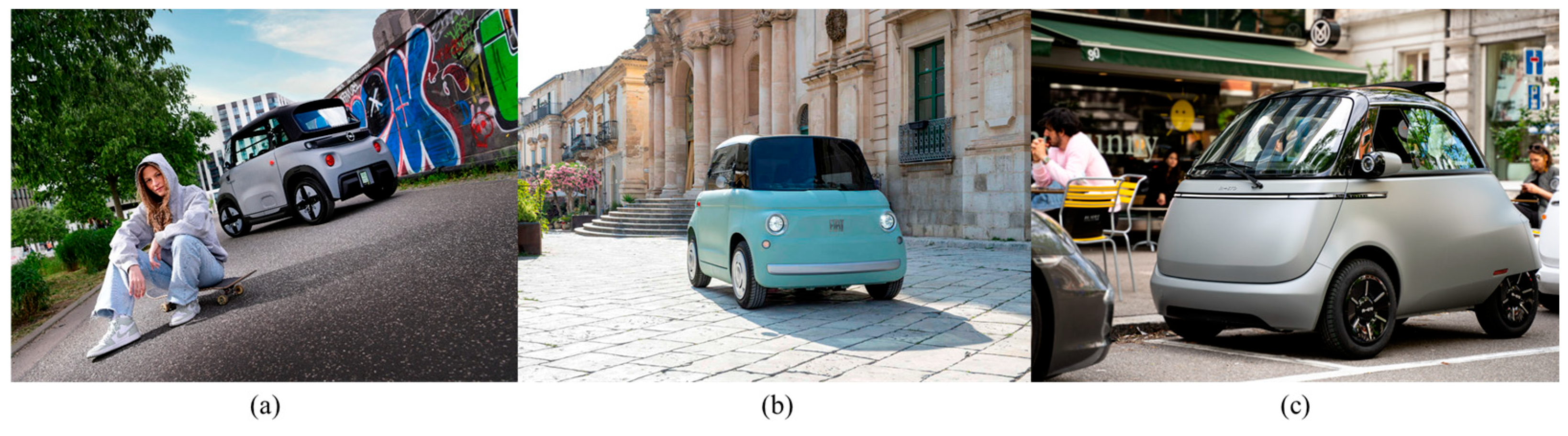
In the European Union, the vehicle category L6e refers to light quadricycles with a design-dependent maximum speed of up to 45 km/h. For electrically powered vehicles, the continuous rated power may not exceed 6 kW. The maximum permissible mass is limited to 425 kg; furthermore, no more than two seats are allowed, including the driver’s seat. For electric vehicles, the mass is measured excluding the battery [
16].
Figure 11 shows three examples of such vehicles.
The school students survey was also conducted during other regular information events at the university, where pupils from the region visit the campus and explore the university’s activities. A typical hands-on activity during such events is navigating a driving course using the fully assembled STEM learning electric vehicles shown in
Figure 2.
Students are first asked how they commute to school or to leisure activities every day. Possible options include car transport by parents, travelling by bus or train using public transport, cycling, or walking—followed by a question about total travel time. Subsequently, participants are shown images such as
Figure 11 depicting typical L6e electric light vehicles and are asked:
“This is a light electric vehicle that you are legally allowed to drive yourself at the age of 15. If your grandparents, aunt or uncle, or parents gave you such a vehicle as a gift, would you use it for your school commute and leisure activities?”
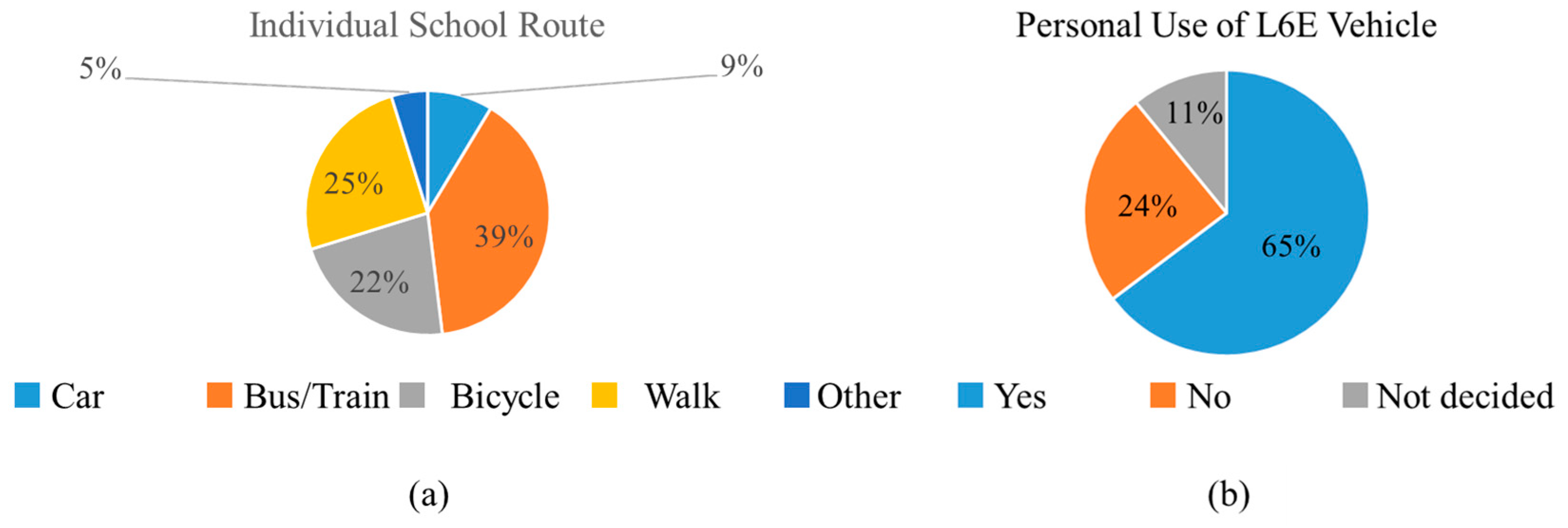
Figure 12 presents the survey results collected in 2023 to 2025 from a total of 122 pupils aged 11 to 18.
A total of 39% of respondents use public transport, 22% cycle to school, and 25% walk. Around 5% are driven to school by car (
Figure 12a). Remarkably, 65% of the surveyed students stated that they would be willing to use an electric light vehicle of category L6e as self-drivers immediately, while 24% would not (
Figure 12b).
Heilbronn-Franken is a region in northeastern Baden-Württemberg, Germany, forming part of the Stuttgart metropolitan subdivision. It covers an area of 4765 km
2 in the northeast of Baden-Württemberg with a population of roughly 0.9 million inhabitants [
17]. The region is representative of many semi-urban and rural areas in Germany and Europe, with a corresponding public transport infrastructure and with a strong need for individual commuter transport.
From an automotive industry perspective, the survey results provide an indicative and region-specific insight into potential future interest in electric individual mobility among young users. According to the German Federal Statistical Office, Germany recorded 769,457 fifteen-year-olds and 792,341 sixteen-year-olds as of 31 December 2024 [
18]. In this context, the exploratory findings suggest a possible emerging market segment, while acknowledging the limited statistical generalizability of the survey results. This represents an interesting emerging automotive market for families wishing to offer their children a self-determined, time-efficient, climate-friendly, and comparatively safe mobility solution. This applies even in adverse weather conditions.
6. Conclusions and Outlook
The eM4K learning workshop format was successfully implemented in 2023, 2024 and 2025. Nearly all participating school students showed great enthusiasm—whether during vehicle assembly, the instructional units in the Education Studio, hands-on testing, or even the disassembly of the vehicles.
From the perspective of the supervising university team, the experiences can be summarized as follows:
The number of teams, each consisting of four participants per vehicle, will not be increased further due to the rising demand for supervision. Currently, three workshop vehicles are in use;
Adequate space must be allocated for driving the vehicles—including indoor spaces in case of bad weather. Additional storage space is also required for keeping the component boxes between workshop sessions;
The workshop has also proven valuable for the student mentors as it fosters key competencies in communication and instructional support;
The participant age group should not be lowered to avoid overburdening younger students. All participants demonstrated competent handling of tools, aluminum standard profiles, and standardized components. Moreover, the selected age group is seen as critical in potentially influencing future study decisions toward STEM fields;
Students found it particularly engaging to experience the production, use, and recycling of a vehicle in a two-day “time-lapse”—a process that in the real-world automotive industry takes years across all three phases.
Light electric quadricycles of category L6e represent a promising bridge between micro mobility and conventional electric passenger cars.
The further development of the learning workshop will be guided by these experiences. The workshop concept is intended to be adaptable and expandable for comparable educational tasks. Here, the implementation of the eM4K workshops in the subsequent years 2026 and 2027 will be supported by the Baden-Württemberg Foundation.
Author Contributions
Conceptualization, A.D. and B.W.; methodology, A.D.; investigation, A.D.; resources, B.W. and A.D.; writing—original draft preparation, A.D.; writing—review and editing, A.D.; visualization, A.D.; project administration, B.W.; funding acquisition, A.D. and B.W. All authors have read and agreed to the published version of the manuscript.
Funding
The project and the project equipment were funded by the Support Association of Heilbronn University (Förderkreises der Hochschule Heilbronn e.V.), the Heilbronn Citizens’ Foundation (Heilbronner Bürgerstiftung), and AUDI AG. For 2026 and 2027, funding is provided by the micro macro mint program of the Baden-Wuerttemberg Foundation (Baden-Württemberg Stiftung gGmbH).
Institutional Review Board Statement
Ethical review and approval were waived for this study because no personal or identifiable data were collected, and participation in the survey was entirely voluntary. According to German and European regulations for educational research, ethical approval by an Institutional Review Board or Ethics Committee is not required for anonymous, non-interventional educational surveys of this type.
Informed Consent Statement
Participation in the survey was voluntary and anonymous, and participants were informed about the purpose of the survey.
Data Availability Statement
The data presented in this study are publicly accessible or available upon request from the corresponding author for legal reasons.
Acknowledgments
The authors would like to thank the Facility Management and the Student Services of Heilbronn University for their organizational support in conducting the eM4K workshops.
Conflicts of Interest
The authors declare that all funders had no role in the design of this work or the accompanying study; the collection, analysis, or interpretation of data; the writing of the manuscript; or the decision to publish the results. The funder AUDI AG enabled the acquisition of the educational vehicles only and had no involvement in the didactic concept, in conducting the study, or the submission for publication.
Abbreviations
The following abbreviations are used in this manuscript:
| BLDC | Brushless Direct Current (electric motor) |
| BW | Baden-Württemberg (state of Germany) |
| CBL | Construction Based Learning |
| DT | Digital Twin |
| eM4K | eMobility for Kids (workshop) |
| EVS38 | Electric Vehicle Symposium 38 (conference in Gothenburg, Sweden, 2025) |
| MIT | Massachusetts Institute of Technology |
| STEM | Science, Technology, Engineering, and Mathematics |
| VDI | Verein Deutscher Ingenieure (Association of German Engineers) |
References
- Meine Erste Bücherei—38 Elektrizität; Brönner Kinderbuchverlag: Frankfurt am Main, Germany, 1972; p. 20.
- Daberkow, A.; Wild, B. eMobility for Kids—A New Learning Workshop for 12–15 Year Olds. In Proceedings of the 38th International Electric Vehicle Symposium & Exhibition (EVS38), Gothenburg, Sweden, 15–18 June 2025. [Google Scholar]
- Resnick, M.; Silverman, B. Some Reflections on Designing Construction Kits for Kids. In Proceedings of the 2005 Conference on Interaction Design and Children (IDC ’05), Boulder, CO, USA, 8–10 June 2005. [Google Scholar]
- Santos Sánchez-Cambronero, S.; Lozano-Galant, J.A.; Castilla, F.J.; Poveda, E.; Galán, Á.; Porras, R.; Gallego, I.; López-Moya, R. Introducing High School Students into the Multidisciplinary World of Bridge Construction Using Project-Based Learning. J. Civ. Eng. Educ. 2020, 147, 05020006-1–05020006-9. [Google Scholar] [CrossRef]
- FIRST®. FIRST® Impact Report 2023–2024; FIRST Inspires: Manchester, NH, USA, 2024; Available online: https://www.firstinspires.org/about/impact (accessed on 17 November 2025).
- VDIni-Club. Available online: https://www.vdi.de/vdini-eltern/startseite (accessed on 17 November 2025).
- Wilhelm, T.; Schecker, H.; Hopf, M. Unterrichtskonzeptionen für den Physikunterricht, 1st ed.; Springer: Berlin/Heidelberg, Germany, 2021. [Google Scholar]
- Daberkow, A. Ein exploratives Lehrformat zur Elektromobilität im Kontext des forschungsorientierten Lernens. Z. Hochschulentwicklung 2020, 15, 209–222. [Google Scholar]
- Infento Hot Rod Edu. Available online: https://www.infento.com/product/pro-kit/ (accessed on 17 November 2025).
- Bildungsplan Baden-Württemberg des Gymnasiums Physik–überarbeitete Fassung vom 25. März 2022. Available online: https://www.bildungsplaene-bw.de/,Lde/LS/BP2016BW/ALLG/GYM/PH.V2 (accessed on 17 November 2025).
- Brand, R.; Hasler, W.; Kasper, L.; Kienle, R.; Pardall, C.J.; Rager, B.; Ronellenfitsch, S.; Wienbruch, U. Universum Physik Baden-Württemberg 7/8, 1st ed.; Cornelsen: Berlin, Germany, 2021. [Google Scholar]
- Bogenberger, B.; Brand, R.; Hasler, W.; Kasper, L.; Kienle, R.; Küblbeck, J.; Pardall, C.J.; Rager, B.; Ronellenfitsch, S.; Wienbruch, U. Universum Physik Baden-Württemberg 9/10, 1st ed.; Cornelsen: Berlin, Germany, 2022. [Google Scholar]
- Jazar, R.N. Advanced Vehicle Dynamics, 1st ed.; Springer Nature: Cham, Switzerland, 2019. [Google Scholar]
- Bhatti, G.; Mohan, H.; Singh, R. Towards the future of smart electric vehicles: Digital twin technology. Renew. Sustain. Energy Rev. 2021, 141, 110801. [Google Scholar] [CrossRef]
- Sadik, G. Digital Twin for a Light Electric Vehicle. Bachelor’s Thesis, Heilbronn University, Heilbronn, Germany, 2025. [Google Scholar]
- L6e. Available online: https://www.legislation.gov.uk/eur/2013/168/annexes (accessed on 17 November 2025).
- Heilbronn-Franconia. Available online: https://en.wikipedia.org/wiki/Heilbronn-Franconia (accessed on 17 November 2025).
- Population: Federal States, Reference Date, Sex, Single-Year Age Groups (2025). Available online: https://gdk.gdi-de.org/geonetwork/srv/api/records/30303031-3234-4031-312d-303031330000 (accessed on 17 November 2025).
| Disclaimer/Publisher’s Note: The statements, opinions and data contained in all publications are solely those of the individual author(s) and contributor(s) and not of MDPI and/or the editor(s). MDPI and/or the editor(s) disclaim responsibility for any injury to people or property resulting from any ideas, methods, instructions or products referred to in the content. |
© 2026 by the authors. Published by MDPI on behalf of the World Electric Vehicle Association. Licensee MDPI, Basel, Switzerland. This article is an open access article distributed under the terms and conditions of the Creative Commons Attribution (CC BY) license.