Envelope Recombination: A Major Driver in Shaping Retroviral Diversification and Evolution within the Host Genome



Abstract
1. Introduction
2. Structural Features of Retroviruses
Co-Option of ERVs’ Env
3. Retroviral Envelope Diversification from the Recombination Point of View
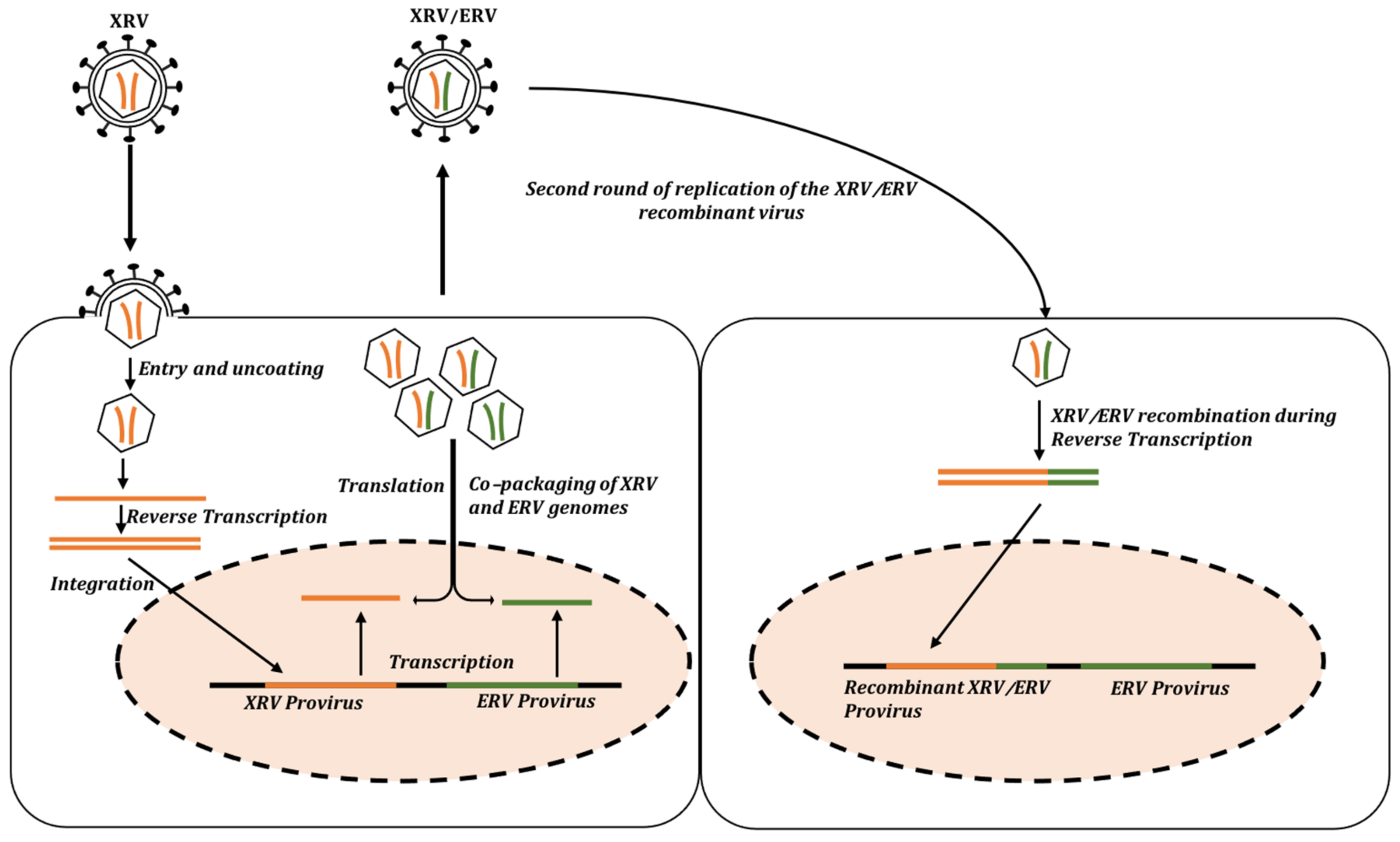
3.1. ERV–XRV Recombination by Template Switching
3.2. Gain and Loss of ERVs’ env Due to Recombination
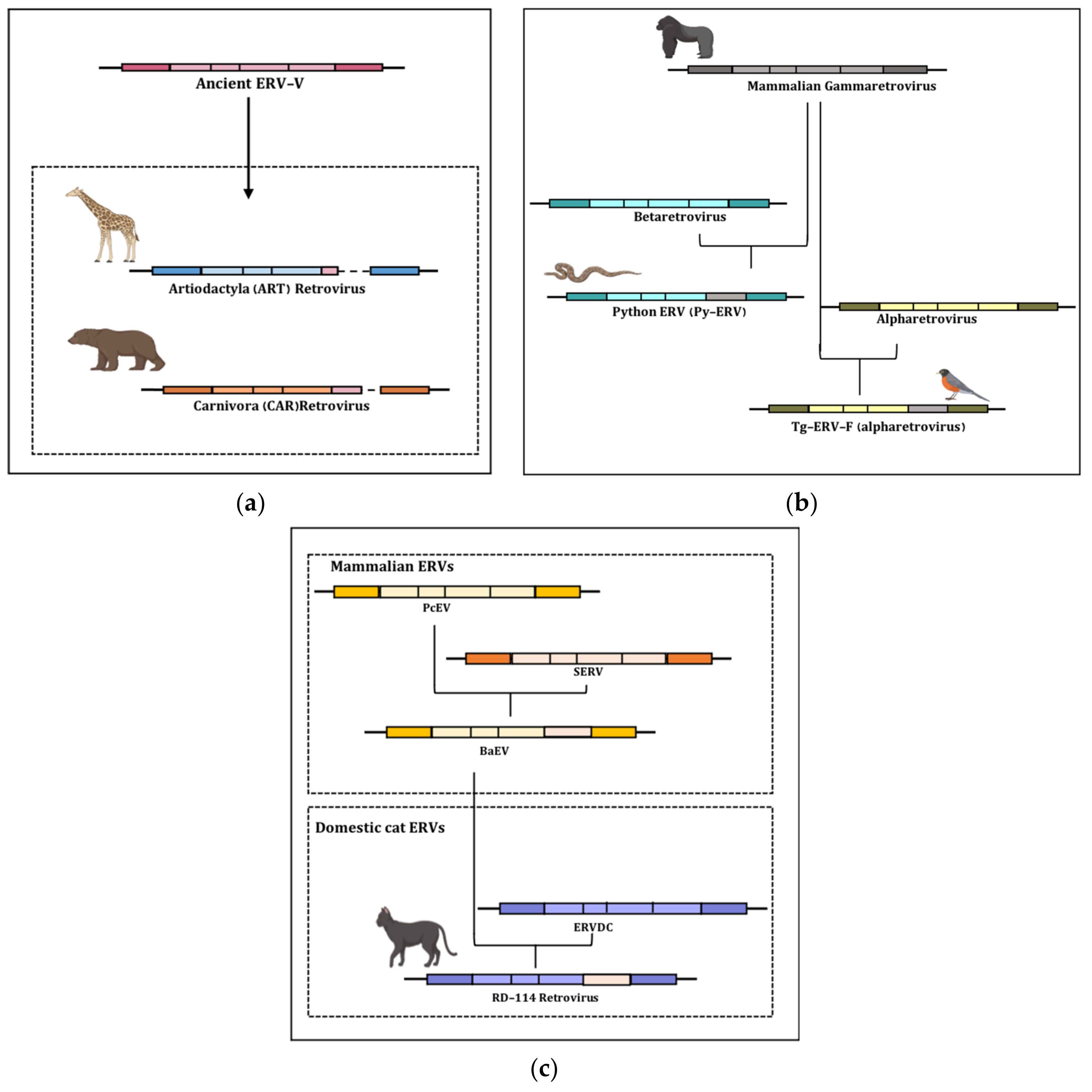
3.2.1. Env Acquisition
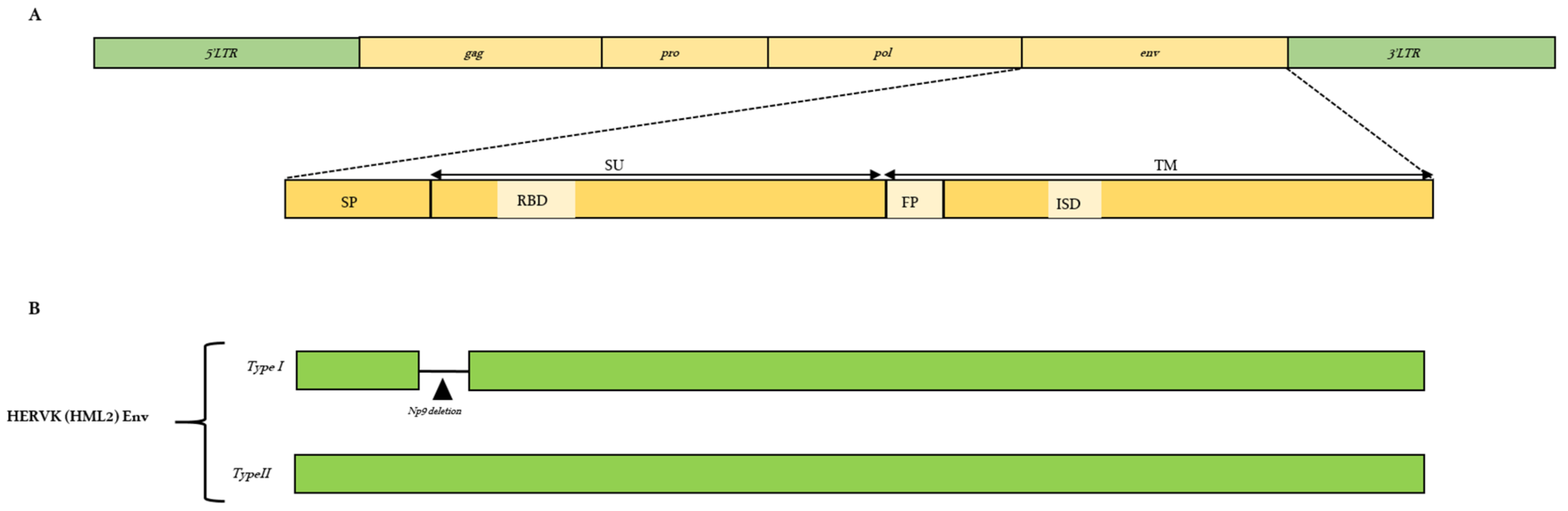
3.2.2. Env Degradation
3.3. Cross-Species Transmission by Env Recombination
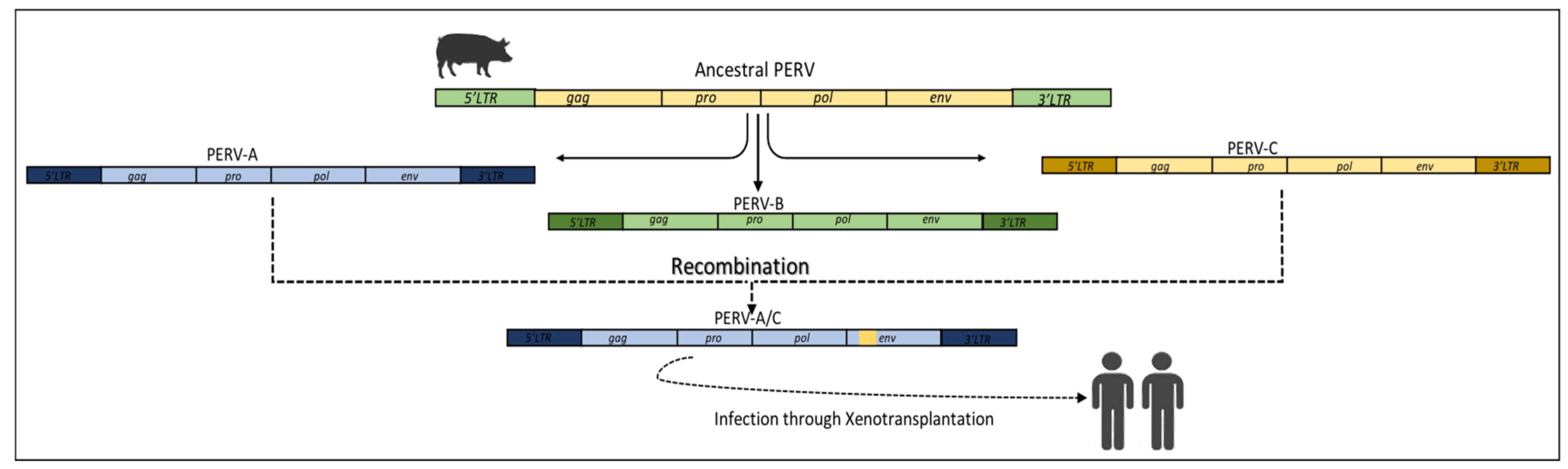
3.4. Xenotropic Recombination
4. Concluding Remarks
Author Contributions
Funding
Institutional Review Board Statement
Informed Consent Statement
Data Availability Statement
Conflicts of Interest
References
- Aiewsakun, P.; Katzourakis, A. Endogenous viruses: Connecting recent and ancient viral evolution. Virology 2015, 479–480, 26–37. [Google Scholar] [CrossRef] [PubMed]
- Johnson, W.E. Origins and evolutionary consequences of ancient endogenous retroviruses. Nat. Rev. Microbiol. 2019, 17, 355–370. [Google Scholar] [CrossRef] [PubMed]
- Weiss, R.A. Human endogenous retroviruses: Friend or foe? APMIS 2016, 124, 4–10. [Google Scholar] [CrossRef] [PubMed]
- Tarlinton, R.; Meers, J.; Young, P. Endogenous retroviruses: Biology and evolution of the endogenous koala retrovirus. Cell. Mol. Life Sci. 2008, 65, 3413–3421. [Google Scholar] [CrossRef] [PubMed]
- Johnson, W.E. Endogenous Retroviruses in the Genomics Era. Annu. Rev. Virol. 2015, 2, 135–159. [Google Scholar] [CrossRef] [PubMed]
- Gifford, R.J.; Blomberg, J.; Coffin, J.M.; Fan, H.; Heidmann, T.; Mayer, J.; Stoye, J.; Tristem, M.; Johnson, W.E. Nomenclature for endogenous retrovirus (ERV) loci. Retrovirology 2018, 15, 59. [Google Scholar] [CrossRef] [PubMed]
- Blomberg, J.; Benachenhou, F.; Blikstad, V.; Sperber, G.; Mayer, J. Classification and nomenclature of endogenous retroviral sequences (ERVs). Problems and recommendations. Gene 2009, 448, 115–123. [Google Scholar] [CrossRef]
- Sluis-Cremer, N. Retroviral reverse transcriptase: Structure, function and inhibition. In Enzymes; Academic Press: Cambridge, MA, USA, 2021; ISBN 9780323900164. [Google Scholar]
- Vargiu, L.; Rodriguez-Tomé, P.; Sperber, G.O.; Cadeddu, M.; Grandi, N.; Blikstad, V.; Tramontano, E.; Blomberg, J. Classification and characterization of human endogenous retroviruses mosaic forms are common. Retrovirology 2016, 13, 7. [Google Scholar] [CrossRef]
- Maksakova, I.A.; Mager, D.L.; Reiss, D. Endogenous retroviruses—Keeping active endogenous retroviral-like elements in check: The epigenetic perspective. Cell. Mol. Life Sci. 2008, 65, 3329–3347. [Google Scholar] [CrossRef]
- Chen, Y.; Wang, X.; Liao, M.-E.; Song, Y.; Zhang, Y.-Y.; Cui, J. Evolution and Genetic Diversity of the Retroviral Envelope in Anamniotes. J. Virol. 2022, 96, e0207221. [Google Scholar] [CrossRef]
- Pancino, G.; Ellerbrok, H.; Sitbon, M.; Sonigo, P. Conserved framework of envelope glycoproteins among lentiviruses. Curr. Top. Microbiol. Immunol. 1994, 188, 77–105. [Google Scholar] [CrossRef] [PubMed]
- Henzy, J.E.; Johnson, W.E. Pushing the endogenous envelope. Philos. Trans. R. Soc. B Biol. Sci. 2013, 368, 20120506. [Google Scholar] [CrossRef] [PubMed]
- Bénit, L.; Dessen, P.; Heidmann, T. Identification, Phylogeny, and Evolution of Retroviral Elements Based on Their Envelope Genes. J. Virol. 2001, 75, 11709–11719. [Google Scholar] [CrossRef] [PubMed]
- Frank, J.A.; Feschotte, C. Co-option of endogenous viral sequences for host cell function. Curr. Opin. Virol. 2017, 25, 81–89. [Google Scholar] [CrossRef] [PubMed]
- Robinson, H.L.; Astrin, S.M.; Senior, A.M.; Salazar, F.H. Host Susceptibility to endogenous viruses: Defective, glycoprotein-expressing proviruses interfere with infections. J. Virol. 1981, 40, 745–751. [Google Scholar] [CrossRef] [PubMed]
- Jung, Y.T.; Lyu, M.S.; Buckler-White, A.; Kozak, C.A. Characterization of a Polytropic Murine Leukemia Virus Proviral Sequence Associated with the Virus Resistance Gene Rmcf of DBA/2 Mice. J. Virol. 2002, 76, 8218–8224. [Google Scholar] [CrossRef] [PubMed]
- Wu, T.; Yan, Y.; Kozak, C.A. Rmcf2, a Xenotropic Provirus in the Asian Mouse Species Mus castaneus, Blocks Infection by Polytropic Mouse Gammaretroviruses. J. Virol. 2005, 79, 9677–9684. [Google Scholar] [CrossRef]
- Ikeda, H.; Odaka, T. A cell membrane “gp70” associated with Fv-4 gene: Immunological characterization, and tissue and strain distribution. Virology 1984, 133, 65–76. [Google Scholar] [CrossRef]
- Inaguma, Y.; Yoshida, T.; Ikeda, H. Scheme for the generation of a truncated endogenous murine leukaemia virus, the Fv-4 resistance gene. J. Gen. Virol. 1992, 73, 1925–1930. [Google Scholar] [CrossRef]
- Blanco-Melo, D.; Gifford, R.J.; Bieniasz, P.D. Co-option of an endogenous retrovirus envelope for host defense in hominid ancestors. eLife 2017, 6, e22519. [Google Scholar] [CrossRef]
- Ansari, S.; Gupta, N.; Verma, R.; Singh, O.N.; Gupta, J.; Kumar, A.; Yadav, M.K.; Binayke, A.; Tiwari, M.; Periwal, N.; et al. Antiviral activity of the human endogenous retrovirus-R envelope protein against SARS-CoV-2. EMBO Rep. 2023, 24, e55900. [Google Scholar] [CrossRef]
- Varela, M.; Palmarini, M. Multitasking: Making the most out of the retroviral envelope. Viruses 2010, 2, 1571–1576. [Google Scholar] [CrossRef] [PubMed]
- Takahashi, A.; Day, N.K.; Luangwedchakarn, V.; Good, R.A.; Haraguchi, S. A Retroviral-Derived Immunosuppressive Peptide Activates Mitogen-Activated Protein Kinases. J. Immunol. 2001, 166, 6771–6775. [Google Scholar] [CrossRef] [PubMed]
- Lavialle, C.; Cornelis, G.; Dupressoir, A.; Esnault, C.; Heidmann, O.; Vernochet, C.; Heidmann, T. Paleovirology of “syncytins”, retroviral env genes exapted for a role in placentation. Philos. Trans. R. Soc. B Biol. Sci. 2013, 368, 20120507. [Google Scholar] [CrossRef] [PubMed]
- Grandi, N.; Tramontano, E. HERV envelope proteins: Physiological role and pathogenic potential in cancer and autoimmunity. Front. Microbiol. 2018, 9, 462. [Google Scholar] [CrossRef] [PubMed]
- Blond, J.-L.; Lavillette, D.; Cheynet, V.; Bouton, O.; Oriol, G.; Chapel-Fernandes, S.; Mandrand, B.; Mallet, F.; Cosset, F.-L. An Envelope Glycoprotein of the Human Endogenous Retrovirus HERV-W Is Expressed in the Human Placenta and Fuses Cells Expressing the Type D Mammalian Retrovirus Receptor. J. Virol. 2000, 74, 3321–3329. [Google Scholar] [CrossRef] [PubMed]
- Sha, M.; Lee, X.; Li, X.P.; Veldman, G.M.; Finnerty, H.; Racie, L.; LaVallie, E.; Tang, X.Y.; Edouard, P.; Howes, S.; et al. Syncytin is a captive retroviral envelope protein involved in human placental morphogenesis. Nature 2000, 403, 785–789. [Google Scholar] [CrossRef]
- Gimenez, J.; Mallet, F. ERVWE1 (endogenous retroviral family W, Env(C7), member 1). Atlas Genet. Cytogenet. Oncol. Haematol. 2011, 12, 134–148. [Google Scholar] [CrossRef]
- Gong, R.; Peng, X.; Kang, S.; Feng, H.; Huang, J.; Zhang, W.; Lin, D.; Tien, P.; Xiao, G. Structural characterization of the fusion core in syncytin, envelope protein of human endogenous retrovirus family W. Biochem. Biophys. Res. Commun. 2005, 331, 1193–1200. [Google Scholar] [CrossRef]
- Grandi, N.; Tramontano, E. Type W human endogenous retrovirus (HERV-W) integrations and their mobilization by L1 machinery: Contribution to the human transcriptome and impact on the host physiopathology. Viruses 2017, 9, 162. [Google Scholar] [CrossRef]
- Renard, M.; Varela, P.F.; Letzelter, C.; Duquerroy, S.; Rey, F.A.; Heidmann, T. Crystal structure of a pivotal domain of human syncytin-2, a 40 million years old endogenous retrovirus fusogenic envelope gene captured by primates. J. Mol. Biol. 2005, 352, 1029–1034. [Google Scholar] [CrossRef] [PubMed]
- Liang, C.Y.; Wang, L.J.; Chen, C.P.; Chen, L.F.; Chen, Y.H.; Chen, H. GCM1 regulation of the expression of syncytin 2 and its cognate receptor MFSD2A in human placenta. Biol. Reprod. 2010, 83, 387–395. [Google Scholar] [CrossRef] [PubMed]
- Durnaoglu, S.; Lee, S.K.; Ahnn, J. Syncytin, envelope protein of human endogenous retrovirus (HERV): No longer ‘fossil’ in human genome. Animal Cells Syst. 2021, 25, 358–368. [Google Scholar] [CrossRef] [PubMed]
- Dupressoir, A.; Marceau, G.; Vernochet, C.; Bénit, L.; Kanellopoulos, C.; Sapin, V.; Heidmann, T. Syncytin-A and syncytin-B, two fusogenic placenta-specific murine envelope genes of retroviral origin conserved in Muridae. Proc. Natl. Acad. Sci. USA 2005, 102, 725–730. [Google Scholar] [CrossRef] [PubMed]
- Georgiades, P.; Fergyson-Smith, A.C.; Burton, G.J. Comparative developmental anatomy of the murine and human definitive placentae. Placenta 2002, 23, 3–19. [Google Scholar] [CrossRef] [PubMed]
- Heidmann, O.; Vernochet, C.; Dupressoir, A.; Heidmann, T. Identification of an endogenous retroviral envelope gene with fusogenic activity and placenta-specific expression in the rabbit: A new “syncytin” in a third order of mammals. Retrovirology 2009, 6, 107. [Google Scholar] [CrossRef] [PubMed]
- Cornelis, G.; Heidmann, O.; Bernard-Stoecklin, S.; Reynaud, K.; Véron, G.; Mulot, B.; Dupressoir, A.; Heidmann, T. Ancestral capture of syncytin-Car1, a fusogenic endogenous retroviral envelope gene involved in placentation and conserved in Carnivora. Proc. Natl. Acad. Sci. USA 2012, 109, E432–E441. [Google Scholar] [CrossRef]
- Cornelis, G.; Heidmann, O.; Degrelle, S.A.; Vernochet, C.; Lavialle, C.; Letzelter, C.; Bernard-Stoecklin, S.; Hassanin, A.; Mulot, B.; Guillomot, M.; et al. Captured retroviral envelope syncytin gene associated with the unique placental structure of higher ruminants. Proc. Natl. Acad. Sci. USA 2013, 110, E828–E837. [Google Scholar] [CrossRef]
- Subramanian, R.P.; Wildschutte, J.H.; Russo, C.; Coffin, J.M. Identification, characterization, and comparative genomic distribution of the HERV-K (HML-2) group of human endogenous retroviruses. Retrovirology 2011, 8, 90. [Google Scholar] [CrossRef]
- Denne, M.; Sauter, M.; Armbruester, V.; Licht, J.D.; Roemer, K.; Mueller-Lantzsch, N. Physical and Functional Interactions of Human Endogenous Retrovirus Proteins Np9 and Rec with the Promyelocytic Leukemia Zinc Finger Protein. J. Virol. 2007, 81, 5607–5616. [Google Scholar] [CrossRef]
- Armbruester, V.; Sauter, M.; Roemer, K.; Best, B.; Hahn, S.; Nty, A.; Schmid, A.; Philipp, S.; Mueller, A.; Mueller-Lantzsch, N. Np9 Protein of Human Endogenous Retrovirus K Interacts with Ligand of Numb Protein X. J. Virol. 2004, 78, 10310–10319. [Google Scholar] [CrossRef] [PubMed][Green Version]
- Kämmerer, U.; Germeyer, A.; Stengel, S.; Kapp, M.; Denner, J. Human endogenous retrovirus K (HERV-K) is expressed in villous and extravillous cytotrophoblast cells of the human placenta. J. Reprod. Immunol. 2011, 91, 1–8. [Google Scholar] [CrossRef] [PubMed]
- Pérez-Losada, M.; Arenas, M.; Galán, J.C.; Palero, F.; González-Candelas, F. Recombination in viruses: Mechanisms, methods of study, and evolutionary consequences. Infect. Genet. Evol. 2015, 30, 296–307. [Google Scholar] [CrossRef] [PubMed]
- Lai, M.M.C. RNA recombination in animal and plant viruses. Microbiol. Rev. 1992, 56, 61–79. [Google Scholar] [CrossRef] [PubMed]
- Martin, D.P.; Biagini, P.; Lefeuvre, P.; Golden, M.; Roumagnac, P.; Varsani, A. Recombination in eukaryotic single stranded DNA viruses. Viruses 2011, 3, 1699–1738. [Google Scholar] [CrossRef]
- Simon-Loriere, E.; Holmes, E.C. Why do RNA viruses recombine? Nat. Rev. Microbiol. 2011, 9, 617–626. [Google Scholar] [CrossRef] [PubMed]
- Chiu, E.S.; Vandewoude, S. Endogenous Retroviruses Drive Resistance and Promotion of Exogenous Retroviral Homologs. Annu. Rev. Anim. Biosci. 2021, 9, 225–248. [Google Scholar] [CrossRef]
- Alamgir, A.S.M.; Owens, N.; Lavignon, M.; Malik, F.; Evans, L.H. Precise Identification of Endogenous Proviruses of NFS/N Mice Participating in Recombination with Moloney Ecotropic Murine Leukemia Virus (MuLV) To Generate Polytropic MuLVs. J. Virol. 2005, 79, 4664–4671. [Google Scholar] [CrossRef]
- Evans, L.H.; Alamgir, A.S.M.; Owens, N.; Weber, N.; Virtaneva, K.; Barbian, K.; Babar, A.; Malik, F.; Rosenke, K. Mobilization of Endogenous Retroviruses in Mice after Infection with an Exogenous Retrovirus. J. Virol. 2009, 83, 2429–2435. [Google Scholar] [CrossRef]
- Bamunusinghe, D.; Liu, Q.; Plishka, R.; Dolan, M.A.; Skorski, M.; Oler, A.J.; Yedavalli, V.R.K.; Buckler-White, A.; Hartley, J.W.; Kozak, C.A. Recombinant Origins of Pathogenic and Nonpathogenic Mouse Gammaretroviruses with Polytropic Host Range. J. Virol. 2017, 91, 10–1128. [Google Scholar] [CrossRef]
- Stuhlmann, H.; Berg, P. Homologous recombination of copackaged retrovirus RNAs during reverse transcription. J. Virol. 1992, 66, 2378–2388. [Google Scholar] [CrossRef]
- Coffin, J.M. Structure, replication, and recombination of retrovirus genomes: Some unifying hypotheses. J. Gen. Virol. 1979, 42, 1–26. [Google Scholar] [CrossRef] [PubMed]
- Anai, Y.; Ochi, H.; Watanabe, S.; Nakagawa, S.; Kawamura, M.; Gojobori, T.; Nishigaki, K. Infectious Endogenous Retroviruses in Cats and Emergence of Recombinant Viruses. J. Virol. 2012, 86, 8634–8644. [Google Scholar] [CrossRef] [PubMed]
- Levy, L.S. Advances in understanding molecular determinants in FeLV pathology. Vet. Immunol. Immunopathol. 2008, 123, 14–22. [Google Scholar] [CrossRef] [PubMed]
- Powers, J.A.; Chiu, E.S.; Kraberger, S.J.; Roelke-Parker, M.; Lowery, I.; Erbeck, K.; Troyer, R.; Carver, S.; VandeWoude, S. Feline Leukemia Virus (FeLV) Disease Outcomes in a Domestic Cat Breeding Colony: Relationship to Endogenous FeLV and Other Chronic Viral Infections. J. Virol. 2018, 92, 10–1128. [Google Scholar] [CrossRef] [PubMed]
- Erbeck, K.; Gagne, R.B.; Kraberger, S.; Chiu, E.S.; Roelke-Parker, M.; VandeWoude, S. Feline Leukemia Virus (FeLV) Endogenous and Exogenous Recombination Events Result in Multiple FeLV-B Subtypes during Natural Infection. J. Virol. 2021, 95, e0035321. [Google Scholar] [CrossRef] [PubMed]
- Chiu, E.S.; Hoover, E.A.; Vandewoude, S. A retrospective examination of feline leukemia subgroup characterization: Viral interference assays to deep sequencing. Viruses 2018, 10, 29. [Google Scholar] [CrossRef]
- McDougall, A.S.; Terry, A.; Tzavaras, T.; Cheney, C.; Rojko, J.; Neil, J.C. Defective endogenous proviruses are expressed in feline lymphoid cells: Evidence for a role in natural resistance to subgroup B feline leukemia viruses. J. Virol. 1994, 68, 2151–2160. [Google Scholar] [CrossRef]
- Chiu, I.M.; Andersen, P.R.; Aaronson, S.A.; Tronick, S.R. Molecular cloning of the unintegrated squirrel monkey retrovirus genome: Organization and distribution of related sequences in primate DNAs. J. Virol. 1983, 47, 434–441. [Google Scholar] [CrossRef]
- Van der Kuyl, A.C.; Mang, R.; Dekker, J.T.; Goudsmit, J. Complete nucleotide sequence of simian endogenous type D retrovirus with intact genome organization: Evidence for ancestry to simian retrovirus and baboon endogenous virus. J. Virol. 1997, 71, 3666–3676. [Google Scholar] [CrossRef]
- Fan der Kuyl, A.C.; Dekker, J.T.; Goudsmit, J. Distribution of baboon endogenous virus among species of African monkeys suggests multiple ancient cross-species transmissions in shared habitats. J. Virol. 1995, 69, 7877–7887. [Google Scholar] [CrossRef] [PubMed]
- Kato, S.; Matsuo, K.; Takahashi, N.; Takano, T.; Nishimura, N. The entire nucleotide sequence of baboon endogenous virus DNA: A chimeric genome structure of murine type C and simian type D retroviruses. Japanese J. Genet. 1987, 62, 127–137. [Google Scholar] [CrossRef]
- Yedavalli, V.R.K.; Patil, A.; Parrish, J.; Kozak, C.A. A novel class III endogenous retrovirus with a class I envelope gene in African frogs with an intact genome and developmentally regulated transcripts in Xenopus tropicalis. Retrovirology 2021, 18, 20. [Google Scholar] [CrossRef] [PubMed]
- Dewannieux, M.; Dupressoir, A.; Harper, F.; Pierron, G.; Heidmann, T. Identification of autonomous IAP LTR retrotransposons mobile in mammalian cells. Nat. Genet. 2004, 36, 534–539. [Google Scholar] [CrossRef] [PubMed]
- Löber, U.; Hobbs, M.; Dayaram, A.; Tsangaras, K.; Jones, K.; Alquezar-Planas, D.E.; Ishida, Y.; Meers, J.; Mayer, J.; Quedenau, C.; et al. Degradation and remobilization of endogenous retroviruses by recombination during the earliest stages of a germ-line invasion. Proc. Natl. Acad. Sci. USA 2018, 115, 8609–8614. [Google Scholar] [CrossRef] [PubMed]
- Chabukswar, S.; Grandi, N.; Tramontano, E. Prolonged activity of HERV-K(HML2) in Old World Monkeys accounts for recent integrations and novel recombinant variants. Front. Microbiol. 2022, 13, 1040792. [Google Scholar] [CrossRef] [PubMed]
- Henzy, J.E.; Gifford, R.J.; Johnson, W.E.; Coffin, J.M. A Novel Recombinant Retrovirus in the Genomes of Modern Birds Combines Features of Avian and Mammalian Retroviruses. J. Virol. 2014, 88, 2398–2405. [Google Scholar] [CrossRef]
- Huder, J.B.; Böni, J.; Hatt, J.-M.; Soldati, G.; Lutz, H.; Schüpbach, J. Identification and Characterization of Two Closely Related Unclassifiable Endogenous Retroviruses in Pythons (Python molurus and Python curtus ). J. Virol. 2002, 76, 7607–7615. [Google Scholar] [CrossRef]
- Scobie, L.; Takeuchi, Y. Porcine endogenous retrovirus and other viruses in xenotransplantation. Curr. Opin. Organ Transplant. 2009, 14, 175–179. [Google Scholar] [CrossRef]
- Tsangaras, K.; Mayer, J.; Alquezar-Planas, D.E.; Greenwood, A.D. An evolutionarily young polar bear (Ursus maritimus) endogenous retrovirus identified from next generation sequence data. Viruses 2015, 7, 6089–6107. [Google Scholar] [CrossRef]
- Denner, J. Porcine endogenous retroviruses and xenotransplantation, 2021. Viruses 2021, 13, 2156. [Google Scholar] [CrossRef] [PubMed]
- Kimsa, M.C.; Strzalka-Mrozik, B.; Kimsa, M.W.; Gola, J.; Nicholson, P.; Lopata, K.; Mazurek, U. Porcine endogenous retroviruses in xenotransplantation-molecular aspects. Viruses 2014, 6, 2062–2083. [Google Scholar] [CrossRef] [PubMed]
- Denner, J.; Tönjes, R.R. Infection barriers to successful xenotransplantation focusing on porcine endogenous retroviruses. Clin. Microbiol. Rev. 2012, 25, 318–343. [Google Scholar] [CrossRef] [PubMed]
- Patience, C.; Switzer, W.M.; Takeuchi, Y.; Griffiths, D.J.; Goward, M.E.; Heneine, W.; Stoye, J.P.; Weiss, R.A. Multiple Groups of Novel Retroviral Genomes in Pigs and Related Species. J. Virol. 2001, 75, 2771–2775. [Google Scholar] [CrossRef] [PubMed]
- Denner, J.; Schuurman, H.J. High prevalence of recombinant porcine endogenous retroviruses (Perv-a/cs) in minipigs: A review on origin and presence. Viruses 2021, 13, 1869. [Google Scholar] [CrossRef] [PubMed]
- Halecker, S.; Krabben, L.; Kristiansen, Y.; Krüger, L.; Möller, L.; Becher, D.; Laue, M.; Kaufer, B.; Reimer, C.; Denner, J. Rare isolation of human-tropic recombinant porcine endogenous retroviruses PERV-A/C from Göttingen minipigs. Virol. J. 2022, 19, 30. [Google Scholar] [CrossRef] [PubMed]
- Klymiuk, N.; Müller, M.; Brem, G.; Aigner, B. Recombination analysis of human-tropic porcine endogenous retroviruses. J. Gen. Virol. 2003, 84, 2729–2734. [Google Scholar] [CrossRef]
- Nandi, S.; McGrath, C.M. Mammary neoplasia in mice. Adv. Cancer Res. 1973, 17, 353–414. [Google Scholar] [CrossRef]
- Golovkina, T.V.; Piazzon, I.; Nepomnaschy, I.; Buggiano, V.; de Olano Vela, M.; Ross, S.R. Generation of a tumorigenic milk-borne mouse mammary tumor virus by recombination between endogenous and exogenous viruses. J. Virol. 1997, 71, 3895–3903. [Google Scholar] [CrossRef]
- Golovkina, T.V.; Chervonsky, A.; Dudley, J.P.; Ross, S.R. Transgenic mouse mammary tumor virus superantigen expression prevents viral infection. Cell 1992, 69, 637–645. [Google Scholar] [CrossRef]
- Magiorkinis, G.; Gifford, R.J.; Katzourakis, A.; De Ranter, J.; Belshaw, R. Env-less endogenous retroviruses are genomic superspreaders. Proc. Natl. Acad. Sci. USA 2012, 109, 7385–7390. [Google Scholar] [CrossRef] [PubMed]
- Delviks-Frankenberry, K.; Galli, A.; Nikolaitchik, O.; Mens, H.; Pathak, V.K.; Hu, W.S. Mechanisms and factors that influence high frequency retroviral recombination. Viruses 2011, 3, 1650–1680. [Google Scholar] [CrossRef] [PubMed]
- Chiu, I.M.; Callahan, R.; Tronick, S.R.; Schlom, J.; Aaronson, S.A. Major pol gene progenitors in the evolution of oncoviruses. Science 1984, 223, 364–370. [Google Scholar] [CrossRef] [PubMed]
- Chiu, C.N.; Mitra, R.; Chiu, I.M. Exchange of genetic sequences of long terminal repeat and the env gene by a promiscuous primate type D retrovirus. Virus Res. 2003, 96, 107–111. [Google Scholar] [CrossRef] [PubMed]
- Mang, R.; Goudsmit, J.; van der Kuyl, A.C. Novel Endogenous Type C Retrovirus in Baboons: Complete Sequence, Providing Evidence for Baboon Endogenous Virus gag-pol Ancestry. J. Virol. 1999, 73, 7021–7026. [Google Scholar] [CrossRef] [PubMed]
- Van der Kuyl, A.C.; Dekker, J.T.; Goudsmit, J. Discovery of a New Endogenous Type C Retrovirus (FcEV) in Cats: Evidence for RD-114 Being an FcEV Gag-Pol /Baboon Endogenous Virus BaEV Env Recombinant. J. Virol. 1999, 73, 7994–8002. [Google Scholar] [CrossRef]
- Henzy, J.E.; Gifford, R.J.; Kenaley, C.P.; Johnson, W.E. An intact retroviral gene conserved in spiny-rayed fishes for over 100 my. Mol. Biol. Evol. 2017, 34, 634–639. [Google Scholar] [CrossRef]
- Igonet, S.; Vaney, M.C.; Vonhrein, C.; Bricogne, G.; Stura, E.A.; Hengartner, H.; Eschli, B.; Rey, F.A. X-ray structure of the arenavirus glycoprotein GP2 in its postfusion hairpin conformation. Proc. Natl. Acad. Sci. USA 2011, 108, 19967–19972. [Google Scholar] [CrossRef]
- Ward, M.; Sattler, R.; Grossman, I.R.; Bell, A.J.; Skerrett, D.; Baxi, L.; Bank, A. A stable murine-based RD114 retroviral packaging line efficiently transduces human hematopoietic cells. Mol. Ther. 2003, 8, 804–812. [Google Scholar] [CrossRef]
- Simmons, G.; Young, P.; Hanger, J.; Jones, K.; Clarke, D.; Mckee, J.; Meers, J. Prevalence of koala retrovirus in geographically diverse populations in Australia. Aust. Vet. J. 2012, 90, 404–409. [Google Scholar] [CrossRef]
- Chappell, K.J.; Brealey, J.C.; Amarilla, A.A.; Watterson, D.; Hulse, L.; Palmieri, C.; Johnston, S.D.; Holmes, E.C.; Meers, J.; Young, P.R. Phylogenetic Diversity of Koala Retrovirus within a Wild Koala Population. J. Virol. 2017, 91. [Google Scholar] [CrossRef]
- Fiebig, U.; Keller, M.; Möller, A.; Timms, P.; Denner, J. Lack of antiviral antibody response in koalas infected with koala retroviruses (KoRV). Virus Res. 2015, 198, 30–34. [Google Scholar] [CrossRef] [PubMed]
- Lower, R.; Lower, J.; Kurth, R. The viruses in all of us: Characteristics and biological significance of human endogenous retrovirus sequences (reverse transcriptase/retroelements/human teratocarcinoma-derived virus). Proc. Natl. Acad. Sci. USA 1996, 93, 5177–5184. [Google Scholar] [CrossRef]
- Gao, F.; Balles, E.; Robertson, D.L.; Chen, Y.; Rodenburg, C.M.; Michael, S.F.; Cummins, L.B.; Arthur, L.O.; Peeters, M.; Shaw, G.M.; et al. Origin of HIV-1 in the chimpanzee Pan troglodytes troglodytes. Nature 1999, 397, 436–441. [Google Scholar] [CrossRef] [PubMed]
- Huet, T.; Cheynier, R.; Meyerhans, A.; Roelants, G.; Wain-Hobson, S. Genetic organization of a chimpanzee lentivirus related to HIV-1. Nature 1990, 345, 356–359. [Google Scholar] [CrossRef] [PubMed]
- Hayward, A.; Grabherr, M.; Jern, P. Broad-scale phylogenomics provides insights into retrovirus—Host evolution. Proc. Natl. Acad. Sci. USA 2013, 110, 20146–20151. [Google Scholar] [CrossRef] [PubMed]
- Simpson, J.Z.; Kozak, C.A.; Boso, G. Cross-species transmission of an ancient endogenous retrovirus and convergent co-option of its envelope gene in two mammalian orders. PLoS Genet. 2022, 18, e1010458. [Google Scholar] [CrossRef]
- Chen, M.; Cui, J. Discovery of endogenous retroviruses with mammalian envelopes in avian genomes uncovers long-term bird-mammal interaction. Virology 2019, 530, 27–31. [Google Scholar] [CrossRef]
- Rasko, J.E.J.; Battini, J.L.; Gottschalk, R.J.; Mazo, I.; Miller, A.D. The RD114/simian type D retrovirus receptor is a neutral amino acid transporter. Proc. Natl. Acad. Sci. USA 1999, 96, 2129–2134. [Google Scholar] [CrossRef]
- Sinha, A.; Johnson, W.E. Retroviruses of the RDR superinfection interference group: Ancient origins and broad host distribution of a promiscuous Env gene. Curr. Opin. Virol. 2017, 25, 105–112. [Google Scholar] [CrossRef]
- Malicorne, S.; Vernochet, C.; Cornelis, G.; Mulot, B.; Delsuc, F.; Heidmann, O.; Heidmann, T.; Dupressoir, A. Genome-Wide Screening of Retroviral Envelope Genes in the Nine-Banded Armadillo (Dasypus novemcinctus, Xenarthra) Reveals an Unfixed Chimeric Endogenous Betaretrovirus Using the ASCT2 Receptor. J. Virol. 2016, 90, 8132–8149. [Google Scholar] [CrossRef] [PubMed]



| XRV | Host | Envelope Recombination | References | ||
|---|---|---|---|---|---|
| Type | Event | Effect | |||
| MuLV | Mice | Template switching | XRV E-MuLV—ERV P-MuLV | Alteration in cellular receptor | [49,50,51,52] |
| FeLV | Felines | Template switching | XRV FELV-A—enFELV | Alteration in cellular receptor | [54,55,56,57,58,59] |
| MMTV | Mice | Template switching | XRV MMTV—en Mtv-7 | Better virus transmission and high viral loads | [26] |
| SMRV | Squirrel monkey | Env acquisition | SMRV-BaEV | Alterations in highly conserved p15E region | [60] |
| SERV | Simians | Env acquisition | SERV—BaEV | Generation of new recombinant variant | [61] |
| BaEV | Baboon | Env acquisition | BaEV—PcEV | Emergence of chimeric type-C/type-D BaEV retrovirus | [62,63] |
| RD114 | Felines | Env acquisition | ERV-DC—BaEV | Generation of RD114 | [54] |
| XtERV-S | Xenopus tropicalis | Env acquisition | Class III—Class I ERVs | Acquiring the env gene from class I gammaretroviruses | [64] |
| IAP | Mice | Env loss | ND | Intragenomic spreading | [65] |
| KoRV | Koala | Env degradation | KoRV-A—PhER | Intragenomic spreading | [66] |
| HML2 | Primates | Env degradation | HML2-HML8(MER11A LTR) | Intragenomic spreading | [67] |
| Tg-ERV-F | Songbirds | Cross-species transmission | TgERV-F—mammal gamma-type env (unidentified) | Circulation of alpha–gamma recombinant variant in avian species | [68] |
| PyERV | Python | Cross-species transmission | PyERV-Murine gammaretrovirus’ Env | Circulation of beta–gamma recombinant variant in pythons | [69] |
| Xenanthran ERV | Nine banded armadillos | Cross-species transmission | ND | Emergence of novel Xenanthran ERV | [70] |
| UrsusERV | Polar bear | Cross-species transmission | ND | Emergence of novel UrsusERV | [70,71] |
| PERV | Porcine | Xenotropic recombination | PERVA-PERVC | Generation of PERVA/C recombinant capable of infecting human cells | [72,73,74,75,76,77,78] |
Disclaimer/Publisher’s Note: The statements, opinions and data contained in all publications are solely those of the individual author(s) and contributor(s) and not of MDPI and/or the editor(s). MDPI and/or the editor(s) disclaim responsibility for any injury to people or property resulting from any ideas, methods, instructions or products referred to in the content. |
© 2023 by the authors. Licensee MDPI, Basel, Switzerland. This article is an open access article distributed under the terms and conditions of the Creative Commons Attribution (CC BY) license (https://creativecommons.org/licenses/by/4.0/).
Share and Cite
Chabukswar, S.; Grandi, N.; Lin, L.-T.; Tramontano, E. Envelope Recombination: A Major Driver in Shaping Retroviral Diversification and Evolution within the Host Genome. Viruses 2023, 15, 1856. https://doi.org/10.3390/v15091856
Chabukswar S, Grandi N, Lin L-T, Tramontano E. Envelope Recombination: A Major Driver in Shaping Retroviral Diversification and Evolution within the Host Genome. Viruses. 2023; 15(9):1856. https://doi.org/10.3390/v15091856
Chicago/Turabian StyleChabukswar, Saili, Nicole Grandi, Liang-Tzung Lin, and Enzo Tramontano. 2023. "Envelope Recombination: A Major Driver in Shaping Retroviral Diversification and Evolution within the Host Genome" Viruses 15, no. 9: 1856. https://doi.org/10.3390/v15091856
APA StyleChabukswar, S., Grandi, N., Lin, L.-T., & Tramontano, E. (2023). Envelope Recombination: A Major Driver in Shaping Retroviral Diversification and Evolution within the Host Genome. Viruses, 15(9), 1856. https://doi.org/10.3390/v15091856