Article

The Swedish Forest-Based Sector in Turbulent Times

Department of Energy and Technology, Swedish University of Agricultural Sciences, P.O. Box 7032, SE-750 07 Uppsala, Sweden
Forests 2026, 17(1), 141; https://doi.org/10.3390/f17010141
Submission received: 16 December 2025 / Revised: 19 January 2026 / Accepted: 19 January 2026 / Published: 21 January 2026

Abstract

The European forest-based sector faces a perfect storm of demographic, geopolitical, climatic, and policy-driven challenges. These multipronged, oftentimes interlinked factors are particularly consequential for export-oriented, forest-rich economies like Sweden. This study provides a qualitative scenario analysis to assess potential futures for the Swedish forest sector towards 2050, focusing on the impacts of key drivers: geopolitical alignment, European Union (EU) policy implementation, economic and demographic trends, technological progress, and climate change. Two critical uncertainties—Europe’s geopolitical positioning and the policy balance between wood use and forest conservation—form the axes for four contrasting scenarios. Results indicate that, across all futures, volume-based manufacturing in Sweden is expected to stagnate or decline due to high costs and weak EU demand, with bulk production shifting to the Global South. Long-term viability hinges on a strategic shift to high-value segments (e.g., specialty packaging solutions, biochemicals, construction components) and the adoption of advanced technologies. Concurrently, the sector must adapt to increased forest disturbances and diversify tree species, despite industry processes being optimized for current conifers. The study concludes that without a decisive transition from commodity production to innovative, value-added strategies, the Swedish forest sector’s competitiveness and resilience are at serious risk.

1. Introduction

The European forest-based sector faces a challenging future. Several European Union (EU) policy initiatives related to the environment, climate and energy have the potential to seriously affect both the supply of and the demand for wood [1]. Further, demographic trends—stagnating population growth, aging and urbanization—pose serious challenges for the mobilization of wood while at the same time slowing economic growth and the demand for wood products [2]. The war in Ukraine has adversely affected the European forest-based sector in two key ways. First, the EU import ban on Russian and Belarusian wood [3] has tightened supply. Second, the conflict has led to increased European electricity prices and ensuing heightened competition for wood from energy uses. Consequently, the competitiveness of energy-intensive European forest-based industries has been diminished [2].
Ongoing conflicts in Ukraine and the Middle East, along with US-initiated trade tensions, are pushing the world away from globalization and toward regionalization and multipolarity. This has increased the political push for self-sufficiency within the EU and other blocs [4]. There are now two dominating global powers, China and the USA, with regional powers, the EU being one of them, lined up between the two [5]. These developments are likely to significantly affect the volume and patterns of international trade, including trade in timber and wood products.
Future impacts on international wood-product markets of the ban on imports of timber and wood products from the Russian Federation and Belarus to the EU and other regions and of increased electricity prices resulting from the geopolitical crisis related to the war in Ukraine have been modeled quantitatively, indicating higher global prices for roundwood and semi-finished wood products [6]. The future role of European forests in the EU climate policy context has also been assessed in a quantitative sense, pointing to a development of the EU forest sink incompatible with the EU policy target [1,7]. However, so far, there is a lack of current comprehensive assessments of potential outcomes of the multipronged, oftentimes interlinked, drivers of change that affect the European forest-based sector.
Sweden is a dominant force in the EU forest sector, possessing the bloc’s largest forest area [8]. On the global stage, it plays a pivotal role, being the world’s third-largest exporter of sawnwood and of paper and paperboard [9]. The Swedish forest-based sector is export-oriented; for example, 78% of the sawnwood produced in 2023 was exported [9]. More than half of the wood-based products manufactured in Sweden are sold in Europe [10]. This means that the Swedish forest-based sector is highly affected by external—in particular European—events. Thus, the country constitutes an interesting case study as a forest-rich, open economy in Europe.
This study, therefore, seeks to expand the scientific understanding of the Swedish forest-based sector by providing a comprehensive assessment of its possible futures, using a timeframe extending to 2050. The qualitative scenario analysis is based on an up-to-date review of factors driving change in the European forest-based sector. In what follows, trends and possible future developments of these drivers are presented, and the implications for the forest-based sector are discussed. Thereafter, reflections on a suitable futuring approach follow, and then qualitative scenario analysis is performed. The paper ends with a discussion of the findings and provides conclusions regarding the consequences for the Swedish forest-based sector.
The subject of this study is woody biomass commodities, interchangeably called wood products or forest products. We define the forest-based sector broadly, covering the wood resource and its dual use for material goods and energy (heat and power). The category “wood-based products” includes all manufactured goods from forest processing, along with the main raw and partly processed materials utilized by the industry.

2. Drivers of Change

Key drivers of change for forest-based commodity markets commonly include economic development, demographics, technological progress, and policy—especially climate and environmental policy [11,12,13]. In addition to these drivers, geopolitical developments have the capacity to profoundly change framework conditions for society as a whole, including the forest-based sector [14].

2.1. Economic Developments

Economic growth, typically measured by gross domestic product (GDP) change, correlates with increased demand for goods and services—wood products included. Neo-classical growth theory attributes this growth to expansions in population (labor supply), capital, and technological change [15,16]. This theory posits that due to diminishing returns on capital and labor, economies eventually reach a steady state where further factor accumulation alone cannot spur growth. Sustained long-term growth is instead driven solely by technological advancement, which emerges from research and innovation [15,16]. In this respect, it is an ominous circumstance that Europe is lagging behind the USA in innovation capacity, while China—showing a much faster increase compared to both the US and the European Union (EU)—is rapidly approaching the EU’s level [17]. In particular, the EU is in a disadvantageous position vis-à-vis both the USA and China in the critical field of artificial intelligence (AI) [18].
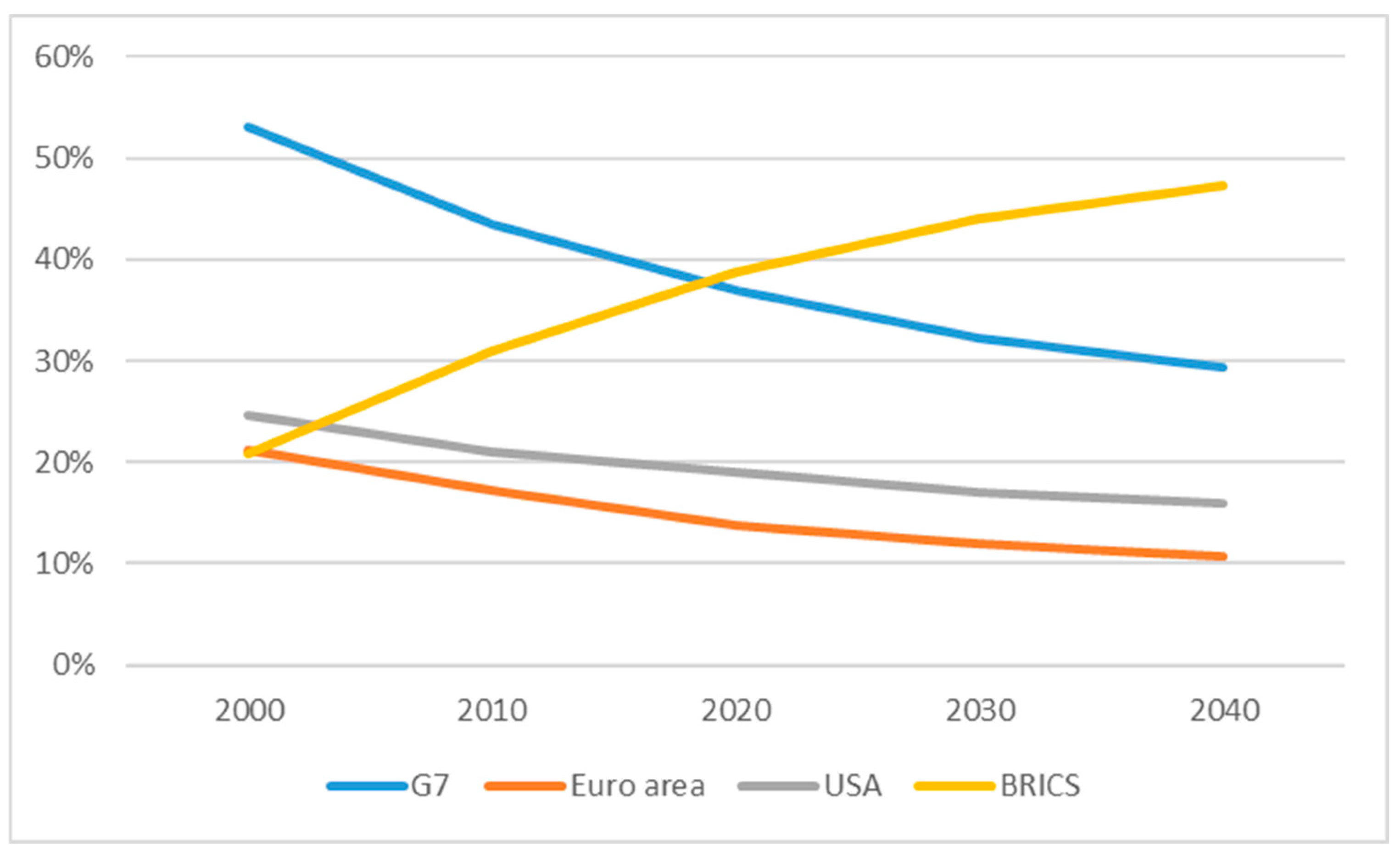
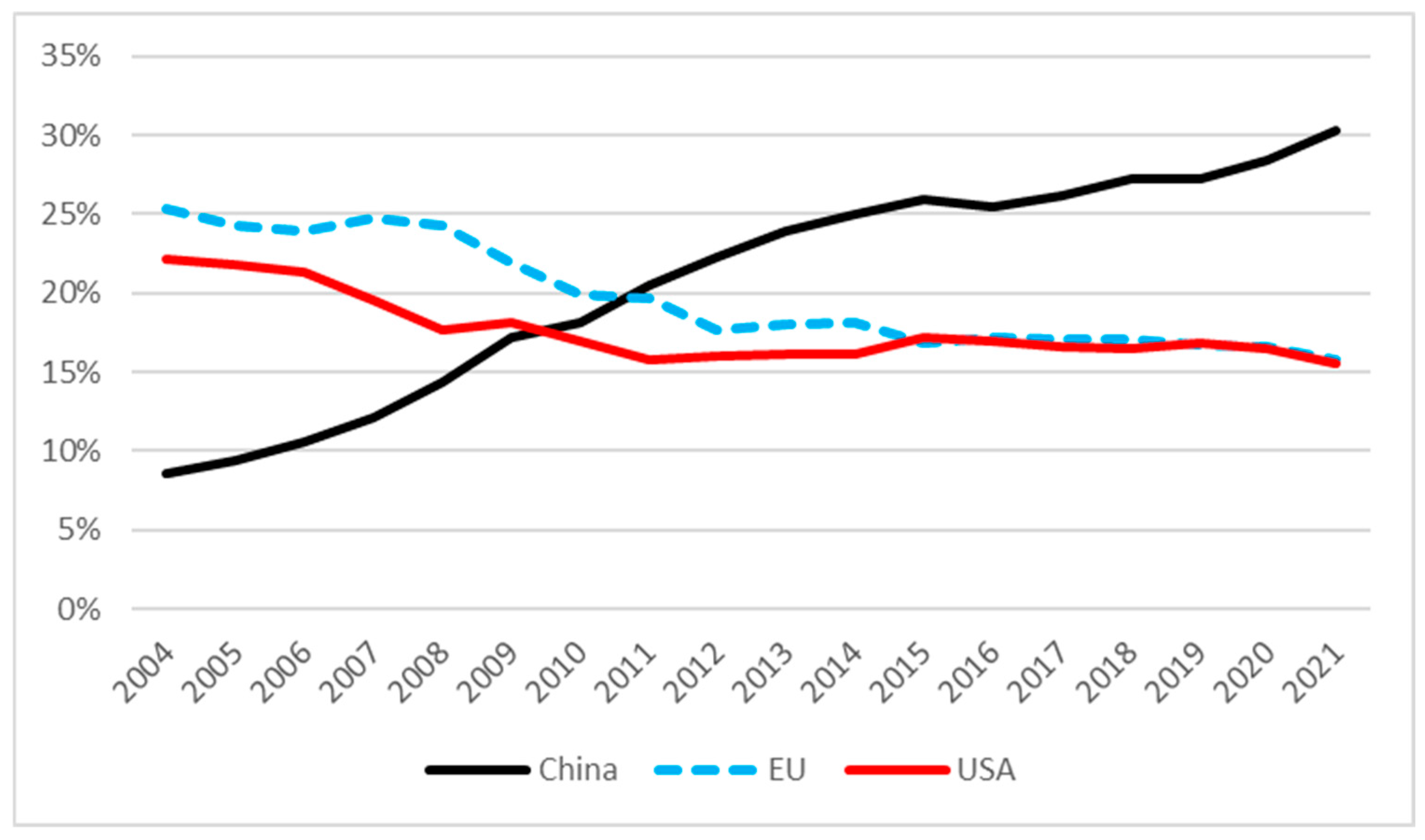
The G7 (Canada, France, Germany, Italy, Japan, the UK, and the US) was the primary engine of global GDP until 2000. Faster growth in the developing world has since changed this dynamic. Specifically, the BRICS economies (Brazil, Russia, India, China, South Africa) exceeded the G7 in GDP in purchasing power parity by 2020. Their expanding role is expected to continue, in contrast with the G7’s relative decline (Figure 1). Perhaps even more significant is the shift in manufacturing, where China has surpassed both the United States and the European Union over the past decade. China’s share of global manufacturing value added now matches that of the US and EU combined (Figure 2).
The reduction in manufacturing in developed economies can, to a significant degree, be understood in the context of financialization of the economy [21,22], i.e., companies reducing investments in the real economy in favor of investments in financial markets and real estate speculation [23]. The manufacturing of wood products in the Global South has also seen explosive growth, particularly in China, which is by far the largest producer of paper and paperboard as well as wood-based panels in the world, and ranks among the top three in regard to wood pulp and sawnwood manufacturing [9]. The overarching implication is clear: most future growth in global demand for forest-based products will occur in the rapidly expanding economies of Brazil, China, India, and other Global South nations. In contrast, demand growth in Europe and North America is expected to be modest [2].

2.2. Demographic Developments

Demographic factors influence forest markets both positively (through demand and market size) and negatively (via constraints on savings and investment when growth is rapid) [24]. UN forecasts show global population rising to 9.7 billion by 2050, with Sub-Saharan Africa contributing most growth. Europe’s population, however, is set to decline from 746 million (2020) to 703 million by 2050 [25]. The EU will peak at 453 million in 2026 before falling to 419 million by 2100 [26]. This demographic decline helps explain Europe’s sluggish growth outlook. For twelve EU countries like Sweden, the population in 2100 will still exceed 2022 levels—a result of net immigration offsetting universal negative natural change [26].
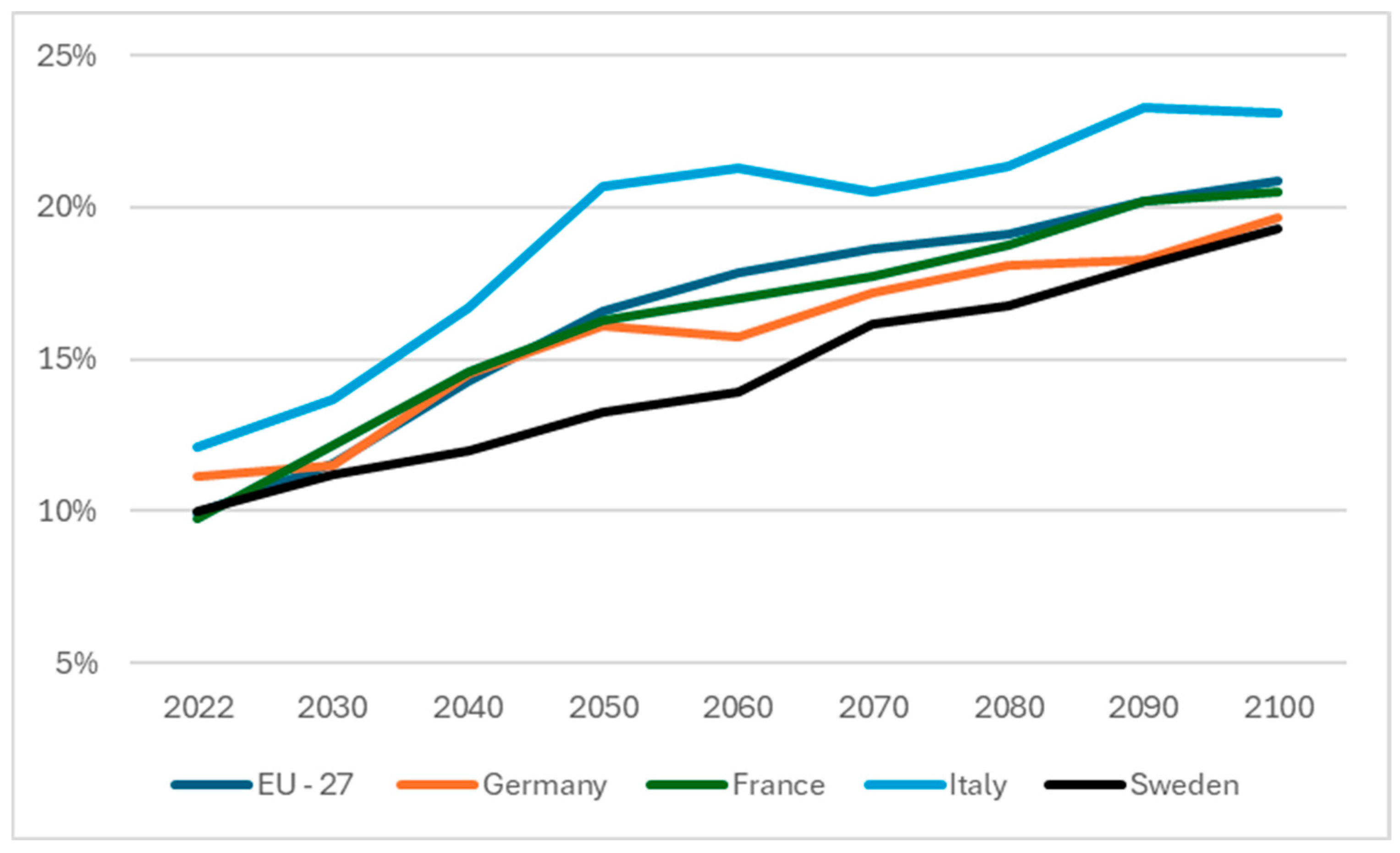
Changes in the age structure of the population also have important effects on the general economic development and the markets for forest-based products. Global population is aging: the share of the population above the age of 65 is projected to increase, while the population below the age of 25 is projected to decrease between 2021 and the end of the century [25]. In Europe, the trend towards aging is very pronounced, with the old-age dependency ratio projected to increase significantly [26]. The growing old-age dependency ratio poses a likely drag on economic growth, even considering adjustments like automation and increased immigration [27]. Lindh and Malmberg’s findings [28] illustrate one channel of this effect: a larger population over 75 years old significantly reduces residential construction, as the working-age population shoulders a greater support burden. The share of this elderly cohort is projected to increase steadily throughout the EU (Figure 3). Demographic aging and a shrinking labor force are likely to drive greater automation [29,30], both in logging and in subsequent manufacturing stages. In the construction industry, more construction components will be factory-made [31], implying increased uptake of engineered wood products [32].
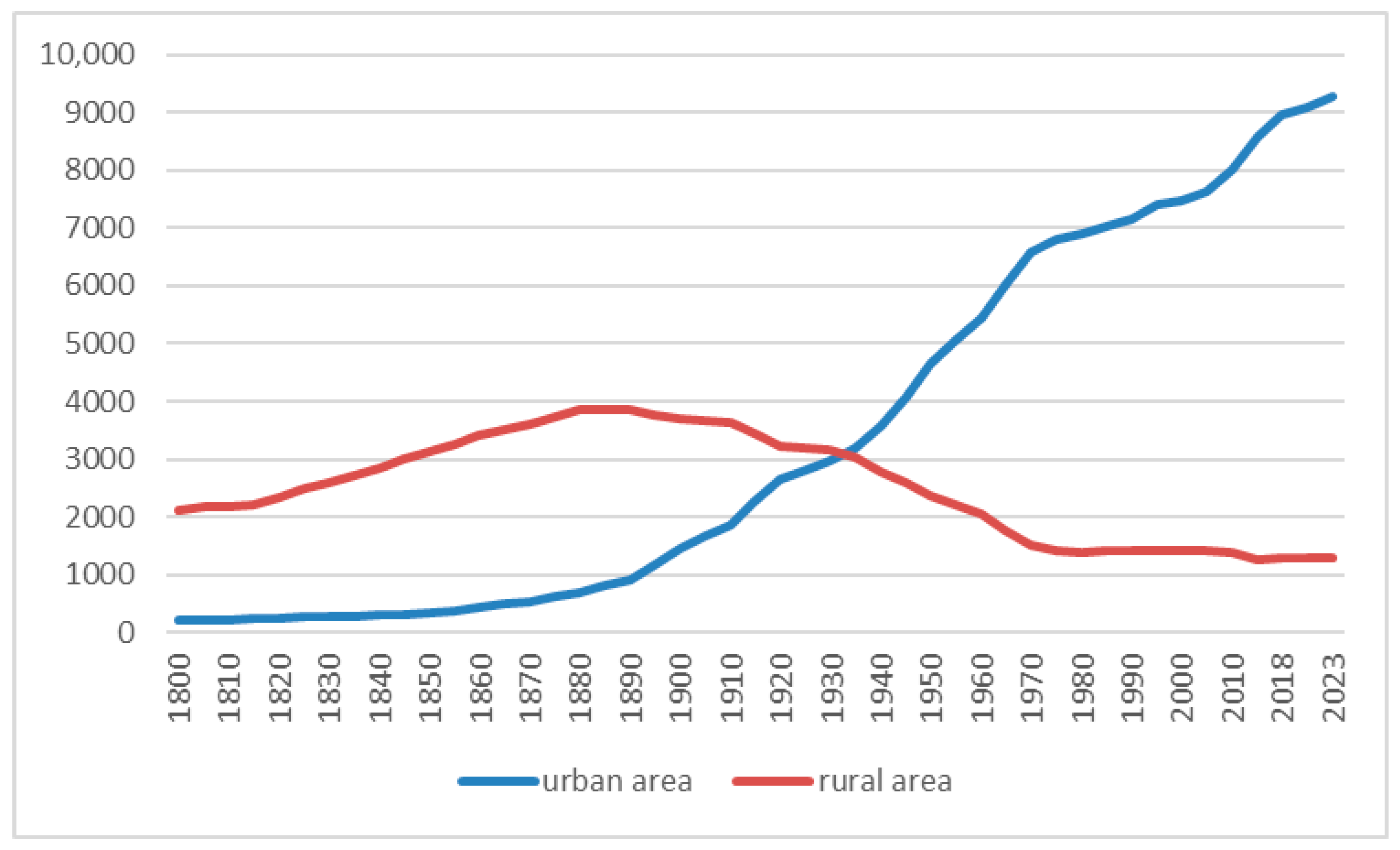
Urbanization further shapes the forest sector in multiple ways. It increases demand for non-wood forest services (e.g., recreation) over timber products [33] and, alongside aging and declining dependence on forestry income, complicates roundwood provision [34,35]. By reducing rural labor availability, urbanization also heightens recruitment challenges in forestry [36], raising labor costs and incentivizing automation. EU urban regions are mostly growing while rural regions shrink [37]. Sweden reflects this strongly, with 88% of its population now in urban areas after a long urbanization phase (Figure 4).

2.3. Policy

Several key European Union (EU) policies, as implemented in Sweden, have the potential to significantly influence both the supply of woody biomass—through their impact on forest management—and its demand. The most influential legally binding instruments in this regard include the amended Renewable Energy Directive (RED) [39], the updated Land Use, Land-Use Change, and Forestry (LULUCF) Regulation [40], the Habitats Directive [41], the Birds Directive [42], the Nature Restoration Regulation [43], the EU Timber Regulation (EUTR) [44], and the Deforestation Regulation (EUDR) [45] (see Table 1). The EUDR supersedes the EUTR, shifting the legislative focus from the legality of timber harvesting to the broader objective of eliminating deforestation and forest degradation from relevant supply chains. This represents a substantive expansion in both scope and stringency. However, the implementation of the EUDR was recently pushed back another year. While this list is not exhaustive—other EU and national policies also have potential impacts—these policy measures are arguably the most consequential for the forest-based sector.
The LULUCF Regulation uses command-and-control tools (accounting, reporting, monitoring) to incentivize GHG removals in forestry, primarily via carbon sequestration in living forests and secondarily through carbon stored in harvested wood products (HWPs). A key mechanism sets a baseline from the 2000–2009 period: harvest levels that would result in net emissions exceeding this baseline are counted as an emission loss until 2030. Consequently, to meet ambitious national GHG removal targets, member states implementing the regulation will likely need to restrict the forest area available for wood supply [1]. In Sweden, the net uptake of GHG in the LULUCF sector was halved between 2010 and 2023 due to a sharp reduction in net removals on forest land [46]. Hence, a significant decrease in harvest levels would be required for the country to live up to the commitments of the LULUCF regulation [47]. A proposal to achieve this is for private forest owners to sign carbon sequestration agreements, renouncing the thinning and final felling of designated forest stands during the contract period, thereby extending the rotation period in return for financial compensation [47]. In this vein, there is already a budding market for forest-based carbon credits in Sweden (see Ref. [48]).
The Habitats Directive, Birds Directive, Nature Restoration Regulation, the EUTR, and its successor, the EUDR, also use command-and-control tools without financial incentives [49]. Their focus on nature and biodiversity protection is likely to limit woody biomass availability [49]. Their supported measures encompass ecosystem management in protected areas, close-to-nature forestry with deadwood and uneven-aged stands, avoiding clearcuts and conversion of primary forests, and promoting biodiversity-friendly tree planting [49].
In contrast to the command-and-control regulations previously discussed, the Renewable Energy Directive (RED) primarily employs direct financial incentives like subsidies to meet its binding targets, which include raising the share of wood-based bioenergy in the EU’s final energy consumption [49]. Although it establishes sustainability safeguards (e.g., protecting soil, biodiversity, and primary forests), the RED permits increased timber harvests through intensive practices—such as clear-felling followed by replanting with fast-growing species—and allows harvests up to the net annual increment [50]. This approach has had a measurable impact: from 2007 to 2019, fuelwood removal and consumption in the EU28 grew faster than both industrial roundwood use and GDP, spiking notably after the RED’s introduction in 2009 [1].
It is worth noting the legal distinctions between different types of EU legislation. EU regulations are directly applicable laws that bind all member states uniformly. Directives set binding objectives but allow each country to decide how to implement them through national legislation [51]. An example is the EU Habitats directive, which is applied in Sweden through Artskyddsförordningen [52].

2.4. Global Climate Change

The broad influences of global climate change on the environment and economy are well-documented [53,54]. For forest ecosystems, this translates into three primary pathways of impact: modifications in tree growth, transformations in disturbance cycles, and shifts in the optimal climatic niches for tree species [55]. The effect of rising temperatures varies between bioclimatic regions. Where temperature is currently a limiting factor, such as higher latitudes within the boreal forests of Sweden, Norway, and Finland, climate change may be beneficial for future forest growth. However, where water is a limiting factor, temperature increases will amplify the negative impacts on forest growth [56]. Such changes in forest growth could carry significant long-term economic consequences. For example, one projection suggests that global timber harvests in 2050 may be roughly six percent higher than they would have been in the absence of climate warming [57].
Changes in temperature and precipitation affect how susceptible forests are to disturbances [55]. According to a literature review study, five out of six disturbance agents (wind, fire, drought, insects, pathogens) are expected to increase in a warmer and drier future climate [58]. Shifts in the frequency or severity of disturbances—including wildfires, pest outbreaks, droughts, and windthrow—can have significant near- to medium-term impacts [59]. Supporting this, Patacca et al. [60] documented a marked rise in forest disturbances across thirty-four European countries from 1950 to 2019, with annual salvage logging averaging approximately forty-four million cubic meters of wood. Particularly, bark beetle damage showed a dramatic increase over the last two decades, and a further increase is anticipated due to the availability of suitable habitats for insects within the boreal forests of Sweden, Norway, and Finland [60].
According to a risk assessment by the Swedish Forest Agency [61], in the medium term (until around 2050), (i) the risk of drought stress in Götaland, Svealand, and along the Norrland coast of the Baltic Sea will become high; (ii) the risk of storm damage across all of Sweden will remain high; (iii) the risk of spruce bark beetle damage will increase to a high level nationwide, with a more pronounced increase in Götaland and Svealand; and (iv) the risk of damage from forest fires will remain high and increase across the entire country. Salvage logging after natural disturbances boosts timber supply and lowers prices in the short term. In the longer term, however, the overall timber supply tends to decline as a result of these disturbance events [62].

2.5. Technological Developments

Technological developments affecting wood-product markets are most relevant in two domains. Advances in silviculture, forest management, harvesting, and processing primarily influence the provision of wood. Meanwhile, digitalization in information and communication technology alters both supply and demand conditions [11,63].
Silvicultural research has traditionally focused on boosting forest growth rates and wood quality, while also enhancing resistance to environmental stress, pests, and diseases. Consequently, genetic research and tree improvement programs are employed to raise yields, improve disease resistance, and foster climate adaptation [63]. Complementing this, advances in remote-sensing technologies are now supporting more precise forest management [63] and enabling more efficient operational planning and execution [64].
Since the mid-twentieth century, the mechanization of logging operations has radically increased, to the point that 95% of industrial roundwood harvesting in Sweden is fully mechanized [65]. Ongoing research is directed toward enabling the use of remote-controlled or autonomous machines in forest operations [66]. As for wood processing, new, improved technologies allow more efficient raw material use. AI and Internet of Things technology (IoT) can improve product quality and reduce waste in paper mills [67]. A recent example from the solid-wood products industry is the application of AI in strength-grading scanning in sawmilling [68]. Two significant industrial trends are enhancing the value and competitiveness of wood. First, the advent of engineered wood products (EWP) and prefabrication has strengthened wood’s role in large-scale construction [69,70]. Second, primarily in Europe and North America, pulp and paper mills are increasingly evolving into integrated biorefineries. These facilities convert wood-processing residues into higher-value outputs such as ethanol, polymers, bioplastics, and food ingredients [71]. This transformation improves industry profitability by extracting greater value from the same raw material base [71].
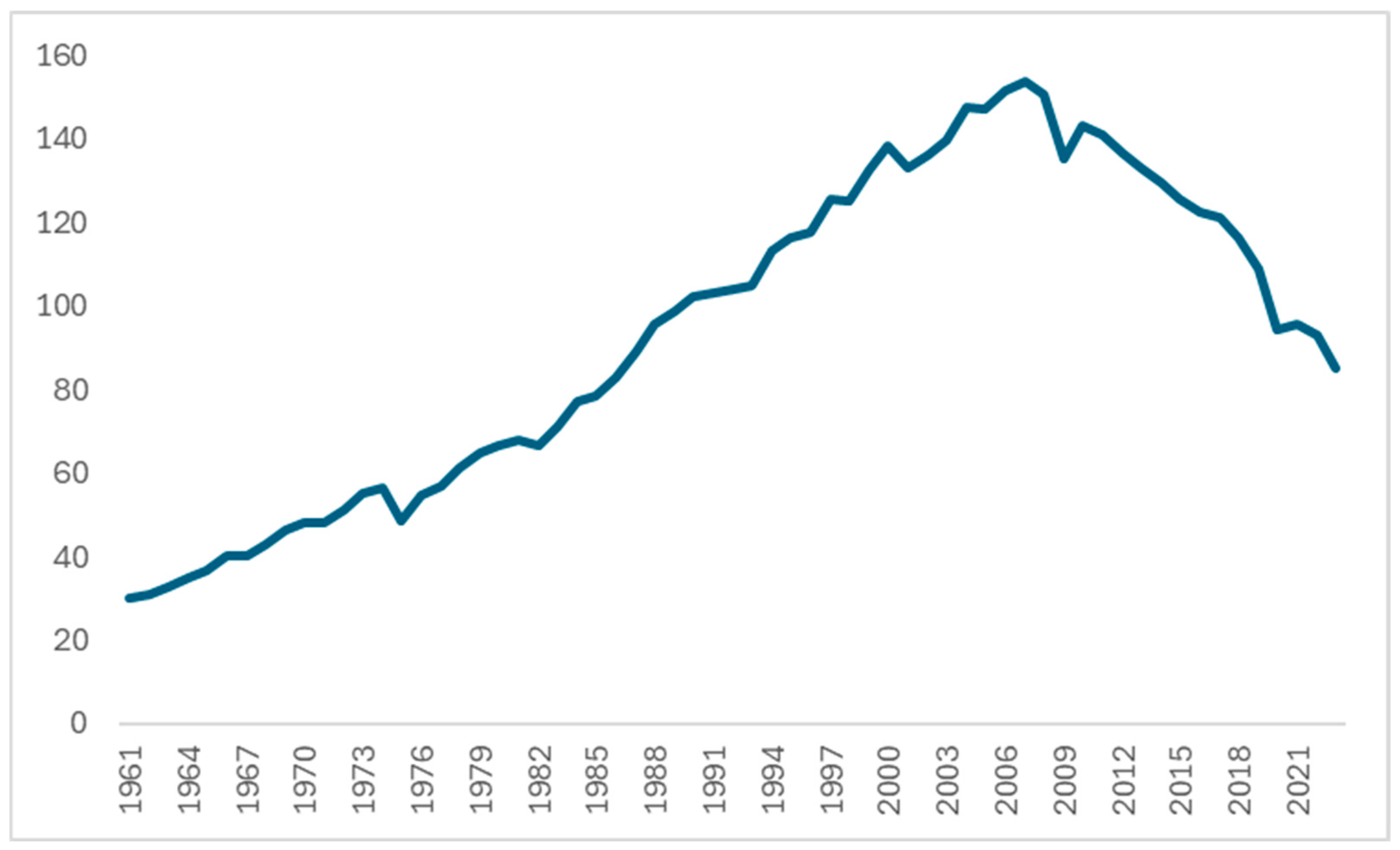
Digitalization has led to a drastic decrease in the demand for graphic papers on a global level since 2007 (Figure 5). The global paper industry is facing significant structural changes as the decline of graphic paper consumption continues [72]. As the production of graphic paper decreases, so does the supply of recovered paper. Hence, digitalization also results in a shortage in the supply of recycled fibers, a major raw material in the manufacturing of packaging and hygiene papers [73]. The demand for graphic papers will likely continue to decrease, since emerging technologies like AI and IoT in office settings are expected to support a further reduction in graphic paper usage [73].

2.6. Geopolitical Developments

Geopolitics affect the forest-based sector in various ways. Geopolitical tensions amplified by the Ukraine conflict had a direct and prompt effect on the EU wood-products market. This occurred through the 2022 decision by the European Council to prohibit imports of timber and wood-based products covered by the EU Timber Regulation from Russia and Belarus [3]. This trade policy choice has had direct negative impacts on the wood supply in the EU 27 market. For example, Russia, Belarus, and Ukraine supplied almost 10% (8.5 million m3) of the EU’s total consumption of softwood lumber in 2021, while Russia alone accounted for over 43% (or 5 million m3) of EU roundwood imports in the same year (source: [74]). Nordic countries have been the major EU importers of roundwood from Russia; Finland accounted for 92% and Sweden for 5.4% of EU imports of roundwood from Russia in 2021 (source: [74]). These EU sanctions on Russian and Belarusian wood imports further limit options for closing Europe’s widening wood supply gap, thereby increasing dependence on wood sourced from within the EU’s own forests [2]. This can be expected to put additional pressure on member states with ample forest resources, such as Sweden. Indeed, the cessation of Russian imports has constrained the Baltic wood market, increasing price pressure [75]. Moreover, a permanent realignment of trade appears to have occurred; even a removal of sanctions would probably not restore former export levels to Europe, given Russia’s ongoing reorientation of wood exports [76].
Globalization after the mid-1980s spurred trade and the global wood-products market [11]. It also disconnected production stages geographically, weakening the traditional ties between processing locations and local forest resources [77]. However, the global financial crisis in 2008 paused the trend of increasing globalization [78], also marking the shift from the period of unipolarity that followed the fall of the USSR, with the USA as the world’s sole superpower, to a state of multipolarity [5]. An important harbinger of this shift was the formation of the economic cooperation platform BRICS, consisting of Brazil, Russia, India, China, and, since 2011, South Africa [79]. BRICS has recently expanded through the inclusion of Egypt, Ethiopia, Iran, the United Arab Emirates, and Indonesia.
Globalization faced renewed pressure from heightened tensions stemming from two developments: the protectionist turn in US trade policy under the first Trump presidency and the UK’s departure from the EU [80]. The COVID-1 pandemic and ensuing disruptions in trade and supply chains exacerbated this challenge [80], with supply chains in North America, Europe, and Asia increasingly sourcing closer to home [81]. The current geopolitical landscape, defined by multiple crises (the war in Ukraine, the US trade war, and Middle Eastern instability), is reinforcing the transition from a globalized system to one that is increasingly regionalized and multipolar. Accompanying this transition is a heightened political impetus for achieving greater self-sufficiency, particularly within the EU [4]. There are now two dominating global powers, China and the USA, with regional powers, the EU being one of them, lined up between the two [5]. The EU can be considered an important regional bloc, although whether it can be considered an independent world power is questionable, as it is tied to and dominated by the USA, in security as well as economic terms [5,82]. How European countries position themselves in this geopolitical landscape is likely to have important repercussions for their industries, including the forest-based sector.
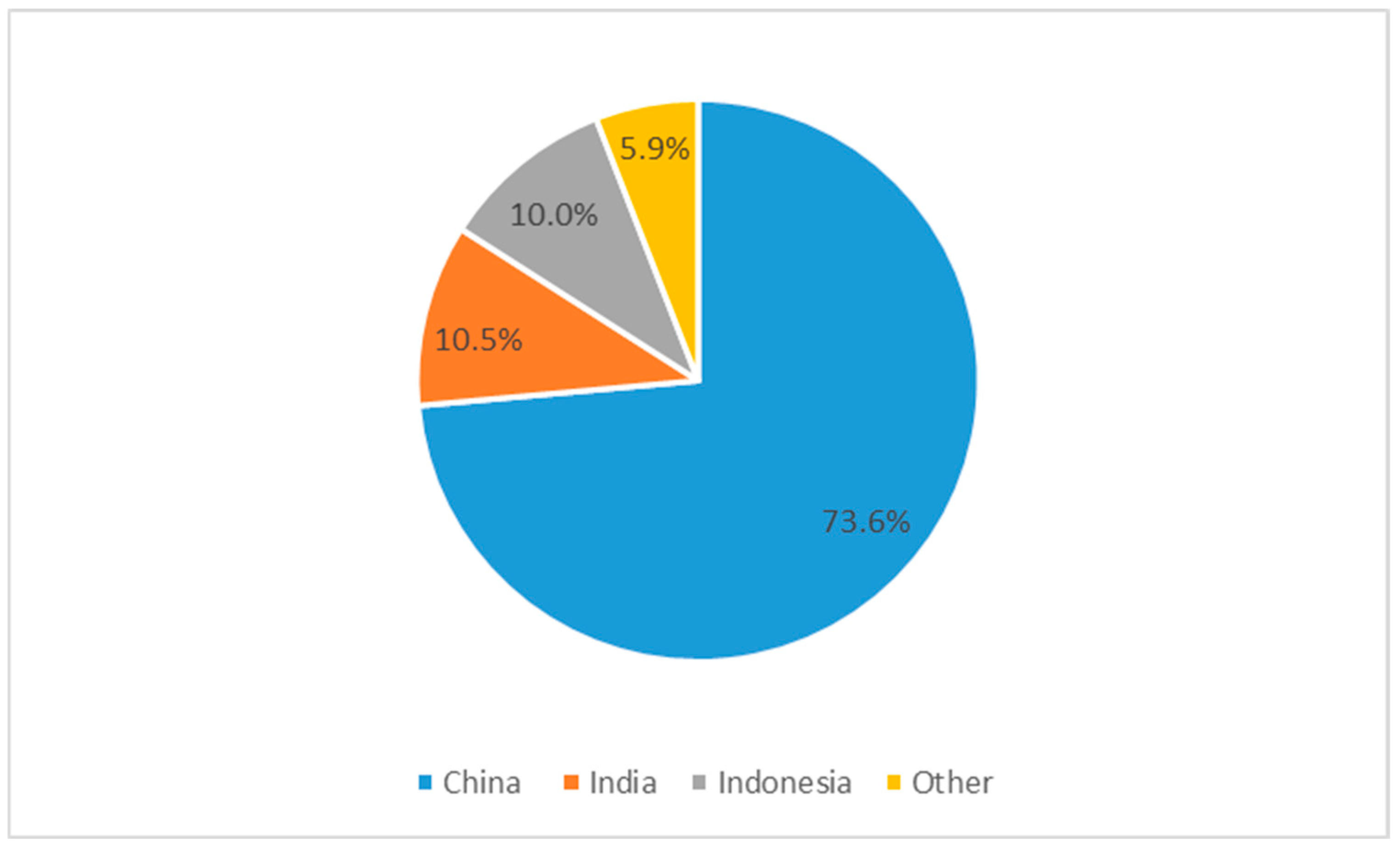
Should this polarization continue and strengthen, it would have serious consequences for the highly export-oriented wood-based sector in Sweden and the EU as a whole. This applies not only to the sourcing of wood raw materials but also, significantly, to the exports of wood products. Hence, as an example, three BRICS countries—China, India, and Indonesia—totally dominate as destinations of EU exports of dissolving pulp (Figure 6), a commodity considered to have a promising future market potential due to the substitution of cotton—using vast amounts of agricultural land and water—by textile fibers produced from dissolving pulp [83]. These three BRICS nations also dominate as destinations for Swedish exports of dissolving pulp, accounting for 72% in 2021 and 67% in 2024 (data source: [74]). Should growth markets such as these become less accessible, wood-based industries in the EU and Sweden will be negatively impacted to a considerable degree.
The sanctions imposed on Russian energy exports following the Ukraine invasion, along with the Nord Stream pipeline attacks, exacerbated pre-existing high energy prices in the EU—a result of post-pandemic recovery and increased use of weather-dependent power [84]. This price surge has significantly eroded the competitiveness of the EU’s energy-intensive sectors relative to counterparts in lower-cost regions [17], notably China and the US [85]. EU member states are impacted to varying degrees, primarily depending on the degree of national reliance on natural gas for power generation. Thus, German manufacturing, the economic engine of Europe, has been hard hit due to its high gas consumption in energy-intensive industries [86].
However, due to the interconnectivity of power grids, as an example, high electricity prices in Germany are spread to southern Sweden [87]. Within wood-based manufacturing, certain sectors are particularly vulnerable: pure paper mills, chemi-mechanical (CMP) and chemi-thermo-mechanical (CTMP) pulp producers, and wood-based panel manufacturers. These industries face dual pressure: high energy costs and heightened competition for wood raw materials from the energy sector. A key added disadvantage is that their manufacturing processes generate relatively little residual biomass that could be used for on-site energy generation [11].

3. Futuring Reflections

Future-oriented research offers value not only through forecasting but also by examining alternative scenarios, their consequences, and strategies for realizing desired futures [88]. The field utilizes various methodologies, classifiable by criteria like reliance on expert judgment versus participatory processes, and empirical evidence versus creative visioning [89]. Selecting an appropriate approach hinges on the study’s objectives and context, particularly its time frame and the relative weight of predetermined factors versus uncertainties [89].
Scenario analysis—the development of alternative future visions—is an appropriate tool when forecasting becomes difficult due to high uncertainty [90]. Its goal is to stretch thinking in two dimensions: timeframe (often beyond 5–10 years) and breadth (covering a range of potential futures) [91]. The methods used can differ significantly: they may be quantitative or qualitative; focus on central trends or peripheral, extreme events [92]; and be either informal/solitary or formal/participatory [91].
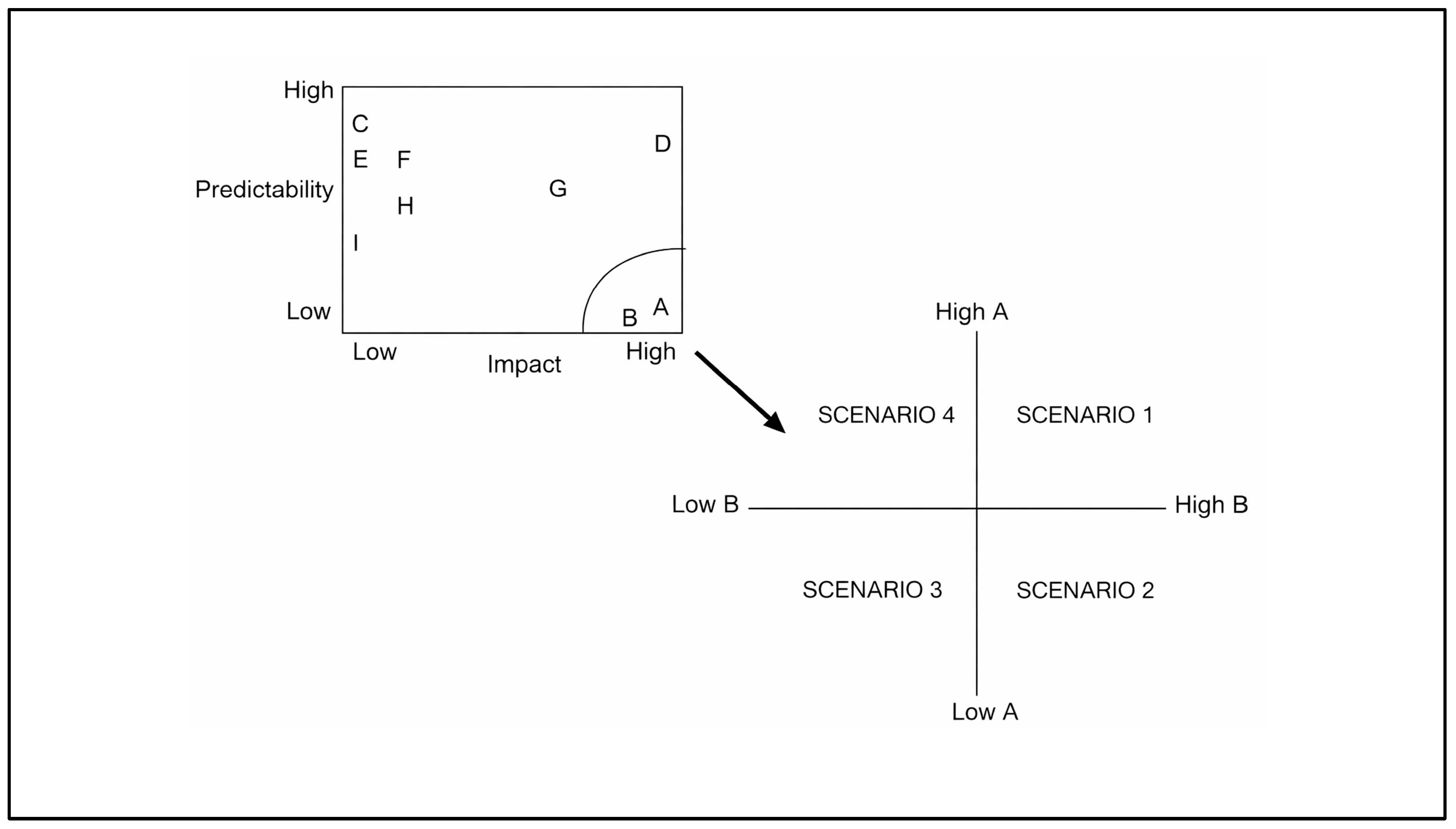
Drivers of change (causal factors) fall into three categories: constant (stable), predetermined (predictably changing), and uncertain [93]. A crucial step in scenario development is identifying the critical uncertainties—highly impactful and unpredictable drivers [94,95]. These form the axes that define distinct scenarios (Figure 7). Other drivers, such as predictable demographic trends, can be incorporated into all narratives to maintain internal consistency. Each final scenario represents a unique combination of the critical uncertainties’ states, integrated with the other drivers, crafted into a logically coherent narrative [96]. Importantly, no scenario set is “correct”; their main value is to stimulate strategic dialogue [90].

4. Materials and Methods

This study relies exclusively on secondary sources, including scientific literature, trade publications, official statistics, and government reports. The chosen analytical approach is scenario analysis. This method is particularly suitable given the study’s long-term horizon (extending to approximately 2050) and the heightened level of uncertainty inherent in such a timeframe. The approach used is structured, as suggested by Schwartz [94], set up along these six steps:
  • Define the problem and focus area.
  • Map key drivers and influencing factors.
  • Pinpoint critical uncertainties.
  • Formulate scenario frameworks.
  • Elaborate on the scenarios.
  • Evaluate consequences.
The development and analysis of scenarios in this study are qualitative in nature, grounded in structured discussions and deliberative reasoning. In identifying critical uncertainties, it draws on the work behind the Teaming up 4 Forests wood supply study [97], i.e., a literature review, online expert meetings, and workshops. Scholars—Professor Ola Eriksson of Linnaeus University, Dr. Maximilian Schulte of Wageningen University, and Dr. Klas Lucander of Linnaeus University—were also consulted as regards the internal consistency of the scenarios.
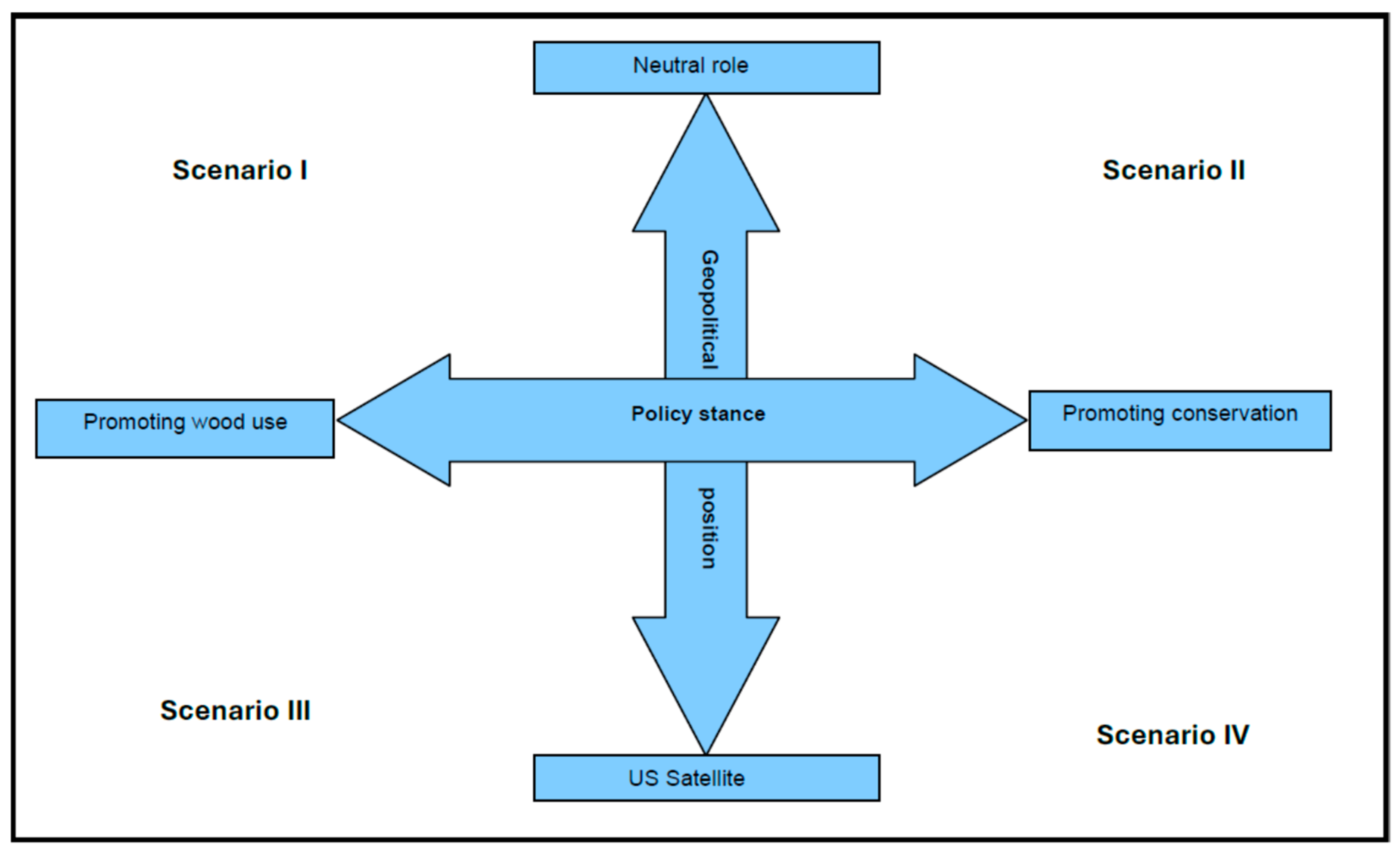
The scenarios are constructed around divergent future states stemming from two critical uncertainties. Among the drivers examined, demographic trends are relatively more predictable compared to, for example, geopolitical shifts. To a considerable extent, climate change impacts can also be viewed as predetermined over the short to medium term. Geopolitical developments, on the other hand, are highly unpredictable at the same time as they are of paramount importance, affecting society as a whole. Of particular interest here is how conflicted the multi-polar world order will be, and how European countries will position themselves in the geopolitical landscape: forming a regional power strongly tethered to the United States or striving for a more neutral pose in terms of trade relations between the two dominating global powers, China and the USA. The outcome of this composite critical uncertainty, forming one of the axes in formulating the scenarios, defines framework conditions for other drivers of change, such as technological progress and economic development. Likewise, how climate, energy, and environmental policies in Europe will be implemented—resulting in an overall stance promoting wood use or rather favoring the conservation of forests—is surrounded by considerable uncertainty while also having considerable ramifications for the forest-based sector. This critical uncertainty constitutes the other axes in defining the scenarios.

5. Results—Four Alternative Futures

This section introduces four alternative futures for the Swedish forest sector. Each scenario is shaped by a different combination of outcomes for the two critical uncertainties discussed in Section 4 (see Figure 8). Scenario narratives describe the situation around the year 2050.

5.1. Scenario I

In this scenario, in terms of trade relations, the EU has managed to take a precarious neutral stance between the Chinese and US power blocs, and trade is maintained with all regions. However, there is an increased drive for self-sufficiency in the world, as supply chains in North America, Europe, and Asia are increasingly sourcing closer to home. Energy costs in Europe are high; some imports of Russian hydrocarbons have resumed, though at significantly lower levels than before 2022, and though wind and solar energy have seen expansion, the EU relies to a large extent on imports of expensive liquefied natural gas. Because of resulting high energy prices, and a policy stance emphasizing energy security and climate change mitigation through substitution of fossil-based energy and materials, European energy use of wood for heating, power and transport is at an elevated level, and thus prices for primary woody biomass—roundwood and logging residues—as well as forest industry by-products and recovered wood are considerably higher than today. This notwithstanding, rather sluggish economic growth—the result of demographic developments and high energy prices—is hampering European forest products demand.
Wood use in construction in Sweden and the entirety of the EU has increased substantially, with renovation and remodeling accounting for the largest part, since new construction is at low levels, given slow economic growth and stagnating population development. Further, EU imports of sawnwood from Russia have not resumed; they have been redirected to Asia. As a result, modern sawmills are performing well, also considering sales of surplus electricity and wood-based energy carriers produced from side streams. The sawmill industry in Sweden and Europe in general has invested heavily in technical development. Integrated production units—using AI extensively to increase efficiency in the use of timber and reduce waste—now supply engineered wood components to meet the demands of—in response to a shrinking workforce—highly industrialized construction, furniture, and flooring industries, as well as wood pellets and other energy products. The share of Swedish coniferous sawnwood on the EU market has increased as a result of German output decreases resulting from lower availability of harvestable wood following bark beetle damage. The Swedish sawmill industry maintains its current production volume but achieves a higher output value. In contrast, wood-based panel manufacturing—a relatively small sector in Sweden—faces significant pressure from high energy costs and intensified competition for all raw materials (slabs, chips, sawdust, roundwood). This sector is further disadvantaged by its lack of secondary products that could be sold in energy markets. As a result, production levels are lower than today.
The growth in wood-based products consumption is chiefly taking place in the Global South, reflecting faster economic growth and large populations. As a result of this and high European energy costs, a significant part of paper and paperboard manufacturing in Sweden and the EU as a whole has moved to China and India. It should be noted, however, that Swedish manufacturing enjoys lower energy costs than continental Europe. China, India, and fast-growing economies in Southeast Asia and North Africa are the main extra-EU export destinations for Swedish forest-based industries. Production and exports of dissolving pulp—mainly to China, India, and Pakistan—for textile manufacturing have seen a strong growth, as Lyocell is increasingly replacing cotton. Continued global expansion of electronic ICT and increased uptake of AI and IoT have resulted in further decreases in global graphic paper consumption, and Swedish production of these paper grades has continued its sharp decline. In the Nordic region, the pulp and paper industry—already challenged by energy-sector competition for raw materials—has experienced additional consolidation via mergers. Pulp and paper manufacturing that remains in Sweden—bio-refineries making extensive use of AI and IoT to increase productivity and energy efficiency while reducing waste—focuses on supplying value-added products, e.g., special papers and advanced packaging solutions that rely on long-fiber pulp as well as biochemicals. Overall, the output volume is considerably lower, but its monetary value is at the same level as today.
Imports of roundwood and wood products to Sweden and the rest of the EU remain at low levels, as imports from Russia and Belarus—redirected to Asia—have not resumed. Consequently, forest harvest levels are high. In Sweden, the most forest-rich country in the EU, they have remained at current levels. Due to high road transport costs, harvests are concentrated in southern Sweden and relatively near the coastline in central and northern Sweden. Here, the harvest-to-increment ratio is consistently close to one. In other parts of the country, in particular the interior of northern Sweden, forest utilization is lower than today. Climate-related forest disturbances and associated salvage logging have increased, and the resulting occasional oversupply of roundwood, mainly spruce sawlogs, is exported to China and India.
A shrinking workforce due to aging and urbanization has spurred rapid technological development in logging, with widespread use of autonomous machines in forest operations. Difficulties in mobilizing wood have increased further as forest owners are increasingly detached from their forest holdings, leading to high timber prices and reduced overall profitability in the forest sector. Due to elevated timber prices, prices for forest land are high. Overall, employment in the Swedish forest sector is lower than today; a result of technological progress—driven by a declining workforce—and the closure of some sawmills as well as the relocation or closure of some pulp and paper production capacity.
Like most other EU member states, Sweden did not reach the LULUCF targets for 2030, and forest carbon sinks at the national level do not experience an increasing trend. In response to increased forest disturbances, notably spruce bark beetle damage following drought stress, research to make trees more resilient to adverse environmental conditions, pests, and diseases has intensified. For the same reason, the use of alternative tree species to Norway spruce (Picea abies) in Northern and central Europe has increased. In response to a strong demand for wood-energy feedstocks, the extent of short-rotation plantation forests has grown.

5.2. Scenario II

Similar to Scenario I, Scenario II sees the EU taking a neutral stance between the two dominating powers, maintaining trade with all regions, although at lower levels than today. Energy prices in Europe are higher than current ones, and still higher than in Scenario I. This is the result of the domestic supply of wood being more restricted; the overall EU policy stance promotes forest conservation over wood use to increase forest carbon sinks and biodiversity, while the imports of wood remain at low levels—imports from Russia and Belarus have not resumed, and a strict implementation of the deforestation regulation is disincentivizing imports from other extra-EU sources. Prices for woody biomass are slightly higher than in Scenario I, despite economic growth in the EU being lower, due to higher energy prices. Elevated prices for primary woody biomass, strengthened by an expanded market for forest-based carbon credits, have led to even higher prices for forest land than in Scenario I.
The sawmill industry has further consolidated in Sweden and the EU, with mergers and mill closures, as elevated timber prices and traceability requirements of the deforestation regulation put pressure on the profitability, notwithstanding the high demand for its wood-based energy carriers. Integrated production units, with increased efficiency in the use of timber and reduced waste, supply engineered wood as well as wood-based energy carriers. The EU market share of Swedish coniferous sawnwood has increased as German output has decreased due to the lower availability of harvestable wood following bark beetle damage. The output in the industry is lower than in Scenario I in both volume and value terms, though still higher than today in value. The production of wood-based panels has all but disappeared in Sweden and is severely diminished in the wider EU, a consequence of elevated energy prices and fierce competition for raw materials from the energy industry.
Paper and paperboard manufacturing in Sweden and the EU as a whole has translocated to countries in the Global South, mainly China and India, to an even greater extent than in Scenario I, due to their more dynamic economies and lower energy costs. The same as in Scenario I, global graphic paper consumption has continued to decrease, and Swedish production of these paper grades, having significantly reduced, is even lower than in Scenario I. Wood pulp manufacturing in Sweden and Finland, including dissolving pulp production, has to a considerable extent been outsourced to Brazil, Chile, and Uruguay, reflecting lower energy and overall raw material costs there. Again, pulp and paper mills remaining in Sweden operate as bio-refineries, increasing productivity and energy efficiency while reducing waste in supplying value-added products based on long-fiber pulp and biochemicals. Overall, the industry output is lower than in Scenario I in both volume and value terms.
Even though harvests of firewood for household use are higher, overall forest harvest levels are lower than in Scenario I, given a lower demand for industrial roundwood. As in Scenario I, harvests are concentrated in southern Sweden and near the coastline in central and northern Sweden. Continuous cover forestry in Sweden has expanded in response to ambitious implementation of environmental policies such as the Nature Restoration Regulation, and as a consequence, the logging costs are higher than in Scenario I. All in all, profitability in forestry is even lower than in Scenario I, and only efficient logging firms survive. Employment in the forest sector declines further relative to Scenario I, driven by a combination of lower harvesting activity and the loss of production capacity through closures and relocations.
Forest disturbances are more widespread in Sweden than in Scenario I, as forests on average are older. Bark beetle damage is particularly pronounced in areas of the country where forest utilization is low. Wood from salvage logging is exported to China and India. Still, on the national level, the forest carbon sink is slightly higher than the current one and that of Scenario I, a result of overall lower harvest levels. As in Scenario I, there is intensive research to make trees more resilient to climate change, and the use of indigenous broadleaf species in Sweden has increased, also as a means to increase biodiversity.

5.3. Scenario III

Scenario III is characterized by a highly polarized world and heightened tensions between the American and Chinese blocs. These tensions, more severe than in Scenarios I and II, lead to prohibitively high trade barriers between the US-led and an expanded Chinese-led BRICS bloc. The EU is strongly aligned with, and heavily reliant on, the US-dominated bloc. Extra-EU trade—lower in volume than in both Scenarios I and II—is oriented towards North America and Latin America. The drive for self-sufficiency is very pronounced, more so than in Scenarios I and II. As a result of reduced trade, economic activity on the European and Global level is lower than in both Scenarios I and II. Europe relies heavily on imports of US hydrocarbons and, though dampened by lower economic activity, energy costs are high. The prevailing policy stance strongly promotes using wood to substitute fossil-based materials and energy. Prices for woody biomass are higher than today, but lower than in Scenarios I and II due to considerably lower economic activity. Prices for forest land are thus also higher than today but lower than in Scenarios I and II.
The profitability of the sawmill industry in Sweden and the EU is reduced compared toScenariososs I and II, owing to a triad of factors: high raw material costs, weak internal EU demand, and constrained extra-EU exports, limited to the US sphere of influence. The share of Swedish coniferous sawnwood on the EU market has increased due to decreased German output as a result of lower availability of harvestable wood following bark beetle damage. However, the industry output in Sweden and the EU as a whole is lower than today and lower than in Scenarios I and II, in volume as well as value terms. Remaining production facilities are highly efficient in the use of energy and raw materials, supplying engineered wood products and energy commodities. However, lower profitability in the industry and restricted access—due to global protectionist sentiments—lead to a less pronounced uptake of cutting-edge technologies compared to Scenarios I and II. Swedish wood-based panel manufacturing has ceased entirely, and in the wider EU production remains below the levels of both Scenarios I and II. This is due to high raw material costs from intense competition from the energy sector, weak internal EU demand, and restricted exports outside the region.
Paper and paperboard manufacturing in Sweden and the EU are faring much worse through the combination of lower overall demand due to lower economic activity, reduced trade without access to growth markets in the Chinese sphere of influence, and high raw material and energy costs. As a consequence, production of paper and paperboard has reduced sharply, with a significant part of the capacity having been closed down. Again, Sweden is faring better than continental Europe due to lower energy costs. Wood pulp manufacturing in Sweden and Finland has largely been moved to South America, mainly Chile and Uruguay, which belong to the US-led bloc, reflecting lower energy and raw material costs there. Again, pulp and paper mills that still operate in Sweden function as bio-refineries, increasing productivity and energy efficiency while reducing waste in supplying value-added products requiring long-fiber pulp as well as transport fuels. Dissolving pulp manufacturing in Sweden largely caters to the European textile industry, which has been expanded as imports from Asian markets are no longer available. Overall, the output of the wood pulp industry is lower than today and lower than in Scenarios I and II, in both volume and value terms. Lower profitability curbing research and development, in combination with restricted access to AI and other cutting-edge technologies, results in the European pulp and paper industries being less competitive compared to the situation in Scenarios I and II.
Forest harvest levels are lower than in both Scenarios I and II, despite a strong growth in fuelwood harvests; not least, harvests of firewood for private use have seen a considerable increase. Again, harvests are concentrated in the southern parts of the country and near the coastline in central and northern Sweden. Fewer logging firms operate than in Scenarios I or II, yet they are highly efficient and largely automated. Consequently, along with lower harvest levels and further production closures/relocations, total forest sector employment is reduced compared to both earlier scenarios.
On the national level, the forest carbon sink is slightly higher than both Scenario I and Scenario II, since harvest levels are lower. However, it is an increasingly unstable sink, as forest disturbances are more widespread and frequent. Bark beetle damage and forest fires are particularly pronounced in areas of the country where forest utilization is low, and forests, as a consequence, are older. Due to low profitability in the forest sector, there are fewer means to conduct research to make trees more resilient to climate change. However, the use of indigenous broadleaf species in forest regeneration has increased in response to more frequent bark beetle infestations and forest fires.

5.4. Scenario IV

Like Scenario III, Scenario IV is characterized by a highly polarized world and heightened tensions between the American and Chinese blocs. The EU, experiencing increasing internal discord, is anchored in the US sphere of influence and strictly adheres to US trade policy dictates. Prohibitively high trade barriers between the US-led and an expanded Chinese-led BRICS bloc result in EU trade with the rest of the World being oriented towards North America and Latin America. Economic activity in the EU is the lowest of all Scenarios as energy prices are even higher than in Scenario III. This reason is a lower supply of wood for energy; an overall EU policy stance promoting forest conservation over the use of wood to increase forest carbon sinks and promote biodiversity, as well as strict implementation of the deforestation regulation that further reduces imports. Prices for woody biomass, further strengthened by a burgeoning market for forest-based carbon credits, are higher than today and slightly higher than in Scenario III, but lower than in Scenarios I and II due to considerably lower economic activity. Prices for forest land in Scenario IV relate to those of today and the other scenarios accordingly.
In Sweden and the EU, the sawmill industry records its lowest profitability in this scenario. Elevated raw material costs—high timber prices and costs associated with a strict implementation of the deforestation regulation—and demand that is weaker still than in Scenario III, depress margins, outweighing the benefits of high prices for byproduct-based energy carriers and surplus electricity. The share of Swedish coniferous sawnwood on the EU market has increased due to decreased German output, a result of the lower availability of harvestable wood following bark beetle damage. The output of the industry in Sweden and the EU as a whole is the lowest of all scenarios and lower than today, in volume as well as value terms. Remaining production facilities use energy and raw materials—including recycled wood—efficiently in supplying engineered wood products and energy commodities. However, low profitability and access barriers result in the lowest level of adoption of advanced technologies such as AI and IoT across all scenarios. In Sweden, wood-based panel manufacturing has completely stopped, and across the rest of the EU, production is at the lowest level of all scenarios. This is due to high raw material costs from intense competition from the energy sector, weak internal EU demand, and limited exports to the US sphere of influence.
Paper and paperboard manufacturing in Sweden suffers from a combination of lower overall demand due to the lowest economic activity of all scenarios, reduced trade, high raw material and energy costs, and no access to growth markets in the Chinese sphere of influence. However, Sweden’s position in the EU market is strengthened due to its lower energy and wood raw material costs (due to abundant forest resources). Wood pulp manufacturing in Sweden has been translocated to South America to an even greater extent than in Scenario III, while mechanical and semi-chemical wood pulp manufacturing has closed down as a result of high energy costs and reduced demand. Pulp mills that still remain in Sweden operate as bio-refineries, efficient in the use of raw materials and energy in supplying market pulp and transport fuels. Dissolving pulp manufacturing in Sweden largely caters to the European textile industry, which has seen expansion as imports from Asia are no longer available. Overall, the output of the wood pulp industry is the lowest of all scenarios and considerably lower than today, in both volume and value terms. The same goes for the profitability of the industry. Low profitability effectively hinders research and development, combined with restricted access to AI and other cutting-edge technologies lead to a vicious circle as regards the competitiveness of European pulp and paper industries.
Forest harvest levels are the lowest of all scenarios and significantly lower than today, notwithstanding sizeable harvests of firewood for private use. Yet again, due to high transport costs, harvests are concentrated in the southern parts of the country and near the coastline in central and northern Sweden. Continuous cover forestry in Sweden has expanded due to the ambitious implementation of environmental policies, and as a consequence, logging costs are high. Logging firms, the number of which is the lowest of all scenarios, are cost-efficient. Forest sector employment is the lowest of all scenarios, as harvest levels are lower and more production capacity has been closed or relocated.
Even though forest harvest levels are the lowest of all scenarios, the forest carbon sink is only the second highest, slightly lower than Scenario III. The reasons are the slower growth and more widespread and frequent forest disturbances in an increasing share of old forests. Bark beetle damage and forest fires are particularly pronounced in areas of the country where forest utilization is low. There are fewer financial means to conduct research to make trees more resilient to climate change, due to low profitability in the forest sector. However, forest regeneration using indigenous broadleaf species in Sweden has seen a strong increase in response to bark beetle infestation and forest fires.

5.5. Summary of Scenarios

Table 2 summarizes the scenarios over the geopolitical axis.

6. Discussion and Conclusions

Irrespective of the scenario, the manufacturing of wood-based products in Sweden and the EU as a whole is not expected to increase in volume terms compared to today. Thus, the demand suffers from sluggish economic growth in the EU; a result of high energy costs, aging and stagnating populations, and reduced extra-EU trade as trade barriers have increased in a more polarized World. Across all scenarios, a significant portion of the EU’s bulk-oriented forest industry is expected to close down or shift operations to regions with lower manufacturing costs and more dynamic markets. A direct consequence of this structural change is that Swedish forest harvest levels are not projected to rise in any of the scenarios.
The potential for large-scale pulp and paper manufacturing in Sweden seems constrained in every scenario. While this forest-rich country, along with Finland, benefits from lower energy and wood raw material costs than continental Europe, it faces a considerable competitive disadvantage against producers in the Global South regarding both energy and wood raw material costs. The industry’s long-term viability, therefore, hinges on a strategic shift toward higher-value segments. This entails moving into value-added products—such as specialty papers and advanced packaging solutions that leverage the unique properties of long-fiber pulp—and diversifying into biochemicals through dedicated biorefineries. To maximize wood utilization and minimize waste, the uptake of cutting-edge technologies like artificial intelligence (AI) and the Internet of Things (IoT) will be essential. This transition, in turn, necessitates deeper collaboration with research institutions and robust cross-sectoral partnerships, particularly with the chemical industry. Cross-sectoral cooperation would be particularly crucial when the profitability in the forest sector is low, hampering the ability of the sector to implement new technologies on its own.
A positive future for the European and Swedish solid wood industry hinges on shifting from commodities to specialized components. This evolution is critical to meet the demands of highly automated construction, furniture, and flooring industries, which are adapting to a shrinking workforce. Simultaneously, strong bioenergy markets are expected to benefit sawmills through higher prices for energy products derived from sidestreams. Future viability may lie in integrated production units manufacturing both engineered wood products and biofuels, necessitating close collaboration with downstream industries. By contrast, the wood-based panel industry, which holds only marginal importance in Sweden, experiences severe pressure in every scenario as a result of intense competition for raw materials from the energy sector.
Swedish forest owners are foreseen to benefit from elevated prices for primary woody biomass and ensuing high prices for forest land. Hence, all four scenarios see prices for woody biomass higher than today, mainly driven by a high demand for bioenergy. The expected expansion of the market for forest-based carbon credits, in particular the two scenarios where the overriding focus of policy is one of promoting the forest carbon sink, will contribute to high prices for primary woody biomass. A burgeoning market for forest carbon credits could benefit forest owners also in regions with high transport costs and ensuing lower demand for primary woody biomass. Forest utilization and forest carbon dynamics are envisioned to be unevenly distributed in all scenarios, as elevated transport costs lead to forest harvests being concentrated in the southern parts of Sweden and relatively near the coastline in central and northern Sweden.
Adapting to a future of heightened forest disturbances—primarily drought stress, consequent spruce bark beetle outbreaks, and increased fire risk—requires a concerted research effort to enhance tree resilience against adverse climate conditions, pests, and pathogens. This research would ideally be coordinated under the auspices of international bodies like the United Nations. A parallel and essential strategy is to diversify the tree species used in forest regeneration. In Sweden, this entails a significant increase in the use of broadleaf species such as birch, hybrid aspen, and poplar. Beyond building ecosystem resilience and mitigating disturbance risks, this shift would enrich forest biodiversity. However, it presents a strategic challenge for the Swedish forest industry, whose production processes are largely optimized for Norway spruce and Scots pine. To remain viable, the industry must adapt its methods to effectively utilize the somewhat divergent wood properties of these alternative tree species.
Incoherences between different policy initiatives should be avoided as much as possible, to allow for as efficient use of forest resources as possible. A thorough impact analysis should be carried out before implementing different policy measures. This analysis would ideally assess the simultaneous application of different policy instruments, accounting for trade-offs and synergies. Since some trade-offs are inevitable, policymakers need to adopt a transparent ranking of policy objectives.

Funding

This research was funded by Formas—a Swedish Research Council for Sustainable Development, grant number 2025-00234, as regards the call “The future and development of forests and the forest sector in a global context”.

Data Availability Statement

The original contributions presented in this study are included in the article. Further inquiries can be directed to the author.

Acknowledgments

I am grateful for fruitful consultations and discussions with Ola Eriksson of Linnaeus University, Maximilian Schulte of Wageningen University, and Klas Lucander of Linnaeus University.

Conflicts of Interest

The author declares no conflicts of interest. The funders had no role in the design of the study; in the collection, analyses, or interpretation of data; in the writing of the manuscript; or in the decision to publish the results.

Abbreviations

The following abbreviations are used in this manuscript:
AIArtificial intelligence
BRICSBrazil, Russia, India, China, South Africa
EUEuropean Union
EUDRRegulation (EU) 2023/1115 on deforestation-free products
EWPEngineered wood products
FAOFood and Agriculture Organization of the United Nations
ICTInformation and communication technology
G7Group of seven
IoTInternet of Things
UNUnited Nations
UNECEUnited Nations Economic Commission for Europe

References

  1. Jonsson, R.; Sotirov, M. Future Wood Availability in Europe in Light of Climate and Energy Policy and Geopolitical Developments—A Wood Resource Balance-Based Assessment. Sustainability 2025, 17, 1291. [Google Scholar] [CrossRef]
  2. Jonsson, R.; Malovrh, Š.P.; Sotirov, M. Forest ownership, socioeconomic and geopolitical factors. In Europe’s Wood Supply in Disruptive Times, an Evidence-Based Synthesis Report; World Series; Egger, C., Grima, N., Kleine, M., Radosavljevic, M., Eds.; IUFRO: Vienna, Austria, 2024; Volume 42, pp. 69–92. [Google Scholar]
  3. Council Regulation (EU) 2022/576 of 8 April 2022 Amending Regulation (EU) No 833/2014 Concerning Restrictive Measures in View of Russia’s Actions Destabilising the Situation in Ukraine. Available online: https://eur-lex.europa.eu/legal-content/EN/TXT/PDF/?uri=CELEX:32022R0576&from=EN (accessed on 19 December 2024).
  4. EU-China Relations Factsheet. Available online: https://www.eeas.europa.eu/eeas/eu-china-relations-factsheet_en (accessed on 20 August 2024).
  5. Peters, M.A. The emerging multipolar world order: A preliminary analysis. Educ. Philos. Theory 2023, 55, 1653–1663. [Google Scholar] [CrossRef]
  6. Kallio, A.M.I. European Forest Sector in a Turbulent World. J. For. Econ. 2024, 38, 375–396. [Google Scholar] [CrossRef]
  7. Korosuo, A.; Pilli, R.; Abad Viñas, R.; Blujdea, V.N.; Colditz, R.R.; Fiorese, G.; Rossi, S.; Vizzarri, M.; Grassi, G. The role of forests in the EU climate policy: Are we on the right track? Carbon Balance Manag. 2023, 18, 15. [Google Scholar] [CrossRef] [PubMed]
  8. EUROSTAT. Area of Wooded Land (FAO). Available online: https://ec.europa.eu/eurostat/databrowser/view/for_area__custom_18604748/default/table (accessed on 18 November 2025).
  9. FAOSTAT. Forestry Production and Trade. Available online: https://www.fao.org/faostat/en/#data/FO (accessed on 18 September 2025).
  10. Swedish Forest Industries. Markets and Products. Available online: https://www.forestindustries.se/forest-industry/statistics/markets-and-products/ (accessed on 18 September 2025).
  11. Jonsson, R. Trends and possible future developments in global forest-product markets—Implications for the Swedish forest sector. Forests 2011, 2, 147–167. [Google Scholar] [CrossRef]
  12. The State of the World’s Forests 2020—Forests, Biodiversity and People. Available online: https://doi.org/10.4060/ca8642en (accessed on 3 September 2025). [CrossRef]
  13. Forest Sector Outlook Study 2020–2040. Available online: https://unece.org/sites/default/files/2022-05/unece-fao-sp-51-main-report-forest-sector-outlook_0.pdf (accessed on 3 September 2025).
  14. Suopajärvi, L.; Tikkanen, J.; Edvardsdóttir, A.G.; Engen, S.; Inkilä, E.; Iversen, A.; Nygaard, V.; Ólafsdóttir, R. Geopolitical tensions framing different industries in the European Arctic: Aquaculture, forestry, mining, and tourism in question. J. Land Use Sci. 2024, 19, 121–133. [Google Scholar] [CrossRef]
  15. Solow, R.M. A contribution to the theory of economic growth. Q. J. Econ. 1956, 70, 65–94. [Google Scholar] [CrossRef]
  16. Swan, T.W. Economic growth and capital accumulation. Econ. Rec. 1956, 32, 334–361. [Google Scholar] [CrossRef]
  17. Draghi, M. The Future of European Competitiveness Part B: In-Depth Analysis and Recommendations; Publications Office of the European Union: Luxembourg, 2024. [Google Scholar]
  18. Brattberg, E.; Rugova, V.; Csernatoni, R. Europe and AI: Leading, Lagging Behind, Or Carving Its Own Way? Working Paper; Carnegie Endowment for International Peace: Washington, DC, USA, 2020. [Google Scholar]
  19. OECD Economic Outlook. Volume 2022 Issue 2. Available online: https://doi.org/10.1787/f6da2159-en (accessed on 16 July 2024).
  20. Manufacturing, Value Added (Current US$). Available online: https://data.worldbank.org/indicator/NV.IND.MANF.CD (accessed on 13 March 2023).
  21. Dore, R. Financialization of the global economy. Ind. Corp. Change 2008, 17, 1097–1112. [Google Scholar] [CrossRef]
  22. Kornrich, S.; Hicks, A. The rise of finance: Causes and consequences of financialization. Socio-Econ. Rev. 2015, 13, 411–415. [Google Scholar] [CrossRef]
  23. Palley, T.I. Financialization: The Economics of Finance Capital Domination; Palgrave Macmillan: London, UK, 2013; pp. 17–40. [Google Scholar]
  24. Cook, C.J. Population growth and savings rates: Some new cross-country estimates. Int. Rev. Appl. Econ. 2005, 19, 301–319. [Google Scholar] [CrossRef]
  25. United Nations, Department of Economic and Social Affairs, Population Division. Data Portal, Custom Data Acquired via Website. Available online: https://population.un.org/DataPortal/ (accessed on 7 May 2024).
  26. EUROSTAT. EUROPOP2023—Population Projections at National Level (2022-2100) (proj_23n). Available online: https://ec.europa.eu/eurostat/web/population-demography/population-projections/database (accessed on 2 October 2025).
  27. Global Trends 2040: A More Contested World. Available online: https://www.dni.gov/index.php/gt2040-home (accessed on 9 September 2025).
  28. Lindh, T.; Malmberg, B. Demography and housing demand—What can we learn from residential construction data? J. Popul. Econ. 2008, 21, 521–539. [Google Scholar] [CrossRef]
  29. Acemoglu, D.; Restrepo, P. Demographics and automation. Rev. Econ. Stud. 2022, 89, 1–44. [Google Scholar] [CrossRef]
  30. Abeliansky, A.L.; Prettner, K. Automation and population growth: Theory and cross-country evidence. J. Econ. Behav. Organ. 2023, 208, 345–358. [Google Scholar] [CrossRef]
  31. Schuler, A.; Adair, C. Demographics, the housing market, and demand for building materials. For. Prod. J. 2003, 53, 8–17. [Google Scholar]
  32. Manninen, H. Long-Term Outlook for Engineered Wood Products in Europe; Technical Report 91; European Forest Institute: Joensuu, Finland, 2014. [Google Scholar]
  33. Masiero, M.; Pettenella, D.; Boscolo, M.; Barua, S.K.; Animon, I.; Matta, J.R. Valuing Forest Ecosystem Services: A Training Manual for Planners and Project Developers; Forestry Working Paper No. 11; FAO: Rome, Italy, 2019. [Google Scholar]
  34. Weiss, G.; Lawrence, A.; Hujala, T.; Lidestav, G.; Nichiforel, L.; Nybakk, E.; Quiroga, S.; Sarvašová, Z.; Suarez, C.; Živojinović, I. Forest ownership changes in Europe: State of knowledge and conceptual foundations. For. Policy Econ. 2019, 99, 9–20. [Google Scholar] [CrossRef]
  35. Häyrinen, L.; Mattila, O.; Berghäll, S.; Toppinen, A. Forest Owners’ Socio-demographic Characteristics as Predictors of Customer Value: Evidence from Finland. Small-Scale For. 2015, 14, 19–37. [Google Scholar] [CrossRef]
  36. Hard to Attract Young People to the Forest Sector. Available online: https://www.landlantbruk.se/svart-att-locka-unga-till-skogsbranschen (accessed on 16 August 2025).
  37. EUROSTAT. Population Projections: Urban Growth, Rural Decline. Available online: https://ec.europa.eu/eurostat/en/web/products-eurostat-news/-/ddn-20210520-1 (accessed on 11 March 2025).
  38. SCB. Population in Sweden by Urban and Rural Areas. Every Fifth Year 1800–2023. Available online: https://www.statistikdatabasen.scb.se/pxweb/en/ssd/START__MI__MI0810__MI0810A/HistBefTatort/ (accessed on 17 October 2025).
  39. Directive (EU) 2023/2413 of the European Parliament and of the Council of 18 October 2023 Amending Directive (EU) 2018/2001, Regulation (EU) 2018/1999 and Directive 98/70/EC as Regards the Promotion of Energy from Renewable Sources, and Repealing Council Directive (EU) 2015/652. Available online: http://data.europa.eu/eli/dir/2023/2413/oj (accessed on 17 July 2025).
  40. Regulation (EU) 2023/839 of the European Parliament and of the Council of 19 April 2023 Amending Regulation (EU) 2018/841 as Regards the Scope, Simplifying the Reporting and Compliance Rules, and Setting Out the Targets of the Member States for 2030, and Regulation (EU) 2018/1999 as Regards Improvement in Monitoring, Reporting, Tracking of Progress and Review. Available online: http://data.europa.eu/eli/reg/2023/839/oj (accessed on 17 July 2025).
  41. Council Directive 92/43/EEC of 21 May 1992 on the Conservation of Natural Habitats and of Wild Fauna and Flora. Available online: http://data.europa.eu/eli/dir/1992/43/2025-07-14 (accessed on 17 July 2025).
  42. Directive 2009/147/EC of the European Parliament and of the Council of 30 November 2009 on the Conservation of Wild Birds. Available online: http://data.europa.eu/eli/dir/2009/147/oj (accessed on 19 October 2025).
  43. Regulation (EU) 2024/1991 of the European Parliament and of the Council of 24 June 2024 on Nature Restoration and Amending Regulation (EU) 2022/869. Available online: https://eur-lex.europa.eu/eli/reg/2024/1991/oj/eng (accessed on 17 July 2025).
  44. Regulation (EU) No 995/2010 of the European Parliament and of the Council of 20 October 2010 Laying Down the Obligations of Operators who Place Timber and Timber Products on the Market Text with EEA Relevance. Available online: https://eur-lex.europa.eu/eli/reg/2010/995/oj/eng (accessed on 18 January 2026).
  45. Regulation (EU) 2023/1115 of the European Parliament and of the Council of 31 May 2023 on the Making Available on the Union Market and the Export from the Union of Certain Commodities and Products Associated with Deforestation and Forest Degradation and Repealing Regulation (EU) No 995/2010. Available online: http://data.europa.eu/eli/reg/2023/1115/oj (accessed on 18 July 2025).
  46. Swedish Environmental Protection Agency. Net Emissions and Net Uptake of Greenhouse Gases from Land Use (LULUCF). Available online: https://www.naturvardsverket.se/data-och-statistik/klimat/vaxthusgaser-nettoutslapp-och-nettoupptag-fran-markanvandning/ (accessed on 13 September 2025).
  47. Proposal of the Environmental Objectives Council for a Strategy on how Sweden Should Live up to the EU’s Commitments on Biodiversity and the Net Uptake of Greenhouse Gases from the Land Use Sector (LULUCF). Available online: https://www.regeringen.se/rattsliga-dokument/statens-offentliga-utredningar/2025/02/sou-202521/ (accessed on 13 September 2025).
  48. Curious Bernt Took the Bait on Coal Credits. Available online: https://www.skogen.se/nyheter/nyfikna-bernt-nappade-pa-kolkrediter/ (accessed on 3 December 2025).
  49. Sotirov, M.; Pezdevšek Malovrh, Š.; Jonsson, R. Chapter 3 Policy factors. In Europe’s Wood Supply in Disruptive Times, an Evidence-based Synthesis Report; World Series; Egger, C., Grima, N., Kleine, M., Radosavljevic, M., Eds.; IUFRO: Vienna, Austria, 2024; Volume 42, pp. 45–67. [Google Scholar]
  50. Wolfslehner, B.; Pülzl, H.; Kleinschmit, D.; Aggestam, F.; Winkel, G.; Candel, J.; Eckerberg, K.; Feindt, P.; McDermott, C.; Secco, L.; et al. European Forest Governance Post-2020; From Science to Policy 10; European Forest Institute: Joensuu, Finland, 2020; pp. 2–51. [Google Scholar]
  51. Types of Legislation. Available online: https://european-union.europa.eu/institutions-law-budget/law/types-legislation_en (accessed on 3 December 2025).
  52. Artskyddsförordning (2007:845). Available online: https://rkrattsbaser.gov.se/sfst?bet=2007:845 (accessed on 4 September 2025).
  53. Aulisi, A.; Sauer, A.; Wellington, F. Trees in the Greenhouse—Why Climate Change is Transforming the Forest Products Business; World Resources Institute: Washington, DC, USA, 2008. [Google Scholar]
  54. Carleton, T.A.; Hsiang, S.M. Social and economic impacts of climate. Science 2016, 353, aad9837. [Google Scholar] [CrossRef]
  55. Sohngen, B. Climate change and forests. Annu. Rev. Resour. Econ. 2020, 12, 23–43. [Google Scholar] [CrossRef]
  56. Belyazid, S.; Zanchi, G. Water limitation can negate the effect of higher temperatures on forest carbon sequestration. Eur. J. For. Res. 2019, 138, 287–297. [Google Scholar] [CrossRef]
  57. Sedjo, R. The future of trees: Climate change and the timber industry. In Forests and Climate Change; Day, F., Foerster, A., Eds.; Resources for the Future: Washington, DC, USA, 2010. [Google Scholar]
  58. Seidl, R.; Thom, D.; Kautz, M.; Martin-Benito, D.; Peltoniemi, M.; Vacchiano, G.; Wild, J.; Ascoli, D.; Petr, M.; Honkaniemi, J.; et al. Forest disturbances under climate change. Nat. Clim. Change 2017, 7, 395–402. [Google Scholar] [CrossRef] [PubMed]
  59. Sohngen, B.; Sedjo, R. Impacts of climate change on forest product markets: Implications for North American producers. For. Chron. 2005, 81, 669–674. [Google Scholar] [CrossRef]
  60. Patacca, M.; Lindner, M.; Lucas-Borja, M.E.; Cordonnier, T.; Fidej, G.; Gardiner, B.; Hauf, Y.; Jasinevičius, G.; Labonne, S.; Linkevičius, E.; et al. Significant increase in natural disturbance impacts on European forests since 1950. Glob. Change Biol. 2023, 29, 1359–1376. [Google Scholar] [CrossRef] [PubMed]
  61. Swedish Forest Agency. 2025 Climate and Vulnerability Assessment: Analysis. Rapport 2025/08. Available online: https://www.skogsstyrelsen.se/globalassets/om-oss/rapporter/rapporter-2025/rapport-2025-08-klimat--och-sarbarhetsanalys.pdf (accessed on 13 November 2025).
  62. Perez-Garcia, J.; Joyce, L.A.; McGuire, A.D.; Xiao, X. Impacts of climate change on the global forest sector. Clim. Change 2002, 54, 439–461. [Google Scholar] [CrossRef]
  63. The State of the World’s Forests 2024—Forest-Sector Innovations Towards a More Sustainable Future. Available online: https://doi.org/10.4060/cd1211en (accessed on 12 August 2025).
  64. Ritschkoff, A.-C.; Kleinschmit von Lengefeld, A.N. Technological and market factors. In Europe’s Wood Supply in Disruptive Times, an Evidence-Based Synthesis Report; World Series; Egger, C., Grima, N., Kleine, M., Radosavljevic, M., Eds.; IUFRO: Vienna, Austria, 2024; Volume 42, pp. 95–114. [Google Scholar]
  65. Lundbäck, M.; Häggström, C.; Nordfjell, T. Worldwide trends in methods for harvesting and extracting industrial roundwood. Int. J. For. Eng. 2021, 32, 202–215. [Google Scholar] [CrossRef]
  66. La Hera, P.; Mendoza-Trejo, O.; Lindroos, O.; Lideskog, H.; Lindbäck, T.; Latif, S.; Li, S.; Karlberg, M. Exploring the feasibility of autonomous forestry operations: Results from the first experimental unmanned machine. J. Field Robot. 2024, 41, 942–965. [Google Scholar] [CrossRef]
  67. Frias, A.R.; da Silva, F.V.; César, F.I.G.; Makiya, I.K. Industry 4.0: The importance of Automation in the Digital Transformation of the Pulp and Paper Mills in Brazil. Int. J. Mod. Res. Eng. Technol. 2019, 4, 32–39. [Google Scholar]
  68. Södra’s Sawmill Invests in AI-Driven Scanning Technology for Higher Quality and Smarter Sorting. Available online: https://www.globalwood.org/news/2025/news_20250909a.htm (accessed on 23 November 2025).
  69. Hurmekoski, E.; Jonsson, R.; Nord, T. Context, drivers, and future potential for wood-frame multi-story construction in Europe. Technol. Forecast. Soc. Change 2015, 99, 181–196. [Google Scholar] [CrossRef]
  70. Hildebrandt, J.; Hagemann, N.; Thrän, D. The contribution of wood-based construction materials for leveraging a low carbon building sector in Europe. Sustain. Cities Soc. 2017, 34, 405–418. [Google Scholar] [CrossRef]
  71. Hurmekoski, E.; Jonsson, R.; Korhonen, J.; Jänis, J.; Mäkinen, M.; Leskinen, P.; Hetemäki, L. Diversification of the forest industries: Role of new wood-based products. Can. J. For. Res. 2018, 48, 1417–1432. [Google Scholar] [CrossRef]
  72. Digitalisation and Sustainability Are the Key Change Drivers of the Paper Industry. Available online: https://afry.com/en/competence/paper-industry (accessed on 3 November 2025).
  73. Vivas, K.A.; Vera, R.E.; Dasmohapatra, S.; Marquez, R.; Van Schoubroeck, S.; Forfora, N.; Azuaje, A.J.; Phillips, R.B.; Jameel, H.; Delborne, J.A.; et al. A multi-criteria approach for quantifying the impact of global megatrends on the pulp and paper industry: Insights into digitalization, social behavior change, and sustainability. Logistics 2024, 8, 36. [Google Scholar] [CrossRef]
  74. UNComtrade. Trade Data. Available online: https://comtradeplus.un.org/TradeFlow (accessed on 7 October 2025).
  75. Profit Slump Hits Finnish Forest Sector Amid Geopolitical Headwinds. Available online: https://www.dailyfinland.fi/business/44341/Profit-slump-hits-Finnish-forest-sector-amid-geopolitical-headwinds (accessed on 24 November 2025).
  76. Russia Reoriented Lumber Exports from Europe to China. Available online: https://www.timberindustrynews.com/russia-reoriented-lumber-exports-europe-china/ (accessed on 20 December 2024).
  77. Bael, D.; Sedjo, R. Toward Globalization of the Forest Products Industry: Some Trends; Resources for the Future Discussion Paper 06-35; Resources for the Future: Washington, DC, USA, 2006. [Google Scholar]
  78. Zhu, K.; Jiang, X. Slowing down of globalization and global CO2 emissions—A causal or casual association? Energy Econ. 2019, 84, 104483. [Google Scholar] [CrossRef]
  79. BRICS and the Multipolar World. Center for International Relations and Sustainable Development. Available online: https://www.cirsd.org/en/horizons/horizons-winter-2024--issue-no-25/brics-and-the--multipolar-world (accessed on 9 October 2025).
  80. Zhang, Y.; Tian, K.; Li, X.; Jiang, X.; Yang, C. From globalization to regionalization? Assessing its potential environmental and economic effects. Appl. Energy 2022, 310, 118642. [Google Scholar] [CrossRef]
  81. Regionalization vs Globalization: What Is the Future Direction of Trade? Available online: https://www.weforum.org/agenda/2021/07/regionalization-globalization-future-direction-trade/ (accessed on 22 February 2024).
  82. Europe Is Allowing Itself to Be Dominated by the US. It Just Isn’t Admitting as Much. Available online: https://theconversation.com/europe-is-allowing-itself-to-be-dominated-by-the-us-it-just-isnt-admitting-as-much-267060 (accessed on 5 December 2025).
  83. Kallio, A.M.I. Wood-based textile fibre market as part of the global forest-based bioeconomy. For. Policy Econ. 2021, 123, 102364. [Google Scholar] [CrossRef]
  84. Energy Price Developments in and out of the COVID-19 Pandemic—From Commodity Prices to Consumer Prices. Available online: https://www.ecb.europa.eu/press/economic-bulletin/articles/2022/html/ecb.ebart202204_01~7b32d31b29.en.html (accessed on 22 June 2025).
  85. Why the EU’s Push to Cut Russian Energy Ties Is So Difficult. Available online: https://www.dw.com/en/why-the-eus-push-to-cut-russian-energy-ties-is-so-difficult/a-72454611 (accessed on 27 November 2025).
  86. The Recent Weakness in the German Manufacturing Sector. Available online: https://cepr.org/voxeu/columns/recent-weakness-german-manufacturing-sector (accessed on 12 November 2025).
  87. Winter Is Coming—Electricity Prices Above Five Kronor: “Remarkable”. Available online: https://www.tn.se/naringsliv/44987/nu-kommer-vintern-elpriser-over-fem-kronor-anmarkningsvart/ (accessed on 3 December 2025).
  88. Bell, W. Foundations of Futures Studies: Volume 1: History, Purposes, and Knowledge; Routledge: New York, NY, USA, 2017. [Google Scholar]
  89. Popper, R. How are foresight methods selected? Foresight 2008, 10, 62–89. [Google Scholar] [CrossRef]
  90. Postma, T.J.; Liebl, F. How to improve scenario analysis as a strategic management tool? Technol. Forecast. Soc. Change 2005, 72, 161–173. [Google Scholar] [CrossRef]
  91. Duinker, P.N.; Greig, L.A. Scenario analysis in environmental impact assessment: Improving explorations of the future. Environ. Impact Assess. Rev. 2007, 27, 206–219. [Google Scholar] [CrossRef]
  92. Greeuw, S.C.; van Asselt, M.B.; Grosskurth, J.; Storms, C.A.; Rijkens-Klomp, N.; Rothman, D.S.; Rotmans, J. Cloudy Crystal Balls: An Assessment of Recent European and Global Scenario Studies and Models; Environmental Issue Report No. 17; European Environment Agency: Copenhagen, Denmark, 2000. [Google Scholar]
  93. Porter, M.E. Competitive Advantage-Creating and Sustaining Superior Performance; Free Press: New York, NY, USA, 1985. [Google Scholar]
  94. Schwartz, P. The Art of the Long View: Planning for the Future in an Uncertain World; Currency Doubleday: New York, NY, USA, 1996. [Google Scholar]
  95. Shearer, A.W. Critical uncertainties in time: An experiment in method. Foresight 2013, 15, 89–105. [Google Scholar] [CrossRef]
  96. Godet, M. The art of scenarios and strategic planning: Tools and pitfalls. Technol. Forecast. Soc. Change 2000, 65, 3–22. [Google Scholar] [CrossRef]
  97. Egger, C.; Grima, N.; Kleine, M.; Radosavljevic, M. (Eds.) Europe’s Wood Supply in Disruptive Times, an Evidence-Based Synthesis Report; World Series Volume 42; IUFRO: Vienna, Austria, 2024; pp. 5–158. [Google Scholar]
Figure 1. Share of global gross domestic product (GDP) at constant 2015 purchasing power parities (data source: [19]).
Forests 17 00141 g001
Figure 2. Share of global manufacturing value added (data source: [20]).
Forests 17 00141 g002
Figure 3. Share of people 75 years or over, baseline projections (data source: [26]).
Forests 17 00141 g003
Figure 4. Population in Sweden by urban and rural areas, 1000 persons (data source: [38]).
Forests 17 00141 g004
Figure 5. Global consumption of graphic paper, millions of tonnes (data source: [9]).
Forests 17 00141 g005
Figure 6. Destinations for EU exports of dissolving pulp in 2021, share of total (data source: [74]).
Forests 17 00141 g006
Figure 7. Constructing scenarios from critical uncertainties. The axes are defined by critical uncertainties, with their contrasting outcomes positioned at each end. Source: Postma and Liebl [90].
Forests 17 00141 g007
Figure 8. The scenarios.
Forests 17 00141 g008
Table 1. Policy and legal framework of wood availability and use in Europe (adapted from [1]).
Increase in Wood UseForests 17 00141 i001Decrease in Wood Use
Sectoral policy priorityForestry for bioenergy biomassTimber-oriented multipurpose forestryCarbon forest management for forest sinks and carbon pools in harvested wood productsEcosystem management for forest biodiversity
EU level policiesREDCommon Agriculture Policy (CAP);
Rural Development Regulation (ELER)
Climate Law; Fit for 55 Package; Land Use,
LULUCF
Birds and Habitats Directives (Natura 2000); Nature Restoration Regulation (NRL); EUTR; EUDR
Table 2. Scenarios in short.
“Neutral Role” (I and II)“US Satellite” (III and IV)
Global AccessAccess to the Global SouthRestricted to the US bloc
Policy prioritiesEnergy security and fossil fuel substitution (I), forest carbon sink and biodiversity (II) Energy security and
fossil fuel substitution (III),
forest carbon sink
and biodiversity (IV)
Industrial stateTransition and value creation. Focus on specialty products Decline and isolation.
Industrial base shrinks,
technological lag
Wood pricesHigher than today, II highest of all scenariosHigher than today, lower than I and II, III lowest of all scenarios
Harvest levelHigh, today’s level (I) or
slightly lower (II)
Lower than today, IV lowest
of all scenarios
EmploymentLower than today, II lower than ILower still, IV lowest of all
scenarios
Forest carbon sinkSlightly lower (I) than today or marginally higher (II) Higher than today, III highest of all scenarios, but unstable: older, disturbance-prone forests
Disclaimer/Publisher’s Note: The statements, opinions and data contained in all publications are solely those of the individual author(s) and contributor(s) and not of MDPI and/or the editor(s). MDPI and/or the editor(s) disclaim responsibility for any injury to people or property resulting from any ideas, methods, instructions or products referred to in the content.