

Effect of Adjusted Gas Nitriding Parameters on Microstructure and Wear Resistance of HVOF-Sprayed AISI 316L Coatings




Abstract
1. Introduction
2. Materials and Methods
3. Results
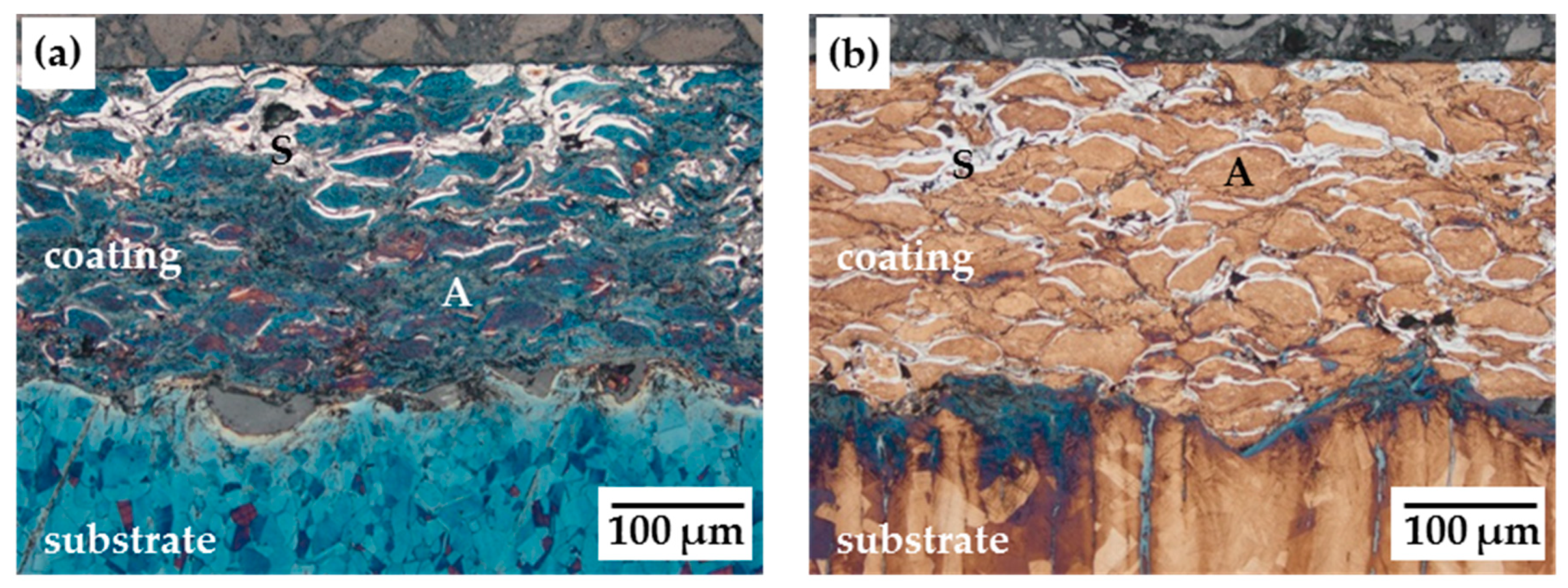
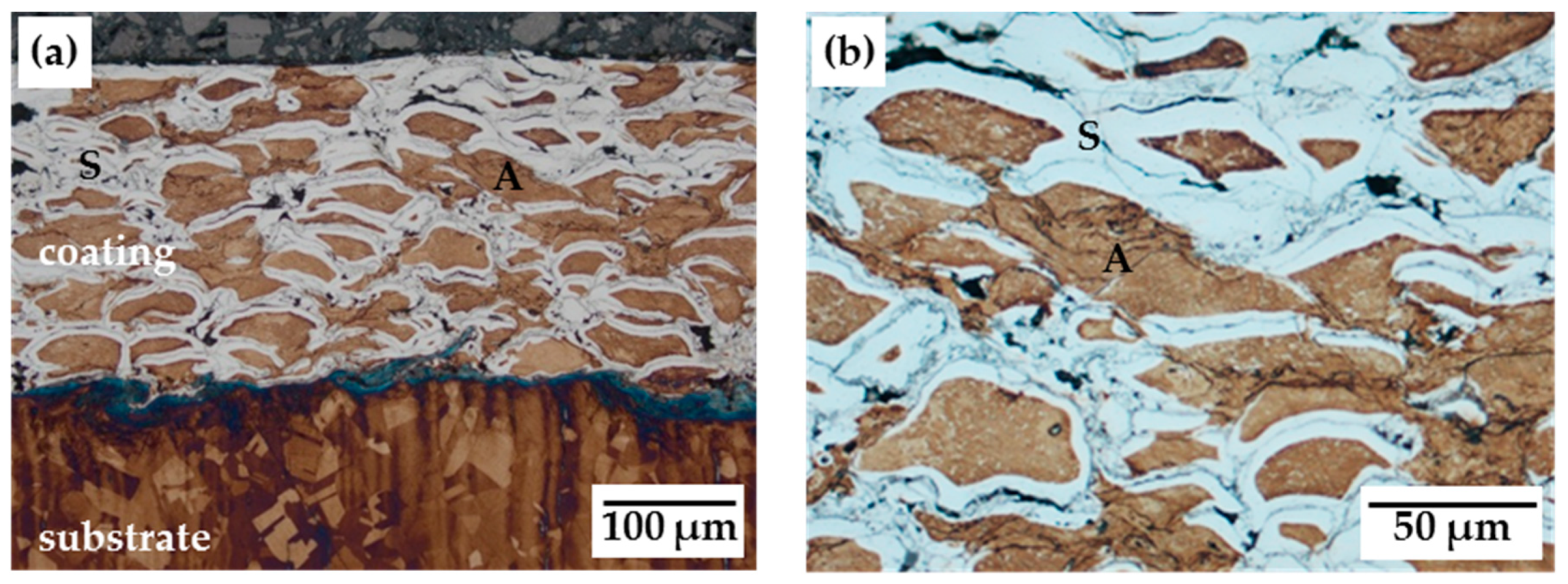
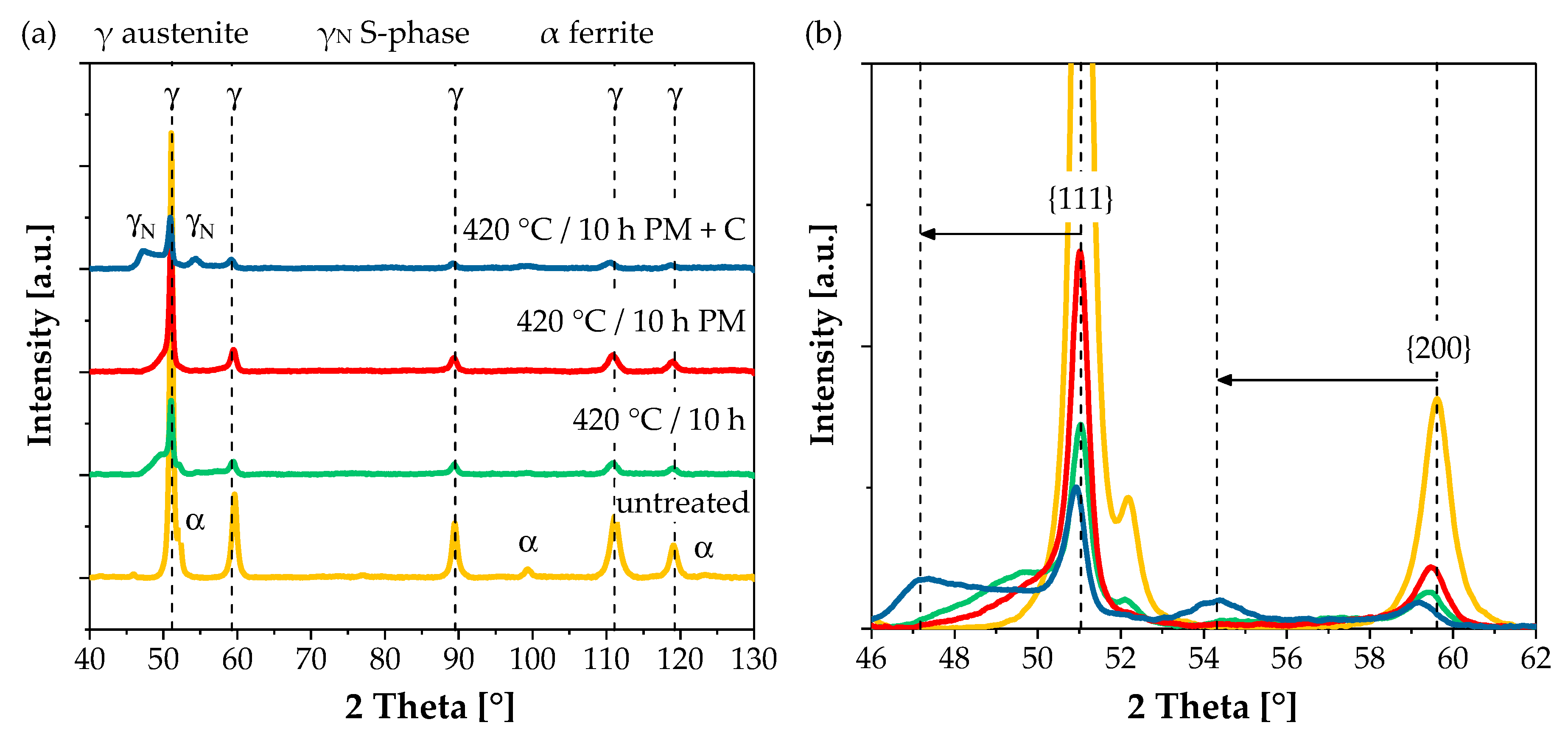
3.1. Microstructural Analysis
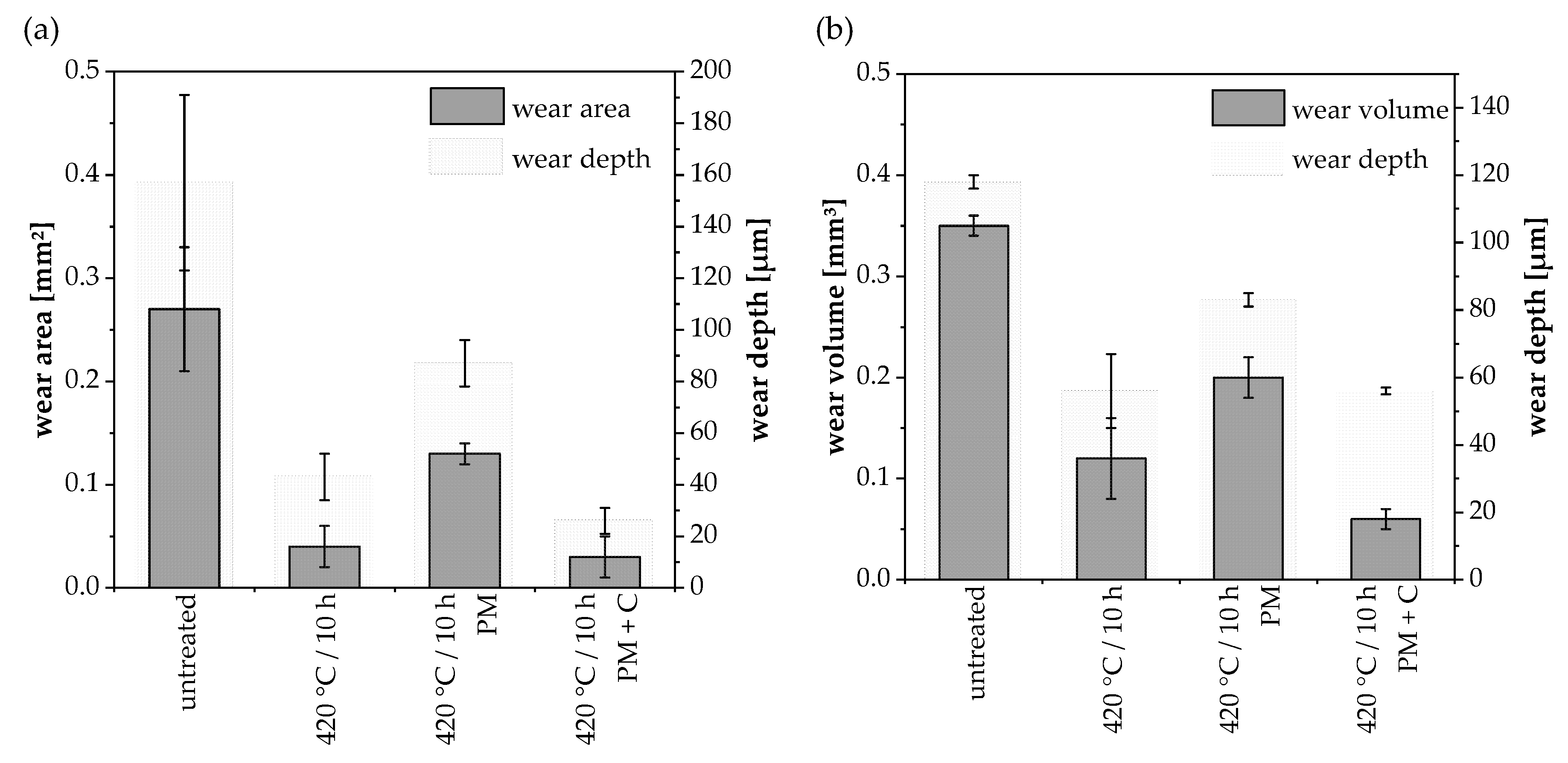
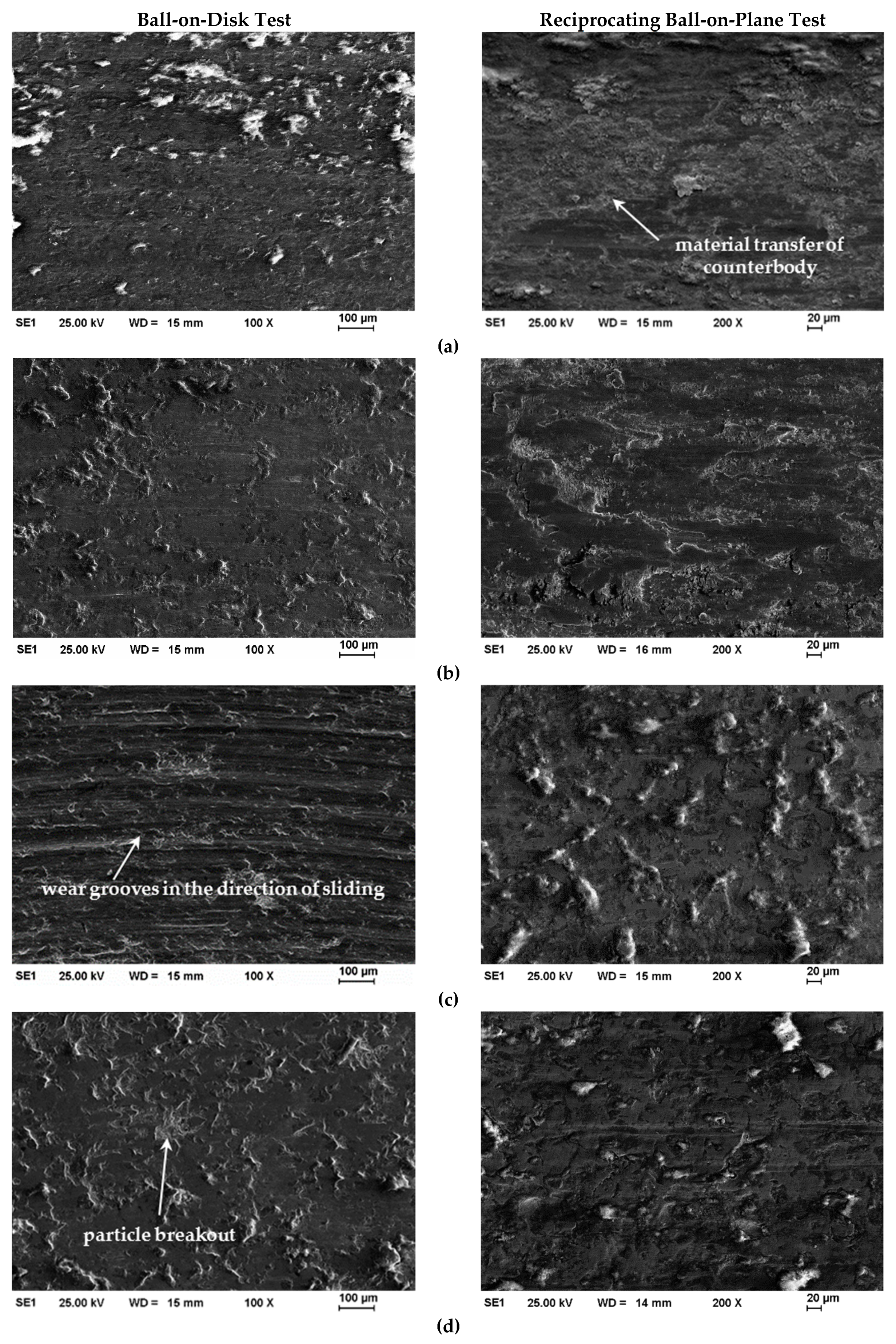
3.2. Hardness and Wear Resistance
4. Conclusions
Author Contributions
Funding
Acknowledgments
Conflicts of Interest
References
- Christiansen, T.L.; Somers, M.A.J. Low-temperature gaseous surface hardening of stainless steel: The current status. Int. Mater. Res. 2009, 100, 1361–1377. [Google Scholar] [CrossRef] [Scilit]
- Bell, T. Current status of supersaturated surface engineering S-phase materials. Key Eng. Mater. 2008, 373–374, 289–295. [Google Scholar] [CrossRef] [Scilit]
- Bottoli, F.; Jellesen, M.S.; Christiansen, T.L.; Winther, G.; Somers, M.A.J. High temperature solution-nitriding and low-temperature nitriding of AISI 316: Effect on pitting potential and crevice corrosion performance. Appl. Surf. Sci. 2018, 431, 24–31. [Google Scholar] [CrossRef] [Scilit]
- Nestler, M.C.; Spies, H.; Hermann, K. Production of duplex coatings by thermal spraying and nitriding. Surf. Eng. 1996, 12, 299–302. [Google Scholar] [CrossRef] [Scilit]
- Alekseeva, M.S.; Gress, M.A.; Scherbakov, S.P.; Gerasimov, S.A.; Kuksenova, L.I. The influence of high-pressure gas nitriding on the properties of martensitic steels. Met. Sci. Heat Treat. 2017, 59, 524–528. [Google Scholar] [CrossRef] [Scilit]
- Wolowiec-Korecka, E.; Michalski, J.; Kucharska, B. Kinetic aspects of low-pressure nitriding process. Vacuum 2018, 155, 292–299. [Google Scholar] [CrossRef] [Scilit]
- Adachi, S.; Ueda, N. Wear and corrosions properties of cold-sprayed AISI 316L coatings treated by combined plasma carburizing and nitriding at low temperature. Coatings 2018, 8, 456. [Google Scholar] [CrossRef] [Scilit]
- Lindner, T.; Kutschmann, P.; Löbel, M.; Lampke, T. Hardening of HVOF-sprayed austenitic stainless-steel coatings by gas nitriding. Coatings 2018, 8, 348. [Google Scholar] [CrossRef] [Scilit]
- Adachi, S.; Ueda, N. Combined plasma carburizing and nitriding of sprayed AISI 316L coating for improved wear resistance. Surf. Coat. Technol. 2014, 259, 44–49. [Google Scholar] [CrossRef] [Scilit]
- Park, G.; Bae, G.; Moon, K.; Lee, C. Effect of plasma nitriding and nitrocarburizing on HVOF-sprayed stainless steel coatings. J. Therm. Spray Technol. 2013, 22, 1366–1373. [Google Scholar] [CrossRef] [Scilit]
- Wielage, B.; Rupprecht, C.; Lindner, T.; Hunger, R. Surface modification of austenitic thermal spray coatings by low-temperature carburization. In Proceedings of the International Thermal Spray Conference & Exposition, Long Beach, CA, USA, 11–14 May 2015. [Google Scholar]
- Adachi, S.; Ueda, N. Formation of S-phase layer on plasma sprayed AISI 316L stainless steel coating by plasma nitriding at low temperature. Thin Solid Films 2012, 523, 11–14. [Google Scholar] [CrossRef] [Scilit]
- Adachi, S.; Ueda, N. Formation of expanded austenite on a cold-sprayed AISI 316L coating by low-temperature plasma nitriding. J. Therm. Spray Technol. 2015, 24, 1399–1407. [Google Scholar] [CrossRef] [Scilit]
- Lindner, T.; Löbel, M.; Lampke, T. Phase Stability and Microstructure Evolution of Solution-Hardened 316L Powder Feedstock for Thermal Spraying. Metals 2018, 8, 1063. [Google Scholar] [CrossRef] [Scilit]
- Lindner, T.; Mehner, T.; Lampke, T. Surface modification of austenitic thermal-spray coatings by low-temperature nitrocarburizing. IOP Conf. Ser. Mater. Sci. Eng. 2016, 118. [Google Scholar] [CrossRef] [Scilit]
- Piao, Z.-Y.; Xu, B.S.; Wang, H.D.; Wen, D.H. Influence of surface nitriding treatment on rolling contact behavior of Fe-based plasma sprayed coating. Appl. Surf. Sci. 2013, 266, 420–425. [Google Scholar] [CrossRef] [Scilit]
- Mindivan, H. Investigating tribological charateristics of HVOF sprayed AISI 316 stainless steel coating by pulsed plasma nitriding. IOP Conf. Ser. Mater. Sci. Eng. 2018, 295. [Google Scholar] [CrossRef] [Scilit]
- ISO. DIN EN ISO 14577-1: Metallic Materials-Instrumented Indentation Test for Hardness and Materials Parameters—Part 1: Test Method (ISO 14577-1:2015); International Organization for Standardization: Geneva, Switzerland, 2018; German version: EN ISO 14577-1:2015. [Google Scholar]
- ASTM International. ASTM G 99 Standard Test Method for Wear Testing with a Pin-on-Disk Apparatus; ASTM International: West Conshohocken, PA, USA, 2016. [Google Scholar]
- ASTM International. ASTM G 133 Standard Test Method for Linearly Reciprocating Ball-on-Flat Sliding Wear; ASTM International: West Conshohocken, PA, USA, 2016. [Google Scholar]

| Kerosene | Oxygen | λ | Nozzle | Powder Feed Rate | Carrier Gas | Spray Distance | Step Size | Surface Velocity |
|---|---|---|---|---|---|---|---|---|
| [l/h] | [l/min] | [mm/mm] | [g/min] | [l/min] | [mm] | [mm] | [m/s] | |
| 24 | 900 | 1.1 | 150/14 | 70 | 2 × 8 | 350 | 5 | 1 |
| Trial | Process Regime | Pressure Modulation (PM) Over Pressure/Cycle Time | Controlled Process (C) |
|---|---|---|---|
| 1 | 420 °C/10 h | 2 mbar | NH3 |
| 2 | 420 °C/10 h PM | 2–50 mbar/<10 min | NH3 |
| 3 | 420 °C/10 h PM + C | 2–50 mbar/<10 min | NH3 + N2 + H2 |
| Ball-on-Disk Test | Reciprocating Ball-on-Plane Test | ||
|---|---|---|---|
| Normal load [N] | 20 | Normal load [N] | 26 |
| Radius [mm] | 5 | Frequency [Hz] | 40 |
| Speed [rpm] | 96 | Time [s] | 900 |
| Cycles | 15,916 | Amplitude [mm] | 0.5 |
| Ø Al2O3 [mm] | 6 | Ø Al2O3 [mm] | 10 |
| State of Treatment | Untreated | 420 °C/10 h | 420 °C/10 h PM | 420 °C/10 h PM + C |
|---|---|---|---|---|
| Austenitic phase HV10mN | 316 ± 59 | 462 ± 77 | 420 ± 39 | 449 ± 41 |
| S-phase HV10mN | 874 ± 136 | 1005 ± 65 | 971 ± 68 |
© 2019 by the authors. Licensee MDPI, Basel, Switzerland. This article is an open access article distributed under the terms and conditions of the Creative Commons Attribution (CC BY) license (http://creativecommons.org/licenses/by/4.0/).
Share and Cite
Kutschmann, P.; Lindner, T.; Börner, K.; Reese, U.; Lampke, T. Effect of Adjusted Gas Nitriding Parameters on Microstructure and Wear Resistance of HVOF-Sprayed AISI 316L Coatings. Materials 2019, 12, 1760. https://doi.org/10.3390/ma12111760
Kutschmann P, Lindner T, Börner K, Reese U, Lampke T. Effect of Adjusted Gas Nitriding Parameters on Microstructure and Wear Resistance of HVOF-Sprayed AISI 316L Coatings. Materials. 2019; 12(11):1760. https://doi.org/10.3390/ma12111760
Chicago/Turabian StyleKutschmann, Pia, Thomas Lindner, Kristian Börner, Ulrich Reese, and Thomas Lampke. 2019. "Effect of Adjusted Gas Nitriding Parameters on Microstructure and Wear Resistance of HVOF-Sprayed AISI 316L Coatings" Materials 12, no. 11: 1760. https://doi.org/10.3390/ma12111760
APA StyleKutschmann, P., Lindner, T., Börner, K., Reese, U., & Lampke, T. (2019). Effect of Adjusted Gas Nitriding Parameters on Microstructure and Wear Resistance of HVOF-Sprayed AISI 316L Coatings. Materials, 12(11), 1760. https://doi.org/10.3390/ma12111760

