1. Introduction
Progressing climate change, driven by greenhouse gas (GHG) emissions, is causing detrimental shifts in the natural environment. In response to the global climate threat, the international community adopted the Paris Agreement in 2015. This document established legally binding commitments to hold the increase in the global average temperature to well below 2 °C above pre-industrial levels. The key elements intended to support this goal are changing energy sources, specifically, transitioning from fossil fuels to renewable energy sources (RESs) such as wind, solar, or geothermal energy, and improving energy efficiency. Basing the energy sector on low- or zero-emission sources, combined with limiting overall energy demand across all economic sectors and daily life, is the most effective path to achieving climate neutrality [
1].
The implementation of the Agreement’s goals has become a driving force for initiatives at both regional and national levels. The European Commission introduced the European Green Deal, a comprehensive legislative plan designed to make the European Union climate-neutral by 2050 [
2]. A key component of these actions is the “Fit for 55” package, which aims to reduce net GHG emissions by at least 55% by 2030. This necessitates increasing the share of RES in the energy mix to 42.5–45% [
3].
In response to these global commitments, the Polish government launched the “Mój Prąd” (My Electricity) program in 2019, focusing on supporting the development of prosumer energy. The net-billing system was introduced, replacing the previous net-metering [
4,
5]. The difference between these systems is that energy is no longer “stored” in the transmission grid (net-metering) but is sold and bought at market prices (net-billing). Subsequent editions of the program introduced support for the development of energy storage systems [
6]. Prosumers have become participants in the energy market, which means selling surpluses at current stock market prices, buying missing energy at retail tariffs, and bearing the full costs of distribution and fixed charges. Since July, settlements have been based on hourly prices (RCE), replacing daily prices [
7,
8]. While the development of photovoltaics is a crucial aspect of the energy transition and meeting EU requirements, the current billing system poses a threat to the profitability of implementation from the user’s perspective. The profitability of an investment is the main factor determining whether a given installation is created. To maximize the profitability and efficiency of a prosumer’s photovoltaic installation under the net-billing system, it is recommended to aim for increased self-consumption—that is, the current consumption of self-produced energy for one’s own needs. Optimizing the flow of energy between the installation and the grid not only increases self-consumption but also maximizes revenue from energy sales. Storing production surpluses in energy storage systems allows for selling energy during peak-price hours and buying when prices are lowest [
9]. Battery energy storage (BES) degradation and seasonal variability in operation are important factors to consider in economic analysis. In the summer season, the battery performs more charge and discharge cycles than in winter, indicating the potential for applying different BES operating modes [
10,
11]. The net-billing system is less favorable for the prosumer, extending the investment payback period. Profitability depends mainly on the ability to avoid purchasing expensive energy from the grid rather than selling production surpluses when they occur. Legal changes in billing have forced prosumers to adopt active energy management (HEMS). Consequently, optimizing energy transfer and maximizing self-consumption have become the main factors determining the profitability of prosumer photovoltaic installations in Poland [
5].
An analysis of the operation of a real-world photovoltaic installation and battery energy storage (BES) located in southern Poland over a full year provides information on investment profitability and the impact of seasonal weather conditions. The hybrid system allowed for a reduction in annual electricity costs by over 1400 EUR. Optimizing BES operation in the context of dynamic tariffs, charging during low-tariff periods and discharging during high-tariff periods significantly reduced electricity costs. Calculations indicated savings of around 400 EUR thanks to using BES during high-tariff periods. Furthermore, direct consumption of electricity produced from PV for household needs led to additional savings of 743 EUR. Climate seasonality directly affects system operation and the degree of self-sufficiency. The summer period was characterized by a high self-sufficiency rate, exceeding 90% in July 2025. High overproduction on sunny days led to voltage increases in the grid, resulting in temporary inverter shutdowns; this constitutes a serious technical problem, translating into financial aspects and installation profitability. The self-sufficiency ratio in the winter period fell to 8%, and the building was dependent on energy supplies from the grid; this was particularly acute for the user due to peak energy demand needed to power the heat pump [
12].
Effective HEMS operation can successfully solve problems resulting from both high overproduction in the summer period and low energy production in the winter months. High overproduction without an appropriate storage system can lead to a significant drop in self-consumption [
13,
14]. An increase in heat demand with a simultaneous decrease in PV production appears in the transitional period (September/October 2025). This is a specific period, differing from summer and winter, requiring a separate energy management strategy; the energy balance is often zero, and the first energy deficits appear [
15]. PV generation is still sufficient to cover most of the demand, but BES plays a key role in supporting and maintaining heat pump operation and supplying electricity to the house after sunset [
14].
The development of green energy production in households effectively leads to a reduction in pollutant emissions, which is significant in the context of the Polish power system based on fossil fuels [
10]. Maximizing self-consumption through BES directly translates into a reduction in the carbon footprint by replacing high-emission grid energy with clean, locally produced energy. Full integration of PV with electrical and thermal energy storage allows for a reduction in CO
2 emissions by almost half compared to conventional systems [
16]. The ability to control and optimize the battery management system allows for voltage stabilization, state-of-charge control, and loss minimization, which enables its use in off-grid systems [
17]. An analysis of 20 single-family homes in Sweden showed that even small batteries, supported by intelligent scheduling, increase self-consumption and production value by a few percent; such a system seems to have no impact on distribution or grid management [
18]. Thus, optimizing hybrid system operation in the transitional period not only improves the prosumer’s economic aspects but is an essential element in achieving the European Union’s climate goals.
Recent advancements in multi-agent systems theory have introduced sophisticated methodologies for managing complex interactions and constraints. For instance, X. Wang et al. [
19] addressed state-constrained containment control using Lyapunov functions and event-triggered mechanisms to balance communication efficiency with system security. Furthermore, the dynamics of learning in large populations have been explored through the lens of regret minimization and statistical physics, providing a robust mathematical model for evolutionary dynamics in agent populations [
20]. In the context of stochastic systems with faults, optimized adaptive consensus control using reinforcement learning with an identifier-critic-actor structure has been developed to ensure finite-time stability and high transitions and performance [
21]. While these studies provide essential theoretical foundations and rigorous mathematical frameworks for agent coordination and optimization, there remains a gap in applying the NORD HEMS algorithm to a physical single-family house installation, focusing on its economic performance and operational robustness under dynamic tariff conditions in Poland.
This study serves as a continuation of previous research conducted for the same residential building, which focused on the system’s performance during July [
22]. While the analysis of the peak summer month demonstrated high self-sufficiency and significant energy exports, it is crucial to evaluate the system’s behavior during the transition from summer to autumn. Therefore, this article extends the observation period to August and October 2025 to assess the HEMS efficiency under changing weather conditions and the onset of heating demand. Consequently, the main aim of this article is to assess the influence of the HEMS and BES on the overall economic performance of a single-family household. While previous analysis demonstrated high profitability during the peak summer month of July, this study extends the scope to August and October 2025 to verify the system’s viability during the seasonal transition. The research aims to quantify the economic benefits of arbitrage and self-consumption maximization under dynamic tariffs while also addressing the system’s contribution to local decarbonization goals.
2. Materials and Methods
2.1. Analyzed Installation
The study is based on real-world operational data from a single-family house located in Zwierki, Podlaskie Voivodeship, Poland. The building, with a usable floor area of 140 m
2, operates under a comprehensive Home Energy Management System (HEMS) from NORD HT Company (Tananger, Norway) [
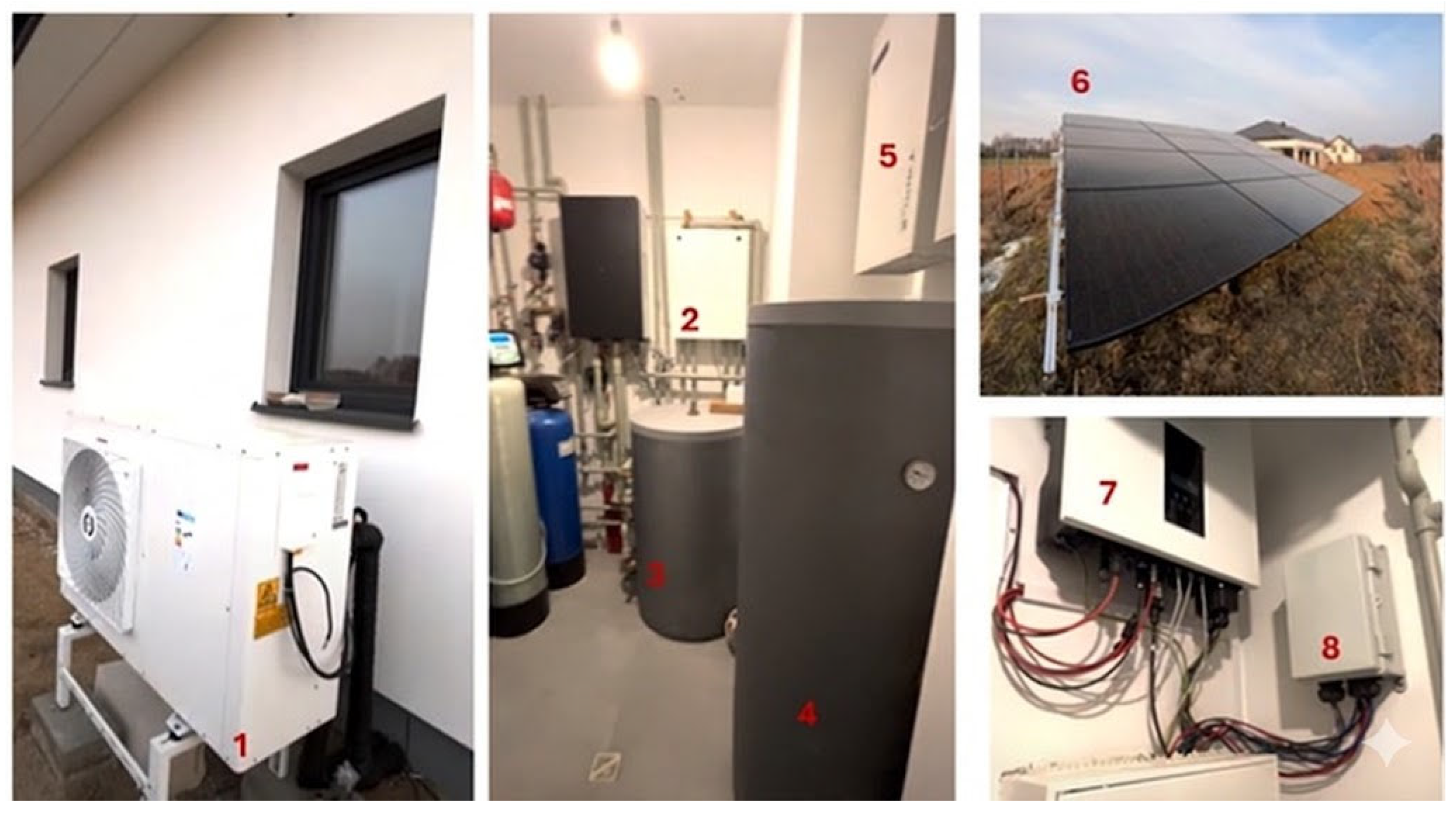
23]. Commissioned in 2024, the integrated energy system comprises a photovoltaic (PV) installation, battery energy storage (BES), a heat pump (HP), a buffer tank and thermal energy storage (TES) as a domestic hot water tank (DHW).
Figure 1 presents the actual installation components.
Table 1 below summarizes the key technical specifications of the building and the energy system components. The entire system is grid-connected and operates under a dynamic electricity tariff provided by PGE (Polish Energy Group, Warsaw, Poland).
While the heat pump in the analyzed installation is technically capable of providing both space heating and domestic hot water, this study focuses exclusively on the electricity consumption associated with DHW and household appliances. Space heating was intentionally excluded from the analysis to more effectively evaluate the NORD HEMS algorithm’s capacity for strategic load shifting and price arbitrage, which would be limited by the high and constant demand of full building heating.
2.2. Operational Strategy and Control Logic
During the analyzed period, the system operated under specific optimization algorithms designed to minimize operational costs while maintaining user comfort. The control logic prioritized the usage of low-price intervals from the dynamic tariff.
The daily energy demand for DHW was estimated at approximately 2–3 kWh; house heating was not considered. The control algorithm selected three hourly intervals with the lowest electricity prices each day. During these windows, the heat pump was activated to overheat the DHW tank, increasing the setpoint temperature from the base 45 °C by an additional 5 °C. Outside of these low-price intervals, the heat pump operation for DHW was blocked, and the setpoint temperature was effectively lowered by 10 °C to prevent unnecessary reheating during high-price periods.
The BES played a dual role: increasing self-consumption and enabling financial arbitrage. The discharge logic for energy export was triggered after 19:00, provided two conditions were met: the state of charge (SoC) exceeded 80%, and the electricity selling price was at its daily peak. Under these conditions, the system discharged 45% of the battery’s capacity.
The study analyses high-resolution operational data covering the transition period from late summer to early autumn (August and October 2025). The financial performance of the system was evaluated by comparing the actual dynamic tariff costs against alternative billing models: the standard fixed-rate tariff G11 [
24] and an alternative dynamic tariff offer Pstryk [
25]. This comparison aims to highlight the economic impact of tariff selection on household energy expenditures and to quantify the economic benefits resulting from the seasonally adaptive control strategies of the Home Energy Management System. The NORD HEMS algorithm optimizes its operational decisions based on Day-Ahead Market (DAM) price forecasts published by the Polish Power Exchange (TGE, Warsaw, Poland). These prices directly reflect the projected nationwide renewable energy source generation. By incorporating this external price signal, the system can effectively anticipate midday price drops (the “duck curve”) caused by national RES, including PV, overproduction, even when local generation is low. Consequently, the controller can adjust storage charging schedules or limit exports to maximize economic efficiency.
2.3. Seasonal Adaptive Control Strategies
Considering the ongoing energy market transformation and the implementation of dynamic tariffs, the role of HEMS is evolving from passive surplus buffering toward active economic optimization. An analysis of the NORD HEMS operation demonstrates the necessity of implementing distinct control algorithms tailored to the seasonal PV generation profile and daily electricity price variability. The following subsections characterize two dominant operational strategies implemented in the controller: the summer strategy (export-oriented) and the autumn strategy (arbitrage-oriented).
2.3.1. Interpretation of the Net Grid Exchange Parameter
The variables presented in the graphs are based on the daily trade balance parameter, defined by the formula
where
DH—net grid exchange parameter (energy flow between microinstallation and grid) in hourly scale, [kWh].
Eexp—energy exported to the grid, [kWh].
Eimp—energy imported from the grid, [kWh].
t—a specific hour.
2.3.2. Summer Strategy
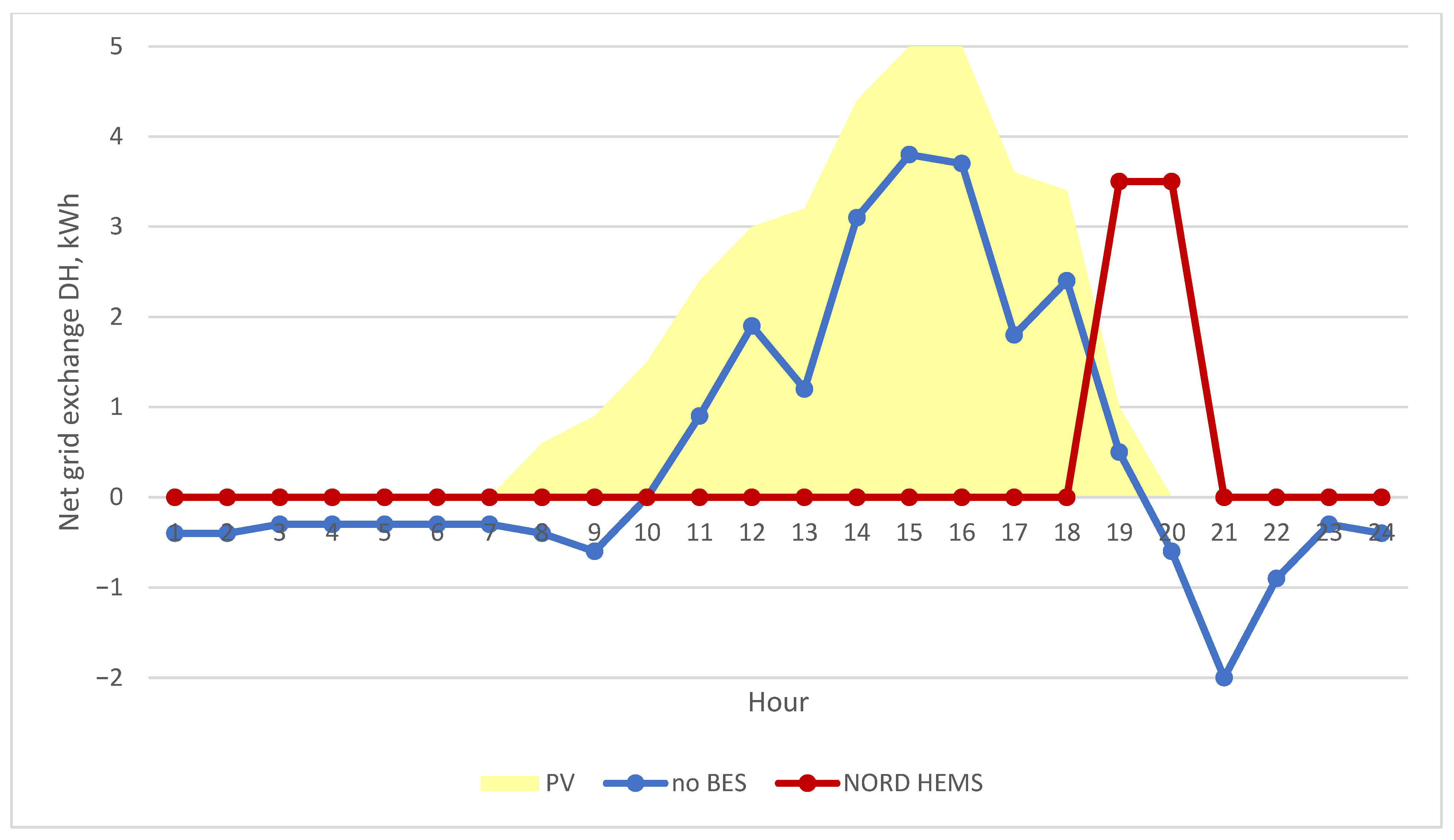
During the summer period (
Figure 2), the PV generation profile exceeds the building’s daily electrical energy demand. In systems with no BES, energy export during midday hours (11:00–15:00) is forced, which, under dynamic tariffs market mechanisms, corresponds to the lowest repurchase rates. Moreover, during the evening energy demand peak, household is forced to import electricity from the grid at the time of the highest market electricity prices.
The proposed NORD HEMS algorithm modifies this process by applying a peak shaving strategy. The system intentionally limits export at noon, storing energy to perform a controlled discharge during the evening peak demand hours of the National Power System (typically 19:00–22:00), when energy prices are highest. This phenomenon is illustrated in
Figure 2. The yellow area represents the PV generation profile. The “no BES” represents a standard energy flow profile in households with high export during midday hours without Home Energy System Management or battery energy storage. The “NORD HEMS” line illustrates the active algorithm’s operation: reducing export during the solar peak and shifting the sales volume to evening hours to maximize revenue from dynamic tariffs.
The divergence between the two profiles is most evident during the 19:00–20:00 interval. In the “no BES” case, the lack of storage capacity means that surplus PV generation from earlier hours cannot be retained; consequently, the entire evening demand must be met by grid imports at a time when dynamic tariff prices are typically at their peak. In contrast, the “NORD HEMS” algorithm utilizes the energy stored during the midday period to shift the export volume to this high-price window. This results in a transition from grid dependency in the “no BES” scenario to a controlled export in the “NORD HEMS” case, directly enhancing the economic efficiency of the system. Additionally, during the aforementioned one-hour interval, the “no BES” profile shows a significant and rapid dip into negative net grid exchange values, indicating net grid import. Conversely, the “NORD HEMS” profile maintains a positive value, effectively turning a cost-intensive period into revenue generating one.
2.3.3. Autumn Strategy
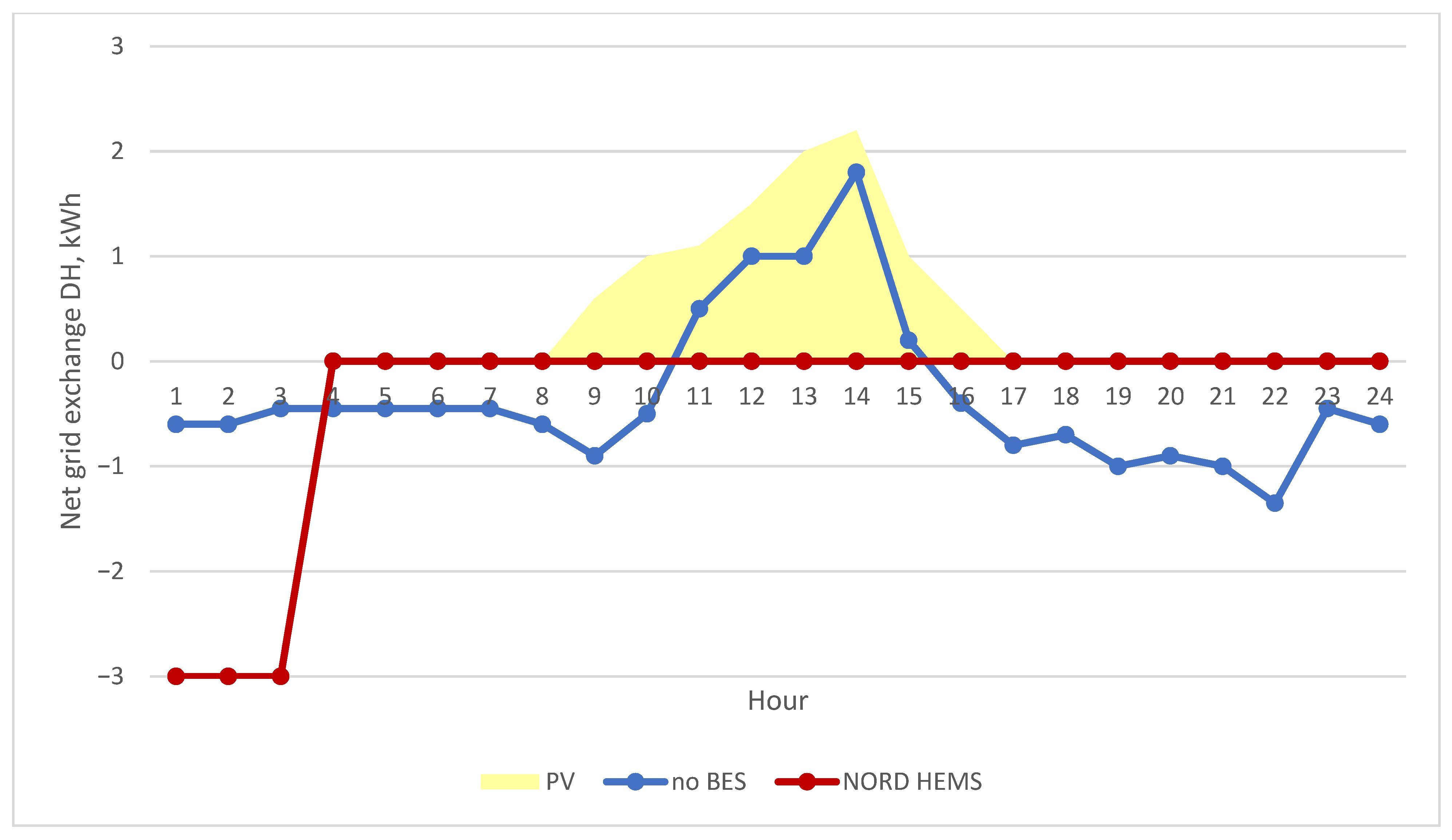
During the autumn period (
Figure 3), generation from PV installation is insufficient to cover domestic demand. In this scenario, the system’s priority shifts to minimizing energy purchase costs by leveraging the daily price spread through an active price arbitrage strategy.
Based on Day-Ahead price predictions, the NORD HEMS identifies price valleys (typically during night hours, 1:00–4:00) and initiates forced charging of the battery storage from the power grid. The accumulated cheap energy is subsequently used to power the facility during the day, eliminating the need to purchase expensive energy during peak hours.
This mechanism is presented in
Figure 3. The “NORD HEMS” profile illustrates the strategic shift. The significant drop to −3 kWh between 1:00 and 3:00 represents intentional storage charging during the night price valley. Subsequently, the HEMS maintains a 0 kWh grid import during daytime hours by utilizing the stored energy.
The “no BES” profile depicts standard grid energy consumption in the absence of battery energy storage or an active control system. In the absence of battery storage, the energy flow is dictated solely by the current demand and the insufficient PV generation. Consequently, the household must continuously purchase electricity from the grid throughout the day, including expensive peak hours, as it lacks the capacity to “shift” its energy intake to the cheaper nocturnal valley.
Comparative analysis of the DH profiles leads to a key conclusion that the economic efficiency of a modern prosumer micro-installation no longer depends solely on the volume of produced energy, but on the HEMS’s ability to intelligently manage the timing of its exchange with the grid. In the summer period, the system acts as a “solar energy storage” (maximizing sales profit), whereas in the winter period, it transforms into a “cheap grid energy storage” (minimizing purchase costs).
2.4. Calculation Methods
The cost structure in dynamic tariffs is fundamentally driven by the real-time fluctuations of the wholesale electricity market, specifically the Day-Ahead Market managed by the Polish Power Exchange [
26]. Unlike traditional flat-rate tariffs, the electricity price in this model varies hourly. Rates are published by the TGE one day in advance, reflecting the interplay between grid demand and generation capacity: high demand drives prices up, while oversupply can lead to price drops or even negative values. It is important to note the fundamental economic difference between the price of energy exported to the grid and the price of energy imported. While the revenue from energy sales is based on the wholesale market energy price (MEP) [
27], the total cost of purchasing energy is significantly higher due to additional components. The final billing price for the prosumer extends beyond the wholesale rate. It incorporates fixed operational components, including the retailer’s margin, excise tax, and value-added tax (VAT), as well as variable distribution fees, which are not recovered during energy export.
To evaluate the system’s technical performance, the self-consumption (SC) ratio is calculated as the percentage of PV-generated energy consumed directly by the household or used to charge the battery storage:
where
Edirect_PV—energy from PV consumed directly by loads, [kWh].
Echarge_BES—energy from PV used to charge the battery storage, [kWh].
EPV—total energy generated by the PV installation, [kWh].
3. Results
The analysis was conducted for the days with the highest and lowest PV generation in August and October 2025 (12 and 25 August, and 1 and 23 October, respectively), enabling the observation of HEMS performance under diverse operational conditions. For each selected day, energy flows were correlated with the battery energy storage state of charge (BES SoC) and market energy price (MEP) profiles. This approach facilitated the identification of key control mechanisms, such as peak shaving, load shifting, and forced energy export during periods of full battery saturation. The selection of days with extreme PV generation was intentional, aiming to test the NORD HEMS algorithm’s behavior under the most demanding conditions occurring within the analyzed period.
The data presented in
Table 2 illustrates the fluctuations in energy production and demand resulting from seasonal changes. It also confirms that the HEMS dynamically adapts its energy management strategy to external conditions. On days with high generation, the system prioritizes exporting surpluses once the storage is fully saturated. Conversely, on days with low production, it shifts to a grid arbitrage mode, utilizing the energy storage to perform load shifting by moving grid intake to hours with lower market prices. It should be noted that the energy designated as “from BES” originates from both the storage of surplus PV generation and the energy purchased from the grid for later consumption.
The following section presents a detailed hourly analysis for the four selected days, illustrating the interaction between PV generation, building demand, and the energy storage control strategy in response to fluctuating market prices.
3.1. 12 August 2025
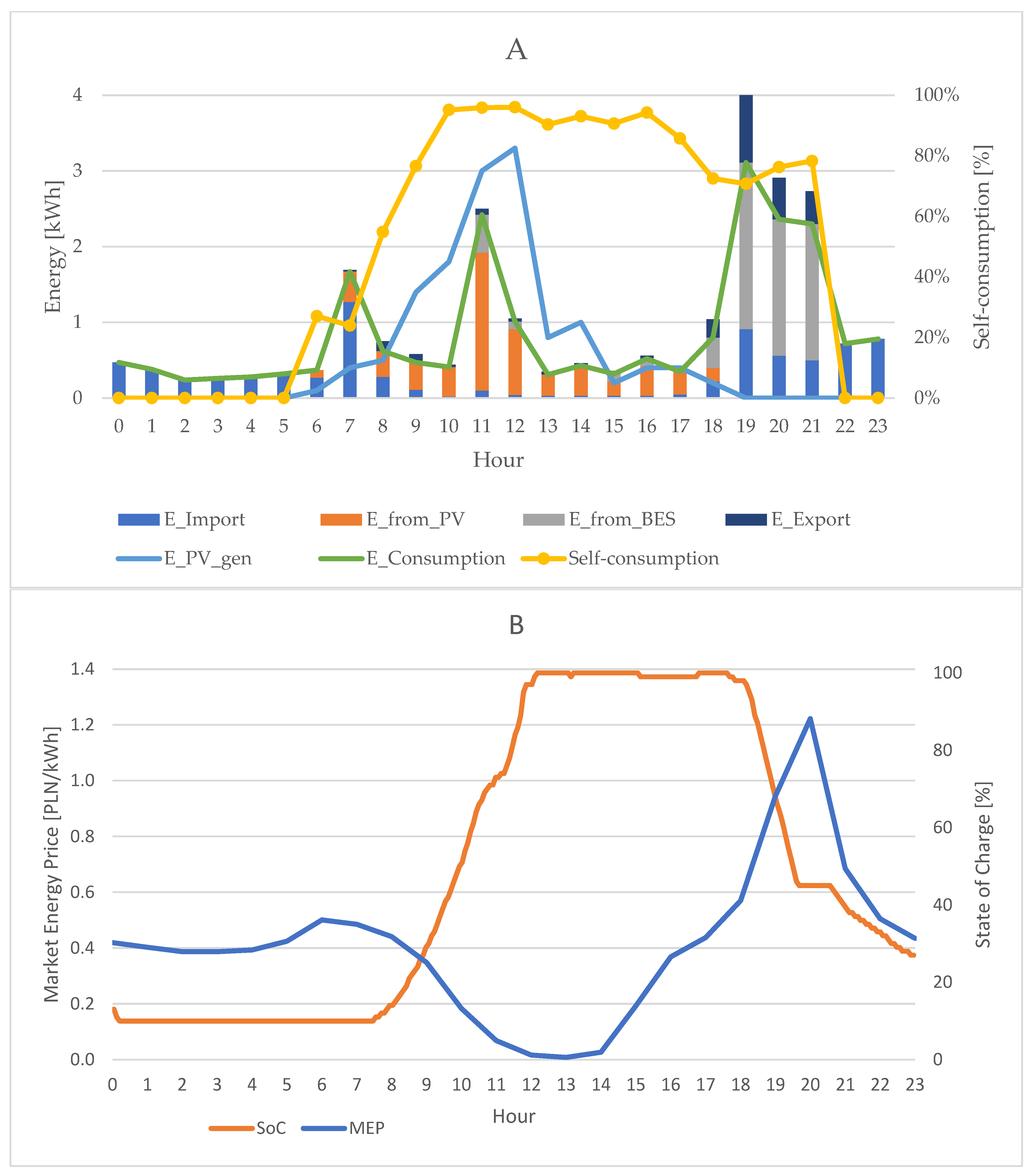
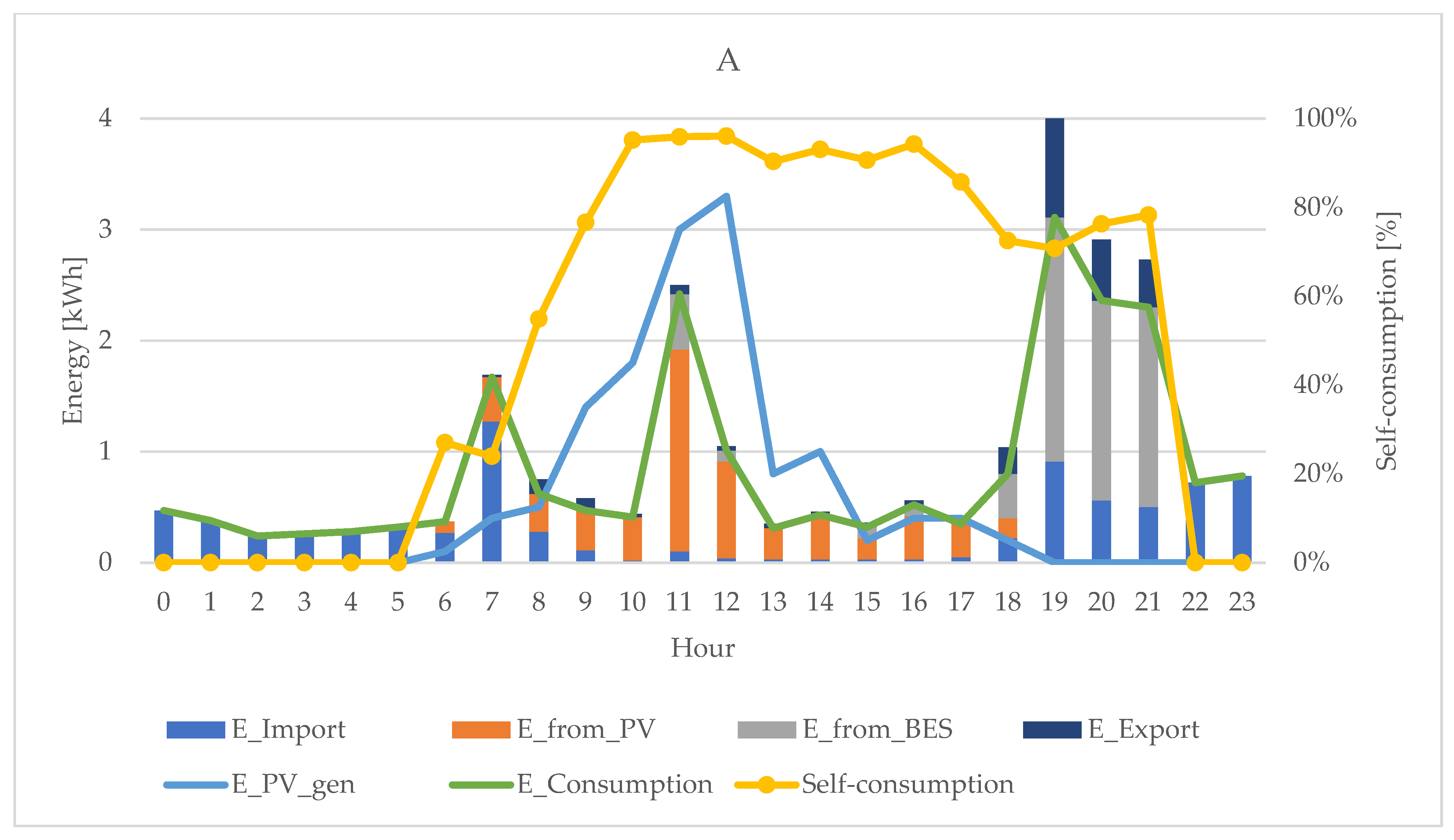
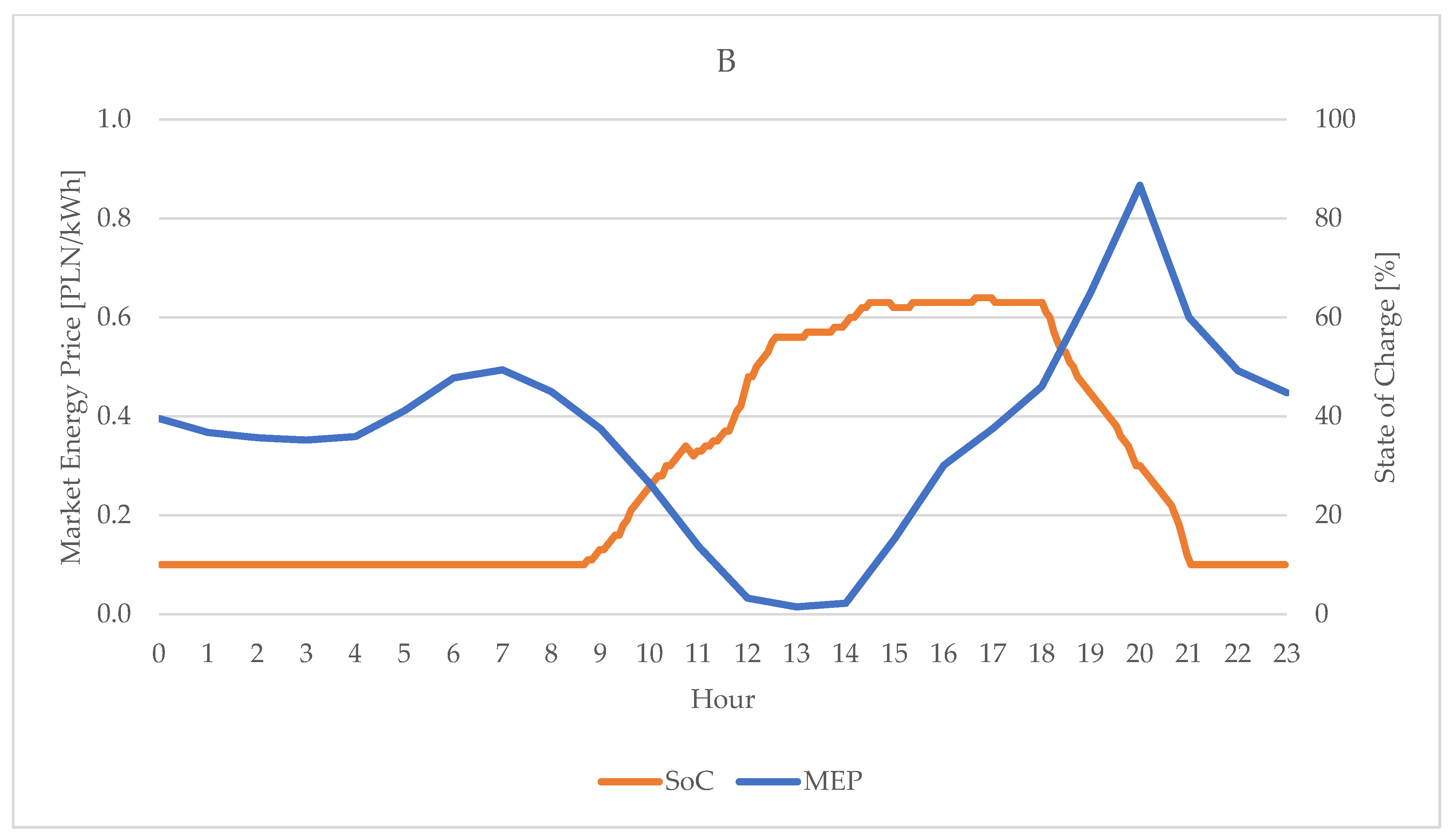
12 August 2025 (
Figure 4) illustrates HEMS operation under optimal PV production conditions. Total generation for this day reached 35.8 kWh, while the energy demand of the analyzed household was 26.9 kWh. During nighttime hours, grid import is utilized to cover the building’s base load. Battery charging initiates as PV generation increases, and the direct supply of loads from solar energy leads to high self-consumption rates.
The battery energy storage (BES) reached its maximum state of charge (SoC 100%) at approximately 13:00. Due to sustained high PV production and simultaneously low local demand, substantial energy surpluses were generated. Furthermore, a classic “duck curve” phenomenon was observed on this day, characterized by a significant drop in market energy prices (MEPs) during midday due to high solar penetration, followed by a sharp increase in the evening. Since the MEP for selling energy is near zero during the day, the HEMS refrained from discharging the battery, instead storing energy for the evening hours in anticipation of these higher rates.
To avoid PV curtailment between 13:00 and 16:00, the system decided to export surplus energy directly from the PV array while ensuring that the system entered the evening high-price period with a fully charged battery. The energy exported during these hours amounted to 11.7 kWh, accounting for more than half of the total daily export (20.2 kWh). Around 19:00, the increase in household consumption and high MEPs (1.20 PLN/kWh) prompted the HEMS to utilize stored energy for both self-consumption and profitable export. At 20:00, despite an SoC of 60% and high MEP, the system imported 1.3 kWh of energy, which indicates technical power constraints of the hardware used.
3.2. 25 August 2025
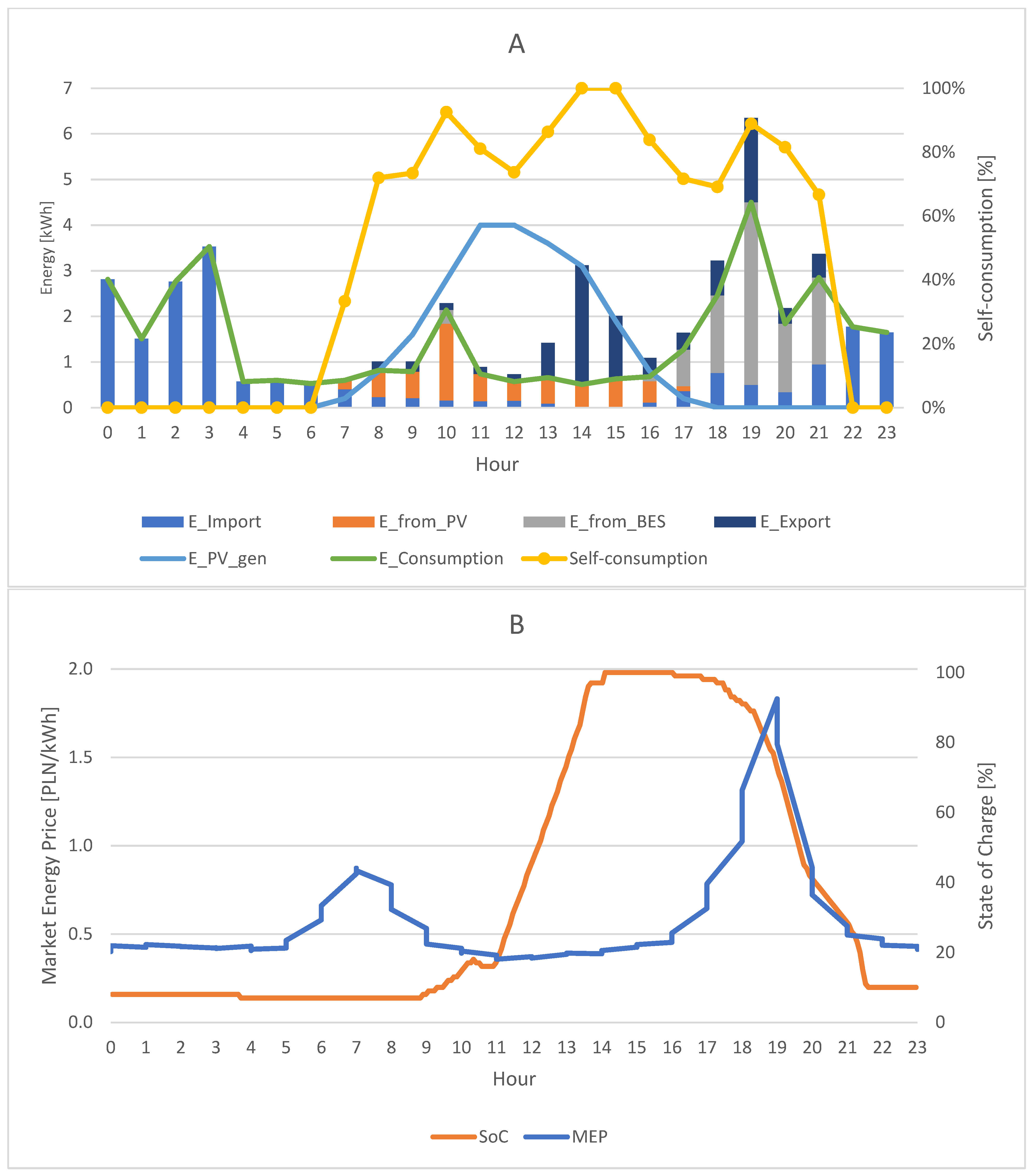
The analysis of 25 August 2025 (
Figure 5)—the day with the lowest PV generation (13.5 kWh) of the entire month—provides insights into how the HEMS prioritizes self-sufficiency. Nighttime and early morning energy demands were met entirely through grid imports. The battery state of charge (SoC) remained at its minimum allowable level until 9:00, despite PV generation beginning at 6:00. This was due to solar production being insufficient to cover the morning demand peak.
Surplus energy for storage only became available after 9:00, gradually increasing the SoC to a daily maximum of 64%. During the evening hours, characterized by increased domestic demand and peak MEP rates, the system utilized the stored energy for both self-consumption and export. This led to a rapid depletion of the BES and a subsequent return to grid import. Although total production was only 13.5 kWh compared to a demand of 21 kWh, the system maintained a high level of performance by utilizing 13.2 kWh of its own generation.
Interestingly, the MEP curve on 25 August 2025 still exhibited a classic “duck curve” shape, despite the unstable local PV production. Furthermore, peak prices did not exceed 1 PLN/kWh, staying below the levels observed on 12 August 2025. This behavior of the MEP curve demonstrates that under net-billing, prices are driven by nationwide rather than local weather conditions. This disconnect significantly complicates profit estimation and the optimization of HEMS strategies.
3.3. 1 October 2025
The autumn period is characterized by a decline in PV generation and a simultaneous increase in household energy demand, driven by shorter daylight hours and heating requirements. The analysis of 1 October 2025 (
Figure 6)—the day with the highest PV production (23 kWh) for that month—provides insights into HEMS performance under increased thermal load conditions.
During the night, a significant increase in grid import is observed, peaking at 3.5 kWh at 3:00. This represents a load shifting strategy; the system intentionally schedules energy-intensive processes, such as heat pump operation for space heating or domestic hot water, during the window of lowest market prices. Since a low state of charge (SoC) prevented battery discharge at that time, the HEMS minimized heating costs by importing the cheapest available energy from the grid.
As PV production began, self-sufficiency increased, and surplus energy was directed to the storage system, which reached full capacity by 13:00. Consistent with the behavior observed on 12 August 2025, energy was exported to the grid between 13:00 and 15:00 once the BES was fully saturated. The evening surge in demand (18:00–21:00) triggered battery discharge for both domestic use and profitable export. Seasonal weather shifts across the country directly influence market price volatility: overall MEP levels are higher than in summer, and the midday price dip is less pronounced. Notably, the evening price peak on this day reached a substantial value of 1.8 PLN/kWh.
3.4. 23 October 2025
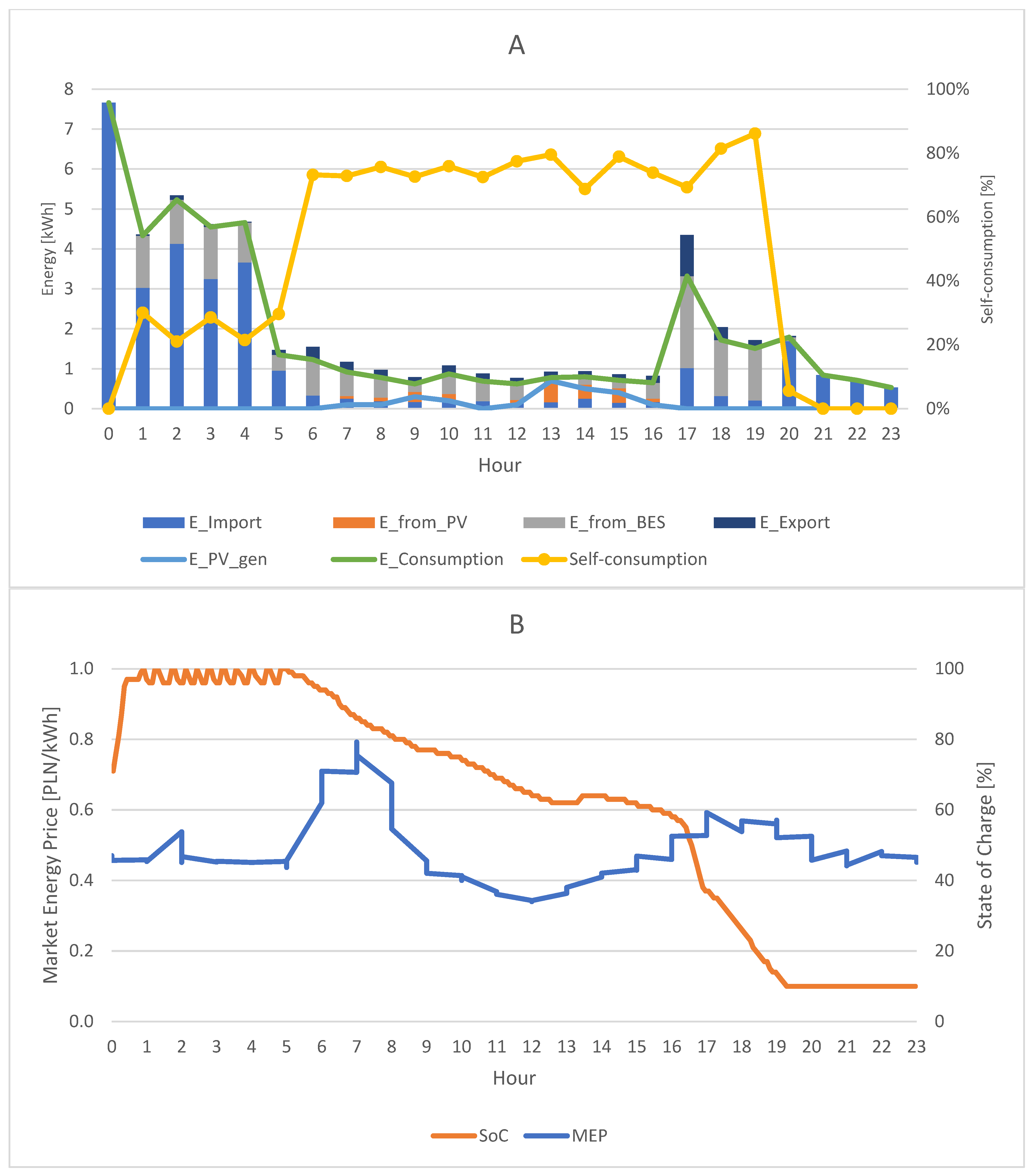
23 October 2025 (
Figure 7) recorded the lowest PV generation of the month, only 2.5 kWh, while the daily energy consumption reached nearly 47 kWh. Between midnight and 5:00, a high grid import of 28 kWh was observed. This energy was utilized both for heating requirements and for charging the battery storage. This nighttime “tanking” strategy aimed to capitalize on relatively low and stable MEP rates, mitigating the risk of price volatility during the day.
Throughout the daylight hours, the system met the household demand by combining the minimal PV output with the energy stored in the BES. From 17:00 onwards, as market prices rose, the HEMS initiated a battery discharge cycle for both self-consumption and export. Interestingly, the MEP curve was significantly flatter compared to previously analyzed days, with no substantial price spike observed in the evening. Furthermore, MEP levels on this day of near-zero local PV production were generally lower than those on 1 October 2025. This highlights the complexity of market pricing mechanisms, which are driven by nationwide energy supply factors.
3.5. Comparative Analysis of Dynamic and Fixed-Rate Tariffs
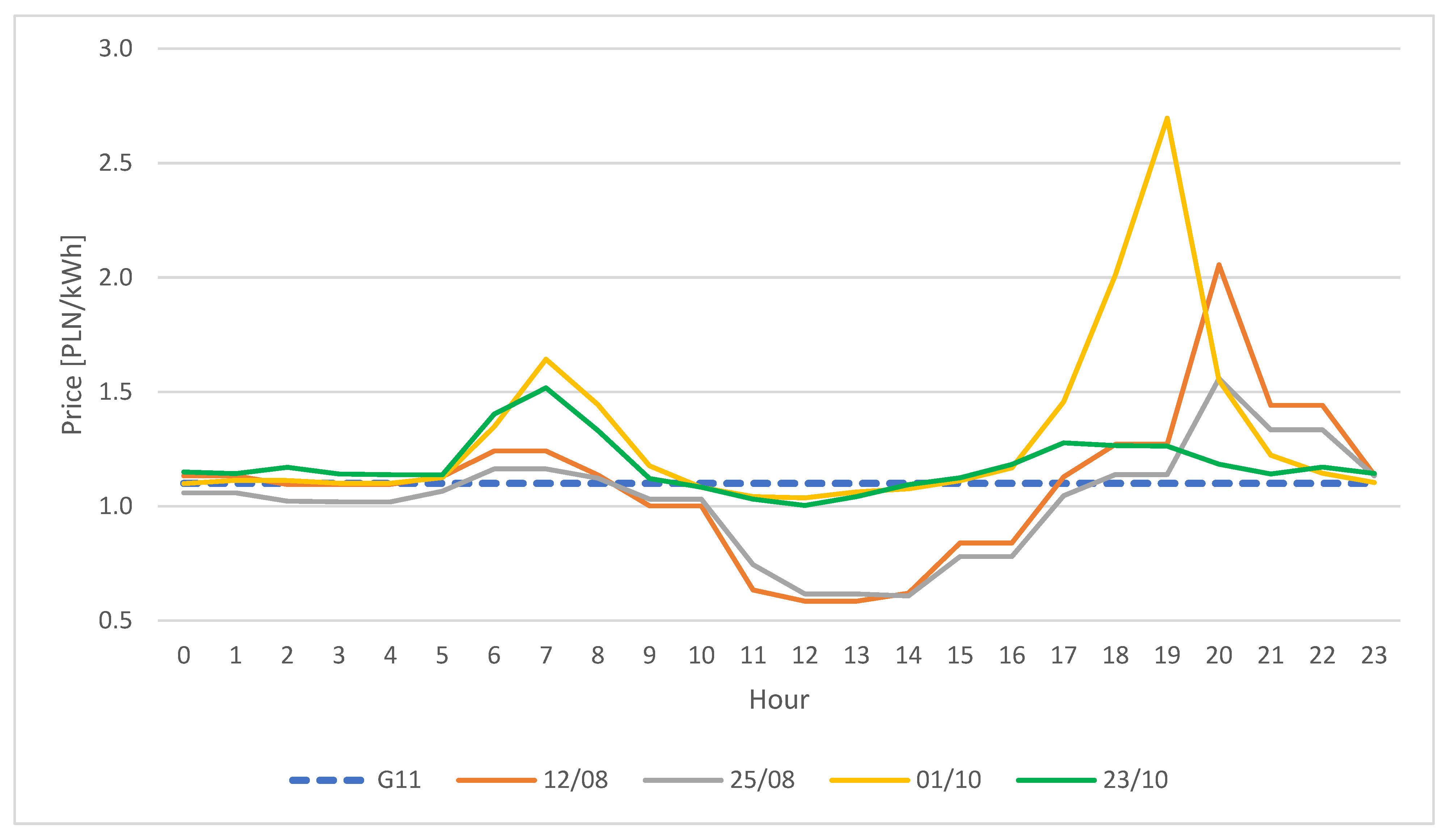
Figure 8 illustrates a comparison of unit electricity costs across selected research days for the G11 tariff, contrasting the dynamic pricing model with a statistical benchmark of 1.10 PLN/kWh. The implementation of dynamic pricing shifts the cost paradigm, rendering it a function of the daily generation cycle from RES. The data reveal a significant asymmetry in fluctuations: ranging from market minima during midday hours (dropping to 0.58 PLN/kWh in August 2025) to sharp extremes during periods of power deficits and peak evening demand (peaking at 2.70 PLN/kWh in October 2025).
The observed duck curve phenomenon creates a theoretical framework for price arbitrage and load-shifting strategies, particularly during the summer period. However, as demonstrated by the autumn data, the reduction in PV installation operating hours and the simultaneous rise in demand cause dynamic prices to remain above the fixed threshold of 1.10 PLN/kWh for most of the day. This suggests that without energy storage systems, the dynamic model during periods of low RES generation may result in significantly higher operating costs for the end-user compared to the traditional fixed-rate tariff.
4. Discussion
The results demonstrate that the integration of a Home Energy Management System (HEMS) with battery energy storage (BES) under dynamic tariffs transforms the household from a passive energy consumer into an active market participant. A primary observation is the shift in the economic paradigm of energy storage. While traditional net-metering focused solely on maximizing self-consumption, the dynamic tariff environment incentivizes price arbitrage. As shown in the 23 October 2025 analysis, the HEMS successfully performed charging the BES from the grid during low-price hours to mitigate high costs during the day, even when PV generation was low (2.5 kWh).
The data also reveal a critical decoupling between local production and market signals. The persistent “duck curve” observed in market energy prices (MEPs) on 25 August 2025, despite low local PV generation, confirms that prices are driven by nationwide RES penetration. This necessitates a HEMS strategy that is not only reactive to local sensors but also predictive of national grid conditions. Furthermore, the analysis of October 2025 pricing suggests a structural shift in the national energy mix. The presence of relatively low and stable prices during periods of minimal solar irradiance indicates an increase in domestic power generation from alternative sources, most likely wind power, considering typical Polish autumn meteorological conditions.
The phenomenon of “forced energy export” during periods of full battery saturation (seen on 12 August and 1 October 2025) and the strategic discharge during evening peaks (reaching 2.70 PLN/kWh) validate the HEMS’s ability to maximize profit. Most notably, the occurrence of energy export during periods of negligible PV production (e.g., 23 October 2025 evening) proves that the system was reselling previously purchased grid energy. This confirms that in a net-billing framework, the BES generates value not just as a buffer for energy, but as a financial tool for cross-temporal arbitrage.
The observed increase in the number of charge–discharge cycles during the summer, as compared to the autumn period, may speed up battery wear. While this observation is critical for long-term investment planning and return on investment calculations, the primary scope of this paper is to analyze HEMS operational performance and the immediate cost savings enabled by dynamic tariffs. Although a full life cycle cost assessment of the battery storage remains out of the scope of this study, it represents a vital direction for further research.
The authors acknowledge the statistical limitations of the analysis based on selected extreme days. Therefore, these results should be interpreted as an illustration of the system’s technical potential and control logic rather than a comprehensive annual forecast. This approach allows for a clear demonstration of key mechanisms, such as peak shaving during energy surplus and price arbitrage during periods of generation deficit. Crucially, this logic emphasizes that the full storage capacity is actively utilized regardless of weather conditions: during high PV generation, it maximizes self-consumption, while on other days, it remains fully operational for cost minimization. Consequently, the system avoids idle capacity, ensuring that the investment is leveraged to its maximum technical extent throughout the entire year.
5. Conclusions
The study confirms that dynamic electricity tariffs can provide unit energy costs significantly lower than the fixed G11 benchmark during periods of high renewable energy penetration, reaching values as low as 0.58 PLN/kWh compared to the reference level of 1.10 PLN/kWh. At the same time, without automated control and energy storage, households remain exposed to substantial price volatility and peak-price events, with hourly prices rising to 2.70 PLN/kWh during periods of supply deficit (mainly PV energy).
The results demonstrate that the integration of a Home Energy Management System (HEMS) with battery energy storage (BES) fundamentally changes the operational role of residential energy systems under dynamic pricing. In the analyzed case, the battery storage acted as the central component of the system’s energy strategy. During sunny days, the BES absorbed the entire surplus of photovoltaic generation until reaching full capacity, i.e., 10 kWh, effectively preventing curtailment and maximizing on-site utilization of renewable energy. On days with limited solar generation, the storage system operated in a complementary mode, focusing on the efficient use of its available capacity through load shifting and, when economically justified, temporary charging from the grid during low-price periods.
This adaptive storage-centered operation enabled a reduction in daily electricity costs of up to approximately 30% compared to a fixed-rate tariff, primarily by limiting electricity purchases during peak-price hours. The findings indicate that energy storage under dynamic tariffs serves a dual function: enhancing self-consumption of locally generated electricity and increasing temporal flexibility in energy use in response to market signals.




 ,
,