1. Introduction
Road freight vehicles are fundamental to global economic activity, serving a critical function in the transportation of goods and raw materials from points of origin to industrial facilities for processing, or directly to end-use distribution centers and retail outlets [
1,
2]. The decarbonization of the road transport sector is a strategic priority considering the global climate emergency. This sector accounts for approximately 25% of greenhouse gas (GHG) emissions in the European Union (EU), with heavy-duty freight vehicles contributing around one quarter of that share [
3,
4,
5].
In recent years, the European Union has implemented various strategic plans aimed at reducing GHG emissions, with the following initiatives standing out:
- -
European Green Deal (2019): Establishes a target of reducing GHG emissions by at least 55% by 2030, compared to 1990 levels, and achieving carbon neutrality by 2050 [
6].
- -
Sustainable and Smart Mobility Strategy (2020): Aims to reduce transport-related emissions by 90% by 2050, promoting the adoption of zero-emission vehicles [
7].
- -
REPowerEU (2022): Focused on reducing dependency on fossil fuels imported from the Russian Federation, this plan sets targets to produce 10 million tonnes of renewable hydrogen and 35 billion cubic meters of biomethane by 2030 [
8].
- -
Renewable Energy Directive (RED) III (2023): An update to the RED II, setting a goal of 29% renewable fuel usage in the transport sector by 2030 or, alternatively, a 14.5% reduction in GHG intensity. It introduces specific targets for different types of fuels, including a minimum of 5.5% for advanced biofuels, biogas, and renewable fuels of non-biological origin (RFNBOs), of which at least 1% must correspond to RFNBOs. Additionally, it imposes limits on the use of feedstocks such as used cooking oils and animal fats, capping them at a maximum of 1.7% [
9].
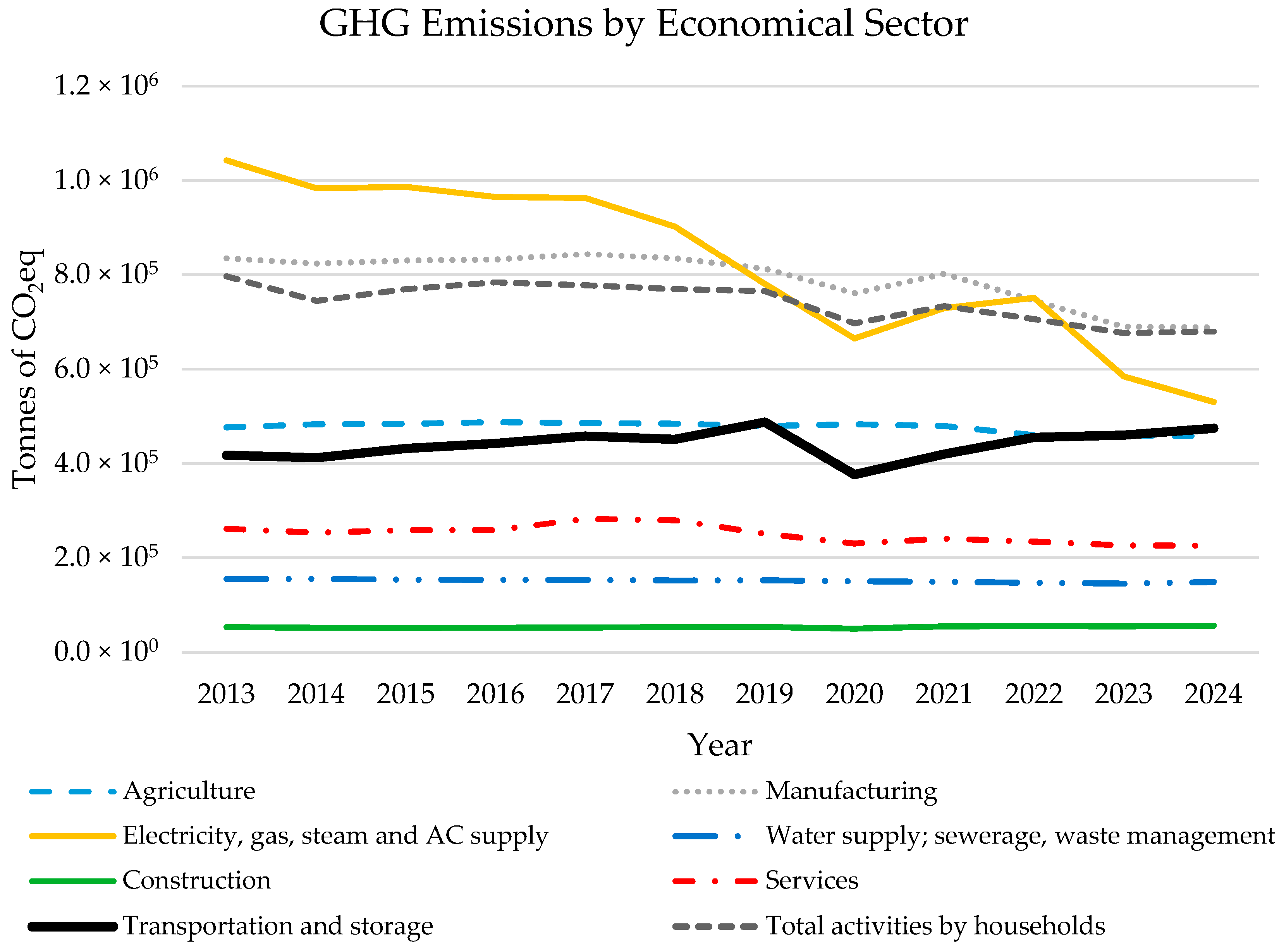
In 2024, economic sectors and households within the European Union were responsible for generating 3.3 billion tonnes of CO
2eq greenhouse gas emissions. As illustrated in
Figure 1, the majority of economic activities experienced a decline in emissions between 2013 and 2024, primarily due to a general reduction in energy consumption and a transition towards renewable energy sources. However, the transportation and storage sector recorded a 14% increase in emissions during this period, while the construction sector saw an approximate 6% rise. In 2024, transportation and storage represented the fourth-largest source of greenhouse gas emissions in the EU, contributing 475 million tonnes of CO
2eq. The continuous growth in transport volumes, particularly in road freight transport, appears to have counteracted the significant investments made in low-carbon transport technologies since 2005 [
10]. This scenario underscores the urgent need to identify and implement solutions for the decarbonization of the road transport sector in the short term.
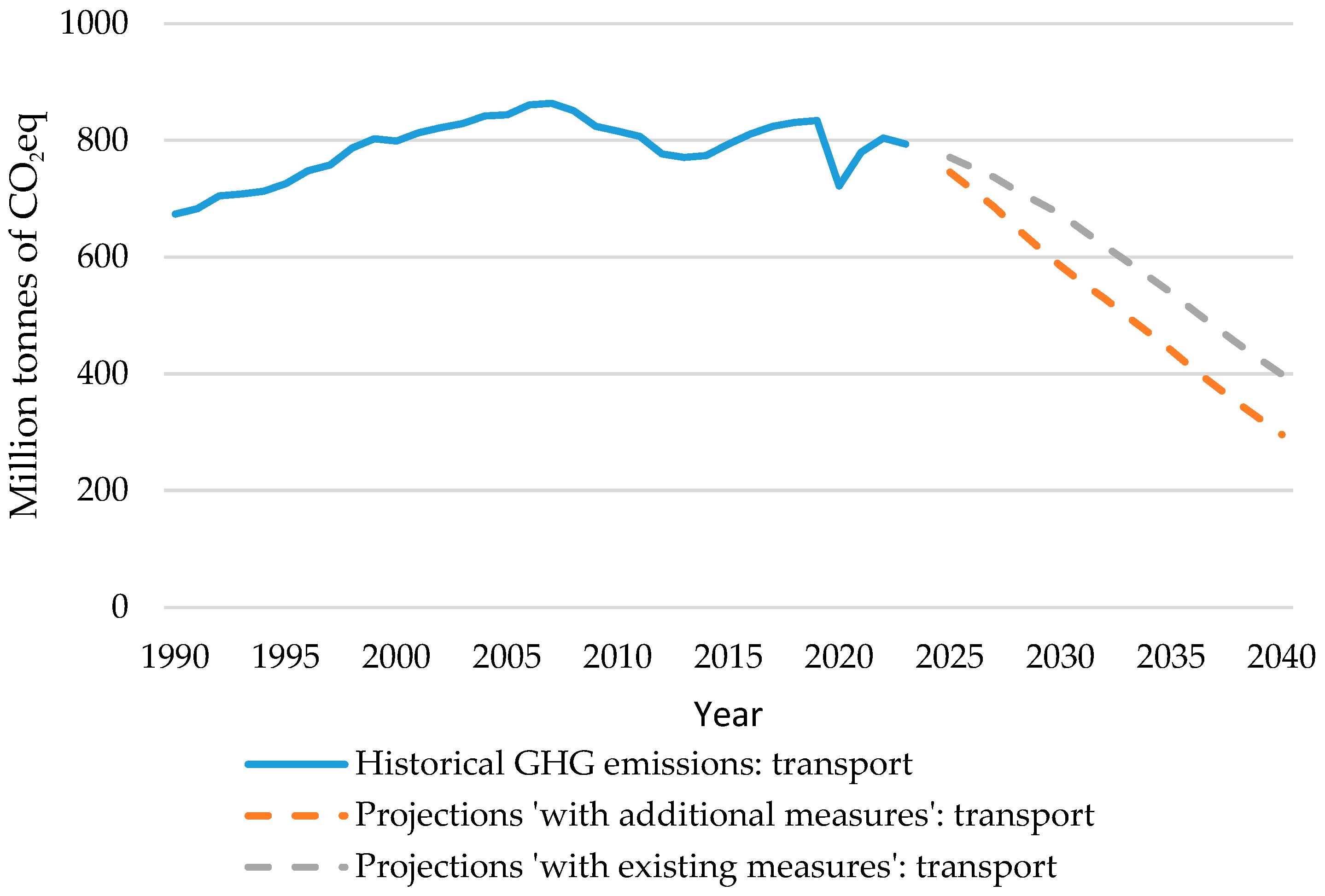
Under the current policy framework, 2030 emissions from the transport sector are projected to remain approximately equal to 1990 levels, whereas the adoption of additional mitigation measures could achieve a reduction of approximately 13% below 1990 levels, as illustrated in the projections depicted in
Figure 2 [
11]. Thus, enhanced efforts are required to meet the EU target of a 90% reduction in transport emissions by 2050, as outlined in the “Sustainable and Smart Mobility Strategy” initiative.
This review aims to provide an updated overview of the current state of road transport decarbonization within the European Union across its various segments and to assess potential short- and medium-term pathways for further emission reductions. Particular emphasis is placed on the heavy-duty freight segment, which faces the greatest challenges in electrification and in the adoption of more sustainable alternatives, as discussed throughout this paper.
In fact, nowadays, the automotive industry is intensively working on the electrification of vehicles and powertrains, despite the domination of internal combustion engine vehicles in new heavy-duty registrations in the European market. So, for heavy-duty vehicles in the road transport sector, the possibility of reducing emissions by fuel modifications without technical intervention could be a promising solution.
Figure 1.
Evolution of GHG Emissions by economical sector, 2013–2024, data from [
12].
Figure 1.
Evolution of GHG Emissions by economical sector, 2013–2024, data from [
12].
Figure 2.
GreenHouse Gas Emissions from Transport in Europe, data from [
11].
Figure 2.
GreenHouse Gas Emissions from Transport in Europe, data from [
11].
This alternative can be seen directly in renewable fuels. In this regard, biodiesel (FAME) is already used in a 7% mixture with fossil diesel named B7. Biofuels have been the subject of research for years and offer the opportunity to effectively reduce the CO
2 footprint of the road transport sector. Biodiesel (FAME) is an established biofuel. However, the limited capacity to produce FAME and the limitations imposed by its physicochemical properties make it difficult to expand its use. Thus, HVO has emerged as a more environmentally friendly fuel and a potential alternative to cut emissions in the road transport sector [
12]. HVO produced by hydro-treating catalysis of a blend of different oils and renewable raw materials is a fuel that can be used as a substitute for fossil diesel fuel. HVO can be blended with conventional diesel or used in its pure form (HVO100). In addition, HVO has a higher energy content and superior thermal and storage stabilities than FAME.
Regarding emission characterization, the authors of [
12] investigated the use of HVO in a light-duty diesel engine and reported that NO
x emissions from the various vehicle tests were at a similar level for HVO and diesel. CO and HC emissions, however, were consistently lower for HVO than for diesel across the entire operating map. In another study, the authors of [
13] evaluated the impact of diesel/renewable fuel blends on gaseous and particle emissions from light-duty vehicles under real driving conditions and concluded that the differences between fuels were small and not statistically significant for all emission parameters.
Considering all the above, it could be concluded that HVO has great potential and could be an appropriate solution for achieving emission targets for the existing fleet as well as new vehicles without developments of the new fueling infrastructure. There are recent relevant studies on impact of diesel/renewable fuels blend on gaseous and particle emissions of light-duty vehicles under real driving operating conditions [
12,
13]. Nevertheless, there is still limited knowledge on the effect of HVO and HVO/FAME blends on engine performance, fuel consumption, and emissions from heavy-duty engines, and it should be investigated more deeply. Moreover, there is a lack of research on the impact of engine parameter adjustments. This means that achieving the full benefits of HVO and HVO/FAME blends for a heavy-duty diesel engine that operates with those fuels still requires further research.
The analysis presented in this review combines data on greenhouse gas emissions, energy consumption and sources, and the current fleet composition by propulsion technology for each vehicle segment. Furthermore, it examines the decarbonization strategies proposed by vehicle manufacturers for the existing on-road fleet. This combined approach allows for a realistic and feasible assessment of the available options to reduce emissions in the heavy-duty transport sector in the short to medium term.
The study focuses on the potential of using biofuels in the current vehicle fleet, particularly biodiesel (FAME) and HVO. The advantages and limitations associated with each fuel are analyzed, as well as the position of major vehicle manufacturers regarding their use. The purpose of this study is to provide a viewpoint on the effects of combining various sustainable fuels, which currently remain subject to controversy. Finally, the potential of a novel approach, namely the blending of HVO and biodiesel, is recognized as a promising research path to determine whether such blends could mitigate the individual drawbacks observed when each biofuel is used independently.
2. Current State of EU Road Transport and Fleet Electrification
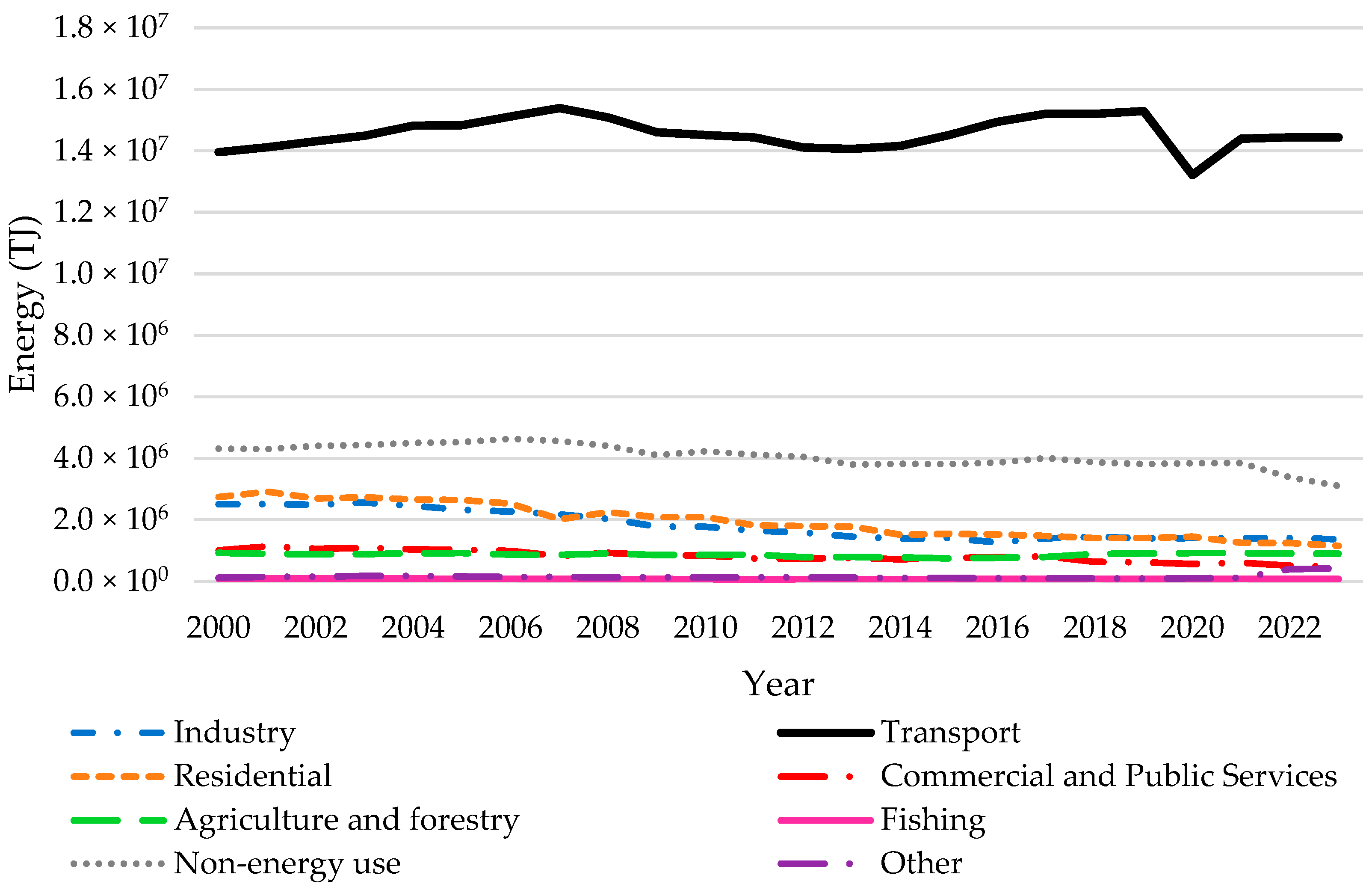
The recent increase in CO
2 emissions from the transport sector is largely attributed to the extensive reliance on petroleum-derived products as the primary energy source, as illustrated in
Figure 3. It can be observed that the transport sector remains the largest consumer of petroleum-based fuels, and this dependency has persisted at levels higher than those recorded more than two decades ago, relative to the year 2000. In contrast, the other sectors presented have shown a significant reduction in the use of these energy sources, highlighting that the energy transition within the transport sector is still progressing at a much slower pace.
According to Eurostat [
2,
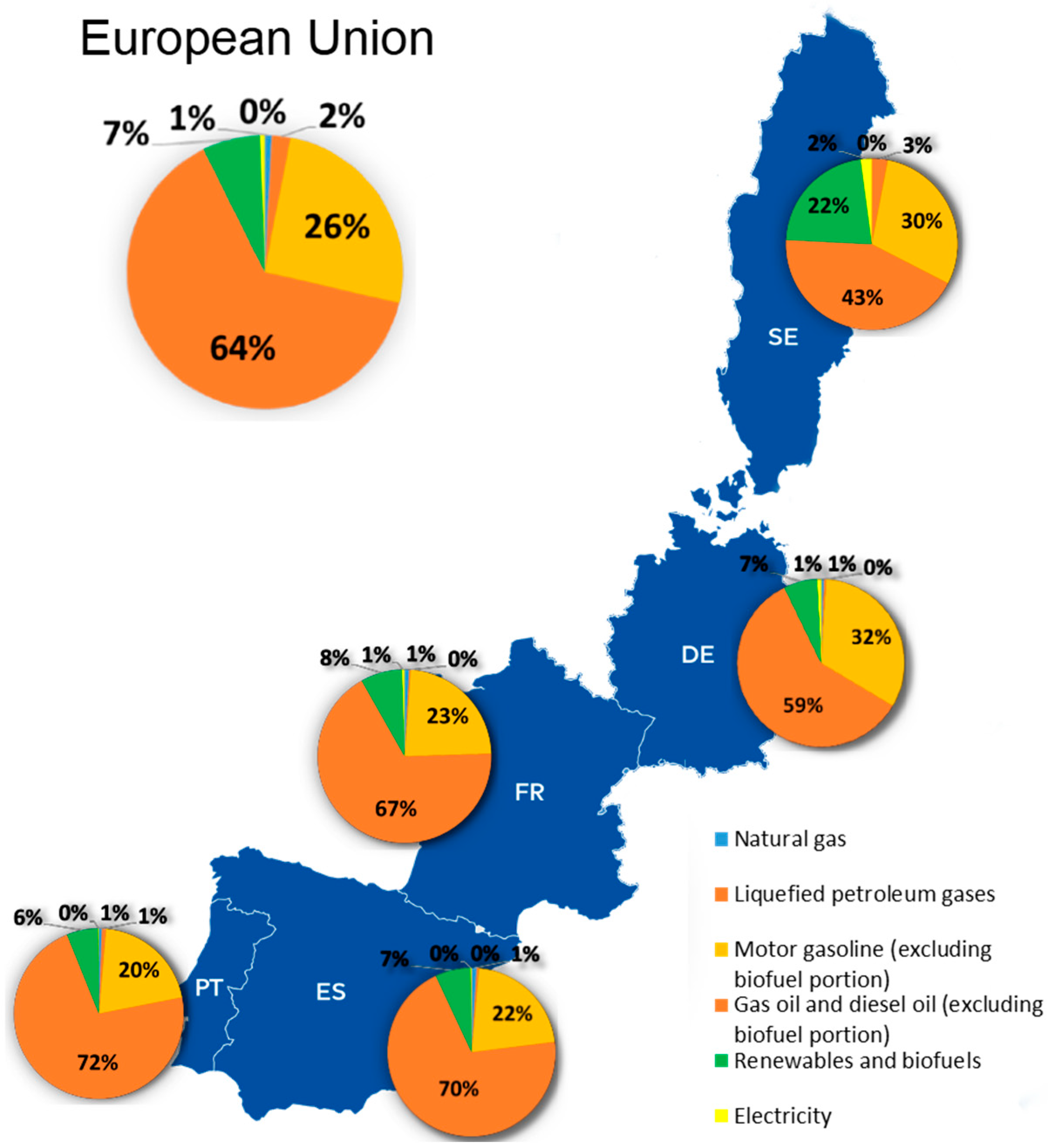
15], the transport sector was the largest final energy consumer in the European Union in 2023, accounting for 32% of total final energy consumption, and it remains reliant on oil for approximately 93% of its total energy demand, a dependency significantly higher than in any other sector of the economy. Within the transport sector, road transport represented the dominant mode, responsible for approximately 73% of all energy consumed in transport activities across the EU. As illustrated in
Figure 4, considering the final energy consumption in road transport within the European Union, in 2023, 64% originated from diesel oil, 26% from petrol, and 7% from renewables and biofuels. Other energy sources included liquefied petroleum gas (2.0%) and electricity (1%). In most EU countries presented in
Figure 4, a high dependency on fossil fuels as the primary energy source is evident, as the consumption of renewable fuels and electricity remains significantly low, ranging between 6–8% and 0–1%, respectively. Sweden stands out as the country with the highest consumption of renewable fuels and electricity in the transport sector, accounting for 22% and 2%, respectively. It should be noted that the electricity generation source is unspecified; therefore, its associated greenhouse gas reductions depend on the carbon intensity of the national energy mix, which may still include contributions from fossil-based sources.
It is essential to perceive the current state of the vehicle fleet by segment and the technologies currently implemented within each, in order to develop a comprehensive understanding of the decarbonization processes already undertaken and to identify the most viable future alternatives for each category, as well as to assess the associated temporal challenges and transition dynamics involved.
According to the report “Vehicle on European Roads” published by the European Automobile Manufacturers’ Association (ACEA) in January 2025 [
16], approximately 248.8 million passenger cars were in circulation across the European Union in 2023, with an average vehicle age of 12.5 years. Both the total number of vehicles and their average age increased by 1.4% compared to 2022.
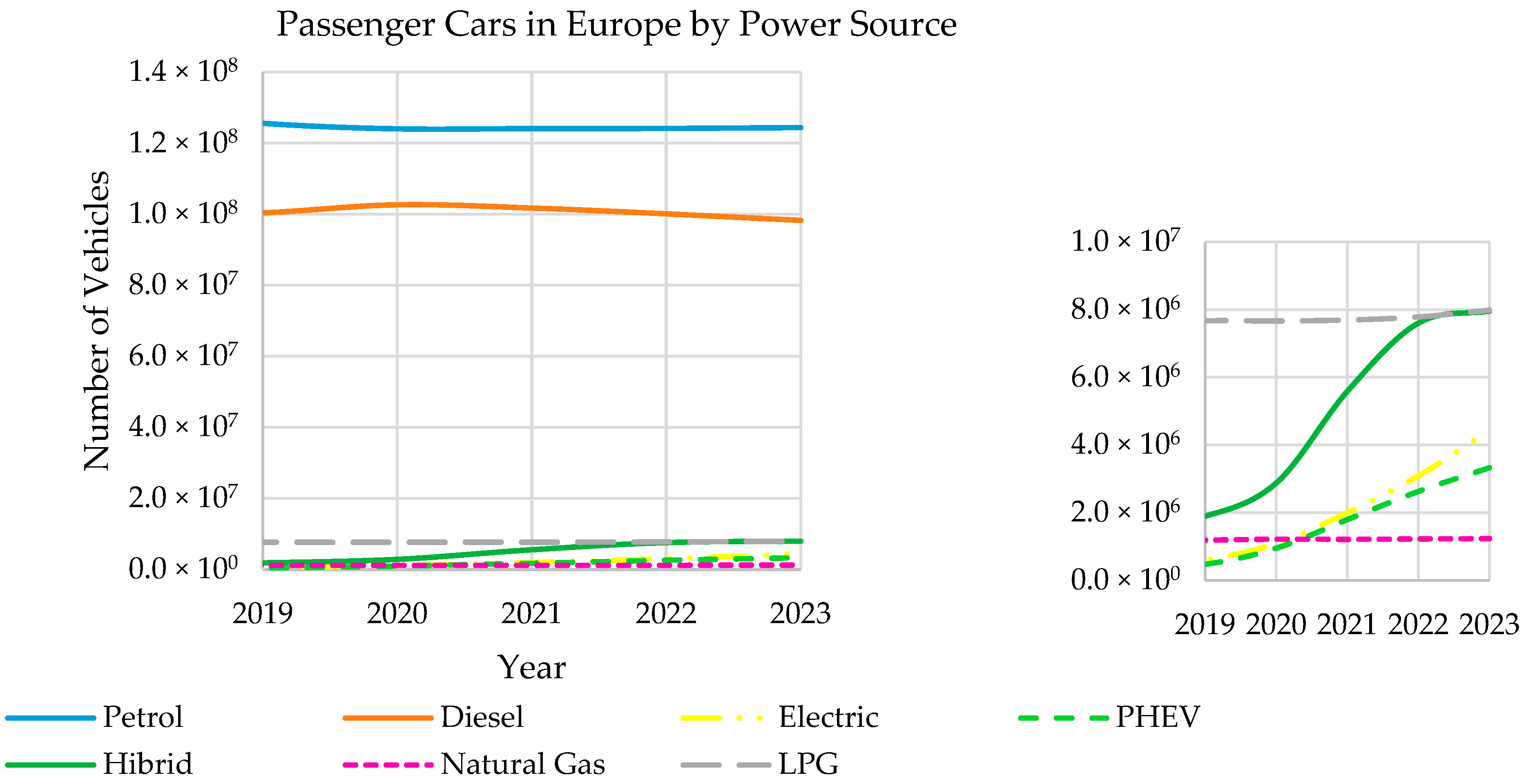
Figure 5 illustrates the evolution of the EU passenger car fleet by propulsion technology between 2019 and 2023, based on data published by the European Commission and ACEA. Owing to the relatively high average age of the fleet, fossil fuels remain the dominant energy source, with 50% of vehicles powered by gasoline, 39.5% by diesel, 0.6% by natural gas.
Concerning emerging technologies, battery-electric vehicles account for 1.8% of the total passenger car fleet, while plug-in hybrids represent 2.1% and conventional hybrids 3.2%.
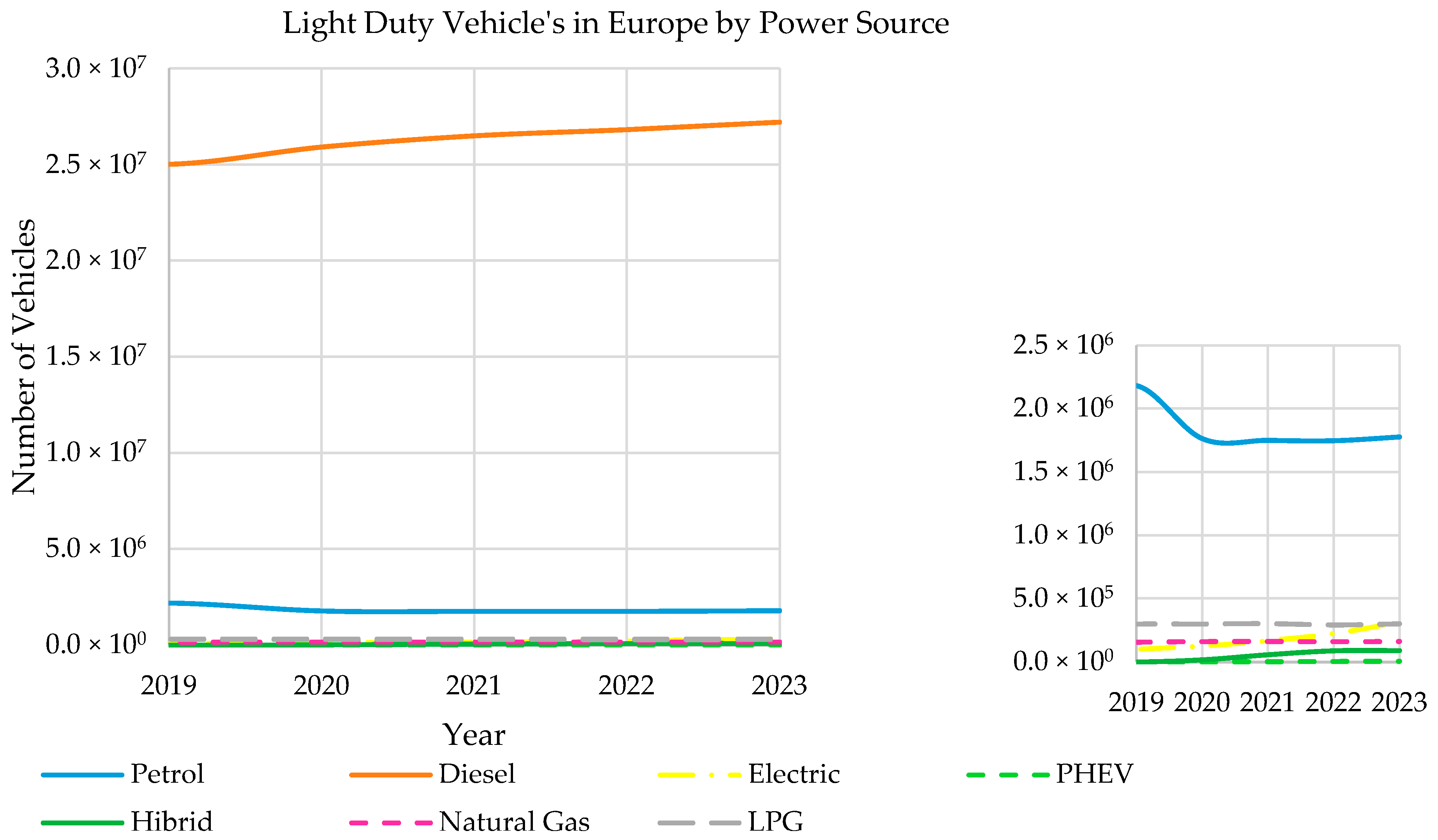
Regarding the light commercial vehicle fleet, the situation appears even further behind in terms of decarbonization progress. According to ACEA, approximately 30 million light commercial vehicles were in operation across the European Union in 2023, with an average age of 12.7 years. Both the total fleet size and the average vehicle age increased compared to 2022.
Figure 6 presents the evolution of the EU light commercial vehicle fleet by propulsion technology between 2019 and 2023, based on data published by the European Commission and ACEA.
Fossil fuels continue to dominate as the primary energy source, with the share of diesel-powered vehicles having increased in recent years, accounting for 90.5% of the total fleet in 2023. Additionally, 5.9% of vehicles run on gasoline, 0.5% on natural gas, and 0.8% on LPG. Emerging technologies remain marginal, representing less than 2% of the fleet, with battery-electric vehicles constituting 1.1%, plug-in hybrids 0.2%, and conventional hybrids 0.3%. It is evident that measures must be adopted to accelerate the decarbonization of this segment, given the increasing number of internal combustion vehicles in recent years.
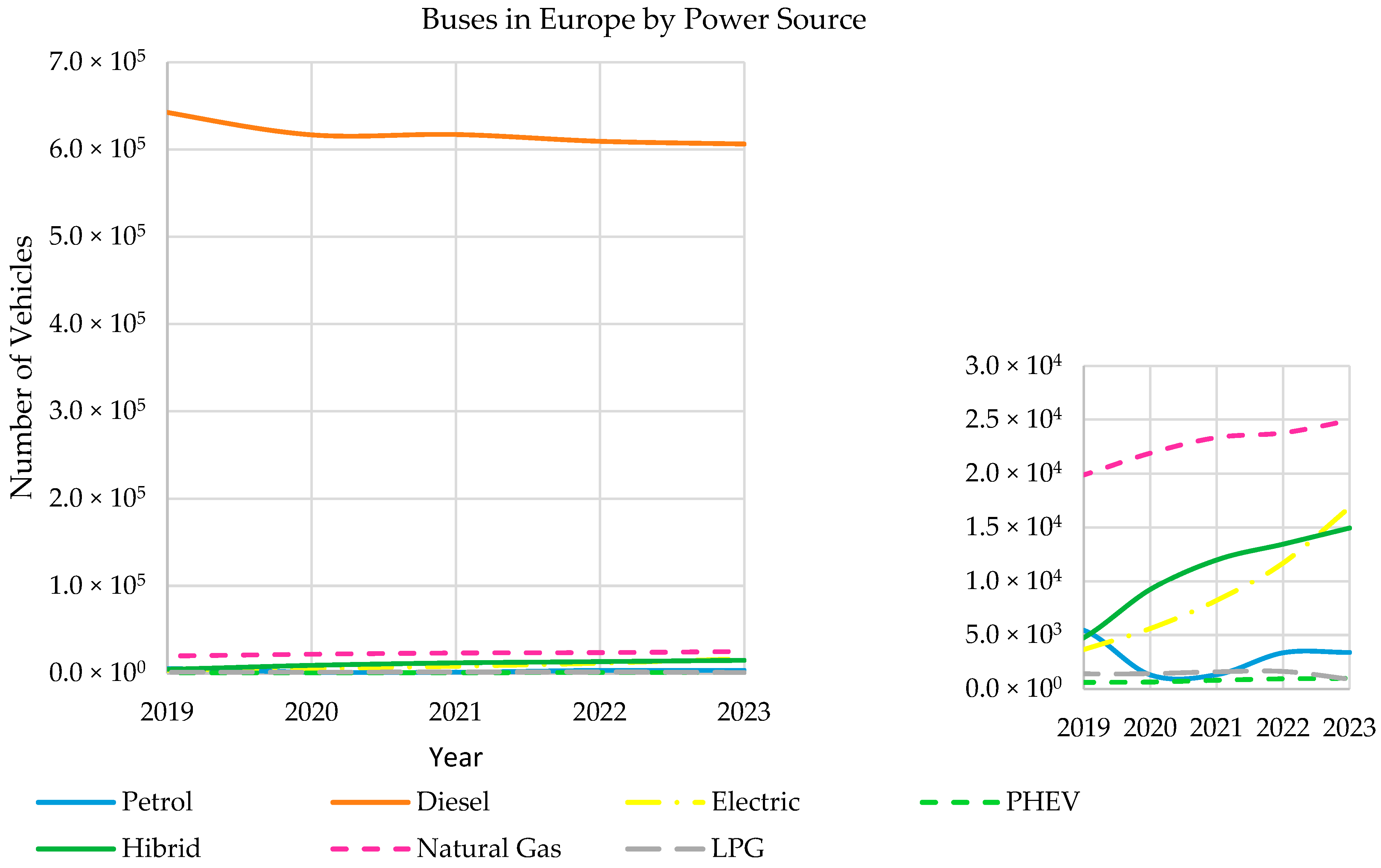
Analyzing the evolution of the bus fleet reveals some progress in the decarbonization of this segment. According to ACEA, approximately 680,000 buses were in operation across the European Union in 2023, with an average age of 12.2 years. Unlike other vehicle categories, the average age of buses decreased between 2022 and 2023, reflecting the gradual replacement of older, less efficient vehicles with newer and more advanced technologies.
Figure 7 presents the evolution of the EU bus fleet by propulsion technology between 2019 and 2023, based on data published by the European Commission and ACEA.
The share of diesel-powered buses dropped sharply from 2019 to 2020 and has continued to decline gradually in recent years, with a further reduction of about 1% between 2022 and 2023. Nevertheless, fossil fuels still dominate this segment, with 89.2% of buses running on diesel, 0.4% on gasoline, and 4.2% on natural gas. Emerging technologies account for roughly 5% of the total fleet, including 2.5% battery-electric buses, 0.5% plug-in hybrids, and 2.2% conventional hybrids. Although this remains a small fraction of the overall fleet, there is a clear trend toward the renewal of older vehicles with more environmentally sustainable technologies.
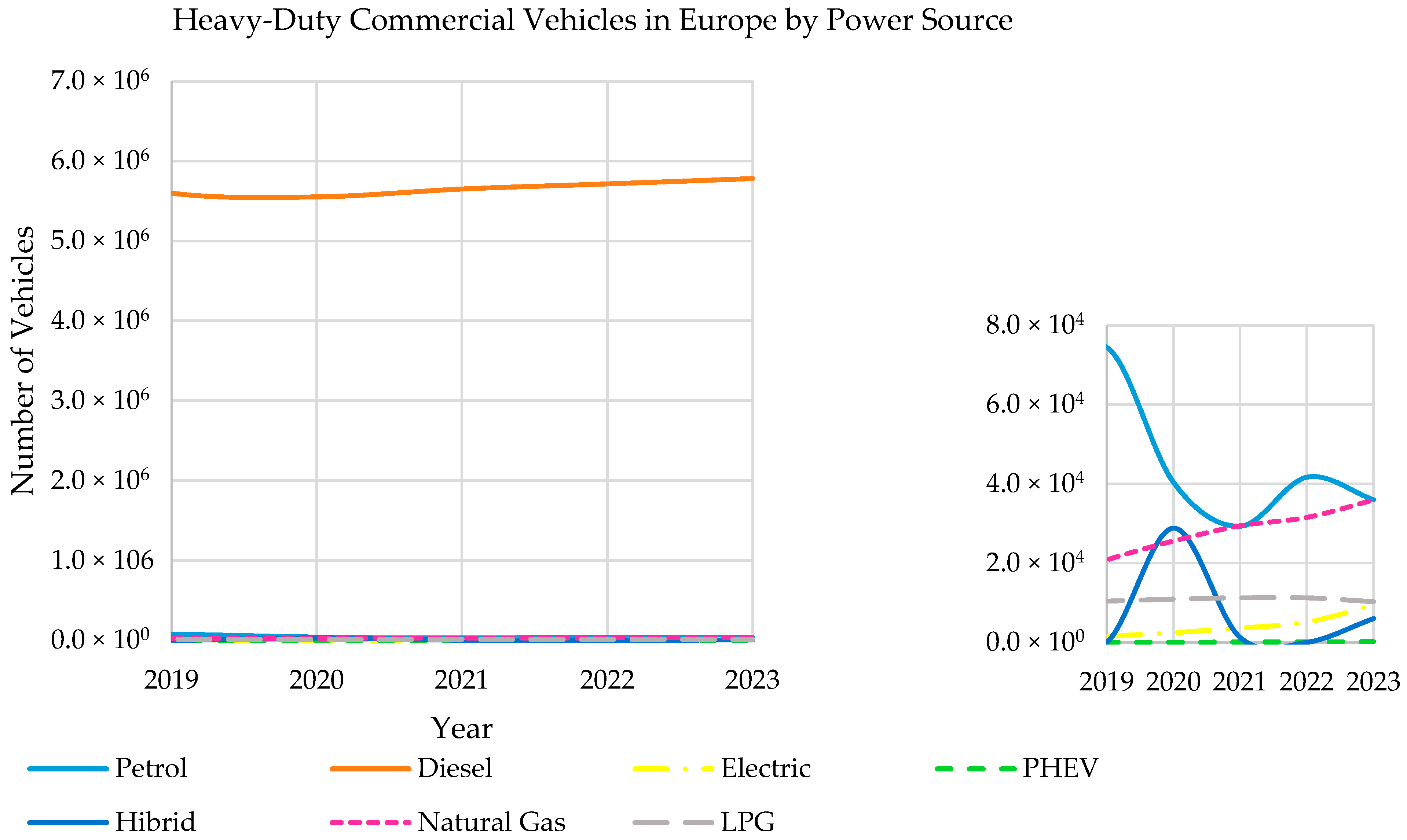
The decarbonization process of the heavy-duty freight vehicle sector remains noticeably more delayed than that of light-duty commercial vehicles. According to the European Automobile Manufacturers’ Association, approximately six million heavy-duty commercial vehicles were in operation across the European Union in 2023, with an average fleet age of 14.1 years. This segment has the oldest vehicle stock among all transport categories, which, combined with the predominant use of fossil fuels as the main energy source, indicates the continued operation of outdated and emission-intensive vehicles. Both the total fleet size and the average vehicle age increased compared to 2022.
Figure 8 illustrates the evolution of the EU heavy-duty commercial vehicle fleet by propulsion technology between 2019 and 2023, based on data published by the European Commission and ACEA.
In terms of propulsion technologies, 96.4% of vehicles are diesel-powered, 0.6% gasoline, 0.8% natural gas, and 0.1% liquefied petroleum gas (LPG), meaning that 97.9% of the fleet still relies on fossil fuels. Regarding emerging technologies, 0.1% of the fleet is fully electric and another 0.1% is hybrid. Nevertheless, around 1.9% of the fleet has an unidentified propulsion technology. This sector represents a major challenge for decarbonization, given both the technological profile and the advanced average vehicle age, as well as the inherent difficulties in renewing the fleet with more sustainable and energy-efficient technologies, as further discussed in this paper.
3. Liquid Biofuels for Decarbonizing Existing Diesel Fleets
3.1. Biodiesel (FAME): Properties, Engine Emissions, Drawbacks and OEM Approvals
Biodiesel is a renewable, biodegradable fuel composed of fatty acid methyl esters (FAME), produced through the chemical transesterification of organic oils and fats [
23]. It is designed to serve as a direct replacement or blend component for conventional fossil diesel in compression-ignition engines. Blends containing up to 20% biodiesel (B20) are generally considered suitable for use in diesel engines without requiring significant modifications [
24].
Biodiesel (FAME) is considered carbon-neutral as it operates within a closed carbon cycle, thereby not contributing to global warming. Life cycle analyses demonstrate that the utilization of biodiesel can result in up to a 78% reduction in CO
2 emissions when compared to conventional petroleum-based diesel [
25].
The production of biodiesel involves the transesterification of triglycerides (from vegetable oils, animal fats, or recycled cooking oils) with a short-chain alcohol, typically methanol, in the presence of a catalyst such as sodium hydroxide (NaOH) or potassium hydroxide (KOH) [
25]. The general reaction can be represented as:
This fuel presents physical and chemical properties broadly comparable to fossil diesel, although with some notable differences, as summarized in
Table 1. It exhibits a higher cetane number (indicative of better ignition quality) and contains oxygen within its molecular structure (~10–12%), promoting more complete combustion. However, biodiesel tends to have higher viscosity, lower energy content (approximately 8–12% less than diesel), and poorer cold flow properties, which may impact engine performance under low-temperature conditions [
26,
27].
FAME, as an oxygenated compound, contributes to a reduction in emission toxicity compared to fossil Diesel, particularly by decreasing particulate matter (PM), carbon monoxide (CO), and unburned hydrocarbon (HC) emissions, according to several studies as shown in
Table 2.
However, several authors reported that certain tailpipe emissions, such as NO
x, CO
2, and formaldehyde, tend to increase, as shown in
Table 3.
Considering that biodiesel has approximately 9% lower volumetric heating value than conventional diesel, and assuming comparable engine efficiencies, vehicles operating on biodiesel were found to exhibit proportionally higher fuel consumption and reduced driving range, as indicated by the studies summarized in
Table 4.
In heavy-duty compression ignition (CI) engines, significant emission reductions can be achieved even with moderate biodiesel blend concentrations of 20% by volume. However, higher biodiesel concentrations may have adverse effects on direct injection systems in modern engines. A study by A.T. Hoang and A.T. Le [
42] reported increased deposit formation on injector components of diesel engines operating with biodiesel-based fuels compared to fossil diesel. Consequently, neat FAME is not considered a fully drop-in solution, and its content in commercial diesel fuel is restricted to a maximum of 7% by volume, in accordance with the EN590 standard implemented in the European Union [
43].
Moreover, the clear identification of biodiesel blend ratios is essential not only for optimizing engine performance, reducing emissions, and ensuring the durability of vehicle technologies but also for maintaining fuel quality stability during handling, storage, and commercialization [
41]. Due to the unique chemistry and properties of biodiesel, several challenges may emerge as blend levels increase [
44].
One significant challenge is meeting the cloud point requirements for winter conditions, as biodiesel typically exhibits a cloud point of approximately 0 °C or higher, which makes the use of high-level blends or pure biodiesel (B100) difficult in many regions during colder seasons [
44]. Problems associated with FAME during the cold-start phase have been frequently reported in the literature, primarily attributed to its high cold filter plugging point (CFPP) [
45].
Biodiesel produced from feedstocks with high content of long-chain unsaturated fatty acids is inherently prone to autoxidation under mild conditions. Prolonged oxidation can lead to detrimental alterations in fuel properties, including increased acid formation and the development of insoluble polymeric compounds [
46,
47]. Due to its hygroscopic nature, biodiesel is significantly more hydrophilic than conventional diesel, resulting in higher soluble water content during storage. Low-temperature storage can enhance solvency, promote microbial growth, and increase water content, while prolonged storage at elevated temperatures can decrease oxidation stability and lead to higher acid numbers and kinematic viscosity [
46,
48].
Therefore, storage stability has been identified as a key factor in determining fuel quality and is critical for the successful commercialization of biodiesel blends [
46,
49]. Degraded biodiesel generates a variety of by-products that negatively affect its quality, particularly in terms of increased acidity, viscosity, and reduced oxidation stability, thereby limiting its suitability for long-term storage [
41,
50].
In addition, the relatively low vapor pressure of FAME contributes to increased fuel contamination of the engine oil, particularly during diesel particulate filter (DPF) regeneration phases involving post-injections. The high-boiling components of FAME are unable to evaporate from the engine oil, resulting in oil dilution and a subsequent reduction in its lubricating properties [
44,
45]. The reported negative effects include reduced oil viscosity, increased engine wear, acid formation leading to corrosion, and low oil pressure [
51]. However, the long-term effects of biodiesel use on engine wear and associated systems remain poorly documented in the literature and therefore require further investigation.
In a study conducted by Pereira et al. [
52], the substitution of mineral diesel with B100 biodiesel intensified fuel-induced dilution of the engine lubricant, leading to a more pronounced decrease in lubricant viscosity. Under B100 operation, viscosity was the first lubricant property to reach its allowable limit, supporting its use as a control parameter for defining the in-service life of the lubricant charge. Moreover, the lower oxidation stability of biodiesel compared with diesel fuel accelerated depletion of the lubricant’s alkaline reserve (TBN) and promoted increased oxidation and acidity (TAN), thereby reducing the lubricant service-life mileage to approximately two-thirds of the value recommended for vehicles fueled with conventional diesel.
Several studies also reported the deterioration of engine and fuel system seals resulting from engine operation with biodiesel, with the extent of degradation varying according to the material. This effect was identified through changes in volume swell, weight, thickness, and elongation of O-rings [
53]. Acrylonitrile–butadiene rubber (NBR), butyl rubber (IIR), chloroprene rubber (CR), chlorosulfonated polyethylene (CSM), and ethylene–propylene–diene rubber (EPDM) were found to be poorly resistant to biodiesel, regardless of aging conditions. Conversely, fluorocarbon rubber (FKM) and polyamides (PA) exhibited high compatibility, attributed to their non-polar nature [
54]. The degradation of elastomers has been associated with the carboxylic polar groups in biodiesel [
55], while the pronounced swelling in NBR, CSM, CR, and IIR was linked to their polar character and the presence of polar ester functional groups in biodiesel [
56].
In response to these challenges, many leading heavy-duty vehicle manufacturers have recently been developing modification and maintenance plans for vehicles to accommodate the use of fuels with high biodiesel blend ratios or even pure biodiesel.
In 2025, DAF introduced the PACCAR MX-13 engine, designed specifically for operation on pure biodiesel (B100). This engine variant incorporates control software calibrated to account for the lower energy content of biodiesel, thereby optimizing performance and emissions characteristics [
57]. The use of higher biodiesel blends than B30 necessitates enhanced maintenance procedures and reduced service intervals [
58].
As of 2024, Volvo introduced additional Euro 6-certified truck models specifically approved for operation with pure biodiesel (B100) [
59], designated DIESEL-B, which include updated engine control software calibrated for both conventional Diesel and Biodiesel. Service intervals for B100 operation are reduced by 50% relative to standard diesel operation under the Volvo Operational Service Plan. Notably, biodiesel usage increases the frequency of DPF regeneration events due to altered combustion characteristics and accelerates ash accumulation in the DPF, reducing the expected lifetime of the Aftertreatment System muffler to approximately 200,000 km [
60].
According to MAN Trucks, maintenance requirements for vehicles operating on biodiesel are considerably more stringent, particularly under low-temperature conditions, where correction factors must be applied to engine oil, oil filter, and fuel filter replacement intervals. As mentioned before, the oxidative instability and hygroscopic nature of biodiesel accelerate fuel ageing, increasing the likelihood of fuel filter clogging—an issue amplified during the initial transition from diesel to FAME, as biodiesel mobilizes existing deposits within the fuel system. Consequently, premature fuel filter replacement may be required, and MAN provides enlarged fuel filters as a mitigation measure. Biodiesel use may also lead to injector fouling; in such cases, flushing the system with at least two full tanks of conventional diesel is recommended to restore proper injector performance [
61].
Scania has developed a dedicated conversion program for selected engines, which involves modifying the fuel filtration system, adapting the exhaust aftertreatment components, and recalibrating the engine management system to ensure proper operation on biodiesel. In climates where ambient temperatures drop below 0 °C, the installation of auxiliary fuel heaters is mandatory to prevent cold-flow issues. Biodiesel also accelerates engine oil degradation due to its higher oxidative tendency and its limited evaporative behavior at elevated oil temperatures. As a result, maintenance intervals must be reduced to half of those specified for conventional diesel operation, and only lubricants with a minimum viscosity grade of xW-40 are authorized. Operating a vehicle on biodiesel without undergoing the full conversion process may lead to severe operational issues, including a substantially increased risk of clogged fuel filters and diesel oxidation catalysts, as well as higher fuel consumption arising from altered NO
x emissions characteristics [
62].
3.2. Hydrotreated Vegetable Oil (HVO): Properties, Engine Emissions, Drawbacks and OEM Approvals
Hydrotreated Vegetable Oil is a renewable diesel fuel produced by the hydrotreatment of vegetable oils, animal fats, or waste lipids. Unlike conventional biodiesel, HVO consists of straight-chain paraffinic hydrocarbons, making it chemically very similar to fossil-derived diesel but with more favorable environmental characteristics [
30,
63], as shown in
Table 5. This chemical similarity enables HVO to be blended with petroleum diesel in any proportion without compromising fuel quality, combustion stability, or compatibility with existing engine systems [
63,
64].
Modern HVO production increasingly relies on residual fats and waste-based lipid fractions derived from food processing, fisheries, and slaughterhouse operations, as well as non-edible-grade vegetable oils [
64]. When evaluated on a full life cycle basis, HVO delivers substantial reductions in CO
2-equivalent greenhouse gas emissions, typically between 60% and 95% compared with conventional fossil diesel [
65]. The production cost of HVO is generally higher than that of fossil diesel and conventional biodiesel, mainly due to the significant hydrogen demand associated with the hydrotreatment process and the high cost of renewable feedstocks. According to a study conducted by L. Judijanto [
66], the price of HVO is approximately 1.5–2 times higher than that of diesel, and about 1.7 times higher than that of biodiesel, as reported by R. Smigins et al. [
67].
Regardless of the feedstock used, neat HVO is characterized by a high cetane number and relatively low density compared to fossil diesel. Cold flow properties can be effectively tailored by adjusting the isoparaffin-to-normal paraffin ratio during the isomerization step of the production process. Lubricity, which is naturally low in HVO, can be improved with the use of dedicated lubricity additives. Unlike FAME, HVO fuel properties are largely independent of feedstock variability [
30,
68]. HVO also exhibits a significantly higher cetane number (CN), as well as superior cold flow characteristics, oxidative stability, and calorific value compared to FAME [
69].
Table 5.
Properties of HVO and fossil Diesel.
Table 5.
Properties of HVO and fossil Diesel.
| Properties | HVO | Diesel |
|---|
| Density (15 °C) (kg/m3) | 770–790 [70] | 820–845 [29] |
| Viscosity (40 °C) (cSt) | 2.0–4.0 [70] | 2.0–4.5 [29] |
| Cetane number | >70 [70] | >51 [29] |
| Cold filter plugging point (°C) | | <−15 [29] |
| Cloud point (°C) | −25 to −5 [63] | −25 to 0 [23] |
| Pour point (°C) | | −35 to 0 [23] |
| Lower heating value (MJ/kg) | 44.0 [63] | 42.5–44 [23] |
| Sulfur content (mg/kg) | <10 [63] | 15–500 [23] |
| Storage Stability | Good [30] | Good [30] |
Literature consistently shows that HVO can be used either as a blend or in its pure form (HVO100) with minimal or no modifications to engine hardware or after-treatment systems [
30,
63].
According to Singh et al. [
71], HVO-fueled engines can achieve equivalent or slightly improved performance metrics compared to diesel, with power output improvements in the range of 0–5%, and an increase in brake thermal efficiency of approximately 10%. Sugiyama et al. [
72] also reported that the brake thermal efficiency of an engine fueled with HVO was higher than that obtained with conventional fossil diesel. In a study conducted by M. Pechout et al. [
73], HVO exhibited a significantly shorter ignition delay, which resulted in a faster onset and advancement of combustion, particularly at low engine speeds and loads where combustion rates are limited by chemical kinetics.
Several studies have reported that substituting fossil diesel with HVO in compression-ignition engines leads to substantial reductions in tailpipe emissions, particularly PM, HC, CO, CO
2 and formaldehyde as presented in
Table 6.
However, the effects of HVO on NO
x emissions remain ambiguous. Several studies have reported decreases in NO
x emissions when using HVO, while others have observed increases, as summarized in
Table 7. Existing literature indicates that the magnitude of emission changes relative to conventional fossil diesel is strongly influenced by engine configuration, combustion strategy, and operating conditions.
Typically, paraffinic fuels such as HVO tend to reduce gravimetric fuel consumption due to their slightly higher heating value and significantly higher cetane number, which together enhance combustion performance in compression-ignition engines on a mass basis. However, in terms of volumetric fuel economy, HVO generally performs worse than reference diesel, primarily due to its lower density. This density difference accounts for an approximate 5% decrease in volumetric fuel economy [
40]. A similar trend was reported by several authors, as presented in
Table 8.
The inherent drawbacks of ester-based fuels previously described for biodiesel—such as deposit formation, reduced oxidation stability, accelerated engine oil degradation, and inadequate low-temperature properties—were not observed for HVO [
45].
In a large-scale endurance test, Toedter et al. [
77] evaluated the real-world performance of HVO in commercial logistics operations. Identical truck pairs, operating on the same routes and loads, were fueled respectively with B7 diesel and HVO. Oil sample analyses confirmed that combustion-related byproducts associated with HVO did not result in any adverse changes to engine lubricant condition.
Szeto and Leung [
78] demonstrated that HVO does not inherently satisfy lubricity specifications in the absence of friction-modifying additives. The authors attributed the diminished lubricity of HVO, relative to conventional diesel fuel, to the removal of oxygen- and nitrogen-containing polar compounds during the hydrogenation of vegetable oils. Several studies have indicated that blending biodiesel with either diesel or HVO improves the lubricity of the resulting mixtures, with greater biodiesel fractions yielding more pronounced improvements [
79,
80]. An adequate level of fuel lubricity is essential to mitigate wear in fuel injection system components, such as high-pressure pumps and injectors, by reducing friction and minimizing surface degradation [
81].
Regarding the degradation of fuel injection system seals, the use of HVO did not produce a significant impact on the deterioration of elastomeric O-rings [
82,
83].
Since HVO is considered a “drop-in” fuel, most major heavy-duty vehicle manufacturers have confirmed the compatibility of their engines and fuel systems with this renewable fuel.
In 2023, DAF declared that HVO can be utilized in all models of the New Generation DAF trucks without any mechanical modifications, while maintaining their high-performance standards and extended maintenance intervals—up to 200,000 km for long-haul applications [
84].
Volvo Trucks approved the use of HVO across its entire Euro 5 engine portfolio without altering existing service intervals. In 2015, this approval was expanded to the D5 and D8 engines compliant with Euro 6 standards [
85].
In 2023, MAN Engines confirmed that all off-road engines within its current product portfolio are compatible with HVO in accordance with the EN15940 standard [
70] applicable in Europe. Owing to the chemical similarity of HVO to conventional fossil diesel, its use does not necessitate any modifications to vehicle systems or existing fuel infrastructure. HVO can be utilised either in its pure form (HVO100) or blended at any ratio with conventional diesel [
86].
Scania also offers a comprehensive range of engines compatible with HVO in accordance with the EN 15940 standard, with no modifications required [
87]. Scania authorizes the use of HVO EN 15940 across its Euro 3 to Euro 6 diesel engine platforms, except for the DC07 101 engine [
88].
4. Discussion
When examining the overall evolution and current status of the various vehicular segments, the data highlights a crucial observation—replacing the oldest vehicles with newer models equipped with cleaner and greener technologies may take many years, or even decades. The average age of all vehicle categories, except buses, continues to rise, while the total number of vehicles on the road is also increasing. Older vehicles generally incorporate less efficient technologies that emit higher levels of greenhouse gases and pollutants compared to newer models [
16]. To mitigate these emissions and improve air quality and public health, stringent emission regulations have been introduced for on-road diesel engines to limit nitrogen oxides and particulate matter emissions. Compliance with these standards has led to the widespread adoption of selective catalytic reduction (SCR) systems and diesel particulate filters, which effectively control NO
x and particulate matter emissions, respectively [
39].
Although regulatory targets provide a necessary framework for change, they represent only one component of the broader challenge of decarbonizing road transport. Europe requires a realistic and coherent pathway to achieve effective decarbonization of the road transport sector, as the current pace of transformation remains insufficient to meet climate objectives [
16].
This review focuses particularly on the heavy-duty freight vehicle segment, given the outdated nature of its fleet and the absence of any clear trend toward the adoption of more modern vehicles. These issues are primarily driven by the technological and economic challenges associated with electrifying this sector, especially for long-haul applications, as discussed in the following sections.
Although heavy-duty trucks account for only a small proportion of the total vehicle fleet, their disproportionately high carbon intensity makes their decarbonization a critical component of an effective energy transition strategy [
1]. The data suggests that during the current phase of the transition toward electrification, the large number of internal combustion vehicles still in operation, together with their relatively high average age, underscores the urgent need to develop and deploy more sustainable fuel alternatives for the existing fleet.
According to the International Energy Agency’s (IEA) reference scenario for heavy-duty vehicles, oil-based fuels (particularly diesel) are projected to remain the predominant energy source, accounting for approximately 85% of the road freight fuel mix by mid-century. The remainder of the fuel demand is expected to be largely met by biofuels and natural gas. This continued reliance on petroleum-derived fuels, coupled with rising fuel consumption, highlights the growing importance of the road freight sector in discussions surrounding global energy security, emission reduction strategies, and long-term environmental policy objectives [
1].
While electrification represents a promising solution for this segment, it continues to face considerable challenges in long-haul applications [
44,
89]. One of the most critical challenges for the electrification of long-haul heavy-duty vehicles is the charging infrastructure. The current availability of suitable charging points for this type of vehicle remains very limited, while accurately determining the required number and spatial distribution of charging points, as well as optimally scheduling charging events to minimize disruptions to freight transport operations, remains highly complex [
90,
91]. Coordinated routing and charging strategies are considerably more critical for electric heavy-duty trucks than for electric passenger vehicles since heavy-duty trucks exhibit substantially shorter driving range [
92]. As a result, heavy-duty vehicles require more frequent charging over shorter distances, which in turn increases the need for a larger number of charging points. It should also be noted that charging infrastructure for heavy-duty trucks is significantly more expensive to deploy [
90]. In uncoordinated scenarios, individual electric trucks may select routes without accounting for the charging requirements of other vehicles or the availability of charging stations along those routes. Consequently, charging stations are more likely to experience congestion, leading to increased waiting times, longer overall travel durations, and an elevated risk of delayed deliveries [
90,
93]. Finally, the existing electrical grid often lacks sufficient capacity to meet the high power and energy demands associated with heavy-duty vehicle charging [
94,
95].
In this scenario, liquid biofuels are considered a key enabler for the decarbonization of the transport sector, particularly in emission-intensive segments such as shipping, aviation, and long-distance road freight. Among the most promising candidates are biodiesel and hydrotreated vegetable oil, each presenting distinct production pathways, properties, advantages, and limitations. Their high compatibility with existing internal combustion engines and fuel distribution infrastructure facilitates their integration without requiring substantial technological adaptation [
81,
96].
The use of biodiesel enables short- to medium-term decarbonization of heavy-duty freight vehicle technologies, with manufacturers already offering models specifically designed for its use. Nevertheless, several limitations and challenges remain that require further investigation, particularly regarding the long-term effects of biodiesel utilization. These include increased engine wear due to higher lubricant oil dilution, injector degradation resulting from greater deposit formation, wear of sealing materials in injection systems, and potential clogging of fuel filters.
HVO represents a fuel with significant potential to decarbonize the existing heavy-duty vehicle fleet due to its close physicochemical similarity to fossil diesel, its capability to reduce life-cycle equivalent CO2 emissions, and its suitability for use in current engines and fuel infrastructure without requiring technical modifications. It is compatible with fossil diesel in all blending ratios and enables a gradual transition from fossil to renewable fuel without additional investment. Its high chemical stability is advantageous for long-term storage, as HVO is resistant to water absorption and microbial contamination. The lower energy density of HVO results in a slightly higher volumetric fuel consumption to achieve the same engine power output, and some aspects, particularly related to NOx emissions and lubricity, still warrant further investigation.
However, the complete replacement of conventional diesel with HVO in current transportation systems remains challenging due to both technical and economic constraints. Consequently, recent research efforts have increasingly focused on the utilization of HVO–diesel blends [
81]. The incorporation of biodiesel into HVO is primarily motivated by the substantially lower production cost of biodiesel [
97].
McCormick et al. [
44] evaluated the effects of blending biodiesel with HVO and commercial diesel over a range of 20–90%. Their results indicated that the influence of biodiesel blending on fuel properties was similar for both HVO and conventional diesel within the scope of the fuels and properties examined. Therefore, the potential blending limitations associated with specific properties apply equally to both base fuels. Flash point, cetane number, lower heating value, surface tension, and density did not appear to impose any restrictions on biodiesel blending. Since biodiesel typically exhibits a higher flash point than either HVO or Diesel, blending tends to increase the flash point. On a volumetric energy density basis (MJ/L), the lower heating value of biodiesel was approximately 9% lower than that of Diesel and 4% lower than HVO, resulting in only a marginal reduction in the overall energy content of the blended fuels. Density increased linearly with increasing biodiesel content in both HVO and Diesel blends. However, low-temperature operability (cloud point), viscosity, distillation characteristics, and oxidation stability may limit biodiesel blending under certain conditions.
A study carried out by McCaffery et al. [
39] showed that NO
x emissions increased with higher biodiesel blending ratios in HVO, rising from 1.8% to 4.2%, while the PM mass decreased when biodiesel was blended into HVO, compared to commercial diesel.
Nevertheless, the currently available dataset is very limited, and there is still an incomplete understanding of the effects of biodiesel–HVO blends on diesel engine performance, emissions, and reliability, highlighting the need for further investigation in future studies. It is particularly important to assess how the biodiesel blending ratio in HVO affects the following aspects:
Short Term: Exhaust gas emissions (PM, HC, NOx, CO, and CO2) and engine performance parameters such as torque, power output, and fuel consumption.
Medium Term: Storage stability and low-temperature operability, degradation of fuel system sealing materials, potential for fuel filter clogging, fuel injection system wear (to verify if biodiesel provides adequate lubricity) and required maintenance schedule adjustments, since HVO usually requires none, while biodiesel use may halve intervals compared to B7.
Economic Aspects: cost reduction potential arising from biodiesel’s substantially lower production cost compared to HVO.
5. Conclusions
The decarbonization of the road transport sector constitutes a strategic priority, considering the ongoing global climate crisis. This sector accounts for approximately 25% of total greenhouse emissions in the European Union, with heavy-duty freight vehicles contributing nearly one quarter of that share.
This review paper uniquely contributes by providing an updated and comprehensive assessment of the evolution of the road transport fleet across its main segments from a decarbonization perspective. It offers a detailed overview of the current progress and persisting barriers toward low-carbon mobility, establishing a clear picture of the transition state of the sector. The study critically systematizes the use of biodiesel and HVO as renewable diesel substitutes, emphasizing their respective advantages, limitations, and technological maturity levels. Furthermore, it explicitly proposes a research-based roadmap to explore the potential and define the required investigation steps for optimizing HVO/biodiesel blends. By combining a decade-long update of fleet and emissions data with a structured comparative framework and a forward-looking blending strategy, this work advances the understanding of how biofuels can contribute to the near-term decarbonization of existing vehicle fleets.
In recent years, the EU has implemented a range of strategic initiatives aimed at reducing GHG emissions; however, these measures have thus far proven insufficient to achieve the established targets. The transportation and storage sector recorded a 14% increase in emissions between 2013 and 2024. Under the current policy framework, emissions from the transport sector in 2030 are projected to remain approximately 4% above 1990 levels, whereas the implementation of additional mitigation measures could achieve a reduction of about 8% below 1990 levels. Enhanced efforts are therefore required to meet the EU’s long-term objective of a 90% reduction in transport-related emissions by 2050, as set forth in the Sustainable and Smart Mobility Strategy.
One of the major challenges lies in the aging vehicle fleet across all road transport segments. In all categories, the average vehicle age exceeds 12 years, and over 90% of the fleet continues to operate on fossil fuels. Consequently, replacing older, high-emission vehicles with environmentally advanced technologies will require a prolonged transition period. This underscores the need for more sustainable strategies to supply and operate the existing vehicle fleet, which will remain on the roads for many years to come.
In this context, liquid biofuels are recognized as key enablers for the decarbonization of the road transport sector. The high compatibility of biodiesel and hydrotreated vegetable oil with existing internal combustion engines and fuel distribution infrastructure facilitates their seamless integration into current systems.
The use of biodiesel enables short- to medium-term reductions in engine emissions from heavy-duty freight vehicles, with several manufacturers already offering engine models specifically optimized for its use. Nonetheless, certain limitations and technical challenges persist, requiring further research, particularly concerning long-term effects such as engine lubricant dilution and contamination, injector wear, and potential fuel filter clogging.
HVO, by contrast, presents fewer operational limitations than biodiesel and exhibits strong potential to decarbonize the existing heavy-duty vehicle fleet due to its close physicochemical resemblance to fossil diesel, lower life-cycle equivalent CO2 emissions, and compatibility with current engines without the need for modifications. However, some aspects, most notably NOx emissions and fuel lubricity, still require more comprehensive evaluation.
The existing knowledge gap regarding the effects of biodiesel–HVO blends warrants further investigation, particularly given the higher economic feasibility of such mixtures. Future research should adopt an optimization-based approach to determine whether blending these two biofuels can mitigate the individual drawbacks observed when each is used separately. Investigating the potential of such blends can provide valuable guidance for OEMs in identifying the most energetically, technically, and environmentally sustainable alternatives. Moreover, this research supports evidence-based policymaking on low-carbon energy sources for heavy-duty road transport, aligning with the objectives of the present study to deliver concrete and data-driven insights.




 ,
,