1. Introduction
The decarbonization of the transport sector is widely recognized as a critical component of global climate mitigation strategies [
1,
2]. Adopting sustainable technologies is essential for mitigating climate change and reducing environmental impact. Although technological innovations such as hydrogen fuel cell vehicles (HFCVs) offer substantial environmental benefits, such as reduced greenhouse gas emissions, improved local air quality, and lower dependence on fossil fuels, their societal adoption remains slow and uncertain. Increasing attention has therefore been directed toward the psychological and social factors influencing technology acceptance, particularly individual attitudes, perceived risks, and internal value conflicts [
3]. Internal value conflict arises when a person holds multiple important values that point to different actions, so it is impossible to satisfy them all at once [
4]. In the present study, value conflict is defined as the internal psychological tension arising from the coexistence of strong pro-environmental values and concerns related to technological safety and risk.
Although hydrogen technologies have been the subject of extensive engineering research, their market penetration remains limited compared with that of battery-electric vehicles. Key barriers include infrastructure constraints, cost concerns, and perceptions of safety associated with hydrogen storage and distribution. Previous studies suggest that, beyond economic and infrastructural challenges, attitudinal and psychological factors significantly influence consumer evaluations of hydrogen-based mobility solutions [
5].
The existing literature supports the view that positive environmental attitudes alone cannot shape behavior; actual acceptance often falls short of declared values [
6,
7,
8,
9]. In environmental psychology, environmental attitude is defined as a psychological tendency expressed by evaluating the natural environment with some degree of favor or disfavor [
10]. At the same time, sustainable technologies, especially those that are lesser-known or newly developed technologies, such as hydrogen fuel cell vehicles, synthetic fuels, and advanced biofuels, are often perceived as risky due to concerns related to safety, infrastructure reliability, high costs, and technological uncertainty, which hinders their acceptance [
11,
12,
13]. The contradiction between environmental commitment and risk perception can create internal value conflicts that may become psychological barriers to consumer decision-making [
11,
12,
13]. Nevertheless, quantitative research on such intrapsychic conflicts remains limited in the literature, particularly in technology-specific contexts.
A further gap is that, although numerous studies point to gender differences in environmental attitudes and technological risk perception [
14,
15,
16], few empirical studies have explored how this dual sensitivity leads to internal value conflicts and how this affects the intention to adopt sustainable technologies—specifically, research lacks the moderating role of gender differences in the relationship between value conflicts and acceptance intentions [
15,
16,
17]. Limited empirical research has examined the internal tension that may arise when strong pro-environmental values coexist with concerns about technological safety. While the concept of value conflict offers a promising analytical framework for capturing this internal inconsistency, systematic, empirical operationalizations remain scarce, particularly in the context of hydrogen mobility. Consequently, the behavioral implications of such internal tensions for adoption decisions remain insufficiently understood. Building on this gap, the present study empirically examines the role of value conflict in the acceptance of hydrogen fuel cell vehicles, with particular attention to gender differences. Specifically, the analysis explores how internal tensions between environmental commitment and perceived technological risk are associated with adoption intention, and whether these relationships vary by gender. By focusing on these psychological dynamics, the study aims to refine theoretical models of sustainable technology adoption. Based on the reviewed literature and the identified research gaps, the present study seeks to address the following research questions:
RQ1. How do environmental attitudes and perceived technological risks influence the intention to adopt emerging hydrogen mobility technology?
RQ2. What role does value conflict—the discrepancy between environmental commitment and safety concerns—play in shaping adoption intentions?
RQ3. Does gender moderate the relationship between value conflict and the intention to adopt hydrogen mobility technology?
The remainder of the paper is structured as follows.
Section 2 presents the study’s theoretical background and conceptual framework.
Section 3 describes the research design and methodology.
Section 4 reports the empirical findings. Finally,
Section 5 discusses the theoretical and practical implications of the results and outlines directions for future research.
3. Materials and Methods
3.1. Research Design and Objectives
The study uses a quantitative method to examine how individual environmental attitudes, technological risk perception, and the resulting internal value conflict (VCI) influence the acceptance of HFCVs. The primary objective of the research was to empirically test whether value conflict—arising from the discrepancy between commitment to sustainability and technological distrust—affects acceptance intention, and whether gender differences moderate this relationship.
3.2. Research Context and Sample
The survey was conducted in Hungary, a Central European country with emerging hydrogen mobility initiatives and limited market penetration of hydrogen fuel cell vehicles. Hungary is in the early, but consciously planned, stages of developing hydrogen-based transport. The country has a National Hydrogen Strategy and a National Energy and Climate Plan (NECP), which explicitly includes the decarbonization of the transport sector through hydrogen technologies. According to the strategic documents, the share of hydrogen in transport energy consumption could reach 1% by 2030 and approach 5% by 2040, while demand for “clean” hydrogen is expected to start growing from 2026 [
52]. Hungary is a research environment where hydrogen mobility still has limited practical application, but already has an established strategic, technical, and institutional background. This “early but structured” level of development is particularly suitable for examining consumer attitudes, risk perception, and value conflicts, as the acceptance process is still evolving and is not based on established market experience [
53].
Data were collected online using snowball sampling, between November 2024 and March 2025. The sample size is 1330 respondents. The questionnaire was disseminated through multiple independent digital channels, including social media platforms, university mailing lists, and professional networks. Participation was voluntary and anonymous, and no financial incentives were offered. Participants were encouraged to share the survey within their personal and professional circles. Given the non-probability nature of snowball sampling, the sample cannot be considered statistically representative of the broader population. The method may introduce selection bias, as participation depends on network structures and self-selection. To reduce potential bias, the survey link was distributed across heterogeneous social groups and geographic areas, and duplicate responses were filtered during data cleaning.
The exclusive use of an online survey format may limit participation among individuals with limited internet access or lower engagement with digital platforms. This may have resulted in the underrepresentation of certain socio-demographic groups.
However, because emerging mobility technologies, such as hydrogen fuel cell vehicles, are primarily disseminated, discussed, and evaluated through digital channels, the online data collection approach remains appropriate for capturing the perceptions of relevant user segments. Moreover, the primary objective of the study is to examine psychological and attitudinal mechanisms rather than to provide population-level prevalence estimates. Consequently, the findings should be interpreted as exploratory and indicative rather than fully operationalized.
3.3. Measures and Instrument Development
The questionnaire measured adoption intention (ADP), risk perception (RSK), and environmental attitude (ENV) based on validated scales [
54], as well as additional dimensions such as cost perception, safety perception, and social influence. All attitudinal statements in the questionnaire were measured using five-point Likert-type scales. Respondents were asked to indicate their level of agreement with each statement on a scale ranging from 1 (“strongly disagree”) to 5 (“strongly agree”). All attitude statements were formulated positively. This design choice was made to enhance clarity and reduce the risk of confusion for respondents, particularly in large-scale online surveys. Previous research suggests that negatively framed or reverse-coded items may increase measurement error and reduce internal consistency, especially in self-administered questionnaires [
55,
56,
57]. Socio-demographic background variables were measured using predefined ordinal categories. Respondents were asked to classify themselves into ordered groups based on their self-reported information, following the questionnaire’s structure. The overall conceptual framework and core constructs used in this study are derived from the model proposed by Harichandan et al. [
54], which examines the relationship among environmental commitment, perceived technological risk, and adoption intention in the context of sustainable technology adoption. In the present research, these established dimensions were adopted and empirically tested in a different geographical and socio-economic context.
While the underlying structure of the model follows Harichandan et al. [
54], the Value Conflict Index (VCI) represents an original contribution of this study. The index was developed during the research process to capture the internal discrepancy between environmental commitment and perceived risk at the individual level. The construction of the VCI is based on the observed divergence between these two attitudinal orientations and reflects the intensity of value conflict experienced by respondents.
3.4. Construction of the Value Conflict Index
The Value Conflict Index (VCI) was developed to operationalize the internal tension between pro-environmental attitudes and perceived technological risk in the context of hydrogen mobility adoption. The conceptual foundation of the index is grounded in value conflict and cognitive dissonance theories, which suggest that psychological discomfort arises when strongly held values conflict with perceived behavioral risks.
Environmental commitment was measured using four items (ENV1–ENV4), while perceived technological risk was assessed using four items (RSK1–RSK4). For each respondent, composite scores were calculated by averaging the respective items within each construct after confirming acceptable internal consistency.
The VCI was computed as the absolute difference between the environmental commitment score and the perceived risk score: VCI = |ENV_mean − RSK_mean|.
Since both constructs were measured using identical five-point Likert scales, additional standardization was not required. Higher VCI values indicate stronger internal inconsistency between environmental values and safety-related concerns, whereas lower values reflect greater attitudinal alignment.
This difference-based approach follows established practices for measuring attitudinal discrepancies and enables a transparent and replicable operationalization of value conflict.
3.5. Statistical Analysis
The data were analyzed using IBM SPSS Statistics version 26, applying a multistage statistical procedure. First, we used descriptive statistics to explore the attitude dimension: its distribution, mean, and standard deviation. We then conducted an independent-samples t-test to examine gender differences in environmental attitudes, technological risk perception, and the VCI. Linear relationships between variables were assessed using Pearson correlation, and multiple linear regression was then used to determine the extent to which ENV_MEAN, RSK_MEAN, and VCI explain adoption intention (ADP_MEAN). Finally, a moderated regression model was also constructed to explore the effect of gender differences, examining the interaction between VCI and gender; the gender variable was represented by dummy coding (female = 1, male = 0). The model’s validity was supported by low multicollinearity (VIF < 5).
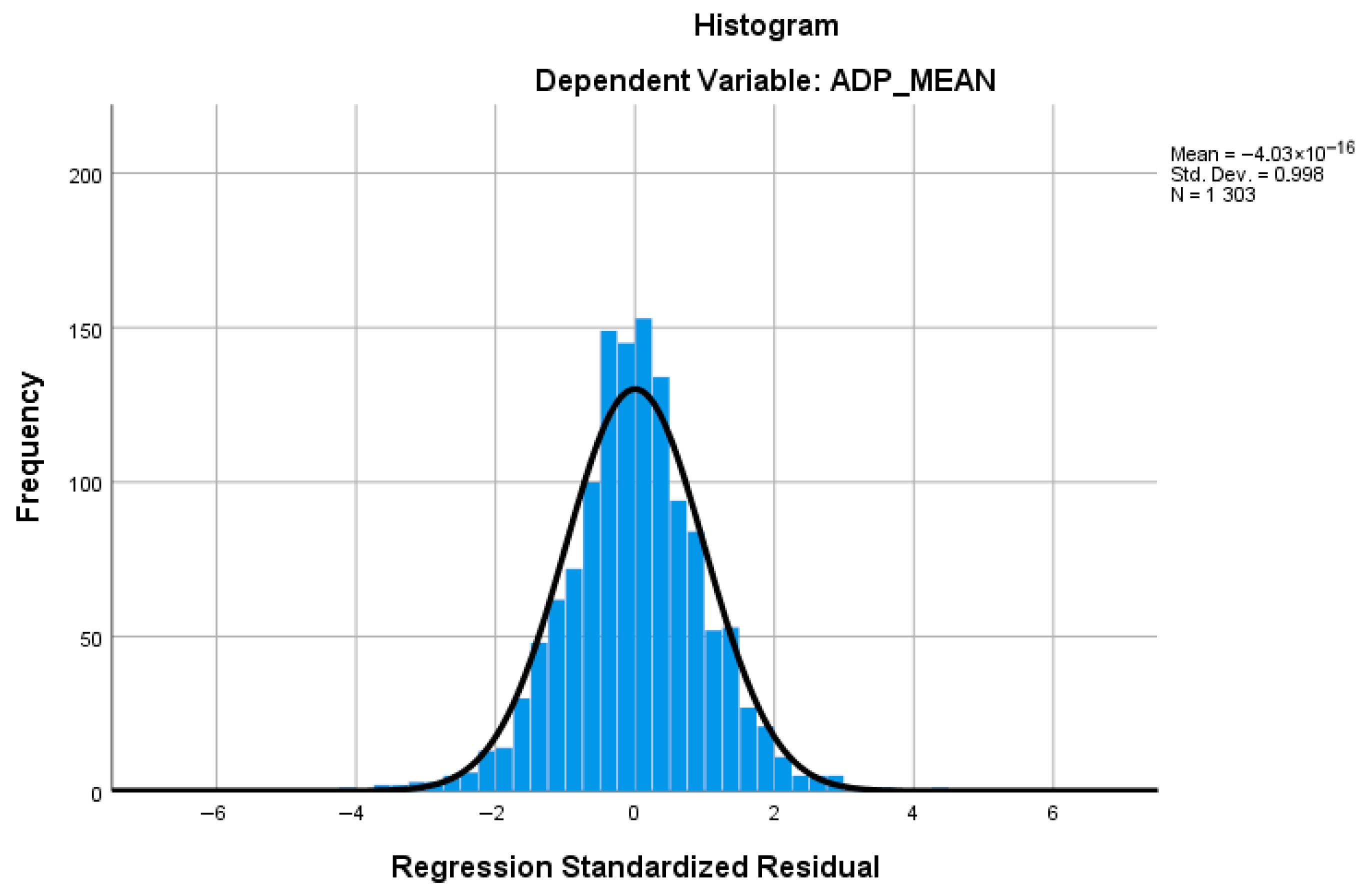
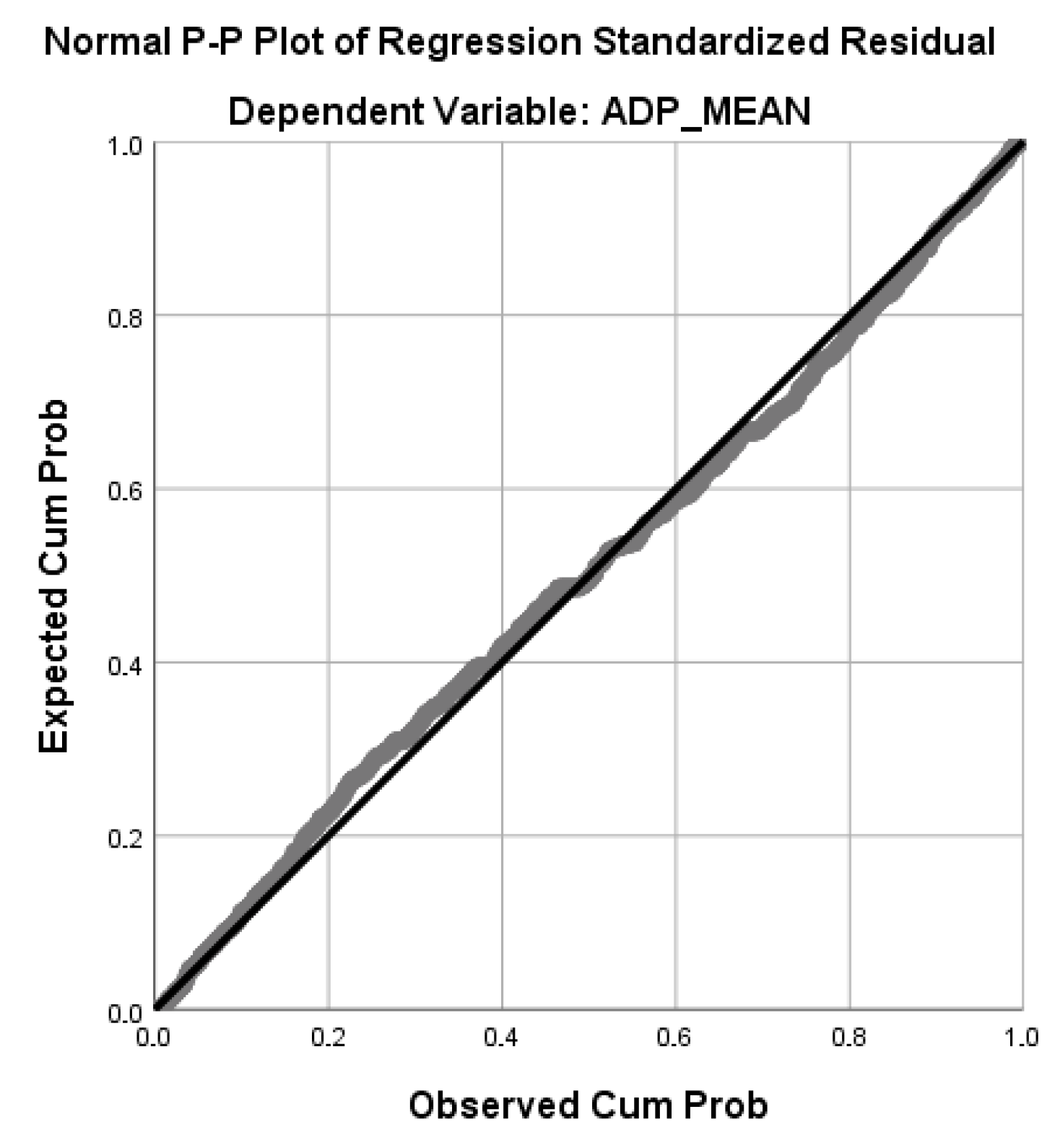
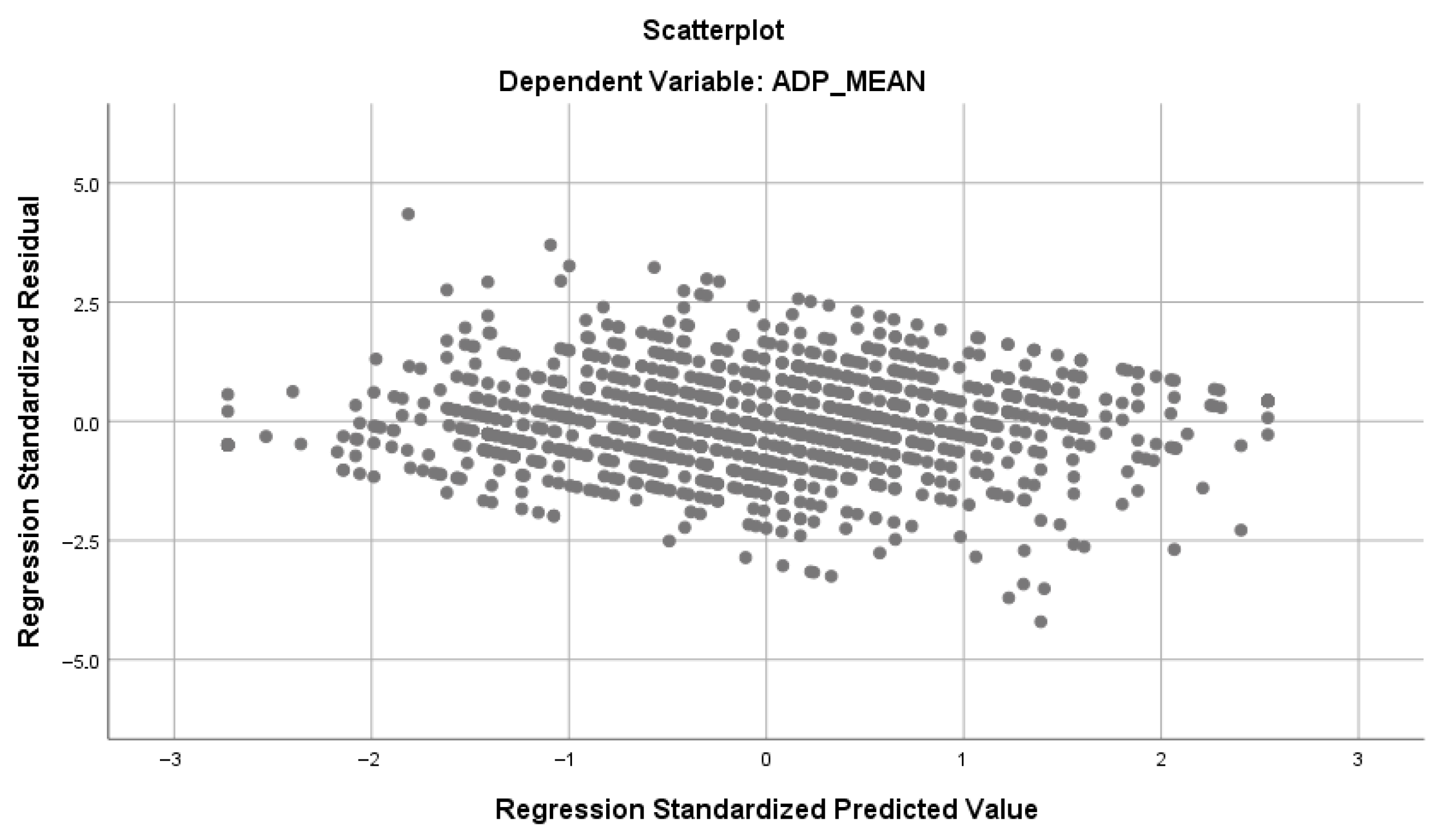
Before model estimation, key assumptions of linear regression were assessed. Linearity and normality of residuals were examined using scatterplots and normal probability plots. Homoscedasticity was assessed by visual inspection of residual plots, which showed no substantial heteroskedasticity. Multicollinearity was assessed using variance inflation factors (VIFs), all of which remained below commonly accepted thresholds. Detailed regression diagnostics, including VIF values and residual plots, are reported in
Appendix A.
4. Results and Discussion
4.1. Characteristics of the Sample
Table 1 summarizes the demographic characteristics of the respondents participating in the survey. A total of 1330 respondents completed the questionnaire. The gender distribution of the sample appears balanced: 52.6% of respondents were women and 44.7% were men. The remaining 2.7% identified as other gender identities or did not wish to answer this question. Generation Z (1996–2010) predominates, accounting for 63.5% of the total sample. Generation Y (1982–1995) accounted for 16.8%, while Generation X (1961–1981) accounted for 17.7%. Baby Boomers (1943–1960) and the Silent Generation (1942 and earlier) accounted for only 2.1% of the sample, indicating a strongly youthful composition of respondents. Based on the respondents’ subjective self-assessment of their income relative to the national average, the majority (59.9%) classified their financial situation as average. In the Hungarian context, the average gross monthly wage in 2025 ranged around €1700–€1880 (≈HUF 700,000–750,000), and the estimated annual average wage was approximately €18,500–€18,900, which is below the EU average [
58]. The proportion of those with lower incomes was 22.5%, while those with above-average incomes accounted for 17.6%. Regarding the highest level of education, 7.1% of respondents had only primary education, while the majority (62.1%) reported secondary education. 30.9% of respondents had higher education.
4.2. Descriptive Statistics of the Main Constructs
Based on the descriptive analysis (
Table 2), the three main attitude dimensions, adoption intention (ADP), environmental attitude (ENV), and risk perception (RSK), show different internal structures. Among the items related to adoption intention (ADP), statements about innovation and technological control received higher ratings, while experience-based approaches and willingness to pay showed more moderate acceptance. This suggests that technological openness is present but is not automatically associated with active participation or financial sacrifice.
Regarding environmental attitudes (ENV), the average values are consistently high, particularly for global sustainability and emphasis on moral norms. The highest values on the scale were given to statements that address harmony with nature, worsening global problems, and individual responsibility. This structure reflects the dominance of a normative value orientation, confirming the respondent’s general environmental commitment.
A clear mixed structure is evident in risk-related attitudes (RSK). While respondents gave relatively low scores on risk aversion and trust, self-reported awareness and risk perception were not particularly high either. This suggests that attitudes towards technological risks are uncertain and ambivalent rather than outright rejection or acceptance. The lower averages and relatively large standard deviations on the scale indicate internal attitude differentiation and limited information, which may be significant psychological barriers to technology acceptance.
Overall, the attitudes reveal a pattern in which commitment to sustainability is strong at the normative level, but technological acceptance is somewhat conditional and fragmented, colored by mistrust and uncertainty. The item-level patterns suggest that attitudes toward hydrogen technology are psychologically complex and multidimensional. However, analyses at the aggregate level do not capture potential differences related to background variables. Therefore, the following section examines the main attitude dimensions by gender.
4.3. Item-Level Attitude Patterns by Gender
Gender analysis provides an opportunity to identify the social patterns behind attitudinal differences and to gain a more nuanced picture of the motivational basis and reservations of different gender groups towards sustainable technologies. The following analyses explore these differences.
Table 3 presents an analysis of items related to adoption intention (ADP1–ADP4), broken down by gender, revealing subtle patterns in the motivational structure of attitudes towards HFCVs. Women respondents scored slightly higher on items reflecting normative, value-based acceptance, such as a positive attitude towards innovation or willingness to make financial sacrifices to support environmentally friendly technologies. In contrast, male respondents gave higher ratings to items that emphasize functional, practical, or experiential aspects, such as statements about the technology’s ease of use or the experience of learning about it.
This pattern suggests that the psychological structure of adoption differs by gender: while women respondents’ willingness is more strongly based on moral and value commitments, men respondents emphasize technological curiosity, instrumental benefits, and personal experience. Although the differences are moderate, they appear consistently across items, confirming the assumption that gender influences risk perception, environmental attitudes, and the mental framing of sustainable technologies.
The analysis of items relating to environmental attitudes (
Table 4; ENV1–ENV4) also reveals apparent differences in gender assessment patterns. Female respondents scored higher than men on all items, indicating significantly stronger environmental commitment. The most significant difference was found in the statement on individual environmental responsibility (ENV4), where the average score for women was 3.80 and for men 3.45. This difference indicates that women adhere more strongly to sustainability norms, not only as a general social goal but also as a personal obligation.
These results confirm the literature’s finding that female respondents exhibit higher environmental sensitivity and moral responsibility, which are important motivational bases for sustainability attitudes. Conversely, male respondents reported more moderate values, which may indicate less extensive or less practical preferences for environmental value. Respondents with other gender identities and those who did not wish to disclose their gender had lower environmental attitude scores across all items. Although these values may be significant indicators of attitude patterns on the periphery of the environmental discourse, they cannot be operationalized statistically due to the small sample size.
A gender-based analysis of attitudes towards risk perception (
Table 5; RSK1–RSK4) shows that male respondents consistently scored higher than female respondents for all items. However, when each item’s meaning is considered, it becomes clear that these do not point in the same psychological direction. While RSK1 measures risk awareness, RSK2 and RSK4 measure risk perception, and RSK3 measures trust. The higher agreement of male respondents with RSK2, RSK3, and RSK4 suggests that they are less concerned about using the technology and more confident about HFCVs. On the other hand, women respondents are more cautious: they gave lower average scores to statements reflecting risk aversion and trust, indicating a weaker trust base and increased uncertainty. Interestingly, the women’s average was also lower for RSK1 (2.36 vs. 2.85 for men), which may indicate that risk perception and subjective confidence in technological knowledge are lower in the women’s sample. This may suggest that women respondents are more cautious and feel less informed or knowledgeable about technology in some cases, further increasing internal uncertainty.
Based on item-level attitudes examined by gender, a structural difference emerges, with women respondents showing higher environmental commitment and increased perception of technological risk. This dual trend suggests that women are more likely to experience an internal value conflict between the normative demand for sustainability and uncertainty about the safety of hydrogen technology. This conflict was quantitatively operationalized using a new composite index, the VCI, which reflects the degree of difference between individuals’ environmental attitudes and risk perceptions. The following subsections focus on interpreting this index, its descriptive statistical characteristics, and examining gender differences.
Table 6 shows the analysis of composite variables and VCI. The average value of the intention to adopt (ADP_MEAN) is 3.09, which falls within the middle range of the measurement scale. This indicates moderate openness towards the acceptance of HFCVs, which is not accompanied by active commitment, but does not reflect rejection. The relatively high standard deviation (SD = 0.94) indicates significant individual differences in adoption intention within the sample. The average environmental attitude (ENV_MEAN) is 3.95, close to the upper range of the scale and indicates the respondent’s general normative commitment to sustainability goals. In contrast, the average value of risk perception (RSK_MEAN) is significantly lower (M = 2.77), indicating that doubts about the technology’s safety are present but not dominant. The VCI deserves special attention because it measures the absolute difference between ENV_MEAN and RSK_MEAN and reflects the degree of internal attitude conflict among respondents. The average index value is 1.35 (SD = 0.97), which is moderately high within the possible range of 0–4. This suggests that a significant proportion of respondents have an attitude discrepancy. While they show strong environmental commitment, their uncertainty about technological risks weakens the practical implementation of this normative orientation. The significant standard deviation of the VCI also indicates that respondents’ attitude structures are heterogeneous and may vary in internal consistency. This attitude tension may be essential in the psychological and behavioral barriers to technology acceptance. From a theoretical perspective, the VCI operationalizes value conflict well within the framework of cognitive dissonance theory. A later analysis of the index also offers the opportunity to explore the extent to which this conflict influences adoption intentions and whether gender differences exist in this respect.
4.4. Correlations Between the Main Attitude Variables
To map the relationships among the primary constructs, Pearson’s correlation analysis was performed on the variables: adoption intention (ADP_MEAN), environmental attitude (ENV_MEAN), technological risk perception (RSK_MEAN), and VCI. The results showed statistically significant correlations in all cases (p < 0.001), but with different directions and strengths. The strongest positive correlation was observed between ADP_MEAN and RSK_MEAN (r = 0.617), suggesting that a lower risk perception of hydrogen technology is closely associated with the intention to adopt it. The moderate positive correlation between ENV_MEAN and ADP_MEAN (r = 0.387) indicates that environmental commitment also supports acceptance, though to a lesser extent than perceived safety. The negative correlation between VCI and ADP_MEAN (r = −0.154) deserves special attention, as it indicates that internal value conflict—i.e., the dissonance between sustainability attitudes and risk perception—weakens the intention to adopt. Although the relationship is relatively weak, its direction and significance support the theoretical assumption from cognitive dissonance theory that a lack of attitude integrity can hinder behavioral commitment. The positive correlation of VCI with ENV_MEAN (r = 0.551) and its negative correlation with RSK_MEAN (r = −0.491) further reinforce the interpretation that the index captures well the imbalance between environmental norms and perceived technological security.
4.5. Attitude-Based Explanation of Technology Acceptance: Regression Analysis
A linear regression model was developed to predict the intention to adopt HFCVs with environmental attitude (ENV_MEAN), risk perception (RSK_MEAN), and VCI as independent variables. The model was significant (F(3, 1326) = 358.32; p < 0.001), and the variables together explained nearly 45% of the variance in the dependent variable (R2 = 0.448; Adjusted R2 = 0.446). Risk perception (B = 0.532; p < 0.001) was the strongest positive predictor, confirming that technological trust and sense of security play a key role in shaping willingness to accept. In addition, environmental attitude had a significant positive effect (B = 0.305; p < 0.001), indicating that sustainability values strengthen behavioral intentions.
The negative effect of VCI, which measures value conflict, remained significant (B = −0.078;
p = 0.033) even after controlling for individual attitude components. This shows that the internal tension between environmental commitment and risk perception, consistent with cognitive dissonance theory, appears to be an independent inhibiting factor for adoption intention. The collinearity between the variables does not distort the model (VIF < 3.4). The estimated equation of the model is as follows:
4.6. The Role of Gender as a Moderator: Interaction Model
Based on previous descriptive results, it was assumed that gender as a background variable may moderate the effect of value conflict (VCI) on adoption intention. This is particularly true because women’s average VCI was significantly higher, indicating more frequent internal attitude tension.
An extended linear regression model was developed to investigate this, including the interaction term (VCI × Gender) and the main effects (ENV_MEAN, RSK_MEAN, VCI, Gender). The model was significant (F(5, 1289) = 202.32; p < 0.001), and the explained variance (R2 = 0.440) did not differ significantly from the baseline without interaction.
Environmental attitude (B = 0.288;
p < 0.001) and risk perception (B = 0.543;
p < 0.001) remained significant positive predictors. The effect of value conflict in the extended model approached, but did not reach, the significance level (B = −0.083;
p = 0.062). The direct effect of gender was not significant (B = −0.016;
p = 0.818), and most importantly, the effect of the interaction variable was not statistically significant (B = 0.030;
p = 0.470). This means that gender does not significantly influence how value conflict reduces willingness to adopt. In other words, although internal dissonance occurs more frequently among women, its behavioral consequences do not differ from those among men. Therefore, the negative effect of VCI is gender-independent. It can be interpreted as a general psychological barrier rather than a phenomenon specific to a particular social group. The final equation of the moderated regression model:
4.7. Comparison of Theoretical Background and Empirical Results
The study explored the impact of environmental attitudes, technological risk perception, and their value conflict on the intention to adopt HFCVs. Based on the theoretical background, the main barriers to acceptance can be interpreted along three dimensions: social norms, psychological factors, and consumer perceptions. The empirical results are consistent with this three-dimensional framework and reveal important gender-related patterns.
The positive relationship between environmental attitudes and adoption intention observed in this study is consistent with earlier research emphasising the mediating role of attitudes and intentions in pro-environmental behavior [
6,
7,
8,
27,
28]. As suggested by previous studies, environmental commitment forms an important motivational basis for sustainable decision-making; however, its behavioral impact depends on situational constraints and perceived costs [
9,
33].
The present findings confirm that environmental attitudes remain a significant predictor of hydrogen mobility acceptance, even in a high-uncertainty technological context. At the same time, the results support the existence of an attitude–behavior gap, indicating that favourable environmental orientations alone are insufficient to ensure adoption when financial, convenience-related, or psychological barriers are present [
9,
30]. The theoretical review similarly emphasised the strong influence of environmental attitudes on sustainable behavior [
7,
8,
31]. Consistent with this, ENV_MEAN emerged as a significant positive predictor of adoption intention even after controlling for technological risk perception.
At the same time, the correlation analysis revealed that adoption intention is more strongly associated with perceived technological risk (RSK_MEAN) than with environmental attitudes, suggesting that respondents place greater emphasis on practical considerations, particularly perceived safety and reliability. The strong negative effect of perceived technological risk on adoption intention aligns closely with earlier findings highlighting risk perception as a major barrier to sustainable technology acceptance [
31,
32,
35]. Consistent with prior research, respondents associated hydrogen mobility with multiple forms of uncertainty, including performance, health, economic, and social risks, which tend to suppress adoption intentions [
33,
34,
36].
These results support the argument that, in emerging technological domains, risk-related evaluations often outweigh normative environmental motivations. Even among environmentally committed individuals, uncertainty and mistrust can inhibit behavioral engagement, confirming the central role of perceived safety and reliability in shaping acceptance [
33,
35].
The Value Conflict Index (VCI) quantified the role of internal value conflicts by operationalising the theoretically assumed dissonance between environmental commitment and perceived risk. The VCI was significantly and negatively related to adoption intention, confirming the applicability of cognitive dissonance theory to sustainable technology adoption decisions [
16,
59,
60]. The discrepancy between strong environmental attitudes and low risk tolerance thus represents a substantial barrier to acceptance.
A further important finding concerns gender-related differences in attitudinal structures. The theoretical background indicated that female respondents are generally characterised by higher environmental sensitivity and greater risk perception [
16,
61,
62], findings confirmed by the empirical results. Women reported higher ENV_MEAN and lower RSK_MEAN, resulting in higher VCI scores and more frequent experiences of internal value conflict. Nevertheless, the regression analysis showed that the behavioral impact of this conflict does not differ significantly between genders, as the interaction between gender and VCI was not a significant predictor.
These findings are consistent with previous research showing that women tend to express stronger environmental concern and heightened sensitivity to technological risks [
51]. As documented in earlier studies, this dual orientation may increase psychological tension when sustainability goals conflict with safety-related concerns [
47,
48]. The present results extend this literature by demonstrating that while women may experience value conflict more frequently, its effect on adoption intention is comparable across genders.
Considering these results, the application of Value–Belief–Norm theory is particularly justified, as behavior is determined not only by attitudes but also by values and their internal consistency [
37,
38]. The study’s findings confirm that acceptance of sustainable technologies is shaped by deeper psychological and moral structures rather than solely by rational evaluations. Importantly, these structures manifest not only at the attitudinal level but also through the dissonance between competing orientations.
By quantifying the discrepancy between environmental commitment and perceived technological risk, the VCI extends the literature on consumer value conflicts and attitudinal inconsistency [
37,
44,
45,
46]. Previous research has shown that contradictory values and dissonant information generate negative emotions and weaken the translation of ethical orientations into behavior [
45,
46]. The present study demonstrates that value conflict explains additional variance in adoption intention beyond its component attitudes, confirming its relevance as an independent psychological barrier to the acceptance of hydrogen mobility. The results show a coherent relationship. Sustainability attitudes and perceptions of technological safety, and the dissonance between them, determine acceptance behavior, both individually and in interactions, regardless of gender.
5. Conclusions
This study examined how environmental attitudes, perceived technological risk, and their internal inconsistency shape consumer acceptance of hydrogen-based mobility. The findings demonstrate that while environmental commitment positively influences adoption intention, perceived risk represents a stronger and more decisive barrier. Managing technological uncertainty, therefore, appears to be central to promoting hydrogen mobility, as favorable environmental attitudes alone are insufficient to ensure acceptance.
The results further show that value conflict—defined as the internal dissonance between sustainability-oriented values and safety-related concerns—exerts an independent and significant negative effect on adoption intention. The Value Conflict Index developed in this study captures this discrepancy and demonstrates that acceptance is determined not only by the level of attitude but also by their internal coherence. Even among environmentally committed individuals, high perceived risk substantially reduces willingness to adopt hydrogen-based technologies.
Regarding gender differences, the analysis indicates that although women exhibit stronger environmental commitment and higher risk perception, leading to greater value conflict, the behavioral impact of this conflict does not differ significantly between genders. This suggests that value conflict operates as a general psychological mechanism rather than a gender-specific barrier in sustainable technology adoption.
From a theoretical perspective, the study contributes to the literature by empirically integrating environmental attitudes, risk perceptions, and value conflict within a unified analytical framework. It extends cognitive dissonance and value–belief–norm approaches by demonstrating how attitudinal inconsistencies function as independent barriers to sustainable mobility acceptance. Methodologically, the proposed Value Conflict Index offers a transparent and easily applicable tool for examining psychological tensions in technology adoption contexts.
In practical terms, the empirical findings of this study provide several targeted implications. Since perceived technological risk emerged as the strongest predictor of adoption intention in the regression analysis, policy measures should prioritize reducing uncertainty and strengthening trust rather than relying solely on sustainability-oriented messaging. Transparent communication about safety standards, risk management protocols, and infrastructure reliability may directly address the primary barrier identified in the model. Furthermore, the significant negative effect of the Value Conflict Index indicates that internal inconsistencies between environmental commitment and safety concerns weaken adoption intentions. Communication strategies should therefore explicitly integrate environmental and safety narratives, emphasizing that hydrogen mobility can simultaneously support climate objectives and ensure personal security. Although women exhibited higher levels of value conflict, the absence of a significant moderation effect suggests that value conflict operates as a general psychological barrier. Consequently, interventions should focus on reducing attitudinal dissonance across the broader population rather than targeting specific demographic groups exclusively. Finally, given the observed attitude–behavior gap, structural measures such as visible infrastructure development, pilot programs, and financial incentives may help translate positive environmental orientations into concrete adoption decisions.
Several limitations should be acknowledged. First, the study relies on cross-sectional survey data collected in a single national context using online snowball sampling. While this approach enabled access to a relatively large sample of respondents and facilitated the exploration of psychological mechanisms in an emerging technological context, it represents a non-probability sampling strategy. Participation depended on network structures and voluntary self-selection, which may introduce selection bias and overrepresent socially active, digitally engaged, or sustainability-oriented individuals. Therefore, the sample cannot be considered statistically representative of the broader population. The findings, therefore, reflect attitudinal patterns within the surveyed network rather than population-level prevalence estimates. Caution should be exercised when generalizing the results to contexts with similar socio-cultural and institutional contexts. Second, the cross-sectional design does not allow for causal inference. Although the regression analyses reveal statistically significant relationships between environmental attitudes, perceived risk, value conflict, and adoption intention, longitudinal or experimental approaches would be required to confirm the temporal and causal direction of these effects. Third, the Value Conflict Index (VCI), while theoretically grounded and empirically supported in this study, requires further validation across different technologies, national contexts, and stages of market maturity. Future research could employ probability-based sampling techniques, cross-cultural comparative designs, and longitudinal data collection to examine how value conflict evolves as technological familiarity increases and hydrogen mobility becomes more institutionalized.
Despite these limitations, the study provides robust insights into the psychological dynamics underlying hydrogen mobility acceptance and offers a transparent methodological framework for further investigation.
Overall, the study demonstrates that acceptance of hydrogen mobility is shaped not only by environmental motivations and technological evaluations but also by the internal coherence of these orientations. Addressing psychological tensions between sustainability values and safety concerns is therefore essential for fostering the diffusion of clean mobility innovations.