1. Introduction
Digital Twins (DTs) industrial implementation represents a fundamental advance in the era of Industry 4.0 and beyond, towards Industry 5.0 [
1,
2]. In essence, a DT is a real-time dynamic virtual replica of a physical asset, system, or process that connects to its real counterpart through sensors and data.
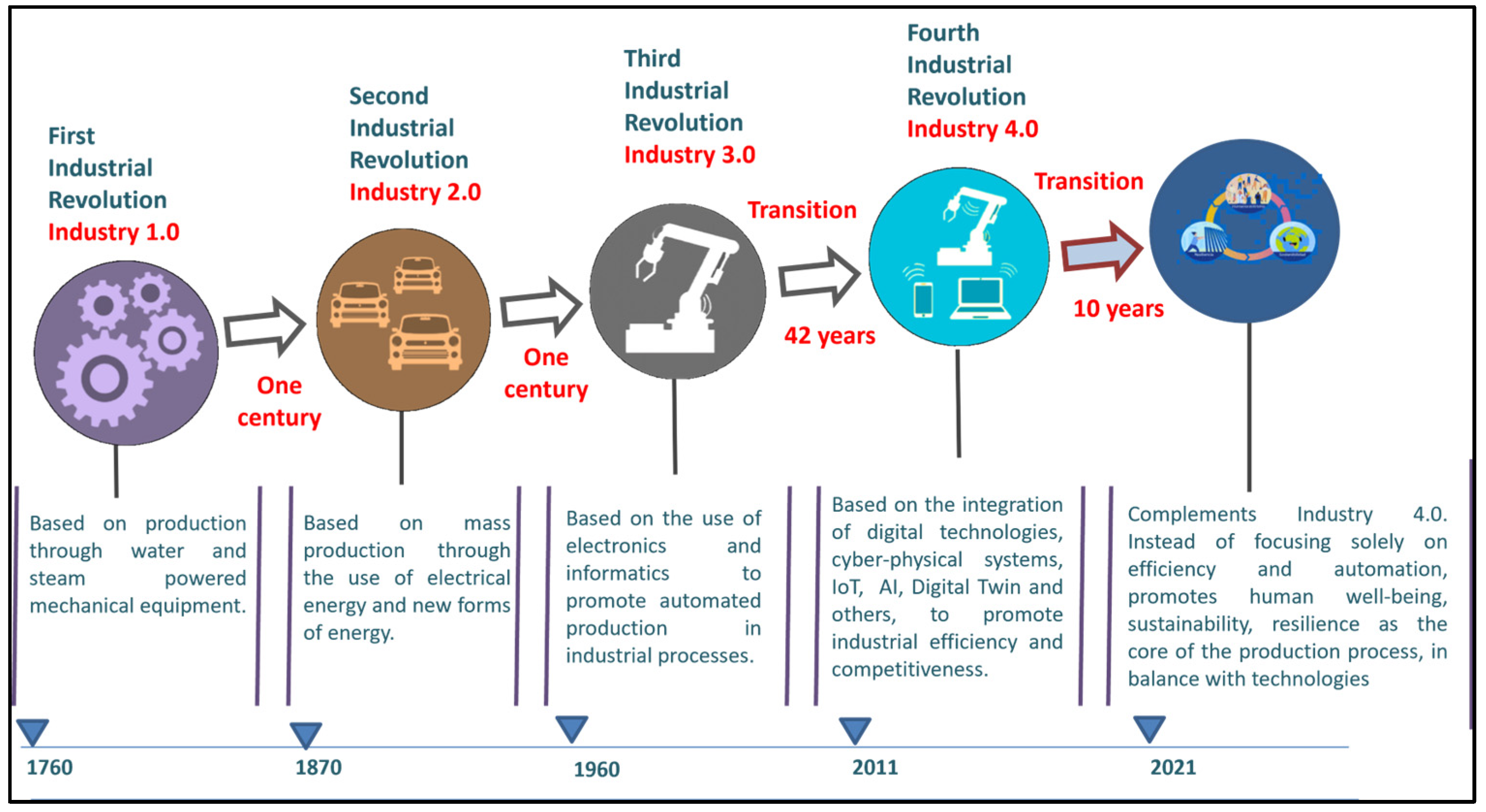
Figure 1 illustrates the evolution of industries in the implementation of technologies until today with the implementation of DTs.
This is not just about having a virtual representation of a physical element (such as a computer-aided design—CAD), this replica must have a connection from the physical world that allows the surrounding data to be virtualized so that this data generates an understanding of the replica and that, in turn, solution services can be offered with this collected information.
In areas of Smart Grids of different topics, such as the generation of electricity from non-conventional energy sources such as photovoltaics, models based on the use of FPGAs are being used. Thus, achieving the immersion of Hardware in the Loop (HIL), enabling autonomous learning of systems, and exploring trends such as Power to X (P2X).
The complexity that a large-scale development of a DT could entail leads to the search for co-simulation protocols, allowing for individual development models that generate high fidelity and maintain the confidentiality of each development if required. This type of proposal allows for the use of DTs in a wide range of solutions, such as advice in control rooms, education and training, post-mortem failure analysis, asset management, field support with AR, and predictive operations.
In the context of the electrical industry, the implementation of DTs presents challenges due to the vast amount of data that must be analyzed and converted into relevant information. However, these DTs offer several benefits, such as improved monitoring and control, predictive maintenance, and optimized asset management. By exploring successful case studies, we seek to demonstrate how DTs can revolutionize the planning and management of modern electrical networks.
DTs face significant challenges in power grid planning, including the need to predict energy demand with machine learning models to optimize power distribution [
3] through real-time simulations, and the identification of abnormal behavior in renewable energy systems to improve maintenance interventions and technical support [
1].
The contribution of this work is the following:
A critical and comparative analysis of leading software platforms for electrical network Digital Twins. The analysis evaluates each platform based on key metrics, including computational efficiency, scalability for large-scale grids, real-time data integration capabilities, and modeling fidelity. We discuss the trade-offs between proprietary and open-source solutions, offering a practical guide for researchers and industry practitioners.
A structured, step-by-step methodology for the end-to-end implementation of Digital Twins in electrical grid planning. The proposed methodology, which we validate through a pilot case study, includes clear guidelines for data acquisition, model calibration, simulation and analysis, and decision-making feedback loops. This framework serves as a practical blueprint for utility companies and grid operators aiming to adopt DT technology effectively.
Unlike previous works that primarily review the conceptual benefits of Digital Twins, this research addresses the lack of quantitative planning frameworks by proposing a specific Mixed-Integer Linear Programming (MILP) model. While the existing literature focuses on the operational monitoring capabilities of DTs, this paper presents a novel mathematical formulation for Grid Expansion Planning. Specifically, we introduce a decision-support model that utilizes the time-series data ingest of the Digital Twin to optimize binary investment decisions (xij) and minimize total expenditure (CAPEX and OPEX). This approach shifts the paradigm from static, worst-case planning to a dynamic, probabilistic methodology grounded in actual operational data profiles.
The remainder of this document is organized as follows:
Section 2 discusses the use of DTs in the electrical sector.
Section 3 introduces the proposed mathematical planning model.
Section 4 presents the regulatory framework.
Section 5 presents the proposed methodology, and
Section 6 contains the conclusions.
2. DTs in the Electrical Sector
The evolution of electrical grids forces various grid operators to develop strategies that allow them to adapt to infrastructure changes. In the transition to Industry 5.0, the interaction between human operators and intelligent machines becomes critical. DTs provide the interface for this collaboration, allowing operators to visualize complex data streams intuitively [
4].
The maintenance of overhead lines and underground cables is a difficult and costly operation for any transmission or distribution network operator. Overhead lines suffer several problems throughout their lifespan, such as damage from mechanical fatigue (wind oscillation), electrical fatigue (overloads, partial discharges), and damage from external causes (forestation, weather, animals, third-party damage). Pole-connected secondary transformers suffer similar problems. Underground cables are difficult to inspect and replace optimally. These problems increase in extreme geographies such as mountainous areas or proximity to the coast.
2.1. Implementation Cases
The implementation of DTs in the electrical industry is expected to test methodology and build a comprehensive application to support asset performance management and predictive maintenance, from problem detection and prediction of future failures to computer-assisted decision-making for asset investment and maintenance work.
DTEK Grids: cases such as that of the Ukrainian company DTEK Grids, which is dedicated to energy distribution and which is distinguished by incorporating digital technologies, is projected to invest around USD 355 million that will be used to modernize the network. This focus is mainly on the city of Kiev because it houses approximately 10% of the total population of the nation. This development considers the construction of four new substations, which in turn will require an approximate amount of 51 km of cables for medium- and high-voltage, including operating voltages between 35 and 110 kilovolts and another 2000 km of electrical wiring for low-voltage lines. For this reason, DG implementations are required to project changes in the network infrastructure, with which it is expected to have 80% of the precision of the inputs to be used for said expansions in a period of 3 years [
4].
IGNITIS ESO: the company IGNITIS is working with the company ESO (
Energijos skirstymo operatorius), from the Lietuvos group Enrgija of Lithuanian origin, to implement a DT for the deployment of 16,000 km of cables corresponding to overhead lines for both medium- and low-voltage, including with it the installation and start-up of different transformers within the existing networks. This is intended to reduce failures and to more accurately predict when they will occur, going from 88% to an expected prediction of 99%. This implementation is expected to be executed in a period of no more than 5 years [
5]. Also to be implemented are pilot tests for the commissioning of micro islands from photovoltaic generation.
AMERICAN ELECTRIC POWER: The largest grid operator in the United States, AEP (American Electric Power), is implementing the use of DTs to provide real-time load flow estimates for approximately 400,000 end-user customers. This is intended to improve its predictive maintenance and enable improved grid planning and real-time load dispatch. This seeks to ensure that distributed energy resources (DER) generate a secure, reliable, affordable, and sustainable supply.
For this reason, the electrical industry could view the DTs as a high-fidelity model that acquires and manages data from different parts of the energy chain, including generation, transmission, distribution, and end-use, enabling optimal management of physical assets. Despite these advances, the existing literature often lacks a formalized mathematical description of how these DTs are utilized for planning optimization. The following section addresses this gap.
2.2. DT in Modern Power Grid Planning
The implementation of DTs in power grid planning can be considered booming given the technological innovation it brings, as well as a great number and variety of benefits from various perspectives; however, it is recognized that one of the main reasons is to define the scope and level of detail for the development of virtual models [
3]. Of course, this depends on the field where the DT is to be implemented, so it is necessary to recognize the levels of impact that these have had in the planning of electrical networks.
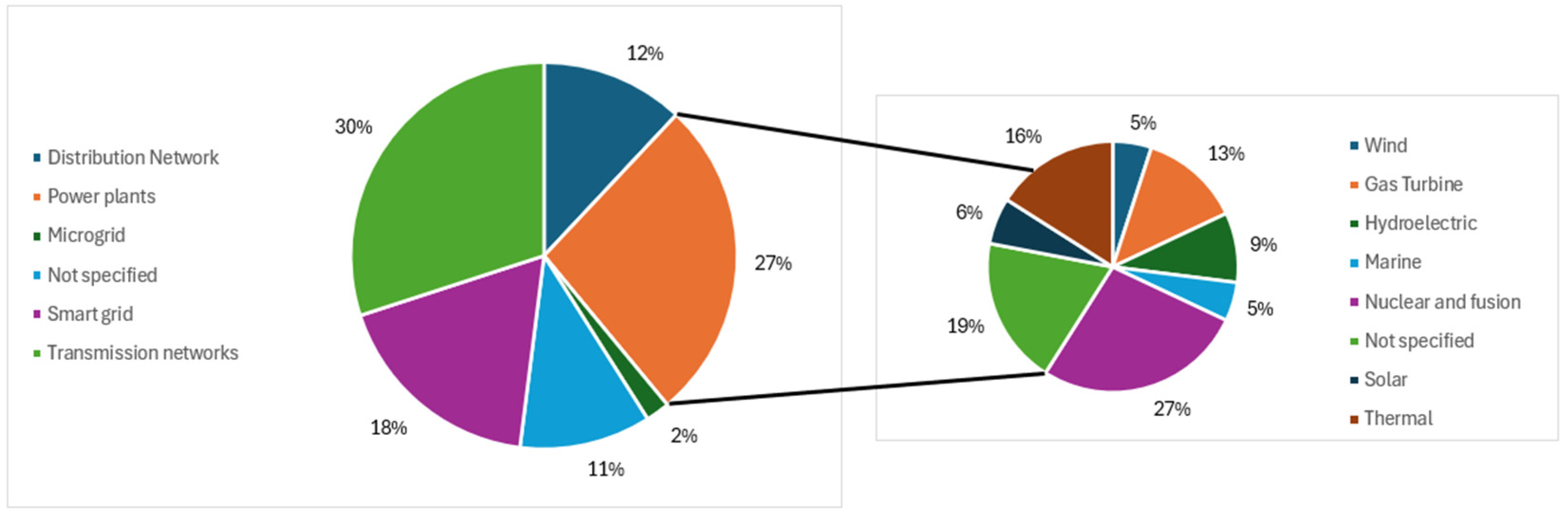
Figure 2 illustrates in percentage terms the amounts of DT research there is for certain sectors of electricity grids.
In this regard, to facilitate the integration of DTs into electrical network planning, it has been proposed to divide the networks into small units and create DTs for each of the divisions [
3]. These actions facilitate the efficient generation and consumption of energy, minimizing losses and improving network reliability. They can also predict equipment failures before they occur, enabling preventive maintenance and avoiding interruptions. These systems are also capable of simulating cyber-attacks to identify vulnerabilities and, thus, implement effective strategies that mitigate security risks. On the other hand, they can also simulate consumption patterns, optimizing demand management and improving the response to variations in energy consumption [
2].
Furthermore, with the assets being the most important resource in industry, referring from the power grid both to the infrastructure, the elements of measurement, and control and maneuvering, as well as inputs such as electrical wiring, the use of DTs brings benefits as well. These benefits include the ability to extend the life of assets and equipment as a support to implement preventive maintenance by reducing costs in addition to validating equipment prior to deployment and mass purchase resulting in time and material cost savings.
DTs drive operational improvements by integrating state-of-the-art assets with efficient practices, as having advanced technology without optimized processes limits operational productivity. Thus, DTs allow operational inefficiencies to be discovered, the response to downtime improved, and processes optimized, which reduces errors in operation and maintenance, decreases production downtimes, and improves service quality. They also facilitate smarter network monitoring, data-driven strategic decision-making, diverse asset integration, and accident risk reduction.
Beyond operational optimization, DTs also allow you to simulate the impact of distributed generation (DG) on the grid, helping to manage variable energy from renewable sources such as solar and wind [
2]. Companies like GE have applied this technology in wind turbine plants, improving production, predictive maintenance, and reliability through real-time data, while DNV GL has developed DT tools to optimize the performance of wind turbines. Similarly, DTs have been implemented in solar farms to maximize energy generation and to troubleshoot, in nuclear plants for on-line monitoring and resilience improvement, and in hydroelectric plants for early fault diagnosis [
1].
In the field of smart cities, DTs have a long-term transformative potential, enabling more efficient microgrids planning, optimized energy management, and intelligent monitoring that improves stability, network reliability, and resilience through proactive fault detection [
1].
In the digital age, data has become the most valuable asset for businesses, and the electrical industry is no exception. Having a robust database to analyze network behavior, user demand, and requirements is essential for continuous service improvement and future strategy planning. By properly processing and leveraging these data in the implementation of a DT, significant advantages are obtained, such as the unification of data taking from various functions, peak demand analysis to optimize distribution, and the ability to configure adaptive protections that increase system resilience. In addition, these data allow the development of simulation software tailored to operational and technical needs, as well as applying advanced analysis engineering to transform raw information into strategic decisions that drive power grid efficiency and reliability.
Knowing the behavior of assets together with optimization in operation and due analysis of data acquired from the network and its assets allows for constant improvement of the current and future design of the network.
DTs deployment transforms technical knowledge into concrete benefits for electrical systems, offering scalability to adapt to future growth and allowing interoperation between different network models. These tools facilitate real-time simulations that integrate various transmission and distribution models, optimizing both the costs of implementing new lines as well as repowering existing ones. In addition, they enable real-time communication and monitoring systems when required, improve efficiency in the design of future infrastructures through virtual prototyping prior to their physical implementation, and allow early verification of operability to ensure that systems are tailored exactly to specific needs. This combination of capabilities not only increases operational efficiency, but also reduces the risks and costs associated with expanding and modernizing power grids.
3. Proposed Mathematical Modeling for Grid Planning with DTs
To formalize the planning process described in the subsequent methodology, we define a mathematical optimization model that the DT kernel executes. The objective is to minimize the total cost of planning and operations (TC).
The incorporation of binary decision variables, denoted as xij, is fundamental to transforming the problem from a standard Optimal Power Flow (OPF) analysis into a Transmission Expansion Planning (TEP) problem using Mixed-Integer Linear Programming (MILP).
Unlike continuous variables, which represent energy flows, the binary variable acts as a logical switch representing the investment decision:
If xij = 1, the Digital Twin activates the asset in the virtual model, incurring a fixed investment cost (Cinv) and enabling power flow capacity (Pmax) on that branch.
If xij = 0, the asset is not built, the investment cost is zero, and the capacity remains zero.
This discrete formulation allows the optimization solver to explore combinatorial trade-offs between capital expenditure (CAPEX) and operational efficiency (OPEX), directly addressing the need for ‘planning decision variables’ typically absent in purely operational models.
The objective function is defined as
where| Symbol | Description | Unit |
| ΩN | Set of all electrical nodes (buses) in the grid. | - |
| ΩL | Set of candidate transmission lines/branches for expansion. | - |
| ΩG | Set of generation units. | - |
| i, j | Indices representing network nodes (from node i to node j) | - |
| t | Index for time periods in the planning horizon (1 to T) | h |
| Cinv,ij | Capital cost (CAPEX) of constructing/reinforcing line ij. | $ |
| Cop,i | Marginal operational cost (OPEX) of generation at node i. | $/MWh |
| Pd,i,t | Active power demand at node i during time t (from SCADA profiles). | MW |
| Pmax i,j | Maximum thermal capacity of candidate line ij. | MW |
| M | Large positive constant (Big-M) for relaxation logic. | - |
| xij | Binary investment decision variable (1 if built, 0 otherwise). | 0, 1 |
| Pg,i,t | Active power generation dispatched at node i at time t. | MW |
| Pij,t | Active power flow through branch ij at time t. | MW |
Subject to the following physical and operational constraints:
This ensures that the digital replica adheres to Kirchhoff’s laws for every node i.
- 2.
Line Capacity Constraints (Planning logic):
- 3.
Investment Budget (Optional but good):
Unlike traditional static planning, which relies on peak-load snapshots, the Digital Twin utilizes historical SCADA data to construct time-series profiles. This allows the planning model to identify thermal capacity violations that occur only under specific dynamic conditions (e.g., low wind generation with high demand) and apply Dynamic Line Rating (DLR) constraints. The SCADA data is not used for real-time dispatch in this context, but to calibrate the planning constraints (Pmax) based on actual operational realities rather than theoretical nameplate ratings.
4. Regulatory Framework and Standards Applied to DT
The digitalization of the network and the interconnectivity of various devices when implementing a DT bring with them many requirements, which are reflected in the different regulations that apply to various fields, from the conceptualization of a DT covered by a regulation to the cybersecurity requirements for the data obtained during its implementation.
The concept of a DT itself is approached differently depending on the perspective from which it is viewed and the topic itself. This is why the regulations to be applied can be segmented into various fields.
Table 1,
Table 2,
Table 3,
Table 4,
Table 5 and
Table 6 provide a comprehensive mapping of these standards. While dense, these tables are critical for developers to identify the specific IEC or IEEE standard applicable to each layer of the DT (physical, communication, or cyber).
Table 1 covers physical systems (IEC 62832).
Table 2 focuses on communication protocols (IEC 61850, DNP3).
Table 3 details cybersecurity (ISO/IEC 27000), which is paramount for protecting the critical infrastructure data.
5. Software for the Development of a DT of Electrical Networks
In the industry, there are very diverse needs, and sometimes solutions are required to be conditioned to very specific needs that demand the problem be solved, which is why there are several software for the implementation of DTs. DT models can be created through modeling software which could be offline, online, or real-time.
Table 7 presents the level of uncertainty offered by each type of simulation.
Programs such as ePHASORSIM enable real-time simulations of robust systems with up to 100,000+ nodes in mixed T&D networks, allowing us to solve problems such as fasorial domain, transient stability phenomena, and integration of EMS/SCADA systems. It stands out for its processing speed (10,000 nodes in 10 ms), which makes it a very useful software for state estimation, control, and/or protection algorithms in very wide simulation areas [
35].
On the other hand, HYPERSIM is recognized as a flexible software for the simulation of complex systems, and it is widely used because it has tools for the simulation of resistors, capacitors, inductors, transformers banks of capacitors, switches, circuit breakers, induction machines, synchronous machines, voltage sources, and other elements also passing through adaptive protections. It is characterized for being used in offline and real-time simulations, being faster in offline systems. It is widely used in studies of electromagnetic transients and power systems such as lightning-surge overvoltages, motor start transient stability, and the study of electric arcs, among others [
36].
There is also eFPGASIM, which, from a power electronics-oriented solution perspective looking for PWM reading capture, mitigates the latency problems and processing speeds of algorithms (100 nanoseconds to 1 microsecond). It has a modular multilevel converter (MMC) which allows it to have different topologies of different submodules [
37].
With eMEGASIM, real-time simulation in a closed loop for power and electronics systems (HIL-hardware in loop) is achieved and could create rapid control prototypes. It allows integration of RT-EVENTS, which makes it possible to simulate high-frequency modulated signals from discrete systems using converter trigger signals [
38].
RSCAD allows the simulation of HIL and PHIL, creating a wide versatility, with the ability to configure microgrids in physical form already simulated allowing simulated energy exchange. Using RSCAD, the most complete real-time simulation modeling library, allows for diversity, flexibility, and accuracy [
39].
The company Siemens, as a provider of elements and services, implements a DT with Siemens Electrical DT that allows the planning of the power grid from the management of models for the transmission network from the perspective of operation and analysis and management of data supplied by the network [
40].
Finally, ETAP offers an integrated platform with intelligent solutions on a multidimensional basis, allowing for adaptability of the project as it grows and evolves. Large companies such as SCHNEIDER ELECTRIC work hand in hand with ETAP to offer digitization services for their single-line diagrams with EcoConsult [
41].
Considering the main characteristics and protocols of the different software,
Table 8 is compiled.
It is worth noting that before beginning the process of implementing DTs for electrical grid planning, it is essential to understand the network’s size, capacity, potential mediation elements, and number of nodes. This is essential because every solution’s needs are different. If existing elements are already in place, it is important to evaluate the protocols used in them to validate whether communication is possible or if some type of API is required.
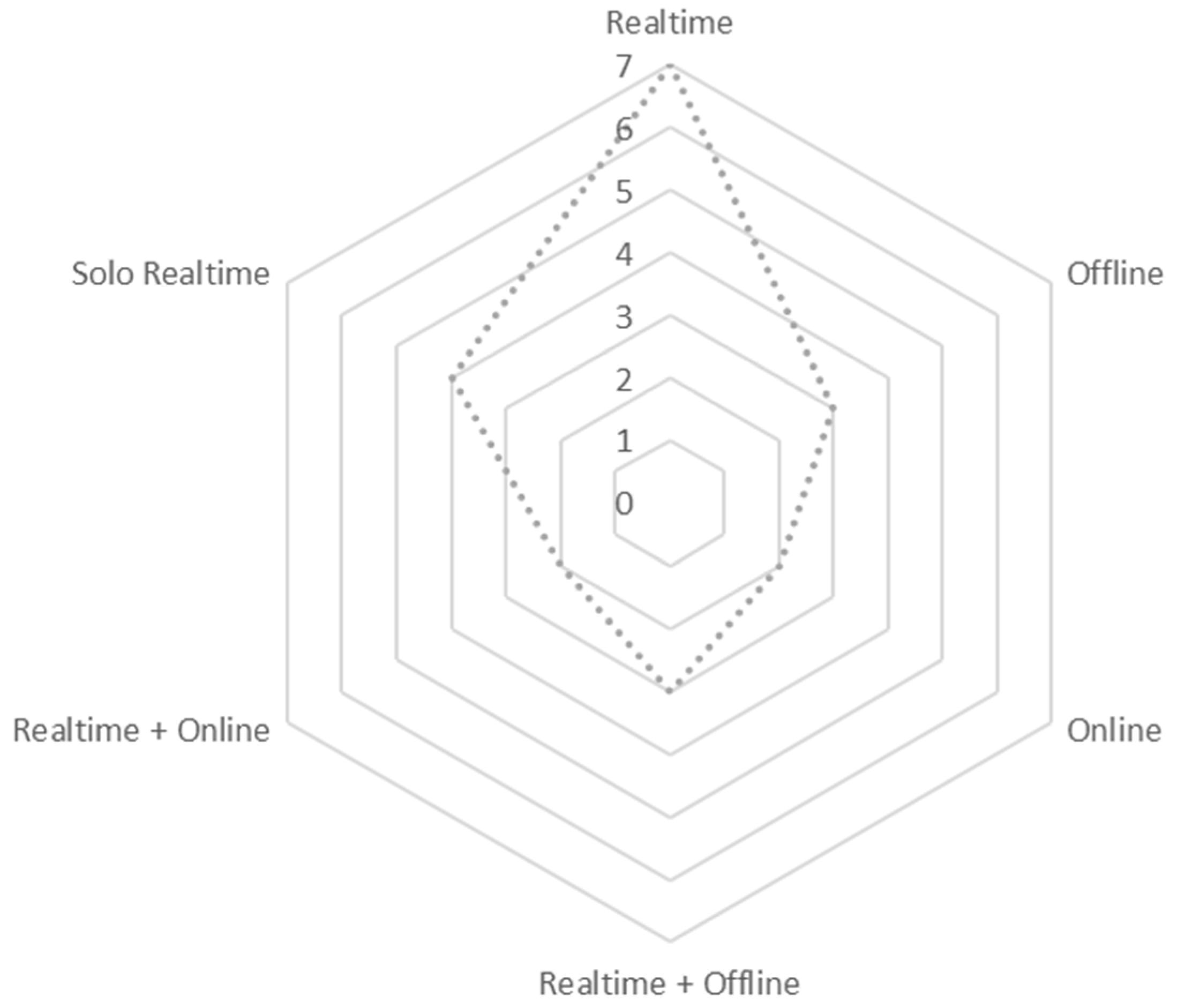
With this research, it can also be deduced that, although not all DTs are capable of working in real-time, in the electrical industry the developments carried out so far are 100% under this mode of use. Aside from each supplier depending on its market niche, which orients the other attributes of its software, 42% of those investigated additionally have an offline mode of use and 29% an online mode, as shown in
Figure 3.
6. Guide for the Implementation of DT for Planning Modern Electrical Grids
Understanding that power grids are constantly evolving and becoming more data intensive as sensor and measurement technology evolves, it is not necessary to define an ideal environment, since the more data the grid obtains from the surrounding environment and its natural characteristics, the more accurate the DT created with this data will be.
It is not only necessary to know the electrical data of the network (voltage, current, resistance, capacitance, harmonics, impedances, etc.). Factors that affect even the measurement equipment will generate deviations in the measurements, such as temperature, humidity, atmospheric pressure, wind flow, and irradiance, among other factors that will also depend on the size and type of network. This is not the same as analyzing an interconnected network and one that is not in the interconnected system, due to the interaction with the network and the number of transducers that each can count on.
Having said this, it is of great importance to know the network before implementing a DT and to know the characteristics of its elements and the behavior towards different eventualities such as environmental and geographical areas. This also means having personnel who meet professional profile characteristics in accordance with the needs of the implementation. The different profiles must work together and be aimed at developing and implementing DTs according to the needs of each network, considering size, usage needs, connectivity, data management, scalability, and its own needs, for the sole purpose of ensuring a reliable, safe, and constantly adaptable and changing electricity grid.
It is very important to be clear that the creation of a DT is the result of a process in which a network project must be defined, and you must perform integration tests of the different elements and finally implement the project with DTs.
In this way, we must start to capture data by means of physical sensors such as current transformers, power transformers, multimeters, thermometers, hygrometers, and barometers, among others, that depend directly on the robust required development. When these data have already been taken from the environment, treatment must be performed, and in this way the relevant data for implementation is extracted, the algorithm corresponding to the need is applied, and after that the processed data are reported. When these data are ready to be used, they should be sent to the software for the implementation of the DT that will be used for the planning of the electrical grid, but, before such transmission, it must be known if the format of the data is compatible with the software. In the case of not being compatible, an API should be used to allow such data communication, taking into account the security protocols that the network must have for both data retention and cybersecurity.
Taking as a reference the need for the network (size, number of nodes, mode of use, etc.) we choose the software that best suits such an implementation, after this, and considering the response data, the information is sent back to the actual part and the system becomes cyclical, constantly being replenished and mutating with the needs.
Through systematic examination of the preceding analysis, this study establishes the following guidelines for DT implementation:
Define the objective and scope of the DT: the first objective is to define what you want to achieve with the DT and which elements of the power grid will be included. This will allow efforts to focus on the areas that matter most and avoid information overload. Determine the optimization variables (minimize cost vs. maximize reliability) based on the model in
Section 3.
Collect and analyze grid data: this includes information on grid topology, network components (such as transformers, lines, substations, etc.), load and energy demand data, information on power sources and generators, and weather data, among others. Deploy sensors adhering to IEEE 2888.1 [
8]. Ensure data is time-stamped and synchronized via PTP.
Develop the DT model: from the data collected, a mathematical model of the system will be developed to be used in the DT. This includes the definition of equations describing the dynamics of the electrical system, constraints, and model objectives. Considering the characteristics of each available software (number of nodes, frequency, etc.). Calibrate parameters (Yij, impedances) using historical fault data to minimize the error between xmeasured and xmodel. Connect the data stream to the visualization engine using APIs (REST/MQTT).
Validate the model: it must be verified that the created model accurately reflects the reality of the electrical network. For this purpose, historical data and tests in the real system can be used to compare model results with actual data. Run the DT in “Shadow Mode” alongside the physical grid to verify prediction accuracy (target >95%).
Integrate the DT into the planning process: enable closed-loop control where the DT suggests set-points to the SCADA. The DT can be used to test different design scenarios and solutions, simulate failure situations, and evaluate the power grid’s ability to handle different conditions.
Update and maintain the DT: the power grid is a constantly changing system. It is, therefore, important to update and maintain the DT to ensure that it accurately reflects the current state of the electricity grid and can remain useful for long-term planning.
It is important to note that the implementation of a DT for electrical grid planning is a complex project requiring knowledge in mathematics, programming, and electrical system theory. In addition, a large amount of data is required to build an accurate model. If the necessary experience or resources are not available, external expertise or collaboration with academic institutions may be considered.
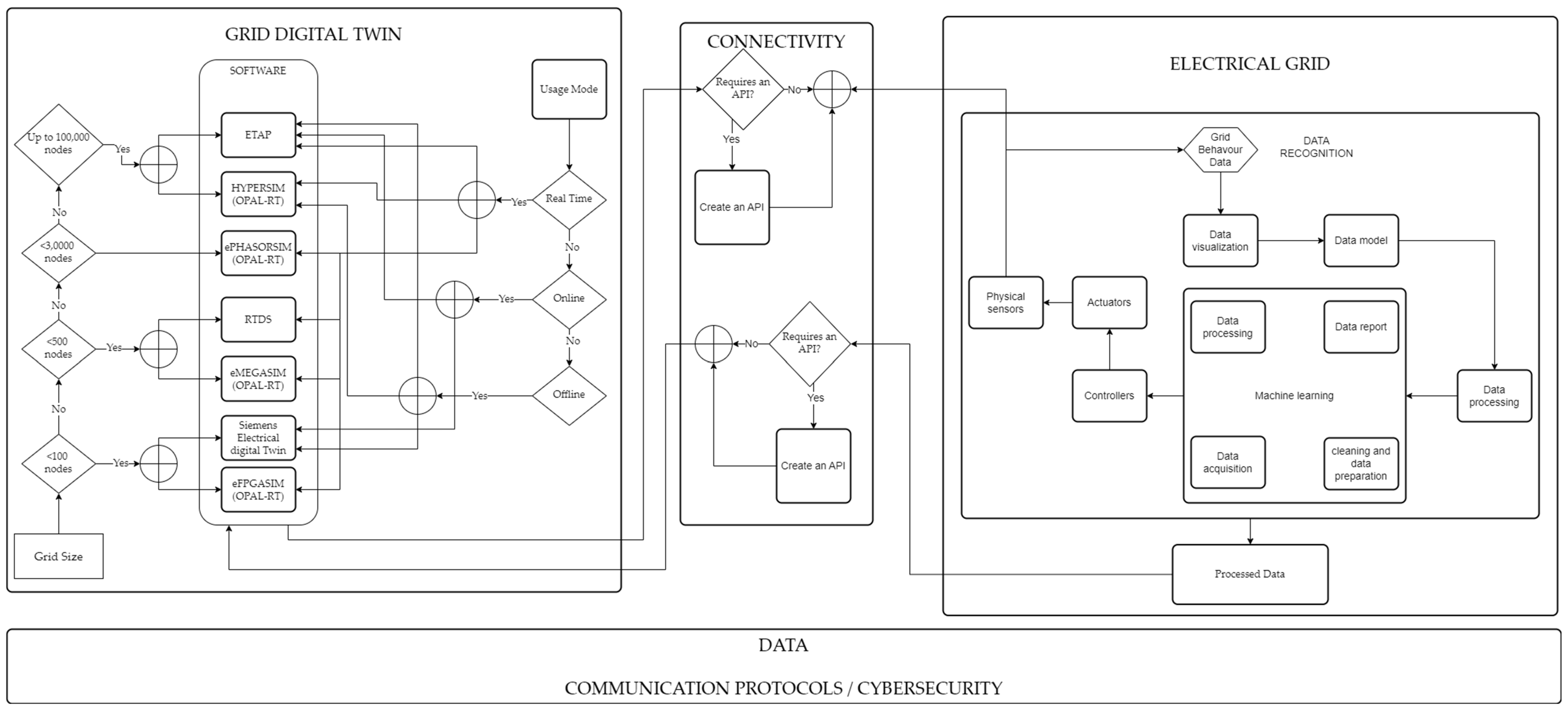
Figure 4 comprehensively summarizes the proposed process for implementing Digital Twins in modern electrical network planning, representing the interaction between three fundamental components: the digital twin of the electrical network, connectivity, and the physical electrical network. This diagram reflects the architecture of a cyber–physical system that brings together Industry 4.0 technologies such as the Internet of Things (IoT), real-time simulation, data analysis, and machine learning.
The block corresponding to the Digital Twin describes the virtual environment responsible for reproducing the behavior of the electrical network. Its implementation is based on the definition of the size of the network (measured in number of nodes), which determines the choice of the most appropriate simulation software (at the time of the research). Among the most notable tools are eFPGASIM, eMEGASIM, ePHASORSIM, and HYPERSIM from OPAL-RT, RTDS, ETAP, and Siemens Electrical Digital Twin, selected for their modeling capabilities and compatibility with different modes of use (real-time, online, or offline). These platforms allow simulations to be performed with different levels of fidelity, facilitating behavior analysis, operational strategy validation, and predictive scenario evaluation.
Connectivity is the link between the physical and digital environments, ensuring the secure, continuous, and bidirectional exchange of information. In cases where platforms or devices use different protocols, the creation of application programming interfaces (APIs) is envisaged to ensure interoperability between systems. This flow of information is supported by standardized protocols such as IEC 61850, DNP3, MODBUS, OPC, and TCP/IP, which, together with the IEC 62443 and ISO/IEC 27000 cybersecurity standards, establish a robust and reliable communication framework. This ensures that the data obtained from the physical environment is correctly interpreted, transmitted, and used by the Digital Twin.
For its part, the electrical grid represents the actual physical system from which the data needed to feed the Digital Twin is captured. Sensors, controllers, and actuators installed in the field allow critical variables such as voltage, current, temperature, irradiance, and humidity to be measured, which are then processed and analyzed using machine learning algorithms. This data processing involves stages of acquisition, cleaning, processing, and reporting, generating useful information for fault prediction, operational optimization, and maintenance planning. The processed data is transformed into dynamic models that reflect the behavior of the system and continuously feed back into the Digital Twin, allowing it to be updated in real time.
The interaction between these three blocks shows a constant flow of data that integrates the physical world with the virtual world, consolidating an ecosystem of monitoring, analysis, and intelligent control. This approach enables more accurate and efficient planning of electrical networks, with the ability to simulate operating conditions, anticipate critical events, and optimize resources before their actual implementation. Consequently, the figure illustrates a comprehensive methodology of technological convergence, where digitization, advanced simulation, and data analysis combine to transform traditional electrical grid management into a dynamic, predictive, and sustainable process.
In summary, we can analyze the figure as three independent blocks that constantly interact with each other:
7. Conclusions
This paper presented a technically robust framework for integrating Digital Twins into power grid planning. We addressed previous gaps by
Formulating a mathematical optimization model that allows for reproducible quantitative planning.
Defining a clear software architecture separating backend processing from frontend visualization.
Aligning with Industry 5.0 trends, emphasizing resilience and human–machine collaboration.
The results indicate that following this structured methodology allows operators to transition from reactive maintenance to predictive planning, reducing investment risks (Crisk) and operational costs.
Digital Twins (DT) represent a transformative tool for the planning and management of modern power grids. Beyond being a repository of processed data, they enable predictive maintenance, optimization of assets, and more resilient responses to operational challenges. The analysis carried out shows that their value lies not only in improving efficiency and service quality, but also in opening new paths for integration with emerging technologies and digital transformation strategies.
For Colombia, where implementation is still incipient, the challenge is twofold: to adapt international experiences to local needs and to establish regulatory and technical frameworks that ensure scalability, security, and interoperability. In this sense, DTs are not a distant possibility but an urgent opportunity to modernize the electricity sector.
Ultimately, the originality of DTs lies in their capacity to anticipate, simulate, and optimize—turning uncertainty into informed decision-making. Their adoption will define the competitiveness and sustainability of electrical networks in the years to come.




 ,
,