Article

From Energy-Intensive to Net-Zero Ready: A Campus Sustainability Transition at Imam Mohammad Ibn Saud Islamic University, Saudi Arabia


Department of Electrical Engineering, College of Engineering, Imam Mohammad Ibn Saud Islamic University (IMSIU), Riyadh 11564, Saudi Arabia
Energies 2025, 18(24), 6509; https://doi.org/10.3390/en18246509
Submission received: 15 October 2025 / Revised: 3 December 2025 / Accepted: 4 December 2025 / Published: 12 December 2025

Abstract

The transition to net-zero energy solutions in university campuses is essential for advancing sustainability and enhancing energy efficiency. This paper presents a mathematical optimization model for implementing net-zero energy strategies in Saudi Arabian universities, focusing on Imam Mohammad Ibn Saud Islamic University (IMSIU) as a case study. An administration building within IMSIU campus, using real operational data with daily peak loads of 900 kW, are analyzed to determine optimal configurations of renewable and storage systems. Simulation results show that optimally deploying a 3,500 kW photovoltaic array integrated with a 560 kW/2,800 kWh battery energy storage system can effectively meet building-level energy demands and achieve seasonal net-zero balance during both winter and summer periods. The model demonstrates a substantial reduction in grid dependency while promoting the integration of renewable energy resources, showing strong alignment with the targets of the Saudi Green Initiative and national pathways for accelerating renewable energy deployment and energy sustainability. The findings provide a scalable and replicable framework for universities seeking to transition toward net-zero readiness, promoting sustainability in higher education and supporting the broader national goal of carbon-neutral development.

1. Introduction

The Kingdom of Saudi Arabia, one of the world’s largest electricity consumers, faces mounting energy challenges driven by rapid population growth, economic expansion, and historically low regulated electricity prices [1]. To address these issues, the National Energy Services Company (Tarshid) [2] has initiated several large-scale programs aimed at enhancing energy efficiency across public institutions. Among these efforts is a flagship project targeting a 43% reduction in annual energy consumption at Imam Mohammad Ibn Saud Islamic University (IMSIU). With over 255 buildings consuming approximately 414 GWh annually, IMSIU presents a significant opportunity to implement and demonstrate sustainable, energy-efficient solutions aligned with Saudi Vision 2030’s objectives of energy conservation, renewable integration, and carbon reduction.
Net-zero energy (NZE) buildings seek to balance on-site energy generation and consumption, thereby minimizing carbon footprints and environmental impacts [1]. For Saudi universities, developing NZE campuses represents not only an environmental imperative but also an educational opportunity, serving as living laboratories that integrate renewable technologies and foster a culture of environmental responsibility among students, faculty, and the broader community. Implementing NZE strategies across campuses can substantially reduce greenhouse gas emissions while supporting the Kingdom’s broader sustainability agenda.
A comparative study of global green university rankings (2018–2022) using Multi-Criteria Decision-Making (MCDM) methods [3], expanded upon the traditional UI GreenMetric score to provide deeper insight into institutional sustainability performance. The analysis incorporated multiple criteria energy, infrastructure, waste, water, transportation, and education and employed the COPELAND aggregation method to generate integrated rankings. Findings revealed critical patterns and performance gaps, highlighting how universities can align strategic planning and operations to enhance sustainability outcomes.
Saudi Arabia’s climate presents both challenges and opportunities for NZE design. While high ambient temperatures lead to substantial cooling loads, the country’s abundant solar irradiance offers ideal conditions for large-scale photovoltaic (PV) deployment. When coupled with battery energy storage systems (BESSs), university campuses can enhance energy reliability, reduce grid dependency, and maximize renewable energy utilization. Recent research underscores the pivotal role of universities as catalysts for renewable energy innovation and sustainability leadership. As noted in [4], higher education institutions increasingly function as living laboratories for decarbonization, leveraging intellectual capital and research capacity to pilot renewable projects and decrease reliance on fossil fuels. The integration of renewable technologies, sustainable campus design, and modernized curricula equips future engineers and researchers with the competencies needed to drive the global energy transition.
A broader review of sustainability initiatives across international higher education institutions, identified energy efficiency, renewable energy integration, waste reduction, and environmental education as key pillars of green campus development [5]. Similarly, the authors of [6] analyzed sustainability integration across 20 Malaysian universities, finding notable advancements in environmental initiatives such as energy conservation and waste management, though social and economic dimensions remained underdeveloped. The study emphasized that effective sustainability implementation requires institutional leadership and data-driven decision-making frameworks.
A growing body of literature explores distributed energy resources (DERs), hybrid renewable systems, and microgrid deployment within university settings. For instance, a campus microgrid designed to support sustainable energy operations and facilitate local renewable generation was described in [7]. The essential design guidelines, system components, and control architectures necessary for implementing university microgrids was provided in [8]. The authors of [9] proposed an optimal sizing framework for hybrid solar/wind-biomass systems, both with and without energy storage, considering demand-supply balance and renewable energy fraction to ensure a positive net present value. Ref. [10] introduced an optimization model incorporating renewables and storage, aimed at maximizing campus profit through grid energy exchange. Similarly, a microgrid operation model was proposed in [11], that focused on minimizing the operational costs of PV systems and grid interactions. A comprehensive review of energy efficiency and predictive strategies in university campuses was presented in [12], underscoring that academic buildings are major energy consumers and CO2 emitters and highlighting the urgent need for smart energy management systems integrating machine learning, IoT-based monitoring, and predictive analytics. The review noted that many existing systems provide only short-term or reactive solutions, lacking predictive intelligence for long-term sustainability optimization.
The University of California, San Diego (UCSD) provides a notable case study in [13], illustrating a successful microgrid implementation that integrates diverse distributed energy resources. Results demonstrated that renewable integration strategies are both technically viable and cost-effective for load shifting, PV firming, and grid service support. Likewise, Ref. [14] presented the Savona Campus Smart Polygeneration Microgrid’s energy management system, which optimized cost while satisfying thermal and electrical constraints. Another comprehensive techno-economic analysis [15], confirmed the financial feasibility of campus microgrids, considering both direct savings and third-party leasing benefits. A multi-objective optimization framework for educational buildings was proposed in [16]. The developed framework jointly optimized energy efficiency and indoor comfort, demonstrating that passive design variables, such as envelope construction, insulation, shading, overhangs, and roof greenery, can significantly reduce annual HVAC energy use and discomfort hours, with PV sizing used to validate net-zero electrical potential at the building level.
Advanced data-driven control has also been explored in several studies. For example, the authors of [17] developed a neural network model to forecast daily load and PV generation, enabling intelligent charge–discharge scheduling of BESS. In [18], key performance indicators (KPIs) were defined to assess campus microgrid efficiency, while in [19], a power supply system minimizing diesel reliance and grid purchases during peak hours was proposed. Furthermore, the techno-economic impact of BESS at the University of Genoa’s Savona cite16was analyzed in [20], concluding that storage integration enhances renewable penetration, grid flexibility, and economic performance through cooperative models. Further studies have examined microgrid planning, optimization, and control. In [21], financial feasibility and renewable penetration were linked to incentives and ancillary services. PV system sizing for maximum emission reduction and economic return was evaluated in [22], estimating a 3.3 MW solar potential. A model predictive control (MPC) in a campus microgrid was developed in [23], to optimize power flow and reduce peak loads.
A systematic review of smart energy systems [24] identified best practices and research gaps in renewable integration, while Escobar et al. [25] proposed an optimization framework for microgrid dispatch. In [26], integrated scheduling demonstrated that electric vehicles can enhance renewable self-consumption. These studies highlighted the convergence of PV, BESS, and smart EMS technologies toward holistic campus energy management. Further, Ref. [27] extended this discourse to emerging carbon-neutral technologies. A detailed case from the University of Jordan [28], emphasized technical and operational dimensions of campus-scale PV integration, while the authors of [29] showcased IoT-based monitoring for intelligent energy efficiency through low-cost sensors and real-time control. Technological advancements enabling zero-energy buildings were comprehensively reviewed in [30], emphasizing AI-driven control, renewable-storage synergy, and smart management. An optimization-based retrofit of a university building [31], using genetic algorithms and simulations demonstrated the cost-effectiveness of energy modernization, confirming its NZE potential. Model predictive control strategies applied in [32], further reinforced the role of AI in balancing cost, reliability, and renewable variability.
A multi-dimensional framework for assessing campus sustainability and energy performance was introduced in [33], categorizing KPIs under management, education, environmental impact, and smart energy systems. The study concluded that integrating renewables, storage, and intelligent control is essential for long-term sustainability. A hybrid renewable systems on a Romanian campus integrating PV, wind, hydrogen, and BESS, was evaluated in [34], achieving full autonomy and significant CO2 reduction. A global comparative study [35] reviewed campus microgrids utilizing PV, wind, and geothermal systems, concluding that PV–grid hybrids offer the most practical pathway to energy resilience. In [36], hybrid PV/Wind/Grid systems were optimized for cost-effectiveness and low emissions, while a distributed low-carbon energy coordination frameworks was introduced in [37], for multi-campus microgrids. Machine learning–based multi-objective optimization approaches, as demonstrated in [38], further enhanced system performance, establishing a practical pathway toward sustainable and net-zero university operations.
Building on this comprehensive literature, the present study proposes a mathematical optimization model pertaining to Saudi university campuses. The model determines the optimal sizing of PV generation and BESS to achieve energy self-sufficiency and minimize grid dependence. The IMSIU campus serves as the case study, representing the complexity, scale, and energy characteristics typical of major Saudi educational institutions. Real load data, solar generation profiles, and storage integration are incorporated to develop a net-zero strategy suited for green campus-scale deployment. The main contributions of this paper are as follows:
  • Presents a structured conceptual pathway for shifting a large public Saudi university from energy-intensive operations to net-zero ready status, acknowledging the strategic role of solar energy.
  • Proposes a mathematical optimization model to determine the optimal sizing of photovoltaic (PV) and battery energy storage systems (BESS) to achieve energy self-sufficiency and minimize grid reliance.
  • Demonstrates the practical application and benefits of the proposed model through a detailed case study of IMSIU based on real campus load and PV generation data.
The remainder of this paper is structured as follows: Section 2 details the proposed optimization model. Section 3 describes the data inputs and simulation parameters. Section 4 presents and discusses the results, and Section 4 concludes the study with recommendations for future research.

2. Proposed Mathematical Optimization Model

Objective Function: The primary objective of the model is to minimize the capacity size of distributed energy resources (DERs) such as PV generation and BESS, while ensuring energy self-sufficiency and minimizing reliance on the main power grid.
M i n [ C a P V + P s i z e B E S S ]
Demand Supply Balance: The total generation must meet the demand at any time h on a typical day, as follows:
P h P V + P h D i s c h + P h G = P d h + P h C h + P h + G h
where P h P V = γ k C a P V .
Battery Energy Storage System Constraints: The relationship between charging and discharging power of the BESS and its state of charge (SOC) is given by:
S O C h + 1 = S O C h + P h C h η P h D i s c h η h 24
0.2 E s i z e B E S S S O C h + 1 E s i z e B E S S h
The power charging and discharging of the BESS must not exceed the power size of the BESS, as follows:
P h C H P s i z e B E S S h
P h D i s c h P s i z e B E S S h
The initial SOC (hour 1) and the final SOC (hour 24) of the BESS are assumed to be 50% of the installed energy capacity:
S O C h = 0.5 E s i z e B E S S h = 1 , 24
To prevent simultaneous charging and discharging, the following constraint is included as follows:
P h C H . P h D i s c h = 0 h
Energy to Power Ratio of BESS and Maximum Discharge Time: This constrains the energy size for a specific power size:
λ ̲ · P s i z e B E S S E s i z e B E S S λ ¯ · P s i z e B E S S
Grid Connection Constraint: The power imported and exported from the main grid must not exceed the maximum allowable power, given by:
P h + G P G r i d h
P h G P G r i d h
Net Zero Energy Solution Constraints: The building must generate as much energy as it consumes over a year, as follows:
h P h G = h P h + G
The proposed model is a nonlinear programming (NLP) formulation implemented in the General algebraic modeling system (GAMS) platform [39], and solved using a standard nonlinear programming (NLP) solver, which computationally applies gradient-based search and constraint-feasibility ranking to reach an optimal solution under the defined DER-sizing objective (minimize PV and BESS power rating).

3. Input Data and Results

3.1. Input Data

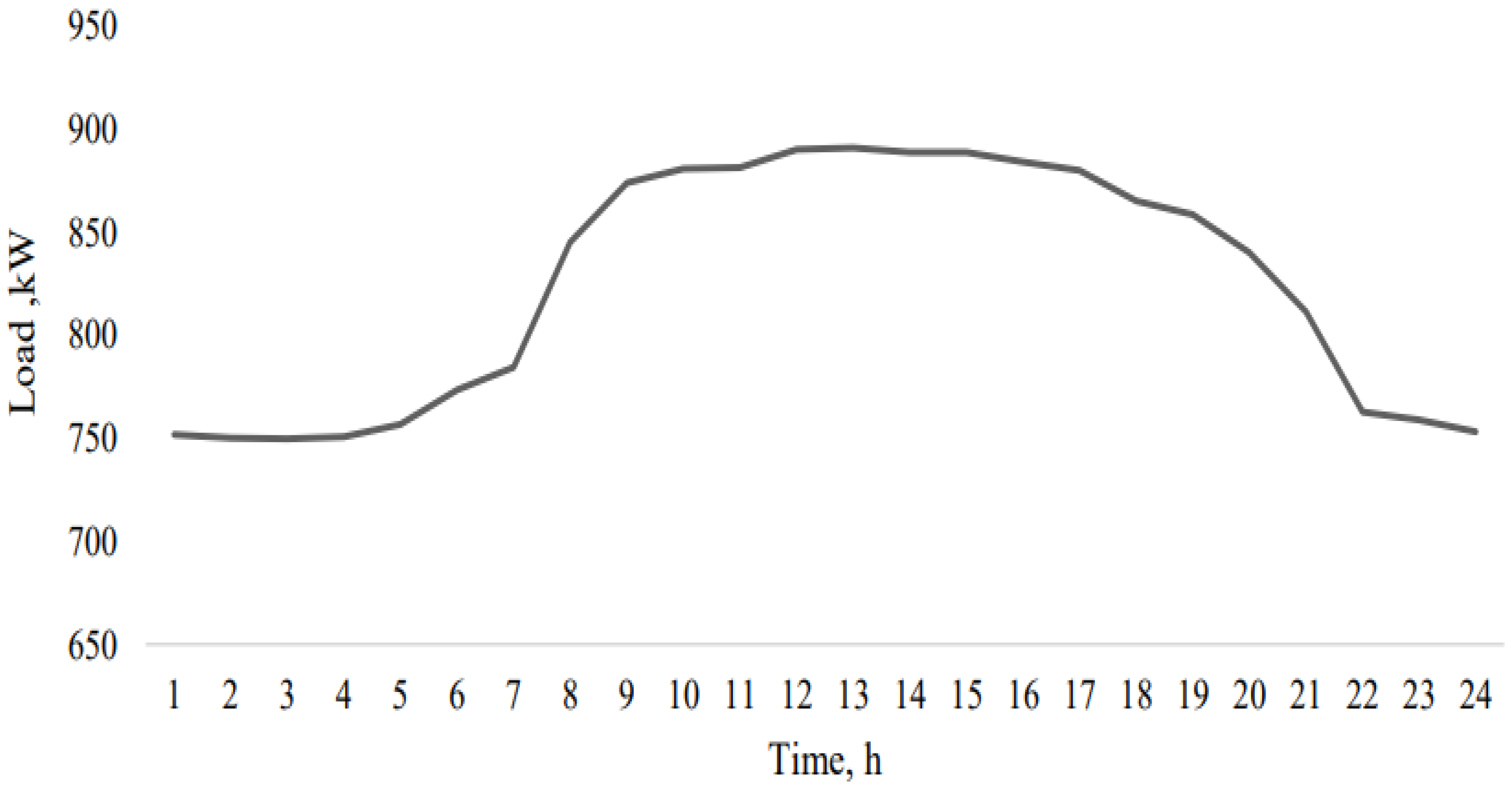
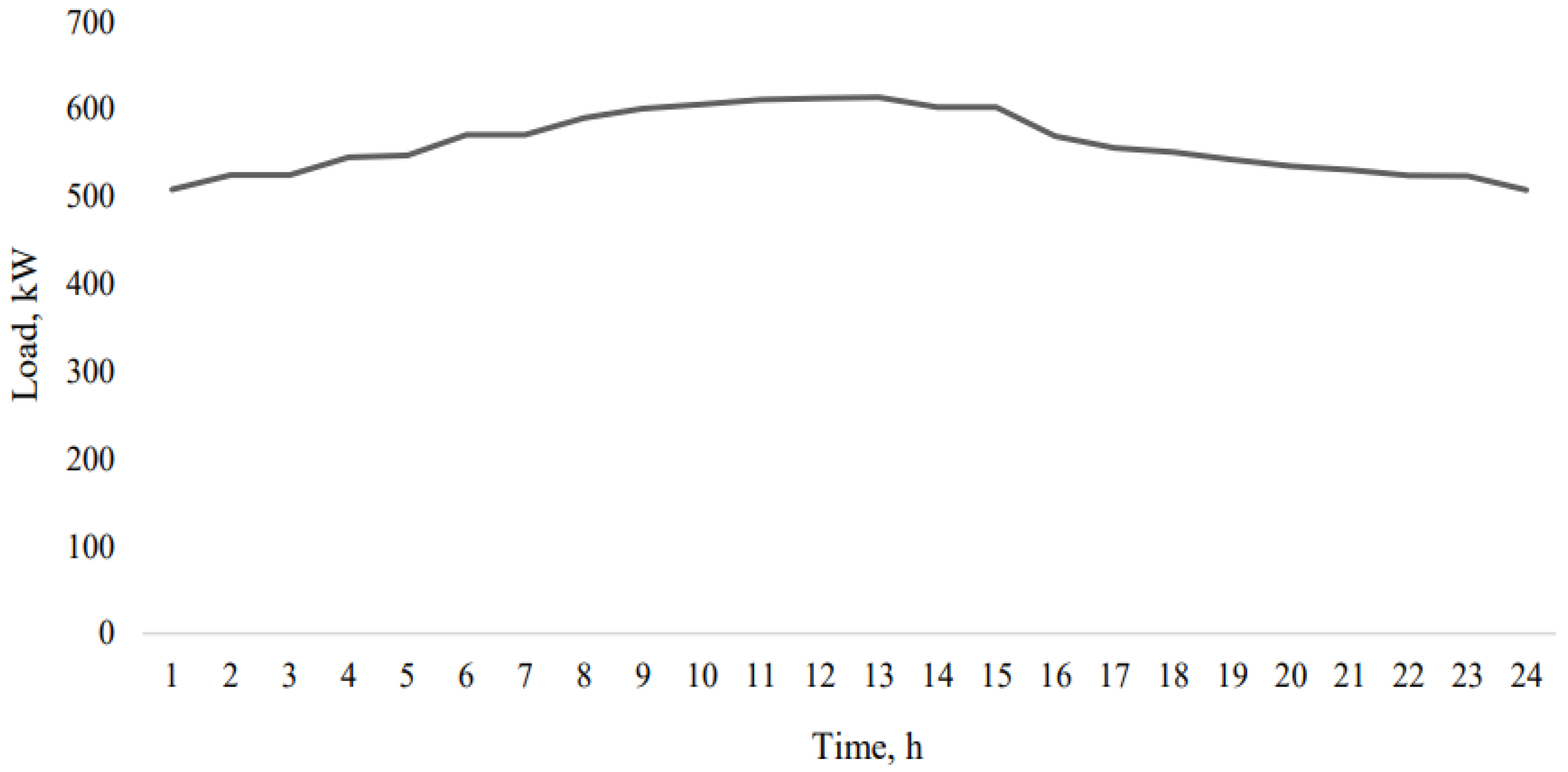
This section presents the input data used for the optimization model to assess the net-zero and green energy solutions for the IMSIU campus. The load data of an administration building is obtained from the General Directorate of Technical Affairs at IMSIU. The electrical demand used for DER co-sizing is structured as averaged hourly winter and summer diurnal archetypes at 1 h resolution. Figure 1 illustrates the hourly energy demand of an administration building during a typical winter day. The profile shows a moderate morning increase beginning around 7 a.m., coinciding with class and office start times, followed by a midday plateau and a gradual decline in the late afternoon. Peak loads in winter reach lower values compared with summer due to reduced air-conditioning requirements. Figure 2 shows the summer load profile displays a significantly higher and broader peak, extending from late morning to early evening, reflecting the dominant influence of cooling systems in the Saudi climate. Demand remains elevated for much of the day, underscoring the strain placed on the campus grid during hot months. Comparing Figure 1 and Figure 2 underscores the necessity of flexible energy storage and solar utilization strategies that can manage seasonal demand variability.
Solar irradiance patterns in Riyadh have stable seasonal and spatial characteristics over long periods, and the cited profile remains spatially consistent and operationally representative for campus-scale PV in the same city and climate zone. The PV output power data, based on real measurements in Riyadh, Saudi Arabia, is obtained from [40]. Given its high technological maturity, low self-discharge profile, and widespread deployment in stationary storage applications, a lead-acid BESS is selected for this study. Both the charging and discharging efficiencies are set to 95%, and the energy-to-power (E/P) ratio is constrained within 1 to 5, reflecting practical design limits for distributed energy resource co-sizing at the building level.
As this study targets a public university green campus transition, the model prioritizes minimum electrical DER capacity co-sizing, a formulation that indirectly ensures minimum capital cost and maximized grid electricity displacement-driven CO2 avoidance, while explicit investment-return metrics are outside scope of this paper and will be investigated in the future work.

3.2. Results and Discussions

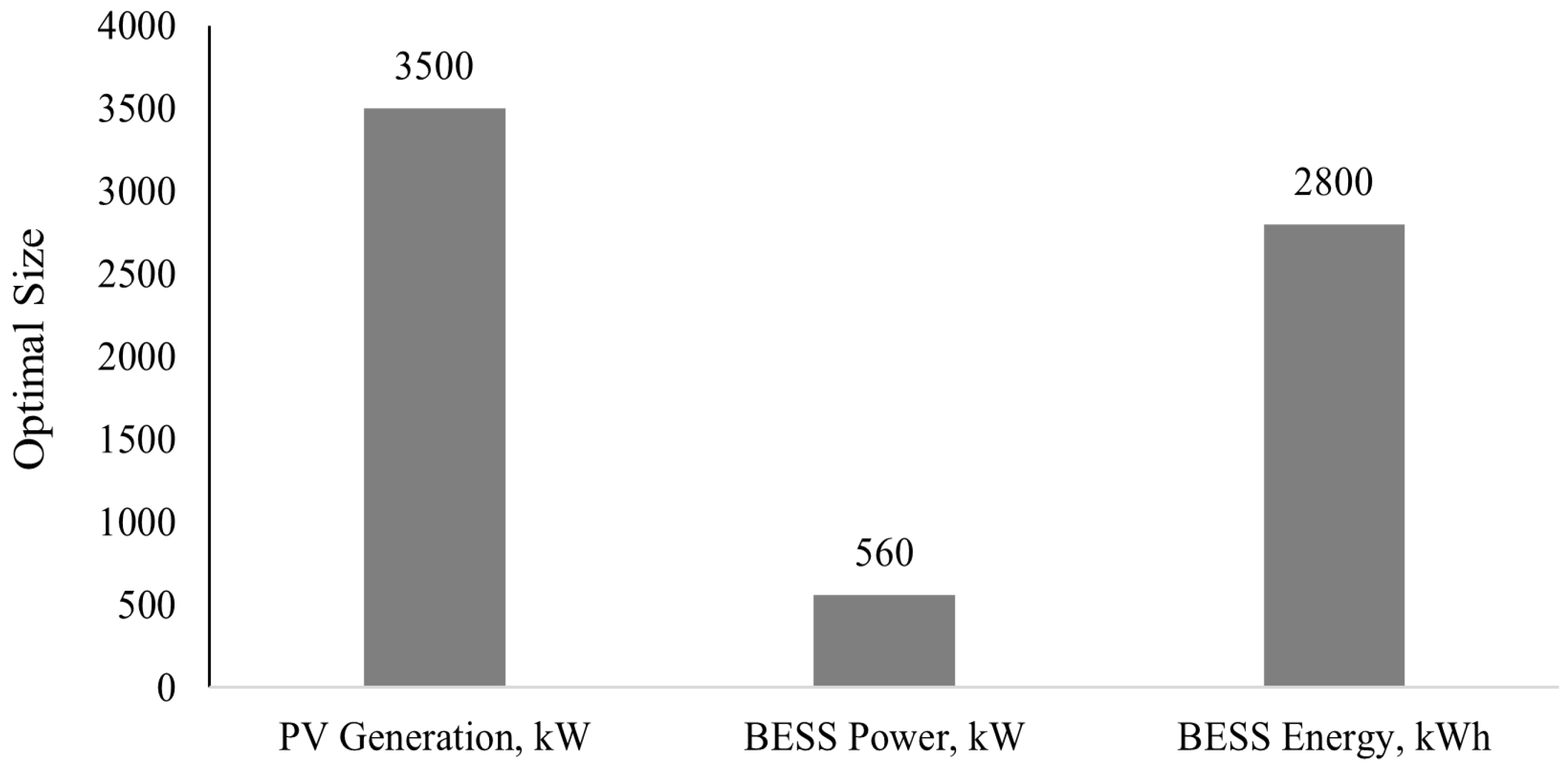
Using the developed mathematical optimization model, the sizes for the PV system and the BESS are optimally determined to be 3500 kW and 560 kW, respectively, with a energy capacity of 2800 kWh, as shown in Figure 3, to efficiently balance energy production and consumption, essential for achieving net-zero energy status. The graphical representation emphasizes that these capacities strike a balance between cost, self-sufficiency, and reliability, ensuring minimal grid import while maintaining feasible capital investment. It visually conveys the scale of renewable and storage infrastructure necessary to reach net-zero readiness for a large educational complex.
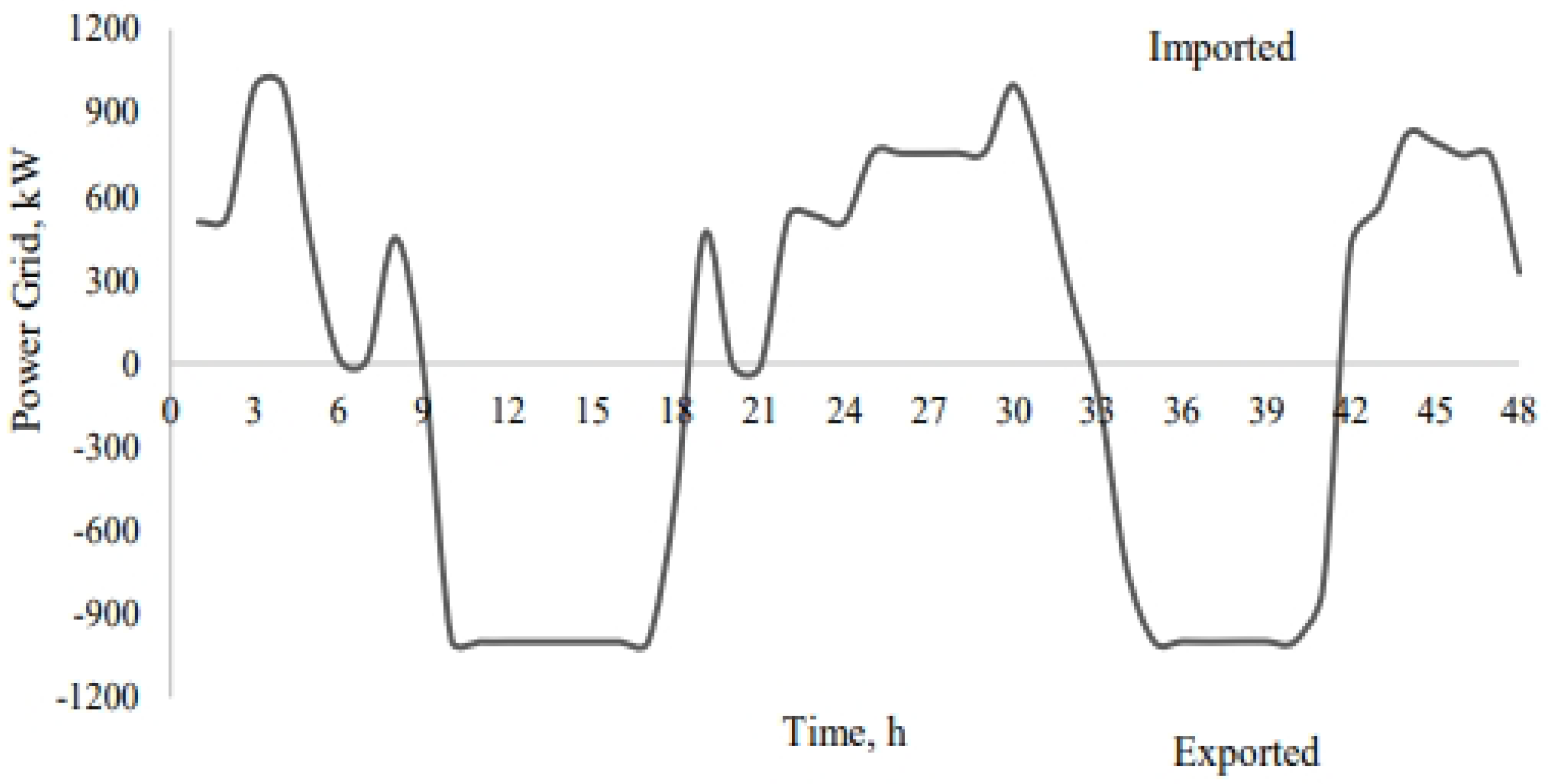
The optimal exchanged power with the main grid is presented in Figure 4, which demonstrates the dynamic power exchange between the campus green energy resources and the local grid. Positive values represent power export during surplus PV production hours, while negative values indicate import when demand exceeds on-site generation. The alternation of import and export periods illustrates the grid-interactive nature of the proposed system and its role in achieving an annual energy balance—the defining feature of a net-zero energy configuration.
To achieve net-zero energy, the proposed model facilitated the export of excess energy generated by the PV system to the main grid during periods of high solar availability and the import of energy during high demand or low solar availability periods to maintain a stable supply. This energy exchange mechanism is crucial for ensuring that the campus generates as much energy as it consumes over summer and winter days.
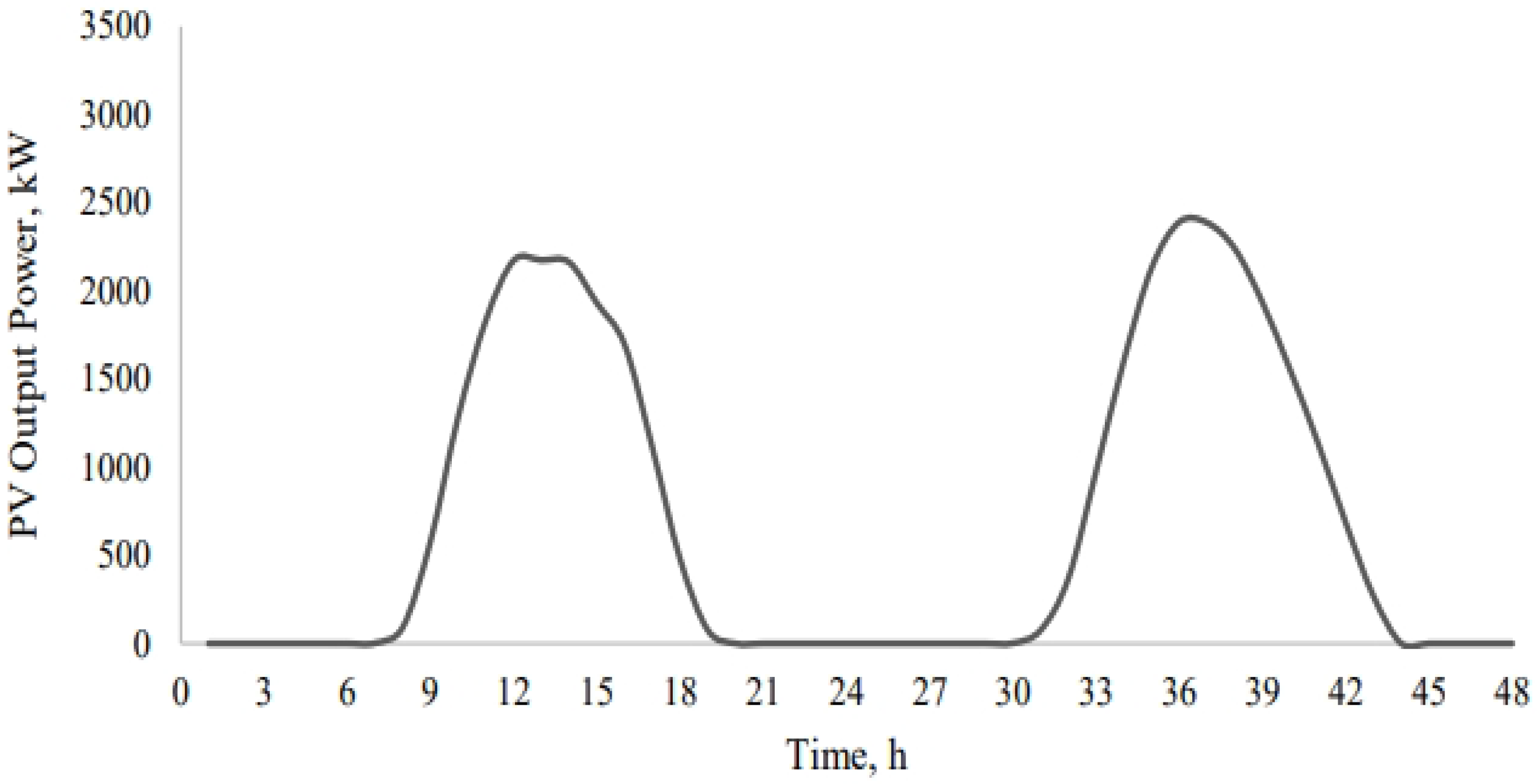
Figure 5 depicts the simulated hourly PV generation pattern under optimized conditions. It closely mirrors the irradiance profile but includes minor adjustments reflecting real operational limits such as inverter capacity. It validates that PV output alone can satisfy most daytime demand, substantially reducing reliance on external energy supply.
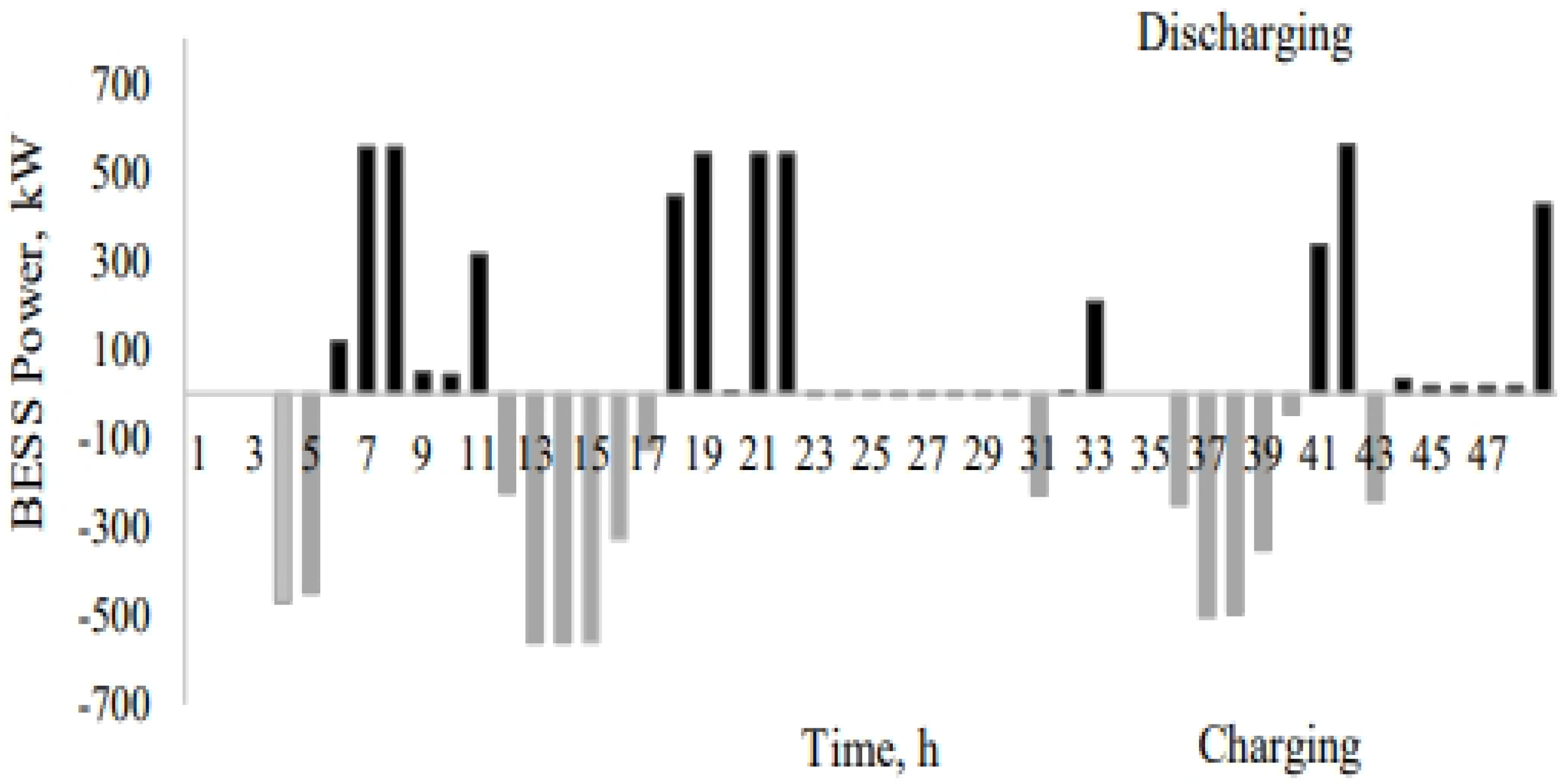
Figure 6 illustrates the operation of the BESS, which effectively manages energy flows by charging during midday hours when photovoltaic (PV) generation exceeds building demand—and discharging during evening and early-morning periods of high consumption. The alternation between charging and discharging demonstrates the efficiency of the optimization algorithm in maintaining the supply–demand balance, reducing grid dependency, and achieving net-zero energy equilibrium.
An optimal BESS power capacity of 560 kW is determined to store surplus solar energy and ensure backup during low-irradiance hours. As shown in Figure 4 and Figure 5, this capacity enables smooth coordination with both grid-exchange operations and PV generation profiles. The system charges during peak solar output and discharges during demand peaks, performing effective peak-shaving and load-leveling functions. The optimized charging and discharging cycles confirm that the 560 kW rating is sufficient to support energy balancing, enhance reliability, and contribute to the campus’s transition toward net-zero energy performance.
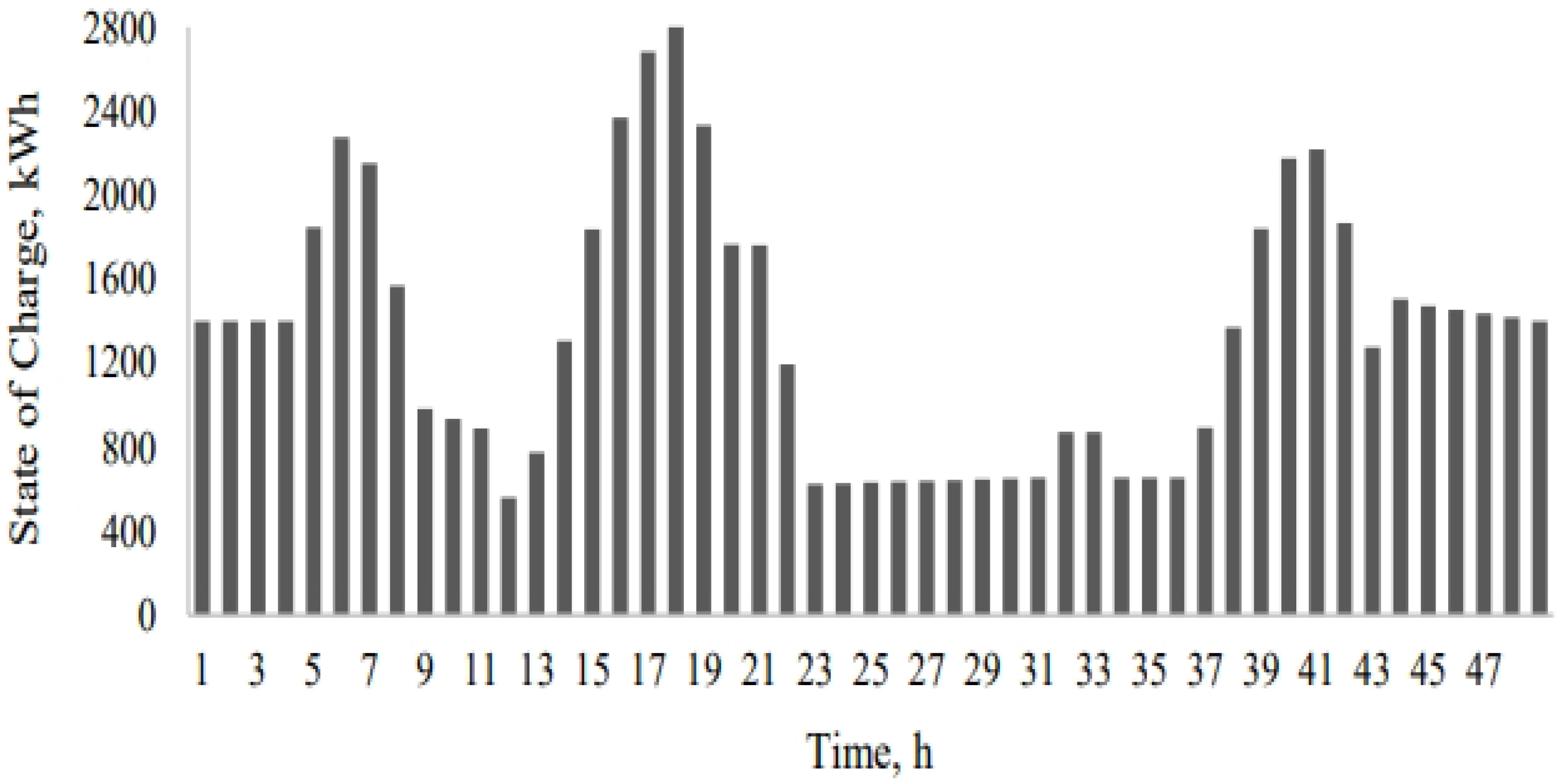
Figure 7 illustrates the hourly state of charge (SOC) variation throughout the day, maintaining values between approximately 20% and 100% of the BESS capacity. The pattern confirms safe operational limits and optimized cycling that prolong battery life. Stable SOC transitions also demonstrate effective energy management, ensuring reliable backup during periods of reduced PV output. Together, Figure 6 and Figure 7 validate the operational feasibility of integrating storage within the IMSIU campus to achieve consistent net-zero performance across different seasons.
The study demonstrated the minimum installed electrical DER capacities required to satisfy net-zero electrical feasibility at the building archetype level on the IMSIU campus, including the 3,500 kW PV system and 560 kW/2,800 kWh BESS, validated through hourly demand–supply balance and stable SOC cycling. Detailed spatial layout and system placement plans are outside the scope of this paper, and will be investigated in future work to provide integrated guidance for campus-scale deployment.

4. Conclusions

Implementing net-zero energy solutions in university campuses is essential for advancing sustainability and efficient energy management. This study conclusively demonstrated that the transition from energy-intensive operations to a net-zero-ready campus is technically viable and strategically aligned with Saudi Vision 2030 and Tarshid’s national efficiency initiatives. Using the proposed mathematical optimization model, the research identified an optimal configuration comprising a 3,500 kW PV system integrated with a 560 kW/2,800 kWh BESS, which together can meet building-level energy demands and maintain seasonal balance between energy generation and consumption. Simulation outcomes revealed substantial reductions in grid dependency and carbon emissions, achieving an annual net-zero condition while ensuring energy reliability during peak summer loads. The combination of on-site generation, intelligent storage scheduling, and grid-interactive control not only enhances operational efficiency but also offers a replicable framework for similar institutions across the Kingdom. Strategically, this supports a phased Green Campus DER planning approach in Saudi public universities by adopting building-archetype co-sizing baselines for minimum electrical build-out to displace grid electricity and avoid CO2 emissions, forming a practical starting point for future holistic campus-scale expansions. Future research should extend this framework by incorporating additional parameters such as electric-vehicle integration, demand-side flexibility, real-time dynamic pricing, and multi-building coordination across campus microgrids. These enhancements will support full carbon neutrality and create a robust blueprint for sustainable, smart, and self-reliant university campuses in Saudi Arabia and similar climatic regions.

Funding

This work was supported and funded by the Deanship of Scientific Research at IMSIU (grant IMSIU-DDRSP2503).

Data Availability Statement

The original contributions presented in this study are included in the article. Further inquiries can be directed to the corresponding author.

Conflicts of Interest

The author declares no conflict of interest.

Abbreviations

The following abbreviations are used in this manuscript:
hTime, h  ε H
η Time duration, h
P d load of campus buildings, k W
C a P V Capacity of photovoltaic generation, k W
P s i z e B E S S Capacity of BESS power, k W
E s i z e B E S S Capacity of BESS energy, k W h
P P V Output power of PV Generation, k W
P C h Power charging of the BESS, k W
P D i s c h Power discharging of the BESS, k W
P + G Exporting power to the main grid, k W
P G Importing power from the main grid, k W
S O C BESS state of charge, k W h

References

  1. Soummane, S.; Ghersi, F. Projecting Saudi sectoral electricity demand in 2030 using a computable general equilibrium model. Energy Strategy Rev. 2022, 39, 100787. [Google Scholar] [CrossRef]
  2. National Energy Services Company (Tarshid). Available online: https://www.tarshid.com.sa/en (accessed on 3 August 2025).
  3. Abacıoğlu, S.; Ayan, B.; Pamucar, D. The Race to Sustainability: Decoding Green University Rankings Through a Comparative Analysis (2018–2022). Innov. High. Educ. 2025, 50, 241–275. [Google Scholar] [CrossRef]
  4. Panait, M.; Ionescu, R.; Hysa, E.; Blessinger, P. Powering the Future: Green Energy and Sustainable Development in Universities. In Management in Higher Education for Sustainability; Springer: Berlin/Heidelberg, Germany, 2025; pp. 127–143. [Google Scholar]
  5. Barnett-Itzhaki, Z.; Tifferet, S.; Berkowic, D.; Arviv, T.; Daya, A.; Carasso Romano, G.H.; Levi, A. Strategies and challenges for green campuses. Front. Sustain. Cities 2025, 7, 1469274. [Google Scholar] [CrossRef]
  6. Sa’adi, N.; Abd Gapor, S.; Tamrulan, F.; Bohari, A.A.M. Towards a Sustainable Campus: A Review of Plans, Policies, and Guidelines on Sustainability in Malaysian Public Higher Education Institutions. J. Des. Built Environ. 2025, 1–22. [Google Scholar]
  7. Moura, P.; Correia, A.; Delgado, J.; Fonseca, P.; de Almeida, A. University campus microgrid for supporting sustainable energy systems operation. In Proceedings of the 2020 IEEE/IAS 56th Industrial and Commercial Power Systems Technical Conference (I&CPS), Las Vegas, NV, USA, 29 June–28 July 2020; IEEE: New York, NZ, USA, 2020; pp. 1–7. [Google Scholar]
  8. Hadjidemetriou, L.; Zacharia, L.; Kyriakides, E.; Azzopardi, B.; Azzopardi, S.; Mikalauskiene, R.; Al-Agtash, S.; Al-Hashem, M.; Tsolakis, A.; Ioannidis, D.; et al. Design factors for developing a university campus microgrid. In Proceedings of the 2018 IEEE International Energy Conference (ENERGYCON), Limassol, Cyprus, 3–7 June 2018; IEEE: New York, NZ, USA, 2018; pp. 1–6. [Google Scholar]
  9. Al-Ghussain, L.; Ahmad, A.D.; Abubaker, A.M.; Mohamed, M.A. An integrated photovoltaic/wind/biomass and hybrid energy storage systems towards 100% renewable energy microgrids in university campuses. Sustain. Energy Technol. Assess. 2021, 46, 101273. [Google Scholar] [CrossRef]
  10. Sima, C.A.; Popescu, C.L.; Popescu, M.O.; Roscia, M.; Seritan, G.; Panait, C. Techno-economic assessment of university energy communities with on/off microgrid. Renew. Energy 2022, 193, 538–553. [Google Scholar] [CrossRef]
  11. Dagdougui, H.; Dessaint, L.; Gagnon, G.; Al-Haddad, K. Modeling and optimal operation of a university campus microgrid. In Proceedings of the 2016 IEEE Power and Energy Society General Meeting (PESGM), Boston, MA, USA, 17–21 July 2016; pp. 1–5. [Google Scholar]
  12. Jasim, N.I.; Gunasekaran, S.S.; AlDahoul, N.; Ahmed, A.N.; El-Shafie, A.; Sherif, M.; Mahmoud, M.A. Toward Sustainable Campus Energy Management: A Comprehensive Review of Energy Management, Predictive Algorithms, and Recommendations. Energy Nexus 2025, 100435. [Google Scholar] [CrossRef]
  13. Sreedharan, P.; Farbes, J.; Cutter, E.; Woo, C.K.; Wang, J. Microgrid and renewable generation integration: University of California, San Diego. Appl. Energy 2016, 169, 709–720. [Google Scholar] [CrossRef]
  14. Bracco, S.; Brignone, M.; Delfino, F.; Procopio, R. An energy management system for the savona campus smart polygeneration microgrid. IEEE Syst. J. 2015, 11, 1799–1809. [Google Scholar] [CrossRef]
  15. Hossain, S.M.; Koley, S.; Winter, A.; Enslin, J.H. A Technical and Economic Feasibility Study of Campus Microgrid Implementation. In Proceedings of the 2022 IEEE 13th International Symposium on Power Electronics for Distributed Generation Systems (PEDG), Kiel, Germany, 26–29 June 2022; IEEE: New York, NY, USA; pp. 1–6. [Google Scholar]
  16. Es-sakali, N.; Pfafferott, J.; Mghazli, M.O.; Cherkaoui, M. Towards climate-responsive net zero energy rural schools: A multi-objective passive design optimization with bio-based insulations, shading, and roof vegetation. Sustain. Cities Soc. 2025, 120, 106142. [Google Scholar] [CrossRef]
  17. Ke, B.R.; Ku, T.T.; Ke, Y.L.; Chuang, C.Y.; Chen, H.Z. Sizing the battery energy storage system on a university campus with prediction of load and photovoltaic generation. IEEE Trans. Ind. Appl. 2015, 52, 1136–1147. [Google Scholar] [CrossRef]
  18. Alrashed, S. Key performance indicators for Smart Campus and Microgrid. Sustain. Cities Soc. 2020, 60, 102264. [Google Scholar] [CrossRef]
  19. Chedid, R.; Sawwas, A.; Fares, D. Optimal design of a university campus micro-grid operating under unreliable grid considering PV and battery storage. Energy 2020, 200, 117510. [Google Scholar] [CrossRef]
  20. Ferrucci, T.; Fioriti, D.; Poli, D.; Barberis, S.; Roncallo, F.; Gambino, V. Battery energy storage systems for ancillary services in renewable energy communities. Appl. Therm. Eng. 2025, 260, 124988. [Google Scholar] [CrossRef]
  21. Husein, M.; Chung, I.Y. Optimal design and financial feasibility of a university campus microgrid considering renewable energy incentives. Appl. Energy 2018, 225, 273–289. [Google Scholar] [CrossRef]
  22. Olivieri, L.; Caamaño-Martín, E.; Sassenou, L.N.; Olivieri, F. Contribution of photovoltaic distributed generation to the transition towards an emission-free supply to university campus: Technical, economic feasibility and carbon emission reduction at the Universidad Politécnica de Madrid. Renew. Energy 2020, 162, 1703–1714. [Google Scholar] [CrossRef]
  23. Achour, Y.; Ouammi, A.; Zejli, D. Model predictive control based demand response scheme for peak demand reduction in a Smart Campus Integrated Microgrid. IEEE Access 2021, 9, 162765–162778. [Google Scholar] [CrossRef]
  24. Kourgiozou, V.; Commin, A.; Dowson, M.; Rovas, D.; Mumovic, D. Scalable pathways to net zero carbon in the UK higher education sector: A systematic review of smart energy systems in university campuses. Renew. Sustain. Energy Rev. 2021, 147, 111234. [Google Scholar] [CrossRef]
  25. Escobar, E.D.; Betancur, D.; Isaac, I.A. Optimal power and battery storage dispatch architecture for microgrids: Implementation in a campus microgrid. Smart Grids Sustain. Energy 2024, 9, 27. [Google Scholar] [CrossRef]
  26. Nasir, T.; Raza, S.; Abrar, M.; Muqeet, H.A.; Jamil, H.; Qayyum, F.; Cheikhrouhou, O.; Alassery, F.; Hamam, H. Optimal Scheduling of Campus Microgrid Considering the Electric Vehicle Integration in Smart Grid. Sensors 2021, 21, 7133. [Google Scholar] [CrossRef]
  27. Wang, Y.; Hu, B.; Meng, X.; Xiao, R. A Comprehensive Review on Technologies for Achieving Zero-Energy Buildings. Sustainability 2024, 16, 10941. [Google Scholar] [CrossRef]
  28. Ayadi, O.; Rinchi, B.; Alnaser, S.; Haj-Ahmed, M. Transition towards a sustainable campus: Design, implementation, and performance of a 16 MWp solar photovoltaic system. Case Stud. Therm. Eng. 2025, 68, 105907. [Google Scholar] [CrossRef]
  29. Franco, A.; Crisostomi, E.; Leccese, F.; Mugnani, A.; Suin, S. Energy Savings in University Buildings: The Potential Role of Smart Monitoring and IoT Technologies. Sustainability 2025, 17, 111. [Google Scholar] [CrossRef]
  30. Islam, M.S.; Liu, G.; Xu, D.; Chen, Y.; Li, H.; Chen, C. University-Campus-Based Zero-Carbon Action Plans for Accelerating the Zero-Carbon City Transition. Sustainability 2023, 15, 13504. [Google Scholar] [CrossRef]
  31. Ascione, F.; Bianco, N.; De Masi, R.F.; Mauro, G.M.; Vanoli, G.P. Energy retrofit of educational buildings: Transient energy simulations, model calibration and multi-objective optimization towards nearly zero-energy performance. Energy Build. 2017, 144, 303–319. [Google Scholar] [CrossRef]
  32. Parisio, A.; Rikos, E.; Glielmo, L. A model predictive control approach to microgrid operation optimization. IEEE Trans. Control Syst. Technol. 2014, 22, 1813–1827. [Google Scholar] [CrossRef]
  33. Kifor, C.V.; Olteanu, A.; Zerbes, M. Key Performance Indicators for Smart Energy Systems in Sustainable Universities. Energies 2023, 16, 1246. [Google Scholar] [CrossRef]
  34. Lazaroiu, A.C.; Panait, C.; Serițan, G.; Popescu, C.L.; Roscia, M. Maximizing renewable energy and storage integration in university campuses. Renew. Energy 2024, 230, 120871. [Google Scholar] [CrossRef]
  35. Alhawsawi, E.Y.; Salhein, K.; Zohdy, M.A. A Comprehensive Review of Existing and Pending University Campus Microgrids. Energies 2024, 17, 2425. [Google Scholar] [CrossRef]
  36. Serat, Z.; Danishmal, M.; Mohammad Mohammadi, F. Optimizing hybrid PV/Wind and grid systems for sustainable energy solutions at the university campus: Economic, environmental, and sensitivity analysis. Energy Convers. Manag. X 2024, 24, 100691. [Google Scholar] [CrossRef]
  37. Yu, K.; Wei, Q.; Xu, C.; Xiang, X.; Yu, H. Distributed Low-Carbon Energy Management of Urban Campus for Renewable Energy Consumption. Energies 2024, 17, 6182. [Google Scholar] [CrossRef]
  38. Assareh, E.; Izadyar, N.; Jamei, E.; amin Monzavian, M.; Agarwal, S.; Pak, W. Optimization of solar farm design for energy efficiency in university campuses using machine learning: A case study. Eng. Appl. Artif. Intell. 2025, 153, 110847. [Google Scholar] [CrossRef]
  39. Corporation, G.D. General algebraic modeling system (GAMS), Software. Available online: https://www.gams.com (accessed on 3 August 2025).
  40. Elshurafa, A.; Alsubaie, A.; Alabduljabbar, A.; Al-Hsaien, S. Solar PV on mosque rooftops: Results from a pilot study in Saudi Arabia. J. Build. Eng. 2019, 25, 100809. [Google Scholar] [CrossRef]
Figure 1. An averaged winter load profile of an administration building at IMSIU.
Energies 18 06509 g001
Figure 2. An averaged summer load profile of an administration building at IMSIU.
Energies 18 06509 g002
Figure 3. Optimal capacity size of green and net zero energy building’s resources.
Energies 18 06509 g003
Figure 4. Optimal exchanged power with the main grid for Net zero energy building over summer (1–24) and winter (25–48) h.
Energies 18 06509 g004
Figure 5. Optimal PV output power associated with net zero energy building over summer (1–24) and winter (25–48) h.
Energies 18 06509 g005
Figure 6. Optimal charging and discharging power of the BESS over summer (1–24) and winter (25–48) h.
Energies 18 06509 g006
Figure 7. State of Charge of the BESS over summer (1–24) and winter (25–48) h.
Energies 18 06509 g007
Disclaimer/Publisher’s Note: The statements, opinions and data contained in all publications are solely those of the individual author(s) and contributor(s) and not of MDPI and/or the editor(s). MDPI and/or the editor(s) disclaim responsibility for any injury to people or property resulting from any ideas, methods, instructions or products referred to in the content.