


Abstract
Accurate load forecasting is essential for optimizing microgrid and smart grid operations, thereby supporting Energy Management Systems (EMSs). Load forecasting also plays a key role in integrating renewable energy, ensuring grid stability, and facilitating decision-making. In this regard, we present a comprehensive literature review that combines both bibliometric analysis and critical literature synthesis to evaluate state-of-the-art forecasting techniques. Based on a screened corpus of over 200 scientific publications from 2015 to 2024, our analysis reveals a significant shift in the field: AI-based approaches, including Machine Learning (ML) and Deep Learning (DL), represent more than 55% of the analyzed literature, overtaking traditional statistical models. The bibliometric results highlight a 300% increase in publications focusing on ML-based models (e.g., SVM, CNN, LSTM) over the years. Furthermore, approximately 70% of the total reviewed works use at least one exogenous variable, such as weather variables, socioeconomic indicators, and cultural behavior. These findings reflect the transition from traditional statistical models to more flexible and scalable approaches. However, socioeconomic and cultural variables remain underutilized in the literature, particularly for long-term planning. Despite the progress load forecasting processes have made in recent years, thanks to advanced modeling, a few hurdles remain to realizing their full potential in modern microgrids. Thus, we argue that future research should focus on three key areas: (i) scalable real-time adaptive models, including computational complexity characterization, (ii) standardization in data collection for seamless integration of exogenous variables, and (iii) real-world application of forecasting models in decision-making that supports EMSs. Progress in these areas may enhance grid stability, optimize resource allocation, and accelerate the transition to sustainable energy systems.
1. Introduction
Load forecasting plays a key role in the operation and optimization of microgrids and smart grids, serving as a fundamental enabler of sustainable Energy Management Systems (EMSs) [1]. In the context of the global energy transition, where Renewable Energy Sources (RESs), such as solar, wind, and hydropower, are rapidly expanding [2], these forecasts are critical for ensuring grid stability, optimizing energy generation, reducing costs, and minimizing environmental impacts [3]. They enable utility providers to allocate resources efficiently, prevent supply-demand imbalances, and enhance grid resilience [4], while also supporting the integration of decentralized energy systems and reducing reliance on fossil fuels [5].
The growing complexity of modern energy systems has further underscored the need for advanced forecasting techniques [6]. Traditional power grids, characterized by unidirectional energy flow from centralized generation facilities to end users, are now being replaced by smart grids. Smart grids are equipped with Advanced Metering Infrastructure (AMI), Internet of Things (IoT)-enabled devices, and big data collection systems [3]. Smart grids allow bidirectional energy flows and integrate Distributed Energy Resources (DERs), such as rooftop solar panels, battery storage systems, and electric vehicles [7]. However, this transformation also introduces new challenges, including increased variability in both energy consumption and generation patterns, the unpredictability of renewable energy production, and the need for sophisticated decision-making mechanisms applied to real-world microgrid scenarios [8]. Historically, traditional statistical models, such as Autoregressive Integrated Moving Average (ARIMA) and exponential smoothing, have been widely used for load forecasting, even before the emergence of smart grids [9]. These techniques were effective in traditional power systems, where load demand followed relatively predictable patterns and fluctuations were mainly influenced by seasonal factors [7]. However, as power grids have evolved to accommodate a more decentralized and dynamic structure, these models have struggled to capture the increasing complexity of load demand and generation [10]. Their reliance on predefined assumptions and limited adaptability makes them less suitable for handling the nonlinearity and high dimensionality of modern grid systems [8].
Consequently, the field of smart grids has increasingly adopted machine learning (ML) and Deep Learning (DL) techniques. These techniques offer increased flexibility in analyzing large-scale datasets, identifying complex and nonlinear relationships, and making adaptive predictions, ultimately leading to more scalable systems [11]. These data-driven approaches offer significant advantages in forecasting load demand, optimizing grid operations, and improving overall system resilience in the face of uncertainty [12]. One of the key factors driving this shift is the growing recognition that energy consumption and generation are influenced by a wide range of external factors (hereafter referred to as exogenous variables in this work), including climatic conditions, socioeconomic factors, and consumer behavior [11,12]. Weather factors, such as temperature, humidity, wind speed, and solar radiation, are key for determining demand fluctuations and renewable energy availability [13]. At the same time, economic activity, population density, and industrial output significantly affect long-term consumption patterns [14,15]. Additionally, cultural factors, such as responses to dynamic pricing and shifts in lifestyle trends, tend to introduce further complexity into demand forecasting [14]. The need to incorporate these external influences into modern predictive models is even more critical given the dynamic and highly interdependent nature of current energy systems [16].
To process this high-dimensional and interdependent data, ML models such as Support Vector Machine (SVM), Decision Tree (DT), Random Forest (RF), and Gradient-Boosting (GB) algorithms have been widely employed, as they excel at detecting hidden patterns and interactions within large datasets [17]. These methods often rely on manual feature engineering and struggle to fully capture the temporal dependencies and complex nonlinear dynamics of load demand and renewable energy generation [18]. In contrast, DL architectures offer an automated approach by directly extracting relevant features from raw data, enabling the modeling of complex patterns without requiring extensive data preprocessing [11,19]. For instance, Convolutional Neural Networks (CNNs) and Recurrent Neural Networks (RNNs), particularly Long Short-Term Memory (LSTM) networks, have demonstrated high effectiveness in processing time-series data. These DL models can capture both short-term and long-term dependencies, making them well-suited for load forecasting applications in smart grids [20]. LSTM networks are specifically designed to retain information over extended time intervals, enabling them to model the complex temporal relationships inherent in energy consumption and generation data [21,22]. This ability is especially valuable for handling the variability of RESs, where generation is subject to fluctuations driven by unpredictable factors such as changing weather patterns and seasonal effects [23]. Moreover, DL models can dynamically adapt to evolving consumption behaviors and external conditions, enhancing forecasting accuracy in scenarios where classical ML models might require frequent retraining and manual parameter adjustments [24,25]. Beyond standalone ML and DL models, hybrid models have emerged as a powerful alternative, combining the strengths of both approaches with advanced data decomposition methods [26]. Techniques such as the wavelet transform and empirical mode decomposition enable forecasting models to break down complex time-series data into simpler components, allowing them to focus on specific trends while reducing noise [27,28]. By leveraging the structured feature-extraction capabilities of ML and the advanced sequence-modeling strengths of DL, hybrid models provide a more robust framework for capturing both short-term fluctuations and long-term consumption trends. As a result, these models have significantly improved forecasting accuracy, making them particularly effective for managing load demand volatility and integrating renewable energy [26].
Despite recent advances in modeling, the implementation and scalability of the aforementioned predictive systems remain significant challenges [29]. The massive volume of data generated by smart grids and the high computational requirements of most sophisticated models represent considerable obstacles [30]. Many algorithms require intensive optimization and lengthy training, making them both resource- and time-consuming [31]. Moreover, efficient forecasting models are essential for smart grid applications in systems that aim to respond dynamically to sudden changes in load demand or generation, often triggered by weather anomalies, network disturbances, or unexpected consumer behavior [32]. Without this timely response capability, the practical utility of predictive models is limited, especially in scenarios where the volatility of renewable energy sources introduces greater uncertainty into energy systems [33]. Additionally, the forecast horizon itself introduces layered complexity: (i) short-term predictions (minutes to days) must account for high-frequency fluctuations in weather variables, user behavior, and distributed renewable generation, often requiring near-real-time updates and fine-grained data. (ii) Medium-term horizons (weeks to months) involve seasonal cycles, special events, and coordination across system components like storage and scheduled maintenance, which makes prediction difficult due to the overlap of seasons and events, changes in the number of users, and emerging technologies. (iii) Long-term forecasts (years) are shaped by demographic shifts, technological adoption, infrastructure planning, and policy impacts, all of which introduce deep uncertainty and require models that can adapt to slow but impactful structural changes. In particular, demographic and socioeconomic data are often scarce due to limited public availability and the annual collection cycle. Adapting load forecasting models to different forecasting horizons requires preprocessing the data. Techniques such as resampling or interpolation may be employed based on specific needs. In some cases, additional transformations are required to capture temporal patterns effectively. However, specific forecasting models, such as LSTMs, can handle time-series data directly without extensive preprocessing.
Given the extensive literature on data-driven strategies for load forecasting, especially with the rise in DL applications in smart grids and their integration with external information sources, limitations in current approaches, such as the lack of generalizability across different contexts, insufficient inclusion of diverse external variables, and limited real-world validation, remain critical barriers. Figure 1 shows the methodology applied in this review paper for conducting a comprehensive and robust literature analysis, similar to [34]. We employ a hybrid methodology that combines bibliometric analysis with a critical and systematic review of the existing literature to evaluate current load forecasting techniques. We examine traditional statistical, ML, and DL models that have been developed and applied to enhance predictive accuracy in the load forecasting field. By analyzing the strengths and weaknesses of various approaches, this literature review aims to identify the most effective strategies to address the distinct challenges of load forecasting in contemporary energy systems. Special emphasis is placed on incorporating exogenous variables, such as weather conditions, socioeconomic data, and cultural behavior. Furthermore, this review highlights key areas for future research, including the development of scalable and adaptive models, as well as the exploration of innovative forecasting paradigms, such as hybrid models. While there are numerous reviews on electricity load forecasting [7,35,36,37,38,39,40,41,42,43,44], many focus on specific approaches, such as DL, or primarily showcase optimal outcomes often neglecting the influence of exogenous variables and the validation of these models in real-world scenarios. In particular, there is a lack of detailed analyses examining how variables such as weather conditions and socioeconomic indicators affect the accuracy and applicability of these forecasting strategies in different contexts. Furthermore, the absence of rigorous bibliometric analyses in these studies limits our understanding of emerging research trends in load forecasting. To address these gaps and demonstrate the need for this study, this review offers a comprehensive examination of the most relevant approaches. It also emphasizes the impact of exogenous variables, presenting them as inputs for forecast models. This provides researchers with insight into trends and relationships between load demand, climatic factors, and socioeconomic indicators, while also identifying the most relevant or strongly correlated variables. Additionally, a bibliometric analysis is included to identify key research directions and potential future developments in this field. By combining bibliometric and systematic review methods, the study outlines existing strategies and identifies remaining challenges to guide future research.
Figure 1.
Methodology applied for analyzing studies in the load forecasting field.
The remainder of this paper is organized as follows. Section 2 provides a detailed analysis of the differences between this work and the previously mentioned works. Section 3 presents a bibliometric analysis conducted with the Bibliometrix tool in the programming environment R, examining trends in key concepts for load prediction in electrical microgrids. An in-depth analysis is conducted of key topics across categories, including themes, driving themes, essential themes, and emerging or declining themes. Lastly, this section presents a hierarchical analysis of key concepts, organized into clusters, that illustrate the progress made in this field of research. Section 4 categorizes strategies for predicting electrical load in microgrids and smart grids. This section divides the techniques into traditional statistical models, classical ML, DL, and hybrid models. At the end of the article, Section 5 presents a detailed analysis of each of the reviewed works on electric load forecasting, covering approaches ranging from traditional statistical models to hybrid models. The section also examines the use of exogenous variables (such as climatic, socioeconomic, and cultural factors) as predictors in the proposed models, as well as the electrical system’s intrinsic variables. Finally, Section 6 presents the paper’s conclusions.
2. Related Review Articles
In this section, we present the different ways in which other review articles have addressed electric load prediction using data-driven strategies.
One of the most comprehensive review articles on load forecasting for smart grids/microgrids is [7]. In that work, the authors provide a comprehensive literature review that spans traditional methods to AI-based strategies, along with an in-depth examination of the theory behind each approach. However, they focus exclusively on forecasting techniques, without addressing the climatological or socioeconomic factors that affect load forecasts in electrical microgrids. Furthermore, they fail to distinguish between classical ML and DL models, a crucial consideration when selecting a tool for load forecasting in a specific microgrid (especially when prioritizing effectiveness or interpretability).
Building on a similar attempt at a broad review but with a different focus, in [35], the authors present a systematic review of load forecasting strategies. While they conduct a relatively thorough bibliometric analysis based on search queries incorporating relevant field-specific keywords (similar to the approach taken in this work), their focus is confined to Reinforcement Learning (RL) strategies, and the number of references available for comparison is relatively limited. Unlike [7], authors in [35] incorporate bibliometric analysis, even though it does not examine the role of exogenous variables in load forecasts.
Shahinzadeh et al. [36] extend the discussion by reviewing DL and hybrid models. Compared to the previous two works, this review offers a more technical breakdown of how each forecasting strategy operates, discussing advantages and disadvantages. However, unlike [35], their work does not include a bibliometric component, and unlike [7], it lacks a comprehensive comparison among the works; for instance, the only table summarizing the models omits references and practical applications.
A different perspective is adopted by Ardabili et al. [37], who concentrate exclusively on ensemble and hybrid models, neglecting a broader array of potential forecasting methods. They assess the sustainability and reliability of these models. However, while they provide a brief overview of the number of documents on ensemble and hybrid approaches, they do not analyze trends or conduct cluster analysis to identify groups of similar articles that could aid in developing a taxonomy for the two types of models they define.
More recently, Dong et al. [38] analyzed various forecasting strategies, ranging from traditional statistical models to DL and hybrid approaches, with a particular focus on short-term prediction (i.e., forecasting for the upcoming hours). A notable strength of their work is the inclusion of a section that compiles the datasets used across the studies, as well as the use of specialized databases to conduct the literature search, an element missing in earlier reviews. However, the review also presents several limitations: although the authors acknowledge that exogenous variables strongly influence load forecasts, they do not thoroughly analyze these variables. Moreover, their analysis remains mostly descriptive, focusing solely on the number of publications per year without offering deeper insights.
Unlike the aforementioned reviews, Fida et al. [39] conducted a comprehensive literature review that thoroughly analyzed the societal impact of load forecasting. They present the theoretical basis of the forecasting techniques implemented through 2024 in a comprehensive and detailed manner, and provide a brief demonstration of the exogenous variables that most significantly influence behavior. However, this latter aspect is not the article’s primary focus. In addition, several groups of forecasting strategies (such as traditional statistical models or classical ML models) are excluded. In a complementary manner, Wang et al. [40] include anomaly detection in their survey of forecasting models, thereby expanding the scope beyond pure prediction. Yet, most reviews do not include a bibliometric analysis or a detailed consideration of exogenous variables.
A different angle is provided by [41], who conduct a systematic literature review based on an in-depth bibliometric analysis, highlighting the application areas where various load forecasting techniques have been used, such as marketing, compatibility with existing infrastructure, and infrastructure costs in the planning of potato supply chains within the Algerian context. Unlike the global perspective sought in works such as [38], this review is strongly localized, limiting comparability across regions with diverse climatic or socioeconomic conditions.
Finally, Hasan et al. [42] classify forecasting models according to horizon length (short, medium, and long), emphasizing the different types of load forecasting that can be carried out depending on the horizon (load management, financial planning, transmission planning, and general system planning), which is new in comparison to the reviews were mentioned above. This structure provides clarity but is less critical than the evaluative one, and, once again, long-term forecasting receives relatively less attention than short-term approaches. Additionally, it offers limited discussion on the real-world applicability of the reviewed methods under data, computational, and institutional constraints.
In summary, the growing complexity of microgrids and the rapid evolution of data-driven forecasting methods have led to a diverse range of literature reviews, each with valuable contributions but also notable gaps. Many of these studies, summarized in Table 1, focus narrowly on specific approaches (such as reinforcement learning, hybrid models, or short-term forecasting) and often lack a holistic view of the broader methodological landscape. Others fail to distinguish between classical ML and DL models, omit exogenous variables such as weather or socioeconomic factors, or exclude bibliometric evidence that could support the structure of their analysis. This work aims to address those limitations by providing a comprehensive review that (i) covers the full spectrum of forecasting techniques, from traditional statistical models to advanced AI-based and hybrid strategies, (ii) incorporates a robust bibliometric analysis to uncover trends, thematic clusters, and emerging areas, and (iii) explicitly examines the role of exogenous variables in forecasting accuracy, as well as practical implementation challenges such as scalability, interpretability, and data integration.
Table 1.
Summary of related review articles on electric load forecasting (key focus, strengths, and gaps).
3. Bibliometric Analysis
A bibliometric analysis is a method for examining scientific literature that enables the assessment of academic output using indicators derived from publications within a specific research field, e.g., citation counts, thematic areas, authors, or journals. This tool is highly effective for identifying research trends, knowledge gaps, and influential contributors in the field, as it allows researchers to narrow the scope of their study using selection criteria such as authorship, journals, and topics of interest. This type of analysis contributes to the development of a robust and evidence-based theoretical framework, offering a more accessible visualization of the research field, including related concepts and sub-branches within a broader area of study, while also serving as a foundation for subsequent critical analyses and synthesis, rather than being limited to the preparation of review papers alone.
This section presents a bibliometric analysis using the bibliometrix library, which provides the necessary functions for statistical analyses of the selected references, and the biblioshiny library, which provides an interactive web interface for viewing and analyzing the results of these analyses. These tools are available in the R programming language, and the R GUI is used to launch the user interface by simply importing the “bibliometrix” library and invoking the biblioshiny() module. For this analysis, Figure 2 presents a PRISMA-inspired diagram that transparently illustrates the process of identifying, screening, and selecting studies. More than 200 scientific publications were extracted from the Scopus database by searching for terms in titles, keywords, and abstracts. We have chosen the Scopus database because it is well-known, provides user-friendly tools, and excels at covering diverse source types (e.g., books, conferences, preprints). In this regard, Keywords such as “smart grid”, “microgrid”, and “electrical microgrid” were used to define the scenario of interest in the advanced search Scopus tool. Additionally, relevant applications were identified using keywords such as “load forecasting”, “demand forecasting”, “demand prediction”, “load prediction”, and “electrical load forecasting”. To extract the methods used for load forecasting, we also employed keywords such as “pattern recognition”, “statistical model”, and “artificial intelligence”. To focus exclusively on studies that propose a load forecasting method, the term “review” was excluded from the search query. We also limited our selection to publications dated between 2015 and 2024. Additionally, we excluded some studies that were not written in English, outside the research focus, or unreliable (e.g., those with poor formatting or published in low-impact journals or conferences). Besides, we selected subject areas, including computer science, engineering, and energy, based on conference papers, journal articles, and books. This approach ensured that the articles aligned with the research field of interest. The final selection comprises 173 studies derived from the systematic screening process, supplemented by 47 additional records identified through manual search and snowballing to ensure a comprehensive state-of-the-art review, totaling 220 references.
Figure 2.
PRISMA-inspired diagram illustrating the study selection process, including studies retrieved from specialized databases and manually selected after the bibliometric analysis.
Our bibliometric analysis is broken down into three components: (i) a trend analysis of topics, (ii) a thematic map revealing the relationships between different topics, and (iii) a factorial analysis to categorize the various topics based on their degree of similarity. The primary objective of this analysis is to examine the distribution of research topics, their interconnections, and the prominence of specific keywords or concepts.
3.1. Trend Topics Analysis
The trend topics bubble chart shown in Figure 3 provides a clear visualization of the evolving research landscape in energy and technology from 2018 to 2024. This visualization is based on the most frequently used keywords, selected based on a minimum document count threshold. The x-axis represents the years, while the y-axis lists various terms related to the research field. The bubble size indicates the frequency of occurrence of each term in research publications or its importance in the field, and the color gradient from blue to red represents the intensity or number of occurrences, with red indicating higher values and blue indicating quite the opposite. It is essential to note that each term is placed along the timeline according to the period during which it was most prominent in the literature (not the year it first appeared). For example, if the bubble (peak usage) of a term occurs in 2021, it indicates that its usage or relevance peaked around that time, even though it may have appeared before or after. This visualization highlights how interest in specific topics has shifted over time, enabling the identification of areas that have recently gained traction and those that have become less central. By encapsulating these temporal dynamics, the chart reveals how traditional energy topics and emerging technological concepts have intersected and evolved, providing valuable insights into ongoing and future research directions.
Figure 3.
Trend topics evolution from 2018 to 2024 in the load forecasting research field and microgrids/smart grids, highlighting the frequency and intensity of key terms by means of the color and size of the bubbles.
One of the key observations from Figure 3 is the continued relevance of terms such as “energy conservation”, “renewable energies”, “alternative energy”, and “optimization”. These topics have remained important over the years, with notable peaks in recent years, underscoring the sustained focus on sustainable energy solutions. At the same time, terms like “machine learning”, “smart grid”, and “deep learning” gained significant traction around 2021 and 2022, reflecting the growing integration of advanced computational techniques in energy systems. Other prominent terms such as “load forecasting”, “energy management”, and “learning algorithms” highlight the expanding role of analytics and predictive modeling in modern power systems. This trend suggests that the industry is increasingly focused on optimizing energy use through machine learning and related methods. The rise of terms such as “microgrids”, “sustainable development”, and “optimization” further indicates a shift toward more localized and efficient energy solutions. Finally, the presence of terms like “time-series”, “long short-term memory”, and “data mining” underscores the importance of sophisticated analytical tools in recent energy research, reinforcing the field’s move toward intelligent, model-driven approaches for addressing complex energy challenges.
3.2. Thematic Analysis
Thematic maps provide a valuable snapshot of the current research landscape, highlighting areas of intense development and central importance and identifying emerging or foundational topics that require further exploration. This visualization is a good tool for researchers to identify key trends, allocate resources effectively, and pursue impactful research directions. The thematic map for the present work is shown in Figure 4. It offers a comprehensive classification of research topics within the domain, plotted on two axes: the y-axis represents the degree of development (density), and the x-axis represents the degree of relevance (centrality). This visualization is divided into four distinct quadrants, each representing different categories of themes:
Figure 4.
Thematic map categorizes themes based on their development degree (density) and relevance degree (centrality). It identifies niche, motor, emerging, declining, and basic themes in electric load forecasting.
- (i)
- Niche themes, located in the upper left quadrant, exhibit a high degree of development but relatively low relevance. They are specialized and well-developed research areas, yet not central to the overall research field. Notable topics in this quadrant include “district heating”, “economics”, “support vector machines”, “buildings”, and “forecasting performance”. These areas are highly specialized and well-developed, often yielding cutting-edge advances within their respective niches.
- (ii)
- Motor themes, found in the upper right quadrant, are characterized by both high centrality and high density, which indicates that they are conceptually well developed and strongly connected to other themes in the field, making them the main drivers of the research field. Keywords such as “load forecasting”, “smart grid”, “energy management”, “electric power plant loads”, and “deep learning” exhibit high centrality, meaning they serve as key drivers of progress in the field. Additionally, they present medium-to-high density, which suggests that the number of studies addressing these topics is increasing. This highlights their strategic importance and potential for continued growth within the domain.
- (iii)
- Emerging or declining themes, located in the lower left quadrant of the thematic map, are characterized by low development and low relevance. This behavior can be interpreted as emerging or declining themes. That is, new themes with few citations but potential for growth correspond to emerging themes. In contrast, more general topics that are not the focus of research and no longer generate citations, but instead represent more conceptual and well-known ideas, correspond to declining themes. The thematic map of load forecasting for electrical microgrids reveals emerging or declining themes, with terms such as “smart meters”, “data analysis”, “electric energy measurement”, “sales”, and “population statistics” appearing with low frequency. Themes such as data analysis and sales are considered declining topics in load forecasting due to the maturity of data-driven methodologies and the emergence of advanced tools. Smart meters and electric energy measurement are emerging topics, with smart meters gaining importance due to their role in data collection and in enabling advanced EMSs in smart grids. Electric energy measurement remains relevant, but it is evolving as newer technologies, such as IoT sensors and smart meters, gain precedence.
- (iv)
- Basic themes, located in the lower right quadrant, have high relevance but a lower degree of development. They are fundamental to the field and represent well-developed and mature tools that underpin research; however, they are not the main drivers of new explorations in the research field. This quadrant includes topics such as “machine learning”, “learning algorithms”, “microgrids”, “renewable energies”, and “sustainable development”. These areas are fundamental and vital for developing sustainable and intelligent energy systems.
Additionally, the center of the map in Figure 4, straddling the boundaries between the upper and lower quadrants, features topics with moderate development and relevance. As noted above, terms like “smart meters”, “data analytics”, and “electric power measurement” appear near the center of the map, although technically falling in the lower left quadrant. Thus, these themes represent, to some extent, well-rounded areas that balance both development and relevance, indicating their established importance in the research landscape.
3.3. Factorial Analysis
The thematic map is complemented by the dendrogram-based factorial analysis, which helps identify the most relevant current topics, potential future research directions, and relationships between concepts that were not initially evident. In bibliometric analysis, a dendrogram is a visual representation of hierarchical clustering applied to a given set of ideas, like the one shown in Figure 5. The result is groupings based on the distance or dissimilarity between those concepts. The dendrogram is a powerful tool for uncovering underlying structures in bibliometric data, as it helps identify communities among topics. Moreover, the point at which the branches of a particular community merge indicates the degree of similarity among the issues (i.e., lower joins indicate greater similarity). The red line in the Figure 5 helps determine the optimal number of clusters by dividing them into a limited number of groups. Additionally, gaps in the literature can be identified by analyzing concepts that do not belong to the same cluster but would be relevant to the field if they were. This would indicate a lack of integration or interdisciplinarity.
Figure 5.
Hierarchical clustering of keywords related to electric load forecasting and smart grids, highlighting major research themes, emerging trends, and potential research. Each color represents groups of related terms.
The structure of Figure 5 shows a horizontal axis representing the distance or dissimilarity between clusters, where shorter horizontal lines mean closer relationships between terms or clusters, and a vertical axis listing the clustered words. Words and clusters merge with increasing similarity as we move up the dendrogram. This figure provides valuable insights into the main themes and subthemes within the literature on data-driven load forecasting efforts for smart grids and microgrids. It highlights emerging trends and research hotspots, such as the integration of AI with smart grid technologies, as well as the focus on renewable energy integration. The dendrogram also suggests a gap between electricity load forecasting and its application to real-world EMSs and dispatch systems, as these terms appear in separate branches rather than forming a close cluster. Moreover, computational complexity is absent from the dendrogram, indicating that the community either considers this topic secondary or that it is not yet mature enough to have become a consistent focus of research in real-world applications.
To enhance readability, the dendrogram is divided into several color-coded clusters, each representing groups of semantically related terms and providing insights into the predominant themes:
- (i)
- The red cluster focuses on advanced computational methods and technologies for load forecasting. Keywords such as “artificial intelligence”, “deep learning”, “long-short-term memory”, “short-term load forecasting”, “electric power plant loads”, “smart grid”, “time-series analysis”, “smart meters”, and “internet of things” emphasize an intense research focus on applying ML techniques to improve load forecasting. Additionally, the integration of the smart grid and IoT underscores the importance of combining these technologies with smart grid infrastructure to enhance data collection, prediction accuracy, and control.
- (ii)
- The green cluster centers on EMSs and evaluation metrics. Keywords such as “housing”, “energy management”, “mean square error”, “energy”, and “electric load dispatching” indicate research on practical aspects of EMSs and the optimization of electric load dispatching. The use of mean squared error suggests a focus on evaluating model forecast accuracy using this statistical measure.
- (iii)
- The orange cluster addresses RESs, microgrids, and optimization techniques. Keywords such as “renewable energies”, “microgrids”, “power”, “learning algorithms”, “renewable energy source”, “machine learning”, “optimization”, and “sustainable development” indicate the research field focuses on integrating RESs into microgrids and using ML techniques. Terms such as sustainable development and optimization further underscore efforts to achieve sustainable EMS practices through modern data-driven mechanisms.
The hierarchical analysis presented above highlights the relationships between time-series analysis techniques and artificial intelligence in load forecasting for microgrids and smart grids. These groupings of terms, highlighted in red and orange, underscore how accurate and efficient forecasting directly addresses key challenges in modern power systems. For instance, reliable load forecasting helps optimize energy distribution and contributes to the energy transition toward renewable energy. In systems with high shares of renewable energy, forecasting helps mitigate the unpredictability of sources such as solar and wind. Similarly, predictive models are essential for balancing local generation, storage, and load forecasts in electrical microgrid management, especially during transitions between grid-connected and islanded modes. This analysis underscores the importance of investigating load forecasting methodologies, thereby providing a more comprehensive understanding of global approaches to this problem. Consequently, the following section presents load forecasting approaches proposed in the literature, with an emphasis on the use of exogenous variables as predictors of load. This perspective brings a novel approach to this work, as many related studies focus solely on electrical variables, neglecting significant regional climatic or socioeconomic factors that can strongly influence consumption behavior.
3.4. Summary and Implications of the Bibliometric Analysis
The bibliometric analysis reveals several key insights about the current research landscape in load forecasting for smart grids and microgrids:
- (i)
- Growing prominence of AI-based techniques: Terms such as “machine learning”, “deep learning”, and “long short-term memory” show strong upward trends, confirming a shift from traditional statistical models toward more flexible and adaptable, data-driven approaches.
- (ii)
- Sustainability as a central theme: Terms such as “renewable energies”, “sustainable development”, and “optimization” highlight the importance of coordinating forecasting activities with more general sustainability goals.
- (iii)
- Persistent relevance of core concepts: The fact that topics such as “load forecasting”, “smart grid”, and “energy management” are constantly at the forefront shows how fundamental they are to this field.
- (iv)
- Underexplored areas: The term “computational complexity” is missing in the factorial analysis and thematic maps, which indicates a lack of computational complexity characterization in the development of more sophisticated load forecasting approaches.
- (v)
- Interdisciplinary integration: Clustering patterns underscore the necessity for cross-disciplinary collaboration by revealing how several domains (including housing, economics, optimization, and IoT) converge in the load forecasting research field.
These findings indicate a promising yet still evolving area of research that is being increasingly adopted to address complex, nonlinear patterns in energy consumption. However, there remain challenges to practical implementation, particularly in long-term forecasting, real-time deployment, and the integration of exogenous variables, such as socioeconomic and environmental data.
4. Load Forecasting Strategies
Several load forecasting strategies have been explored in the context of electrical microgrids. These strategies range from traditional classical methods to artificial-intelligence-based techniques, including hybrid models. To offer a structured overview of recent works on load forecasting in microgrids, we categorize these efforts into three main subjects, which will serve as subsections for this discussion:
- (i)
- Traditional statistical models, which include time-series approaches such as ARIMA, exponential smoothing, and linear regression techniques that rely on historical demand data and often assume linear or stationary behavior;
- (ii)
- Classical machine learning techniques, which introduce more flexible, data-driven algorithms like DT, SVM, and ensemble methods that do not require strong assumptions about the data distribution; and
- (iii)
- Deep learning and hybrid models, which encompass advanced architectures such as LSTM, CNN, and hybrid systems that combine AI with traditional statistical models to model nonlinear, high-dimensional, and dynamic energy systems more effectively.
In the literature, load forecasting models are commonly evaluated using standard metrics, such as Mean Absolute Percentage Error (MAPE), Root Mean Squared Error (RMSE), and Coefficient of Determination (). Rather than delving into their formal definitions, it’s essential to emphasize their practical interpretations. MAPE is particularly useful when comparing results across different systems or regions because it expresses errors as percentages, making it scale-independent. RMSE, on the other hand, is sensitive to large deviations and is more appropriate when the cost of significant forecasting errors is critical, such as in short-term operational planning. Meanwhile, provides an overall measure of how well the model captures the variability in demand, offering insight into the model’s explanatory power but not necessarily its accuracy in operational terms. Together, these metrics complement each other: MAPE facilitates cross-scenario comparisons, RMSE emphasizes the magnitude of errors, and reflects the extent to which the forecasting approach captures demand dynamics.
Throughout this review, we refer to three forecasting horizons: short-term (from a few minutes up to 24 h ahead), medium-term (from one day to several weeks), and long-term (from several weeks to multiple months or even years). Each horizon poses different challenges and requirements regarding model complexity, data input types, and application use cases. This taxonomy enables a comparative analysis of methods across varying levels of complexity, data requirements, and forecasting horizons.
To illustrate these categories, Figure 6 presents a diagram summarizing the number of related works on electric load forecasting strategies, highlighting the four main approaches in the literature, the number of related works for each apporach, and the oldest and latest studie. The first category, traditional statistical models, encompasses linear, probabilistic, and autoregressive models, which are known for their simplicity and computational efficiency. The second category encompasses classical ML models such as KNN, DT, SVM, and various ensemble models, which, according to the literature, effectively capture simple patterns and nonlinear relationships while maintaining high interpretability and low computational costs. However, these techniques contrast with DL methods, which, though computationally demanding and less interpretable, excel at modeling nonlinear relationships and handling large data volumes, offering superior generalization in highly variable contexts. Representative DL techniques include FCNNs, CNNs, and RNNs. Finally, hybrid models are a distinct category, integrating elements from traditional statistical models, classical ML, and DL techniques to leverage their respective strengths. When properly designed, these models can significantly enhance predictive accuracy; however, their complexity makes them particularly susceptible to challenges such as overfitting, which must be carefully addressed during development.
Figure 6.
A summary of the number of related works on electricity load forecasting approaches. It highlights the oldest and latest work and is divided into four categories: traditional statistical techniques, classical machine learning, deep learning, and hybrid models [45,46,47,48,49,50,51,52,53,54,55,56,57,58,59,60,61,62,63,64,65,66,67,68,69,70,71,72,73,74,75,76,77,78,79,80,81,82,83,84,85,86,87,88,89,90,91,92,93,94,95,96,97,98,99,100,101,102,103,104,105,106,107,108,109,110,111,112,113,114,115,116,117,118,119,120,121,122,123,124,125,126,127,128,129,130,131,132,133,134,135,136,137,138,139,140,141,142,143,144,145,146,147,148,149,150,151,152,153,154,155,156,157,158,159,160,161,162,163,164,165,166,167,168,169,170,171,172,173,174,175,176,177,178,179,180,181,182,183,184,185,186,187,188,189,190,191,192,193,194,195].
4.1. Traditional Statistical Models
Among traditional statistical models, Linear Regression (LR) and Multiple Linear Regression (MLR) remain foundational baselines in microgrid load forecasting due to their transparency and low computational overhead. Rather than complex feature extraction, these models leverage the direct correlation between load and specific drivers: LR is effective when demand is dictated by a single dominant factor (e.g., temperature), while MLR is essential for capturing the compound effects of diverse exogenous variables, such as humidity and socioeconomic indicators. Some studies that employed linear models to forecast electric load in microgrids or smart grids include [45,46,47,48,49,50,51,52], with performance assessed using the MAPE metric. Notably, in [45], the authors employ a short-term LR model (one-day forecast) to predict global apparent power, achieving a MAPE of less than 6%. Similarly, in [46,47,48,49,50], MLR models using variables such as temperature, wind speed, and relative humidity achieved values ranging from approximately 0.6 to 0.99, and MAPE below 4.5% for short-term predictions. In [51,52], MLR models were implemented for medium-term forecasts, achieving an of up to 0.96 and a MAPE below 4.2%. These models use predictors that include electrical variables, temperature, and seasonality. However, when applied to long-term forecasts, the value decreased to 0.71, indicating reduced performance. The primary advantage of LR models lies in their interpretability and computational efficiency, making them suitable for deployment on resource-constrained edge devices within the microgrid control layer. However, their accuracy tends to decrease when multiple contributing factors interact or when nonlinear relationships dominate, conditions that are increasingly common in modern energy systems due to the stochastic nature of distributed renewable generation. This limitation becomes more evident in long-term load forecasting, where exogenous variables such as demographic shifts, economic trends, and policy changes introduce higher uncertainty and variability. These variables are not only challenging to model accurately but are also measured with lower temporal granularity, which reduces linear models’ ability to maintain reliable performance, especially when they are not sufficiently robust to capture nonlinear behavior.
An essential aspect of the behavior of modern energy systems, particularly when considering exogenous variables such as weather, is their inherent time-dependent nature. Time-series-based techniques, particularly the ARIMA family, continue to serve as essential benchmarks in load forecasting due to their ability to model linear temporal dependencies and trends without the heavy computational requirements of deep neural networks. A few examples of the use of these models in the context at hand can be found in [3,47,53,54,55,56,57,58,59,60,61], where the authors autoregressive frameworks to predict electricity load, achieving varying levels of accuracy depending on the forecasting horizon and the complexity of the data. However, given the highly cyclical nature of microgrid load profiles, driven by human routines and industrial schedules, standard ARIMA models often fall short. In these scenarios, the Seasonal ARIMA (SARIMA) variant becomes indispensable for capturing recurring daily, weekly, or annual fluctuations that basic differencing cannot address. For instance, in [53,54,55,56,57], SARIMA models demonstrated exceptional accuracy in forecasting hourly and daily energy consumption (short-term predictions) when seasonal components are prominent, achieving a MAPE of less than 5%. In contrast, ARIMA models, which do not account for seasonality, achieved an MAPE exceeding 7%. However, the metric was similar across the two models, indicating that although SARIMA improves accuracy in the presence of seasonality, both models effectively capture overall trends.
To further address microgrids’ sensitivity to environmental conditions, the SARIMAX model extends this framework by incorporating exogenous variables. This capability is critical for enhancing resilience, as it allows the model to correlate load changes directly with external drivers such as temperature, humidity, or economic indicators, which is particularly useful for long-term planning. For instance, in [3,60], the authors evaluate SARIMA and SARIMAX models for long-term demand forecasting, achieving a MAPE of up to 6% and errors of approximately 100 MW in both cases. These models demonstrated an coefficient of approximately 0.6 across three study cases.
On the other hand, Exponential smoothing is another family of time-series forecasting techniques that have been explored for load forecasting in smart grids and microgrids. Exponential smoothing is a widely used forecasting method that assigns exponentially decreasing weights to past observations, giving more importance to recent data while still considering historical patterns. This approach is efficient for time-series data with trends and seasonality, as it adapts quickly to changes in underlying patterns [64]. The smoothing parameters (i.e., , , ) control the rate at which the weights decrease, allowing the model to emphasize recent trends or seasonal patterns. The authors of [62,63,64,65,66,67,68,69,70,71,72] use exponential smoothing techniques that incorporate Holt–Winters seasonal methods and their variations, such as Holt–Winters Taylor (HWT), for predicting short-term and medium-term load demand. Works extensively employ HWT for load forecasting due to its adaptability, computational efficiency, and its ability to capture trends and seasonality in energy consumption data. HWT is particularly suitable for time-series with more complex seasonal patterns, nonlinear trends, and higher variability [62]. Notably, in [62,63], exponential smoothing techniques achieved an MAPE lower than 2% and 13%, respectively, in one-day and one-month forecasts, demonstrating their ability to deliver accurate and reliable predictions when data exhibits single-seasonality patterns, and authors in [72] have demonstrated that applying temperature sensitivity analysis reduces the MAPE in forecasting the maximum load from 8.228% to 1.123%. In addition, the authors in [66] achieved an RMSE of 7% in predicting holidays such as Christmas, New Year’s Day, and National Day, highlighting the robustness of exponential smoothing methods even during atypical consumption periods when demand deviates significantly from regular patterns. On the other hand, in [67], the authors achieved an MAPE error of approximately 3% when predicting load in a city in China.
Finally, probabilistic models, a subset of traditional statistical models that rely primarily on probability theory to quantify uncertainty in predictions or estimations, have also been used for electricity load forecasting. The most commonly used models are Bayesian, Gaussian, and Hidden Markov (HMMs). For instance, Bayesian models use Bayes’ theorem to update the posterior distribution of a hypothesis (e.g., future load demand) as new data become available. This is mathematically expressed as , i.e., the posterior distribution of the parameters given the data D. These models are compelling for quantifying prediction uncertainty, as they provide point estimates and full probability distributions that capture the range of possible outcomes. In [73,74,75,76,77,78], Bayesian short-term electricity load forecasting methods have been proposed, achieving relatively good results compared to non-probabilistic models using significantly fewer training data points. For instance, in [75], an average accuracy of approximately 80% was achieved using only 10% of the training data. However, as the percentage of training data increases, the performance of other models improves, and they might even outperform Bayesian models. Additionally, in [77], a Bayesian model was compared with an HMM and a Deep Neural Network (DNN). HMMs extend Markov chains by incorporating hidden states [196,197]. While Markov chains model systems where the future state depends only on the current state, HMMs assume that the states are not directly observable [198]. Instead, observations are generated by these hidden states through emission probabilities. Mathematically, an HMM is defined by transition probabilities and emission probabilities , making them suitable for modeling systems with unobserved dynamics, such as electricity demand patterns in smart grids. In [198], the authors show that, in terms of Normalized Root Mean Squared Error (NRMSE), the Bayesian model and HMM had similar errors, which were significantly lower than those of the DNNs. Furthermore, in various studies [79,80,81,82,83,84,85,86,198], HMMs have demonstrated over 90% accuracy in short-term predictions, typically using the temperature as an extra feature in the models. Additionally, a separate study [83] examined the use of HMMs for medium-term (monthly) forecasts, achieving an MAPE of less than 8%. This success was consistent across different datasets and scenarios.
To summarize, Table 2 shows traditional statistical models that have been fundamental in demand forecasting, particularly in scenarios where researchers prioritize simplicity, interpretability, and computational efficiency [69]. Their performance, evaluated using metrics such as MAPE and , demonstrates reliability for predicting structured data in stable environments, especially for short-term forecasts [66,67]. In particular, when data availability is reduced, probabilistic models, such as Bayesian models, perform robustly. However, these methods face significant limitations when handling nonlinear and high-dimensional data [54,56,57]. This analysis underscores the need for more advanced techniques, including those that incorporate modern artificial intelligence techniques [55,65], which enable models to capture nonlinear relationships, outlier behaviors, and complex patterns within the system.
Table 2.
Summary of traditional statistical models used for electric load forecasting.
4.2. Classical Machine Learning Models
Classical ML models learn patterns and relationships directly from data through iterative optimization processes without relying on explicit rules or predefined equations [199]. Unlike traditional statistical models, which often assume a specific functional form (e.g., linear relationships) and require heavy manual feature engineering, classical ML models can automatically adapt to the data structure, making them highly flexible for capturing complex, nonlinear relationships. This adaptability makes ML particularly suitable for tasks where the underlying data patterns are poorly understood or highly dynamic, such as load forecasting in smart grids [200]. While traditional statistical models excel in scenarios with well-defined assumptions and structured data, classical ML models thrive in more complex environments where the relationships between variables are intricate and cannot be easily modeled by simple equations [201].
Several classical ML-based load forecasting models have been proposed in recent years [87,88,89,90,91,92,93,94,96]. For example, in [87,88,89,90,91,92,93], the authors suggest using an SVM-based model for load forecasting. The SVM-based regression, also called the Support Vector Regressor (SVR), adapts the SVM model to regression tasks by optimizing a linear function while tolerating minor errors within an -insensitive margin. Deviations beyond are penalized using slack variables and , which measure excess errors above and below the margin, respectively. The trade-off between model complexity and error tolerance is controlled by the hyperparameter C. Nonlinearity is handled via kernel functions, preserving the core principles of SVM while predicting continuous outputs [202]. Standard kernel functions include the linear, polynomial, and Radial Basis Function (RBF) kernels, each suited to different types of data patterns. Proper tuning of these hyperparameters (e.g., selecting an appropriate kernel function and optimizing the regularization parameter) is crucial for achieving high accuracy and robustness in SVM models [8]. When applied to load forecasting, SVR-based models achieve an MAPE of less than 4% for short-term predictions, outperforming time-series and linear models when meteorological and time-related features are included [89,91,93]. Additionally, an accuracy of approximately 90% was achieved for weekly load and price predictions [87]. Another set of explorations using SVR-based methods was presented in [94,96], which achieved RMSE and MAPE of approximately 1208 MW and 3.99%, respectively.
Another family of classical ML models is DT, including ensemble techniques such as RF and GB. This family of models has also been used to forecast load, as shown in [87,88,90,94,97,98,99,100,101,102,103,104,105,106,107,108,109,110,111]. Beyond their predictive capability, DTs are particularly valued in microgrid management for their “white-box” nature, offering explicit interpretability that allows operators to trace the logic behind a load forecast, a critical feature for trust in automated decision-making [99,100]. To address the high variance and overfitting risks of single trees, Random Forest (RF) is employed as a robust ensemble method. By aggregating predictions from multiple independent estimators, RF significantly improves generalization on noisy datasets, which is common in low-voltage smart metering infrastructure [97]. In load forecasting, DT has been shown in [87,88,90,97,98] to achieve errors below 3.4% by incorporating weather data into short-term forecasts. Additionally, in some cases, DT has achieved lower MAE than SVM, reducing the total error by approximately 25%. On the other hand, authors of [98,101,102,103,104] report prediction errors for medium-term and long-term forecasts ranging from 3% to 19% using RF models, depending on the implemented feature extraction techniques and the used dataset. Notably, in [104], the authors achieved an MAPE of up to 1.7% using several weather variables (e.g., hourly temperature, humidity, wind speed, and sea-level pressure). This highlights the crucial role of data quality and exogenous variables, such as regional climate, in the performance of these models.
Gradient-boosting (GB) architectures have emerged as the dominant tree-based approach for scenarios requiring high precision on structured data, effectively bridging the gap between traditional statistical methods and deep learning. In [101,104,105,106,107,108,109,110,111], the authors use GB models and their variations to predict energy demand, demonstrating that sequential error correction yields superior accuracy in capturing complex, non-linear relationships compared to parallel ensemble methods. Some GB variants, such as AdaBoost, have achieved only a 3% lower MAPE than RNNs for medium-term predictions. These models incorporated variables like relative humidity, precipitation, surface pressure, temperature at 2 m, and wind speed and direction at 10 and 50 m. XGBoost, another variant of GB, has demonstrated MAPE values of approximately 1% for short-term predictions, comparable to RF in the same study for hourly forecasts. However, compared to RF, which offers robustness through simpler averaging, GB is operationally more demanding, being more sensitive to hyperparameter tuning and more prone to overfitting if not carefully managed. This trade-off implies that, while GB can theoretically achieve the lowest bias, rigorous validation protocols are required to ensure generalizability in real-world microgrid deployments.
Leaving aside tree-based models, another approach for load forecasting is the K-Nearest Neighbor (KNN) algorithm. KNN is a classical ML model technique that classifies new data points using the most similar labeled data points. The algorithm assigns a value based on the k nearest neighbors of the point under evaluation. It can classify the data or estimate a value based on the average of the neighbors. The choice of k significantly impacts the results of the algorithm [95]. For example, a small k value may yield high variance but low bias, whereas a larger k value may yield high bias but low variance. Authors in [91,95,96,112,113,114] achieved an average error, measured in kWh, lower than that of Individual Load Profiles (ILPs) when using KNN-based methods for load forecasting. ILPs are detailed representations of an individual household’s or building’s electricity consumption over time. These profiles illustrate the varying amounts of electricity used at different times of the day, providing insight into consumption patterns and each user’s energy needs. In [95,112,113], the use of the KNN algorithm achieved a MAPE of less than 17% for short-term load forecasting, reducing the error to as low as 3% for 1-h to 12-h predictions with an accuracy exceeding 95%. Additionally, in [112], a variation of KNN known as an Enhanced K-Nearest Neighbor (EKNN) demonstrated 12% greater accuracy than the classic KNN algorithm. Lastly, in [91,96], the authors achieved an MAPE below 6% and an up to 0.8 for medium-term forecasts.
Classical ML models have proven to be more versatile and practical tools for load forecasting in modern microgrids than traditional statistical models, particularly for short-term and medium-term forecasting horizons [95,112]. Table 3 summarizes the insights in the previous section by showing how models such as SVM, DT, RF, and GB have achieved relatively low errors, especially when incorporating not only electrical variables but also relevant exogenous variables, as these models can capture dynamic data structures with nonlinear relationships [91,93,95]. Additionally, the importance of data quality and hyperparameter selection highlights the crucial role of feature engineering in enhancing model performance. However, as data volume and complexity increase, classical ML models face limitations in capturing more abstract and long-term patterns, which drives the exploration of DL approaches to enhance data representation and predictive capabilities in more challenging scenarios [30].
Table 3.
Summary of classical machine learning models applied to electric load forecasting.
4.3. Advanced Load Forecasting Methods
Advanced load forecasting approaches could be broken down into two classes: DL and hybrid models. Firstly, DL models are a subset of ML algorithms that use neural network architectures with three or more computational layers to adaptively learn from training data and generate predictions [115]. In contrast, classical ML models (such as SVM, DT, or LR) often rely on manual feature engineering and lack layered architectures altogether, while shallow neural networks (e.g., basic perceptrons) may use one or two layers [117,203]. A DNN comprises multiple interconnected layers of nodes, where each successive layer refines the input data representation to improve prediction accuracy or classification performance. This hierarchical computation, known as forward propagation [115,116], begins with the input layer (which receives raw data) and culminates in the output layer (which produces final predictions, either continuous estimates or discrete classifications). The inverse process, backpropagation [203], optimizes model parameters by propagating prediction errors backward through the network and adjusting weights and biases using algorithms like gradient descent. Together, these mechanisms enable iterative refinement of DL models, enhancing their predictive performance over time [117,203].
In second place, hybrid models, which integrate DL with complementary techniques such as classical ML or traditional statistical models, have emerged to address scenarios where standalone DL architectures face limitations. These models leverage DL’s ability to autonomously extract high-dimensional patterns while retaining the interpretability, computational efficiency, or domain-specific strengths of non-DL approaches. For instance, hybrid frameworks might combine CNNs for spatial feature extraction with SVMs for final classification, or pair RNNs with ARIMA models to jointly capture nonlinear and linear temporal dynamics. These combinations often improve robustness and generalizability in complex forecasting tasks.
In electricity demand forecasting, the capacity of the DL models to automatically learn complex nonlinear relationships and temporal dependencies (such as weather effects or consumption patterns [204]) has positioned them as a powerful alternative to classical ML models, which typically require a data preprocessing and feature engineering layer [205]. DL architectures excel at handling the dynamic, high-dimensional nature of smart grid data [206], but hybrid approaches further enhance performance by combining DL’s hierarchical feature learning with complementary techniques. This subsection explores both DL and hybrid models, examining their theoretical foundations, comparative advantages, and applications in load forecasting contexts.
4.3.1. Deep Learning Models
Some examples of the use of DL for load forecasting in microgrids and related application scenarios are [12,36,59,65,115,116,117,118,119,120,121,122,123,124,125,126,127,128,129,130,131,132,133,134]. The DL techniques used in these efforts include Fully Connected Neural Networks (FCNNs), CNNs, and RNNs, particularly LSTM networks. These methods have demonstrated superior performance in short-term prediction compared with models such as ARIMA and SVM. Specifically, Refs. [59,65,115,116,117,118,119,120,121,124,134] have reported that FCNNs achieved an MAPE as low as 1.68% in daily predictions, with prediction errors below 300 kWh. However, the authors in [12] obtained MAPE values of 0.8% and 0.62% for a DNN and an ARMA model, respectively, highlighting that a deep architecture does not always outperform a traditional statistical model by a wide margin.
One of the most widely used architectures for load demand forecasting is the LSTM network, a variant of RNNs. LSTM networks have established themselves as the premier architecture for microgrid load forecasting due to their capacity to manage the vanishing gradient problem inherent in standard RNNs, thereby enabling the retention of long-term dependencies in volatile energy time-series [59,123]. In the load forecasting field, the aforementioned approach is particularly valuable because electricity demand exhibits both short-term fluctuations and long-term seasonal patterns, making LSTMs well-suited to capture multiple temporal dependencies that traditional models or simpler DNNs struggle to capture. Numerous studies, e.g., Refs. [12,65,116,120,121,122,123,124,125,126,128,130,131,132,133] have implemented LSTMs for short-term electricity demand forecasting in microgrids, achieving MAPE values as low as 1.4% and scores up to 0.98 for both hourly and monthly predictions. These results were made possible by leveraging large volumes of historical data (including load profiles, weather conditions, and seasonal variations) and tuning key model parameters. In fact, the performance of LSTM models is highly dependent on hyperparameter tuning, such as the number of hidden units, dropout rates, and the choice of optimization algorithms [36,203]. However, even with effective parameterization, there are situations where the performance gains do not warrant the rise in computational complexity. This was demonstrated by the authors in [65], who compared an ARIMA model and an exponential smoothing-based model with an LSTM. The findings revealed that the results for the LSTM and ARIMA models were quite similar. In the context of long-term forecasting (monthly to annual scales), LSTM models have also demonstrated strong performance, with reported MAPE values of approximately 1.77% [36,122,123,134]. Nevertheless, the authors in [120] found that an SVR produces results comparable to those of an LSTM (RMSE between 0.71 and 0.78 kW). However, it was only when utilizing a BiLSTM (RMSE of 0.32 kW) or a combination of CNN-LSTM (RMSE of 0.23 kW) that the performance of the SVR was significantly exceeded, justifying the increase in computational complexity to enhance overall performance.
Another notable RNN variant is the Gated Recurrent Unit (GRU), which offers a streamlined alternative by merging the memory cell and hidden state. This architectural simplification reduces the number of trainable parameters, making GRUs significantly faster to train and less computationally expensive than LSTMs. GRUs are particularly useful when a lower computational cost is needed, such as in real-time forecasting on edge devices employed in decentralized microgrid controllers. Studies using GRU, e.g., Refs. [122,127,128,129,131,132,133] have reported MAPE values up to 2%, only slightly higher than LSTM, while achieving values above 0.9. In this way, LSTM and GRU outperformed other methods, such as ARIMA and FCNN, which typically achieved values of around 0.5 and 0.7, respectively. Particularly, authors in [127] show that incorporating exogenous variables (particularly weather variables) leads to a measurable reduction in forecasting error relative to models trained solely on historical load data. When weather variables were included, the performance of the LSTM-Seq2Seq model improved by approximately 41% in MAE and 18% in . However, autoregressive models experience a performance degradation of approximately 18% in MAE and 16% in . These results suggest that variables with nonlinear relationships, or pairs of variables, jointly affect demand more than highly correlated variables. On the other hand, this increase in performance can be attributed to DL models’ capacity to handle large datasets. Even authors in [135] provide an ML-DL framework that uses LSTMs for load forecasting and a decision-tree-based method, including DT and RDF, to determine feature importance, resulting in drybulb and electricity price as the variables that most affect demand.
Another DL-based strategy employed in the literature to address the load forecasting problem is the use of CNNs adapted for temporal data. The authors in [26,136,137,138,139,140,141,142,143,144,145,146,147,148,149] have demonstrated that the use of Temporal Convolutional Networks (TCNs) (or 1-dimensional CNNs) can effectively predict short-term and medium-term demand variations [2]. A TCN is a DL architecture that employs dilated convolutions and sliding windows to model temporal patterns in time-series data. For instance, a time-series of demand can be divided into overlapping segments by defining a window size (the number of past data points used at a time) and a stride (the distance the window moves forward to form the next segment). TCNs analyze consumption data in time-series by identifying local trends, recurring cycles, and anomalies, allowing for efficient anticipation of energy demand variations [133,136]. Using dilated convolutions in TCNs enhances training speed and improves the ability to capture long-range patterns without significantly increasing computational complexity [138]. Specifically, studies [26,136,137,138,140,141,142,143,144,146,149] have employed TCN-based approaches for short-term load forecasting, showing that one-step prediction yields a lower MAPE compared to multi-step prediction, with the latter performing approximately 4% worse due to its insufficient receptive field and reliance on only one month of data to predict the following seven days. Notably, in [141], the authors achieved an MAPE of 1.65% and an accuracy exceeding 98% in predicting server network consumption, outperforming models such as ARIMA, FCNNs, and RNNs. Additionally, the impact of voltage on TCN performance has been examined using bus load data, revealing improved performance at lower voltage levels. However, there is limited use of TCNs for medium-term and long-term forecasting because their receptive field (the range of past input data they can effectively consider) is typically constrained. This limitation makes it more challenging for TCNs to capture broader temporal dependencies, which are necessary for accurate predictions over longer horizons. In another set of studies [147,148], the authors forecast load over horizons of one week to one month, considering exogenous variables such as temperature, meteorological data, economic indicators, and demographic information. In these studies, an MAPE of approximately 7% and an RMSE value of around 3 kWh were achieved, compared to models such as LSTM, which obtained an RMSE of approximately 4 kWh. Despite this, TCNs proved more computationally efficient [143,149].
In light of these approaches, recent work has explored hybrid methods that combine the strengths of various statistical, ML, and DL techniques. These models enhance the ability to capture complex patterns and nonlinear relationships and better manage the uncertainty introduced by exogenous variables [207]. For example, hybrid methods that integrate two or more ML and soft computing approaches have shown improved forecasting performance and robustness compared to individual models [37]. We explore such approaches next.
4.3.2. Hybrid Models
Hybrid models refer to forecasting approaches that intentionally combine two or more modeling paradigms to exploit their complementary strengths while compensating for individual weaknesses, thereby enhancing single-model load forecasting [208,209]. In the context of load forecasting, these combinations typically involve statistical methods, machine learning (ML), deep learning (DL), or signal decomposition techniques. Based on the literature, hybrid models can be broadly classified into categories such as (i) statistical methods combined with ML models [189,210], (ii) DL architectures integrated with data decomposition or dimensionality reduction techniques [167,179], and (iii) multi-DL frameworks that merge different neural network structures (e.g., CNN–RNN combinations) [149,163]. Among the hybrid strategies explored in the literature [149,163,164,165,166,167,168,169,170,171,172,173,174,175], models based on CNNs-RNNs and fuzzy models, among others, have demonstrated significant improvements in load forecasting performance, particularly when exogenous variables are integrated into the modeling process [163]. For instance, the CNN-LSTM model is specifically designed for time-series forecasting tasks when the input data has a grid-like or spatial structure. The central concept of CNN-LSTM is to replace matrix-vector multiplication and LSTM memory-cell gating with convolutional operations [149]. As a result, the CNN-LSTM can handle input sequences of arbitrary length while preserving the spatial structure of the data [163]. Numerous studies [163,164,165,166,167,168,169,170,171,172,173,174,175] have demonstrated that the CNN-LSTM model consistently outperforms both CNN and LSTM models in separately way across time horizons ranging from days to a month, achieving MAPE values of approximately 3%, with an error margin of less than 1 MW compared to other methods when utilizing meteorological forecast variables and historical load data. Other research has incorporated additional exogenous variables, such as customer type [165], regional economic conditions [167], and population data [169], thereby providing a more comprehensive dataset for the models. For instance, study [167] reported a MAPE of 1.07% by integrating Principal Component Analysis (PCA) in the data preprocessing phase. This approach is called PCA-CNN-BiLSTM. PCA is a dimensionality reduction technique that transforms correlated variables into uncorrelated principal components, while preserving as much variance as possible, thereby effectively reducing noise and redundancy. In another investigation [171], researchers focused solely on climatological variables (such as humidity, temperature, and other weather variables) alongside load time-series, resulting in an MAPE value as low as 1.05%. Nonetheless, it is observed that performance diminishes slightly for long-term forecasts compared to short-term predictions. For example, in study [169], a MAPE of 4.64% was recorded over a one-year horizon, which remains highly effective, as a MAPE below 5% is considered ideal in load forecasting.
There is another variation of the CNN-LSTM model, known as the CNN-Bidirectional Long Short-Term Memory (CNN-BiLSTM). This approach is explored in a different set of research efforts [176,177,178,179,180,181,182,183,184,185,186,187]. Unlike the standard CNN-LSTM, which processes sequences in one direction by only considering past information, the CNN-BiLSTM features a combination of forward and backward LSTM layers [176]. This combination allows it to connect past and future data more effectively, leading to improved accuracy for medium-term and long-term predictions [177]. In these studies, the MAPE has been slightly enhanced for short-term predictions, achieving an value of 0.9943, which highlights the model’s flexibility (i.e., effectiveness, robustness, adaptability, and a balance between interpretability and predictive capacity). Additionally, in [176], the CNN-BiLSTM was used to predict demand in an area with variable climatic conditions over a medium-term range of approximately five months, using a dataset with six dimensions of features: temperature, wind speed, cloud cover, humidity, daily human activities, and the load time-series. This approach achieved an MAPE close to 1%. Study [179] compared different DNN and hybrid models, demonstrating how the hybrid CNN-LSTM model, along with some of its advancements such as CNN-BiLSTM and Variational Mode Decomposition (VMD)-CNN-BiLSTM, progressively improves the prediction performance of the CNN model in terms of the MAPE metric. In yet another extension of the model, the authors of [176,177,178,180,181,182,185,186] enhanced the CNN-BiLSTM model by incorporating an attention mechanism, resulting in the CNN-BiLSTM-Attention model, which further improved overall performance compared to the CNN-BiLSTM model without attention mechanisms. Additionally, several extensions of CNN-BiLSTM have been proposed to enhance forecasting performance, such as metaheuristic-based adjustments or hybridization strategies applied to the model structure. Examples include Sparrow Search Algorithm (SSA)-CNN-BiLSTM, Improved Sparrow Search Algorithm (ISSA)-CNN-BiLSTM [186,187], and Grey Wolf Optimizer (GWO)-CNN-BiLSTM [183].
Leaving aside convolutional and recurrent-based models, some studies [188,189,190,191,192,193,194,195,211] have explored fuzzy strategies such as the Adaptive Neuro-Fuzzy Inference System (ANFIS) for load forecasting. ANFIS combines the learning ability of neural networks with the rule-based reasoning of fuzzy logic to capture nonlinear relationships, employing a five-layer architecture that integrates these two approaches [190]. The first layer, known as the fuzzy layer, comprises nodes classified as adaptive nodes. The second layer, known as the product layer, has two nodes, and its output is the product of all the inputs from the previous layer. The third layer, the normalization layer, normalizes the weight functions for each node. The fourth layer, referred to as the de-fuzzification layer, also contains adaptive nodes. Finally, the fifth layer is the output layer, which has a single node where all incoming signals are added together [189,190]. ANFIS-based models have achieved MAPE errors ranging from 0.6% to 1.7% for short-term predictions with various modifications. For instance, in [189], a combination of the Whale Optimization Algorithm (WOA) is implemented to adjust the parameters of the ANFIS membership function precisely. At the same time, an RF algorithm is used to calculate correlation coefficients to identify the most essential features. This WOA-ANFIS-RF combination achieves a maximum MAPE of 0.99%, compared to ANFIS, ANFIS-RF, and WOA-ANFIS models, which reached a MAPE of up to 1.67% in prediction. Also, in study [194], ANFIS is employed and compared with a DNN architecture, achieving a slight improvement in MAPE and RMSE metrics under the same scenario conditions. These results demonstrate the model’s ability to handle nonlinear processing and reduce prediction error by leveraging the strengths of each strategy individually [189,195,211].
Several DL models have incorporated attention mechanisms, gaining prominence in the load forecasting field [180,181,185,186]. One of the most famous attention-based models is the Transformer model. Transformers are a specific class of DL models that utilize attention mechanisms to capture long-term dependencies without relying on sequential processing, unlike CNN-LSTM models [150]. These attention mechanisms are crucial in transformers as they enable the model to prioritize different tokens (i.e., the most minor units into which the input sequence is divided, such as numbers, words, or time steps) based on their significance [151,212]. Additionally, transformers consist of large encoder-decoder blocks: the encoder transforms input sequences into continuous representations, while the decoder generates outputs autoregressively, incorporating previously predicted elements to enhance accuracy. Time-series consumption (and other endogenous and exogenous variables) must be transformed into numeric values, known as embeddings, and include their positional information. This allows the model to process the data, maintaining the temporal relationship. Rather than treating all elements equally (as in simpler RNNs) or relying on sequential recall, attention enables the model to “pay attention” to the most relevant parts of the historical demand data. Thus, all of these characteristics make transformers highly effective for sequential data processing in demand forecasting [150,212]. Transformer-based models [150,151,152,153,154,155,156,157,158,159,160,161] have shown significant improvements in load forecasting performance, particularly in handling long-term dependencies and high-dimensional feature spaces [150]. A notable model, the Patch Channel-Mixing Transformer (PCM–Transformer), segments the load sequence and the sequence of multiple factors into subsequences with various resolutions, facilitating more effective feature extraction and a more explicit interaction between channels [150]. This approach has improved forecast accuracy by explicitly modeling the relationship between electrical load and multiple exogenous variables. Enhanced transformer variants, such as the ConvGRU–Transformer, have also been proposed to improve attention mechanisms and extract latent temporal patterns more effectively [151]. Studies have shown that these models outperform LSTMs and CNN-LSTMs in short-term and medium-term load forecasting tasks, consistently achieving MAPE values below 3%, and even below 1% when incorporating meteorological, economic, and demographic data [152,153]. In addition, hybrid probabilistic forecasting approaches, such as the Bayesian Transformer Network (BMDeT), have been introduced, quantifying both aleatoric and epistemic uncertainty and enabling more reliable predictions across multiple energy loads [153]. Another recent advancement, the Hybrid Attention-enabled Transformer (HAT), integrates task-specific attention modules to capture complex coupling relationships between different types of energy loads, further reducing prediction errors and improving uncertainty quantification [155]. In another study [157], the BiLSTM–Transformer model was applied to load forecasting in commercial buildings, achieving notable improvements in accuracy by combining bidirectional sequence modeling with attention mechanisms. Additional modeling techniques have been explored, including Sparse Variational Gaussian Processes (SVGP) [155] and graph-based transformer models (SmartFormer) [156], which aim to improve the robustness, efficiency, and performance of models in multivariate forecasting scenarios. They demonstrate the versatility of transformer models in adapting to various forecasting horizons and effectively integrating exogenous variables. In particular, study [156] provides a comprehensive comparison of various prediction models, ranging from ARIMA to attention-based models, across different datasets. The study demonstrates that the latter improves prediction accuracy by approximately 5% to 10% compared to traditional statistical models, and by about 1% to 3% when compared to reinforcement learning strategies and other hybrid models, such as the vanilla Transformer [159], CrossFormer [160], and MTGNN [161]. Finally, recent work [162] used a Large Language Model (LLM) to improve conventional ARIMA and LSTM models, and the authors quantified the influence of external factors, such as weather conditions, calendar effects, and socio-political events reported on social media. This GPT-based method significantly improves forecasting accuracy, reducing the MAE by 90.7% and the RMSE by 88.5% compared to an initial estimate.
With this in mind, advanced models such as deep learning and hybrid approaches generally outperform traditional statistical and machine learning methods when training and deployment conditions are consistent, particularly under localized settings. However, their adoption is accompanied by several significant limitations that are highly application-dependent. One major challenge is interpretability, as deep models often operate as “black boxes”, making it challenging to identify which variables drive demand variations. Moreover, these models typically require substantial computational resources, large volumes of high-quality training data, and frequent retraining to remain effective under changing system conditions.
From an operational perspective, the growing use of highly complex architectures, including large-scale deep models for energy system optimization, raises an energy-efficiency paradox, whereby the computational cost of training and deployment may offset part of the sustainability gains they aim to enable. Consequently, although deep and hybrid models can deliver notable accuracy improvements, they should not be regarded as universally optimal solutions. Their use must be carefully justified against data availability, computational constraints, interpretability requirements, and the marginal benefits achieved in forecasting accuracy.
To synthesize the advanced load forecasting strategies subsection, Table 4 summarizes both DL and hybrid models used in load forecasting.
Table 4.
Deep Learning and Hybrid Models for Load Forecasting (representative studies).
5. Influence of Exogenous Variables on Load Forecasts in Microgrids
The role of exogenous variables in electricity demand forecasting has been widely used in the literature. Our systematic review confirms this by highlighting how different forecasting models incorporate and respond to such variables [57,194]. Table 5 summarizes the studies that have integrated some exogenous variable in their demand forecasting, in addition to the demand time-series itself.
Table 5.
Summary of studies utilizing external variables, such as weather (blue), socioeconomic (green), and cultural variables (orange), for load forecasting in microgrids: temperature (T); wind speed (WS); humidity (H); solar radiation (SR); atmospheric pressure (AP); cloud cover (CC); precipitation (P); economic activity (EA); population growth (PG); electricity prices (EP); consumption habits (CH); seasonality (S); lifestyle (L).
Table 5 shows that weather-related variables are the most commonly used in demand prediction models [57,194]. For example, it is reasonable to assume that temperature is one of the most widely used variables (most 55% of reviewed studies), as multiple studies such as [57,87,89,90,98,109,126,128,176,178,179], to mention a few of them, have demonstrated a correlation value of approximately 0.8 with the energy demand. This is because high temperatures increase electricity demand for cooling systems (such as air conditioners), resulting in consumption peaks, particularly in summer. Similarly, low temperatures increase energy demand for heating systems (such as heaters or stoves). Additionally, temperature has a cultural effect, as colder weather encourages indoor activities such as streaming and gaming. Similar to temperature, humidity is another widely exogenous variable that influences thermal perception and thus tends to behave similarly, impacting electricity demand [57,60,96,104,109,122,150,151,153,154,155,156,184]. Another weather variable frequently used is solar radiation [57,60,96,109,124,184]. Solar radiation can be complex to analyze, as it may either increase or decrease demand. For instance, if alternative generation sources are available and solar radiation is high, demand from other sources may decrease at certain times of day. Moreover, high solar radiation can contribute to heating buildings or homes (reducing heating needs) and may even lower the demand for artificial lighting. However, if radiation levels are too high, they may excessively heat buildings and homes, leading to a sharp increase in air conditioning use. The three exogenous variables mentioned above (temperature, humidity, and solar radiation) are often used in conjunction in forecasting models, as the literature indicates. Another less commonly used climatic variable is cloud cover, which exhibits behavior opposite to that of solar radiation. Physically, clouds block a portion of solar radiation from reaching Earth’s surface; therefore, high cloud cover implies lower surface temperature. This has several implications: if the temperature is high, cloud cover could reduce the need for air conditioning; however, if the temperature is already low, increased cloudiness could lower it further to the point where heating becomes necessary. This illustrates that cloud cover is a complex variable to analyze, similar to solar radiation. Similarly, many other weather variables, such as atmospheric pressure, precipitation, and sunset, influence demand behavior and require careful analysis.
There is another type of exogenous variable, which deals with socioeconomic factors. These variables capture the influence of user behavior on demand. For instance, the country’s economic activity can directly influence energy prices, thereby altering users’ consumption patterns [12,13]. Similarly, the type of activity carried out in a specific region significantly affects energy consumption, e.g., whether the area is residential, commercial, or industrial [12,213]. Additionally, demographic factors and the cost of living are also significant considerations. Population growth and changes in demographic structure (e.g., population aging) directly affect energy demand due to evolving energy needs. Additionally, a population’s purchasing power influences the ownership and use of household appliances and other electrical equipment. Conversely, limited income levels within a population can lead to more conservative consumption patterns. Naturally, these types of variables are highly dependent on the country in which the network is located and tend to change slowly over time, resulting in low measurement granularity. For example, birth rates are not measured as frequently as climatic variables, such as temperature or wind speed, which are commonly recorded every 15 min. For this reason, socioeconomic variables are generally more suitable for medium-term and long-term forecasts [12,56]. However, because most of the studies reviewed focus on short-term predictions, these variables are less widely used than climatic variables. Furthermore, obtaining this information depends on government agencies (which may not make it publicly available), and it cannot be monitored through the grid, unlike climatic variables. All of this makes the use of socioeconomic variables in demand forecasting a current and ongoing challenge.
The final type of exogenous variable identified in the literature concerns cultural factors, such as user consumption habits, lifestyle, and seasonality [214]. The latter, in particular, is categorized here because seasonality is closely linked to the number of holidays and working and non-working days in each country. For example, on working days (weekdays), higher and more consistent demand patterns typically appear in the industrial and commercial sectors. In contrast, on non-working days (weekends), demand in these sectors generally decreases, but it may increase in residential areas [158,215]. Moreover, holidays, even when they fall on weekdays, often show demand patterns similar to those of weekends. This behavior highlights the difficulty of developing a single global demand forecasting model, as such information varies substantially across countries, characterizing network users (e.g., a family in a residential microgrid), and knowing the area in which they reside can have a very positive impact on forecasting accuracy [158]. For instance, Table 5 shows that seasonality is a variable that is almost always included in forecasting models, underscoring its importance for reliable prediction. However, variables such as consumption habits or lifestyle are often challenging to incorporate into demand forecasting models (as shown in Table 5), primarily because of their high modeling complexity, which stems from the fact that all users exhibit these characteristics. This requires monitoring each user individually, which can be overly intrusive, raise privacy concerns, and increase energy consumption through devices that track when and how equipment is used [216], even though this approach is not feasible for an independent system operator.
Demand forecasting models (including traditional statistical models, classical ML models, and more advanced approaches such as DL and hybrid models) have addressed the problem by employing a wide variety of exogenous variables. For instance, most models presented in this work emphasize the use of seasonal variables, such as day of the week, holiday status, and current season. This type of variable is advantageous and essential for demand forecasting, as predictive models aim to capture seasonal patterns in demand, and that’s the reason why over 90% of forecasting models use them, according to the Table 5. Furthermore, Table 5 highlights the extensive use of climatological variables across most forecasting models, ranging from the simplest to the most sophisticated. This highlights the importance of climatological factors in demand prediction, particularly temperature, humidity, and wind speed, which are the most commonly employed variables in most studies. Approximately 50% of studies use at least two of these three types of exogenous variables, while over 75% incorporate at least one of them, and nearly 74% rely specifically on temperature, according to the Table 5. In fact, some studies use temperature as the sole predictor or combine it with a seasonal variable due to the clear linear relationship with the demand. However, most studies have demonstrated that nonlinear models, such as LSTM, outperform traditional statistical models that assume linear relationships among variables. This suggests that other exogenous variables with nonlinear dependencies may affect demand more than highly correlated variables.
On the other hand, socioeconomic variables remain somewhat more confined to traditional statistical models, as artificial intelligence has advanced, making models increasingly robust and better at capturing nonlinearities in demand. As a result, most work on DL and hybrid models is limited to employing only a few climatological variables to forecast demand, leaving aside other factors such as socioeconomic and cultural variables, except for seasonal variables. In addition, certain socioeconomic variables typically exhibit much lower granularity, meaning their data are collected at lower frequencies than demand, which is usually sampled at 15-min, hourly, or even daily intervals, depending on the application and forecasting horizon. When the horizon is short-term, the required granularity must be higher, and weather variables can be monitored with high granularity, while socioeconomic variables are commonly used for mid- and long-term predictions due to their long-term seasonal patterns and the fact that economic and population indicators are measured every year, and it’s not feasible for short-term forecasts. For this reason, Table 5 shows little adoption of socioeconomic variables. Likewise, it becomes evident that cultural variables, particularly consumption habits and lifestyle, are rarely used in forecasting models compared to climatological variables. In this case, granularity is not the problem. Instead, the challenge lies in the need to continuously and individually monitor each user in a personalized way. This can be costly and complex, and may not be well received by users, as it is perceived as intrusive.
In addition to the points mentioned above, predictive models often rely on localized training, i.e., the exogenous variables used to train the model correspond to the same geographical region where the forecasts will be applied. This is important because many exogenous variables are strongly correlated with local demand. In contrast, training with data from different regions is generally not feasible unless strategies such as transfer learning are used to adapt an existing model to a new system within the same area. This approach can reduce costs and implementation time, although a fully generalizable model remains a long way off. This presents a challenge that requires further study to determine how much data from one system can be reused to improve model scalability. Another challenge in the literature is that performance is commonly reported using the same metrics (e.g., MAPE, RMSE, ) across very different contexts and datasets. As a result, it is challenging to draw meaningful comparisons between models, as similar metric values may correspond to scenarios with varying levels of complexity.
5.1. Remaining Challenges and Future Research Avenues
From a methodological perspective, traditional load prediction approaches have relied on statistics, including probabilistic models and time-series models, such as the ARIMA model and Holt–Winters exponential smoothing, which have proven effective in scenarios with relatively stable consumption patterns [51,52]. However, these methods are limited by the high variability and nonlinearity introduced by exogenous variables [12,127]. The AI-based models described in the earlier sections have demonstrated robustness to these variations, especially when considering the nonlinear behavior of climatic or socioeconomic factors [6,8,217]. The potential of classical ML models, such as SVM, RF, and GB methods, to capture complex relationships between load and exogenous variables demonstrates their applicability to more complex scenarios, thereby increasing their applicability in real microgrids [113,189,202]. In addition, more recently, DL models, particularly RNNs and LSTM networks, have enabled the modeling of long-term temporal dependencies to better adapt to the dynamic nature of electricity demand [149,218].
Despite recent advancements in predictive systems for electrical microgrids, several significant challenges persist that hinder their effective deployment, adaptability, and scalability [57]. Below, we outline the four main gaps identified in this systematic review. The first gap pertains to both bibliometric and literature analysis, while the remaining gaps are based on findings from the literature analysis.
5.1.1. Standardization of Databases
One of the first challenges encountered in our systematic review was the lack of consistency in data collection across databases. For instance, most databases that include exogenous variables tend to feature only climatic variables, excluding socioeconomic and cultural ones [12,156,191]. This, combined with the fact that many data sources are not publicly available, limits the ability to verify the results reported in some studies [65]. Beyond the heterogeneity of variables, differences in data preprocessing, temporal resolution, and evaluation protocols further complicate meaningful comparisons between forecasting models. In this context, the adoption of publicly available benchmark datasets, such as those released within GEFCom or by the IEEE PES Intelligent Systems Subcommittee, represents a concrete step toward improving reproducibility and comparability across studies. It is essential to promote standardization in the collection of data from real-world systems and to encourage the use of shared benchmark datasets to ensure the comparability and scalability of future work in demand forecasting.
5.1.2. Characterization of the Computational Complexity
As identified in the bibliometric analysis using the thematic map and dendrogram, computational complexity is not a primary focus of demand-forecasting research. This observation is further supported by the systematic review, which shows that most studies overlook the computational complexity of forecasting models (e.g., classical ML and DL models often require significant computational resources). In other words, they do not provide a characterization that would allow one to assess the hardware or computational resources required to implement these models in real-world scenarios. This presents a significant challenge, as short-term and very short-term forecasting models are vital for making real-time adjustments or responding to sudden changes in the grid [6,176,219]. This reality becomes especially critical considering that these models are typically required to run on edge devices, which possess limited computational resources compared to the systems utilized during the model development phase. However, the challenge intensifies when forecasting models are integrated into data-driven decision frameworks for energy management, where uncertainty modeling traditionally imposes a high computational burden. To address this, recent advancements establish a critical link between forecasting and control through robust optimization. For instance, authors in [220] propose a data-driven quad-level approach that effectively manages massive renewable integration. By employing a customized column-and-constraint generation algorithm with a pairwise convex-hull uncertainty set, this method reduces the complexity of uncertainty modeling from exponential to quadratic in the number of units. Furthermore, the incorporation of parallel processing and strategic starting points (q-TOAT) prevents premature convergence to local optima, demonstrating that rigorous uncertainty modeling and global optimization can be made computationally feasible for real-time applications.
5.1.3. Challenges in Extending and Generalizing Forecasting Models
Table 5 reveals a lack of long-term forecasting models across most methodological approaches. Most forecasting models focus on short-term and sometimes medium-term horizons, which limits their utility for long-term planning and cost optimization [157,192,194]. At the same time, forecast accuracy varies considerably across studies, even when the same performance metrics are used (e.g., MAPE, MAE, ), as these can vary substantially with the dataset [3,83]. This divergence arises because models are optimized for specific conditions, such as the region where the grid is located, in which exogenous variables, including temperature, humidity, and socioeconomic strata, can vary significantly. Few works [72,127,135,162] have demonstrated that including exogenous variables improves load predictions in approximately 90% in some cases. However, although several studies recognize that exogenous variables such as weather, socioeconomic factors, and seasonality can improve forecast accuracy, most studies don’t provide direct quantitative comparisons between models that incorporate these variables and those that don’t, but they provide qualitative comparisons in terms of interpretability. Consequently, difficulties arise in generalizing forecasting models across different microgrid contexts [83,130,191]. Therefore, the implementation of forecasting models often requires retraining or adaptation of the dataset, which increases both the cost and complexity of their deployment in real-world scenarios. These findings support the use of standardized datasets to improve reproducibility and comparability across studies.
5.1.4. Practical Implementation of the Load/Demand Forecasting Models in Real-World Scenarios
According to the bibliometric analysis, there is a noticeable disconnect between load forecasting models and topics such as housing, smart meters, and even EMSs. This highlights that forecasting models remain distant from real-world implementations in EMSs. This gap is further supported by a comprehensive literature review, which shows that most studies use a microgrid dataset from somewhere in the world, apply an artificial intelligence technique, and report performance metrics. Generally, these results are good; however, they have limited real-world applicability because they do not assess model generalizability or their direct impact on critical operational tasks, such as energy scheduling, economic dispatch, and resilience enhancement against grid disturbances [220]. A few studies have implemented demand forecasting models in real-world settings to bridge this gap. For instance, in [54], ARIMA was applied at a food manufacturing company, enabling managers to make informed decisions regarding production scheduling. In [59], an EMS based on RNNs was implemented for seven residential buildings, and the solution was successfully replicated in other residential settings. In [74], a Bayesian model was tested on a house in Italy, with variations in the number of loads and forecasts across time horizons (15 min, 24 h, and 48 h). Finally, in [102], an RNN-based model was proposed for the industrial sector to optimize energy flow and generate financial savings. However, the number of works that test models in real-world scenarios and demonstrate their value in closed-loop control systems is minimal. For this reason, future research should, at the very least, aim to implement these forecasting models in the real-world systems from which the data were sourced. Ideally, such work should focus on developing a model that supports the EMS.
Addressing these limitations requires the development of more adaptable models that can generalize across contexts and operate reliably in real-time. In parallel, integrating edge computing and distributed architectures will be essential to ensure low-latency, high-accuracy predictions in resource-constrained environments [55].
6. Conclusions
Forecast load in electrical microgrids and smart grids has become a highly active area of research due to the growth of methodological approaches and practical applications. Forecasting models have evolved from traditional statistical models to DL architectures and hybrid models, with the aim of addressing the increasing complexity of modern energy systems. In this paper, we conducted a bibliometric analysis and a systematic review of forecasting methods, examining how different strategies have been applied and how the field has developed over time.
In particular, the bibliometric analysis carried out revealed some main insights, such as the significant growth in the number of publications on the topic of demand forecasting over the past decade, which confirms the relevance of the field and the interest of the scientific community in the context of the energy transition toward cleaner and greener energy sources. Additionally, there is significant interest in integrating AI/ML-based models, including hybrid models, into EMSs within power grids. Ultimately, the thematic map and factorial analysis revealed a gap in the integration of forecasting models with real-world applications. In other words, most studies rely solely on data and do not test forecasting models in an actual system, or at least in an emulated environment. This finding is further corroborated by the systematic review of the collected studies. All of the above indicate that the field of demand forecasting is in constant growth, although several challenges remain.
Regarding forecasting models, the literature review (see Section 4) indicates that traditional statistical models remain relevant due to their simplicity and efficiency. However, they are increasingly being surpassed by more sophisticated approaches (AI-based models), among which recurrent models and those that incorporate attention mechanisms stand out for their ability to better capture temporal dependencies and nonlinear patterns in demand. These more advanced models have become necessary due to the increasing complexity of modern energy systems. Nevertheless, a clear predominance of short-term forecasting models remains, while medium- and long-term models are comparatively underexplored. This may be attributed to either the inherent complexity of medium- and long-term forecasting or to the particular research interests of the scientific community. In any case, this lack of exploration limits the usefulness of models for infrastructure planning and policy applications, such as renewable energy integration and energy market development.
A key factor for improving predictive accuracy across all forecast horizons is the informed integration of exogenous variables, such as weather, socioeconomic, and environmental data, thereby enhancing the robustness, adaptability, and interpretability of forecasting models. Furthermore, the review highlights the increasing importance of sophisticated models that integrate traditional statistical models with ML models (i.e., classical ML and DL), balancing accuracy, reliability, and interpretability. Despite significant progress, several persistent challenges limit the practical deployment of forecasting models in microgrids. These include the lack of rigorous computational complexity characterization, limited computational efficiency, difficulties in adapting to changes in operational modes, decreased accuracy under extreme conditions, and scalability issues across different geographical and socioeconomic contexts. Additionally, the lack of standardization in data collection and reporting hinders model comparability. Some studies still rely solely on historical electrical data or on a few weather variables, such as temperature and irradiance, while overlooking the influence of other climatic factors and even socioeconomic or regional variables, which are essential for real-world applications. There is also a noticeable gap between model development and operational deployment, partly due to the absence of shared evaluation protocols and accessible, high-quality datasets.
To bridge these gaps, we recommend developing and adopting a standardized smart energy profile protocol (e.g., IEEE P2030.5) to facilitate data exchange across platforms. Additionally, we advocate the use of standardized datasets, such as the Global Energy Forecasting Competitions (GEFCom) or those provided by the IEEE PES Intelligent Systems Subcommittee. These should be used in conjunction with APIs such as Open-Meteo and the National Solar Radiation Database, which can be used to retrieve accurate weather data at hourly or daily resolution, given only the latitude and longitude of the area of interest. We further recommend using resources such as the World Bank Open Data platform or relevant government agencies in the country of interest to extract socioeconomic indicators. This approach will improve interoperability and transparency and ensure the reproducibility and comparability of the works. Collaborative initiatives among academia, industry stakeholders, and policymakers are essential for establishing benchmarks and promoting model reuse through reproducible research practices.
Moreover, future research should move beyond isolated model development and focus on embedding forecasting engines within operational EMSs, enhancing model adaptability under changing conditions, and expanding the socioeconomic representativeness of training datasets. In this context, developing lightweight forecasting architectures, such as optimized or compressed recurrent neural network-based models suitable for deployment on edge devices, represents a promising direction to enable real-time and decentralized energy management. In parallel, establishing cross-regional, transferable prediction frameworks that generalize across diverse climatic, economic, and regulatory contexts and forecast horizons remains an open challenge. Specifically, future research must also validate how predictive inputs enhance decision-making processes, such as scheduling for days, months, and years ahead, and optimize real-time dispatch, while also evaluating their role in improving microgrid resilience against variability and external disruptions. Finally, in addition to the above future research lines related to load forecasting models, other significant issues must be addressed jointly within integrated microgrid management frameworks (such as vulnerability management, state regulations, coordination of DERs, and communication for control and monitoring) in order to develop efficient, secure, reliable, and scalable electrical microgrids.
Author Contributions
Conceptualization, N.M.-G.; Methodology, N.M.-G., J.J.G.-T., D.O.-A. and K.D.M.-Z.; Software, K.D.M.-Z.; Validation, S.A.G.-B., J.F.B.-V. and N.G.-G.; Formal Analysis, J.J.G.-T. and D.O.-A.; Investigation, J.J.G.-T., D.O.-A. and K.D.M.-Z.; Resources, N.M.-G.; Data Curation, J.J.G.-T., D.O.-A. and K.D.M.-Z.; Writing—Original Draft Preparation, D.O.-A. and K.D.M.-Z.; Writing—Review & Editing, N.G.-G., S.A.G.-B. and J.F.B.-V.; Visualization, J.J.G.-T. and K.D.M.-Z.; Supervision, N.M.-G., J.J.G.-T. and D.O.-A.; Project Administration, N.M.-G. All authors have read and agreed to the published version of the manuscript.
Funding
This research was funded by the Colombian Ministry of Science, Technology, and Innovation, “MinCiencias”, through “Patrimonio Autónomo Fondo Nacional de Financiamiento para la Ciencia, la Tecnología y la Innovación, Francisco José de Caldas” (Perseo Alliance, Contract No. 112721-392-2023).
Data Availability Statement
No new data were created or analyzed in this study.
Conflicts of Interest
The authors declare no conflicts of interest.
References
- Lanka, V.V.S.; Roy, M.; Suman, S.; Prajapati, S. Renewable Energy and Demand Forecasting in an Integrated Smart Grid. In Proceedings of the 2021 Innovations in Energy Management and Renewable Resources (52042), Kolkata, India, 5–7 February 2021; pp. 1–6. [Google Scholar] [CrossRef] [Scilit]
- Zhang, D.; Jin, X.; Shi, P.; Chew, X. Real-time load forecasting model for the smart grid using bayesian optimized CNN-BiLSTM. Front. Energy Res. 2023, 11, 1193662. [Google Scholar] [CrossRef] [Scilit]
- Hachache, R.; Labrahmi, M.; Grilo, A.; Chaoub, A.; Bennani, R.; Tamtaoui, A.; Lakssir, B. Energy Load Forecasting Techniques in Smart Grids: A Cross-Country Comparative Analysis. Energies 2024, 17, 2251. [Google Scholar] [CrossRef] [Scilit]
- Masood, M.Y.; Aurangzeb, S.; Aleem, M.; Chilwan, A.; Awais, M. Demand-side load forecasting in smart grids using machine learning techniques. PeerJ Comput. Sci. 2024, 10, e1987. [Google Scholar] [CrossRef] [Scilit] [PubMed]
- Onteru, R.R.; Sandeep, V. An intelligent model for efficient load forecasting and sustainable energy management in sustainable microgrids. Discov. Sustain. 2024, 5, 170. [Google Scholar] [CrossRef] [Scilit]
- Călin, A.-M.; Cotfas, D.T.; Cotfas, P.A. A Review of Smart Photovoltaic Systems Which Are Using Remote-Control, AI, and Cybersecurity Approaches. Appl. Sci. 2024, 14, 7838. [Google Scholar] [CrossRef] [Scilit]
- Habbak, H.; Mahmoud, M.; Metwally, K.; Fouda, M.M.; Ibrahem, M.I. Load Forecasting Techniques and Their Applications in Smart Grids. Energies 2023, 16, 1480. [Google Scholar] [CrossRef] [Scilit]
- Kaur, D.; Islam, S.N.; Mahmud, M.A.; Haque, M.E.; Dong, Z.Y. Energy forecasting in smart grid systems: Recent advancements in probabilistic deep learning. IET Gener. Transm. Distrib. 2022, 16, 4461–4479. [Google Scholar] [CrossRef] [Scilit]
- Mystakidis, A.; Koukaras, P.; Tsalikidis, N.; Ioannidis, D.; Tjortjis, C. Energy Forecasting: A Comprehensive Review of Techniques and Technologies. Energies 2024, 17, 1662. [Google Scholar] [CrossRef] [Scilit]
- Azeem, A.; Ismail, I.; Jameel, S.M.; Romlie, F.; Danyaro, K.U.; Shukla, S. Deterioration of Electrical Load Forecasting Models in a Smart Grid Environment. Sensors 2022, 22, 4363. [Google Scholar] [CrossRef] [Scilit]
- Cordeiro-Costas, M.; Villanueva, D.; Eguía-Oller, P.; Martínez-Comesaña, M.; Ramos, S. Load Forecasting with Machine Learning and Deep Learning Methods. Appl. Sci. 2023, 13, 7933. [Google Scholar] [CrossRef] [Scilit]
- Hong, Y.; Zhou, Y.; Li, Q.; Xu, W.; Zheng, X. A Deep Learning Method for Short-Term Residential Load Forecasting in Smart Grid. IEEE Access 2020, 8, 55785–55797. [Google Scholar] [CrossRef] [Scilit]
- Yao, Y.; Li, S.; Wu, Z.; Yu, C.; Liu, X.; Yuan, K.; Liu, J.; Wu, Z.; Liu, J. A novel data-driven multi-energy load forecasting model. Front. Energy Res. 2022, 10, 955851. [Google Scholar] [CrossRef] [Scilit]
- Tang, J.; Saga, R.; Cai, H.; Ma, Z.; Yu, S. Advanced Integration of Forecasting Models for Sustainable Load Prediction in Large-Scale Power Systems. Sustainability 2024, 16, 1710. [Google Scholar] [CrossRef] [Scilit]
- Liu, Y.; Li, Y.; Li, G.; Lin, Y.; Wang, R.; Fan, Y. Review of multiple load forecasting method for integrated energy system. Front. Energy Res. 2023, 11, 1296800. [Google Scholar] [CrossRef] [Scilit]
- Amaral, L.; Araújo, G.; Moraes, R.; Vasques, F.; Portugal, P. Short-Term Electrical Demand Forecast Modeling Considering External Influences: A Comprehensive Study. Preprints 2024, 2024061550. [Google Scholar] [CrossRef] [Scilit]
- Ogutu, J.O.; Piepho, H.P.; Schulz-Streeck, T. A comparison of random forests, boosting and support vector machines for genomic selection. BMC Proc. 2011, 5, S11. [Google Scholar] [CrossRef] [Scilit]
- Wang, C.; Baratchi, M.; Bäck, T.; Hoos, H.H.; Limmer, S.; Olhofer, M. Towards Time-Series Feature Engineering in Automated Machine Learning for Multi-Step-Ahead Forecasting. Eng. Proc. 2022, 18, 17. [Google Scholar] [CrossRef]
- Fan, C.; Sun, Y.; Zhao, Y.; Song, M.; Wang, J. Deep learning-based feature engineering methods for improved building energy prediction. Appl. Energy 2019, 240, 35–45. [Google Scholar] [CrossRef] [Scilit]
- Amarasinghe, K.; Marino, D.L.; Manic, M. Deep neural networks for energy load forecasting. In Proceedings of the 2017 IEEE 26th International Symposium on Industrial Electronics (ISIE), Edinburgh, UK, 19–21 June 2017; pp. 1483–1488. [Google Scholar] [CrossRef] [Scilit]
- Zheng, J.; Xu, C.; Zhang, Z.; Li, X. Electric load forecasting in smart grids using Long-Short-Term-Memory based Recurrent Neural Network. In Proceedings of the 2017 51st Annual Conference on Information Sciences and Systems (CISS), Baltimore, MD, USA, 22–24 March 2017; pp. 1–6. [Google Scholar] [CrossRef] [Scilit]
- Shohan, M.J.A.; Faruque, M.O.; Foo, S.Y. Forecasting of Electric Load Using a Hybrid LSTM-Neural Prophet Model. Energies 2022, 15, 2158. [Google Scholar] [CrossRef] [Scilit]
- Ibrahim, N.M.; Megahed, A.I.; Abbasy, N.H. Short-Term Individual Household Load Forecasting Framework Using LSTM Deep Learning Approach. In Proceedings of the 2021 5th International Symposium on Multidisciplinary Studies and Innovative Technologies (ISMSIT), Ankara, Turkey, 21–23 October 2021; pp. 257–262. [Google Scholar] [CrossRef] [Scilit]
- Almalaq, A.; Edwards, G. A Review of Deep Learning Methods Applied on Load Forecasting. In Proceedings of the 2017 16th IEEE International Conference on Machine Learning and Applications (ICMLA), Cancun, Mexico, 18–21 December 2017; pp. 511–516. [Google Scholar] [CrossRef] [Scilit]
- Shabbir, N.; Kütt, L.; Raja, H.A.; Ahmadiahangar, R.; Rosin, A.; Husev, O. Machine Learning and Deep Learning Techniques for Residential Load Forecasting: A Comparative Analysis. In Proceedings of the 2021 IEEE 62nd International Scientific Conference on Power and Electrical Engineering of Riga Technical University (RTUCON), Riga, Latvia, 15–17 November 2021; pp. 1–5. [Google Scholar] [CrossRef] [Scilit]
- Wen, X.; Liao, J.; Niu, Q.; Shen, N.; Bao, Y. Deep learning-driven hybrid model for short-term load forecasting and smart grid information management. Sci. Rep. 2024, 14, 13720. [Google Scholar] [CrossRef] [Scilit]
- Oqaibi, H.; Bedi, J. A data decomposition and attention mechanism-based hybrid approach for electricity load forecasting. Complex Intell. Syst. 2024, 10, 4103–4118. [Google Scholar] [CrossRef] [Scilit]
- Gomez, W.; Wang, F. Hybrid Decomposition-Deep Learning Model for Energy Load Prediction. In Proceedings of the 2023 IEEE 5th Eurasia Conference on IOT, Communication and Engineering (ECICE), Yunlin, Taiwan, 27–29 October 2023; pp. 557–562. [Google Scholar]
- Reddy, V.S.K.; Saravanan, T.; Velusudha, N.T.; Selwyn, T.S. Smart Grid Management System Based on Machine Learning Algorithms for Efficient Energy Distribution. E3S Web Conf. 2023, 387, 02005. [Google Scholar] [CrossRef] [Scilit]
- Rashid, A.; Biswas, P.; Al Nasim, M.D.A.; Gupta, K.D. Power Plays: Unleashing Machine Learning Magic in Smart Grids. arXiv 2024, arXiv:2410.15423. [Google Scholar] [CrossRef] [Scilit]
- Strielkowski, W.; Vlasov, A.; Selivanov, K.; Muraviev, K.; Shakhnov, V. Prospects and Challenges of the Machine Learning and Data-Driven Methods for the Predictive Analysis of Power Systems: A Review. Energies 2023, 16, 4025. [Google Scholar] [CrossRef] [Scilit]
- Wang, F.; Nishtar, Z. Real-Time Load Forecasting and Adaptive Control in Smart Grids Using a Hybrid Neuro-Fuzzy Approach. Energies 2024, 17, 2539. [Google Scholar] [CrossRef] [Scilit]
- Ghasemi, A.; Shojaeighadikolaei, A.; Hashemi, M. Combating Uncertainties in Wind and Distributed PV Energy Sources Using Integrated Reinforcement Learning and Time-Series Forecasting. arXiv 2023, arXiv:2302.14094. [Google Scholar] [CrossRef] [Scilit]
- Yaghoubi, E.; Yaghoubi, E.; Maghami, M.R.; Rahebi, J.; Zareian Jahromi, M.; Ghadami, R.; Yusupov, Z. A Systematic Review and Meta-Analysis of Model Predictive Control in Microgrids: Moving Beyond Traditional Methods. Processes 2025, 13, 2197. [Google Scholar] [CrossRef] [Scilit]
- Villar, J.R.N.; Lengua, M.A.C. Predicting demand in changing environments: A review on the use of reinforcement learning in forecasting models. Bull. Electr. Eng. Inform. 2025, 14, 1355–1370. [Google Scholar] [CrossRef] [Scilit]
- Shahinzadeh, H.; Sadrarhami, H.; Hayati, M.M.; Majidi-Gharehnaz, H.; Abapour, M.; Gharehpetian, G.B. Review and Comparative Analysis of Deep Learning Techniques for Smart Grid Load Forecasting. In Proceedings of the 2024 20th CSI International Symposium on Artificial Intelligence and Signal Processing (AISP), Babol, Iran, 21–22 February 2024; pp. 1–9. [Google Scholar] [CrossRef] [Scilit]
- Ardabili, S.; Mosavi, A.; Várkonyi-Kóczy, A.R. Advances in Machine Learning Modeling Reviewing Hybrid and Ensemble Methods. In Engineering for Sustainable Future; Várkonyi-Kóczy, A.R., Ed.; Springer: Cham, Switzerland, 2020; pp. 215–227. [Google Scholar]
- Dong, Q.; Huang, R.; Cui, C.; Towey, D.; Zhou, L.; Tian, J.; Wang, J. Short-Term Electricity-Load Forecasting by Deep Learning: A Comprehensive Survey. arXiv 2024, arXiv:2408.16202. [Google Scholar] [CrossRef] [Scilit]
- Fida, K.; Abbasi, U.; Adnan, M.; Iqbal, S.; Gasim Mohamed, S.E. A comprehensive survey on load forecasting hybrid models: Navigating the Futuristic demand response patterns through experts and intelligent systems. Results Eng. 2024, 23, 102773. [Google Scholar] [CrossRef] [Scilit]
- Wang, X.; Wang, H.; Bhandari, B.; Cheng, L. AI-empowered methods for smart energy consumption: A review of load forecasting, anomaly detection and demand response. Int. J. Precis. Eng.-Manuf.-Green Technol. 2024, 11, 963–993. [Google Scholar] [CrossRef] [Scilit]
- Allal, L.G.; Bennekrouf, M.; Bettayeb, B.; Sahnoun, M. Technologies and strategies for optimizing the potato supply chain: A systematic literature review and some ideas for application in the algerian context. Comput. Electron. Agric. 2025, 234, 110171. [Google Scholar] [CrossRef] [Scilit]
- Hasan, M.; Mifta, Z.; Papiya, S.J.; Roy, P.; Dey, P.; Salsabil, N.A.; Chowdhury, N.U.R.; Farrok, O. A state-of-the-art comparative review of load forecasting methods: Characteristics, perspectives, and applications. Energy Convers. Manag. X 2025, 26, 100922. [Google Scholar] [CrossRef] [Scilit]
- Zhu, H.; Cheng, X.; Liu, X.; Lin, C. Advancing regional heat load forecasting through sophisticated data-driven methodologies integrated with robust adversarial training strategies. J. Build. Eng. 2025, 103, 112101. [Google Scholar] [CrossRef] [Scilit]
- Koh, V.K.Z.; Li, Y.; Kek, X.Y.; Shafiee, E.; Lin, Z.; Wen, B. A review of recent hybridized machine learning methodologies for time series forecasting on water-related variables. J. Hydrol. 2025, 656, 132909. [Google Scholar] [CrossRef] [Scilit]
- Nur Azami, M.W.; Wahyudi Farid, I.; Priananda, C.W.; Musthofa, A. Electric Load Forecasting On Smart Energy Meter (SEM) Using Linear Regression. In Proceedings of the 2023 International Conference on Advanced Mechatronics, Intelligent Manufacture and Industrial Automation (ICAMIMIA), Surabaya, Indonesia, 14–15 November 2023; pp. 793–798. [Google Scholar] [CrossRef] [Scilit]
- Supapo, K.R.M.; Santiago, R.V.M.; Pacis, M.C. Electric load demand forecasting for Aborlan-Narra-Quezon distribution grid in Palawan using multiple linear regression. In Proceedings of the 2017 IEEE 9th International Conference on Humanoid, Nanotechnology, Information Technology, Communication and Control, Environment and Management (HNICEM), Manila, Philippines, 1–3 December 2017; pp. 1–6. [Google Scholar] [CrossRef] [Scilit]
- Kapoor, A.; Sharma, A. A Comparison of Short-Term Load Forecasting Techniques. In Proceedings of the 2018 IEEE Innovative Smart Grid Technologies—Asia (ISGT Asia), Singapore, 22–25 May 2018; pp. 1189–1194. [Google Scholar] [CrossRef] [Scilit]
- Getanda, V.B.; Kihato, P.K.; Hinga, P.K.; Oya, H. Grey and Linear Regression Models in Load Forecasting for Enhanced Smart Grid Management-Smart Grid Modelling. In Proceedings of the 2021 IEEE PES/IAS PowerAfrica, Nairobi, Kenya, 23–27 August 2021; pp. 1–5. [Google Scholar] [CrossRef] [Scilit]
- Bracale, A.; Carpinelli, G.; De Falco, P.; Hong, T. Short-term industrial load forecasting: A case study in an Italian factory. In Proceedings of the 2017 IEEE PES Innovative Smart Grid Technologies Conference Europe (ISGT-Europe), Turin, Italy, 26–29 September 2017; pp. 1–6. [Google Scholar] [CrossRef] [Scilit]
- Saber, A.Y.; Alam, A.K.M.R. Short term load forecasting using multiple linear regression for big data. In Proceedings of the 2017 IEEE Symposium Series on Computational Intelligence (SSCI), Honolulu, HI, USA, 27 November–1 December 2017; pp. 1–6. [Google Scholar] [CrossRef] [Scilit]
- Hong, T.; Gui, M.; Baran, M.E.; Willis, H.L. Modeling and forecasting hourly electric load by multiple linear regression with interactions. In Proceedings of the IEEE PES General Meeting, Minneapolis, MN, USA, 25–29 July 2010; pp. 1–8. [Google Scholar] [CrossRef] [Scilit]
- Hao, X.; Quanming, Z.; Qiang, Y.; Ruiguang, M.; Mi, Z.; Wei, Y. A Medium and Long Term Load Characteristic Index Forecasting Method Considering Load Influencing Factors. In Proceedings of the 2020 IEEE Sustainable Power and Energy Conference (iSPEC), Chengdu, China, 23–25 November 2020; pp. 1431–1436. [Google Scholar] [CrossRef] [Scilit]
- Tyagi, S.; Kaitwade, N.; Seraphim, B.I. Power Consumption Forecast for Load Management in Smart Grid. In Proceedings of the 2023 6th International Conference on Recent Trends in Advance Computing (ICRTAC), Chennai, India, 14–15 December 2023; pp. 753–759. [Google Scholar] [CrossRef] [Scilit]
- Fattah, J.; Ezzine, L.; Aman, Z.; Moussami, H.E.; Lachhab, A. Forecasting of demand using ARIMA model. Int. J. Eng. Bus. Manag. 2018, 10, 1847979018808673. [Google Scholar] [CrossRef] [Scilit]
- Inala, K.P.; Gaddam, S.; Etti, S.; Kashetty, P.; Karangula, J.; Anaparthi, N. Machine Learning Algorithms for Load Forecasting in Smart Grid. In Proceedings of Third International Symposium on Sustainable Energy and Technological Advancements; Panda, G., Basu, M., Siano, P., Affijulla, S., Eds.; Springer: Singapore, 2024; pp. 487–499. [Google Scholar] [CrossRef] [Scilit]
- Tarmanini, C.; Sarma, N.; Gezegin, C.; Ozgonenel, O. Short term load forecasting based on ARIMA and ANN approaches. Energy Rep. 2023, 9, 550–557. [Google Scholar] [CrossRef] [Scilit]
- Hernández-Hernández, C.; Rodríguez, F.; Moreno, J.C.; Da Costa Mendes, P.R.; Normey-Rico, J.E.; Guzmán, J.L. The Comparison Study of Short-Term Prediction Methods to Enhance the Model Predictive Controller Applied to Microgrid Energy Management. Energies 2017, 10, 884. [Google Scholar] [CrossRef] [Scilit]
- Bensalah, M.; Hair, A. Empowering Smart Cities: SARIMA Forecasting of Power Consumption in Tetouan’s Urban Grid. In Proceedings of the 2024 4th International Conference on Innovative Research in Applied Science, Engineering and Technology (IRASET), Fez, Morocco, 16–17 May 2024; pp. 1–6. [Google Scholar] [CrossRef] [Scilit]
- Nichiforov, C.; Arghira, N.; Stamatescu, G.; Stamatescu, I.; Făgărăsan, I.; Iliescu, S.S. Efficient Load Forecasting Model Assessment for Embedded Building Energy Management Systems. In Proceedings of the 2022 IEEE International Conference on Automation, Quality and Testing, Robotics (AQTR), Cluj-Napoca, Romania, 19–21 May 2022; pp. 1–6. [Google Scholar] [CrossRef] [Scilit]
- Kumar Dubey, A.; Kumar, A.; García-Díaz, V.; Kumar Sharma, A.; Kanhaiya, K. Study and analysis of SARIMA and LSTM in forecasting time series data. Sustain. Energy Technol. Assess. 2021, 47, 101474. [Google Scholar] [CrossRef] [Scilit]
- Kedrowski, R.; Nelson, J.; Nair, A.S.; Ranganathan, P. Short-Term Seasonal Energy Forecasting. In Proceedings of the 2018 IEEE International Conference on Electro/Information Technology (EIT), Rochester, MI, USA, 3–5 May 2018; pp. 696–700. [Google Scholar] [CrossRef] [Scilit]
- Abd Jalil, N.A.; Ahmad, M.H.; Mohamed, N. Electricity load demand forecasting using exponential smoothing methods. World Appl. Sci. J. 2013, 22, 1540–1543. [Google Scholar] [CrossRef]
- Taylor, J.W.; Snyder, R.D. Forecasting intraday time series with multiple seasonal cycles using parsimonious seasonal exponential smoothing. Omega 2012, 40, 748–757. [Google Scholar] [CrossRef] [Scilit]
- Özger, Y.E.; Akpınar, M.; Musayev, Z.; Yaz, M. Elektrik Yükünün Genetik Algoritma Temelli Holt-Winters Üstel Düzeltme Yönteminiyle Tahmini. Sak. Univ. J. Comput. Inf. Sci. 2019, 2, 108–123. [Google Scholar] [CrossRef] [Scilit]
- Muneer, A.; Ali, R.F.; Almaghthawi, A.; Taib, S.M.; Alghamdi, A.; Ghaleb, E.A.A. Short term residential load forecasting using long short-term memory recurrent neural network. Int. J. Electr. Comput. Eng. 2022, 12, 5589–5599. [Google Scholar] [CrossRef] [Scilit]
- Shi, W.; Li, Y.; Dong, S.; Lu, X.; Ye, H.; Hu, B. Short Term Load Forecasting for Holidays Based on Exponential Smoothing of Correlative Correction. In Proceedings of the 2023 International Conference on Power System Technology (PowerCon), Jinan, China, 21–22 September 2023; pp. 1–4. [Google Scholar] [CrossRef] [Scilit]
- Ji, P.; Xiong, D.; Wang, P.; Chen, J. A Study on Exponential Smoothing Model for Load Forecasting. In Proceedings of the 2012 Asia-Pacific Power and Energy Engineering Conference, Shanghai, China, 27–29 March 2012; pp. 1–4. [Google Scholar] [CrossRef] [Scilit]
- Abderrezak, L.; Mourad, M.; Djalel, D. Very short-term electricity demand forecasting using adaptive exponential smoothing methods. In Proceedings of the 2014 15th International Conference on Sciences and Techniques of Automatic Control and Computer Engineering (STA), Hammamet, Tunisia, 21–23 December 2014; pp. 553–557. [Google Scholar] [CrossRef] [Scilit]
- Svetunkov, I.; Kourentzes, N.; Ord, J.K. Complex exponential smoothing. Nav. Res. Logist. (NRL) 2022, 69, 1108–1123. [Google Scholar] [CrossRef] [Scilit]
- Souza, L.F. Forecast modeling a time series of water reservoir levels using exponential smoothing method. arXiv 2023, arXiv:2306.05199. [Google Scholar] [CrossRef] [Scilit]
- Woo, G.; Liu, C.; Sahoo, D.; Kumar, A.; Hoi, S. ETSformer: Exponential Smoothing Transformers for Time-series Forecasting. arXiv 2022, arXiv:2202.01381. [Google Scholar] [CrossRef] [Scilit]
- Song, K.B.; Ha, S.K.; Park, J.W.; Kweon, D.J.; Kim, K.H. Hybrid load forecasting method with analysis of temperature sensitivities. IEEE Trans. Power Syst. 2006, 21, 869–876. [Google Scholar] [CrossRef] [Scilit]
- Bracale, A.; Carpinelli, G.; De Falco, P. A Bayesian-based approach for the short-term forecasting of electrical loads in smart grids.: Part I: Theoretical aspects. In Proceedings of the 2016 International Symposium on Power Electronics, Electrical Drives, Automation and Motion (SPEEDAM), Capri, Italy, 22–24 June 2016; pp. 121–128. [Google Scholar] [CrossRef] [Scilit]
- Bracale, A.; Carpinelli, G.; De Falco, P. A Bayesian-based approach for the short-term forecasting of electrical loads in smart grids.: Part II: Numerical applications. In Proceedings of the 2016 International Symposium on Power Electronics, Electrical Drives, Automation and Motion (SPEEDAM), Capri, Italy, 22–24 June 2016; pp. 129–136. [Google Scholar] [CrossRef] [Scilit]
- Nanda, R.; Saguna, S.; Mitra, K.; Åhlund, C. BayesForSG: A bayesian model for forecasting thermal load in smart grids. In SAC ’16: Proceedings of the 31st Annual ACM Symposium on Applied Computing, Pisa, Italy, 4–8 April 2016; Association for Computing Machinery: New York, NY, USA, 2016; pp. 2135–2141. [Google Scholar] [CrossRef] [Scilit]
- Bracale, A.; Caramia, P.; Carpinelli, G.; Di Fazio, A.R.; Varilone, P. A Bayesian-Based Approach for a Short-Term Steady-State Forecast of a Smart Grid. IEEE Trans. Smart Grid 2013, 4, 1760–1771. [Google Scholar] [CrossRef] [Scilit]
- Bessani, M.; Massignan, J.A.; Santos, T.M.; London, J.B.; Maciel, C.D. Multiple households very short-term load forecasting using bayesian networks. Electr. Power Syst. Res. 2020, 189, 106733. [Google Scholar] [CrossRef] [Scilit]
- Lee, D.; Park, J.; Kundur, D. Trends in Short-Term Renewable and Load Forecasting for Applications in Smart Grid. In Smart City 360°; Leon-Garcia, A., Lenort, R., Holman, D., Staš, D., Krutilova, V., Wicher, P., Cagáňová, D., Špirková, D., Golej, J., Nguyen, K., Eds.; Springer: Cham, Switzerland, 2016; pp. 292–300. [Google Scholar] [CrossRef] [Scilit]
- Niu, D.-x.; Kou, B.-e.; Zhang, Y.-y. Mid-long Term Load Forecasting Using Hidden Markov Model. In Proceedings of the 2009 Third International Symposium on Intelligent Information Technology Application, Nanchang, China, 21–22 November 2009; Volume 3, pp. 481–483. [Google Scholar] [CrossRef] [Scilit]
- Henselmeyer, S.; Grzegorzek, M. Short-term load forecasting with discrete state Hidden Markov Models. J. Intell. Fuzzy Syst. 2020, 38, 2273–2284. [Google Scholar] [CrossRef] [Scilit]
- Andersson, M. Modeling electricity load curves with hidden Markov models for demand-side management status estimation. Int. Trans. Electr. Energy Syst. 2017, 27, e2265. [Google Scholar] [CrossRef] [Scilit]
- Roça, I.L.; Carvalho, P.M.S. Solving Ill-Conditioned State-Estimation Problems in Distribution Grids with Hidden-Markov Models of Load Dynamics. IEEE Trans. Power Syst. 2020, 35, 284–292. [Google Scholar] [CrossRef] [Scilit]
- Hermias, J.P.; Teknomo, K.; Monje, J.C.N. Short-term stochastic load forecasting using autoregressive integrated moving average models and Hidden Markov Model. In Proceedings of the 2017 International Conference on Information and Communication Technologies (ICICT), Karachi, Pakistan, 30–31 December 2017; pp. 131–137. [Google Scholar] [CrossRef] [Scilit]
- Álvarez, V.; Mazuelas, S.; Lozano, J.A. Probabilistic Load Forecasting Based on Adaptive Online Learning. IEEE Trans. Power Syst. 2021, 36, 3668–3680. [Google Scholar] [CrossRef] [Scilit]
- Kumar, D.; Bhowmik, P.S. Hidden Markov Model Based Islanding Prediction in Smart Grids. IEEE Syst. J. 2019, 13, 4181–4189. [Google Scholar] [CrossRef] [Scilit]
- Bajracharya, A.; Khan, M.R.A.; Michael, S.; Tonkoski, R. Forecasting Data Center Load Using Hidden Markov Model. In Proceedings of the 2018 North American Power Symposium (NAPS), Fargo, ND, USA, 9–11 September 2018; pp. 1–5. [Google Scholar] [CrossRef] [Scilit]
- Ali, M.; Khan, Z.A.; Mujeeb, S.; Abbas, S.; Javaid, N. Short-Term Electricity Price and Load Forecasting using Enhanced Support Vector Machine and K-Nearest Neighbor. In Proceedings of the 2019 Sixth HCT Information Technology Trends (ITT), Ras Al Khaimah, United Arab Emirate, 20–21 November 2019; pp. 79–83. [Google Scholar] [CrossRef] [Scilit]
- Cebekhulu, E.; Onumanyi, A.J.; Isaac, S.J. Performance Analysis of Machine Learning Algorithms for Energy Demand–Supply Prediction in Smart Grids. Sustainability 2022, 14, 2546. [Google Scholar] [CrossRef] [Scilit]
- Liu, J.; Xu, Z.; Fan, W.; Wang, Y.; Mo, W. Application of SVM Method with Meteorological Factors in Power Load Forecasting. In Proceedings of the 2023 3rd International Conference on Energy Engineering and Power Systems (EEPS), Dali, China, 28–30 July 2023; pp. 339–342. [Google Scholar] [CrossRef] [Scilit]
- Jahan, I.S.; Prilepok, M.; Misak, S.; Snasel, V. Intelligent system for power load forecasting in off-grid platform. In Proceedings of the 2018 19th International Scientific Conference on Electric Power Engineering (EPE), Brno, Czech Republic, 16–18 May 2018; pp. 1–5. [Google Scholar] [CrossRef] [Scilit]
- Bashawyah, D.A.; Qaisar, S.M. Machine Learning Based Short-Term Load Forecasting for Smart Meter Energy Consumption Data in London Households. In Proceedings of the 2021 IEEE 12th International Conference on Electronics and Information Technologies (ELIT), Lviv, Ukraine, 19–21 May 2021; pp. 99–102. [Google Scholar] [CrossRef] [Scilit]
- Masood, J.; Javaid, S.; Ahmed, S.; Ullah, S.; Javaid, N. An Optimized Linear-Kernel Support Vector Machine for Electricity Load and Price Forecasting in Smart Grids. In Proceedings of the 2019 International Conference on Advances in the Emerging Computing Technologies (AECT), Al Madinah Al Munawwarah, Saudi Arabia, 10 February 2020; pp. 1–6. [Google Scholar] [CrossRef] [Scilit]
- Mathumitha, R.; Rathika, P.; Manimala, K. SVM-based regression for forecasting building power energy consumption using smart meter data. In Proceedings of the 2023 14th International Conference on Computing Communication and Networking Technologies (ICCCNT), Delhi, India, 6–8 July 2023; pp. 1–6. [Google Scholar] [CrossRef] [Scilit]
- Chen, P.; Cheng, H.; Yao, Y.; Li, X.; Zhang, J.; Yang, Z. Research on Medium-Long Term Power Load Forecasting Method Based on Load Decomposition and Big Data Technology. In Proceedings of the 2018 International Conference on Smart Grid and Electrical Automation (ICSGEA), Changsha, China, 9–10 June 2018; pp. 50–54. [Google Scholar] [CrossRef] [Scilit]
- Nawaz, M.; Javaid, N.; Mangla, F.U.; Munir, M.; Ihsan, F.; Javaid, A.; Asif, M. An Approximate Forecasting of Electricity Load and Price of a Smart Home Using Nearest Neighbor. In Complex, Intelligent, and Software Intensive Systems; Barolli, L., Hussain, F.K., Ikeda, M., Eds.; Springer: Cham, Switzerland, 2020; pp. 521–533. [Google Scholar] [CrossRef] [Scilit]
- Alquthami, T.; Zulfiqar, M.; Kamran, M.; Milyani, A.H.; Rasheed, M.B. A Performance Comparison of Machine Learning Algorithms for Load Forecasting in Smart Grid. IEEE Access 2022, 10, 48419–48433. [Google Scholar] [CrossRef] [Scilit]
- Tiboaca-Ciupageanu, M.E.; Costinas, S.; Ion, G.; Stan, A. Machine Learning Algorithms for Load Forecasting Based on Big Data. In Proceedings of the 2023 11th International Conference on ENERGY and ENVIRONMENT (CIEM), Bucharest, Romania, 26–27 October 2023; pp. 1–5. [Google Scholar] [CrossRef] [Scilit]
- Zhang, J.; Wang, Y.; Sun, M.; Zhang, N.; Kang, C. Constructing Probabilistic Load Forecast From Multiple Point Forecasts: A Bootstrap Based Approach. In Proceedings of the 2018 IEEE Innovative Smart Grid Technologies—Asia (ISGT Asia), Singapore, 22–25 May 2018; pp. 184–189. [Google Scholar] [CrossRef] [Scilit]
- Hussain, A.; Franchini, G.; Giangrande, P.; Mandelli, G.; Fenili, L. A Comparative Analysis of Machine Learning Models for Medium-Term Load Forecasting in Smart Commercial Building. In Proceedings of the 2024 IEEE 12th International Conference on Smart Energy Grid Engineering (SEGE), Oshawa, ON, Canada, 18–20 August 2024; pp. 228–232. [Google Scholar] [CrossRef] [Scilit]
- Kim, T.Y.; Cho, S.B. Predicting residential energy consumption using CNN-LSTM neural networks. Energy 2019, 182, 72–81. [Google Scholar] [CrossRef] [Scilit]
- Yaprakdal, F.; Bal, F. Comparison of Robust Machine-learning and Deep-learning Models for Midterm Electrical Load Forecasting. Eur. J. Tech. (EJT) 2022, 12, 102–107. [Google Scholar] [CrossRef] [Scilit]
- Ungureanu, S.; Ţopa, V.; Cziker, A. Industrial load forecasting using machine learning in the context of smart grid. In Proceedings of the 2019 54th International Universities Power Engineering Conference (UPEC), Bucharest, Romania, 3–6 September 2019; pp. 1–6. [Google Scholar] [CrossRef] [Scilit]
- Muzumdar, A.; Modi, C.; Vyjayanthi, C. An Efficient Regional Short-Term Load Forecasting Model for Smart Grid Energy Management. In Proceedings of the IECON 2020 The 46th Annual Conference of the IEEE Industrial Electronics Society, Singapore, 18–21 October 2020; pp. 2089–2094. [Google Scholar] [CrossRef] [Scilit]
- Singh, U.; Vadhera, S. Random Forest and Xgboost Technique for Short-Term Load Forecasting. In Proceedings of the 2022 1st International Conference on Sustainable Technology for Power and Energy Systems (STPES), Srinagar, India, 4–6 July 2022; pp. 1–6. [Google Scholar] [CrossRef] [Scilit]
- Wang, Y.; Chen, J.; Chen, X.; Zeng, X.; Kong, Y.; Sun, S.; Guo, Y.; Liu, Y. Short-Term Load Forecasting for Industrial Customers Based on TCN-LightGBM. IEEE Trans. Power Syst. 2021, 36, 1984–1997. [Google Scholar] [CrossRef] [Scilit]
- Su, F.; Xu, Y.; Tang, X. Short-and mid-term load forecasting using machine learning models. In Proceedings of the 2017 China International Electrical and Energy Conference (CIEEC), Beijing, China, 25–27 October 2017; pp. 406–411. [Google Scholar] [CrossRef] [Scilit]
- Masood, Z.; Gantassi, R.; Choi, Y. Enhancing Short-Term Electric Load Forecasting for Households Using Quantile LSTM and Clustering-Based Probabilistic Approach. IEEE Access 2024, 12, 77257–77268. [Google Scholar] [CrossRef] [Scilit]
- Prashanthi, P.; Priyadarsini, K. A Comparative Study of the Performance of Machine Learning based Load Forecasting Methods. In Proceedings of the 2021 International Conference on Artificial Intelligence and Smart Systems (ICAIS), Coimbatore, India, 25–27 March 2021; pp. 132–136. [Google Scholar] [CrossRef] [Scilit]
- Syed, D.; Refaat, S.S.; Abu-Rub, H. Performance Evaluation of Distributed Machine Learning for Load Forecasting in Smart Grids. In Proceedings of the 2020 Cybernetics & Informatics (K&I), Velke Karlovice, Czech Republic, 29 January–1 February 2020; pp. 1–6. [Google Scholar] [CrossRef] [Scilit]
- Bhatia, K.; Mittal, R.; Nisha; Tripathi, M.M. A Multi-Phase Ensemble Model for Long Term Hourly Load Forecasting. In Proceedings of the 2020 IEEE 7th International Conference on Industrial Engineering and Applications (ICIEA), Bangkok, Thailand, 16–21 April 2020; pp. 592–598. [Google Scholar] [CrossRef] [Scilit]
- Su, H.Y.; Lai, C.C. Toward Improved Load Forecasting in Smart Grids: A Robust Deep Ensemble Learning Framework. IEEE Trans. Smart Grid 2024, 15, 4292–4296. [Google Scholar] [CrossRef] [Scilit]
- Khan, S.; Khan, Z.A.; Noshad, Z.; Javaid, S.; Javaid, N. Short Term Load and Price Forecasting using Tuned Parameters for K-Nearest Neighbors. In Proceedings of the 2019 Sixth HCT Information Technology Trends (ITT), Ras Al Khaimah, United Arab Emirates, 20–21 November 2019; pp. 89–93. [Google Scholar] [CrossRef] [Scilit]
- Ashfaq, T.; Javaid, N. Short-Term Electricity Load and Price Forecasting using Enhanced KNN. In Proceedings of the 2019 International Conference on Frontiers of Information Technology (FIT), Islamabad, Pakistan, 16–18 December 2019; pp. 266–2665. [Google Scholar] [CrossRef] [Scilit]
- Aimal, S.; Javaid, N.; Islam, T.; Khan, W.Z.; Aalsalem, M.Y.; Sajjad, H. An Efficient CNN and KNN Data Analytics for Electricity Load Forecasting in the Smart Grid. In Web, Artificial Intelligence and Network Applications; Barolli, L., Takizawa, M., Xhafa, F., Enokido, T., Eds.; Springer: Cham, Switzerland, 2019; pp. 592–603. [Google Scholar] [CrossRef] [Scilit]
- Zhu, W.; Zeng, Y.; Kang, Z.; Fu, J. Deep Learning based Short Term Load Prediction in Smart Grids. In Proceedings of the 2020 IEEE 3rd International Conference on Electronic Information and Communication Technology (ICEICT), Shenzhen, China, 13–15 November 2020; pp. 674–678. [Google Scholar] [CrossRef] [Scilit]
- Song, Z.; Cao, Z.; Wan, C.; Xu, S. An Ensemble Wavelet Deep Learning Approach for Short-term Load Forecasting. In Proceedings of the 2019 IEEE Innovative Smart Grid Technologies—Asia (ISGT Asia), Chengdu, China, 21–24 May 2019; pp. 1205–1210. [Google Scholar] [CrossRef] [Scilit]
- Sayadlou, M.; Naderi, M.S.; Abedi, M.; Esmaeili, S.; Amini, M. A Comprehensive Deep Learning Method for Short-Term Load Forecasting. In Proceedings of the 2022 30th International Conference on Electrical Engineering (ICEE), Tehran, Iran, 17–19 May 2022; pp. 1074–1078. [Google Scholar] [CrossRef] [Scilit]
- Semero, Y.K.; Zhang, J.; Zheng, D.; Wei, D. An Accurate Very Short-Term Electric Load Forecasting Model with Binary Genetic Algorithm Based Feature Selection for Microgrid Applications. Electr. Power Components Syst. 2018, 46, 1570–1579. [Google Scholar] [CrossRef] [Scilit]
- Gonzalez, R.; Ahmed, S.; Alamaniotis, M. Deep Neural Network Based Methodology for Very-Short-Term Residential Load Forecasting. In Proceedings of the 2022 13th International Conference on Information, Intelligence, Systems & Applications (IISA), Corfu, Greece, 18–20 July 2022; pp. 1–6. [Google Scholar] [CrossRef] [Scilit]
- Moradzadeh, A.; Moayyed, H.; Zakeri, S.; Mohammadi-Ivatloo, B.; Aguiar, A.P. Deep Learning-Assisted Short-Term Load Forecasting for Sustainable Management of Energy in Microgrid. Inventions 2021, 6, 15. [Google Scholar] [CrossRef] [Scilit]
- Aguiar-Perez, J.M.; Perez-Juarez, M.A. An Insight of Deep Learning Based Demand Forecasting in Smart Grids. Sensors 2023, 23, 1467. [Google Scholar] [CrossRef] [Scilit]
- Waheed, W.; Xu, Q.; Aurangzeb, M.; Iqbal, S.; Dar, S.H.; Elbarbary, Z. Empowering data-driven load forecasting by leveraging long short-term memory recurrent neural networks. Heliyon 2024, 10, e40934. [Google Scholar] [CrossRef] [Scilit] [PubMed]
- Cheng, Z.; Yao, Z. A novel approach to predict buildings load based on deep learning and non-intrusive load monitoring technique, toward smart building. Energy 2024, 312, 133456. [Google Scholar] [CrossRef] [Scilit]
- Krishna, R.; Hemamalini, S. Long short-term memory-based forecasting of uncertain parameters in an islanded hybrid microgrid and its energy management using improved grey wolf optimization algorithm. IET Renew. Power Gener. 2024, 18, 3640–3658. [Google Scholar] [CrossRef] [Scilit]
- Manandhar, P.; Rafiq, H.; Rodriguez-Ubinas, E.; Palpanas, T. New Forecasting Metrics Evaluated in Prophet, Random Forest, and Long Short-Term Memory Models for Load Forecasting. Energies 2024, 17, 6131. [Google Scholar] [CrossRef] [Scilit]
- Fente, D.N.; Kumar Singh, D. Weather Forecasting Using Artificial Neural Network. In Proceedings of the 2018 Second International Conference on Inventive Communication and Computational Technologies (ICICCT), Coimbatore, India, 20–21 April 2018; pp. 1757–1761. [Google Scholar] [CrossRef] [Scilit]
- Gasparin, A.; Lukovic, S.; Alippi, C. Deep learning for time series forecasting: The electric load case. CAAI Trans. Intell. Technol. 2022, 7, 1–25. [Google Scholar] [CrossRef] [Scilit]
- Wen, L.; Zhou, K.; Yang, S. Load demand forecasting of residential buildings using a deep learning model. Electr. Power Syst. Res. 2020, 179, 106073. [Google Scholar] [CrossRef] [Scilit]
- Xia, M.; Shao, H.; Ma, X.; de Silva, C.W. A Stacked GRU-RNN-Based Approach for Predicting Renewable Energy and Electricity Load for Smart Grid Operation. IEEE Trans. Ind. Inform. 2021, 17, 7050–7059. [Google Scholar] [CrossRef] [Scilit]
- Setiawan, A.; Arifin, Z.; Sudiarto, B.; Jufri, F.H.; Haramaini, Q.; Garniwa, I. Comparison of Medium-Term Load Forecasting Methods (Splitted Linear Regression and Artificial Neural Networks) in Electricity Systems Located in Tropical Regions. In Proceedings of the 2022 3rd International Conference on Clean and Green Energy Engineering (CGEE), Istanbul, Turkey, 28–30 August 2022; pp. 84–88. [Google Scholar] [CrossRef] [Scilit]
- Massaoudi, M.; Refaat, S.S.; Chihi, I.; Trabelsi, M.; Abu-Rub, H.; Oueslati, F.S. Short-Term Electric Load Forecasting Based on Data-Driven Deep Learning Techniques. In Proceedings of the IECON 2020 The 46th Annual Conference of the IEEE Industrial Electronics Society, Singapore, 18–21 October 2020; pp. 2565–2570. [Google Scholar] [CrossRef] [Scilit]
- Khan, Z.A.; Ullah, A.; Ul Haq, I.; Hamdy, M.; Maria Maurod, G.; Muhammad, K.; Hijji, M.; Baik, S.W. Efficient Short-Term Electricity Load Forecasting for Effective Energy Management. Sustain. Energy Technol. Assess. 2022, 53. [Google Scholar] [CrossRef] [Scilit]
- Amalou, I.; Mouhni, N.; Abdali, A. Multivariate time series prediction by RNN architectures for energy consumption forecasting. Energy Rep. 2022, 8, 1084–1091. [Google Scholar] [CrossRef] [Scilit]
- Dewangan, F.; Biswal, M. Medium-Term Load Forecasting Using ANN and RNN in Microgrid Integrating Renewable Energy Source. In Proceedings of the 2023 2nd International Conference for Innovation in Technology (INOCON), Bangalore, India, 3–5 March 2023; pp. 1–5. [Google Scholar] [CrossRef] [Scilit]
- Yaprakdal, F.; Varol Arısoy, M. A multivariate time series analysis of electrical load forecasting based on a hybrid feature selection approach and explainable deep learning. Appl. Sci. 2023, 13, 12946. [Google Scholar] [CrossRef] [Scilit]
- Zuo, C.; Hu, W. Short-Term Load Forecasting for Community Battery Systems based on Temporal Convolutional Networks. In Proceedings of the 2021 IEEE 2nd International Conference on Information Technology, Big Data and Artificial Intelligence (ICIBA), Chongqing, China, 17–19 December 2021; Volume 2, pp. 11–16. [Google Scholar] [CrossRef] [Scilit]
- Gu, K.; Jia, L. Temporal Convolutional Network Based Short-term Load Forecasting Model. In Proceedings of the 2020 IEEE 9th Data Driven Control and Learning Systems Conference (DDCLS), Liuzhou, China, 20–22 November 2020; pp. 584–589. [Google Scholar] [CrossRef] [Scilit]
- Levikari, S.; Nykyri, M.; Kärkkäinen, T.J.; Honkapuro, S.; Silventoinen, P. Load Forecasting in Nordic Residential Buildings. In Proceedings of the 2023 19th International Conference on the European Energy Market (EEM), Lappeenranta, Finland, 6–8 June 2023; pp. 1–8. [Google Scholar] [CrossRef] [Scilit]
- Wang, H.; Zhao, Y.; Tan, S. Short-term load forecasting of power system based on time convolutional network. In Proceedings of the 2019 8th International Symposium on Next Generation Electronics (ISNE), Zhengzhou, China, 9–10 October 2019; pp. 1–3. [Google Scholar] [CrossRef] [Scilit]
- Liu, C.; Chuan, L.; Jun, W.; Wei, S.; Yan, H.; Zhu, D.; Liu, F. Short-Term Power Load Forecasting Method Based on Time Convolutional Neural Network for HPLC High Frequency Data Acquisition. In Proceedings of the 2024 6th International Conference on Energy Systems and Electrical Power (ICESEP), Wuhan, China, 21–23 June 2024; pp. 659–664. [Google Scholar] [CrossRef] [Scilit]
- Tian, P.; Wu, G.; Chen, H.; Xie, T.; Tang, X.; Wang, R. Application of temporal convolutional neural network combined with autoencoder in short-term bus load forecasting. In Proceedings of the 2020 Chinese Automation Congress (CAC), Shanghai, China, 6–8 November 2020; pp. 526–531. [Google Scholar] [CrossRef] [Scilit]
- Zuo, K. Integrated Forecasting Models Based on LSTM and TCN for Short-Term Electricity Load Forecasting. In Proceedings of the 2023 9th International Conference on Electrical Engineering, Control and Robotics (EECR), Wuhan, China, 24–26 February 2023; pp. 207–211. [Google Scholar] [CrossRef] [Scilit]
- Liu, Y.; Wang, X.; Wang, S.; Xu, Z. Short-term Power Load Forecasting Based on Temporal Convolutional Network. In Proceedings of the 2022 International Conference on Information, Control, and Communication Technologies (ICCT), Astrakhan, Russian, 3–7 October 2022; pp. 1–4. [Google Scholar] [CrossRef] [Scilit]
- Shi, H.; Wang, L.; Scherer, R.; Woźniak, M.; Zhang, P.; Wei, W. Short-Term Load Forecasting Based on Adabelief Optimized Temporal Convolutional Network and Gated Recurrent Unit Hybrid Neural Network. IEEE Access 2021, 9, 66965–66981. [Google Scholar] [CrossRef] [Scilit]
- Lu, M.; Wu, X.; Chen, Y.; Lin, K.; Huang, R.; Lin, Q.; Xie, L. A novel method for the short-term power load forecasting. In Proceedings of the 2022 IEEE 9th International Conference on Power Electronics Systems and Applications (PESA), Hong Kong, 20–22 September 2022; pp. 1–5. [Google Scholar] [CrossRef] [Scilit]
- Peng, Q.; Liu, Z.W. Short-Term Residential Load Forecasting Based on Smart Meter Data Using Temporal Convolutional Networks. In Proceedings of the 2020 39th Chinese Control Conference (CCC), Shenyang, China, 27–29 July 2020; pp. 5423–5428. [Google Scholar] [CrossRef] [Scilit]
- Zhang, G.; Chen, W.; Huo, C.; Bai, H.; Gao, J.; He, J.; Ma, S.; Liu, T. A Method of Load Forecasting Based on Temporal Convolutional Network. In Proceedings of the 2021 4th International Conference on Artificial Intelligence and Big Data (ICAIBD), Chengdu, China, 28–31 May 2021; pp. 198–202. [Google Scholar] [CrossRef] [Scilit]
- Yue, Z.; Chunguang, H.; Gang, Z. Medium and Short-Term Power Load Forecasting Based on Parallel Temporal Convolutional Neural Network. In Proceedings of the 2022 12th International Conference on Power and Energy Systems (ICPES), Guangzhou, China, 23–25 December 2022; pp. 570–574. [Google Scholar] [CrossRef] [Scilit]
- Hu, X.; Li, H.; Si, C. Improved composite model using metaheuristic optimization algorithm for short-term power load forecasting. Electr. Power Syst. Res. 2025, 241, 111330. [Google Scholar] [CrossRef] [Scilit]
- Xing, J.; Xu, X.; Liu, C.; Hu, D. Electricity Load Forecasting Based on Patch Channel-Mixing Transformer Model. In Proceedings of the 2024 6th International Conference on Electronic Engineering and Informatics (EEI), Chongqing, China, 28–30 June 2024; pp. 450–454. [Google Scholar] [CrossRef] [Scilit]
- Wang, Z.; Zhang, Q. Short-term Forecasting of Multienergy Loads in Integrated Energy System Based on Improved Transformer. In Proceedings of the 2024 39th Youth Academic Annual Conference of Chinese Association of Automation (YAC), Dalian, China, 7–9 June 2024; pp. 1389–1392. [Google Scholar] [CrossRef] [Scilit]
- Li, Q.; Qiu, Y.; Liu, W.; Luan, J. Improving Load Forecasting Accuracy through Data Augmentation and TCNs-Transformer. In Proceedings of the 2024 4th Power System and Green Energy Conference (PSGEC), Shanghai, China, 22–24 August 2024; pp. 65–69. [Google Scholar] [CrossRef] [Scilit]
- Wang, C.; Wang, Y.; Ding, Z.; Zhang, K. Probabilistic Multi-Energy Load Forecasting for Integrated Energy System Based on Bayesian Transformer Network. IEEE Trans. Smart Grid 2024, 15, 1495–1508. [Google Scholar] [CrossRef] [Scilit]
- Yu, H.; Wang, X.; Li, H.; Liu, T.; Yin, W. Short-Term Load Forecasting Method Based on Improved Transformer. In Proceedings of the 2024 3rd International Conference on Smart Grids and Energy Systems (SGES), Zhengzhou, China, 25–27 October 2024; pp. 200–203. [Google Scholar] [CrossRef] [Scilit]
- Zhao, P.; Hu, W.; Cao, D.; Zhang, Z.; Huang, Y.; Dai, L.; Chen, Z. Probabilistic Multienergy Load Forecasting Based on Hybrid Attention-Enabled Transformer Network and Gaussian Process-Aided Residual Learning. IEEE Trans. Ind. Inform. 2024, 20, 8379–8393. [Google Scholar] [CrossRef] [Scilit]
- Saeed, F.; Rehman, A.; Shah, H.A.; Diyan, M.; Chen, J.; Kang, J.M. SmartFormer: Graph-based transformer model for energy load forecasting. Sustain. Energy Technol. Assess. 2025, 73, 104133. [Google Scholar] [CrossRef] [Scilit]
- Xiong, X.; Huang, Z.; Chen, Y.; Sun, J. Load Forecasting for Commercial Buildings Using BiLSTM–Transformer Network and Cyber–Physical Cognitive Control Systems. Symmetry 2024, 16, 1601. [Google Scholar] [CrossRef] [Scilit]
- Francis, A.; Jose, B.A. Short Term Load Forecasting And Anomaly Detection in Residential Power Consumption. In Proceedings of the 2024 IEEE International Conference on Signal Processing, Informatics, Communication and Energy Systems (SPICES), Kottayam, India, 20–22 September 2024; pp. 1–7. [Google Scholar] [CrossRef] [Scilit]
- Lu, X.; Zhao, Y.; Qin, B. Vanilla Transformers are Transfer Capability Teachers. arXiv 2024, arXiv:2403.01994. [Google Scholar] [CrossRef] [Scilit]
- Zhang, Y.; Yan, J. Crossformer: Transformer Utilizing Cross-Dimension Dependency for Multivariate Time Series Forecasting. In Proceedings of the Eleventh International Conference on Learning Representations, Kigali, Rwanda, 1–5 May 2023. [Google Scholar]
- Wu, Z.; Pan, S.; Long, G.; Jiang, J.; Chang, X.; Zhang, C. Connecting the Dots: Multivariate Time Series Forecasting with Graph Neural Networks. arXiv 2020, arXiv:2005.11650. [Google Scholar] [CrossRef] [Scilit]
- Li, P.; Hu, Z.; Shen, Y.; Cheng, X.; Alhazmi, M. Short-term electricity load forecasting based on large language models and weighted external factor optimization. Sustain. Energy Technol. Assess. 2025, 82, 104449. [Google Scholar] [CrossRef] [Scilit]
- Bao Huy, T.H.; Vo, D.N.; Nguyen, K.P.; Huynh, V.Q.; Huynh, M.Q.; Truong, K.H. Short-Term Load Forecasting in Power System Using CNN-LSTM Neural Network. In Proceedings of the 2023 Asia Meeting on Environment and Electrical Engineering (EEE-AM), Hanoi, Vietnam, 13–15 November 2023; pp. 1–6. [Google Scholar] [CrossRef] [Scilit]
- Xiong, W.; Han, L.; Qu, X. Bus Load Forecasting Based on Maximum Information Coefficient and CNN-LSTM Model. In Proceedings of the 2023 IEEE International Conference on Image Processing and Computer Applications (ICIPCA), Changchun, China, 11–13 August 2023; pp. 659–663. [Google Scholar] [CrossRef] [Scilit]
- Li, J. Research on Short-Term Power Load Forecasting of CNN-LSTM Based on Attention Mechanism. In Proceedings of the 2023 3rd International Conference on Electronic Information Engineering and Computer Science (EIECS), Changchun, China, 22–24 September 2023; pp. 859–862. [Google Scholar] [CrossRef] [Scilit]
- Zhang, J.; Zhu, Z.; Yang, Y. Electricity Load Forecasting Based on CNN-LSTM. In Proceedings of the 2023 IEEE International Conference on Electrical, Automation and Computer Engineering (ICEACE), Changchun, China, 29–31 December 2023; pp. 1385–1390. [Google Scholar] [CrossRef] [Scilit]
- Han, S.; Ru, H.; Wang, G.; Fu, X.; Zhou, G.; Yang, C. Research on power load forecasting of PCA-CNN-LSTM based on sliding window. In Proceedings of the 2023 3rd International Conference on New Energy and Power Engineering (ICNEPE), Huzhou, China, 24–26 November 2023; pp. 466–471. [Google Scholar] [CrossRef] [Scilit]
- Xia, H. Power Load Forecasting Based on CNN-LSTM Combination Model. In Proceedings of the 2024 IEEE 2nd International Conference on Image Processing and Computer Applications (ICIPCA), Shenyang, China, 28–30 June 2024; pp. 936–941. [Google Scholar] [CrossRef] [Scilit]
- Rubasinghe, O.; Zhang, X.; Chau, T.K.; Chow, Y.H.; Fernando, T.; Iu, H.H.C. A Novel Sequence to Sequence Data Modelling Based CNN-LSTM Algorithm for Three Years Ahead Monthly Peak Load Forecasting. IEEE Trans. Power Syst. 2024, 39, 1932–1947. [Google Scholar] [CrossRef] [Scilit]
- Yu, P.; Guo, M.; Wang, R.; Wang, H.; Wang, S. Short-term load forecasting of industrial park considering time correlation under data-driven. In Proceedings of the 2024 Sixth International Conference on Next Generation Data-driven Networks (NGDN), Shenyang, China, 26–28 April 2024; pp. 41–44. [Google Scholar] [CrossRef] [Scilit]
- Sun, H.; Yu, H.; Xu, C.; Du, C. Multi-Feature Short-Term Electricity Load Forecasting Based On Improved CNN-LSTM Combined Forecasting Model. In Proceedings of the 2023 2nd Asia Power and Electrical Technology Conference (APET), Shanghai, China, 28–30 December 2023; pp. 734–739. [Google Scholar] [CrossRef] [Scilit]
- Chen, X.; Yang, M.; Zhang, Y.; Liu, J.; Yin, S. Load Prediction Model of Integrated Energy System Based on CNN-LSTM. In Proceedings of the 2023 3rd International Conference on Energy Engineering and Power Systems (EEPS), Dali, China, 28–30 July 2023; pp. 248–251. [Google Scholar] [CrossRef] [Scilit]
- Zhou, J.; Wang, Y.; Chen, R.; Zhu, Q. Short-term electric load forecasting method based on hybrid ensemble deep learning framework. In Proceedings of the 2024 43rd Chinese Control Conference (CCC), Kunming, China, 28–31 July 2024; pp. 6352–6356. [Google Scholar] [CrossRef] [Scilit]
- Liu, Y.; Liang, Z.; Li, X.; Bakeer, A. Generative Adversarial Network and CNN-LSTM Based Short-Term Power Load Forecasting. In Proceedings of the 2023 IEEE 17th International Conference on Compatibility, Power Electronics and Power Engineering (CPE-POWERENG), Tallinn, Estonia, 14–16 June 2023; pp. 1–6. [Google Scholar] [CrossRef] [Scilit]
- Lu, S.; Bao, T. Short-Term Electricity Load Forecasting Based on NeuralProphet and CNN-LSTM. IEEE Access 2024, 12, 76870–76879. [Google Scholar] [CrossRef] [Scilit]
- Zhang, J.; Lin, T.; Xiong, B.; Ye, L.; Huang, Z.; Zhou, N. Short-term load forecasting of power system based on attention mechanism CNN-BiLSTM. In Proceedings of the 2022 China Automation Congress (CAC), Xiamen, China, 25–27 November 2022; pp. 1443–1446. [Google Scholar] [CrossRef] [Scilit]
- Prasetyo, B.S.; Adytia, D.; Aditya, I.A. Time Series Forecasting of Electricity Load Using Hybrid CNN-BiLSTM with an Attention Approach: A Case Study in Bali, Indonesia. In Proceedings of the 2023 International Conference on Data Science and Its Applications (ICoDSA), Bandung, Indonesia, 9–10 August 2023; pp. 460–464. [Google Scholar] [CrossRef] [Scilit]
- Wang, Y.; Zhong, M.; Han, J.; Hu, H.; Yan, Q. Load Forecasting Method of Integrated Energy System Based on CNN-BiLSTM with Attention Mechanism. In Proceedings of the 2021 3rd International Conference on Smart Power & Internet Energy Systems (SPIES), Shanghai, China, 25–28 September 2021; pp. 409–413. [Google Scholar] [CrossRef] [Scilit]
- Dai, Y.; Wang, R.; Ma, Y.; Wan, T.; Huang, Z. Research on CNN-BiLSTM Power Load Forecasting Based on VMD Algorithm. In Proceedings of the 2023 IEEE 5th International Conference on Civil Aviation Safety and Information Technology (ICCASIT), Dali, China, 11–13 October 2023; pp. 1098–1102. [Google Scholar] [CrossRef] [Scilit]
- Hao, H.; Bi, S.; Li, X.; Yin, X. Optimal Electric Heating Load Dispatch Strategy with CNN-BiLSTM-Attention and IGDT Interactive Approach. In Proceedings of the 2024 IEEE 4th New Energy and Energy Storage System Control Summit Forum (NEESSC), Hohhot, China, 29–31 August 2024; pp. 47–52. [Google Scholar] [CrossRef] [Scilit]
- Cai, H.; Chen, X.; Ling, J.; Xu, Q. Short-Term Load Forecasting Based on Radam Optimized CNN-BiLSTM-AE Hybrid Model. In Proceedings of the 2022 Power System and Green Energy Conference (PSGEC), Shanghai, China, 25–27 August 2022; pp. 626–631. [Google Scholar] [CrossRef] [Scilit]
- Bohara, B.; Fernandez, R.I.; Gollapudi, V.; Li, X. Short-Term Aggregated Residential Load Forecasting using BiLSTM and CNN-BiLSTM. In Proceedings of the 2022 International Conference on Innovation and Intelligence for Informatics, Computing, and Technologies (3ICT), Sakheer, Bahrain, 20–21 November 2022; pp. 37–43. [Google Scholar] [CrossRef] [Scilit]
- MA, W.; Duan, X.; Li, L.; Sun, Z.; Li, H.; Yang, S. Short-Term Load Prediction of CNN-BILSTM Based on GWO Optimization. In Proceedings of the 2023 International Conference on Power System Technology (PowerCon), Jinan, China, 21–22 September 2023; pp. 1–5. [Google Scholar] [CrossRef] [Scilit]
- Wang, T.; Yang, L.; Qi, Y.; Wu, B. Short-term Photovoltaic Load Forecast Using RFE-CNN-BILSTM. In Proceedings of the 2023 3rd International Conference on Energy Engineering and Power Systems (EEPS), Dali, China, 28–30 July 2023; pp. 287–292. [Google Scholar] [CrossRef] [Scilit]
- Sun, F.; Zhong, Y. Short-Term Smart Grid Load Forecasting Based on CNN-BiLSTM with Attention Mechanism. In Proceedings of the 2024 6th International Conference on Energy, Power and Grid (ICEPG), Guangzhou, China, 27–29 September 2024; pp. 899–903. [Google Scholar] [CrossRef] [Scilit]
- Wei, X.; Zhou, Y.; Bai, Y.; Li, Z.; Hu, M.; Liu, Q. Short-Term Power Load Forecasting Based on CNN-BiLSTM-Attention Neural Network with ISSA Optimized. In Proceedings of the 2024 IEEE 5th International Conference on Pattern Recognition and Machine Learning (PRML), Chongqing, China, 19–21 July 2024; pp. 63–69. [Google Scholar] [CrossRef] [Scilit]
- Liu, S.; Zhou, Z.; Zhao, H. Short-term wind power load forecasting based on ISSA-CNN-BiLSTM. In Proceedings of the 2024 3rd International Conference on Energy, Power and Electrical Technology (ICEPET), Chengdu, China, 17–19 May 2024; pp. 1334–1339. [Google Scholar] [CrossRef] [Scilit]
- Tindra, H.; Sara, I.D.; Adriman, R. Daily Peak Load Forecast of Banda Aceh City Using Adaptive Neuro Fuzzy Inference System (ANFIS) Method. In Proceedings of the 2023 2nd International Conference on Computer System, Information Technology, and Electrical Engineering (COSITE), Banda Aceh, Indonesia, 2–3 August 2023; pp. 238–243. [Google Scholar] [CrossRef] [Scilit]
- Yu, Z.; Du, H.; Lei, Y.; Shan, M. Short-term Load Forecasting of Power System Based on Weighted Improved Adaptive Neuro-Fuzzy Inference System and Random Forest. In Proceedings of the 2024 IEEE 2nd International Conference on Power Science and Technology (ICPST), Dali, China, 9–11 May 2024; pp. 2024–2029. [Google Scholar] [CrossRef] [Scilit]
- Marzbani, F.; Osman, A.; Hassan, M.S. ANFIS-Based Deployment for Precise Electricity Load Forecasting: A Netherlands Case Study. In Proceedings of the 2024 6th International Conference on Communications, Signal Processing, and their Applications (ICCSPA), Istanbul, Turkiye, 8–11 July 2024; pp. 1–6. [Google Scholar] [CrossRef] [Scilit]
- Stitou, H.; Atillah, M.A.; Boudaoud, A.; Aqil, M. Load forecasting using fuzzy logic, artificial neural network, and adaptive neuro-fuzzy inference system approaches: Application to South-Western Morocco. Int. J. Electr. Comput. Eng. 2024, 14, 7067–7079. [Google Scholar] [CrossRef] [Scilit]
- Urošević, V. Determining the model for short-term load forecasting using fuzzy logic and ANFIS. Soft Comput. 2024, 28, 11457–11470. [Google Scholar] [CrossRef] [Scilit]
- Figlan, M.S.; Markus, E.D. Short Term Load Forecasting for Transnet Port in East London South Africa. E3S Web Conf. 2024, 572, 03001. [Google Scholar] [CrossRef] [Scilit]
- Khayat, A.; Kissaoui, M.; Bahatti, L.; Raihani, A.; Errakkas, K.; Atifi, Y. Hybrid model for microgrid short term load forecasting based on machine learning. IFAC-Pap. 2024, 58, 527–532. [Google Scholar] [CrossRef] [Scilit]
- Guan, Y.; Gao, X.; Guo, D.; Shang, E. Research on Short-term Load Forecasting Method Based on ANFIS-BPNN-LSSVM. In Proceedings of the 2024 2nd International Conference on Signal Processing and Intelligent Computing (SPIC), Guangzhou, China, 20–22 September 2024; pp. 454–458. [Google Scholar] [CrossRef] [Scilit]
- Ni, X.; Revach, G.; Shlezinger, N. Adaptive Kalmannet: Data-Driven Kalman Filter with Fast Adaptation. In Proceedings of the ICASSP 2024—2024 IEEE International Conference on Acoustics, Speech and Signal Processing (ICASSP), Seoul, Republic of Korea, 14–19 April 2024; pp. 5970–5974. [Google Scholar] [CrossRef] [Scilit]
- Sengupta, A.; Das, A.; Guler, S.I. Hybrid hidden Markov LSTM for short-term traffic flow prediction. arXiv 2023, arXiv:2307.04954. [Google Scholar] [CrossRef] [Scilit]
- Jung, Y.; Park, J. Scalable Hybrid HMM with Gaussian Process Emission for Sequential Time-series Data Clustering. arXiv 2020, arXiv:2001.01917. [Google Scholar] [CrossRef] [Scilit]
- Shao, C.; Giacoumidis, E.; Billah, S.M.; Li, S.; Li, J.; Sahu, P.; Richter, A.; Faerber, M.; Kaefer, T. Machine Learning in Short-Reach Optical Systems: A Comprehensive Survey. Photonics 2024, 11, 613. [Google Scholar] [CrossRef] [Scilit]
- Latrach, A.; Malki, M.L.; Morales, M.; Mehana, M.; Rabiei, M. A critical review of physics-informed machine learning applications in subsurface energy systems. Geoenergy Sci. Eng. 2024, 239, 212938. [Google Scholar] [CrossRef] [Scilit]
- Aboussalah, A.M.; Li, X.; Chi, C.; Patel, R. The AI Black-Scholes: Finance-Informed Neural Network. arXiv 2024, arXiv:2412.12213. [Google Scholar] [CrossRef] [Scilit]
- Li, J.; Lei, Y.; Yang, S. Mid-long term load forecasting model based on support vector machine optimized by improved sparrow search algorithm. Energy Rep. 2022, 8, 491–497. [Google Scholar] [CrossRef] [Scilit]
- Kuang, P.; Cao, W.N.; Wu, Q. Preview on structures and algorithms of deep learning. In Proceedings of the 2014 11th International Computer Conference on Wavelet Actiev Media Technology and Information Processing (ICCWAMTIP), Chengdu, China, 19–21 December 2014; pp. 176–179. [Google Scholar] [CrossRef] [Scilit]
- Raffoul, E.; Tuo, M.; Zhao, C.; Zhao, T.; Ling, M.; Li, X. Comparative Analysis of Machine Learning Models for Short-Term Distribution System Load Forecasting. arXiv 2024, arXiv:2411.16118. [Google Scholar] [CrossRef] [Scilit]
- Lambert, G.; Hamrouche, B.; de Vilmarest, J. Frugal day-ahead forecasting of multiple local electricity loads by aggregating adaptive models. arXiv 2023, arXiv:2302.08192. [Google Scholar] [CrossRef] [Scilit]
- Grabner, M.; Wang, Y.; Wen, Q.; Blažič, B.; Štruc, V. A Global Modeling Approach for Load Forecasting in Distribution Networks. arXiv 2022, arXiv:2204.00493. [Google Scholar] [CrossRef] [Scilit]
- Ullah, K.; Ahsan, M.; Hasanat, S.M.; Haris, M.; Yousaf, H.; Raza, S.F.; Tandon, R.; Abid, S.; Ullah, Z. Short-Term Load Forecasting: A Comprehensive Review and Simulation Study with CNN-LSTM Hybrids Approach. IEEE Access 2024, 12, 111858–111881. [Google Scholar] [CrossRef] [Scilit]
- Al Mamun, A.; Sohel, M.; Mohammad, N.; Sunny, M.S.H.; Dipta, D.R.; Hossain, E. A comprehensive review of the load forecasting techniques using single and hybrid predictive models. IEEE Access 2020, 8, 134911–134939. [Google Scholar] [CrossRef] [Scilit]
- Ali, S.; Bogarra, S.; Riaz, M.N.; Phyo, P.P.; Flynn, D.; Taha, A. From time-series to hybrid models: Advancements in short-term load forecasting embracing smart grid paradigm. Appl. Sci. 2024, 14, 4442. [Google Scholar] [CrossRef] [Scilit]
- Fiskin, C.S.; Turgut, O.; Westgaard, S.; Cerit, A.G. Time series forecasting of domestic shipping market: Comparison of SARIMAX, ANN-based models and SARIMAX-ANN hybrid model. Int. J. Shipp. Transp. Logist. 2022, 14, 193–221. [Google Scholar] [CrossRef] [Scilit]
- Souhe, F.G.Y.; Mbey, C.F.; Boum, A.T.; Ele, P.; Kakeu, V.J.F. A hybrid model for forecasting the consumption of electrical energy in a smart grid. J. Eng. 2022, 2022, 629–643. [Google Scholar] [CrossRef] [Scilit]
- Vaswani, A.; Shazeer, N.; Parmar, N.; Uszkoreit, J.; Jones, L.; Gomez, A.N.; Kaiser, L.; Polosukhin, I. Attention Is All You Need. arXiv 2023, arXiv:1706.03762. [Google Scholar] [CrossRef] [Scilit] [PubMed]
- Li, S.; Kong, X.; Yue, L.; Liu, C.; Khan, M.A.; Yang, Z.; Zhang, H. Short-term electrical load forecasting using hybrid model of manta ray foraging optimization and support vector regression. J. Clean. Prod. 2023, 388, 135856. [Google Scholar] [CrossRef] [Scilit]
- Nti, I.K.; Teimeh, M.; Adekoya, A.F.; Nyarko-Boateng, O. Forecasting electricity consumption of residential users based on lifestyle data using artificial neural networks. ICTACT J. Soft Comput. 2020, 10, 2107–2116. [Google Scholar] [CrossRef] [Scilit]
- Luo, J.; Hong, T.; Fang, S.C. Benchmarking robustness of load forecasting models under data integrity attacks. Int. J. Forecast. 2018, 34, 89–104. [Google Scholar] [CrossRef] [Scilit]
- Ebrahim, A.F.; Mohammed, O. Household load forecasting based on a pre-processing non-intrusive load monitoring techniques. In Proceedings of the 2018 IEEE Green Technologies Conference (GreenTech), Austin, TX, USA, 4–6 April 2018; IEEE: Piscataway, NJ, USA, 2018; pp. 107–114. [Google Scholar]
- Zare, M.S.; Nikoo, M.R.; Chen, M.; Gandomi, A.H. Capturing complex electricity load patterns: A hybrid deep learning approach with proposed external-convolution attention. Energy Strategy Rev. 2025, 57, 101638. [Google Scholar] [CrossRef] [Scilit]
- Nawawi, N.A.N.M.; Yusoff, S.H.B.; Gunawan, T.S.; Hanifah, M.S.A.; Zabidi, S.A.; Sapihie, S.N.M. Energy Management System of a Microgrid Using Deep Learning. In Proceedings of the 2024 IEEE 10th International Conference on Smart Instrumentation, Measurement and Applications (ICSIMA), Bandung, Indonesia, 30–31 July 2024; pp. 240–245. [Google Scholar] [CrossRef] [Scilit]
- Iqbal, M.S.; Adnan, M.; Mohamed, S.E.G.; Tariq, M. A hybrid deep learning framework for short-term load forecasting with improved data cleansing and preprocessing techniques. Results Eng. 2024, 24, 103560. [Google Scholar] [CrossRef] [Scilit]
- Liang, Z.; Yin, X.; Chung, C.Y.; Rayeem, S.K.; Chen, X.; Yang, H. Managing Massive RES Integration in Hybrid Microgrids: A Data-Driven Quad-Level Approach with Adjustable Conservativeness. IEEE Trans. Ind. Inform. 2025, 21, 7698–7709. [Google Scholar] [CrossRef] [Scilit]
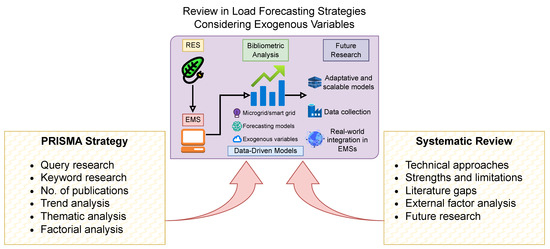
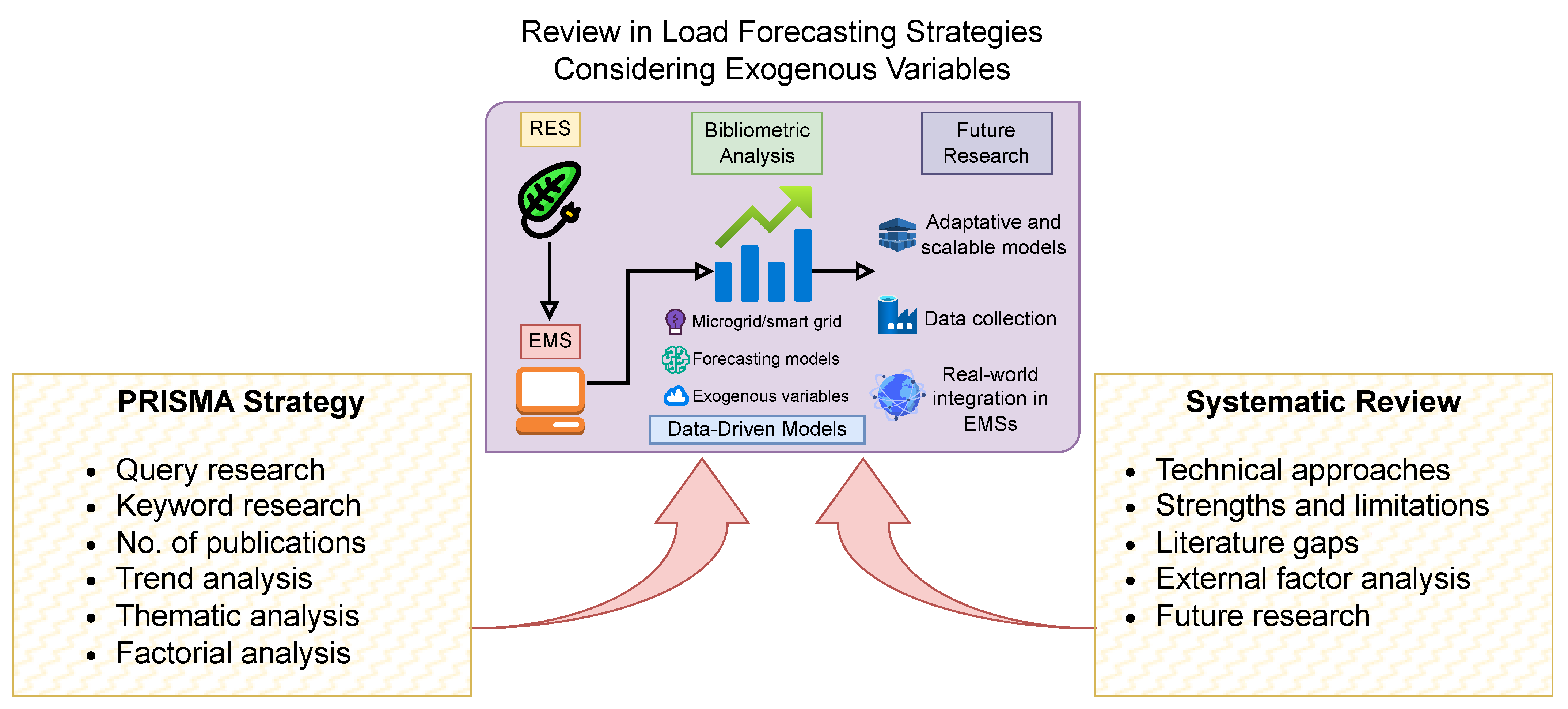
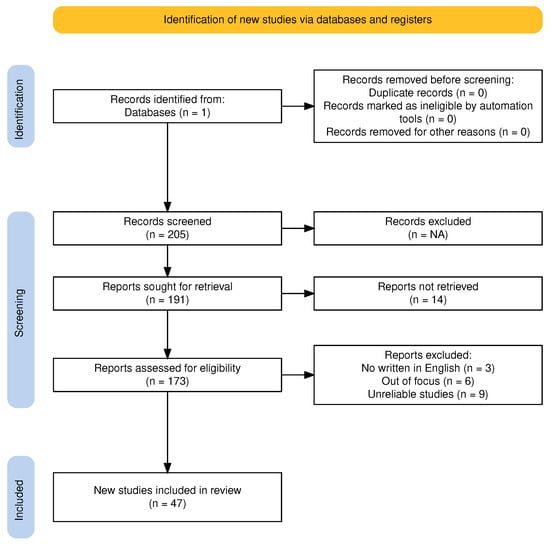
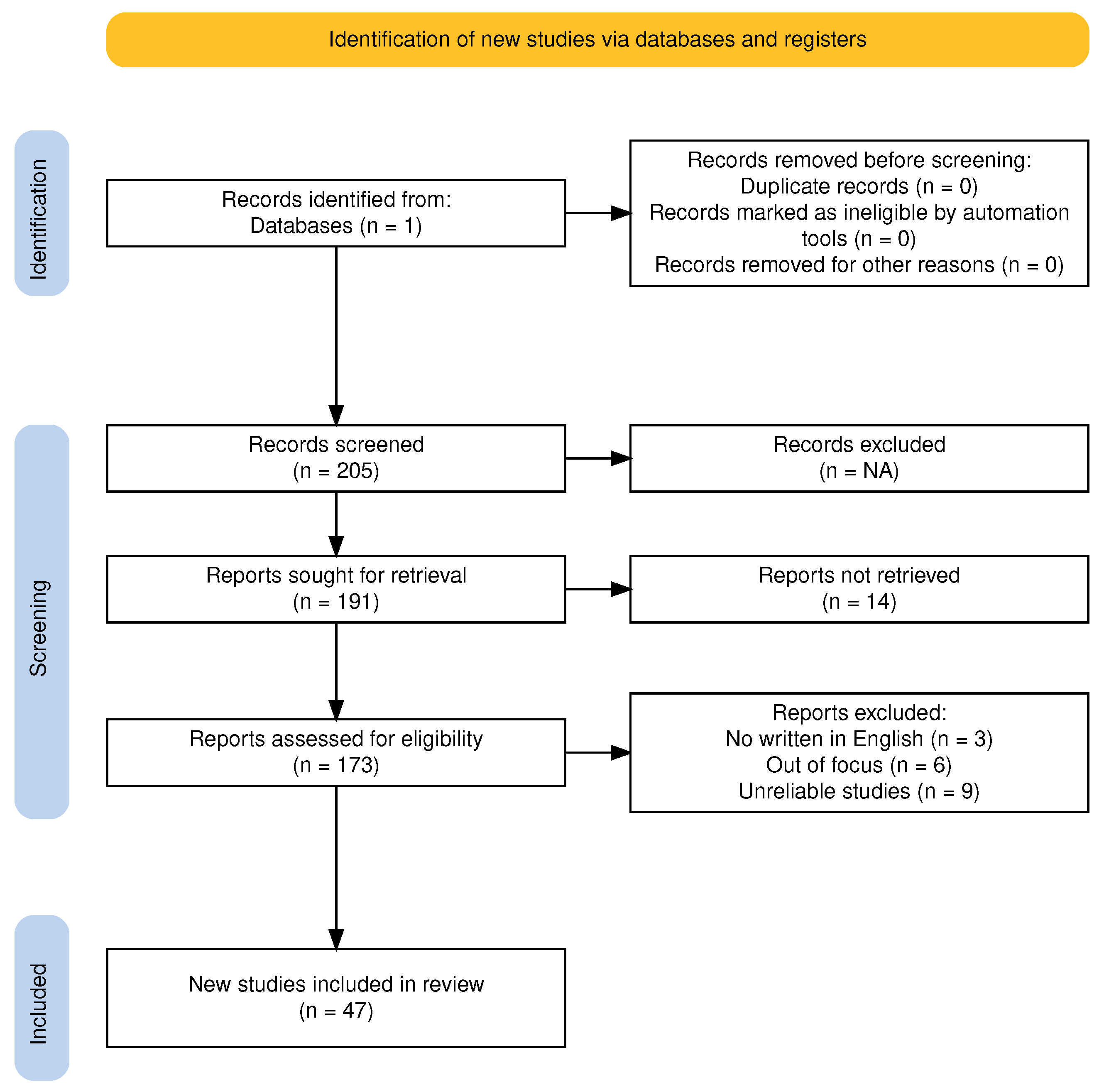
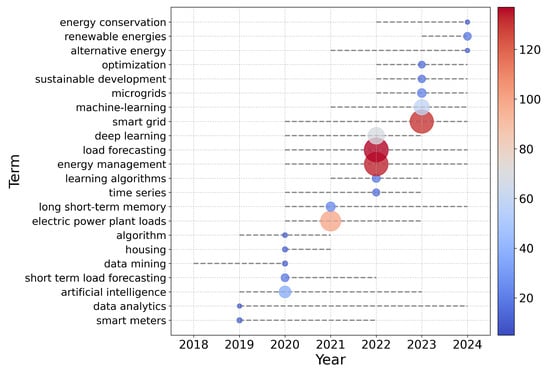
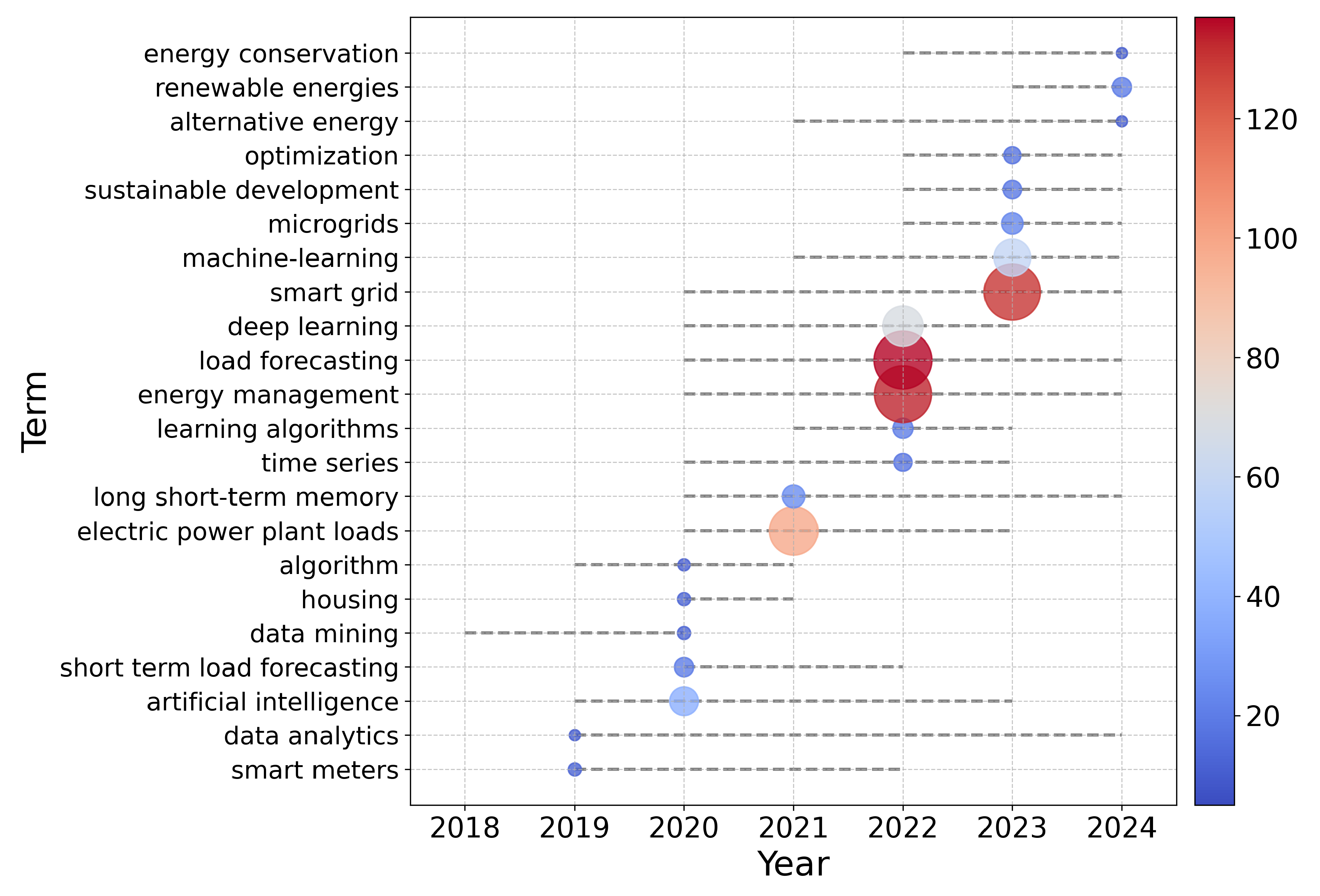
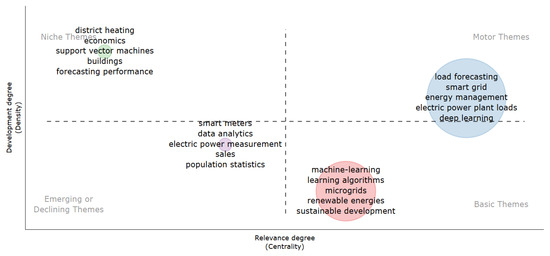
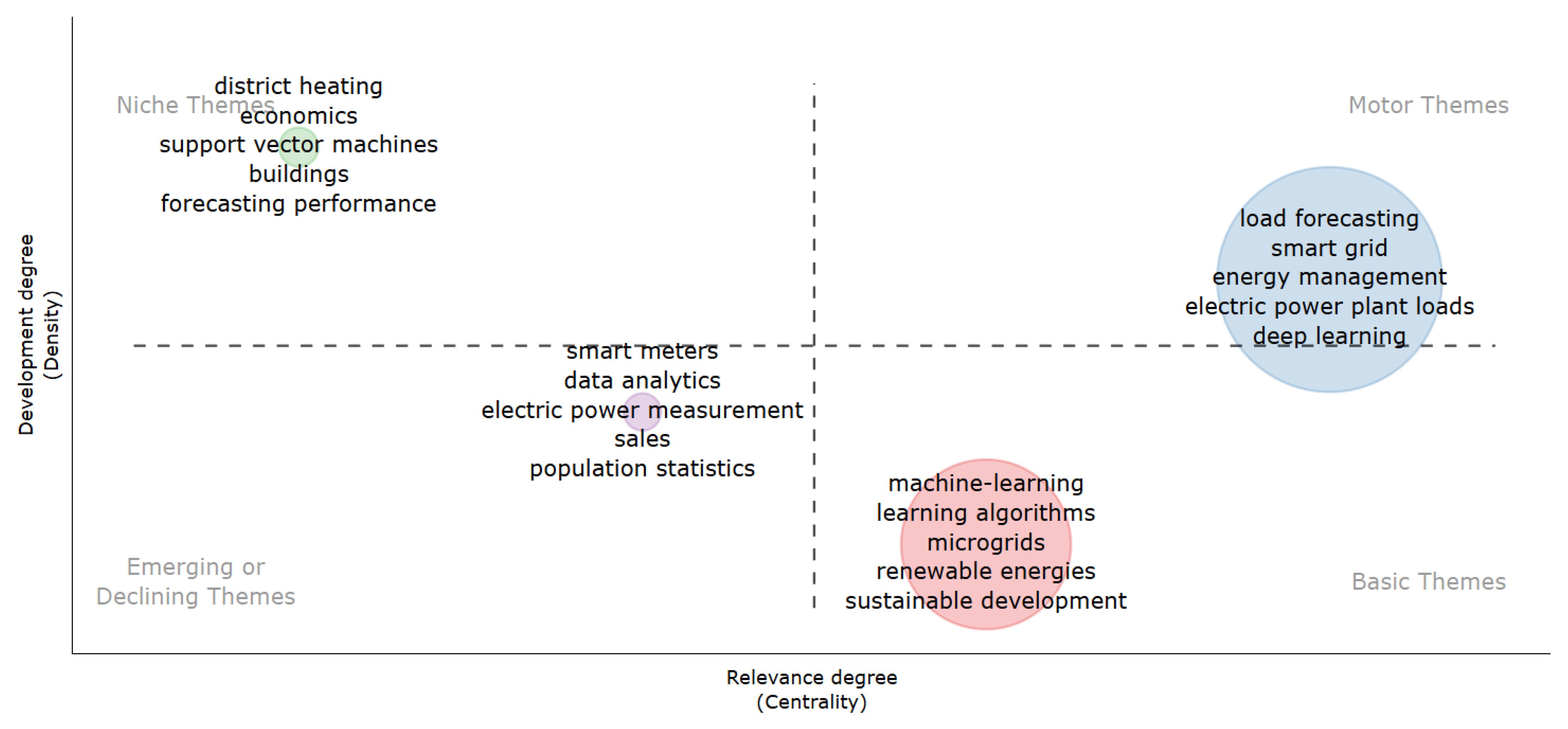
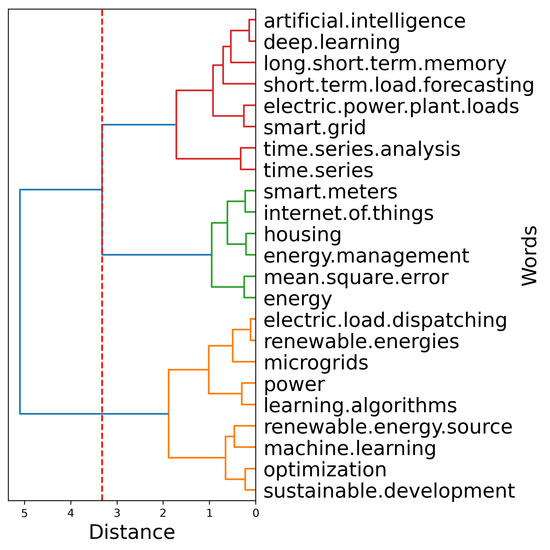
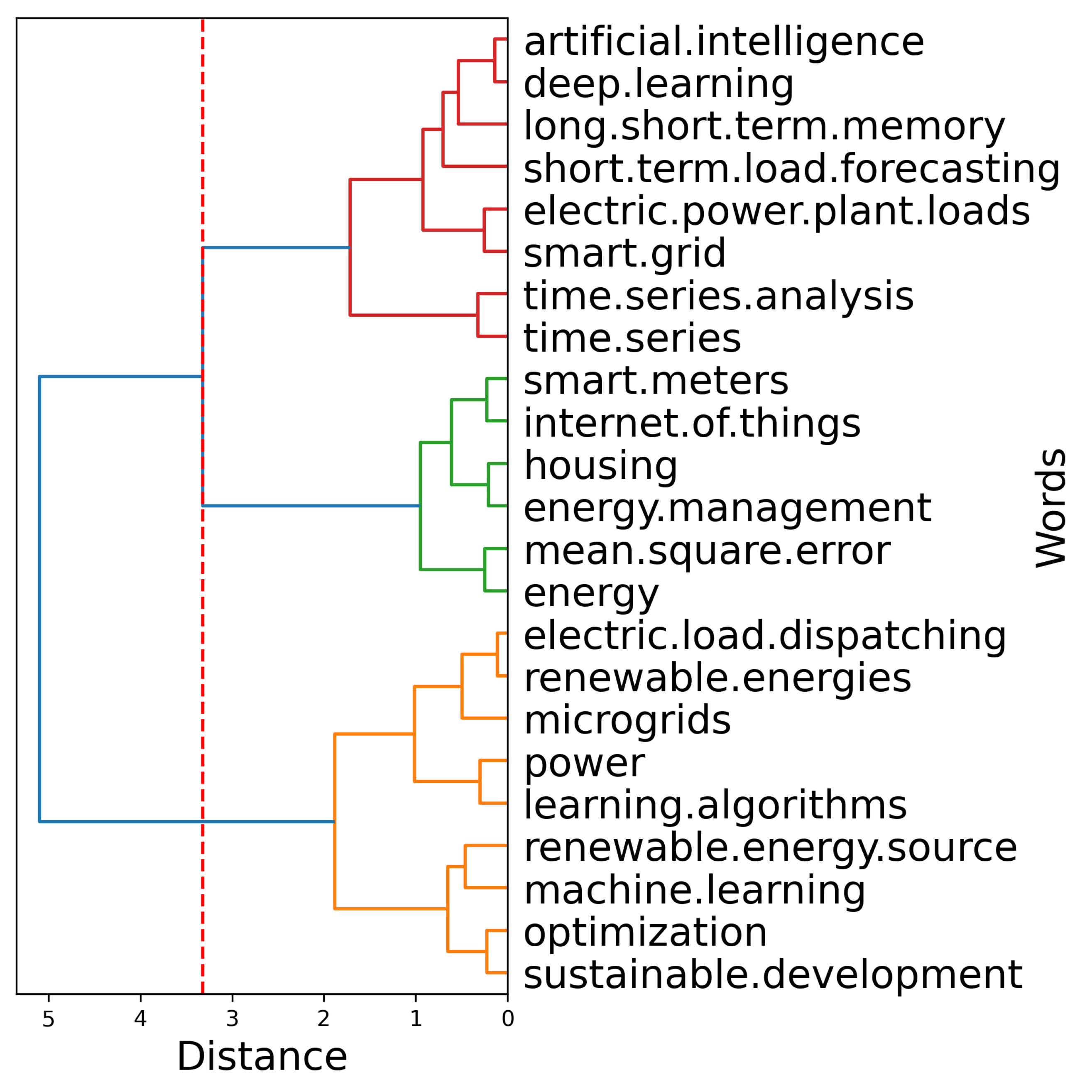
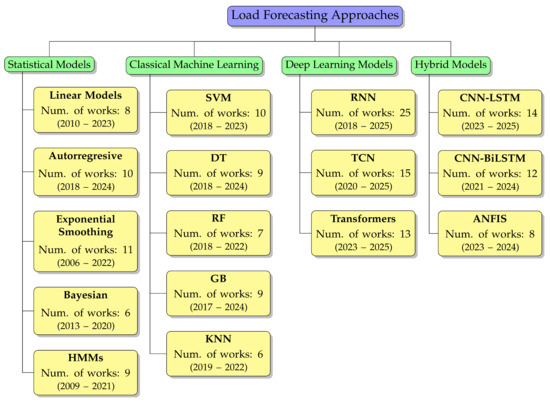
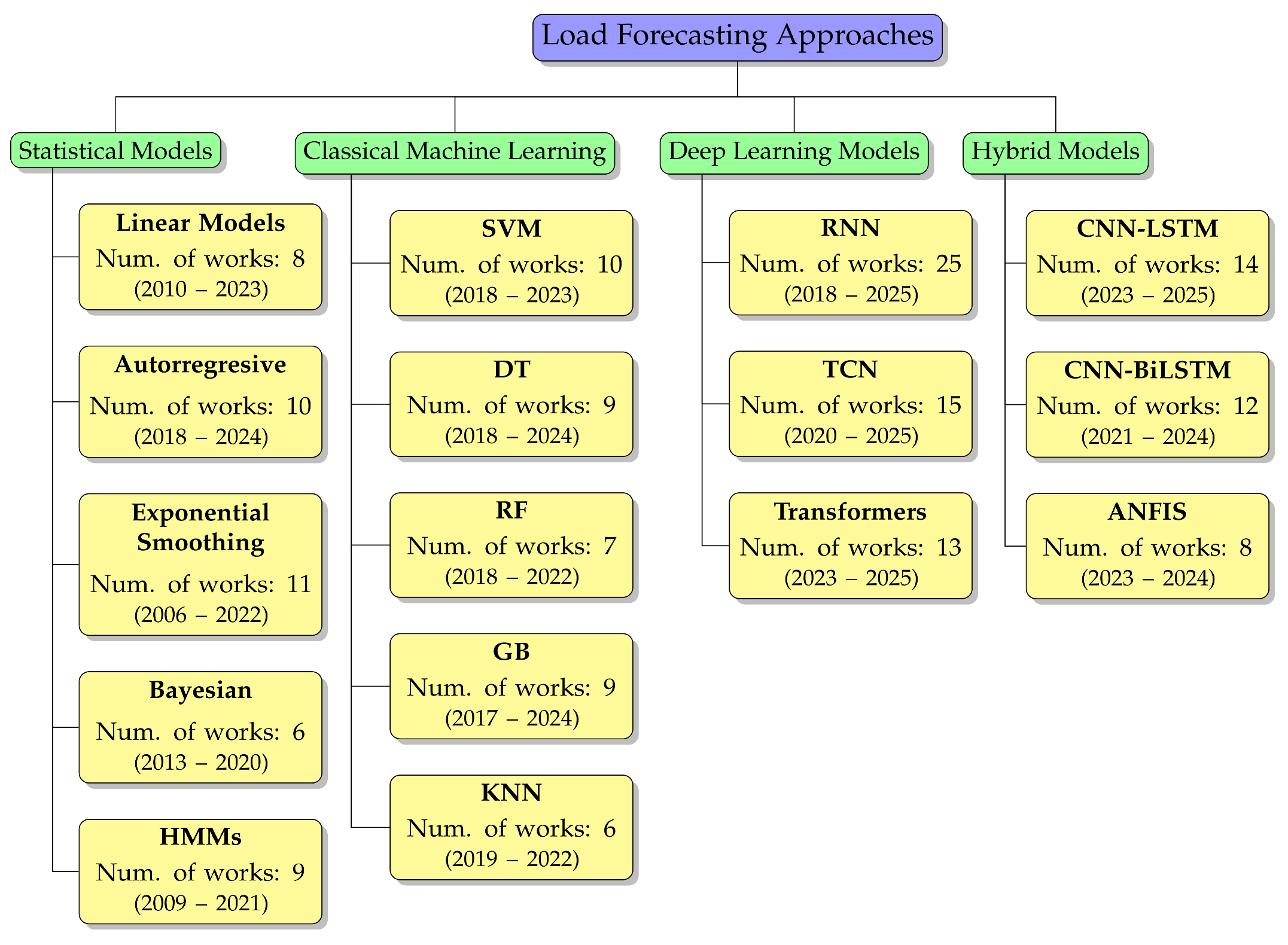



Disclaimer/Publisher’s Note: The statements, opinions and data contained in all publications are solely those of the individual author(s) and contributor(s) and not of MDPI and/or the editor(s). MDPI and/or the editor(s) disclaim responsibility for any injury to people or property resulting from any ideas, methods, instructions or products referred to in the content. |
© 2026 by the authors. Licensee MDPI, Basel, Switzerland. This article is an open access article distributed under the terms and conditions of the Creative Commons Attribution (CC BY) license.