

The Influence of Noise Perception and Parent-Rated Developmental Characteristics on White Noise Benefits in Children
 , , , , and
 Highlights
- White noise effects on eye movement performance were small and task-dependent.
- Developmental traits and noise perception predicted individual differences in eye movement responsiveness to noise.
- The results support transdiagnostic, individualized approaches to noise research.
Abstract
1. Introduction
2. Methods
2.1. Study Design
2.2. Participants
2.3. Test Battery
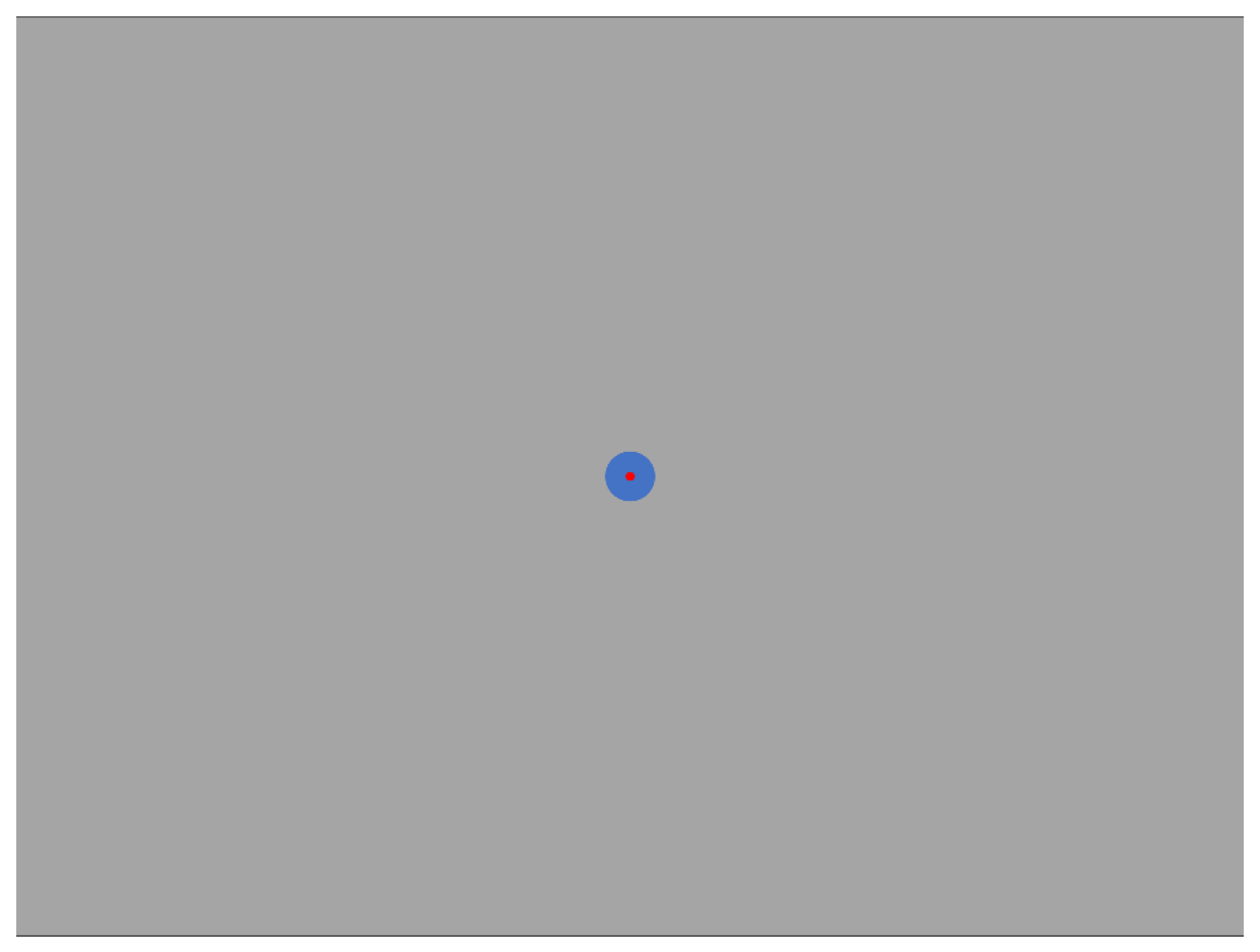
2.3.1. Prolonged Fixation Task
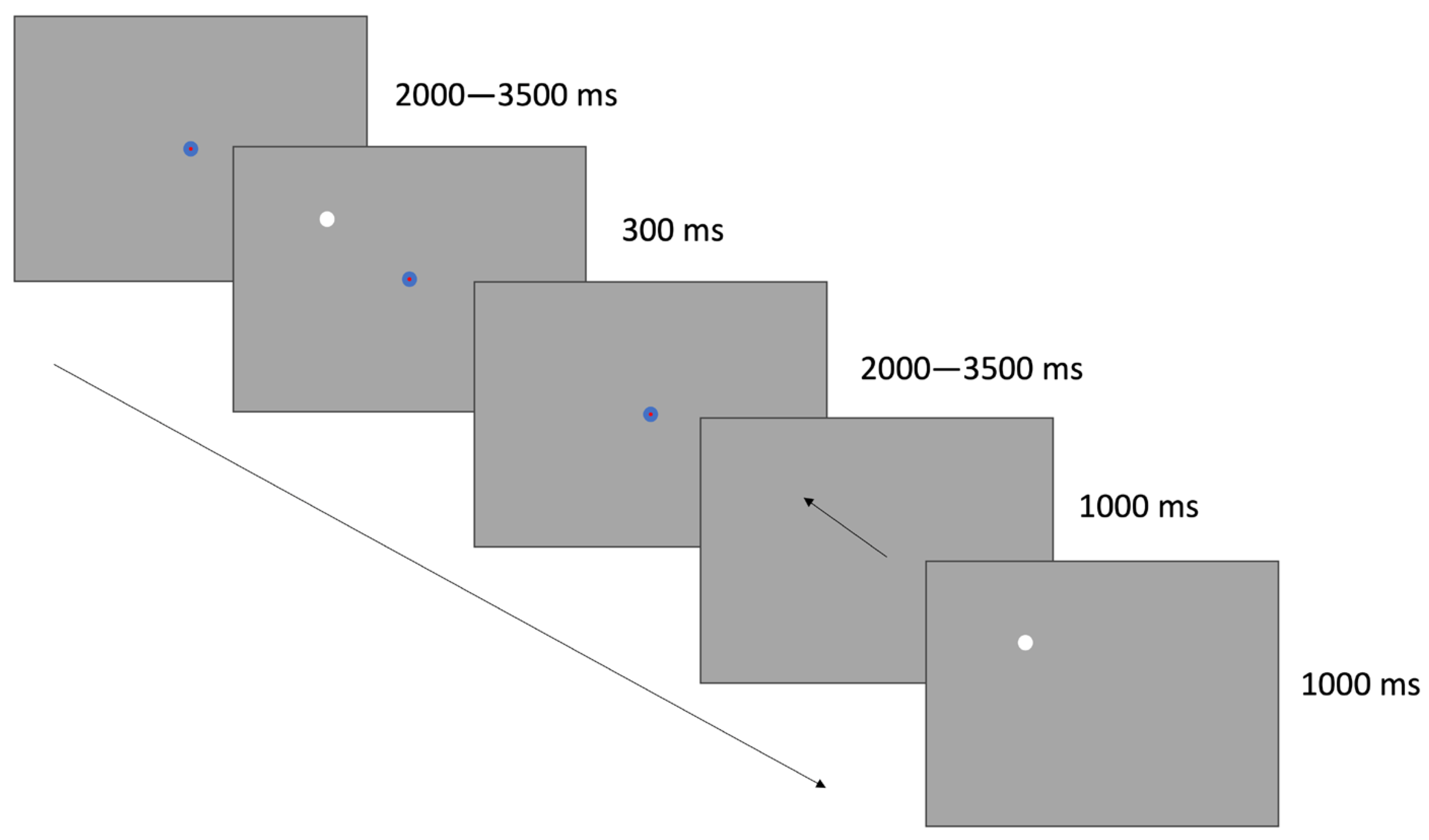
2.3.2. Memory-Guided Saccade Task
2.4. White Noise Stimulation
2.4.1. Auditory White Noise
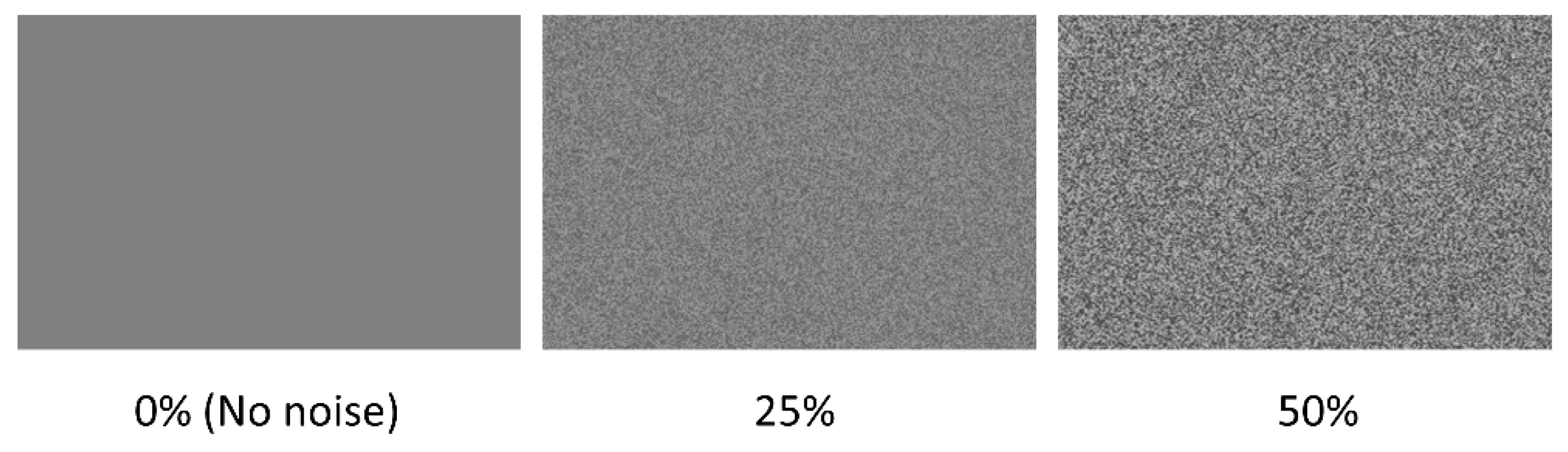
2.4.2. Visual White Pixel Noise
2.5. Assessments
2.5.1. Noise Rating
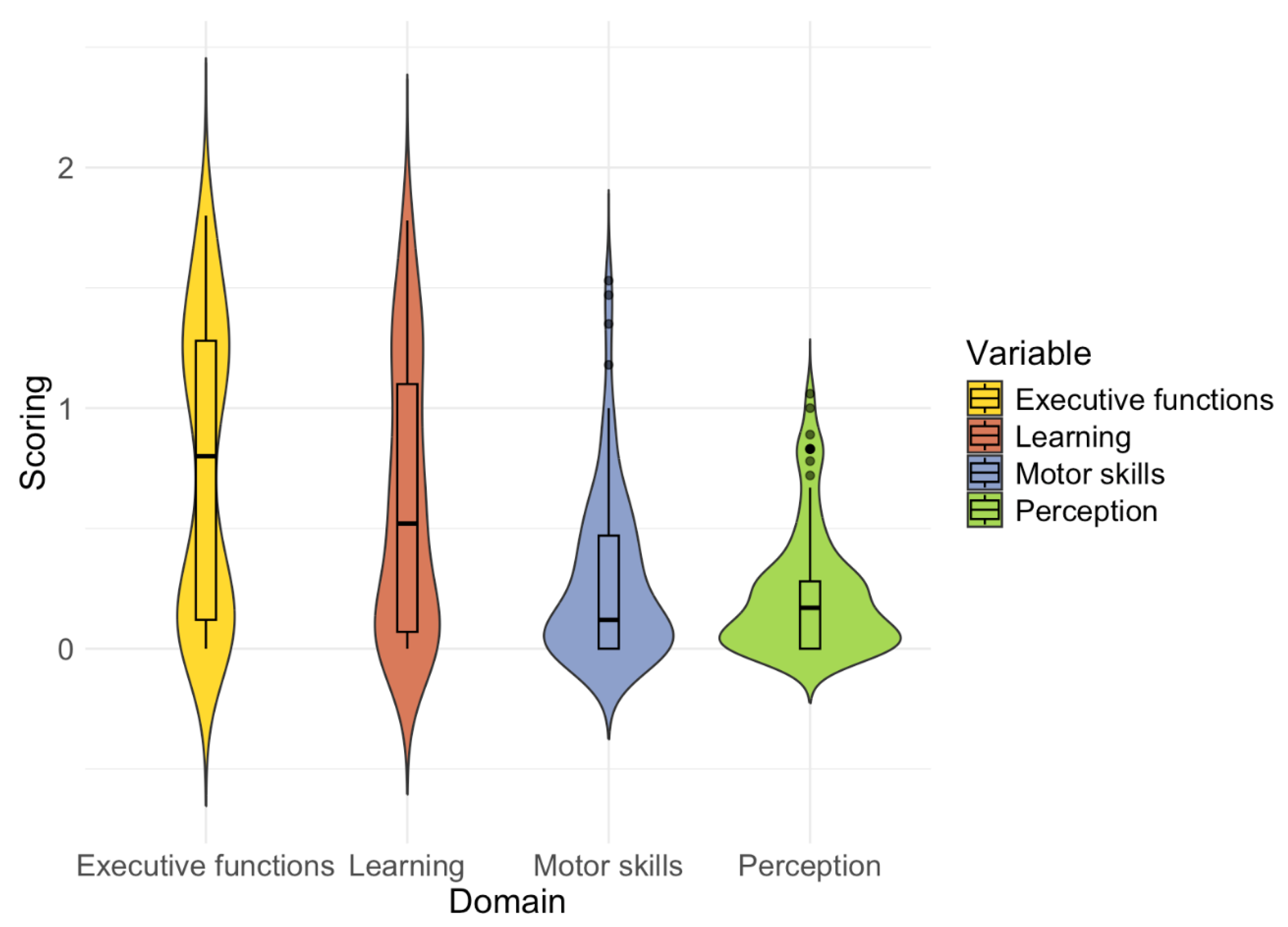
2.5.2. 5–5R
2.6. Procedure
2.7. Data Collection and Processing
2.8. Data Analysis
2.9. Statistical Analysis
Regression Analyses
3. Results
3.1. 5–15R
3.2. Regression Analyses
3.2.1. Prolonged Fixation Task
3.2.2. Memory-Guided Saccade Task
4. Discussion
4.1. Prolonged Fixation Task
4.2. Memory-Guided Saccade Task
4.3. Noise Perception and Task Performance
4.4. Developmental Functioning and Task Performance
4.5. Strengths and Limitations
5. Conclusions
Supplementary Materials
Author Contributions
Funding
Institutional Review Board Statement
Informed Consent Statement
Data Availability Statement
Acknowledgments
Conflicts of Interest
References
- Oppenheim, A.V. Discrete-Time Signal Processing; Pearson Education: Noida, India, 1999. [Google Scholar]
- Nigg, J.T.; Bruton, A.; Kozlowski, M.B.; Johnstone, J.M.; Karalunas, S.L. Systematic Review and Meta-Analysis: Do White Noise and Pink Noise Help with Attention in Attention-Deficit/Hyperactivity Disorder? J. Am. Acad. Child Adolesc. Psychiatry 2024, 63, 778. [Google Scholar] [CrossRef]
- Pickens, T.A.; Khan, S.P.; Berlau, D.J. White noise as a possible therapeutic option for children with ADHD. Complement Ther. Med. 2019, 42, 151–155. [Google Scholar] [CrossRef] [PubMed]
- Sikström, S.; Söderlund, G.B.W. Stimulus-dependent dopamine release in attention-deficit/hyperactivity disorder. Psychol. Rev. 2007, 114, 1047–1075. [Google Scholar] [CrossRef] [PubMed]
- McDonnell, M.D.; Abbott, D. What is stochastic resonance? Definitions, misconceptions, debates, and its relevance to biology. PLoS Comput. Biol. 2009, 5, e1000348. [Google Scholar] [CrossRef] [PubMed]
- Baijot, S.; Slama, H.; Söderlund, G.; Dan, B.; Deltenre, P.; Colin, C.; Deconinck, N. Neuropsychological and neurophysiological benefits from white noise in children with and without ADHD. Behav. Brain Funct. 2016, 12, 11. [Google Scholar] [CrossRef]
- Batho, L.P.; Martinussen, R.; Wiener, J. The Effects of Different Types of Environmental Noise on Academic Performance and Perceived Task Difficulty in Adolescents with ADHD. J. Atten. Disord. 2020, 24, 1181–1191. [Google Scholar] [CrossRef]
- Cook, A.; Bradley-Johnson, S.; Johnson, C.M. Effects of white noise on off-task behavior and academic responding for children with ADHD. J. Appl. Behav. Anal. 2014, 47, 160–164. [Google Scholar] [CrossRef]
- Cook, A.; Johnson, C.; Bradley-Johnson, S. White noise to decrease problem behaviors in the classroom for a child with attention deficit hyperactivity disorder (ADHD). Child Fam. Behav. Ther. 2015, 37, 38–50. [Google Scholar] [CrossRef]
- Egeland, J.; Lund, O.; Kowalik-Gran, I.; Aarlien, A.K.; Söderlund, G.B.W. Effects of auditory white noise stimulation on sustained attention and response time variability. Front. Psychol. 2023, 14, 1301771. [Google Scholar] [CrossRef]
- Helps, S.K.; Bamford, S.; Sonuga-Barke, E.J.; Söderlund, G.B. Different effects of adding white noise on cognitive performance of sub-, normal and super-attentive school children. PLoS ONE 2014, 9, e112768. [Google Scholar] [CrossRef]
- Jostrup, E.; Claesdotter-Knutsson, E.; Tallberg, P.; Söderlund, G.; Gustafsson, P.; Nyström, M. No Effects of Auditory and Visual White Noise on Oculomotor Control in Children with ADHD. J. Atten. Disord. 2024, 28, 1668–1683. [Google Scholar] [CrossRef] [PubMed]
- Jostrup, E.; Nyström, M.; Claesdotter-Knutsson, E.; Tallberg, P.; Gustafsson, P.; Paulander, O.; Söderlund, G. Effects of stochastic vestibular stimulation on cognitive performance in children with ADHD. Exp. Brain Res. 2023, 241, 2693–2703. [Google Scholar] [CrossRef] [PubMed]
- Lin, H.Y. The Effects of White Noise on Attentional Performance and On-Task Behaviors in Preschoolers with ADHD. Int. J. Environ. Res. Public Health 2022, 19, 15391. [Google Scholar] [CrossRef] [PubMed]
- Söderlund, G.B.W.; Björk, C.; Gustafsson, P. Comparing Auditory Noise Treatment with Stimulant Medication on Cognitive Task Performance in Children with Attention Deficit Hyperactivity Disorder: Results from a Pilot Study. Front. Psychol. 2016, 7, 1331. [Google Scholar] [CrossRef]
- Söderlund, G.B.W.; Hadjikhani, N.; Thorsson, M.; E-Said, S.; Claesdotter-Knutsson, E.; Gustafsson, P.; Johnels, J. Sensory white noise in clinical ADHD: Who benefits from noise, and who performs worse? Scand. J. Child Adolesc. Psychiatry Psychol. 2024, 12, 92–99. [Google Scholar] [CrossRef]
- Metin, B.; Roeyers, H.; Wiersema, J.R.; van der Meere, J.J.; Gasthuys, R.; Sonuga-Barke, E. Environmental Stimulation Does Not Reduce Impulsive Choice in ADHD: A “Pink Noise” Study. J. Atten. Disord. 2016, 20, 63–70. [Google Scholar] [CrossRef]
- Rijmen, J.; Wiersema, J.R. Stochastic resonance is not required for pink noise to have beneficial effects on ADHD-related performance? The moderate brain arousal model challenged. Neuropsychologia 2024, 202, 108961. [Google Scholar] [CrossRef]
- Pievsky, M.A.; McGrath, R.E. The Neurocognitive Profile of Attention-Deficit/Hyperactivity Disorder: A Review of Meta-Analyses. Arch. Clin. Neuropsychol. 2018, 33, 143–157. [Google Scholar] [CrossRef]
- Kofler, M.J.; Rapport, M.D.; Sarver, D.E.; Raiker, J.S.; Orban, S.A.; Friedman, L.M.; Kolomeyer, E.G. Reaction time variability in ADHD: A meta-analytic review of 319 studies. Clin. Psychol. Rev. 2013, 33, 795–811. [Google Scholar] [CrossRef]
- Lipszyc, J.; Schachar, R. Inhibitory control and psychopathology: A meta-analysis of studies using the stop signal task. J. Int. Neuropsychol. Soc. 2010, 16, 1064–1076. [Google Scholar] [CrossRef]
- Nichols, S.L.; Waschbusch, D.A. A review of the validity of laboratory cognitive tasks used to assess symptoms of ADHD. Child Psychiatry Hum. Dev. 2004, 34, 297–315. [Google Scholar] [CrossRef] [PubMed]
- Bloemen, A.J.P.; Oldehinkel, A.J.; Laceulle, O.M.; Ormel, J.; Rommelse, N.N.J.; Hartman, C.A. The association between executive functioning and psychopathology: General or specific? Psychol. Med. 2018, 48, 1787–1794. [Google Scholar] [CrossRef] [PubMed]
- Chang, S.; Yang, L.; Wang, Y.; Faraone, S.V. Shared polygenic risk for ADHD, executive dysfunction and other psychiatric disorders. Transl. Psychiatry 2020, 10, 182. [Google Scholar] [CrossRef] [PubMed]
- Martel, M.M.; Pan, P.M.; Hoffmann, M.S.; Gadelha, A.; do Rosário, M.C.; Mari, J.J.; Manfro, G.G.; Miguel, E.C.; Paus, T.; Bressan, R.A.; et al. A general psychopathology factor (P factor) in children: Structural model analysis and external validation through familial risk and child global executive function. J. Abnorm. Psychol. 2017, 126, 137–148. [Google Scholar] [CrossRef]
- Dugré, J.R.; Eickhoff, S.B.; Potvin, S. Meta-analytical transdiagnostic neural correlates in common pediatric psychiatric disorders. Sci. Rep. 2022, 12, 4909. [Google Scholar] [CrossRef]
- Harris, J.L.; Swanson, B.; Petersen, I.T. A Developmentally Informed Systematic Review and Meta-Analysis of the Strength of General Psychopathology in Childhood and Adolescence. Clin. Child Fam. Psychol. Rev. 2024, 27, 130–164. [Google Scholar] [CrossRef]
- van Os, J.; Guloksuz, S.; Vijn, T.W.; Hafkenscheid, A.; Delespaul, P. The evidence-based group-level symptom-reduction model as the organizing principle for mental health care: Time for change? World Psychiatry 2019, 18, 88–96. [Google Scholar] [CrossRef]
- Miranda-Ojeda, R.; Wickramasinghe, A.; Ntolkeras, G.; Castanho, I.; Yassin, W. The Neurodiversity Framework in Medicine: On the Spectrum. Dev. Neurobiol. 2025, 85, e22960. [Google Scholar] [CrossRef]
- Angwin, A.J.; Wilson, W.J.; Arnott, W.L.; Signorini, A.; Barry, R.J.; Copland, D.A. White noise enhances new-word learning in healthy adults. Sci. Rep. 2017, 7, 13045. [Google Scholar] [CrossRef]
- Angwin, A.J.; Wilson, W.J.; Copland, D.A.; Barry, R.J.; Myatt, G.; Arnott, W.L. The impact of auditory white noise on semantic priming. Brain Lang. 2018, 180–182, 1–7. [Google Scholar] [CrossRef]
- Angwin, A.J.; Wilson, W.J.; Ripollés, P.; Rodriguez-Fornells, A.; Arnott, W.L.; Barry, R.J.; Cheng, B.B.Y.; Garden, K.; Copland, D.A. White noise facilitates new-word learning from context. Brain Lang. 2019, 199, 104699. [Google Scholar] [CrossRef] [PubMed]
- Othman, E.; Yusoff, A.N.; Mohamad, M.; Abdul Manan, H.; Giampietro, V.; Abd Hamid, A.I.; Dzulkifli, M.A.; Osman, S.S.; Wan Burhanuddin, W.I.D. Low intensity white noise improves performance in auditory working memory task: An fMRI study. Heliyon 2019, 5, e02444. [Google Scholar] [CrossRef] [PubMed]
- Shafique, S.; Zanchi, S.; Gori, M.; Setti, W.; Campus, C.; Beltran, C.; Bailo, G.L.; Del Bue, A. Impact of white noise on spatial navigation of people without visual cues. Sci. Rep. 2025, 15, 17877. [Google Scholar] [CrossRef] [PubMed]
- Herweg, N.A.; Bunzeck, N. Differential effects of white noise in cognitive and perceptual tasks. Front. Psychol. 2015, 6, 1639. [Google Scholar] [CrossRef]
- Pellegrino, G.; Pinardi, M.; Schuler, A.L.; Kobayashi, E.; Masiero, S.; Marioni, G.; di Lazzaro, V.; Keller, F.; Arcara, G.; Piccione, F.; et al. Stimulation with acoustic white noise enhances motor excitability and sensorimotor integration. Sci. Rep. 2022, 12, 13108. [Google Scholar] [CrossRef]
- Sherman, S.O.; Greenstein, M.; Basner, M.; Clark, T.K.; Anderson, A.P. Effects of additive sensory noise on cognition. Front. Hum. Neurosci. 2023, 17, 1092154. [Google Scholar] [CrossRef]
- Rufener, K.S.; Kauk, J.; Ruhnau, P.; Repplinger, S.; Heil, P.; Zaehle, T. Inconsistent effects of stochastic resonance on human auditory processing. Sci. Rep. 2020, 10, 6419. [Google Scholar] [CrossRef]
- Belojevic, G.; Jakovljevic, B.; Slepcevic, V. Noise and mental performance: Personality attributes and noise sensitivity. Noise Health 2003, 6, 77–89. [Google Scholar]
- Lundquist, P.; Holmberg, K.; Landström, U. Annoyance and effects on work from environmental noise at school. Noise Health 2000, 2, 39–46. [Google Scholar]
- Klatte, M.; Bergström, K.; Lachmann, T. Does noise affect learning? A short review on noise effects on cognitive performance in children. Front. Psychol. 2013, 4, 578. [Google Scholar] [CrossRef]
- Shield, B.M.; Dockrell, J.E. The Effects of Noise on Children at School: A Review. Build. Acoust. 2003, 10, 97–116. [Google Scholar] [CrossRef]
- Fretes, G.; Palau, R. The Impact of Noise on Learning in Children and Adolescents: A Meta-Analysis. Appl. Sci. 2025, 15, 4128. [Google Scholar] [CrossRef]
- Chen, I.C.; Chan, H.-Y.; Lin, K.-C.; Huang, Y.-T.; Tsai, P.-L.; Huang, Y.-M. Listening to White Noise Improved Verbal Working Memory in Children with Attention-Deficit/Hyperactivity Disorder: A Pilot Study. Int. J. Environ. Res. Public Health 2022, 19, 7283. [Google Scholar] [CrossRef] [PubMed]
- Vos, M.; Rommelse, N.N.J.; Franke, B.; Oosterlaan, J.; Heslenfeld, D.J.; Hoekstra, P.J.; Klein, M.; Faraone, S.V.; Buitelaar, J.K.; Hartman, C.A. Characterizing the heterogeneous course of inattention and hyperactivity-impulsivity from childhood to young adulthood. Eur. Child. Adolesc. Psychiatry 2022, 31, 1–11. [Google Scholar] [CrossRef]
- American Psychiatric Association. Diagnostic and Statistical Manual of Mental Disorders, 5th ed.; Text Revision; American Psychiatric Association: Washington, DC, USA, 2022. [Google Scholar]
- Caldani, S.; Humeau, E.; Delorme, R.; Bucci, M.P. Dysfunction in inhibition and executive capabilities in children with autism spectrum disorder: An eye tracker study on memory guided saccades. Appl Neuropsychol Child 2023, 12, 131–136. [Google Scholar] [CrossRef]
- Mahone, E.M.; Mostofsky, S.H.; Lasker, A.G.; Zee, D.; Denckla, M.B. Oclulomotor anomalies in attention-deficit/hyperactivity disorder: Evidence for deficits in response preparation and inhibition. J Am Acad Child Adolesc Psychiatry 2009, 48, 749–756. [Google Scholar] [CrossRef]
- Lambek, R.; Trillingsgaard, A. Elaboration, validation and standardization of the five to fifteen (FTF) questionnaire in a Danish population sample. Res. Dev. Disabil. 2015, 38, 161–170. [Google Scholar] [CrossRef]
- Kadesjö, B.; Janols, L.-O.; Korkman, M.; Mickelsson, K.; Strand, G.; Trillingsgaard, A.; Gillberg, C. The FTF (Five to Fifteen): The development of a parent questionnaire for the assessment of ADHD and comorbid conditions. Eur. Child Adolesc. Psychiatry 2004, 13, iii3–iii13. [Google Scholar] [CrossRef]
- Niehorster, D.C.; Andersson, R.; Nyström, M. Titta: A toolbox for creating PsychToolbox and Psychopy experiments with Tobii eye trackers. Behav. Res. Methods 2020, 52, 1970–1979. [Google Scholar] [CrossRef]
- Jostrup, E.; Nyström, M.; Tallberg, P.; Söderlund, G.; Gustafsson, P.; Claesdotter-Knutsson, E. Effects of Auditory and Visual White Noise on Oculomotor Inhibition in Children with Attention-Deficit/Hyperactivity Disorder: Protocol for a Crossover Study. JMIR Res. Protoc. 2024, 13, e56388. [Google Scholar] [CrossRef]
- Hessels, R.S.; Niehorster, D.C.; Kemner, C.; Hooge, I.T.C. Noise-robust fixation detection in eye movement data: Identification by two-means clustering (I2MC). Behav. Res. Methods 2017, 49, 1802–1823. [Google Scholar] [CrossRef] [PubMed]
- Chamorro, Y.; Betz, L.T.; Philipsen, A.; Kambeitz, J.; Ettinger, U. The Eyes Have It: A Meta-analysis of Oculomotor Inhibition in Attention-Deficit/Hyperactivity Disorder. Biol. Psychiatry Cogn. Neurosci. Neuroimaging 2022, 7, 1090–1102. [Google Scholar] [CrossRef] [PubMed]
- Bucci, M.P.; Goulème, N.; Dehouck, D.; Stordeur, C.; Acquaviva, E.; Septier, M.; Lefebvre, A.; Gerard, C.L.; Peyre, H.; Delorme, R. Interactions between eye movements and posture in children with neurodevelopmental disorders. Int. J. Dev. Neurosci. 2018, 71, 61–67. [Google Scholar] [CrossRef] [PubMed]
- R Core Team. R: A Language and Environment for Statistical Computing; R Foundation for Statistical Computing: Vienna, Austria, 2025. [Google Scholar]
- Jostrup, E.; Claesdotter-Knutsson, E.; Tallberg, P.; Söderlund, G.; Gustafsson, P.; Nyström, M. Predicting blink rate and pupil diameter from ADHD symptoms: Effects of white noise stimulation in an experimental study. Brain Disord. 2025, 20, 100289. [Google Scholar] [CrossRef]
- Buodo, G.; Sarlo, M.; Palomba, D. Attentional resources measured by reaction times highlight differences within pleasant and unpleasant, high arousing stimuli. Motiv. Emot. 2002, 26, 123–138. [Google Scholar] [CrossRef]
- Zhang, M.; Gong, X.; Jia, J.; Wang, X. Unpleasant odors affect alerting attention in young men: An event-related potential study using the attention network test. Front. Neurosci. 2021, 15, 781997. [Google Scholar] [CrossRef]
- Warm, J.S.; Dember, W.N.; Parasuraman, R. Effects of olfactory stimulation on performance and stress. J. Soc. Cosmet. Chem 1991, 42, 199–210. [Google Scholar]
- Sarver, D.E.; Rapport, M.D.; Kofler, M.J.; Raiker, J.S.; Friedman, L.M. Hyperactivity in Attention-Deficit/Hyperactivity Disorder (ADHD): Impairing Deficit or Compensatory Behavior? J. Abnorm. Child Psychol. 2015, 43, 1219–1232. [Google Scholar] [CrossRef]
- McDonnell, M.D.; Ward, L.M. The benefits of noise in neural systems: Bridging theory and experiment. Nat. Rev. Neurosci. 2011, 12, 415–426. [Google Scholar] [CrossRef]
- Lavie, N. Distracted and confused?: Selective attention under load. Trends Cogn. Sci. 2005, 9, 75–82. [Google Scholar] [CrossRef]
- Murphy, G.; Groeger, J.A.; Greene, C.M. Twenty years of load theory-Where are we now, and where should we go next? Psychon. Bull. Rev. 2016, 23, 1316–1340. [Google Scholar] [CrossRef]
- Taylor, M.J.; Martin, J.; Butwicka, A.; Lichtenstein, P.; D’Onofrio, B.; Lundström, S.; Larsson, H.; Rosenqvist, M.A. A twin study of genetic and environmental contributions to attention-deficit/hyperactivity disorder over time. J. Child Psychol. Psychiatry 2023, 64, 1608–1616. [Google Scholar] [CrossRef]
- Arvidsson, O.; Brikell, I.; Larsson, H.; Lichtenstein, P.; Kuja-Halkola, R.; Johnson, M.; Gillberg, C.; Lundström, S. ASD and ADHD symptoms in 18-year-olds—A population-based study of twins born 1993 to 2001. Psychiatry Res. 2025, 351, 116613. [Google Scholar] [CrossRef]



| Auditory Noise Benefit | R2 | Adjusted R2 | F(8, 80) | p |
|---|---|---|---|---|
| 0.07 | −0.02 | 0.76 | 0.639 | |
| Predictor | β | 95% CI | t-value | |
| Noise discomfort (auditory) | −0.09 | [−0.34, 0.16] | −0.71 | 0.483 |
| Perceived task difficulty (auditory noise) | 0.04 | [−0.21, 0.30] | 0.32 | 0.747 |
| Motor skills | −0.21 | [−0.52, 0.11] | −1.30 | 0.196 |
| Executive functions | −0.14 | [−0.51, 0.24] | −0.72 | 0.473 |
| Perception | 0.36 | [0.02, 0.70] | 2.13 | 0.037 |
| Learning | −0.12 | [−0.50, 0.26] | −0.62 | 0.539 |
| Sex (female = 1) | 0.13 | [−0.34, 0.59] | 0.54 | 0.593 |
| Age | −0.05 | [−0.29, 0.19] | −0.38 | 0.703 |
| Visual Noise Benefit | R2 | Adjusted R2 | F(8, 77) | p |
|---|---|---|---|---|
| 0.21 | 0.13 | 2.60 | 0.014 | |
| Predictor | β | 95% CI | t-value | |
| Noise discomfort (visual) | 0.39 | [0.17, 0.61] | 3.47 | 0.001 |
| Perceived task difficulty (visual noise) | −0.17 | [−0.39, 0.04] | −1.60 | 0.114 |
| Motor skills | −0.05 | [−0.35, 0.25] | −0.34 | 0.735 |
| Executive functions | 0.00 | [−0.35, 0.35] | −0.00 | 0.998 |
| Perception | 0.17 | [−0.16, 0.49] | 1.02 | 0.311 |
| Learning | −0.33 | [−0.69, 0.02] | −1.87 | 0.065 |
| Sex (female = 1) | 0.21 | [−0.23, 0.64] | 0.95 | 0.344 |
| Age | 0.08 | [−0.14, 0.31] | 0.74 | 0.462 |
| Auditory Noise Benefit | R2 | Adjusted R2 | F(8, 82) | p |
|---|---|---|---|---|
| 0.06 | −0.03 | 0.68 | 0.704 | |
| Predictor | β | 95% CI | t-value | |
| Noise discomfort (auditory) | −0.01 | [−0.26, 0.23] | −0.09 | 0.929 |
| Perceived task difficulty (auditory noise) | 0.18 | [−0.06, 0.42] | 1.46 | 0.148 |
| Motor skills | −0.06 | [−0.37, 0.24] | −0.42 | 0.674 |
| Executive functions | 0.03 | [−0.34, 0.41] | 0.17 | 0.864 |
| Perception | 0.02 | [−0.32, 0.35] | 0.09 | 0.927 |
| Learning | 0.15 | [−0.22, 0.52] | 0.79 | 0.430 |
| Sex (female = 1) | −0.06 | [−0.50, 0.38] | −0.27 | 0.787 |
| Age | −0.09 | [−0.32, 0.15] | −0.75 | 0.459 |
| Visual Noise Benefit | R2 | Adjusted R2 | F(8, 83) | p |
|---|---|---|---|---|
| 0.13 | 0.05 | 1.55 | 0.047 | |
| Predictor | β | 95% CI | t-value | |
| Noise discomfort (visual) | −0.24 | [−0.46, −0.02] | −2.13 | 0.036 |
| Perceived task difficulty (visual noise) | 0.17 | [−0.05, 0.38] | 1.57 | 0.120 |
| Motor skills | −0.30 | [−0.60, −0.00] | −2.01 | 0.048 |
| Executive functions | −0.08 | [−0.44, 0.29] | −0.41 | 0.681 |
| Perception | 0.09 | [−0.23, 0.42] | 0.58 | 0.563 |
| Learning | 0.03 | [−0.34, 0.39] | 0.14 | 0.887 |
| Sex (female = 1) | −0.02 | [−0.45, 0.41] | −0.10 | 0.924 |
| Age | −0.07 | [−0.29, 0.16] | −0.60 | 0.552 |
Disclaimer/Publisher’s Note: The statements, opinions and data contained in all publications are solely those of the individual author(s) and contributor(s) and not of MDPI and/or the editor(s). MDPI and/or the editor(s) disclaim responsibility for any injury to people or property resulting from any ideas, methods, instructions or products referred to in the content. |
© 2026 by the authors. Licensee MDPI, Basel, Switzerland. This article is an open access article distributed under the terms and conditions of the Creative Commons Attribution (CC BY) license.
Share and Cite
Jostrup, E.; Nyström, M.; Söderlund, G.B.W.; Claesdotter-Knutsson, E.; Gustafsson, P.; Tallberg, P. The Influence of Noise Perception and Parent-Rated Developmental Characteristics on White Noise Benefits in Children. J. Eye Mov. Res. 2026, 19, 18. https://doi.org/10.3390/jemr19010018
Jostrup E, Nyström M, Söderlund GBW, Claesdotter-Knutsson E, Gustafsson P, Tallberg P. The Influence of Noise Perception and Parent-Rated Developmental Characteristics on White Noise Benefits in Children. Journal of Eye Movement Research. 2026; 19(1):18. https://doi.org/10.3390/jemr19010018
Chicago/Turabian StyleJostrup, Erica, Marcus Nyström, Göran B. W. Söderlund, Emma Claesdotter-Knutsson, Peik Gustafsson, and Pia Tallberg. 2026. "The Influence of Noise Perception and Parent-Rated Developmental Characteristics on White Noise Benefits in Children" Journal of Eye Movement Research 19, no. 1: 18. https://doi.org/10.3390/jemr19010018
APA StyleJostrup, E., Nyström, M., Söderlund, G. B. W., Claesdotter-Knutsson, E., Gustafsson, P., & Tallberg, P. (2026). The Influence of Noise Perception and Parent-Rated Developmental Characteristics on White Noise Benefits in Children. Journal of Eye Movement Research, 19(1), 18. https://doi.org/10.3390/jemr19010018