Abstract
From the epidemic center in Wuhan to the entirety of China, with the growing infected population, people are seeking and processing health-related information both online and from traditional media outlets such as newspapers. Online misinformation regarding COVID-19 has been influencing a wide range of readers demonstrating general citizens’ virus-related concerns, while press media have been actively participating in health communication in an attempt to build up a robust, harmonious, and healthy environment. Via a comparison between the news data with the misinformation data during the early stage of the COVID-19 pandemic, from 1 January 2020 to 20 February 2020, we conducted an LDA topic-modeling analysis and a sentiment analysis. This study sheds light on the nature of people’s methods of health communication with online and press media sources during the early period of the pandemic crisis and provides possible readable explanations for the driving force of misinformation and the emotional changes experienced by the public.
1. Introduction
Misinformation during crises form and develop on viral platforms for many reasons. Some scholars have studied misinformation and rumors in crises during wartime [1], others have focused on the pandemic, natural disasters [2], or terrorist attacks [3]. Scholars found that online sites and mainstream newspapers circulated several pieces of misleading information during the 9–11 crisis [3]. Social media also serves as an arena for the spreading of rumors, such as twitter [4,5,6], where social media accelerates the communication process of crisis responses and becomes a part of it [4]. It has also been documented that the dissemination of rumors on twitter platforms are different from news in the same community; for example, people questioned misinformation more on social media compared to news outlets [5].
The development and spread of misinformation on the internet places public interests at risk and diminishes institutional authority. A lack of detailed information assists the spread of misinformation and causes a great deal of trouble with respect to public health communication. According to scholars, web-based news information in crises have a mixed and contradictory reputation, where some online news sources lack details of the crisis, whereas others lack relevant information in various formats, besides textual information, such as visual, audio, and video [2]. A lack of detailed information assists the spreading of uncertain information, rumors, and misinformation. Lies spread at a faster speed than truth [7].
2. Related Works
For decades, researchers have been looking for features of the spread of misinformation online, so that the best practices could be adopted to fight both viruses and misinformation. Some scholars have analyzed social media messages for their rumor-affirming or rumor-correcting speeds to establish a spreading model of fake news online [7]. Others have discovered that the factors causing social media-based misinformation are information without a clear source, stories with a great deal of personal involvement, and anxiety [8]. The reason for this comparison of the traditional news with the misinformation online is that due to the structural differences between the two (e.g., readership, ownership, etc.), traditional news media can only cover certain issues related to the epidemic but not others (e.g., the lab-leaking theory) while online misinformation tends to be more diverse in its topics.
The procedures to prevent misinformation lie in disaster planning and management [9], a well-established law and regulation system [10], and a proper outlet with sufficient and necessary information. According to scholars, such as Quarantelli, E. L. [11], disaster planning is essential for crisis management, and information flow for communication purposes plays an important role, where “information flow from organizations to the general public” about disasters is usually processed poorly. A lack of organizational consensus among communities and organizations has caused a lot of problems. A consensus must be formed for co-ordination to cope with emergency situations. During an emergency, the need for information grows with public concerns; therefore, sufficient information provided by a proper outlet would greatly ease uncertainty. Moreover, utilizing the information citizens provide would even help in the discovery of important strategies for mitigating the crisis [4]. Similarly, establishing proper information processing mechanisms during crises could help gather community intelligence for problem solving [8].
As an elusive concept, misinformation is generally considered as false information that lacks clear evidence [12]. Although some scholars [13] have argued for further distinguishing disinformation, i.e., false information intentionally fabricated for deception, from misinformation, i.e., unwittingly disseminated false information, the term “misinformation” has been commonly used to represent any false information deliberately or accidentally shared [14], unless the intention to mislead (e.g., meddling with elections) is the focal research point. Under this big umbrella of “misinformation” are many forms of false information with varying degrees of falsehood: gossip, rumor, fake news, hoaxes, legends, myths, and so on [15]. Misinformation is also nuanced in terms of its implied consequences: dread misinformation contains undesirable outcomes such as death, economic collapse, or disasters, whereas wishful misinformation, such as finding a cure for cancer, promises positive results [15,16,17].
As millions of years of evolution have hardwired our nature to be risk aversive, the imminent threats users perceive from dread misinformation will invoke negative emotions and motivate avoidance behaviors to prevent the dire consequences [18], which will in turn impact how users evaluate and react to misinformation from social media outlets [19]. In contrast, the positive emotions induced by wishful misinformation will likely elicit motivation that encourages users to pursue the desired outcomes promised in wishful misinformation [20], including evaluating the wishful misinformation favorably and taking actions to share it.
To generate comprehensible explanations, common methods used for the analysis of text-based data are sentiment analysis and LDA (Latent Dirichlet Allocation) topic modeling, which previous studies on COVID-19 have also applied [21,22,23,24]. For example, some scholars work on sentiment analysis for news during epidemics [22]. Some scholars have analyzed the social media platform Twitter using a sentiment analysis [23,24]. In terms of topic modeling approaches, LDA and STM are widely used in text-based data analysis. Furthermore, there are researchers using LDA to identify major topics on the Twitter platform about COVID-19, others also focus on users’ feedback on online forums, and LDA is used with manual annotation and sentiment analysis to further extract meaningful topic dynamics and sentiment trends [25,26].
With the above previous studies’ analyses, we try to answer the following two research questions in this paper:
RQ1. Comparing major themes and topics of content between online misinformation and newspaper, what are the differences and similarities during the early period of the COVID-19 outbreak?
RQ2. What emotions are revealed from the misinformation on the epidemic outbreak?
3. Methods
3.1. Subsection Data Collections
News reports. We used the Huike (Wisers) database to collect COVID-19-related reports from news outlets in China, which is one of the largest professional news data service providers for major Chinese news agencies, such as People’s Daily, with an up-to-date collection of more than 1500 different press archives (http://wisenews.wisers.net.cn/, (accessed on 21 February 2020)). Using the search keyword “coronavirus” in title and first paragraph of news content, we gathered a total number of 7791 different newspaper articles from major Chinese news agencies between 1 January 2020 to 20 February 2020.
Social media misinformation data. We also collected 372 pieces of misinformation that emerged from 1 January 2020 to 20 February 2020 from two online platforms: news.qq.com, (accessed on 21 February 2020) and www.dxy.cn, (accessed on 21 February 2020). This is mainly because the former is operated by the most popular social media company in China, Tencent, which closely monitored and reported online misinformation about coronavirus at its early stage, and the latter is a professional health information portal that actively aggregated the latest coronavirus-related misinformation on a daily basis since it broke out in China.
3.2. Data Pre-Processing and Preparation
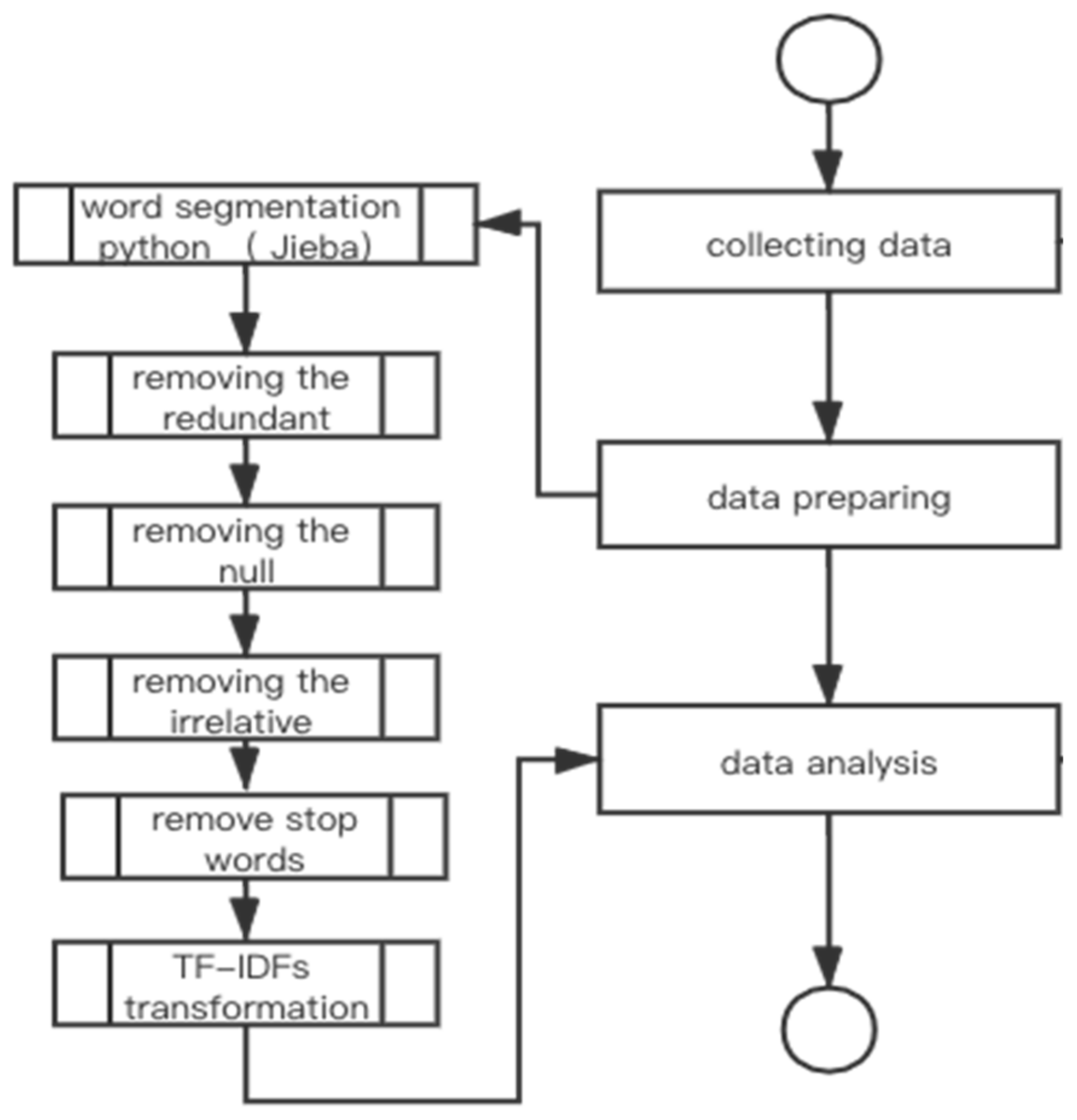
To prepare the data collected for LDA, we applied a few techniques to pre-process the datasets [27,28,29]. As shown in Figure 1, we first conducted word extraction and segmentation with Jieba in Pyhton, Jieba was widely used in many Chinese text mining and sentiment analysis studies. In the second step, we cleaned null content such as missing data from the datasets. In the third step, we removed common stop words such as “is”, “are”, and “them”, from Chinese vocabulary, which have no specific meanings. Lastly, we conducted TF-IDF (term frequency inverse document frequency) transformation to give more weight to those words appearing with high frequencies only in our datasets. TF-IDF is a commonly used pre-processing technique for text mining [30].
Figure 1.
Data Processing Workflow.
3.3. Data Analyses
To answer RQ1 and generate human-readable explanations regarding the common themes of the news reports and misinformation about coronavirus in the early stage of the COVID-19 pandemic, we applied the LDA (Latent Dirichlet allocation) topic-modelling analysis to both the news-reports and misinformation datasets.
LDA is a widely used technique in text mining for analyzing data [26,31,32]. One critical question in LDA is to decide the optimal number of topics emerging from a given dataset. While scholars in the past have relied on various creative approaches to this question [33], one commonly adopted method to determine the optimal topical number is to obtain the coherence score, as recommend by Stevens and his colleagues (2012) [34], through calculating the most representative words’ semantic similarities in a topic. The arithmetic mean of these similarities is then calculated to represent the level of consistency for each topic [35].
To answer RQ2, we implemented sentiment analysis to answer RQ2 about the possible emotions that drove the transmission of the misinformation on social media, as emotion has been identified as a notable predictor of the spread of misinformation. The sentiments that emerged from the misinformation data could provide a gateway to understanding the public emotional states expressed in the spread of misinformation on the coronavirus during the early stage of the COVID-19 outbreak in China. Researchers have conducted studies on different emotions expressed in misinformation with a popular lexicon provided by National Research Council Canada (NRC) [27]. This lexicon has been widely used for analyzing emotions expressed in tweets [27], news [28], and customer reviews [29]. We adopted this leading lexicon to analyze eight emotions based on Plutchik’s emotion classification (2001)—anger, fear, anticipation, trust, surprise, sadness, joy, and disgust [30]—to process the misinformation data. The lexicon can process text in different languages including Chinese for the eight types of emotions.
4. Results
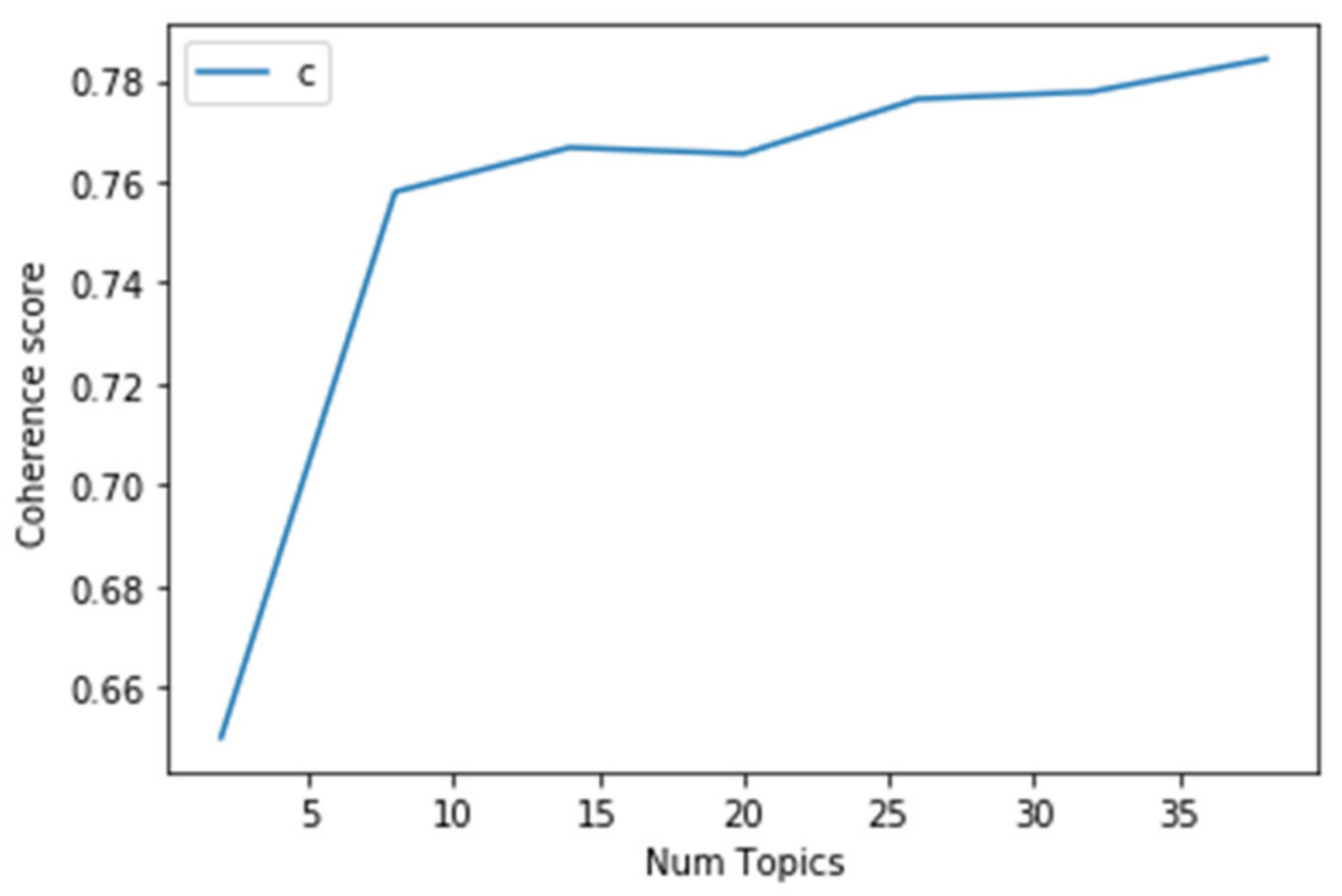
With the genism package in python, we calculated the coherence value of different topic number [32,33]. When there were eight topics, we found that the coherence value was 0.5109 (see Figure 1); increasing number of topics will result in a growing coherence value, but it increases more slowly after reaching eight as the topic number.
Taking only machine learning into account, the possible results could be without interpretations [33]. By choosing an optimal topic number with both machine learning and interpretability into account [33,34,35], we decided to choose eight as the topic number for our study. After the LDA topic modeling on misinformation and news data, we generated eight topics for each source and further classified them into fewer themes and categories to analyze manually.
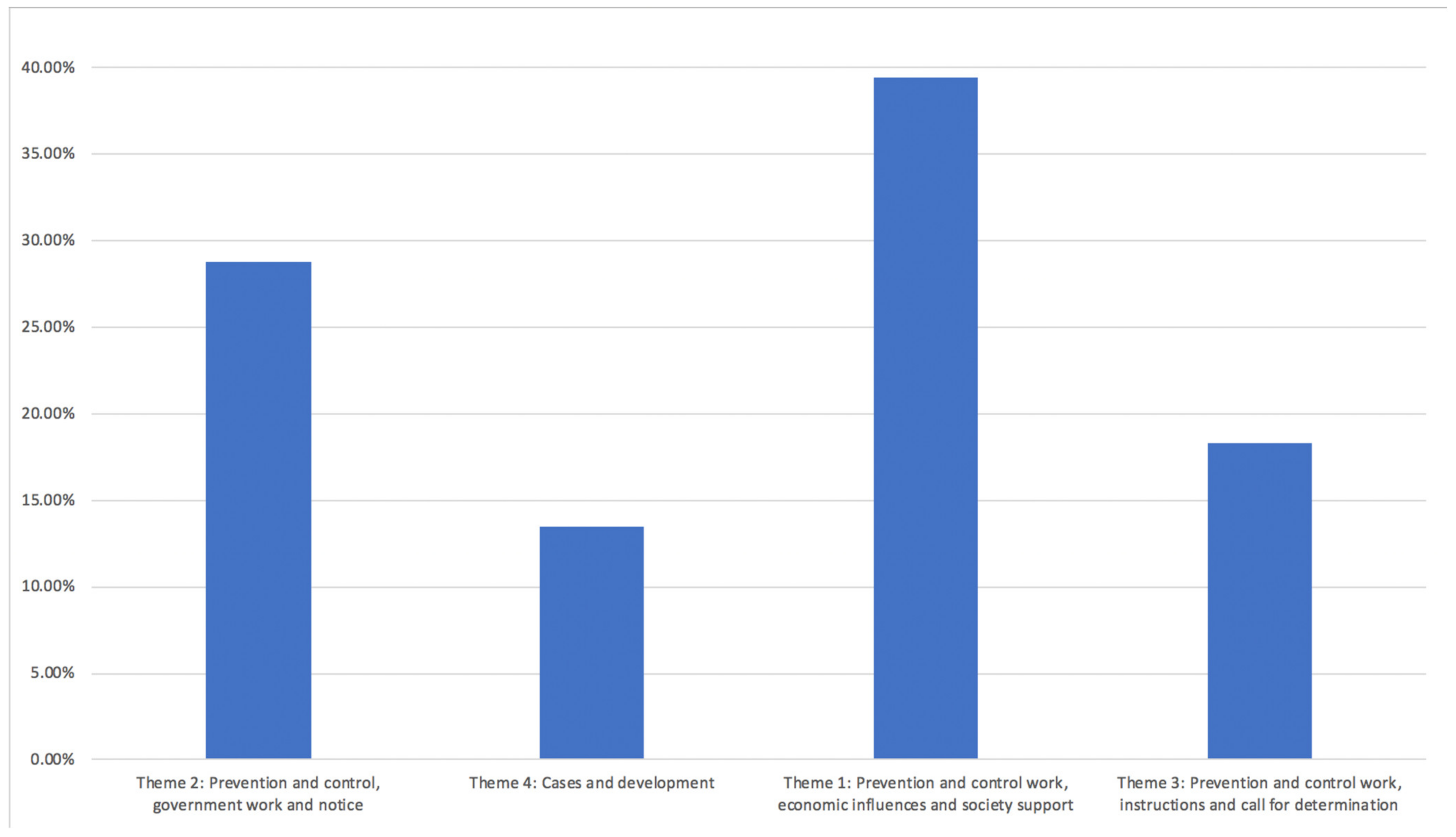
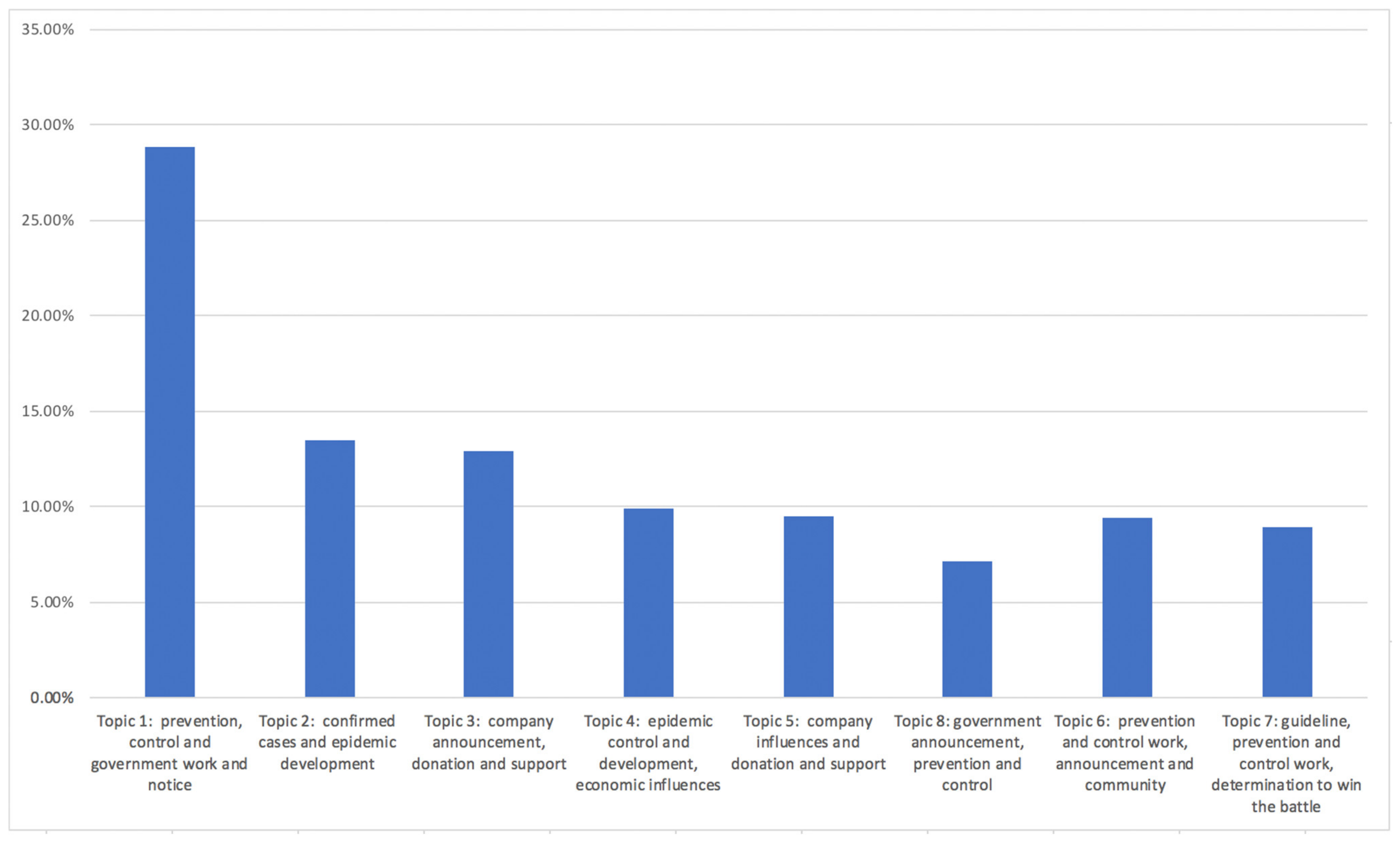
For the news data LDA analysis, we found eight topics and grouped them into four categories of themes (see Figure 2 and Table 1). The major theme, accounting for up to 39.40%, is “Prevention and control work, economic influences and society support”, followed by “Prevention and control, government work and notice” (28.80%) as the second biggest theme. The third largest theme was “Prevention and control work, instructions and call for determination” (18.30%) and the fourth was “Cases and development” with a total of 13.50% (see Table 1).
Figure 2.
Coherence score for number of topics for news data.
Table 1.
News data LDA analysis from 1 January 2020 to 20 February 2020.
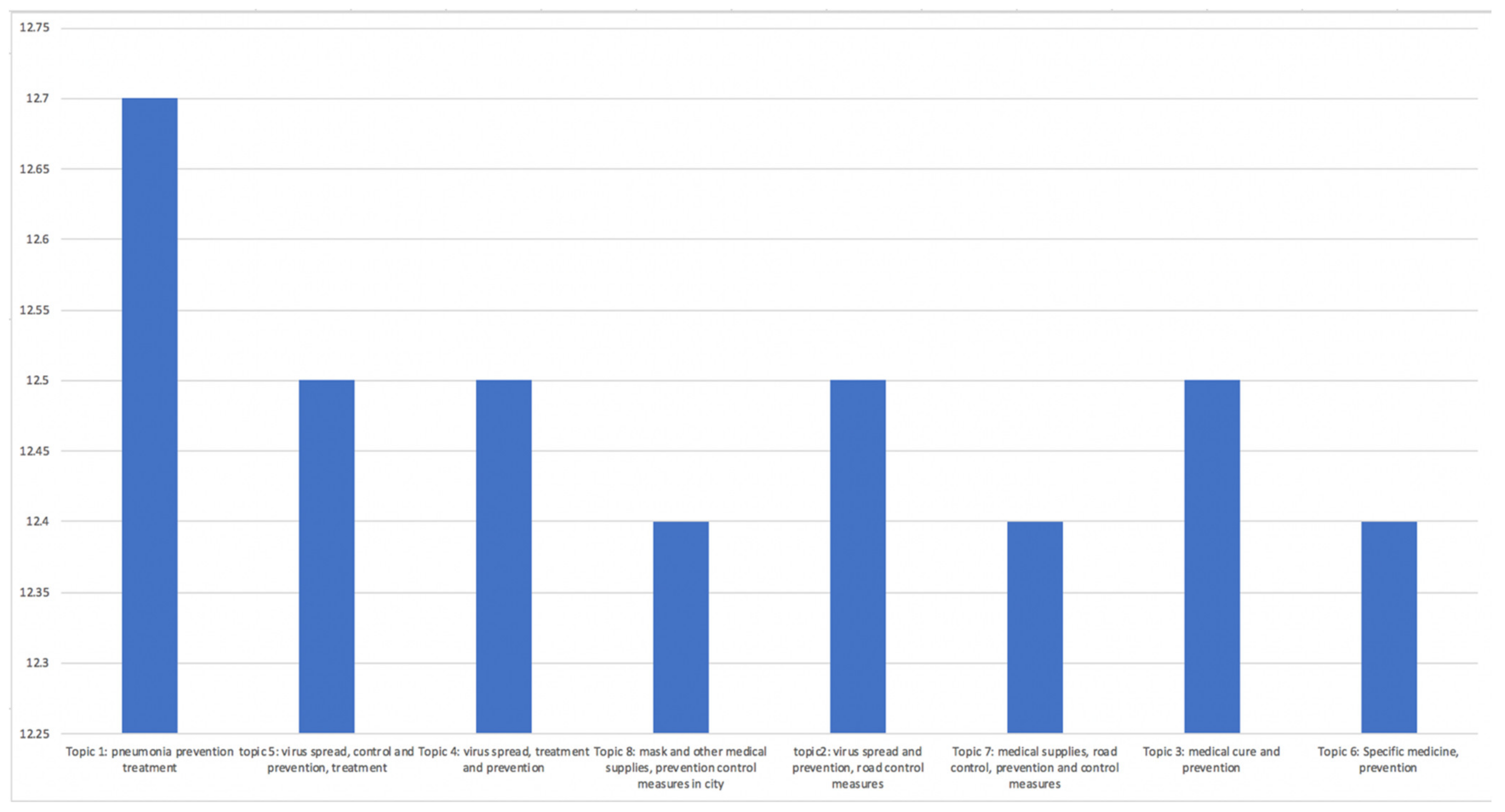
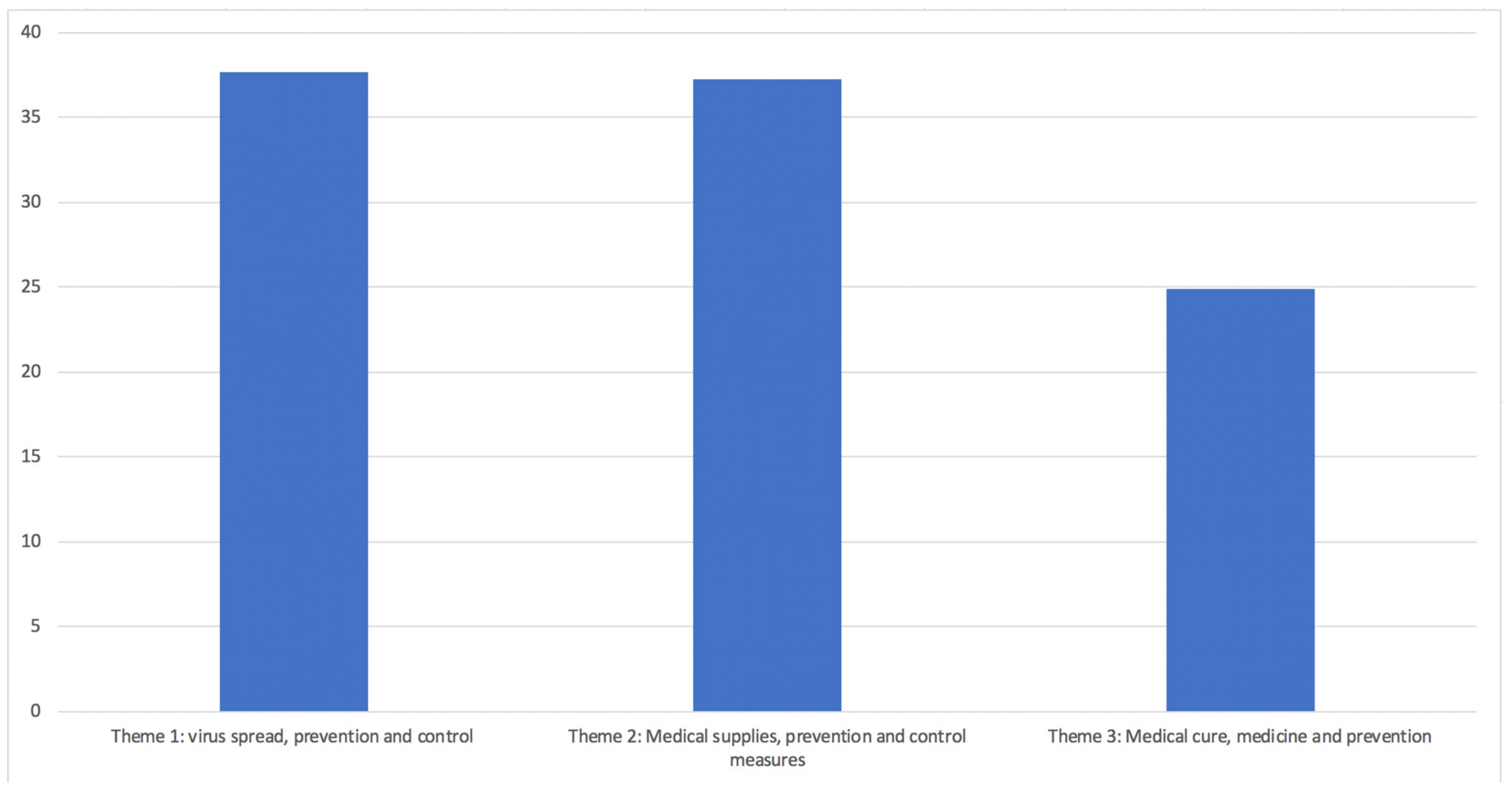
To compare the news data with the misinformation data, we also conducted an LDA analysis to illuminate the major topics and themes. There are eight topics of misinformation that we generated, and we categorized them into three different themes (see Figure 3 and Table 2). The theme with the largest proportion in relation to the COVID-19 outbreak from news media is “Theme 1: virus spread, prevention and control” consisting of 37.7% of all news, “Theme 2: Medical supplies, prevention and control measures” (37.3%) is the second biggest theme, which is followed by the third one “Theme 3: Medical cure, medicine and prevention” (24.9%) (see Table 2).
Figure 3.
News data LDA analysis topic result.
Table 2.
Misinformation data LDA analysis from 1 January 2020 to 20 February 2020.
After the data-cleaning process, we calculated the number of counts of different emotions, the sum number of different emotions, and used matplotlib package (https://matplotlib.org/, accessed on 20 March 2020) in python to visualize the result shown in Figure 4, Figure 5 and Figure 6 for further analysis.
Figure 4.
News data LDA analysis theme result.
Figure 5.
Misinformation data LDA analysis topic result.
Figure 6.
Misinformation data LDA analysis theme result.
5. Discussion
To answer RQ1 and generate a humanly comprehensible explanation, we compared the news data with misinformation data and analyzed citizens’ reception of and search for information during COVID-19’s early period, among which the following caught our attention.
There are some similarities between the two sources of information. Both news media and online misinformation showed concerns for the prevention and control of the virus. For instance, the news dataset’s Theme 1, Theme 2, and Theme 3 all similarly concern the “Prevention and control” category, while the misinformation data show a similar concern: Theme 1 and Theme 2. This illustrates that the press media is posting information with people’s needs and wants in a general direction, trying to build up a robust, harmonious, and healthy environment.
Although from the major themes’ categories, news media and rumors deliver information with greater similarity rather than differentiation, but they emphasize different details. After carefully comparing these “prevention and control” data, we observed quite obvious distinctions in the details.
Regarding misinformation Theme 1, it considers the spread of the virus and the epidemic itself to form prevention and control messages, such as the origin and spread, and many detailed uses of prevention are mentioned, such as avoiding seafood, using alcohol, drinking white wine, Shuang Huanglian (note: one kind of common Chinese medicine for colds), etc. Whereas for Theme 2, the major emphasis lies in medical supplies and transportation controls, such as masks and road controls to stop the transmission of the virus. However, very few news reports concern these personal choices of diet or medicine for the prevention and detection of the virus infection.
The third biggest group of themes for misinformation is “Medical cure, medicine and prevention”, which is mainly about personal choices of medicine, curing methods, and related health information. A great deal of misinformation is about specific medicine for curing the virus, effective prevention methods, and medical choices, some of which even mention being verified by noted experts, such as Dr. Nanshan Zhong. However, in the news-based information, although prevention and control suggestions are given, they are only provided as general instructions without specific advice, especially about personal choices of medicine or medical treatment.
The above two major differences demonstrate a lack of information for normal citizens to obtain enough detailed information towards personalized suggestions on medical decisions during the early period of the COVID-19 outbreak, such as prevention, detection, choice of medicine, and medical cure measures.
Comparing the news and misinformation data, when sufficient information is provided in a newspaper, the less likely it is that misinformation will spread on the same topic, and vice versa. As the different details of the prevention and control topic shows, because of the lack of personal guidance of medical choices in press media, a great deal of misinformation on these topics is spread. Some other emphases of the news articles show the opposite pattern: in areas where newspapers generate a number of reports, misinformation would have less of a potential to increase.
For news data, regarding Theme 2, news reports emphasize government work conducted towards prevention and control. Since there is a sufficient amount of information about this category of news, very little misinformation was spread on this topic.
Likewise, from the news data, regarding Theme 1, newspapers report prevention and control work from a viewpoint of economic and societal influences, such as enterprise influences, society donations, and support. With a relatively large proportion of information for this category of news, misinformation of this kind has less room to increase.
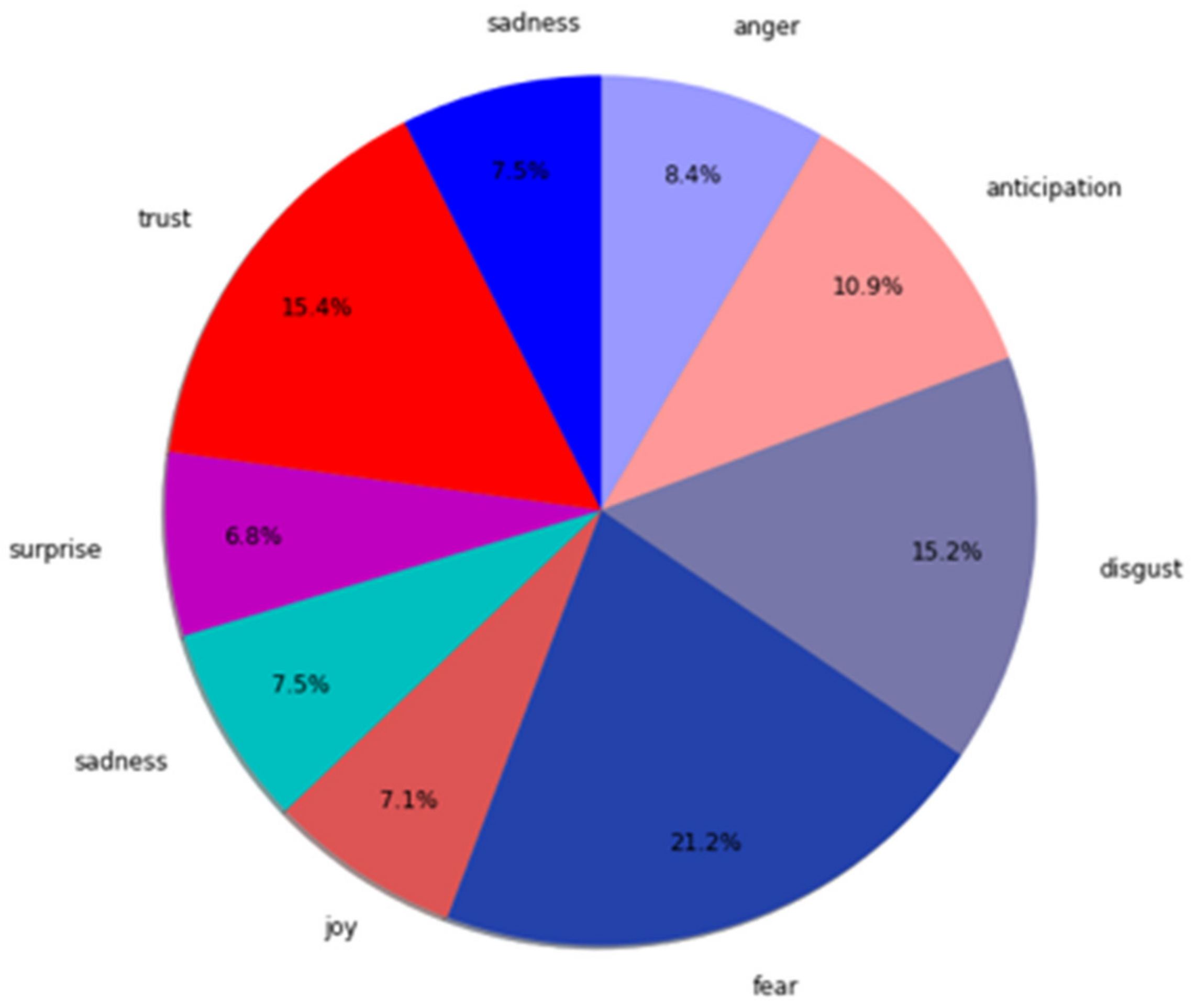
To understand the emotions that netizens revealed when uncertain information was provided and to discuss RQ2, we implemented a sentiment analysis to seek the distribution of different emotions as shown in Figure 7, and to try to analyze what drove the transmission of misinformation on social media. We found that fear was the most dominant emotion, comprising 21.2% of the total misinformation-related emotions. Whereas trust was represented 15.4% in total, which showed people’s concern towards uncertainties, and a similar proportion of 15.2% was represented by the emotion of disgust. Thus, these are the major driving forces for the transmission of misinformation.
Figure 7.
Sentiment proportion of COVID-19 misinformation.
However, in news reports, besides actions, the media tried to build up a positive attitude and optimistic belief. For Theme 3, the press media coverage included epidemic prevention and control with a very optimistic standpoint, demonstrating the labor achieved and the progresses made from the community to hospital to government organizations. This kind of news also showed a strong belief and determination to win this battle. Compared to misinformation, these details seldom appear in the transmission. However, there are also forms of misinformation hoping for the best, or fearing for the worst, appearing in the early period of the epidemic outbreak. Through an emotion analysis, we did observe interesting points concerning the seeking and processing of misinformation.
6. Conclusions
To understand individuals’ patterns of health communication with online and press media sources, we collected and compared the news data with misinformation data, and analyzed citizens’ information-seeking and -receiving behaviors during the early period of COVID-19, from 1 January 2020 to 20 February 2020. We also conducted an LDA topic modeling analysis and sentiment analysis and provides possible explanations for the driving forces for misinformation and the associated emotions people experienced during the epidemic crisis. Future studies could be conducted to focus on aspects of Media literacy, and to analyze audiences and their responses towards information.
Author Contributions
Conceptualization, Q.L. and F.Y.; analysis, Q.L. and F.Y.; data curation, Q.L.; writing Q.L. and F.Y.; project administration, F.Y. All authors have read and agreed to the published version of the manuscript.
Funding
This research receives funding from Jinan University, Guangzhou, China.
Institutional Review Board Statement
Not applicable.
Informed Consent Statement
Not applicable.
Conflicts of Interest
The authors declare no conflict of interest.
References
- Allin, D.; Simon, S. The Sixth Crisis: Iran, Israel, America, and the Rumors of War; Oxford University Press: Oxford, UK, 2010; ISBN 0-19-977959-7. [Google Scholar]
- Lachlan, K.A.; Spence, P.R.; Lin, X.; Najarian, K.; Del Greco, M. Social Media and Crisis Management: CERC, Search Strategies, and Twitter Content. Comput. Hum. Behav. 2016, 54, 647–652. [Google Scholar] [CrossRef]
- Lasorsa, D. News Media Perpetuate Few Rumors about 9/11 Crisis. Newsp. Res. J. 2003, 24, 10–21. [Google Scholar] [CrossRef]
- Veil, S.R.; Buehner, T.; Palenchar, M.J. A Work-in-process Literature Review: Incorporating Social Media in Risk and Crisis Communication. J. Contingencies Crisis Manag. 2011, 19, 110–122. [Google Scholar] [CrossRef]
- Mendoza, M.; Poblete, B.; Castillo, C. Twitter under Crisis: Can We Trust What We RT? In Proceedings of the First Workshop on Social Media Analytics, New York, NY, USA, 25–28 July 2010; Association for Computing Machinery: New York, NY, USA, 2010; pp. 71–79. [Google Scholar]
- Kušen, E.; Strembeck, M. Politics, Sentiments, and Misinformation: An Analysis of the Twitter Discussion on the 2016 Austrian Presidential Elections. Online Soc. Netw. Media 2018, 5, 37–50. [Google Scholar] [CrossRef]
- Zeng, L.; Starbird, K.; Spiro, E.S. Rumors at the Speed of Light? Modeling the Rate of Rumor Transmission during Crisis. In Proceedings of the 2016 49th Hawaii International Conference on System Sciences (HICSS), Koloa, HI, USA, 5–8 January 2016; IEEE: Piscataway, NJ, USA, 2016; pp. 1969–1978. [Google Scholar]
- Oh, O.; Agrawal, M.; Rao, H.R. Community Intelligence and Social Media Services: A Rumor Theoretic Analysis of Tweets during Social Crises. MIS Q. 2013, 37, 407–426. [Google Scholar] [CrossRef]
- Jin, Y.; Liu, B.F. The Blog-Mediated Crisis Communication Model: Recommendations for Responding to Influential External Blogs. J. Public Relat. Res. 2010, 22, 429–455. [Google Scholar] [CrossRef]
- Liang, J.; Yang, M. On Spreading and Controlling of Online Rumors in We-Media Era. Asian Cult. Hist. 2015, 7, 42. [Google Scholar] [CrossRef][Green Version]
- Quarantelli, E.L. Disaster Crisis Management: A Summary of Research Findings. J. Manag. Stud. 1988, 25, 373–385. [Google Scholar] [CrossRef]
- Nyhan, B.; Reifler, J. When Corrections Fail: The Persistence of Political Misperceptions. Polit. Behav. 2010, 32, 303–330. [Google Scholar] [CrossRef]
- Hjorth, F.; Adler-Nissen, R. Ideological Asymmetry in the Reach of Pro-Russian Digital Disinformation to United States Audiences. J. Commun. 2019, 69, 168–192. [Google Scholar] [CrossRef]
- Southwell, B.G.; Thorson, E.A.; Sheble, L. Misinformation and Mass Audiences; University of Texas Press: Austin, TX, USA, 2018; ISBN 978-1-4773-1456-2. [Google Scholar]
- DiFonzo, N.; Robinson, N.M.; Suls, J.M.; Rini, C. Rumors About Cancer: Content, Sources, Coping, Transmission, and Belief. J. Health Commun. 2012, 17, 1099–1115. [Google Scholar] [CrossRef]
- Allport, G.W.; Postman, L. The Psychology of Rumor; Henry Holt: Oxford, UK, 1947; Volume xiv, p. 247. [Google Scholar]
- Knapp, R.H. A Psychology of Rumor. Public Opin. Q. 1944, 8, 22–37. [Google Scholar] [CrossRef]
- Scholer, A.A.; Cornwell, J.F.M.; Higgins, E.T. Should We Approach Approach and Avoid Avoidance? An Inquiry from Different Levels. Psychol. Inq. 2019, 30, 111–124. [Google Scholar] [CrossRef]
- Bordia, P.; DiFonzo, N. When Social Psychology Became Less Social: Prasad and the History of Rumor Research. Asian J. Soc. Psychol. 2002, 5, 49–61. [Google Scholar] [CrossRef]
- Maio, G.R.; Esses, V.M. The Need for Affect: Individual Differences in the Motivation to Approach or Avoid Emotions. J. Personal. 2001, 69, 583–614. [Google Scholar] [CrossRef]
- Bahja, M.; Safdar, G.A. Unlink the Link between COVID-19 and 5G Networks: An NLP and SNA Based Approach. IEEE Access 2020, 8, 209127–209137. [Google Scholar] [CrossRef]
- Buckman, S.R.; Shapiro, A.H.; Sudhof, M.; Wilson, D.J. News Sentiment in the Time of COVID-19. FRBSF Econ. Lett. 2020, 8, 5. [Google Scholar]
- Barkur, G.; Vibha, G.B.K. Sentiment Analysis of Nationwide Lockdown Due to COVID 19 Outbreak: Evidence from India. Asian J. Psychiatry 2020, 51, 102089. [Google Scholar] [CrossRef]
- Naseem, U.; Razzak, I.; Khushi, M.; Eklund, P.W.; Kim, J. Covidsenti: A Large-Scale Benchmark Twitter Data Set for COVID-19 Sentiment Analysis. IEEE Trans. Comput. Soc. Syst. 2021, 8, 1003–1015. [Google Scholar] [CrossRef]
- Abd-Alrazaq, A.; Alhuwail, D.; Househ, M.; Hamdi, M.; Shah, Z. Top Concerns of Tweeters during the COVID-19 Pandemic: Infoveillance Study. J. Med. Internet Res. 2020, 22, e19016. [Google Scholar] [CrossRef]
- Jelodar, H.; Wang, Y.; Yuan, C.; Feng, X.; Jiang, X.; Li, Y.; Zhao, L. Latent Dirichlet Allocation (LDA) and Topic Modeling: Models, Applications, a Survey. Multimed. Tools Appl. 2019, 78, 15169–15211. [Google Scholar] [CrossRef]
- Tang, D.; Wei, F.; Qin, B.; Liu, T.; Zhou, M. Coooolll: A Deep Learning System for Twitter Sentiment Classification. In Proceedings of the 8th International Workshop on Semantic Evaluation (SemEval 2014), Dublin, Ireland, 23–24 August 2014; pp. 208–212. [Google Scholar]
- Staiano, J.; Guerini, M. Depechemood: A Lexicon for Emotion Analysis from Crowd-Annotated News. arXiv 2014, arXiv:1405.1605. [Google Scholar]
- Kiritchenko, S.; Zhu, X.; Cherry, C.; Mohammad, S. NRC-Canada-2014: Detecting Aspects and Sentiment in Customer Reviews. In Proceedings of the 8th International Workshop on Semantic Evaluation (SemEval 2014), Dublin, Ireland, 23–24 August 2014; pp. 437–442. [Google Scholar]
- Mohammad, S.M.; Turney, P.D. Crowdsourcing a Word–Emotion Association Lexicon. Comput. Intell. 2013, 29, 436–465. [Google Scholar] [CrossRef]
- Rehurek, R.; Sojka, P. Software Framework for Topic Modelling with Large Corpora. In Proceedings of the LREC 2010 Workshop on New Challenges for NLP Frameworks, Valletta, Malta, 22 May 2010. [Google Scholar]
- Blei, D.M.; Ng, A.Y.; Jordan, M.I. Latent Dirichlet Allocation. J. Mach. Learn. Res. 2003, 3, 993–1022. [Google Scholar] [CrossRef]
- Griffiths, T.L.; Steyvers, M. Finding Scientific Topics. Proc. Natl. Acad. Sci. USA 2004, 101, 5228–5235. [Google Scholar] [CrossRef]
- Stevens, K.; Kegelmeyer, P.; Andrzejewski, D.; Buttler, D. Exploring Topic Coherence over Many Models and Many Topics. In Proceedings of the 2012 Joint Conference on Empirical Methods in Natural Language Processing and Computational Natural Language Learning, Jeju Island, Korea, 12–14 July 2012; pp. 952–961. [Google Scholar]
- Röder, M.; Both, A.; Hinneburg, A. Exploring the Space of Topic Coherence Measures. In Proceedings of the Eighth ACM International Conference on Web Search and Data Mining, Shanghai China, 2–6 February 2015; pp. 399–408. [Google Scholar]
Publisher’s Note: MDPI stays neutral with regard to jurisdictional claims in published maps and institutional affiliations. |
© 2022 by the authors. Licensee MDPI, Basel, Switzerland. This article is an open access article distributed under the terms and conditions of the Creative Commons Attribution (CC BY) license (https://creativecommons.org/licenses/by/4.0/).