You are currently viewing a new version of our website. To view the old version click .
  • Article
  • Open Access

30 June 2022

Exploring Definitions of “Addiction” in Adolescents and Young Adults and Correlation with Substance Use Behaviors

,
,
,
,
,
,
,
,
and
1
Vermont Center on Behavior and Health, Department of Psychiatry, University of Vermont, Burlington, VT 05405, USA
2
Department of Psychology, University of Florida, Gainesville, FL 32611, USA
3
Department of Psychological Science, University of Vermont, Burlington, VT 05405, USA
4
Health Surveillance, Vermont Department of Health, Burlington, VT 05402, USA
This article belongs to the Special Issue Psychology of Addictive Behaviors

Abstract

(1) Background: Young people engage in addictive behaviors, but little is known about how they understand addiction. The present study examined how young people describe addiction in their own words and correlations between their definitions and substance use behaviors. (2) Methods: Young adults (n = 1146) in the PACE Vermont Study responded to an open-ended item “what does “addiction” mean?” in 2019. Responses were coded using three inductive categories and fifteen subcategories. Quantitative analyses examined correlations between addiction theme definitions, demographics, and substance use behaviors. (3) Participants frequently defined addiction by physiological (68%) and psychological changes (65%) and less by behavioral changes (6%), or all three (3%); young adults had higher odds of defining addiction as physiological or behavioral changes than adolescents. Participants who described addiction as “psychological changes” had lower odds of ever electronic vapor product use (OR 0.75, 95% CI 0.57–1.00) than those using another definition, controlling for age and sex. (4) Perceptions of addiction in our sample aligned with existing validated measures of addiction. Findings discriminated between familiar features of addiction and features that may be overlooked by young adults. Substance users may employ definitions that exclude the symptoms they are most likely to experience.

1. Introduction

Adolescence (12–17 years old) and young adulthood (18–25 years old) are developmental stages associated with vulnerability to addiction and high rates of risky behaviors [1,2,3,4]. Substance use initiated during these periods can persist into older adulthood [5] and develop into long-term chronic health problems later in life [6,7]. Communicating the risks associated with substance use early in life is important to public health efforts to prevent long-term health harm.
Mass reach media communication and education campaigns have played a key role in substance use prevention efforts over the last 50 years, to varying degrees of success [8,9,10,11,12,13]. Effective mass media public education campaigns on tobacco have targeted beliefs as the precursor to changing attitudes and, ultimately, tobacco use behavior [10,11,14,15,16,17]. These pathways have been empirically supported by evaluations of the Truth campaign [16,17] and serve as the basis for the U.S. Food and Drug Administration’s (FDA) Real Cost campaign [14,15,18,19].
In designing such media campaigns, the selection of maximally effective messaging themes is crucial. Brennan and colleagues [20] found that messaging about addiction was among the top three potentially effective themes in federally funded mass media prevention campaigns targeting cigarette smoking in youth. The FDA’s The Real Cost campaign has also targeted the theme of loss of control due to addiction in its smoking prevention messaging [21,22]. More recently, addiction has been identified as a key theme for e-cigarette prevention messaging [23], including iterations of the FDA’s Real Cost campaign [21]. Given the relationship between early initiation of cannabis use and cannabis dependence [24], addiction may be a salient theme for cannabis prevention messaging, though research on such messaging is currently lacking [25,26].
Little is known about the specific addiction-related beliefs held by youth and young adults or the most effective ways mass media campaigns can target these beliefs. In a series of focus groups for the development of messages for The Real Cost campaigns, Roditis and colleagues [27] found that youth were most receptive to addiction-themed messages emphasizing the immediate, concrete consequences of addiction, as well as its social consequences. However, some reported the consequences of addiction in these messages were overblown [27]—a finding consistent with research showing that young people may fail to recognize if and when they have an addiction and underestimate the risk of developing an addiction [28,29]. In contrast, a recent qualitative study of teens’ and young adults’ motivations for quitting e-cigarettes found “freedom from addiction” among the top reasons for making a quit attempt [30]. The present study aimed to understand how young people describe addiction in their own words and how this may relate to substance use experience to support future prevention efforts targeting addiction.

2. Materials and Methods

Data for the current analyses come from Waves 1 and 2 of the Policy and Communication Evaluation (PACE) Vermont Study conducted on Vermont adolescents (aged 12–17) and young adults (aged 18–25) in Spring and Summer 2019. Participants were recruited via paid and unpaid online advertising, community recruitment through affiliated organizations, and participant-to-peer referrals [31]. Eligible participants took three online surveys from March 2019 through October 2019. These surveys contained measures of past and current substance use, beliefs about substances, opinions on state and national policies related to substances, and awareness of mass media education campaigns. This research was approved by the University of Vermont’s Institutional Review Board and received a Certificate of Confidentiality from the National Institutes of Health. Detailed study methods have been described elsewhere [31]. Of the 1497 participants who completed the Wave 1 survey, 1166 (78%) also completed the Wave 2 survey. The final analytic sample included 1146 participants who received the open-ended item on addiction and were matched back to the full dataset (385 youth and 761 young adults).

2.1. Measures

At Wave 2 (Summer 2019), participants received an open-ended response item that captured participants’ understandings of addiction in their own words, asking “What does ‘addiction’ mean?” The item offered no additional instruction to avoid priming participants. Participants entered their responses in a single-line field that appeared on screen, with no minimum or maximum character limit.
Participant demographics were collected during Wave 1 (Spring 2019) of the PACE Vermont Study and included age group, sex, and race/ethnicity. Age group was coded as youth (ages 12–17) or young adult (ages 18–25), sex was coded as male or female, and race/ethnicity was coded as white versus non-white. Wave 2 items also captured ever and past 30-day use of cigarettes, electronic vapor products (EVPs), alcohol, and marijuana among all participants. Ever and past 30-day substance use was defined as endorsement of use of any of the substances assessed (i.e., cigarettes, EVPs, alcohol, marijuana).

2.2. Qualitative Analyses

The entire body of responses to the open-ended question “what does ‘addiction’ mean?” was reviewed by one member of the research team (SEL); 36 participants were missing a response to this item and were excluded from subsequent review, yielding 1110 responses to be coded. Common ideas and phrases were noted, and an initial coding manual was developed from these. This coding manual was discussed with two additional members of the research team (JCW and ACV) and was edited for clarity and to reduce redundancy. Two coders (SEL and CM) tested the coding manual on a random set of 200 responses to ensure the usability of the codebook and acceptable agreement between coders. Following this initial training period, the coders met to resolve any disagreements and clarify the definitions of codes. The final coding manual contained 15 coding categories. The full list of coding categories, their definitions, and examples of responses coded into each category can be found in Table 1. The full body of responses was then coded independently by both coders using NVivo 12 software [32]. Both coders resolved disagreements by discussing each case of disagreement until a consensus was reached. Finally, the codes were assessed for major connecting themes that could capture the general types of responses. Both coders agreed to the use of physiological changes, psychological changes, and behavioral changes as thematic categories. Thematic categories highlight key differences in how respondents characterized addiction – specifically, the domain in which participants saw it operationalized. In addition to thematic categories, an additional code (N/A) was used to designate responses that were uninterpretable, off topic, or otherwise un-codable. All thematic categories and subcategories except N/A and its categories subcategories were non-exclusive; responses could be coded in multiple categories. Reliability for the codebook was assessed with Cohen’s kappa, which ranged from κ = 0.46 to κ = 0.89 for the thematic categories and subcategories, representing moderate to near-perfect agreement between coders. Response frequencies in each thematic category and subcategory were compared to identify the themes most and least salient for our sample.
Table 1. Addiction theme coding categories with definitions and examples, frequencies, and reliability.

2.3. Quantitative Analyses

Multivariable logistic regression models examined correlations between the three primary thematic coding categories and demographic characteristics, using the coding categories as the exposure variables and the demographic characteristic as the outcome of interest. Where there were significant correlations between a thematic category and a demographic characteristic, an additional model examined the relationship between that theme’s subcodes and the demographic characteristic (e.g., if psychological changes was significantly correlated with age group, a separate multivariable model examined the correlation between psychological changes subcategories and age group). A similar two-stage approach was used to examine correlations between addiction themes, ever, and past 30-day use of tobacco, electronic vapor products, marijuana, alcohol, and any substance. Given positive correlations between addiction themes, age, and sex, all multivariable models for substance use controlled for age and sex. Qualitative responses regarding tolerance (physiological changes) were recategorized into dependence for quantitative analyses (n = 3).

3. Results

3.1. Demographics

Of the 1146 participants in the analytic sample, 97.0% (n = 1110) responded to the open-ended addiction question. Adolescents made up 33.5% (n = 372) of respondents and young adults made up 66.5% (n = 738). The mean age of the sample was 19.1 years. Slightly more than one-quarter (28.0%; n = 311) of respondents were male, 71.8% (n = 797) were female, and 0.2% (n = 2) were missing data on sex. The majority of respondents (88.0%, n = 977) identified their race or ethnicity as white, 7.4% (n = 82) as non-white or other race, and 4.5% (n = 50) as Hispanic; one respondent was missing data on race/ethnicity. See Table S1 for a description of sociodemographic characteristics by adolescent versus young adult age groups. Most participants reported ever use of cigarettes, electronic vapor products (EVPs), alcohol or marijuana (n = 850, 76.6%). The rate was higher for young adults (n = 706, 96%) than for youth (n = 144, 39%).A majority of participants (n = 685, 61.7%) also reported past 30-day use of one or more of these four substances at Wave 2. Again, this rate was much higher for young adults (n = 609, 83%) than for youth (n = 76, 20%). Compared with adolescents, young adults were more likely to be female (77% vs. 63%; p < 0.001) and reported a higher prevalence of ever substance use (96% vs. 39%; p < 0.001) and any past 30-day substance use (83% vs. 20%; p < 0.001; Table S1).

3.2. Frequencies of Coding Categories and Themes

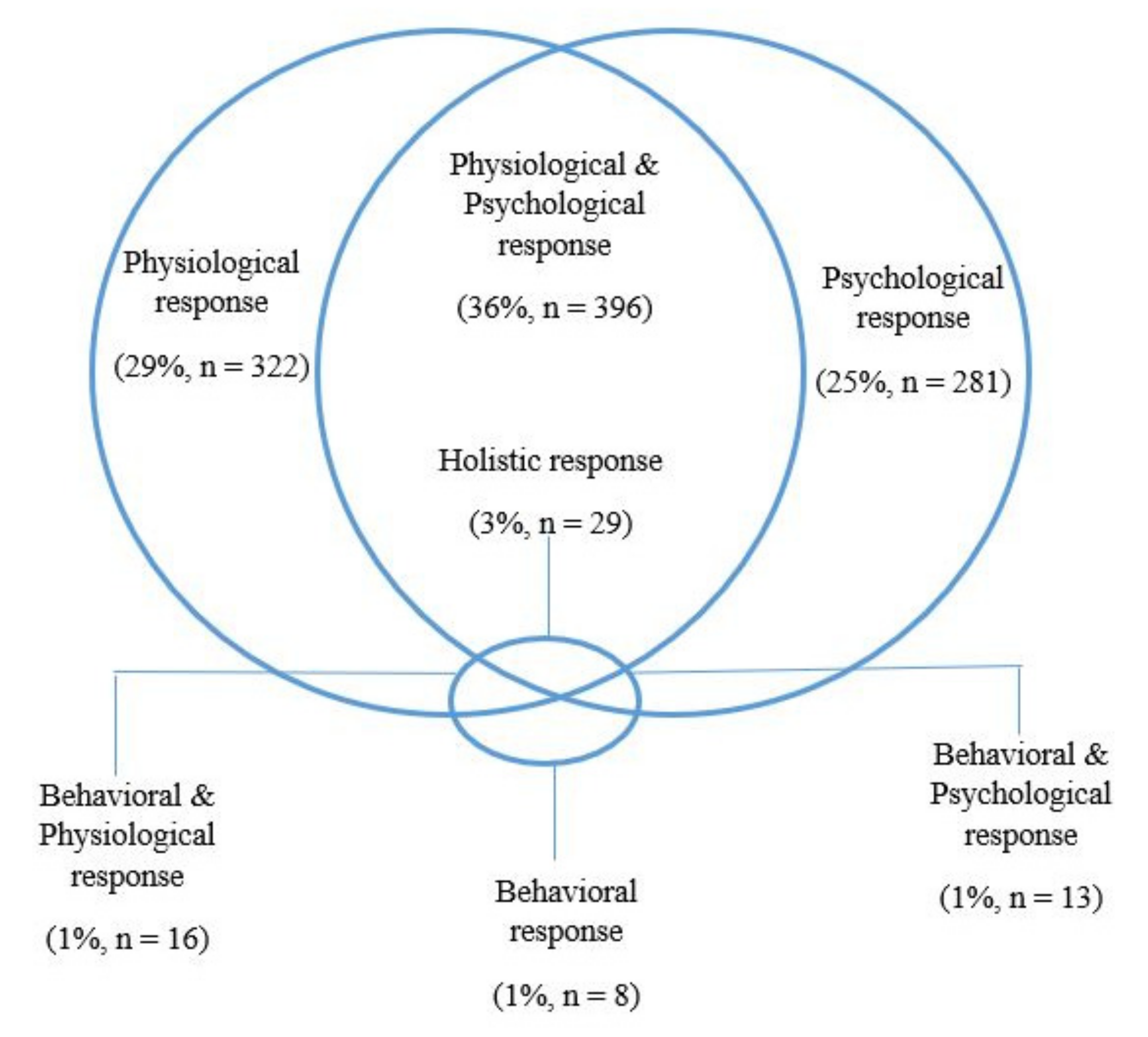
Three thematic addiction coding categories emerged: physiological changes, psychological changes, and behavioral changes. These three categories captured the majority of responses (n = 1065, 96%), with only 4% (n = 45) being exclusively coded within N/A and its subcategories (Figure 1). Definitions most frequently referenced physiological changes, with 763 (68.7% of all responses) responses coded in this thematic category (Table 1) and 322/763 (42.2%) exclusively coded here. Responses in this category included “your body craves it and might have withdrawn symptoms if it does not receive it” (female young adult). Within the physiological changes thematic category, physiological dependence was the most prevalent subcategory (n = 645/763, 84.5%). This subcategory also contained two further subordinate categories: functioning (n = 231/645, 35.8%) and withdrawal (n = 92/645, 14.3%), though most responses (n = 322/645, 49.9%) in the dependence subcategory defined addiction as a physiological dependence with no greater level of specificity (e.g., “The body’s chemical dependence on a substance”—female young adult). Other subcategories within the physiological changes thematic category were cravings (n = 127/763, 16.5%) and negative health consequences (n = 54/763, 7.1%). The least-referenced subcategory within physiological changes was organic disease (i.e., explicitly defining addiction as a disease of brain or body, e.g., “it’s a disease”—female young adult), which accounted for 38 responses (5% of responses within the physiological category). Tolerance was identified as a subcategory in physiological changes but was mentioned only three times by study participants.
Figure 1. Overlap of responses coded in each category. Participants not coded into any major category (n = 45; 4%).
Psychological changes was the second thematic coding category, containing 719 (64.8% of total responses) responses, with 281/719 (39.1%) exclusive to this thematic category. Responses in this thematic category included “mentally you may need substances to feel like you can cope with negative emotions” (female young adult). Within psychological changes, psychological need (n = 370/719, 51.5%) and self-regulation (n = 371/719, 51.6%) were the most prevalent subcategories. Affect was another subcategory with 14.3% (n = 103/719) of responses. The least referenced subcategory within psychological changes was cognition (i.e., referencing changes to thought patterns, including planning around addiction or constantly thinking about it), accounting for 54/719 responses (7.5%). Mental illness was identified as a subcategory in psychological changes and was mentioned four times in these definitions.
Behavioral changes were the third thematic coding category, containing 66 responses (6.0% of all responses), eight (12.1%) of which were exclusive to this thematic category. Responses in this thematic category included “When you go out of your way to make sure you always have a supply of it” (female young adult). Within this thematic category, responses primarily concerned addiction’s impact on functioning (impaired functioning), which accounted for 43 of the 66 responses in this category (65.2%). Seeking behavior (n = 20/66, 30.3%) and relationship changes (n = 15/66, 22/7%) were other subcategories within behavioral changes.
Overlap between psychological and physiological definitions was common, with 396 responses (36% of all responses) shared between them (Figure 1). Few respondents provided a definition that was coded at least once into each of the three primary categories and could be described as a holistic understanding of addiction (n = 29/1110 responses; 2.6%).

3.3. Correlations between Thematic Categories and Demographics

Primary thematic category differed by age group, with greater endorsement of physiological (OR 1.61, 95% CI 1.22–2.12) or behavioral changes (OR 3.00, 95% CI 1.51–5.97) among young adults compared with adolescents (Table 2). Young adults also had higher odds of endorsing the dependence subcode under physiological changes (OR 1.69, 95% CI 1.30–2.18) than adolescents. Thematic category also differed by sex, with a lower likelihood of endorsing psychological (OR 0.69, 95% CI 0.52–0.92) or physiological changes (OR 0.71, 95% CI 0.53–0.96) among males than females. Males were also less likely to endorse the psychological subcode need (OR 0.72, 95% CI 0.54–0.97). Responses did not differ when comparing white to non-white respondents.
Table 2. Logistic regressions of addiction themes by demographic characteristics, PACE Vermont Study 2019.

3.4. Relationships between Thematic Categories and Substance Use

Where there were relationships between addiction themes and substance use in bivariate analyses, they were largely attenuated after controlling for age and sex in the multivariable models. There were no relationships between thematic categories and ever use of any substance, ever cigarette use, ever alcohol use, or ever marijuana use (Table 3), controlling for age and sex. The odds of endorsing psychological changes in the definition of addiction were lower for ever EVP users (OR 0.75, 95% CI 0.57–1.00) than never users (Table 3) in multivariable analyses; when subcodes for psychological changes were examined, this was largely driven by the lower odds of identifying self-regulation (e.g., “Loss of control when it comes to a behavior”) as a feature of addiction among ever users compared to never users of these products (OR 0.66, 95% CI 0.50–0.87). These analyses were repeated separately for youth and young adults. Among young adults, the odds of endorsing behavioral changes were lower for those who had ever used any substance (OR 0.57, 95% CI 0.33–0.98), and this relationship was driven by lower odds of endorsing the seeking behavior subcode (OR 0.22, 95% CI 0.08–0.64). Among youth, the odds of endorsing physiological changes were greater for those who had ever tried marijuana (OR 1.90, 95% CI 1.03–3.52), and this was driven by greater odds of endorsing the physiological dependence (OR 2.19, 95% CI 1.25–3.83) and functioning subcodes (OR 2.28, 95% CI 1.22–4.25).
Table 3. Relationships between addiction themes and ever substance use, PACE Vermont Study 2019.

4. Discussion

Three primary themes emerged from adolescent and young adults’ definitions of addiction: (1) physiological changes, (2) psychological changes, and (3) behavioral changes. These coding categories align with 8 out of 10 of the Diagnostic and Statistical Manual of Mental Disorder’s fifth edition (DSM-5) diagnostic criteria for substance use disorder [33], as well as existing parameters for assessing drug harms [34], demonstrating the consistency of the coding structure and our participants’ understandings of addiction with research on the defining features of addiction.
Comparisons between categories revealed the features of addiction that are salient to young people. The popularity of physiological and psychological responses, as well as the high degree of overlap between these categories, suggests that young adults perceive addiction largely as a matter of physiological dependence and a failure of psychological self-control. These responses could reflect a tension between involuntary physiological realities and personal choice. While many participants referenced the concept of dependence, these definitions were frequently circular or lacked further detail (e.g., “Being dependent on a substance”—female young adult). It is unclear whether this may be attributed to a vague understanding of the specific consequences of dependence on a substance or to the nature of the open-ended item. The prevalence of self-regulation aligns with past messaging campaigns targeting addiction, especially The Real Cost campaign, which effectively spoke to the loss of control caused by addiction to tobacco [22]. Messaging campaigns that provide concrete examples of how addiction constrains personal choice may be especially effective for these age groups, given adolescence and young adulthood are developmental stages marked by personal choice and identity exploration [2]. Messages that convey real-world consequences of dependence (e.g., altering routines to minimize craving or withdrawal) may supplement youth and young adults’ existing beliefs about the experience of addiction.
This study also identified important features of addiction that were not nominated by young people: (1) Our sample infrequently identified addiction as being either an organic disease or mental illness, but its appearance is notable as it speaks to awareness of some professional and clinical definitions of addiction. (2) Very few respondents mentioned tolerance, which is one of the diagnostic criteria for substance use disorder listed in the DSM-5 [33]. (3) Respondents infrequently attended to behavioral changes associated with addiction, such as changes in social behavior, despite the inclusion of relationship changes as a result of addiction in existing clinical measures and guidelines (e.g., DSM-V) [34,35]. (4) While many participants defined addiction as relying on a substance to maintain basic functioning, far fewer referenced impaired daily functioning. The relative infrequency of responses coded as behavioral changes or to all three categories (holistic descriptions) indicates that education could produce a greater understanding of addiction in young people.
Differences in the themes by participant characteristics and substance use behaviors revealed distinct patterns between groups. For example, participants endorsing psychological and physiological changes had lower odds of being male than female, and this relationship held for those endorsing the need subcode. While there were few associations between addiction themes and ever substance use or past 30-day substance use, the psychological changes category was negatively correlated with ever EVP use, and this was largely driven by lower odds of EVP use among those who defined addiction in terms of lacking self-regulation. One explanation is that adolescents and young adults may define addiction separately from their own experiences—that is, they are motivated to think about addiction as being different from the consequences they have experienced while using substances. One possibility is that an individual currently using alcohol, for example, may be motivated to define addiction as a more severe physiological dependence and severely inhibited behavioral functioning than their current experience and less motivated to define addiction in terms of psychological features they face (e.g., having a hard time regulating how much they drink). However, a lack of data on the frequency of use limits our ability to confirm this specific hypothesis. Future research should therefore explore the role of motivated cognition and cognitive dissonance in adolescent and young adults’ perceptions of addiction, as well as how the full range of risks associated with addiction can be effectively communicated to this population.

5. Conclusions

To our knowledge, this study is the first to employ an inductive approach to understanding young people’s beliefs about addiction and the relationships between beliefs about addiction and substance use behavior. Findings from this study provide novel and valuable information to improve mass media communication campaigns that target youth and young adult beliefs about addiction. Results are limited in their generalizability by the geographic restriction to one state (Vermont), the use of a convenience sample, and larger proportions of female and young adult respondents in the sample. Beliefs about addiction were assessed with a single open-ended item, which may have resulted in greater numbers of vague, non-specific, or I don’t know responses than are representative of the sample’s beliefs about addiction. Future research should investigate adolescent and young adults’ beliefs about addiction in a national sample, as well as differences in beliefs by age, past and current substance use, and over time.
Studies suggest that tobacco prevention messaging on health harms may be more effective than addiction messages [36,37,38]. However, prior research has indicated that messaging on the long-term threats to health is insufficient to overcome adolescents’ optimistic bias and prevent tobacco use [29]. Results from the current study suggest that substance use prevention messages addressing physiological dependence and cravings or loss of autonomy and self-control furnish immediate, concrete consequences that may resonate with young people [27]. Additionally, targeting less-familiar themes such as impacts on relationships and behavior change may broaden young people’s understanding of addiction.

Supplementary Materials

The following supporting information can be downloaded at: https://www.mdpi.com/article/10.3390/ijerph19138075/s1. Table S1: Characteristics of study participants by age group, PACE Vermont Study 2019 (n = 1110). The supporting information can be downloaded at: https://osf.io/q56jg/. Correlations between addiction themes and past 30-day substance use, PACE Vermont Study 2019.

Author Contributions

A.V. conceived of the PACE Vermont Study. A.V., J.C.W. and C.P.-M. developed and managed the PACE Vermont Study. S.E.L. developed the coding manual; S.E.L. and C.M. coded the open-ended responses. S.E.L. and A.V. analyzed the data, and S.E.L. wrote the first draft of the manuscript. All authors (S.E.L., E.M.K., J.C.W., C.P.-M., C.M., A.J., M.R., M.T., R.W. and A.V.) contributed to the writing and editing of the manuscript. All authors have read and agreed to the published version of the manuscript.

Funding

The PACE Vermont Study was funded by the Vermont Department of Health, the University of Vermont Cancer Center, and the University of Vermont Larner College of Medicine. SEL, CPM, and ACV were supported by the National Institute on Drug Abuse under award number R21DA051943. EMK was supported by the National Institute of General Medical Sciences under award number P20GM103644. JCW was supported by the National Institute On Drug Abuse under Award Number U54DA036114. Although this work was funded in whole or in part with monies provided by or through the State of Vermont, the State does not necessarily endorse the researchers’ findings and/or conclusions. The findings and/or conclusions may be inconsistent with the State’s policies, programs, and objectives. Additionally, the content is solely the responsibility of the authors and does not necessarily represent the official views of the National Institutes of Health.

Institutional Review Board Statement

The study was conducted in accordance with the Declaration of Helsinki, and approved by the Institutional Review Boards of The University of Vermont and Vermont Department of Health (UVM STUDY00000046). This study also received a Certificate of Confidentiality from the National Institutes of Health.

Data Availability Statement

Data and analysis code can be accessed at https://osf.io/q56jg/.

Acknowledgments

The authors would like to acknowledge Meghan Farrington for her assistance with data coding and preliminary analyses.

Conflicts of Interest

The authors declare no conflict of interest.

References

  1. Arnett, J.J.; Žukauskienė, R.; Sugimura, K. The new life stage of emerging adulthood at ages 18–29 years: Implications for mental health. Lancet Psychiatry 2014, 1, 569–576. [Google Scholar] [CrossRef]
  2. Arnett, J.J. Emerging adulthood: A theory of development from the late teens through the twenties. Am. Psychol. 2000, 55, 469–480. [Google Scholar] [CrossRef] [PubMed]
  3. Substance Abuse and Mental Health Services Administration. Results from the 2018 National Survey on Drug Use and Health: Detailed Tables; Substance Abuse and Mental Health Services Administration: Rockville, MD, USA, 2018. [Google Scholar]
  4. Masten, A.S.; Faden, V.B.; Zucker, R.A.; Spear, L.P. Underage Drinking: A Developmental Framework. Pediatrics 2008, 121 (Suppl. 4), S235–S251. [Google Scholar] [CrossRef] [PubMed] [Green Version]
  5. Arnett, J.J. The Developmental Context of Substance use in Emerging Adulthood. J. Drug Issues 2005, 35, 235–254. [Google Scholar] [CrossRef] [Green Version]
  6. Jiang, H.; Livingston, M.; Room, R.; Chenhall, R.; English, D.R. Temporal Associations of Alcohol and Tobacco Consumption With Cancer Mortality. JAMA Netw. Open 2018, 1, e180713. [Google Scholar] [CrossRef] [Green Version]
  7. Schulte, M.T.; Hser, Y.-I. Substance Use and Associated Health Conditions throughout the Lifespan. Public Health Rev. 2014, 35, 3. [Google Scholar] [CrossRef] [Green Version]
  8. DeJong, W.; Winston, J.A. The use of mass media in substance abuse prevention. Health Aff. 1990, 9, 30–46. [Google Scholar] [CrossRef] [Green Version]
  9. Allara, E.; Ferri, M.; Bo, A.; Gasparrini, A.; Faggiano, F. Are mass-media campaigns effective in preventing drug use? A Cochrane systematic review and meta-analysis. BMJ Open 2015, 5, e007449. [Google Scholar] [CrossRef] [Green Version]
  10. Allen, J.A.; Duke, J.C.; Davis, K.C.; Kim, A.E.; Nonnemaker, J.M.; Farrelly, M.C. Using Mass Media Campaigns to Reduce Youth Tobacco Use: A Review. Am. J. Health Promot. 2015, 30, e71–e82. [Google Scholar] [CrossRef]
  11. Carson-Chahhoud, K.V.; Ameer, F.; Sayehmiri, K.; Hnin, K.; van Agteren, J.E.M.; Sayehmiri, F.; Brinn, M.P.; Esterman, A.J.; Chang, A.B.; Smith, B.J. Mass media interventions for preventing smoking in young people. Cochrane Database Syst. Rev. 2017, 6, CD001006. [Google Scholar] [CrossRef] [Green Version]
  12. Ferri, M.; Allara, E.; Bo, A.; Gasparrini, A.; Faggiano, F. Media campaigns for the prevention of illicit drug use in young people. Cochrane Database Syst. Rev. 2013, 6, CD009287. [Google Scholar] [CrossRef]
  13. Young, B.; Lewis, S.; Katikireddi, S.; Bauld, L.; Stead, M.; Angus, K.; Campbell, M.; Hilton, S.; Thomas, J.; Hinds, K.; et al. Effectiveness of Mass Media Campaigns to Reduce Alcohol Consumption and Harm: A Systematic Review. Alcohol Alcohol. 2018, 53, 302–316. [Google Scholar] [CrossRef] [Green Version]
  14. Zhao, X.; Alexander, T.N.; Hoffman, L.; Jones, C.; Delahanty, J.; Walker, M.; Berger, A.T.; Talbert, E. Youth Receptivity to FDA’s The Real Cost Tobacco Prevention Campaign: Evidence From Message Pretesting. J. Health Commun. 2016, 21, 1153–1160. [Google Scholar] [CrossRef] [Green Version]
  15. Kranzler, E.C.; Gibson, L.A.; Hornik, R.C. Recall of “The Real Cost” Anti-Smoking Campaign Is Specifically Associated With Endorsement of Campaign-Targeted Beliefs. J. Health Commun. 2017, 22, 818–828. [Google Scholar] [CrossRef]
  16. Hershey, J.C.; Niederdeppe, J.; Evans, W.D.; Nonnemaker, J.; Blahut, S.; Holden, D.; Messeri, P.; Haviland, M.L. The Theory of "truth": How Counterindustry Campaigns Affect Smoking Behavior Among Teens. Health Psychol. 2005, 24, 22–31. [Google Scholar] [CrossRef]
  17. Farrelly, M.C.; Davis, K.C.; Duke, J.; Messeri, P. Sustaining ‘truth’: Changes in youth tobacco attitudes and smoking intentions after 3 years of a national antismoking campaign. Health Educ. Res. 2008, 24, 42–48. [Google Scholar] [CrossRef] [Green Version]
  18. Duke, J.C.; Farrelly, M.C.; Alexander, T.N.; MacMonegle, A.J.; Zhao, X.; Allen, J.A.; Delahanty, J.C.; Rao, P.; Nonnemaker, J. Effect of a National Tobacco Public Education Campaign on Youth’s Risk Perceptions and Beliefs About Smoking. Am. J. Health Promot. 2017, 32, 1248–1256. [Google Scholar] [CrossRef]
  19. Noar, S.M.; Rohde, J.A.; Prentice-Dunn, H.; Kresovich, A.; Hall, M.G.; Brewer, N.T. Evaluating the actual and perceived effectiveness of E-cigarette prevention advertisements among adolescents. Addict. Behav. 2020, 109, 106473. [Google Scholar] [CrossRef]
  20. Brennan, E.; Gibson, L.A.; Kybert-Momjian, A.; Liu, J.; Hornik, R.C. Promising Themes for Antismoking Campaigns Targeting Youth and Young Adults. Tob. Regul. Sci. 2017, 3, 29–46. [Google Scholar] [CrossRef] [Green Version]
  21. Zeller, M. Evolving “The Real Cost” Campaign to Address the Rising Epidemic of Youth E-cigarette Use. Am. J. Prev. Med. 2019, 56 (Suppl 1), S76–S78. [Google Scholar] [CrossRef] [Green Version]
  22. US Food and Drug Administration. The Real Cost: Campaign Overview. 2018; January 2018. Available online: https://www.fda.gov/media/87879/download (accessed on 1 June 2020).
  23. Sangalang, A.; Volinsky, A.C.; Liu, J.; Yang, Q.; Lee, S.J.; Gibson, L.A.; Hornik, R.C. Identifying Potential Campaign Themes to Prevent Youth Initiation of E-Cigarettes. Am. J. Prev. Med. 2019, 56 (Suppl. S1), S65–S75. [Google Scholar] [CrossRef] [Green Version]
  24. National Academies of Sciences, Engineering, and Medicine. Problem Cannabis Use. In The Health Effects of Cannabis and Cannabinoids: The Current State of Evidence and Recommendations for Research; National Academies of Sciences, Engineering, and Medicine: Washington, DC, USA, 2017; pp. 333–356. [Google Scholar]
  25. Alvaro, E.M.; Crano, W.D.; Siegel, J.T.; Hohman, Z.; Johnson, I.; Nakawaki, B. Adolescents’ attitudes toward antimarijuana ads, usage intentions, and actual marijuana usage. Psychol. Addict. Behav. 2013, 27, 1027–1035. [Google Scholar] [CrossRef] [Green Version]
  26. Hornik, R.; Jacobsohn, L.; Orwin, R.; Piesse, A.; Kalton, G. Effects of the National Youth Anti-Drug Media Campaign on Youths. Am. J. Public Health 2008, 98, 2229–2236. [Google Scholar] [CrossRef]
  27. Roditis, M.L.; Jones, C.; Dineva, A.P.; Alexander, T.N. Lessons on Addiction Messages From “The Real Cost” Campaign. Am. J. Prev. Med. 2019, 56 (Suppl. S1), S24–S30. [Google Scholar] [CrossRef] [Green Version]
  28. Dobbs, P.D.; Hodges, E.J.; Dunlap, C.M.; Cheney, M.K. Addiction vs. dependence: A mixed methods analysis of young adult JUUL users. Addict. Behav. 2020, 107, 106402. [Google Scholar] [CrossRef]
  29. Arnett, J.J. Optimistic bias in adolescent and adult smokers and nonsmokers. Addict. Behav. 2000, 25, 625–632. [Google Scholar] [CrossRef]
  30. Amato, M.S.; Bottcher, M.M.; Cha, S.; Jacobs, M.A.; Pearson, J.L.; Graham, A.L. “It’s really addictive and I’m trapped:” A qualitative analysis of the reasons for quitting vaping among treatment-seeking young people. Addict. Behav. 2021, 112, 106599. [Google Scholar] [CrossRef]
  31. Villanti, A.; Vallencourt, C.P.; West, J.C.; Peasley-Miklus, C.; LePine, S.E.; McCluskey, C.; Klemperer, E.; Priest, J.S.; Logan, A.; Patton, B.; et al. Recruiting and Retaining Youth and Young Adults in Online Longitudinal Research: Lessons from a Randomized Trial of Participant Compensation in the PACE Vermont Study. J. Med. Internet Res. 2020, 22, e18446. [Google Scholar] [CrossRef]
  32. NVivo (Version 12). 2018. Available online: https://www.qsrinternational.com/nvivo-qualitative-data-analysis-software/home (accessed on 12 November 2019).
  33. American Psychiatric Association. Diagnostic and Statistical Manual of Mental Disorders, 5th ed.; APA: Washington, DC, USA, 2013. [Google Scholar]
  34. Nutt, D.; King, L.A.; Saulsbury, W.; Blakemore, C. Development of a rational scale to assess the harm of drugs of potential misuse. Lancet 2007, 369, 1047–1053. [Google Scholar] [CrossRef]
  35. Lichtenstein, M.B.; Griffiths, M.D.; Hemmingsen, S.D.; Stoving, R. Exercise addiction in adolescents and emerging adults – Validation of a youth version of the Exercise Addiction Inventory. J. Behav. Addict. 2018, 7, 117–125. [Google Scholar] [CrossRef]
  36. Wackowski, O.A.; Sontag, J.M.; Hammond, D.; O’Connor, R.J.; Ohman-Strickland, P.A.; Strasser, A.A.; Villanti, A.C.; Delnevo, C.D. The Impact of E-Cigarette Warnings, Warning Themes and Inclusion of Relative Harm Statements on Young Adults’ E-Cigarette Perceptions and Use Intentions. Int. J. Environ. Res. Public Health 2019, 16, 184. [Google Scholar] [CrossRef] [PubMed] [Green Version]
  37. Phan, L.; Villanti, A.C.; Leshner, G.; Wagener, T.L.; Stevens, E.M.; Johnson, A.C.; Mays, D. Development and Pretesting of Hookah Tobacco Public Education Messages for Young Adults. Int. J. Environ. Res. Public Health 2020, 17, 8752. [Google Scholar] [CrossRef] [PubMed]
  38. Villanti, A.C.; LePine, S.E.; West, J.C.; Cruz, T.B.; Stevens, E.M.; Tetreault, H.J.; Unger, J.B.; Wackowski, O.A.; Mays, D. Identifying message content to reduce vaping: Results from online message testing trials in young adult tobacco users. Addict. Behav. 2020, 115, 106778. [Google Scholar] [CrossRef] [PubMed]
Publisher’s Note: MDPI stays neutral with regard to jurisdictional claims in published maps and institutional affiliations.

Article Metrics

Citations

Article Access Statistics

Multiple requests from the same IP address are counted as one view.