


Abstract
Essential workers, those who work in a variety of sectors that are critical to sustain the societal infrastructure, were affected both physically and mentally by the COVID-19 pandemic. While the most studied group of this population were healthcare workers, other essential non-health workers such as those working in the law enforcement sector, grocery services, food services, delivery services, and other sectors were studied less commonly. We explored both the academic (using MEDLINE, PsycInfo, CINAHL, Sociological Abstracts, and Web of Science databases) and grey literature (using Google Scholar) to identify studies on the mental health effects of the six pandemics in the last 20 years (2000–2020). We identified a total of 32 articles; all of them pertained to COVID-19 except for one about Ebola. We found there was an increase in depression, anxiety, stress, and other mental health issues among non-health essential workers. They were more worried about passing the infection on to their loved ones and often did not have adequate training, supply of personal protective equipment, and support to cope with the effects. Generally, women, people having lower education, and younger people were more likely to be affected by a pandemic. Exploring occupation-specific coping strategies of those whose mental health was affected during a pandemic using more robust methodologies such as longitudinal studies and in-depth qualitative exploration would help facilitate appropriate responses for their recovery.
1. Introduction
Essential workers have gained attention during the current pandemic, as they have played the most crucial roles in combating COVID-19 [1]. They have helped maintain the socioeconomic infrastructure by putting themselves at greater risk of being infected and infecting their families. Essential workers are defined as those “who conduct a range of operations and services that are typically essential to continue critical infrastructure viability” such as healthcare workers, those in the law enforcement sector, grocery services, food services, delivery services, and others [2,3]. A longitudinal survey conducted in Canada found a significant increase in stress during the COVID-19 outbreak [4,5]. Studies on health-related essential workers have been more prevalent and have reported high rates of depression, anxiety, stress, and other mental health issues in this group [6]. A few studies on non-health essential workers such as grocery workers [7] and protective services workers [8] also found an increase in mental health issues among these workers due to COVID-19.
According to the Mental Health Research Canada (MHRC) national polling initiative, anxiety and depression have increased greatly among the overall population since COVID-19 began [9]. The number of individuals with a high level of anxiety has tripled (from 8% to 24%) and the number of those with a high level of depression has doubled (7% to 15%) since the beginning of the pandemic [9]. A study involving both health and non-health (e.g., transportation, food, etc.) essential workers in Spain and Brazil found that around 8–27% of people suffered from depression, anxiety, or both [10]. In addition to healthcare workers [11], non-health essential workers such as domestic workers and police personnel were also reported to have inadequate access to personal protective equipment (PPE), resulting in increased fear and worries [12,13]. They were reported to be overworked, stigmatized, and isolated from their family members, which increased stress on their mental health [11,14,15,16]. Some studies on healthcare essential workers during previous pandemics such as severe acute respiratory syndrome (SARS) in 2002, Ebola in 2014, middle east respiratory syndrome (MERS) in 2016, and others also reported increased mental health-related effects such as depression and anxiety symptoms and insomnia, each ranging from 27–50% [17,18].
The effect of a pandemic on mental health may be influenced by many factors related to sociodemographic characteristics, workplace environment, and individual characteristics. Previous studies found gender, age, education level, income status, occupation, and support from colleagues and employers to be related to mental health symptoms [19]. Pandemics are a special situation in which different individuals from different occupations may experience the effects disproportionately. For example, people with higher education may comprehend the risks and dangers better than those with lower educations and practice healthy strategies to cope with that, whereas their counterparts may panic and adopt self-harming practices [20]. In addition, the ongoing COVID-19 pandemic has highlighted social support and health- and wellness-care-related inequities within various population groups, including essential workers.
According to a report by the American Psychological Association, both health and non-health essential workers were less likely to receive mental health treatment from professionals (34% vs. 12%) despite being almost three times more likely to be diagnosed with a mental health condition due to the pandemic (25% vs. 9%) [21]. Many reported adopting unhealthy practices such as poor eating and drinking habits [22]. According to a study involving food and retail service workers, some individuals employed potentially dangerous coping mechanisms such as consuming alcohol, smoking, and social avoidance [23]. In another US study, about 10–18% of the people who needed mental health support during this pandemic, including essential workers and the general population, did not receive any counselling or therapy [24]. Individuals with mental health issues may not access proper psychiatric support because of cost barriers or lack of time [25].
The non-health essential workforce such as grocery workers, transportation workers, food and delivery service workers, and many others have received little attention despite their selfless and unceasing efforts throughout the pandemic. Many studies, including literature reviews, have been conducted on the mental health effects of pandemics, specifically on healthcare essential workers [17,26] and general populations [27,28]. However, despite the fact that non-health essential workers may experience worse mental health symptoms/effects due to COVID-19 compared to healthcare workers and the general population, there are limited studies on this population group [29]. While non-health essential workers were at risk of contracting COVID-19 similar to that of health workers, they may not have the same level of understanding or confidence of how to stay safe from the virus because of a lack of adequate training or safety measures promoted and practiced by their employers [29]. Given the accelerated globalization, merging societal and political structures, and comparable worldwide actions against pandemics in recent decades, often guided and monitored by various international health organizations, we undertook this scoping review to capture the mental health effects of previous pandemics on non-health essential workers in the last 20 years (2000–2020). We also attempted to identify factors affecting their mental health and the coping strategies they adopted.
2. Methods
We opted to undertake a comprehensive scoping review for this study, as they provide a detailed snapshot of the existing literature on a certain topic and identify research gaps to offer future research directions [30]. We followed Arksey and O’Malley’s methodological framework for scoping reviews [31].
2.1. Formulating the Research Question
A scoping review allows us to answer a broader question by exploring studies that used diverse methodologies [32]. For this scoping review, we asked the following questions:
- (1)
- What were the mental health effects on non-health essential workers during pandemics in the last 20 years (2000–2020)?
- (2)
- What were the factors affecting their mental health (including those related to the onset of their mental health issues and those that aggravated and alleviated the mental health effects)?
- (3)
- What were their coping strategies to combat the mental health effects?
2.2. Identifying Relevant Studies
We conducted an extensive search using appropriate keywords to determine the relevant literature for this review. We used all possible search-terms (Table 1) related to mental health, the six pandemics in the last 20 years, and essential workers. We explored both the academic and grey literature by searching the most common electronic databases for both types of articles (Table 2). The potential literature was further included by snowball sampling from the reference lists of selected articles. Different keywords for each term were connected by the Boolean operator “OR” and were later collectively linked for each main term using the Boolean operator “AND”.
Table 1.
Search terms and strategies.
Table 2.
Academic and grey literature databases used to search eligible studies.
2.3. Study Selection
A comprehensive literature search generally culminates in a large number of articles encumbered by duplicate and irrelevant studies, which requires screening vigilantly by applying clearly defined inclusion and exclusion criteria corresponding with the research question(s). We included all studies that met our criteria based on the Population, Intervention/issue, Comparison, Outcome, Study type (PICOS) tool [33] (Table 3).
Table 3.
Inclusion and exclusion criteria.
2.4. Data Extraction, Charting, and Synthesis
We extracted the following information about each study: author(s), year of publication, type of study, objective of the study, location of the study, type and method of the study, location and time of the study, population size, age of the population, name of the outbreak/pandemic, mental health issues, instruments used to identify the mental health issues, factors associated with the relevant mental health issue, coping strategies, and occupations of the participants. Microsoft Excel 2016 and Microsoft Word 2016 (Microsoft Corporation, Redmond, Washington, DC, USA) were used to compile and organize the data. All data were compared and contrasted by the authors both individually and conjointly. We undertook descriptive analyses to outline the study literature and to detect the scope of research on the mental health issues of non-health essential workers, including attributable factors and coping strategies. Results were analyzed and discussed to identify key themes and findings.
2.5. Interpreting and Reporting Results
The goal of a scoping review is to retrieve a larger general description of the research that has been undertaken on a topic. Through the charting in stage four, we delineated the mental health issues experienced by different groups of essential workers, factors affecting them, and coping strategies. We documented seven groups of non-health essential workers and reported our findings according to the following categories: (1) factory and production occupations; (2) farming, fishing, agriculture, and forestry occupations; (3) food preparation and serving occupations; (4) installation, maintenance, cleaning, and repair workers; (5) sales and related occupations; (6) social care practice and support; and (7) Others.
3. Results
3.1. Literature Search Overview
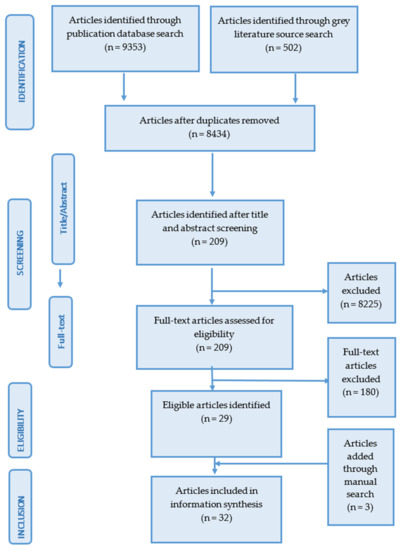
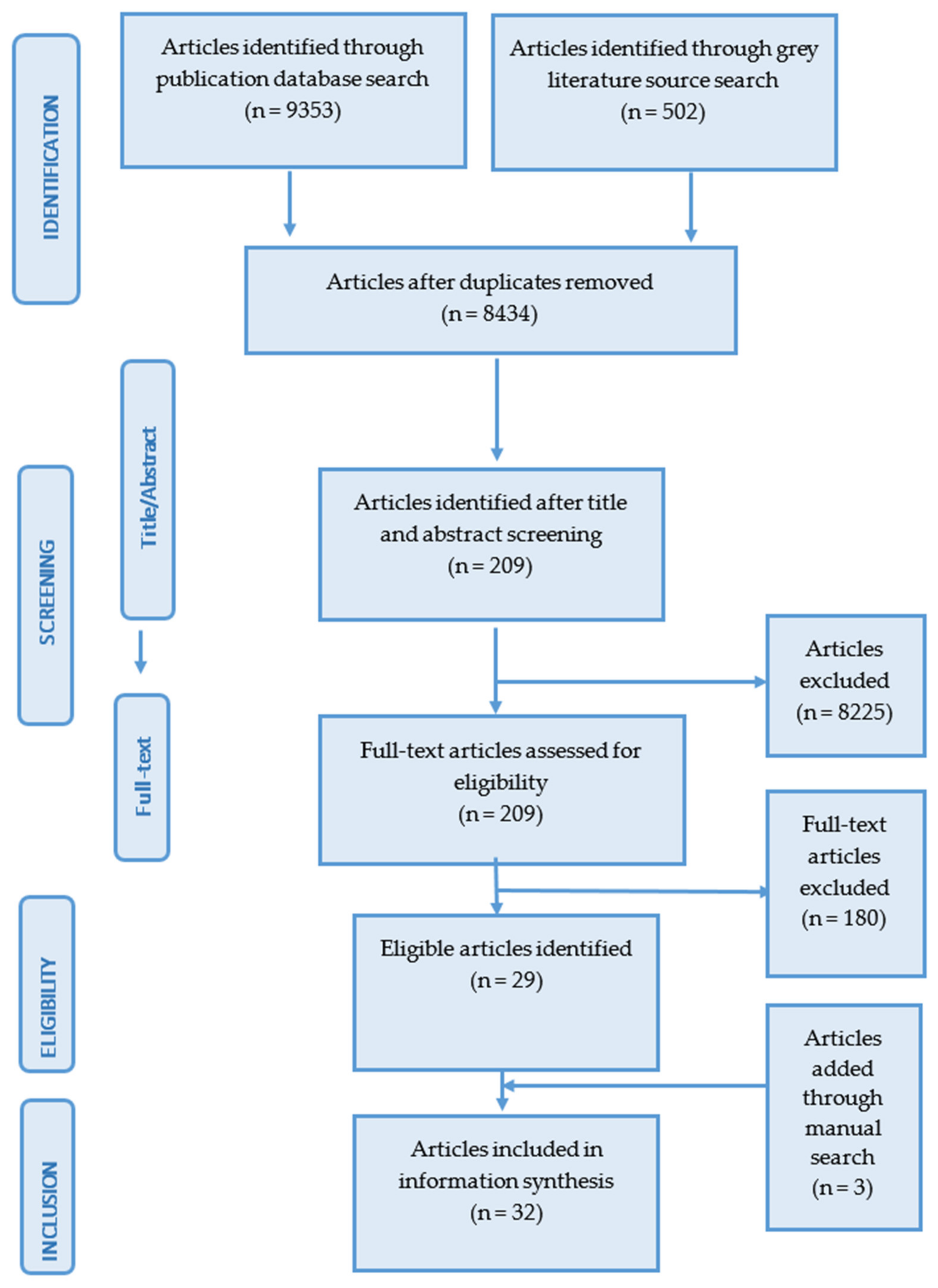
A systematic search of four academic databases yielded 9353 articles. An additional 502 articles were identified through Google Scholar as grey literature. After removing duplicates using Mendeley Reference Manager 2021 software (Mendeley Ltd., London, UK), we undertook the title and abstract screening of 8434 articles. Following screening, 209 articles remained for full-text screening. Full-text screening yielded 29 articles eligible for this review. Through hand searching, we identified three additional articles for a final total of 32 eligible articles (Figure 1).
Figure 1.
Search and screening steps for this review.
3.1.1. Content Overview
Table 4 demonstrates the study characteristics extracted from the eligible studies. Of the 32 articles, 20 studies were quantitative, 10 were qualitative, and 2 were mixed methods. Almost all articles pertained to COVID-19, except for one on Ebola. Most of the studies regarding COVID-19 were conducted during March–June 2020 (29 of 32). Most studies were conducted in Spain (n = 9), followed by the USA (n = 7), China (n = 6), and Serbia (2 studies). One study was conducted in each of India, the UK, Turkey, Australia, New Zealand, Bangladesh, and Liberia. Three studies covered several regions that included Brazil, Kenya, Ireland, Canada, Austria, Germany, Switzerland, the Netherlands, and Hong Kong.
Table 4.
Description of study characteristics.
3.1.2. Mental Health Issues
Three common mental health issues—anxiety, depression, and stress—were explored by most of the studies. Stress or distress was studied the most (n = 18), followed by anxiety and depression (n = 13, respectively). Other mental health issues included in the studies were worries (n = 2), non-specific mental health issues (n = 2), fear (n = 2), emotional turmoil (n = 2), burnout/workload (n = 2), sleep quality/insomnia (n = 2), alcohol disorder (n = 1), and decreased self-esteem (n = 1).
3.1.3. Instruments Used for Identifying the Mental Health Issues
We also extracted information on what instruments or scales the researchers used to identify the various mental health issues. Twenty-seven studies reported a total of 34 types of validated instruments/scales for diagnosing various types of mental health issues. We organized them into eight groups: anxiety, depression, stress and distress, fear and worries, mood and emotional effects, general mental health and quality of life, sleep and burnout, and others. Ten studies did not report any validated instrument/scale for determining mental health issues. Some of these studies used one-item questions for different mental-health-related issues and/or used questionnaires they developed. While many studies used specific scales for anxiety, depression, stress, or other mental health issues (such as the DASS-21, GAD-7, or MBI scales; see Table 5), some studies used broader general mental-health-related scales (such as Goldberg’s GHQ-12 General Health Questionnaire; see Table 5).
Table 5.
Scales/instruments used to diagnose various mental-health-related issues among participants.
3.1.4. Study Objectives
Most of the studies explored the effect of the pandemic (COVID-19 and Ebola in one study) on the mental health issue of interest. A few studies investigated further, to identify the factors affecting the issues and even fewer to understand the coping mechanisms employed by their target population group. Some studies compared the effects of the pandemic on different professions. Two studies explored how exposure to information, knowledge, and beliefs affected individuals’ mental health.
3.1.5. Data Collection Strategies
Most of the studies used surveys (n = 24) to collect data from individuals. Among them, 10 surveys were conducted using online questionnaires. Seven studies used interviews as their method of data collection, one of which was conducted online. One study used roundtable discussions and in one study the author reflected on their experience using that format. Only two studies used mixed methods that collected data through a survey, focus groups, interviews, or free responses through a survey. The focus group was conducted over Zoom and the interviews were conducted over the telephone.
3.1.6. Outbreaks
COVID-19 was studied in all the reviewed articles except for one on Ebola. We found no studies that explored the mental health effects on non-health essential workers caused by the other four large outbreaks in the last 20 years (2000–2020)—SARS, H1N1 influenza, Zika virus, and MERS.
3.2. Mental Health Effects of Outbreaks by Non-Health Essential Occupations
3.2.1. Factory and Production Occupations
Individuals involved in any type of industrial production and manufacturing were included in this category (Table 6). Examples included factory workers, electronic device manufacturing, beverage manufacturing, biopharmaceutical-related industry workers, and more. One study that compared factory and production workers during the pandemic with the pre-pandemic general population found an increased prevalence of depression among factory and production workers (5.6% vs. 2.4%) [45]. Sleep quality among these workers was good to excellent for most (69.5%). Another study found female participants had a higher risk of depression than their male counterparts (n = 66 vs. n = 30) [46].
Table 6.
Mental health issues, factors, and coping strategies among different categories of non-health essential workers.
3.2.2. Farming, Fishing, Agriculture, and Forestry Occupations
A study found that the farmers/workers experienced comparatively less stress (11.5%) than that of the health workers (12.5–16.7%) [35]. A study that investigated farmworker families (where either the woman or her spouse was a farmer) found women in farmworker families experienced fear, worry, and anxiety about being sick and unable to look after their children. They were afraid they might contract COVID-19 from their workplace, and some stopped working to care for their children at home since schools were closed and they could not afford childcare [38].
3.2.3. Food Preparation and Serving Occupations
Individuals in the service sector, including food service and delivery workers, were found to feel less stress (4.4% vs. 6.3%) and anxiety (13.3% vs. 23.0%) compared to those in the health sector according to the DASS-21 scale [40]. Experts in a roundtable discussion expressed concern over the increased anxiety among low-wage essential workers, including food and dairy workers due to their uncertainty about the future and employment [43]. The fear of contracting COVID-19 and infecting others, especially their loved ones, placed them under constant stress. It was also mentioned that many of these populations were immigrants and had joint families, including older parents, at home. In addition, despite there being a substantial number of deaths among this population due to COVID-19, it was unknown if they were provided with any resources to grieve the demise of their co-workers [43].
A study that included health and non-health workers from food and other non-health essential services as participants, but which did not distinguish between them, found a high prevalence of depression, anxiety, and comorbidity amongst the groups (8.3%, 11.6%, and 27.4%, respectively) [10]. Another study reported that 10 of 27 participants in their study (37%) experienced post-traumatic stress disorder (PTSD) symptoms, with women being the most likely to report symptoms (eight out of twenty). Another study categorized the mechanism of COVID-19 affecting individuals in the service sector into four themes: (1) being infected and infecting others during work or transportation to and from work; (2) uncertainties regarding the virus, including its effects on their health and jobs; (3) feeling isolated because they were not able to meet with other people; and (4) work and customer demands, including mixed messages from employers, understaffing, lack of protective resources, and customers not adhering to protective measures (such as mask-wearing) [23].
3.2.4. Installation, Maintenance, Cleaning, and Repair Workers
A study that included health and non-health workers from cleaning and other non-health essential services as participants, but which did not distinguish between them, found a high prevalence of depression, anxiety, and comorbidity amongst these groups (8.3%, 11.6%, and 27.4%, respectively) [10]. They compared Brazil and Spain and found that all symptoms were significantly higher in Brazil than in Spain [10]. A study exploring the anxiety of domestic workers found that 25% of their sample had probable anxiety during the pandemic [13]. One study reported that ageing workers in housekeeping jobs were worried about working in COVID-19 units. They experienced increased stress levels when they realized individuals on the units were more vulnerable to COVID-19 because of their advanced age and comorbidities [43]. Researchers in one study expressed concerns that some less regulated groups of essential workers, such as housekeepers and landscape workers, were not covered by COVID-19 prevention plans that subsequently put them at greater risk [43].
3.2.5. Protective Service Occupations
Anxiety (13.9%) and depression (36.4%) were prevalent among community workstation staff-policemen-volunteers [42]. Protective service workers were reported to be less likely to have a severe psychological impact (26.5%) compared to other essential workers, including healthcare workers (73.6%), grocery workers (65.2%), and media professionals (48.6%) in one study [8]. Another study found protective service workers were impacted psychologically similarly to the general population. However, they were worried about passing the infection on to others, and making them follow COVID-19 regulations such as staying home added to their stress [12]. A study that included armed forces and specialized state security forces found that while 26.4% of the participants felt a current need for psychological help, 52.6% felt they would probably need psychological help if a new wave of the pandemic were to arise. Using the Maslach Burnout Inventory (MBI) subscale, they showed 28.9% had experienced burnout [47]. A study on military personnel found low anxiety and depression levels among the participants, but the participants (65.9%) expressed concerns that despite protective measures they could still contract COVID-19 [50].
3.2.6. Sales and Related Occupations
A study involving retail grocery store workers found that 24% of participants had at least mild anxiety. Workers with anxiety were less likely to report being able to follow COVID-19 regulations at work consistently than those without anxiety (e.g., social distancing, 46% vs. 76%; masking, 63% vs. 84%). A similar finding was observed in workers with depression [7]. Another study found that 65.2% of grocery workers had experienced severe psychological impact due to COVID-19. Over half of the grocery worker participants (56.2%) also mentioned they were depressed. Female grocery workers were found to have higher psychological impacts than males [8]. Another study on fashion retail workers found that COVID-19 caused an increase in their mental workload, which was associated with burnout syndrome among them. Women had higher levels of emotional exhaustion, a burnout dimension, higher levels of emotional demands, and a mental workload dimension, while men showed a higher level of cognitive demands and performance requirements, which are mental workload dimensions [55].
3.2.7. Social Care Practice and Support
A study reported that 46.4% of child welfare workers experienced mild or severe distress. Being single, experiencing financial hardship, having poor physical and mental health, young age, and being non-heterosexual were associated with a higher level of COVID-19 peritraumatic distress [34]. A qualitative study that interviewed family caregivers revealed there were seven types of concerns that caregivers encountered: social isolation of a family member and caregiver, a decline in the mental health of a family member, a decline in the physical and cognitive functioning of a family member, keeping family members safe from COVID-19, lack of caregiving support, and caregiver stress [41]. According to a study that was conducted in the Jiangsu province of China, the top three sources of stress among community workers were being worried about passing on the infection to family members from work (75.5%), personally contracting COVID-19 (71.2%), and non-cooperating residents (67.2%). However, they had better self-rated mental health compared to residents in other areas of China [52]. Another study exploring informal caregivers found that those who provided care to their family members reported lower mental health dimension scores compared to those providing care for non-family members [53].
3.2.8. Transportation and Delivery Occupations
A study that interviewed rickshaw pullers (individuals who pull a three-wheeled passenger cart) who had lost their income amid the pandemic found they experienced psychological stress as a result. Most of the respondents in the study reported being anxious over uncertainty regarding buying food, paying rent, and supporting their family [49]. A study that included transport workers in their non-health essential worker participants found a higher level of depression, anxiety, and stress among them compared to healthcare workers [10].
3.2.9. Other
One study that included media professionals as non-health essential workers found that about half of them had a severe psychological impact (48.6%). About 37% of respondents also expressed being depressed [8]. We found three studies that were conducted among non-health essential workers that did not mention any jobs specifically. They reported 65.1% of respondents had psychological distress that differed by gender (females, 71.6%; males, 52.4%) [36,37,44].
3.3. Factors
3.3.1. Demographic Factors
Age
Some studies reported that a younger age affected the mental health of non-health essential workers [8,10,45], while one reported that older people may have added stress due to their advanced age and comorbidity being risk factors for COVID-19 and its complications [43].
Sex, Gender, and Sexual Orientation
Some studies reported gender and some reported sex. However, in both of these studies, women and/or females showed higher levels of psychological impacts [8,10], including anxiety [50], depression [45], stress [52], and burnout [55]. Some studies did not find any differences [59]. Heterosexual or straight individuals were less likely to have psychological effects than non-heterosexuals [34].
Marital Status
One study found that marital status had no impact on the psychological effects of COVID-19 [8]. Another study found married individuals had a lower distress score than singles [34].
Education Level
Education level was found to be a protective factor against psychological impacts such as stress [8]. Essential workers with a higher level of education showed less depressive symptoms and better sleep quality [45].
Regions
One study found that people living in regions more severely impacted by COVID-19 reported higher psychological impacts [8]. In contrast, another study that compared Brazil and Spain found depression, anxiety, and comorbidity of both were higher in Brazil than Spain, despite Spain having four times the number of COVID-19-related deaths than Brazil during the time they collected their data [10].
Financial Status and Expenses
A study reported the monthly income of essential workers, including factory and manufacturing workers, was associated with their depressive symptoms and sleep quality [45]. Another study found that individuals who always have extra money had lower distress scores than those who could not or could barely make ends meet [34]. Increased expenses due to the pandemic were also found to be associated with higher levels of depression, anxiety, and stress [40].
3.3.2. Work-Related Factors
Risk of Exposure
Participants in most of the studies reported that the risk of being infected and subsequently infecting one’s family members and loved ones was a source of their worries and anxiety. Advanced age housekeepers indicated concerns about being assigned to COVID-19 units and the high risk of exposure [43]. Domestic helpers showed higher levels of anxiety if they were working in a crowded household [13]. Grocery retail workers who were less likely to practice social distancing or commuted using public transport/ridesharing were more likely to be depressed [8].
Increased Work Hours and Workload
Overworking and increased workload due to the pandemic was related to increased psychological impacts for grocery workers and media professionals [8]. Domestic workers also reported an increased workload as their source of anxiety [13]. Community work administrators also felt stressed due to increased work hours [52].
Being Unable to Care for Children and See Families
A study investigating farmworker households revealed that the women in those households were afraid they would contract COVID-19 at work and would be unable to take care of their children. Moreover, many had to reduce their hours or leave their job to look after their children because they could not afford childcare costs (as schools were closed) with their low-paying jobs [38]. Police personnel in one study expressed their concerns about being unable to spend time with their family during the lockdown [12].
Lack of Workplace Support
One study reported that individuals felt stressed over not having daily allowances of food and refreshments given that restaurants were likely to be closed during the lockdown [12]. A lack of available protective equipment was also expressed as a source of stress and anxiety [12]. Domestic helpers were also worried about getting fired if they contracted COVID-19 [13]. Community work administrators also expressed that not wearing disposable protective equipment caused them stress [52].
3.3.3. Other Factors
According to one study, face-to-face communication and exposure to web-based information about COVID-19 might be associated with increased depressive symptoms and worsened sleep quality. However, positive information regarding COVID-19 such as effective treatments, vaccines, etc., was associated with better mental health [45]. Having had a previous diagnosis or treatment for mental health disorders in the past year and low self-rated health were also associated with higher levels of depression, anxiety, or both [10]. Worrying about the fate of the pandemic, an uncertain future, and physical well-being were also related to higher mental workload and burnout [55].
3.4. Coping Strategies
3.4.1. Individual-Initiated Coping Strategies
Some individuals found that applying active coping strategies (constructive behaviour, actively acquiring and applying knowledge, etc.) was useful in coping with stress [35]. Spending time outdoors and daily exercise were reported to be useful coping strategies [23]. Others reported watching movies, listening to music, and reading books helped them to cope with their mental health condition. Some found spending time with family and engaging in hobbies useful. Avoiding news about COVID-19 and thinking about the situation were used as coping strategies by some. While most of these reported practices were harmless, one study reported that some participants used potential harmful activities such as drinking alcohol, smoking, and social avoidance as their way of coping [23].
3.4.2. Available Support
Individuals expressed that they may need psychosocial support to cope with the effects of the pandemic. The availability of protective equipment and a spirit of teamwork cultivated in the workplace were also helpful [47]. Receiving support from employers was reported as being helpful by some professionals such as grocery workers in one study [8]. This study also reported that those grocery store workers who received economic support during the pandemic found it helpful for reducing the psychological impacts of the pandemic [8].
4. Discussion
The objective of our study was to identify the effects of the six pandemics that have occurred in the last 20 years (SARS, H1N1 influenza, Ebola, Zika virus, MERS, and COVID-19) on non-health essential workers. We found that, other than one article on Ebola, all articles involved COVID-19. None of the other five pandemics lasted as long as COVID-19 has, did not result in as much loss of life, or did not uproot the existing societal infrastructure as greatly. For some reason, researchers did not consider exploring the mental health of non-health essential workers during those other pandemics. The articles we found discussed the mental health implications of COVID-19 on seven types of non-health essential jobs, which we categorized as (1) factory and production occupations; (2) farming, fishing, agriculture, and forestry occupations; (3) food preparation and serving occupations; (4) installation, maintenance, cleaning, and repair workers; (5) sales and related occupations; (6) social care practice and support; and (7) Others. The studies reported many mental health issues such as anxiety, depression, stress and distress, fear and worries, mood and emotional effects, general mental health and quality of life, sleep and burnout, and others. Most of the studies found evidence of an increase in these mental health effects when compared with the general population and/or health professionals. These increased effects may have arisen from a lack of adequate training against protection from the disease, a lack of supply of protective equipment, and a lack of sufficient support from employers.
One major concern of non-health essential workers from across sectors was a worry about infecting others, especially older parents and children contracting COVID-19. This concern was also prevalent among healthcare workers as found in other studies [60]. Non-health essential workers were also overworked, which led to burnout and additional stress. Similar reports were documented regarding healthcare workers [61]. Unlike healthcare workers who were praised everywhere and considered “superheroes”, we did not find any studies reporting a similar phenomenon amongst non-health essential workers. On the contrary, some workers mentioned it had been a rather unpleasant experience and that they felt stigmatized by friends and family who avoided and kept their distance from them [48]. A lack of supply of PPE was mentioned by non-health essential workers as being stressful in several studies. Early during the pandemic the media highlighted the lack of adequate protective equipment for health workers [62], which helped raise awareness of the issue. However, despite encountering similar difficulties and being at comparable risk of contracting COVID-19, the concerns of non-health essential workers were not considered equally.
One of the factors affecting the mental health of non-health essential workers was inadequate training to protect themselves against COVID-19. This factor was less likely a concern for healthcare workers, since in addition to regular COVID-19-specific training at their workplace [63], they had the foundational knowledge to address how this type of virus was transmitted and what protective measures to take to prevent it from spreading. Mixed messages from employers and exposure to media, social media, and others also contributed to increasing their stress and other mental health effects, which were found to affect the general population [28] and healthcare workers similarly [64]. Generally, women were reported to be more vulnerable to experiencing mental health effects due to the pandemic than men, except among those who worked as protective service workers or media professionals [8]. One study pointed out that this phenomenon could be related to the overall higher rate of mental health disorders among women, which may be linked to a different neurobiological response in women compared to men and the overrepresentation of women who work in grocery, retail, the service industry, and healthcare [28,65]. A younger age, lower education level, being unmarried, and being migrant workers also arose as affecting the mental health of non-health essential workers in our sample of articles, which were also found in a systematic review of the effects of COVID-19 on the general population [28]. Interestingly, one study found that people in Brazil were more affected by mental health effects due to COVID-19 compared to those in Spain, despite the number of deaths due to COVID-19 being four times higher in Spain than Brazil. The researchers reasoned that additional social, structural, and political problems in Brazil may have exacerbated the mental health effects of the pandemic [10].
Coping strategies were predominantly initiated by non-health essential workers themselves and included physical activities, positive thinking, relaxation, and communicating with friends and family. These activities have been supported by previous studies on mental health as being good practice [66,67]. Nevertheless, some self-harming coping mechanisms such as increased smoking, consuming alcohol, and suppressing emotions also arose. Similar practices, particularly increased drinking, have also been found in healthcare workers [68] and the general population [69]. Substance use is another negative coping mechanism people often practice [70]. We did not find any evidence of substance use in our reviewed articles; however, the studies did not specifically explore that issue and people might be more conservative about sharing this type of information [71]. In some studies, participants mentioned having institutional support from their workplace [7], whereas others mentioned a lack of support [39]. However, no detailed information on the type and extent of the supports was explored.
A strength of our study was that we undertook a comprehensive search to capture any research on mental health effects of pandemics on non-health essential workers. The research questions were clear, and we were able to identify and synthesise relevant findings from the studies in our sample. However, we only found studies on COVID-19 and Ebola on this topic and population. Despite our best efforts, this review also has some limitations. We tried to identify findings for different occupations within non-health essential workers; however, only a few studies involved occupation-specific roles, rather presenting their findings as part of a larger population group. The effects of a pandemic may not be the same for each of the non-health essential worker groups, but we could not address that in this review. We included articles from all sources, including qualitative and descriptive quantitative studies (all of which were cross-sectional), but we could not establish a causal relationship between mental health issues and the factors affecting non-health essential workers. Further, while we included studies from diverse methodologies in our review, we did not assess the quality of the literature. In addition, only a handful of studies addressed the coping strategies of participants, which did not provide us with a comprehensive understanding of this important aspect of mental health.
5. Conclusions
This scoping review compiled knowledge about the effects of recent pandemics on the mental health of non-health essential workers, who play a crucial role during a pandemic. A lack of non-health essential occupation-specific research on this topic warrants a future detailed study on this population group. Some qualitative and cross-sectional studies explored various factors related to mental health during pandemics; however, more longitudinal studies would help establish any causal inferences. Coping strategies is another important area for future research. Moreover, studying the post-pandemic mental health effects of COVID-19 would be useful to provide a baseline for comparison purposes. The efforts of non-health essential workers were not sufficiently recognized during this pandemic. Based on our learnings from this study, we surmise that these individuals might not receive the support required to help them recover from their mental health issues. Developing mental health support and rehabilitation programs and strategies specific to these various non-health essential workers is highly recommended. Furthermore, the knowledge gained through this study can be used to help design public health measures to help mitigate the effects of the pandemic on other groups critical to the social and economic welfare of populations and help them recover quickly from the socioeconomic effects of the pandemic.
Author Contributions
All authors made substantial intellectual contributions to the completion of this manuscript. N.C. and T.C.T. contributed to the study conception and design and conceptualized the review methodology. A.G. and H.A.F. contributed to the screening. A.K. and S.S. contributed to the study selection and data charting. N.C. undertook the data extraction, analysis, and interpretation. N.C. and T.C.T. led the manuscript writing. All authors have read and agreed to the published version of the manuscript.
Funding
This research was funded by the Social Sciences and Humanities Research Council (SSHRC), grant number 1008-2020-0084.
Institutional Review Board Statement
Not applicable.
Informed Consent Statement
Not applicable.
Data Availability Statement
Not applicable.
Acknowledgments
This work was supported by the generous funding of the Social Sciences and Humanities Research Council (SSHRC).
Conflicts of Interest
The authors declare no conflict of interest.
References
- The Lancet. The plight of essential workers during the COVID-19 pandemic. Lancet 2020, 395, 1587. [Google Scholar] [CrossRef] [Scilit]
- Blau, F.D.; Kobe, J.; Meyerhofer, P.A. Essential and Frontline Workers in the COVID-19 Crisis|Econofact. 2020. Available online: https://econofact.org/essential-and-frontline-workers-in-the-covid-19-crisis (accessed on 23 August 2021).
- Public Safety Canada. Guidance on Essential Services and Functions in Canada during the COVID-19 Pandemic. 2020. Available online: https://www.publicsafety.gc.ca/cnt/ntnl-scrt/crtcl-nfrstrctr/esf-sfe-en.aspx (accessed on 23 August 2021).
- Robillard, R.; Saad, M.; Edwards, J.D.; Solomonova, E.; Pennestri, M.H.; Daros, A.; Veissière, S.P.L.; Quilty, L.; Dion, K.; Nixon, A.; et al. Social, Financial and Psychological Stress during an Emerging Pandemic: Observations from a Population Web-Based Survey in the acute phase of the COVID-19 pandemic. Medrxiv 2020, 10. [Google Scholar] [CrossRef] [Scilit]
- Chew, N.W.S.; Lee, G.K.H.; Tan, B.Y.Q.; Jing, M.; Goh, Y.; Ngiam, N.J.H.; Yeo, L.L.L.; Ahmad, A.; Ahmed Khan, F.; Napolean Shanmugam, G.N.; et al. A multinational, multicentre study on the psychological outcomes and associated physical symptoms amongst healthcare workers during COVID-19 outbreak. Brain Behav. Immun. 2020, 88, 559–565. [Google Scholar] [CrossRef] [Scilit] [PubMed]
- De Kock, J.H.; Latham, H.A.; Leslie, S.J.; Grindle, M.; Munoz, S.-A.; Ellis, L.; Polson, R.; O’Malley, C.M. A rapid review of the impact of COVID-19 on the mental health of healthcare workers: Implications for supporting psychological well-being. BMC Public Health 2021, 21, 104. [Google Scholar] [CrossRef] [Scilit] [PubMed]
- Lan, F.-Y.; Suharlim, C.; Kales, S.N.; Yang, J. Association between SARS-CoV-2 infection, exposure risk and mental health among a cohort of essential retail workers in the USA. Occup. Environ. Med. 2020, 78, 237–243. [Google Scholar] [CrossRef] [Scilit]
- Rodriguez-Rey, R.; Garrido-Hernansaiz, H.; Bueno-Guerra, N. Working in the Times of COVID-19. Psychological Impact of the Pandemic in Frontline Workers in Spain. Int. J. Environ. Res. Public Health 2020, 17, 18149. [Google Scholar] [CrossRef] [Scilit]
- Mental Health Research Canada. COVID Data Portal-MHRC. 2020. Available online: https://www.mhrc.ca/covid-data-portal (accessed on 23 August 2021).
- De Boni, R.B.; Balanzá-Martínez, V.; Mota, J.C.; Cardoso, T.D.A.; Ballester, P.; Atienza-Carbonell, B.; Bastos, F.I.; Kapczinski, F. Depression, Anxiety, and Lifestyle among Essential Workers: A Web Survey from Brazil and Spain during the COVID-19 Pandemic. J. Med. Internet Res. 2020, 22, e22835. [Google Scholar] [CrossRef] [Scilit]
- Tabah, A.; Ramanan, M.; Laupland, K.B.; Buetti, N.; Cortegiani, A.; Mellinghoff, J.; Conway Morris, A.; Camporota, L.; Zappella, N.; Elhadi, M.; et al. Personal protective equipment and intensive care unit healthcare worker safety in the COVID-19 era (PPE-SAFE): An international survey. J. Crit. Care 2020, 59, 70–75. [Google Scholar] [CrossRef] [Scilit]
- Boovaragasamy, C.; Kumar, M.; Sandirakumaran, A.; Gnanasabai, G.; Rahman, M.; Govindasamy, A. COVID-19 and police personnel: An exploratory community based study from South India. J. Fam. Med. Prim. Care 2021, 10, 816–819. [Google Scholar] [CrossRef] [Scilit]
- Yeung, N.C.Y.; Huang, B.; Lau, C.Y.K.; Lau, J.T.F. Feeling Anxious amid the COVID-19 Pandemic: Psychosocial Correlates of Anxiety Symptoms among Filipina Domestic Helpers in Hong Kong. Int. J. Environ. Res. Public Health 2020, 17, 18102. [Google Scholar] [CrossRef] [Scilit]
- El-Hage, W.; Hingray, C.; Lemogne, C.; Yrondi, A.; Brunault, P.; Bienvenu, T.; Etain, B.; Paquet, C.; Gohier, B.; Bennabi, D.; et al. Health professionals facing the coronavirus disease 2019 (COVID-19) pandemic: What are the mental health risks? Enceph.-Rev. Psychiatr. Clin. Biol. Ther. 2020, 46, S73–S80. [Google Scholar] [CrossRef]
- Morgantini, L.A.; Naha, U.; Wang, H.; Francavilla, S.; Acar, Ö.; Flores, J.M.; Crivellaro, S.; Moreira, D.; Abern, M.; Eklund, M.; et al. Factors contributing to healthcare professional burnout during the COVID-19 pandemic: A rapid turnaround global survey. PLoS ONE 2020, 15, e0238217. [Google Scholar] [CrossRef] [Scilit] [PubMed]
- Barello, S.; Palamenghi, L.; Graffigna, G. Burnout and somatic symptoms among frontline healthcare professionals at the peak of the Italian COVID-19 pandemic. Psychiatry Res. 2020, 290, 113129. [Google Scholar] [CrossRef] [Scilit]
- Preti, E.; Di Mattei, V.; Perego, G.; Ferrari, F.; Mazzetti, M.; Taranto, P.; Di Pierro, R.; Madeddu, F.; Calati, R. The Psychological Impact of Epidemic and Pandemic Outbreaks on Healthcare Workers: Rapid Review of the Evidence. Curr. Psychiatry Rep. 2020, 22, 43. [Google Scholar] [CrossRef] [Scilit] [PubMed]
- Park, J.-S.; Lee, E.-H.; Park, N.-R.; Choi, Y.H. Mental Health of Nurses Working at a Government-designated Hospital during a MERS-CoV Outbreak: A Cross-sectional Study. Arch. Psychiatr. Nurs. 2017, 32, 2–6. [Google Scholar] [CrossRef] [Scilit] [PubMed]
- Elovainio, M.; Kivimäki, M.; Steen, N.; Kalliomäki-Levanto, T. Organizational and individual factors affecting mental health and job satisfaction: A multilevel analysis of job control and personality. J. Occup. Health Psychol. 2000, 5, 269–277. [Google Scholar] [CrossRef] [PubMed]
- Sallie, S.N.; Ritou, V.; Bowden-Jones, H.; Voon, V. Assessing international alcohol consumption patterns during isolation from the COVID-19 pandemic using an online survey: Highlighting negative emotionality mechanisms. BMJ Open 2020, 10, e044276. [Google Scholar] [CrossRef] [Scilit]
- American Psychological Association (APA). Essential Workers More Likely to be Diagnosed with a Mental Health Disorder during Pandemic. 2020. Available online: https://www.apa.org/news/press/releases/stress/2021/one-year-pandemic-stress-essential (accessed on 23 August 2021).
- Esterwood, E.; Saeed, S.A. Past Epidemics, Natural Disasters, COVID19, and Mental Health: Learning from History as we Deal with the Present and Prepare for the Future. Psychiatr. Q. 2020, 91, 1121–1133. [Google Scholar] [CrossRef] [Scilit]
- Rosemberg, M.-A.S.; Adams, M.; Polick, C.; Li, W.V.; Dang, J.; Tsai, J.H.-C. COVID-19 and mental health of food retail, food service, and hospitality workers. J. Occup. Environ. Hyg. 2021, 18, 169–179. [Google Scholar] [CrossRef] [Scilit]
- Coley, R.L.; Baum, C.F. Trends in mental health symptoms, service use, and unmet need for services among U.S. adults through the first 9 months of the COVID-19 pandemic. Transl. Behav. Med. 2021, 11, 1947–1956. [Google Scholar] [CrossRef] [Scilit]
- Mongelli, F.; Georgakopoulos, P.; Pato, M.T. Challenges and Opportunities to Meet the Mental Health Needs of Underserved and Disenfranchised Populations in the United States. Focus 2020, 18, 16–24. [Google Scholar] [CrossRef] [Scilit] [PubMed]
- Cairns, P.; Aitken, G.; Pope, L.M.; Cecil, J.E.; Cunningham, K.B.; Ferguson, J.; Smith, K.G.; Gordon, L.; Johnston, P.; Laidlaw, A.; et al. Interventions for the well-being of healthcare workers during a pandemic or other crisis: Scoping review. BMJ Open 2021, 11, e047498. [Google Scholar] [CrossRef] [Scilit] [PubMed]
- Cénat, J.M.; Felix, N.; Blais-Rochette, C.; Rousseau, C.; Bukaka, J.; Derivois, D.; Noorishad, P.-G.; Birangui, J.-P. Prevalence of mental health problems in populations affected by the Ebola virus disease: A systematic review and meta-analysis. Psychiatry Res. 2020, 289, 113033. [Google Scholar] [CrossRef] [Scilit] [PubMed]
- Xiong, J.; Lipsitz, O.; Nasri, F.; Lui, L.M.W.; Gill, H.; Phan, L.; Chen-Li, D.; Iacobucci, M.; Ho, R.; Majeed, A.; et al. Impact of COVID-19 pandemic on mental health in the general population: A systematic review. J. Affect. Disord. 2020, 277, 55–64. [Google Scholar] [CrossRef] [Scilit] [PubMed]
- Toh, W.L.; Meyer, D.; Phillipou, A.; Tan, E.J.; Van Rheenen, T.E.; Neill, E.; Rossell, S.L. Mental health status of healthcare versus other essential workers in Australia amidst the COVID-19 pandemic: Initial results from the collate project. Psychiatry Res. 2021, 298, 113822. [Google Scholar] [CrossRef] [Scilit]
- Munn, Z.; Peters, M.D.J.; Stern, C.; Tufanaru, C.; McArthur, A.; Aromataris, E. Systematic review or scoping review? Guidance for authors when choosing between a systematic or scoping review approach. BMC Med. Res. Methodol. 2018, 18, 143. [Google Scholar] [CrossRef]
- Arksey, H.; O’Malley, L. Scoping studies: Towards a methodological framework. Int. J. Soc. Res. Methodol. 2005, 8, 19–32. [Google Scholar] [CrossRef] [Scilit]
- Peterson, J.; Pearce, P.F.; Ferguson, L.A.; Langford, C.A. Understanding scoping reviews: Definition, purpose, and process. J. Am. Assoc. Nurse Pract. 2017, 29, 12–16. [Google Scholar] [CrossRef] [Scilit]
- Methley, A.M.; Campbell, S.; Chew-Graham, C.; McNally, R.; Cheraghi-Sohi, S. PICO, PICOS and SPIDER: A comparison study of specificity and sensitivity in three search tools for qualitative systematic reviews. BMC Health Serv. Res. 2014, 14, 579. [Google Scholar] [CrossRef] [Scilit]
- Miller, J.J.; Niu, C.; Moody, S. Child welfare workers and peritraumatic distress: The impact of COVID-19. Child. Youth Serv. Rev. 2020, 119, 105508. [Google Scholar] [CrossRef] [Scilit]
- Du, J.; Mayer, G.; Hummel, S.; Oetjen, N.; Gronewold, N.; Zafar, A.; Schultz, J.-H. Mental Health Burden in Different Professions During the Final Stage of the COVID-19 Lockdown in China: Cross-sectional Survey Study. J. Med Internet Res. 2020, 22, e24240. [Google Scholar] [CrossRef] [Scilit] [PubMed]
- Ruiz-Frutos, C.; Ortega-Moreno, M.; Allande-Cussó, R.; Domínguez-Salas, S.; Dias, A.; Gómez-Salgado, J. Health-related factors of psychological distress during the COVID-19 pandemic among non-health workers in Spain. Saf. Sci. 2020, 133, 104996. [Google Scholar] [CrossRef] [Scilit] [PubMed]
- Ruiz-Frutos, C.; Ortega-Moreno, M.; Allande-Cussó, R.; Ayuso-Murillo, D.; Domínguez-Salas, S.; Gómez-Salgado, J. Sense of coherence, engagement, and work environment as precursors of psychological distress among non-health workers during the COVID-19 pandemic in Spain. Saf. Sci. 2020, 133, 105033. [Google Scholar] [CrossRef] [Scilit] [PubMed]
- Quandt, S.A.; LaMonto, N.J.; Mora, D.C.; Talton, J.W.; Laurienti, P.J.; Arcury, T.A. COVID-19 Pandemic among Immigrant Latinx Farmworker and Non-farmworker Families: A Rural-Urban Comparison of Economic, Educational, Healthcare, and Immigration Concerns. N. Solut. A J. Environ. Occup. Health Policy 2021, 31, 30–47. [Google Scholar] [CrossRef] [Scilit]
- de Camargo, C. “It’s tough shit, basically, that you’re all gonna get it”: UK virus testing and police officer anxieties of contracting COVID-19. Polic. Soc. 2021, 32, 35–51. [Google Scholar] [CrossRef] [Scilit]
- Kabasakal, E.; Özpulat, F.; Akca, A.; Özcebe, L.H. Mental health status of health sector and community services employees during the COVID-19 pandemic. Int. Arch. Occup. Environ. Health 2021, 94, 1249–1262. [Google Scholar] [CrossRef] [Scilit]
- Lightfoot, E.; Moone, R.; Suleiman, K.; Otis, J.; Yun, H.; Kutzler, C.; Turck, K. Concerns of Family Caregivers during COVID-19: The Concerns of Caregivers and the Surprising Silver Linings. J. Gerontol. Soc. Work 2021, 64, 656–675. [Google Scholar] [CrossRef] [Scilit]
- Li, X.; Yu, H.; Yang, W.; Mo, Q.; Yang, Z.; Wen, S.; Zhao, F.; Zhao, W.; Tang, Y.; Ma, L.; et al. Depression and Anxiety Among Quarantined People, Community Workers, Medical Staff, and General Population in the Early Stage of COVID-19 Epidemic. Front. Psychol. 2021, 12, 638985. [Google Scholar] [CrossRef] [Scilit]
- Gallagher, S.; Roy, A.; Domeracki, S.J.; Mohrmann, T.; Missar, V.; Jule, J.; Sharma, S.; DeWitt, R. The Low-Wage Essential Worker: Occupational Concerns and Needs in the COVID-19 Pandemic-A Round Table. Work. Health Saf. 2021, 69, 154–160. [Google Scholar] [CrossRef] [Scilit]
- Ruiz-Frutos, C.; Ortega-Moreno, M.; Dias, A.; Bernardes, J.M.; García-Iglesias, J.J.; Gómez-Salgado, J. Information on COVID-19 and psychological distress in a sample of non-health workers during the pandemic period. Int. J. Environ. Res. Public Health 2020, 17, 96982. [Google Scholar] [CrossRef] [Scilit]
- Pan, Y.; Xin, M.; Zhang, C.; Dong, W.; Fang, Y.; Wu, W.; Li, M.; Pang, J.; Zheng, Z.; Wang, Z.; et al. Associations of Mental Health and Personal Preventive Measure Compliance with Exposure to COVID-19 Information during Work Resumption Following the COVID-19 Outbreak in China: Cross-Sectional Survey Study. J. Med. Internet Res. 2020, 22, e22596. [Google Scholar] [CrossRef] [Scilit] [PubMed]
- Fang, X.; Zhang, J.; Teng, C.; Zhao, K.; Su, K.-P.; Wang, Z.; Tang, W.; Zhang, C. Depressive symptoms in the front-line non-medical workers during the COVID-19 outbreak in Wuhan. J. Affect. Disord. 2020, 276, 441–445. [Google Scholar] [CrossRef] [Scilit] [PubMed]
- Lazaro-Perez, C.; Martinez-Lopez, J.A.; Gomez-Galan, J.; Fernandez-Martinez, M.D. COVID-19 Pandemic and Death Anxiety in Security Forces in Spain. Int. J. Environ. Res. Public Health 2020, 17, 17760. [Google Scholar] [CrossRef] [Scilit]
- Zolnikov, T.R.; Furio, F. Stigma on First Responders during COVID-19. Stigma Health 2020, 5, 375–379. [Google Scholar] [CrossRef] [Scilit]
- Ahmed, F.; Sifat, R.I. The Impact of the COVID-19 Pandemic on the Mental Health of the Rickshaw-Puller in Bangladesh. J. Loss Trauma 2020, 26, 782–789. [Google Scholar] [CrossRef] [Scilit]
- Markovic, I.; Nikolovski, S.; Milojevic, S.; Zivkovic, D.; Knezevic, S.; Mitrovic, A.; Fiser, Z.; Djurdjevic, D. Public trust and media influence on anxiety and depression levels among skilled workers during the COVID-19 outbreak in Serbia. Vojn. Pregl. 2020, 77, 1201–1209. [Google Scholar] [CrossRef] [Scilit]
- Teng, Y.M.; Wu, K.S.; Lin, K.L.; Xu, D. Mental health impact of COVID-19 on quarantine hotel employees in China. Risk Manag. Healthc. Policy 2020, 13, 2743. [Google Scholar] [CrossRef] [Scilit]
- Zhang, K.; Li, H. Self-Rated Physical and Mental Health of Community Workers during the Covid-19 Outbreak in China: A Cross-Sectional Study. Acta Med. Mediterr. 2020, 36, 3711–3717. [Google Scholar] [CrossRef] [Scilit]
- Todorovic, N.; Vracevic, M.; Rajovic, N.; Pavlovic, V.; Madzarevic, P.; Cumic, J.; Mostic, T.; Milic, N.; Rajovic, T.; Sapic, R.; et al. Quality of Life of Informal Caregivers behind the Scene of the COVID-19 Epidemic in Serbia. Medicina 2020, 56, 647. [Google Scholar] [CrossRef] [Scilit]
- Blanco-Donoso, L.M.; Moreno-Jiménez, J.; Amutio, A.; Gallego-Alberto, L.; Moreno-Jiménez, B.; Garrosa, E. Stressors, job resources, fear of contagion, and secondary traumatic stress among nursing home workers in face of the COVID-19: The case of Spain. J. Appl. Gerontol. 2021, 40, 244–256. [Google Scholar] [CrossRef] [Scilit]
- Rodríguez-López, A.M.; Rubio-Valdehita, S.; Díaz-Ramiro, E.M. Influence of the COVID-19 pandemic on mental workload and burnout of fashion retailing workers in spain. Int. J. Environ. Res. Public Health 2021, 18, 30983. [Google Scholar] [CrossRef] [Scilit]
- Cheung, E. An outbreak of fear, rumours and stigma: Psychosocial support for the Ebola virus disease outbreak in West Africa. Intervention 2015, 1, 70–76. [Google Scholar] [CrossRef] [Scilit]
- Frenkel, M.O.; Giessing, L.; Egger-Lampl, S.; Hutter, V.; Oudejans, R.R.; Kleygrewe, L.; Jaspaert, E.; Plessner, H. The impact of the COVID-19 pandemic on European police officers: Stress, demands, and coping resources. J. Crim. Justice 2021, 72, 101756. [Google Scholar] [CrossRef] [Scilit]
- Bell, C.; Williman, J.; Beaglehole, B.; Stanley, J.; Jenkins, M.; Gendall, P.; Rapsey, C.; Every-Palmer, S. Challenges facing essential workers: A cross-sectional survey of the subjective mental health and well-being of New Zealand healthcare and ‘other’essential workers during the COVID-19 lockdown. BMJ Open 2021, 11, e048107. [Google Scholar] [CrossRef] [Scilit] [PubMed]
- Huang, Y.; Zhao, N. Generalized anxiety disorder, depressive symptoms and sleep quality during COVID-19 outbreak in China: A web-based cross-sectional survey. Psychiatry Res. 2020, 288, 112954. [Google Scholar] [CrossRef] [Scilit] [PubMed]
- Bender, A.E.; Berg, K.A.; Miller, E.K.; Evans, K.E.; Holmes, M.R. “Making Sure We Are All Okay”: Healthcare Workers’ Strategies for Emotional Connectedness during the COVID-19 Pandemic. Clin. Soc. Work J. 2021, 49, 445–455. [Google Scholar] [CrossRef] [Scilit] [PubMed]
- Blake, H.; Bermingham, F.; Johnson, G.; Tabner, A. Mitigating the Psychological Impact of COVID-19 on Healthcare Workers: A Digital Learning Package. Int. J. Environ. Res. Public Health 2020, 17, 92997. [Google Scholar] [CrossRef] [Scilit]
- Sritharan, J.; Jegathesan, T.; Vimaleswaran, D.; Sritharan, A. Mental Health Concerns of Frontline Workers during the COVID-19 Pandemic: A Scoping Review. Glob. J. Health Sci. 2020, 12, 89–105. [Google Scholar] [CrossRef] [Scilit]
- Sun, N.; Wei, L.; Shi, S.; Jiao, D.; Song, R.; Ma, L.; Wang, H.; Wang, C.; Wang, Z.; You, Y.; et al. A qualitative study on the psychological experience of caregivers of COVID-19 patients. Am. J. Infect. Control 2020, 48, 592–598. [Google Scholar] [CrossRef] [Scilit]
- Que, J.; Shi, L.; Deng, J.; Liu, J.; Zhang, L.; Wu, S.; Gong, Y.; Huang, W.; Yuan, K.; Yan, W.; et al. Psychological impact of the COVID-19 pandemic on healthcare workers: A cross-sectional study in China. Gen. Psychiatry 2020, 33, e100259. [Google Scholar] [CrossRef] [Scilit]
- Goel, N.; Workman, J.L.; Lee, T.T.; Innala, L.; Viau, V. Sex differences in the HPA axis. Compr. Physiol. 2014, 4, 1121–1155. [Google Scholar] [CrossRef] [Scilit] [PubMed]
- Carek, P.J.; Laibstain, S.E.; Carek, S.M. Exercise for the treatment of depression and anxiety. Int. J. Psychiatry Med. 2011, 41, 15–28. [Google Scholar] [CrossRef] [Scilit] [PubMed]
- Migliorini, C.; Lam, D.; Harvey, C. Supporting family and friends of young people with mental health issues using online technology: A rapid scoping literature review. Early Interv. Psychiatry 2021, 2021, 1–23. [Google Scholar] [CrossRef] [Scilit]
- Gold, J.A. COVID-19: Adverse mental health outcomes for healthcare workers. BMJ—Br. Med. J. 2020, 369, m1815. [Google Scholar] [CrossRef] [Scilit] [PubMed]
- Capasso, A.; Jones, A.M.; Ali, S.H.; Foreman, J.; Tozan, Y.; DiClemente, R.J. Increased alcohol use during the COVID-19 pandemic: The effect of mental health and age in a cross-sectional sample of social media users in the U.S. Prev. Med. 2021, 145, 106422. [Google Scholar] [CrossRef] [Scilit]
- Ornell, F.; Moura, H.F.; Scherer, J.N.; Pechansky, F.; Kessler, F.H.P.; von Diemen, L. The COVID-19 pandemic and its impact on substance use: Implications for prevention and treatment. Psychiatry Res. 2020, 289, 113096. [Google Scholar] [CrossRef] [Scilit]
- Shafer, K.C. Trauma and the Substance-Abusing Older Adult: Innovative Questions for Accurate Assessment. J. Loss Trauma 2004, 9, 345–358. [Google Scholar] [CrossRef] [Scilit]

Publisher’s Note: MDPI stays neutral with regard to jurisdictional claims in published maps and institutional affiliations. |
© 2022 by the authors. Licensee MDPI, Basel, Switzerland. This article is an open access article distributed under the terms and conditions of the Creative Commons Attribution (CC BY) license (https://creativecommons.org/licenses/by/4.0/).