Glutamine Supplementation and Exercise: A Narrative Review of Biochemical Mechanisms and Timing Strategies

 , , , ,
  , and
, and
Abstract
1. Introduction
2. Materials and Methods
3. Glutamine Biochemistry
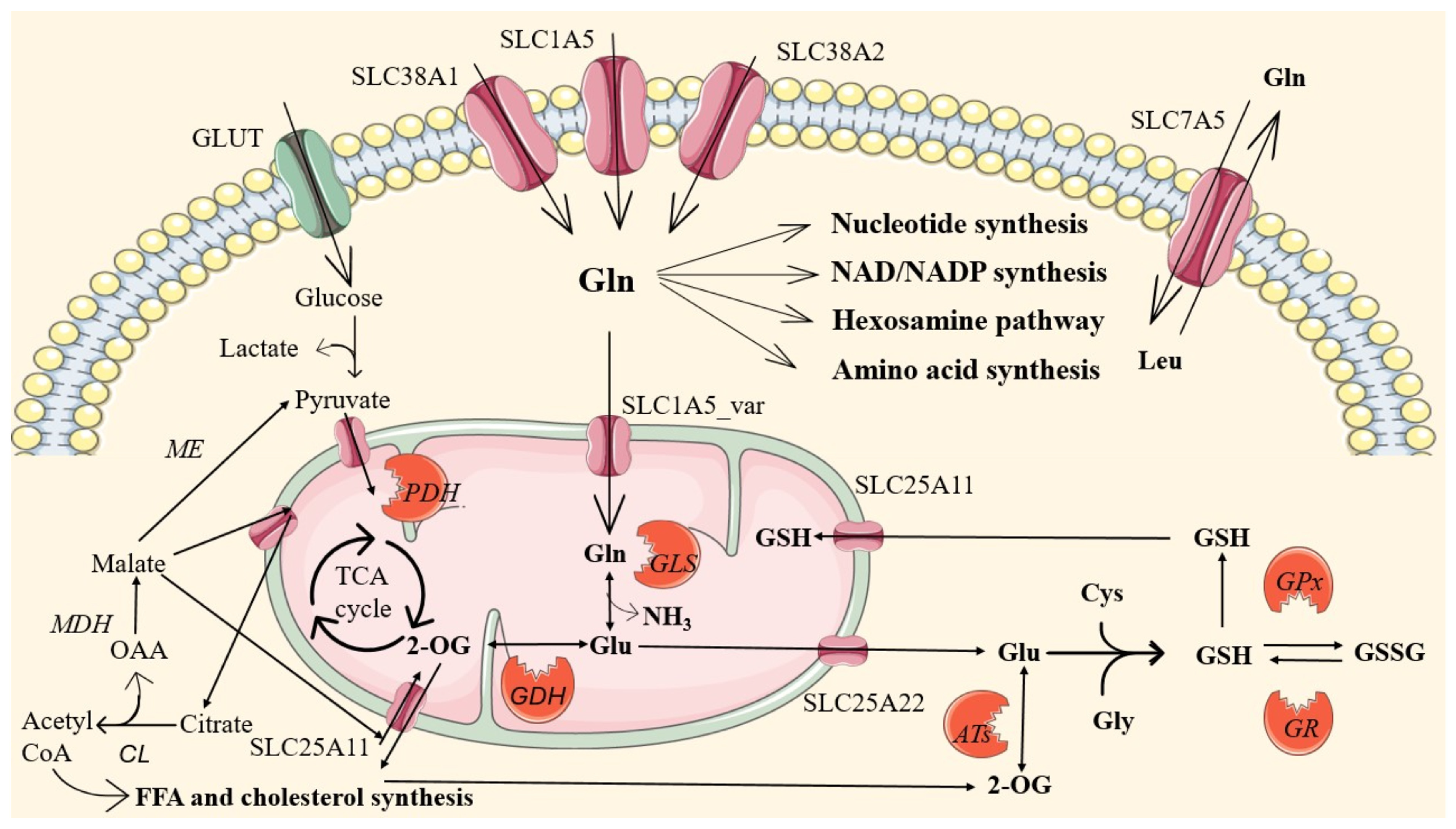
3.1. Glutamate–Glutamine Cycle and Glutaminolysis
3.2. Glutamine and the Synthesis of Nicotinamide-Derived Coenzymes
3.3. Glutamine and Oxidative Stress
3.4. Glutamine, Hexosamine Pathway, and Heat Shock Proteins
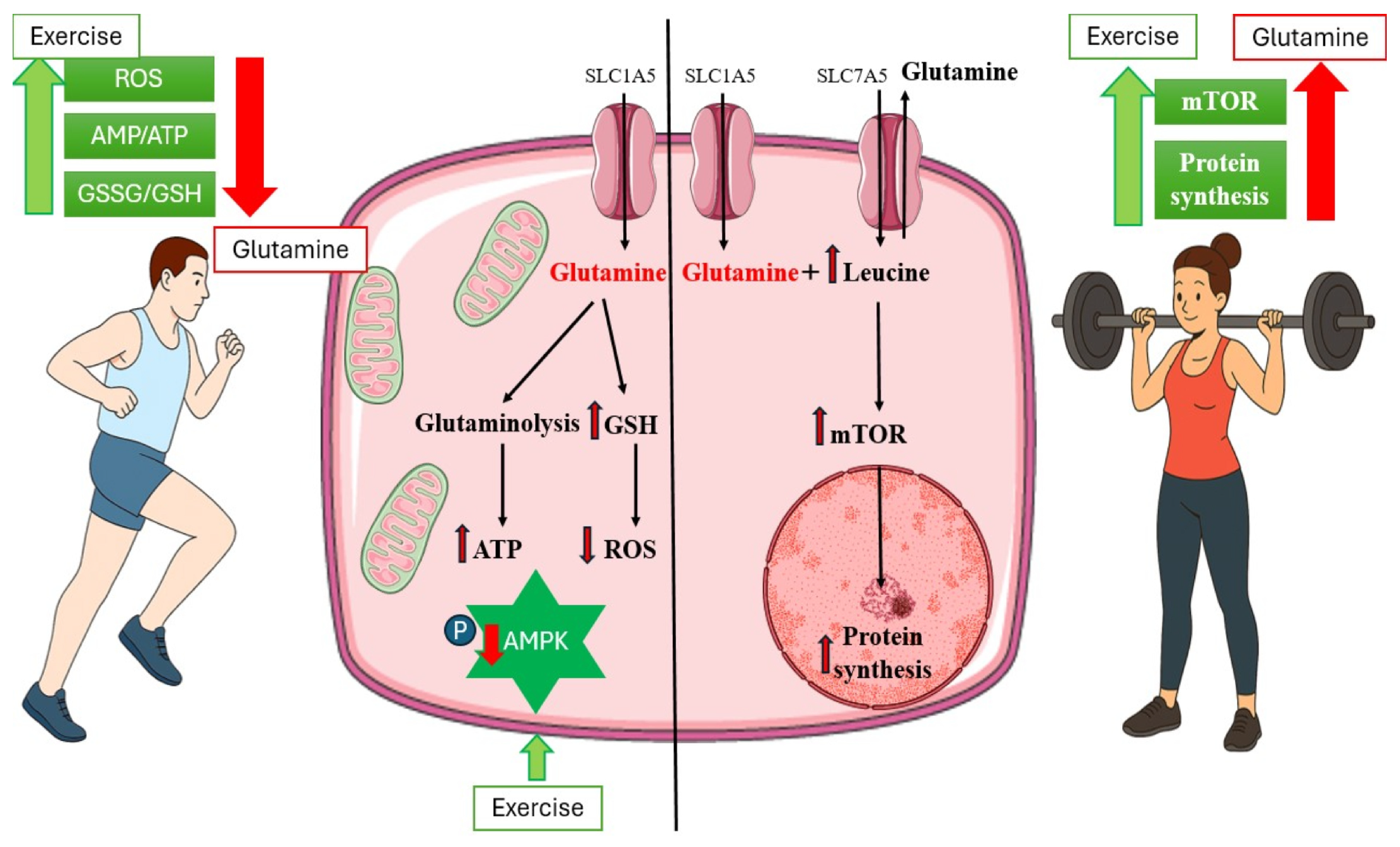
3.5. Theoretical Considerations of Glutamine Supplementation in Exercising Individuals
4. Glutamine Supplementation
4.1. Glutamine Supplementation in Preclinical Studies
4.2. Glutamine Supplementation in Clinical Studies
4.2.1. Pre-Exercise Glutamine Supplementation in Clinical Trials
4.2.2. Post-Exercise Glutamine Supplementation in Clinical Trials
4.2.3. Combined Pre- and Post-Exercise Glutamine Supplementation in Clinical Trials
4.2.4. Clinical Trials with Non-Specified Timing of Glutamine Supplementation
4.2.5. Clinical Trials Involving Specific Populations
5. Discussion
6. Conclusions
Author Contributions
Funding
Institutional Review Board Statement
Data Availability Statement
Acknowledgments
Conflicts of Interest
Abbreviations
| AKT | AKT kinase (protein kinase B) |
| Ala | Alanine |
| AMP | Adenosine Monophosphate |
| AMPK | AMP dependent kinase |
| ATP | Adenosine Triphosphate |
| ATs | Aminotransferases |
| CD | Cluster of Differentiation |
| CET | Combined-Exercise Training |
| CK | Creatine Kinase |
| CL | Citrate Lyase |
| CoA | Coenzyme A |
| Cys | Cysteine |
| FFA | Free Fatty Acids |
| GABA | γ–Aminobutyric Acid |
| GDH | Glutamate Dehydrogenase |
| GLS | Glutaminase |
| Gln | Glutamine |
| Glu | Glutamate |
| GlcNAc | N–Acetyl Glucosamine |
| GLUT | Glucose Transporter |
| GPx | Glutathione Peroxidase |
| GR | Glutathione Reductase |
| GSH | Glutathione |
| GSSG | Oxidized Glutathione |
| HIV/AIDS | Human Immunodeficiency Virus/Acquired Immunodeficiency Syndrome |
| HDL-c | High-Density Lipoprotein Cholesterol |
| HSF1 | Heat Shock Factor 1 |
| HSP | Heat Shock Proteins |
| hs-CRP | High-Sensitivity C-Reactive Protein |
| I-FABP | Intestinal FattyAcid Binding Protein |
| Ig | Immunoglobulin |
| IL | Interleukin |
| FFM | Fat Free Mass |
| LDH | Lactate Dehydrogenase |
| MD | Maltodextrin |
| MDH | Malate Dehydrogenase |
| ME | Malic Enzyme |
| MMP | Matrix Metalloproteinase |
| mTOR | Mammalian Target of Rapamycin |
| NAD | Nicotinamide Adenine Dinucleotide |
| NADP | Nicotinamide Adenine Dinucleotide Phosphate |
| NF-κB | Nuclear Factor Kappa B |
| NK | Natural Killer Cells |
| NO | Nitric Oxide |
| NOX2 | NADPH Oxidase 2 |
| NP | Non-Practitioners |
| OAA | Oxaloacetate |
| ox-LDL | Oxidized Low-Density Lipoprotein |
| PA | Physical activity |
| PDH | Pyruvate Dehydrogenase |
| PepT 1 | Peptide Transporter 1 |
| PON-1 | Paraoxonase-1 |
| PRx | Peroxidase |
| RCT | Randomized Controlled Trial |
| RPE | Rating of Perceived Exertion |
| SLC1A5 | Solute Carrier Family 1 Member 5 |
| SLC38A1 | Solute Carrier Family 38 Member 1 |
| SLC38A2 | Solute Carrier Family 38 Member 2 |
| SLC7A5 | Solute Carrier Family 7 Member 5 |
| SLC7A11 | Solute Carrier Family 7 Member 11 |
| SOD | Superoxide Dismutase |
| TAC | Total Antioxidant Capacity |
| TCA | Tricarboxylic Acid Cycle |
| TNF-α | Tumor Necrosis Factor Alpha |
| TP | Total Protein |
| URTI | Upper Respiratory Tract Infection |
| VO2max | Maximal Oxygen Uptake |
| ZO-1 | Protein Zonula Occludens-1 |
| 2-OG | 2-oxoglutarate |
References
- Cerqueira, É.; Marinho, D.A.; Neiva, H.P.; Lourenço, O. Inflammatory Effects of High and Moderate Intensity Exercise—A Systematic Review. Front. Physiol. 2020, 10, 1550. [Google Scholar] [CrossRef]
- Powers, S.K.; Deminice, R.; Ozdemir, M.; Yoshihara, T.; Bomkamp, M.P.; Hyatt, H. Exercise-Induced Oxidative Stress: Friend or Foe? J. Sport Health Sci. 2020, 9, 415–425. [Google Scholar] [CrossRef]
- Wang, B.; Wu, G.; Zhou, Z.; Dai, Z.; Sun, Y.; Ji, Y.; Li, W.; Wang, W.; Liu, C.; Han, F.; et al. Glutamine and Intestinal Barrier Function. Amino Acids 2015, 47, 2143–2154. [Google Scholar] [CrossRef]
- Raizel, R.; Leite, J.S.M.; Hypólito, T.M.; Coqueiro, A.Y.; Newsholme, P.; Cruzat, V.F.; Tirapegui, J. Determination of the Anti-Inflammatory and Cytoprotective Effects of l-Glutamine and l-Alanine, or Dipeptide, Supplementation in Rats Submitted to Resistance Exercise. Br. J. Nutr. 2016, 116, 470–479. [Google Scholar] [CrossRef]
- Cruzat, V.; Rogero, M.M.; Keane, K.N.; Curi, R.; Newsholme, P. Glutamine: Metabolism and Immune Function, Supplementation and Clinical Translation. Nutrients 2018, 10, 1564. [Google Scholar] [CrossRef] [PubMed]
- Raizel, R.; Tirapegui, J. Role of Glutamine, as Free or Dipeptide Form, on Muscle Recovery from Resistance Training: A Review Study. Nutrire 2018, 43, 28. [Google Scholar] [CrossRef]
- Freitas, A.K.L.; Silva, M.T.B.; Silva, C.M.S.; Prata, M.M.G.; Rodrigues, F.A.P.; Siqueira, R.J.B.; Lima, A.A.M.; Santos, A.A.; Havt, A. Alanyl-Glutamine Protects the Intestinal Barrier Function in Trained Rats against the Impact of Acute Exhaustive Exercise. Braz. J. Med. Biol. Res. 2020, 53, e9211. [Google Scholar] [CrossRef]
- Leite, J.S.M.; Raizel, R.; Hypólito, T.M.; Dos Santos Rosa, T.; Cruzat, V.F.; Tirapegui, J. L-Glutamine and l-Alanine Supplementation Increase Glutamine-Glutathione Axis and Muscle HSP-27 in Rats Trained Using a Progressive High-Intensity Resistance Exercise. Appl. Physiol. Nutr. Metab. 2016, 41, 842–849. [Google Scholar] [CrossRef] [PubMed]
- Newsholme, P.; Diniz, V.L.S.; Dodd, G.T.; Cruzat, V. Glutamine Metabolism and Optimal Immune and CNS Function. Proc. Nutr. Soc. 2023, 82, 22–31. [Google Scholar] [CrossRef]
- Liu, T.; Ren, S.; Sun, C.; Zhao, P.; Wang, H. Glutaminolysis and Peripheral CD4+ T Cell Differentiation: From Mechanism to Intervention Strategy. Front. Immunol. 2023, 14, 1221530. [Google Scholar] [CrossRef]
- Hanover, J.A.; Krause, M.W.; Love, D.C. The Hexosamine Signaling Pathway: O-GlcNAc Cycling in Feast or Famine. Biochim. Biophys. Acta 2010, 1800, 80–95. [Google Scholar] [CrossRef]
- Lockridge, A.; Hanover, J.A. A Nexus of Lipid and O-Glcnac Metabolism in Physiology and Disease. Front. Endocrinol. 2022, 13, 943576. [Google Scholar] [CrossRef]
- Averill-Bates, D.A. The Antioxidant Glutathione. Vitam. Horm. 2023, 121, 109–141. [Google Scholar] [CrossRef] [PubMed]
- de Ingeniis, J.; Kazanov, M.D.; Shatalin, K.; Gelfand, M.S.; Osterman, A.L.; Sorci, L. Glutamine versus Ammonia Utilization in the NAD Synthetase Family. PLoS ONE 2012, 7, e39115. [Google Scholar] [CrossRef] [PubMed]
- Borgenvik, M.; Nordin, M.; Mattsson, C.M.; Enqvist, J.K.; Blomstrand, E.; Ekblom, B. Alterations in Amino Acid Concentrations in the Plasma and Muscle in Human Subjects during 24 h of Simulated Adventure Racing. Eur. J. Appl. Physiol. 2012, 112, 3679–3688. [Google Scholar] [CrossRef]
- Wischmeyer, P.E.; Dhaliwal, R.; McCall, M.; Ziegler, T.R.; Heyland, D.K. Parenteral Glutamine Supplementation in Critical Illness: A Systematic Review. Crit. Care 2014, 18, R76. [Google Scholar] [CrossRef]
- Tao, K.M.; Li, X.Q.; Yang, L.Q.; Yu, W.F.; Lu, Z.J.; Sun, Y.M.; Wu, F.X. Glutamine Supplementation for Critically Ill Adults. Cochrane Database Syst. Rev. 2014, 2014, CD010050. [Google Scholar] [CrossRef] [PubMed]
- Kusy, K.; Matysiak, J.; Zarębska, E.A.; Klupczyńska-Gabryszak, A.; Ciekot-Sołtysiak, M.; Plewa, S.; Kokot, Z.J.; Dereziński, P.; Zieliński, J. Changes in Plasma Concentration of Free Proteinogenic and Non-Proteinogenic Amino Acids in High-Performance Sprinters over a 6-Month Training Cycle. J. Clin. Med. 2024, 13, 5300. [Google Scholar] [CrossRef]
- McMullen, M.K. Glutamine: A Misunderstood Amino Acid with Therapeutic Potential. Nutr. Health 2025, 31, 1325–1329. [Google Scholar] [CrossRef]
- Cruzat, V.F.; Bittencourt, A.; Scomazzon, S.P.; Leite, J.S.M.; De Bittencourt, P.I.H.; Tirapegui, J. Oral Free and Dipeptide Forms of Glutamine Supplementation Attenuate Oxidative Stress and Inflammation Induced by Endotoxemia. Nutrition 2014, 30, 602–611. [Google Scholar] [CrossRef]
- Lu, C.C.; Ke, C.Y.; Wu, W.T.; Lee, R.P. L-Glutamine Is Better for Treatment than Prevention in Exhaustive Exercise. Front. Physiol. 2023, 14, 1172342. [Google Scholar] [CrossRef]
- Rodrigues Junior, C.F.; Murata, G.M.; Gerlinger-Romero, F.; Nachbar, R.T.; Marzuca-Nassr, G.N.; Gorjão, R.; Vitzel, K.F.; Hirabara, S.M.; Pithon-Curi, T.C.; Curi, R. Changes in Skeletal Muscle Protein Metabolism Signaling Induced by Glutamine Supplementation and Exercise. Nutrients 2023, 15, 4711. [Google Scholar] [CrossRef]
- Legault, Z.; Bagnall, N.; Kimmerly, D.S. The Influence of Oral L-Glutamine Supplementation on Muscle Strength Recovery and Soreness Following Unilateral Knee Extension Eccentric Exercise. Int. J. Sport Nutr. Exerc. Metab. 2015, 25, 417–426. [Google Scholar] [CrossRef] [PubMed]
- Caris, A.V.; da Silva, E.T.; dos Santos, S.A.; Tufik, S.; dos Santos, R.V.T. Effects of Carbohydrate and Glutamine Supplementation on Oral Mucosa Immunity after Strenuous Exercise at High Altitude: A Double-Blind Randomized Trial. Nutrients 2017, 9, 692. [Google Scholar] [CrossRef]
- Pugh, J.N.; Sage, S.; Hutson, M.; Doran, D.A.; Fleming, S.C.; Highton, J.; Morton, J.P.; Close, G.L. Glutamine Supplementation Reduces Markers of Intestinal Permeability during Running in the Heat in a Dose-Dependent Manner. Eur. J. Appl. Physiol. 2017, 117, 2569–2577. [Google Scholar] [CrossRef]
- Nemati, A.; Alipanah-Moghadam, R.; Molazadeh, L.; Baghi, A.N. The Effect of Glutamine Supplementation on Oxidative Stress and Matrix Metalloproteinase 2 and 9 After Exhaustive Exercise. Drug Des. Dev. Ther. 2019, 13, 4215–4223. [Google Scholar] [CrossRef] [PubMed]
- Caris, A.V.; Tavares-Silva, E.; Thomatieli-Santos, R.V. Effects of Carbohydrate and Glutamine Supplementation on Cytokine Production by Monocytes after Exercise in Hypoxia: A Crossover, Randomized, Double-Blind Pilot Study. Nutrition 2020, 70, 110592. [Google Scholar] [CrossRef]
- Córdova-Martínez, A.; Caballero-García, A.; Bello, H.J.; Pérez-Valdecantos, D.; Roche, E. Effect of Glutamine Supplementation on Muscular Damage Biomarkers in Professional Basketball Players. Nutrients 2021, 13, 2073. [Google Scholar] [CrossRef]
- Ramezani Ahmadi, A.; Rayyani, E.; Bahreini, M.; Mansoori, A. The Effect of Glutamine Supplementation on Athletic Performance, Body Composition, and Immune Function: A Systematic Review and a Meta-Analysis of Clinical Trials. Clin. Nutr. 2019, 38, 1076–1091. [Google Scholar] [CrossRef] [PubMed]
- Paulusma, C.C.; Lamers, W.H.; Broer, S.; van de Graaf, S.F.J. Amino Acid Metabolism, Transport and Signalling in the Liver Revisited. Biochem. Pharmacol. 2022, 201, 115074. [Google Scholar] [CrossRef]
- Rogeri, P.S.; Gasparini, S.O.; Martins, G.L.; Costa, L.K.F.; Araujo, C.C.; Lugaresi, R.; Kopfler, M.; Lancha, A.H. Crosstalk Between Skeletal Muscle and Immune System: Which Roles Do IL-6 and Glutamine Play? Front. Physiol. 2020, 11, 582258. [Google Scholar] [CrossRef]
- de Oliveira, D.C.; da Silva Lima, F.; Sartori, T.; Santos, A.C.A.; Rogero, M.M.; Fock, R.A. Glutamine Metabolism and Its Effects on Immune Response: Molecular Mechanism and Gene Expression. Nutrire 2016, 41, 14. [Google Scholar] [CrossRef]
- Dos Santos, R.V.T.; Caperuto, É.C.; De Mello, M.T.; Batista, M.L.; Rosa, L.F.B.P.C. Effect of Exercise on Glutamine Synthesis and Transport in Skeletal Muscle from Rats. Clin. Exp. Pharmacol. Physiol. 2009, 36, 770–775. [Google Scholar] [CrossRef]
- Smedberg, M.; Rooyackers, O.; Norberg, Å.; Tjäder, I.; Wernerman, J. Endogenous Production of Glutamine and Plasma Glutamine Concentration in Critically Ill Patients. Clin. Nutr. ESPEN 2020, 40, 226–230. [Google Scholar] [CrossRef]
- Coqueiro, A.Y.; Raizel, R.; Bonvini, A.; Rogero, M.M.; Tirapegui, J. Effects of Glutamine and Alanine Supplementation on Muscle Fatigue Parameters of Rats Submitted to Resistance Training. Nutrition 2019, 65, 131–137. [Google Scholar] [CrossRef]
- Pochini, L.; Scalise, M.; Galluccio, M.; Indiveri, C. Membrane Transporters for the Special Amino Acid Glutamine: Structure/Function Relationships and Relevance to Human Health. Front. Chem. 2014, 2, 61. [Google Scholar] [CrossRef] [PubMed]
- Menchini, R.J.; Chaudhry, F.A. Multifaceted Regulation of the System A Transporter Slc38a2 Suggests Nanoscale Regulation of Amino Acid Metabolism and Cellular Signaling. Neuropharmacology 2019, 161, 107789. [Google Scholar] [CrossRef] [PubMed]
- Scalise, M.; Galluccio, M.; Console, L.; Pochini, L.; Indiveri, C. The Human SLC7A5 (LAT1): The Intriguing Histidine/Large Neutral Amino Acid Transporter and Its Relevance to Human Health. Front. Chem. 2018, 6, 243. [Google Scholar] [CrossRef]
- Yoshimura, R.; Nomura, S. Co-Ingestion of Glutamine and Leucine Synergistically Promotes MTORC1 Activation. Sci. Rep. 2022, 12, 15870. [Google Scholar] [CrossRef]
- Yang, L.; Venneti, S.; Nagrath, D. Glutaminolysis: A Hallmark of Cancer Metabolism. Annu. Rev. Biomed. Eng. 2017, 19, 163–194. [Google Scholar] [CrossRef] [PubMed]
- Zhou, Y.; Eid, T.; Hassel, B.; Danbolt, N.C. Novel Aspects of Glutamine Synthetase in Ammonia Homeostasis. Neurochem. Int. 2020, 140, 104809. [Google Scholar] [CrossRef]
- Cooper, A.J.L.; Jeitner, T.M. Central Role of Glutamate Metabolism in the Maintenance of Nitrogen Homeostasis in Normal and Hyperammonemic Brain. Biomolecules 2016, 6, 16. [Google Scholar] [CrossRef] [PubMed]
- Voss, C.M.; Arildsen, L.; Nissen, J.D.; Waagepetersen, H.S.; Schousboe, A.; Maechler, P.; Ott, P.; Vilstrup, H.; Walls, A.B. Glutamate Dehydrogenase Is Important for Ammonia Fixation and Amino Acid Homeostasis in Brain During Hyperammonemia. Front. Neurosci. 2021, 15, 646291. [Google Scholar] [CrossRef]
- Pal, M.M. Glutamate: The Master Neurotransmitter and Its Implications in Chronic Stress and Mood Disorders. Front. Hum. Neurosci. 2021, 15, 722323. [Google Scholar] [CrossRef]
- Światkiewicz, M.; Fiedorowicz, M.; Orzeł, J.; Wełniak-Kamińska, M.; Bogorodzki, P.; Langfort, J.; Grieb, P. Increases in Brain 1H-MR Glutamine and Glutamate Signals Following Acute Exhaustive Endurance Exercise in the Rat. Front. Physiol. 2017, 8, 19. [Google Scholar] [CrossRef]
- Leiding, J.W.; Mathews, C.E.; Arnold, D.E.; Chen, J. The Role of NADPH Oxidase 2 in Leukocytes. Antioxidants 2025, 14, 309. [Google Scholar] [CrossRef]
- Powers, S.K.; Radak, Z.; Ji, L.L.; Jackson, M. Reactive Oxygen Species Promote Endurance Exercise-Induced Adaptations in Skeletal Muscles. J. Sport Health Sci. 2024, 13, 780–792. [Google Scholar] [CrossRef] [PubMed]
- Moura, C.S.; Lollo, P.C.B.; Morato, P.N.; Risso, E.M.; Amaya-Farfan, J. Modulatory Effects of Arginine, Glutamine and Branched-Chain Amino Acids on Heat Shock Proteins, Immunity and Antioxidant Response in Exercised Rats. Food Funct. 2017, 8, 3228–3238. [Google Scholar] [CrossRef] [PubMed]
- Mannino, M.P.; Hart, G.W. The Beginner’s Guide to O-GlcNAc: From Nutrient Sensitive Pathway Regulation to Its Impact on the Immune System. Front. Immunol. 2022, 13, 828648. [Google Scholar] [CrossRef]
- Paneque, A.; Fortus, H.; Zheng, J.; Werlen, G.; Jacinto, E. The Hexosamine Biosynthesis Pathway: Regulation and Function. Genes 2023, 14, 933. [Google Scholar] [CrossRef]
- Peake, J.M.; Roberts, L.A.; Figueiredo, V.C.; Egner, I.; Krog, S.; Aas, S.N.; Suzuki, K.; Markworth, J.F.; Coombes, J.S.; Cameron-Smith, D.; et al. The Effects of Cold Water Immersion and Active Recovery on Inflammation and Cell Stress Responses in Human Skeletal Muscle after Resistance Exercise. J. Physiol. 2017, 595, 695–711. [Google Scholar] [CrossRef]
- Krüger, K.; Reichel, T.; Zeilinger, C. Role of Heat Shock Proteins 70/90 in Exercise Physiology and Exercise Immunology and Their Diagnostic Potential in Sports. J. Appl. Physiol. 2019, 126, 916–927. [Google Scholar] [CrossRef]
- Escobar, K.A.; VanDusseldorp, T.A.; Johnson, K.E.; Stratton, M.; McCormick, J.J.; Moriarity, T.; Dokladny, K.; Vaughan, R.A.; Kerksick, C.M.; Kravitz, L.; et al. The Biphasic Activity of Autophagy and Heat Shock Protein Response in Peripheral Blood Mononuclear Cells Following Acute Resistance Exercise in Resistance-Trained Males. Eur. J. Appl. Physiol. 2024, 124, 2981–2992. [Google Scholar] [CrossRef] [PubMed]
- Mikhailova, E.; Sokolenko, A.; Combs, S.E.; Shevtsov, M. Modulation of Heat Shock Proteins Levels in Health and Disease: An Integrated Perspective in Diagnostics and Therapy. Cells 2025, 14, 979. [Google Scholar] [CrossRef] [PubMed]
- Xue, H.; Slavov, D.; Wischmeyer, P.E. Glutamine-Mediated Dual Regulation of Heat Shock Transcription Factor-1 Activation and Expression. J. Biol. Chem. 2012, 287, 40400–40413. [Google Scholar] [CrossRef]
- Smiles, W.J.; Ovens, A.J.; Kemp, B.E.; Galic, S.; Petersen, J.; Oakhill, J.S. New Developments in AMPK and MTORC1 Cross-Talk. Essays Biochem. 2024, 68, 321–336. [Google Scholar] [CrossRef]
- Cork, G.K.; Thompson, J.; Slawson, C. Real Talk: The Inter-Play between the MTOR, AMPK, and Hexosamine Biosynthetic Pathways in Cell Signaling. Front. Endocrinol. 2018, 9, 522. [Google Scholar] [CrossRef]
- Agostini, F.; Bisaglia, M.; Plotegher, N. Linking ROS Levels to Autophagy: The Key Role of AMPK. Antioxidants 2023, 12, 1406. [Google Scholar] [CrossRef]
- Yoon, M.S. The Role of Mammalian Target of Rapamycin (MTOR) in Insulin Signaling. Nutrients 2017, 9, 1176. [Google Scholar] [CrossRef] [PubMed]
- Bodineau, C.; Tomé, M.; Murdoch, P.d.S.; Durán, R.V. Glutamine, MTOR and Autophagy: A Multiconnection Relationship. Autophagy 2022, 18, 2749–2750. [Google Scholar] [CrossRef]
- Thomson, D.M. The Role of AMPK in the Regulation of Skeletal Muscle Size, Hypertrophy, and Regeneration. Int. J. Mol. Sci. 2018, 19, 3125. [Google Scholar] [CrossRef]
- Bodineau, C.; Tomé, M.; Courtois, S.; Costa, A.S.H.; Sciacovelli, M.; Rousseau, B.; Richard, E.; Vacher, P.; Parejo-Pérez, C.; Bessede, E.; et al. Two Parallel Pathways Connect Glutamine Metabolism and MTORC1 Activity to Regulate Glutamoptosis. Nat. Commun. 2021, 12, 4814. [Google Scholar] [CrossRef]
- van Wijck, K.; Lenaerts, K.; van Loon, L.J.C.; Peters, W.H.M.; Buurman, W.A.; Dejong, C.H.C. Exercise-Induced Splanchnic Hypoperfusion Results in Gut Dysfunction in Healthy Men. PLoS ONE 2011, 6, e22366. [Google Scholar] [CrossRef]
- Costa, R.J.S.; Snipe, R.M.J.; Kitic, C.M.; Gibson, P.R. Systematic Review: Exercise-Induced Gastrointestinal Syndrome—Implications for Health and Intestinal Disease. Aliment. Pharmacol. Ther. 2017, 46, 246–265. [Google Scholar] [CrossRef]
- Dmytriv, T.R.; Storey, K.B.; Lushchak, V.I. Intestinal Barrier Permeability: The Influence of Gut Microbiota, Nutrition, and Exercise. Front. Physiol. 2024, 15, 1380713. [Google Scholar] [CrossRef] [PubMed]
- Zuhl, M.; Schneider, S.; Lanphere, K.; Conn, C.; Dokladny, K.; Moseley, P. Exercise Regulation of Intestinal Tight Junction Proteins. Br. J. Sports Med. 2014, 48, 980–986. [Google Scholar] [CrossRef] [PubMed]
- de Oliveira Santos, R.; da Silva Cardoso, G.; da Costa Lima, L.; de Sousa Cavalcante, M.L.; Silva, M.S.; Cavalcante, A.K.M.; Severo, J.S.; de Melo Sousa, F.B.; Pacheco, G.; Alves, E.H.P.; et al. L-Glutamine and Physical Exercise Prevent Intestinal Inflammation and Oxidative Stress Without Improving Gastric Dysmotility in Rats with Ulcerative Colitis. Inflammation 2021, 44, 617–632. [Google Scholar] [CrossRef]
- Coqueiro, A.Y.; Raizel, R.; Bonvini, A.; Hypólito, T.; Godois, A.d.M.; Pereira, J.R.R.; Garcia, A.B.d.O.; Lara, R.d.S.B.; Rogero, M.M.; Tirapegui, J. Effects of Glutamine and Alanine Supplementation on Central Fatigue Markers in Rats Submitted to Resistance Training. Nutrients 2018, 10, 119. [Google Scholar] [CrossRef] [PubMed]
- Coqueiro, A.Y.; Raizel, R.; Bonvini, A.; Godois, A.d.M.; Hypólito, T.M.; Pereira, J.R.R.; Rogero, M.M.; Tirapegui, J. Effects of Glutamine and Alanine Supplementation on Adiposity, Plasma Lipid Profile, and Adipokines of Rats Submitted to Resistance Training. J. Diet. Suppl. 2019, 16, 676–688. [Google Scholar] [CrossRef]
- Ogden, H.B.; Fallowfield, J.L.; Child, R.B.; Davison, G.; Fleming, S.C.; Delves, S.K.; Millyard, A.; Westwood, C.S.; Layden, J.D. Acute L-Glutamine Supplementation Does Not Improve Gastrointestinal Permeability, Injury or Microbial Translocation in Response to Exhaustive High Intensity Exertional-Heat Stress. Eur. J. Sport Sci. 2022, 22, 1865–1876. [Google Scholar] [CrossRef]
- Osborne, J.O.; Stewart, I.B.; Beagley, K.W.; Borg, D.N.; Minett, G.M. Acute Glutamine Supplementation Does Not Improve 20-Km Self-Paced Cycling Performance in the Heat. Eur. J. Appl. Physiol. 2019, 119, 2567–2578. [Google Scholar] [CrossRef]
- Tataka, Y.; Haramura, M.; Hamada, Y.; Ono, M.; Toyoda, S.; Yamada, T.; Hiratsu, A.; Suzuki, K.; Miyashita, M. Effects of Oral Cystine and Glutamine on Exercise-Induced Changes in Gastrointestinal Permeability and Damage Markers in Young Men. Eur. J. Nutr. 2022, 61, 2331–2339. [Google Scholar] [CrossRef]
- Zheng, C.; Chen, X.K.; Zhou, Y. Acute Glutamine Ingestion Modulates Lymphocytic Responses to Exhaustive Exercise in the Heat. Appl. Physiol. Nutr. Metab. 2018, 43, 213–220. [Google Scholar] [CrossRef]
- Caris, A.V.; Thomatieli-Santos, R.V. Carbohydrate and Glutamine Supplementation Attenuates the Increase in Rating of Perceived Exertion during Intense Exercise in Hypoxia Similar to 4200 M. Nutrients 2020, 12, 3797. [Google Scholar] [CrossRef] [PubMed]
- Kartaram, S.; Mensink, M.; Teunis, M.; Schoen, E.; Witte, G.; Janssen Duijghuijsen, L.; Verschuren, M.; Mohrmann, K.; M’Rabet, L.; Knipping, K.; et al. Plasma Citrulline Concentration, a Marker for Intestinal Functionality, Reflects Exercise Intensity in Healthy Young Men. Clin. Nutr. 2019, 38, 2251–2258. [Google Scholar] [CrossRef]
- Lu, T.L.; Zheng, A.C.; Suzuki, K.; Lu, C.C.; Wang, C.Y.; Fang, S.H. Supplementation of L-Glutamine Enhanced Mucosal Immunity and Improved Hormonal Status of Combat-Sport Athletes. J. Int. Soc. Sports Nutr. 2024, 21, 2300259. [Google Scholar] [CrossRef] [PubMed]
- Alipanah-Moghadam, R.; Molazadeh, L.; Jafari-Suha, Z.; Naghizadeh-Baghi, A.; Mohajeri, M.; Nemati, A. Glutamine Supplementation Can Reduce Some Atherosclerosis Markers after Exhaustive Exercise in Young Healthy Males. Nutrition 2022, 94, 111506. [Google Scholar] [CrossRef]
- Lu, T.L.; He, C.S.; Suzuki, K.; Lu, C.C.; Wang, C.Y.; Fang, S.H. Concurrent Ingestion of Alkaline Water and L-Glutamine Enhanced Salivary α-Amylase Activity and Testosterone Concentration in Boxing Athletes. Nutrients 2024, 16, 454. [Google Scholar] [CrossRef]
- Marshall, H.; Chrismas, B.C.R.; Suckling, C.A.; Roberts, J.D.; Foster, J.; Taylor, L. Chronic Probiotic Supplementation with or without Glutamine Does Not Influence the EHsp72 Response to a Multi-Day Ultra-Endurance Exercise Event. Appl. Physiol. Nutr. Metab. 2017, 42, 876–883. [Google Scholar] [CrossRef] [PubMed]
- Almeida, E.B.; Santos, J.M.B.; Paixaõ, V.; Amaral, J.B.; Foster, R.; Sperandio, A.; Roseira, T.; Rossi, M.; Cordeiro, T.G.; Monteiro, F.R.; et al. L-Glutamine Supplementation Improves the Benefits of Combined-Exercise Training on Oral Redox Balance and Inflammatory Status in Elderly Individuals. Oxidative Med. Cell. Longev. 2020, 2020, 2852181. [Google Scholar] [CrossRef]
- Pires, R.S.; Braga, P.G.S.; Santos, J.M.B.; Amaral, J.B.; Amirato, G.R.; Trettel, C.S.; dos Santos, C.A.F.; Vaisberg, M.; Nali, L.H.S.; Vieira, R.P.; et al. L-Glutamine Supplementation Enhances Glutathione Peroxidase and Paraoxonase-1 Activities in HDL of Exercising Older Individuals. Exp. Gerontol. 2021, 156, 111584. [Google Scholar] [CrossRef]
- Amirato, G.R.; Borges, J.O.; Marques, D.L.; Santos, J.M.B.; Santos, C.A.F.; Andrade, M.S.; Furtado, G.E.; Rossi, M.; Luis, L.N.; Zambonatto, R.F.; et al. L-Glutamine Supplementation Enhances Strength and Power of Knee Muscles and Improves Glycemia Control and Plasma Redox Balance in Exercising Elderly Women. Nutrients 2021, 13, 1025. [Google Scholar] [CrossRef] [PubMed]
- Monteiro, F.R.; Roseira, T.; Amaral, J.B.; Paixão, V.; Almeida, E.B.; Foster, R.; Sperandio, A.; Rossi, M.; Amirato, G.R.; Apostólico, J.S.; et al. Combined Exercise Training and L-Glutamine Supplementation Enhances Both Humoral and Cellular Immune Responses after Influenza Virus Vaccination in Elderly Subjects. Vaccines 2020, 8, 685. [Google Scholar] [CrossRef]
- Hasan, R.; Perez-Santiago, D.; Churilla, J.R.; Montes, B.; Hossain, J.; Mauras, N.; Darmaun, D. Can Short Bouts of Exercise (“Exercise Snacks”) Improve Body Composition in Adolescents with Type 1 Diabetes? A Feasibility Study. Horm. Res. Paediatr. 2020, 92, 245–253. [Google Scholar] [CrossRef] [PubMed]
- Torres-Santiago, L.; Mauras, N.; Hossain, J.; Weltman, A.L.; Darmaun, D. Does Oral Glutamine Improve Insulin Sensitivity in Adolescents with Type 1 Diabetes? Nutrition 2017, 34, 1–6. [Google Scholar] [CrossRef]
- De Souza, D.C.; De Silva, J.C.; De Matos, F.O.; Okano, A.H.; Bazotte, R.B.; Avelar, A. The Effect of a Short Period of Supplementation with Glutamine Dipeptide on the Cognitive Responses after a Resistance Training Session of Women with HIV/AIDS: A Randomized Double-Blind Placebo-Controlled Crossover Study. Biomed. Res. Int. 2018, 2018, 2525670. [Google Scholar] [CrossRef]
- Ogden, H.B.; Child, R.B.; Fallowfield, J.L.; Delves, S.K.; Westwood, C.S.; Millyard, A.; Layden, J.D. Gastrointestinal Tolerance of Low, Medium and High Dose Acute Oral l-Glutamine Supplementation in Healthy Adults: A Pilot Study. Nutrients 2020, 12, 2953. [Google Scholar] [CrossRef]
- Shao, A.; Hathcock, J.N. Risk assessment for the amino acids taurine, L-glutamine and L-arginine. Regul. Toxicol. Pharmacol. 2008, 50, 376–399. [Google Scholar] [CrossRef]
- Abbasi, F.; Haghighat Lari, M.M.; Khosravi, G.R.; Mansouri, E.; Payandeh, N.; Milajerdi, A. A systematic review and meta-analysis of clinical trials on the effects of glutamine supplementation on gut permeability in adults. Amino Acids 2024, 56, 60. [Google Scholar] [CrossRef] [PubMed]



| Author | Animals | Supplementation | Exercise Protocols | Main Findings |
|---|---|---|---|---|
| Raizel et al. [4] | Wistar rats, 2 months, male | Ala, Gln+Ala or DIP (4% in water for 21 days, ad libitum) | Resistance training (ladder-climbing protocol with extra weights tied to their tails, 8 weeks) | ↑ Gln, ↓ reduced inflammation (↓ TNF-α, ↓ IL-1β, ↑ IL-6, ↑ IL-10, ↑ MCP-1, ↓ NF-κB), ↓ muscle damage (↓ CK, ↓ LDH), ↑ HSP70 |
| Freitas et al. [7] | Wistar rats, age NR, male | DIP, 1.5 g/kg, 6 weeks, post-exercise | Swimming (12 weeks) + acute swimming exhaustive test after training | ↓ Intestinal permeability (↓ urinary lactulose and mannitol levels), improved barrier function, (↓ claudin-2, occludin, ZO-1, PepT 1 gene expression) |
| Leite et al. [8] | Wistar rats, 8 weeks, male | Ala, Gln+Ala or DIP (4% in water for 21 days, ad libitum) | Resistance training (ladder-climbing protocol with extra weights tied to their tails, 8 weeks) | ↑ Gln, ↓oxidative stress (↓ GSSG/GSH, ↓ TBARS), ↓ muscle damage (↓ CK), ↑ HSP synthesis (↑ HSF-1, ↑ HSP-27) |
| Lu et al. [21] | Sprague–Dawley rats, age and sex NR | Gln, 1 g/kg, pre or post exercise, in drinking water | Exhaustive exercise (treadmill with increments to a maximum running speed of 15 miles/min with no incline) | Treatment group: ↓ CK-MM, ↑ red blood cell count and platelet count, ↓ cardiac and kidney damage. The therapeutic effect of Gln was more effective than preventive. |
| Rodrigues Junior et al. [22] | Wistar rats, age NR, male | Gln, 1 g/kg/day, 5 weeks, oral gavage | Resistance training (ladder-climbing protocol with extra weights tied to their tails, 5 weeks) | Gln + exercise group: ↑ protein synthesis signaling (AKT/mTOR) |
| Coqueiro et al. [35] | Wistar rats, 60 days, male | Ala, Gln+Ala or DIP (4% in water for 21 days, ad libitum) | Resistance training (ladder-climbing protocol with extra weights tied to their tails, 8 weeks) | ↓ Muscle fatigue, ↓ muscle damage (↓ LDH, ↓ CK), ↑ Gln, ↑ Glu |
| Moura et al. [48] | Wistar rats, 7 weeks, male | Gln, 0.75 g/kg, single dose, oral gavage, postexercise | Acute exercise stress model (treadmill without inclination at the speed of 18 m/min for one hour) | ↑ HSP-60 expression, ↑ Gpx, ↔ SOD, ↔ HSP 25, HSP 70, HSP 90 expression |
| de Oliveira Santos et al. [67] | Wistar rats, age NR, male | Gln, 1 g/kg/day, 8 weeks, oral gavage | Strength (jump training 8 weeks with progressive overload) or/and endurance exercise (swimming without overload for 8 weeks) | ↓ Inflammation (↓ IL-1β, ↓ IL-6, ↓ TNF-α), ↓ oxidative stress (↓ MDA, ↓ SOD, ↓ myeloperoxidase, ↓ NO-2/NO-3) |
| Coqueiro et al. [68] | Wistar rats, 2 months, male | Ala, Gln+Ala or DIP (4% in water for 21 days, ad libitum) | Resistance training (ladder-climbing protocol with extra weights tied to their tails, 8 weeks) | Central fatigue markers (hypothalamic 5-HT, 5-HT/DA ratio): ↑ DIP, ↓ G+A, ↔ performance (MCC test) |
| Coqueiro et al. [69] | Wistar rats, 2 months, male | Ala, Gln+Ala or DIP (4% in water for 21 days, ad libitum) | Resistance training (ladder-climbing protocol with extra weights tied to their tails, 8 weeks) | ↑ Adiposity, impaired lipid profile (↑ LDL-c, ↑ TC), ↑ IL-6, ↑ IL-10 |
| Author | Study Design | Subjects | Exercise Protocol | Supplementation | Major Effects |
|---|---|---|---|---|---|
| Caris et al. [24] | RCT, double-blind | Healthy adults (n = 15), male | Strenuous exercise at 70% VO2peak | 20 g/day Gln for 6 days + 200 mL 8% MD on the test day | ↔ Inflammation (salivary IgA, IL-6, IL-10, TNF-α) |
| Pugh et al. [25] | RCT, placebo-controlled, crossover | Healthy adults, recreationally active (n = 10), male | 60-min treadmill run at 70% VO2max, (at 30 °C, humidity 40–45%) | 0.25 g/kg, 0.5 g/kg, and 0.9 g/kg Gln, single dose | ↓ Intestinal permeability (L/R test), ↓ I-FABP |
| Nemati et al. [26] | RCT, placebo-controlled | Healthy young adults (n = 30), male | Exhaustive exercise (Bruce protocol until experiencing fatigue) | 0.3 g/kg/day Gln + sugar, 14 days | ↑ Gln, ↓ oxidative stress (↓ MDA,↑ TAC) ↓ hs-CRP, ↔ MMP-2, ↔ MMP-9 |
| Caris et al. [27] | RCT, crossover, double-blind pilot study | Healthy adults, physically active (n = 15), male | Exhaustive exercise under simulated hypoxia (70% VO2max) | 20 g/day Gln for 6 days + 200 mL 8% MD on the test day | ↑ Gln, ↓ inflammation (↓ IL-1β, ↓ TNF-α, ↔IL-6), ↔ erythropoietin, ↔ myeloperoxidase |
| Córdova-Martínez et al. [28] | RCT, double blind, placebo-controlled, crossover | Professional basketball players (n = 12), male | Players followed their regular training and competition routines. | 6 g/day Gln for 20 days | ↓ Muscle damage (↓ CK, ↓ LDH), ↓ inflammation (↓ IL-6, ↓ CRP), ↔ performance tests (vertical jump, agility T-test, and 20-m sprint) |
| Ogden et al. [70] | RCT, placebo-controlled, crossover | Healthy adults (n = 14), male | Running in the heat (40 °C and 40% humidity) | 0.3 g/kg Gln, single dose | ↑ Intestinal permeability (L/R test), ↔ I-FABP, ↔ Bacteroides/total 16S DNA ratio |
| Osborne et al. [71] | RCT, placebo-controlled | Trained cyclists (n = 12), male | Two 20-km time trials (35 °C, 50% humidity) | 0.9 g/kg FFM, single dose | ↔ Endotoxin translocation, ↔ I-FABP, ↔ inflammation (↔ IL-6, ↔ TNF-α),↔ performance tests |
| Tataka et al. [72] | RCT, crossover | Young adults (n = 16), male | 1-h run at 75% VO2max | 0.2 g Cys + 1.0 g Gln + 1.2 g MD, 3×/day for 5 days + single dose before exercise on day 6 | ↓ Intestinal permeability (L/M ratio), ↓ I-FABP |
| Zheng et al. [73] | RCT, crossover | Healthy, untrained adults (n = 13), male | Treadmill running at 40% VO2max to exhaustion (38 °C, 60% humidity). | 0.6 g/kg Gln, single dose | ↑ CD3+ and CD3+ CD8+ T cells; ↔ NK/neutrophils, ↔ CD4+/CD8+ ratio, ↔ CD19+ lymphocytes |
| Caris et al. [74] | RCT, double-blind, crossover | Healthy adults (n = 9), male | Running at 70% VO2peak under simulated hypoxia | 20 g/day Gln for 6 days + 200 mL 8% MD on the test day | ↓ RPE, ↑ glycemia, ↔ heart rate, ↔ lactate |
| Author | Study Design | Subjects | Exercise Protocol | Supplementation | Major Effects |
|---|---|---|---|---|---|
| Kartaram et al. [75] | RCT, crossover | Healthy recreational-active cyclists (n = 15), male | A rest and four-cycle ergometer protocols under varying intensity and hydration | 7.5 g Gln + 7.5 g Ala, single dose | ↑ Plasma citrulline, ↑ I-FABP |
| Lu et al. [76] | RCT, double-blind, placebo-controlled | Combat-sport athletes (n = 21), male | 2-h session each day 5 days a week, with an intensity 80% of their maximum heart rate | 0.3 g/kg/day Gln, 3 weeks | ↑ Salivary IgA; ↑ Salivary NO; ↑ Testosterone/Cortisol ratio; ↓ Upper Respiratory Tract Infection; ↑ well-being scores |
| Author | Study Design | Subjects | Exercise Protocol | Supplementation | Major Effects |
|---|---|---|---|---|---|
| Legault et al. [23] | RCT, double-blind, placebo-controlled crossover | Healthy young adults (n = 16), male and female | Unilateral knee extension at 125% of maximum concentric force, 8 sets of 10 repetitions with 2-min rest intervals | 0.3 Gln g/kg/day + 0.3 g/kg/day MD; Day 1—pre- and post-exercise. Day 2 and 3—one dose before testing | ↑ Peak torque at 30°/s post-exercise. ↓ Muscle soreness. Better response in men. |
| Author | Study Design | Subjects | Exercise Protocol | Supplementation | Major Effects |
|---|---|---|---|---|---|
| Lu et al. [76] | RCT, crossover | Boxing athletes (n = 9), male | Regular 2 h boxing training | 0.15 g/kg Gln + 400 mL alkaline water for 3 weeks | ↑ α-Amylase activity/TP, ↑ salivary testosterone; ↔ lactoferrin/TP, ↔ IgA/TP, ↔ cortisol |
| Alipanah-Moghadam et al. [77] | RCT | Healthy young adults (n = 30), male | Exhaustive exercise | 0.3 g/kg/day Gln + 25 g sugar for 14 days | ↓ Leptin, ↓ Cholesterol, ↓ ox-LDL, ↓ ox-LDL/HDL ratio, ↓ IL-6 |
| Marshall et al. [79] | RCT | Ultra-endurance athletes (n = 32) | 7-day ultra-marathon | Probiotics + Gln (5 g/day) for 12 weeks | ↔ Hsp72 expression. Probiotics + Gln group: 9% faster than control |
| Author | Study Design | Subjects | Exercise Protocol | Supplementation | Major Effects |
|---|---|---|---|---|---|
| Almeida et al. [80] | RCT, placebo-controlled | Elderly individuals (n = 83), male and female | Moderate-intensity CET vs. NP | 0.3 g/kg/day Gln for 30 days | ↓ Salivary NO, ↑ salivary uric acid, ↓ salivary GSH, ↑ salivary PRx activity, ↔ albumin, ↔ TAC |
| Pires et al. [81] | RCT, double blind, placebo-controlled | Elderly individuals (n = 83), male and female | Moderate-intensity CET vs. NP | 0.3 g/kg/day Gln for 30 days | ↑ HDL-c, ↑ PRx, ↑ GPx, ↑ PON-1 in CET group |
| Amirato et al. [82] | RCT, placebo-controlled | Elderly women (n = 44) | Sedentary or engaged in regular PA (≥24 months) | 10 g Gln + 10 g MD for 30 days | ↑ Knee extensor/flexor muscle average power, ↓ D-fructosamine, ↓ insulin levels, ↓ oxidative stress (↓ TBARS, ↑ GSH/GSSG) |
| Monteiro et al. [83] | RCT, placebo-controlled | Elderly individuals (n = 84), male and female | Moderate-intensity CET vs. NP | 0.3 g/kg/day Gln for 30 days | ↑ IgA, ↑ IgM, ↑ naive and effector CD4+ T cells |
| Hasan et al. [84] | Feasibility study with randomized groups (glutamine vs. placebo) | Adolescents with type 1 diabetes, sedentary (n = 14) | 6 × 1-min resistance-based activities, performed 3 times daily | 0.5 g/kg/day Gln for 3 months | ↓ Body fat mass. ↔ lean body mass, ↔ HbA1c, ↔ daily insulin dose |
| Torres-Santiago et al. [85] | RCT, double-blind, crossover | Adolescents with type 1 diabetes (n = 13), male and female | Four 15-min treadmill sessions with 5-min rest intervals | 0.25 g/kg, single dose pre and post exercise | ↓ Blood glucose, ↑ nocturnal hypoglycemia frequency, ↔ insulin sensitivity |
| de Souza et al. [86] | RCT, double-blind, crossover | Women with HIV/AIDS (n = 10) | Acute resistance training session | 20 g/day Gln dipeptide, 7 days | Improved cognitive recovery |
Disclaimer/Publisher’s Note: The statements, opinions and data contained in all publications are solely those of the individual author(s) and contributor(s) and not of MDPI and/or the editor(s). MDPI and/or the editor(s) disclaim responsibility for any injury to people or property resulting from any ideas, methods, instructions or products referred to in the content. |
© 2026 by the authors. Published by MDPI on behalf of the Lithuanian University of Health Sciences. Licensee MDPI, Basel, Switzerland. This article is an open access article distributed under the terms and conditions of the Creative Commons Attribution (CC BY) license.
Share and Cite
Djordjevic, B.; Stojiljkovic, V.; Velickov, A.; Kocic, J.; Milenkovic, J.; Veljkovic, A.; Basic, J.; Cvetkovic, T. Glutamine Supplementation and Exercise: A Narrative Review of Biochemical Mechanisms and Timing Strategies. Medicina 2026, 62, 329. https://doi.org/10.3390/medicina62020329
Djordjevic B, Stojiljkovic V, Velickov A, Kocic J, Milenkovic J, Veljkovic A, Basic J, Cvetkovic T. Glutamine Supplementation and Exercise: A Narrative Review of Biochemical Mechanisms and Timing Strategies. Medicina. 2026; 62(2):329. https://doi.org/10.3390/medicina62020329
Chicago/Turabian StyleDjordjevic, Branka, Vladana Stojiljkovic, Aleksandra Velickov, Jana Kocic, Jelena Milenkovic, Andrej Veljkovic, Jelena Basic, and Tatjana Cvetkovic. 2026. "Glutamine Supplementation and Exercise: A Narrative Review of Biochemical Mechanisms and Timing Strategies" Medicina 62, no. 2: 329. https://doi.org/10.3390/medicina62020329
APA StyleDjordjevic, B., Stojiljkovic, V., Velickov, A., Kocic, J., Milenkovic, J., Veljkovic, A., Basic, J., & Cvetkovic, T. (2026). Glutamine Supplementation and Exercise: A Narrative Review of Biochemical Mechanisms and Timing Strategies. Medicina, 62(2), 329. https://doi.org/10.3390/medicina62020329