Beyond H. pylori: Re-Examining the Oral Microbiome’s Role in Gastric Health and Disease, a Narrative Review

 , , ,
, , ,  , and
, and
Abstract
1. Introduction: The Oral-Gastric Axis in Health and Disease
2. Materials and Methods
2.1. Search Strategy
2.2. Study Selection and Eligibility Criteria
- Systematic Reviews and Meta-Analyses: Given their role in synthesizing high-level evidence.
- Randomized Controlled Trials (RCTs): Particularly for evaluating interventional evidence (e.g., impact of periodontal therapy on H. pylori eradication).
- Prospective Cohort and Case–Control Studies: For assessing temporal relationships and risk.
- Large Cross-Sectional Studies: For establishing associations, acknowledging the inherent limitations of this design.
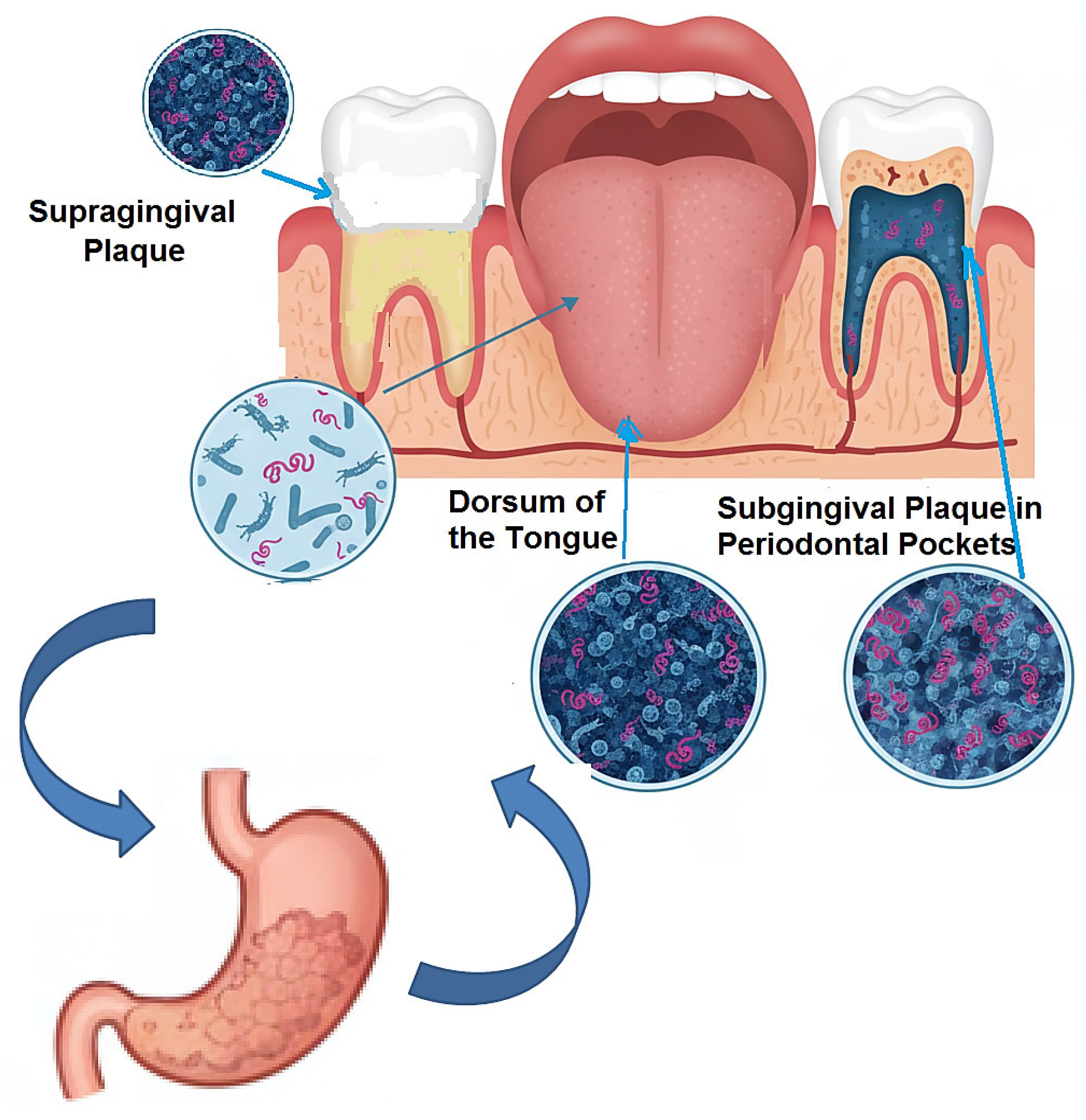
3. The H. pylori Paradigm: The Oral Cavity as an Extra-Gastric Reservoir
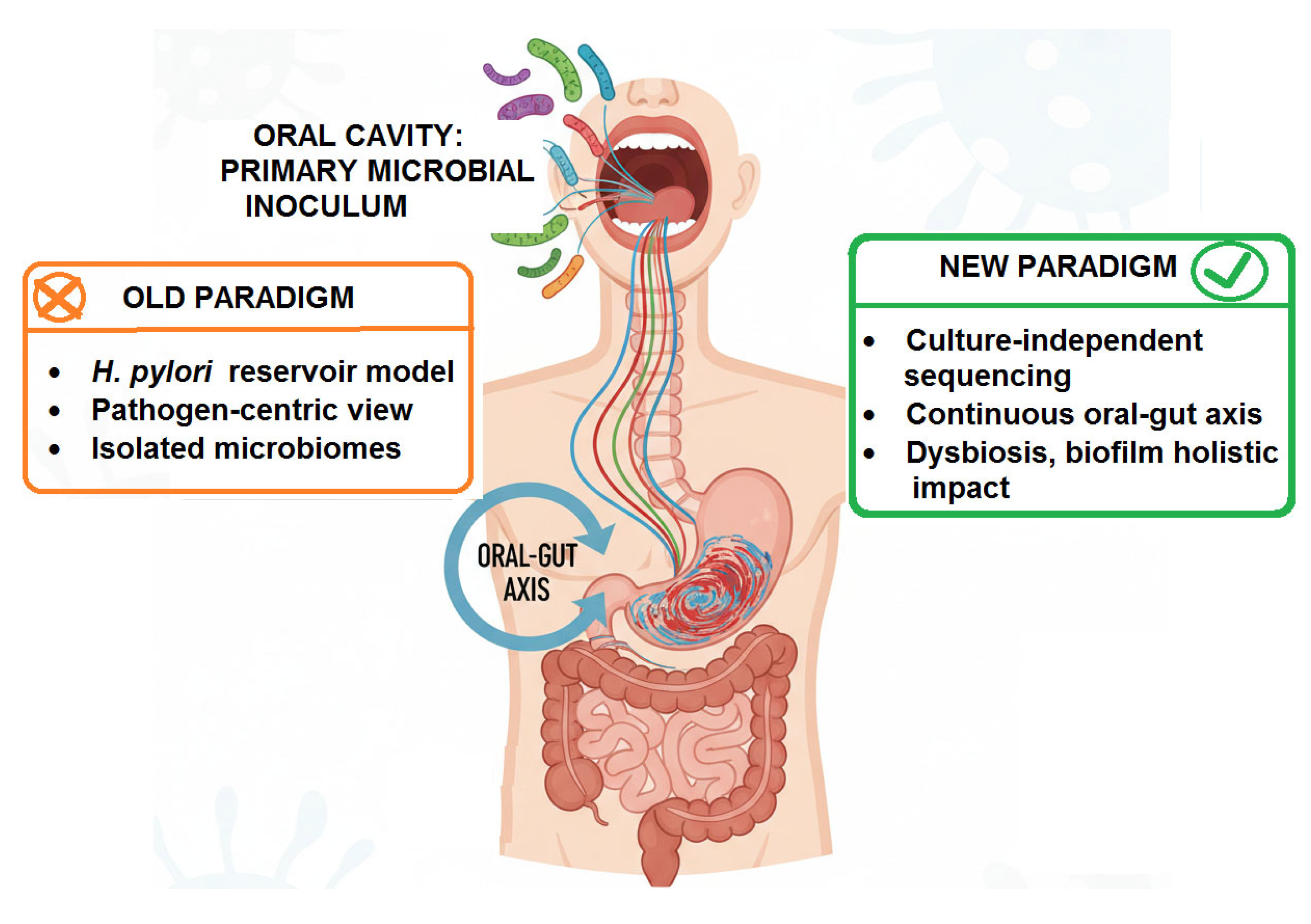
4. Beyond H. pylori: The Oral–Gut Axis in the Microbiome Era
4.1. Oral Dysbiosis: More than Just Pathogen Overgrowth
- Loss of beneficial taxa and overall diversity.
- Overgrowth of pro-inflammatory and proteolytic bacteria.
- Increased production of virulence factors (e.g., lipopolysaccharide (LPS), gingipains, fimbriae).
- A breached epithelial barrier in the periodontal pocket, facilitating the systemic dissemination of both bacteria and inflammatory mediators.
4.2. Translocation and Survival: The Journey to the Stomach
4.3. Ecological Impact: Disrupting the Gastric Niche
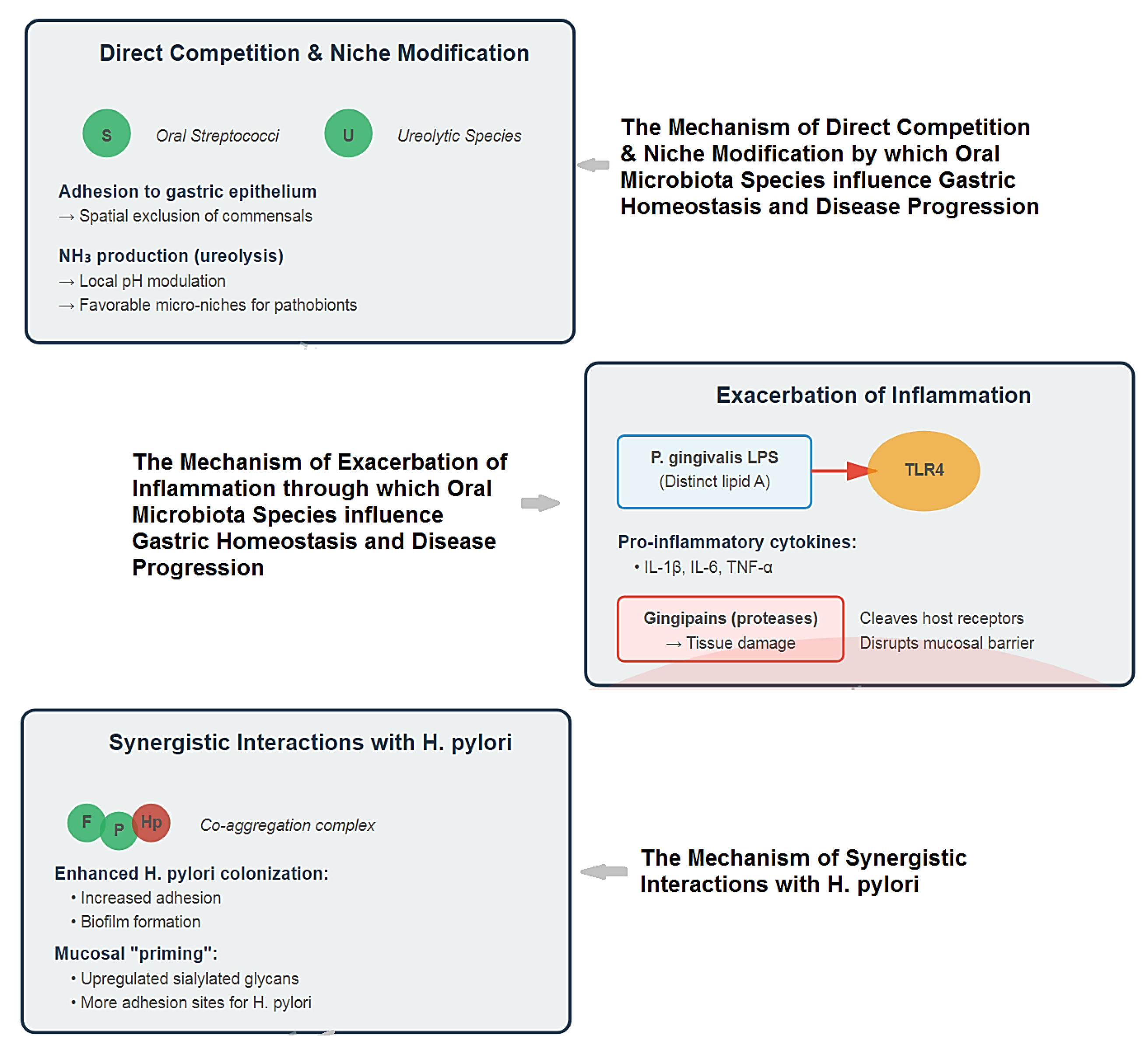
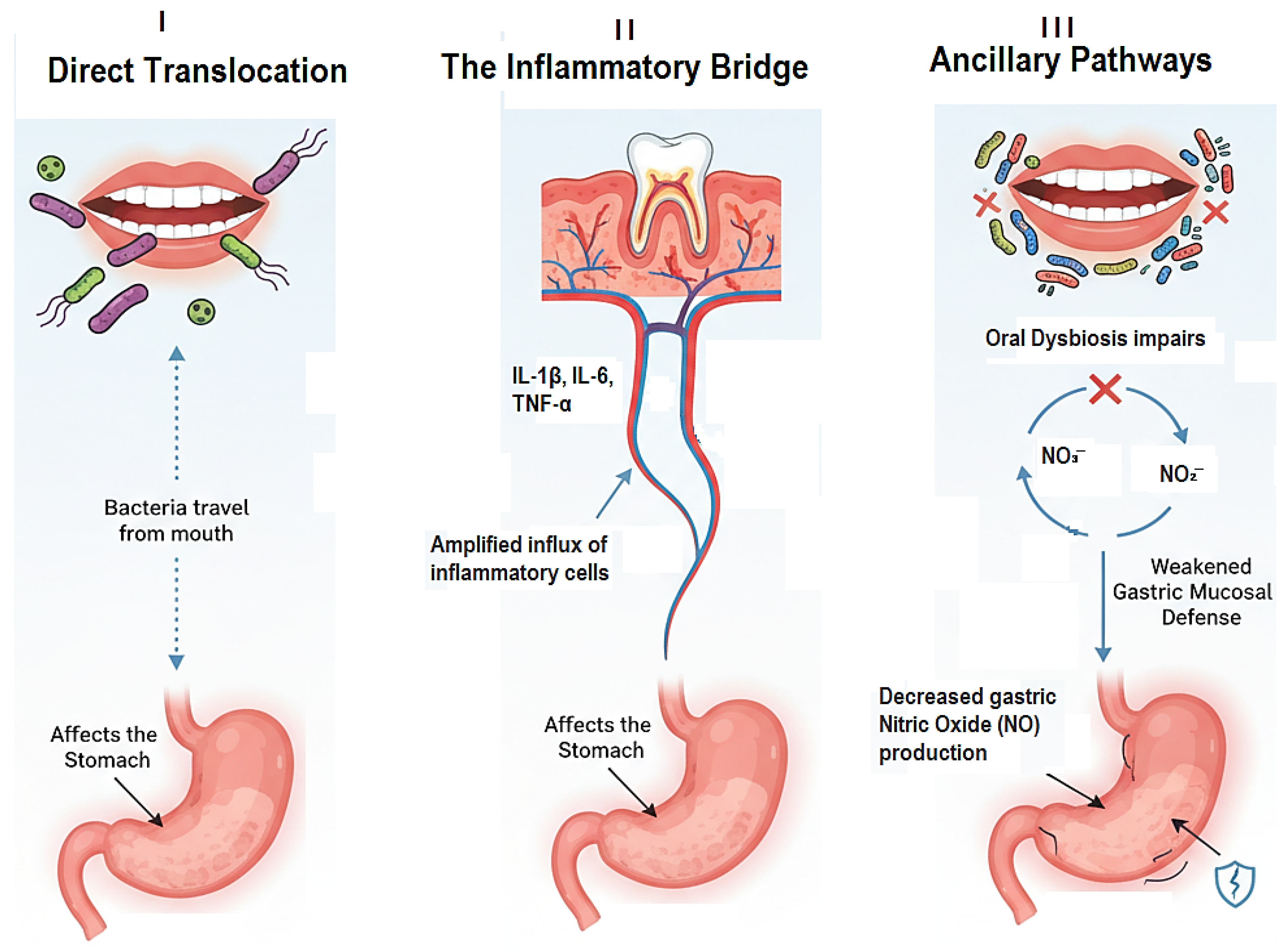
- Direct Competition and Niche Modification: The influx of oral bacteria can compete with resident gastric microbes for space and nutrients. Some oral streptococci are adept at binding to gastric epithelial cells, potentially excluding beneficial commensals [105,106,107]. Furthermore, the metabolic activity of oral bacteria (e.g., production of ammonia by ureolytic species) could locally modulate pH, creating micro-niches that favor the growth of other acid-sensitive pathobionts [108] (Figure 3).
- Exacerbation of Inflammation: This is perhaps the most significant mechanism. The gastric mucosa is in a constant state of low-grade exposure to swallowed oral microbes. In health, this may contribute to immune homeostasis. However, the swallowing of a dysbiotic, inflammation-primed oral microbiome delivers a heightened load of potent immunostimulatory molecules [109,110].
- Synergistic Interactions with H. pylori: The oral-gastric axis may critically modulate H. pylori pathogenicity. Co-culture studies show that oral bacteria like F. nucleatum and P. gingivalis can enhance the adhesion and biofilm formation of H. pylori [108,116,117]. The inflammatory environment created by oral pathobionts could “prime” the gastric mucosa, upregulating adhesion receptors (e.g., sialylated glycans) that H. pylori exploits for colonization and amplifying the subsequent destructive host immune response to the gastric pathogen [43,118], (Figure 3).
5. The Inflammatory Bridge: Systemic Inflammation as a Mechanistic Link
5.1. The Periodontium as a Factory of Inflammatory Mediators
- Prostaglandin E2 (PGE2): A key mediator of pain, vasodilation, and bone destruction [129].
5.2. Measurable Systemic Inflammatory Burden
5.3. Exacerbation of Gastric Inflammation: Mechanisms of Action
6. Other Potential Mechanisms: Nitrate Metabolism, Molecular Mimicry, and Salivary Factors
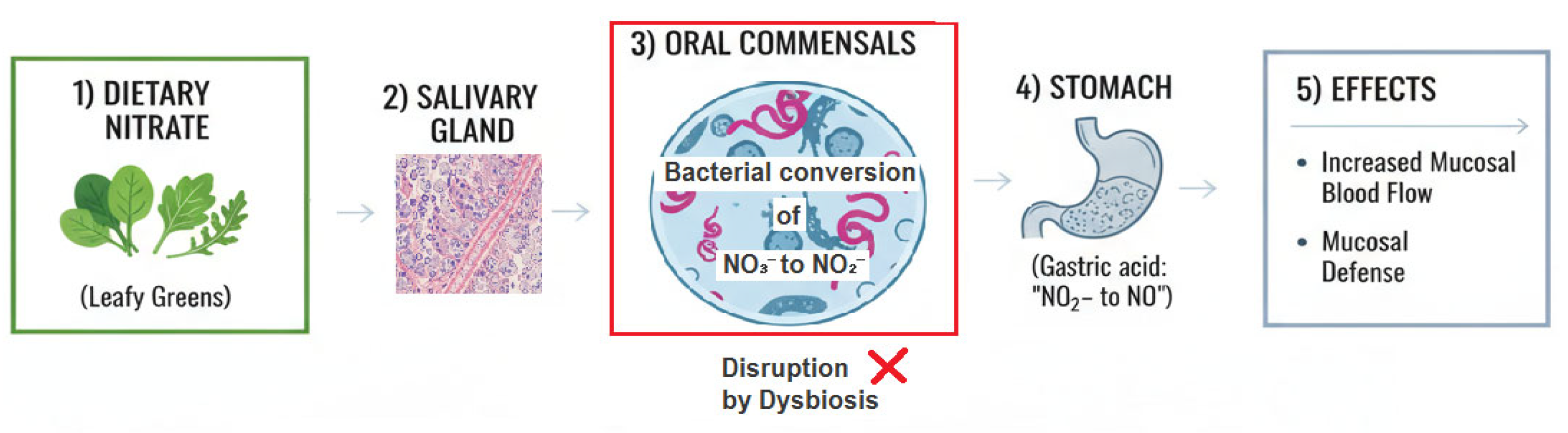
6.1. Nitrate Metabolism and Gastric Mucosal Defense
- Dietary Nitrate—Intake from leafy greens and beetroot
- Salivary Gland—Active concentration of nitrate (10–20× plasma levels) via the sialin transporter
- Oral Commensals—Bacterial conversion of NO3− to NO2− by nitrate-reducing bacteria in tongue biofilm, with an “X” mark indicating disruption by dysbiosis
- Stomach—Gastric acid-mediated conversion of NO2− to NO and other nitrogen oxides
- Physiological Effects—Increased mucosal blood flow and enhanced mucosal defense mechanisms
- Mucosal Defense: NO exhibits antimicrobial properties against a range of pathogens and can modulate immune responses [155].
6.2. Molecular Mimicry and Autoimmunity
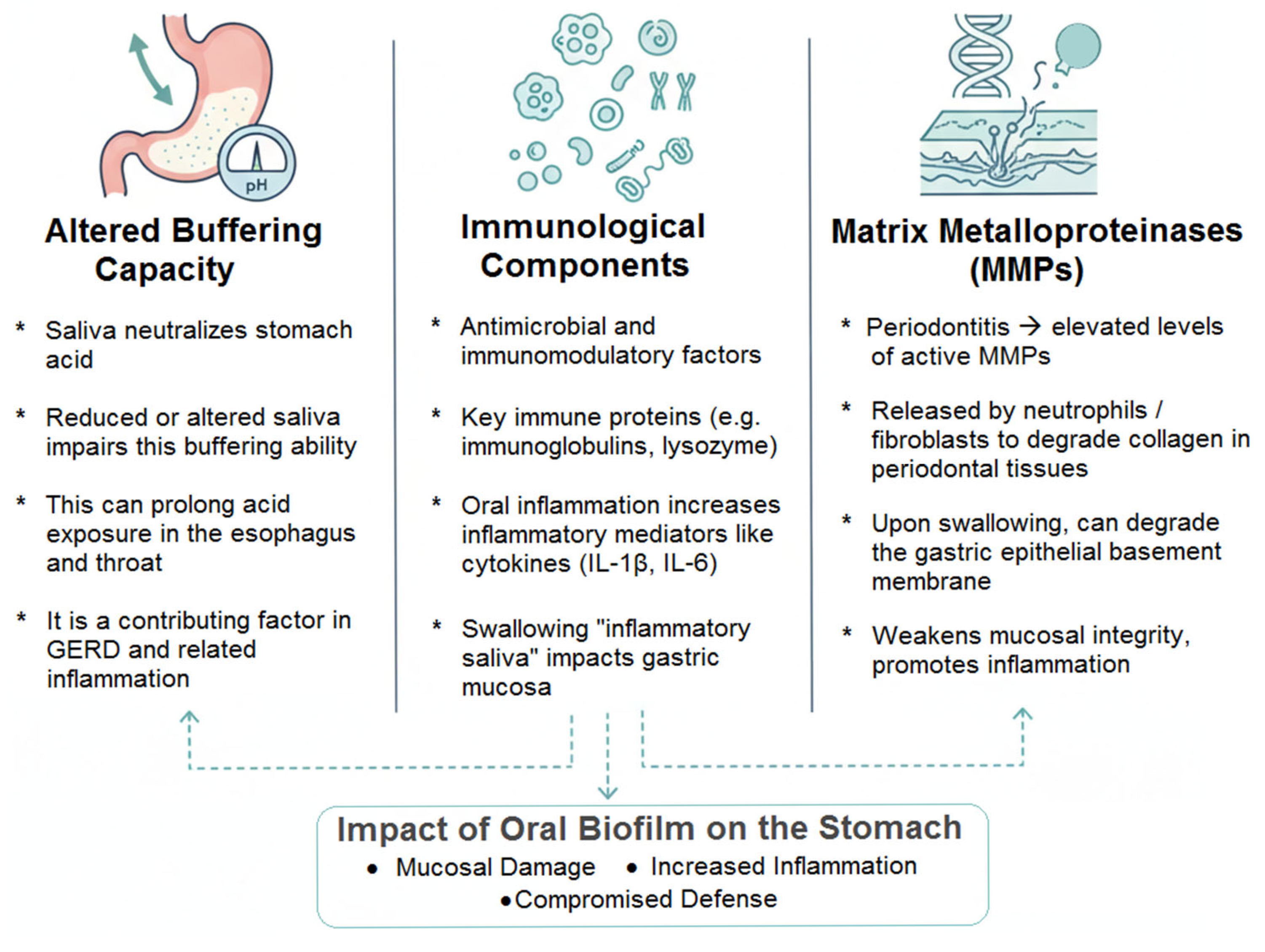
6.3. The Role of Saliva and Its Constituents
- Altered Buffering Capacity: Saliva is a primary buffer for gastric acid refluxed into the esophagus and oral cavity. Hyposalivation or altered composition in individuals with poor oral health may impair this neutralizing capacity, potentially prolonging acid contact time with esophageal and oropharyngeal tissues [27]. While this more directly impacts Gastroesophageal Reflux Disease (GERD), esophageal inflammation can have downstream effects on the gastric cardia.
- Immunological Components: Saliva contains numerous antimicrobial and immunomodulatory factors, including immunoglobulins (e.g., secretory IgA), lactoferrin, lysozyme, and histatins. The quality and quantity of these components can be affected by oral inflammation. For example, levels of certain protective proteins may decrease, while inflammatory mediators like cytokines (IL-1β, IL-6) from the gingival crevicular fluid increase in the saliva of individuals with periodontitis [29,164,165]. The swallowing of this “inflammatory saliva” provides a direct route for these mediators to contact the gastric mucosa.
- Matrix Metalloproteinases (MMPs): Periodontitis is associated with dramatically elevated levels of active MMPs (e.g., MMP-8, MMP-9) in saliva, released by neutrophils and fibroblasts to degrade collagen in periodontal tissues [166,167,168]. Upon swallowing, these proteolytic enzymes could theoretically contribute to the degradation of the gastric epithelial basement membrane and extracellular matrix, weakening mucosal integrity and promoting inflammation.
7. Discussion: The Oral-Gastric Axis: A Causal Link or a Plausible Illusion? A Critical Debate
7.1. The Case for Causality
7.1.1. Consistent Epidemiological Association
7.1.2. The Oral H. pylori Reservoir Hypothesis: A Reinforced Causal Argument
7.1.3. Direct Translocation of Oral Pathobionts
7.1.4. The Systemic Inflammation Pathway
7.1.5. Preliminary Interventional Support
7.2. The Case for Skepticism
7.2.1. The Intractable Problem of Confounding
7.2.2. The Cross-Sectional Conundrum and Reverse Causality
- Hypochlorhydria Comes First: Ferreira et al. (2018) showed that patients with precancerous hypochlorhydria already have a stomach microbiome enriched with oral taxa, proving this shift occurs before cancer [174].
- Animal Model Proof: Lofgren et al. (2011) demonstrated that the loss of acid-secreting cells directly enables gastric colonization by commensal bacteria, establishing a clear cause-and-effect [185].
- Correlation with Stage: Coker et al. (2018) and others find that oral bacteria increase step-wise with disease severity, peaking in advanced precancerous states, marking them as passengers in a permissive environment [173].
7.2.3. Microbiome Complexity and the “Passenger” Hypothesis
7.2.4. Inconsistent Interventional Evidence
7.2.5. Limitations in Measuring Exposure
7.3. Synthesis and Future Research: Resolving the Debate
- Next-Generation Targeted RCTs: Large, multi-center, double-blind RCTs are needed, comparing intensive, subgingival periodontal therapy against a sham control. These trials must use long-term H. pylori recurrence and gastric histologic improvement as primary endpoints, moving beyond short-term eradication rates.
- Deep Mechanistic Embedding: These trials must embed correlative studies using multi-omics approaches (e.g., metagenomics, metatranscriptomics, and metabolomics) to track the flux of oral bacteria to the stomach and their functional impact. This will help move beyond correlation to mechanism and identify which patients are most likely to benefit.
- Sophisticated Observational Analyses: Employing methods like Mendelian randomization could help triangulate causality by using genetic instruments for periodontitis susceptibility to assess its effect on gastric cancer risk, thereby mitigating confounding.
7.4. Limitations of This Review
7.5. Clinical Implications
- Interdisciplinary Collaboration and Screening: The management of patients with chronic gastritis, particularly cases of H. pylori recurrence, should involve collaboration between gastroenterologists and dental professionals. A simple oral health assessment, including inquiries about gum bleeding, tooth mobility, and the time since the last dental examination, should be considered in the gastroenterological history-taking for high-risk patients. This low-cost step can identify individuals who may benefit from a formal dental referral.
- Oral Health as a Modifiable Risk Factor in H. pylori Management: For patients with concurrent H. pylori infection and periodontitis, non-surgical periodontal therapy could be considered a potential adjunct to standard eradication therapy. Based on emerging evidence, a pragmatic approach could be to schedule NSPT either shortly before or concurrently with the initiation of H. pylori eradication therapy. This timing aims to reduce the oral bacterial load and potential reservoir effect, potentially improving long-term eradication success and reducing recurrence. Promoting good oral hygiene may be a simple, cost-effective strategy to reduce systemic inflammatory burden.
- Patient Education and Empowerment: Patients should be educated about the oral-systemic connection, empowering them to take an active role in their overall well-being and improving adherence to both dental and medical treatments.
8. Conclusions
Author Contributions
Funding
Acknowledgments
Conflicts of Interest
Abbreviations
| H. pylori | Helicobacter pylori |
| NSPT | non-surgical periodontal treatment |
| PCR | Polymerase Chain Reaction |
| NSAIDs | Non-Steroidal Anti-Inflammatory Drugs |
| NO | nitric oxide |
| GERD | Gastroesophageal Reflux Disease |
| AIG | autoimmune gastritis |
References
- Natarajan, P.; Madanian, S.; Marshall, S. Investigating the Link between Oral Health Conditions and Systemic Diseases: A Cross-Sectional Analysis. Sci. Rep. 2025, 15, 10476. [Google Scholar] [CrossRef]
- Petersen, P.E.; Ogawa, H. The Global Burden of Periodontal Disease: Towards Integration with Chronic Disease Prevention and Control. Periodontology 2000 2012, 60, 15–39. [Google Scholar] [CrossRef] [PubMed]
- Sanz, M.; Marco Del Castillo, A.; Jepsen, S.; Gonzalez-Juanatey, J.R.; D’Aiuto, F.; Bouchard, P.; Chapple, I.; Dietrich, T.; Gotsman, I.; Graziani, F.; et al. Periodontitis and Cardiovascular Diseases: Consensus Report. J. Clin. Periodontol. 2020, 47, 268–288. [Google Scholar] [CrossRef] [PubMed]
- Kapila, Y.L. Oral Health’s Inextricable Connection to Systemic Health: Special Populations Bring to Bear Multimodal Relationships and Factors Connecting Periodontal Disease to Systemic Diseases and Conditions. Periodontology 2000 2021, 87, 11–16. [Google Scholar] [CrossRef] [PubMed]
- Baker, J.L.; Mark Welch, J.L.; Kauffman, K.M.; McLean, J.S.; He, X. The Oral Microbiome: Diversity, Biogeography and Human Health. Nat. Rev. Microbiol. 2024, 22, 89–104. [Google Scholar] [CrossRef]
- Willis, J.R.; Gabaldón, T. The Human Oral Microbiome in Health and Disease: From Sequences to Ecosystems. Microorganisms 2020, 8, 308. [Google Scholar] [CrossRef]
- Ma, Z.; Zuo, T.; Frey, N.; Rangrez, A.Y. A Systematic Framework for Understanding the Microbiome in Human Health and Disease: From Basic Principles to Clinical Translation. Signal Transduct. Target. Ther. 2024, 9, 237. [Google Scholar] [CrossRef]
- Upadhyay, M.; Swaroop, A.; Sinhal, V.K.; Srivastava, A.; Garg, S.K.; Singh, V.P.; Arora, P.K. Role of Human Oral Microbiome in Diseases. J. Pure Appl. Microbiol. 2024, 18, 168–176. [Google Scholar] [CrossRef]
- Zarco, M.; Vess, T.; Ginsburg, G. The Oral Microbiome in Health and Disease and the Potential Impact on Personalized Dental Medicine. Oral Dis. 2012, 18, 109–120. [Google Scholar] [CrossRef]
- Barboza-Solís, C.; Acuña-Amador, L.A. The Oral Microbiota: A Literature Review for Updating Professionals in Dentistry. Part I. Odovtos—Int. J. Dent. Sci. 2020, 22, 143–152. [Google Scholar] [CrossRef]
- Li, Y.; Choi, H.; Leung, K.; Jiang, F.; Graham, D.Y.; Leung, W.K. Global Prevalence of Helicobacter pylori Infection between 1980 and 2022: A Systematic Review and Meta-Analysis. Lancet Gastroenterol. Hepatol. 2023, 8, 553–564. [Google Scholar] [CrossRef] [PubMed]
- Sung, H.; Ferlay, J.; Siegel, R.L.; Laversanne, M.; Soerjomataram, I.; Jemal, A.; Bray, F. Global Cancer Statistics 2020: GLOBOCAN Estimates of Incidence and Mortality Worldwide for 36 Cancers in 185 Countries. CA Cancer J. Clin. 2021, 71, 209–249. [Google Scholar] [CrossRef]
- Plummer, M.; Franceschi, S.; Vignat, J.; Forman, D.; De Martel, C. Global Burden of Gastric Cancer Attributable to Helicobacter pylori: Helicobacter pylori in Gastric Cancer. Int. J. Cancer 2015, 136, 487–490. [Google Scholar] [CrossRef] [PubMed]
- Herreros-Pomares, A.; Hervás, D.; Bagan-Debon, L.; Proaño, A.; Garcia, D.; Sandoval, J.; Bagan, J. Oral Cancers Preceded by Proliferative Verrucous Leukoplakia Exhibit Distinctive Molecular Features. Oral Dis. 2024, 30, 1072–1083. [Google Scholar] [CrossRef] [PubMed]
- Ansari, S.; Yamaoka, Y. Helicobacter pylori Virulence Factors Exploiting Gastric Colonization and Its Pathogenicity. Toxins 2019, 11, 677. [Google Scholar] [CrossRef]
- Garcia-Maset, R.; Chu, V.; Yuen, N.; Blumgart, D.; Yoon, J.; Murray, B.O.; Joseph, A.A.; Rohn, J.L. Effect of Host Microenvironment and Bacterial Lifestyles on Antimicrobial Sensitivity and Implications for Susceptibility Testing. npj Antimicrob. Resist. 2025, 3, 42. [Google Scholar] [CrossRef]
- Miyabayashi, H.; Furihata, K.; Shimizu, T.; Ueno, I.; Akamatsu, T. Influence of Oral Helicobacter pylori on the Success of Eradication Therapy Against Gastric Helicobacter pylori. Helicobacter 2000, 5, 30–37. [Google Scholar] [CrossRef]
- Agarwal, M.; Shiau, S.; Larson, E.L. Repeat Gram-Negative Hospital-Acquired Infections and Antibiotic Susceptibility: A Systematic Review. J. Infect. Public Health 2018, 11, 455–462. [Google Scholar] [CrossRef]
- Kassebaum, N.J.; Bernabé, E.; Dahiya, M.; Bhandari, B.; Murray, C.J.L.; Marcenes, W. Global Burden of Severe Periodontitis in 1990-2010: A Systematic Review and Meta-Regression. J. Dent. Res. 2014, 93, 1045–1053. [Google Scholar] [CrossRef]
- Frencken, J.E.; Sharma, P.; Stenhouse, L.; Green, D.; Laverty, D.; Dietrich, T. Global Epidemiology of Dental Caries and Severe Periodontitis—A Comprehensive Review. J. Clin. Periodontol. 2017, 44, S94–S105. [Google Scholar] [CrossRef]
- Socransky, S.S.; Haffajee, A.D.; Cugini, M.A.; Smith, C.; Kent, R.L. Microbial Complexes in Subgingival Plaque. J. Clin. Periodontol. 1998, 25, 134–144. [Google Scholar] [CrossRef]
- Hajishengallis, G. Periodontitis: From Microbial Immune Subversion to Systemic Inflammation. Nat. Rev. Immunol. 2015, 15, 30–44. [Google Scholar] [CrossRef] [PubMed]
- Suzuki, N.; Yoneda, M.; Hirofuji, T. Mixed Red-Complex Bacterial Infection in Periodontitis. Int. J. Dent. 2013, 2013, 587279. [Google Scholar] [CrossRef] [PubMed]
- Abdulkareem, A.A.; Al-Taweel, F.B.; Al-Sharqi, A.J.B.; Gul, S.S.; Sha, A.; Chapple, I.L.C. Current Concepts in the Pathogenesis of Periodontitis: From Symbiosis to Dysbiosis. J. Oral Microbiol. 2023, 15, 2197779. [Google Scholar] [CrossRef] [PubMed]
- Pitts, N.B.; Zero, D.T.; Marsh, P.D.; Ekstrand, K.; Weintraub, J.A.; Ramos-Gomez, F.; Tagami, J.; Twetman, S.; Tsakos, G.; Ismail, A. Dental Caries. Nat. Rev. Dis. Primers 2017, 3, 17030. [Google Scholar] [CrossRef]
- Spatafora, G.; Li, Y.; He, X.; Cowan, A.; Tanner, A.C.R. The Evolving Microbiome of Dental Caries. Microorganisms 2024, 12, 121. [Google Scholar] [CrossRef]
- Dawes, C.; Pedersen, A.M.L.; Villa, A.; Ekström, J.; Proctor, G.B.; Vissink, A.; Aframian, D.; McGowan, R.; Aliko, A.; Narayana, N.; et al. The Functions of Human Saliva: A Review Sponsored by the World Workshop on Oral Medicine VI. Arch. Oral Biol. 2015, 60, 863–874. [Google Scholar] [CrossRef]
- Schmidt, T.S.; Hayward, M.R.; Coelho, L.P.; Li, S.S.; Costea, P.I.; Voigt, A.Y.; Wirbel, J.; Maistrenko, O.M.; Alves, R.J.; Bergsten, E.; et al. Extensive Transmission of Microbes along the Gastrointestinal Tract. eLife 2019, 8, e42693. [Google Scholar] [CrossRef]
- Lynge Pedersen, A.M.; Belstrøm, D. The Role of Natural Salivary Defences in Maintaining a Healthy Oral Microbiota. J. Dent. 2019, 80, S3–S12. [Google Scholar] [CrossRef]
- Gebara, E.C.E.; Faria, C.M.; Pannuti, C.; Chehter, L.; Mayer, M.P.A.; Lima, L.A.P.A. Persistence of Helicobacter pylori in the Oral Cavity after Systemic Eradication Therapy. J. Clin. Periodontol. 2006, 33, 329–333. [Google Scholar] [CrossRef]
- Liu, S.; Wang, S.; Zhang, N.; Li, P. The Oral Microbiome and Oral and Upper Gastrointestinal Diseases. J. Oral Microbiol. 2024, 16, 2355823. [Google Scholar] [CrossRef]
- Cuba, E.; Sánchez, M.C.; Ciudad, M.J.; Collado, L. Association of Helicobacter pylori as an Extragastric Reservoir in the Oral Cavity with Oral Diseases in Patients with and Without Gastritis—A Systematic Review. Microorganisms 2025, 13, 1955. [Google Scholar] [CrossRef]
- Zhang, L.; Chen, X.; Ren, B.; Zhou, X.; Cheng, L. Helicobacter pylori in the Oral Cavity: Current Evidence and Potential Survival Strategies. Int. J. Mol. Sci. 2022, 23, 13646. [Google Scholar] [CrossRef]
- Costa, L.C.M.C.; Carvalho, M.D.G.; Vale, F.F.; Marques, A.T.; Rasmussen, L.T.; Chen, T.; Barros-Pinheiro, M. Helicobacter pylori in Oral Cavity: Current Knowledge. Clin. Exp. Med. 2024, 24, 209. [Google Scholar] [CrossRef] [PubMed]
- Kayali, S.; Manfredi, M.; Gaiani, F.; Bianchi, L.; Bizzarri, B.; Leandro, G.; Mario, F.D.; de’Angelis, G.L. Helicobacter pylori, Transmission Routes and Recurrence of Infection: State of the Art. Acta Biomed. Atenei Parm. 2018, 89, 72–76. [Google Scholar] [CrossRef]
- Li, R.; Zhang, P.; Hu, Z.; Yi, Y.; Chen, L.; Zhang, H. Helicobacter pylori Reinfection and Its Risk Factors after Initial Eradication: A Protocol for Systematic Review and Meta-Analysis. Medicine 2021, 100, e25949. [Google Scholar] [CrossRef] [PubMed]
- Segata, N.; Haake, S.K.; Mannon, P.; Lemon, K.P.; Waldron, L.; Gevers, D.; Huttenhower, C.; Izard, J. Composition of the Adult Digestive Tract Bacterial Microbiome Based on Seven Mouth Surfaces, Tonsils, Throat and Stool Samples. Genome Biol. 2012, 13, R42. [Google Scholar] [CrossRef]
- Zhang, C.; Powell, S.E.; Betel, D.; Shah, M.A. The Gastric Microbiome and Its Influence on Gastric Carcinogenesis. Hematol./Oncol. Clin. N. Am. 2017, 31, 389–408. [Google Scholar] [CrossRef]
- Bhandary, R.; Venugopalan, G.; Ramesh, A.; Tartaglia, G.; Singhal, I.; Khijmatgar, S. Microbial Symphony: Navigating the Intricacies of the Human Oral Microbiome and Its Impact on Health. Microorganisms 2024, 12, 571. [Google Scholar] [CrossRef]
- Hajishengallis, G.; Lamont, R.J. Beyond the Red Complex and into More Complexity: The Polymicrobial Synergy and Dysbiosis (PSD) Model of Periodontal Disease Etiology. Mol. Oral Microbiol. 2012, 27, 409–419. [Google Scholar] [CrossRef]
- Sulaiman, Y.; Pacauskienė, I.M.; Šadzevičienė, R.; Anuzyte, R. Oral and Gut Microbiota Dysbiosis Due to Periodontitis: Systemic Implications and Links to Gastrointestinal Cancer: A Narrative Review. Medicina 2024, 60, 1416. [Google Scholar] [CrossRef] [PubMed]
- Olsen, I.; Yamazaki, K. Can Oral Bacteria Affect the Microbiome of the Gut? J. Oral Microbiol. 2019, 11, 1586422. [Google Scholar] [CrossRef]
- Kitamoto, S.; Nagao-Kitamoto, H.; Hein, R.; Schmidt, T.M.; Kamada, N. The Bacterial Connection between the Oral Cavity and the Gut Diseases. J. Dent. Res. 2020, 99, 1021–1029. [Google Scholar] [CrossRef]
- Xu, Q.; Wang, W.; Li, Y.; Cui, J.; Zhu, M.; Liu, Y.; Liu, Y. The Oral-Gut Microbiota Axis: A Link in Cardiometabolic Diseases. npj Biofilms Microbiomes 2025, 11, 11. [Google Scholar] [CrossRef] [PubMed]
- D’Aiuto, F.; Parkar, M.; Andreou, G.; Suvan, J.; Brett, P.M.; Ready, D.; Tonetti, M.S. Periodontitis and Systemic Inflammation: Control of the Local Infection Is Associated with a Reduction in Serum Inflammatory Markers. J. Dent. Res. 2004, 83, 156–160. [Google Scholar] [CrossRef] [PubMed]
- Paraskevas, S.; Huizinga, J.D.; Loos, B.G. A Systematic Review and Meta-analyses on C-reactive Protein in Relation to Periodontitis. J. Clin. Periodontol. 2008, 35, 277–290. [Google Scholar] [CrossRef]
- Iwasaki, M.; Shirobe, M.; Ohara, Y.; Motokawa, K.; Shida, T.; Motohashi, Y.; Edahiro, A.; Kawai, H.; Fujiwara, Y.; Ihara, K.; et al. Periodontal Inflammation and Serum Inflammatory Markers in Community-Dwelling Older Adults in Japan: The Otassha Study. J. Clin. Periodontol. 2025, 52, 1099–1107. [Google Scholar] [CrossRef]
- Hasan, F.; Tandon, A.; AlQallaf, H.; John, V.; Sinha, M.; Gibson, M.P. Inflammatory Association between Periodontal Disease and Systemic Health. Inflammation 2025. [Google Scholar] [CrossRef]
- Verma, J.; Anwar, M.T.; Linz, B.; Backert, S.; Pachathundikandi, S.K. The Influence of Gastric Microbiota and Probiotics in Helicobacter pylori Infection and Associated Diseases. Biomedicines 2024, 13, 61. [Google Scholar] [CrossRef]
- Padoan, A.; Musso, G.; Contran, N.; Basso, D. Inflammation, Autoinflammation and Autoimmunity in Inflammatory Bowel Diseases. Curr. Issues Mol. Biol. 2023, 45, 5534–5557. [Google Scholar] [CrossRef]
- Alkhaldi, N.K.; Alghamdi, W.K.; Alharbi, M.H.; Almutairi, A.S.; Alghamdi, F.T. The Association Between Oral Helicobacter pylori and Gastric Complications: A Comprehensive Review. Cureus 2022, 14, e24703. [Google Scholar] [CrossRef]
- Adler, I. Helicobacter pylori and Oral Pathology: Relationship with the Gastric Infection. World J. Gastroenterol. 2014, 20, 9922. [Google Scholar] [CrossRef]
- Sgamato, C.; Rocco, A.; Compare, D.; Priadko, K.; Romano, M.; Nardone, G. Exploring the Link between Helicobacter pylori, Gastric Microbiota and Gastric Cancer. Antibiotics 2024, 13, 484. [Google Scholar] [CrossRef] [PubMed]
- Barakat, A.; Althahabi, R.; Aljazaf, H.; Hammadi, M.; Alabbasi, M.; Alserdieh, F.; Sharif, O.; Abubaker, F. The Efficacy of Quadruple Therapy Versus Triple Therapy in Helicobacter pylori Eradication. Cureus 2025, 17, e82255. [Google Scholar] [CrossRef] [PubMed]
- Bakiera, A.; Solarz, A.; Kowalczyk, M.; Cichoż-Lach, H.; Korona-Głowniak, I. Challenges and Prospects for Eradication of Helicobacter pylori: Targeting Virulence Factors, Metabolism, and Vaccine Innovation. Pathogens 2025, 14, 619. [Google Scholar] [CrossRef]
- Figura, N.; Franceschi, F.; Santucci, A.; Bernardini, G.; Gasbarrini, G.; Gasbarrini, A. Extragastric Manifestations of Helicobacter pylori Infection. Helicobacter 2010, 15, 60–68. [Google Scholar] [CrossRef]
- Al Sayed, A.; Anand, P.S.; Kamath, K.P.; Patil, S.; Preethanath, R.S.; Anil, S. Oral Cavity as an Extragastric Reservoir of Helicobacter pylori. ISRN Gastroenterol. 2014, 2014, 261369. [Google Scholar] [CrossRef]
- Navabi, N.; Nazeri, M. The Possible Role of Dental Plaque as Extra-Gastric Reservoir of Helicobacter pylori in Gastric Re-Infection: A Science-Metric Study. J. Oral Health Oral Epidemiol. 2019, 8, 1–8. [Google Scholar] [CrossRef]
- Anand, P.S.; Kamath, K.P.; Gandhi, A.P.; Shamim, M.A.; Padhi, B.K.; Das, S. Dental Plaque as an Extra-Gastric Reservoir of Helicobacter pylori: A Systematic Review and Meta-Analysis. Arch. Oral Biol. 2025, 170, 106126. [Google Scholar] [CrossRef]
- Bernander, S.; Dalén, J.; Gästrin, B.; Hedenborg, L.; Lamke, L.O.; Öhrn, R. Absence of Helicobacter pylori in Dental Plaques in Helicobacter pylori Positive Dyspeptic Patients. Eur. J. Clin. Microbiol. Infect. Dis. 1993, 12, 282–285. [Google Scholar] [CrossRef]
- Cellini, L. Helicobacter pylori: A Chameleon-like Approach to Life. World J. Gastroenterol. 2014, 20, 5575. [Google Scholar] [CrossRef] [PubMed]
- Tsimpiris, A.; Tsolianos, I.; Grigoriadis, A.; Moschos, I.; Goulis, D.G.; Kouklakis, G. Association of Chronic Periodontitis with Helicobacter pylori Infection in Stomach or Mouth: A Systematic Review and Meta-Analysis. Eur. J. Dent. 2023, 17, 270–282. [Google Scholar] [CrossRef] [PubMed]
- Tiveljung, A.; Borch, K.; Jonasson, J.; MaRrdh, S.; Petersson, F.; Monstein, H.-J. Identification of Helicobacter in Gastric Biopsies by PCR Based on 16S rDNA Sequences: A Matter of Little Significance for the Prediction of H. pylori-Associated Gastritis? J. Med. Microbiol. 1998, 47, 695–704. [Google Scholar] [CrossRef] [PubMed][Green Version]
- Akeel, M.; Shehata, A.; Elhafey, A.; Elmakki, E.; Aboshouk, T.; Ageely, H.; Mahfouz, M.S. Large-Scale Evaluation of ureC (glmM) and SSA Conventional PCR for Rapid Direct Detection of Helicobacter pylori in Gastric Biopsies as Compared to rpoB-Based Quantitative Real-Time PCR. Open Microbiol. J. 2022, 16, e187428582207210. [Google Scholar] [CrossRef]
- Moradi, Y.; Majidi, L.; Khateri, S.; Azh, N.; Gheshlagh, R.G.; Saniee, N.; Zarei, M.; Moradpour, F. The Association between Periodontal Diseases and Helicobacter pylori: An Updated Meta-Analysis of Observational Studies. BMC Oral Health 2023, 23, 523. [Google Scholar] [CrossRef]
- Wu, X.; Zhu, H.; Hu, Y.; Zhang, L.; Huang, L. Meta-Analysis of H. pylori and the Gut Microbiome Interactions and Clinical Outcomes. Front. Cell. Infect. Microbiol. 2025, 15, 1610523. [Google Scholar] [CrossRef]
- Bakhti, S.Z.; Latifi-Navid, S. Oral Microbiota and Helicobacter pylori in Gastric Carcinogenesis: What Do We Know and Where Next? BMC Microbiol. 2021, 21, 71. [Google Scholar] [CrossRef]
- Anand, P.S. Role of Dental Plaque, Saliva and Periodontal Disease in Helicobacter pylori Infection. World J. Gastroenterol. 2014, 20, 5639. [Google Scholar] [CrossRef]
- Shi, M.; Wei, Y.; Hu, W.; Nie, Y.; Wu, X.; Lu, R. The Subgingival Microbiome of Periodontal Pockets With Different Probing Depths in Chronic and Aggressive Periodontitis: A Pilot Study. Front. Cell. Infect. Microbiol. 2018, 8, 124. [Google Scholar] [CrossRef]
- Romano, F.; Iaderosa, G.; Corana, M.; Perotto, S.; Baima, G.; Di Scipio, F.; Abbadessa, G.; Mariani, G.M.; Aimetti, M.; Berta, G.N. Comparing Ionic Profile of Gingival Crevicular Fluid and Saliva as Distinctive Signature of Severe Periodontitis. Biomedicines 2022, 10, 687. [Google Scholar] [CrossRef]
- Oshowo, A.; Gillam, D.; Botha, A.; Tunio, M.; Holton, J.; Boulos, P.; Hobsley, M. Helicobacter pylori: The Mouth, Stomach, and Gut Axis. Ann. Periodontol. 1998, 3, 276–280. [Google Scholar] [CrossRef]
- Scaccianoce, G.; Hassan, C.; Panarese, A.; Piglionica, D.; Morini, S.; Zullo, A. Helicobacter pylori Eradication with Either Seven-Day or 10-Day Triple Therapies, and with a 10-Day Sequential Regimen. Can. J. Gastroenterol. 2006, 20, 113–117. [Google Scholar] [CrossRef][Green Version]
- Bago, I.; Bago, J.; Plečko, V.; Aurer, A.; Majstorović, K.; Budimir, A. The Effectiveness of Systemic Eradication Therapy against Oral Helicobacter pylori. J. Oral Pathology Medicine 2011, 40, 428–432. [Google Scholar] [CrossRef] [PubMed]
- Okwandu, C.A.; Amayaevbo, M.-A.O.; Oyiana, N.I.; Jaiyeola, D.; Nwajuaku, P.A.; Emele, M.B.; Elenwoke, P.I.; Morebise, O. Helicobacter pylori: Strategies to Mitigate Antimicrobial Resistance. J. Adv. Med. Med. Res. 2025, 37, 272–279. [Google Scholar] [CrossRef]
- López-Valverde, N.; Macedo De Sousa, B.; López-Valverde, A.; Suárez, A.; Rodríguez, C.; Aragoneses, J.M. Possible Association of Periodontal Diseases With Helicobacter pylori Gastric Infection: A Systematic Review and Meta-Analysis. Front. Med. 2022, 9, 822194. [Google Scholar] [CrossRef] [PubMed]
- Tang, X.; Tay, A.; Benghezal, M.; Marshall, B.J.; Tang, H.; Li, H. Advances in Helicobacter pylori Lipopolysaccharide Structure and Function. FEMS Microbiol. Rev. 2025, 49, fuaf034. [Google Scholar] [CrossRef]
- Hasanuzzaman, M.; Bang, C.S.; Gong, E.J. Antibiotic Resistance of Helicobacter pylori: Mechanisms and Clinical Implications. J. Korean Med. Sci. 2024, 39, e44. [Google Scholar] [CrossRef]
- Elbehiry, A.; Abalkhail, A.; Anajirih, N.; Alkhamisi, F.; Aldamegh, M.; Alramzi, A.; AlShaqi, R.; Alotaibi, N.; Aljuaid, A.; Alzahrani, H.; et al. Helicobacter pylori: Routes of Infection, Antimicrobial Resistance, and Alternative Therapies as a Means to Develop Infection Control. Diseases 2024, 12, 311. [Google Scholar] [CrossRef]
- Inchingolo, A.M.; Inchingolo, A.D.; Fatone, M.C.; Ferrante, L.; Casamassima, L.; Trilli, I.; Inchingolo, F.; Palermo, A.; Dipalma, G. The Effect of Periodontal Treatment on Helicobacter pylori-Infection: A Systematic Review. Periodontal Implant Res. 2025, 9, 3. [Google Scholar] [CrossRef]
- Nocker, A.; Camper, A.K. Selective Removal of DNA from Dead Cells of Mixed Bacterial Communities by Use of Ethidium Monoazide. Appl. Environ. Microbiol. 2006, 72, 1997–2004. [Google Scholar] [CrossRef]
- Siqueira, J.F., Jr.; Rôças, I.N. As-yet-Uncultivated Oral Bacteria: Breadth and Association with Oral and Extra-Oral Diseases. J. Oral Microbiol. 2013, 5, 21077. [Google Scholar] [CrossRef] [PubMed]
- Mahdizade Ari, M.; Scholz, K.J.; Cieplik, F.; Al-Ahmad, A. Viable but Non-Cultivable State in Oral Microbiota: A Critical Review of an Underexplored Microbial Survival Strategy. Front. Cell. Infect. Microbiol. 2025, 15, 1533768. [Google Scholar] [CrossRef] [PubMed]
- Schulz, C.; Schütte, K.; Koch, N.; Vilchez-Vargas, R.; Wos-Oxley, M.L.; Oxley, A.P.A.; Vital, M.; Malfertheiner, P.; Pieper, D.H. The Active Bacterial Assemblages of the Upper GI Tract in Individuals with and without Helicobacter Infection. Gut 2018, 67, 216–225. [Google Scholar] [CrossRef] [PubMed]
- Kunath, B.J.; De Rudder, C.; Laczny, C.C.; Letellier, E.; Wilmes, P. The Oral–Gut Microbiome Axis in Health and Disease. Nat. Rev. Microbiol. 2024, 22, 791–805. [Google Scholar] [CrossRef]
- Xi, M.; Ruan, Q.; Zhong, S.; Li, J.; Qi, W.; Xie, C.; Wang, X.; Abuduxiku, N.; Ni, J. Periodontal Bacteria Influence Systemic Diseases through the Gut Microbiota. Front. Cell. Infect. Microbiol. 2024, 14, 1478362. [Google Scholar] [CrossRef]
- Devine, D.A.; Marsh, P.D.; Meade, J. Modulation of Host Responses by Oral Commensal Bacteria. J. Oral Microbiol. 2015, 7, 26941. [Google Scholar] [CrossRef]
- Marsh, P.D. Are Dental Diseases Examples of Ecological Catastrophes? Microbiology 2003, 149, 279–294. [Google Scholar] [CrossRef]
- Randeni, N.; Bordiga, M.; Xu, B. A Comprehensive Review of the Triangular Relationship among Diet–Gut Microbiota–Inflammation. Int. J. Mol. Sci. 2024, 25, 9366. [Google Scholar] [CrossRef]
- Shen, Y.; Fan, N.; Ma, S.; Cheng, X.; Yang, X.; Wang, G. Gut Microbiota Dysbiosis: Pathogenesis, Diseases, Prevention, and Therapy. MedComm 2025, 6, e70168. [Google Scholar] [CrossRef]
- Cusumano, G.; Flores, G.A.; Venanzoni, R.; Angelini, P. The Impact of Antibiotic Therapy on Intestinal Microbiota: Dysbiosis, Antibiotic Resistance, and Restoration Strategies. Antibiotics 2025, 14, 371. [Google Scholar] [CrossRef]
- Hajishengallis, G.; Liang, S.; Payne, M.A.; Hashim, A.; Jotwani, R.; Eskan, M.A.; McIntosh, M.L.; Alsam, A.; Kirkwood, K.L.; Lambris, J.D.; et al. Low-Abundance Biofilm Species Orchestrates Inflammatory Periodontal Disease through the Commensal Microbiota and Complement. Cell Host Microbe 2011, 10, 497–506. [Google Scholar] [CrossRef] [PubMed]
- Hajishengallis, G.; Korostoff, J.M. Revisiting the Page & Schroeder Model: The Good, the Bad and the Unknowns in the Periodontal Host Response 40 Years Later. Periodontology 2000 2017, 75, 116–151. [Google Scholar] [CrossRef]
- Hajishengallis, G.; Lamont, R.J. Polymicrobial Communities in Periodontal Disease: Their Quasi-organismal Nature and Dialogue with the Host. Periodontology 2000 2021, 86, 210–230. [Google Scholar] [CrossRef] [PubMed]
- Albush, A.; Yassine, F.; Abbas, H.; Hanna, A.; Saba, E.; Bilen, M. The Impact of Helicobacter pylori Infection and Eradication Therapies on Gut Microbiota: A Systematic Review of Microbial Dysbiosis and Its Implications in Gastric Carcinogenesis. Front. Cell. Infect. Microbiol. 2025, 15, 1592977. [Google Scholar] [CrossRef]
- Brennan, C.A.; Garrett, W.S. Fusobacterium nucleatum—Symbiont, Opportunist and Oncobacterium. Nat. Rev. Microbiol. 2019, 17, 156–166. [Google Scholar] [CrossRef]
- Li, X.; Zhang, S.; Sheng, H.; Zhen, Y.; Wu, B.; Li, Z.; Chen, D.; Zhou, H. Oral Fusobacterium nucleatum Resists the Acidic pH of the Stomach Due to Membrane Erucic Acid Synthesized via Enoyl-CoA Hydratase-Related Protein FnFabM. J. Oral Microbiol. 2025, 17, 2453964. [Google Scholar] [CrossRef]
- Sharif, S.; Yadav, A.K. Bacterial Biofilm and Its Role in Antibiotic Resistance. Microbe 2025, 7, 100356. [Google Scholar] [CrossRef]
- Surdu, A.; Foia, L.G.; Luchian, I.; Trifan, D.; Tatarciuc, M.S.; Scutariu, M.M.; Ciupilan, C.; Budala, D.G. Saliva as a Diagnostic Tool for Systemic Diseases—A Narrative Review. Medicina 2025, 61, 243. [Google Scholar] [CrossRef]
- Nasidze, I.; Li, J.; Quinque, D.; Tang, K.; Stoneking, M. Global Diversity in the Human Salivary Microbiome. Genome Res. 2009, 19, 636–643. [Google Scholar] [CrossRef]
- Nath, A.R.; Natarajan, J. Gut Metagenomic Analysis of Gastric Cancer Patients Reveals Akkermansia, Gammaproteobacteria, and Veillonella Microbiota as Potential Non-Invasive Biomarkers. Genom. Inform. 2024, 22, 1. [Google Scholar] [CrossRef]
- Xia, M.; Lei, L.; Zhao, L.; Xu, W.; Zhang, H.; Li, M.; Hu, J.; Cheng, R.; Hu, T. The Dynamic Oral–Gastric Microbial Axis Connects Oral and Gastric Health: Current Evidence and Disputes. npj Biofilms Microbiomes 2025, 11, 1. [Google Scholar] [CrossRef] [PubMed]
- Choi, D.H.; Park, J.; Choi, J.K.; Lee, K.E.; Lee, W.H.; Yang, J.; Lee, J.Y.; Park, Y.J.; Oh, C.; Won, H.-R.; et al. Association between the Microbiomes of Tonsil and Saliva Samples Isolated from Pediatric Patients Subjected to Tonsillectomy for the Treatment of Tonsillar Hyperplasia. Exp. Mol. Med. 2020, 52, 1564–1573. [Google Scholar] [CrossRef] [PubMed]
- Lupu, A.; Adam-Raileanu, A.; Bozomitu, L.I.; Gimiga, N.; Forna, L.; Anton, C.R.; Sasaran, M.O.; Nedelcu, A.H.; Ghica, D.C.; Anton, E.; et al. Helicobacter pylori and Compositional Patterns of Digestive Tract Microbiome in Children: A Literature Review. Nutrients 2025, 17, 2711. [Google Scholar] [CrossRef]
- McCune, E.; Sharma, A.; Johnson, B.; O’Meara, T.; Theiner, S.; Campos, M.; Heditsian, D.; Brain, S.; Gilbert, J.A.; Esserman, L.; et al. Gut and Oral Microbial Compositional Differences in Women with Breast Cancer, Women with Ductal Carcinoma In Situ, and Healthy Women. mSystems 2024, 9, e01237-24. [Google Scholar] [CrossRef] [PubMed]
- Pandey, S.; Patnayak, R.L.; Khodiar, P.K.; Amle, D.; Pandey, A.; Tripathi, P. Molecular Detection of Streptococcus mutans and Streptococcus sobrinus in Dental Plaque Samples in Children Aged Six to Nine Years. Cureus 2022, 14, e32672. [Google Scholar] [CrossRef]
- Baty, J.J.; Stoner, S.N.; Scoffield, J.A. Oral Commensal Streptococci: Gatekeepers of the Oral Cavity. J. Bacteriol. 2022, 204, e00257-22. [Google Scholar] [CrossRef]
- Isenberg, R.Y.; Sackih, C.W.; Willett, J.L.E. Streptococcal Natural Products Mediate Interspecies Competition with Gram-Positive Bacterial Pathogens. bioRxiv 2025. [Google Scholar] [CrossRef]
- Bostanghadiri, N.; Kouhzad, M.; Taki, E.; Elahi, Z.; Khoshbayan, A.; Navidifar, T.; Darban-Sarokhalil, D. Oral Microbiota and Metabolites: Key Players in Oral Health and Disorder, and Microbiota-Based Therapies. Front. Microbiol. 2024, 15, 1431785. [Google Scholar] [CrossRef]
- Kleinstein, S.E.; Nelson, K.E.; Freire, M. Inflammatory Networks Linking Oral Microbiome with Systemic Health and Disease. J. Dent. Res. 2020, 99, 1131–1139. [Google Scholar] [CrossRef]
- Rajasekaran, J.J.; Krishnamurthy, H.K.; Bosco, J.; Jayaraman, V.; Krishna, K.; Wang, T.; Bei, K. Oral Microbiome: A Review of Its Impact on Oral and Systemic Health. Microorganisms 2024, 12, 1797. [Google Scholar] [CrossRef]
- Darveau, R.P. Periodontitis: A Polymicrobial Disruption of Host Homeostasis. Nat. Rev. Microbiol. 2010, 8, 481–490. [Google Scholar] [CrossRef] [PubMed]
- Zou, Q.; Xie, H.; Yang, W.; Xu, J.; Ying, S.; Liao, X.; Xie, J.; Wu, X.; Meng, F. Advances in the Study of the Relationship between Porphyromonas gingivalis and Various Diseases. Front. Cell Dev. Biol. 2025, 13, 1480233. [Google Scholar] [CrossRef] [PubMed]
- Aleksijević, L.H.; Aleksijević, M.; Škrlec, I.; Šram, M.; Šram, M.; Talapko, J. Porphyromonas gingivalis Virulence Factors and Clinical Significance in Periodontal Disease and Coronary Artery Diseases. Pathogens 2022, 11, 1173. [Google Scholar] [CrossRef] [PubMed]
- Shahoumi, L.A.; Saleh, M.H.A.; Meghil, M.M. Virulence Factors of the Periodontal Pathogens: Tools to Evade the Host Immune Response and Promote Carcinogenesis. Microorganisms 2023, 11, 115. [Google Scholar] [CrossRef]
- Messina, B.M.; Grippaudo, C.; Polizzi, A.; Blasi, A.; Isola, G. The Key Role of Porphyromonas gingivalis in the Pathogenesis of Periodontitis Linked with Systemic Diseases. Appl. Sci. 2025, 15, 6847. [Google Scholar] [CrossRef]
- Yáñez, L.; Soto, C.; Tapia, H.; Pacheco, M.; Tapia, J.; Osses, G.; Salinas, D.; Rojas-Celis, V.; Hoare, A.; Quest, A.F.G.; et al. Co-Culture of P. gingivalis and F. nucleatum Synergistically Elevates IL-6 Expression via TLR4 Signaling in Oral Keratinocytes. Int. J. Mol. Sci. 2024, 25, 3611. [Google Scholar] [CrossRef]
- Fan, Y.; Chen, X.; Shan, T.; Wang, N.; Han, Q.; Ren, B.; Cheng, L. Polymicrobial Interactions of Helicobacter pylori and Its Role in the Process of Oral Diseases. J. Oral Microbiol. 2025, 17, 2469896. [Google Scholar] [CrossRef]
- Siddiqui, Z.R.; Rahman, S.; Verma, N.; Srivastava, A.; Jahan, N.; Mohanty, S.; Suman, S. Gut–Oral Microbial Dysbiosis: A Correlated Ecosystem. Adv. Gut Microbiome Res. 2025, 2025, 7351229. [Google Scholar] [CrossRef]
- Isola, G.; Santonocito, S.; Lupi, S.M.; Polizzi, A.; Sclafani, R.; Patini, R.; Marchetti, E. Periodontal Health and Disease in the Context of Systemic Diseases. Mediat. Inflamm. 2023, 2023, 1–19. [Google Scholar] [CrossRef]
- Zhu, J.; Jiang, Z.; Yu, F.; Gao, L.; Wang, X.; Wang, Q. Integrated Oral-Gut Microbiota Therapy: A Novel Perspective on Preventing Bacterial Translocation for Systemic Disease Management. Front. Cell. Infect. Microbiol. 2025, 15, 1641816. [Google Scholar] [CrossRef]
- Schenkein, H.A.; Papapanou, P.N.; Genco, R.; Sanz, M. Mechanisms Underlying the Association between Periodontitis and Atherosclerotic Disease. Periodontology 2000 2020, 83, 90–106. [Google Scholar] [CrossRef]
- Yamazaki, K.; Kamada, N. Exploring the Oral-Gut Linkage: Interrelationship between Oral and Systemic Diseases. Mucosal Immunol. 2024, 17, 147–153. [Google Scholar] [CrossRef] [PubMed]
- Graves, D.T.; Corrêa, J.D.; Silva, T.A. The Oral Microbiota Is Modified by Systemic Diseases. J. Dent. Res. 2019, 98, 148–156. [Google Scholar] [CrossRef] [PubMed]
- Cui, Z.; Wang, P.; Gao, W. Microbial Dysbiosis in Periodontitis and Peri-Implantitis: Pathogenesis, Immune Responses, and Therapeutic. Front. Cell. Infect. Microbiol. 2025, 15, 1517154. [Google Scholar] [CrossRef] [PubMed]
- Neurath, N.; Kesting, M. Cytokines in Gingivitis and Periodontitis: From Pathogenesis to Therapeutic Targets. Front. Immunol. 2024, 15, 1435054. [Google Scholar] [CrossRef]
- Guo, Q.; Jin, Y.; Chen, X.; Ye, X.; Shen, X.; Lin, M.; Zeng, C.; Zhou, T.; Zhang, J. NF-κB in Biology and Targeted Therapy: New Insights and Translational Implications. Signal Transduct. Target. Ther. 2024, 9, 53. [Google Scholar] [CrossRef]
- Grebenciucova, E.; VanHaerents, S. Interleukin 6: At the Interface of Human Health and Disease. Front. Immunol. 2023, 14, 1255533. [Google Scholar] [CrossRef]
- Webb, C.E.; Vautrinot, J.; Hers, I. IL-6 as a Mediator of Platelet Hyper-Responsiveness. Cells 2025, 14, 766. [Google Scholar] [CrossRef]
- Zhang, Y.; Wu, W.; Chen, Z. Dual Roles of Prostaglandin E2 (PGE2) in Bone Remodeling and Pain Management: Bridging the Gap in Osteoarthritis Research. Mediat. Inflamm. 2025, 2025, 8882429. [Google Scholar] [CrossRef]
- Yekani, M.; Dastgir, M.; Fattahi, S.; Shahi, S.; Maleki Dizaj, S.; Memar, M.Y. Microbiological and Molecular Aspects of Periodontitis Pathogenesis: An Infection-Induced Inflammatory Condition. Front. Cell. Infect. Microbiol. 2025, 15, 1533658. [Google Scholar] [CrossRef]
- Machado, V.; Botelho, J.; Escalda, C.; Hussain, S.B.; Luthra, S.; Mascarenhas, P.; Orlandi, M.; Mendes, J.J.; D’Aiuto, F. Serum C-Reactive Protein and Periodontitis: A Systematic Review and Meta-Analysis. Front. Immunol. 2021, 12, 706432. [Google Scholar] [CrossRef] [PubMed]
- Arregoces, F.M.E.; Roa, N.S.; Velosa-Porras, J.; Rodríguez, L.V.; Merchan, M.J.; Poveda, J.C.V.; Otero, L.; Ruiz, Á.J.; Uriza, C.L. Changes in Serum Inflammatory Markers and in Clinical Periodontal Condition After Non-Surgical Periodontal Treatment in Hypertensive Patients. Biomedicines 2025, 13, 374. [Google Scholar] [CrossRef]
- Vachhani, D.K.; Bhavsar, D.N. Effects of Non-Surgical Periodontal Therapy on Serum Inflammatory Factor High-Sensitive C-Reactive Protein, Periodontal Parameters and Renal Biomarkers in Patients with Chronic Periodontitis and Chronic Kidney Disease. Dent. Med. Probl. 2021, 58, 489–498. [Google Scholar] [CrossRef] [PubMed]
- Popoca-Hernández, E.A.; Martínez-Martínez, R.E.; González-Amaro, R.F.; Niño-Moreno, P.D.C.; Ayala-Herrera, J.L.; Jerezano-Domínguez, A.V.; Espinosa-Cristóbal, L.F.; Márquez-Corona, M.D.L.; Espinosa-de Santillana, I.A.; Medina-Solís, C.E. Impact of Non-Surgical Periodontal Treatment on the Concentration and Level of MRP-8/14 (Calprotectin) as an Inflammatory Biomarker in Women with Periodontitis and Rheumatoid Arthritis: A Quasi-Experimental Study. Diseases 2024, 12, 12. [Google Scholar] [CrossRef]
- Matthews, J.B.; Wright, H.J.; Roberts, A.; Ling-Mountford, N.; Cooper, P.R.; Chapple, I.L.C. Neutrophil Hyper-Responsiveness in Periodontitis. J. Dent. Res. 2007, 86, 718–722. [Google Scholar] [CrossRef] [PubMed]
- Bassani, B.; Cucchiara, M.; Butera, A.; Kayali, O.; Chiesa, A.; Palano, M.T.; Olmeo, F.; Gallazzi, M.; Dellavia, C.P.B.; Mortara, L.; et al. Neutrophils’ Contribution to Periodontitis and Periodontitis-Associated Cardiovascular Diseases. Int. J. Mol. Sci. 2023, 24, 15370. [Google Scholar] [CrossRef]
- Hu, Z.; Zhang, Y.; Li, Z.; Yu, Y.; Kang, W.; Han, Y.; Geng, X.; Ge, S.; Sun, Y. Effect of Helicobacter pylori Infection on Chronic Periodontitis by the Change of Microecology and Inflammation. Oncotarget 2016, 7, 66700–66712. [Google Scholar] [CrossRef]
- Salehi, M.R.; Shah Aboei, M.; Naghsh, N.; Hajisadeghi, S.; Ajami, E. A Comparison in Prevalence of Helicobacter pylori in the Gingival Crevicular Fluid from Subjects with Periodontitis and Healthy Individuals Using Polymerase Chain Reaction. J. Dent. Res. Dent. Clin. Dent. Prospect. 2013, 7, 238–243. [Google Scholar] [CrossRef]
- Li, J.; Xiao, C.; Li, C.; He, J. Tissue-Resident Immune Cells: From Defining Characteristics to Roles in Diseases. Signal Transduct. Target. Ther. 2025, 10, 12. [Google Scholar] [CrossRef]
- Huang, N.; Gibson, F.C. Immuno-Pathogenesis of Periodontal Disease: Current and Emerging Paradigms. Curr. Oral Health Rep. 2014, 1, 124–132. [Google Scholar] [CrossRef]
- Wautier, J.-L.; Wautier, M.-P. Endothelial Cell Participation in Inflammatory Reaction. Int. J. Mol. Sci. 2021, 22, 6341. [Google Scholar] [CrossRef]
- Wolosowicz, M.; Prokopiuk, S.; Kaminski, T.W. The Complex Role of Matrix Metalloproteinase-2 (MMP-2) in Health and Disease. Int. J. Mol. Sci. 2024, 25, 13691. [Google Scholar] [CrossRef] [PubMed]
- Smith, S.M. Role of Toll-like Receptors in Helicobacter pylori Infection and Immunity. World J. Gastrointest. Pathophysiol. 2014, 5, 133. [Google Scholar] [CrossRef] [PubMed]
- Kareem, R.A.; Kadhim Baqer, L. Immunological Role Of Toll Like Receptor Markers (TLR2 and TLR4) In Patients With Helicobacter pylori Infection At Basrah, Iraq. Arch. Razi Inst. 2022, 78, 601–609. [Google Scholar] [CrossRef]
- Sonis, S.T. The Pathobiology of Mucositis. Nat. Rev. Cancer 2004, 4, 277–284. [Google Scholar] [CrossRef]
- Pateras, I.S.; Igea, A.; Nikas, I.P.; Leventakou, D.; Koufopoulos, N.I.; Ieronimaki, A.I.; Bergonzini, A.; Ryu, H.S.; Chatzigeorgiou, A.; Frisan, T.; et al. Diagnostic Challenges during Inflammation and Cancer: Current Biomarkers and Future Perspectives in Navigating through the Minefield of Reactive versus Dysplastic and Cancerous Lesions in the Digestive System. Int. J. Mol. Sci. 2024, 25, 1251. [Google Scholar] [CrossRef]
- Loos, B.G.; Van Dyke, T.E. The Role of Inflammation and Genetics in Periodontal Disease. Periodontology 2000 2020, 83, 26–39. [Google Scholar] [CrossRef]
- Bhuyan, R.; Bhuyan, S.K.; Mohanty, J.N.; Das, S.; Juliana, N.; Juliana, I.F. Periodontitis and Its Inflammatory Changes Linked to Various Systemic Diseases: A Review of Its Underlying Mechanisms. Biomedicines 2022, 10, 2659. [Google Scholar] [CrossRef]
- Zhu, L.; Tang, Z.; Hu, R.; Gu, M.; Yang, Y. Ageing and Inflammation: What Happens in Periodontium? Bioengineering 2023, 10, 1274. [Google Scholar] [CrossRef]
- Yang, Z.; Du, C.; Chang, Z.; Yang, Y.; Hu, L. Role of Oral and Gut Microbiomes in Enterosalivary Nitrate Metabolism and Their Effects on Systemic Disease. Front. Cell. Infect. Microbiol. 2025, 15, 1612223. [Google Scholar] [CrossRef]
- Rosier, B.T.; Johnston, W.; Carda-Diéguez, M.; Simpson, A.; Cabello-Yeves, E.; Piela, K.; Reilly, R.; Artacho, A.; Easton, C.; Burleigh, M.; et al. Nitrate Reduction Capacity of the Oral Microbiota Is Impaired in Periodontitis: Potential Implications for Systemic Nitric Oxide Availability. Int. J. Oral Sci. 2024, 16, 1. [Google Scholar] [CrossRef]
- Castiglione, N.; Rinaldo, S.; Giardina, G.; Stelitano, V.; Cutruzzolà, F. Nitrite and Nitrite Reductases: From Molecular Mechanisms to Significance in Human Health and Disease. Antioxid. Redox Signal. 2012, 17, 684–716. [Google Scholar] [CrossRef] [PubMed]
- Lundberg, J.O.; Weitzberg, E.; Gladwin, M.T. The Nitrate–Nitrite–Nitric Oxide Pathway in Physiology and Therapeutics. Nat. Rev. Drug Discov. 2008, 7, 156–167. [Google Scholar] [CrossRef] [PubMed]
- De Souza, G.; Taladriz-Blanco, P.; Velloso, L.; De Oliveira, M. Nitric Oxide Released from Luminal S-Nitroso-N-Acetylcysteine Increases Gastric Mucosal Blood Flow. Molecules 2015, 20, 4109–4123. [Google Scholar] [CrossRef] [PubMed]
- Zhou, X.; Wu, Y.; Zhu, Z.; Lu, C.; Zhang, C.; Zeng, L.; Xie, F.; Zhang, L.; Zhou, F. Mucosal Immune Response in Biology, Disease Prevention and Treatment. Signal Transduct. Target. Ther. 2025, 10, 7. [Google Scholar] [CrossRef]
- Ali, A.; AlHussaini, K.I. Helicobacter pylori: A Contemporary Perspective on Pathogenesis, Diagnosis and Treatment Strategies. Microorganisms 2024, 12, 222. [Google Scholar] [CrossRef]
- Wei, Y.-F.; Li, X.; Zhao, M.-R.; Liu, S.; Min, L.; Zhu, S.-T.; Zhang, S.-T.; Xie, S.-A. Helicobacter pylori Disrupts Gastric Mucosal Homeostasis by Stimulating Macrophages to Secrete CCL3. Cell Commun. Signal 2024, 22, 263. [Google Scholar] [CrossRef]
- Suliman, B.A. Potential Clinical Implications of Molecular Mimicry-induced Autoimmunity. Immun. Inflam. Dis. 2024, 12, e1178. [Google Scholar] [CrossRef]
- Conti, L.; Annibale, B.; Lahner, E. Autoimmune Gastritis and Gastric Microbiota. Microorganisms 2020, 8, 1827. [Google Scholar] [CrossRef]
- Jakob, B.; Birkholz, S.; Schneider, T.; Duchmann, R.; Zeitz, M.; Stallmach, A. Immune Response to Autologous and Heterologous Helicobacter pylori Antigens in Humans. Microsc. Res. Tech. 2001, 53, 419–424. [Google Scholar] [CrossRef]
- Santacroce, L.; Topi, S.; Cafiero, C.; Palmirotta, R.; Jirillo, E. The Role of the Immune Response to Helicobacter pylori Antigens and Its Relevance in Gastric Disorders. Gastrointest. Disord. 2025, 7, 6. [Google Scholar] [CrossRef]
- Cui, Y.; Yang, M.; Zhu, J.; Zhang, H.; Duan, Z.; Wang, S.; Liao, Z.; Liu, W. Developments in Diagnostic Applications of Saliva in Human Organ Diseases. Med. Nov. Technol. Devices 2022, 13, 100115. [Google Scholar] [CrossRef]
- Okuyama, K.; Yanamoto, S. Saliva in Balancing Oral and Systemic Health, Oral Cancer, and Beyond: A Narrative Review. Cancers 2024, 16, 4276. [Google Scholar] [CrossRef] [PubMed]
- Vila, T.; Rizk, A.M.; Sultan, A.S.; Jabra-Rizk, M.A. The Power of Saliva: Antimicrobial and Beyond. PLoS Pathog. 2019, 15, e1008058. [Google Scholar] [CrossRef] [PubMed]
- Matsuoka, M.; Soria, S.A.; Pires, J.R.; Sant’Ana, A.C.P.; Freire, M. Natural and Induced Immune Responses in Oral Cavity and Saliva. BMC Immunol. 2025, 26, 34. [Google Scholar] [CrossRef]
- Alarcón-Sánchez, M.A.; Rodríguez-Montaño, R.; Mosaddad, S.A.; Heboyan, A. Levels of IL-1β, MMP-8, and MMP-9 in the Saliva of Subjects With Periodontitis: A Systematic Review and Meta-Analysis. Clin. Lab. Anal. 2025, 39, e70040. [Google Scholar] [CrossRef]
- Toby Thomas, J.; Joseph, B.; Waltimo, T.; Anil, S. Matrix Metalloproteinases (MMPs) in Periodontium: Is It a Boon or a Bane? In Dentistry; Sufaru, I.-G., Mihaela Solomon, S., Eds.; IntechOpen: London, UK, 2024; Volume 20, ISBN 9780850142730, 9780850142747. [Google Scholar]
- Sorsa, T.; Tjäderhane, L.; Salo, T. Matrix Metalloproteinases (MMPs) in Oral Diseases. Oral Dis. 2004, 10, 311–318. [Google Scholar] [CrossRef]
- Ruan, Z.; Xie, J.; Yu, J.; Yin, L.; Nesheli, D.N.; Ye, W. The Association between Poor Dental Health and Gastric Cancer Risk: A Nationwide Cohort and Sibling-Controlled Study. BMC Med. 2025, 23, 434. [Google Scholar] [CrossRef]
- Jordão, H.W.; McKenna, G.; McMenamin, Ú.C.; Kunzmann, A.T.; Murray, L.J.; Coleman, H.G. The Association between Self-reported Poor Oral Health and Gastrointestinal Cancer Risk in the UK Biobank: A Large Prospective Cohort Study. UEG J. 2019, 7, 1241–1249. [Google Scholar] [CrossRef]
- Luo, T.; Li, J.; Pu, K.; Yang, G. Association between Periodontitis and Gastrointestinal Cancer Risk and Prognosis: Evidence from a Nested Case–Control Study in Southwest China. Eur. J. Med. Res. 2025, 30, 225. [Google Scholar] [CrossRef]
- Krajden, S.; Fuksa, M.; Anderson, J.; Kempston, J.; Boccia, A.; Petrea, C.; Babida, C.; Karmali, M.; Penner, J.L. Examination of Human Stomach Biopsies, Saliva, and Dental Plaque for Campylobacter pylori. J. Clin. Microbiol. 1989, 27, 1397–1398. [Google Scholar] [CrossRef] [PubMed]
- Coker, O.O.; Dai, Z.; Nie, Y.; Zhao, G.; Cao, L.; Nakatsu, G.; Wu, W.K.; Wong, S.H.; Chen, Z.; Sung, J.J.Y.; et al. Mucosal Microbiome Dysbiosis in Gastric Carcinogenesis. Gut 2018, 67, 1024–1032. [Google Scholar] [CrossRef] [PubMed]
- Ferreira, R.M.; Pereira-Marques, J.; Pinto-Ribeiro, I.; Costa, J.L.; Carneiro, F.; Machado, J.C.; Figueiredo, C. Gastric Microbial Community Profiling Reveals a Dysbiotic Cancer-Associated Microbiota. Gut 2018, 67, 226–236. [Google Scholar] [CrossRef] [PubMed]
- Sorino, J.; Della Mura, M.; Ingravallo, G.; Cazzato, G.; Pizzimenti, C.; Zuccalà, V.; Pepe, L.; Germanà, E.; Martini, M.; Ieni, A.; et al. Fusobacterium nucleatum and Gastric Cancer: An Emerging Connection. Int. J. Mol. Sci. 2025, 26, 7915. [Google Scholar] [CrossRef]
- Castellarin, M.; Warren, R.L.; Freeman, J.D.; Dreolini, L.; Krzywinski, M.; Strauss, J.; Barnes, R.; Watson, P.; Allen-Vercoe, E.; Moore, R.A.; et al. Fusobacterium nucleatum Infection Is Prevalent in Human Colorectal Carcinoma. Genome Res. 2012, 22, 299–306. [Google Scholar] [CrossRef]
- Zhao, T.; Wang, X.; Fu, L.; Yang, K. Fusobacterium nucleatum: A New Player in Regulation of Cancer Development and Therapeutic Response. Cancer Drug Resist. 2022, 5, 424–438. [Google Scholar] [CrossRef]
- Slade, G.D.; Offenbacher, S.; Beck, J.D.; Heiss, G.; Pankow, J.S. Acute-Phase Inflammatory Response to Periodontal Disease in the US Population. J. Dent. Res. 2000, 79, 49–57. [Google Scholar] [CrossRef]
- Grivennikov, S.I.; Greten, F.R.; Karin, M. Immunity, Inflammation, and Cancer. Cell 2010, 140, 883–899. [Google Scholar] [CrossRef]
- Salazar, C.R.; Francois, F.; Li, Y.; Corby, P.; Hays, R.; Leung, C.; Bedi, S.; Segers, S.; Queiroz, E.; Sun, J.; et al. Association between Oral Health and Gastric Precancerous Lesions. Carcinogenesis 2012, 33, 399–403. [Google Scholar] [CrossRef]
- Zhou, Y.; Luo, G.-H. Porphyromonas gingivalis and Digestive System Cancers. World J. Clin. Cases 2019, 7, 819–829. [Google Scholar] [CrossRef]
- Tongtawee, T.; Wattanawongdon, W.; Simawaranon, T. Effects of Periodontal Therapy on Eradication and Recurrence of Helicobacter pylori Infection after Successful Treatment. J. Int. Med. Res. 2019, 47, 875–883. [Google Scholar] [CrossRef]
- Meyer, M.S.; Joshipura, K.; Giovannucci, E.; Michaud, D.S. A Review of the Relationship between Tooth Loss, Periodontal Disease, and Cancer. Cancer Causes Control 2008, 19, 895–907. [Google Scholar] [CrossRef] [PubMed]
- Ahn, J.; Segers, S.; Hayes, R.B. Periodontal Disease, Porphyromonas Gingivalis Serum Antibody Levels and Orodigestive Cancer Mortality. Carcinogenesis 2012, 33, 1055–1058. [Google Scholar] [CrossRef]
- Lofgren, J.L.; Whary, M.T.; Ge, Z.; Muthupalani, S.; Taylor, N.S.; Mobley, M.; Potter, A.; Varro, A.; Eibach, D.; Suerbaum, S.; et al. Lack of Commensal Flora in Helicobacter pylori–Infected INS-GAS Mice Reduces Gastritis and Delays Intraepithelial Neoplasia. Gastroenterology 2011, 140, 210–220.e4. [Google Scholar] [CrossRef] [PubMed]
- Kostic, A.D.; Chun, E.; Robertson, L.; Glickman, J.N.; Gallini, C.A.; Michaud, M.; Clancy, T.E.; Chung, D.C.; Lochhead, P.; Hold, G.L.; et al. Fusobacterium nucleatum Potentiates Intestinal Tumorigenesis and Modulates the Tumor-Immune Microenvironment. Cell Host Microbe 2013, 14, 207–215. [Google Scholar] [CrossRef] [PubMed]
- Buti, L.; Spooner, E.; Van Der Veen, A.G.; Rappuoli, R.; Covacci, A.; Ploegh, H.L. Helicobacter pylori Cytotoxin-Associated Gene A (CagA) Subverts the Apoptosis-Stimulating Protein of P53 (ASPP2) Tumor Suppressor Pathway of the Host. Proc. Natl. Acad. Sci. USA 2011, 108, 9238–9243. [Google Scholar] [CrossRef]
- Chmielewski, M.; Pilloni, A.; Cuozzo, A.; D’Albis, G.; D’Elia, G.; Papi, P.; Marini, L. The 2018 Classification of Periodontitis: Challenges from Clinical Perspective. Dent. J. 2025, 13, 361. [Google Scholar] [CrossRef]




| Mechanism | Specific Examples/Molecules Involved | Consequence |
|---|---|---|
| Direct Competition and Niche Modification | Oral Streptococci: Adhesion to gastric epithelial cells. Ureolytic Species: Production of ammonia. | Competes with and excludes resident gastric commensals for space and nutrients. Locally modulates pH, creating micro-niches favorable for acid-sensitive pathobionts. |
| Exacerbation of Inflammation | LPS from P. gingivalis: Distinct lipid A structure. Gingipains: Potent proteases from P. gingivalis. | Activates TLR4 on gastric cells, triggering pro-inflammatory cytokines (IL-1β, IL-6, TNF-α). Directly damages tissue, cleaves host cell receptors, and dysregulates immune responses, disrupting mucosal integrity. |
| Synergistic Interactions with H. pylori | F. nucleatum, P. gingivalis: Co-aggregation with H. pylori. Inflammatory Environment: Upregulation of host receptors (e.g., sialylated glycans). | Enhances H. pylori adhesion and biofilm formation. “Primes” the gastric mucosa, providing more adhesion sites for H. pylori and amplifying the destructive host immune response. Creates a vicious cycle of inflammation. |
| Mechanism of Action | Key Mediators/Cells Involved | Consequence in the Gastric Mucosa |
|---|---|---|
| Priming of Gastric Mucosal Immune Cells | Systemically elevated IL-1β, TNF-α, IL-6 [45,46,131] | Pre-activated gastric macrophages and dendritic cells mount an exaggerated inflammatory response to triggers like H. pylori, increasing local cytokine production and tissue damage [137,138,139]. |
| Endothelial Activation and Leukocyte Recruitment | TNF-α, IL-1β; Circulating “primed” neutrophils and monocytes [135,136,140] | Upregulation of endothelial adhesion molecules (e.g., ICAM-1) in gastric microvasculature enhances recruitment of inflammatory cells, which release proteases (MMPs) and ROS, causing collateral damage [141,142]. |
| Synergy with H. pylori Pathogenesis | Systemic TNF-α; H. pylori cagPAI (NF-κB pathway) [126,143] | Synergistic hyper-activation of NF-κB leads to overproduction of chemokines like IL-8, resulting in a significantly amplified neutrophilic infiltrate and more severe gastritis [137,144]. |
| Impairment of Mucosal Defense and Repair | TNF-α [145,146] | Direct inhibition of gastric epithelial cell proliferation and impairment of mucosal healing pathways, rendering the tissue more susceptible to injury and delaying repair. |
Disclaimer/Publisher’s Note: The statements, opinions and data contained in all publications are solely those of the individual author(s) and contributor(s) and not of MDPI and/or the editor(s). MDPI and/or the editor(s) disclaim responsibility for any injury to people or property resulting from any ideas, methods, instructions or products referred to in the content. |
© 2025 by the authors. Published by MDPI on behalf of the Lithuanian University of Health Sciences. Licensee MDPI, Basel, Switzerland. This article is an open access article distributed under the terms and conditions of the Creative Commons Attribution (CC BY) license (https://creativecommons.org/licenses/by/4.0/).
Share and Cite
Tatarciuc, D.; Ghica, D.C.; Darnea, M.; Esanu, I.M.; Vasluianu, R.-I.; Stamatin, O.; Indrei, L.; Antohe, M.; Lupu, I.-C.; Bobu, L.; et al. Beyond H. pylori: Re-Examining the Oral Microbiome’s Role in Gastric Health and Disease, a Narrative Review. Medicina 2025, 61, 2222. https://doi.org/10.3390/medicina61122222
Tatarciuc D, Ghica DC, Darnea M, Esanu IM, Vasluianu R-I, Stamatin O, Indrei L, Antohe M, Lupu I-C, Bobu L, et al. Beyond H. pylori: Re-Examining the Oral Microbiome’s Role in Gastric Health and Disease, a Narrative Review. Medicina. 2025; 61(12):2222. https://doi.org/10.3390/medicina61122222
Chicago/Turabian StyleTatarciuc, Diana, Dragos Catalin Ghica, Mioara Darnea, Irina Mihaela Esanu, Roxana-Ionela Vasluianu, Ovidiu Stamatin, Lucian Indrei, Magda Antohe, Iulian-Costin Lupu, Livia Bobu, and et al. 2025. "Beyond H. pylori: Re-Examining the Oral Microbiome’s Role in Gastric Health and Disease, a Narrative Review" Medicina 61, no. 12: 2222. https://doi.org/10.3390/medicina61122222
APA StyleTatarciuc, D., Ghica, D. C., Darnea, M., Esanu, I. M., Vasluianu, R.-I., Stamatin, O., Indrei, L., Antohe, M., Lupu, I.-C., Bobu, L., & Dima, A. M. (2025). Beyond H. pylori: Re-Examining the Oral Microbiome’s Role in Gastric Health and Disease, a Narrative Review. Medicina, 61(12), 2222. https://doi.org/10.3390/medicina61122222