Resource Allocation and Trajectory Planning in Integrated Sensing and Communication Enabled UAV-Assisted Vehicular Network


Highlights
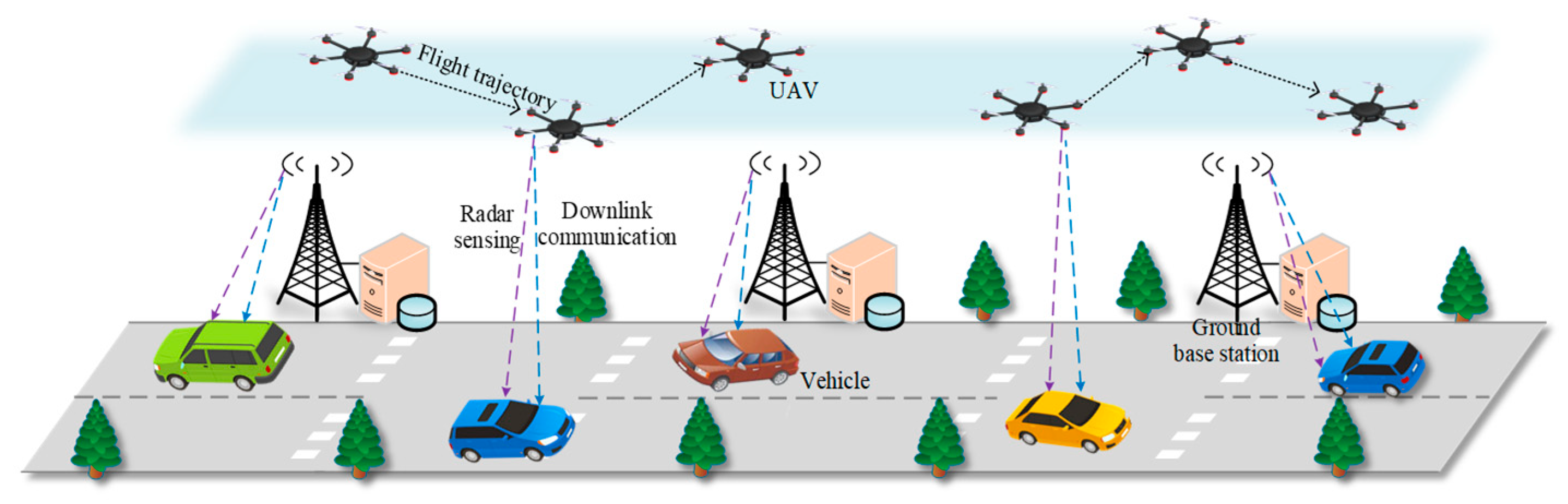
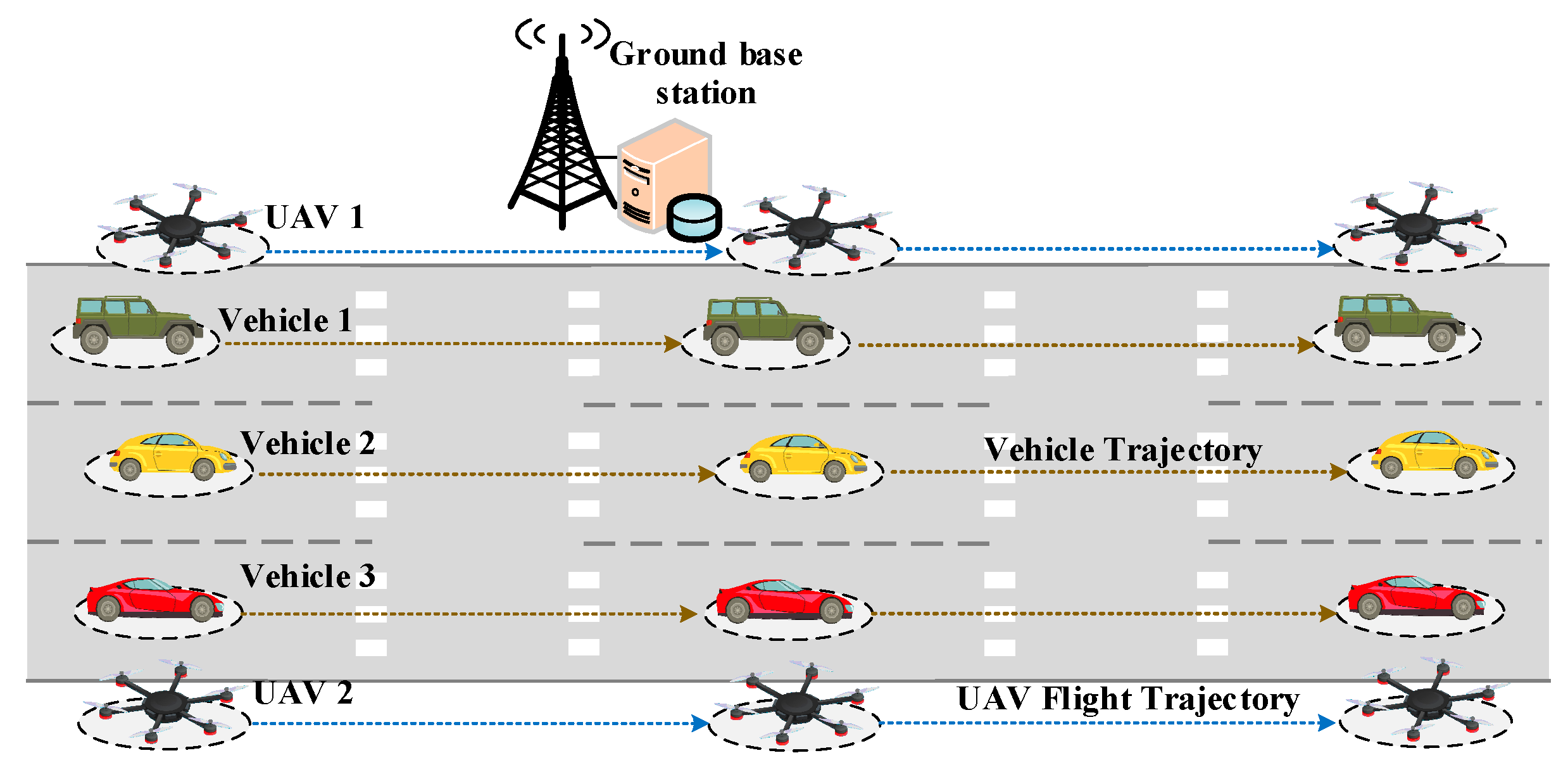
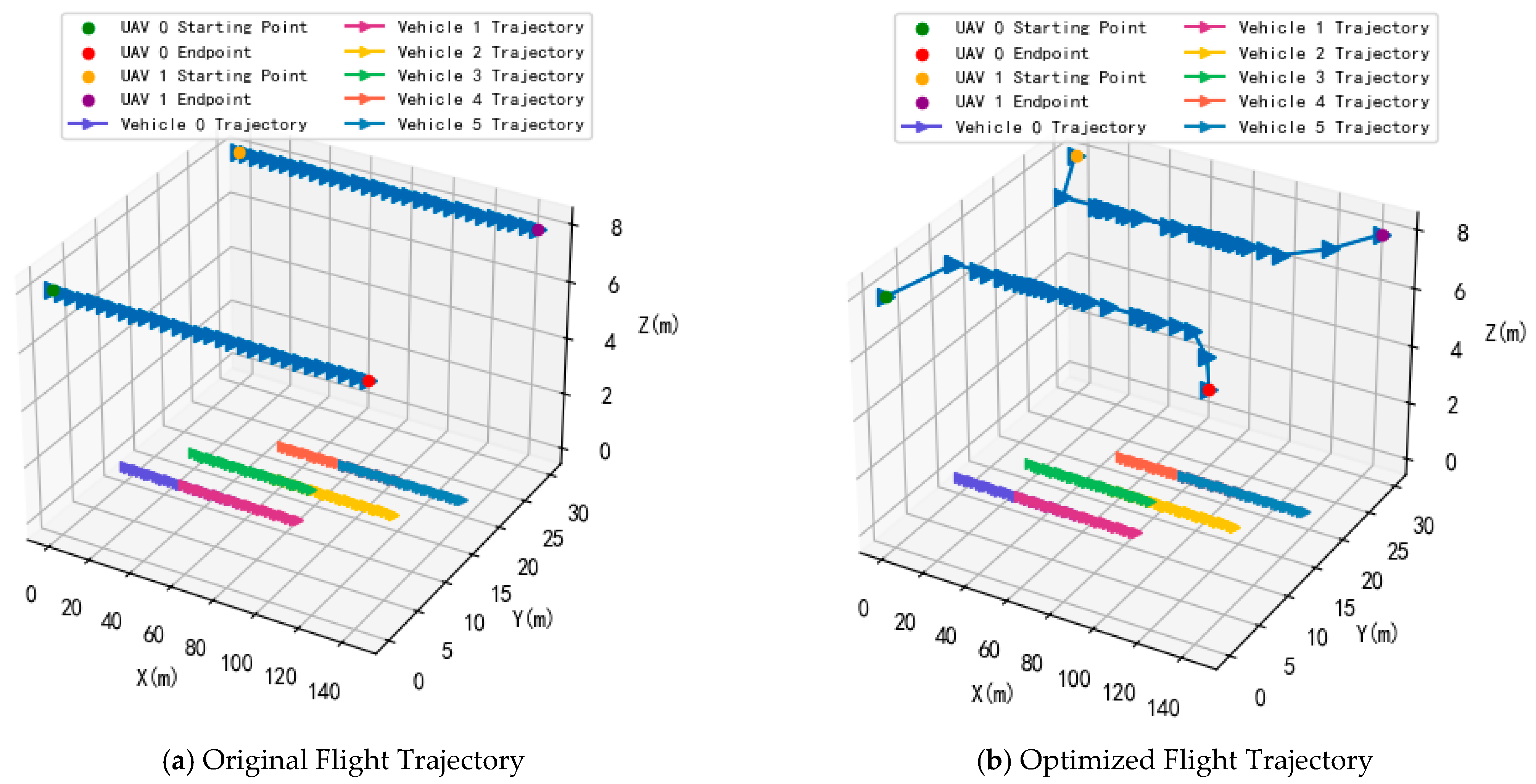
- A trajectory design and resource allocation (TDRA) strategy is proposed for ISAC-enabled UAV-assisted vehicular networks, jointly optimizing UAV trajectory, vehicle association, and subchannel allocation.
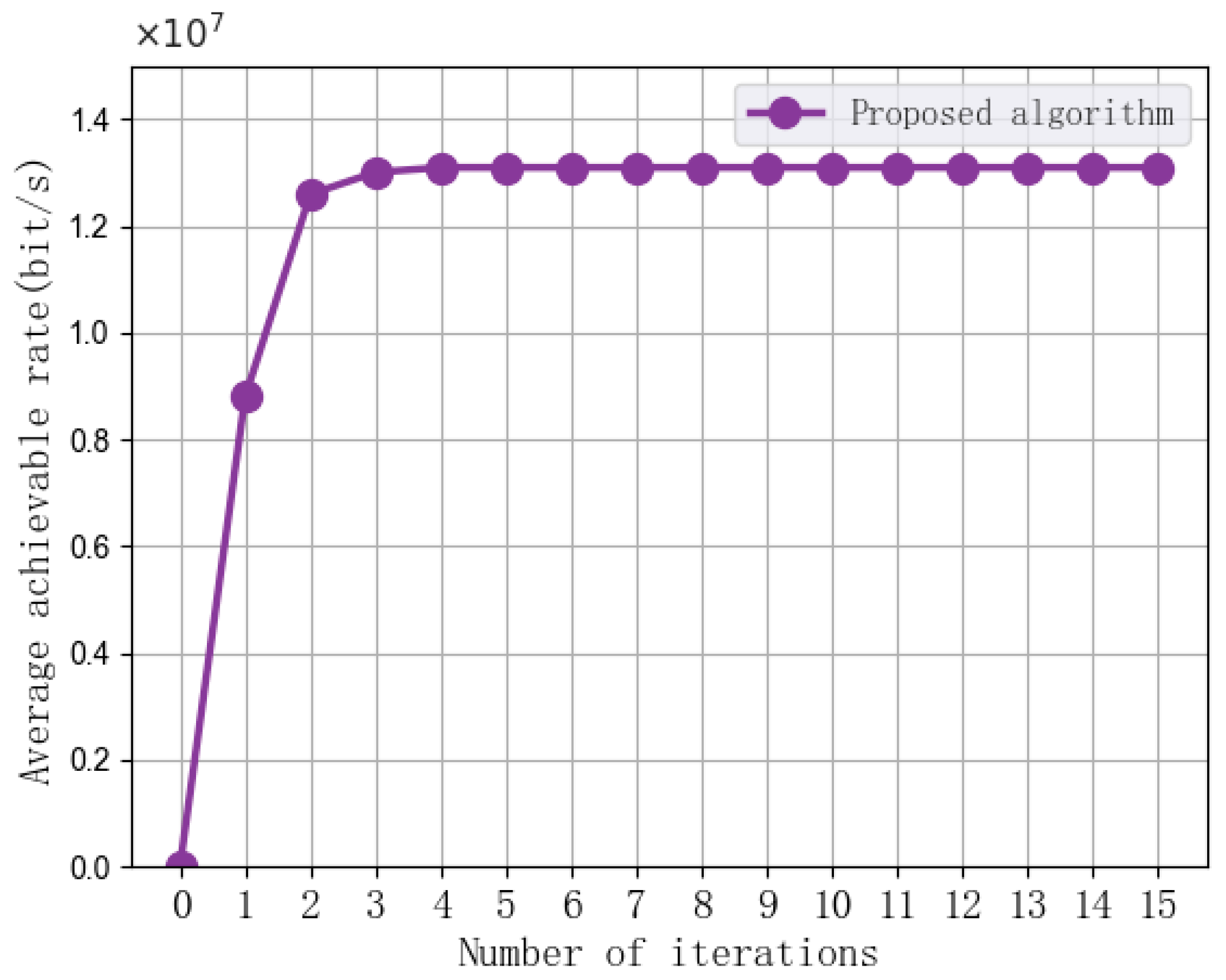
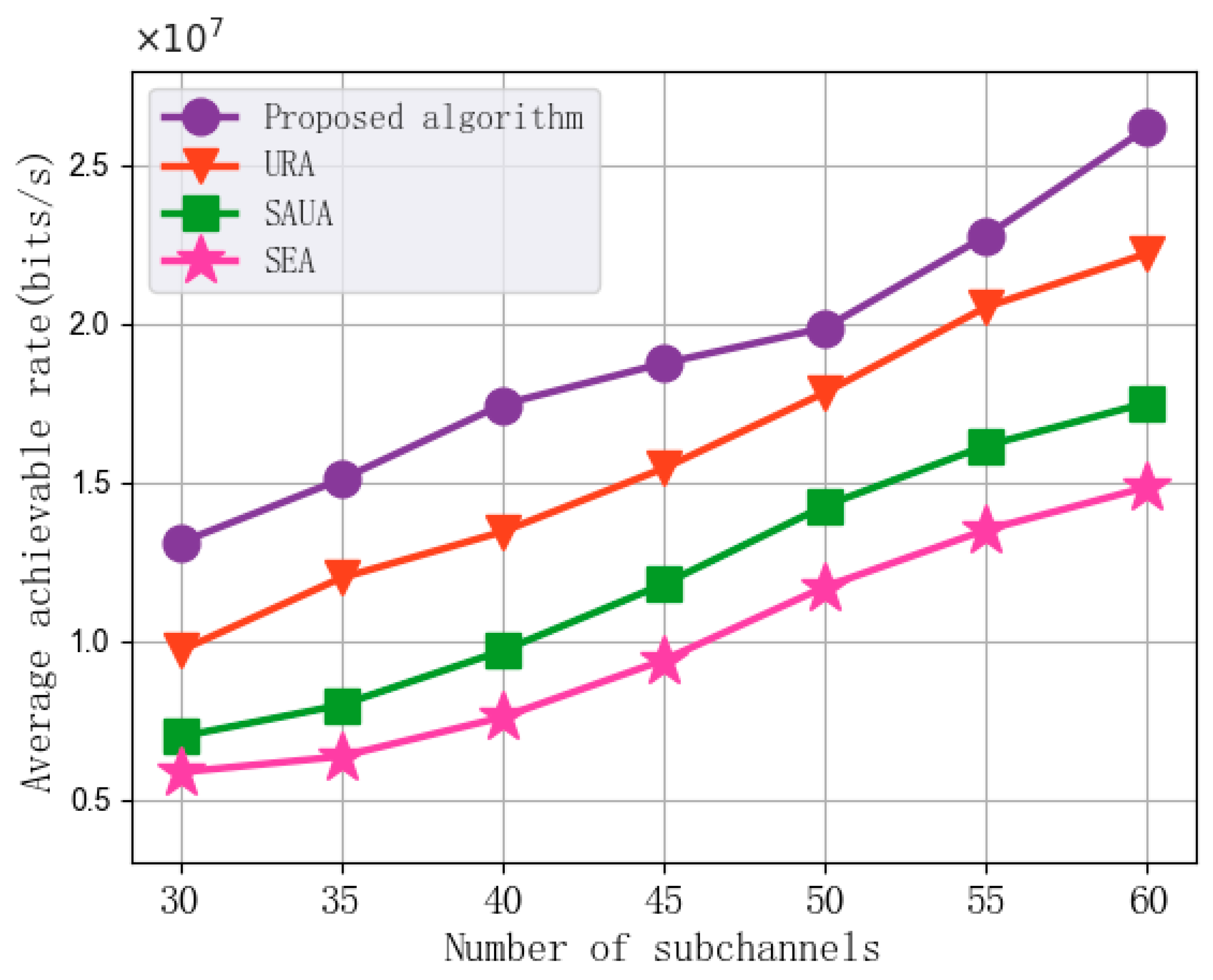
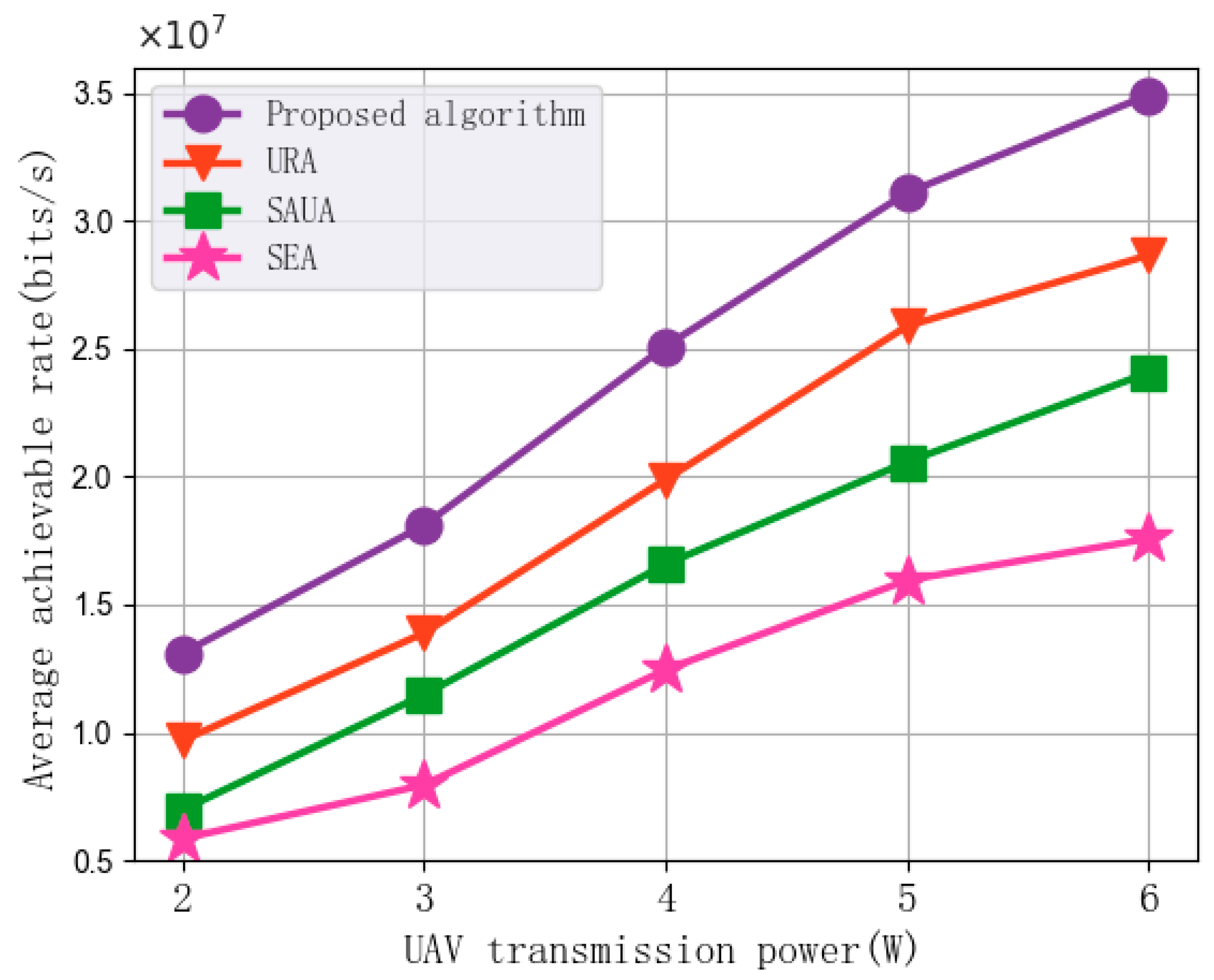
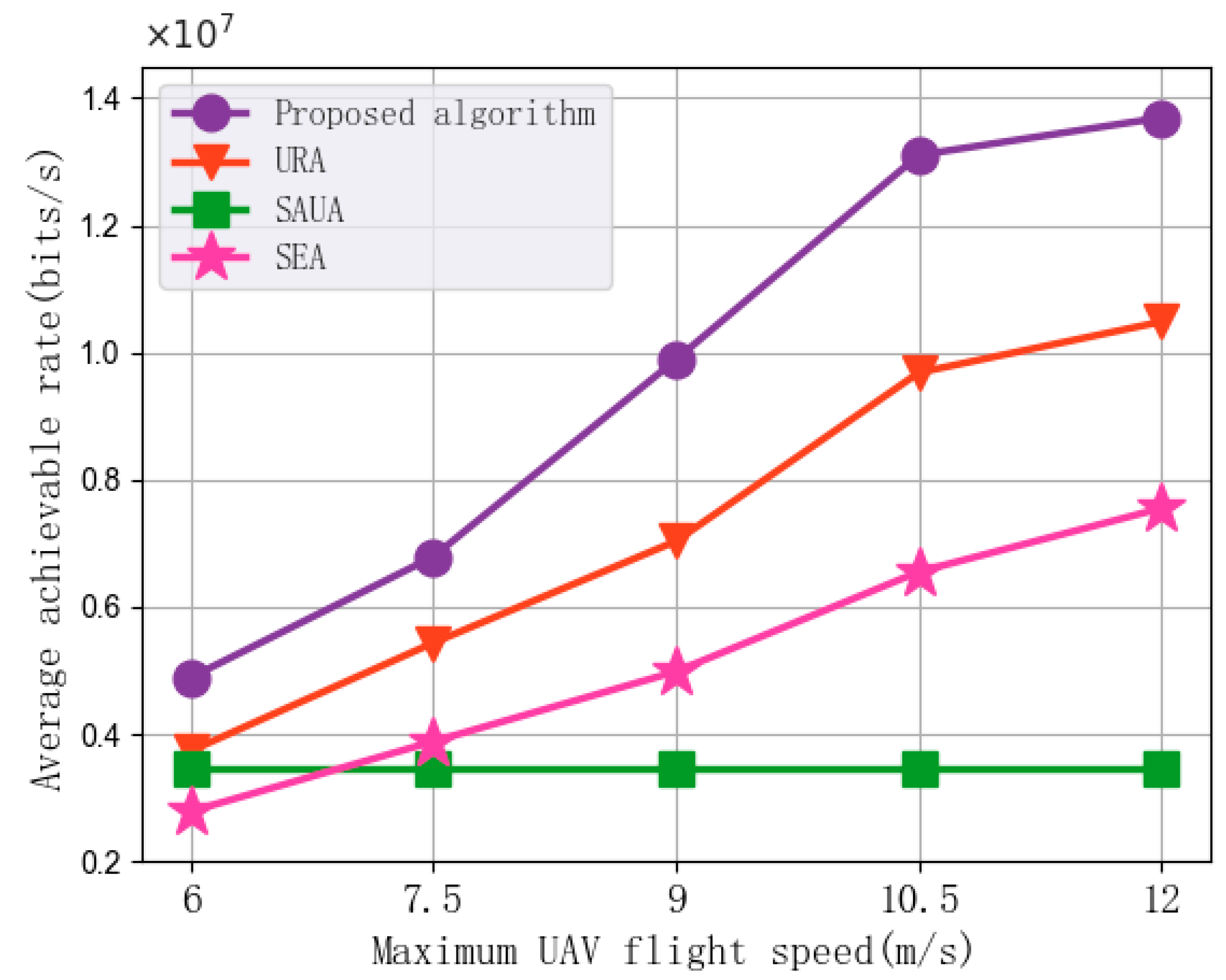
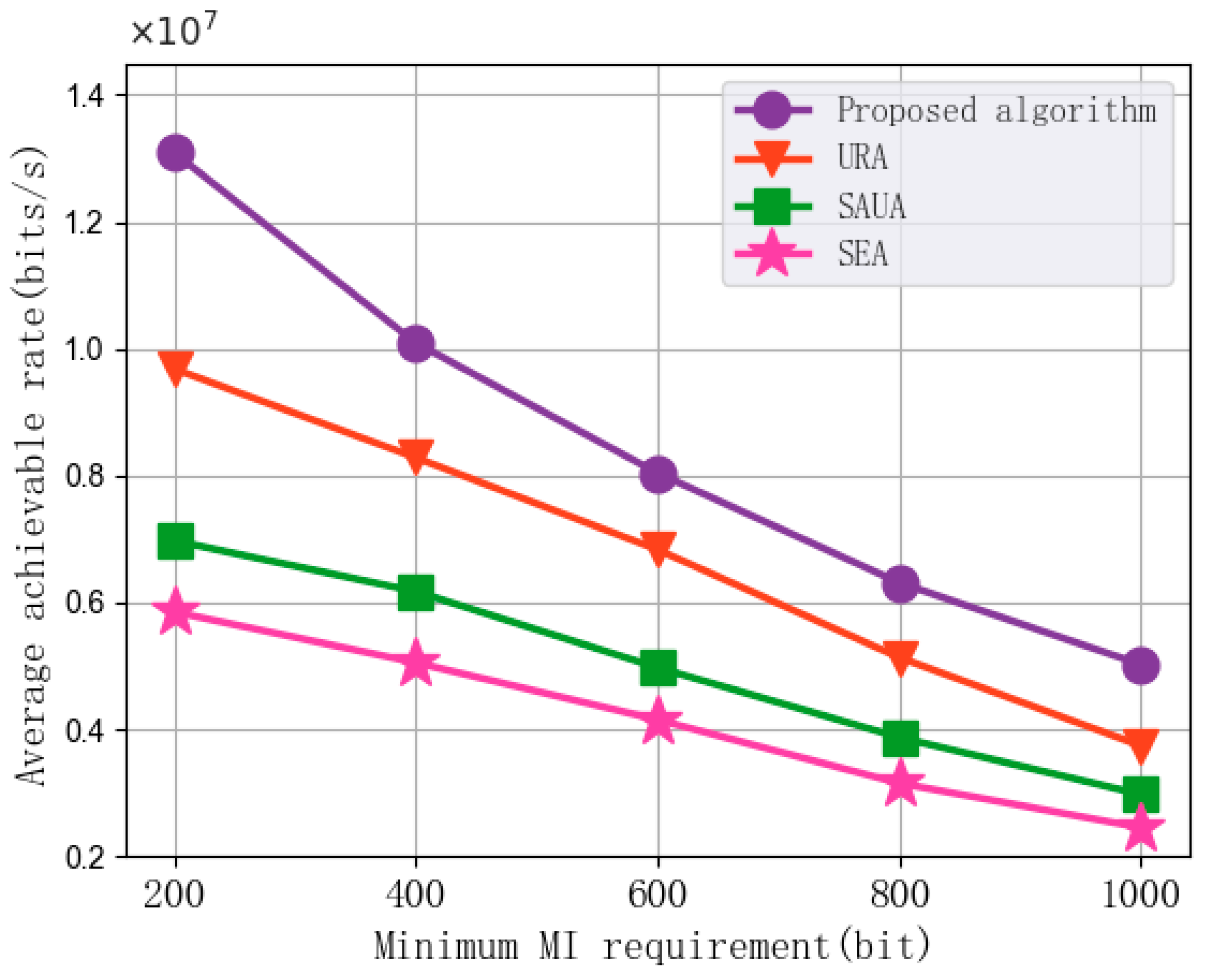
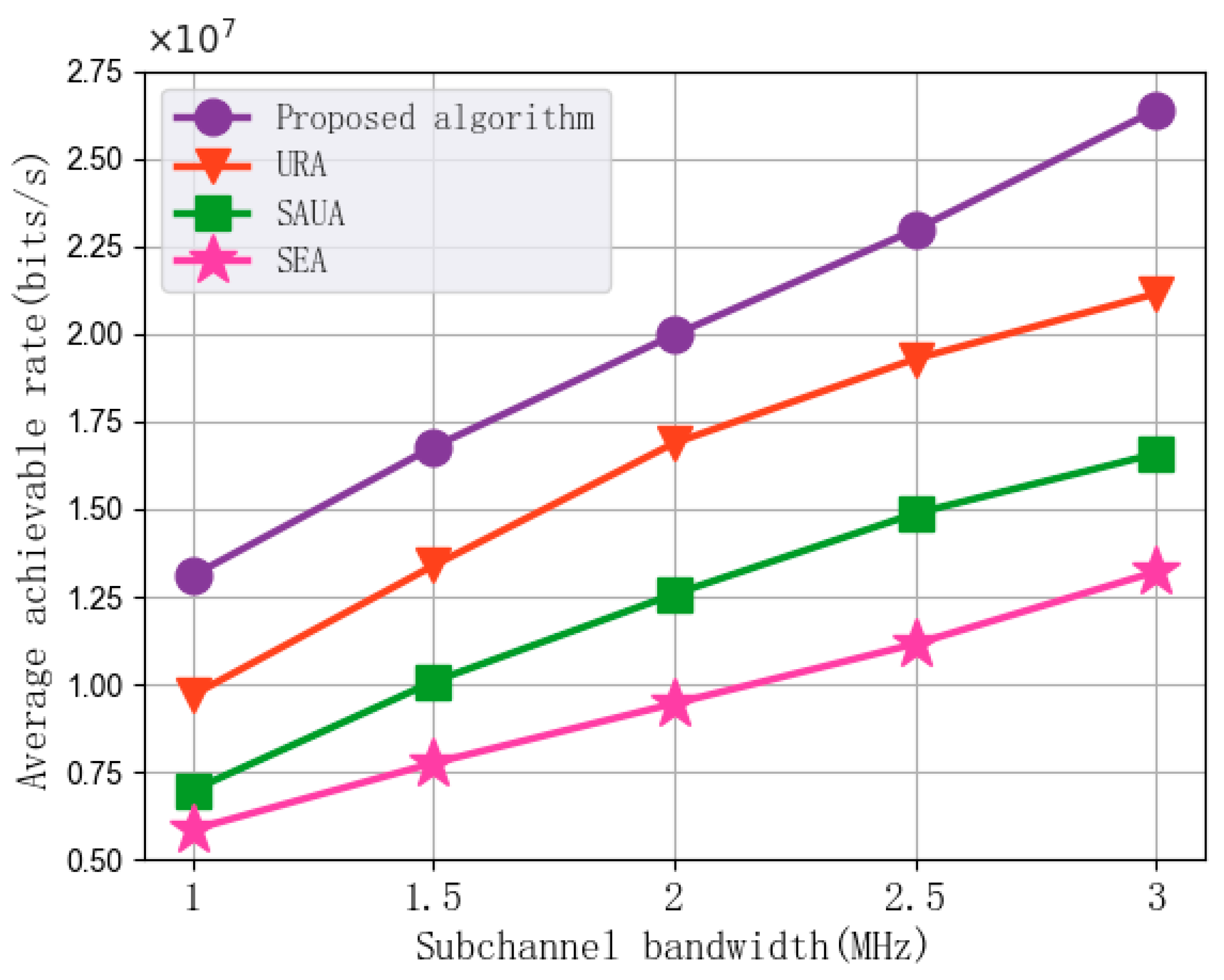
- The proposed BCD–SCA-based iterative algorithm achieves significant performance gains, with a notable improvement in the average achievable rate compared to benchmarks.
- Our method ensures reliable communication and radar sensing services in congestion scenarios by effectively balancing spectrum resources.
- The strategy provides a practical tool for deploying UAV-assisted ISAC vehicular networks, supporting high-efficiency and low-latency driving services.
Abstract
1. Introduction
2. Related Works
2.1. Resource Allocation in ISAC System
2.2. UAV Trajectory Planning
3. System Model
3.1. Communication Resource Allocation Model
3.2. Radar Sensing Resource Allocation Model
4. Problem Formulation
5. Proposed Algorithm
5.1. Vehicle Association Subproblem
| Algorithm 1: Vehicle Association Algorithm | |
| Input: Initial solution , penalty parameter , decrement coefficient , error threshold , algorithm iteration count , maximum algorithm iteration count . | |
| Output: Approximate optimal solution for vehicle association | |
| 1: | The constraint (26) is relaxed to transform the optimization problem P1.1 into a constrained linear programming problem. |
| 2: | The logarithmic barrier method is used to transform P1.1 into a convex problem P1.1.1 with equality constraints; |
| 3: | The exterior penalty function method is used to transform P1.1.1 into an unconstrained convex problem P1.1.2; |
| 4: | repeat |
| 5: | ; |
| 6: | Based on the initial solution and the penalty parameter , Newton’s method is used to solve P1.1.2 to obtain the solution for the current iteration; |
| 7: | Updating the initial solution |
| 8: | Updating the penalty parameter |
| 9: | until or |
| 10: | ; |
| 11 | return |
5.2. UAV Trajectory Planning Subproblem
5.3. Subchannel Allocation Subproblem
5.4. Algorithm Implementation and Analysis
| Algorithm 2: TDRA Algorithm | |
| Input: Decision variable set initial value , error tolerance threshold , number of iterations , maximum number of iterations | |
| Output: Approximate optimal solution | |
| 1. | repeat |
| 2. | ; |
| 3. | ;// The subproblem P1.2 is solved to obtain the UAV trajectory planning decision. |
| 4. | ;// The subproblem P1.1 is solved to obtain the vehicle association decision. |
| 5. | ;// The subproblem P1.3 is solved to obtain the subchannel allocation and function selection decisions. |
| 6. | until or |
| 7. | ; |
| 8. | return |
6. Simulation Results and Analysis
6.1. Simulation Environment and Parameter Settings
6.2. Comparison Algorithms and Evaluation Metrics
6.3. Performance Comparison
7. Conclusions
Author Contributions
Funding
Data Availability Statement
Conflicts of Interest
References
- Liao, Z.; Yuan, C.; Zheng, B.; Tang, X. An adaptive deployment scheme of unmanned aerial vehicles in dynamic vehicle networking for complete offloading. IEEE Internet Things J. 2024, 11, 23509–23520. [Google Scholar] [CrossRef]
- Liu, F.; Cui, Y.; Masouros, C.; Xu, J.; Han, T.X.; Eldar, Y.C.; Buzzi, S. Integrated sensing and communications: Toward dual-functional wireless networks for 6G and beyond. IEEE J. Sel. Areas Commun. 2022, 40, 1728–1767. [Google Scholar] [CrossRef]
- Wen, D.; Zhou, Y.; Li, X.; Shi, Y.; Huang, K.; Letaief, K.B. A survey on integrated sensing, communication, and computation. EEE Commun. Surv. Tuts. 2025, 27, 3058–3098. [Google Scholar] [CrossRef]
- Liu, S.; Hao, Q.; Zhang, Q.; Liu, J.; Jiang, Z. Integrated sensing and communication enabled multiple beamwidth and power allocation for connected automated vehicles. China Commun. 2023, 20, 46–58. [Google Scholar] [CrossRef]
- Jiang, W.; Wang, A.; Wei, Z.; Lai, M.; Pan, C.; Feng, Z.; Liu, J. Improve sensing and communication performance of UAV via integrated sensing and communication. In Proceedings of the 2021 IEEE 21st International Conference on Communication Technology (ICCT), Tianjin, China, 13–16 October 2021; pp. 644–648. [Google Scholar] [CrossRef]
- Adil, M.; Song, H.; Jan, M.A.; Khan, M.K.; He, X.; Farouk, A.; Jin, Z. UAV-assisted IoT applications, QoS requirements and challenges with future research directions. ACM Comput. Surv. 2024, 56, 1–35. [Google Scholar] [CrossRef]
- Yang, X.; Qin, D.; Liu, J.; Li, Y.; Zhu, Y.; Ma, L. Deep reinforcement learning in NOMA-assisted UAV networks for path selection and resource offloading. Ad Hoc Netw. 2023, 151, 103285. [Google Scholar] [CrossRef]
- Razaviyayn, M. Successive Convex Approximation: Analysis and Applications. Ph.D. Thesis, Department of Electrical Engineering, University of Minnesota, Minneapolis, MN, USA, 2014. [Google Scholar]
- Wei, Z.; Jia, J.; Niu, Y.; Wang, L.; Wu, H.; Yang, H.; Feng, Z. Integrated Sensing and Communication Channel Modeling: A Survey. IEEE Internet Things J. 2025, 12, 18850–18864. [Google Scholar] [CrossRef]
- Pu, Z.; Wang, W.; Lao, Z.; Yan, Y.; Qin, H. Power allocation of integrated sensing and communication system for the internet of vehicles. IEEE Trans. Green Commun. Netw. 2024, 8, 1717–1728. [Google Scholar] [CrossRef]
- Zhu, J.; Cui, Y.; Mu, J.; Jing, X. OFDM-based dual-function radar-communications: Optimal resource allocation for fairness. In Proceedings of the 2022 IEEE 95th Vehicular Technology Conference: (VTC2022-Spring), Helsinki, Finland, 19–22 June 2022; pp. 1–5. [Google Scholar] [CrossRef]
- Shi, C.; Wang, Y.; Wang, F.; Salous, S.; Zhou, J. Joint optimization scheme for subcarrier selection and power allocation in multicarrier dual-function radar-communication system. IEEE Syst. J. 2021, 15, 947–958. [Google Scholar] [CrossRef]
- Yang, H.; Wei, Z.; Feng, Z.; Qiu, C.; Fang, Z.; Chen, X.; Zhang, P. Queue-aware dynamic resource allocation for the joint communication-radar system. IEEE Trans. Veh. Technol. 2021, 70, 754–767. [Google Scholar] [CrossRef]
- Wang, X.; Wu, H.; Xu, Y.; Cao, H.; Kumar, N.; Rodrigues, J.J. Resource allocation in multi-cell integrated sensing and communication systems: A DRL approach. In Proceedings of the ICC 2023–IEEE International Conference on Communications, Rome, Italy, 28 May–1 June 2023; pp. 3210–3215. [Google Scholar] [CrossRef]
- Zhao, L.; Wu, D.; Zhou, L.; Qian, Y. Radio resource allocation for integrated sensing, communication, and computation networks. IEEE Trans. Wirel. Commun. 2022, 10, 8675–8687. [Google Scholar] [CrossRef]
- Zhang, T.; Zhu, K.; Zheng, S.; Niyato, D.; Luong, N.C. Trajectory design and power control for joint radar and communication enabled multi-UAV cooperative detection systems. IEEE Trans. Commun. 2023, 71, 158–172. [Google Scholar] [CrossRef]
- Zheng, Y.; Yang, B.; Chen, C. Joint optimization of the deployment and resource allocation of UAVs in vehicular edge computing and networks. In Proceedings of the 2020 IEEE 92nd Vehicular Technology Conference (VTC2020-Fall), Victoria, BC, Canada, 18 November–16 December 2020; pp. 1–6. [Google Scholar] [CrossRef]
- Rzig, I.; Jaafar, W.; Jebalia, M.; Tabbane, S. UAV-assisted computation offloading in vehicular networks. In Proceedings of the 2023 IEEE International Performance, Computing, and Communications Conference (IPCCC), Anaheim, CA, USA, 17–19 November 2023; pp. 236–241. [Google Scholar]
- Yan, M.; Xiong, R.; Wang, Y.; Li, C. Edge computing task offloading optimization for a UAV-assisted Internet of Vehicles via deep reinforcement learning. IEEE Trans. Veh. Technol. 2024, 73, 5647–5658. [Google Scholar] [CrossRef]
- Feng, Z.; Na, Z.; Xiong, M.; Ji, C. Multi-UAV collaborative wireless communication networks for single cell edge users. Mob. Netw. Appl. 2022, 27, 1578–1592. [Google Scholar] [CrossRef]
- Nguyen, M.D.; Le, L.B.; Girard, A. Integrated UAV trajectory control and resource allocation for UAV-based wireless networks with co-channel interference management. IEEE Internet Things J. 2022, 9, 12754–12769. [Google Scholar] [CrossRef]
- Qin, P.; Wu, X.; Cai, Z.; Zhao, X.; Fu, Y.; Wang, M.; Geng, S. Joint trajectory plan and resource allocation for UAV-enabled C-NOMA in air-ground integrated 6G heterogeneous network. IEEE Trans. Netw. Sci. Eng. 2023, 10, 3421–3434. [Google Scholar]
- Singh, K.; Hazarika, B.; Li, C.P.; Tsang, K.F.; Biswas, S. Digital twin-assisted resource allocation in UAV-aided Internet of Vehicles networks. In Proceedings of the 2023 IEEE International Conference on Communications Workshops (ICC Workshops), Rome, Italy, 28 May–1 June 2023; pp. 409–414. [Google Scholar] [CrossRef]
- Wu, D.; Wang, L.; Liang, M.; Kang, Y.; Jiao, Q.; Cheng, Y.; Li, J. UAV-assisted real-time video transmission for vehicles: A soft actor–critic DRL approach. IEEE Internet Things J. 2024, 11, 14710–14726. [Google Scholar] [CrossRef]
- Ahmed, K.J.; Lee, M.J. Secure LTE-based V2X service. IEEE Internet Things J. 2018, 5, 3724–3732. [Google Scholar] [CrossRef]
- Boban, M.; Dupleich, D.; Iqbal, N.; Luo, J.; Schneider, C.; Müller, R.; Yu, Z.; Steer, D.; Jämsä, T.; Li, J.; et al. Multi-band vehicle-to-vehicle channel characterization in the presence of vehicle blockage. IEEE Access 2019, 7, 9724–9735. [Google Scholar] [CrossRef]
- Deng, Q.; Ge, Y.; Ding, Z. A unifying view of OTFS and its many variants. IEEE Commun. Surv. Tuts. 2025. early access. [Google Scholar] [CrossRef]
- Zhao, J.; Ren, R.; Zou, D.; Zhang, Q.; Xu, W. IoV-oriented integrated sensing, computation, and communication: System design and resource allocation. IEEE Trans. Veh. Technol. 2024, 73, 16283–16294. [Google Scholar] [CrossRef]
- Zhou, Y.; Zhou, H.; Zhou, F.; Wu, Y.; Leung, V.C. Resource allocation for a wireless powered integrated radar and communication system. IEEE Wirel. Commun. Lett. 2018, 8, 253–256. [Google Scholar] [CrossRef]
- Kay, S.M. Fundamentals of Statistical Signal Processing; Prentice-Hall, Inc.: Englewood Cliffs, NJ, USA, 1993. [Google Scholar]
- Van Trees, H.L. Detection, Estimation, and Modulation Theory, Part I: Detection, Estimation, And Linear Modulation Theory; John Wiley & Sons: Hoboken, NJ, USA, 2004. [Google Scholar]
- Al-Jarrah, M.; Alsusa, E.; Masouros, C. A Unified Performance Framework for Integrated Sensing-Communications Based on KL-Divergence. IEEE Trans. Wireless Commun. 2023, 22, 9390–9411. [Google Scholar] [CrossRef]
- Wang, L.; Yao, X.; Jiang, X.; Cui, J.; Zheng, B. Resource management and computing offloading to minimize power consumption cost in slice-MEC system. In Proceedings of the 2022 14th International Conference on Wireless Communications and Signal Processing (WCSP), Nanjing, China, 1–3 November 2022; pp. 1108–1113. [Google Scholar] [CrossRef]
- Hong, M.; Razaviyayn, M.; Luo, Z.-Q.; Pang, J.-S. A unified algorithmic framework for block-structured optimization involving big data: With applications in machine learning and signal processing. IEEE Signal Process. Mag. 2016, 33, 57–77. [Google Scholar] [CrossRef]
- Poularakis, K.; Llorca, J.; Tulino, A.M.; Taylor, I.; Tassiulas, L. Joint service placement and request routing in multi-cell mobile edge computing networks. In Proceedings of the IEEE INFOCOM 2019–IEEE Conference on Computer Communications, Paris, France, 29 April – 2 May 2019; pp. 10–18. [Google Scholar] [CrossRef]
- Zhang, J.; Zhou, L.; Zhou, F.; Seet, B.-C.; Zhang, H.; Cai, Z.; Wei, J. Computation-efficient offloading and trajectory scheduling for multi-UAV assisted mobile edge computing. IEEE Trans. Veh. Technol. 2019, 69, 2114–2125. [Google Scholar] [CrossRef]
- Cheng, F.; Zhang, S.; Li, Z.; Chen, Y.; Zhao, N.; Yu, F.R.; Leung, V.C. UAV trajectory optimization for data offloading at the edge of multiple cells. IEEE Trans. Veh. Technol. 2018, 67, 6732–6736. [Google Scholar] [CrossRef]
- Shi, C.; Wang, F.; Sellathurai, M.; Zhou, J.; Salous, S. Power minimization-based robust OFDM radar waveform design for radar and communication systems in coexistence. IEEE Trans. Signal Process. 2018, 66, 1316–1330. [Google Scholar] [CrossRef]
- Liu, Y.; Yang, C.; Chen, X.; Wu, F. Joint hybrid caching and replacement scheme for UAV-assisted vehicular edge computing networks. IEEE Trans. Intell. Veh. 2024, 9, 866–878. [Google Scholar] [CrossRef]
- Avola, D.; Cinque, L.; Foresti, G.L.; Martinel, N.; Pannone, D.; Piciarelli, C. A UAV video dataset for mosaicking and change detection from low-altitude flights. IEEE Trans. Syst. Man Cybern. Syst. 2020, 50, 2139–2149. [Google Scholar] [CrossRef]
- Bozcan, I.; Kayacan, E. AU-AIR: A Multi-modal Unmanned Aerial Vehicle Dataset for Low Altitude Traffic Surveillance. In Proceedings of the 2020 IEEE International Conference on Robotics and Automation (ICRA), Paris, France, 31 May–31 August 2020; pp. 8504–8510. [Google Scholar] [CrossRef]
- Moshayedi, A.J.; Roy, A.S.; Taravet, A.; Liao, L.; Wu, J.; Gheisari, M. A secure traffic police remote sensing approach via a deep learning-based low-altitude vehicle speed detector through uavs in smart cites: Algorithm, implementation and evaluation. Future Transp. 2023, 3, 189–209. [Google Scholar] [CrossRef]
- Yuan, S.; Zhao, H.; Geng, L. An offloading algorithm based on deep reinforcement learning for uav-aided vehicular edge computing networks. In Proceedings of the 2022 IEEE 9th International Conference on Cyber Security and Cloud Computing (CSCloud)/2022 IEEE 8th International Conference on Edge Computing and Scalable Cloud (EdgeCom), Xi’an, China, 25–27 June 2022; pp. 153–159. [Google Scholar] [CrossRef]
- Aung, P.S.; Tun, Y.K.; Ei, N.N.; Hong, C.S. Energy-efficient offloading and user association in UAV-assisted vehicular ad hoc network. In Proceedings of the 2020 21st Asia-Pacific Network Operations and Management Symposium (APNOMS), Daegu, Republic of Korea, 22–25 September 2020; pp. 108–113. [Google Scholar] [CrossRef]
- FAA. Part 107 Small Unmanned Aircraft Regulations. Available online: https://www.faa.gov/newsroom/small-unmanned-aircraft-systems-uas-regulations-part-107 (accessed on 1 November 2017).
- Pan, Y.; Da, X.; Hu, H.; Zhang, M.; Zhai, D.; Cumanan, K.; Dobre, O.A. Cooperative trajectory planning and resource allocation for UAV-enabled integrated sensing and communication systems. IEEE Trans. Veh. Technol. 2024, 73, 6502–6516. [Google Scholar] [CrossRef]
- Qin, Y.; Zhang, Z.; Li, X.; Huangfu, W.; Zhang, H. Deep reinforcement learning based resource allocation and trajectory planning in integrated sensing and communications UAV network. IEEE Trans. Wirel. Commun. 2023, 22, 8158–8169. [Google Scholar] [CrossRef]
- Liu, Y.; Mao, W.; Li, X.; Huangfu, W.; Ji, Y.; Xiao, Y.; Long, K. Joint task scheduling and resource allocation for UAV-assisted air-ground collaborative integrated sensing, computation, and communication. IEEE Trans. Commun. 2025, 73, 10929–10945. [Google Scholar] [CrossRef]
- Peng, S.; Li, B.; Liu, L.; Fei, Z.; Niyato, D. Trajectory design and resource allocation for multi-UAV-assisted sensing, communication, and edge computing integration. IEEE Trans. Commun. 2025, 73, 2847–2861. [Google Scholar] [CrossRef]
- Nguyen, M.D.; Ho, T.M.; Le, L.B.; Girard, A. UAV trajectory and sub-channel assignment for UAV-based wireless networks. In Proceedings of the 2020 IEEE Wireless Communications and Networking Conference (WCNC), Seoul, Republic of Korea, 25–28 May; pp. 1–6. [CrossRef]
- Cheng, Z.; Liwang, M.; Chen, N.; Huang, L.; Guizani, N.; Du, X. Learning-based user association and dynamic resource allocation in multi-connectivity enabled unmanned aerial vehicle networks. Digit. Commun. Netw. 2022, 10, 53–62. [Google Scholar] [CrossRef]
- Shi, C.; Wang, Y.; Wang, F.; Li, H. Joint optimization of subcarrier selection and power allocation for dual-functional radar-communications system. In Proceedings of the 2020 IEEE 11th Sensor Array and Multichannel Signal Processing Workshop (SAM), Hangzhou, China, 8–11 June 2020; pp. 1–5. [Google Scholar] [CrossRef]



| Parameters | Definition |
| Number of vehicles V | 6 |
| Number of UAVs U | 2 |
| Number of GBSs R | 1 |
| Number of sub-channels C | 30–60 |
| Fixed altitude of UAVs | 8 m |
| Maximum flight speed of UAVs | 6–12 m/s |
| Minimum safe distance between UAVs | 8 m |
| Energy required for UAV to fly a unit distance | 2 J/m |
| Duration between time slots | 1 s |
| Number of time slots contained in the time period T | 30 |
| Simulation scene size | 150 m × 30 m |
| Channel power gain at a reference distance of 1 m , | −60 dB |
| Gaussian white noise power | −145 dBm |
| Subchannel bandwidth | 1–3 MHz |
| On-board energy of UAVs | 500 J |
| Transmission power of UAV | 2–6 W |
| Transmission power of GBS | 3 W |
| Basic communication rate requirements for vehicle | 2 × 104 bit/s |
| Minimum MI requirement threshold of the vehicle | 200–1000 bit |
| Noise power on the c-th subcarrier , | 1.66 × 10⁻¹⁴ W |
| Number of consecutive OFDM symbols S | 10 |
| Duration of the OFDM symbol | 5 µs |
Disclaimer/Publisher’s Note: The statements, opinions and data contained in all publications are solely those of the individual author(s) and contributor(s) and not of MDPI and/or the editor(s). MDPI and/or the editor(s) disclaim responsibility for any injury to people or property resulting from any ideas, methods, instructions or products referred to in the content. |
© 2025 by the authors. Licensee MDPI, Basel, Switzerland. This article is an open access article distributed under the terms and conditions of the Creative Commons Attribution (CC BY) license (https://creativecommons.org/licenses/by/4.0/).
Share and Cite
Song, M.; Zhang, W.; Bai, J. Resource Allocation and Trajectory Planning in Integrated Sensing and Communication Enabled UAV-Assisted Vehicular Network. Sensors 2025, 25, 7295. https://doi.org/10.3390/s25237295
Song M, Zhang W, Bai J. Resource Allocation and Trajectory Planning in Integrated Sensing and Communication Enabled UAV-Assisted Vehicular Network. Sensors. 2025; 25(23):7295. https://doi.org/10.3390/s25237295
Chicago/Turabian StyleSong, Mingyang, Wenyang Zhang, and Jingpan Bai. 2025. "Resource Allocation and Trajectory Planning in Integrated Sensing and Communication Enabled UAV-Assisted Vehicular Network" Sensors 25, no. 23: 7295. https://doi.org/10.3390/s25237295
APA StyleSong, M., Zhang, W., & Bai, J. (2025). Resource Allocation and Trajectory Planning in Integrated Sensing and Communication Enabled UAV-Assisted Vehicular Network. Sensors, 25(23), 7295. https://doi.org/10.3390/s25237295