You are currently viewing a new version of our website. To view the old version click .
Sensors
  • Article
  • Open Access

17 October 2022

Path-Tracking Control Strategy of Unmanned Vehicle Based on DDPG Algorithm

and
School of Automotive and Transportation Engineering, Nanjing Forestry University, Nanjing 210037, China
*
Author to whom correspondence should be addressed.
This article belongs to the Section Vehicular Sensing

Abstract

This paper proposes a deep reinforcement learning (DRL)-based algorithm in the path-tracking controller of an unmanned vehicle to autonomously learn the path-tracking capability of the vehicle by interacting with the CARLA environment. To solve the problem of the high estimation of the Q-value of the DDPG algorithm and slow training speed, the controller adopts the deep deterministic policy gradient algorithm of the double critic network (DCN-DDPG), obtains the trained model through offline learning, and sends control commands to the unmanned vehicle to make the vehicle drive according to the determined route. This method aimed to address the problem of unmanned-vehicle path tracking. This paper proposes a Markov decision process model, including the design of state, action-and-reward value functions, and trained the control strategy in the CARLA simulator Town04 urban scene. The tracking task was completed under various working conditions, and its tracking effect was compared with the original DDPG algorithm, model predictive control (MPC), and pure pursuit. It was verified that the designed control strategy has good environmental adaptability, speed adaptability, and tracking performance.

1. Introduction

In recent years, autonomous driving has become the focus of development in the field of unmanned vehicles. Path tracking is the basis and core technology of autonomous driving. Therefore, unmanned vehicles must have a reliable path-tracking controller.
There are many traditional control methods of path tracking, which can be roughly divided into two categories: model-free control and model-based control. In model-free control, the system dynamics is regarded as a black box. The steering command is only generated based on the tracking error, such as proportional-integral-derivative control (PID). PID does not require the system to establish an accurate mathematical model to complete the tracking task. However, when the nonlinearity and uncertainty of the system are high, model-free control becomes unreliable because this method cannot accurately express the motion state of the system.
Model-based control includes kinematic model-based control and dynamic model-based control. Control based on the kinematics model usually simplifies the vehicle as a mass point. Control methods based on the kinematics model mainly include pure-pursuit control and Stanley control. The steering wheel angle of the vehicle obtained by this type of controller is usually related to the heading angle error and lateral error of the vehicle. This method is easy to implement, but it can only achieve the real-time response of the vehicle at low speeds, and is not suitable for tracking control in high-speed conditions [1,2]. When considering complex urban conditions and high-speed traffic environments, the reliability and robustness of the controller of the model are not highly based on kinematics, so a vehicle dynamics model needs to be introduced.
The control method based on the dynamic model considers multiple factors relating to the vehicle body and external interference items when the vehicle is running at high speeds; these factors include the nonlinear change in the tire, the yaw and roll constraints of the vehicle, the change in the road curvature, etc. The control method based on the dynamic model improves the safety and reliability of the vehicle in complex working conditions. The control methods based on the dynamic model mainly include the linear-quadratic regulator (LQR), H-infinity control, model predictive control (MPC), sliding mode control (SMC), etc. [3,4]. H-infinity control and sliding mode control can compensate for uncertainty and external disturbances in lateral control and are promising trajectory-tracking control techniques, but the main disadvantage of sliding mode control is chattering. The author in [5] introduced an adaptive mechanism together with a finite frequency H∞ control strategy to reject the effects of actuator faults and disturbances, respectively. The author in [6] proposed a method that combines the sliding mode approach with a smooth nonlinear control law to reduce amplitude, which limits the steering angle. In [7], high-order sliding mode control was used to reduce jitter. In [8], by establishing a speed-planning module, a steering control module, and a speed-tracking module, sliding mode control (SMC) with adaptive preview time was used to control the autonomous vehicle to track the target path. The author in [9] proposed a four-wheel PID control and SMC control based on the traditional two-wheel PID control and SMC control, which were used in automatic control vehicles with four-wheel independent steering and drive. Chattering will make the system oscillate or become unstable. All of the above optimal control methods can only reduce chattering, but not eliminate it. Eliminating chattering eliminates the anti-interference ability of sliding mode control, but the existence of chattering affects the stability of vehicle control and the comfort of vehicle riding. Due to the high computational complexity and poor real-time performance of the method based on the vehicle dynamics model, the vehicle dynamics model is usually a simplified two-degree-of-freedom bicycle model, which retains the yaw and lateral motion of the vehicle. On the basis of accurately describing the vehicle dynamics, the vehicle model is simplified as much as possible to reduce the calculation amount of the algorithm and ensure the real-time performance of the control system.
In addition to the above-mentioned traditional control methods, intelligent control methods are currently more favored by scholars. At present, the mainstream intelligent methods include fuzzy control, genetic algorithms, neural networks, reinforcement learning, etc. The author in [10] proposed a new control approach based on the immersion and invariance control theorem to ensure that the vehicle completes the vehicle path-tracking task under various operating conditions, parameter uncertainties, and external disturbances. Because intelligent algorithms are mainly model-free, many scholars have combined intelligent algorithms with traditional algorithms to solve the shortcomings of traditional methods. Some scholars proposed the combination of fuzzy control and PID [11]. Compared with traditional PID, fuzzy PID has better stability and robustness, and has better control accuracy, and can adapt to different road conditions. Some scholars combined the genetic algorithm and MPC [12], using the genetic algorithm to adjust parameters online, which made the controller less susceptible to external factors and improved tracking accuracy. Some scholars combined reinforcement learning and MPC [13]. This method adjusts the weight of MPC through reinforcement learning, which reduces the difficulty of adjusting the weight of MPC.
Deep reinforcement learning (DRL) is a kind of intelligent algorithm. It is a combination of deep learning and reinforcement learning. In the training process, deep reinforcement learning obtains the optimized goal through the interaction and exploration of reinforcement learning and the environment, and then uses deep learning to fit the control strategy. Deep reinforcement learning is mainly used to solve problems in the Markov decision process (MDP). It can obtain the optimal strategy for selecting actions in the environment through the agent, and the goal is to maximize the reward value. Compared with traditional control methods, such as H-infinity, which require fixed structures and parameters, deep reinforcement learning does not require complex models, so the amount of computation is relatively small. In the face of environmental changes, the rapid adjustment performance of deep reinforcement learning is superior to traditional control methods. Compared with other intelligent control methods, such as sliding mode control, reinforcement learning has higher accuracy and no chattering. At present, deep reinforcement learning has achieved considerable results in the field of games, and has also been widely studied in some fields that require complex control [14,15,16], such as smart ships, unmanned surface vehicles [17], and unmanned vehicles [18].
The author in [19] proposed a path-following control method for AUVs based on adaptive-reinforcement learning. Based on the continuous interaction with nonstationary environments, this method achieved the adaptive control of AUVs and obtained good simulation test results. However, this work only conducted a preliminary study on the algorithm. Only a set of simulation tests was performed, and the results were imperfect. The author in [20] proposed an MPQ-DPG algorithm to investigate trajectory tracking problems for a class of autonomous underwater vehicles (AUVs). The algorithm could achieve high-level tracking-control accuracy of AUVs and stable learning by applying a hybrid actors–critics architecture, where multiple actors and critics were trained to learn a deterministic policy and action-value function, respectively. The effectiveness and generality of the MPQ-DPG algorithm were verified by its application on an AUV with two different reference trajectories. However, the random experience extraction method in the algorithm made the agent fall into the local optimal. The author in [21] proposed double-critic networks and the priority experience replay deep deterministic policy gradient (DCPER-DDPG) algorithm to improve sample utilization and training speed. However, the convergence of the algorithm was not stable enough. The author in [22] designed a double experience replay buffer (DERB) to increase learning efficiency and accelerate convergence speed. However, the simulation scenario was simple and could not meet the actual requirements.
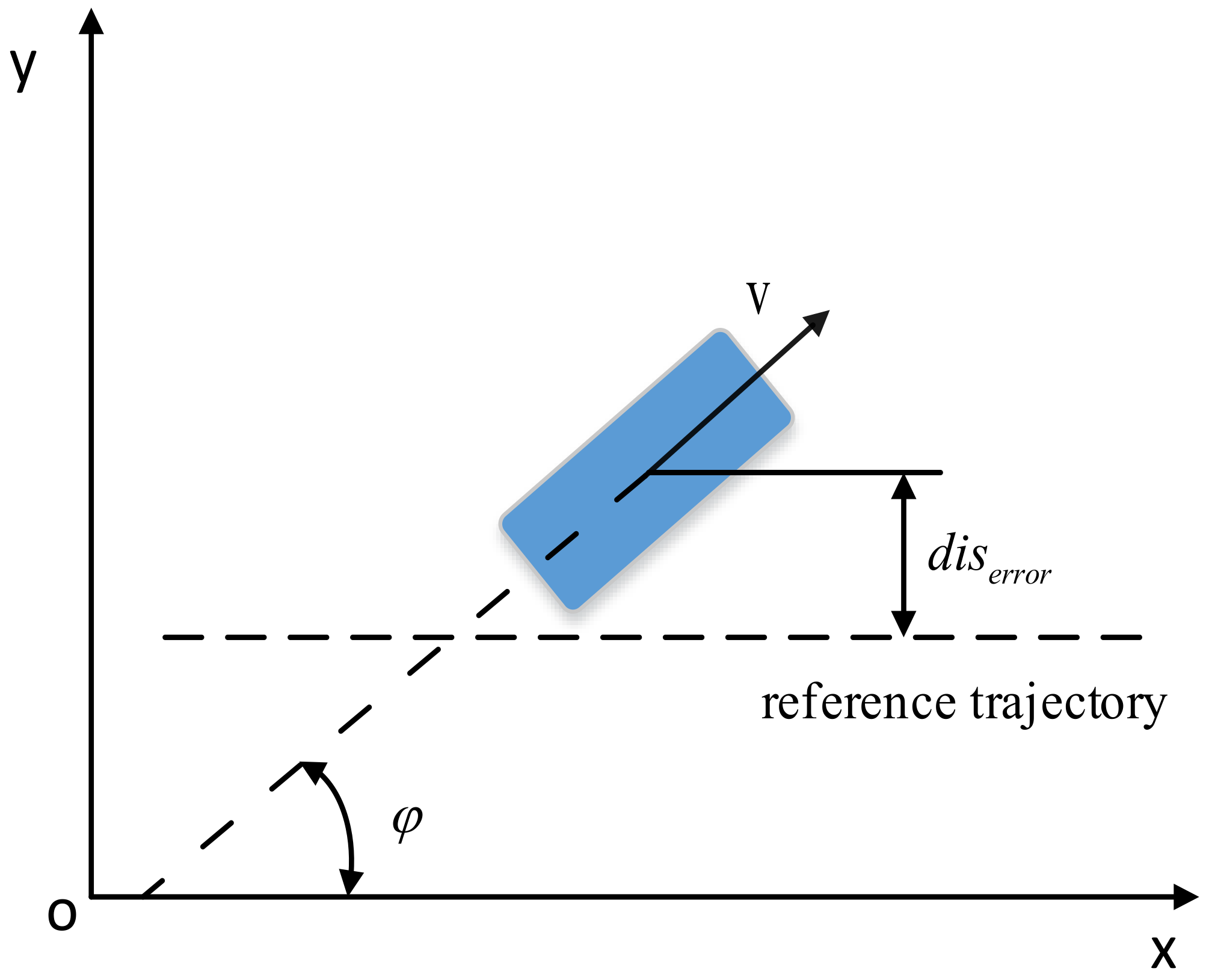
Because each step in the car’s driving is continuous, which is the same as the continuous characteristic of the deep deterministic policy gradient (DDPG), this paper proposes a path-tracking control strategy for unmanned vehicles based on the DCN-DDPG algorithm. The goal of the control strategy was for the unmanned vehicle to follow a predetermined route without collision in urban road environments. To verify the effectiveness of the control strategy, the proposed control strategy was simulated and tested in the CARLA simulator. CARLA is an open-source simulator that can simulate real traffic environments, pedestrian behaviors, car sensors, etc., while providing a dynamic urban environment. In CARLA, the current position of the reference vehicle can be obtained through a global navigation satellite system (GNSS). The unmanned vehicle path-tracking control strategy proposed in this paper introduces the change rate of the vehicle-heading angle as a constraint variable, which reduces the lateral jitter of the vehicle during the tracking process and ensures the stability of the vehicle tracking. In addition, the design of the reward value function solves the problem of deep reinforcement learning’s sparse reward value, causing difficulty in convergence. Finally, the tracking effect of the proposed path-tracking control strategy for unmanned vehicles based on the DCN-DDPG algorithm was verified in Town04, and compared with the original DDPG, MPC, and pure pursuit.

3. Results

3.1. Simulation Environment and Parameter Configuration

The CPU model of the simulation hardware used in this study was i5-12400F (Intel+Asus, Shanghai, China); the GPU model was RTX3060 (Colorful, Shenzhen, China); the memory stick had a capacity of 16G (CRUCIAL, Meridian, America); and the operating system was Windows 10. The simulation software environment was jointly built by CARLA and Python. The main parameters of DCN-DDPG were set as shown in Table 3.
Table 3. Main parameters of DCN-DDPG.
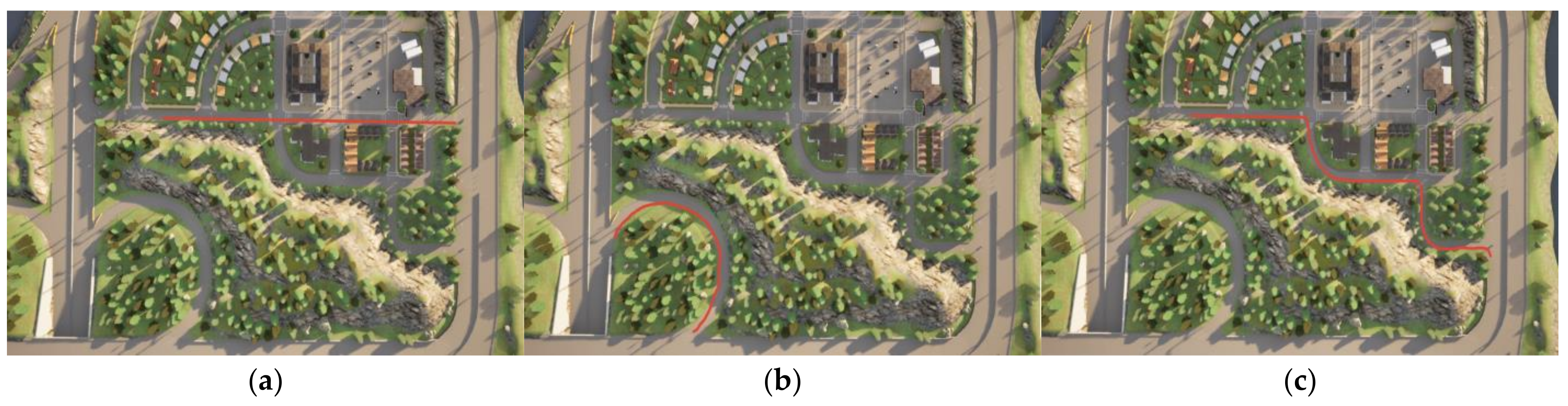
In order to verify the tracking effect of the DCN-DDPG controller under different working conditions, the experimental environments of this paper were divided into three categories, as shown in Table 4.
Table 4. Experimental environment.
Figure 4. Experimental environment diagram: (a) linear tracking environment, (b) ramp tracking environment, and (c) complex tracking environment.
Table 4. Experimental environment.
Experimental Environment NameEnvironmental DescriptionExperimental PurposeExample Diagram
Linear trackingThe reference path is a straight line with no turnsValidate the tracking ability of the vehicle on a straight roadFigure 4a
Ramp trackingThe reference path is a ramp with consecutive turnsValidate the vehicle’s tracking ability in continuous curvesFigure 4b
Complex environment trackingReference paths are complex road segments, including turns and straight linesValidate the tracking ability of vehicles in complex road sectionsFigure 4c

3.2. Analysis of DCN-DDPG Training Results

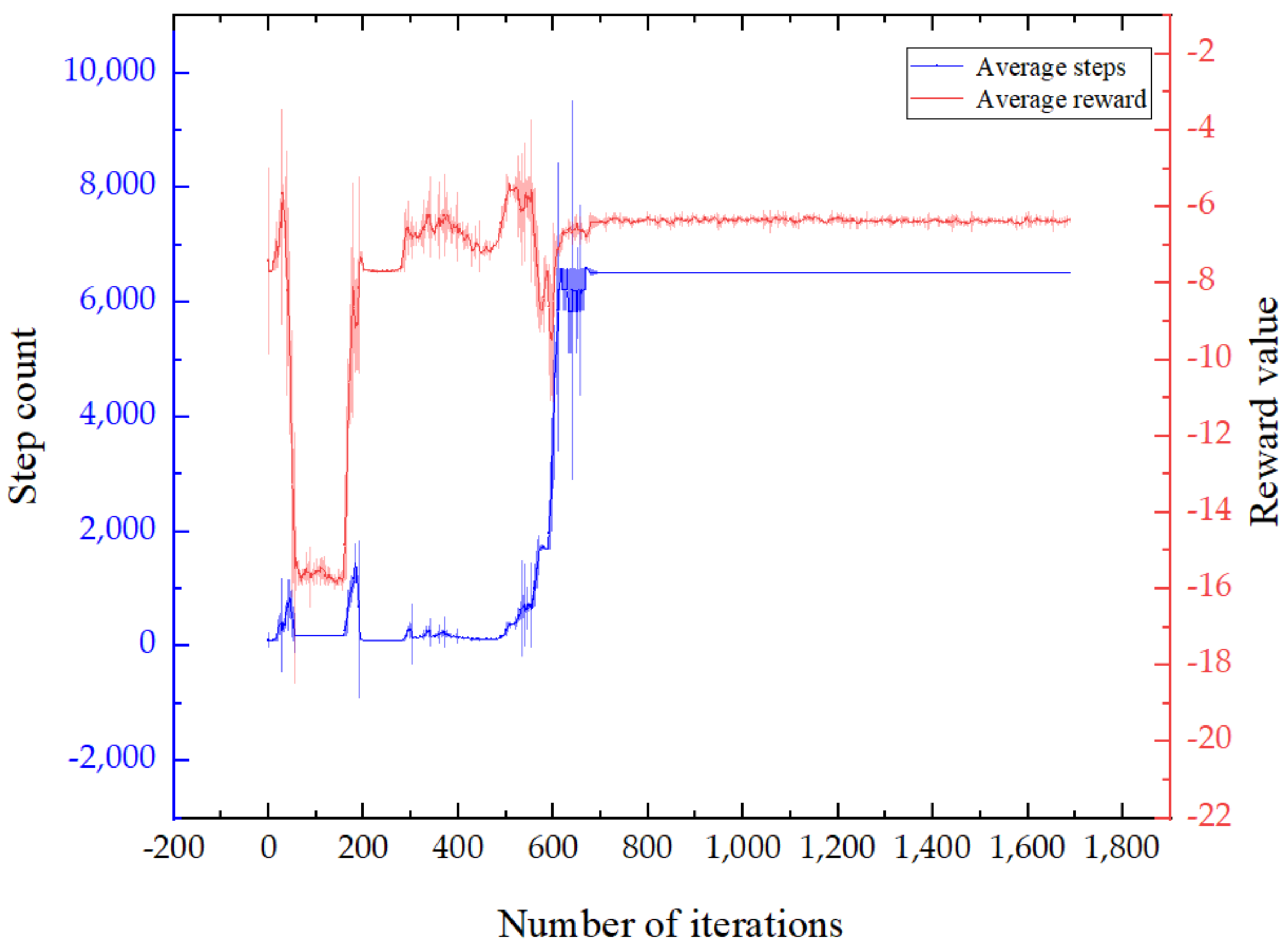
The two curves in Figure 5 show the average number of steps and the average reward value of the DCN-DDPG algorithm in each iteration process. It can be seen from Figure 5 that the number of steps and the reward value were small at the initial stage of training and had a certain randomness. In the middle stage of training, the average number of steps significantly increased, indicating that the number of vehicle collisions gradually decreased, and the tracking effect was improving. In the later stage of training, both the average number of steps and the average reward value showed a convergence trend, which verified the effectiveness of the algorithm.
Figure 5. Training results.
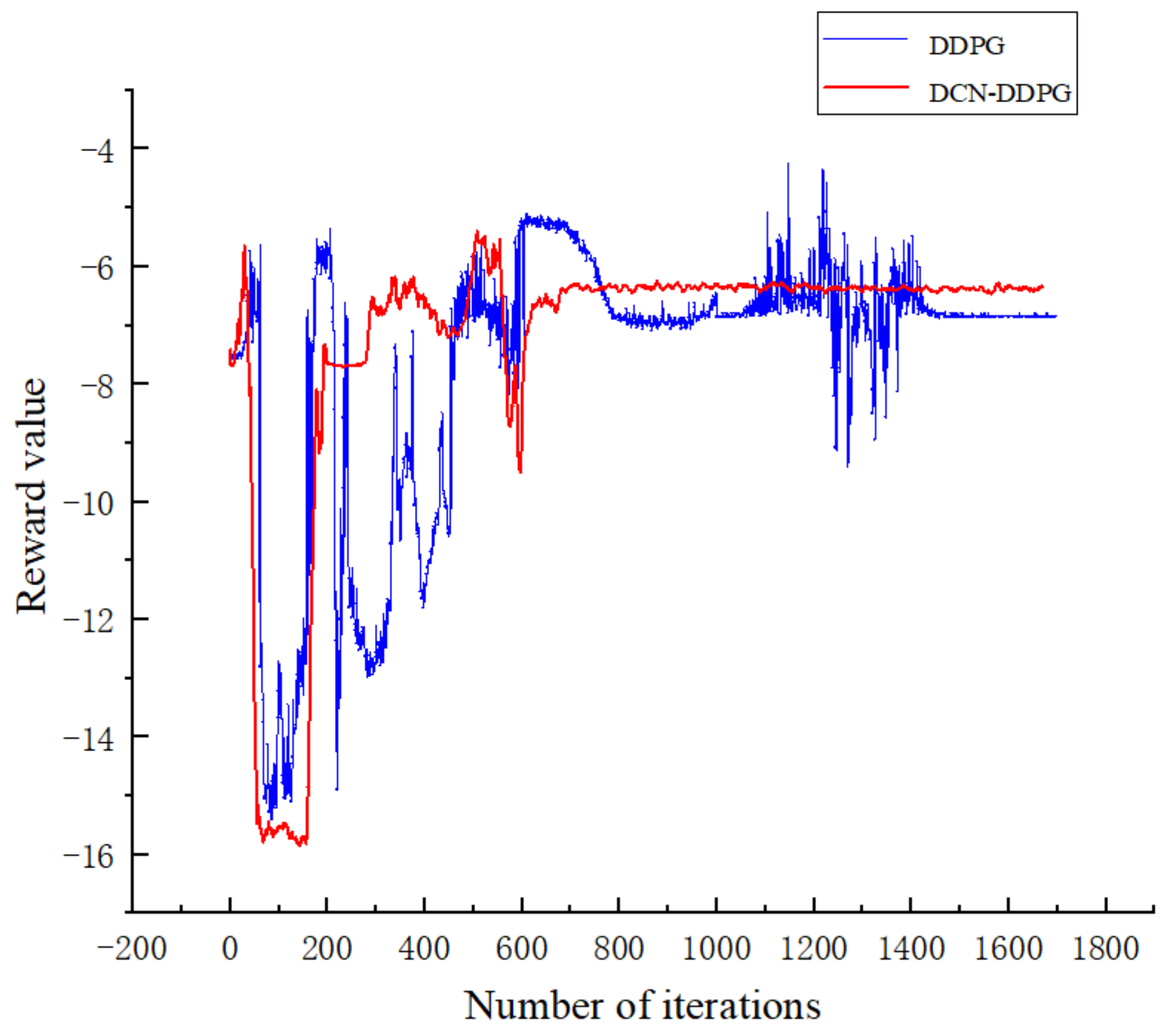
The two curves in Figure 6 show the average reward values of the DDPG and DCN-DDPG algorithms. The DDPG algorithm did not converge until the 450th iteration, while the DCN-DDPG algorithm converged at only the 300th iteration. For the entire 1700 training sessions, the training speed was increased by 8.82%.
Figure 6. Comparison of training result graphs.

3.3. Environmental Suitability Verification

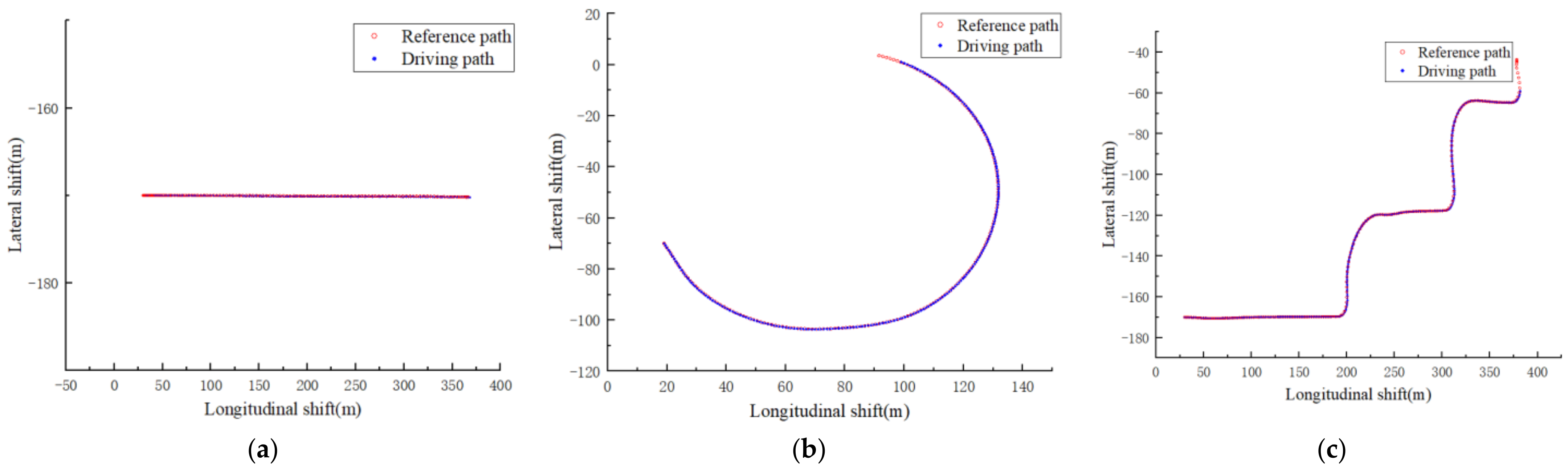
In order to test the tracking effect of the DCN-DDPG lateral controller in different scenarios, the Model 3 model in CARLA was selected and the tracking task was performed on the three roads in Figure 4. The tracking results are shown in Figure 6.
Figure 7a–c show the tracking effect of Model3 on straight lines, ramps, and complex paths, respectively. It can be seen that the path-tracking controller based on the DCN-DDPG algorithm designed in this paper could make unmanned vehicles complete tracking tasks in different environments.
Figure 7. Tracking results in different environments: (a) line-tracking global map, (b) global map of ramp tracking, and (c) global map of complex path tracking.

3.4. Comparative Analysis of Tracking Effects of Different Methods

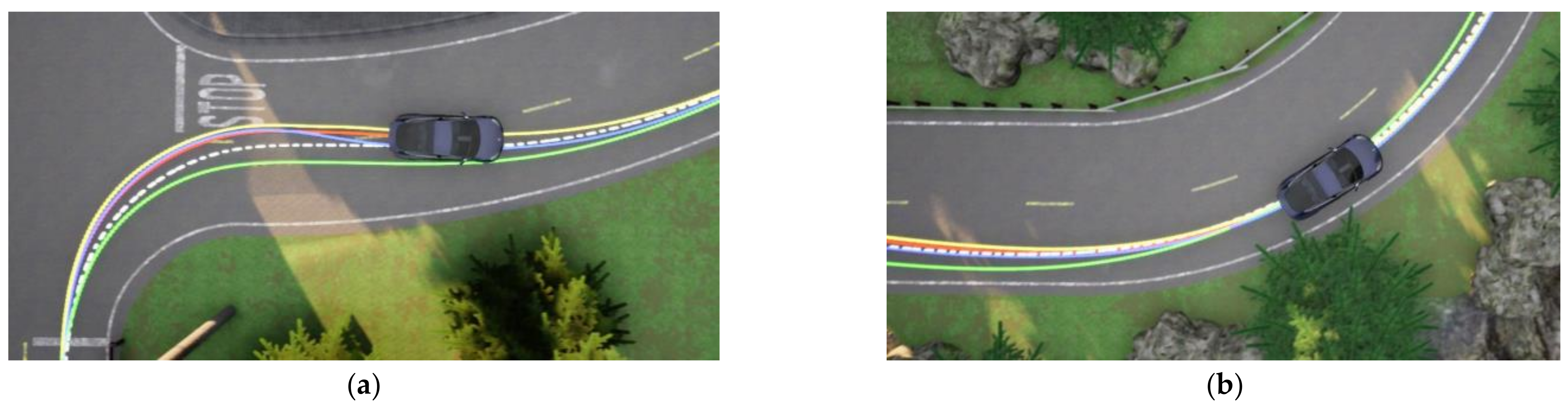
On complicated roads, the unmanned vehicle tracked the reference path with three different methods: DDPG, DCN-DDPG, MPC, and pure pursuit. When Model 3 passed through the curve, the unmanned vehicle entered a short-term deviation-adjustment state, and changed from a large error to a small error (0.07 m). The enlarged partial view of the lateral deviation generated by the three methods is shown in Figure 8. Figure 8a shows the comparison of the tracking effect of the unmanned vehicle in the first curve in the environment of Figure 4c with different control methods, and Figure 8b shows the comparison of the tracking effect of the unmanned vehicle in the last curve in the environment of Figure 4c with different control methods.
Figure 8. Tracking comparison of different control methods: (a) comparison of the first corner and (b) comparison of the last corner (the white line in Figure 8 represents the reference path; the green line represents the driving route of the pure pursuit method; the blue line represents the driving route of the MPC method; the yellow line represents the driving route of the DDPG method; the orange line represents the driving route of the DCN-DDPG method designed in this paper).
In CARLA, the input range of the steering wheel was [−1, 1]. During the tracking process of the three methods of DDPG, DCN-DDPG, MPC, and pure pursuit, the maximum value of the steering wheel angle ratio was 0.81, 0.98, 0.94, and 0.96, respectively. The average value of the steering wheel angle ratio was 0.11, 0.16, 0.12, and 0.14, respectively, in which MPC had the best effect. The maximum values of absolute values of lateral errors of Model 3 controlled by these three methods were 0.66, 0.63, 0.73, and 0.95 m, respectively. The average values of absolute values of lateral errors were 0.14, 0.08, 0.13, and 0.52 m, respectively. The tracking effect of DCN-DDPG was superior. The response durations of the DDPG, DCN-DDPG, and MPC deviation adjustment states at the first corner were 2.93, 2.27, and 2.31 s, respectively, and pure pursuit could not enter the deviation adjustment state due to the large deviation. Among them, the deviation adjustment time of DCN-DDPG was the shortest. The following conclusions could be drawn: in the face of emergencies, the unmanned vehicle with DCN-DDPG as the controller could make adjustments in a short time, and the tracking effect is shown in Table 5.
Table 5. Path-tracking results comparison.

3.5. Speed Suitability Verification

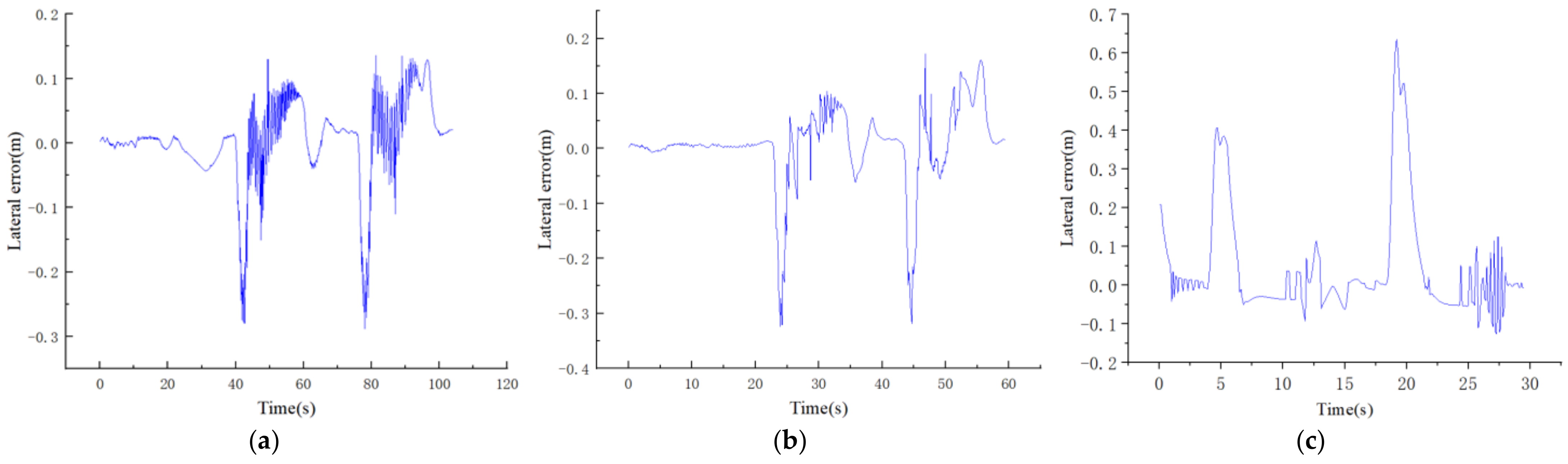
In order to verify the adaptability of the path-tracking controller designed in this paper with different speeds, the unmanned vehicle was tracked in the environment shown in Figure 4c at speeds of 4, 7, and 10 m/s, and the test results are shown in Figure 9.
Figure 9. Lateral error of tracking at (a) 4 m/s, (b) m/s, and (c) 10 m/s.
It can be seen from Figure 8 that during the trajectory tracking process of the vehicle, as the vehicle speed increased, the absolute value of the maximum lateral error value also increased, and the absolute values of the maximum lateral error values during tracking at speeds of 4, 7, and 10 were 0.3, 0.36, and 0.63 m, respectively. All of them occurred at sharp turns, and the lateral errors generated by other working conditions were small, which met the requirements of vehicle trajectory tracking.

4. Conclusions

(1)
This paper utilized an unmanned vehicle as the research object and used the deep-reinforcement learning algorithm to study the optimal control problem of the vehicle when tracking the path. The vehicle-tracking control strategy was learned with two mutually updated neural networks, critic and actor, and the DDPG framework was used to update the parameters of the neural network. A new reward value function was designed, which took into account the rate of change of the heading angle to reduce lateral shaking of the vehicle.
(2)
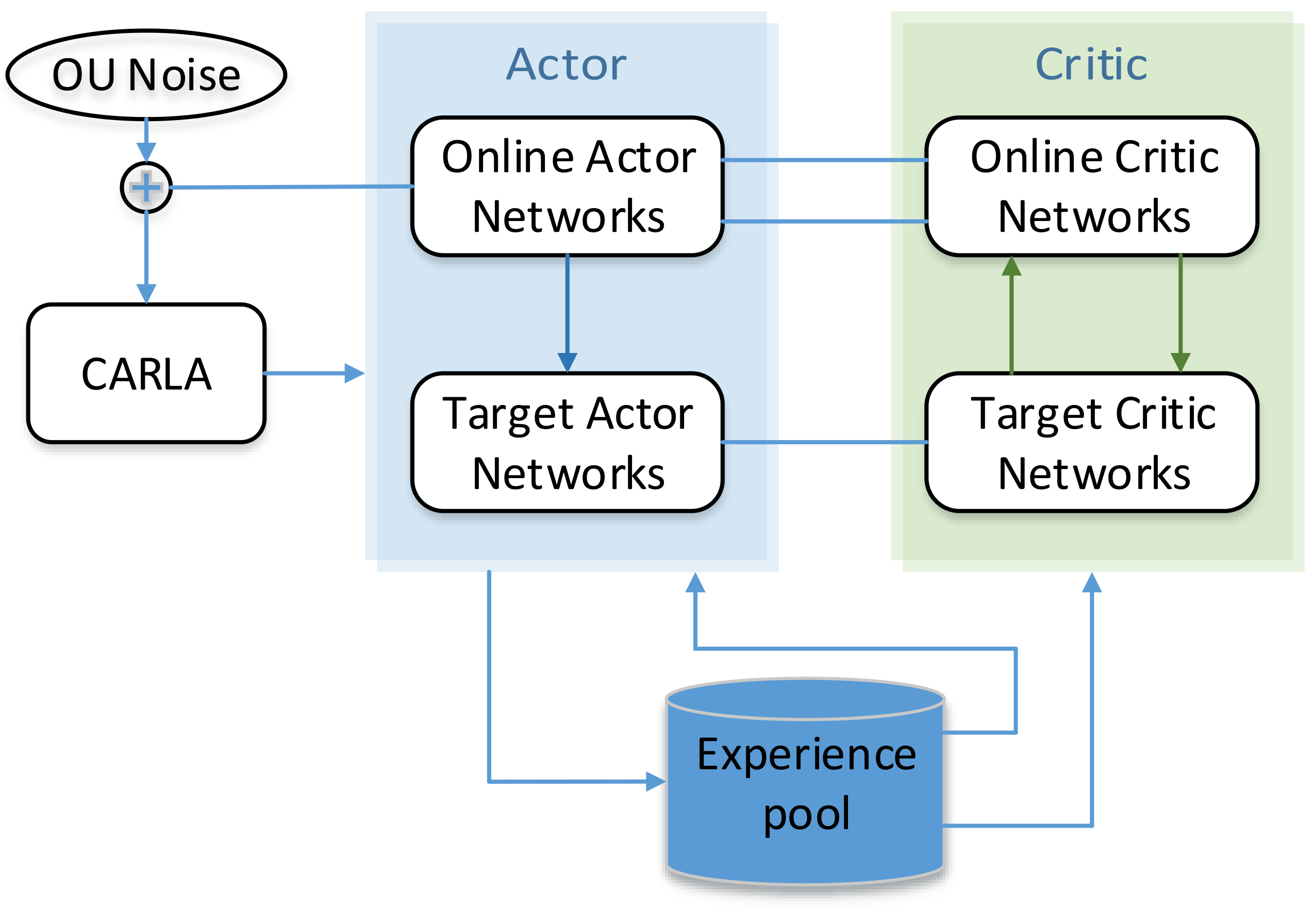
This paper designed a DCN-DDPG algorithm. Based on the original DDPG algorithm, a double-critic network was designed to solve the problems of high Q-value and slow training speed.
(3)
In the CARLA simulator, the designed control strategy was applied to different scenarios, and the vehicle ran at different speeds to test the adaptability of the proposed tracking control strategy to the speed. The results showed that the proposed path-tracking strategy has a good tracking effect. The vehicle could complete the path-tracking task at different speeds and had good adaptability to the environment in which the path was tracked.
(4)
Compared with the tracking effects of original DDPG, MPC, and pure pursuit methods, it was verified that the path-tracking controller designed in this paper can meet the conditions of vehicle path tracking.

Author Contributions

Data curation, Z.G.; Formal analysis, Z.G.; Writing—review & editing, J.Y. All authors have read and agreed to the published version of the manuscript.

Funding

This work was funded by the National Natural Science Foundation of China (Grant number 51975299), and the Natural Science Foundation of Jiangsu Province (Grant number BK20181403).

Institutional Review Board Statement

Not applicable.

Data Availability Statement

Not applicable.

Conflicts of Interest

The authors declare no conflict of interest.

References

  1. Subari, M.A.; Hudha, K.; Kadir, Z.A.; Fairuz Syed Mohd Dardin, S.M.; Amer, N.H. Development of Path Tracking Controller for An Autonomous Tracked Vehicle. In Proceedings of the 16th IEEE International Colloquium on Signal Processing & Its Applications (CSPA), Langkawi, Malaysia, 28–29 February 2020; pp. 126–130. [Google Scholar]
  2. Wang, L.-L.; Pan, L.-X. Adaptive Variable Structure Control with Neuron for Path Tracking of Beaver AUV. IEEE Access 2020, 8, 48566–48575. [Google Scholar] [CrossRef]
  3. Sieberg, P.M.; Hürten, C.; Schramm, D. Representation of an Integrated Non-Linear Model-Based Predictive Vehicle Dynamics Control System by a Co-Active Neuro-Fuzzy Inference System. In Proceedings of the 2020 IEEE Intelligent Vehicles Symposium (IV), Las Vegas, NV, USA, 19 October–13 November 2020. [Google Scholar]
  4. Wang, H.; Liu, B.; Ping, X.; An, Q. Path Tracking Control for Autonomous Vehicles Based on an Improved MPC. IEEE Access 2019, 7, 161064–161073. [Google Scholar] [CrossRef]
  5. Wang, H.; Zhou, F.; Li, Q.; Song, W. Reliable adaptive H∞ path following control for autonomous ground vehicles in finite frequency domain. J. Frankl. Inst. 2020, 357, 9599–9613. [Google Scholar] [CrossRef]
  6. Matveev, A.S.; Hoy, M.; Katupitiya, J.; Savkin, A.V. Nonlinear sliding mode control of an unmanned agricultural tractor in the presence of sliding and control saturation. Robot. Auton. Syst. 2013, 61, 973–987. [Google Scholar] [CrossRef]
  7. Gilles, T.; Talj, R.; Charara, A. Higher-Order Sliding Mode Control for Lateral Dynamics of Autonomous Vehicles, with Experimental Validation. In Proceedings of the 2013 IEEE Intelligent Vehicles Symposium (IV), Gold Coast, Australia, 23–26 June 2013. [Google Scholar]
  8. Cao, H.; Song, X.; Zhao, S.; Bao, S.; Huang, Z. An optimal model-based trajectory following architecture synthesising the lateral adaptive preview strategy and longitudinal velocity planning for highly automated vehicle. Veh. Syst. Dyn. 2017, 55, 1143–1188. [Google Scholar] [CrossRef]
  9. Li, B.; Du, H.; Li, W. Trajectory control for autonomous electric vehicles with in-wheel motors based on a dynamics model approach. IET Intell. Transp. Syst. 2016, 10, 318–330. [Google Scholar] [CrossRef]
  10. Mohammadzadeh, A.; Taghavifar, H. A novel adaptive control approach for path tracking control of autonomous vehicles subject to uncertain dynamics. Proc. Inst. Mech. Eng. Part D J. Automob. Eng. 2020, 234, 2115–2126. [Google Scholar] [CrossRef]
  11. Li, Y.; Chao, Q.; Liu, F. Research on Fuzzy PID Control of Electronically Controlled Hydraulic Power Steering System for Unmanned Agricultural Vehicle. In Proceedings of the 2019 International Conference on High Performance Big Data and Intelligent Systems, Shenzhen, China, 9–11 May 2022; pp. 215–218. [Google Scholar]
  12. Cheng, F.; Deng, H. The Ship’s Mathematic Motion Models of Altering Course to Avoid Collision Based on the Optimization of Genetic Algorithm. In Proceedings of the 33rd Chinese Control Conference, Nanjing, China, 28–30 July 2014; pp. 1–4. [Google Scholar]
  13. Zarrouki, B.; Klos, V.; Heppner, N.; Schwan, S.; Ritschel, R.; Voswinkel, R. Weights-varying MPC for Autonomous Vehicle Guidance: A Deep Reinforcement Learning Approach. In Proceedings of the 2021 European Control Conference (ECC), Delft, The Netherlands, 29 June–2 July 2021; pp. 119–125. [Google Scholar]
  14. Kober, J.; Peters, J. Reinforcement Learning in Robotics: A Survey. In Learning Motor Skills; Springer Tracts in Advanced Robotics; Springer: Berlin/Heidelberg, Germany, 2014; pp. 9–67. [Google Scholar]
  15. Xu, S.; Peng, H. Design, Analysis, and Experiments of Preview Path Tracking Control for Autonomous Vehicles. IEEE Trans. Intell. Transp. Syst. 2020, 21, 48–58. [Google Scholar] [CrossRef]
  16. Silver, D.; Huang, A.; Maddison, C.J.; Guez, A.; Sifre, L.; van den Driessche, G.; Schrittwieser, J.; Antonoglou, I.; Panneershelvam, V.; Lanctot, M.; et al. Mastering the game of Go with deep neural networks and tree search. Nature 2016, 529, 484–489. [Google Scholar] [CrossRef] [PubMed]
  17. Woo, J.; Yu, C.; Kim, N. Deep reinforcement learning-based controller for path following of an unmanned surface vehicle. Ocean. Eng. 2019, 183, 155–166. [Google Scholar] [CrossRef]
  18. He, K.; Dong, C.; Yan, A.; Zheng, Q.; Liang, B.; Wang, Q. Composite deep learning control for autonomous bicycles by using deep deterministic policy gradient. In Proceedings of the IECON 2020 The 46th Annual Conference of the IEEE Industrial Electronics Society, Singapore, 18–21 October 2020. [Google Scholar]
  19. De Paula, M.; Acosta, G.G. Trajectory tracking algorithm for autonomous vehicles using adaptive reinforcement learning. In Proceedings of the OCEANS’ 15 MTS/1EEE, Washington, DC, USA, 19–22 October 2015. [Google Scholar]
  20. Shi, W.; Song, S.; Wu, C.; Philip Chen, C.L. Multi pseudo Q-learning-based deterministic policy. IEEE Trans. Neural Netw. Learn. Syst. 2019, 30, 3534–3546. [Google Scholar] [CrossRef] [PubMed]
  21. Rui, H.; Lv, H.; Zhang, S.; Zhang, D.; Zhang, H. Lane Following Method Based on Improved DDPG Algorithm. Sensors 2021, 21, 4827. [Google Scholar] [CrossRef] [PubMed]
  22. Yintao, Z.; Youmin, Z.; Ziquan, Y. Path Following Control for UAV Using Deep Reinforcement Learning Approach. Navig. Control. 2021, 1, 2150005. [Google Scholar] [CrossRef]
Publisher’s Note: MDPI stays neutral with regard to jurisdictional claims in published maps and institutional affiliations.

Article Metrics

Citations

Article Access Statistics

Multiple requests from the same IP address are counted as one view.