

Precision Agriculture Design Method Using a Distributed Computing Architecture on Internet of Things Context †

 , and
, and
Abstract
1. Introduction
2. Related Works
2.1. User-Centred Design Models
- Requirements gathering, understanding and specifying the context of use
- Requirements specification, specifying the user and organisational requirements
- Design, producing designs and prototypes
- Evaluation, carrying out user-based assessment of the site
2.2. Internet of Things: Architectures and Protocols
2.3. Internet of Things Technologies Applied on PA Scenarios
2.4. Internet of Things, Cloud and Machine Learning Evolution: Edge and Fog Computing Paradigms
- Fog computing pushes intelligence down to the local area network level, processing data in a fog node or IoT gateway
- Edge computing pushes the intelligence, processing power and communication capabilities of an edge gateway or appliance directly into devices like programmable automation controllers (PACs)
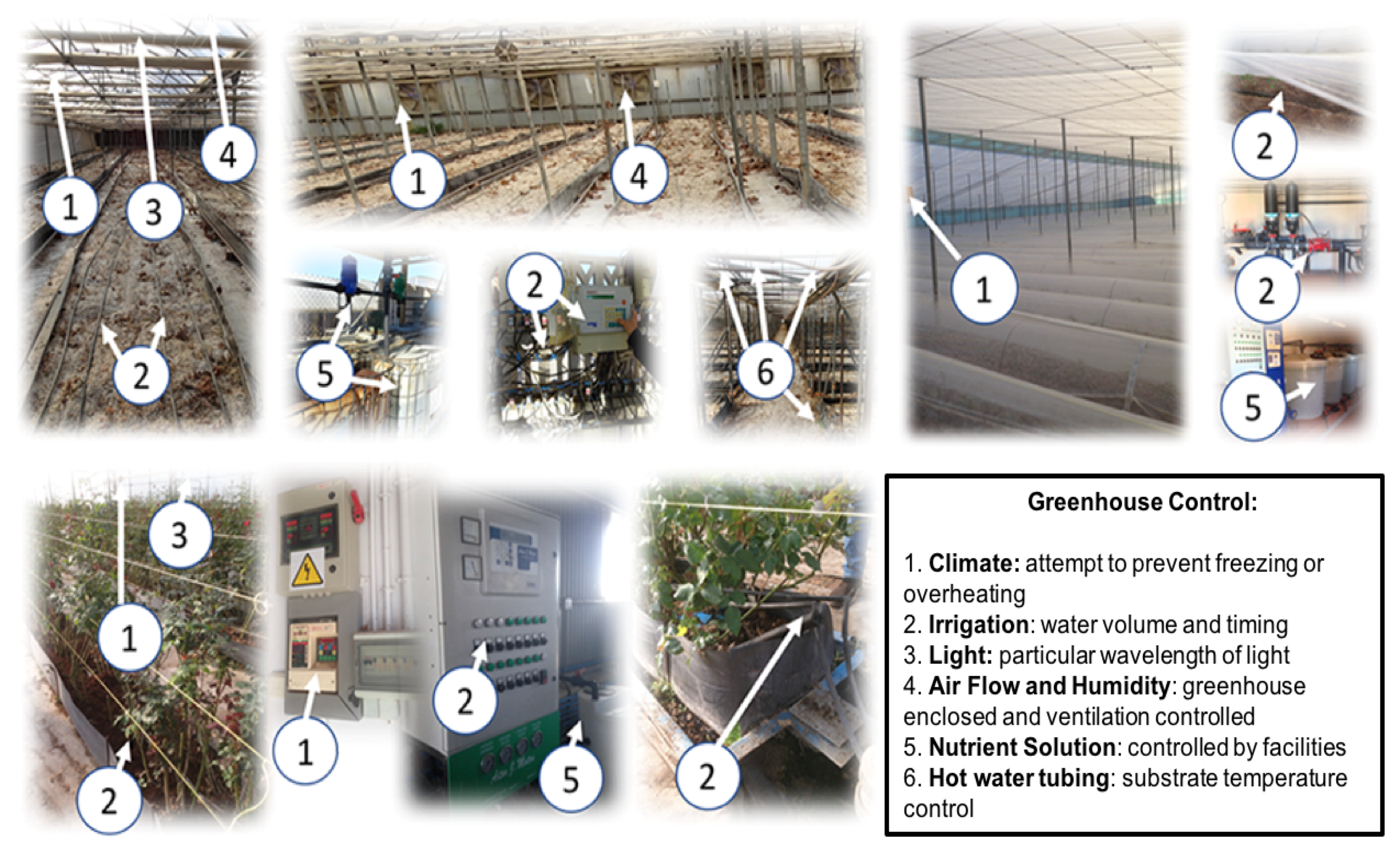
2.5. Automated Technologies in Greenhouses
- Irrigation and nutrition
- Air conditioning and ventilation.
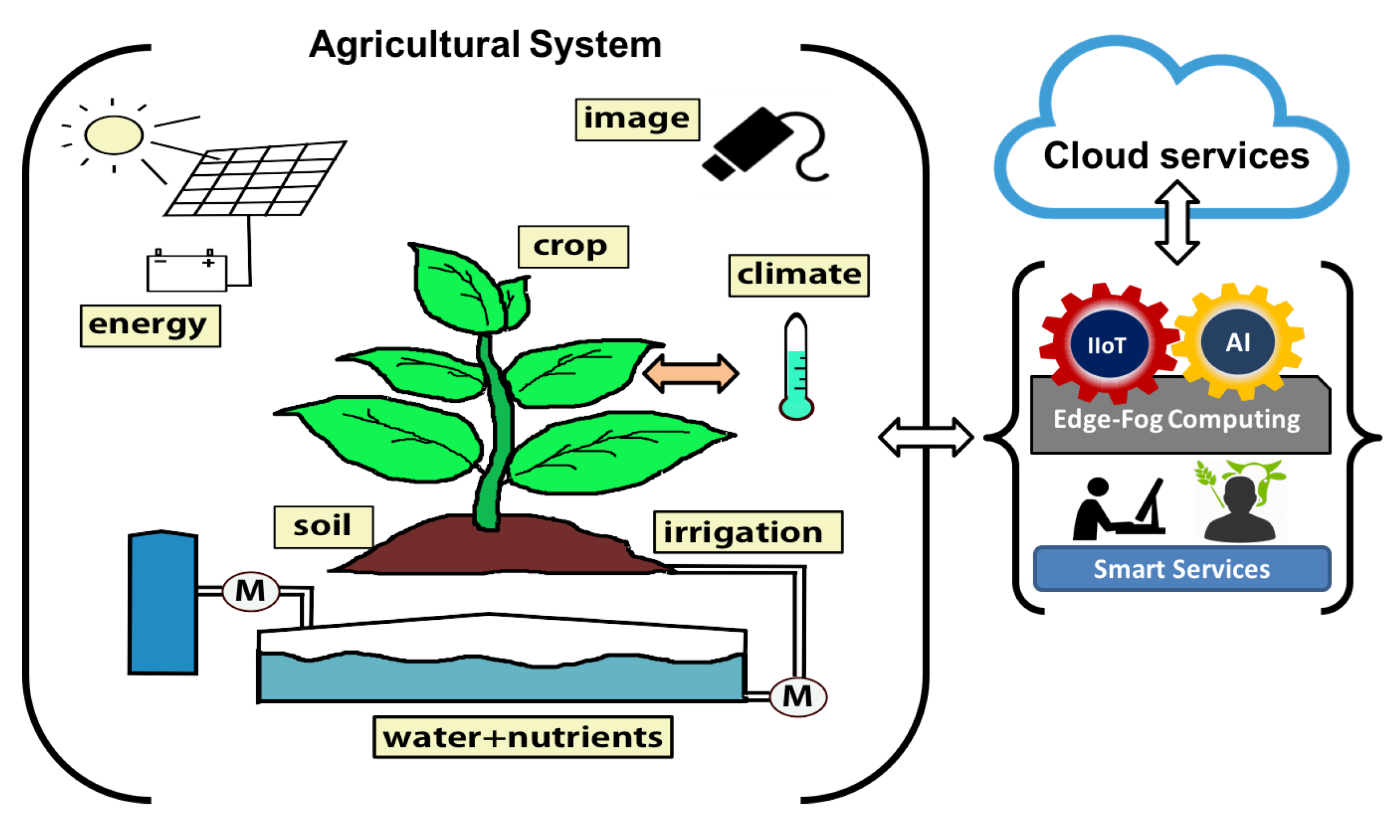
3. User Centred and Computing Method Model: Distributed Computing Architecture Based on Edge and Fog Nodes
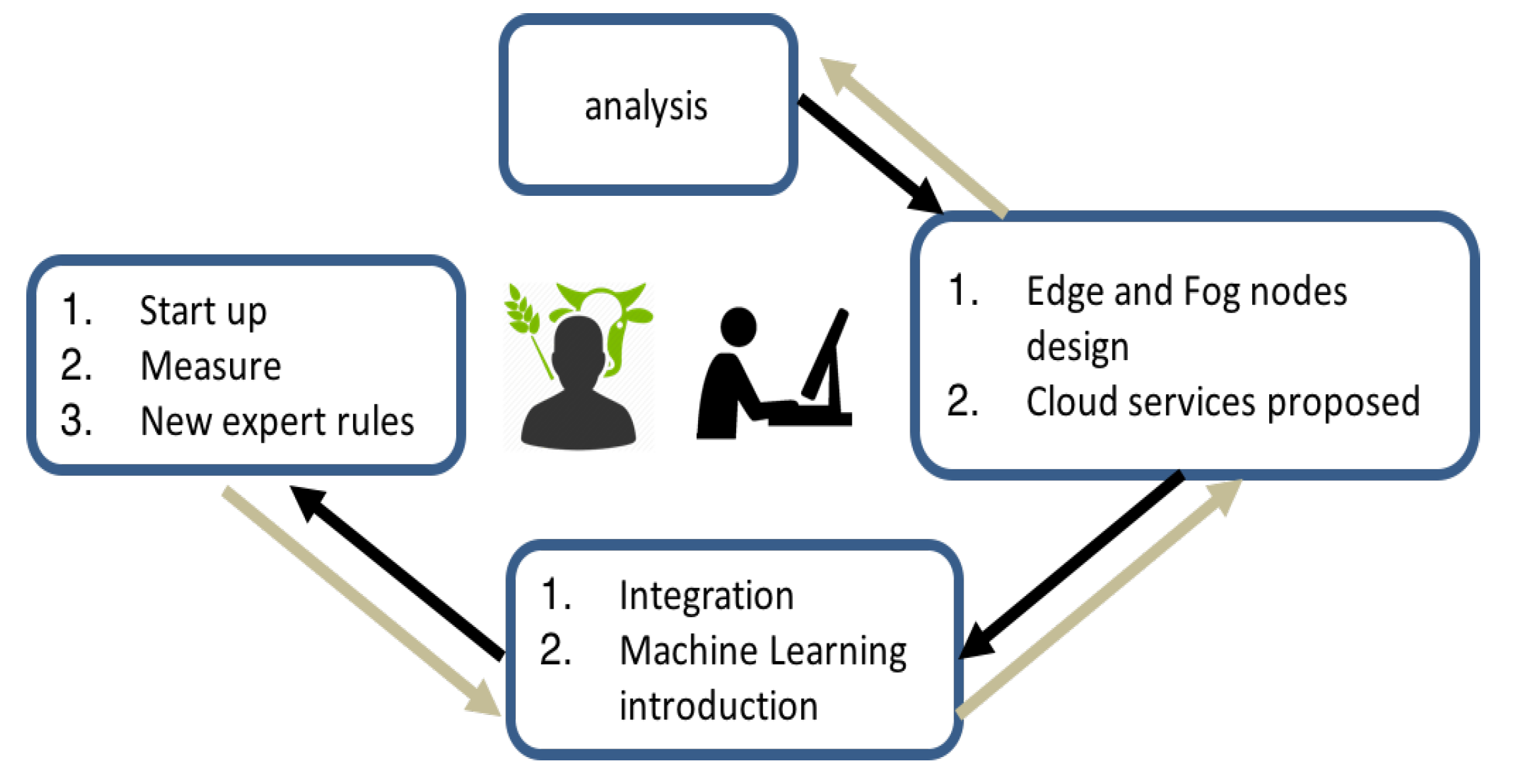
- Analysis: two kind of users are identified in this phase (agriculture user expert and ICT technician). Expert users in agriculture are interviewed to define main processes to control. All these issues are related with ICT expert in a participatory design. The results of this first approach are the things required to design services and control. In this phase an user-centred methodology captures the farmer requirements.
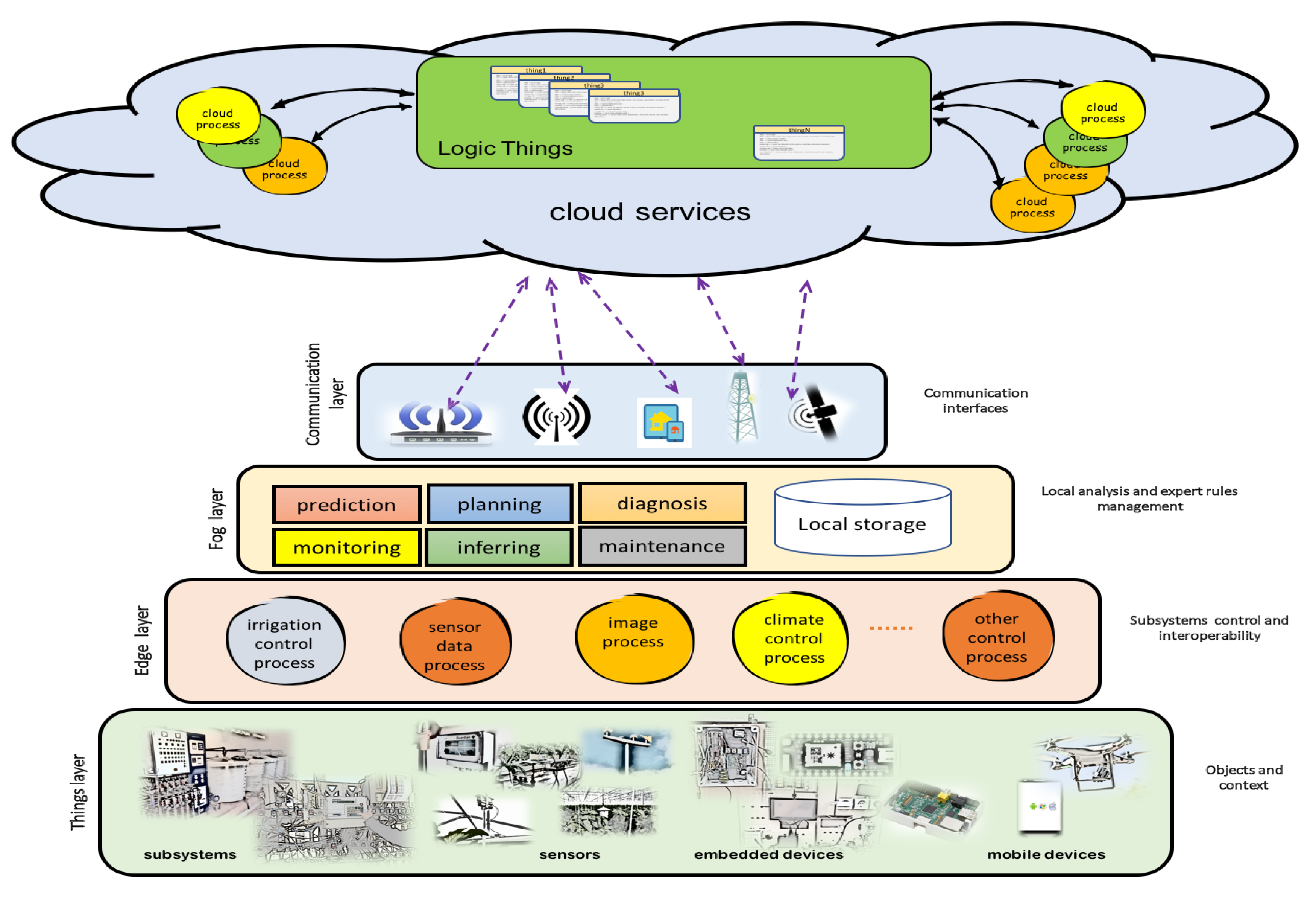
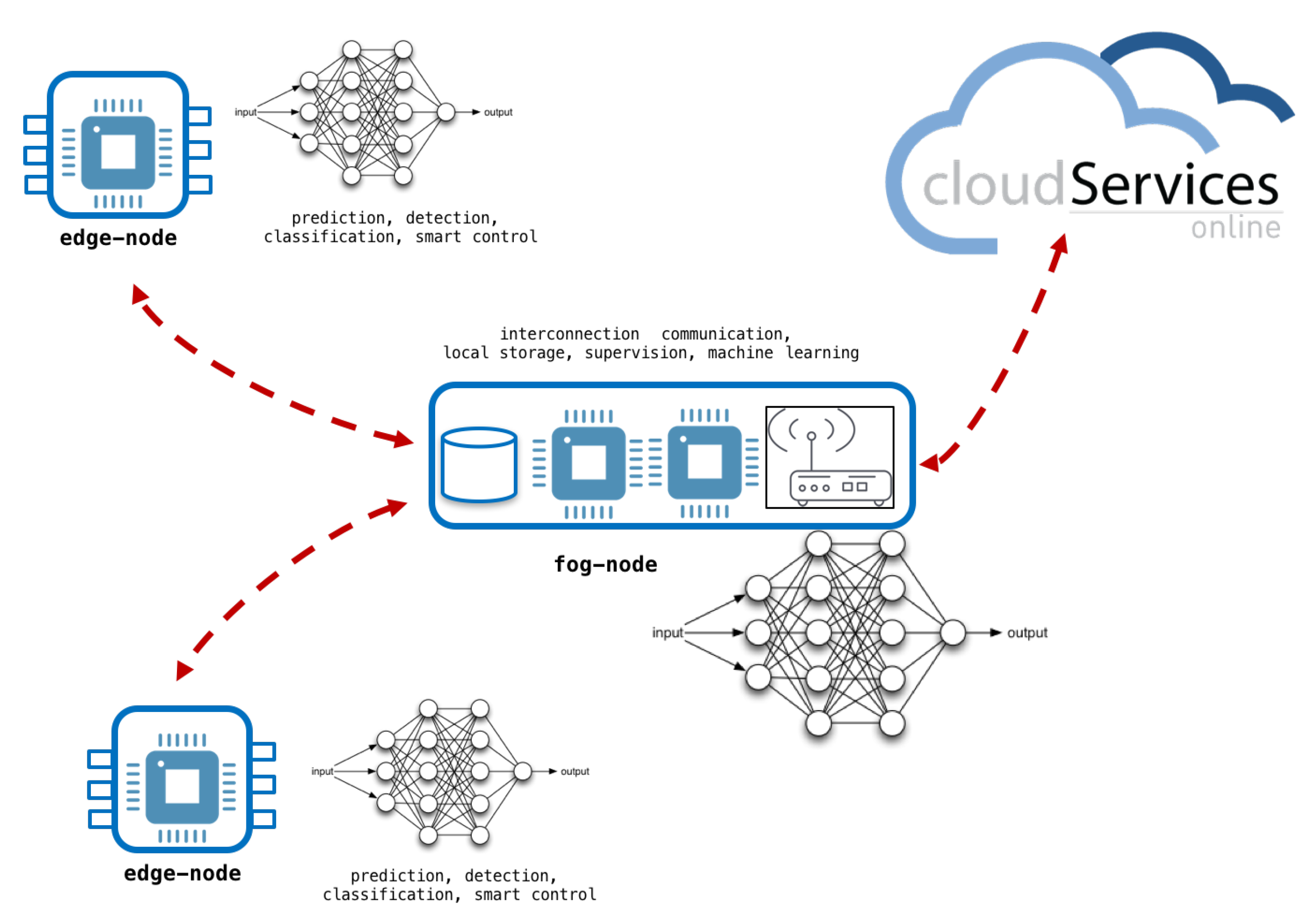
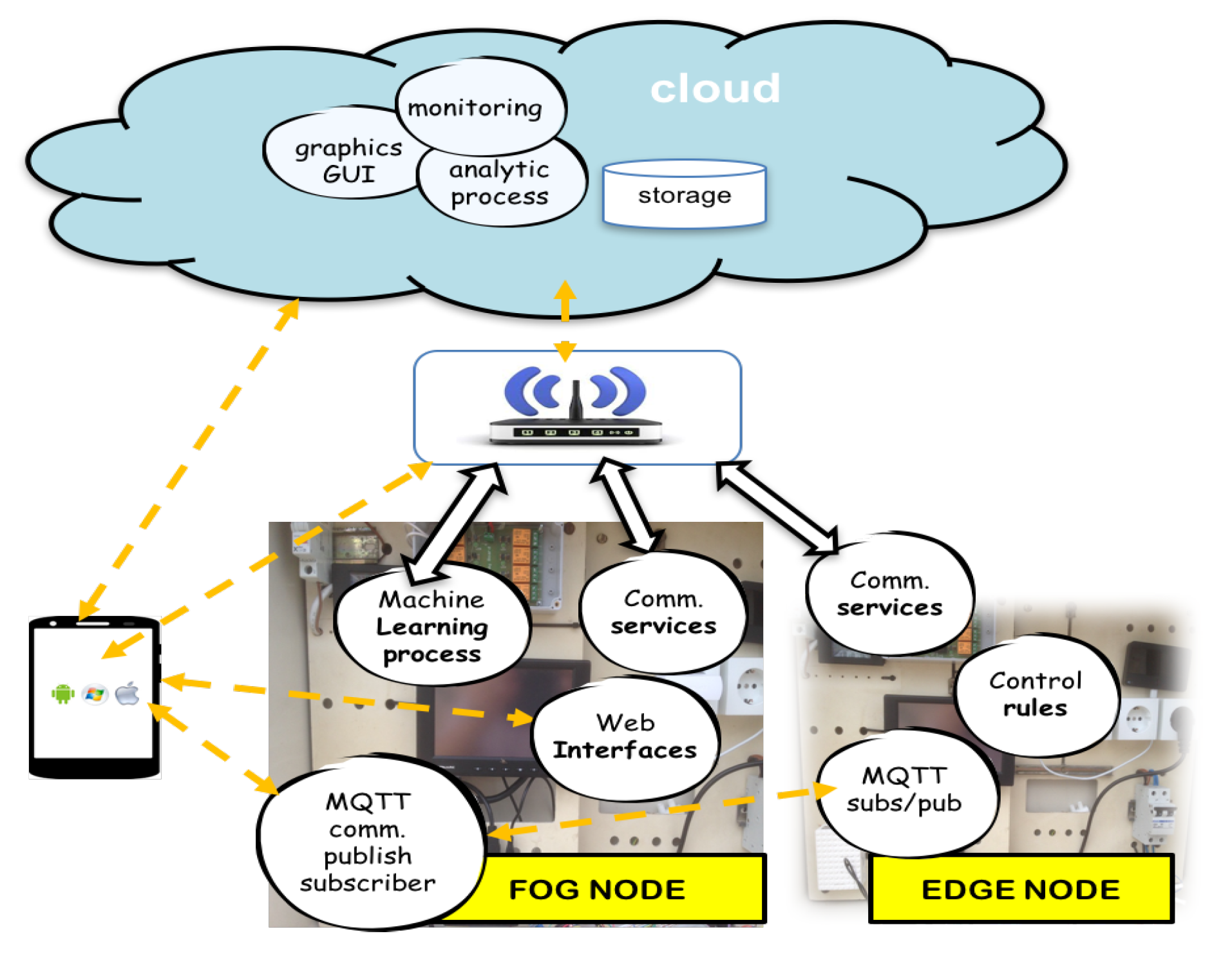
- Design: the model is based on an architecture with three levels: edge, fog and cloud services. In this phase an adapted architecture using these levels is designed. The adapted architecture is shown in Figure 4.
- Integration and data analysis: Installation and Integration subsystems are developed in this phase. Data analysis is proposed to design machine learning services based on expert rules with farmer.
- Start up, measure and feedback: Test and feedback are launched. The first expert rules are integrated with farmer supervision. New rules are designed with feedback processes. Automatic and adapted rules are developed using artificial intelligence systems with machine learning platforms.
3.1. User-Centred Analysis and Design
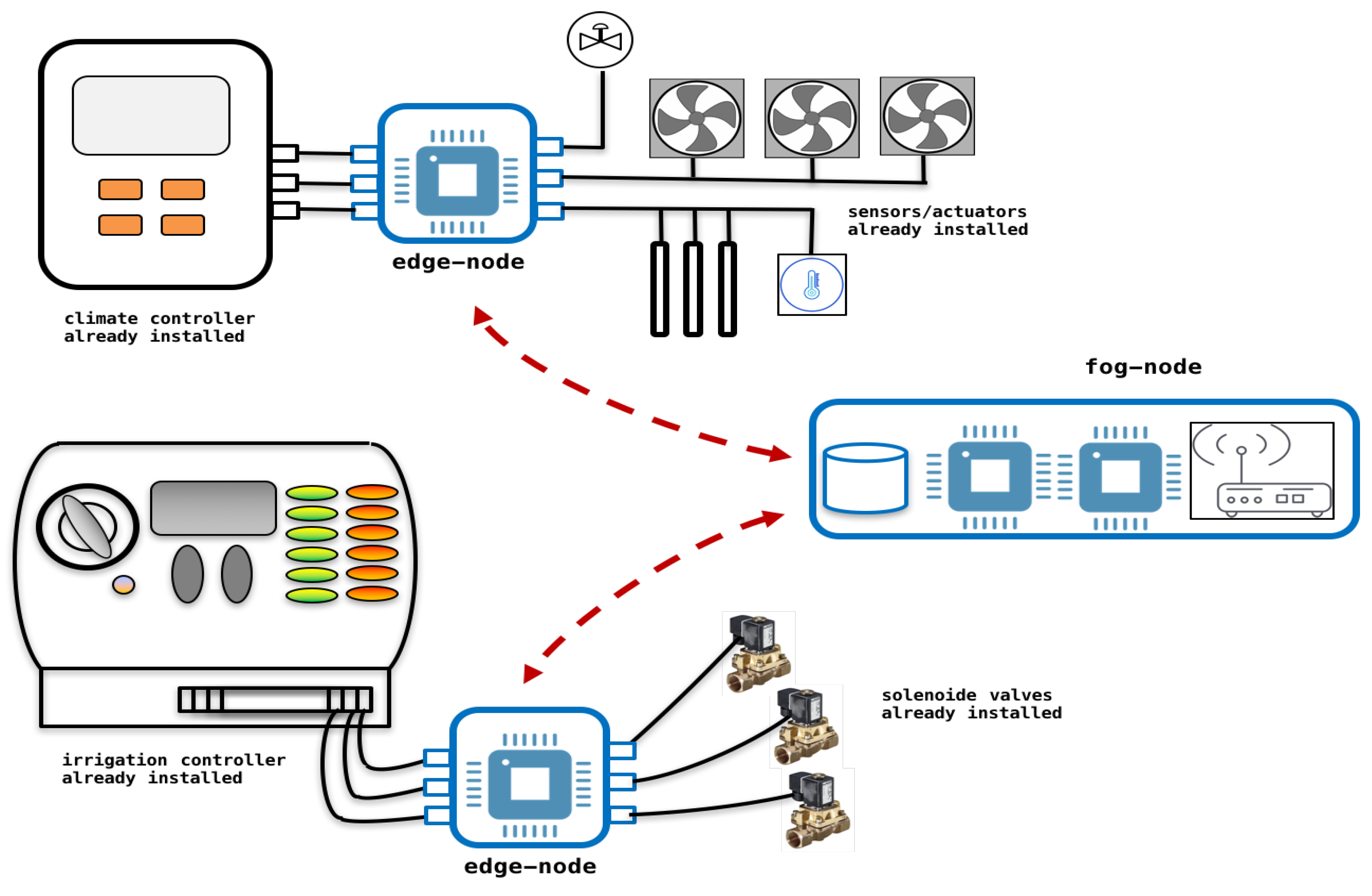
- Agricultural installation with some automated facilities already installed
- New agricultural installation
3.2. Integration: Architecture Development
- Interconnection and data access of all subsystems data
- Facilities and resources to implement expert rules
- Configuration, operation and modification processes
- Standard and interoperable communication protocols to develop open and reusable applications.
- Low-power consumption of all devices installed improve the establishment and development.
- Easy access and maintenance. Users are not specialized in information technologies. It is important to improve its acceptability.
- Support the integration of new smart modules (modularity and scalability software and hardware).
- Non-proprietary hardware-software to reduce dependencies.
- Low cost devices selection increases the level of penetration.
- MQTT is a publish-subscribe messaging protocol developed for resource-constrained devices [42], a model already in use by enterprises worldwide, and can work with legacy systems.
- All messages have a topic path composed of words separated by slashes. A common form is /place/device-type/device-id/measurement-type/status. The subscribers may use wild-cards to subscribe to all measurements coming from a specific class of device.
- The bandwidth requirements are extremely low, and the nature of the protocol makes it very energy-efficient.
- The programming interface is very simple, and the client memory footprint is small, making it especially suitable for embedded devices.
- Three Quality of Service (QoS) levels provide reliable operations [43].
3.3. Data Analysis: Edge and Fog Computing Configuration
- Connection: Numerous heterogeneous, real time connections between terminals and devices will serve edge computing, as will automatic network deployment and operation. Additionally, security, reliability, and interoperability of connections should be guaranteed. An application of this phase is remote automatic soil parameters and ambient conditions data reading
- Data treatment on edge computing devices: In this phase, data analysis and automatic services develop new capabilities that are implemented on the new edge nodes. Applications of this phase can be data filtering, predictive calculation of climatic data, classification services or detection events
- Services on fog computing nodes: Enabled by technologies such as AI and IoT communication protocols. Fog computing nodes carries out smart analysis and computing, as well as implementing dynamic, real-time self-optimization, and executing policy adjustments. Applications of this phase are prediction of water consumption, smart detection or unattended production
3.4. Test and Feedback Developing
- Obtaining data sets: This refers to a data set with main variables captured and stored to analyse and design the model. In irrigation process data set are: irrigation programming used (time and flow), ambient conditions (humidity, temperature) and soil conditions (humidity, temperature, pH and conductivity) captured by sensors. All this data are monitored and stored.
- Training data sets: This refers to a data set used for training the model. It is a subset of the previous dataset. In irrigation process training data set are: irrigation programming automated by the model (time and flow decision) considering ambient conditions (soil, ambient and crop). This data is usually prepared by collecting data in a semi-automated way. The results of this process are validated with agronomists.
- Testing data sets: It is a dataset used to to measure the model quality.
- Validation test suites on real scenarios. Taking the irrigation example, test scenarios include categorizing needs of water for a kind of crop considering climatic conditions and its growth phase. Automated irrigation decisions by the model are analysed in this phase.
- Building validation suites. It is necessary to understand the algorithm. The model has algorithm that analyse the data provided, looks for specific patterns, and uses the results of this analysis to develop optimal parameters for creating the model. The model is refined as the number of iterations and the richness of the data increase.
- Communicating test results in statistical terms. Models based on machine learning algorithms will produce approximations and not exact results. Quality of results must be analysed in the same context. The testing community will need to determine the level of confidence within a certain range.
- Model evolution. Support to develop new AI services or modifications on algorithms implemented. Supervised and automatic changes are processes to maintain the operating models.
3.5. Comparison with Industrial Facilities. Novelty Elements Proposed
4. Experimental Work
- Installation automated but subsystems not interoperable
- Partial automation without any interconnection and non-interoperable systems
- Manual control
4.1. Analysis
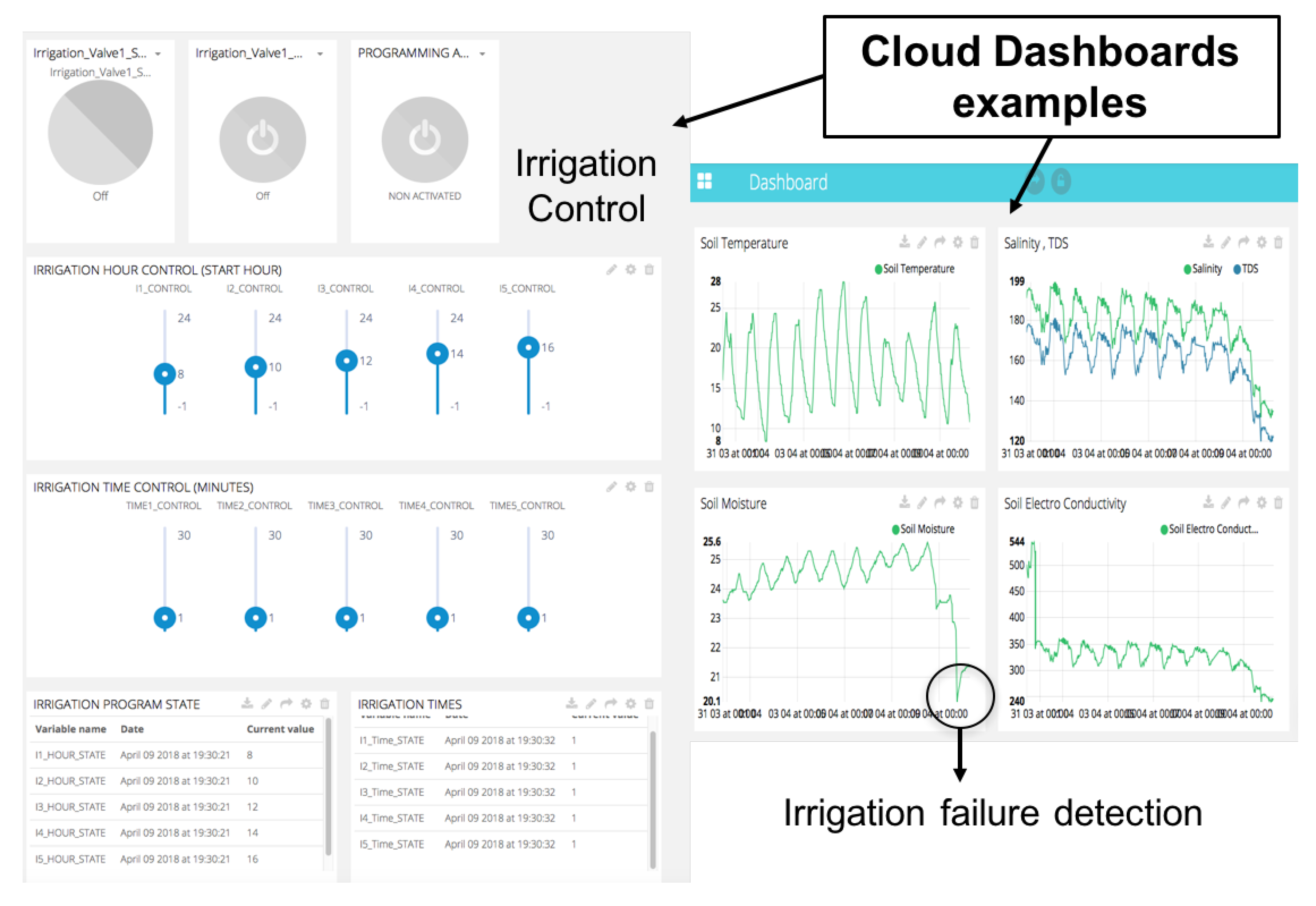
- Monitoring and control interfaces on the Internet (control and communication services)
- Event and change communication service (communication services)
- Interconnection of irrigation and air conditioning subsystems (interoperability services)
- Integration of automation to optimize water consumption (AI services)
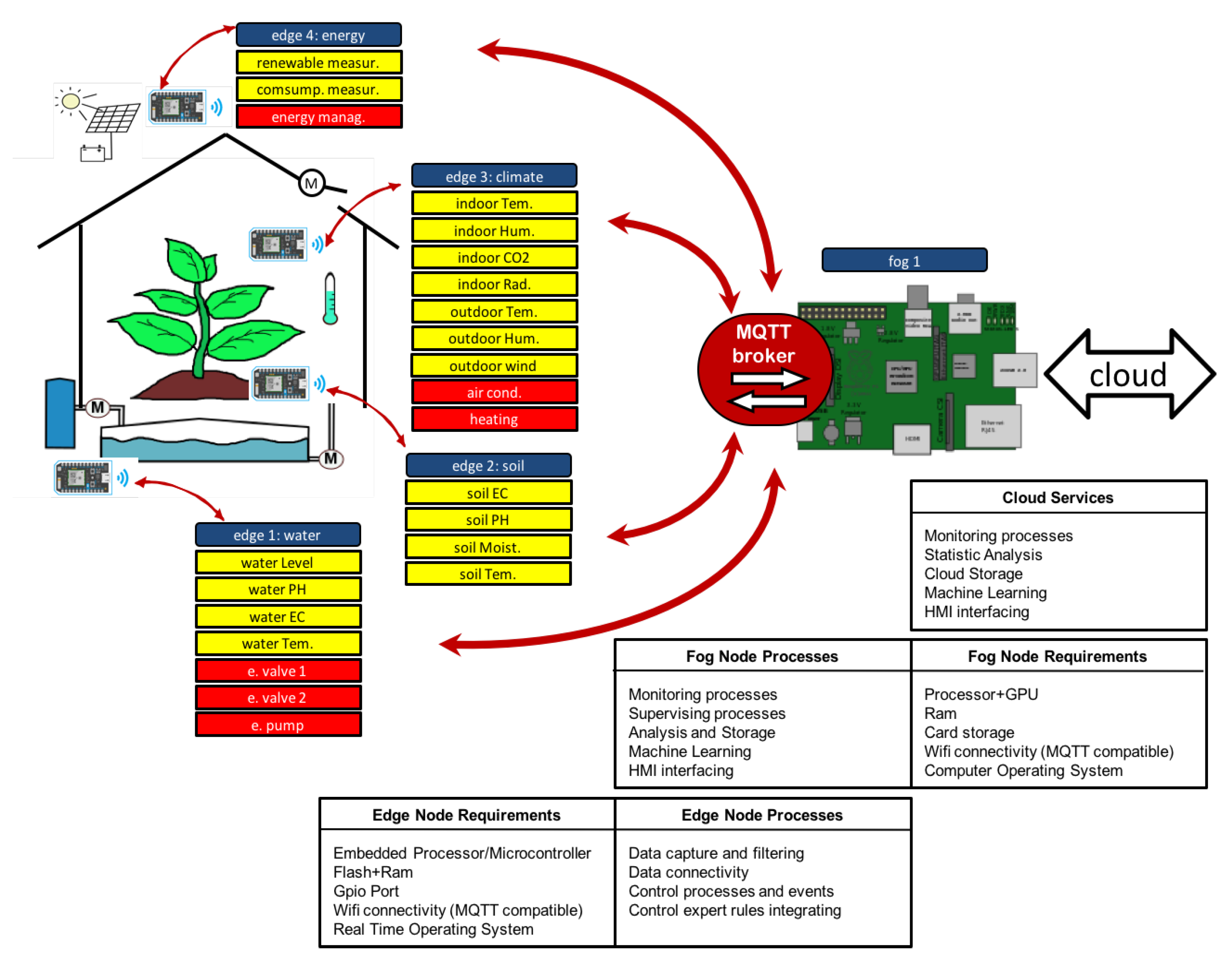
- Things, communication and context design: objects (things) and its context are detected and related using IoT protocols and services (user-centred, architecture and IoT protocols design)
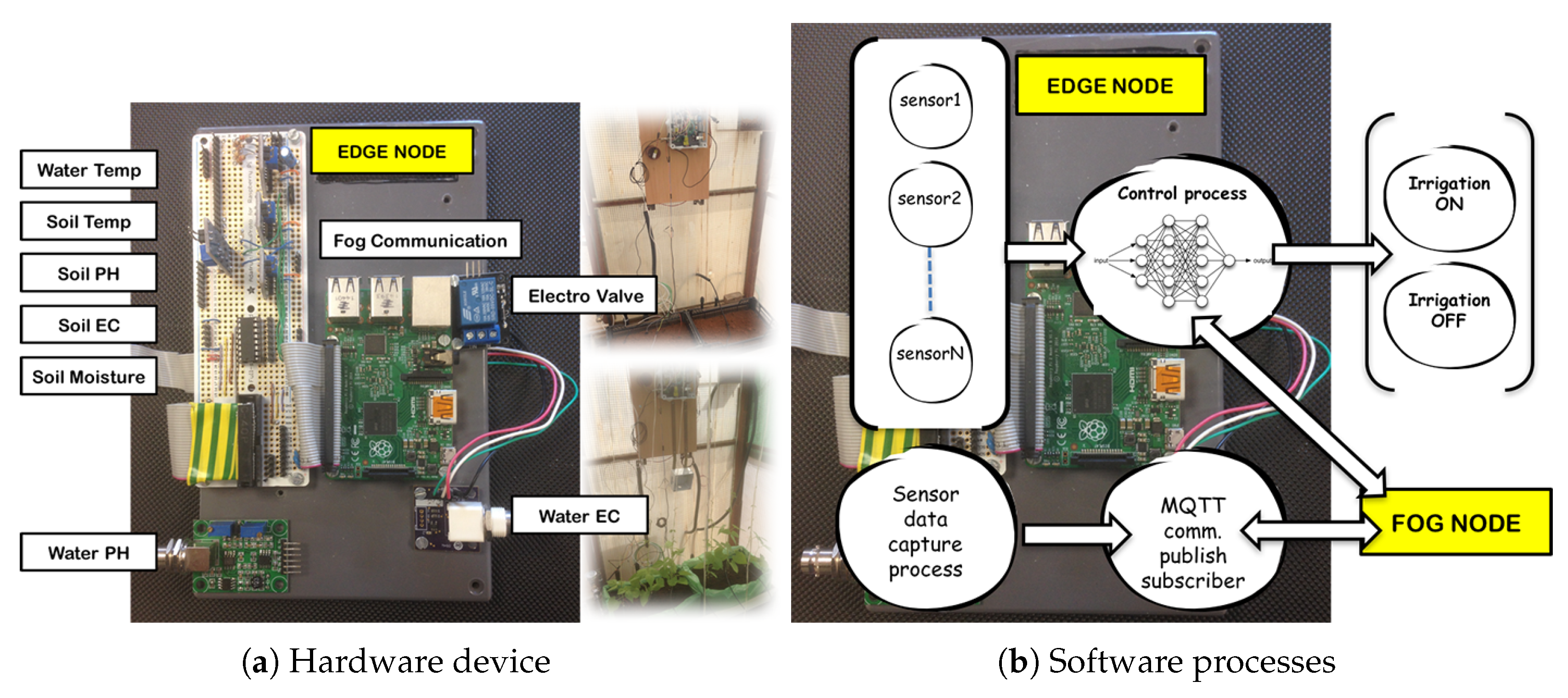
- Hardware devices and software modules: edge and fog nodes with the services that will be implemented are proposed (integration and AI services)
- Installing: how the model is tested and deployed (testing process)
4.2. Design: Things, Communication and Context
4.3. Hardware Devices and Software Modules
4.4. Installing and Testing
- Work in the same way as before (initial learning stage, analysis and model selection).
- Change to a new control using new expert and automatic rules using AI processes (supervised stage and training)
- Test and reconfigure expert rules (testing and maintenance)
- Identify the main variables contributing to an irrigation behaviour by training the models with relevant data
- Group the irrigation decisions into distinct classes
- Identify the decisions taken
- Detect the patterns in farmer decisions
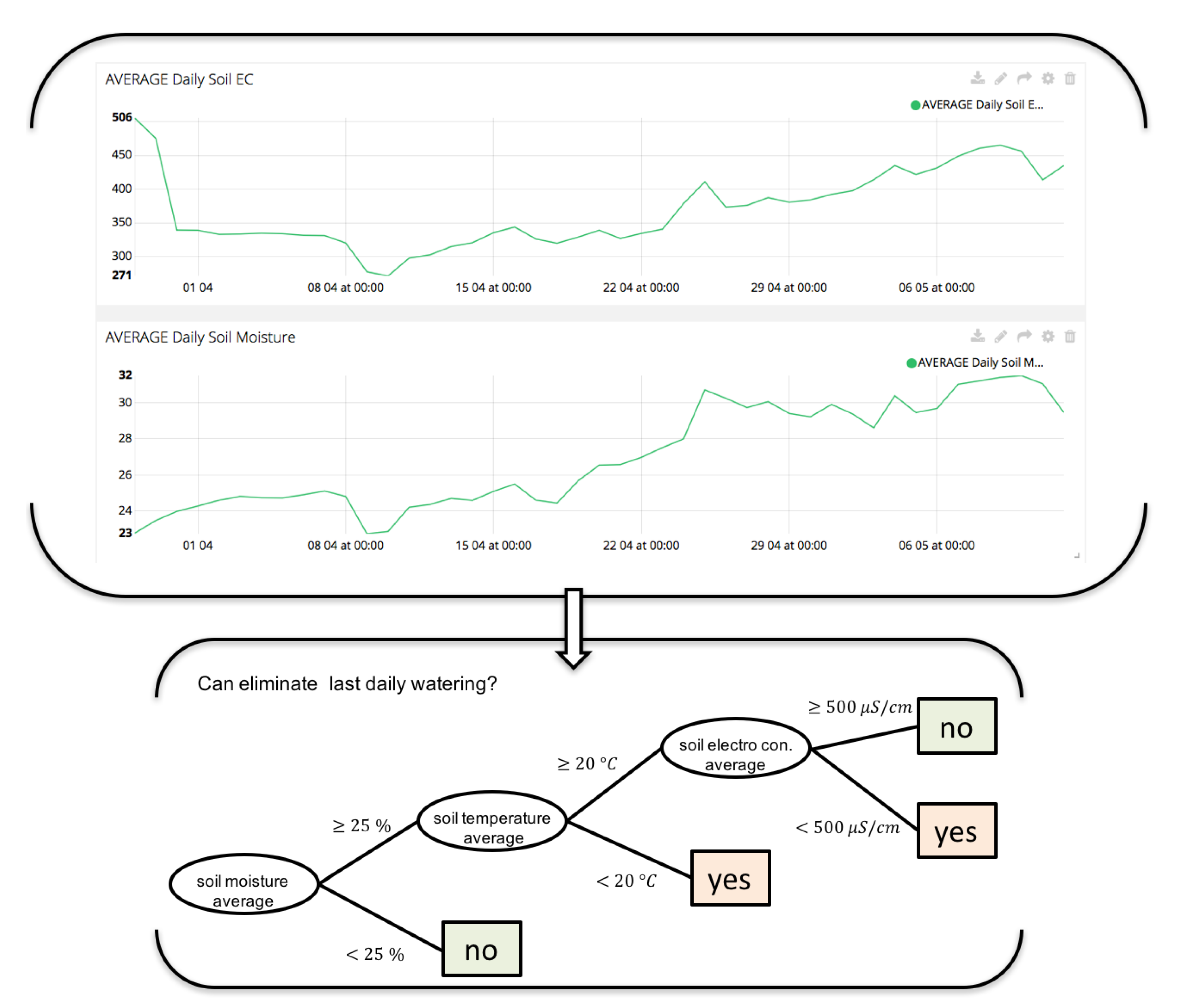
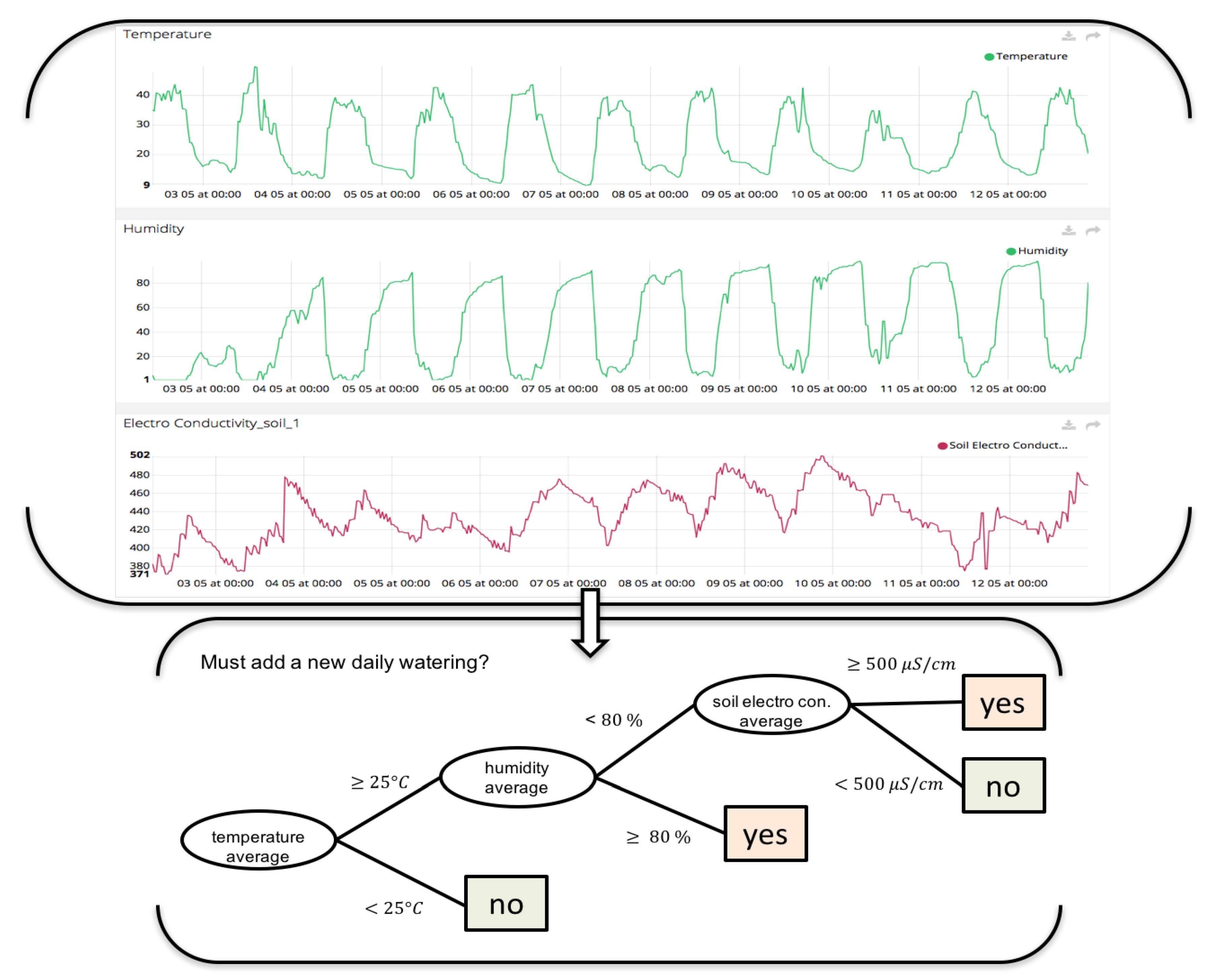
- Infer future irrigation decisions using the information and modelling tools. Design decision tree algorithms to reduce water consumption
5. Conclusions and Future Work
Author Contributions
Funding
Conflicts of Interest
Abbreviations
| AI | Artificial Intelligence |
| API | Application Programming Interface |
| HMI | Human Machine Interface |
| IAB | Internet Architecture Board |
| IETF | Internet Engineering Task Force |
| IoT | Internet of Things |
| ISO | International Organization for Standardization |
| ISOC | Internet Society |
| MQTT | Message Queuing Telemetry Transport |
| PA | Precision Agriculture |
| QoS | Quality of Service |
| RFC | Request for Comments |
| UCD | User Centred Design |
| UX | User Experience |
References
- Ferrandez-Pastor, F.J.; Garcia-Chamizo, J.M.; Nieto-Hidalgo, M.; Mora-Martinez, J. User-Centered Design of Agriculture Automation Systems Using Internet of Things Paradigm. In Proceedings of the UCAmI 2017: Ubiquitous Computing and Ambient Intelligence, Philadelphia, PA, USA, 7–10 November 2017; pp. 56–66. [Google Scholar]
- Gebbers, R.; Adamchuk, V.I. Precision Agriculture and Food Security. Science 2010, 327, 828–831. [Google Scholar] [CrossRef] [PubMed]
- European-Parliament. Precision Agriculture: An Opportunity for EU Farmers—Potential Support with the CAP 2014-2020. 2014. Available online: http://www.europarl.europa.eu/RegData/etudes/note/join/2014/529049/IPOL-AGRI_NT%282014%29529049_EN.pdf (accessed on 16 April 2018).
- Lowdermilk, T. What is centered-user design? In User-Centered Design. A Developer’s Guide to Building User-Friendly Applications; O’Reilly Media: Sebastopol, CA, USA, 2013; pp. 13–15. [Google Scholar]
- Foundation, I.D. What Is User Centred Design? 2015. Available online: https://www.interaction-design.org/literature/topics/user-centered-design (accessed on 16 April 2018).
- Teoh, C. User-Centred Design (UCD)—6 Methods. 2009. Available online: http://www.webcredible.com/blog/user-centered-design-ucd-6-methods/ (accessed on 16 April 2018).
- Yang, Z.; Yue, Y.; Yang, Y.; Peng, Y.; Wang, X.; Liu, W. Study and application on the architecture and key technologies for IOT. In Proceedings of the 2011 International Conference on Multimedia Technology, Hangzhou, China, 26–28 July 2011; pp. 747–751. [Google Scholar]
- Wu, M.; Lu, T.J.; Ling, F.Y.; Sun, J.; Du, H.Y. Research on the architecture of Internet of Things. In Proceedings of the 2010 3rd International Conference on Advanced Computer Theory and Engineering (ICACTE), Chengdu, China, 20–22 August 2010; Volume 5, pp. V5-484–V5-487. [Google Scholar]
- Ferrandez-Pastor, F.J.; Garcia-Chamizo, J.M.; Nieto-Hidalgo, M.; Mora-Pascual, J.; Mora-Martinez, J. Developing Ubiquitous Sensor Network Platform Using Internet of Things: Application in Precision Agriculture. Sensors 2016, 16, 1141. [Google Scholar] [CrossRef] [PubMed]
- Khan, R.; Khan, S.U.; Zaheer, R.; Khan, S. Future Internet: The Internet of Things Architecture, Possible Applications and Key Challenges. In Proceedings of the 2012 10th International Conference on Frontiers of Information Technology, Islamabad, Pakistan, 17–19 December 2012; pp. 257–260. [Google Scholar]
- Al-Sarawi, S.; Anbar, M.; Alieyan, K.; Alzubaidi, M. Internet of Things (IoT) communication protocols: Review. In Proceedings of the 2017 8th International Conference on Information Technology (ICIT), Singapore, 27–29 December 2017; pp. 685–690. [Google Scholar]
- Heđi, I.; Špeh, I.; Šarabok, A. IoT network protocols comparison for the purpose of IoT constrained networks. In Proceedings of the 2017 40th International Convention on Information and Communication Technology, Electronics and Microelectronics (MIPRO), Opatija, Croatia, 22–26 May 2017; pp. 501–505. [Google Scholar]
- Yassein, M.B.; Shatnawi, M.Q.; Al-zoubi, D. Application layer protocols for the Internet of Things: A survey. In Proceedings of the 2016 International Conference on Engineering MIS (ICEMIS), Agadir, Morocco, 22–24 September 2016; pp. 1–4. [Google Scholar]
- IoT-Now-Mag. The Industrial Internet: Towards the 4th Industrial Revolution. 2016. Available online: https://www.iot-now.com/2016/10/20/53811-the-industrial-internet-towards-the-4th-industrial-revolution (accessed on 16 April 2018).
- Hortelano, D.; Olivares, T.; Ruiz, M.C.; Garrido-Hidalgo, C.; Lopez, V. From Sensor Networks to Internet of Things. Bluetooth Low Energy, a Standard for This Evolution. Sensors 2017, 17, 372. [Google Scholar] [CrossRef] [PubMed]
- Chen, Y.; Lee, G.M.; Shu, L.; Crespi, N. Industrial Internet of Things-Based Collaborative Sensing Intelligence: Framework and Research Challenges. Sensors 2016, 16, 215. [Google Scholar] [CrossRef] [PubMed]
- Baños-Gonzalez, V.; Afaqui, M.S.; Lopez-Aguilera, E.; Garcia-Villegas, E. IEEE 802.11ah: A Technology to Face the IoT Challenge. Sensors 2016, 16, 1960. [Google Scholar] [CrossRef] [PubMed]
- Orsino, A.; Araniti, G.; Militano, L.; Alonso-Zarate, J.; Molinaro, A.; Iera, A. Energy Efficient IoT Data Collection in Smart Cities Exploiting D2D Communications. Sensors 2016, 16, 836. [Google Scholar] [CrossRef] [PubMed]
- Choi, H.S.; Rhee, W.S. IoT-Based User-Driven Service Modeling Environment for a Smart Space Management System. Sensors 2014, 14, 22039–22064. [Google Scholar] [CrossRef] [PubMed]
- Ilchev, S.; Ilcheva, Z. Internet-of-Things Communication Protocol for Low-Cost Devices in Heterogeneous Wireless Networks. In Proceedings of the 18th International Conference on Computer Systems and Technologies, Ruse, Bulgaria, 23–24 June 2017; pp. 272–279. [Google Scholar]
- Sivanathan, A.; Sherratt, D.; Gharakheili, H.H.; Sivaraman, V.; Vishwanath, A. Low-cost flow-based security solutions for smart-home IoT devices. In Proceedings of the 2016 IEEE International Conference on Advanced Networks and Telecommunications Systems (ANTS), Bangalore, India, 6–9 November 2016; pp. 1–6. [Google Scholar]
- New-Electronics-Site. Low Cost Sensors Will Help the IoT to Be Realised. 2017. Available online: http://www.newelectronics.co.uk/electronics-technology/low-cost-sensors-will-help-the-iot-to-be-realised/166151/ (accessed on 16 April 2018).
- Cercas, F.; Souto, N.M.B. Comparison of communication protocols for low cost Internet of Things devices. In Proceedings of the 2017 South Eastern European Design Automation, Computer Engineering, Computer Networks and Social Media Conference (SEEDA-CECNSM), Kastoria, Greece, 25–27 September 2017; pp. 1–6. [Google Scholar]
- Tech-Target. IoT as a Solution for Precision Farming. 2017. Available online: http://internetofthingsagenda.techtarget.com/blog/IoT-Agenda/IoT-as-a-solution-for-precision-farming (accessed on 16 April 2018).
- Jayaraman, P.P.; Yavari, A.; Georgakopoulos, D.; Morshed, A.; Zaslavsky, A. Internet of Things Platform for Smart Farming: Experiences and Lessons Learnt. Sensors 2016, 16, 884. [Google Scholar] [CrossRef] [PubMed]
- Zhang, X.; Zhang, J.; Li, L.; Zhang, Y.; Yang, G. Monitoring Citrus Soil Moisture and Nutrients Using an IoT Based System. Sensors 2017, 17, 447. [Google Scholar] [CrossRef] [PubMed]
- Wolfert, S.; Ge, L.; Verdouw, C.; Bogaardt, M.J. Big Data in Smart Farming—A review. Agric. Syst. 2017, 153, 69–80. [Google Scholar] [CrossRef]
- Malche, T.; Maheshwary, P. Internet of Things (IoT) Based Water Level Monitoring System for Smart Village. In Proceedings of International Conference on Communication and Networks; Modi, N., Verma, P., Trivedi, B., Eds.; Springer: Singapore, 2017; pp. 305–312. [Google Scholar]
- John-Deere. How the IoT Is Creating ‘Precision Farming’. 2018. Available online: http://precisionagricultu.re/how-the-iot-is-creating-precision-farming-2/ (accessed on 16 April 2018).
- IBM. IBM Research Precision Agriculture. 2018. Available online: https://www.ibm.com/us-en/marketplace/agri-resrch-innov (accessed on 16 April 2018).
- Motorleaf. Intelligence Powered Indoor Cultivation. 2018. Available online: http://motorleaf.com (accessed on 16 April 2018).
- Biomax. Agriculture IoT System. 2018. Available online: http://www.biomax.com.tw/en/product/Agriculture-IoT-System/agriculture_iot_system.html (accessed on 16 April 2018).
- Gupta, H.; Dastjerdi, A.V.; Ghosh, S.K.; Buyya, R. iFogSim: A Toolkit for Modeling and Simulation of Resource Management Techniques in Internet of Things, Edge and Fog Computing Environments. arXiv, 2016; arXiv:1606.02007. [Google Scholar]
- Shi, W.; Dustdar, S. The Promise of Edge Computing. Computer 2016, 49, 78–81. [Google Scholar] [CrossRef]
- Hao, Z.; Novak, E.; Yi, S.; Li, Q. Challenges and Software Architecture for Fog Computing. IEEE Internet Comput. 2017, 21, 44–53. [Google Scholar] [CrossRef]
- Dastjerdi, A.V.; Buyya, R. Fog Computing: Helping the Internet of Things Realize Its Potential. Computer 2016, 49, 112–116. [Google Scholar] [CrossRef]
- Ma, X.; Liang, J.; Liu, R.; Ni, W.; Li, Y.; Li, R.; Ma, W.; Qi, C. A Survey on Data Storage and Information Discovery in the WSANs-Based Edge Computing Systems. Sensors 2018, 18, 546. [Google Scholar] [CrossRef] [PubMed]
- Chen, Y.S.; Tsai, Y.T. A Mobility Management Using Follow-Me Cloud-Cloudlet in Fog-Computing-Based RANs for Smart Cities. Sensors 2018, 18, 489. [Google Scholar] [CrossRef] [PubMed]
- Davis, E.G.; Calveras, A.; Demirkol, I. Improving Packet Delivery Performance of Publish/Subscribe Protocols in Wireless Sensor Networks. Sensors 2013, 13, 648–680. [Google Scholar] [CrossRef] [PubMed]
- Alvarez-Campana, M.; López, G.; Vázquez, E.; Villagrá, V.A.; Berrocal, J. Smart CEI Moncloa: An IoT-based Platform for People Flow and Environmental Monitoring on a Smart University Campus. Sensors 2017, 17, 2856. [Google Scholar] [CrossRef] [PubMed]
- Atmoko, R.A.; Riantini, R.; Hasin, M.K. IoT real time data acquisition using MQTT protocol. J. Phys. Conf. Ser. 2017, 853, 012003. [Google Scholar] [CrossRef]
- MQTT-org. MQTT Protocol. 2018. Available online: https://www.mqtt.org (accessed on 16 April 2018).
- MQTT. MQTT Essentials Part 6: Quality of Service. 2018. Available online: https://www.hivemq.com/blog/mqtt-essentials-part-6-mqtt-quality-of-service-levels (accessed on 16 April 2018).
- Bonomi, F.; Milito, R.A.; Zhu, J.; Addepalli, S. Fog computing and its role in the internet of things. In Proceedings of the First Edition of the MCC Workshop on Mobile Cloud Computing, Helsinki, Finland, 17 August 2012. [Google Scholar]
- Microsoft. Connect, Monitor, and Manage Billions of IoT Assets. 2018. Available online: https://azure.microsoft.com/en-us/services/iot-hub/ (accessed on 16 April 2018).
- Ubidots. Data Drives Decision. 2018. Available online: https://ubidots.com/ (accessed on 16 April 2018).
- Thingspeak. Understand Your Things. 2018. Available online: https://thingspeak.com/ (accessed on 16 April 2018).

| Layers Proposed | Characteristics |
|---|---|
| 3 | Perception, Network, Application [7,8] |
| 4 | Things, Edge, Network, Application [9] |
| 5 | Business, Application, Service, Object abstration, Objects [10] |
| Layer | Protocols |
|---|---|
| Session/Application | MQTT, CoAP, AMQT, HTTP, SOAP, ... |
| Network | 6LowPAN, RPL, CORPL, IPSec, TCP/UDP, DTLS |
| Perception/Things | WiFi, Bluetooth Low Energy, Z-Wave, ZigBee, LoraWan, IEEE 802.15.4, LTE, ... |
| Object/Thing | Context |
|---|---|
| Sensor | |
| Actuator | |
| Variable | |
| Process | |
| Controller |
| lIrrigation actual (Total liters) = (initial phase) | Average Temperature = | |
| Energy used = 60 | Average water PH = | |
| Solar irradiance = (NASA HOMER web) | Average water EC = | |
| Example of new service designed by user: Decision Tree to reduce water consumption | ||
 |  |  |
| Solutions | Technological results | |
| Develop a reference model based on distributed IoT paradigms New PA processes automated Graphics Interfaces use simple and universal access Tools, facilities and resources adapted for agronomist | GUI interfaces used on Internet New ways of data access and Low-cost deployment Users design DECISION TREE to optimize water consumption | |
| Object/Thing | Context | Type | Relation |
|---|---|---|---|
| Soil | input | ||
| Soil | input | ||
| Soil | int) | input | |
| Soil | input | ||
| Water | input | ||
| Water | int) | input | |
| Water | input | ||
| Inside | input | ||
| Inside | input | ||
| Inside | lux) | input | |
| Outside | input | ||
| Outside | input | ||
| Outside | input | ||
| Evalve | ON-OFF) | output | |
| Evalve | ON-OFF) | output | |
| Epump | ON-OFF) | output | |
| P_Irrigation | process | ||
| P_Air_cond | process | ||
| Prediction | input | ||
| Forecast | input | ||
| Energy | input | ||
| HMI | interface | ||
| P_Machine_Learning | process | ||
| Water | input |
| Requirement | Minimal Resources | Node Type |
|---|---|---|
| Processor | fog | |
| Processor | edge | |
| Video | edge | |
| Storage | fog | |
| Storage | edge | |
| Communication | edge and fog | |
| Communication | edge and fog | |
| GPIO | edge | |
| Operating System | edge and fog | |
| Programming | edge | |
| Programming | fog |
© 2018 by the authors. Licensee MDPI, Basel, Switzerland. This article is an open access article distributed under the terms and conditions of the Creative Commons Attribution (CC BY) license (http://creativecommons.org/licenses/by/4.0/).
Share and Cite
Ferrández-Pastor, F.J.; García-Chamizo, J.M.; Nieto-Hidalgo, M.; Mora-Martínez, J. Precision Agriculture Design Method Using a Distributed Computing Architecture on Internet of Things Context. Sensors 2018, 18, 1731. https://doi.org/10.3390/s18061731
Ferrández-Pastor FJ, García-Chamizo JM, Nieto-Hidalgo M, Mora-Martínez J. Precision Agriculture Design Method Using a Distributed Computing Architecture on Internet of Things Context. Sensors. 2018; 18(6):1731. https://doi.org/10.3390/s18061731
Chicago/Turabian StyleFerrández-Pastor, Francisco Javier, Juan Manuel García-Chamizo, Mario Nieto-Hidalgo, and José Mora-Martínez. 2018. "Precision Agriculture Design Method Using a Distributed Computing Architecture on Internet of Things Context" Sensors 18, no. 6: 1731. https://doi.org/10.3390/s18061731
APA StyleFerrández-Pastor, F. J., García-Chamizo, J. M., Nieto-Hidalgo, M., & Mora-Martínez, J. (2018). Precision Agriculture Design Method Using a Distributed Computing Architecture on Internet of Things Context. Sensors, 18(6), 1731. https://doi.org/10.3390/s18061731

