Abstract
In this paper, we report the use of magnesium alloy (AZ31B) as the matching material for PZT-5H ultrasonic transducers. The AZ31B has an acoustic impedance of 10.3 MRayl, which provides a good acoustic impedance match for PZT-5H ultrasonic transducers in water medium based on the double matching layer theory. Two PZT-5H transducers with different center frequencies were designed and fabricated using the AZ31B. The respective center frequencies of the two fabricated transducers were 4.6 MHz and 9.25 MHz. The 4.6 MHz transducer exhibits a −6 dB bandwidth of 79% and two-way insertion loss of −11.11 dB. The 9.25 MHz transducer also shows good performance: −6 dB bandwidth of 71% and two-way insertion loss of −14.43 dB. The properties of the two transducers are superior to those of transducers using a composite matching layer, indicating that the magnesium alloy may be a promising alternative for high-performance transducers.
1. Introduction
As ultrasonic imaging is becoming increasingly important in modern medicine, higher-performance ultrasonic transducers will be required in the future [1,2]. For ultrasonic transducers, the choice of piezoelectric materials is critical [3]. Compared with piezoelectric polymers and single crystals, lead-based piezoceramics (PZT) are more suitable for transducers because of their excellent piezoelectric properties and superior temperature stability [4]. However, PZT ceramics have an acoustic impedance of 33 MRayl, which severely mismatches with that of the human body (~1.5 MRayl). The large acoustic impedance mismatch can cause about 80% ultrasound energy loss at the interface, resulting in poor sensitivity and long ringdown [5]. Based on previous works on ultrasonic transducers, one of the most effective ways to improve the properties of transducers is the development of matching layers [6,7]. As a classical model, the Krimholz–Leedom–Mattaei (KLM) equivalent circuit has been widely used in design of matching layers [8]. Therein, double quarter-wavelength matching layers are most frequently used. The optimized acoustic impedance values of the two matching layers are 8.9 MRayl and 2.3 MRayl for PZT-5H ultrasonic transducers. Traditionally, the first matching materials are composites made of solid particles/templates and polymer [9]. Tung Manh et al. [10] used a silicon–polymer composite of Spurr’s epoxy with an acoustic impedance of 9.5 MRayl as the first matching layer, and the 14.6 MHz PZT transducer showed a −6 dB bandwidth of 70% and an insertion loss of −18.4 dB. An 11.6 MHz PZT-5A transducer was reported by H.J. Fang et al. [11] using anodic aluminum oxide–epoxy 1–3 composite with an acoustic impedance of 9.5 MRayl as the first matching layer, which showed a −6 dB bandwidth of 68% and an insertion loss of −22.7 dB. Although conventional composite matching materials can improve the performance of PZT transducers to some extent, there still exist some issues—nonuniformity and high attenuation, for instance—which limit further improvement of the transducers [12]. Furthermore, it is still very difficult to achieve a composite with high acoustic impedance and low loss simultaneously [10]. Therefore, it is urgent to seek a novel matching material for use in PZT ultrasonic transducers. AZ31B has an acoustic impedance of 10.3 MRayl and a small acoustic attenuation coefficient of about 0.02 dB/mm at 7.5 MHz, which can satisfy the requirement of the first matching layer of piezoelectric transducers. We used this material in a PMN-PT (lead magnesium niobate-lead titanate) single crystal ultrasonic transducer, and the results were very promising [13]. Here, AZ31B is proposed to be applied in PZT ultrasonic transducers with the hope to improve the performance of the PZT-5H transducers. Two PZT-5H transducers with center frequencies of 5 MHz and 10 MHz were designed and fabricated, and their properties were evaluated.
2. Materials and Methods
2.1. Design of the Transducers
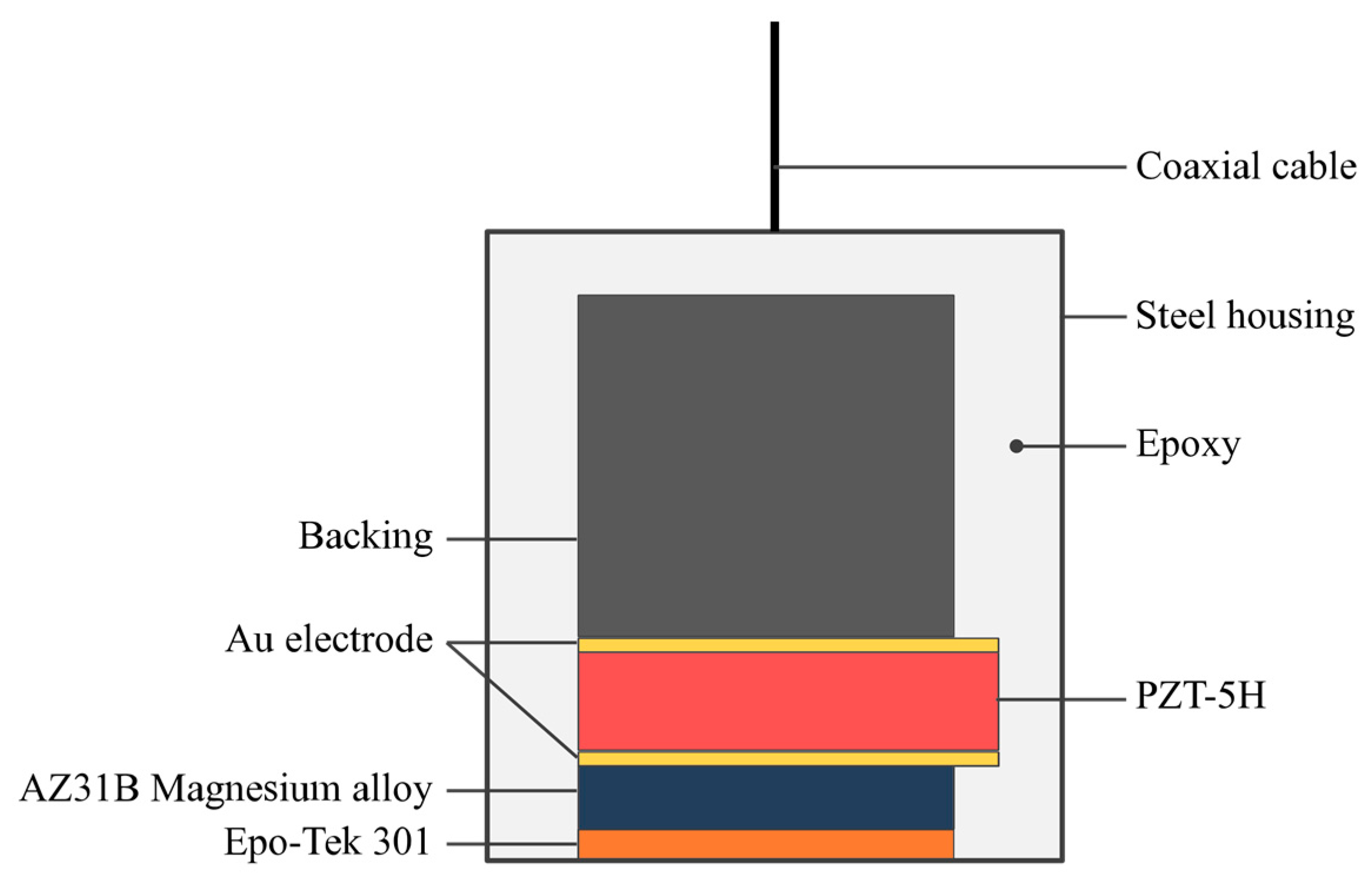
Figure 1 shows the design cross sections of the proposed ultrasonic transducers. As shown in Figure 1, commercial PZT-5H ceramics were selected as the active element of the transducers, and the main parameters are shown in Table 1. Taking 50 Ω electric impedance matching into account, the apertures/thicknesses of the active elements for the designed 5 MHz and 10 MHz transducers were 4.0 × 4.0 mm2/400 μm and 2.0 × 2.0 mm2/200 μm, respectively.
Figure 1.
The design cross sections of the lead-based piezoceramic (PZT) transducer with an AZ31B magnesium alloy matching layer.
Table 1.
The main parameters of the PZT-5H ceramics.
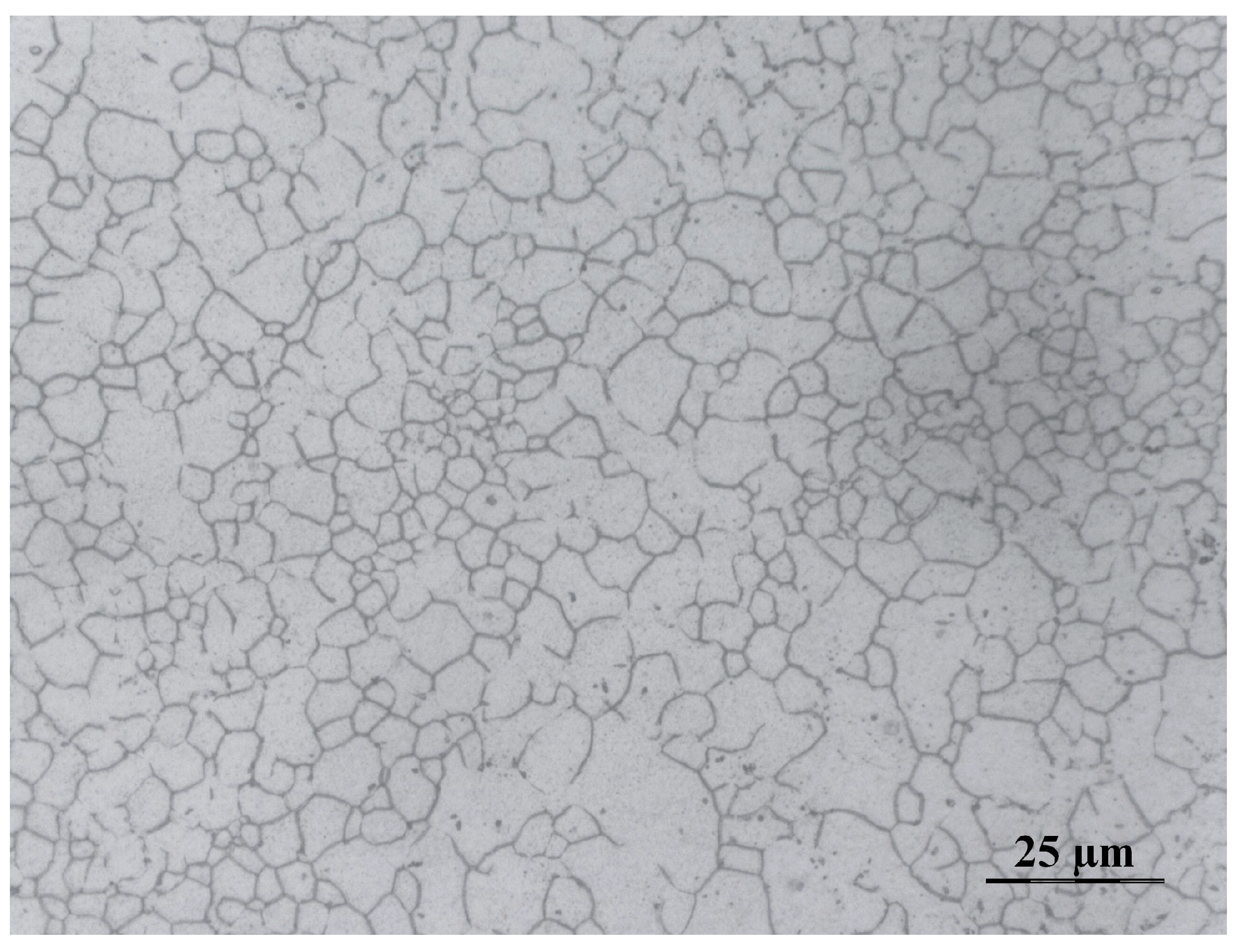
AZ31B and Epo-Tek 301 (Epoxy Technology Inc., Biller-ica, MA, USA) were chosen as the matching materials. The acoustic impedances of these two materials are 10.3 MRayl and 3.0 MRayl, respectively. The thicknesses of the two matching layers were one-quarter of the wavelength at the center frequency, according to the KLM model [8]. The average grain size of the AZ31B used in these transducers is about 5 μm, as shown in Figure 2, which would not affect the transmission of the sound waves at the designed frequencies. A mixture of Epo-Tek 301, tungsten powder, and glass microspheres was used as the backing, and showed an acoustic impedance of 9.12 MRayl. The mass ratio of the Epo-Tek 301, tungsten powder, and glass spheres was 4:1:0.5. The basic properties of the passive materials used in this work are summarized in Table 2.
Figure 2.
Micrograph of the AZ31B magnesium alloy.
Table 2.
The basic physical properties of the matching and backing layers.
2.2. Transducer Fabrication and Characterization
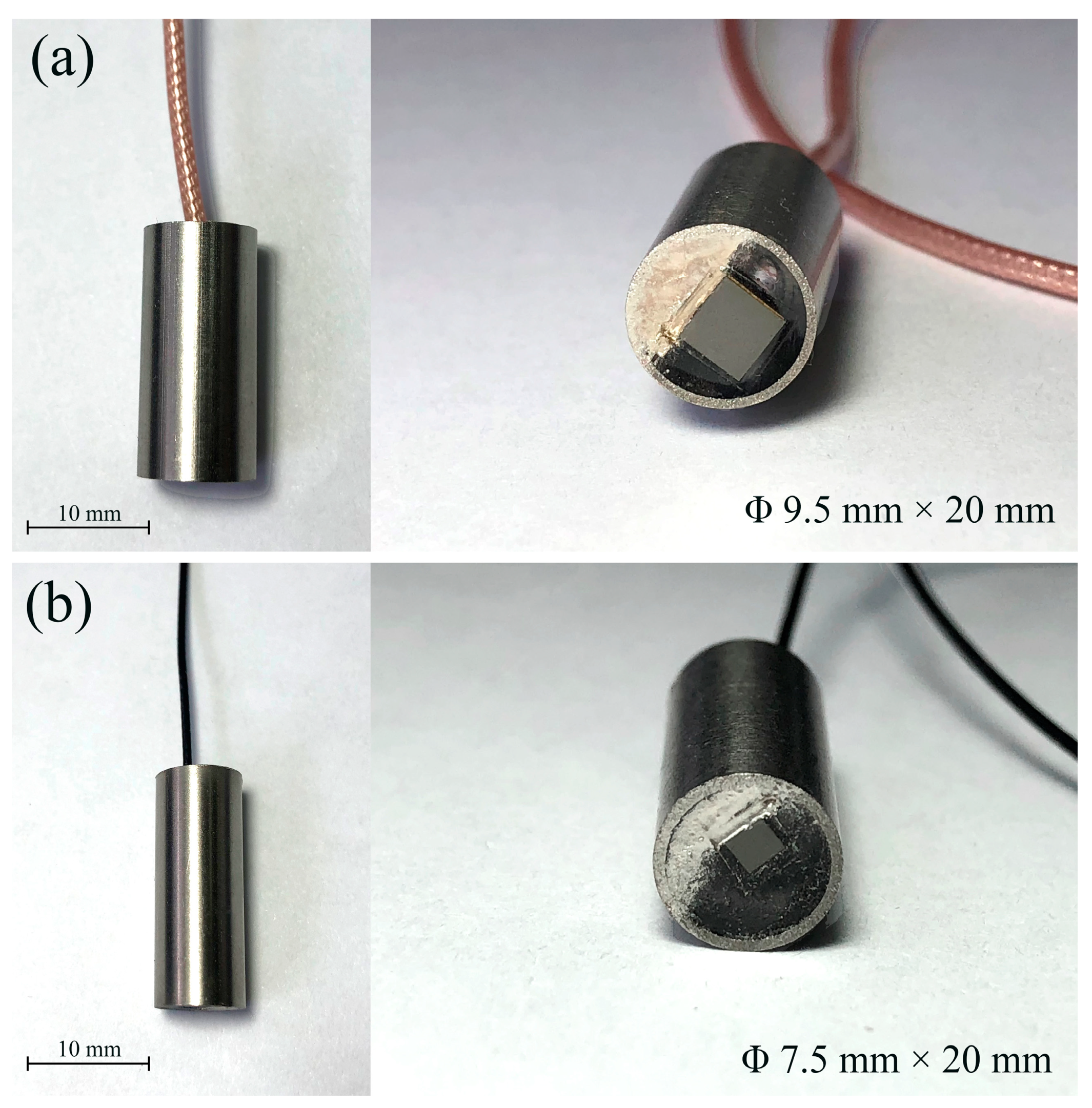
In this work, the two transducers were fabricated using the same procedure as follows. Taking the 5 MHz transducer as an example, firstly, the piezoelectric element with an aperture of 4.0 × 4.0 mm2 and thickness of 400 μm was prepared. Both sides of the active element were sputtered with Au electrode. Secondly, the first matching layer of AZ31B was lapped down to 317 μm and polished, then the second matching layer of Epo-Tek 301 with a thickness of 145 μm was cured over the polished surface of the AZ31B. To optimize the bandwidth and sensitivity, a backing with a thickness of 5 mm was used. Thirdly, the prepared active element, two matching layers, and backing were bonded together using the Epo-Tek 301. After curing for 24 h at room temperature, two electrodes of piezoelectric element were electrically connected to the wire using conductive epoxy (E-solder 3022, Von Roll Isola Inc., New Haven, CT, USA). Lastly, the acoustic stack was fixed in a steel housing by curing Epo-Tek 301 in the void. For the 10 MHz transducer, the thicknesses of the AZ31B, Epo-Tek 301, and backing were 156 μm, 71.2 μm, and 4 mm, respectively. The sizes of the fabricated 5 MHz and 10 MHz transducers were Φ9.5 mm × 20 mm and Φ7.5 mm × 20 mm, respectively, as shown in Figure 3.
Figure 3.
Photographs of the fabricated ultrasonic transducers: (a) 5 MHz, (b) 10 MHz.
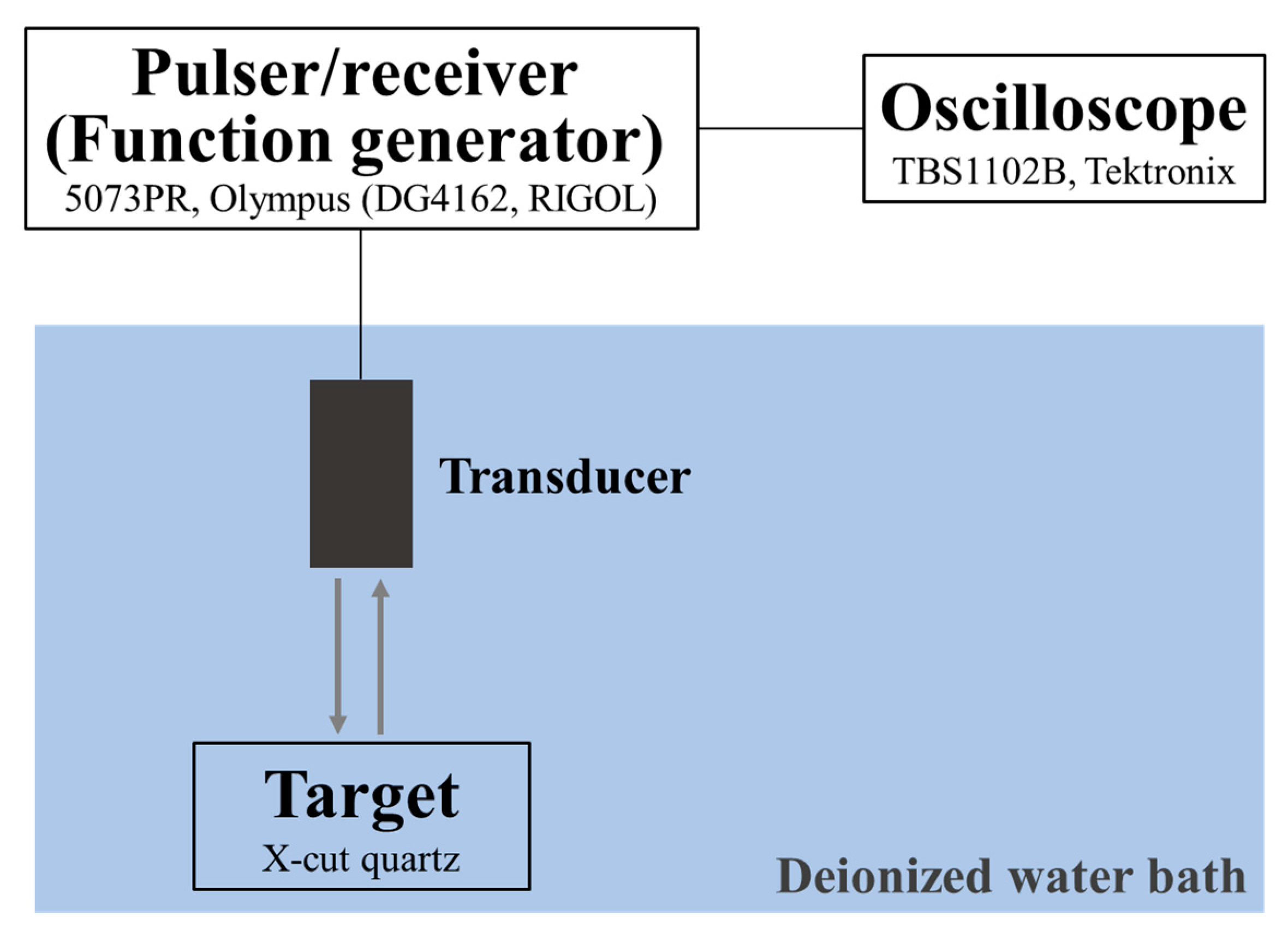
The electrical impedance and phase measurements were taken using an impedance analyzer (4294A, Agilent, Santa Clara, CA, USA) [15] in air. The characterization of the pulse–echo responses and the insertion loss was carried out in a deionized water bath, using an X-cut quartz as target. The scheme of the experimental measurements of the pulse–echo response and insertion loss is shown in Figure 4. To measure the pulse–echo responses of the transducers, a 75 MHz pulser/receiver (5073PR, Olympus, Tokyo, Japan) with a damping impedance of 50 Ω was used to excite the transducers and receive the echoes. The echoes were digitized by an oscilloscope (TBS1102B, Tektronix, Beaverton, OR, USA), and the frequency spectra were obtained from the echo responses using Fast Fourier Transform [16]. To evaluate the two-way insertion loss, a tone burst of a 20-cycle sine wave generated by a function generator (DG4162, RIGOL, Beijing, China) with an amplitude of 1 V was used to excite the transducers, and the echoes were received by a 1 MΩ coupling oscilloscope (TBS1102B, Tektronix). The signal loss caused by the transmission into the quartz target and the attenuation in water were compensated. The value of the two-way insertion loss (IL) was calculated from [17]
where Vo is the output voltage amplitude of the transducer, Vi is the input voltage amplitude of the excitation pulse power, d is the distance between the transducer and the quartz, and fc is the center frequency of the transducer.
Figure 4.
Scheme of the experimental measurements of the pulse–echo response and insertion loss.
3. Results and Discussions
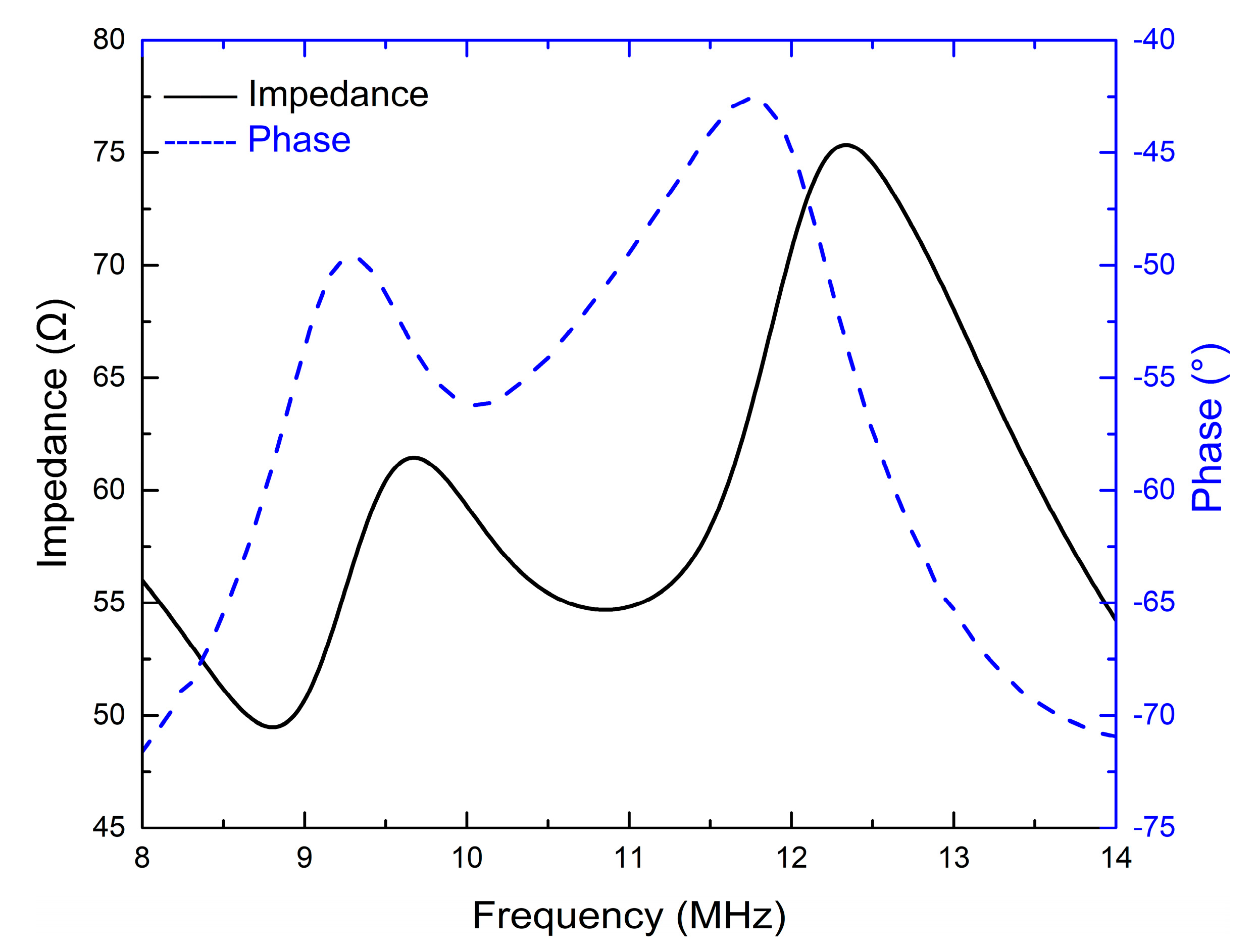
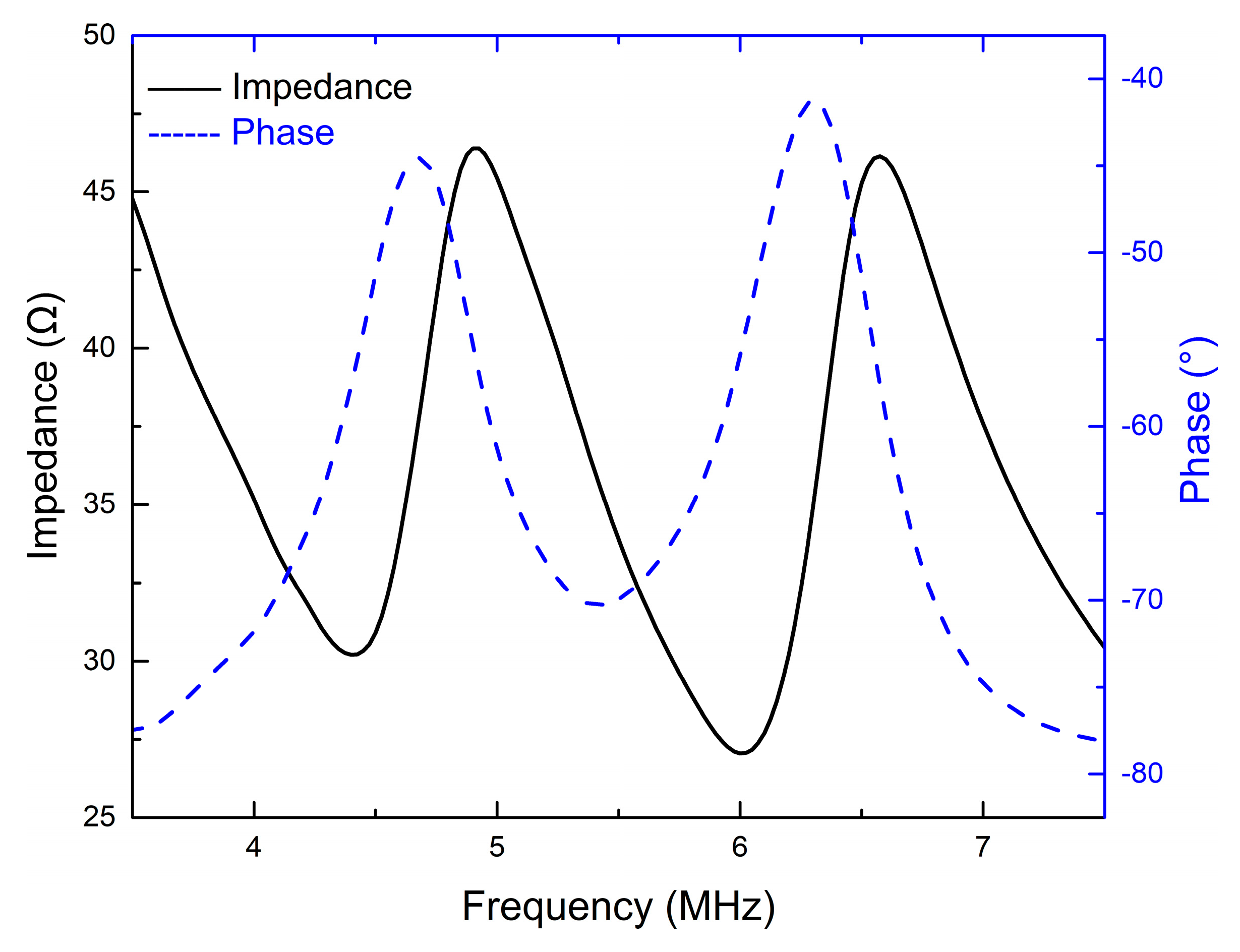
Figure 5 and Figure 6 display the electrical impedance and phase of the two transducers. Both transducers show two resonance peaks. The first one at lower frequency is derived from the thickness vibration mode of the piezoelectric element. Through experimental verification, the second one at higher frequency is attributed to the AZ31B matching layer. The effective electromechanical coupling factors kt(eff.) of the two transducers are approximately equal to that of the PZT-5H ceramics, as shown in Table 3.
Figure 5.
The electrical impedance and phase of the 5 MHz transducer.
Figure 6.
The electrical impedance and phase of the 10 MHz transducer.
Table 3.
Measured electrical impedance results of the transducers.
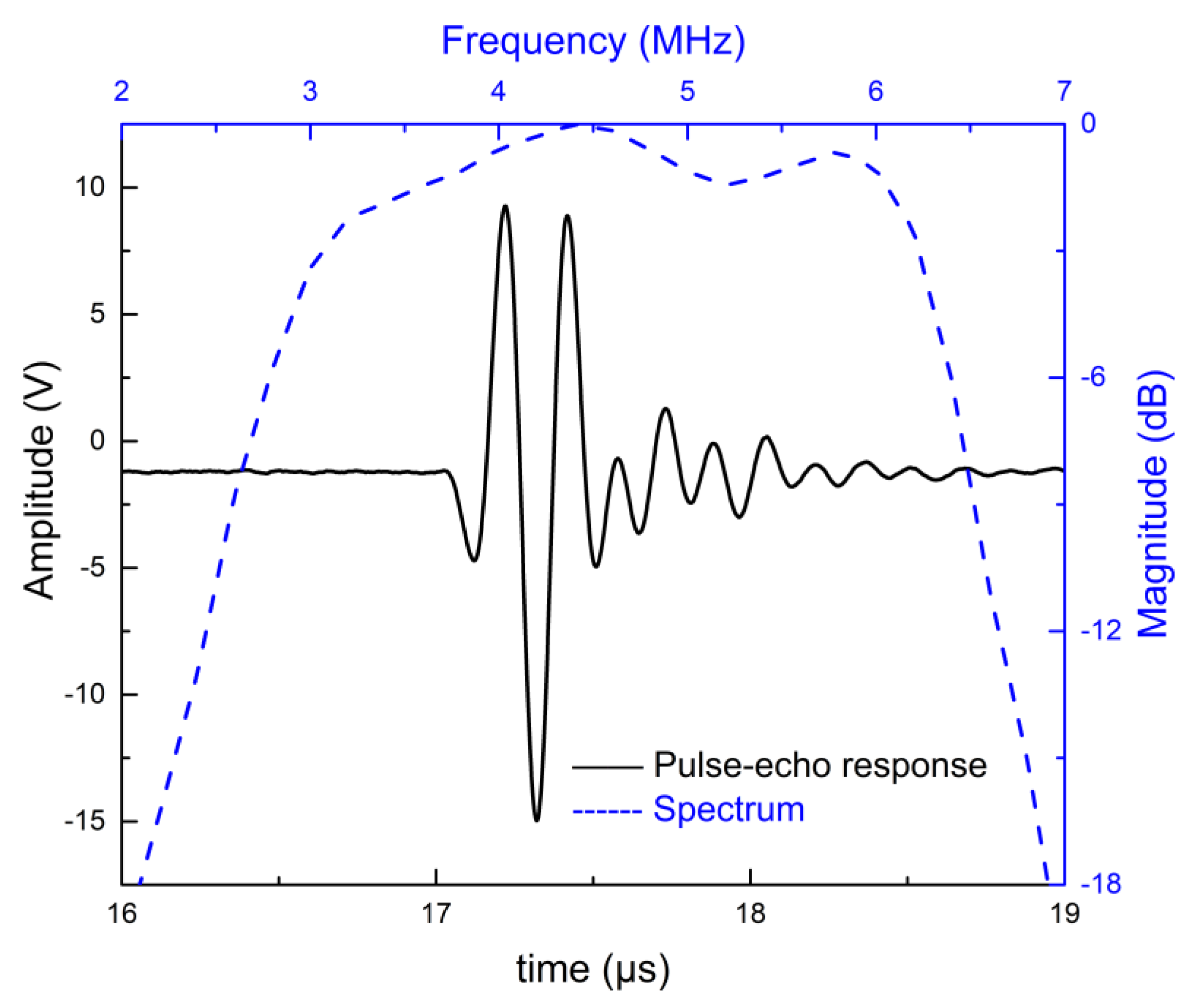
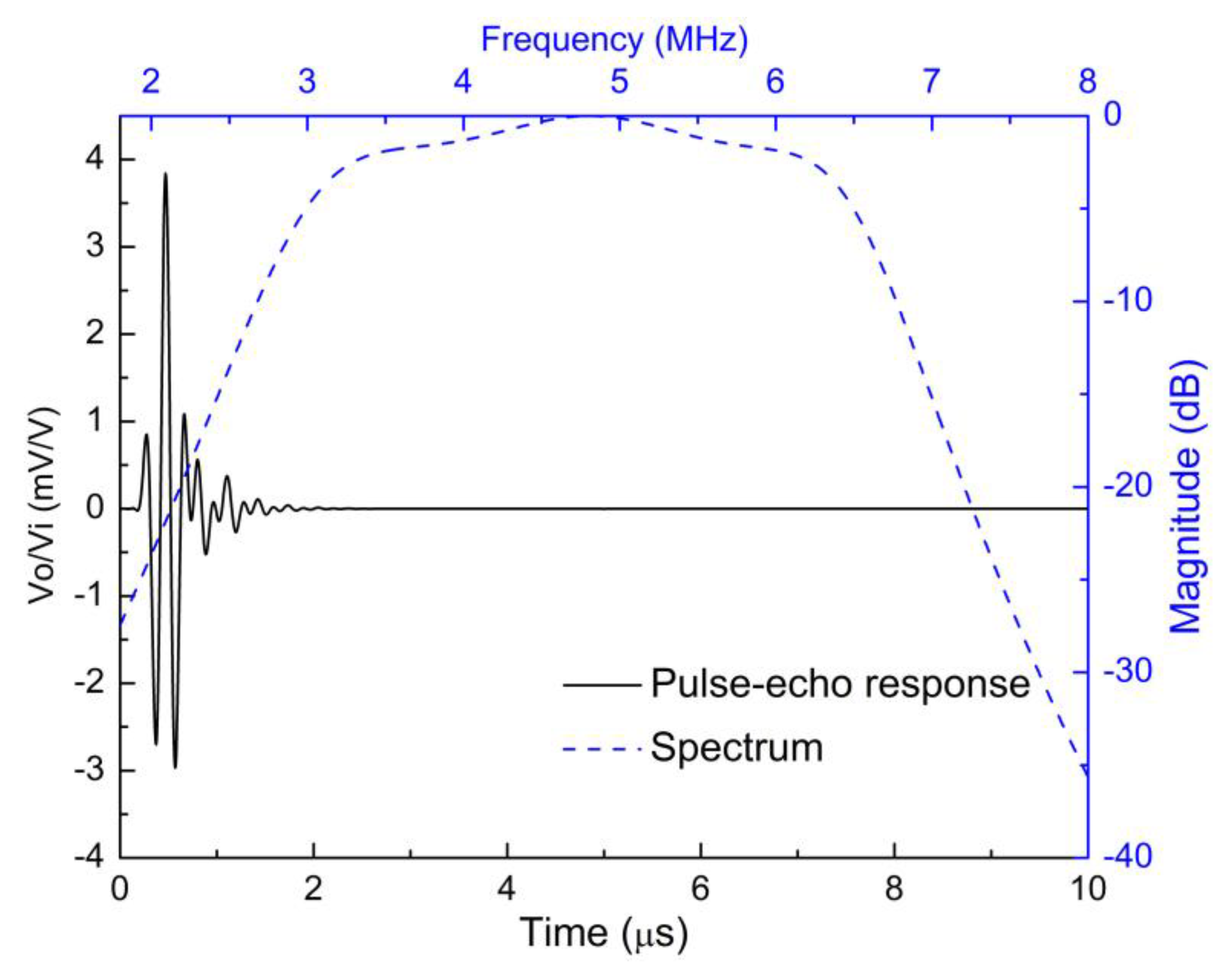
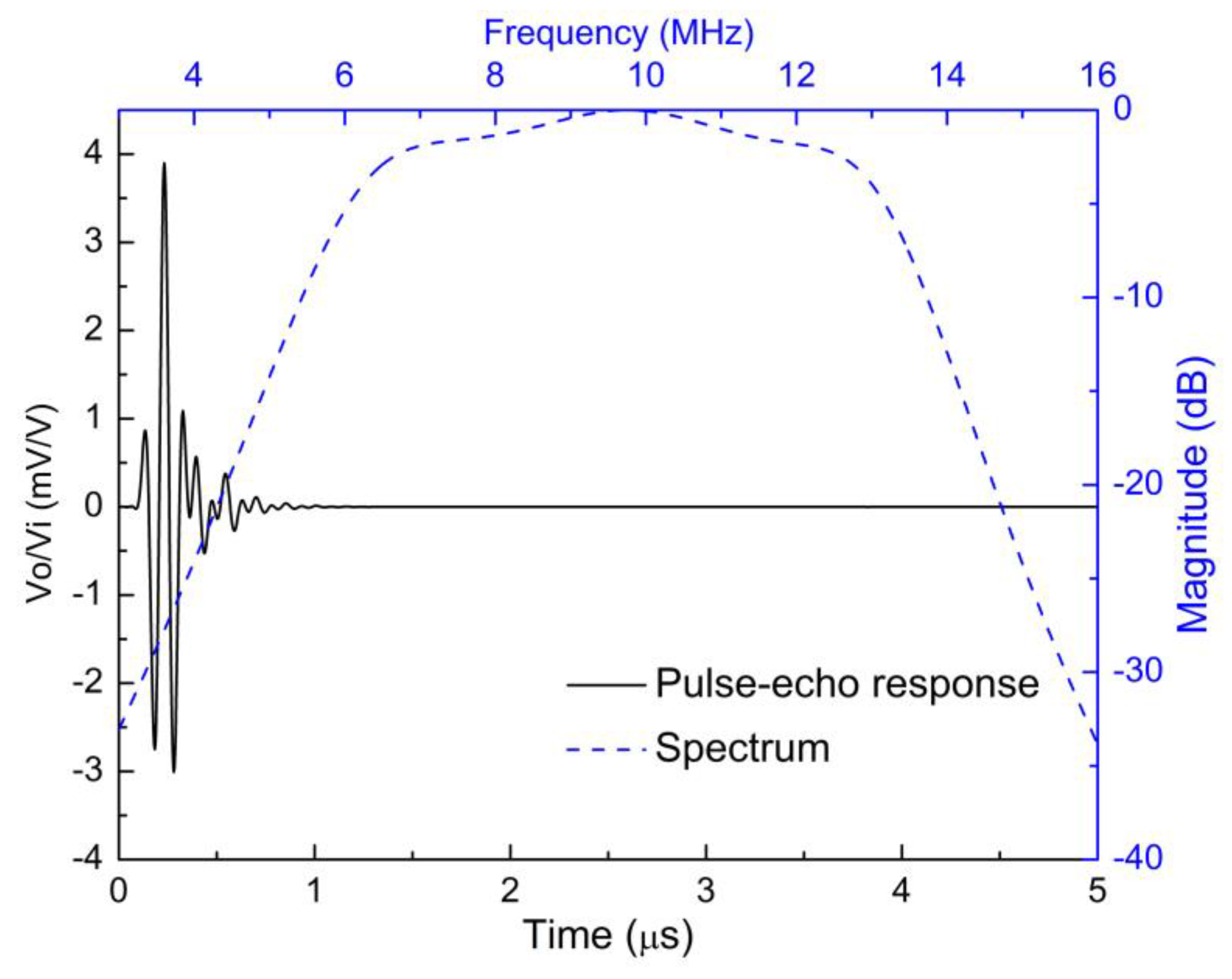
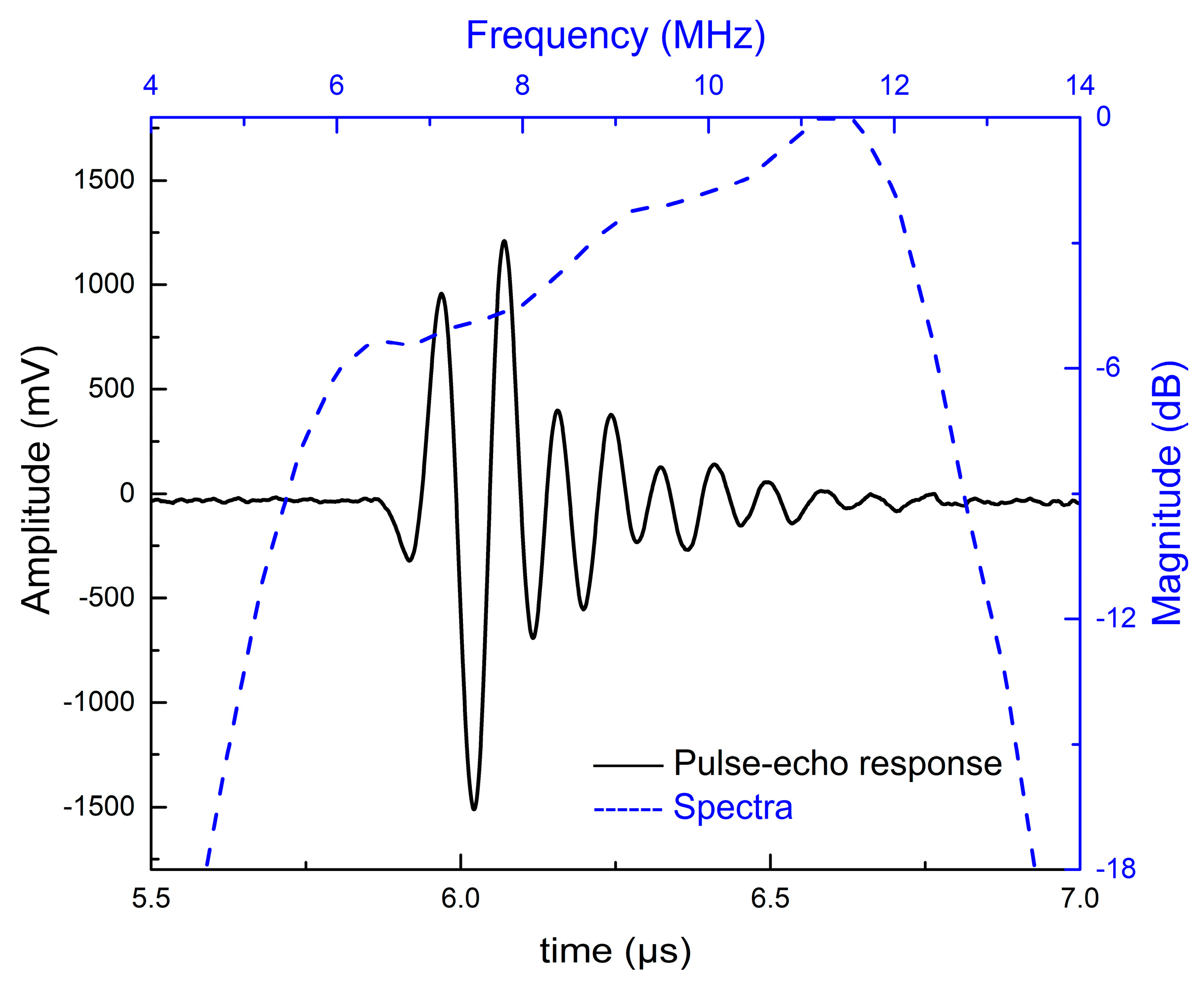
Figure 7 and Figure 8 show the simulated pulse–echo responses and the FFT spectra of the 5 MHz and 10 MHz transducers, respectively. According to the simulated results, the designed 5 MHz transducer shows a center frequency of 4.73 MHz with a −6 dB bandwidth of 77.38%. The other transducer with a center frequency of 9.61 MHz exhibits a −6 dB bandwidth of 77.00%. Figure 9 and Figure 10 show the measured pulse–echo responses and the FFT spectra of the 5 MHz and 10 MHz transducers. The center frequency, −6 dB bandwidth, and two-way insertion loss of the 5 MHz transducer are about 4.60 MHz, 79%, and −11.11 dB, respectively. For the 10 MHz transducer, these values are 9.25 MHz, 71%, and −14.43 dB, respectively. It can be clearly seen that the measured center frequencies of the two transducers are consistent with the simulated results. Although the measured −6 dB bandwidths of the two transducers are slightly lower than the simulated results, they are superior to those of commercial PZT transducers [18]. The most remarkable fact is that both transducers show much lower two-way insertion loss than do other reported transducers in the literature [10,11], which can be attributed to the suitable acoustic impedance and lower acoustic attenuation coefficient of the AZ31B. Overall, compared with other reported transducers using conventional composites, the fabricated PZT-5H transducers with AZ31B as the matching material show broader bandwidth and much lower insertion loss, as shown in Table 4.
Figure 7.
The modeled pulse–echo responses and the FFT spectrum of the 5 MHz transducer.
Figure 8.
The modeled pulse–echo responses and the FFT spectrum of the 10 MHz transducer.
Figure 9.
The measured pulse–echo responses and the FFT spectrum of the 5 MHz transducer.
Figure 10.
The measured pulse–echo responses and the FFT spectrum of the 10 MHz transducer.
Table 4.
Summary of properties of the fabricated PZT-5H transducers and other reported results.
4. Conclusions
In conclusion, we have demonstrated the feasibility of AZ31B magnesium alloy in PZT ultrasonic transducer applications. AZ31B has a suitable acoustic impedance and a much smaller acoustic attenuation coefficient compared with conventional composites. Two PZT-5H ultrasonic transducers with an AZ31B matching layer were designed and fabricated. The 4.6 MHZ transducer exhibits a −6 dB bandwidth of 79% and a two-way insertion loss of −11.11 dB. The 9.25 MHz transducer also shows excellent results with a −6 dB bandwidth of 71% and an insertion loss of −14.43 dB. Our results reported in this paper indicate that the magnesium alloy is a promising matching material for high-performance transducer applications.
Author Contributions
Y.W. conceived and performed the experiments with assistance from J.T. and F.G., analyzed the data and wrote the paper. S.L. and X.H. provided assistance for experiments and measurements. F.G., J.D. and W.C. provided general guidance during the research and revised this paper.
Funding
This work was supported by National Key Research and Development Program of China [Grant 2016YFB0301103], the National Nature Science Foundation of China [Grant 11704249] and the Postdoctoral Science Foundation of China [Grant 2017M621462].
Conflicts of Interest
The authors declare no conflicts of interest.
References
- Chilibon, I. Ultrasound transducer for medical therapy. Sens. Actuators A Phys. 2008, 142, 124–129. [Google Scholar] [CrossRef]
- Ma, T.; Yu, M.; Chen, Z.; Fei, C.; Shung, K.; Zhou, Q. Multi-frequency intravascular ultrasound (IVUS) imaging. IEEE Trans. Ultrason. Ferroelectr. Freq. Control 2015, 62, 97–107. [Google Scholar] [CrossRef] [PubMed]
- Zhou, Q.; Lam, K.H.; Zheng, H.; Qiu, W.; Shung, K.K. Piezoelectric single crystal ultrasonic transducers for biomedical applications. Prog. Mater. Sci. 2014, 66, 87–111. [Google Scholar] [CrossRef] [PubMed]
- Haertling, G.H. Ferroelectric Ceramics: History and Technology. J. Am. Ceram. Soc. 1999, 82, 798–818. [Google Scholar] [CrossRef]
- Hsu, H.S.; Zheng, F.; Li, Y.; Lee, C.; Zhou, Q.; Shung, K.K. Focused high frequency needle transducer for ultrasonic imaging and trapping. Appl. Phys. Lett. 2012, 101. [Google Scholar] [CrossRef] [PubMed]
- Zhang, Z.; Xu, J.; Yang, L.; Liu, S.; Xiao, J.; Li, X.; Wang, X.; Luo, H. Design and comparison of PMN-PT single crystals and PZT ceramics based medical phased array ultrasonic transducer. Sens. Actuators A Phys. 2018, 283, 273–281. [Google Scholar] [CrossRef]
- Park, C.Y.; Sung, J.H.; Jeong, J.S. Design and fabrication of ultrasound linear array transducer based on polarization inversion technique. Sens. Actuators A Phys. 2018, 280, 484–494. [Google Scholar] [CrossRef]
- Desilets, C.S.; Fraser, J.D.; Kino, G.S. The Design of Efficient Broad-Band Piezoelectric Transducers. IEEE Trans. Sonics Ultrason. 1978, 25, 115–125. [Google Scholar] [CrossRef]
- Cabrera-Munoz, N.E.; Eliahoo, P.; Wodnicki, R.; Jung, H.; Chiu, C.T.; Williams, J.A.; Kim, H.H.; Zhou, Q.; Shung, K.K. Forward-looking 30-MHz phased-array transducer for peripheral intravascular imaging. Sens. Actuators A Phys. 2018, 280, 145–163. [Google Scholar] [CrossRef]
- Manh, T.; Nguyen, A.T.T.; Johansen, T.F.; Hoff, L. Microfabrication of stacks of acoustic matching layers for 15 MHz ultrasonic transducers. Ultrasonics 2014, 54, 614–620. [Google Scholar] [CrossRef] [PubMed]
- Fang, H.J.; Chen, Y.; Wong, C.M.; Qiu, W.B.; Chan, H.L.W.; Dai, J.Y.; Li, Q.; Yan, Q.F. Anodic aluminum oxide-epoxy composite acoustic matching layers for ultrasonic transducer application. Ultrasonics 2016, 70, 29–33. [Google Scholar] [CrossRef] [PubMed]
- Zhou, Q.; Cha, J.H.; Huang, Y.; Zhang, R.; Cao, W.; Shung, K.K. Alumina/epoxy nanocomposite matching layers for high-frequency ultrasound transducer application. IEEE Trans. Ultrason. Ferroelectr. Freq. Control 2009, 56, 213–219. [Google Scholar] [CrossRef] [PubMed]
- Guo, F.; Wang, Y.; Huang, Z.; Qiu, W.; Zhang, Z.; Wang, Z.; Dong, J.; Yang, B.; Cao, W. Magnesium Alloy Matching Layer for PMN-PT Single Crystal Transducer Applications. IEEE Trans. Ultrason. Ferroelectr. Freq. Control 2018, 65, 1865–1872. [Google Scholar] [CrossRef] [PubMed]
- Cannata, J.M.; Ritter, T.A.; Chen, W.H.; Silverman, R.H.; Shung, K.K. Design of efficient, broadband single-element (20–80 MHz) ultrasonic transducers for medical imaging applications. IEEE Trans. Ultrason. Ferroelectr. Freq. Control 2003, 50, 1548–1557. [Google Scholar] [CrossRef] [PubMed]
- Safari, A.; Akdoǧan, E.K. Piezoelectric and Acoustic Materials for Transducer Applications; Springer Science & Business Media: New York, NY, USA, 2008; ISBN 9780387765389. [Google Scholar]
- Erikson, K.R.; Banjavic, R.A. Standard methods for testing single-element pulse-echo ultrasonic transducers-AIUM Interim Standard. J. Ultrasound Med. 1981, 1, 1–18. [Google Scholar]
- Li, X.; Ma, T.; Tian, J.; Han, P.; Zhou, Q.; Shung, K.K. Micromachined PIN-PMN-PT crystal composite transducer for high-frequency intravascular ultrasound (IVUS) imaging. IEEE Trans. Ultrason. Ferroelectr. Freq. Control 2014, 61, 1171–1178. [Google Scholar] [CrossRef] [PubMed]
- Ultrasonic Transducers. Available online: http://www.olympus-ims.com/en/ultrasonic-transducers/ (accessed on 20 November 2018).
© 2018 by the authors. Licensee MDPI, Basel, Switzerland. This article is an open access article distributed under the terms and conditions of the Creative Commons Attribution (CC BY) license (http://creativecommons.org/licenses/by/4.0/).