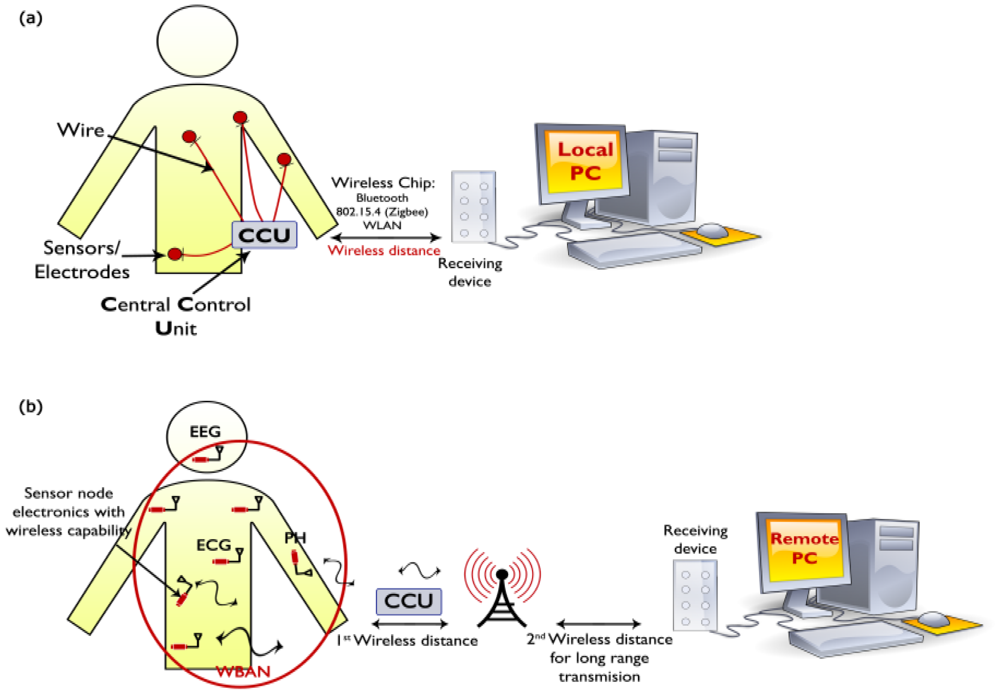
Correction: Darwish, A. and Hassanien, A.E. Wearable and Implantable Wireless Sensor Network Solutions for Healthcare Monitoring. Sensors 2011, 11, 5561-5595


References
- Darwish, A.; Hassanien, A.E. Wearable and Implantable Wireless Sensor Network Solutions for Healthcare Monitoring. Sensors 2011, 11, 5561–5595. [Google Scholar]
- Yuce, M.R. Implementation of Wireless Body Area Networks for Healthcare Systems. Sens. Actuators A: Phys. 2010, 162, 116–129. [Google Scholar]

© 2012 by the authors; licensee MDPI, Basel, Switzerland. This article is an open access article distributed under the terms and conditions of the Creative Commons Attribution license (http://creativecommons.org/licenses/by/3.0/).
Share and Cite
Darwish, A.; Hassanien, A.E. Correction: Darwish, A. and Hassanien, A.E. Wearable and Implantable Wireless Sensor Network Solutions for Healthcare Monitoring. Sensors 2011, 11, 5561-5595. Sensors 2012, 12, 12375-12376. https://doi.org/10.3390/s120912375
Darwish A, Hassanien AE. Correction: Darwish, A. and Hassanien, A.E. Wearable and Implantable Wireless Sensor Network Solutions for Healthcare Monitoring. Sensors 2011, 11, 5561-5595. Sensors. 2012; 12(9):12375-12376. https://doi.org/10.3390/s120912375
Chicago/Turabian StyleDarwish, Ashraf, and Aboul Ella Hassanien. 2012. "Correction: Darwish, A. and Hassanien, A.E. Wearable and Implantable Wireless Sensor Network Solutions for Healthcare Monitoring. Sensors 2011, 11, 5561-5595" Sensors 12, no. 9: 12375-12376. https://doi.org/10.3390/s120912375
APA StyleDarwish, A., & Hassanien, A. E. (2012). Correction: Darwish, A. and Hassanien, A.E. Wearable and Implantable Wireless Sensor Network Solutions for Healthcare Monitoring. Sensors 2011, 11, 5561-5595. Sensors, 12(9), 12375-12376. https://doi.org/10.3390/s120912375